Category: Movies & TV & Theater

Movies & TV & Theater on The Jitney is Miami’s cultural corner booth, the one where the cortadito hits hard and the takes hit harder. This page is for people who live their lives between art openings, Heat games, and late-night arguments about whether the new A24 movie was genius or basura. Everything here moves with Miami speed. Reviews are not academic snoozers. They’re fast, emotional, sunburned dispatches from someone who has seen too much, feels too much, and still shows up for another round.

Miami movies and theater.

Film coverage jumps from Wynwood-indie-weirdo vibes to blockbuster spectacle at Dolphin Mall. TV gets the same locally-sourced treatment. Prestige dramas, trash TV, guilty pleasures you’d never admit at Panther Coffee but binge anyway at 2 a.m.

Miami movies and theater.

Theater, though — that’s where the page breathes. Broadway, Off-Broadway, tiny Miami rooms where the AC barely works. If a show risks something, if it tries, if it even thinks about having corazón, it finds a home here.

This isn’t some neutral critic voice. It’s Miami talking. Sweaty, loud, honest, a little chaotic, and deeply in love with storytelling — the kind that rearranges your soul, at least for the night.

  • Miami Film Festival GEMS 2019 Announces Audience Award Winners

    Miami Film Festival GEMS 2019 Announces Audience Award Winners

    This past weekend demonstrated  South Florida audiences movie lovers are willing to leave the comfort of their homes. even for flicks not based on comic books or old Disney cartoons. For four days and nights cinephiles crammed Tower Theater for Miami Film Festival GEMS to catch critically acclaimed movies before they were released. Even movies that will be streaming in the next month on Netflix like Dolemite is My Name and Marriage Story drew healthy audiences to this film festival held on Calle Ocho.

    The winner of  the 2019 Gigi Guermont Audience Award selected by paying audience members was The Two Popes  directed by Fernando Meirelles who previously made the classic City of God. Parasite was voted first runner-up, with  Honey Boy and Craig Brewer’s Dolemite is My Name tied for second runner-up.

    Of the movies I was able to catch Pain and Glory was further evidence for the case that Pedro Almodóvar is the world’s greatest living director. The Spaniard gets seemingly autobiographical in this story of a lonely, chronically pained  film director trapped in his past which makes him unable to live in the present. This is a character driven piece that has a slower roll than Almodóvar’s Oscar winning movies All About My Mother and Talk to Her, but Pain and Glory has enough honest laughs, and a unique enough specificity that should keep you entertained until an ending that reveals the movie to be an ode to the creative process.

    Motherless Brooklyn was more of a mixed bag. This movie starring, written and directed by Ed Norton, based on a Jonathan Lethem novel by the same name, was a noir rip-off of Chinatown. But of course there are much worse movies to steal from. Once you get over Norton’s hammish interpretation of having Tourette Syndrome, Motherless Brooklyn takes you on a roller coaster of a whodunit with some enjoyable character actors like Willem Dafoe, Alec Baldwin and Bobby Cannavale. There’s a lot of plot in this movie set in New York of the 1950’s, some might say there’s too much story, but in an idiocracy where Joker is considered an “adult” movie (and actually wins film festival awards???!!??), that’s kind of a refreshing problem to have.

  • GEMS 2019 Is an October Gift for Miami Movie Lovers

    GEMS 2019 Is an October Gift for Miami Movie Lovers

    GEMS 2019 is packed with interesting flicks this year. GEMS, if you don’t know, is the Miami Film Festival’s mini fall festival. Why the need for a mini fest? The full one, usually in March, comes too early in the year to feature the potential awards fodder usually reserved for release closer to the end of the year, the times when the Oscars, Golden Globes, et al., with their notoriously short-term memories, tend to pay more attention. GEMS is offering 18 films this year for our viewing pleasure, and it’s a strong lineup. What follows is closer look at a few highlights.

    Marriage Story

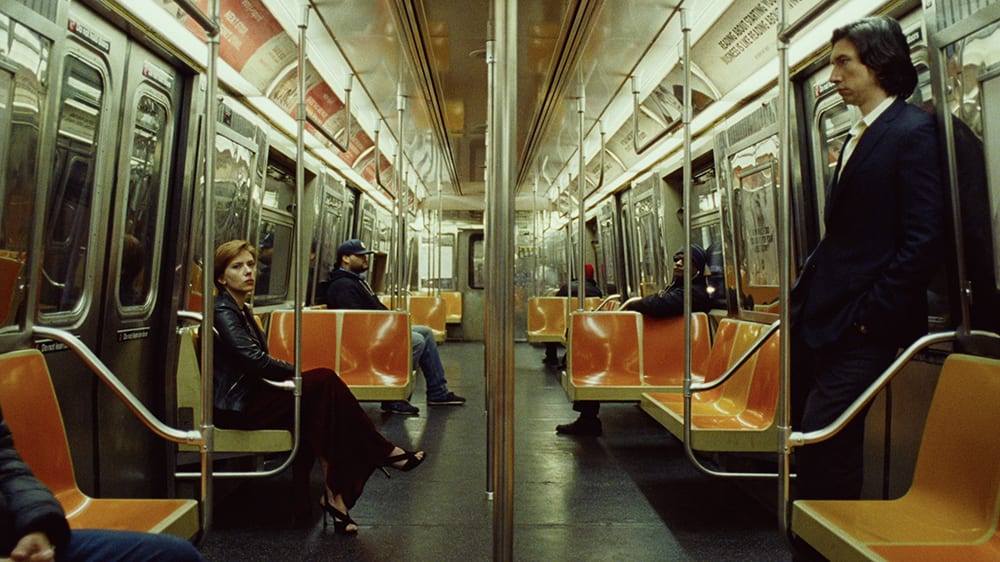
    Ah, the 1970s. It feels like that decade was the last time studios put actual money into dramas for adults. Netflix, with its wide coffers of money, is trying to change that. Collaborating once more with writer and director Noah Baumbach, the streaming giant brings us Marriage Story, a character-driven drama in the vein of 70s movies like Kramer vs. Kramer.

    Having garnered strong notices on the festival circuit, the semi-ironically titled film chronicles the divorce of a once happily married pair. Scarlett Johansson and Adam Driver star as the couple in the process of decoupling, with the film digging into the emotional complications that lead to, and arise from, such a life-changing event, eventually focusing on how even an amicable divorce can eventually turn sour.

    This being Baumbach (Frances Ha, Margot at the Wedding), expect tough emotional beats and acidic humor, though, apparently, this one has less of the squirmy discomfort that have marked his movies since The Squid and the Whale. The humor here should be less biting, more sobering, a sigh of resignation that nods at the difficulty of relationships.

    The film’s trailers (one for each of the couple’s perspectives) promises a return to the 70s in terms of content and aesthetics (lots of browns, film-grain). I’m excited for this one. Hopefully, I’m not alone in that sentiment. If not, we may have to live in the past to see movies like this.

    Parasite

    People love them some Bong Joon-Ho. The South Korean director is responsible for sci-fi like Snowpiercer and monster movies like The Host and, to a lesser extent, Okja. The dude doesn’t just do sci-fi and fantasy, though, as evidenced by his mystery drama Mother. No matter what genre he dips his toes into, he always brings an amount of thought and overt social commentary to his projects, which everybody seems to lap up. Well, except me, of course. I found The Host to be muddled; effective monster sequences sunk by an unclear narrative. And Snowpiercer never grabbed me the way I thought it should/would. Though oddly, I still remember a lot of that movie, more than some films I’ve seen just last week.

    There’s no denying, though, that Mr. Bong is a talented craftsman, even if I haven’t been too wild about his previous work. And so, I’m genuinely curious about his latest film, Parasite, which won the Palm d’Or, the top award at this year’s prestigious Cannes Film Festival. Apparently, this movie has several twists and turns and our enjoyment of it hinges on its secrets remaining secret until Mr. Bong wants to reveal them.

    Parasite tackles the director’s favorite subject once more: the division of social classes (what was Snowpiercer if not a study of class warfare dolled up in sci-fi clothing?). The film follows a destitute family that folds pizza boxes for money among other odd jobs in order to scrape by. Both a comedy and tragedy, the film switches gears (one of many tonal shifts from what I understand) when the family’s unmotivated patriarch lucks into a temporary tutor position with a very wealthy family. Things apparently escalate from there. The film’s poster shows the legs of a corpse jutting into the frame, so this one’s not just fun and games.

    Heralded by critics for its daring and originality, the movie has been praised for how well it navigates its shifting tones, keeping its ever-evolving story coherent and meaningful. Fool me once, or how ever that saying goes, but I’m gonna risk being a fool once more and take a hit from this Bong.

    Pain and Glory

    When it comes to director credit, famed Spanish director Pedro Almodóvar simply goes with “Un Film de Almodóvar.” I hate it. Just seems so arrogant. The whole one name thing. Like, should I credit my writing as “a review by Klein”? Of course, and this is an important “of course,” the dude earned that credit (while I, um, haven’t). Mr. Almodóvar’s been making movies since the ’70s and over the course of his varied career has made such memorable and adored films as Tie Me Up! Tie Me Down! and All About My Mother among many more films considered classics among the cognoscenti. So a new one from Almodóvar, first name in the credits or not, is definitely an event.

    Pain and Glory (not to be confused with Michal Bay’s Pain and Gain, The Rock is nowhere to be found here) is Almodóvar in autobiographical mode, or at least more so than usual. A gently meandering story, the film stars two of Almodóvar’s favorite muses and oft collaborators, Antonio Banderas and Penélope Cruz. The plot, which unfolds more like vignettes, follows an aging, ailing Almodóvar-esque director (Banderas, who won the best actor award at Cannes for the role) as he looks back on his life. Penélope Cruz pops up in flashbacks as the director’s mother, while his other relationships, his hopes and his dreams are closely examined.

    This one’s supposed to be more restrained, a little less outré than the master filmmaker’s past works, which, judging by the material, seems appropriate. Trite but true, as I get older, I tend to prefer a little restraint, and between Almodóvar’s meticulous storytelling and award-worthy performances from wonderful actors like Banders and Cruz, color me very curious for this one.

    Portrait of a Lady on Fire

    I was going to write about Motherless Brooklyn in this spot. It’s got a good cast (Bruce Willis might actually act in this one); it’s based on a famous novel by Jonathan Lethem; Edward Norton stars and directs. But it looks overblown (the book was set in present day, the movie in the 1940s, why the forced period setting?), and Norton playing a Tourette’s sufferer could be scene-chewing tastelessness. Instead, I’m going to focus on Portrait of a Lady on Fire, which won Best Screenplay at the Cannes Film Festival. This is one of those out-of-left fielders, a movie that’s taking people by surprise.

    Only the third feature film from director and writer Céline Sciamma, Portrait is a smoldering period romance. 18th-century France, Heloise is put on the marriage market by her mom. A painting of her daughter is commissioned to entice an Italian suitor. Heloise, though, is not having any of this marriage business and scares away the original artist. In steps Marianne as the latest painter attempting the portrait. To avoid a repeat performance, Marianne is instructed to come in secret, pretend to be Heliose’s companion, get to know her, and paint her from memory. As their alone time grows, though, sparks begin to fly and a full on romance blooms.

    My fellow Florida Film Critic Circle peeps have been loving this one. Their opinions are not in the minority. Slow burn, incendiary, scalding are among the many fire-based words being used to describe this one. I’d like to see what the fuss is about. Lacking well-known actors or a well-known director (outside of the festival circuit) this ones coming in under the radar and is proving to be a real sleeper. Portrait of a Lady on Fire is one of the less obvious titles featured by GEMS, but it might be one of the most rewarding. Could be a good idea to get in on the ground floor with this one.

  • Joker Provokes a Violent Response

    Joker Provokes a Violent Response

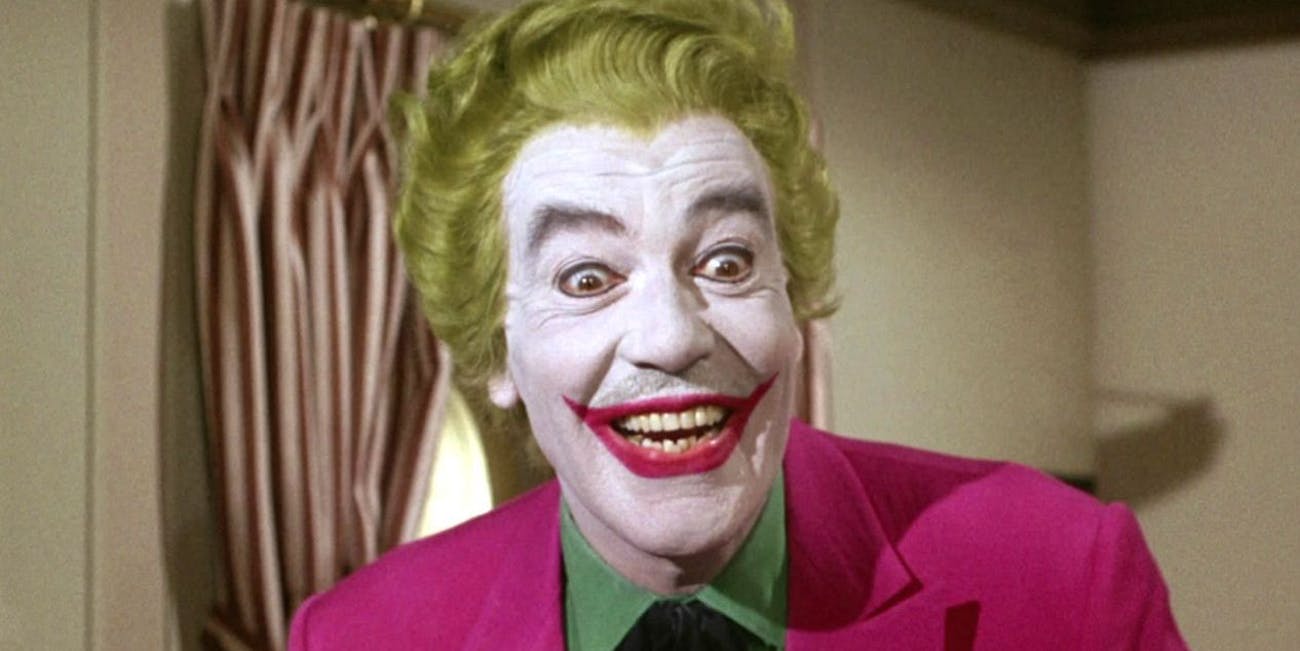
    One of the most striking aspects of Christopher Nolan’s The Dark Knight was its refusal to give its Joker a back-story. The message was this: The Joker is more menacing if we don’t know anything about him before becoming the clown prince of crime. I wish somebody had told that to Todd Phillips, the co-writer and director of Joker, which gives us an origin story for the popular, villainous Batman character. Shallow and repetitive, Joker is a waste of time.

    Joker takes place in a filthy, dilapidated Gotham City of 1981, brought to life by Lawrence Sher’s gritty cinematography. Crippled by a garbage strike and a brewing class war, it’s the perfect place to trace the downfall of a disturbed outsider like Arthur Fleck. In and out of mental institutions, he’s a nebbish, lonely creep, who’s just a little too into his day job as a party clown. On a myriad of useless medications and assigned a social worker who’s about as helpful as his meds, Arthur’s mental state deteriorates even further as society crumbles around him.

    One of the more interesting aspects of the film is the interplay between the city and Arthur’s mental state; how his actions, as they become murderous, weave in and out of the city’s fate and the fates of some of its more prominent citizens. But I wish the movie had pushed these aspects more. The stark division of the classes, the absolute hatred of the rich by the poor and vice versa is only spoken of, glimpsed in the aftermath of violence in newscasts rather than permeating through the film’s pores.

    These divisions are not really what drive Arthur/Joker.

    That’s probably the point. When things take a turn, Joker becomes a kind of unwitting icon, a hero of a movement he didn’t necessarily mean to start. That’s an interesting idea, but it takes the anti-hero out of the story, making him more of a passenger rather than the driver in his own movie. In a film that doesn’t have all that much to say, it’s an unwise decision.

    Instead, the movie focuses myopically on Arthur: pathetic, weird, unpleasant Arthur. The things is, there’s nothing to him. Nothing for us to dig into, nothing to keep our interest, even when he’s the focus of every scene. Then the movie tries to go back even further and explain his psychosis. Why? Can’t he just be insane? Does everything have to have a pat reason? And when those issue basically boil down to (spoiler alert) that old shorthand for psychosis: daddy issues. I wondered why anybody bothered to make this picture. There’s no depth here, so the movie becomes a drag with the same note repeated over and over, which in this case is a capital HA! as Arthur’s demented laughter, caused by a mental affliction that materializes in stressful situations, incessantly fills the film’s runtime.

    Joaquin Phoenix throws himself into the part completely.

    You have to admire his absolute commitment to the role. But his character isn’t commanding, just pitiful. And spending scene after endless scene with him simply becomes taxing. By the time he clears out a refrigerator just so he can lock himself in it, his actions barely even register.

    At least the movie keeps his character pathetic even when he lashes out in violence…until the end, that is. Early reviews have wondered whether this movie will incite violence, concerned that it will become a handbook for the disturbed and angry. Movies don’t make people do anything, but there is something off-putting here. By the end of the film (spoiler), when the meek Arthur is gone, fully replaced by the sneering Joker and worshipped by the angry Metropolitan masses, the message becomes clear: if you are downtrodden and lash out in violence, you can become an icon, revered. It’s sick, and not in a clever way.

    Joker won Best Picture at the Venice Film festival, drawing a 5-minute standing ovation at its conclusion. I try to fathom why. I think it has more to do with the idea of the film rather than the actual execution. The idea of a movie that tries to take a character from a superhero universe seriously, give his story grit and gravitas, is appealing. But I’m here to review the execution, which sadly is lacking. In the end, Joker is a shallow movie, a hollow concoction that struts like it has something to say, when it really doesn’t. It’s BS masquerading as profundity, and no amount of clown makeup is going to cover that up.

  • Brad Pitt in Space & PBS on the Big Screen – Ad Astra & Downton Abbey Movie Reviews

    Brad Pitt in Space & PBS on the Big Screen – Ad Astra & Downton Abbey Movie Reviews

    Ad Astra

    When a heady science fiction film comes out, I wait for it, like waiting for the bass drop in a dance tune: the inevitable comparison to 2001: A Space Odyssey. Yes, Ad Astra, the new science fiction adventure starring Brad Pitt, has shades of that seminal film. Luckily, though, it is no mere pastiche, standing firmly on its own two feet. A gorgeous spectacle that speaks to our brains as much as it does to our adrenaline pumping hearts, Ad Astra is a fantastic science fiction film and one of the year’s best movies.

    In the near future, man colonizes space. Stations are built on the moon and on Mars, but the push into our solar system ends at the angry red planet after a failed mission to Neptune. Years later, strange energy bursts emit from deep space causing deadly surges on earth. In a spectacular opening sequence, one of those surges almost kills the film’s protagonist, astronaut Roy McBride (Brad Pitt), while performing routine maintenance on a massive communications antenna that scrapes the edge of earth’s atmosphere. The surge causes explosions that send Roy spiraling through the sky, with the whirling visuals, especially on an IMAX screen, thrusting you into every queasy moment of Roy’s unexpected descent to earth.

    What follows is a visually sumptuous Heart of Darkness-esque adventure that hops from the moon to Mars to Neptune’s orbit. Cinematographer Hoyte Van Hoytema and composer Max Richter bring the film’s sights and sounds to life. The colors pop: bright oranges tempered by cool blues inside a spaceship, sickly dusty browns of Mars usurping all other hues; these colors buoy marvelous sights like the earth hovering over the moon’s horizon, or sparks flowing over Roy’s spacesuit while he’s standing under a soon to ignite rocket engine. Meanwhile, Max Richter’s soundtrack stuns. Mysterious, propulsive, immediate, the score suggests the beauty and danger of space all at once.

    Director James Gray uses these sights and sounds in service of a thoughtful script, showing the same flair for the enigmatic, the visceral, and the psychological here as he did in his last film, the unjustly overlooked The Lost City of Z. Even more so than that film, Ad Astra is as much a muscular adventure as it is a heady philosophical journey. With tight pacing and editing  that manages to somehow retain a dreamy tone and feel, the movie punctures its introspectiveness– complete with Terence Malik (or Apocalypse Now) like voice-over conveying Roy’s thoughts and ruminations on his mental and physical isolation– with effective action and suspense.

    While that dreamy tone harkens to the aforementioned 2001, it ultimately presents an entirely different film. Where Stanley Kubrick’s masterpiece trafficked in the puzzling and mystifying, Ad Astra is a more grounded experience, less bound to the ethereal and more to the tangible. Both films look to the skies for answers, but Ad Astra finds them in ourselves, in humanity, in our capacity to love and our potential to forgive. And Brad Pitt with his stoic but magnetic presence proves a perfect prism through which to address these themes.

    While dark and existential, there’s hope and light in the end, but not in ways you might expect: Looking directly into the void, the movie dares to find beauty in it. What we’re left with is bracingly honest–If you have a strained relationship with your dad, this might hit a little too close to home–yet emotional picture, that never dips into mawkishness. Ad Astra is a perfect balancing act that, indeed, takes you to the stars.

    Downton Abbey

    Deeply silly but entertaining, the feature length version of Downton Abbey turns out to be a concoction that should appeal to fans of the show while offering little to the uninitiated.

    The movie’s inciting incident justifies the grandeur of a motion picture: King George V and his wife Queen Mary, on a tour of Yorkshire in 1927, plan to stop for a night at the titular estate. All the characters that we know from the show, the aristocratic residents, the Crawleys, and their loyal servants go atwitter, getting the house ready for the momentous visit and all the drama that inevitably comes with it, including but not limited to a parade and a grand ball.

    The servants work feverishly in the kitchens and on the grounds, while the aristocrats lounge in their exquisite drawing rooms drinking tea, exclaiming with long, drawn out sighs how much work they still have to do. Thing is, I don’t think the show’s creator, Julian Fellows, who returns to script here, juxtaposes these scenes ironically. We’re supposed to believe these uppercrusters are as stressed and overworked as their servants. Like I said, silly.

    That Laissez-faire attitude permeates the film. The plot, such as it is, ends up a loose collection of events that play out episodically, agreeably, and without much fanfare. Sometimes, hilariously so. An assassination attempt is given about as much weight as the drama surrounding a missing ball gown.

    I can’t imagine a Downton Abbey noob getting much out of the movie. This one’s for the fans, a victory lap that gives the actors one more chance to play their memorable characters and their ardent admirers one more chance to hang out with them. Without knowledge of the TV show, though, these characters will just be a parade of vaguely pleasant faces and personalities floating past the camera. If you knew nothing about them before, you certainly won’t learn anything about them here. And even fans of the show might be disappointed to see major characters shunted to the background, allowed only a few reaction lines while adding little else to the proceedings.

    There isn’t much at stake in the movie, and that’s just fine with me. The show was at its best when it just hung out with its characters and didn’t try to pump up the drama, so I was glad to find the movie to be mostly in that laid-back mode. Downton Abbey is a hang out movie, a relaxed epilogue that’s sweetly inconsequential. If you’re a fan, grab a cup of tea, thrust your pinkies out, and enjoy.

  • Oscar Winning Movie Moonlight to Screen on Little Haiti Billboard Saturday Night

    Oscar Winning Movie Moonlight to Screen on Little Haiti Billboard Saturday Night

    Editor’s Note: Saturday night, August 24, at the northeast corner of Little Haiti’s NW 79th St. and NW 12th Ct. there will be a free screening of the 2016 Oscar winning movie Moonlight  projected on a billboard under the stars (or the clouds). The event is free. The movie starts at 8:15, but you can grab your seat as early as 7:15. To celebrate Miami’s most acclaimed movie we’re running Pavel Klein’s review, which originally ran on Punch Drunk Movies before Moonlight was immortalized as a best picture winner.

    Moonlight is a patient movie that requires a little patience.

    Filled with long silences and unfurling with a deliberate pace, it is demanding of its audience and is not the kind of movie that can be viewed passively. Meeting it half-way, though, rewards the viewer with a subtle and surprising film. These are buzzwords, to be sure, but they are wholly appropriate in this case. Moonlight is something special.

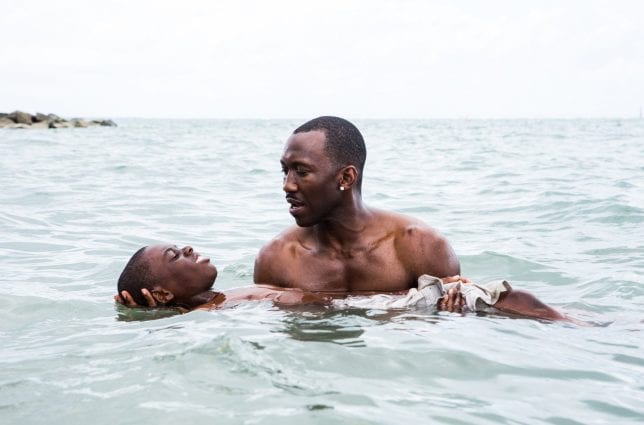
    The film depicts the growing pains of its protagonist, Chiron, who struggles with his identity and the denizens of the ruthless Miami neighborhood in which he lives. It is divided into three chapters, with each section following Chiron at a different stage of his life: as a child (Alex Hibbert), a teenager (Ashton Sanders), and as an adult (Trevonte Rhodes).

    His is a complicated life. He has a well-meaning, single mother, Paula (Naomie Harris), but she is addicted to drugs, and as her addiction strengthens, her parental skills weaken. Life outside the home isn’t any easier. He is prey to bullies, partly because of his diminutive stature as a child (nicknamed “Little”) but mostly because of his possible homosexuality. Isolated and confused, Chiron attempts to find out who he is and how, if at all, he fits into the world.

    I’ll dispense with the obvious accolades first. The performances are uniformly excellent. Because Chiron is introverted and quiet, there is a danger that he could come off as one note in the wrong hands, but all three of the actors portraying him do a phenomenal job of bringing the character to life. Naomie Harris acquits herself nicely also, though some of her vernacular comes off as a little forced. But it is Mahershala Ali that stands out from a crowd of great performances. He plays Juan, a kind and gentle father figure who also happens to be the neighborhood’s drug dealer. He has a deep affection for the boy, but is weighed down by the guilt of his direct contribution to Paula’s illness, and, in turn, Chiron’s misery. It’s a complicated role, and Ali manages to find the heart and the toughness, the yin and the yang, that drives the character.

    But the film is more than just an actor’s showcase.

    The word “subtle” has already popped up, and for good reason; you have to pay attention to every nuance and every line of dialogue. A major character, for instance, disappears from the narrative completely, but no direct mention of it is made. It’s only during a heated exchange that an event (forgive my vagueness. Spoilers, you know…) is mentioned, and it is up to us to connect the dots between that event and the character’s disappearance. There’s very little hand holding, narratively speaking, and if you don’t pay attention, it will feel as if nothing of importance is happening and the movie will wash over like an eternal bore. It’s not a bore, though, and, frankly, it’s nice to have a film that challenges an audience to pay attention. Moonlight doesn’t spell everything out, and I was happy to attend its spelling bee.

    With an unpredictable narrative and an unexpected tone, the movie forgoes histrionics and maudlin drama. Though often sad, it also doesn’t wallow in misery. And in the second half, especially, it goes in surprising directions. When describing Moonlight to a friend, the moment I mentioned its setting and that a drug dealer was involved, he immediately jumped to a natural conclusion: the film would end in bloodshed. While violence is not completely absent, it’s not the film’s raison d’etre. Refusing to traffic solely in cliché, the focus is firmly on the characters, their influence on each other, and the connections they attempt to make.

    Moonlight won’t be everyone’s cup of tea. Honestly, I wasn’t even sure it was mine as I watched it. With a nearly silent protagonist, there were moments of severe impatience on my part. I had to suppress the urge to scream, “Say something!” a couple of times. Afterward, though, the film kept brewing in my mind. I started making the connections that writer/director Barry Jenkins had set up, and as I began to understand it, I started to truly appreciate the movie. Moonlight is a touching film and a significant achievement. And, yes, it turned out to be my cup of tea.

  • Support the Reel Aims to Spotlight Local Black Filmmakers

    Support the Reel Aims to Spotlight Local Black Filmmakers

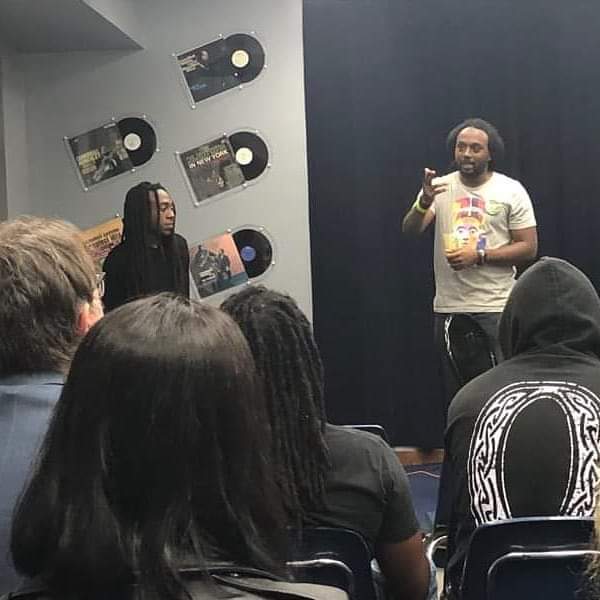
    “I have a lot of filmmaker friends, the majority of them are Black or African-Caribbean descent and they had no local platform.” Emmanuel George said on why he started Support the Reel, a semi-annual showcase of South Florida Black filmmakers. The third edition of Support the Reel will be held Thursday, August 29 at 7 p.m. at the Pompano Beach Cultural Center at 50 West Atlantic Blvd., Pompano Beach.

    The free event will screen five films by four directors all of whom will be in attendance. Audience participation George says is just as important to the evening as the films themselves. “We want critiques and for the films to create a dialogue with the audience.”

    Among the movies to be screened are Good Morning Babe  directed by Jujuan Burton which is a comedic short film about text messages. Message Received  by Lyndell Thomas is a romance featuring a protagonist who grew up in a trauma filled household trying to make things right. Roosevelt Merister’s Undying Love  (which you can watch in its entirety at the end of this story) is based on a song by the rapper Nas. James Mungin II’s Beyond the March  is a documentary about Liberty City youth trying to curtail gun violence. Finally, George co-directed a documentary with Jujuan Burton titled Four Pillars of South Broward about residents of historical African-American communities losing their homes and sense of home.

    George has been pleased with the turnout and enthusiasm of previous editions of Support the Reel at Fort Lauderdale and Opa Locka. He’s hopeful this August showcase in Pompano will keep the momentum going. “There’s a lot of creatives that people overlook. People think in inner cities that we’re just selling drugs or playing sports. But there’s painters, musicians, people in the medical field. It’s time to give the filmmakers in the inner cities a platform.”

  • Pre-Existing Properties- After the Wedding & The Angry Birds Movie 2

    Pre-Existing Properties- After the Wedding & The Angry Birds Movie 2

    There were ten minutes where I thought After the Wedding might be a good or even a great movie. It comes during the wedding of the title. Isabel, the lead played by Michelle Williams, breaks down as she stares at the father of the bride at a wedding she was invited to where she wasn’t supposed to know anybody. She staggers into the house to make certain the man is who she thinks he is. The man sees Isabel, but because of the formalities and the busyness of weddings it takes a while before the audience learns of their past.

    Those well crafted ten minutes  allow the audience the time and space to create their own story for the pair’s connection. The heightened suspense of those  ten minutes make up for the  beginning of the movie where all the principal characters are very slowly introduced. Those ten minutes however don’t make up for after the wedding. Nor for After the Wedding. Not when the explanation for why Isabel is so stunned comes across as so contrived.

    I learned after watching it that After the Wedding was a remake of a 2006 Danish movie by the same name.  That movie was nominated for a Best Foreign Film Oscar, but something must have been lost in translation. Despite some interesting acting by Williams, this version is kind of a mess. Character motivations don’t make sense especially when the ending ties everything up in a tidy knot that I can’t imagine the original Danish version would have allowed.

    People complain about comic book movies and remakes of 1980’s movies, but for my money recreations of foreign films have the lowest batting average of any form of adaptation. Sure The Departed won an Oscar, but remakes of Solaris, Swept Away, and Vanilla Sky so brutalized the original classics that I can’t figure out why America continues to try.to improve on works in other languages.

    To look on the bright side at least Denmark gave us ten good minutes.

    The Angry Birds Movie 2 comes from a more noble background.

    It is a sequel to a cartoon based on a video game. Because of that pedigree fairly or unfairly I judge it on a different scale. Did my six year old daughter like it? Yes? Well that makes the flick a success. Even if she would also watch people on YouTube opening packages for ninety minutes if they adapted such a feature for the silver screen.

    Now would a fully functioning adult  enjoy this movie? Well, I didn’t fall asleep during The Angry Birds Movie 2 which is more than I could say for The Secret Life of Pets 2 or The Lion King remake. There’s some toe tapping music the producers paid pretty pennies to have in their soundtrack. There are some famous actors voicing birds and pigs. Depending on whether or not you’re in a state where marijuana is legal, you might even laugh a couple times.

    But the short answer is if you’re the type of person who reads movie reviews and you don’t have a six year old you need to entertain, go see something deeper and more intellectually stimulating.

    Like Toy Story 4.

  • David Crosby: Remember My Name Documents a Rock n Roll Original

    David Crosby: Remember My Name Documents a Rock n Roll Original

    Having interviewed the folk rock legend David Crosby a couple times, I could tell the documentary David Crosby: Remember My Name was going to be entertaining. You just have to hit record on the camera pointed in his direction and the former member of The Byrds and Crosby, Stills & Nash is bound to tell some entertaining yarns. On my phone interview Crosby had me in stitches talking about his time in Coconut Grove stealing boats, playing in coffee shops and discovering Joni Mitchell. I could only imagine what dirt a far more accomplished music journalist in Cameron Crowe could get Crosby to spill.

    If you’re a rock and roll history buff or dig gossip about the hippie generation, David Crosby: Remember My Name won’t disappoint. It shows David Crosby as a kind of Forest Gump of the hippies. There’s vintage film of him hanging out with The Beatles, restructuring songs by Bob Dylan, and of course  performing at Woodstock. The documentary also doesn’t cut any corners dealing with Crosby’s tumultuous personal life. Crosby doesn’t censor his feelings about his feuds with bandmates, the drugs that got him sent to the hospital and prison, nor most heartbreaking about the young wife who died in a car crash.

    While much of the movie is a series of modern day interviews with Crosby and the people that know him, it also has plenty of fascinating footage from yesteryear. It shows  aerial film Crosby’s cinematographer father captured in World War 2 of a bomb dropping.  While the ninety minute movie doesn’t mention much about Crosby’s time in South Florida,  there are old home movies of Crosby’s time captaining a sailboat, and an animated portrayal of Crosby turning himself in to the FBI’s West Palm Beach office after realizing his sailboat docked in Fort Lauderdale was as much of a mess as the rest of his life.

    While those familiar with Crosby’s life will be amazed at the stories that weren’t told in the doc from his becoming a surrogate father for Melissa Etheridge, to reuniting with a long lost son that he’s been making music with over the past decade, the movie doesn’t skimp on what brought Crosby to our attention, his music. There are plenty of the harmonies that made him famous, but what’s more amazing is that while pushing 80 his voice is still a special instrument worthy of celebration.

  • Fresh Kid Ice of 2 Live Crew Documentary Premieres in Miami

    Fresh Kid Ice of 2 Live Crew Documentary Premieres in Miami

    2 Live Crew was four people who took a stand and changed the world for the better by standing up for free speech. Fresh Kid Ice aka Chris Wong Won was a kid from the Caribbean who immigrated to the U.S., joined the military, and impacted the Supreme Court.

    Chris Wong Won is an American hero.

    Local writer and filmmaker Jacob Katel has a new documentary profiling the controversial rapper called Legend of the Chinaman. The movie premiers this weekend at the Miami Underground Film Festival.

    We caught up to Katel, a Miami legend in his own right, to drain his brain about the rapping legend.

    Fresh Kid Ice Documentary

    Most people might not be aware that Christopher Wong Won (Fresh Kid Ice) started 2 Live Crew, discovered Flo Rida, and passed away in July, 2017 at the young age of 53 (cirrhosis of the liver) — what did you learn about him while making this movie?

    Everywhere he went, he got respect. Also, Eazy E  was a big fan, and when NWA started, they used to go on stage to 2 Live Crew records at their first concerts.

    You’ve been covering Miami culture and music for a long time, do you have any stories or memories of chillin with Wong Won?

    I interviewed him at Circle House studios in 2014 for an article and then we co-wrote a book that came out in 2015. After that, I told him about my idea for this Miami Bass movie, and he blessed the whole project. Basically, Chris was cool as fuck and he wanted people to hear and know his story.

    Do you think Fresh Kid Ice had any regrets?

    Getting in the car and going to the club the night his friend AC fell asleep at the wheel of a Z 28, crashed on the 836, and almost killed them and the two girls they were with.

    Fresh Kid Ice Documentary

    Do you think his lifestyle contributed to his early death?

    He had his greatest wins at the same time as his greatest losses. But his lifestyle of strength, determination, and creativity are probably what kept him alive through trial after tribulation. He could have died a dozen different ways a hundred different times. Depending how you look at things maybe he beat death more times than it beat him. The group he co-founded changed the world of music forever. Like Beethoven.

    What attracted Wong Won to hip-hop in 1984, as an Air Force cadet in California and the first Asian-American rapper?

    He was the first Asian rapper to sell a million records. His grandpa was a Chinese player who owned a Canton restaurant in downtown Trinidad. He had his six wives working there in shifts. Chris grew up on party music in the Port of Spain. He was thirteen when he moved to Flatbush, Brooklyn in 1977. He used to cop reggae records on Church Ave and knew the underground hip hop tapes when they first came out.

    Legend of the Chinaman

    Check out Legend of the Chinaman this weekend at the Miami Underground Film Festival.  Trailer directly below.


  • The Movie Should Have Been Called Fast & Furious Presents: Hobbs & Schmucks

    The Movie Should Have Been Called Fast & Furious Presents: Hobbs & Schmucks

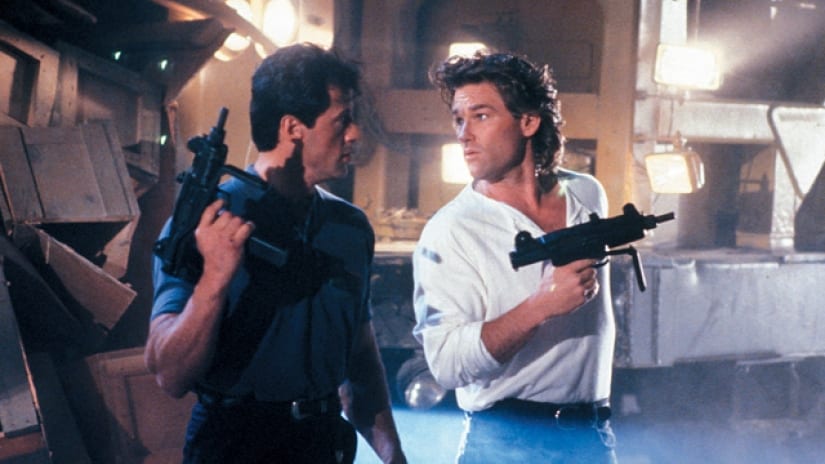
    Hobbs & Shaw, a buddy action comedy starring Dwayne Johnson and Jason Statham, reminds me of Tango & Cash, that venerable slice of ‘80s cheese action-cinema that teamed up Kurt Russell and Sylvester Stallone. Both movies combine famous action stars for a joint adventure with copious shooting and explosions. Both have those stars trading “witty” put-downs. And neither could possibly have been written by an adult. But, if Tango & Cash was written by a child, then Hobbs & Shaw was written by a fetus.

    There’s dumb, and then there’s dumb. Hobbs & Shaw is f*cking stupid. Stupid can be entertaining, like when Johnson calls “The Old Man and the Sea” “Old Man and Sea,” or when Helen Mirren’s character, yes the esteemed Oscar winner cameos in this shlock, prominently displays a giant diamond ring, even though she’s supposed to be incarcerated. Or how about a grenade that makes a powering down sound when its pin is pushed back in? But chuckling at stupid can only sustain interest for so long and at a punishing two hours and fifteen minutes my mirth quickly dissipated, replaced by endless boredom.

    Johnson and Statham play characters from the Fast and the Furious franchise

    who are permanently at odds with each other. Hobbs is CIA, while Shaw is a disgraced, former MI6 agent…Or at least I think so? A few vague lines of dialogue half-fill in the blanks, but his background remains nebulous, unless you have encyclopedic knowledge of the F & F franchise. No matter, the two team up when Shaw’s sister Hattie, a current MI6 agent, is framed for the theft of a supervirus called CT-17.

    Actually, she’s keeping it away from cybernetically enhanced supervillain Brixton, indifferently played by Idris Elba, whose performance is so listless even his screams of pain are bored. Brixton wants to steal the virus for his organization, ETEON, a nefarious group whose mission to bring about revolution through technology, or something, is as generic as its formless name, which sounds more at home on a soccer player’s jersey than the title of a world destroying organization. Using action movie logic, Hattie injects the virus into herself to keep it safe and goes on the run. Eventually teaming up with the eponymous heroes, the trio have to get the virus out of Hattie while keeping it away from a pursuing Brixton and his horde of ETEON players…err…minions. What follows are endless digital action sequences and equally interminable dick jokes, an obsession with which I haven’t experienced since elementary school.

    Mindless entertainment is important. We all need a break from our brains. But even mindlessness has to have effort, none of which is noticeable here. The pacing is abhorrent, with the movie stopping cold for celebrity cameos that are supposed to be funny but are so limp and aimless it’s like they’re working out their material in front of the camera and the editors decided to simply leave everything in.

    When the jokes aren’t sending you to sleep, the movie switches gears to its raison d’être, action, of which there is a lot. Too bad it’s generic to the point of tedium. It’s all CGI, and none of it’s convincing. Somehow, the movie still cost 200 million dollars. I assume most of that money went to Johnson’s paycheck, as it sure doesn’t show up on the screen. Digital explosions, gunfire, vehicles fill the frame and never look like anything more than a video game. And the fight choreography is surprisingly dull too. Even Statham, who’s been part of impressive on-screen fisticuffs in his career, mostly just punches people in the face.

    Hobbs & Shaw cost 200 million dollars.

    I assume most of that money went to Johnson’s paycheck, as it sure doesn’t show up on the screen. Digital explosions, gunfire, vehicles fill the frame and never find a way to be the least bit convincing. And the fight choreography is surprisingly dull. Even Statham, who’s been part of impressive on-screen fisticuffs in his career, mostly just punches people in the face.

    Who has time for impressive choreography when the movie’s real obsession takes up so much of the film? That’s right, the aforementioned dick jokes. Before the eternal digital action usurps the last half, making things like talking unnecessary, Hobbs & Shaw uses its time to deliver an endless set of these jokes over and over, culminating with Shaw setting up a fake identity for Hobbs with the name of Mike Oxsmall. Jokes so low, they swing by the film’s ankles. Not long into the movie, I wished the two would just whip ‘em out and compare already. At least then we’d get the mercy of closing credits because that, really, is what the movie is about. Which one of these alpha males’ junk is bigger?

    The movie caps off with a finale that pits high-tech against low. Machine guns against clubs and spears. Of course, the movie espouses the virtue of low tech while ignoring it completely. “Let’s go old school,” one of the characters says. I wish the movie had taken its own advice. Maybe then they would have given us some actual stunts, something done on set and captured by the camera. Something that looked remotely real and dangerous. But of course that’s not going to happen. Why? To use the parlance that this movie would understand: Hobbs & Shaw has no balls.