Category: Movies & TV & Theater

Movies & TV & Theater on The Jitney is Miami’s cultural corner booth, the one where the cortadito hits hard and the takes hit harder. This page is for people who live their lives between art openings, Heat games, and late-night arguments about whether the new A24 movie was genius or basura. Everything here moves with Miami speed. Reviews are not academic snoozers. They’re fast, emotional, sunburned dispatches from someone who has seen too much, feels too much, and still shows up for another round.

Miami movies and theater.

Film coverage jumps from Wynwood-indie-weirdo vibes to blockbuster spectacle at Dolphin Mall. TV gets the same locally-sourced treatment. Prestige dramas, trash TV, guilty pleasures you’d never admit at Panther Coffee but binge anyway at 2 a.m.

Miami movies and theater.

Theater, though — that’s where the page breathes. Broadway, Off-Broadway, tiny Miami rooms where the AC barely works. If a show risks something, if it tries, if it even thinks about having corazón, it finds a home here.

This isn’t some neutral critic voice. It’s Miami talking. Sweaty, loud, honest, a little chaotic, and deeply in love with storytelling — the kind that rearranges your soul, at least for the night.

  • South Florida Filmmakers Can Have their Short Film Broadcast on PBS

    South Florida Filmmakers Can Have their Short Film Broadcast on PBS

    Are you a filmmaker and want your movie shown on another platform besides YouTube?

    If so, the short film showcase film-maker returns in April 2019 on PBS channels’ WPBT and WXEL and is currently seeking short films from South Florida filmmakers.

    There are some restrictions for what constitutes an eligible short film:

    • Film must be less than 2 years old
    • Has not yet been broadcast
    • Contains no profanity
    • Is less than 30 minutes in length
    • Was made in South Florida by a local production team

    If you have a film that checks all those boxes hurry and apply at filmfreeway.com/film-maker. The deadline is fast approaching on Thursday, January 31. Filmmakers chosen will earn:

    ● Dedicated broadcast of films to over 6.3 million TV households

    ● Distribution through South Florida PBS’ existing platforms and optional distribution on mobile, Roku, Apple TV, and Fire TV, associated with the South Florida PBS brand

    ● Compensation in the form of an acquisition fee

    ● Participation in a companion digital series featuring interviews as well as individual profiles and access to portfolios


  • What Oscars Got Wrong and Right with 2019 Nominations

    What Oscars Got Wrong and Right with 2019 Nominations

    The 2018 Oscar nominations were announced on Tuesday, January 22, and, as usual, my reactions ran the typical gamut of “WTF?,” “Really?” and a light smattering of “Oh, cool.” So let’s dive right in and take a look at some of the major categories, noting any surprises, upsets, and snubs along the way.

    BEST PICTURE:

    Black Panther
    BlacKkKlansman
    Bohemian Rhapsody
    The Favourite
    Green Book
    Roma
    A Star is Born
    Vice

    Best Picture is, of course, the award of Oscar night, the one producers and directors clamor for because of the perceived prestige it brings and the boost it gives to their clout and the film’s box office. There was controversy a few months ago when the Academy of Motion Picture Arts and Sciences announced they were going to add a most popular film category. Seemingly everybody lost their damn minds in outrage, and the category was subsequently scrapped. The nominees for Best Picture, then, seem like a response to that forced scrapping: an ungainly amalgamation of concessions to popular taste and stuff the Academy actually likes. Still, there are no real surprises here–at least not in what was included. Some choices, though, are still questionable.

    I’m looking at Bohemian Rhapsody and Vice, specifically. A jukebox musical and a political screed, respectively, both were entertaining movies, but the pinnacle of last year’s filmic achievements? Please.

    Black Panther was fun, slightly deeper than some superhero movies, and sported an imaginative and colorful production design. Oh, and it made like a billion dollars at the box office. Between that and its cultural significance, it’s a movie that couldn’t be ignored. Good the academy didn’t.

    BlacKkKlansman, on the other hand, might have gotten a nod more for what it’s about than how it was about it. My appreciation for the film may have been hampered by my expectations. I hoped to be blown away by it, but was only mildly moved. On the other hand, undisciplined as he may be, Spike Lee is still a magnificent director, and any time the Academy shows him love is fine with me.

    I haven’t seen Green Book yet, so I won’t comment on it. A Star is Born, meanwhile, was a well-made tear-jerker that updated the formula nicely for today’s audiences without losing the melodramatic edge it so was striving for. Good but not great. The film’s pedigree, though, is one the Oscars just can’t pass up. They love actors who successfully transition into directing, and if they do double duty by starring also, like Bradley Cooper does in Star, even better (odd, though, he didn’t get a Director nod). Oh, and an immensely popular singer like Lady Gaga proving she has acting chops? Forget about it. It’s inclusion on this list, deserved or not, was a forgone conclusion.
    Out of the nominees, my favorites are The Favourite (natch) and Roma. The Favourite with its lively style, fantastic performances from its three leads (more on that in the Best Actress and Supporting later), and biting black humor, enlivened a not-so-typical costume drama. I’m also glad that the patient, human, and friggin’ gorgeous Roma wasn’t shunted solely to Best Foreign Language film. It deserves all of the accolades it’s been given.

    BEST DIRECTOR:

    Alfonso Cuaron (Roma)
    Yorgos Lanthimos (The Favourite)
    Spike Lee (BlacKkKlansman)
    Adam McKay (Vice)
    Pawel Pawlikowsi (Cold War)

    Two years ago Moonlight and La La Land went head to head for Best Picture, leading to that infamous moment when La La was wrongly given the award meant for Moonlight. I wonder if the academy didn’t want a repeat or a reminder of that faux pas because the directors of both those films, Barry Jenkins and Damien Chazelle, came out with wonderful movies this year and both movies and directors were snubbed. Jenkins’ If Beale Street Could Talk was a deeply felt, lyrical follow up to his Moonlight that proved he wasn’t just a flash-in-the-pan. Chazelle’s First Man, a biographical Neil Armstrong pic, was exciting, slightly challenging in its aesthetic, and featured a great performance from Ryan Gosling (who was also snubbed in the acting category).

    Outside of those two omissions, the Best Director category isn’t particularly surprising. Four of the five nominees represent their Best Picture nominations and the fifth, Pawel Pawlikowski, represents a nomination for Best Foreign Film. His Cold War is a fantastic movie that tells an epic decade spanning story in a tight 90 minutes without feeling rushed or empty. Glad he got a nom. Meanwhile, Alfonso Cuaro (Roma), Spike Lee (BlackkKlansman), and Yargos Lanthimos (The Favourite) are cinematic masters and great choices. But Adam McKay for Vice? He’s building an interesting voice, but his inclusion is pushing it.

    BEST ACTOR:

    Christian Bale (Vice)
    Bradley Cooper (A Star is Born)
    Willem Dafoe (At Eternity’s Gate)
    Rami Malek (Bohemian Rhapsody)
    Viggo Mortensen (Green Book)

    A good group of nominees, but looking at this list a voice in my head screams Where the #$%& is Ethan Hawke!!!! I thought Hawke was a shoo in for his magnificent, repressed turn in First Reformed. Paul Schrader’s austere drama didn’t get much love outside of a Best Original Screenplay nom, which is a shame. And look, Christian Bale is a fantastic actor, but his Dick Cheney impression in Vice was just that, an imitation, not a fleshed out performance. I’m blaming the stain of a man he was tasked with bringing to life, but still, get him out, keep the rest and put Hawke in there.

    BEST ACTRESS:

    Yalitza Aparicio (Roma)
    Glenn Close (The Wife)
    Olivia Colman (The Favourite)
    Lady Gaga (A Star is Born)
    Melissa McCarthy (Can You Ever Forgive Me)

    Yalitza Aparicio gave a quiet, subdued performance in Roma, built mostly on reacting. Good stuff, but the Academy probably won’t recognize a performance that doesn’t scream “ACTING!”, especially when it’s from a non-professional actor. Olivia Colman is wonderful in The Favourite, spoiled, sad, slightly loopy and very lonely. Melissa McCarthy proved she had chops in one of her first purely dramatic film roles. Lady Gaga, meanwhile, didn’t embarrass herself by any means in A Star is Born, but she did not give the best performance of the year. Look for her to win, then.

    BEST SUPPORTING ACTRESS:

    Amy Adams (Vice)
    Marina de Tavira (Roma)
    Regina King (If Beale Street Could Talk)
    Emma Stone (The Favourite)
    Rachel Weisz (The Favourite)

    Fine actress that Amy Adams is, she barely registers in Vice, mostly standing in the background and sounding like Frances McDormand in Fargo. Honestly, her inclusion baffles me. A little less baffling is Marina de Tavira’s nomination. In what seems like a small role, de Tavira is tough, caring, and a little self-centered. Maybe her role seems small because the rest of the movie was so good it drowned her out a bit. Regina King, meanwhile, was fantastic in Beale Street. A rock that begins showing cracks by the end, King has quietly built a career on great performances. Rachel Weisz and Emma Stone both gave tough, confident, sly performances in The Favourite. The only controversy here is that both actresses should have gotten Best Actress noms, but that’s on the studio for insisting both Weisz and Stone were supporting even though they had the same if not more screen time that Jenna Coleman and were just as integral to the story.

    BEST SUPPORTING ACTOR:

    Mahershala Ali (Green Book)
    Adam Driver (BlacKkKlansman)
    Sam Elliott (A Star is Born)
    Richard E. Grant (Can You Ever Forgive Me?)
    Sam Rockwell (Vice)

    Best Supporting Actor is a hodgepodge. Adam Driver is a good actor, but he didn’t stand out in BlacKkKlansman. Sam Elliot was his dependable self in Star. He probably could let his mustache do the acting for him, but didn’t. Unbelievably, this is the veteran actor’s first Oscar nomination, which is all kinds of “huh?” Sam Rockwell’s impression of George W. Bush is inspired and Richard E. Grant deliciously chews the scenery in Can You Ever Forgive Me? I’m cool with either of those three winning.

    Look, the Oscars are the not the be all end all decision for what was good, movie-wise, this past year. Knowing this, I still put a lot of emotion into what the Academy picks every year. Most of us do. The Oscars, much like the deities in Neil Gaiman’s American Gods, derives its power from our belief in them. With how often they get things wrong and how myopic their inclusions often are, we probably should turn our backs on the awards. But where’s the fun in that? So, see you Sunday, February 24 when I’ll be screaming at my TV about how these guys got everything wrong, again.
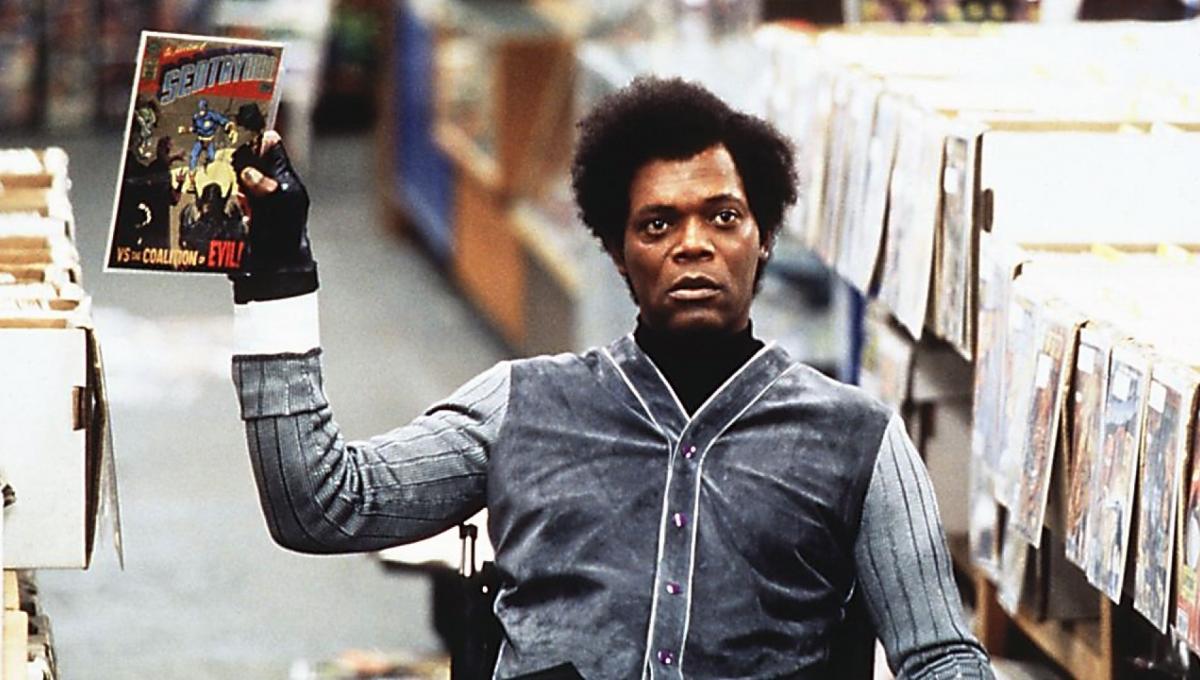
  • Only Surprise in New M. Night Shyamalan Film – Glass – Is It Stinks

    Only Surprise in New M. Night Shyamalan Film – Glass – Is It Stinks

    Writer/Director M. Night Shyamalan built his career with a solid set of patient, slightly off kilter thrillers (The Sixth Sense, Unbreakable, and Signs). But I got tired of his shtick–gimmicky twist endings, a distracting visual style that bordered on incompetent a while ago. To my surprise, I actually enjoyed his last film, Split, and as Glass is his direct sequel to that movie, I was optimistic.

    Was that hope misplaced?

    For better or for worse, Glass is definitely a Shyamalan movie, a superhero story as seen through his esoteric lens. It has its moments, but it’s not particularly exciting or rewarding. Picking up after Split, itself a stealth sequel to the Bruce Willis starring Unbreakable, Glass throws together the main characters from those films, creating a real world-esque Avengers team-up movie. David Dunn (Willis), 19 years after his journey into discovering his powers in Unbreakable, has aged but is still a mostly invulnerable vigilante with incredible strength, roaming the streets of Philadelphia, do-gooding with the help of his son, Joseph. As the movie opens, he’s searching for The Horde (James McAvoy), the murderous antagonist (antagonists?) from Split. This early portion of the movie plays best as we catch up with these characters, some of whom we haven’t seen in a long time, and watch them interact for the first time.

    But Glass takes a dip after that. As Shyamalan’s films are built on surprises, I’ll be vague about what happens next. The movie’s advertisements heavily feature the image of David, The Horde, and Mr. Glass (Samuel L. Jackson)—David’s mentor turned surprise villain at the end of Unbreakable—all sitting together in a mental hospital. It shouldn’t be a spoiler if I reveal that the three characters do end up in a hospital together under the watchful eye of mysterious doctor, Ellie Staple.

    The problems start here. Most of the film’s run time is spent inside this mental institution with Ellie trying to convince the trio that they are not actually super powered and are not like the heroes and villains found in comic book pages. It’s not a bad idea, really, and interesting moments do pop up. There’s an emotional sequence where two characters from the previous film have a surprisingly tender reconnection; and one character begins to believe that he is, indeed, delusional. But the problem is that we–after two previous movies wholly devoted to the idea that, you know, these guys actually are super heroes and villains know better. So we twiddle our thumbs as the movie spins its wheels, spending an inordinate amount of time on a charade we know will prove to be pointless.

    It feels less like a slow burn build and more like wasting time before the third act fireworks. Of course, as this is a Shyamalan film, those fireworks are more like sparks. When the story, thankfully, does pick up in the final third as Mr. Glass becomes more involved in the proceedings, it builds to a lengthy showdown…in a parking lot. Spectacle this movie is not.

    Shyamalan doesn’t really do spectacle.

    He has a purposefully limited palate, a self-imposed, rigid style that works well with thrillers, not so much with the traditional superhero genre. That’s seen most clearly in the film’s “action” scenes. Few that there are, they quickly devolve into wrestling matches with the opponents locking hands, grappling, and pushing at one another while looking severely constipated.

    None of this would matter if Shyamalan brought a new or fresh perspective to other aspects of the genre. He does not. And having Mr. Glass constantly reiterate that what they are experiencing is just like a comic book, does not count.

    Glass is just a bit of slog. There are a lot of plot points and backstories to tie together, and a ton of characters (did I even mention Casey, the surviving protagonist from Split returns here?) that need to be reintroduced and connected. But Shyamalan doesn’t juggle any of these elements nimbly. Some characters simply disappear, and when they do show up, don’t do that much. Somehow, in the end, while major things do happen, they’re doled out so lugubriously and are so oddly shot and edited that the shocks they’re supposed to induce float by in a slow daze and are promptly forgotten.

    The bigger Shyamalan’s canvas gets, the more unfocused his films become. Split, with its simpler story was efficient. Glass, with its myriad characters and story arcs, is not. It’s not an awful movie. At its best, it’s interesting. At its worst, it’s overlong, silly, and dull. Sadly, it skews more to the latter than the former.

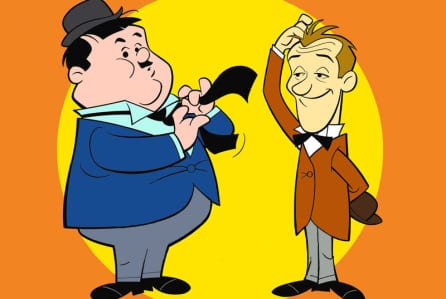
  • Stan & Ollie Brings Much Needed Dignity to Biopics

    Stan & Ollie Brings Much Needed Dignity to Biopics

    After sitting through clunkers like On the Basis of Sex  and Vice, I’d given up on the biopic as a movie genre. But Stan & Ollie renewed my faith that famous people’s biographies can make for just as fulfilling and entertaining a viewing experience as any comic book, action figure, or board game adaptation.

    I didn’t know much about Stan Laurel or Oliver Hardy going into this movie. As a pop culture buff I was aware of their names and their trademarked image of the behatted thin man and his rotund partner with a Charlie Chaplin/Hitler mustache, but the closest I came to watching their comic stylings was when they were animated to guest star on a Scooby-Doo episode.  After watching Stan & Ollie though I found myself burrowing into a YouTube wormhole of old Laurel and Hardy bits. Their humor was filled with slapstick physical comedy, but not to the violent extreme of the Three Stooges.  They messed around with the English language, but not to the extent of The Marx Brothers. They were gentler and more charming. Almost like if Mr. Bean had a brother to interact with in each of his sketches.

    But even if you’re not into the little kid/wholesome Dad humor of Laurel and Hardy, Stan & Ollie does what the best movies do and delves into the human condition. Instead of getting a ninety minute montage of a celebrity’s greatest hits like so many biopics are prone to do, this movie takes its time and lets you get to know the two title characters.

    A majority of the movie takes place in 1953. It’s way past the pair’s heyday of being box office draws at the movies. They’re bordering on has-been status when they decide to tour the stages of Great Britain as they wait for the financing to make their first movie in years. You see them work on routines, craft jokes and drive each other mad. It’s a showbiz movie but just as much a relationship movie that anyone who has been married, grew up with siblings, or spent too much time with someone they loved can relate to. It finds the humor and the tragedy in how we always hurt the ones we love.

    If you’re looking for some nits to pick, John C. Reilly’s accent as Oliver Hardy comes and goes. But he gives a performance that almost lets you forgive him for Ralph Breaks the Internet. Steve Coogan as Stan Laurel is mad dash when he needs to be and sadly poignant when the occasion calls for it, while Nina Arianda  and Shirley Henderson  add some humor to the proceedings playing the women the comedians love. 

    It feels like a bit of hyperbole to call this 2018’s best movie, but you’d be hard pressed to find a sweeter piece of cinema without the cheese than Stan & Ollie.


  • Miami Cultural Festivals for 2019

    Miami Cultural Festivals for 2019

    Happy new year and congratulations on making it through 2018. Right now though you’re probably bored and looking for things to do in 2019. For the restless among you seeking diversions here’s a chronological list of Miami’s cultural happenings set to occur in the early parts of this coming year that you can mark in your shiny new 2019 calendar.

    South Beach Jazz Festival, January 4-6, at Colony Theatre & various other locations. Jazz lovers rejoice, the first weekend of 2019 brings your music of choice to South Beach. Headliners include vocalist Dee Dee Bridgewater and local flutist Nestor Torres. Spendthrifts can find plenty of free events including free music on Sunday from 12-6 at Euclid Circle on Lincoln Road and a wallcast srenning at Suundscape Park Sunday night at 8 of the Martin Scorcese directed, Liza Minnelli starring movie New York, New York.

    Miami Jewish Film Festival, January 10-24, at various locations. The 22nd annual Miami Jewish Film Festival features 80 movies from 25 different countries.  Highlights include five official entries to the Academy Awards for Best Foreign Language Film premiering at the Festival. $14 for single tickets, and they offer Festival badges for $295.

    GroundUP Music Festival, February 8-10, at North Beach Bandshell. For the third year the music label puts together a low-key three day festival on the beach headlined each night by a jam with the band Snarky Puppy. Other acts this year include David Crosby, Andrew Bird, and Lalah Hathaway.  Tickets go for $85 a day or a weekend pass for $225.

    III Points, February 15-17, at Mana Wynwood. Celebrate President’s Day Weekend exactly how Donald Trump wouldn’t want you to with an eclectic array of amazing music. This year III Points has one of their best line-ups with literally something for everyone from old school hip-hop in Raekwon & Ghostface Killah, younger rappers in Tyler, the Creator and A$AP Rocky, garage rock in Ty Segal, neo-soul with Erykah Badu, and even old school jazz with Herbie Hancock. Tickets cost $72 for individual dates and $205 for weekend pass.

    Coconut Grove Arts Festival, February 16-18, at Coconut Grove. Since 1963 this street fair has grown into one of the largest outdoor arts festivals in the United States. They expect over 120,000 people to make it this year on the winding streets of Coconut Grove to check out art, music, and street food.

    Miami International Film Festival, March 1-10, at various locations. They’ve yet to announce the program for this year’s spate of films, but every year since 1983, they’ve brought a wonderfully diverse program heavy on foreign and independent cinema you won’t have any other chance to see in a theater.

    Calle Ocho, March 10, at Calle Ocho, SW 12th to 27th Avenue. Nothing is as Miami as this annual street fair. The music has yet to be announced but there will certainly be a croquetta eating contest.

    Ultra Music Festival, March 29-31, at Historic Virginia Key Beach Park. 2019 brings a more scenic location to one of the world’s premier electronic music festivals. Headliners this year include The Chainsmokers, Afrojack, and Deadmau5.  Three day tickets cost $379.95.


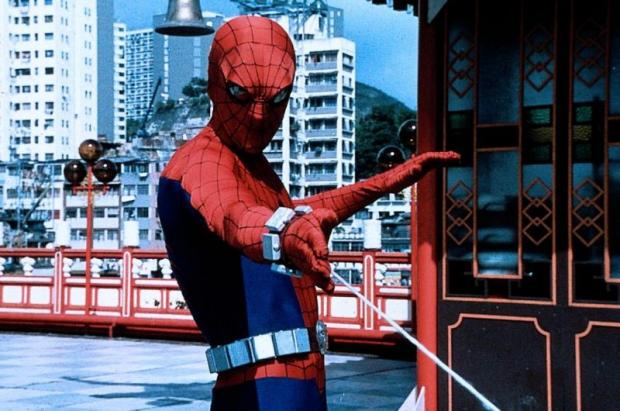
  • A Contrarian View on Spider-Man: Into the Spider-Verse

    A Contrarian View on Spider-Man: Into the Spider-Verse

    Editor’s Note: Spider-man:Into the Spider-Verse is one of the best reviewed movies of the year outside of Paddington 2.  Below our movie critic explains why everyone is wrong.

    Spider-Man: Into the Spider-Verse is a visual marvel. Inventive and colorful, clever and funny, it’s clear a lot of effort from a lot of talented people went into the animated movie. Why, then, was I so bored during much of it?

    Taking place in a mirror universe only slightly different from our own–instead of NYPD, the police here are PDNY,–and separate from the Marvel live-action movies like last year’s Spider-Man: Homecoming, Into the Spider-Verse is the origin story of Miles Morales, a young Brooklynite who’s bitten by the same radioactive spider that turned Peter Parker into Spider-Man, the web-slinging superhero.

    The plot kicks into gear when Miles stumbles upon Spider-Man  battling the evil Kingpin, whose giant, hulking frame, in an inspired visual motif, fills the entire screen like a black square. Kingpin is trying to open portals to other universes. His motivations for this are clearly presented, though awkwardly jammed into a random moment in the movie. I can’t quite decide if it’s elegant or half-assed. Either way, his meddling accidentally brings a number of Spider-People from different universes into Miles’ world. Young and not able to control his newfound powers, Miles latches on to one of these alternate dimension heroes, a middle aged, paunchy version of Peter Parker, who’s going through a mid-life crisis when he’s pulled out of his world and forced to be a reluctant mentor.

    With Kingpin’s dimensional device creating massive earthquakes underneath New York with every use, and with the accidental visitors facing a painful death if they remain in a universe not their own, Miles teams up with the other Spider heroes to defeat the supervillain and return his newfound friends to their own worlds. Among his new teammates: Spider-Gwen, an alternate universe Gwen Stacy bitten by a radioactive spider in her timeline instead of Peter; Spider-Man: Noir, a hard-boiled detective version of Spider-Man, always in black and white whose backstory and powers, beyond the traditional web-slinging, are anything but clear; if Noir’s character is unclear, wait until Peni Parker shows up. Clearly anime inspired, she has a robot counterpart powered by a radioactive spider that is also infused with her father’s spirit…I think, her backstory is also barely a blip; last is Spider-Ham, a Loony Tunes-esque, anthropomorphic pig version of Spider-Man.

    With that storyline and assorted bunch of wild characters, Into the Spider-Verse is definitely not hiding its comic-book roots. The film’s style makes that connection even clearer. Clichéd as it sounds, it really is a comic book come to life. The colors are vibrant and alive. A sheen of printing dots even lightly shades the images. The action is often framed like panels, and word balloons, sound-effects, and inner monologue (written into stark yellow squares, of course) all sporadically appear, floating around the characters. It’s a lively and bold aesthetic that pays perfect tribute to its source material.

    Miles Morales is a little different from a usual superhero.

    He’s into graffiti (a spray paint style is also neatly folded into the film’s visuals), he listens to hip-hop, which soundtracks the movie (gotta love classic Biggie tracks dropping in a Spider-Man movie), and he’s the son of an African American father and a Puerto Rican mother, with him switching easily between English and Spanish throughout.

    All this is impressive, at first. But when the eye-dazzling coolness wears off, which it naturally must, the script and the characters have to kick in to buoy interest, and that’s where the film ultimately lost me. Boiled down, the movie is just another origin story where the hero doubts himself endlessly and can’t control his powers until the very end, when he finally puts on the iconic suit that fans know from the comics. True, Miles’ journey through superhero training 101 isn’t mindless. Jokes are plentiful and often funny, and the reinterpretations of some of the classic villains from the comics are impressive. I especially dug this Doc Ock’s plastic tentacles that have a flexible, tactile quality not seen before on the character. And some of the action sequences are inspired, like a chase through an autumn, snow covered forest. But the pacing is slack. The opening thirty minutes or so first seem like patient table setting, letting us get to know the characters, but soon comes off as wasting time. When Miles finally is bitten by the spider, I couldn’t believe it hadn’t happened at least 10 minutes earlier.

    That slack pacing takes its toll on the myriad characters that show up. You have these potentially cool Spider-powered super heroes, but they arrive far too late and do far too little when they finally appear, barely even interacting with one another. One character exclaims a love for his new friends late in the movie, but that sentiment and the emotion behind it is not remotely earned.

    I’m still giving Spider-Man: Into the Spider-Verse a recommendation. It’s a visually bold, funny movie with energetic cinematography that doesn’t get bogged down in the dark and dreary like some superhero movies tend to. But that energy is sadly lacking from the core story. It’s certainly a pretty movie, but also a little dull.

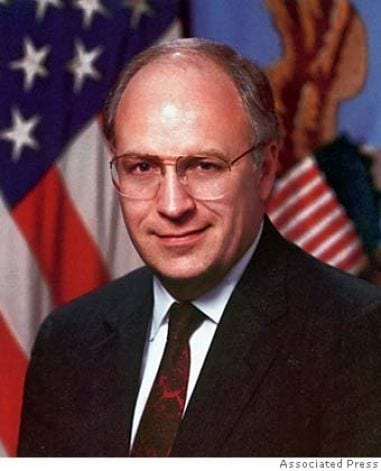
  • Vice Does a Halfway Decent Job Showing Why Cheney’s Nickname Is Dick

    Vice Does a Halfway Decent Job Showing Why Cheney’s Nickname Is Dick

    Who is Dick Cheney? It’s a simple question with a seemingly simple answer. He was America’s vice-president from 2001 until 2009. But who was he as a person, what made him tick, and what did he do in the White House for those eight years? Harder questions to answer, certainly, especially for a secretive man like Cheney. Vice valiantly attempts to answer these questions, and through its comedy via Oliver Stone prism, it answers some of them more successfully than others.

    Vice is a polemic, a righteous assault on a corrupt, self-serving government, which, unfortunately, is our government. As such it’s anything but subtle. Anger rarely is. Vice works best when it uses all of the cinematic tools at its disposal to clearly lay out how Cheney and his assorted white men of power abused their influence. It’s anger is palpable and often disturbingly funny.

    But it takes a while before we get to that part. Vice splits neatly into two halves with the above taking up the latter portion of the film, while the first chronicles young Dick Cheney (Christian Bale), an amoral drunk who flunked out of Yale, and his turnaround with his stern wife, Lynne (Amy Adams), by his side that eventually leads to the White House. This portion is not particularly engaging. It’s all table setting, trying to get to who Cheney was as a man. Problem is, it doesn’t have much to work with. Cheney is so enigmatic (something the movie itself admits in a funny opening title card) the movie’s never able to clarify what makes him tick. And so the movie plods along until it hits a fake out ending in the middle complete with cheeky end credits. They conclude what could have been the end of Dick Cheney’s career as a politician when Democrat Bill Clinton took over the presidency and Republican Cheney fell out of favor and considered retirement.

    The credits rewind, though, and the film resets itself with what actually happen afterward. Cheney was picked by George W. Bush as his running mate and when the duo took office, Cheney abused his power exponentially. It’s this second half where the movie really picks up, becoming a searing screed, an entertaining agitprop, a righteous attack. Using title cards, breaking the fourth wall, and obvious allusions (whenever Cheney, an active fisher, “hooks” political players in his schemes, we hear water running on the soundtrack), it lays out as clearly as possible the wrongs committed by Cheney and his cronies and how they got away with it. It’s on the nose, but it is effective.

    Vice‘s 2 hours and 12 minutes become tedious.

    Cheney’s inscrutability means that the thought processes that led to his political abuses aren’t particularly clear. The movie never finds Cheney’s inner voice. But that might be the point. He is one note. But that doesn’t make him particularly interesting as the center of a whole movie.

    And that one-note-ness bleeds, naturally, into Christian Bale’s performance. Handsome Bale, under mostly effective make-up and added weight, looks surprisingly convincing as the corpulent, balding vice president. But his croaky voice and measured mannerisms feel more like an impression rather than a full characterization. Bale never finds the soul of Dick Cheney, but, since the movie basically posits that the man has no soul maybe there wasn’t much for Bale to do but imitate the man.

    Vice clearly is biased, but it’s biased against men who care more about lining their pockets than they are about what’s good for the world. And whatever his political affiliation, Cheney did some fucked up stuff. This movie just happens to describe it. Could it be more balanced? Maybe. But it’s not insufferable. Vice could have made the Democrats pure and good and Cheney pure evil. But when it does acknowledge the presence of the Democrats it’s to show archival footage of Hillary Clinton supporting the invasion of Iraq in 2003. The movie saves its most damning indictment of the “other” side by barely if at all showing the Democrats throughout its run time, highlighting their ineffectuality during the W. Bush years with absolute silence. While Vice clearly despise Cheney, it does take the time to show a more human side like his immediate acceptance of his daughter, Mary (Alison Pill), after coming out of the closet.

    Yes, Vice is a polemic. As such, it’s not particularly refined, elegant, or subtle. And that means it’s not a great movie. But the way it casts a despairingly humorous eye toward our recent history makes a good portion of it go down entertainingly. We do laugh, but it comes through clenched teeth. Vice is angry. Blunt-force trauma angry. It has every right to be mad, and it does a good job of reminding us that we should be too.

  • Mary Poppins Returns Sure Ain’t Supercalifragilisticexpialidocious

    Mary Poppins Returns Sure Ain’t Supercalifragilisticexpialidocious

    As the title implies, Mary Poppins Returns is a sequel. It is so slavish to the original Mary Poppins from 54 years ago that it might as well be a remake. And, sadly, it’s not a particularly good one.

    The story picks up around 20 years after the events of Mary Poppins. The Banks children, Michael (Ben Wishaw) and Jane (Emily Mortimer), have grown up, with Michael having three kids of his own. Recently widowed, a depressed Michael finds himself in serious financial difficulties which threaten the childhood home he and his family still live in. In pops Mary (now played by Emily Blunt), the magical nanny, gliding in on a kite to save the day. With the help of a lamplighter, Jack (Lin Manuel-Miranda), she sings and dances her way to setting things right…

    …supposedly. The movie’s problems begin with that plot. It doesn’t come up with a good enough reason to bring Mary back. The Banks family’s emotional issues can only be solved with time. They need to grieve. The money stuff? Poppins has never been about money, and she doesn’t do anything particularly useful in respects to that anyway. Mary Poppins’ return, simply isn’t necessary, and neither is Mary Poppins Returns.

    But return she does because the Walt Disney corporation wants to bleed every last drop from every franchise it owns, resulting in this copy. Everything here is an approximation of a scene, a theme, a moment from the original. Mary and the gang spent a good portion of the first film in an animated universe surrounded by wonderfully drawn anthropomorphic characters, so of course, that’s repeated here. Except it leads to a noisy and completely pointless chase sequence. Originally, Mary was joined by Bert, a jovial chimney sweep, culminating in a still amazing dance sequence on London’s rooftops. Here she’s joined by Jack, who eventually does an extended number with his fellow lamplighters in an underground park. How that’s supposed to top dancing on the rooftops of London is anyone’s guess.

    Mary Poppins Returns is so obsessed with redoing everything that came before it.

    They even have New York-born Lin-Manuel Miranda doing a phony English accent just like Dick Van Dyke’s Bert, except Miranda’s isn’t particularly charming. When they do take detours, it’s in ill-advised ways. That animated sequence mentioned in the top of the paragraph kicks off with a musical number in which Mary Poppins appears dressed as a cabaret singer, singing a song filled with double entendres and innuendos. What were they thinking?

    After all that, I have to admit, I didn’t actively dislike Mary Poppins Returns as I watched it. If the studio behind it is in it clearly for the money, at least some of the talent involved in making the actual movie seem to be trying. The music left the best impression on me. Both the score by Marc Shaiman and the songs, also by Shaiman with lyrics by Scott Wittman, ape the original’s music well, the score especially. As for the songs, it’s difficult to imitate the Sherman Brothers, who wrote so many catchy, clever songs for Disney’s musicals in their golden era. While the musical numbers  aren’t as clever or memorable, they are enjoyable, toe-tapping fun for the most part. The movie does engender a certain goodwill with them. You won’t walk out of the theater depressed, at least.

    Emily Blunt’s casting as the titular Poppins is solid on paper–she’s beautiful and classy, can sing and dance, and is British–her performance is so predicated on imitating Julie Andrews, who originated the role on film, that she never manages to make it her own. Worse, she pushes that imitation so far that it comes off as forced, never quite capturing the yin and yang of Andrews’ Poppins whose cold, confident exterior was tempered by that smoldering warmth and caring underneath, shining through Andrews’ expressive eyes (yes, I have a thing for Mary Poppins). That frigid exterior is all Blunt comes up with, bypassing the lurking sadness of a woman who loves all of her charges dearly, but always has to leave them because their love is meant for someone else, which, as she says in the first film, is “as it should be.” Blunt never finds that sadness, leaving her a smirking background presence who lurks in the periphery and simply blows out of the frame by film’s end rather than mysteriously, elegantly carried off by the wind.

    The ethos behind this production is cynical and calculated. Instead of earning the audience’s emotional response, everything is piggybacked onto the fondness we have for the original. And yes, it’s going to ride those coat tails all the way to the bank, but that butt load of money won’t make the movie good. They should have left well enough alone.

  • Spider-Man: Into the Spider-Verse Is the Rare Comic Book Movie Made for Kids and not Adult Nerds

    Spider-Man: Into the Spider-Verse Is the Rare Comic Book Movie Made for Kids and not Adult Nerds

    I’m a bona fide comic book nerd, the type who got weepy eyed when Stan Lee passed away last month, but even I have to admit comic book movies have gotten to be a bit too much. When you need a scorecard (or at least a copy of an Official Marvel Handbook) to know what’s going on in the latest Avengers movie, something has gone awry.

    It’s a problem that printed comic books have been dealing with for a while. When you go to a comic book store nowadays you’re more likely to see a 40 year old customer than an 8 year old one. Part of that is the insane price of comics, but it’s also because their universes have become so large and convoluted there’s no jumping on point for new readers.

    Comic book movies have reached a similar crossroads where you need to have seen the 20 previous Marvel movies to get what’s going on in the newest edition. That is great for someone like me who has studied all the backstory, but what about the kid who doesn’t know Hawkeye from Hawkman? 


    Fortunately those kids now have Spider-Man: Into the Spider-Verse. It is the first comic book movie made in a while with the kids in mind. First off, it’s a cartoon (one that is uniquely animated). Secondly, despite the overly wordy title and a plot that is impossible to explain, it tells a fun self-contained story that is not bogged down in continuity. You can go to this flick without ever hearing of Spider-man and still enjoy yourself.

    In this animated movie there’s an infinite number of alternate dimensions, each one having a different Spider-man. In one world Spider-man is a blonde teenage girl, in another he’s a pig, and in another he’s a noir figure spouting Raymond Chandler-esque dialogue. In this movie they all get together to help fight The Kingpin and his minions.

    Having all these Spider-characters of different shapes, sizes and ethnicties was a clever way to get around a common complaint. Nerds have been getting uptight that comic book and Star Wars movies have been casting more women and minorities in pivotal roles. But it makes the Hispanic kid excited to see a Spider-man with the name of Miles Morales, just as it made my daughter want to read a Spider-Man comic after seeing a female Spider-man swinging around that looked like her. 

    The movie goes out of its way not to tell the same old story of your or your father’s Spider-man. Think of it as your kid’s Spider-man. And if you don’t like the idea of that you can always rewatch the Sam Raimi/Tobey Maguire Spider-man movies or better yet, pull out those Stan Lee written comics. 

  • Roma is one of the Best Movies of 2018

    Roma is one of the Best Movies of 2018

    Roma opens with a long, serene shot of a tile floor. As the credits play over the black and white image, water repeatedly washes over the tiles, wave after wave. The soundtrack is made up of the ambient sounds from the location: the water, the humming of the woman washing the floor. There’s the low rumble of an airplane in the background, its reflection flits quietly through the temporary mirror of the water. The opening sets a distinct mood. It’s a distillation of the film’s techniques, a precursor of what to expect: a languorous odyssey through a specific time and place. And, oh, what a journey it is.

    Based on director Alfonso Cuarón’s memories, Roma’s plot is simple. Taking place in Mexico City during the early ‘70s, the film follows roughly a year in the life of Cleo (newcomer Yalitza Aparicio), the woman washing the floor in the opening shot. She is the longtime live-in maid of an upper-middle class family. She is so familiar to Sofia (Marina De Tavira), Antonio (Fernando Grediaga), and their four children, that she’s almost family herself. As the year passes, Cleo experiences dramatic events in her personal life, upheavals in the family’s life, and plays witness to the political and social turmoil of the time.

    While the plot is simple, what plays out around the film’s frames is anything but. There’s a quiet focus on the disconnect between Cleo’s status as family member and employee. When the chips are down, she is taken care of, loved. But she still is a wage slave, working non-stop from early morning until late at night, and when Sofia is upset (her marriage to Antonio is falling apart), she becomes verbally abusive to Cleo. And something is going on in the society around her. Talk of unrest, of riots, horrifying stories of soldiers shooting children because of a stupid water balloon prank, interrupt, in snippets, the calm of the everyday. The façade of normalcy is slowly eroded by these tensions, helping drive a narrative that would otherwise be placid.

    Rubbing up against this tension is a hint of magic realism that never quite tips over into the magic portion but still suggests an otherworldliness. A man in costume singing in the middle of a forest fire; Cleo’s boyfriend, practicing martial arts, fully nude; a lengthy, hypnotic sequence in a training camp  that ends with a blink and you’ll miss it moment suggesting Cleo has the calm and serene self-control of a martial arts master. These moments surprise and help buoy the natural rhythms of the film.

    None of this plays out in an obvious or familiar way. Cuarón, who won the Best Director Oscar for his last film, Gravity, is the cinematographer here (he also wrote the film’s screenplay) and his camera work remains at a distance, panning back and forth to capture the action, almost like high-gloss security camera footage. Close-ups are sparse and rarely directly cut to. Instead, if we get closer to someone it’s because the actor will come to the camera within an uninterrupted take. It’s fly-on-the-wall if the fly were an arthouse director. These techniques have a distancing effect, allowing the drama to breathe and be taken in naturally.

    And what the camera captures is gorgeous from beginning to end. Shots are intricately planned out and attention grabbing. Light caresses the frame, and there’s an elegant use of focus. Usually, Cuarón sticks to a deep depth of field, like in the breathtaking shots of Cleo navigating downtown Mexico City or the countryside outside the metropolis where every object from up close to the camera to far in the background is in pristine focus. At other times, Cuarón uses a shallow depth of field to heighten the drama. During a harrowing birthing sequence, a devastating part of the shot, in midfield, is out of focus, while a person in the foreground reacting to it is in sharp relief, training our attention on the character’s emotions.

    The film’s style elevates the banal, the everyday, and helps push the things that aren’t. It holds back to let you experience the images, the sounds, the dialogue, but at the same time, It’s not clinical. You have room to build interpretation, but there is an artistic eye guiding you. It’s a hands off approach that still has its hands on you.

    I spoke to a colleague who felt the middle of the movie sagged in its pacing, another felt there wasn’t much to bring the viewer back again. Both have their points, certainly. The meandering narrative can be a little oppressive, especially in that middle section where its intentions are anything but clear. And you do feel exhausted by the end. It may not be something you’d want to rewatch immediately. But it’s a potent movie, remarkable for what it says and how it says it, anchored with a beguiling performance from Ms. Aparicio who perfectly presents a mousy, quiet demeanor that’s belied by an inner strength of spirit. True, I wasn’t exactly rushing to experience it once more as I left the theater, but I have the feeling I’ll be revisiting Roma again and again in the years to come.