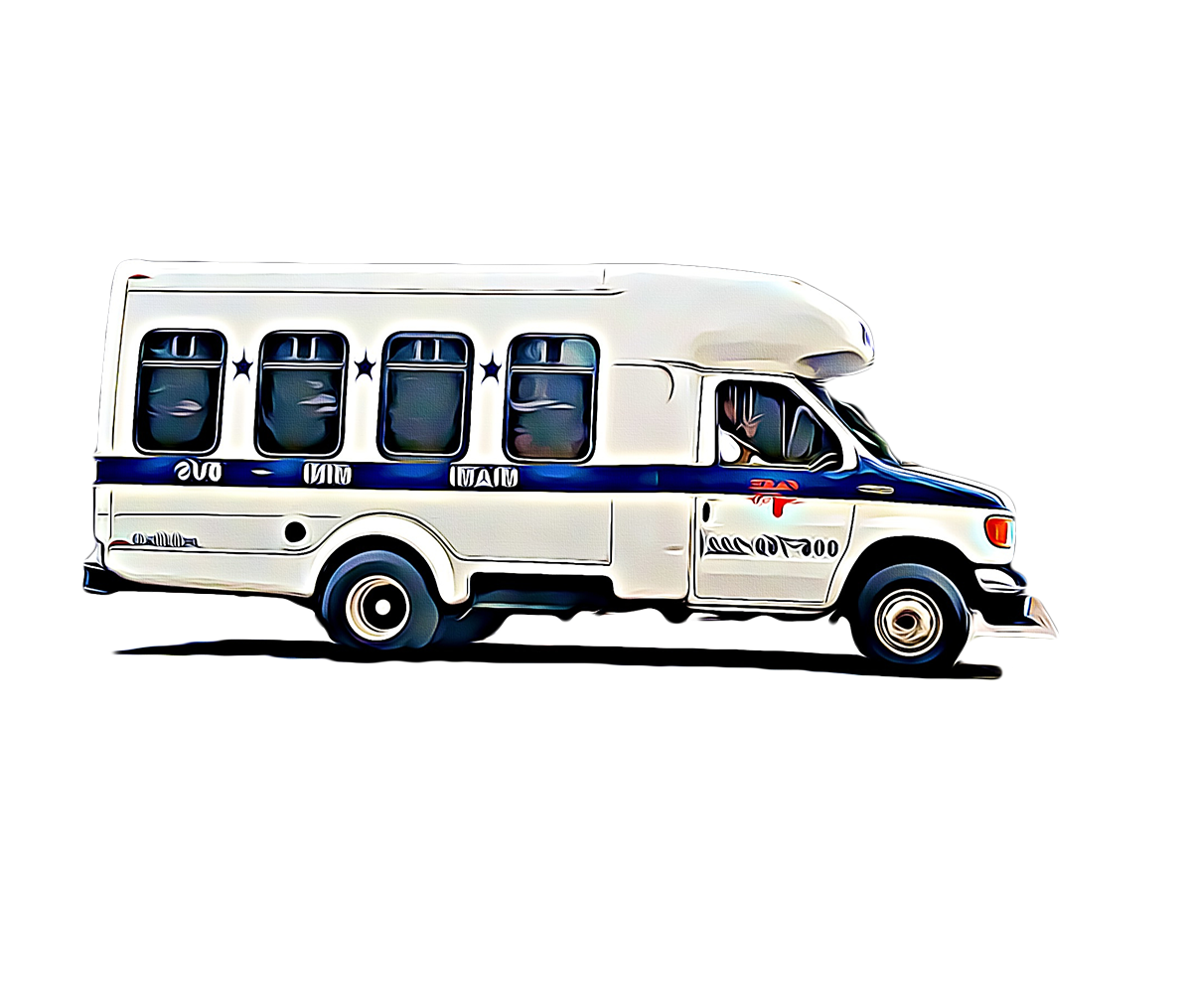

As in so many other cities around the country, the various city governments of Coral Gables, Miami and Miami Beach decided to operate, on various routes, free vehicles mostly for their residents but available to any who care to use them. To get people to ride them they cutesied them up to look like old-time trolley cars and put the word “Trolley” on them in extra-large letters. The only problem is, no matter what you, we or they call them, they are still nothing but a g-d dang bus.
Folks, and this simply put, if it runs on concrete, has rubber tires and is powered by gasoline or another type of fuel such as diesel, it doesn’t matter what word is put on the side of it: it is still a g-d dang bus.
To understand this misplaced desire to—in “their” minds—make a vehicle more attractive we need to try to understand why this is being done, and the answer, no matter what the politicians want to tell us, is a nostalgia for something that we never should have lost, not here in Greater Miami, in the numerous cities and towns in Florida that had street and electric railways, and throughout the country.
In, if I remember correctly, some time around 1965 or ’66, I did a tour of the eight remaining American cities left from the literally several hundred that had street cars or electric interurban railways in operation. And while, yes, San Francisco had it’s fabled cable cars it still had several electric trolleys on rails routes. El Paso had just closed the system but the cars were still there, in the car barn and shops, but Philadelphia, Boston, New Orleans and three other U. S. cities still had real trolley cars, not buses being falsely called trolleys. In addition to “ours” Toronto had never given theirs and still had a sizeable system operating.
The last Miami streetcar operated in 1940 and the mayor at the time, who, like government officials throughout the country, took gratuities from the Conspiracy to hasten the changeover from trolleys to buses. That conspiracy, led by General Motors (As Captain Reynaud said, in Casablanca, when Major Strasser order him to shut down Rick’s Café, he went in, blew his whistle, and shouted “this place is closed by order of the government—gambling?!!—there’s gambling going on here, I’m shocked!” at which point a croupier came up to him and said, “you winnings, Captain Reynaud!”).
And that, folks was exactly what happened when the Conspiracy, the automobile builders, tire and rubber companies, road builders and oil and gas companies, got together to devise a scheme to sell their goods and products. That scheme was simple: pay offs to officials of private companies operating the rail transit lines as well as government officials who could order said rail lines closed down. And they were enormously successful. “But Seth,” you respond, how do we know that what you are saying (writing) is factual? Not only is than an excellent question (thank you for asking!) but in 1952 (yes, you can look it up) the Supreme Court of the United States found the four industries, in toto, guilty of conspiring to destroy America’s street and electric railways and fined them what, even then, was an utterly and ludicrously insignificant amount, especially considering the damage they had done.
While one of the books I am working on is titled Sunshine State Trolleys: The Street and Electric Railways of Florida and while our future articles on this topic will deal mostly with the three Greater Miami systems, Miami, Miami Beach and Coral Gables, we will conclude this first episode with two true stories directly related to the topic.
Sometime in the early 1960s a group of Twin Cities (Minneapolis & St. Paul, Minnesota) transit executives were found guilty of conspiring to accept bribes in order for the Conspiracy to get them to give up their extensive street car and interurban railway system and convert it to buses. They did so and destroyed one of the finest interurban and intra-city rail transit system in the country.
And the other terrible example? In none other than “the greatest city in the world” during the reign of Fiorello LaGuardia and Mayor and Robert Moses as his city administrator.
When the fabled New York, Westchester and Boston interurban electric railway declared bankruptcy in the 1930s there was a tremendous outcry for the city to save it, but Moses stepped in and claimed that, since a good bit of that company’s lines were north of the Bronx, the only part that the city could take over was what was in that borough and because of the decision of those two rail-haters that high-speed electric railway north of the Bronx was abandoned. But with Moses it didn’t end there.
He, never hesitating to take advantage of gratuitous offers by the Conspiracy got the city to abandon most of it’s elevated railway lines in Manhattan, but, and on top of that, he announced that he was going to present a plan to turn the subway lines in bus tunnels and get rid of the trains operating therein.
While it doesn’t end there, we are here, and in the next posts we will focus somewhat on the street and electric railways of Florida but primarily of Miami.
Support independent Miami stories.
Help keep The Jitney running. It only takes a minute. $5, $10, $25, $100, $500, Bitcoin, SpaceX stock, a suitcase full of unmarked bills. Whatever. The Jitney needs gas, and every donation helps keep independent fiction, arts coverage, and Miami culture alive.
DONATE