Category: Books

  • Pedro Medina León on Red Fish, Noir Fiction, and Miami

    Pedro Medina León on Red Fish, Noir Fiction, and Miami

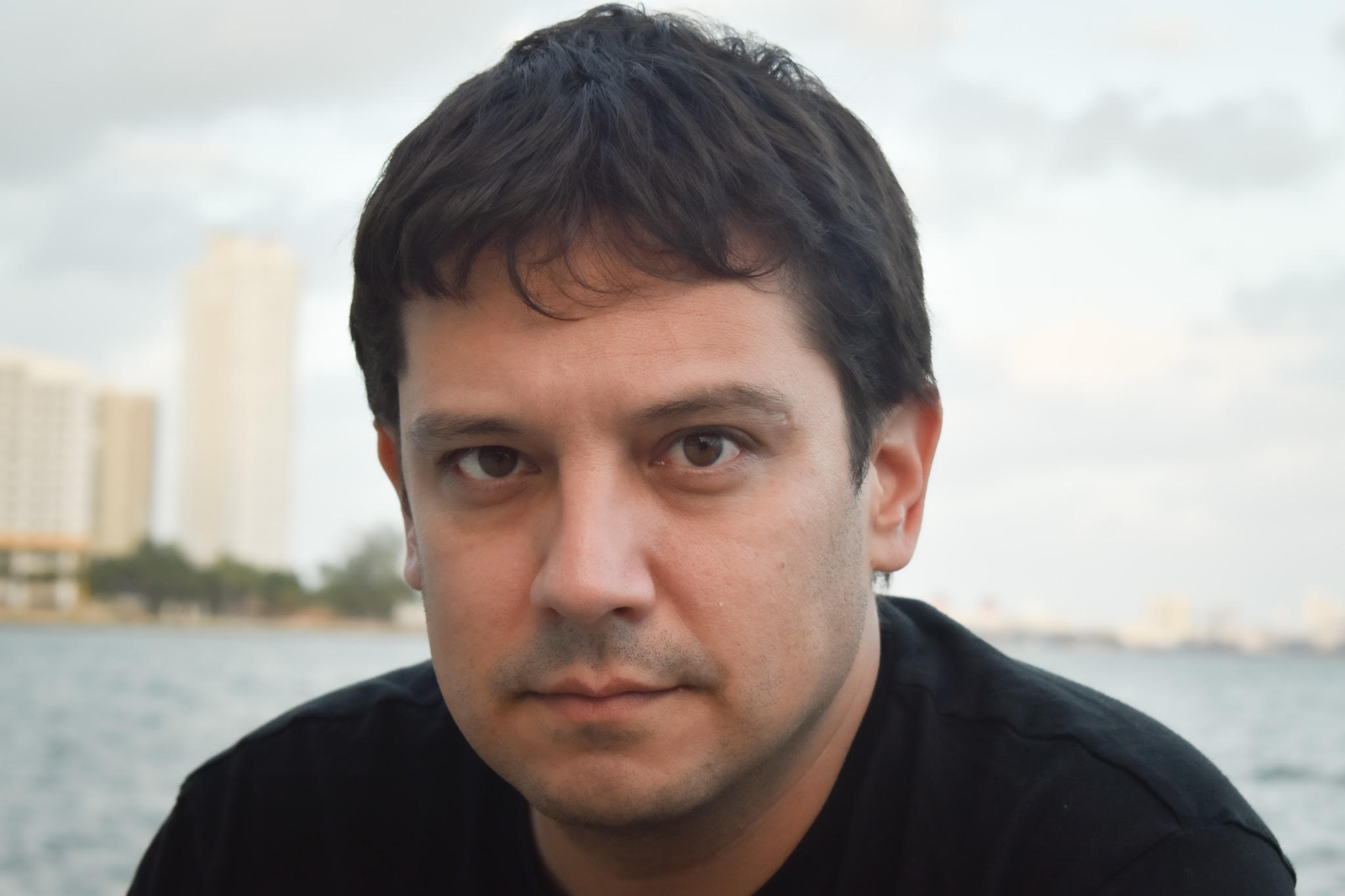
    In his latest novel, Red Fish, Pedro Medina León returns to the shadowy streets of Miami with Comanche, a private detective whose moral contradictions are as complex as the city he inhabits. Published in English by Jitney Books, the novel follows the murder of a journalist into a labyrinth of political secrets, Cuban exile history, and the darker corners of Miami’s past.

    Red Fish is the sixth installment in the Comanche series and the second to reach English-speaking readers, following Comanche, P.I. For Medina León, whose fiction has long explored the city’s immigrant communities, criminal underworld, and overlooked neighborhoods, noir is more than a literary genre. It is a way of telling the stories that exist beyond Miami’s carefully constructed image of glamour and paradise.

    In this conversation with Nata Napolitano, Medina León discusses the relationship between fiction and political history, the contradictions of his detective, the two faces of Miami, and why he believes the city’s most compelling stories remain largely untold.

    In Red Fish, the murder of a journalist opens the door to one of the darkest chapters in Miami’s history: the Cuban exile community, the CIA, and covert operations against Fidel Castro. What inspired you to connect a murder investigation with the city’s political past?

    Pedro Medina León: I believe the greatest stories often lie behind human mistakes, our failures, and our petty acts of cruelty. Sometimes, what appears to be a simple murder is only the beginning of something much larger. Behind that single act of violence, there may be an entire world of secrets, contradictions, and human misery waiting to be uncovered.

    And then there’s the political side of it, as you mentioned. Politics is dirty. It’s full of resentment, revenge, betrayal, and sometimes even murder. That’s true today, it was true in the past, and I suspect it will always be true.

    Miami, in particular, is full of stories waiting to be told. Stories that may or may not have happened, but that could very well have happened. This city has a dense, murky political past, and I’m fascinated by it. I enjoy digging into that history and using elements of reality as the foundation for fiction.

    Red Fish is not based on a true story, but it’s the kind of story that could easily have happened. Because these things happen here, perhaps more often than we’d like to believe. The difference is that many of those stories remain buried. They haven’t been exposed, or at least they haven’t been told nearly enough. And that’s precisely where my interest as a novelist begins.

    Comanche is far from the traditional private detective. He drinks, smokes, gets into trouble, has a complicated relationship with his daughter, and often operates on the wrong side of the law. What fascinates you about his contradictions, and how has he evolved throughout the series?

    I think this connects, in a way, to what I was saying before. Not everyone is good, and not everyone is bad. Not everyone who pursues what is right is necessarily a good person, and not everyone who does something wrong is entirely bad. There are shades of gray.

    Comanche is simply another human being, made of flesh and blood, with all his contradictions. He’s selfish, and although he tries to do the right thing, he does it on his own terms, according to his own moral code. If doing the right thing means bending the law, he’ll bend it. And if it means neglecting his daughter, he’ll do that too. That’s how people are sometimes.

    It’s not that I’m particularly fascinated by these contradictions. It’s just that this is who we are. Human beings are a constant contradiction.

    Comanche has changed quite a bit over the course of the series. Red Fish is the sixth novel in Spanish, although only the second to be published in English. And over those six books, we’ve seen him grow older and change. I wouldn’t necessarily say he’s become more mature, but he’s certainly become more aware of certain things.

    For example, he used to be completely detached from his daughter. In this novel, he makes an attempt to reconnect with her. There’s a certain sense of regret that wasn’t there before.

    But more than maturity, I think what’s happening is that age is beginning to catch up with him. He’s starting to realize that freedom doesn’t necessarily mean spending your nights drinking, getting drunk, or chasing prostitutes. Sometimes freedom is simply being alone in your room at the boardinghouse where you live, eating on your bed, with nobody bothering you or telling you what to do. He’s beginning to appreciate those small things.

    At the same time, he’s beginning to feel lonely. He’s experiencing regrets he didn’t have before, along with a growing fear of aging and being alone. And that’s something many of us experience as we get older.

    All of this is part of what makes Comanche a flesh-and-blood character. His contradictions, his selfishness, his fears, his regrets. He’s not a hero in the traditional sense. He’s just a human being trying to make his way through life, like the rest of us.

    Red Fish portrays two very different Miamis: the affluent world of Coral Gables, with its mansions and buried secrets, and the gritty streets of Little Havana, filled with outsiders, neighborhood characters, and everyday struggles. How important is this contrast to the novel and to your vision of Miami?

    I think we’re still talking about contrasts and contradictions. Just as Comanche is a character full of contradictions, Miami is a city built on them.

    Miami sells itself as a kind of Alice in Wonderland, a playground for tourists, vacationers, and millionaires. A place where everyone comes to have fun, relax, and enjoy life. But that’s only a small part of the city.

    The Miami I know is a much tougher place. It’s a city with a huge Latin American working and middle class struggling to survive every day in a place that keeps getting more expensive and more difficult to live in. These are people who left their countries, their homes, and often their families behind, hoping to build a better life here.

    Beyond the glamour, beyond that postcard image Miami exports to the rest of the world, there’s another city. A city where a large part of the population struggles to make ends meet. There are poor neighborhoods, violence, crime, poverty, and people living under extremely precarious conditions.

    And that’s the Miami that interests me as a writer. I like digging into those dirty, forgotten, marginalized corners of society, into the streets and neighborhoods that rarely appear in tourist brochures, and bringing those stories into literature.

    That’s what fascinates me about this city. Miami is full of stories waiting to be told, not only because of its complicated political history, as we discussed earlier, but because of its streets, its people, its neighborhoods, and even its street corners.

    You don’t have to look very far to find a story in Miami. You just have to look beyond the postcard.
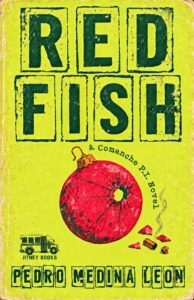
    You have written several Comanche novels in Spanish, but Red Fish is only the second to be published in English, following Comanche, P.I. What does it mean to introduce such a distinctly Latino and Miami-rooted character to English-speaking readers? Do you think they discover a different Miami through his stories?

    Miami has a long tradition of noir fiction written in English. In Spanish, that tradition is still in its early stages, but I believe it’s absolutely necessary. Literature, after all, is another way of telling the story of reality. Realist fiction allows us to explore that reality through the mask of fiction.

    And as we’ve discussed in the previous questions, Latino noir reveals another side of Miami, a side that doesn’t necessarily appear in noir fiction written by Anglo-American authors.

    I think there’s a fundamental difference between the Anglo and Latino perspectives. Latino writers have to navigate both worlds. We know the Anglo world because we live in it, but we also know the Latino world from the inside. That gives us access to both sides of the city, including the poverty, marginality, and contradictions that exist within both communities.

    An Anglo-American writer, on the other hand, doesn’t necessarily have that same intimate knowledge of Miami’s Latino communities, particularly their most marginalized neighborhoods. And there’s a fairly simple explanation for that.

    The smaller community needs to understand the larger one in order to survive. The larger community doesn’t necessarily have the same need to understand the smaller one. In Miami, the Latino community has historically occupied that smaller position in relation to the dominant Anglo-American culture.

    So Anglo writers don’t necessarily have to roll up their sleeves and immerse themselves in the Latino community. Latino writers, however, are constantly absorbing and navigating Anglo-American culture. We move between both worlds, and that gives us a different perspective on the city.

    That’s why I believe it’s so important to translate this literature and bring it to English-speaking readers. I want Anglo-American readers, especially those who live in Miami, to discover another side of their own city, a world they may know very little about, even though it exists right alongside them, on practically every street corner.

    Ultimately, it’s about showing them the real streets of Miami.

    For years, your fiction has explored a Miami rarely seen in tourist brochures: immigrants, hustlers, criminals, dive bars, and people struggling to survive on the margins. Why has this world become the central territory of your writing? And how much of Miami is still left for you to explore?

    I think this question is, in a way, a summary of everything we’ve been talking about.

    First, because I want to show another side of Miami. Second, because I want to continue a literary tradition that has existed for decades in English, but this time from a Spanish-language perspective.

    And third, because I’m deeply attracted to the other side of the coin. I’m drawn to the margins of society. I enjoy writing from that perspective, telling stories from those places, exploring the lives of people who exist outside the mainstream. I find that world fascinating, and I believe Miami is full of extraordinary stories waiting to be told.

    As for how much of Miami I still have left to explore, I think this city is an inexhaustible source of stories, and very little of it has actually been told.

    But I don’t sit down with the intention of writing stories about Miami. The stories simply come to me. They find me, sometimes they almost assault me, and eventually they compel me to write them.

    So as long as that keeps happening, as long as Miami continues to be the driving force behind my fiction, I’ll keep writing about it. Until the day that impulse is no longer there.
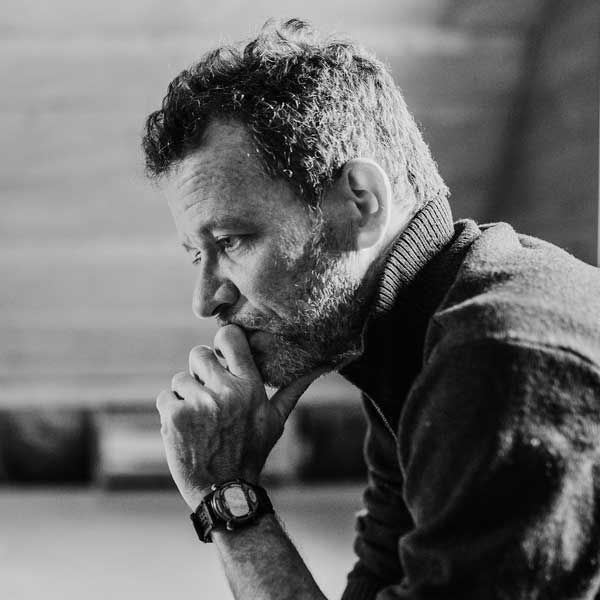
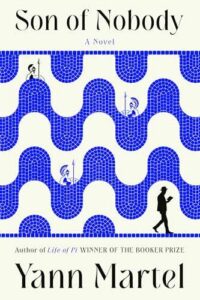
  • Yann Martel – Author of Son of Nobody & Life of Pi Interview

    Yann Martel – Author of Son of Nobody & Life of Pi Interview

    Not too long ago when asked my favorite book, I came up with Life of Pi. It’s the rare book I’ve read more than once, each time amazed by how effortlessly it blends high adventure with deep philosophy. When I learned the classic novel’s author, Yann Martel, was coming to the Miami Book Fair to promote his newest novel, Son of Nobody, I asked him to hop aboard The Jitney. Via Zoom from his home in Canada, Martel discussed his writing process, what he’s reading now, and what literary work might be up his sleeve next. Make sure to also check him out Saturday, November 21 at 4 pm at The Miami Book Fair.

    When did you first realize you were a writer? 

    Yann Martel: When people started liking what I was writing I guess, which  started with my father. I was afraid of the working world, actually. I finished a degree in philosophy at university and I was terrified of the working world. I didn’t see what I could do that anyone would give me money for. So while waiting for my life to start, I started writing. This was in Paris, France. I was living with my parents off my parents. They were diplomats working for Canada’s foreign service.

    I started writing short stories just to sort of pass the time. And I realized that I liked doing it, but that doesn’t mean anything, right? We can like doing all kinds of things, doesn’t mean we’re good at it. But then people starting appreciating it. I got a short story published. They paid me, I think, $200 Canadian. So that encouraged me to go on. It happened sort of progressively. That little flame can easily be blown out, that little flame of creativity, that sort of self-confidence that you have something to say, you’re willing to work on it. It happened to be that it was nurtured, so I kept on going.

    I eventually got better at short stories, got a book, a collection of short stories published. Then I had a first novel, neither of which sold particularly well, a few 1000 copies in Canada. And then my third book was Life of Pi. So I sort of fell into it. I wasn’t like this 12 year old saying I will be Leo Tolstoy. I was a 12 year old saying, you know, what the fuck am I going to do in life? And this came up. 

    I’m going to definitely ask you about Life of Pi, but I figured at first I’ll ask you about your new book. What inspired Son of Nobody? 

    Belatedly reading the Iliad. I grew up on Greek myths, but retellings, Edith Hamilton, hugely popular in America, her retellings, and Roger Lancelyn Green, he was a British writer. I grew up on these retellings of the Greek myths that are so vivid and violent, and yet there’s a lesson contained within each one. But I never read the original material.

    A few years ago, my partner had just read a new translation by Stephen Mitchell. He did a wonderful translation of the Bhagavad Gita and also of Rilke and of Gilgamesh. I found the Iliad to be not what I expected. I thought it’d be sort of venerable and funky and vaguely boring.  I thought it would be a stately great novel that we could leave behind. But in fact, it wasn’t like that at all. Its focus on anger felt very contemporary.

    Some of the storytelling elements, like the river god Scamander pursuing Achilles across the plain, felt totally cinematic, felt out of a Hollywood movie. So there were just parts of it that felt unexpectedly modern. And also I was surprised that it’s focused  on this emotion of anger, of wrath. It is famously the first word of the Iliad, mēnin, wrath. And so it’s just funny that the West in its very first book should focus on that emotion. Not love, not the grandeur of being Greek, not on Greek food, not on sex, not on love, but on anger. I thought, how interesting. And also that sort of echoed how interesting that a few hundred years later, another key story of the west out of Palestine should focus on exactly the opposite emotion, love. Same rough background where people died young, horribly, with no modern medicine, no human rights. You know, still a pretty lousy world, but one story focused on anger, one focused story on love. And both are kind of mythical stories, they’re not rooted in history. 

    And so going from that inspiration from reading the Iliad, can you walk us through your process of writing Son of Nobody?  

    Right away I thought of a dual strand. There’s no point talking about the past on its own terms. You want to talk about the past in terms of its relevance to the present. Hence all this cottage industry of retelling of Greek myths from a feminist perspective. You know, The Song of Achilles, Circe, The Women of Troy by Pat Barker. You look at the past to  see what it can shed on the present either by tinkering with the metaphor or actually learning directly.

    I wanted to make this link between the Gospels and the Iliad because after all both emanated from the Greek language. Both of these stories were written by Greek writers. Paul of Tarsus was a Greek speaking Jew. The evangelists were all Greek speaking Jews. Anyone who spoke Greek at that time would know Homer intimately. This was long before Amazon and a billion books out there. Homer was the original bestseller. In fact, in some ways the only seller. So anyone who spoke Greek would be intimately familiar with the Iliad and the Odyssey. 

    It very naturally came to be from the perspective of a commoner. That wasn’t even something I thought through very much. I mean, I’m a commoner, you’re a commoner. We’re all sons and daughters of nobody. That’s what gets called being a citizen now. We’re not highfalutin lords. We’re not billionaires. We’re citizens. So that came right away without much thought. That was fairly obvious.

    But this dual strand of dividing the page, I thought what best way, because I wanted each strand to have its own space to be told on its own terms. So at the top of the page you have verse fragments in old fashioned verse and that’s the past fiction in a sense. And at the bottom you have these little scientific footnotes, very technical, technological, that’s the present. So they’re in dialogue. So that format came very early and that kind of unlocked the story for me. 

    I wanted this parallel. In Iliad, we learn not to be prisoners of anger. It is a story of anger and the wreckage of anger. So I wanted to have a parallel story of a man who also leaves his family like Psoas. He goes to Greece, took Troy. Harlow goes to Oxford, and there are sacrifices to be made. So it was interesting looking at the cost of work. Is our work worth it?  What is the meaning of work what is its cost? Harlow goes to Oxford with high expectation. As things don’t go as he planned, he makes mistakes the way Agamemnon does. At one point Harlow very self-consciously compares himself to Agamemnon saying he’s made the same mistakes. And like Agamemnon Harlow pays a price.

    Once you made all these decisions, are you someone who does an outline or do you just forge ahead and write and see what happens? 

    No, I do lots of research. I write things and then I put them in envelopes. I print it out, cut it up into little snippets and put it in envelopes depending where it belongs in the book. I wouldn’t call it an outline. I do this envelope system where each envelope is a chapter. In a sense, the bones, the skeletons of each chapter, each fragment, each part of the book are there. 

    I know there are writers who just start writing and don’t know where it’s going, but to me, that’s like starting to do an architectural drawing, not knowing whether you’re building a house, a hospital, a stadium. or a spa. Form must follow function. What you write on page one must have in mind what happens on page 300, because presumably that’s where you’re going. But you know, each writer is different. That just happens to be my method. I carefully plan everything. So for example, to take the example of this one, I knew right at the start, where it would end. You know how the last fragment would end and the last footnotes. You know you tinker with the language but the intent was there right from the start. 

    Do you remember your writing process for Life of Pi? Was it similar? 

    Very similar, the envelope system. In a sense, for Son of Nobody, there was less research to do, because it’s all a mythical world. We don’t know who Homer was. We don’t know where he lived. The story floated over the centuries from the Greek. It floated through oral culture before landing on the page, so I went to Greece. I went to Turkey. to that lamentable archaeological site called Troy now, which is not much. And I went to the Peloponnese, but that was just to soak in the atmosphere. Good excuse anyway to go to Greece.

    But for Life of Pi, I did a lot more research. I’m a secular writer who’s interested in religious thinking because I think it parallels artistic thinking. In both we invent worlds that guide us and that in a sense become true. So I did research on religion, Hinduism, Christianity, Islam, and without a cynical approach. Without looking for the patriarchy, the sexism, the homophobia, the anti-Semitism. It’s all there, but that’s not only what it’s about. That’s a kidnapping of the original attempt. Not everyone is out there to hate with Jesus, to hate with Allah.

    So I did research on religion. I read the fundamental texts or a text about them, and then I did research on castaway shipwrecks, did research on animal behavior. And it all came together actually quite easily. But I did the same thing. When I started Life of Pi, when I wrote the first sentence, I knew exactly how the last sentence would be in the last chapter. And these envelopes, I moved them around. Like for example, in the Pacific, it didn’t particularly matter when Pi would see a whale as opposed to when a ship would go by and not see him. I sort of moved that around just in terms of giving it a sort of a rhythm. 

    Are you a big rewriter? Or once you get that first draft, that’s it?

    Oh no, I’m incessantly rewriting. I mean, that’s what’s great about computers is you can do micro drafts. Whenever I write, I start right from the beginning in a sense, and I hover over the page. Because clearly if something gets stuck in your craw, if you can’t, it’s because something’s wrong. So I incessantly micro edit, like I’ll change a comma, I’ll rewrite a sentence, I’ll cut, I’ll add. I love doing that. It’s like a painter playing with paint, with the texture of words playing with it. So I incessantly, incessantly rewrite, and I find it a wonderful thing to do. That’s why I haven’t written that many books, because it’s lovely to be in them the whole time. It’s like a golfer, you hit that ball right, it makes that little thwack sound, it just goes straight. When you get a sentence right, that has the right length, the right pace, the right punctuation, the right vocabulary, the right adjective that falls right in the right place. Each sentence, in a sense, is like a mini novel. To get that right is, for a writer, deeply, deeply satisfying. 

    Another of your books I loved Beatrice and Virgil came in succession. How much of yourself did you put into that? Because it seemed the parallels were there with your life. 

    I mean, yes and no. I did have a meeting where my editors didn’t like this essay. I did that because, you know, people like when a story is quote unquote factually true. That’s to convince them more. So I use that, but no, not particularly.

    Beatrice and Virgil is a novel that I’m very close to. I love all my books. They’re like my children. I have four children. I love each one of my books. They’re all to me lovable for me. But I have to say Beatrice and Virgil is one I still find talking about the Holocaust interesting. I don’t mean the historical events. itself because that’s a very known thing. It’s very knowable now. It’s one of those historical events that has been explored with extraordinary detail, I’d say nearly unparalleled the attention to detail. That’s all.

    In 2026, what does this nearly ancient massacre of innocence do we just keep on recounting it historically or do we not need the metaphors of art? That’s what I was attempting with Beatrice and Virgil. In a sense, what Orwell did with Stalinism with Animal Farm is at one point, the metaphors have to do the heavy lifting. Metaphor has to create these little suitcases that travel through time that you can open and they can, in a very brief way, give you the essence of the Holocaust.

    So I’m still interested in that idea of how can we artfully respond to the Holocaust? We know how to respond to it historically. We shouldn’t have responded as citizens stop killing people who are different in some way, whether it’s Jewish, gay, black, Latino, corpulent, trans, Democrats, Republicans, whatever. We have to live with a certain degree of radical fairness where we accept difference. There’s that, but I mean, just as artfully, how do we express the Holocaust artfully? How do you express the massacre of close to 6 million innocent people in artful terms? That continues to interest me. 

    What can we expect from you at the Miami Book Fair? 

    I’m doing an event with Tia Albrecht. I need to look at her book. She’s just a name, so I need to look at The Tiger’s Wife. I guess that’s her best known book. Yeah, I’m doing an event. I don’t know if it’s with her really or just in parallel. I’m not sure. I’ve never met her, so I’m not sure. I’ll do whatever. I have to say as a writer, I love the isolation of being a writer in my little studio. I’m in my little tiny studio here, which is 10 feet by 12. I have a little treadmill desk. 

    What city are you in? 

    I live in Saskatoon, Saskatchewan. It’s 300,000 people. So I love the isolation here of working on my book, on a book, but then every few years it’s lovely to present it to the world and interact. I love interacting with readers. And it’s not a question of them patting me on the back and saying they love this or that book. In fact, I just got a letter from a British reader about Son of Nobody where they didn’t appreciate this parallel between the Gospels and the Iliad. They didn’t appreciate it. So it’s interesting. I don’t care that he disagrees. I’m totally happy with that. I’ll carefully write back to him. Because he engaged with my book, he read it. So it’s not a question of being liked, it’s that social interaction. There’s something profoundly social about art. The painting is supposed to be looked at, the symphony is supposed to be heard, the movie is supposed to be viewed, the book is supposed to be read. And then it’s not a question of being liked, it’s a question of wrestling with it and making a decision one way or the other. So I’m looking forward to interacting with Miami readers in whatever way they care to. 

    What are you reading nowadays? 

    Right now I’m reading a big fat book by an American writer named David Quammen, about bio-geography. It’s called The Song of the Dodo. It’s about Alfred Russel Wallace, that guy who at the very same time as Darwin figured out the theory of evolution of natural selection. Right now it’s about him. So it’s about the theory of evolution and why animals are where they are and just that whole story of how we came up with the theory of evolution. It’s great. It’s really interesting,  full of facts about bizarre birds of the Malay archipelago and what they meant to this guy trying to figure out why there are different animals everywhere. Are these just whims of God?

    Why, for example, there’s the island of Bali and there’s the island of Lombok. Now, they happen to be right next to each other, but in fact, they’re completely different geographical entities. Between the two, there’s a very deep channel of water. And so the biogeography of these two islands, despite being there, are radically different. They’re like borders. It’s like the border between Russia and China. They’re right next to each other, but in fact, they’re radically different. Even though the islands next to each other are very similar, these two are radically different because they have this border. And it took Russell Wallace, he noticed that. He said, why is there this channel of water and why is it so different? Because that channel of water was too deep and too menacing for animals to cross and so they evolved differently. These Victorians were just trying to figure out why there was so much diversity and was this just the whims of God? God is an artist creating funny birds here and there, but why did he put them where he put them? There seemed to be patterns and trying to figure out that pattern. So then it was kind of an interesting book about that. 

    Is it going to be the basis of any of your writing or it’s just something you’re enjoying? 

    No, this time I’m not going to write a novel about a dodo. It was just, you know, for a few months when I remember the book, I’ll be smarter about bio-geography and I’ll be able to lecture people about Lombok and Bali the way I just did for you for two minutes. 

    Anything else you want to add that we didn’t go over? Anything you want to share with your fans? 

    Well, I was working on Son of Nobody. I had six months while matters reading it, and I thought of my mother who has Alzheimer’s. She’s 86 and she has Alzheimer’s, and I for the first time wasn’t thinking of her as a beautiful, loving son, but as once again as an artist. How can I react to Alzheimer’s artfully? And so six weeks I wrote an entire book. And I built a prototype because I’ll have to sell it to my publishers who won’t be keen on it. It’s going to be a book that’s going to be sold in a box. 

    It’s a book in 52 chapters. So 52, same number of weeks in a year, same number of cards in a deck of cards. The reason they’re in a box is you can read them in any order. The first one will be the copyright page because publishers like that first. But after that, you could read them in any order you want. And so some are as short as one page. Some are two pages, some are four, eight, 16. It’s like life. Life is not like a novel where there’s a big end, a middle, and an end. Life is more random. Life is like a deck of cards. And if you’re lucky, you get a nice hand, and if you’re unlucky, you don’t. So I want to break that traditional narration that books have.

    It’s the same story, but can be told in a dizzying number of ways, depending on how you read it. So there’s incessant cross-references. So for example, in one of the booklets, I refer to a very famous French short story called “La Chevre de Monsieur Seguin”, Mr. Seguin’s Goat, which is a very famous 19th century short story that most French kids will have read about this stubborn goat that wants to experience freedom and escapes to the mountains despite its keeper’s warning. And sure enough, after a day of utter bliss in the mountains, it is eaten by a wolf. So in one of the booklets, I translate that from the French. And then in another booklet, I comment on its punctuation. And on the third one, I make a comment why I’m talking about this in relation to my mother and my father. So depending how you read the book, you’ll come upon those three elements in a different order. And while I’m talking about loss of memory, in a sense, I’m testing the reader’s memory and how they themselves construct a story out of these disparate elements, what they make of the book.

    So anyway, I wrote that in six weeks. I’ve never written something so quickly. In a sense, I didn’t imagine any research. I just riffed off my mother and spontaneity. So it’s completely unlike anything I’ve written. So I said, at great expense, in fact, I had this beautiful book made with these nice little, this flame, this log of fire refers to the myth Ameliager. It’s one of the Greek myths. It’s that one where a woman is sold. If that log of fire burns out, your son will die. So she immediately takes the log out and douses it. But then she gets angry at her son the way Greek mothers do and she puts it back in the fire and he dies the second it burns out. One of the booklets refers to that. And so yeah, I have this lovely little booklet made and then I’m going to So as soon as I finish promoting the Son of Nobody, I’m going to go back to this. It’s been a thrill to write something so spontaneously. 

    It looks like an art project as well, as opposed to just a book. 

    And you know what? It won’t be any more expensive because in a sense there will be no binding. There’ll be little staples, but I think it won’t be any more expensive than a regular book where you have to have covers and you have to do the glue. So when I finish promoting this one, I’ll go back to that one. 

  • Gandhi and the Jew Portrays an Intimate Friendship, an Impossible Divide

    Gandhi and the Jew Portrays an Intimate Friendship, an Impossible Divide

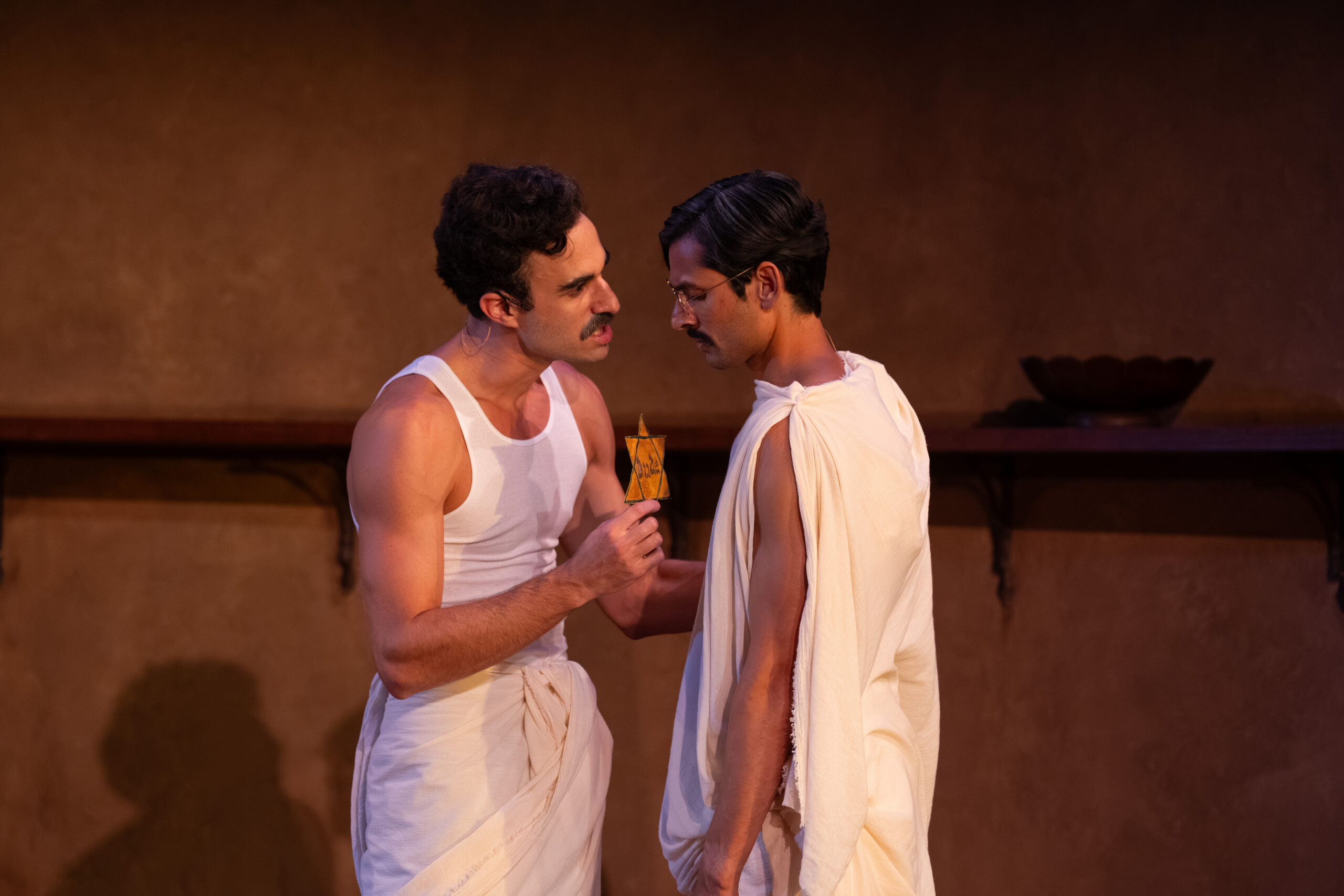
    Miami New Drama kicks off its 10th anniversary season with Gandhi and the Jew, an intimate, endearing, surprisingly funny exploration of history, friendship, and two men whose relationship helped shape the modern world.

    Written by Harley Elias, the world premiere is a thoughtful, deeply personal docudrama about Mahatma Gandhi and Hermann Kallenbach, a Jewish architect who became one of Gandhi’s closest companions during his years in South Africa.

    It’s also a love story. Not a sexual one, although the play flirts with homoeroticism, but a portrait of two men whose affection, devotion, and intellectual intimacy seem foreign in today’s fractured world.

    Twenty years into the social media experiment, when human connection increasingly feels broken, it’s fascinating to watch two men develop a friendship this sincere. They live together, challenge one another, share ideas, and shape each other’s understanding of the world.

    It’s romantic in an old-fashioned sense of the word.

    Elias, a smart, curious, reflective playwright, approaches the relationship with tenderness and humor. The first act is surprisingly charming, like a romantic comedy meets The Odd Couple, set against the political and social landscape of South Africa in the early 1900s.

    Keshav Moodliar plays Gandhi, while Max Katz portrays Kallenbach. Under Margot Bordelon’s direction, the two actors create a convincing intimacy that carries the production. Their chemistry is giddy, their exchanges witty, and their performances are grounded in sincerity.

    By intermission, we’ve been treated to a charming historical docudrama that plays almost like a romantic comedy.

    And then comes Act Two.

    Holy shit.

    The play takes a dramatic turn, and fast, transforming from an affectionate historical buddy comedy into a riveting geopolitical and moral showdown. More than two decades have passed. Gandhi is no longer the young idealist discovering his philosophy. He’s Gandhi, a fully realized international figure whose commitment to nonviolence has become central to his identity.

    Kallenbach, meanwhile, has watched the rise of Nazi Germany and the increasingly desperate situation facing European Jews. He travels to India seeking Gandhi’s support for the establishment of a Jewish homeland in Palestine.

    And Gandhi, committed to nonviolence, refuses to endorse the political solution his old friend desperately wants him to support.

    Suddenly, the play becomes about morality, survival, identity and the limits of idealism.

    And the writing gets considerably more complicated. In one particularly astonishing scene, Gandhi asks Kallenbach to kneel and pray for Hitler. The moment is uncomfortable, almost surreal. You can feel the audience wrestling with what they’re witnessing.

    These two men, who spent their younger years exploring the possibilities of a more peaceful world, are suddenly confronting an existential disagreement neither can easily resolve.

    Somehow, Elias makes the transition work.

    The enormous tonal difference between the two acts gives the play its emotional weight.

    The ending feels a little rushed, especially after such a carefully constructed second act, but that’s a minor complaint in an otherwise remarkable piece of storytelling.

    It’s remarkable that a historical relationship this rich has remained relatively unexplored onstage.

    And Elias feels born to write it.

    His Jewish and Indian heritage, intellectual curiosity, and fascination with history and memory give the play a personal quality that goes beyond historical reconstruction. He’s always been an intelligent, thoughtful writer, but this feels like another level for him.

    This is Harley Elias’s vibe.

    And, Miami New Drama’s vibe, too.

    Gandhi and the Jew should have a significant life beyond Miami Beach. Off-Broadway seems like a natural destination. A limited series on a major streaming platform might be even better, allowing the relationship, history, and political conflicts to unfold across several episodes.

    There’s too much good material here for the story to end at the Colony Theatre.

    And that brings us to Miami New Drama. Ten years into its existence, the company has become one of the most consistently rewarding cultural institutions in South Florida. Its commitment to original work, ambitious storytelling, and world premieres has elevated the local theater scene to a level that increasingly feels comparable to Off-Broadway. We’ve been saying it for a while.

    Miami New Drama essentially is Off-Broadway, just with better weather.

    Gandhi and the Jew is playing at The Colony Theater until November 29th.

    For more info and tickets, click here.


  • 📚⚡ New Voices Fiction Award Winners

    📚⚡ New Voices Fiction Award Winners

    Welcome to the New Voices Fiction Award,

    Our first contest was a success closing with 46 submissions.

    The winners have been announced and their stories published.

    1st Place Award

    “Deaf Dog Book Club” by Yilong Liu.

    “Deaf Dog Book Club” follows a newly widowed woman whose quiet afternoon at a coffee shop takes an unexpected turn. Funny, tender, and sharply observed, it’s a story about grief, language, connection, and finding your way back into the world.

    Click here to read the story.

    We plan to nominate “Deaf Dog Book Club” for the Pushcart Prize.

    2nd Place Award 

    “Nests and Numbers” by Brian W. Ball

    “Nests and Numbers” follows a retired IT professional confronting a devastating diagnosis while trying to make sense of the numbers that suddenly define her future. A quietly furious story about mortality, money, motherhood, and the brutal arithmetic of American healthcare. It’s a powerful American tale and we hope you enjoy it.

    Click here to read the story.


    3rd Place Award

    “Silver Dollars for Silver Tongues” by Emorra Oteca

    “Silver Dollars for Silver Tongues” follows a young wife in 1950s America as a charismatic stranger draws her husband toward the promise of easy wealth. It is a tense domestic story about ambition, trust, marriage, and the seductive power of believing in something too good to be true.

    Click here to read the story.

    Interviews with Award winners 

    As promised, the winner and runner-up both were interviewed and published.

    Click here to read the interview with Yilong Liu.


    Interview with runner-up

    Click here to read the interview with Brain W. Ball.

    2nd New Voices Fiction Award

    We truly enjoyed hosting this contest. It was so much fun.

    As a result, we have made it biannual.

    Submissions for the contest will close December 15th.

    We will build this out and increase the prize money and visibility.

    Submit here for the 2nd New Voices Short Fiction Award.


  • Uncle Scotchy & The Time Thief Book Launch This Thursday at Little River Distillery

    Uncle Scotchy & The Time Thief Book Launch This Thursday at Little River Distillery

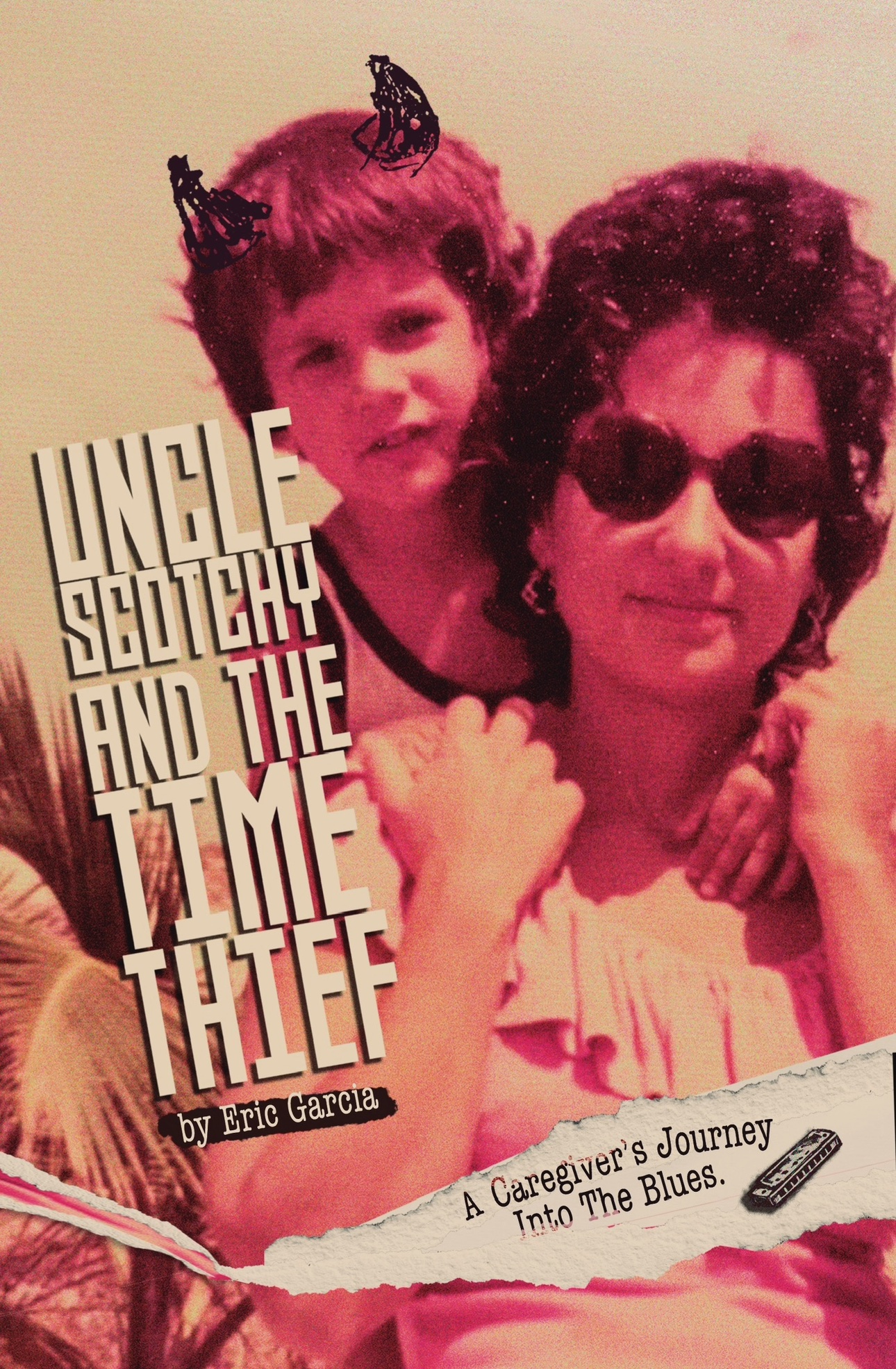
    Miami musician, writer and storyteller Eric Garcia, who performs as Uncle Scotchy, will celebrate the release of his memoir Uncle Scotchy & The Time Thief with an official book launch and signing on Thursday, November 5, from 7–9 PM at Little River Distillery.

    The book grew out of Garcia’s eighteen years as a family caregiver — eight years helping care for his mother after her younger-onset Alzheimer’s diagnosis, followed by another ten years caring for his father.

    Those experiences first became The Blues Opera, Garcia’s one-man show combining original music, storytelling, grief, dark humor and blues mythology. The production ran for 71 performances in Miami before evolving into the memoir.

    Told in twelve boxing-style “Rounds,” Uncle Scotchy & The Time Thief explores family, caregiving, memory, loss, Miami and the question of who a caregiver becomes when the caregiving finally ends. Alzheimer’s and the passage of time appear throughout the story as an unseen adversary Garcia calls “The Time Thief.”

    Garcia fronts the Miami band JUke and was named Miami New Times’ Best Songwriter in 2023.

    The November 5 launch will include a book signing, conversation about the story behind the memoir, and a free Easttop harmonica with book purchase while supplies last. Garcia is also scheduled to appear at the Miami Book Fair on Nov. 21.

    EVENT DETAILS

    Thursday, Nov. 5, 2026
    7–9 PM
    Little River Distillery
    73 NW 71st St., Miami, FL 33150

  • Gambling in Literature and Life: From Dostoevsky to Digital Platforms

    Gambling in Literature and Life: From Dostoevsky to Digital Platforms

    Gambling has preoccupied writers for as long as writers have been observing human behaviour. The casino, the card table and the betting window are recurring settings in literature because they concentrate the themes that fiction is most interested in: money and what it reveals about character, fate versus agency, the psychology of hope and loss, and the social rituals that form around activities of sanctioned risk. Understanding how literature has treated gambling illuminates something about what the activity means to us, and why its digital iteration has found such a large audience.

    A Literary Tradition Worth Knowing

    The Library of Congress holds extensive collections documenting gambling in literature and popular culture across centuries, reflecting the activity’s persistent presence as a lens through which writers examine broader social and psychological themes. The tradition extends from the Greek tragedies through Shakespeare’s dice games to the great nineteenth-century gambling novels, and into modernist and contemporary fiction where casino settings appear with consistent frequency.

    Dostoevsky’s The Gambler remains the canonical text on the psychology of compulsive gambling, written from direct experience of the roulette rooms of European spa towns and capturing with painful accuracy the magical thinking, the escalating urgency, and the self-destructive capacity of a mind fully gripped by gambling as a psychological compulsion. Dostoevsky did not write about ordinary recreational gambling, which is why the text is about addiction rather than entertainment; but it established gambling as literary territory of genuine psychological seriousness.

    The distinction between compulsive and recreational gambling is one that literature has been less interested in than moral discourse would prefer. Fiction gravitates toward the dramatic, and compulsive gambling, like compulsive drinking, offers more dramatic material than its responsible counterpart. The recreational gambler who sets a budget, enjoys a few hours of play, and walks away whether up or down is not protagonist material. This creates a gap between gambling as literary subject and gambling as everyday leisure activity that it’s worth being conscious of when drawing on literary frames to think about the activity.

    What Recreational Gambling Actually Looks Like

    The gap between the Dostoevsky gambler and the contemporary UK casino player is significant. The UK Gambling Commission’s data on gambling participation shows that the majority of people who gamble in the UK do so at modest frequency, within defined budgets, and without experiencing anything approaching compulsive disorder. The regulated UK online gambling market has built mandatory responsible gambling infrastructure specifically to maintain this distinction for players who might otherwise slide toward problematic patterns.

    Responsible gambling tools, including deposit limits, session time displays, and national self-exclusion schemes, create a structural environment that the European spa-town roulette rooms Dostoevsky inhabited did not have. Whether this infrastructure is sufficient is a legitimate question; that it exists and is improving is not in doubt.

    The Card Game in Fiction

    Beyond the compulsive gambler narrative, literary card games serve different thematic functions. The poker game in westerns is a ritual of masculine competition where psychological mastery is the real prize and money merely the token. The bridge game in drawing-room fiction is a social arena where character is revealed through how people handle both winning and losing within the strict formality of the game’s rules.

    The slot machine has a different literary history, largely because it arrived too late and was too solitary to generate the social drama that card games produce. Its literary appearances tend toward the incidental or symbolic, the Las Vegas slot floor as a backdrop of democratic luck, rather than as a primary dramatic setting.

    Digital Gambling and What It Means for the Literary Imagination

    The digital transformation of gambling raises interesting questions about how future writers will engage with it as subject matter. The physical casino as setting has accumulated decades of literary and cinematic associations. The person alone with their phone playing gambling on mrq or a similar platform has not yet accumulated comparable narrative weight, though the psychological material is the same.

    What changes in the digital context is the social dimension. The casino floor, with its ambient sounds and physical proximity to other gamblers, creates a shared experience that the private digital session does not replicate. The community aspects of digital platforms, live dealer chat and bingo room interaction, partially compensate for this but are different in character from the physical shared space.

    Why Reading About Gambling Is Not Like Gambling

    The distinction between gambling as literary subject and gambling as activity is worth holding clearly. Reading Dostoevsky’s The Gambler is not a preparation for responsible recreational gambling; it is an encounter with an extreme case that illuminates the psychology of compulsion rather than the ordinary experience of playing within a budget. Literary gambling deserves literary reading, and recreational gambling deserves realistic expectations of what a night of play might cost and what it might offer in entertainment value.

    The two activities illuminate each other without being the same thing. Understanding that gambling has been a subject of serious literary attention for centuries is one context for thinking about what the activity means. Deciding how much to deposit and setting a limit before a session of online play is a different and more practical exercise in the same territory.

  • A Refuge for the Rest of Us: Robb Erwin’s Punk-Rock Literary Satire

    A Refuge for the Rest of Us: Robb Erwin’s Punk-Rock Literary Satire

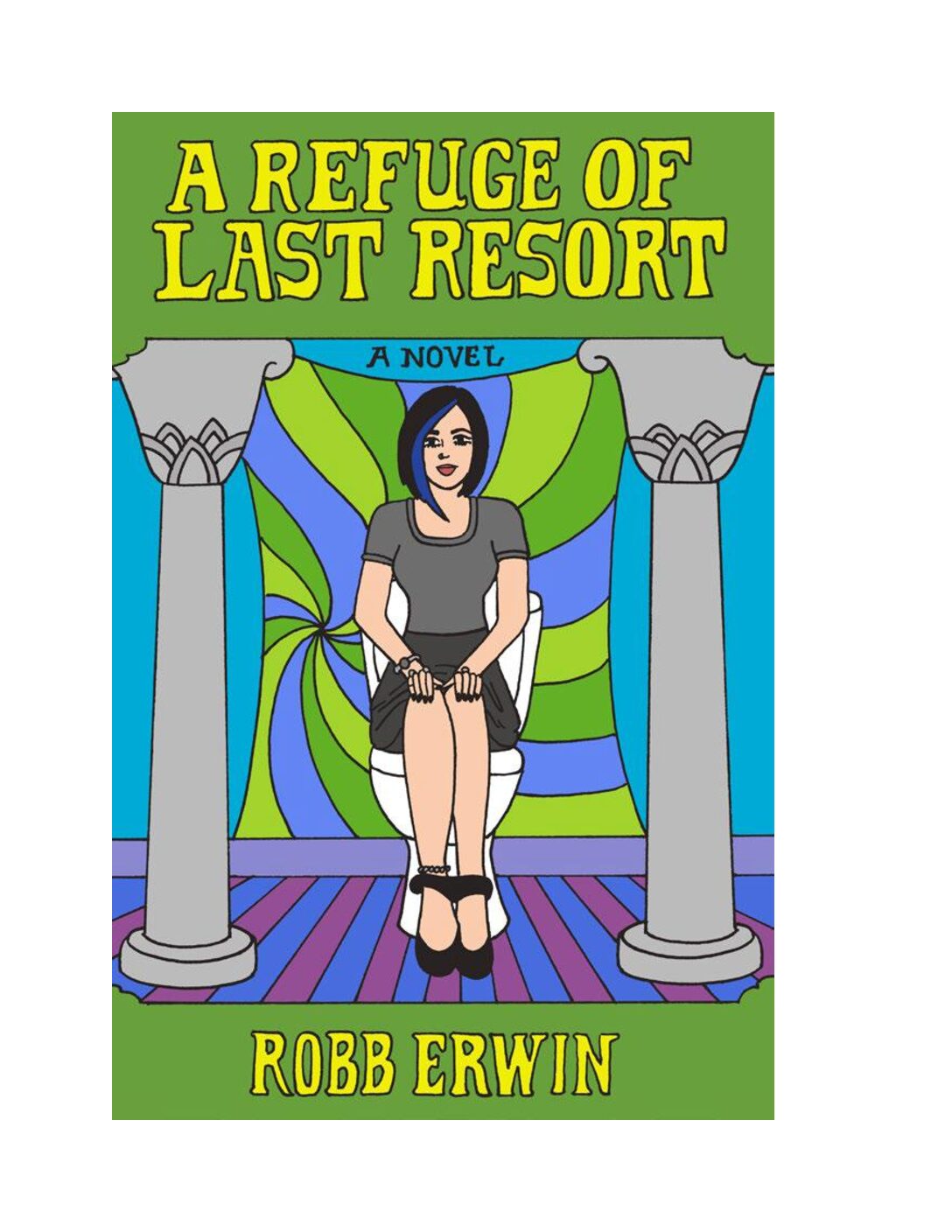
    What do the psychedelic sounds of Wooden Shjips, a disillusioned Gen Z woman and an aging California hippie have in common? In Robb Erwin’s debut novel, A Refuge of Last Resort, they’re all passengers on a particularly strange trip through contemporary America.

    And the soundtrack is damn good.

    Erwin, a Delray Beach resident and former drummer who spent years navigating the punk and psychedelic music scenes, has written a darkly comic thriller that begins, appropriately enough, in a bathroom.

    Meet Lorelei, a 22-year-old college dropout whose miserable corporate existence has driven her to seek sanctuary in the employee restroom. Unfortunately, her unconventional coping mechanism is only the beginning of her troubles. After witnessing a crime, Lorelei finds herself fleeing a human-trafficking operation, embarking on an increasingly surreal journey involving corporate exploitation, institutional corruption, and an underground network of people willing to risk their own safety to help others.

    Think of a road trip nightmare with a healthy dose of gallows humor. But somewhere between the absurdity and the danger, Erwin introduces Bart Sampson, an aging counterculture veteran whose friendship with Lorelei provides the novel with an unexpected emotional center. Their relationship develops partly through music. Lorelei introduces Bart to the ethereal sounds of British alternative band Cranes. Bart counters with stories about California’s psychedelic underground, including encounters with the late David Roback of Opal and Mazzy Star.

    Later, the pair exchange tracks by Wooden Shjips, Michel Polnareff, and Dana Gillespie. Their musical conversations become something of a traveling ritual. These exchanges are more than entertaining detours. They establish a connection between two generations whose experiences differ considerably, but whose cultural sensibilities overlap.

    Throughout the novel, Erwin employs satire, grotesque comedy, and increasingly outrageous situations to examine institutional power, economic exploitation, and the vulnerability of marginalized people. His fictional America is populated by predatory corporate interests, questionable authority figures, and individuals struggling to maintain their dignity.

    Yet the book’s counterweight to these institutions isn’t another institution. It’s an assortment of individuals who choose to help one another. That distinction gives A Refuge of Last Resort its underlying humanity. Beneath the absurdity is a story about solidarity, friendship, and the possibility of finding belonging in unexpected places.

    Published by Endora House and scheduled for release on November 24, the novel draws upon Erwin’s countercultural interests while incorporating recognizable South Florida locations, including Fort Lauderdale’s legendary Mai-Kai.

    Readers familiar with the biting social satire of Kurt Vonnegut’s Breakfast of Champions, the absurdist misadventures of Tom Robbins’ Even Cowgirls Get the Blues, or the countercultural road-trip spirit of Jack Kerouac’s On the Road might find themselves on familiar terrain in A Refuge of Last Resort. Erwin borrows none of these authors’ formulas outright, but his novel shares their fascination with society’s outsiders, the absurdities of American life and the search for personal freedom. Throw in a little of the institutional paranoia of Joseph Heller’s Catch-22, and you have a literary cocktail that pairs dark humor with an unexpectedly tender exploration of friendship, compassion, and survival.

    And for readers accustomed to encountering punk’s rebellious spirit through three chords and a microphone, Erwin offers another medium. The instruments have changed, but the underlying questions remain remarkably familiar: Who holds the power? Who gets exploited? And who’s willing to stand beside you when everything falls apart?

    Maybe the refuge of last resort is those fleeting moments of human compassion we find along the way, no matter how weird or structured life has become.

  • C.V. Shaw Is Under the Spell of Storytelling

    C.V. Shaw Is Under the Spell of Storytelling

    Miami writer C.V. Shaw wears a few hats. She’s a novelist, poet, journalist and, because apparently writing isn’t enough, Chinese medicine doctor. Oh, and she’s also the Vice President of the long running South Florida Writer’s Association. Oh, and C.V. is also mom to two boys.  Did we mention she’s a ninja too!

    Okay, so she is not a ninja. But she is a writer.

    Ms. Shaw’s novel The Spell helped turn a lifelong love of storytelling into something bigger, while her work with the South Florida Writers Association has made her a fixture in Miami’s growing literary community.

    Now she’s juggling a new novel, children’s book, anthologies, poetry, a podcast and even a past-life writing project. The Jitney caught up with Shaw to talk storytelling, imposter syndrome, healing through writing and why the next dream is getting The Spell onto the big screen. The following is a snippet of her cultural curriculum vitae.

    Interview with C.V. Shaw

    Could you tell us a little about yourself and your journey as a writer? What first drew you to storytelling, and what has kept you writing?

    Alongside being a writer, I’m also a Chinese medicine doctor, but writing is my first love. I always felt storytelling was just part of who I was. My grandfather used to make up stories that I looked forward to listening to, even if they were the same ones–sort of like Belle from Beauty and the Beast.  I loved to be transported to imaginary worlds. To that little girl, all those worlds existed.

    I started writing poetry since I was very young. I loved playing with words, discovering how the simplicity of a few words can run so deep. My father claimed it ran in the blood, Jose Marti, one of the greatest Cuban poets and writers, was my grandfather’s uncle. Unfortunately, I never met him (at least not in this lifetime).

    I decided to major in journalism and wrote for several magazines and newspapers, quickly discovering that the stories I wanted to write were ones that would transport readers.  I wanted to help them escape. Since then, I have written two novels, many short stories and poems that have been included in numerous anthologies. One short story “Ripped” was adapted into a short film “Channel Zero,” winning seven film festival laurels, including Madrid Int’l Film Festival.

    I fell in love with storytelling a long, long time ago, in a land far, far away. It was entrancing for me to listen to a story and not knowing if it was real or not was where I found the magic. The not needing to know because it was now real for me, either way. The realization of the power there is in imagination is what keeps me going. How one can create worlds, people, storylines and endings that can move us in a myriad of emotions and teach us about life is by far the most extraordinary gift of all.  These stories, worlds, characters will never cease to exist. They live in the collective consciousness of the Universe. Stories outlive us. It’s fascinating!

    You’re involved with the South Florida Writers Association. How has being part of this community shaped your experience as a writer, and what role do you think it plays in supporting local authors?

    I discovered SFWA three years ago through the poetry meetings held at the Pinecrest branch library.  I am now the Vice-President of the association. I’m happy to give back by volunteering my time. Being a member has allowed me to meet, sign and sell my book at Miami Book Fair, which was a dream come true for me. My readership has increased tremendously. I was also able to submit two poems to their anthology “Sea of Tranquility,” which is going in a time capsule to the moon in November 2026 — that is beyond a dream!

    The community that I discovered through SFWA is incredibly beneficial. We have created small critique groups to inspire, beta-read, edit, etc., a very important aspect for all writers.

    As Conference Director in 2025, I fashioned our annal event that brought together literary industry leaders to foster significant connections with several members subsequently being featured in Aqua Pinecrest Magazine.

    In December 2025, I took on the interviewer position of the SFWA Authors Showcase series where one of our members are interviewed monthly and am loving shining the spotlight to our authors and their books.

    What have you learned about yourself as a writer throughout your career, and how has your approach to writing changed over time?

    I learned that Imposter’s Syndrome is a real thing, and I’m not alone. I also learned that it’s not actually a terrible illness to suffer from because it makes you do better and want to do better (once you get out of the slump).  And I also realize how much healing happens when you write. That’s what I find so beautiful and mystical about the craft… you’re healing yourself and others through the writing, but you’re also creating art to entertain.

    My writing has significantly changed over time. I have learned so much from editors and writing coaches.  I’m still not a perfect writer, if that even exists, but I’ve come a long way. #longlivebookeditors

    Your book The Spell was released two years ago. Looking back, how has its release shaped your journey, and what has sharing it with readers meant to you?

    The birth of The Spell has changed my life entirely. My direction and goals have changed entirely after witnessing first-hand that dreams do come true.  Now, I can’t stop writing and don’t want to. Next dream: “The Spell” movie. As of now, I only have the book trailer, but it’s a start. You can watch it on my website www.cvshawbooks.com or on IG: cvshawbooks as well as my interview with Channel 6.

    There’s an important message woven into “The Spell” and it’s incredibly gratifying when readers recognize it.

    When readers express their like, or love for the story and request a prequel and a sequel, I realize I am doing exactly what I was meant to do… which is to follow my passion and take some people along for the ride.


    What can readers expect from you in the future? Are there any upcoming projects or stories you are excited to share?

    “The Painted Rose” is my second novel currently seeking traditional publishing. It is inspired by Alice in Wonderland by Lewis Carroll, but also by the real and alleged stories of Lewis Carroll and the real Alice- Alice Liddell. It is set in the 60’s in England and 16-year-old Alice is in a mental hospital. It’s an adult crossover deep with a bit of whim at the same time.

    “Jimby Goes to Outer Space” is a children’s picture book about the planets in its editing phase.

    I am also putting together a Past-Life Anthology, where I will take a group of writers into a regression session and have them write a short story of the past-life they encountered.

    I have a few collections pending:  short stories, poetry, and a collection of both dedicated to my late mother, as well as a collection of short stories of Beatles song told from the perspective of the main character.

    There are two anthology presentations coming soon.  “When We Forgive,” stories about forgiveness. My story, “Self-Flagellation,” nearly killed me writing it. It was a very tough one to write and the healing was massive. This is published by Life to Paper Publishing, a Miami/Canadian publisher.

    “Wonder” is an anthology about what wonder meant to the writer. I was the co-editor of the anthology and contributed a short story, “Mirror Mirror.” This presentation is slated for December 12th at Pinecrest Library. In spirit of the season, we are asking readers to donate to their favorite charity instead of paying for the book.

    Is there anything else you would like to share that we haven’t touched on?

    Yes. I co-host Miami Book Hub Podcast – Writers Roundtable once a month, where we explore current events and discuss all things literary, together with Miami Book Hub Podcast host, J. Adrian Betancourt and co-host SFWA President, Amy Naim.

    Fun fact:  I channel Edgar Allen Poe to write poetry.

    I’d like to extend a great big literary thanks to Jitney. It’s an honor!

  • J. Adrian Betancourt on the arQitect

    J. Adrian Betancourt on the arQitect

    Miami author J. Adrian Betancourt is thinking big with the arQitect, the first novel in an ambitious nine-book science-fantasy saga. The series blends artificial intelligence, ancient civilizations, Taoist philosophy, secret societies and martial arts — nothing ambitious about this project.

    At the center of this new universe is Maya Lin, a young architectural historian pulled into a world where technology can manipulate Qi, or life energy. Kind of cool. 

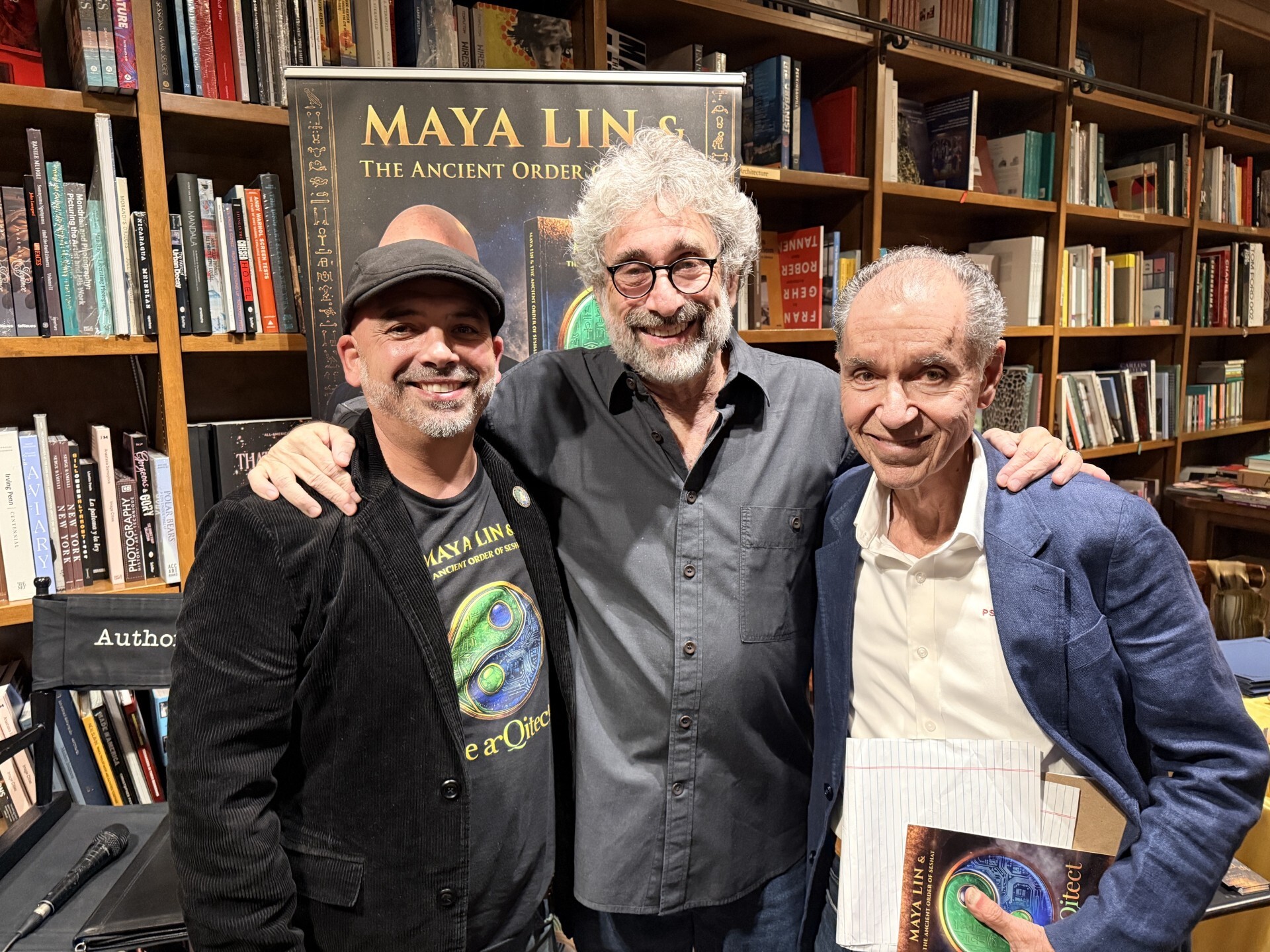
    Betancourt recently launched the much anticipated first book at Books & Books to a full-house. He was in discussion with Miami’s premier historian, and retired MDC professor, Dr. Paul George. 

    After the launch, the author hopped on The Jitney for an extensive interview.

    Interview with J. Adrian Betancourt 

    1. What inspired you to create The Maya Lin Saga, and how did the idea for the series first come to life?

    Believe it or not, the whole thing started while I was sitting on my swing under a banyan tree, trying to meditate. Apparently, my mind had other plans. 

    I’ve long been fascinated by Eastern philosophy, particularly Taoism, and the idea that we are all connected in ways we don’t fully understand. But fascination and discipline aren’t necessarily the same thing, and quieting my overactive “monkey mind” has never come easily. One day, I began wondering whether technology might help us reach states of awareness and well-being that ancient practitioners devoted lifetimes to cultivating.

    That led to a much bigger question: What if someone developed a technology capable of harnessing and manipulating Qi, or life energy? What good might it accomplish, and what might happen if that same power were turned toward control? 

    That became the seed of the arQitect: a science-fantasy adventure bringing together artificial intelligence, ancient civilizations, secret societies, and a young woman whose family history draws her into a struggle much larger than she initially understands.

    As the idea grew, I realized that the conflict I was imagining had a past that needed exploring and consequences that could extend far into the future. What began as a single novel became a planned nine-book saga.

    So, while I may not have achieved a particularly successful meditation that afternoon, I did come away with a rather substantial writing assignment!

    2. The story blends ancient wisdom with technology. What drew you to these themes, and how do they shape Maya Lin’s journey?

    What interests me is the possibility that our oldest questions and our newest inventions may eventually meet. What is consciousness? What connects us? What does it mean to live well? And can a technological breakthrough help us answer those questions, or would it simply give us more power before we understand what to do with it?

    Within the fictional world of the book, QiNIUS develops AI-powered wearables that can channel and influence Qi. The technology offers genuine benefits; even Maya uses it. I didn’t want to write a story in which innovation is automatically dangerous and everything ancient is automatically wise. The much more interesting question is what happens when extraordinary capabilities meet very ordinary human vulnerabilities. 

    Maya discovers that her family is entangled with both this technological world and the Ancient Order of Seshat, which safeguards powerful metaphysical knowledge. Suddenly, history is no longer something she studies at a comfortable distance. It is something she has inherited, and something that demands choices from her.

    The yin-yang on the cover reflects that interplay. I’m interested in apparent opposites that are connected, not simply a neat division between good and evil. Knowledge can heal or harm. Protecting people can become controlling them. Even a sincere desire to improve the world can become dangerous when it leaves no room for other people to choose.

    For Maya, the challenge is not simply learning how to wield power. It is developing the judgment, humility, and compassion to understand its limits. 

    Of course, there are also martial arts, mysteries, budding romantic complications, and a little mischief. I wouldn’t want readers to think they’re signing up for a nine-volume philosophy lecture!

    3. How did you develop Maya Lin’s character, and what makes her journey meaningful to you?

    I wanted Maya to feel like a person before she felt like a heroine.

    She is a bisexual American of mixed heritage—half Chinese, a quarter Cuban, and a quarter Mesoamerican. That complexity is intentional. I wanted a protagonist whose identity pushes back against the all-too-prevalent forces of bigotry, nationalism and xenophobia that have become fashionable in today’s world, and the notion that people must belong to one neatly defined category. Her different inheritances aren’t competing claims on who she is; together, they make her Maya. 

    She is also an architectural historian and a descendant of Juan Ponce de León, which gives her a particularly interesting relationship with the past. She knows how to look at a building, an artifact, or an old map and ask what it might reveal. But understanding history intellectually is very different from discovering that you are personally caught up in it. 

    When we meet her, she is intelligent, capable, and curious, but she is also grieving and struggling with anxiety and insecurity. She has real abilities, including martial-arts training, but competence isn’t the same thing as confidence. I didn’t want courage to mean that she suddenly stops being afraid. I wanted it to mean that she finds reasons to act even when she is. 

    Her relationships are essential to that growth: her grandmother Ju Li, her teacher Zhen, and her very different companions Cairo and Teddy. They challenge one another, frustrate one another, make one another laugh, and gradually become something like a found family. Nobody brings everything the others need, but together they become capable of much more. 

    That is what makes her journey meaningful to me. It isn’t simply about becoming more powerful. It’s about becoming more fully herself, without allowing grief to close her heart or responsibility to harden into control.

    And she has a long way to go. This is only book one!

    4. The saga explores history, power, and consciousness. What ideas or questions do you hope readers will reflect on after reading the series?

    Two questions sit near the center of the saga: What happens when our capabilities outpace our wisdom? And does creating something give us the right to control what it becomes?

    That second question becomes especially complicated when the creation might possess consciousness. If an artificial intelligence developed an inner life, would it still be merely a tool? What responsibilities would its creators have toward it? At what point would the desire to protect or guide it (or protect ourselves) become a denial of its freedom?

    And those questions won’t remain confined to technology. The larger saga also turns them toward humanity itself… our beginnings, our place in the universe, and the relationship between the created and whatever may have created it. 

    I’m also interested in the danger of good intentions. It is relatively easy to recognize someone who openly wants domination. It is harder when someone sincerely believes they are saving the world. Who gets to define progress? Is harmony still harmony if nobody is permitted to disagree? Those tensions become increasingly important as the saga develops. 

    History and consciousness give those questions a much larger canvas. What might have been forgotten, misunderstood, or deliberately concealed? Is consciousness something a body produces, something it participates in, or something we don’t yet have adequate language to describe?

    But underneath those enormous questions are very intimate ones: What do we do with our pain? How do we live with uncertainty? Can we recognize our connection to others without demanding that they become like us?

    I certainly don’t pretend to have all the answers. Fiction gives me a place to explore the questions, and, hopefully, to make that exploration entertaining.

    If readers enjoy the adventure and then find themselves looking up a historical reference, exploring Taoist philosophy, or reconsidering something they took for granted, I’ll consider that a wonderful outcome.

    5. Music plays an interesting role in the arQitect. What inspired you to incorporate a soundtrack into the reading experience?

    Music has always been a huge part of my life. It can transport us to another time or place, bring back someone we miss, or express something we haven’t found the words to say. I often call it a shortcut to the soul.

    As I wrote the arQitect, I imagined particular songs playing during certain scenes, almost as though I were watching a movie. Pink Floyd, the Beach Boys, Gloria Estefan, Jimmy Buffett, and others became part of the story’s musical DNA. Sharing a companion playlist felt like a natural way to invite readers into that experience.

    But music is also part of Maya’s character. She plays the ukulele and writes songs, including two that she performs in remembrance of her parents. Those moments reveal a side of her that the action scenes cannot. Music allows her to express grief, love, and hope when ordinary conversation becomes difficult. 

    That has led to a second layer of the project: original songs inspired by the characters, their relationships, and their emotional journeys. I’ve been writing lyrics and experimenting with generative AI tools (oh, the irony!) to help bring the music and vocal performances to life. It has become a gratifying creative adventure of its own, and I would love to develop those songs further with human musicians, singers, and producers.

    I’m particularly drawn to the idea of Maya as a musical storyteller, with a songbook that grows alongside her experiences. That has a place in the larger vision for the saga, rather than being something separate from it. 

    The novel should stand on its own, of course. The music is another doorway into the characters’ world, and another way of feeling what they feel.

    And perhaps one day there will be a screen adaptation with a full soundtrack. A guy can dream!

    You can explore and enjoy all of the arQitect’s music here: ThreeTreasuresPress.com/soundtrack.

    6. What does the future hold for The Maya Lin Saga? Can readers look forward to new books, characters, or developments in Maya’s journey?

    Oh, absolutely. I’ve got quite a bit more trouble planned for Maya and her friends!

    The overarching project is the Three Treasures Saga: nine books arranged into three trilogies inspired by Jing, Qi, and Shen—essence, life energy, and spirit or consciousness. the arQitect opens the Qi trilogy and is the intended starting point for readers. 

    The planned reading sequence is Qi, then Jing, then Shen. We begin with the near-future collision of ancient knowledge and modern technology. The Jing trilogy reaches backward into the ancient world, exploring humanity’s origins and the deeper history of the Order. The Shen trilogy carries the story forward into questions about consciousness, existence, and our place in a much larger reality. 

    So the saga begins in the middle, in a sense. Readers encounter a mystery before learning its deepest origins, and those origins will change how they understand what came before. The three trilogies are connected parts of one larger story, not separate adventures sharing a few names.

    In the nearer term, the scope will become more international, the moral choices more complicated, and the characters’ relationships more consequential. New places and adversaries are important, but I’m equally interested in what happens when people who care about one another disagree about the right thing to do, or when human ego and emotions begin to challenge the group dynamics. 

    Maya, Zhen, Cairo, and Teddy all have much more to reveal, not just about the world, but about themselves.

    I’ve mapped the broader direction, while leaving room for discoveries along the way. Some of my favorite moments in the first book came from characters surprising me. I suspect they’re not finished doing that.

    7. Is there anything else you’d like to share about the book or your experience writing it that we haven’t touched on?

    Writing a first novel has been a wonderful exercise in humility, perseverance, and occasionally questioning my own sanity.

    There were plenty of moments when I wondered what I had gotten myself into. But there were also those extraordinary moments when a character seemed to come alive, a scene suddenly found its shape, or I caught myself laughing at something someone had just said, as though I hadn’t been the person typing it.

    Seeing the book launched at Books & Books, surrounded by friends, family, and our literary community, made the whole experience feel real in a completely different way. Something that had lived in my imagination was beginning a life in other people’s imaginations. That is a remarkable feeling, and I’m deeply grateful to everyone willing to take this first step with me.

    I’m also building ways for readers to enter the world beyond the novels. Through the Medjay Knights reader/fandom community, Ancient Order governing council, the mythology, music, and interactive experiences, I want people to feel invited into the adventure rather than simply invited to buy the next book. The novels remain the heart of it, but there are other doors to explore, and an immersive world to enjoy. 

    You can explore, join and enjoy the immersive world-building community at Seshati.com.

    Over time, I would love to create meaningful opportunities for readers to contribute ideas and help shape aspects of that expanding world. After all, why should I have all the fun? And—as the story itself explores—at what point should a creator cease to maintain full control over their creation? 

    More than anything, though, I hope people enjoy the story. I hope they care about the characters, laugh with them, worry about them, and come away curious about something they hadn’t considered before.

    Beneath the mysteries, technology, and adventure is a belief that our differences need not separate us, and that curiosity, compassion, and love can help us find our way toward one another.

    As I like to say: Life is the school, love is the lesson. Onward and upward!

  • The Stories We Inherit: An Interview with Teri Arvesu González

    The Stories We Inherit: An Interview with Teri Arvesu González

    Teri Arvesu González is a 15-time Emmy Award winner, a bilingual and bicultural journalist, author, storyteller and strategist. Her latest work, The Stories We Inherit, is a personal exploration of family history, migration, and change. This story follows nine generations of her Cuban American family,  where she examines the stories, expectations, and unwritten rules passed down from generation to generation.

    What began as a letter to her son Santino grew into a reflection on her identity, her family’s individuality, and a better understanding on how to choose one’s own path. We spoke with Gonzalez about the inspiration behind her book, her family’s history in Miami, and the conversations she hopes this story will inspire.

    What inspired you to write The Stories We Inherit, and when did you realize this family story needed to be told?

    It began as a letter to my son Santino when he graduated from Belen Jesuit High School. He was the sixth generation of our family shaped by a Jesuit education. That day almost didn’t happen for him, which made watching him graduate all the more meaningful. I wanted him to know the history that had brought our family to that moment—and to have something he could carry into whatever came next.

    As I wrote, I began noticing the unwritten rules our family had passed down about safety, success, and taking risks. I recognized some of them in myself. What began as a gift for Santino became a gift for me, too.

    As a Latina journalist who has covered Hispanic communities in the United States for nearly 30 years, I’ve seen this in the families whose stories I’ve told and in my own: our history can give us strength, but fear can travel alongside it. I wanted my son to inherit that history and feel free to write his own.

    Why is Miami the right place to tell a story about migration, reinvention, and generational change?

    Miami is where my family rebuilt after exile, and it is where I returned after 10 years in Chicago. Coming back let me see familiar places through a different lens. The story of beginning again is everywhere here. So is the question of what that new beginning means for the children and grandchildren who grow up after it. They inherit opportunities their families fought for, along with expectations about how to use them.

    My family’s experience is Cuban American, but that tension reaches well beyond Miami. I think younger Hispanic readers across the country will recognize the moment when their own ambitions meet a family’s idea of what a good, secure life should look like.

    How did tracing nine generations change your understanding of your own identity?

    Nine generations sound like a family tree. For me, they became a way to see a cycle. In chapters three and four, I follow periods of achievement and loss, exile and return, followed by another exile, more loss, and another effort to build.

    Once I saw that pattern, I understood why people in the same family might say “success” or “security” and mean very different things. If you have lost what you built, security may mean protecting it at all costs. Someone born later might see that same security as the foundation from which to try something new. Tracing the history helped me hear the experience underneath those words. It made me more compassionate toward my family’s choices and more aware that I can make choices of my own.

    The book asks whether the stories that repeat in families can become something more than fate. What do you hope readers take away from that question?

    I hope readers pause when they hear a family rule they have always taken for granted and ask: Who needed this rule first? What were they trying to protect? Are those circumstances still ours?

    Some lessons deserve to be carried forward. Others may have kept a previous generation safe while keeping this one from growing. We can honor our families’ sacrifices and still make that distinction. That is the discernment I wanted to give Santino: the ability to be grateful for where he comes from and choose where he goes next.

    How did your experience as a journalist shape the way you approached writing this deeply personal family narrative?

    Journalism taught me to ask questions, look for context, and pay attention to what is missing from a story. I brought those habits to my family history. I listened to what relatives remembered, followed the historical threads I could, and tried to distinguish what I could document from what had been passed down through memory. The harder part was recognizing that I was in the story, too. I had to bring the same curiosity to my own assumptions and be honest when I didn’t have a complete answer.

    Who did you have in mind when writing The Stories We Inherit, and what conversations do you hope the book inspires among families and readers?

    I wrote it first for my son Santino. I wanted him to know where he comes from without feeling that his future had already been written for him. As the book grew, I began thinking about other parents and children, young adults, and people who have inherited a strong sense of family obligation but may not know the stories behind it.

    I hope it prompts families to preserve their history especially in a very noisy world. To ask: What did we live through? What did we learn from it? What are we grateful for? And what might we choose to do differently? You don’t need a complete family tree to begin that conversation.

    Is there anything else you’d like to share about the book that we haven’t touched on?

    This was the first time I began writing without publication or an end result in mind. I wrote it for my son, and somewhere along the way, I realized I was writing it for myself, too. Only later did I begin to think about sharing it with other readers.

    I hope the book gives people room to reflect on their own families, even when the stories are messy or incomplete. We’re all more than one thing. At a time when so much gets simplified to hold our attention, I wanted to make space for that complexity. I love books and films that stay with you because they raise questions without telling you what to think. That’s what I hope this book can do.

    And as soon as I finished the English edition, I hurried to make it available in Spanish. My maternal grandmother is a big part of the story, and I wanted her to be able to read it.

    For more info and to purchase the book, click here.