Category: Music

  • MannySwagg: The Jitney Interview

    MannySwagg: The Jitney Interview

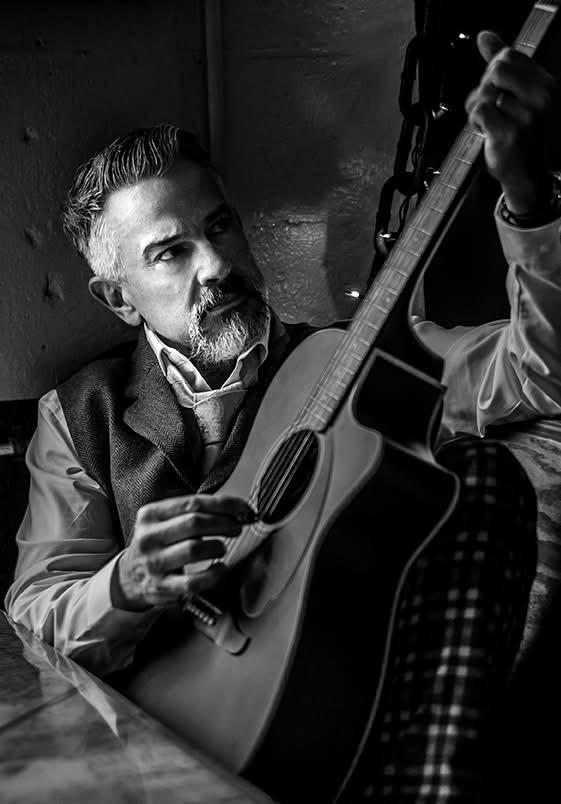
    MannySwagg is a Cuban-American singer / songwriter / percussionist based in Miami who joined forces with three time Miami New Times “Best of Miami” award winners Electric Piquete. The singer and the Latin funk band first joined forces two summers ago and are now promoting an infectious new Miami-themed single “Muevete Con Ganas”. The video for the hip-shaking, dance floor burner premieres Friday, July 25 on the group’s YouTube Channel. The Jitney sat with the vocalist to talk about his career and collaboration with the mainstays, fresh off their “Best Musical Act” 2025 Readers’ Choice win.

    What is your earliest musical memory?

    MannySwagg: My grandfather playing vinyl records by Bola de Nieve and Benny Moré on his furniture-like RCA Victor record player. 

    Who are some of your musical influences?

    I come from a very cultural and festive family and have lived a very eclectic sonic experience. Artists like Ruben Blades, Juan Luis Guerra, Celia Cruz, Oscar d’ Leon, the Fania All Stars, James Brown, Aretha Franklin, Miles Davis, Irakere, Los Van Van, the Beatles, the Rolling Stones, Havana Abierta, Michael Jackson, and Prince. I’m also a fan of modern rock, blues and R ‘n’ B, grunge, and ska, all of whom made the language barrier disappear at every social gathering. 

    Tell our readers about some of the other acts you’ve collaborated with.

    Sol & the Tribu, which was previously known as Picadillo and is fronted by Sol Ruiz and Rey Rodriguez),  Mr. Haka , Lobo and Raphox (Dem’ Boiz), BarrioActivo , Stealing Cigarettes, Gaiya, Nick N. Taya, Doble 9, Raudel Escuadron, Diana Fuentes and Jorge Luis Chacin (“La Vida es Buena Live”), and now Electric Piquete. “Muevete Con Ganas” is my most recent collaboration. 

    How did you first hear about Electric Piquete?

    The name kept coming up on social media platforms, and I had my first glance at them at the 2023 Shakori Hills Grassroots Fest (in Pittsboro, NC), when we had the opportunity to be on the same lineup. I remember talking to Michael and some of the gang for the first time at the lunch tent. 

    When was the first time you collaborated with the band?

    I remember that clearly. I happened to have a private event at The Confidante, and they were performing at a summer 2023 Miami Beach OnStage earlier the same day. We joined forces and had a blast taking the crowd on a full on “Miami Sound Get Down” with Locos Por Juana closing the day. That day saw the birth of the phrase. “Esto es un cohete, MannySwagg y Electric Piquete” (laughs). ¡Tremendo Sofrito!

    What was it like writing the melody and lyrics to an EP song that already existed?

    Well, it’s always a bit of a challenge when you’re called upon to do something extra for an already well-conceived idea. You’re always second guessing yourself if the lyric might take away or be in sync with everything else that’s happening. You never wanna over-saturate. Luckily, we’re all from the 305, and that’s what first showed up in my head. Spanglish definitely had to play a part in the opening line, and somehow I got led by the feeling of Que Pasa USA skits blending into a Miami Sound Machine “Conga” style remix and boom! Neon flooring meets Carnaval, Balseros dancing through Miami Beach and Hialeah bringing the diaspora, exile, and multi-cultural experience, and setting the mood for just the right Miami story. 

    What was shooting the video at Ball & Chain like?

    Couldn’t be more accurate, a Tropical Stage and the oversized ornament were key elements to this project. Wonderful getting together and sharing the vibe. The sun was definitely Miami. 

    What are your hopes for the “Muevete Con Ganas” single? 

    That everyone who comes across this groovy tune gets the vibe and feeling of what a genuine night turns-to-day out in Miami would sound and look like.  

    What’s next for MannySwagg?

    To infinity and beyond, but nah…the sky’s really the limit when it comes to try the endless possibilities to keep exploring and expanding my musical universe. Although “Muevete Con Ganas” is already streaming, I’m really looking forward to sharing the video with everyone, which will drop on Friday, July 25.

    How can readers learn more about you?

    Check out my latest single “Ricota”, and follow me on Instagram and Spotify.

  • Shivva- Local Rock Band on their Blissful Noise

    Shivva- Local Rock Band on their Blissful Noise

    Emerging from South Florida with a sound soaked in dreamy textures we find Shivva. Their sound has steadily built a reputation for emotionally charged songwriting. Their music is a sonic collage of swirling guitars, synths, hazy vocals, and raw vulnerability drawing from the forgotten treasures of shoegaze and dreampop. Shivva hopped on to the Jitney with their big feelings of blissful noise.

    Why the name Shivva?

    Shivva is a name we came up with. We started with “shiv” but wanted it to sound cuter, “shiva” being phonetically nice to say and has a more feminine vibe that parallels our music. We also liked the idea of what Shiva the deity represents, the Hindu god of destruction and rebirth. The idea of addressing inner darkness being necessary for transformation. 

    What is your practice situation and who and how do you write your songs?

    Our practice situation is we travel between Homestead and Doral. We meet at our guitarist Yardley’s house to track and record demos and our drummer Sebastian’s house for full band rehearsal. Songwriting, Shivva is a big collaboration and we all contribute in the songwriting process. Someone will present an idea or concept and each respective person writes their own parts and we bounce ideas off one another in the process. 

    If you can have a guest musician play with you who would it be?

    Melanie: Belinda Butcher from My Bloody Valentine would be extreme. Or if we ever got the chance to work with Danny Elfman that would be a dream.

    Monica: Alex Gehring from Ringo Deathstarr or Rachel Goswell from Slowdive- both of these bands influence Shivva, I’d love to pick at their brain!

    Yardley: Sam Ray from Teen Suicide 

    Sebastian: Zach Schwartz from Spirit of the beehive! 

    Tell us about your next album when can we expect it.

    Currently in the works.

    Share with us something that you wouldn’t usually tell other people.

    Monica and Melanie have been on TV. Sebastian likes to do archery with Yardley

    Where do you come from?

    Shivva came to fruition in Kendall, but our members come from different parts of SFL!  

    Do you have a Video coming out?

    Soon.

    What was the first album you each bought?

    Monica: The Emptiness by Alesana 

    Mel: Animal. this is a tough one a lot of my early music was illegally downloaded and I have no memory of my first purchased album

    Yardley: Fever by Bullet for my Valentine 

    Sebastian: Random Access Memory by Daft Punk 

    Anything else you want to tell me or provide to include into this?

    We are so thankful for anyone who invites us onto a bill, has asked us to collaborate with us, comes out to our shows, and who supports us as individuals with this project and the band as a whole.  

    Please Provide your Social Media handles.

    Instagram is: @shivvamusic.  Linktree for all links: https://linktr.ee/Shivvamusic?utm_source=linktree_profile_share&ltsid=6986d820-5a17-4580-9db4-c0e2de9147f6

  • Lost in Hollywood: The Sad Saga of Gainesville’s Mudcrutch

    Lost in Hollywood: The Sad Saga of Gainesville’s Mudcrutch

    Former Tom Petty and the Heartbreakers’ guitarist/co-writer Mike Campbell recently published his memoir, Heartbreaker, which debuted at No. 9 on The New York Times’ best-seller list. There are a few items of interest he left out.

    Tom Petty’s country-rock group, Mudcrutch, shriveled from a working quintet to a struggling trio. Suddenly the sound was thin—like their meals.

    In 1972, the Allman Brothers Band—who had won a talent contest in Gainesville three years prior and were, in a sense, an inspiration for the members of Mudcrutch—would score its first top-forty hit with “Ramblin’  Man.”  The Allman Brothers Band was hitting its commercial peak. Rock was becoming big business.

    Meanwhile, back in Gainesville, the remaining members of Mudcrutch were scuffling. They needed to fatten their sound—and their wallets.

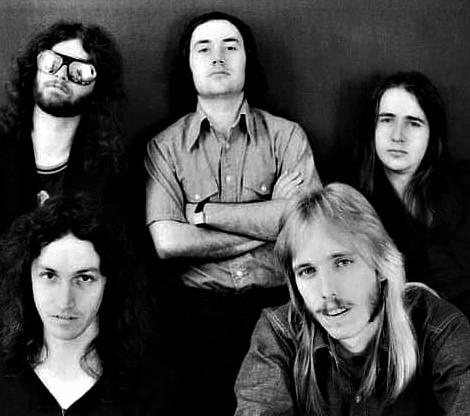
    Mudcrutch, an outgrowth of Gainesville teen band the Epics, consisted of Gainesville native Petty, on bass and vocals; Mike Campbell, a University of Florida dropout from Jacksonville, on guitar; and drummer Randall Marsh, from Bushnell. Singer Jim Lenahan had been with the group for a year when he was canned in early 1971.

    Guitarist Tom Leadon, younger brother of Eagles guitarist Bernie Leadon, had lost Mudcrutch its house gig at Dub’s Steer Room, a Hogtown live-music institution. For his hotheaded confrontation with owner James W. “Dub” Thomas—which cost the members their steady paychecks—Leadon was summarily dismissed.

    Leadon, at brother Bernie’s behest, packed up and went west, where he quickly found work as a musician. Before long he had assumed brother Bernie’s place in Linda Ronstadt’s band.

    They heard singer-guitarist Danny Roberts, formerly of Lakeland trio Power, performing in a duo with his sister at a show both acts were playing in Gainesville. Petty immediately saw the answer to Mudcrutch’s dilemma. Without consulting the others, he invited Roberts to join Mudcrutch. He didn’t know what he was getting himself into.

    Neither did Roberts.

    Power, later re-named New Days Ahead, had been a prominent Central Florida band. Roberts played bass but was also quite proficient on guitar, as Petty and Campbell noted at his Gainesville duo performance. He also sang lead, in a powerful blues-inflected style not unlike Gregg Allman’s.

    Blogger/musician Jeff Calder, also from Lakeland, wrote, “[In] 1970, thanks to Power’s regional success, [Roberts] had made a strong reputation for himself within Southeastern musical circles, far more so than his fellows in Mudcrutch….” Calder further stated, “By no means had Mudcrutch been a bad band, but they were nebulous…. That changed when Danny Roberts moved to Gainesville. His professional experience was of greater compass. He helped the band organize more serious demo sessions, and the group’s songwriting improved almost overnight. He alternated bass and guitar with Tom, and, with the additional support of Danny’s blues-influenced vocals, the music of Mudcrutch finally received its first dimension. By April 1973, their new authority was undeniable.”

    In keeping with the hippie ethic, rock groups in the early 1970s (and beyond) were generally viewed as communal entities in which all members were considered equal and had access to songwriting and songwriter royalties. This didn’t work out too well for the Who, for example, when bassist John Entwhistle would write a silly song about a spider, or for Cream, whose drummer Ginger Baker’s songs weren’t even in the same league as Jack Bruce’s.

    The years 1972 and ‘73 were a turning point for music in the Anglophone world. There was a change in the wind. Bands with singular names like Jefferson Airplane, Cream, and Mudcrutch were giving way to retro-style group names, plural nouns like the Eagles, the Modern Lovers, the Ramone, the Cars, et al. In addition, long, indulgent guitar solos were going out of style. Short, sharp songs were the coming thing. It was a bit nostalgic.

    What is more, there would be a return to a laser-like focus on the lead singer in groups such as Iggy Pop and the Stooges or David Bowie and the Spiders from Mars. Rock acts were emerging in which one person’s image, voice and vision was not only predominant but ruled the band. This was true for the Ronnie Van Zant of Lynyrd Skynyrd as well as for early-Sixties-inspired singer-songwriter Bruce Springsteen, whose band members and fans called him “the boss.”  Springsteen released his debut album on Columbia Records in 1973.

    A contingent of pop-music fans emerged who seemed to be sick of collectivist groups and were hungering for a singular individual’s worldview and philosophy. It appears that Denny Cordell saw this movement coming and decided this was what he wanted for Mudcrutch. He presumably foresaw that Tom Petty could fit into this “new wave” of music and designed an album cover that would appeal to punk sensibilities, with Petty donning a leather motorcycle jacket. Campbell comments: “We seemed vaguely lumped in with the punk scene…. We figured it was just about the picture of Tom on the album cover, the leather jacket…. The Ramones, a band I loved, wore motorcycle jackets. Must be the same type of music.”

    However, Mudcrutch—following the Beatles model—had originally been presented to its musicians as a collective: all the members would theoretically be equal partners and would split all proceeds equally as well as the glory. Technically there was no leader. This hippie-ish philosophy ran directly counter to Cordell’s plan—and would have to be modified. Unfortunately, Cordell did not make his objective—to make Petty the undisputed boss—clear to all the members of Mudcrutch—perhaps because he knew there would be a revolt.
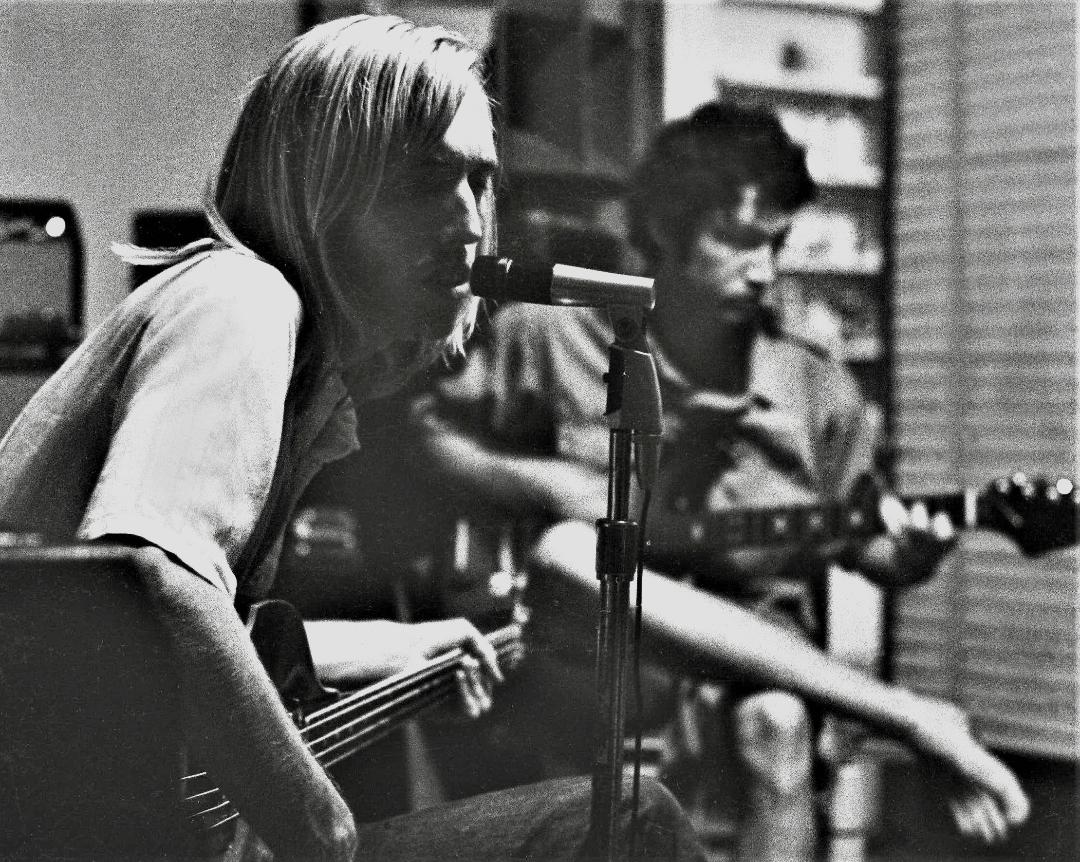
    Tom Petty knew it too. In fact he didn’t like the idea.

    And indeed there was a revolt—several actually. Petty would often be accused of tyrannical behavior—and that accusation may contain a grain of truth at times—but at this staage he had very little if any choice ion the matter.

    Even before the group moved to Los Angeles, guitarist Tom Leadon found out who was the boss when he disobeyed Petty by taking club owner Dub Thomas to task for some offhand, disrespectful remarks he’d made, after Petty had forbade him to do so. There was no debate, no vote. Petty simply stated Leadon had to go—and it was done.

    Keyboard virtuoso Benmont Tench had been a part-time member of Mudcrutch until just before the members packed up to leave for Los Angeles, when Petty somehow convinced Tench’s father—a judge—that it was actually a good idea for Tench to quit college, move to L.A. and take a stab at the music biz.

    Roberts was under the impression that this was his band as much as anyone else’s. He found out to his shock, that things would drastically change, even though he was the one who had driven Petty to Los Angeles in his Volkswagen van in their first expedition to L.A. Roberts was in large part responsible for getting the group in the door at Shelter Records, where he befriended publishing manager Andrea Starr, who—perhaps unbeknownst to the others—went to bat for them at the label. But the hippie ideals the band had taken to heart as gospel were vaporized when money came calling. Investors call the shots, not lowly musicians.

    Roberts says he saw the writing on the wall and quit. Campbell writes that he was relieved to see Roberts gone: “Danny could feel himself getting pushed to the side. He fought for his own songs. He campaigned for himself [via Andrea Starr] inside the label…. I didn’t like his songs, and I didn’t really like his playing anymore.”

    Campbell further elucidates his thinking at this point. In his view, it was all about supporting Petty, who had the strongest songs: “Danny had to learn his place in the band. It wasn’t about him. It was about this thing we had built years before he even joined. And to me, [it] was built on Tom’s songs and Tom’s voice. That was the band. …  To come in to that and make it about yourself? That pissed me off. We needed to find the humility to focus on what would make us great and get behind Tom’s songs.”

    According to Campbell, Roberts also said some nasty things on his way out that put him on Petty’s “shit list” forever.

    Petty immediately called Tampa-area bassist Charlie Souza to replace Roberts. He became a problem as well, but this situation was dealt with—this time—quickly and definitively. Souza, like Roberts, had insisted on contributing unwelcome material: “It was one I wrote about a spaceman and a UFO coming down,” Souza told biographer Warren Zanes. “Tom thought I was nuts….”

    The next musician to chafe under Petty’s new regime was drummer Randall Marsh. Marsh made fun of label head Cordell, sarcastically referring to him as “Denny Daddy,” presumably accusing Petty of meekly acquiescing to Cordell’s dictates.

    Petty hated confrontation.

    According to Campbell, he preferred “covert aggression.” Campbell—who was nonetheless staunchly in Petty’s camp—uses this very term to describe how Petty managed conflict.

    Despite all this, Petty insisted to biographer Zanes that even after Roberts left, he still wanted another singer and writer in the group. Petty at this point still did not see himself as the star of the show. He did his best to resist the way his band was being “packaged” by the label. Bands often do not like being packaged. It took some arm-twisting by label president Denny Cordell to make it work.

    Cordell made it plain that he did not subscribe to Mudcrutch’s hippie-communalist ideology. It was a committee with too many members, not able to get things done in a timely manner, and studio time was money—a ton of money. Even if Cordell had wanted to go along with the band’s laissez-faire program, it was unfeasible to support five band members; finances had gotten to the point where he could hardly support one. And there had been very little if anything to show for it all.

    That was the deal; take it or leave it. Petty astutely gauged that any deal was better than no deal. He was effectively forced by Cordell to sack the whole band. Campbell, however, whom Petty saw as indispensable, was given a last-minute reprieve.

    The crux of the morale problem was that Cordell left it to Petty to break the news to the boys in the band. This would have been best coming from a manager—whom the group did not have at this stage—or ideally from Denny Cordell himself. Petty himself had to take the heat. Drummer Marsh was so upset by his sacking that he refused to speak to Petty or Campbell for decades. Petty tried to explain to Marsh and Tench that he had no choice: it was either this or the unemployment line for him—and he had a wife and a daughter to support.

    After a failed experimental period using session musicians, this same ideological conflict again reared its head. Petty picked up an ostensibly new group, dubbed the Heartbreakers by Cordell, with three members of Mudcrutch—Petty himself, Campbell, and keyboardist Benmont Tench—with the addition of Gainesville musicians Ron Blair and Stan Lynch, who were participating in a demo session for Tench. Petty’s new manager, Tony Dimitriades, a London-based music attorney brought in by Cordell, hammered out a deal in which Petty would get fifty percent of the group’s earnings (on top of his songwriter royalties); the other four members would split the remaining fifty percent.

    New drummer Stan Lynch, whom the members had known since his days with Gainesville rockers Road Turkey, would be somewhat mollified by this financial setup but evidently could not stomach being ordered around by Petty and would occasionally become physically menacing.

    Lynch somehow managed to hang in there long enough—twenty years—to see a few humongous paydays and to connect with other L.A.-based musicians such as former Eagles member Don Henley as a co-writer. Lynch finally moved back to Florida, where he bought a ranch in Melrose, just outside Gainesville and scored a newfound career as a Nashville-based songwriter with several big hits under his belt, including a number-one country hit for Tim McGraw.

    Campbell himself admits to being appalled a time or two with Petty’s newly instated imperious persona. However, he made a conscious decision to go with the flow and allow himself to become rich beyond his wildest dreams. Unlike Lynch, Campbell was able to swallow his pride. He was more than handsomely rewarded.

    Campbell at one point had a family to support and was starting to get irritated about not being remunerated for all the extra work he’d been contributing to the recording project for the group’s 1979 album Damn the Torpedoes. After some urging from his wife, Marcie, Campbell finally worked up the nerve to confront Petty. Besides his co-writing, for which he would receive extra royalties, “I played all the guitar parts and some of the bass and added the extra instruments and came up with a lot of other ideas. And now I was working on the mixing too [in other words, he was de facto co-producing the album]…. So I was thinking I could get a little bit more of the pie on this one because I was such a bigger part of it…. Tom stared back at me. “Yeah, but I’m Tom Petty….” I realized he was serious. That was really his [only] answer.”

    Campbell continues: “I gave him a long, hard look. It didn’t even seem to register with him. I might as well have been trying to stare down a brick wall. I turned, biting my tongue with all my might and went back to work.”
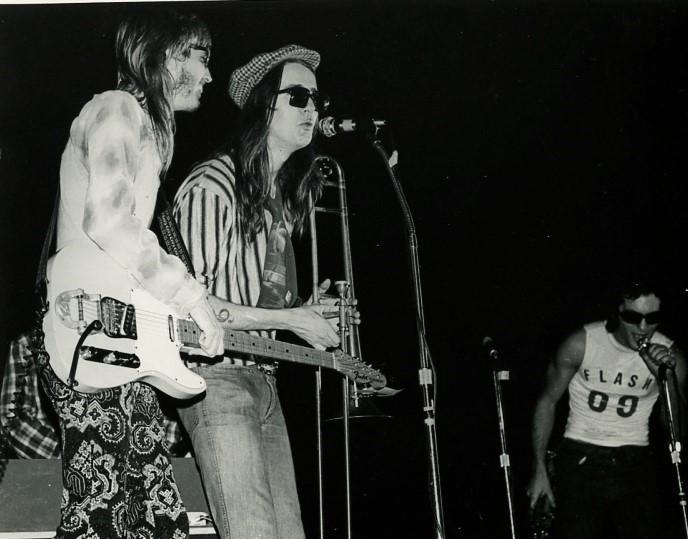
    Petty by this point was clearly drunk on himself. But as Campbell and others—including Petty’s managers and producers—concluded, he had every right to be because he came to the table with the right stuff and was going to make them all rich. Damn the peccadilloes.

    Campbell came to terms with this cold, hard reality. He realized he would make a lot of money if he just kept his mouth shut. Ultimate it boiled down to a simple decision: kiss the ring or get out. The others—Danny Roberts, Randall Marsh, Charlie Souza and Stan Lynch, who either could not or would not bite their tongues—would fall by the wayside. Only Lynch landed on his feet.

    In 2007, after seeing the documentary film Peter Bogdanovich put together on his career, Runnin’ Down a Dream, Petty, perhaps feeling nostalgic for the old days, decided to put together a Mudcrutch reunion with a four-piece edition of the group: himself, Mike Campbell, Tom Leadon and Randall Marsh. Former singer Jim Lenahan, who had been with the group from 1970 to 1971, refused to discuss the reunion and his omission from it. Danny Roberts (1972-1975) and Charlie Souza (1975) were not consulted.

    Roberts was shocked to discover his image had been airbrushed out of one of Mudcrutch’s 1974 publicity photos. “I try not to be bitter, but I can’t but be a little hurt by such an intentional snub,” Roberts said in an interview. “I thought Tom was bigger than that.”

    Mudcrutch embarked on a small West Coast tour and then disbanded for several years. Petty seemed to relish playing bass again and not always being the center of attention. Jaan Uhelszki writes,

    It was as if Mudcrutch allows Petty to reconnect to his younger self, a Tom Petty who still lives inside the Gainesville city limits, earning $100 a week playing Dub’s, hosting ad hoc music festivals at their base in a remote, dilapidated wood-frame house. In other words, a Tom Petty unencumbered by global fame.

    Another Mudcrutch reunion followed in 2016, which comprised the final studio recordings Petty made before his death in 2017. Tom Leadon died in 2023.
  • Ultra Music Festival Presents Bayfront Bark, a Pet Adoption Fair

    Ultra Music Festival Presents Bayfront Bark, a Pet Adoption Fair

    Giving back to the community at large is a wonderful act of gratitude and service.  Ultra Music Festival is committed to this act of compassion and this Saturday’s pet adoption fair “Bayfront Bark” is testiment.

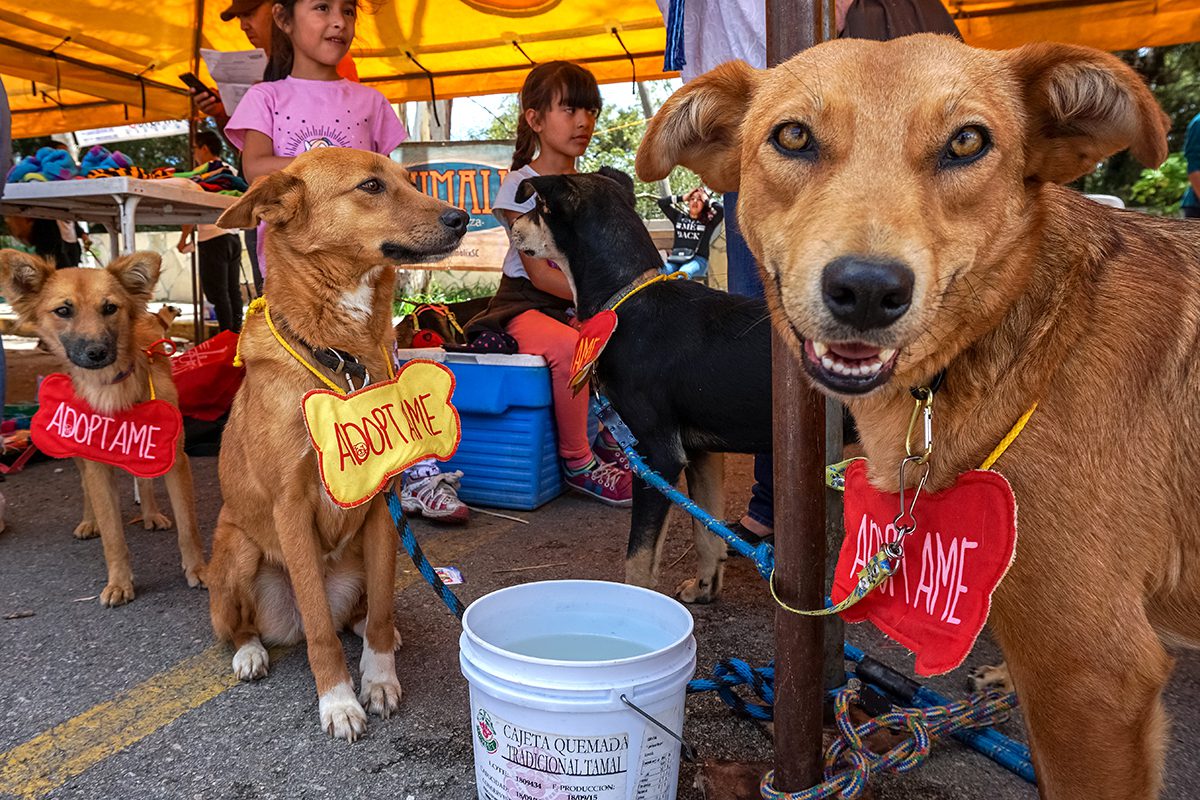
    Ultra Music Festival has announced its next community event Bayfront Bark, a free pet adoption event taking place on Saturday, June 21 from 10:00 AM to 1:00 PM at the Dog Park located in the southeast corner of Bayfront Park. The event aims to support local animal welfare efforts and help connect adoptable pets with loving families.

    Woof!

    What do we all have in common? Our environment? Love? Care giving? Loss? Music? How about our animals?

    According to a recent Channel 10 report, dogs are being dumped in Miami Dade like never before, and estimates indicate 30,000 dogs are without home.

    How about making that number one or two lower and adopt a stray today!

    Because of its worldwide reach due to Ultra Worldwide, one can argue Ultra is the most successful music festival in the world and it’s not even close! (take that Coachella and Outside Lands). It’s good to see the homegrown staple give back! Those of us that live here know how small of a large city we really are! Events like this (moreso than the festival itself) truly create the pride we have in the 305.

    Tithing isn’t just for patrons of a synagogue, mosque or church.

    Go Ultra!

    Ultra Music Festival’s Bayfront Bark

    Bayfront Bark is being produced in collaboration with Miami-Dade County Animal Services, Bayfront Park, the City of Miami, and the Miami Police Department. The event will feature free adoptions, ice cream, and limited giveaways (while supplies last) including Ultra merchandise, pet products, and branded swag. All adoptions are first-come, first-served with a valid photo ID.

    Sponsored by Ultra Music Festival as part of its Mission: Home initiative, the event underscores Ultra’s continued commitment to giving back to the Miami community through meaningful local partnerships.

  • Jitney Miami Concert Preview – Summer 2025

    Jitney Miami Concert Preview – Summer 2025

    It’s been hot for so long in Miami, it’s hard to remember summer doesn’t officially start until June 20. Now that the cruelest season of all (at least according to Taylor Swift) is within reach, let’s take a look at what musicians are coming into town. Here’s the Jitney Miami concert preview – Summer 2025 edition.

    Thievery Corporation June 20 & 21 at Miami Beach Bandshell

    The electronic music favorites kick off summer with a pair of dates at The Bandshell. Friday night is already sold out, so if you’re interested mark off the Saturday gig on your calendar.

    Blue Oyster Cult July 3 at Hard Rock Live

    Am I the only person in the world excited to see these classic rock dinosaurs? Perhaps. But this iteration still has original members, Buck Dharma and Eric Bloom, and I’ve got to hear them play “The Reaper” and “Burnin’ For You” at least once in my life.

    Os Mutantes July 9 at ZeyZey

    If you never heard the 1968 self-titled debut album by Os Mutantes, stop what you’re doing and take a listen. The Brazilian group whose name translates from Portuguese into The Mutants, mutated psychedelic music through a South American lens and made it their own. Sergio Dias is the only original member still in the band, but well worth checking out if they can recapture the old magic.

    Glom July 11 at Gramps

    The quiet indie tunes of this Brooklyn band make their Miami debut at Gramps. Come early to check out Virginia openers Drook.

    Coldplay July 26-27 at Hard Rock Stadium

    I’m not a fan of the Brit rock band, but this is undoubtedly the biggest rock show of the season, so it would be malpractice not to include the singers of  “Yellow”, “Clocks”, and many other anthems that are inserted in countless television episodes tor remind viewers that they are alive.

    The Weeknd August 15-16 at Hard Rock Stadium

    The Canadian pop star will play all his hits on the two nights of his After Hours Til Dawn Tour.

    The Who August 16 at Amerant Bank Arena

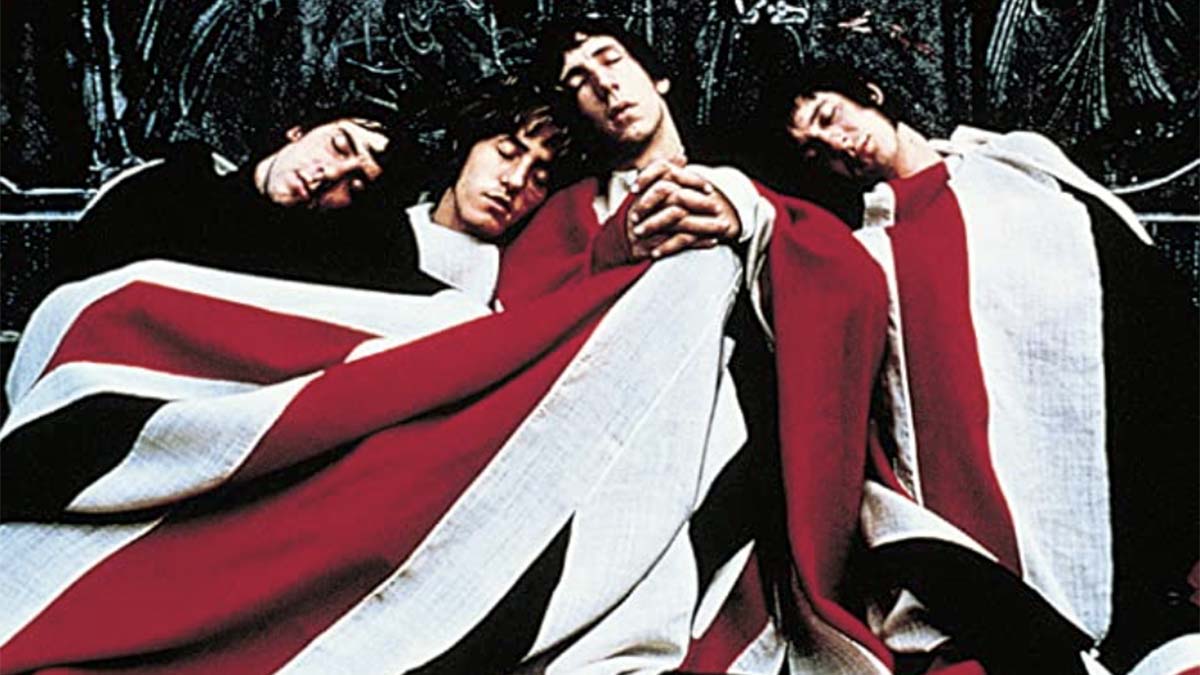
    The classic rock band have threatened for decades to call it quits. This time they swear it’s over as they dubbed this tour, The Song Is Over – North American Farewell Tour of which their south Florida show is the opening date.

    Lady Gaga August 31, September 1 & 3 at Kaseya Center

    The pop/movie star brings her Mayhem Ball tour to Miami for three nights of over the top extravagance.

  • Musical Restlessness: Oscar Herrera Returns with Castor and Pollux

    Musical Restlessness: Oscar Herrera Returns with Castor and Pollux

    In the myth of Castor and Pollux, the mortal and immortal twins, we see a tension that transcends ancient lore—two halves of a whole, each navigating the struggles of their respective realms. This duality, so central to their story, resonates deeply with Oscar Herrera’s latest musical offering, Castor and Pollux. In an age where myth and reality are often blurred by digital filters and social expectations, Herrera’s music explores what it means to reconcile the divine and the earthly within ourselves.

    Following last year’s impressive retirement years debut, Songs For The Fallen Mountain King, Herrera turned once again to the collective power of his musical court—and to the crowd itself. As the fallen king rose through the collective power of fans and music lovers, the mythical twins shall as well.

    Herrera, a veteran of the American darkwave scene, drawing on his decades of experience with bands like Black Tape For A Blue Girl, El Duende, and The Sleep of Reason, has found his groove as a solo artist—and he’s not holding back. If anything, the gift of time most people mishandle during retirement has become a boon of creativity for him.

    Where Songs For The Fallen Mountain King was a grand tapestry of layered styles and lush instrumentation, Castor and Pollux channels a more direct energy—less baroque, more bombastic. As Herrera puts it, “For Castor and Pollux I wanted to make it more streamlined and make it sound more like one band. It rocks a little harder.” Most of side one revives tracks once performed live with The Sleep of Reason, while side two features all-new compositions, a reflection of a man both honoring his past and forging new ground.

    The record is a collaboration of trusted allies, each adding their own spark to the project. Longtime partner George Berkowitz once again takes up the mantle of drummer and co-producer, while musicians like bassist Greg Young and guitarist Alex Sanchez—veterans of Herrera’s earlier bands—return to the fold. Also involved are former El Duende bassist Yovannis Roque, saxophonist Richard Rosales, Thomas Gumino on keys and strings, vocalist Tamika Tyan, and the horn section of Sergio Wagner, Ramiro Flores, and Juan Canosa.

    “All of us carry the seed of the divine,” Herrera muses. “But at the same time, we answer to earthly desires. It’s this struggle between how far we’re willing to conform and how much we hold ourselves back to fit into society’s evolving views of success. That’s the tension I find fascinating—and it’s all over this album.”

    With Castor and Pollux, Herrera answers the question so many creatives grapple with as they grow older: do I still have it?

    “My goal is a record a year and I’m aiming for the next record to have all brand-new songs. The other thing that drives me, and I think this is a question many creative people have as they grow older, can I still create? Obviously, I’m not aiming to be a rock star, but I still have something to say, and I can still enjoy the process of making music. My soul is as young as ever.”

    Check out Oscar Herrera’s Kickstarter campaign by clicking here.

  • Juneteenth Juke Joint is at Arsht Center on Saturday Night

    Juneteenth Juke Joint is at Arsht Center on Saturday Night

    This article originally appeared in PureHoney Magazine. Check them out here.

    The classic juke joint as a place for Black Americans to play and hear live music, and to dance, drink and socialize had its heyday in the segregated South following the abolition of slavery. While just a handful bona-fide juke joints still operate today, their impact in fostering Black music and its profound influence on American life is enduring. For the third year, the Adrienne Arsht Center for the Performing Arts in Miami is recreating that formative experience with Juneteenth Juke Joint, a celebration of Black joy, music and culture that also commemorates the end of slavery.

    Juneteenth, long celebrated in Black communities, became a national holiday in 2021 marking June 19, 1865, when federal troops arrived in Galveston, Texas to free enslaved people. Arsht Center community engagement manager Zaylin Yates says that the center’s Heritage Committee, which puts together events and programming supporting Black artists, wanted to find a way to celebrate the milestone, and the Juneteenth Juke Joint was born.

    “The juke joint is for everyone,” Yates says. “It’s a night where we all get to come together under one theme of freedom, artistry and community.”

    This updated juke joint features a pre-show happy hour with soul food-inspired bites and libations, along with local poet David Hepburn and music by New Cannon Chamber Collective. The party officially begins with resident DJ Cardi and soul, funk and pop jams by Coral Springs-based musical duo The W’s, who play originals and hits by artists including Usher, Alicia Keys and Michael Jackson

    For the The W’s — musical and life partners Chadwick and Brittany Watkins — 2025 is a year of milestones. Their Juke Joint performance comes a week before the couple’s tenth wedding anniversary, and three years after Chadwick suffered a near-fatal heart attack. There’s a lot to celebrate. “We want people to have an experience together and to know that we are all coming from different places,” Chadwick says, “but our first language, music, is our common denominator.”

    Juneteenth Juke Joint with The W’s, DJ Cardi, David Hepburn and New Cannon Chamber Collective, 7:30pm Saturday, June 7 at the Adrienne Arsht Center for the Performing Arts in Miami. arshtcenter.org

  • Sweet Home, Jacksonville: The True Origins of Lynyrd Skynyrd

    Sweet Home, Jacksonville: The True Origins of Lynyrd Skynyrd

    The Lynyrd Skynyrd story, told erroneously for decades, starts not with Ronnie Van Zant but with Bob Burns.

    The seed was planted on Feb 9, 1964 with Beatlemania, which would soon sweep the US and the world. It was particularly influential on a generation of budding musicians in Jacksonville Florida. Among those was Burns, a thirteen-year-old aspiring drummer.

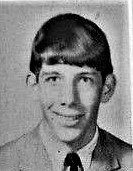
    Bob Burns, Lake Shore JHS yearbook, ca. 1964

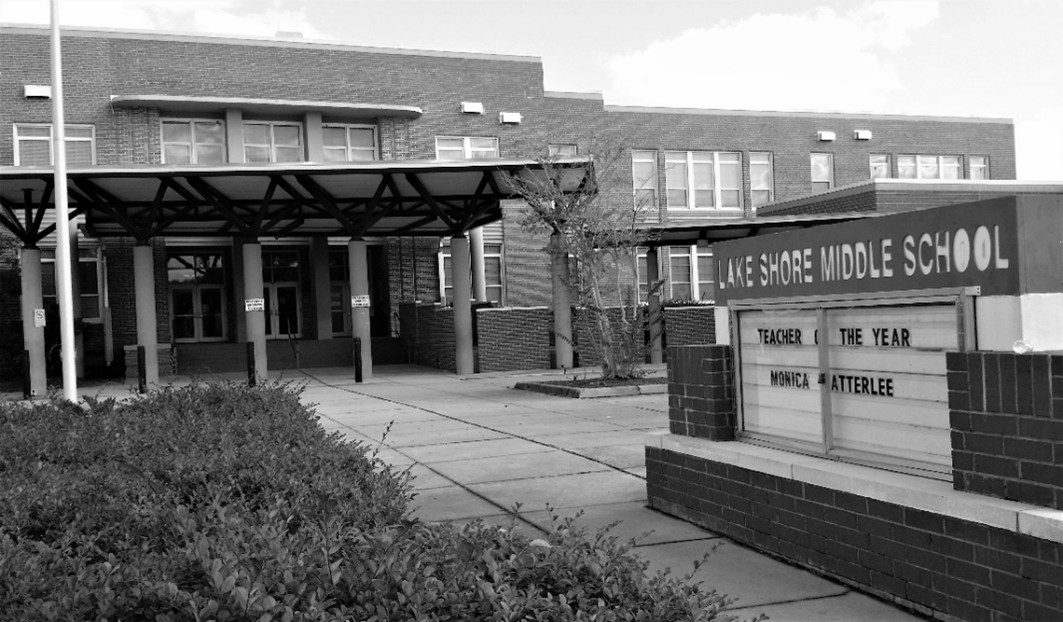
    Burns, whose father eventually became a well-to-do business executive, was—like many students at Lake Shore Junior High School in Jacksonville’s Westside—downright stoked after seeing the British sensations perform “I Want to Hold Your Hand” on CBS-TV’s Ed Sullivan Show.

    In a stroke of serendipity, the Fab Four also performed in Jacksonville’s Gator Bowl in September of that year—one of only two southern appearances, the other being in Dallas—and in doing so set many if not most local teen-age musicians aflame. The group’s Jacksonville appearance would create far-reaching waves in the region. This was more than just a concert: it was a life-changing event, a baptism, for young, aspiring musicians in Northeast Florida.

    The Beatles were followed in short order by a wave of British groups who collectively were dubbed the British Invasion. By early ‘65, having been bitten by the music bug, Burns had decided to put his own group together.

    There were already at least two other prominent groups that had been formed by Lake Shore students: The Mods and the Squires. Both had been heavily influenced by the British Invasion, but the Mods also included numbers by American groups such as the folk-rock-influenced Night Shadows (“Little Black Egg”) from nearby Daytona Beach, the Los Angeles-based Byrds, and Tacoma-based guitar-instrumental band the Ventures. Steele also loved the Beach Boys, but he doesn’t mention in his memoir whether that group’s material was represented in the Mods’ repertoire. Certainly the name “the Mods” had British connotations.

    Larry Steele, who died in 2018, is the author of an excellent history of the Jacksonville music scene titled As I Recall. He was also the bass player for the Mods as well as many other prominent bands, including 38 Special. Steele’s best friend was guitarist Allen Collins, then 12, another Lake Shore JHS student who lived in nearby Hyde Park, across the Cedar River. Collins played rhythm guitar with the Mods. Collins would remain with the Mods through early 1966. Hence—contrary to the official biographies—Collins was not available to work with the future Skynyrd boys until that time.

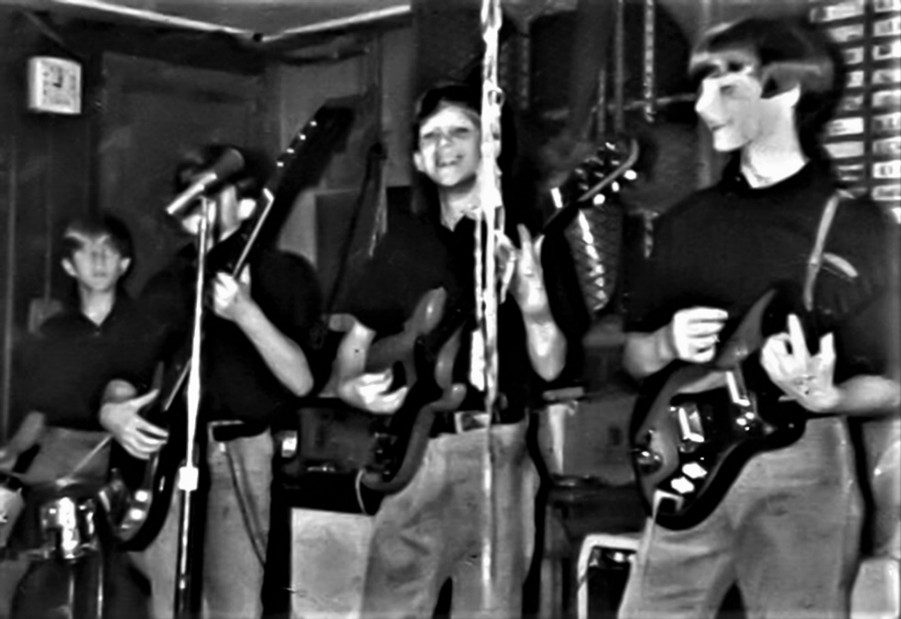
    The Mods, New Year’s Eve, 1966.
    L-R: James Rice, Larry Steele, Allen Collins, plus Us’ Taylor Corse (filling in for Donnie Ulsh).
    From the book As I Recall by Larry Steele. Courtesy of Theresa Askins Steele.

    For that matter neither was singer Ronnie Van Zant.

    The Mods soon found they had some serious competition: another British Invasion-inspired group called the Squires, led by guitarist Rick Doeschler, who was from a notably nicer part of town. Someone from the school got the idea to stage a “battle of the bands” at Lake Shore JHS cafeteria.

    Another neighborhood group was soon in the works: Burns said in a 2015 documentary-film interview he, like the Squires and the Mods, also had the idea to form a band after being inspired by the British Invasion.

    Burns soon enlisted the services of teenaged bassist Larry Junstrom, who also attended Lake Shore JHS. Junstrom happened to live only three blocks or so from the Burns household in the same small cinderblock subdivision north of Park Street in the Hillcrest area, also close to the Vant Zant home. “First it was me and Larry,” Burns said. They needed a guitarist. Burns told Junstrom he knew just the guy: Gary Rossington, who lived about a mile east with his widowed mother on the other side of four-lane Cassat Avenue, in a sedate, wood-frame house inside the old city limits.

    Rossington would cart his amplifier west on Yerkes Street, cross busy Cassat, to the Burns carport on Alecia Drive, where the three aspiring musicians rehearsed. Burns christened the trio Me, You and Him. Rossington corroborated this account in a 1998 Billboard interview.

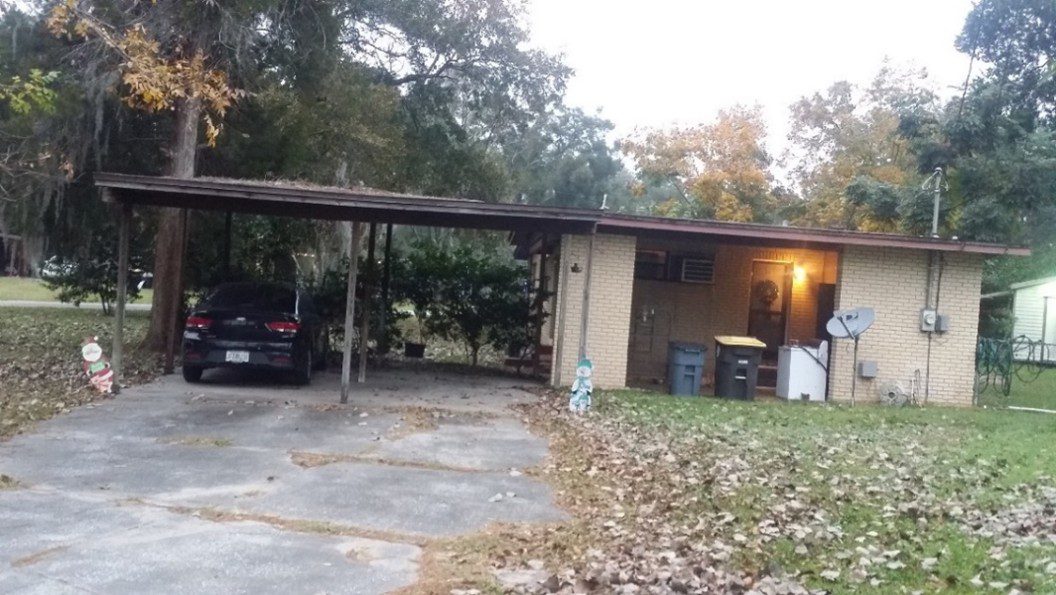
    Where it all began: The Burns family’s carport, seen from Park Street near Lake Shore Boulevard.
    Photo by author.

    Meanwhile, in April 1965, Squires guitarist Doeschler was approached in science class by a student named Nadine Inscoe, whose parents owned an auto-parts business and lived in stately Old Ortega [locals pronounce it “Orteega”]. Inscoe politely informed Doeschler that her boyfriend, Ronnie Van Zant, had seen the Squires at a house party held in nearby Ortega

    Forest—across the tracks, literally, from Old Ortega but still very quiet and nice—and was impressed. Doeschler, flattered, said thanks. He had never heard of Van Zant. Had he known about RVZ’s reputation as a bad-ass, Doeschler likely would have thought twice.

    Inscoe then sprung it on him: Van Zant wanted to audition to be the group’s singer. Doeschler said he’d see if that were a possibility and get back to her. He talked it over with the other members, and since none of them liked to sing anyway, he reported back to her that they’d be willing to meet with and subsequently audition Van Zant.

    The interested parties met up at Carter’s Pharmacy in Ortega and had sodas together. Van Zant was exceedingly courteous and affable, so the members agreed to hear him sing. “He was soft-spoken and polite,” Doeschler said. Besides, “he was older, so we looked up to him.”

    The gathering went over to drummer Steve Rosenbloom’s house in Ortega—rather posh in comparison to the somewhat rough-and-tumble area Van Zant lived in with his trucker dad and donut-shop-waitress mom. There were no streetfights in Ortega.

    Van Zant’s audition went off well: everyone in the Squires seemed satisfied, and just like that, he was in. He soon suggested a name change to the hipper moniker “Us.” The name stuck—not because he bulldozed the others but because they saw it as an improvement.

    Steele likes to tell the story that there was a second battle—a rematch of sorts—between the Squires and Us with RVZ now on board. However neither Doeschler nor fellow Us guitarist Taylor Corse have any recollection of this purported second battle—which Steele continued to insist Us won.

    Doeschler does recall RVZ inviting him to ride with him to see the Rolling Stones perform at the Jacksonville Coliseum on May 8, 1965. Van Zant picked Doeschler up in his new, red Mustang convertible his father, Lacy, had bought him a few months previously for his seventeenth birthday. 

    The exact chronology at this point is unclear. Doeschler and the other Squires were set to go on to Lee High School [now Riverside High]. In summer of 1965, the members decided to quit music and focus on tennis and girls. Us abruptly disbanded. Van Zant took a hiatus from the music biz.

    Down but not out, Van Zant, like Collins, would nonetheless find a place to land: Bob Burns’ budding band.

    In a documentary-film interview, Burns tell the story of RVZ popping by his house one morning in 1966. Burns, who was actually a bit of a bad-ass himself, opened the front door as he was leaving for school, and there stood Van Zant. Burns assumed Van Zant wanted a showdown, for what reason he couldn’t fathom.

    Van Zant didn’t always need a reason—or much of one—to clobber someone.

    Burns, seeing Van Zant on his doorstep unannounced, braced himself and took a deep breath. In a 2015 filmed interview, he related the story:

    I said, “I don’t wanna fight you, man.” And he [Van Zant] said, “I aint here to fight.” He says, “I’m a singer, man.” I said, “You’re a singer?” He said, “Yeah.” I said, “I’ll be dang.” I said, “I got a bass player [Junstrom], and I have a guitar player [Rossington]. Why don’t let’s try to put something together.”

    Burns did some quick mental calculations: adding Van Zant to the lineup would be advantageous to his and his group’s career—but of course the name Me, You and Him would no longer make sense. Seemed like a no-brainer.

    Even with RVZ on board, Burns had decided the sound was still too thin. Burns said he wanted to recruit a second guitarist. RVZ agreed. Lots of budding pickers owned (mostly cheap) guitars, but few had amplifiers big enough to cut a gig. “I know just the guy,” Burns told RVZ. “Allen Collins.” Collins had recently come a cropper.

    Collins had just had a major falling out with Mods bassist Larry Steele: the two had been wrestling in Steele’s yard, and Steele—to his eternal regret—pulverized the tall but emotionally delicate Collins with a pro-wrestling move called a “piledriver.” Collins immediately divorced himself from Steele, which entailed surreptitiously quitting the Mods. He quietly went over to Mods drummer James Rice’s house, let himself in, and removed his amp. The others had no idea Collins was leaving until they arrived and that saw his gear was gone.

    Unbeknownst to Collins, he would soon have a place to land: Bob Burns’ new group with its new singer, Ronnie Van Zant.

    According to the perhaps-too-colorful official story, Burns and Van Zant went driving around Collins’ neighborhood on the other side of the Cedar River looking for him. Collins, pedaling his bicycle, saw them coming, jumped off and climbed a tree to avoid them. RVZ purportedly had to talk him down, assuring that they only wanted to recruit him for their new, as-yet-unnamed band.

    Steele puts the date of the new group’s formation—including Van Zant and Collins—at May 1966.

    Some members of the Mods, however, objected to Collins’ rash decision to leave the group with no notice. According to Steele’s account, drummer James Rice got Collins on the telephone and unwisely threatened him with a real ass-whipping—by Steele—if he didn’t return toute suite. This was the exact wrong tactic, since Collins’ feeling of being physically menaced was the very reason he had left the group in the first place.

    Ironically, if Collins thought he was escaping physical violence by going over to Bob Burns’ group—which quickly became RVZ’s group—he would have another think coming. “Ronnie never hesitated to keep his boys in line…with his powerful fists….” Gene Odom writes.” [T]hey always took his abuse.”

    Van Zant and his riding buddy (later bodyguard and security chief) Odom, who was even tougher than he, went over to Rice’s house, where the remaining members of the Mods were gathered. The meeting resembled a mafia sit-down. It was quickly agreed that Collins would join the new group without any further discussion from his former bandmates.

    Like a mafia don, Van Zant could be gently but firmly persuasive when he wanted to be. Odom quotes Van Zant:

    Larry, the way I look at it is this: You’ve got a really good guitar player in Donnie Ulsh. You’ve got Allen, and he ain’t that good. Gary ain’t that good either. Now I’ll take Allen and I’ll take Gary, and between the two of ‘em I’ll make [one] good guitar player…. Now, don’t that make sense?

    Van Zant wanted to sing a few songs neither Rossington nor Collins knew correctly, especially the Stones’ “The Last Time.;” He rang up Doeschler and asked if he would teach them. Doeschler agreed. Van Zant, with Rossington and Collins in tow, showed up at the Doeschler household and were rehearsing when Mr. Doeschler got home from work. Mr. Doeschler had already known Van Zant—picture Ward Cleaver and Eddie Haskell here—but did not like the look of the other two. Doeschler said his father was a bit leery of these shady-looking longhairs: “Keep an eye on the silverware,” he told Doeschler‘s mother.

    The still-unnamed quintet rehearsed furiously for an upcoming gig the group somehow landed at the annual fall festivities held at nearby St Matthew’s Catholic Church on Blanding Boulevard, only a mile north of Lake Shore JHS.

    Bassist Larry Junstrom had stopped showing up for reheasals—he had bigger fish to fry, or so he thought. He had apparently joined another group, After Five, who was working more regularly. Determined that the show must go on, the others recruited at the last minute a third guitarist, Billy Skaggs, to fatten up the sound, presumably with something akin to bottom-heavy power chords. This may have been the seeds of the concept of the “three-guitar army” Jacksonville rock groups became famous for.

    Steele writes that Jimmy Parker, formerly of Doeschler’s band, Us, was recruited to replace Junstrom on bass later that year, and the group settled on a name, the Pretty Ones, later changed to the Noble Five. Parker too, however, started missing rehearsals—and gigs—whereupon Steele filled in once or twice on bass. Parker was killed in a car crash in 1966, so Junstrom was re-added on bass, and the group became the Noble Five, later changing to One Percent.

    I was in the audience at the Forest Inn on Lake Shore Boulevard—only a few blocks from Junstrom’s house—with some hippie friends in May 1969. We would often make the short trek from from Orange Park the Westside to hear live music. That night RVZ announced that he wanted to change the name to “Leonard Skinner” [sic].

    In a 2018 documentary, Bob Burns explained: “People were calling us ‘One Percent Talent,’ and it was pissing him off.”

  • Nervous Monks on New Record As You Like It

    Nervous Monks on New Record As You Like It

    Nervous Monks are releasing a brand new record, As You Like It. To celebrate the quartet of Brady Newbill (guitar/vocals), Vitek Benton (guitars), Tim Hicks (bass/vocals) and Adam Camarena (drums) will host an album release party, Saturday, May 31, at Revelry in Pompano Beach. Before the album release and the show Brady Newbill hopped on The Jitney to answer our questions about Nervous Monks.

    How did Nervous Monks form?

    Brady Newbill: This band formed in 2016. I had just moved back from a couple of years in Gainesville and our friend Corey, who Vitek had been playing with in the band Retrocities had just moved away. It was a natural move for me and Vitek to start something together at that point. He had already been working on some stuff with Adam, who we had already known for a longtime but hadn’t really played with before. And I had already been collaborating with Tim for several years so we didn’t have to look too far to round out a good lineup. The whole thing came together very organically and has remained a nice collaborative outlet for all of us for nearly a decade now, which is wild to think about.

    How has South Florida shaped the band?

    Well we are all from here and have played through different facets of the music scene for a while, so I think the natural influence of our surroundings has always shaped what the band is and how we sound. All the artists we’ve worked alongside and crossed paths with inevitably influence how we play and what we listen to, and taking into account who the audience will be influences the songs that we write. For this band, I think a lot of that audience has always been other artists and musicians in South Florida, so paying tribute to that common thread of underappreciated original art and music from this area is a theme throughout our work.

    What can we expect from the album release party at Revelry May 31?

    It should be a really fun night. Lindsey Mills is going to be opening up with a rare solo set. I’m a little biased since I played in her band, but her music is some of my all time favorite, so it’s really exciting to have her there. Then we have The Elm Tops, some friends we’ve known for ages and always have a great time playing with now. Their music is very catchy and infectious and should bring a great energy to the night. We are going to be debuting some new material from the album that’s probably our most ambitious to date, as well as playing through some tried and true favorites. Revelry is a great spot that really compliments our vibe well. And of course, we’re super excited to finally have an album like this to share on vinyl.

    What inspired and influenced the new record, As You Like It?

    This album began like our other work has; assembling material in the garage until we have enough to hit record and put something out. But during the process, some interesting things began to develop. Not only had our chemistry of playing and writing collaboratively evolved into fresh territory, but I had also been working on some songs that are a bit more theatrical and focused on the history and ecology of Florida, and what it means to remain creative in an environment that’s increasingly inhospitable to the creative process. The first couple of those songs worked great when I brought them to the band. Then for the first time, Tim started bringing in songs that he had written that round out a well-balanced collection. The opportunity to produce a full-length vinyl record, instead of shorter digital EPs we had made in the past, allowed us to construct a narrative through the songs that plays out in long-form, something we have strived to do for a while now.

    Any interesting stories about the writing and recording process you can share?

    We have been really lucky throughout the history of the band to have a comfortable place to play, write and record at Adam’s house. I guess the main downside is that we could maybe get some more polished and high quality results at a professional studio, but doing it ourselves in a comfortable environment allows us to capture creative heights we may not reach if we are on the clock in a strange space. We always get some amazing takes and improvisational magic on days when we aren’t even “tracking” that become highlights of what we release. The foundational tracks of some of the songs were even recorded during a rainstorm with the garage door open. I did my best to mix out the sound of the rain drops, but the takes are so good that I don’t think many people would notice even if I hadn’t.

  • Peter Bjorn and John Took Miami to a Happy Place

    Peter Bjorn and John Took Miami to a Happy Place

    Saturday night in Miami was so stiflingly hot it could depress anyone with an internal calendar. It was only May 24, meaning we have four more months of nonstop sweat and mosquitos. But it you’re patient, once every so often we’re rewarded with a breeze. Last night’s Peter Bjorn and John concert at Zey Zey was just such a gust of cool that Miami desperately needed.

    The Swedish trio were on tour to celebrate the twentieth anniversary of their recording the album Writer’s Block.  I wondered how those Northern Europeans would handle our steam bath environment, but the dudes came out clad in jackets, they didn’t take off until deep into the encore. It was a reminder of how popular saunas are in Scandinavia.

    Sweden is also known for cracking out pop-tacular hits. Abba, Ace of Bass, and Roxette all topped American pop charts. I’ve read a theory it’s because Swedes all know English well enough to write a song in our language, but not so well to make it too complicated. They keep it easy. Lyrics that anyone can sing along to.

    Peter Bjorn and John definitely fit that formula.

    “I’m all about you/ you’re all about me/ we’re all about each other” or “Baby went to Amsterdam/Four, five days for the big canal/Now it’s so slow, so slow” stick into your head and back out of your mouth so easily. That’s not even getting into their most famous song “Young Folks”, you just have to know how to whistle.

    I always thought of them as pop music. But Saturday night Peter Bjorn and John were revealed to be a garage rock band. Or maybe New Wave guitar heroes. Regardless of how you want to classify them, they were relentless as they took the sweating audience on a trip down memory lane. But instead of performing Writer’s Block from front to back they played it from back to front.  The last song on the album first, working their way to the top.

    It makes sense. A band frontloads an album with the hits so a listener sticks with it. During a concert a band has to keep the biggest songs in their pocket, so the crowd waits for it. They kept the structures of the songs faithful, but they occasionally played with the forms. They stretched out “Up Against the Wall” long enough, so that singer Peter Morén could jump off the stage and sing amongst the crowd while a roadie held the microphone cord.

    By the time they got to the album opener, “Objects of my Affection” they provided an hour of nostalgia. Everyone already felt they got their money’s worth, but the band asked “Do we have time to play a few more songs?”

    A few, became a second hour of shredding and screaming and dancing.  By the time it was all over close to midnight, the temperature and humidity were forgotten, if for one night.