Category: Music

  • There Goes The Neighbourhood – Miami Concert Review

    There Goes The Neighbourhood – Miami Concert Review

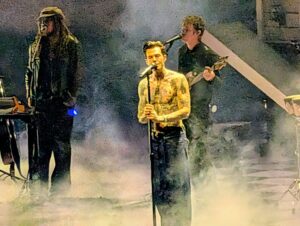
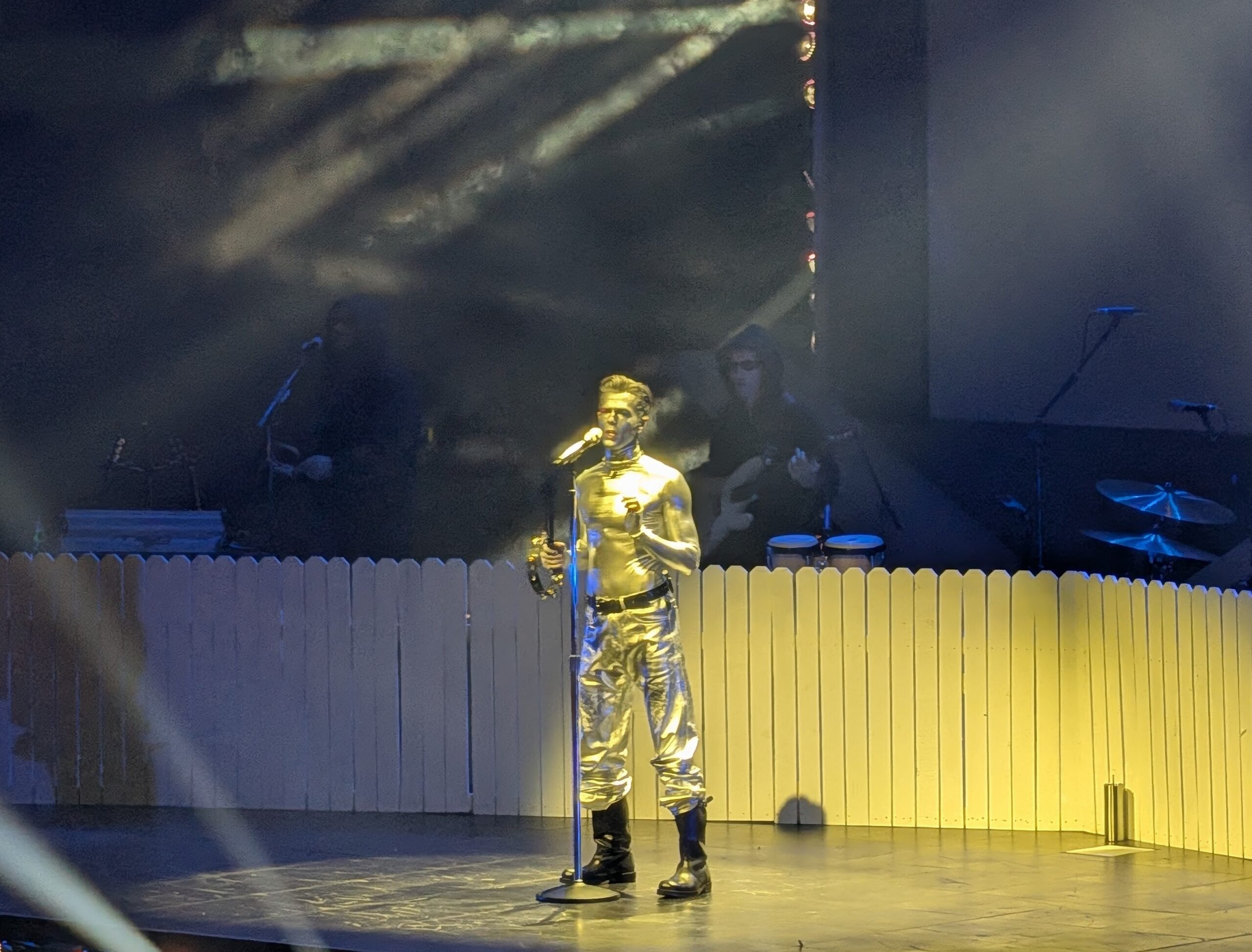
    The Neighbourhood kicked off its Miami concert Thursday night with lead singer Jesse Rutherford descending from the heavens like Jesus Christ, as thousands of young women screamed like banshees.

    Rutherford was covered in silver, wearing a skin-tight metallic shirt and matching pants, with red eyeshadow on one eye, blue on the other, and bright red lipstick. He looked like a cross between David Bowie and the Tin Man from The Wizard of Oz.

    It was a hell of an entrance.

    And there was a vibe in the Kaseya Center from the jump.

    The moody, atmospheric California indie-rock band returned to Miami on a Thursday night in early November, with Mercury in retrograde, and an arena full of screaming fans who couldn’t have been happier.

    The Neighbourhood has been around for roughly 15 years, breaking through in 2013 with the massive hit “Sweater Weather.” The band last played Miami at the Fillmore in 2015, making this a homecoming. It’s been 11 years, although most of the young fans in attendance were probably in elementary school back then.

    Miami doesn’t get nearly enough alternative and indie-rock concerts of this size. Live Nation tends to send these bands north to Broward or West Palm Beach, where the demographic is traditionally more receptive. But The Neighbourhood has clearly transcended those boundaries.

    The Neighbourhood Miami Review

    The Kaseya Center was packed, with seemingly every seat occupied. The crowd was overwhelmingly young and female, a sea of Wednesday Addams types, many appearing to be under 21. The ratio of women to men seemed about five to one.

    The beer vendors weren’t thrilled. Everyone was buying water.

    But what a joy to watch so many people having the time of their lives.

    The band hit the stage promptly at 9 p.m., playing nearly half an hour nonstop before a brief set break and costume change. Rutherford returned around 9:41 p.m., having somehow turned his sex appeal up to Megatron level ten.

    Gone was the silver Tin Man outfit. Now he wore a leather jacket with nothing underneath, revealing a tattooed torso and possibly the most ridiculously defined washboard abs I’ve ever seen.

    Looked like he was wearing a T-shirt with fake abs printed on it.

    Nope. That’s the real deal.

    There were eight musicians onstage, but make no mistake, this was Rutherford’s show. He’s got the brooding, rebellious charisma of a young Johnny Depp mixed with a little James Dean, a little David Bowie, and a healthy dose of emo-rock swagger.

    He’s arguably one of the more compelling frontmen in alternative pop today, and the audience was absolutely eating it up.

    The concert itself was cleverly structured, unfolding almost like a theatrical production divided into chapters. The band’s current WOURLD TOUR has been organized around different musical eras and identities, moving from the silver-painted Chip Chrome persona into darker, more intimate territory.

    Recent shows have featured songs including “Pretty Boy,” “Lost in Translation,” “Afraid,” “Daddy Issues,” “Sweater Weather,” and “Softcore,” a mixture of atmospheric ballads, indie-rock anthems, and the kind of moody pop that made The Neighbourhood famous.

    Miami Show

    What stood out most wasn’t necessarily the musical complexity or the elaborate staging. It was the atmosphere. The screaming, the anticipation, the collective devotion to a band that has clearly meant something to an entire generation of young fans.

    For all its melancholy, dark aesthetics, and brooding sexuality, The Neighbourhood delivered something surprisingly simple Thursday night: Joy.

    Thousands of people singing, screaming, dancing, and losing their minds over music they love.

    You gotta love it when people are loving shit.

    There goes the Neighbourhood.

    And Miami was more than happy to let them in.


  • Delusion Bay: On Their Radar

    Delusion Bay: On Their Radar

    One of my favorite music artifacts is John Lennon’s 1965 portable jukebox, packed with the R&B, rockabilly, early American rock ‘n’ roll and soul that clearly shaped his entire artistic life. Lennon took it on the road until the band quit touring in 1966. I’ve always been curious about what artists are listening to. But what about the artists in my hometown? Which local artists are they fans of? So, I’m asking some of Miami’s most eclectic, original artists who’s on their radar. I had to start with Delusion Bay. I can’t count the times that I have gone to see shows and he is there: fronting his band, playing organic or electronic instruments in someone else’s, or in the crowd as a fan.

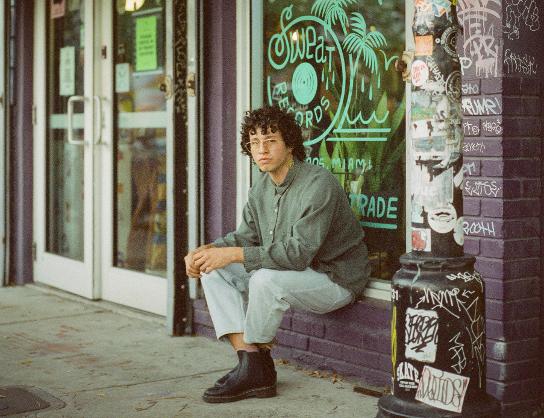
    Delusion Bay is the brainchild of Venezuelan artist, multi-instrumentalist and producer César Rodríguez. It’s a project that fuses ambient, Latin, Indie and elements of Caribbean folklore under an intimate, cinematic aesthetic. He moved to the United States about eleven years ago and has released music as Delusion Bay since 2019.

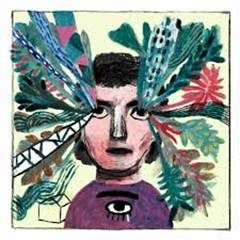
    album art credit by Gerald Espinoza

    In 2025 he put out two singles that top of my Miami playlist: the psychedelic tropicália-and-jazz infusion of “CONSUELO” and the hypnotic, catchy “MAYAMI,” which has an equally entertaining and tastefully created music video. Both belong to an album he’s putting together “very, very slowly,” and both sound “clean but a little dirty,” in all the right ways. His live shows range from full-blown electronic dance sets to intimate, transcendental roots music gatherings.

    Here’s who is on Delusion Bay’s playlist:

    Swamp Lily (Diego Melgar) — swamp lily (2025)

    “He is just my favorite from this scene, with no doubt,” César says of Miami guitarist and composer Diego Melgar, whose project Swamp Lily (Diego Melgar) put years of live material onto the album swamp lily in August 2025. His favorite part of the album? “I would say all of it.”

    Swamp Lily is more collective than band. Diego writes the compositions, then reshapes them with a rotating cast: clarinet one night, two synthesizers the next. “It’s experimental jazz, & it has a lot of soul,” César says. “It’s a bunch of very talented musicians, and you can tell they are all just exploring.”

    Watching them live for two years has changed how Cesar he plays his own shows, moving between trio, duo and full band instead of one version. “Every time I go to a Diego Melgar show and it finishes, I just want to go home and make music.”

    Floating Woman — TBA

    César’s next pick isn’t even out yet: the debut album from Lucia Nuñez under the name Floating Woman. César is also producing the album. He calls it “Freak-Folk, in similar paths as Joanna Newsom & Devendra Banhart, with a lot of Angel Olsen in its DNA”.  They are songs written on voice and guitar, with minimal production. “I almost cry every time I hear some of those songs.”

    Ana Paz — surrender (2025)

    César stopped me before I could ask him about his next pick. “I have to mention Ana.” He meant Ana Paz, the Argentine-born, Miami-based singer, songwriter and multi-instrumentalist, who was named Miami New Times’ Artist of the Year in 2026.

    His pick is her three-song EP surrender, thirteen minutes of looped vocal harmonies, keys and polyrhythmic percussion meditating on grief. None of her songs come at you full force, he says, but the songwriting and textures pull you in. “So, so, so beautiful.” He recommends listeners to start with the song “what’s left to say.”

    Their history runs both ways. When Ana was first unsure what to perform, César suggested she try looping. The next time he saw her, she was layering harmonies and piano live. “And I was like, what?!” She later became his vocal coach. She found the right key for his song “MAYAMI,” produced his vocal sessions, sang its backing harmonies, and played bass on “CONSUELO.”

    Rick Moon — “Faulty Design” (2021)

    The band that first knocked César out in Miami was Rick Moon at Oak Garden in 2021, with Corey Perez, Alejandro Elizondo, Brian Tate and Brian Lange. “It really blew everyone’s mind.”

    The Puerto Rico–born singer-songwriter is “one of my favorite producers from Miami.” For Rick Moon 101, César picks the 2021 single “Faulty Design”: “That specific song kind of separates his production approach & his style.” From there, Cesar suggests listeners dig into Electric Lunch (2019), which César calls “more rock, psychedelic, and aggressive”, and finally “Overtown” from 2015’s Cottage Scenes: “super folky, super cozy and sad and beautiful.”

    Musiana — Son del Mar (2024)

    Musiana (Viviana Baptista) was one of César’s first friends in the Miami scene. The Venezuelan-born songwriter, who has written for Juanes and Leslie Grace, released her debut album Son del Mar in March 2024, a mix of folk-pop, indie rock and progressive soul. César produced much of it and calls it “an artist statement” and the place to start.

    Now she’s making new music with Rick Moon producing. “The combination of her songwriting and Rick’s production is something very powerful.” Her new single, “Magia,” came out the day we talked.

    Kyra — Amor & Autotune (2026)

    César’s most surprising pick is Kyra, a young Miami-based artist who has put out three lo-fi EPs while teaching herself to produce and mix. “She’s been releasing music as she learns, which is something I wish I did. I have so much music I haven’t released because I’ve been waiting for it to be perfect.”

    He keeps returning to this year’s four-song Amor & Autotune, especially “love en el club” and the closer, “Amor”: intimate, Auto-Tune heavy, homemade. “I don’t think it’s trying to impress you. It’s just there to exist… You don’t have to take yourself so seriously all the time. Release what you feel is special in the moment, and see what happens.”

    Learn more about Delusion Bay at linktr.ee/delusionbay and on Instagram at Delusion Bay on IG . Main photo credit by Ashlyn Mckibben

  • Peter Morén from Peter, Bjorn and John Answers All

    Peter Morén from Peter, Bjorn and John Answers All

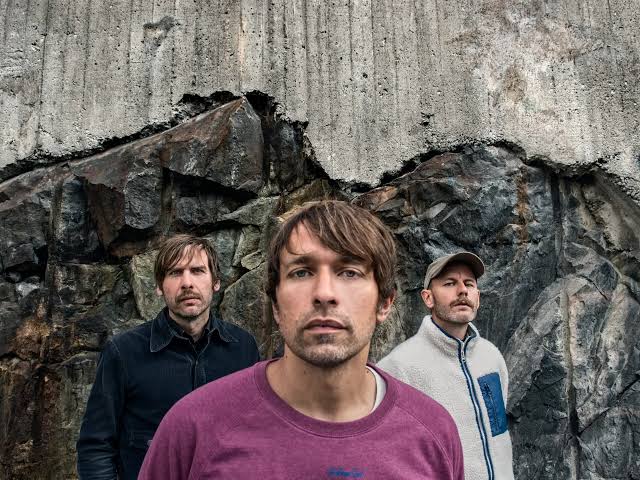
    In May 2025, Peter, Bjorn and John put on a rocking show at ZeyZey where they performed the entirety of their classic 2006 record Writer’s Block. This Sunday, October 25 the Swedish indie rock band are back at the same venue.  If you went to their show last year, you’ll certainly want to return to the scene of the crime. And if you missed it this will be your chance to catch up. Before the big gig Peter, Bjorn and John frontman Peter Morén hopped on The Jitney to answer our questions.

    When did you first fall in love with music?

    Peter Morén: We all grew up in similar settings. Small villages and towns in the middle of nowhere up north in rural Sweden. Music all became our thing from an early age and in the 80’s there wasn’t much to distract, so we became focused. Our tastes were quite different though and maybe still are. My first love was 50’s rock’n’roll and 60’s pop, rock, folk and soul and I think that still shows in how I write. What united us later was 90’s indie rock of different flavors.

    ⁠How did Peter, Bjorn and John first join forces?

    Me and Bjorn met in high school at 15-16 and had some other bands for a few years. This was in a smaller town. When we moved to Stockholm we auditioned different drummers and finally found John, which was the magic ingredient. 3 is a magic number.

    ⁠Can you describe what the Stockholm rock scene was like that you came out of?

    There was a Stockholm indie scene in the early 00’s that we were certainly a part of with bands like Shout Out Louds, The Concretes, First Floor Power and others we hung out with and played shows with. But I think the reason we started a band and it felt a natural thing to do was even more the Swedish indie scene of the 90’s with the slightly older bands we looked up to that paved the way. Like Eggstone, Bob Hund, Popsicle, Bear Quartet. The Cardigans as well though they were our age, just super young when they started.

    ⁠How has the band evolved over your 25+ years?

    You obviously evolve as humans so that reflects on how you write and perform too. At the same time there is a certain unique chemistry to this particular band that will stay at the center of what’s going on around us. One thing is that we’ve always tried to move on and make the next album different to the one before. For better and sometimes worse.

    ⁠I saw you play in Miami last year where you played all of Writer’s Block. What’s the secret as a band to keep older songs fresh when you play them live?

    These last tours celebrating Writers Block in full have made us appreciate the album anew and I think the songs we always play anyway shine more in the context of its homebase. Some songs we change up a lot and they sound different every night. Others we try to have stay closer to the album version, more than we used to which also keeps its fresh, cause it’s a challenge. Songs are bound to change the longer you keep playing them so it’s everchanging and ever fun.

    What can Miami fans expect from your October 25 show?

    Energy, melody, some jams and spur of the moment shenanigans. Hopefully a great show. We’ll make sure to play some songs we missed out on last time. Its still the same Writers Block anniversary tour though so we’ll play that for sure.

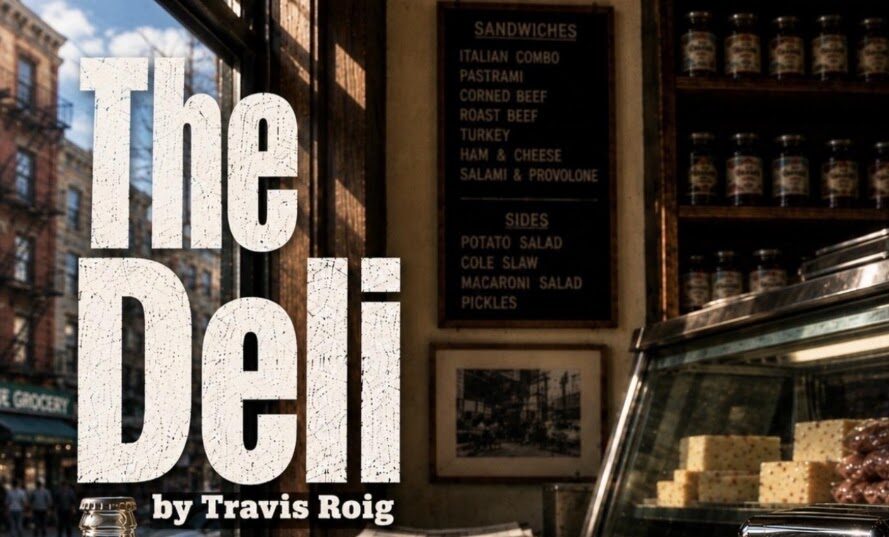
  • Travis Roig’s New Album, The Deli

    Travis Roig’s New Album, The Deli

    I’m skipping the deli puns. And I’m doing my best to ignore the deli metaphors. What I can say is this: This is as close to me singing on a barstool as you can get. Guitar in hand. No signs of a band.

    I really took my time with this one. Everything had to be deliberate. No unmotivated moves. It became a game of “What can I take out and still convey the idea?” No clutter. A real focus.

    Art could very well be imitating life. My life. Because I can say I feel the same. I can say I’m more focused today than ever. Any clutter I accumulate is swiftly swept aside.

    You know, that’s what the deli was. A place where sweeping felt like praying. Preparing food for people felt holy. My spirit pockets were always full at the deli. Let’s be pretentious and say yes, the deli was totally a spiritual sanctuary. For our customers, a place of refuge. For me, a place I could mouth off to the customers and get away with it cuz I’m “just the guy behind the counter.”

    I miss that counter. I miss that deli.

    Oh, I apparently also curse a fair number of times on this album. Earned me one of them black-and-white Parental Advisory stickers from the 80s/90s. I consider it a badge of honor.

    This album is about rain, road trips, death, and starting over.

    I’m 46 years old and I think I made a 46-year-old album. I’d call that a big success.

  • The Okras Release New Songs “Boilerman” and “Hurricane Yellow”

    The Okras Release New Songs “Boilerman” and “Hurricane Yellow”

    Oscar Sardiñas is back with some new music. The frontman for the Miami psych roc band Jaialai has two brand new songs in “Boilerman” and Hurricane Yellow”. While formerly releasing his solo work under the moniker Hurricane Yellow, Sardiñas decided on a different handle for the new tracks, now going by The Okras. Take a listen to the two new tracks below as you read our Q&A with The Okras.


    Why the name change from Hurricane Yellow to The Okras?

    Oscar Sardinas: Yeah, it was a bit clunky. It didn’t really roll off the tongue, did it? Okras is an anagram for Oscar. My boss, Bill, would sometimes title our meetings The Bile and Okra Show on a shared calendar. The word stuck. I love how the letters look. It’s an emblematic dish of the South and the Caribbean. The name is lighter. There’s lots of reasons for that name change.

    What inspired and influenced the two new songs, “Boilerman” and “Hurricane Yellow”?

    Both were written a while back. Boilerman is a nickname my partner Abby would call me when I would boil the baby bottles to sanitize them at night, when our son Theo was a babe. It was meditative, and I liked the steam on my face. She’d say “hey boilerman,” and I’d say “how can I help you,  my angel?”

    The second track is my old solo act name, Hurricane Yellow. The clunker. It’s an evocative and moody song title, though. I felt I should bury the name in a song. That one isn’t about anything specific. It’s random life in Broward stuff, deep life stuff in general, over a Krautrocky rhythm.

    Can you walk us through your writing and recording process for the new songs?

    I usually noodle on an old acoustic and come up with sketches in the living room whenever I have the time. The songs usually get put either in the Jaialai pile or the “I don’t know what this is” pile. Those typically end up being Okras. It sounds dismissive.

    I don’t mean to frame it that way. They’re just more introspective, the band (Jaialai) is more outgoing, more immediate. Recording them was fun because I did a lot of it at home. One of my recordings is built around a voice note.

    When I tracked my parts, I’d send them to my collaborators. They’re out of town, so they’d record their stuff and send it back, and I’d put it all together. It’s mostly home recordings, and we recorded some guitar and vocals with Ryan Haft.

    Any news you want to share about future plans for The Okras or Jaialai?

    Since we’re already in Q4, I’d like to record stuff to put out next year and play a bunch of shows with both acts. Ideally, turn Okras into an actual act, and have Jaialai put out some new stuff, because it’s been too freaking long.

    How are you handling this rough Miami Dolphins season?

    Oh, I’m enjoying it! Let’s go 0-17 and bring Jeremiah Smith home.

  • Cristal Fire Turned Grief into Solace on Blue on White

    Cristal Fire Turned Grief into Solace on Blue on White

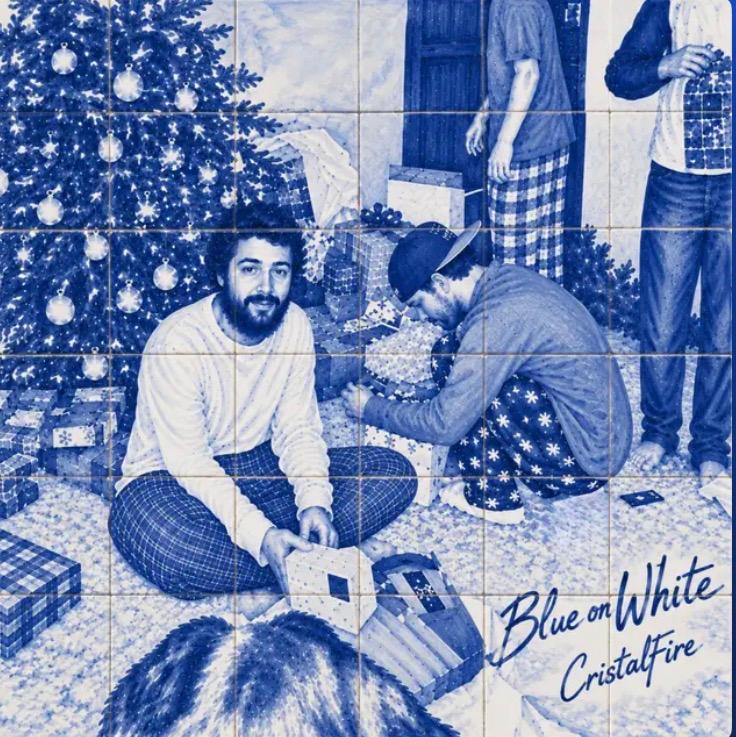
    There is a rare kind of magic that happens when an artist decides to stop chasing artificial perfection and simply lets the music breathe. In a recent intimate conversation, songwriter Cristal Fire opened up about the deeply personal journey behind their new EP, Blue on White, a 5-track, 18-minute project that transforms profound personal loss into a comforting, healing haven for listeners.

    At its core, Blue on White is a gentle exploration of life, death, and the passage of time. Rather than shying away from heavy emotions, Cristal invites listeners into a space where hard feelings can be shared openly rather than carried alone. “Grief is better to share… because grief heals,” Cristal reflects. “This album is about grief… I hope if people have grief, they feel understood, and that they feel a safe solace where they can hide and be comforted”.

    The project’s emotional center is anchored by the title track, “Blue on White,” which stands as a subtle, deeply personal nod to loss, his grandma’s house mosaic colors and his background as a Gulliver student—written with Cristal’s late friend Katy, a cousin, and another close friend in mind. It isn’t framed as a heavy, deliberate memorial piece, but rather as an intentional moment of remembrance woven naturally into the fabric of the song, addressing generational loss, lost substance, and superficiality while pointing back toward love and wisdom. Across the rest of the EP, the tracks move through a whole spectrum of moods and reflections: “Doce Noches” brings a vibrant contrast with an upbeat rhythm and additional guitar layers designed for live stage improvisation; “Handcuffs” delves into personal reflections on constraint, struggle, and the journey toward freedom; and “If I Die” offers a raw, tender contemplation on mortality and legacy, echoing Cat Stevens-inspired acoustic storytelling to explore what we leave behind for our families and communities.

    The EP closes on a lighthearted note with “Algo Contigo (Improvisado),” which serves as a playful, creative game. Rather than a formal cover or a heavy solo performance, Cristal uses the classic song simply as a motif—noodling, playing around with the guitar, and jamming with the speaker in a spontaneous, lighthearted exchange.

    The sound reflects a simplified, romantic view of human nature—imperfect, grounded, and deeply sincere. It draws parallels to the conversational warmth of Bob Dylan, Mapache, and classic country music. The conversation also shed light on the diverse mosaic of influences that shape Cristal’s creative world—spanning a Dominican-American upbringing, classical compositions, Juan Luis Guerra’s spiritual arrangements, Bon Iver, Sigur Rós, and others. Cristal even shared a lighthearted perspective on their musical journey, including past frustrations playing trombone in jazz bands where faster instruments stole the spotlight. Yet, through every genre, it is melancholic “sad music” that holds a special place in their heart, prized for its unique power to bring comfort and validation.

    Having been curious about how the relationship between a producer and a musician can shape the sound of an album, I also sat down with Attila for a bit to discuss the nature of this raw, organic sound. Meeting the artist in his cozy home studio which he intentionally designed to feel as comforting as a living room, Attila offered a producer’s view on capturing the EP’s soul.

    Attila explained that he valued authenticity over polished studio rendering, focusing entirely on capturing spontaneous, live energy. This is his area of expertise: organic and raw sounds.

    He recorded Cristal’s vocal and acoustic guitar tracks simultaneously in single takes to preserve the natural chemistry of the performance. By intentionally avoiding traditional click tracks and heavy compression, he allowed the dynamics to rise and fall naturally, much like a conversation. Attila welcomed the room’s subtle imperfections, capturing ambient textures and plugging into vintage gear, like an old 1967 Sears two-knob tube amp, to give the record its warm, analog character while they jammed and messed around with musical ideas.

    Reflecting on their time working together, Cristal praised Attila’s deep and complex songwriting mind, noting how effortlessly he balances playful and dark dynamics while giving Cristal the space to improvise. “If I can play with my voice, I’m very much improvising… I go where the song leads me,” Cristal explained, echoing their shared desire to keep the music real, creative, and spontaneous.

    In a world that often moves too fast, Cristal Fire’s  Blue on White stands as an invitation to slow down, feel deeply, and remember that even in our darkest moments, we are never truly walking alone.

  • Gorillaz Bring Their Beautifully Unhinged Universe to Miami

    Gorillaz Bring Their Beautifully Unhinged Universe to Miami

    On a balmy, wet September Friday night in Miami, the Gorillaz came pounding into the Kaseya Center on the second night of their U.S. tour, which will feature 23 dates.

    The tour kicked off in Orlando, the night before.

    In Miami, almost immediately, shit got weird.

    They took the stage around 9:15 p.m., opening with “The Mountain,” their latest album and the name of the tour.

    An animated sequence unfolded across the massive screens. It felt like The Jungle Book dropped into some dystopian Japanese anime after taking psychedelics.

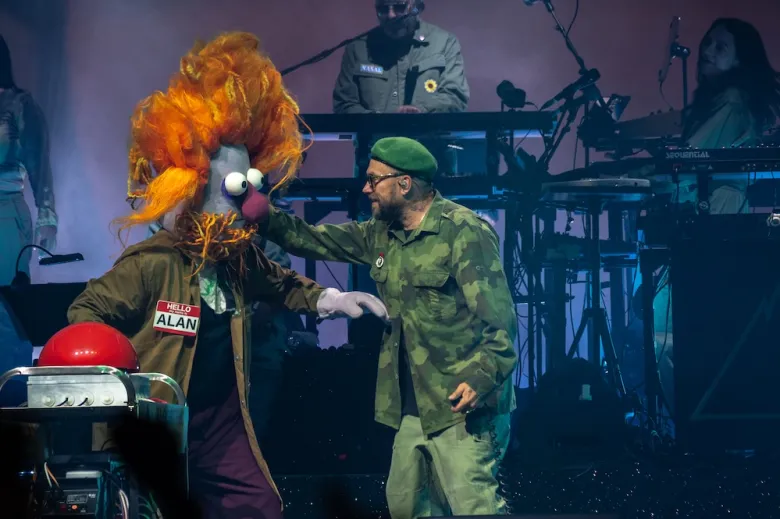
    Then out walked Damon Albarn wearing army fatigues and a red beret.

    The Cuban Revolution? In Miami? Okay.

    (He wore the same outfit in Orlando but with a green beret).

    So began what was less a traditional rock concert than some bizarre, evolving multimedia organism. Gorillaz are technically a “virtual band,” famously created by Albarn and artist Jamie Hewlett around animated characters who originally obscured the humans behind the music.

    Twenty-five years later, the humans are totally visible.

    Gorillaz Review Miami

    At various points Friday night, the stage was populated by a small army of musicians, singers and collaborators while Gorillaz’s animated universe exploded behind them.

    Japanese-style animation collided with pop-culture debris, psychedelic visuals and one unhinged purple creature who looked like Beaker from The Muppets, as if, but grown up, crazy hair and after years in the lab he became Oppenheimer – he had his finger on an Algorithmic Atrophy bomb.

    Yes, fun, zany stuff! Why? Who cares. That’s Gorillaz.

    Their show is theatrical, cinematic and strange.

    It drifts and lulls occasionally, which isn’t a bad thing.

    They aren’t interested in delivering two straight hours of bangers. There are valleys so people can sit down and breathe.

    Then they drop “Feel Good Inc.” and the building explodes.

    Gorillaz are a great live band. They’re also one of pop music’s best bridges into hip-hop. Over the years, Albarn has consistently brought rappers into the Gorillaz universe, often rappers who deserve more eyeballs than they receive elsewhere, but get the most through this universe.

    Friday night that included Del the Funky Homosapien, the beautifully idiosyncratic Bay Area rapper whose relationship with Gorillaz stretches back to their jump. Watching Del emerge for “Rock the House” and then “Clint Eastwood” was a major highlight of the night.

    Bootie Brown (the Pharcyde) came out for “Dirty Harry,” another reminder that Gorillaz collaborations aren’t celebrity cameos pasted onto songs. They’re part of the band’s DNA.

    Can’t forget De La Soul on Feel Good, Inc.  They weren’t in the house, but forever R.I.P. Trugoy – yogurt spelled backwards.

    Anyway, by the encore, the whole Gorillaz experiment made sense. A virtual band is now a massive live band. Cartoons have become theater. Alternative rock has collided with hip-hop, electronic music, funk and whatever else Albarn feels like throwing into the blender.

    Twenty-five years (crazy) into this experiment, Gorillaz are still climbing their weird little mountain.

    And Miami happily climbed along with them.

    Click here for setlist from Miami show.

  • Stereo Roux: “Modern Times” and the creation of the Indie Bolero

    Stereo Roux: “Modern Times” and the creation of the Indie Bolero

    Every so often, while scrolling through the endless stream of muted videos and digital noise on social media, a single frame stops you. A clip pops up, a simple text prompt invites you to tap for sound, and suddenly you’re caught in a soundscape that feels at once intimately nostalgic and wildly fresh.

    That was my initiation into Stereo Roux—the solo project of Miami-based musician, producer, and songwriter Riccardo.

    Listening to Stereo Roux carries the exact sensation of riding a bicycle through South Florida on a warm afternoon: constant momentum, an optimistic pulse, and a bright, forward-moving breeze. His music blends the infectious hooks of early 2000s indie-pop with lush, sun-drenched dream-pop textures. But what stands out most are the choruses—built like anthems made for room-wide sing-alongs and high-energy live shows.

    In Conversation with Stereo Roux

    Music in a heartbeat: I have to be honest—today I’m starting backwards. Normally I bombard my interviewees with questions right off the bat, but today I wanted to tell you my initial impressions first. Your music feels like this incredible mix of 2000s indie-pop energy and dream-pop—reminiscent of Beach Fossils, Hotel Ugly, Chicano Batman, Mac DeMarco, and even that Lindsey Buckingham production style on Fleetwood Mac records. But what really surprised me is that this is a complete one-man project. What made you decide to take the solo, self-produced route?

    Stereo Roux: It might be a little bit of a selfish thing, honestly! I love hearing what people have to say about my music, but if someone were to tell me what to do with it while I’m making it, I really wouldn’t like that. When it comes to my own projects and my albums as a whole, I prefer having 100% of the decision-making control. I saw artists producing their own music as single-person projects, and that made me realize I could do it too.

    MIHB: That creative drive makes sense—and music has been in your life for a really long time, right?

    Stereo Roux: Exactly. My dad was pretty famous in Ecuador in the ’90s making rock music in Spanish. Ever since I was five, he pushed me to play instruments—first piano, then drums at eight. When we moved to Miami, I went to Miami Arts Charter for drums and choir. We had a little home studio that wasn’t getting used much, so every day after school, I’d take it over, record for hours on GarageBand, and learn how to layer tracks. Later on, to make sure nothing got lost between what was in my head and what reached the listener, I learned how to mix everything myself.

    MIHB: You studied Music Business and Music Tech at Miami Dade College, and later earned your degree in marketing. Does knowing marketing and audience behavior influence the way you write, or do you keep that separate?

    Stereo Roux : I try to keep it completely independent. I don’t let that guide my creation because I don’t want to make a commercial product. I don’t even listen to modern radio; I usually listen to throwback radio with older music. And I don’t let radio formatting or current tastes dictate my song lengths either—if I did, I wouldn’t be making five- or six-minute songs! My audience is small right now, but growing day by day. I’d rather experiment and step outside my comfortable box than cater to an algorithm.

    MIHB: Speaking of stepping outside the box, you mentioned you’re mixing genres on your new material—specifically incorporating Latin influences and Spanish into your tracks, like in “Los Extraterrestres.” Can you tell us about that?

    Stereo Roux: Coming from a Latin and Hispanic background, there’s so much music that isn’t necessarily explored when you’re writing primarily in English. I really want to write more songs in Spanish and bring those elements into my music. Right now, I’m finishing up a track called “Modern Romance.” It’s an indie bolero—mixing traditional bolero elements into an indie framework. It’s very different from anything I’ve done so far, and I’m super excited about it.

    MIHB: An “indie bolero” called “Modern Romance”? That sounds amazing. Is that part of a larger project?

    Stereo Roux: Yes! It’s for my second album, which is called Modern Times. The whole concept is an exploration of everything we see in front of us today—from politics to technology to modern love.

    Earlier this year I released “Modern Melancholy.” This Friday I have a single coming out called “Binary Illusions,” which is a commentary on our relationship as humans with technology and how dependent we’ve become on it. Then there’s “Modern History,” which is a bit more politically inclined. The record as a whole is just my perspective on today’s world as it gets crazier and crazier.

    MIHB: Looking ahead, what’s the next big hurdle for Stereo Roux?

    Stereo Roux: The main obstacle with being a one-man band is wanting to play live shows when you don’t have a backing band! I’ve played locally with Sofar Sounds in Miami Beach, and earlier this year I was super lucky to perform in Madrid thanks to Raw Critters—an independent Spanish blog that champions indie music purely for the love of it, selecting 10 international bands each year to mentor and showcase across Spain. It was incredible, but now I really want to play out more locally and build that live energy here. I’m actively looking for session musicians in Miami who would be interested in joining me on stage.

    Connect & Listen

    • Listen To: “Modern Melancholy”, “Modern Romance”, “Los Extraterrestres” 
    • New Single: “Binary Illusions” (Dropping this Friday!) 
    • Calling Miami Musicians: Bassists, guitarists, or drummers interested in joining Stereo Roux for live performances in South Florida can connect via Instagram (@stereoroux). 

    Music in a heartbeat is a multimedia project dedicated to documenting live shows, emerging artists, and independent soundscapes in the Miami music scene.


  • Interview with Yilong Liu, Winner of Jitney’s New Voices Fiction Award

    Interview with Yilong Liu, Winner of Jitney’s New Voices Fiction Award

    Yilong Liu is the winner of our inaugural New Voices Short Fiction Award.

    “Deaf Dog Book Club” follows a newly widowed woman whose quiet afternoon at a coffee shop takes an unexpected turn. Funny, tender, and sharply observed, it’s a story about grief, language, connection, and finding your way back into the world. This is a beautiful story and we hope you enjoyed it.

    Read it here if you haven’t yet.

    Yilong will receive a $200 stipend for finishing first.

    Mr. Liu has also jumped onboard The Jitney in an exclusive interview talking about his story.

    Can you tell us a little about yourself and your journey as a writer?

    I’m a playwright and screenwriter originally from China, and I now live in New York. I studied literature in Beijing before moving to the U.S. to study theatre, eventually attending the Juilliard School as a playwriting fellow.

    For most of my career, I’ve written for the stage. My plays have taken me to some unexpected places and introduced me to people and communities I never would have encountered otherwise. I think I’ve always been interested in writing stories about ordinary people doing impossible things just trying to connect with one another, especially across differences in language, culture, generation, and experience.

    What inspired you to write this story, and where did the idea first come from?

    People-watching in coffee shops is one of my favorite things. I love sitting somewhere and watching strangers, sometimes imagining entire lives for them based on a gesture, a look, or a fragment of conversation.

    I don’t know sign language myself. But as someone who is multilingual, I’m fascinated by the way language can create both intimacy and secrecy. There’s something thrilling about communicating in a language that not everyone around you understands, It’s almost as if you’re speaking in code. I think that was where the story first began for me.

    Was there a particular character, moment, or theme in the story that was especially meaningful to you? Why?

    I think it’s the moment when Margaret decides to sign again. It reminds me that grief can be a gift sometimes, in the strangest way. It is proof that love existed.

    Are there any writers, books, or experiences that have influenced your writing and shaped your voice?

    I grew up reading Chinese fiction and poetry. I think that sensibility still lives somewhere underneath the way I write, especially the relationship between the everyday and the poetic, the importance of what is left unsaid, and the way memory, family, and history can inhabit a very small moment.

    Moving between China and the United States has probably shaped my voice as much as anything I’ve read. Living between languages makes you unusually conscious of words, such as what gets lost and what becomes funnier, stranger, or sadder when you try to explain it in another language. I think a lot of my writing comes from that space in between.

    What comes next for your writing?

    I’m continuing to write plays and for film and television, but I also want to keep writing fiction. Right now, I’m working on a Western horror story that brings together the mythology and landscape of the American West with traditions of Chinese horror and folklore. I’m quite excited by the collision of those two worlds, and by the chance to explore history, haunting, and migration through genre.

    Is there anything else you would like to add?

    Having Deaf Dog Book Club recognized in this way is especially encouraging because fiction still feels like new territory for me. It makes me want to keep wandering into it and see what else I might find there.

    Writing can be such a solitary and uncertain process, and there’s something wonderful about discovering that a story you wrote alone has reached someone else.

    Yilong Liu Bio

    Yilong Liu is an award-winning playwright and screenwriter based in New York. His play The Book of Mountains and Seas received the Lambda Literary Award for Drama and was recognized at the Edinburgh Fringe Festival with the BBC Popcorn Writing Award. His play Good Enemy premiered Off-Broadway at Audible Theater’s Minetta Lane Theatre.

    Yilong is a graduate of The Juilliard School and is currently under commission from Audible Theater and Manhattan Theatre Club.

    The 2nd New Voices Fiction Award

    Our inaugural contest is now biannual.

    We are running it back and the contest is now open.

    Don’t wait and feel free to submit here.

  • How Love Built Towers of Babel

    How Love Built Towers of Babel

    When Christa and Jay met in Miami during the pandemic, music wasn’t even on the table. They simply connected as two people navigating an uncertain time, falling in love long before either realized the other was a musician. Discovering that shared passion came later, like finding a hidden room in a house they’d already moved into, turning a quiet personal bond into a deeply creative partnership. Jay, whose background spans radio and music production, found himself inspired to step back into creating music by Christa’s talent and songwriting.

    Once the music started flowing, their styles clicked seamlessly. Christa brought a rich foundation forged during her time studying in Boston at Berklee College of Music and Boston University—a period spent refining her open-mic chops and developing her acoustic storytelling style (including her solo work, The Stars Before They Burn), anchored by the smoky vocal intimacy of Norah Jones. Jay brought his sharp production ear, sharing a mutual appreciation for stripped-down, authentic recording.

    To protect their vision of honest, handcrafted music, they launched their independent label, Maiden Brain Sounds. Under this umbrella, they maintain complete creative independence, handling everything from song arrangements to physical artwork.

    A Live Band at Heart

    At their core, Christa and Jay are a live band. Their approach relies on tracking live to capture that genuine, unvarnished energy—because that’s where they sound the most like themselves. That ethos is the foundation for their Maiden Brain Sounds release, The Setlist. Inspired by the raw, acoustic energy of Jason Mraz’s live performances, they chose to keep the record strictly focused on guitars and vocals, pairing that drive with the spacious, high-altitude recording feel of Gregory Alan Isakov and classic mountain country to give every arrangement room to breathe. Rather than a scattered collection of tracks, The Setlist is curated like a complete night out, purposefully ordered to be experienced from start to finish. Alongside reimagined favorites, the album includes tracks never released online—capturing that rare concert magic where a song belongs, if only for a few minutes, solely to you and the room.

    In case you’re wondering what’s the next best thing to seeing them play live, they have just released a video that comes from a live session, it’s on YouTube and you can watch it here. 


    Catch a Towers of Babel live set at the Legion Park Farmers Market

    Beyond the record, Christa and Jay are deeply invested in the local Miami music scene, championing collaboration, unity, and genuine artist-to-artist connection across the city.

    They’ve extended that ethos to how they distribute their music. Under Maiden Brain Sounds, they produced a small, limited physical run of The Setlist made straight from their hands to yours. On Saturday mornings, you can find Towers of Babel set up at the Legion Park Farmers Market, bringing copies of the album directly to the neighborhood right under the trees. They also do a Clothing Swap event every last Saturday of the month.

    If you’re out taking in the morning this Saturday, swing by, pick up a copy of The Setlist, and say hi!