Category: News

  • Comanche P.I., New Jitney Book Available Now

    Comanche P.I., New Jitney Book Available Now

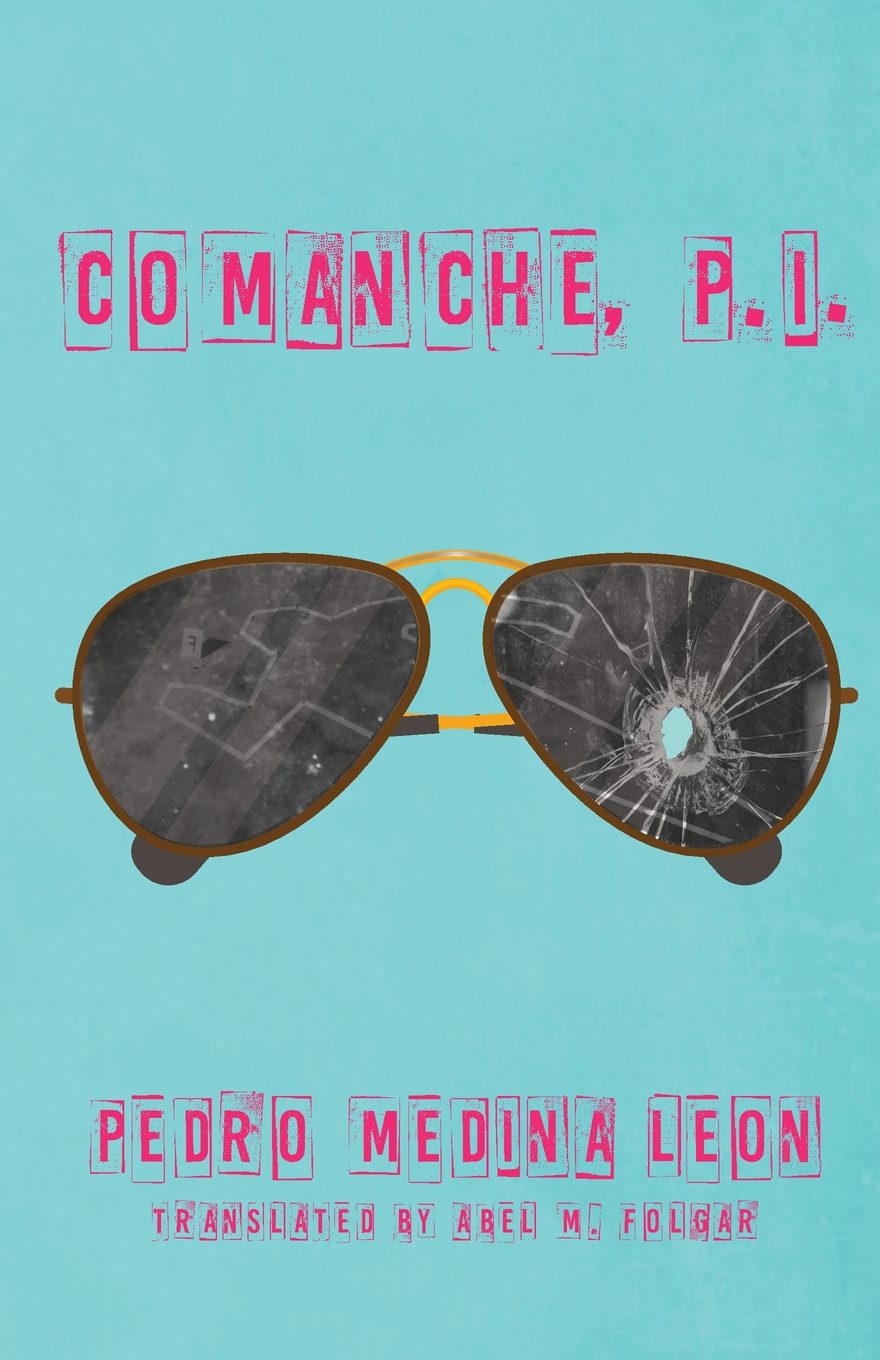
    Seedy bars, strip clubs, greasy spoons, loan sharks, poker games, pool halls, cocaine deals, long, smoky nights in dimly lit rooms, Comanche, P.I. will bring Miami’s underbelly to life.

    Comanche, P.I. is a noir novel, but a uniquely neo-Miami noir novel as all of the characters are Latin.

    Recently arriving in Miami — they don’t have much, work low-level jobs, cashiers and dishwashers, barkeeps and line cooks. But they are part of a scene, an underground scene, whether at a monthly literary event at a dive bar, or raves on the beach, it’s all under the radar waiting for our protagonist and anti-hero The Comanche to discover and explore.

    And when the cops need a crime solved on the “down low” – they call The Comanche.  It is available to purchase by clicking here.

    Comanche P.I. is the 18th book published by Jitney Books.

    The author, Pedro Medina Leon, is a Florida Book Award winning writer. Born in Lima, Peru, in 1977, Pedro Medina Leon is the author of the fiction books Mañana no te veré en Miami (Tomorrow I Will Not See You in Miami), Marginal (Marginal), and Varsovia (a novel that won the 2017 Florida Book Award, Spanish category), as well as the book of essays and short chronicles Tour: a tour of Miami’s popular culture. He is the editor of the anthologies Viaje One Way (One Way Journey) and Miami (Un)Plugged (Miami) and is also the creator and editor of the cultural portal and publishing label Suburbano Ediciones (Suburbano Editions).

    It’s translated by Abel M. Folgar, a poet from Caracas, Venezuela of Lebanese and Corsican heritage. He’s the coauthor of Odas a Futbolistas (Hinchas de Poesía Press, 2018, with Yago S. Cura) and translator of Facundo Soto’s Juego de Chicos (Jitney Books, 2018). His poetry has appeared in Pidgeonholes, Noble/Gas Qtrly and LaFovea.org, among others. His articles on art, music and food have appeared across the New Times/Village Voice family of publications, PureHoney Magazine and numerous digital and print entities since 1999.

    Celebrate the new book with a conversation with the author and translator at Books & Books at 7 pm on Sunday, March 16.

    This event will take place at the Books & Books in Coral Gables at 265 Aragon Ave. RSVP here. 

  • The Miami Vanity Trap: Sex, Lies, Money, and Instagram

    The Miami Vanity Trap: Sex, Lies, Money, and Instagram

    The world’s worst-kept secret when it comes to Miami is that its appeal to the outside world is overwhelmingly superficial. Miami’s best-kept secret is that it is, in fact, a working-class city full of good, honest, humble, and hard-working people (mostly immigrants), but we’ll get to that part later. The truth is, Miami is a city where transient dreamers mix dreams and reality into a sea of blurred emotions, goals, and perceived normalcy. Reality is a fungible concept to some in this town, largely in the same way some people don’t know they smell bad because there’s no one around who smells different.

    The appeal to the outsider coming in is fairly basic because it’s been hammered into international popular culture for decades now. The outsider moves to Miami for the sun, the beach, the sex appeal, the glam, and the notion that you can combine all of these things into a lifestyle that allows you to make a fortune and get recognized for it. If everyone who piles into Miami to live/vacation accepts this, then it becomes a pseudo-reality for them, even if they don’t actually live it. You could be dead broke, not having sex, not glamorous, and about 15 miles from a beach, but if you accept that it’s there and it’s why you’re there, BOOM, it’s now your “lifestyle.”

    Being hot is not a character trait, and neither is being accessible sexually

    This is a tricky wicket of a convo to have with anyone because it inevitably comes off as petty, spiteful, jealous, and even sexist (especially if you’re a man). That said, I’m going to try and delicately wade through this swamp and see if I can give you a good idea of what I mean. Being “hot” by the standard that I’ll refer to here would be that of a modern (cough cough) “Instagram model”, “fitness influencer”, or “lifestyle coach”. This look is pretty simple to peg and is as common of a look to see in public in Miami as any, which is not necessarily a bad thing, but rather a normally outlying aesthetic passing as normal.

    For women it’s fake tits, a thin waist, fake ass, square shoulders, puffy lips, botox (or just thin cheeks), lots of makeup, and sexy, small-sized, designer clothes that show all of it off. The male version of this “hot” look is equally curated and follows a predictable formula: a gym-sculpted physique with broad shoulders and a chiseled jawline, perfectly groomed facial hair, designer sneakers, tailored clothing that accentuates their muscles, and often the addition of flashy accessories like luxury watches, gold chains, or high-end sunglasses, all projecting an image of effortless wealth and status. Both prototypes are brand-obsessed, usually with visual cues as to which brand of anything they’re wearing/using.

    Once you’ve got “the look”, it’s time to commodify it via social media and leverage it for everything you want in life. That’s the modern vanity trap m/o, and it has a rate of success that’s much lower than you’d think, complete with some glaring setbacks and scars that no one talks about, with a few exceptions. This hot look and character, so to speak, tends to turn into a full-blown personality, projected upon thousands of adoring “fans” and followers on social platforms to gain status and more valuable attention from a sliver of what are the proverbial golden gooses: a rich, handsome, powerful man if you’re a woman, and a hot, sexually appealing, available woman who depends on you if you’re a man.

    The female version of this is almost exclusively sex-appeal focussed, meaning that their jobs, behavior, age, financial status, or mental health almost never factors into their appeal. The male version of this operates in a slightly different way. The male counterpart to the female vanity trap candidate typically involves sculpted physiques, designer wardrobes, and a constant display of wealth, whether real or fabricated. These men are often found flaunting luxury cars, exclusive club access, and flashy jewelry on their social media feeds. Their goal, much like their female counterparts, is to commodify their appearance and lifestyle to attract attention, admiration, and financial opportunities.

    However, in the male version, the pursuit is often twofold: not only are they seeking validation and influence, but they’re also looking to establish dominance in social hierarchies. For some, it’s about landing an equally “hot” partner to enhance their image, while for others, it’s about cementing their position as a leader among peers. The pursuit of status, wealth, and power becomes their defining characteristic, with their personalities often reduced to superficial signifiers of success.

    The real trap, though, is the same for both genders: it’s a game of diminishing returns. The more you lean into the vanity trap, the harder it becomes to step away from it. Each post, each like, and each follow pulls you deeper into a cycle of performance and external validation. What starts as a pursuit of empowerment or self-expression quickly becomes a prison of constant upkeep, as your value becomes tied not to who you are, but to the fleeting impressions of others.

    And then there’s the fallout. The same followers who build you up are quick to tear you down at the first sign of imperfection or inconsistency. The competition is endless, and the pressure to maintain an idealized image can lead to burnout, insecurity, and an overwhelming sense of isolation. Relationships, too, often suffer, as they are built on the shaky foundation of appearances rather than genuine connection.

    Ultimately, the vanity trap isn’t just about projecting an image to the world—it’s about losing yourself in that projection. It’s a cautionary tale, not just for the individuals who fall into it but for the society that perpetuates and rewards it. As the line between reality and performance continues to blur, the cost of living in the vanity trap becomes harder to ignore, leaving behind a trail of disillusionment and regret.

    Branding for status, self-worth, and culture

    The entire concept of a “personal brand” is not new, but the modern iteration of it has been so watered down that it’s essentially bullshit in the vanity culture. It becomes a catch-all phrase to sugar-coat narcissistic obsession with some sort of career or business goal, without typically having any sort of plan or real value to back that goal up. One of the essential tenets of the vanity culture is laziness, and personal branding is the vehicle with which this laziness is exposed, largely because it’s used as a way to avoid actual work or good business planning and practices. I’ll give you some examples.

    No one really gives a fuck what a vapid 26-year-old is doing in their day-to-day lives, nor are they buying luxury goods because they posted a photo of themselves in a designer dress next to a rented Lamborghini. Yet, in the twisted ecosystem of Instagram’s vanity culture, this kind of post is passed off as “marketing” or “influencing.” It’s neither. It’s a cheap façade meant to project success and status without any real substance behind it. The people who buy into this imagery are often as desperate to escape their reality as the so-called influencers themselves. It’s a mirage of luxury, wealth, and exclusivity designed to attract attention and, ideally, financial opportunities — but often, it amounts to little more than likes and fleeting validation.For these influencers, their “personal brand” is entirely built on appearances: the right angles, the right filters, the right tags, and the ever-present hope that the algorithm gods will smile upon them. This projection of an aspirational lifestyle becomes their currency, their identity, and, eventually, their self-worth. The tragedy is that they are selling a fantasy they don’t even own. Behind the glossy photos are often maxed-out credit cards, unpaid bills, and the anxiety of trying to maintain the illusion. Their status in the digital world is built on a house of cards, one swipe or scroll away from being forgotten.

    And let’s not overlook how this phenomenon feeds into the broader cultural identity of cities like Miami. In a place where flashiness often trumps substance, this type of branding is not only accepted but celebrated. People come to Miami to be seen, to live out their own curated fantasies, and to surround themselves with others doing the same. It’s a vicious cycle, perpetuating the idea that your worth is directly tied to your perceived value on social media, your looks, and your ability to project an unattainable lifestyle.

    The cost of vanity: emotional scars and disconnection

    Here’s where the vanity trap gets ugly. What’s rarely discussed is the toll this lifestyle takes on mental and emotional well-being. Building your self-worth entirely on external validation is a recipe for disaster. Every like, comment, and DM becomes a metric for your value as a person. When engagement is high, you feel on top of the world. When it dips, even slightly, the existential dread sets in. Am I not pretty enough? Am I not interesting enough? Did I miss my prime? These questions plague the minds of those caught in the vanity trap, eroding their sense of self-worth over time.

    This cycle creates a deep sense of disconnection, not just from others but from oneself. Authenticity becomes a foreign concept because everything about your life is curated for an audience. Even in intimate relationships, the façade often remains intact. Vulnerability is seen as a weakness, and emotional depth is avoided at all costs. After all, if your entire identity is based on being “perfect,” admitting flaws or struggles feels like brand suicide.

    But the scars go even deeper. For many, the vanity trap leads to a complete breakdown of real-world relationships. Friends, partners, and even family members become props in the grand production of their online personas. Genuine connections are sacrificed for photo ops, and the people who truly care about them are often pushed away in favor of those who can elevate their status. The result is a life that may look glamorous on the surface but feels hollow at its core.

    The real Miami: a counterpoint to the trap

    This brings us back to Miami’s best-kept secret: its hardworking, humble, and honest immigrant population. These are the people who keep the city running, the ones who build its skyscrapers, cook its food, and clean up after its parties. For them, Miami isn’t a playground for vanity but a place to build a better life for themselves and their families. They are the antithesis of the vanity culture, and their presence serves as a grounding force in an otherwise superficial city.

    These communities bring a richness to Miami that is often overlooked. Their food, music, traditions, and values are what make the city truly vibrant and unique. While the influencers are busy chasing clout, these people are creating real lives, full of meaning and substance. They are a reminder that Miami’s allure doesn’t have to be tied to its superficial reputation. There is depth here, for those willing to look past the surface.

    Escaping the vanity trap

    So, how does one escape the vanity trap? The first step is to recognize it for what it is: a hollow pursuit that offers fleeting rewards at best and emotional devastation at worst. True fulfillment comes from within, not from external validation. It’s about finding purpose, building genuine connections, and embracing authenticity.

    For those entrenched in vanity culture, this shift can feel impossible. But it’s not. It starts with small steps: setting boundaries with social media, prioritizing real-world relationships, and focusing on personal growth over public perception. It’s about rediscovering who you are when no one else is watching and learning to value that person more than the image you project online.

    Miami, for all its flaws and contradictions, has the potential to be a place of transformation. It’s a city where dreams are made and broken, but also where resilience thrives. By embracing the city’s true essence — its diversity, its grit, and its humanity — it’s possible to break free from the vanity trap and build a life of real substance.

    The bottom line: beyond the glam

    At the end of the day, Miami is a city of dualities. It’s both shallow and deep, glamorous and gritty, fleeting and eternal. The vanity trap is just one side of the coin, and while it’s an alluring one, it’s not the whole story. For those willing to dig deeper, Miami offers so much more than what’s on the surface. It’s a place where real stories are waiting to be written — stories of perseverance, connection, and authenticity. And those are the stories worth living for.

    Make sure to subscribe to Andy’s newsletter at andyjackson.substack.com.

  • De La Soul Take Arsht Center down Hip-Hop Memory Lane

    De La Soul Take Arsht Center down Hip-Hop Memory Lane

    It felt like a bit of a betrayal not to smoke a joint before or during De La Soul ‘s Saturday night show at the Arsht Center. I remember so many stoned arguments  over which of their first four records was their best. I was always on team Buhloone Mindstate.  That’s a record I will also sometimes argue is the best hip-hop album of all time as well.

    But I’d been dealing with some headaches. I didn’t want anything infringing on my enjoyment of the show. Instead I would rely on the music of my youth to bring me peace and distract me from any pain.

    After an opening DJ set by Stretch Armstrong playing 20th century hip-hop tracks by A Tribe Called Quest  and The Pharcyde, our hip-hop heroes took the stage. Maceo wearing a Punisher t-shirt stood on the risers behind the turntables. Then came Posdnuos rocking the mic. Of course missing was Trugoy, the third member, who passed away a couple years ago.

    I wondered how they would replace his pivotal verses. Posdnuos picked up the slack. He made it almost a one man show, being as emotive and expressive as ever. As I began to wonder how one rapper could make it through the whole set, guest star, Pharoah Monch, hopped on to stage to give Posdnuos a little breather.

    No songs from my beloved Buhloone Mindstate made the cut for the ninety minute setlist. De La Soul did manage to play all the hits. From “Oooh” to “Ring Ring Ring ( Ha Ha Hey)” to “Me Myself and I”. The middle aged crowd (that included Luther Campbell from 2 Live Crew to Jarobi from A Tribe Called Quest) might have forgotten all the verses they once had memorized, but they shouted along to all the choruses from “Five days you work/ One whole day to play/ Come on everybody, wear your rollerskates today/ It’s Saturday” to “I know I love you better”.

    Throughout the show Posdnuos paid tribute to their fallen bandmate saying Dave (Trugoy’s name) was on stage with them before closing out the night with “Three Is the Magic Number”. Even with only two, the night was still magic, bringing us back to the soundtracks of our misbegotten youths.

  • Birth of Southern Rock?

    Birth of Southern Rock?

    I’m as proud of anyone of Jacksonville’s illustrious musical history, which has been my home since 1968. No one could have worked harder than I to keep this history alive. But I have to take issue with such erroneous claims as Jacksonville’s being “the birthplace of southern rock.” In my 2020 award-winning book, Jacksonville and the Roots of Southern Rock, I go into this nomenclature in great detail. Let me make my case:

    First of all, a musical style is not “born”; it evolves slowly, taking shape before there’s even a description—much less a label—for the concept. In retrospect, what we now call “southern rock” appears to have existed well before there was a name for it, which was coined by Atlanta music journalist Mo Slotin in 1972—three years after the birth supposedly took place.

    Secondly, even if such an ostensible birth actually had occurred, it didn’t happen in Jacksonville. The most likely spawning grounds for southern rock would have been Memphis, Nashville and—believe it or not—Los Angeles.

    It is generally taken as an article of faith that the genre we now call “southern rock” originated in Jacksonville with the forming of the Allman Brothers Band in March of 1969. It didn’t.

    Duane and Gregg Allman, from Daytona Beach, had led an earlier, Los Angeles-based band called the Hour Glass and were already performing one or two of the songs that would be included in the Allman Brothers Band’s 1969 debut album. If the Hour Glass’s song “It’s Not My Cross to Bear”—recorded in 1968—doesn’t qualify as “southern rock,” then what does? Also in 1968, Gregg Allman wrote and sang a version of “Melissa” recorded in Hialeah, Fla., for a group called the 31st of February, featuring future ABB drummer Butch Trucks.

    A year earlier, Delaney Bramlett had been making records,

    supervised by Leon Russell, in L.A. that could be categorized as southern rock.  And in Memphis, also in 1967, two groups whose music could be easily be described as southern rock, the Hombres and Knowbody Else (later known as Black Oak Arkansas) were pioneering the style.

    And don’t even get me started about how to specifically define the meaning of the term “southern rock”: it simply can’t be done. It is my well-considered opinion that southern rock was basically a harder, bluesier version of country-rock.

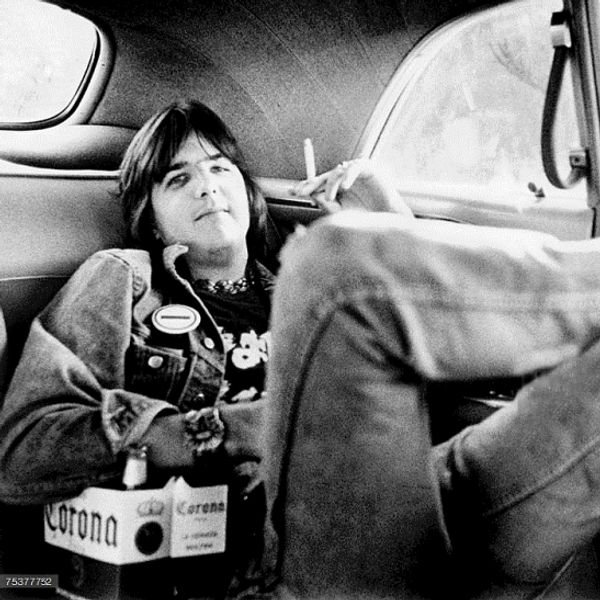
    One of the pioneers of country-rock had been former Jacksonville prep-school student Gram Parsons, born in Winter Haven, Fla., but raised mostly in Waycross, Ga. Both country-rock and southern rock were part of a broader romantic (i.e., backward-looking, nostalgic) movement in American-inspired music. As former Lynyrd Skynyrd drummer Bob Burns related in a filmed interview, bemused record execs often greeted his group’s demos with, “What is this hillbilly shit?”

    My case being made, I will say that Jacksonville was nonetheless clearly the motherlode of southern rock, with a large proportion of famous groups based in Macon (and some in Atlanta) having been assembled here, including:

    • The Allman Brothers Band
    • Cowboy
    • Lynyrd Skynyrd
    • Blackfoot
    • 38 Special
    • Molly Hatchet
    • Johnny Van Zant Band
    • Rossington Collins Band
    • Derek Trucks Band
    • Tedeschi Trucks Band
    • Mofro

    For decades—from 1969 to the present—Jacksonville was truly the home of southern rock—but clearly not its birthplace. Nashville and Muscle Shoals also have solid claims to being spawning grounds for southern rock. But none of these cities produced the quantity if not the quality of southern rockers Jacksonville did.

  • Montreux Jazz Festival Miami Celebrates Second Year

    Montreux Jazz Festival Miami Celebrates Second Year

    Proving Art Basel isn’t the only Swiss cultural event that can be transported to South Florida,  Montreux Jazz Festival Miami is back for a second year. It’ll be held at The Hangar in Coconut Grove on Friday, February 28 through Sunday, March 2.

    This year’s line-up has a lot of big names. Friday night features Jon Baptiste who was the headliner last year. Baptiste who was recently seen channeling Billy Preston in the SNL movie Saturday Night will bring a bunch of unbilled musical guests on Friday night. Opening the night is  Willow who at some point dropped her last name Smith.

    Sunday night has Jon Baptiste back again this time accompanied by local jazz act Alfredo Rodriguez, Columbian duo Monsieur Perrine and Cimafunk.

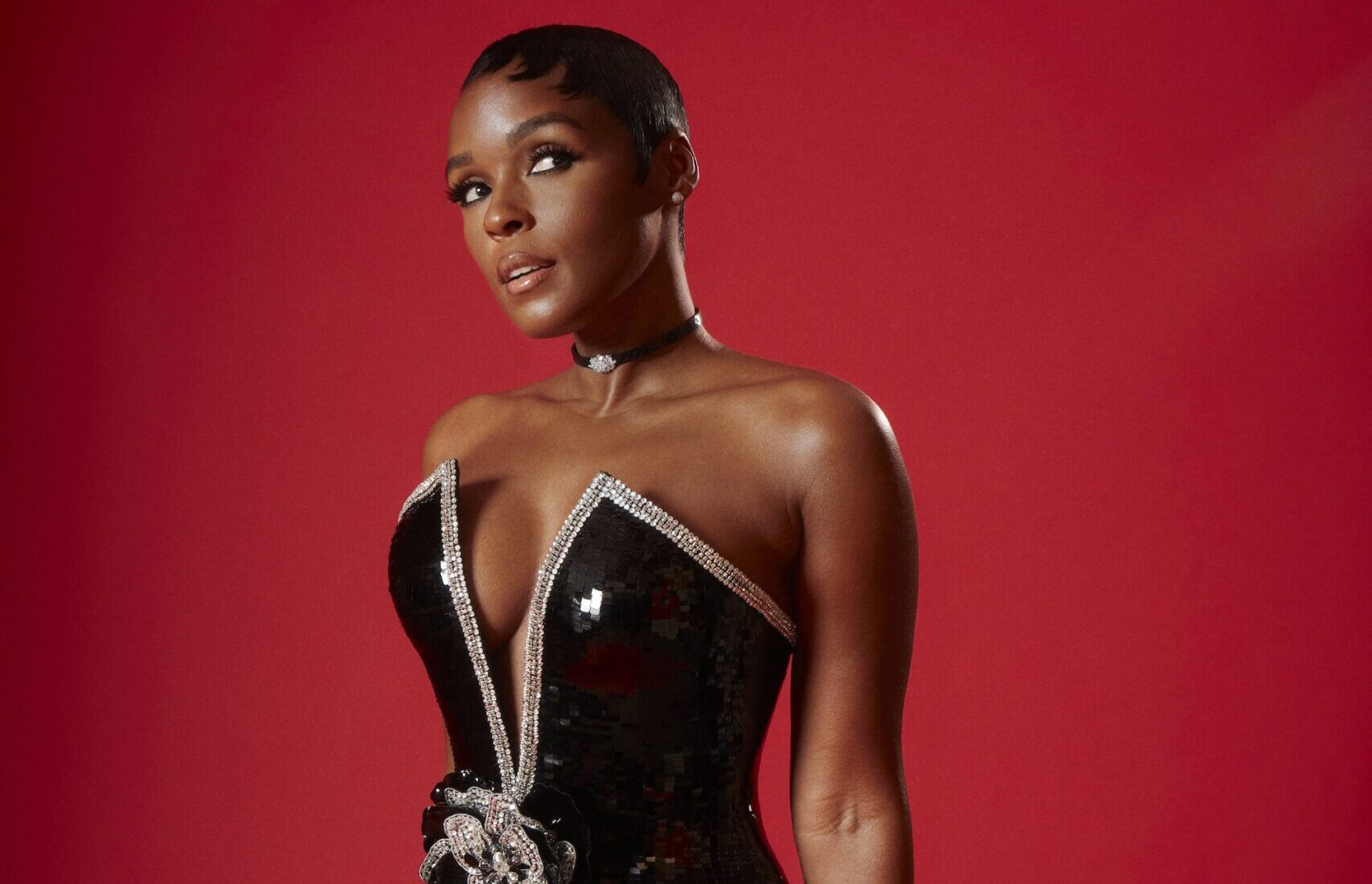
    Saturday night has this writer most excited. It features a double dose of r&b legends with the funk of Chaka Khan and the Afro-Futurism of Janelle Monae. Here were my thoughts on a previous Janelle Monae concert that originally ran in Miami New Times back on November 25, 2013.

    Janelle Monáe’s set began with four roadies dressed in matching white pants, lab coats, bowties, and glasses clustered in front of the stage, seeming to be in the middle of an important conversation. Three of the men disappeared and the remaining “scientist” introduced himself as Dr. Marlo Mindbender. He hyped the crowd about a patient he would be releasing.

    “Some of you look afraid, as you should be. Tonight, Janelle Monáe has come to fuck you up.”

    Monáe, a Kansas City-raised, Atlanta-based neo-soul singer, belongs to the school of Andre 3000 and CeeLo Green. Her performances are equal parts church sermon, art-school project, and r&b, funk, and science fiction rave up.

    Meanwhile, her uniform of androgynous pant suits (which could find her work at a caterer) and distinctive fauxhawk/pompadour hairstyle has developed a legion of imitators of both genders and all ages, many of whom were in attendance on Saturday night at the Fillmore Miami Beach.

    The evening’s backing band members — a guitarist, bassist, horn section, two drummers, keyboard player, and two backup singers — all dressed in matching black and white might seem like overkill to some. But Monáe, as evidenced by her entrance, is a performer who appreciates spectacle.

    With the band already jamming, Dr. Minbender wheeled her in on a dolly, immobilized bya straitjacket, as if she were Hannibal Lecter. It was the only time during the 90-minute set when she was not in movement.

    From the first song, “Givin Em What They Love,” Monáe was a petite powder keg in a constant state of explosion: high-fiving the crowd, egging them on, and owning every corner of the stage.

    Monáe’s influences seem to lean mostly toward male soul and R&B singers, from her choice of covers in Prince’s “Let’s Go Crazy” and the Jackson 5’s “I Want You Back” (during which she channeled the voice of a 10-year-old Michael) to her homage to James Brown (when Dr. Mindbender kneeled down to place a cape on her back) to the Cab Calloway-esque fashion in which she led the crowd in a call-and-response routine at the end of her first of two encores.

    “La, la, la, la, la, la, la.” She would sing and, in gratitude, the crowd sang it back. “La, la, la, la, la, la, la.”

    So Monáe kept it going, over and over, stretching the las to the limit. “La, la, la, la, la, la, la, la, la, la, la, la, la, la, la.” And still she received every la back. But that was only the beginning of her exhaustively extended rendition of “Tightrope.”

    She told the audience to get down. Not the dance kind of get down, but squat. After a second, people started feeling silly and began standing. She gave us a schoolmarm scold, “Get back down.” Everyone laughed as they did what they were told.

    Monáe got down off the stage and sang amid the crowd as the drummers kept the beat.

    Again, people got back to standing. But then she told us, “When I get back on the stage, I need everyone down.” Damn, if we didn’t do as we were told. And as the song neared its end, she found faith in the crowd and allowed her fans to support her in perhaps the most graceful crowdsurfing we have ever witnessed.

    The hardest working woman in show business made it look easy.

  • Cey Adams Teaches Hip-Hop Collage Art Class on Saturday

    Cey Adams Teaches Hip-Hop Collage Art Class on Saturday

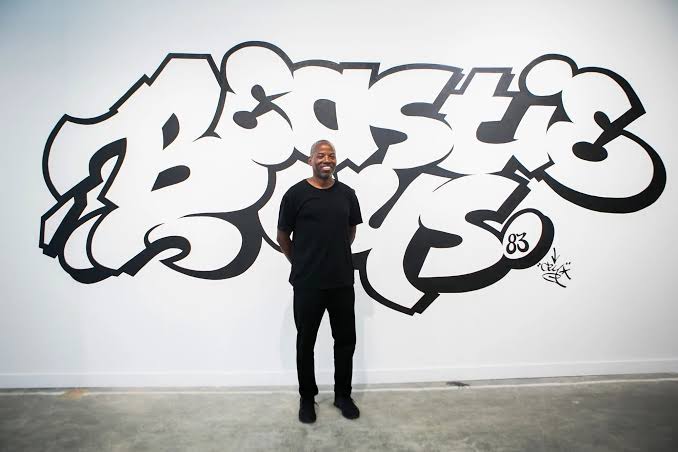
    On Saturday, February 22, 2025, at 4pm, Cey Adams, the pioneering graphic designer behind Run DMC, Beastie Boys, LL Cool J, Public Enemy, and Jay-Z’s most iconic album covers, is hosting a one-day-only collage masterclass at the Art of Hip Hop in Wynwood.

    It’s not just a class—it’s a chance to learn directly from one of hip-hop’s most influential visual artists inside his own solo exhibition, Departure: 40 Years of Art & Design. The event is part of the Monster Energy Monthly Program Series, and tickets include all supplies.

    Cey is a legend in the art and music world. Before Photoshop, before digital design, he was creating by hand—cutting, pasting, layering textures, and shaping the look of hip-hop before it became a global movement. This is a rare chance to step into his world and learn his creative process firsthand.

    Cey Adams, a New York City native, emerged from the downtown graffiti movement to exhibit alongside fellow artists Jean-Michel Basquiat and Keith Haring. Adams served as Creative Director for Hip-Hop mogul Russell Simmons’ Def Jam Recordings, where he co-founded the Drawing Board, the label’s in-house visual design firm. While there, he created visual identities, album covers, logos, and advertising campaigns for Run DMC, Beastie Boys, LL Cool J, Public Enemy, Notorious B.I.G., Maroon 5, and Jay-Z.

    During the 1980’s and 1990’s, before digital tools like Photoshop and Illustrator became mainstream, Cey’s design practice was a hands-on, tactile process that involved physical materials, like paper, scissors, and glue. It was the go-to method used by graphic designers and illustrators working with print layouts, posters, magazine ads, and other designs before the digital age. Today, this methodology inspires Cey’s fine artwork, which involves dismantling various imagery and paper elements to build multiple layers of color, texture, shadow, and light. Cey now draws inspiration from 60s pop art, vintage sign painting, and comics. His retrospective is currently on display at the Art of Hip Hop, featuring 40 years of his work, focusing on themes including pop culture, race and gender relations, and cultural and community issues. He has collaborated with many global brands, including IDEO, Apple, Levi’s, Foot Locker, Converse, Pabst Blue Ribbon, YouTube, and Google. Participants of the class will get to take a lesson from Cey himself inside his solo exhibition, where over 50 of his most famous hip-hop album covers are on display.

    For more information, visit artofhiphop.com.

    Event Details:
    Where: Art of Hip Hop, Wynwood, Miami.
    When: February 22, 2025, at 4:00 PM.
    Tickets: Click Here to Register, $30 – $50 (includes all supplies).

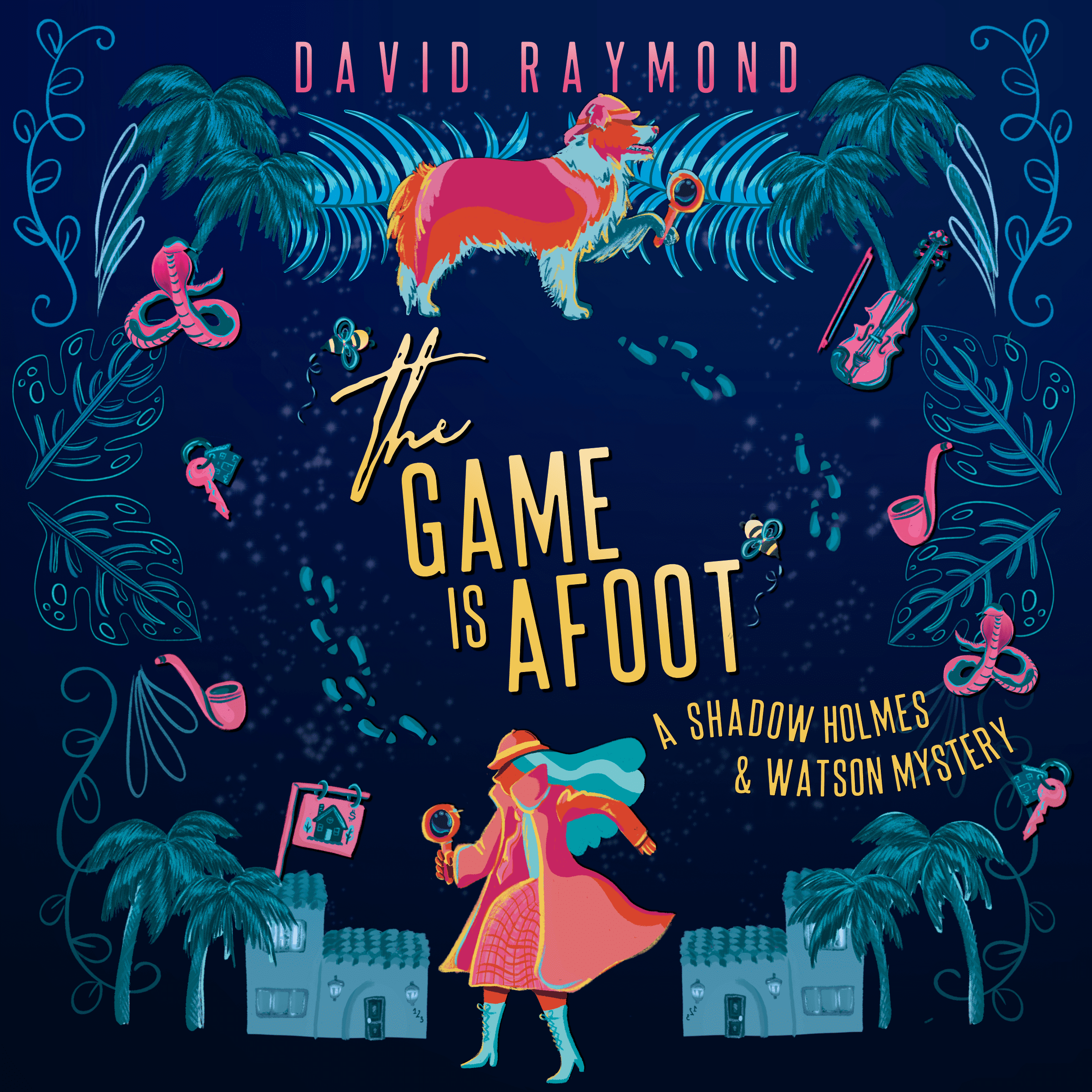
  • The Game Is Afoot- Excerpt from New Novel

    The Game Is Afoot- Excerpt from New Novel

    Below is an excerpt from David Raymond’s new set in Miami novel, The Game Is Afoot, available for purchase by clicking here.  

    GREAT SCOTT! That was close. Shadow was fabulous and our connection was undeniable; however, I had been in her company but a few hours at that point, and no lass was worth getting my bits blown to bits. Despite my exuberance regarding peeks into my past, I was contemplating returning to my safe little shack behind Jimbo’s and having a nice lie down. After all, Virginia Key was directly across the channel. If I waited until the shooting subsided, I could swim there. I only needed to paddle faster than the bull sharks. I was about to take my leave, however one look into Shadow’s shining eyes and oxytocin flowed between us as current moves through a wire. Additionally, this spy stuff was, as the young people say, cool AF. A mermaid sex resort! Bullet proof doors! A secret tunnel! Let’s not forget the thrill of the chase, although at the time, we were the ones being pursued.

    “I’d imagine Moriarty, or her people, would have better aim. Dissatisfied customer?” Shadow questioned.

    “Vlad Gorbachecov. Afraid right before your father took me off active duty, I slipped up and released some photos of him dressed as the prime minister,” Dolly said.

    “Doesn’t sound so bad,” Eren said.

    “It was Margaret Thatcher,” replied Dolly.

    “No wonder he’s trying to kill you,” japed Tuesday.

    “Oh no, dearie. Just a bit of spy fun. He vowed to scare me to my dying day. Now, hurry along before I forget where I’m off to.”

    We followed Dolly down a passage to a glistening underwater lagoon which smelled like last week’s yoga pants. Dolly peered into a swim mask hanging from a hook, thus opening a rock wall, and we found ourselves viewing a chamber fantastical enough to provide fodder for Carl Sagan’s nocturnal emissions.

    “Welcome to The Bee,” Dolly said as we entered.

    Shadow studied the place, “Father couldn’t have worked here. Too many shiny gadgets for his delicate eyes. And no immense wooden desk, but that out of place recliner in the corner bears his bounteous butt print. This is your workplace, Dolly.”

    “Honk!” Dolly blew her nose and sniffled. “Just like Arthur. He should be around any minute. Shadow Holmes, what are you doing here?”

    “Hello, Dolly. You were just about to show us the crime scene photos.”

    “Blimey. Sorry, dearie. 007, be a dear and show us the classified crime scene photos.”

    “You named the computer 007? This is going to be a hoot! Whoopsie,” Tuesday said, tripping, falling to the ground.

    “Oh no, dearie. It was Guinevere’s idea. She designed the thing.”

    Et tu, Mother! She said she was designing a recipe website! She even cooked the dishes for us. That coq au vin was scrumptious. Liar. Why didn’t you tell me? Maybe, I could have saved you … maybe, Shadow lamented silently.

    “Voice and facial recognition accepted. As requested, Special Agent Jolly,” 007 responded.

    Images of the inside of the Holmes’ residence projected from the plate glass wall. Eren flew to Shadow’s side and took her hand. Get off me, she thought, however, the first image, that of Arthur and Guinevere dead on the couch, their mouths crusted, caused Shadow to grasp Eren’s hand tight.

    “Do you need a minute?” Eren asked.

    “No! Next picture,” Shadow said, breaking her grip.

    Shadow sat in her father’s recliner with fingers mashed, breathing in his scent, her grey eyes burrowed into the pictures, I’ll show those schoolyard brats what a Holmes can do, she thought. “Next one. Next. Next. Next. Stop! Can you Zoom in on the newspaper in Father’s suit pocket?”

    “Affirmative,” 007 responded.

    “There. Zoom in on the crossword. Even with his dying breath, Father would never leave one word missing no less, two. Seventeen down, group of crows.”

    “That’s easy … zzzzzzz,” Tuesday emitted, as the drugs along with whatever adrenaline had been fueling her for days, finally took their leave of her.

    “Murder!” Dolly said.

    Obviously, you were murdered. What else are you trying to tell us, Father? Shadow pondered. “12 across, advertising houses. Of course, listings!” Shadow exclaimed, thinking, good job, Father. Of course, you could have just left a note.

    “Just like Arthur. He’d be so proud. Honk!” Dolly expressed, blowing her nose. “Why Shadow Holmes! What are you doing here?”

    “Just leaving. Thank you, Dolly,” Shadow said, hugging her.

    “I’m coming with you,” Eren said.

    Coming with me. If only. God, he looks good. Stop it, Shadow. He’s distracting you. Be firm. Give him something to do. You know Eren, he must feel useful, Shadow thought, responding, “I need you here. Please, Eren.”

    “I see.”

    “How do you feel about babysitting?” Shadow queried.

    “Which one?” Eren joked, looking about, his gaze stopping at me.

    Of all the nerve! Did this touchy-feely bloke think Shadow deemed me in need of minding? And her amorous thoughts stirred my protective instincts. Nothing against true love, but Eren had hurt her before. The fiend! I fixed my gaze upon him, growled, and circled, coming to rest at Shadow’s calf. My message seemed to register on his feelometer.

    “Take care of her, Watson,” Eren said.

    “And watch out for her,” Shadow replied, looking at her cousin crumpled on the floor, who with copious hair framing her entire form, very much resembled a Puli of my acquaintance.

    “Don’t worry,” Eren said.

    “It’s not her I’m worried about,” Shadow retorted, squeezing Eren’s arm.

    What a lovely young couple. Wonder if they’d fancy a threesome. What’s that big yellow heap on the ground? Blimey! Did I shoot Big Bird? Where did I leave my car? Shadow Holmes! What’s she doing here? Oh, no! Moriarty. That sicko killed Guinevere and Arthur. For the Holmeses! Dolly thought, uttering, “You take care of yourself, Shadow Holmes. Moriarty is pure evil. And don’t worry about us. I’ve still got a few schemes up my sarong.”

    “Come, Watson. The game really is afoot,” Shadow said, patting my head.

  • Miami Welcomes Kamasi Washington

    Miami Welcomes Kamasi Washington

    On the eve of Valentine’s Day, the city of Miami was gifted the most loving present ever: Kamasi Washington.

    Playing at the Knight Concert Hall, it was Mr. Washington’s debut show in Miami. We are not the only ones who think Kamasi Washington is one of the most important jazz artists of today. Facts. We think this dude is legit like the John Coltrane of today, yet completely himself and original. Just spiritual and out of this world. And being able to see him live in Miami was church.

    We believe the last time Mr. Washington played South Florida was 2016 at the debut Okeechobee Music Festival, which might have been one of the best music festivals of this century. Look at that lineup and let’s debate it.

    The Miami show was the first concert resuming the Fearless Movement Tour, which was postponed last September due to a back injury sustained by Washington. The show, in some ways, was a one-off in the States (although they are playing a festival in St. Augustine tonight), before they head to Europe and then Japan.

    Sometimes Miami does not know or appreciate certain elements of culture. Sometimes Miami would rather see a cookie cutter pop-star or a middle aged deejay than refined culture. It’s that vapid, hollow influencer-based part of our DNA that bleeds fakeness, clogging up our arteries with ghost condos and shallow shills. Therefore, we were not surprised that the Kamasi Washington show did not sell out, even after local hipster party promoter Poplife (whom we love at The Jitney) stepped in to help promote the show.

    Whatever. Less is more. Quality over quantity.

    It was still very crowded in there.

    And it was time to go to church.

    Kamasi Washington in Miami

    “Are your bags packed?” asked Washington, at the start of the show. “Well, all right then.”

    His nine-piece band put their trays and seats in an upright position, wheels up, and away we go…

    Turntablist, stand up bass, drummer, piano, keyboardist, trombone, a singer, a soprano sax / flutist and on sax Washington.

    From the moment Washington took the stage, the energy was palpable. His synergy with his ensemble was evident as they effortlessly navigated complex compositions and improvisational passages, jamming and weaving a symphonic soundscape that is both sophisticated and immersive. From the jump, it was an intellectual and sensory delight.

    Washington’s saxophone prowess is next level and nothing short of extraordinary. Each note imbued with emotion and mastery, like the pen of a novelist drawing the audience into the narrative of each piece. When he goes off. Woof. When he goes there. Pow. Doper than Charlie Parker’s veins. Sicker than COVID. More lit than a pyromaniac.

    The setlist, featuring selections from his critically acclaimed works, highlighted his versatility and virtuosity, with intricate harmonic progressions and rhythmic ingenuity.

    They played two hours, no intermission.

    To be a little critical, maybe they spent too much time isolating individual solos and not enough full orchestral compositions with the full roster.

    But it was a lovely show.

    This article was published with the support of the Miami-Dade County Department of Cultural Affairs and the Cultural Affairs Council, the Miami-Dade County Mayor and Board of County Commissioners.


  • Mango Writers Conference Takes off February 22

    Mango Writers Conference Takes off February 22

    The South Florida Writers Association (SFWA) is proud to announce the speakers for its 2025 Mango Writers Conference, Writing From The Ground To The Moon, taking place on Saturday, February 22nd at the 94th Aero Squadron Restaurant from 9am – 4pm.

    Featured speakers will present a captivating lineup of topics ranging from the triumph and challenges of a paraplegic athlete turned Paralympian competitor in Anita Mitchell’s God Took My Arms But Gave Me This Gift, to the cosmic accomplishment of some of SFWA’s very own writers in the poetry anthology; Sea of Tranquility which will join 250,000 cultural artifacts from around the world in a digitized payload delivered to the moon, presented by Mort Laitner.

    “The Mango Conference goal is to throw mangoes and rockets at writers. The mangoes to invigorate their writing, the rockets to dare they dream. Visitors will meet both creative and non-fiction writers with decades of experience. Worthwhile for any who even so much as glanced at a pen!” said SFWA president Giancarlo Diago Cevallos.

    2025 Mango Writers Conference Full Speaker Lineup:

    Anita Mitchell – “God Took My Arms But Gave Me This Gift”
    Dar Airan – Legal Pitfalls in Negotiating a Publishing Contract
    David Rolland – The Life of a Writer
    Holly Iglesias – Poetry; All The World’s A Fair
    PANEL: Mort Laitner, Howard Camner, Monica DeZulueta, Neil Crabtree – “Sea of Tranquility”

    For details, please visit: https://southfloridawriters.org
    Register by FRIDAY, FEBRUARY 14th

    The Mango Writers Conference is presented by the South Florida Writers Association, a 501(c) 3 nonprofit educational and membership organization dedicated to literary arts and support of writing and writers in our community. Our mission is to establish and maintain a forum for fellowship, education and information among writers in the South
    Florida area to encourage excellence and promote interest in literary achievements in the community.

  • Cubanidad and the Many Cultures of Cuban-American Literature

    Cubanidad and the Many Cultures of Cuban-American Literature

    Like members of just about any ethnic group, Cuban-Americans, are generally represented in literature, film and television as caricatured stereotypes. The men are often depicted as hot-headed and rife with machismo. The women are portrayed as quick to gossip. While every Cuban-American, no matter the gender, are often presented as overly nostalgic for how superior Cuba was before Fidel Castro and quick to label anyone they don’t agree with as a “comunista” with all these opinions spouted out over a meal of arroz con pollo and a soundtrack of Salsa music.

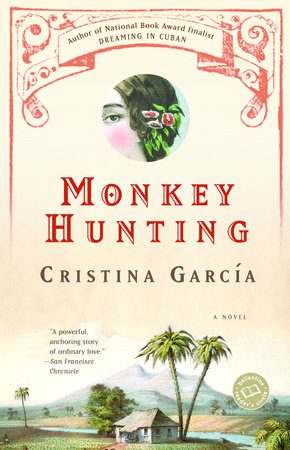
    But just as citizens of the United States would be outraged if everyone from our diverse country was played in another nation’s popular culture as obese, cowboy hat wearing, pickup truck driving, gun toting ignoramuses, so should Cuban-Americans find it ridiculous to be seen as a monoculture. Sometimes Cuban-American writers can use the labels placed on their culture to surprising effects. Richard Blanco in his memoir, The Prince of Los Cucuyos, uses his Cuban-American family to display his alienation as he came of age. Meanwhile Cristina Garcia, in her novel, Monkey Hunting, demonstrates just as people from the United States consider their nation to be a melting pot, the same could easily be said of Cuba.

    The first figure in entertainment to shape the worldwide collective mind of what a Cuban-American is, was the entertainer Desi Arnaz. Arnaz fled to Miami from Cuba in the less well known Revolution of 1933, and shot to fame as the star of the 1950’s most popular television show, I Love Lucy. The literary critic Gustavo Pérez Firmat observed in his book, Lost in Translation from Life on the Hyphen-The Cuban-American Way, “several generations of Americans have acquired many of their notions of how Cubans behave, talk, lose their temper, and treat or mistreat their wives by watching Ricky love Lucy. I once had a Cuban-American student who claimed he had learned to be a Cuban male by watching I Love Lucy reruns from his home in Hialeah”.

    In the 1970’s another popular television show ¿Qué Pasa, USA?

    further captured the U.S. public’s imagination of what a Cuban-American family looked like. This PBS production found laughs and drama in the conflict of three generations of Cuban-Americans living under the same Miami roof. There are two grandparents, two parents, and two children with the elder sibling born in Cuba and the younger born in exile in Miami. Yeidy M. Rivero in her essay “Interpreting Cubanness, Americanness, and the Sitcom” describes the motivation behind that show’s production, “¿Qué Pasa U.S.A.?’s main purpose was to help Cuban-American adolescents to comfortably embrace their Cubanness and Americanness, the veiled message was for their parents and extended family members: Cuba is the remembered, loved, and nostalgically imagined homeland; the U.S.A. is the present and, for better or for worse, it is ours and our children’s and grandchildren’s new home”.

    A young Richard Blanco was one of the Cuban-Americans influenced by this series. He documents throughout The Prince of Los Cucuyos how much television affected his young mind. So it is not much of a leap to assume The Prince of Los Cucuyos was greatly inspired by a show that paralleled Blanco’s childhood in ¿Qué Pasa U.S.A.?. Both the fictional Peña family from the sitcom and the real Blanco family of the memoir featured a three-generation household in a suburban Miami neighborhood.  Both works feature dialogue that transitions between being spoken in Spanish and English without blinking an eye.

    Blanco realizes for many potential readers of his generation television is a “safe place”. The hours spent in front of a screen with remote control in hand, shaped the values and conventions of many that grew up in the late twentieth century. So in the first half of the book he smartly sets up his family to be reminiscent of what viewers would experience on a sitcom like  ¿Qué Pasa U.S.A.?. Abuela, Blanco’s grandmother, is portrayed to comedic effect as a schemer, one who always has a trick up her sleeve. Abuelo, Blanco’s grandfather, is portrayed with a familiar sitcom trope, as the fish out of water. In the chapter “Losing the Farm,” Abuelo sets up a chicken coop in the backyard that spirals out of control with an overabundance of poultry and rabbits. When animal control is called in to their Westchester home Abuelo is stunned that his new country is not as free as he assumed. Abuelo then spouts out dialogue that would fit every stereotype of how a Cuban exile would describe the differences between the US and Cuba. “What do you mean I can’t have chickens? I can have all the chickens I want – cojones – this is a free country. That’s why I came here from Cuba and now you tell me I can’t have chickens”.

    The Prince of Los Cucuyos is very smartly set up

    with the comedic structure of a sitcom before slowly delving into more serious issues, giving the readers candy if you will before slowly seeping in some medicine.  The absurd interaction between Abuelo and animal control ends peacefully. At the end of the chapter, however, what started off as a comedic situation ended tragically.

    Once a night each week the Blancos’ neighbors would have a loud, vulgar domestic squabble. The entire Blanco family would come into Richard’s room to listen to the fights as though they were entertainment. “Caridad and Pedrito’s epic fights were more titillating than any R-rated movie we’d ever sneaked into or any of Mama’s telenovelas on the Spanish channel”. One could imagine such a scenario of a family watching from a window their neighbors’ fighting as a recurring schtick in ¿Qué Pasa U.S.A.? or any number of other sitcoms. It also fits into crass stereotypes of Cuban-Americans as loud, dramatic, and unconcerned of who hears what they have to say.  But then Blanco gives us a resolution to these next door neighbors’ disputes, that no television sitcom would ever dare present to an audience. The husband next door shot his wife and then himself in a murder-suicide. Abuelo as the person who discovers the bodies cuts a different figure when he states in shock, “How could he – his own wife and then himself ¿Por que, Pedrito, por que?”.

    As The Prince of Los Cucuyos progresses Abuela shifts from a stock comical character who says whatever comes to mind, similar to the grandparents on ¿Qué Pasa U.S.A.?, to a more menacing figure. In the latter chapters of the book, Richard reveals how much her bold statements of how he should appear traumatized him. In one passage he reminisces, “But now that I was twenty pounds overweight, she was mortified: ‘Bad enough being a sissy – but a fat sissy’”. As a child this commentary seemed acceptable, if not to be expected. This was the culture that Blanco had grown up in. This is how he figured all Cuban-American households worked. It was part of their culture. How shocked a young Richard would be to learn there was not just one Cuban culture, but a myriad of them.

    As mentioned at the beginning of this essay, it would be foolish to try to capture everyone in the US has having the same heritage and norms. There are Italian-Americans, African-Americans, and Asian-Americans. Just as one could put any region of the world with a hyphen in front of American to serve as a descriptor of some subculture, so could you do the same for the people of Cuba.

    The scholar Fernando Ortiz in his essay, “The Human Factors of Cubanidad,”

    pointed out that every Cuban originally came from somewhere else. Even the “Natives” according to Ortiz came from other American lands mentioning by name the Guajiro, the Jíbaro, the Macurije, and the Tairona people. “Since 1492 the Whites of Europe have arrived, and they have not stopped coming. If in Columbus’ caravels there were Castilians, Andalusians, Catalans, Galicians, Basques, Jews, Italians, and one or another Englishman over the centuries the entrances would not cease: from the Mediterranean, the Alps, northern Europe, people of the most far-flung provenances”.

    For Ortiz there was no one monoculture of Cubans or later Cuban-Americans as an episode of ¿Qué Pasa U.S.A.?, or an excerpt from The Prince of Los Cucuyos could lead one to believe. But there was a tie that bound all Cubans and Cuban-Americans everywhere. Ortiz dubbed that quality, Cubanidad.

    Ortiz defines Cubanidad as what it means to be Cuban. Cubanidad in his opinion, does not depend on whether you live in Cuba, nor that you have a Cuban passport. Cubanidad for Ortiz comes not from an ethnicity, a race, an upbringing, nor a religion. Instead he said, “Cubanidad is belonging to the culture of Cuba”.  There is no blood test, no DNA swab, in Ortiz’s perspective to prove one possesses Cubanidad. Rather one knows it when they see it, whether in real life or in literature.

    This Cubanidad was evident for Blanco in his book’s final chapter, “El Farito”. In this section Blanco and his family are enjoying the day at Bill Baggs Park reminiscing about the past in Cuba, as Blanco had been witness to countless times before. The difference this time was a peer named Ariel was present. Ariel was a more recent exile from Cuba. Through the lens of someone his age, Cuba no longer seemed theoretical to Blanco, but rather an actual place that if not for decisions made by his parents where he could have grown up. Blanco could feel a connection to his people, his heritage,

    One of the defining characteristics of this Cubanidad

    for Ortiz is described with the metaphor of ajiaco. Ajiaco is a stew of the indigenous Taino, a mishmash of legumes and meats, “cooked with boiling water until it gives off a very thick and succulent broth, and it is seasoned with the very Cuban chili pepper (ají) that gives the stew its name”. The mixture of many ingredients coming together is what makes the stew delicious, and it is also what makes the Cuban culture beautiful to Ortiz. As a port of transit Cuba has brought together Natives, Africans, Asians, Europeans, Middle Easterners, all on one island.  And best of all for Ortiz, ajiaco like Cuba itself, “is not a finished stew, but rather a constant cooking”.

    In another work by Ortiz, “Cuban Counterpoint: Tobacco and Sugar,” he explains why because of this ajiaco metaphor, it is best to study Cuban culture and literature through a lens of transculturation rather than via acculturation. Acculturation he describes as “the process of transition from one culture to another”. That is not what he believes occurs in the ajiaco of Cubanidad. Transculturation is a better term he believes because that describes all the various cultures that are coexisting and thriving and cooking together in Cuba.

    Cristina Garcia’s novel Monkey Hunting beyond serving as an entertaining read also provides a primer in just how many diverse ingredients make up the ajiaco of Cubanidad. The first character readers are introduced to is Chen Pan who comes from China. By going from a man who only knows Chinese to learning about African culture and the Spanish language, Chen Pan goes through the path of Creolization that Benitez-Rojo described. “Creolization is not merely a process (a word that implies forward movement) but a discontinuous series of recurrences, of happenings, whose sole law is change”.

    As we meet Chen Pan’s various descendants as the book progresses, we learn the family’s journey from China to Cuba was not a straight line. Chen Pan in 1857 embarks from China to Cuba, but later we meet his granddaughter who was born back in China in 1899. In other chapters we meet Chen Pan’s great-great grandson, Domingo, who was born in Cuba, but has Chinese and African genes in him, fled to New York City and halfway through the book is back in Asia fighting in the Vietnam War on behalf of the United States.

    A surprisingly small percentage of the book takes place in Cuba. Chen Pan during his plantation enslavement and his eventual escape along with the memories that Domingo has of his family’s time on the island are the only portions in Cuba. But the scenes set on Cuba do portray the island’s multiculturalism vividly. There is a Chinatown where fish sellers are quoting Confucius. There are Spanish descended assistants working for Chinese employers. Finally,  there are African slaves, one of which Chen Pan makes his home with and eventually, if the family tree at the front of the book is correct, spawns his children.

    Another important theme to Monkey Hunting

    is how crucial migration is to the vibrancy of Cuban and Cuban-American culture. There was a line the one character who did make a round trip journey from Cuba to China and back again, Lorenzo, said towards the end of the book that had great relevance toward this theme. “History is like the human body… overly hot or cold or rotting with stagnation”.  The dialogue was meant to refer to the wars and the political upheavals that took place throughout the century chronicled in the novel and the effect these historical events had on the characters. But it’s interesting to also consider the quote in light of a society as a whole and the benefits of transculturation that ensues because of the constant influx and outflux of a diverse group of people.

    “After so many years in Cuba, Chen Pan had forgotten much of his Chinese. He mixed his talk with words from here and words from there until he spoke no true language at all”. Language is not a barrier to cohabitation in this book. Chen Pan and Lucrecia, his wife of African descent, share a happy life together in spite of neither being able to speak to the other in their native tongue. There was a parallel in the relationship between his descendent, Domingo, the American soldier by way of Cuba, and his Vietnamese partner Tham Thanh Lan, nearly a century later.

    Migration often happens due to forces outside of the migrants’ control. The nineteenth century Cuban renaissance man Jose Marti gave great thought to how the conflict between imperialist powers and their colonies led to migration both to and from Cuba. Marti himself was forced to migrate to the U.S.. While in exile he expressed how he believed imperial conflicts stemmed from the European countries and the U.S., not bothering to understand the ajiaco that makes up Cuba. “Let the heart’s fires unfreeze all that is motionless in America, and let the country’s natural blood surge and throb through its veins! Standing tall, the workmen’s eyes full of joy, the new men of America are saluting each other from one country to another”. To Marti each land and each people are different, if people from one land do not bother to attempt to know the people from another land, there is bound to be conflict.

    That is a philosophy that Marti seemed to live by and believed those in power should also follow. “The government must be born from the country. The spirit of the government must be the spirit of the country. The form of the government must be in harmony with the country’s natural constitution. The government is no more than an equilibrium among the country’s natural elements”.

    Marti, as a man who died in battle in independence against Spain so that Cuban could govern itself, could undoubtedly relate to a line Chen Pan delivers to his grandson, “In your life there will be two paths, one easy and one difficult. Listen well: Always choose the difficult one”.

    The characters of Monkey Hunting are not nearly the political revolutionaries that Marti was, but simply by existing they all find themselves in violent and dangerous conflicts. Monkey Hunting goes along with Marti’s theory that those in power do not seek to comprehend those they rule. Often the people with the least, immigrants that enter a new land with nothing to their name like Chen Pan or Domingo’s father, Pipo, bear the harshest brunt of this lack of care.

    Chen Pan begins the book as a slave,

    shipped across the world to chop sugar cane at a plantation. Then in midlife his body is put in grave danger when he finds himself in the middle of the Cuban Wars of Independence. Chen Pan’s granddaughter that he never met, Chen Fang, ends the book as a political prisoner in 1970 China. She’s been accused for working with French intelligence, because of a love affair she had with a Frenchwoman. The one time this character has ever truly been in love, she finds herself punished for it. Finally, there is Domingo, a Cuban exile whose father died by suicide after never getting over the trauma of jailed in Castro’s Cuba. Alone in New York, Domingo decides to enlist in the armed forces which ship him off to Vietnam. A landmine explosion leads to Domingo losing part of his intestines.

    Perhaps this history of migration towards Cuba, as fictionally documented in Monkey Hunting, gave the large numbers of Cubans who fled to the United States, post-Castro, the courage to leave. If they are only a generation or two removed from people who traveled across the world to get to Cuba, then uprooting your family to leave Cuba might not seem as psychologically daunting. It makes one wonder if all the Cuban-Americans who are chronicled sticking together in the Miami of The Prince of Los Cucuyos, did so for the obvious reason that they have a common language and place of birth, or for the less obvious reason that they are travelers, willing to make home wherever will have them.

    “Cuba siempre sera Cuba, Cuba will always be Cuba, and Cubans will always be Cuban”, the character of Ariel says in the final chapter of The Prince of Los Cucuyos. This character of Ariel serves as a funhouse mirror reflection for Blanco, as he tried to imagine what his life would be like if his parents hadn’t fled Cuba until after he was born. If Blanco had spent a requisite time on the island, like Ariel had, he wondered would he feel less alienated from his family? Blanco has an epiphany when Ariel panics in the ocean, traumatized from a near death accident while leaving Cuba and leans on Blanco for support. “we were cubanaso and gringo, one and the same, with one nameless country for a moment, until we slowly loosened our embrace”.

    At that moment he sees their commonality.

    Their life experiences might have been very different. Ariel with his seeming confidence with roasting a pig and his trouble with the English language, might appear very different from Blanco who would grow up to write poetry in English. For that matter the characters of Chen Pan and Domingo and the Peña family of ¿Qué Pasa U.S.A.? along with the historical figures of Jose Marti and Desi Arnaz, all Cubans or Cuban-Americans all seem to be of many different cultures. But Fernando Ortiz would undoubtedly describe them all as having Cubanidad.

    Cuba was a nexus where so many different cultures intersected. Saying literature or a fictional character or a living person possesses Cubanidad might simply be saying it represents humanity in any of its many diverse forms.