Category: Music

  • XXXTentacion Final Interview: an Inside Look, Years Later

    XXXTentacion Final Interview: an Inside Look, Years Later

    • (UPDATE) — as of 08-01-26 the writer has not released the audio and written transcripts and has no immediate plans to do so.

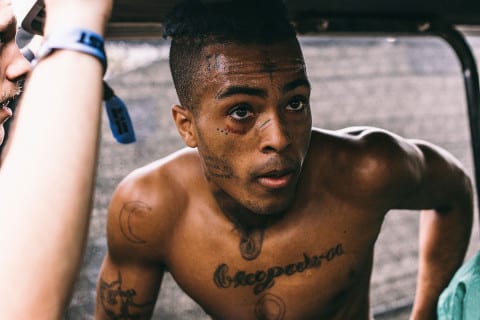
    About two weeks before the senseless, tragic murder of XXXTentacion, the Miami New Times released an in-depth feature profiling the artist to an extent like never before.

    It’s a must-read piece.

    The writer of the article was able to interview XXXTentacion in the comfort of his own home by finding his address on an errant speeding ticket obtained in court documents. She knocked on his door. After a long back-and-forth she spoke to him for 2 1/2 hours.

    XXXTentacion Final Interview

    The New Times article does not go into extensive details about the conversation, which is now his last interview. It is also the most in-depth conversation anyone in the media will ever have with the slain rapper.

    The Jitney spoke exclusively to the writer of the article.

    The entire recorded conversation is below.

    The following highlights information obtained from our conversation.

    • Reporter interviewed XXXTentacion on May 3rd. Article came out June 5th.
    • X reluctant to talk, questions reporter’s credentials.
    • X described as “charming, charismatic but a little condescending.”
    • Multi-hour interview recorded and transcribed, not yet released.
    • XXXTentacion described as “super” introspective.
    • X was “super” spiritual but not in a Christian sense.
    • Often complimented people by saying “there is a good energy coming off you.”
    • He was a student of the Koran.
    • X “kinda believed in Santeria” and “definitely believed in witches.”
    • Earlier girlfriend had “been a witch” and performed money spells.
    • X believed the spells worked.
    • Another ex-girlfriend asked to study witchcraft.
    • XXXTentacion was deep into Astrology.
    • He worked well with other Aquarius, including Joey Badass and Denzel Curry.
    • XXXTentacion felt the #Metoo movement inflated allegations against him.
    • Facing 30 years in jail, he wondered why no one else accused faced that much time.
    • Believed women had more power than men in post #Metoo moment.
    • Cites Asiz Ansari as example of a single allegation hurting  career.
    • X was charming, filled with energy, but also defensive and insecure.
    • Ski Mask the Slump God and XXXTentacion relationship described as insecure and delicate.
    • Tensions existed between the two collaborators as they grew into their own artists.
    • X’s camp not a fan of the New Times profile.
    • Devastating story on all angles.
    • Moral question likely forever left unanswered.

    XXXTentacion Funeral

    In addition, we attended the public funeral service for XXXTentacion.

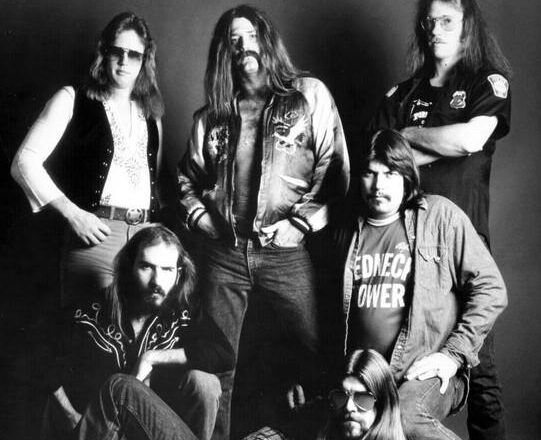
  • Flirtin’ with Disaster: The Rise and Demise of Molly Hatchet (Update)

    Flirtin’ with Disaster: The Rise and Demise of Molly Hatchet (Update)

    Jacksonville made a name for itself in the world of music as the motherlode of so-called southern rock. Several notable groups emerged from the city in the late 1960s and early 1970s including the Allman Brothers Band, Lynyrd Skynyrd and many others. However, by the late 1970s, the ABB had fallen into in disarray and had broken up, and Skynyrd suffered what was then seen as its demise due to a 1977 plane crash.

    A year after the crash, a new Jacksonville group calling itself Molly Hatchet—named after an apocryphal prostitute who murdered her clients with an axe—exploded onto the worldwide music scene. Leader-guitarist Dave Hlubek had lived in the same blue-collar, Westside Jacksonville neighborhood and had gone to the same schools as many of the Lynyrd Skynyrd boys.

    Hatchet had been recommended to talent manager Pat Armstrong, who had co-managed Skynyrd before that group got its big break in 1973. Armstrong too was from Jacksonville but by 1970 had relocated to Macon, Ga., widely considered the home of southern rock because it was the headquarters of Capricorn Records and its premier act, the Allman Brothers Band.

    Pat Armstrong had also been offered management of 38 Special, a group led by Skynyrd singer Ronnie Van Zant’s younger brother Donnie. Armstrong passed on 38, but someone in that group thought he might be interested in Hatchet.

    Armstrong signed with Molly Hatchet as the group’s manager, executive producer and publisher. Wearing all three hats was a serious, yet common, conflict of interest; still the group signed his contract enthusiastically, in spite of the fact that the members had engaged one of the top entertainment law firms in New York to review it. Either the group’s attorneys did them a great disservice or—more likely—the group simply ignored their advice.

    Armstrong got in touch with Van Zant, who was by this point well-ensconced in the music business and looking for other acts to mentor and produce. At Armstrong’s behest, Van Zant and Skynyrd sound man, Kevin Elson, traveled to Daytona Beach to see Hatchet perform. The relationship got off to a rocky start because Hatchet played a song, Gator Country, that poked a bit of fun at Skynyrd.

    Still, Van Zant and Elson agreed that Molly Hatchet had something.

    Van Zant brought Hatchet into Skynyrd’s studio on Riverside Avenue to record some demos and helped them clean up some song arrangements. The plan was that he would use his connections in the music business to shop Hatchet’s demos to record companies. If a deal transpired, Van Zant would come aboard to co-produce Hatchet’s debut album.

    That opportunity was dashed by Skynyrd’s plane crash in October, killing Van Zant along with five other passengers. Hatchet’s big break went up in smoke.

    Still, the group managed to snatch victory from what seemed like defeat: The loss of Skynyrd left a huge hole in the southern-rock market. Armstrong guessed—correctly—that several major labels were in search of a Skynyrd substitute to satisfy the demand for redneck rock, and being from the same city as Skynyrd gave Hatchet a leg up on the competition. The group even incorporated a Skynyrd tribute into its live performances.

    Armstrong snagged Hatchet an audition with Tom Werman, an Epic Records producer, who happened to be working at an Atlanta studio called the Sound Pit. Hatchet set up in the studio for a live audition. Werman loved the group and, grasping its potential for seizing the southern-rock crown, quickly signed it to Epic.

    There were other Jacksonville-based contenders to be sure: 38 Special, whose lead singer was himself a Van Zant, and Blackfoot, with two members who had briefly been in Skynyrd. However, with its “three-guitar army” and dynamic front man Danny Joe Brown, Molly Hatchet looked and sounded more like Skynyrd.

    With Werman at the helm, the group scored a hit album that quickly went gold. Hatchet’s second album became even bigger hit than the first, scoring double-platinum (all in all, Molly Hatchet managed to create four platinum albums for Epic/Sony). The group shot to the top of the music world. Things could not have been going better.

    This would have been the point where most groups would work to consolidate their success, but it was exactly the point at which Hatchet started unraveling. With the sudden influx of fame and fortune, the members’ heads swelled uncontrollably as they began to destroy themselves—along with their careers. Not only did they piss away their hard-won success—and money—most of the members destroyed themselves in the process.

    Cocaine seemed to be the most pressing problem,

    with alcohol abuse running a close second. As the group began floundering, Armstrong admonished them, “You scratched and clawed your way to the top, and now you’ve snorted your way to the bottom.”

    Whether it was alcoholism, cocaine-induced megalomania, dain bramage or just bad judgment fueled by arrogance, most of the members—with the notable exception of drummer Bruce Crump, who was a health nut—seemed to be on self-destruct and proud of it. The topic of self-destruction even became song fodder: they wrote songs about it, such as Flirtin’ with Disaster, which was also the title of their biggest-selling album.

    Just as the group’s career was hitting full swing, lead singer Danny Joe Brown quit to start a solo career, convinced that he was the main attraction. His illusions would prove to be ill-founded as his success as a solo act fizzled in short order. In fact it was an unmitigated disaster. His drug use and egregious behavior completely alienated his new band members—to the point where they staged a mutiny and walked out mid-tour. Brown was forced to finish his 1981-82 tour opening for fellow Jacksonville rockers Blackfoot with a pickup band he found in a local bar.

    Ultimately, one of the group’s most fundamental blunders was that the members refused to create a corporation or establish any type of formal business structure or even an operating agreement; hence, if a member quit, there was no legal framework for a financial settlement. They would have to sue, but none did.

    Every member, with the exception of guitarist Duane Roland, eventually got fed up and walked away from the group—and its joint assets—without so much as asking for a settlement. Even the founder of the group, guitarist Dave Hlubek, walked out. Nearly all of them at some point returned as salaried sidemen, having relinquished their positions as principals.

    The last man standing, guitarist Duane Roland, inherited the name and the tour bus. But Roland no longer wanted to tour due to a hip replacement and dependence on pain pills on top of his alcoholism. He was convinced the crazy world of touring could kill him.

    However, there were still fans out there and money to be made,

    so in 1993 Roland agreed to license the name of the group to Brown and replacement guitarist Bobby Ingram (who had been in Brown’s solo band). This arrangement lasted two years, when Brown developed serious health problems and could no longer tour (he died of kidney failure in 2005). In 2000 Roland finally sold the name to Ingram for $250,000 and retired. He died of cirrhosis in 2006.

    Bassist Banner Thomas and drummer Bruce Crump also came back as sidemen, but neither lasted long under Ingram’s aegis. Both have since died. Even Dave Hlubek came back for a time as a sideman in the group he himself had founded. He died in 2017.

    Ingram continues to tour with replacement members who get paid by the gig. He is the only guitarist in a group that was once renowned for its three-guitar army.

    The group’s fans have largely split into two camps, those of the “original” Hatchet and those of the current lineup. The social-media war between the two camps has been written about and commented on profusely; there was even a cover story about the feud in Folio, Jacksonville’s alternative weekly.

    Ingram for his part has insisted he is proud to carry on the Molly Hatchet tradition and that he is doing so with the most honorable of intentions. This may well be true. However, many of the older fans continue to attack him on Facebook, disparagingly calling the group “Bobby Hatchet.”

    The oddest part of the story is that every member of the original lineup has died—along with several replacements—almost as if the group had been cursed. Hatchet has had approximately 20 members over four decades, 11 of whom are deceased.

  • Lynyrd Skynyrd’s Allen Collins Was the Craziest Sumbitch I Ever Met (Update)

    Lynyrd Skynyrd’s Allen Collins Was the Craziest Sumbitch I Ever Met (Update)

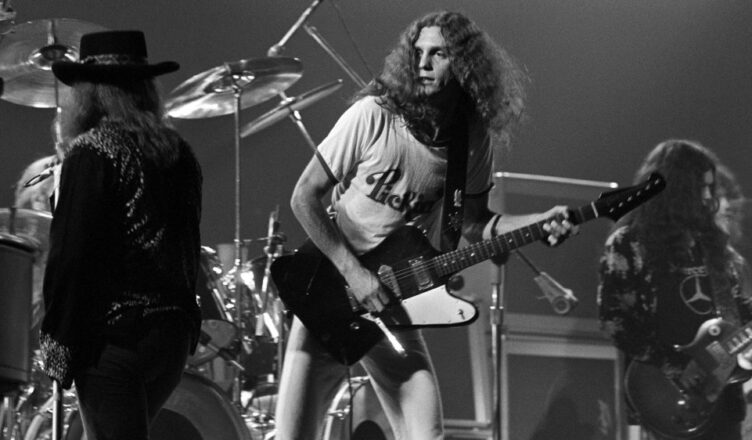
    The first time I saw Lynyrd Skynyrd guitarist Allen Collins was in 1969, when I went with a group of hippies to the Comic Book Club in downtown Jacksonville, where One Percent was the house band, to score some acid.

    Collins was leaning against a wall outside the club, long and lean, dressed entirely in white, looking like John Lennon on the cover of The Beatles’ Abbey Road. This getup became Collins’ trademark for a time; he even wore white tennis shoes, the kind women wore. This was topped by a huge head of shoulder-length, curly hair.

    A few days later my friends and I ate the acid. It was Friday night. The five of us wound up at the Sugar Bowl, a teen club in a working-class subdivision called Cedar Hills, where several prominent musicians were raised, including Collins and future Skynyrd members Leon Wilkeson and Billy Powell, guitarist Jeff Carlisi (of .38 Special), singer-guitarist Don Barnes (also of .38), and keyboardist Kevin Elson (later sound mixer, recording engineer and producer).

    One Percent, soon to become Lynyrd Skynyrd, was performing that night. There was a scuffle; some local rednecks had invaded. They were harassing hippies and got into a battle with an off-duty cop who served as a security guard. Someone pulled a knife. More cops materialized. Since we were just starting to get off on the acid, my friends and I hauled ass out of there.

    I ran into Allen Collins again in 1978, a year after the infamous plane crash, when my second wife and I were living in a small house in Murray Hill.

    We were eating at Church’s Chicken on Cassat Avenue and Plymouth Street, when in walks Collins, who gets in line behind me. He seemed to recognize me. I told him I knew Wilkeson, whom I had met at the Forrest Inn, while he was with a group called King James Version. Collins sat down with my and my wife, and as we were leaving he offhandedly asked if I knew where he could buy a junk car for about a hundred bucks. He said he liked to take them out in to the woods and roll them. This was his idea of fun.

    Not long later, I met Marion “Sister” Van Zant up the street at Dunkin’ Donuts, where she worked as a waitress. This was a year after Skynyrd’s plane crash. She invited me to the Van Zant house and introduced to sons Donnie and Johnny. I had already met Donnie in 1970 when I auditioned at Kevin Elson’s parents’ house for Sweet Rooster, a group that morphed into .38 Special.

    I told Sister about meeting Collins at the chicken place. She said Collins was a disaster behind the wheel and told me a story Johnny Van Zant had related: he had been pulling out of the Krystal on San Juan Avenue recently and was run off the road, nearly hit, by a crazy driver coming around the corner too fast in the wrong lane. Johnny honked at the guy, and the guy gave him the finger. The offending driver was Collins, of course.

    In early 1985, I was working with Filthy Phil Price and drummer-singer Carl De Blasio at Mac’s Mustang Lounge.

    One night Allen Collins came in the bar with his drummer-driver Steve Reynolds.

    Collins apparently liked what he heard because the pair came back the next night and again the next weekend. I know this was late February, because Collins threw a pie at me on my birthday—Skynyrd had a tradition that anyone having a birthday got a pie in the face. I’m on the bandstand; Collins comes rushing toward me with a key-lime pie; I duck; he misses me and flings key-lime goo into my Echoplex. He laughs. I fail to see any humor in this. That unit cost me $150, which was a lot of money for me at the time, and was ruined beyond repair. But he meant it affectionately.

    Collins wanted to put a new Allen Collins Band together, and he wanted me as lead singer and second guitarist. He also needed a bass player; Price was offered the position. He already had a drummer—who doubled as his chauffeur—so De Blasio was left out.

    The reason Collins needed a chauffeur was because he’d had his license revoked and was not allowed to drive. Reynolds and Collins picked Price and me up to bring us to Collins’ estate in Mandarin. On the way, Collins decides he wants to drive. Here we are, doing 50 miles per hour through a 7-11 parking lot. Trying to stay calm—I realize he is messing with our heads—I say, “Allen, who is going to clean up your nice leather seats?”

    “What do you mean?” he replies.

    “I mean you are scaring the shit out of us.”

    He cackles.

    “Allen, if you want to kill yourself, that’s fine, but please don’t take us with you.”

    He turns back to face us, left hand on the wheel, still doing 50 mph. “Ah, ya buncha pussies.”

    Scuffling to survive, Price, De Blasio and I travel to Vidalia, Ga., to become the weekend house band at the Golden Nugget, a medium-sized nightclub. After a few weeks Di Blasio disappeared, perhaps because he was resentful about not being included in the new Collins project. Price and I came into the club one afternoon and the drums and sound system, which De Blasio owned, were gone.

    Fortunately, there was a band down the street with an excellent drummer who also sang very well and owned a decent sound system. His name was Scott Sisson. He’d just had a falling out with a band member who’d disparaged his wife. Scott came over to our band that afternoon and literally saved the day.

    Collins and Reynolds drove up from Jacksonville to see us on a Saturday. We gathered at Sisson’s house in Lyons that afternoon. Collins taught me how to play the riff to the “The Last Time” the correct way. Keith Richards, he said, had shown it to him personally (this was a credible claim since the Stones and Skynyrd at one point shared a manager, Peter Rudge).

    Collins also claimed he had boinked Chaka Khan on Skynyrd’s tour bus. This is notable because certain Skynyrd members were notorious bigots. However, Collins did not appear to be one of them.

    Collins spots some pills on a coffee table, snatches a handful and gulps them down. Sisson’s wife says, “Allen, you eejit! ‘Em were my burf-control pills.” Allen grins like the Cheshire Cat and shrugs.

    I said something Collins didn’t like—can’t recall what—and he retorts, “Fuck you, you Jimmy Dougherty-lookin’ motherfucker,” and hurls a half-full Heineken bottle at my head, which goes whizzing by my ear (Jimmy Dougherty was the previous lead singer for the Allen Collins Band). The bottle sails butt-first through the drywall, landing with its neck sticking out.

    I should have quit then and there, but the lure of being in a big-time, touring rock band was too powerful.

    Collins was to “sit in” with us that night at the club. Word got around, and the place was packed with Skynyrd fans. Collins emerged from the bathroom, stumbling up onto the bandstand, which had a railing in front. Collins couldn’t even get his guitar—a very valuable 1957 Gibson Les Paul—on. I had to hold it up for him and fasten his strap (see photo).

    I take the mic and ask the audience to welcome Allen Collins to Vidalia. The crowd roars.

    Collins grabs the mic. “You buncha fuckin’ punks,” he rails. “I’ll kick anyone’s ass in this room right now.”

    People are looking at each other wondering what to think.

    Assuming this is some kind of redneck humor, I grab the mic and say, “Can y’all say ‘Fuck you, Allen’?”

    “Fuck you, Allen!” the audience roars in unison.

    Everyone laughs, including Collins.

    We start playing “The Last Time.” During the intro, Collins falls headfirst over the railing and hits the floor with his face. He is out cold with his feet still up on the railing, sort of hanging there. His beautiful Les Paul is broken, the headstock severed from the neck, dangling by the strings.

    I had been trained never to stop playing in the middle of a song no matter what happens, because if there’s a melee, stopping will draw everyone’s attention, whereas if you keep playing, a lot of people won’t notice. I was afraid stopping would draw more attention to the situation. So we kept going and left him lying there face-down for what seemed like a very long time. Someone from the audience eventually got up and helped him.

    Collins gets up and dusts himself off. He wanders over to a table where there is a birthday cake set out. He grabs a piece of cake and hurls it at the birthday girl, who doesn’t know about the pie-in-the-face tradition. She ducks; he misses. She complains to her boyfriend, a big guy in a ball cap.

    Reynolds grabs Collins and shuffles him out the door and into Collins’ white Lincoln. They go to the motel, get their stuff, and head back to Jacksonville, a two-hour drive. We don’t hear a thing that night or the next day from either of them.

    Price and I are driving back home to our apartment in Jacksonville. There’s a short-cut on State Road 15 running through Blackshear that leads back to U.S. 1. There used to be a stop sign at this corner fastened to a four-by-four post stuck in the ground. But now the post is broken off about two feet up, no stop sign in sight.

    Price looks at the stump and says, “I’ll bet you anything Allen did that.”

    “Did what?” I reply.

    “Look where the post is whacked off,” he says. “About the height of a car bumper. I bet Allen was driving and ran over it.”

    On Monday we get called to a rehearsal at Collins’ house on Plummer Grant Road. Reynolds opens the garage door to get something out of the Continental’s trunk. There is a huge dent in the trunk’s lid.

    “How’d that happen?” I ask. Price looks over at me, eyebrows arching.

    “Allen decided to drive home,” Reynolds replies. “He hit a stop sign on the way back. It broke off, went flying up in the air over the top of the car and landed right there.”

    Price busts out laughing. “I told you,” he says. We swore we would never again get into a car with Collins at the wheel.

    We go into the rehearsal room; Collins is there with a beautiful sunburst Rickenbacker. I was to co-write some songs with him, which meant he would come up with the germ of an idea and I would flesh it out. He began to sing me something he was working on. I was amazed at how much he sounded like Lou Reed—whom I liked—and told him so. Collins, however, apparently loathed Reed—I think he assumed Reed was gay—and flung the Rickenbacker at me. Lucky for him I caught it in midair, before it too hit the wall.

    After he cools down, he picks up a Stratocaster and we start rehearsing “Sweet Home, Alabama.” It’s only 7 p.m., and he’s already too drunk to play. We’re all embarrassed for him. He puts his guitar down and says, “I’ll be right back.” After waiting an hour, we go into the house to look for him. There he is, passed out in a La-Z-Boy with a bottle of Jack beside him. There is a thick, black steak scorching in a skillet, filling the kitchen with smoke.

    Collins had every reason to self-medicate. Not only had his band been destroyed in a plane crash, he himself had suffered a broken neck and nearly lost an arm. On top of all this he’d had to deal with the shock of his wife’s death three later. “That’s what destroyed him,” Skynyrd keyboardist Billy Powell (who died in 2009) told interviewer Marley Brant. “He dove into a bottle and never came out.”

    Collins was actually a sweet guy

    if you could catch him sober, which might be for about 20 minutes after he woke up. The only other times I saw him behave gently was around his daughters, whom he adored and they him.

    In any case, I could not stomach working with him anymore. I had other fish to fry. Atlanta label Hottrax, which distributed my record, “Fuck Everybody,” called and said the song was building a buzz and that I should get my own band together and bring it to Atlanta for a showcase. So that’s what Price and I concentrated on. This was late summer in 1985.

    I really don’t know—no one does—what happened on the night of January 29, 1986, but knowing Collins I have pretty fair idea. Collins was driving his new Ford Thunderbird home down Plummer Grant Road with his fiancée, Debra Jean Watts, in the passenger seat. He was not supposed to be driving. I am speculating—this is an educated guess, taken from experience—that she probably yelled at him to slow down, pull over, stop acting so stupid. He probably got distracted and swerved. Maybe she grabbed the wheel. Maybe they got into a tussle doing 80 miles per hour.

    In any case, the car spun out of control and ended up in a culvert. Both were thrown through the driver’s-side window. Watts died from her injuries.

    Collins suffered a broken back. He wound up paralyzed from the waist down. Mutual friends told me that there might have been a chance for recovery had he taken his physical therapy seriously.

    Collins was charged with DUI manslaughter. At first he denied having been driving, but fibers from his shirt, embedded in the driver’s-side door, indicated otherwise, plus there was a huge bruise on his right side where Watts had collided with him.

    Reynolds, who was very close to Collins and Collins’ father, Larkin, doesn’t agree with the conclusions of the police report. Neither did Larkin Collins. Reynolds says Larkin told him both Collins and Watts were ejected out the passenger side and that Collins went out the window before Watts.

    It was clear to most people who knew him that it was not safe to get into a vehicle with Collins, even if he wasn’t driving. While sitting in the passenger seat, Collins enjoyed scaring the hell out of drivers—and anyone else in the car.

    “He would stomp his foot down on top of mine [on the gas pedal],” Reynolds says. “The next thing I knew we’d be doing 100.” Collins would also yank the steering wheel. “He most likely did that while Debra was driving,” Reynolds adds. ”I was wise to his pranks and could see them coming, but she wasn’t ready for that.”

    Collins finally pled no contest, claiming he had no memory of the incident. Taking his injuries into consideration, the assistant state attorney, Wayne Ellis, asked for leniency. In addition to probation, the judge ordered Collins to organize and participate in an anti-drunk-driving campaign.

    In 1987, Collins and his father decided to re-form Lynyrd Skynyrd for a “tribute tour.”  The remaining Skynyrd members agreed, along with Ronnie Van Zant’s younger brother, Johnny, who would take center stage. Collins served as musical director. He chose Randall Hall, who had been in the Allen Collins Band, as his replacement.

    To honor his probation, he appeared, wheel-chair bound, before every show to provide a short lecture on the consequences of drinking and driving. Collins developed chronic pneumonia and died in January 1990.

    The band, however, carried on with the help of several replacements taking the place of dying members—guitarist Gary Rossington is the only remaining founder—and has been touring regularly since. It’s still a money machine, and the southern-rock style forged in Jacksonville refuses to die. It’s possible the group might not have gotten back together without Collins’ urging.
  • Scenes from the Jitney Fundraiser Concert

    Scenes from the Jitney Fundraiser Concert

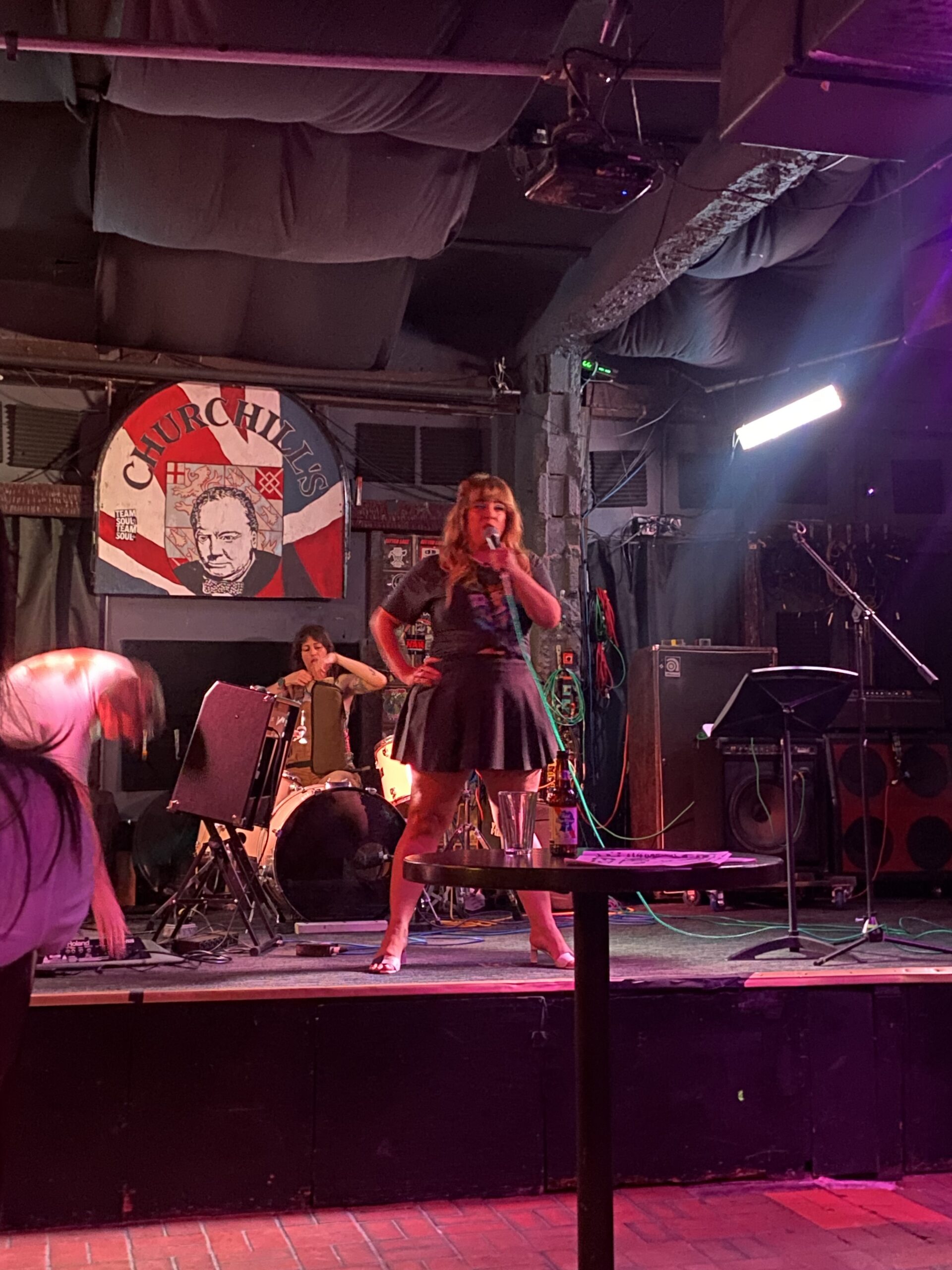
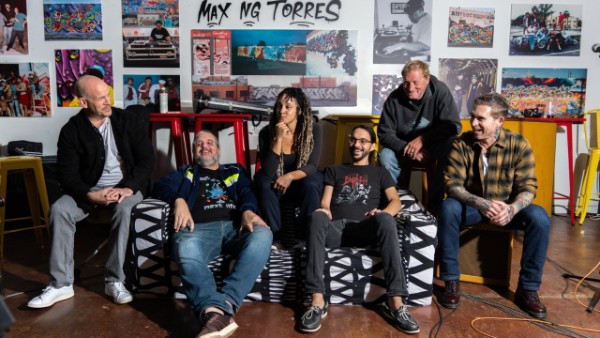
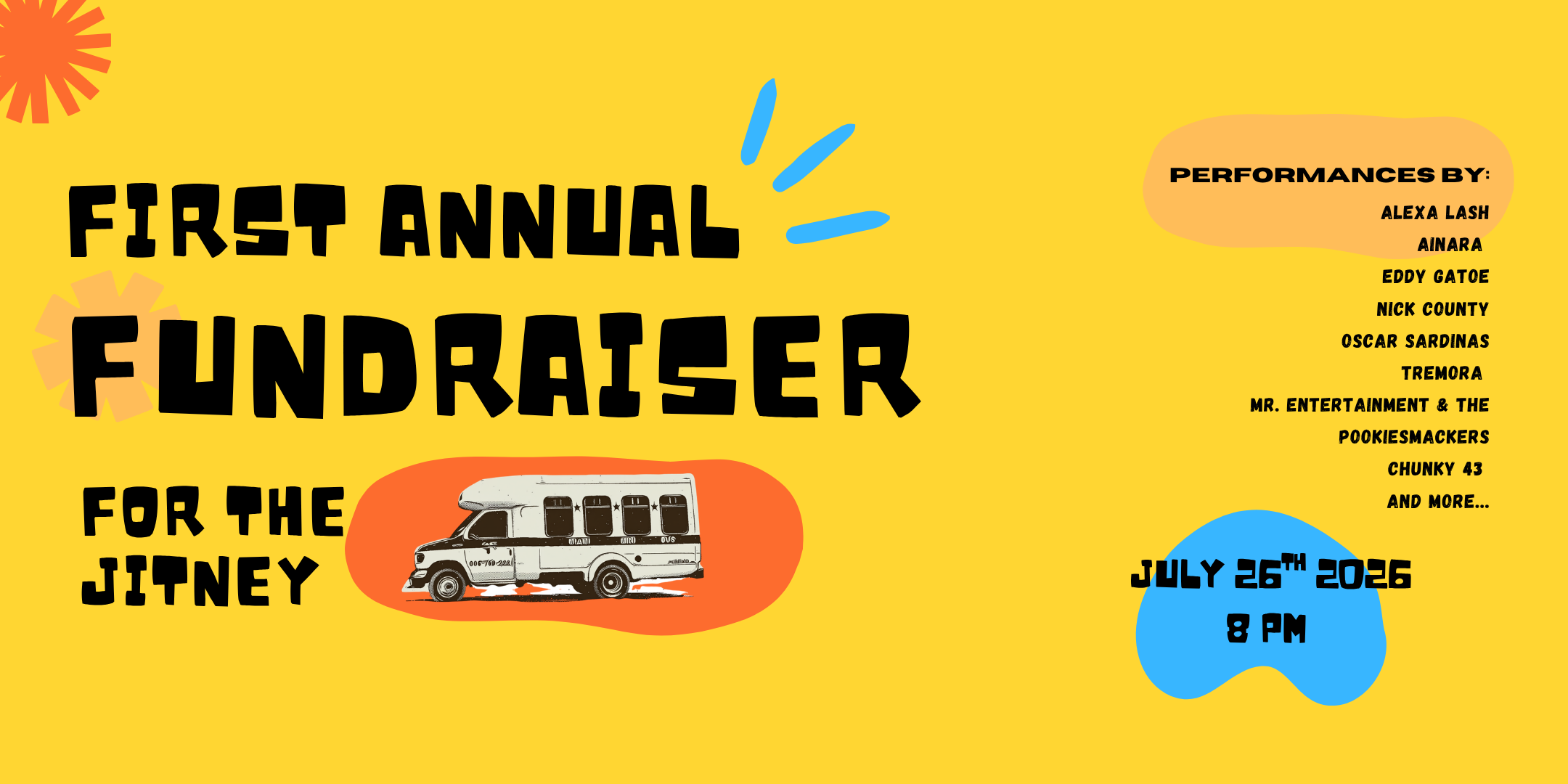
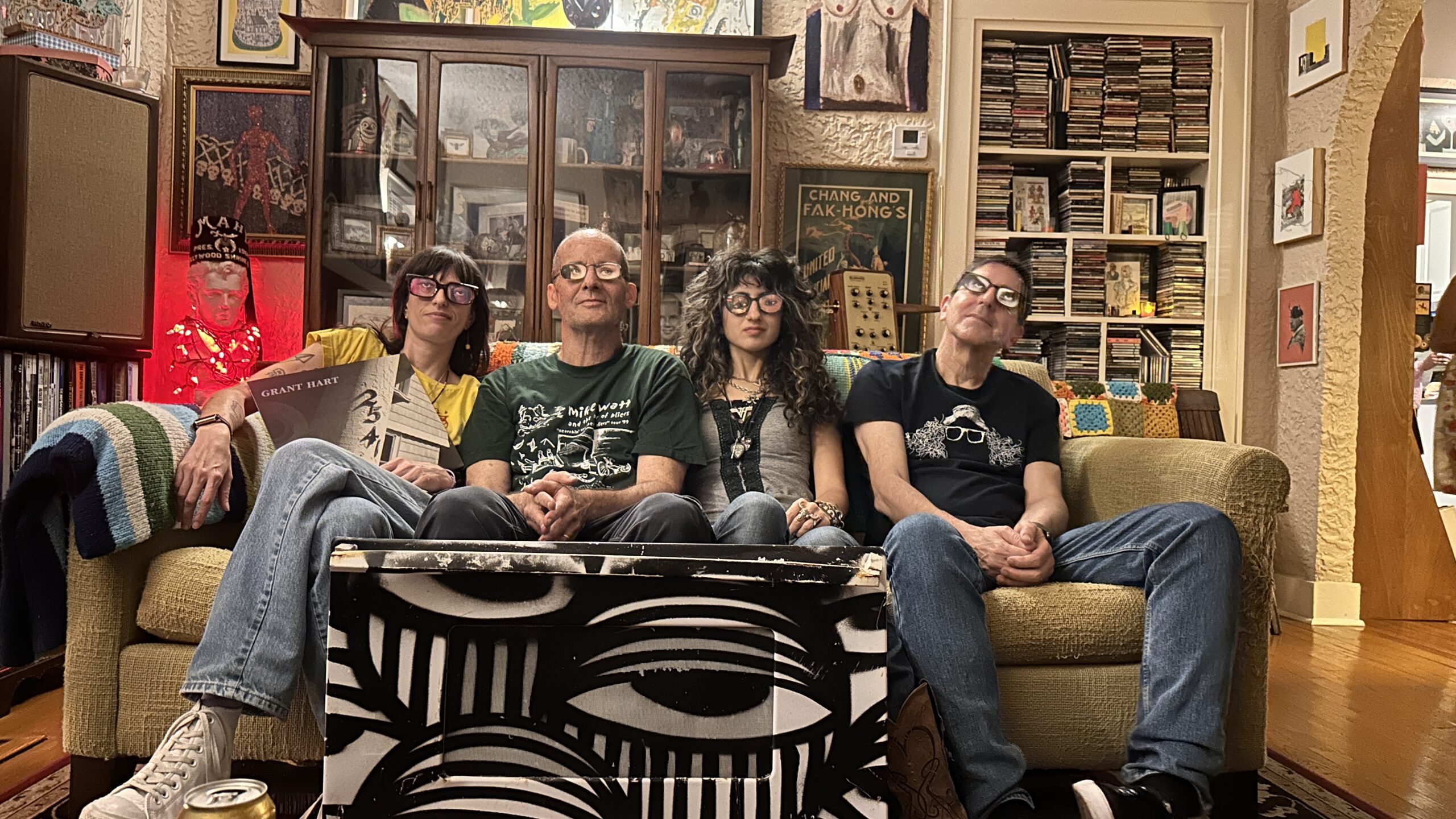
    Sunday, July 26, 2026 was a magical night for all that stepped foot in the Little Haiti dive bar landmark, Churchill’s Pub. It was the site of the first (and hopefully) annual Jitney Fundraiser concert. The evening that went into the early morning featured eight local bands including Alexa Lash, Ainara, Eddy Gatoe, Nick County, Oscar Sardiñas, Tremora, Chunky 43, and Mr. Entertainment & The Pookiesmackers. The festivities were hosted by local comedy legend Paula Barros and was attended by the greatest gang any South Florida book publishing house/ literary website could ever ask for. Thank you for all those wonderful people that hopped aboard The Jitney!

    If you couldn’t make it, here’s some of the footage from that magical night.

    Mr. Entertainment & The Pookiesmackers

    Alexa Lash

    Ainara


  • The Legend of Jersey Jim

    The Legend of Jersey Jim

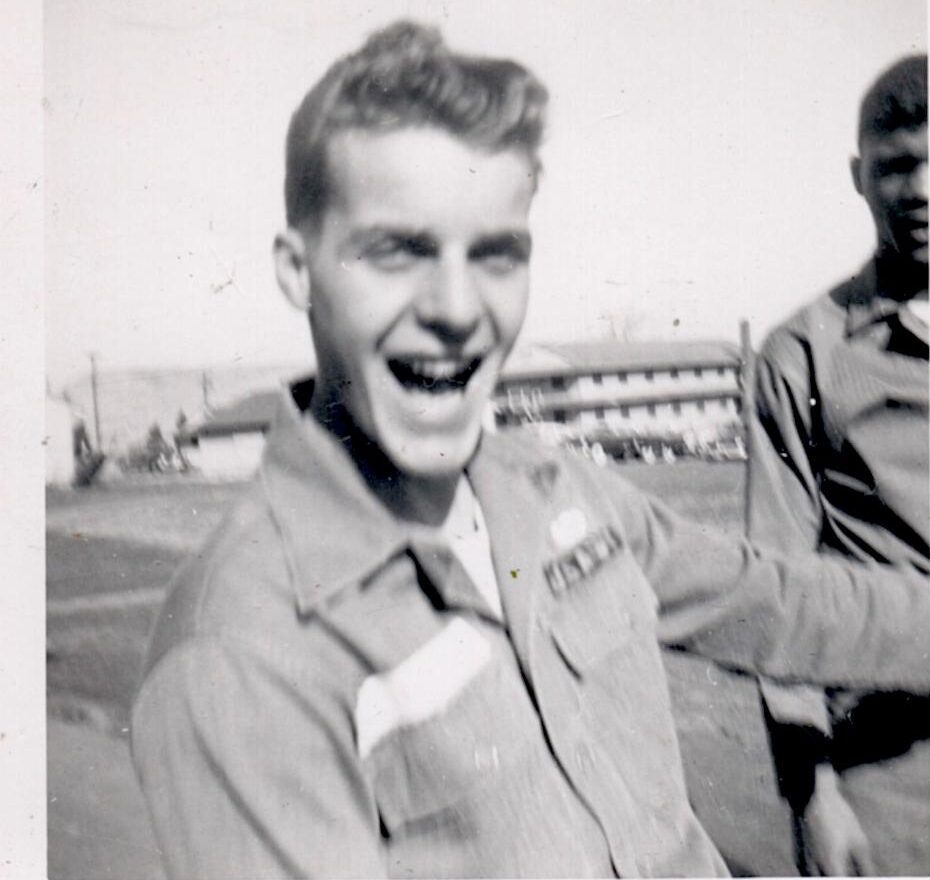
    What makes a legend? Who really are heroes? Why do we fight wars? Who really wins? These are all questions we may never come up with the answer to. I am going to tell the legend of Jersey Jim. See, he grew up as a kid in between world wars knowing his dad fought in “the war to end all wars,” World War I. As he grew he listened to the radio, hearing about World War II and its sounds and battles cries. Eventually he even heard the victory. As he listened, he watched his WWI veteran father crack open a beer before bed every night so he had one ready in the morning to start the cycle again. Is this really the breakfast of champions? The horror of war made his father soulless and the bottle his cure. Jersey Jim was just about 10 when the second war ended. Then came along the movies, news articles, and stories in school about victory and heroes.

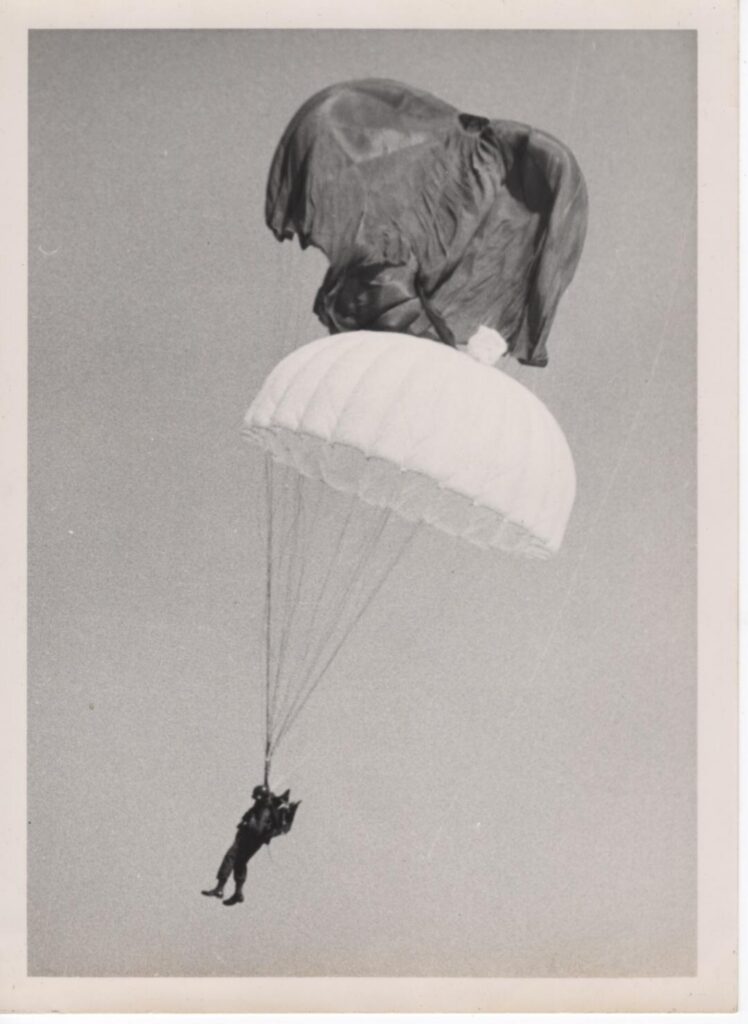
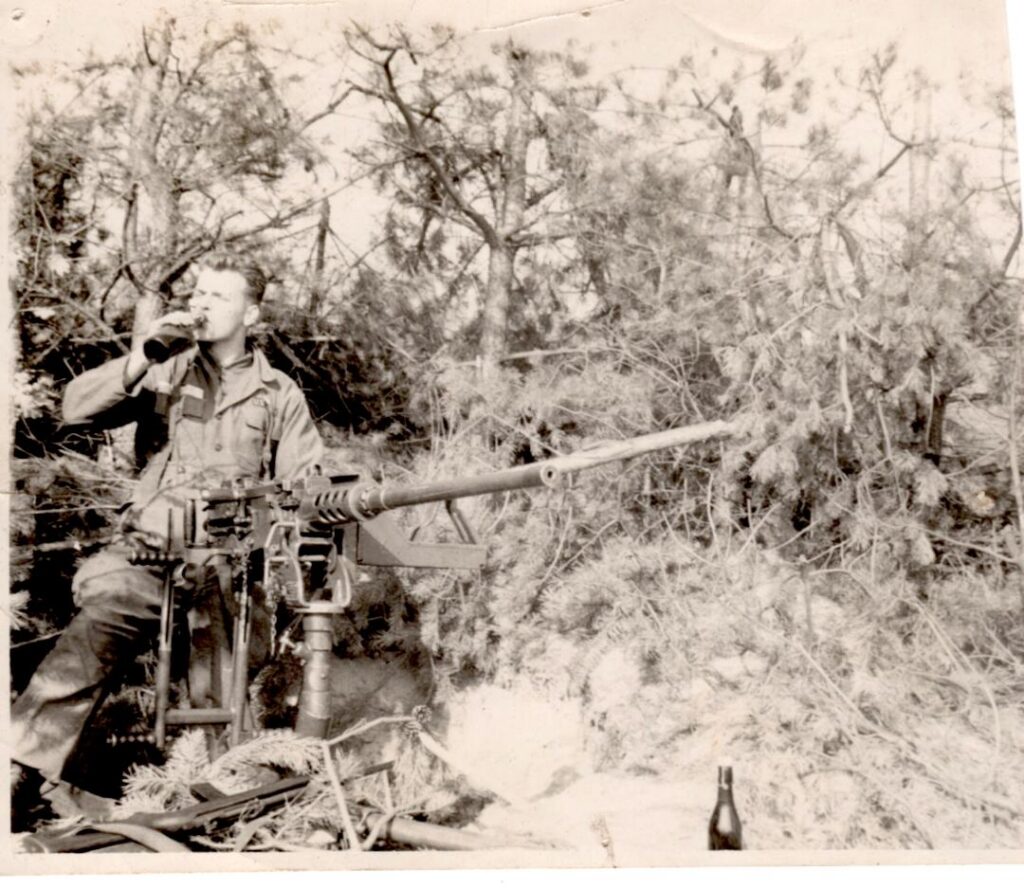
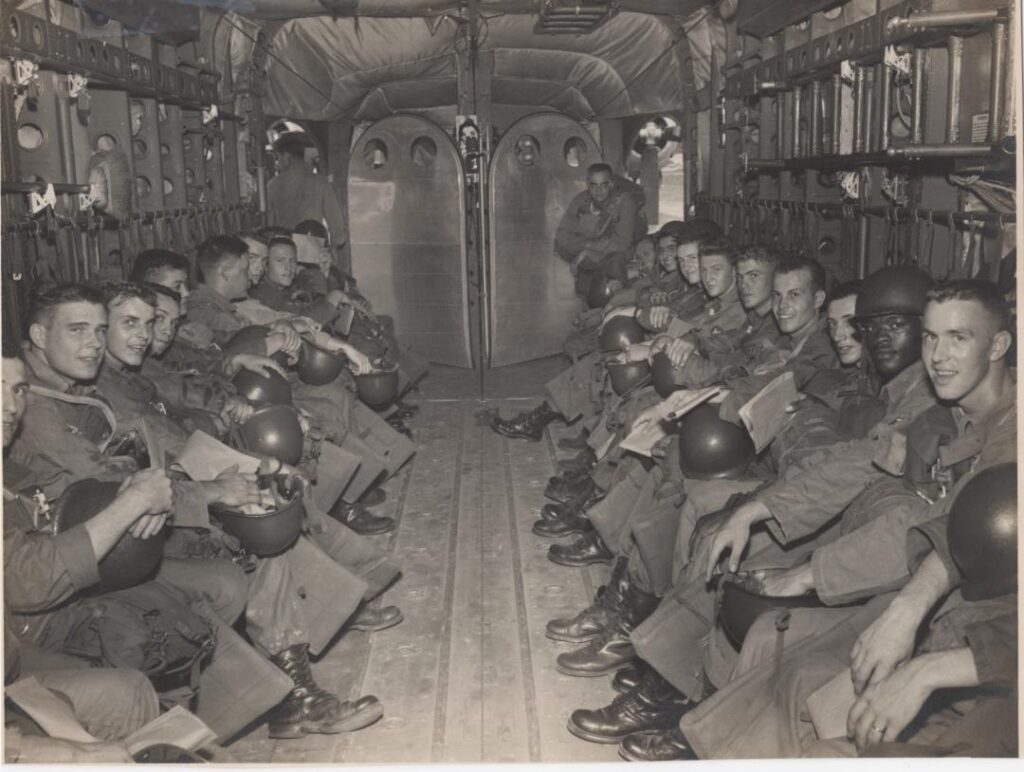
    As Jersey Jim became a teen in post-war America, the country had to pull itself out of the rations and constraints of war. Consumerism and a working middle class was emerging. Jersey Jim went to work at the bowling lanes because school just wasn’t for him, then he decided to join the army. He went from Paterson to Fort Bragg to be in the 82nd Airborne. The 82nd was the paratrooper division where they taught you to jump out of airplanes – and if you were lucky enough to not get picked off on your way down, you just may hit the ground safely. They even trained to land by jumping off the second floor of the barracks, sans chute. Lucky for him the war had passed him by. Once it isn’t a story or a movie, war doesn’t seem that much fun at all.

    We have been in combat so many times since then and lost thousands of lives. Fighting war has changed over the years, from ground combat, to more air assaults, to drone strikes now. Through these times no one on the ground has painted a pretty picture of it all, and rarely nowadays do we get adequate reporting or images from the media. Over half a million people have died in the Russian invasion of Ukraine. Our military bases in the Middle East have been targeted repeatedly, with not much information known about the destruction. War just seems to be about money, occupation, real estate, power, control, and a line in the sand. It just nullifies the word humankind.

    Well, Jersey Jim did his three years in the army in America and then some time in Europe just training. It was during peacetime – lucky for him. He came home and moved to Florida just before we started messing around in Vietnam. He met his match and started a family. He got a good union job that you could keep a long time and eventually get a pension. He didn’t have to fight in no war. Oh but he loved his war films. The Sands of Iwo Jima, The Dirty Dozen, and From Here To Eternity, watching them while longing to be a war hero.

    Jersey Jim was my dad. Later in life I took care of him, made him a different type of legend as “Duplex Planet Dad,” and eventually he was accepted into a Veterans Nursing Home. He enjoyed those last few years of his life. His real battles in life with things like alcohol, smoking, and gambling were mostly conquered. The one that took him though was COVID 19. It also took about a dozen other vets at the nursing home. See, our president was nonchalant about the seriousness of this virus, and the state’s governor was just worried about opening up commerce and remained skeptical of the illness, its spread, and the vaccine. The governor’s promises of testing the vets at the center were late or missed, and opened the window for a bunch of guys to get COVID. By October 2020, 10% of the residents died and so did some of the staff who were not at fault. Sometimes the battle we finally lose is one our own government may have had a hand in.

    I wrote a song about him right after he passed but I put it on the back burner. Earlier this year when the U.S. helped Israel invade Iran, I heard the 82nd Airborne was called up to go to the Middle East. It made me revisit the song and have the realization about how anti-war it was. The band helped me quickly get it ready, and one of my students who made a previous video for us helped shoot and edit it. The video is here for viewing and it just might become legendary.

    Jersey Jim was a jumper in the 82nd Airborne. “Jersey Jim” the video stars Mr. Entertainment, Nikki Nico, MLE and Johnny Mahone. Directed, shot and edited by Owen Ortiz.

  • Tremora at The Jitney Fundraising Concert

    Tremora at The Jitney Fundraising Concert

    Come out to Churchill’s at 8 pm Sunday, July 26 for the first annual Jitney Fundraising Concert. Get your tickets here because this isn’t going to be an old fashioned PBS telethon. We’re looking to throw a great rock concert with many of the finest and most fun musicians South Florida has to offer.  Among the fantastic musicians playing are one of our favorite new bands, Tremora.

    If you can’t make it to the event, please donate what you can. The Jitney needs gas. In this case, gas means labor. Every $150 we raise buys us ten hours of labor to hire a team for sales and marketing. As far as our fundraiser concert? It’s a labor of love.

    Here’s an exclusive interview with Tremora, as they jump on The Jitney.

    How would you describe your music?

    We usually describe our sound as alternative soul/rock revival. A blend of indie rock, soul, blues, and psychedelic influences brought to life with horns, violin, and a lot of dynamics. We love artists who aren’t afraid to be emotionally honest and sonically adventurous. If you need reference points, think somewhere in the world of The Black Keys, Alabama Shakes, The Dip, St. Paul & The Broken Bones, among many more; but with a sound that’s distinctly our own.

    How has your sound evolved over time? Or the last couple of years?

    We’ve become a lot more intentional. Early on, we were discovering who we were. Now every song starts with one question: Does this make us feel something? We’ve leaned into the things that make Tremora unique: live musicianship, orchestration, space, and emotion, instead of chasing trends. The songs have become more confident and more cinematic.

    What can people expect from this particular performance?

    A show that feels alive. We don’t approach our performances like a bar gig. We want every song to have its own arc. Expect horns, violin, moments that are loud, moments that are intimate, and hopefully a room full of people leaving feeling a little different than when they walked in.

    How has Miami shaped your music? And who are some of your favorite local bands?

    Miami teaches you not to stay in one lane. You grow up hearing Latin music, rock, funk, jazz, soul, hip-hop, and electronic music all in the same week, and that naturally finds its way into what we do. There’s an incredible amount of talent here, and one of the best parts of being part of the scene is seeing so many musicians pushing each other forward.

    To answer more directly: some of our favorite local artists consist of the ones we will be sharing the stage with at Churchill’s.

    What song should a first-time listener hear first?

    I’d probably point them to “Summer in a Suitcase.” It captures where Tremora is today: melodic, soulful, nostalgic, and full of the textures that define our sound.


    What’s next after this show?

    More music. We’re continuing to release original material while expanding the live experience. Every new song feels like another piece of the world we’re building, and we’re excited to get it in front of more people.

    Describe your music in three words.

    Dynamic. Soulful. Unforgettable.

    Finish this sentence: The Miami Music Scene is…

    full of world-class talent that’s only beginning to get the recognition it deserves.

    Tremora at Jitney Concert. Come out to Churchill’s at 8 pm Sunday, July 26 for the first annual Jitney Fundraising Concert. Get your tickets here.

  • Ainara at the Jitney Fundraising Concert

    Ainara at the Jitney Fundraising Concert

    Come out to Churchill’s at 8 pm Sunday, July 26 for the first annual Jitney Fundraising Concert. Get your tickets now here because this isn’t going to be an old fashioned PBS telethon. We’re looking to throw a great rock concert with many of the finest and most fun musicians South Florida has to offer.  Among the fantastic musicians playing is Ainara who hopped on to The Jitney to answer some of our questions.

    How would you describe your music? Genre? Influences? Comparable bands?

    Ainara: My music is the weekend trip you take with close friends after not seeing each other for a stretch of time. There a lot of storytelling, some tomfoolery, and honesty that comes closeness. I’ve been saying Americana when it comes to genres, but my background is heavily influenced by classic rock, classical music, and 90/2000’s alternative. I find myself getting comparisons to HAIM, Shania Twain, Alanis Morissette, and Fleetwood Mac.

    How has your sound evolved over time? Or the last couple of years?

    My sound is more sure of itself. A lot of that developed more with time on the guitar. Once I started to live in the progression then I could really play with my melodies and explore more there. I also attribute collaborations to expanding my willingness to experiment and create something that may not be traditional, but still meaning.  

    What can people expect from this particular performance?

    As a duo performance, folks can expect some fun interplay between electric and acoustic guitars, songs that invite you to sing, and a couple quirky friends having a great time sharing a full project that’s taken over a year to complete.

    How has Miami shaped your music? And who are some of your favorite local bands?

    Miami is like a record store in that, if you look hard enough, you’ll find most all music being performed. Mariachi, Cumbia, Miami Bass, Trip hop, Jazz, bluegrass, hardcore, singer-songwriter and more. All that to say, what Miami cares about is you doing something with your full heart and doing it well. We are a city where real recognizes real, and even then you’ll likely not hear applause, see a tip, or get people to stop talking at some venues. So you’ve gotta do what you love with your full heart, you’re the first listener. Local bands that I’ve been keeping up with is quite an extensive list: Tess Grey, Alexa and the Old Fashioneds, TWYN, VVILHELM, theLAB, Viloria, Homicide Jenny, Anemoia, Tremora, Eddy Gatoe, The Reverie, ABANDWAITINGONANAME, Juke, and it goes on.

    What’s next after this show?

    The album is getting mastered now, my cover artist just sent me an update of the work and planning the release! So that and maybe a little east coast exploration. 

    Describe your music in three words.

    Cinematic, fun, and earnest.

    Finish this sentence: “The Miami music scene is __________.”

    blooming!

  • Chunky43 at The Jitney Fundraising Concert

    Chunky43 at The Jitney Fundraising Concert

    Come out to Churchill’s at 8 pm Sunday, July 26 for the first annual Jitney Fundraising Concert. Get your tickets here because this isn’t going to be an old fashioned PBS telethon. We’re looking to throw a great rock concert with many of the finest and most fun musicians South Florida has to offer.  Among the fantastic musicians playing are one of our favorite new bands, Chunky43.

    If you can’t make it to the event, please donate what you can. The Jitney needs gas. In this case, gas means labor. Every $150 we raise buys us ten hours of labor to hire a team for sales and marketing. As far as our fundraiser concert? It’s a labor of love.

    Here’s an exclusive interview with Chunky43, as they jump on The Jitney.

    How would you describe your music? Genre? Influences? Comparable bands?

    We blend hardcore and post-punk to create quirky and gritty punk rock songs.

    And we are inspired by the punk and post-punk bands we have been listening to all our lives. We kind of sound like Minor Threat, the Queers, and Wire if you put them in a blender. Maybe not…

    How has your sound evolved over time?

    Our earlier stuff is more straight punk rock. The newer material lends itself to have more post-punk sensibilities. Our creative process is non-linear, so we go back and forth, and side to side when writing songs. And if Alvaro likes it, it’s a song.

    What can people expect from this particular performance?

    Two dudes with two instruments making a lot of noise. Energy!

    How has Miami shaped your music? And who are some of your favorite local bands?

    I guess the absurdity of life in Miami has made our music somewhat ironic. Load, Kreamy ‘Lectric Santa, Cavity, and Against All Authority are on top of the list.

    What song should a first-time listener hear first?

    What’s next after this show?

    Continue to play more shows and record more songs. Actually, we are in the process of releasing a 7” with Antilectual Recordings.

    Describe your music in three words?

    Raw, loud, and unapologetic.

    Finish this sentence: “The Miami music scene is ___

    Underrated.

    Chunky43 at Jitney Concert. Come out to Churchill’s at 8 pm Sunday, July 26 for the first annual Jitney Fundraising Concert. Get your tickets here.

  • Alexa Lash at the Jitney Fundraising Concert

    Alexa Lash at the Jitney Fundraising Concert

    Come out to Churchill’s at 8 pm Sunday, July 26 for the first annual Jitney Fundraising Concert. Get your tickets now here because this isn’t going to be an old fashioned PBS telethon. We’re looking to throw a great rock concert with many of the finest and most fun musicians South Florida has to offer.  Among the fantastic musicians playing are Alexa Lash.

    You might know Alexa as a talented singer/songwriter or as frontwoman of the great local rock band, Alexa & The Old-Fashioneds. Or perhaps you read some of her many contributions to The Jitney. Either way you’re about to get to know Alexa a little better as she hopped on The Jitney to answer some of our questions.

    How would you describe your music? Genre? Influences? Comparable bands?

    Alexa Lash: My music is an eclectic mix of rock, pop, blues, folk, musical, spoken word and off-the-beaten path that is mostly grounded in my unique voice. My solo work is often bucketed into genres like “singer-songwriter”, “folk” and “pop” but as I’ve grown as an artist and developed music with others in the community, I’ve found a comfort in being genre-agnostic. It also, like with everything, depends on context. I grew up listening to Alanis Morrisette, Blondie, Michael Jackson, Queen, The Temptations, Helen Reddy, Meatloaf, the Fugees. I worked at a music camp at a Jewish school teaching songs like Donna, Donna (Joan Baez covers it beautifully). And so my influences vary, and now I’d say, as a soloist, I have been compared to Florence Welch, Joan Baez, Janis Joplin, and more; and with the band I’ve gotten compared to a lot of 90s rock outfits since that’s the generation I probably connect with most.

    How has your sound evolved over time?

    I was a musical late bloomer. I’ve sang since elementary school, even written little songs before I ever picked up an instrument. So these last ten years as I’ve delved into songwriting, it’s evolved with every chord I’ve learned, or musician I’ve had the pleasure of playing beside. I wrote a lot about relationships, my broken heart. Now I write about death, anxiety, grief. I talk about how I’m feeling in my lyrics. Family, the ache of trying to understand the world around me. And then of course, there’s the songs in my arsenal about witches and murder. But thematically, I’ve really evolved my writing in ways I never thought possible. The more life I live, the more I have to write about, and I think that’s really what drives me.

    What can people expect from this particular performance?

    To be honest, I don’t know. I think you can expect that I’ll be unapologetically myself, and talk about feelings (a given if you’ve heard any of my music). But I’m still in talks with some of the other performers about ways we might be able to show off collaborative work from the scene. I might preview some songs from a new solo album I’m working on. I might play songs from my band, Alexa & the Old-Fashioneds. Might bring out the piano or the ukulele. Whatever happens, it’ll likely be a showcase of my voice and lyrics. But like with everything else in my life, I’ve stopped over planning.

    How has Miami shaped your music? And who are some of your favorite local bands?

    Well, I was born and raised in North Miami Beach. I write about Miami a lot. I write for Miami a lot. I think music in Miami has confirmed that my unique style may stand out like an adorably sore thumb, but it contributes to the diverse fabric that makes up the sounds of the city. I’m one small voice among so many styles that exist here.

    Some of my favorite local bands are the ones I sort of grew up with during the open mic days of pre-pandemic Churchill’s: Folktale San Pedro, Afrobeta, Yardij, Las Nubes, the Cornerstoners. Aside from the bands, there are a whole lot of singer-songwriters I love here which, I won’t start listing because I know I’m going to forget someone and I’m going to feel bad about it. And the laundry list of friends who have bands is getting longer by the day, including Jacuzzi Fuzz, Tremora, Condors & Chaos, and the Microplastics. Everyone is so different and talented and sweet. I’m just grateful to know them.

    What song should a first-time listener hear first?

    So from my solo work, probably Baked Apples. It’s about my grandma and I know a lot of people love it. From my band project, probably Murder in the Basement (Eat You Alive), because it’s so jarringly different from the box I’ve been readily pigeon-holed in:


    What’s next after this show?

    After this show, I’m prepping for two major releases. The big one. The Alexa & the Old-Fashioneds band album is done. I’m continuing to release singles from it over the next several months, but that full album is coming out at the end of the year. It’s finished, mastered, ready and I’m so excited for it. I’ve also been working on an album about grief, which is slated to also be released this year as my last major solo project of 2026. The titles for both projects will be announced soon, but the grief release will be a highly personal delve into loss and has proven to be a really emotional and healing process in its development.

    Describe your music in three words?

    Emotional. Narrative. Unexpected.

    Finish this sentence: “The Miami music scene is __________.”

    The Miami music scene is a mango tree, a community of roots and trunks and branches that can give off the sweetest fruit, whether falling into your lap or being plucked or being shared in buckets with neighbors. We are bruised, colorful, and strangely shaped. We are just, all trying to understand what community means to us, and continuously working toward putting egos aside to try and build it.

  • Mr. Entertainment and The Pookiesmackers at the Jitney Fundraising Concert

    Mr. Entertainment and The Pookiesmackers at the Jitney Fundraising Concert

    Come out to Churchill’s at 8 pm Sunday, July 26 for the first annual Jitney Fundraising Concert. Get your tickets now here because this isn’t going to be an old fashioned PBS telethon. We’re looking to throw a great rock concert with many of the finest and most fun musicians South Florida has to offer.  Among the fantastic musicians playing are Mr. Entertainment and the Pookiesmackers.

    You might know Mr. Entertainment and the Pookiesmackers from The Best of Miami, where they were rewarded the best songwriter award this year. Hear them live at our concert and check out our interview.

    Mr. Entertainment and the Pookiesmackers

    How would you describe your music? Genre? Influences? Comparable bands?

    Our genre = Good. Influences = Minutemen, Television, Lou Reed, Richard Hell. Comparable Bands = The Clash, the Velvet Underground, the Fugs

    How has your sound evolved over time? Or the last couple of years?

    More silly then and now darker humor, more keys and synths now and more space between the notes now.

    What can people expect from this particular performance?

    To laugh, to cry, to cry laughing.

    How has Miami shaped your music? And who are some of your favorite local bands?

    My wife said we aren’t Southern Gothic but Tropical Gothic.

    Favorite local bands, The Eat, The Chichlids, Kreamy ‘lectric Santa, Holy Terrors, Harry Pussy, Humbert, Las Nubes 

    What song should a first-time listener hear first? (can you include a link to spotify of song)

    Midnight Turned Straight Into Noon

    What’s next after this show?

    More shows, more records, more videos

    Describe your music in three words?

    Fuck You Fascist

    Finish this sentence: “The Miami music scene is __________.”

    underpaid