Category: Music

  • Time for Better Days

    Time for Better Days

    There’s a single incident that motivates a lot of my new album, Better Days.

    Senior year at Miami Killian I got into my first “serious” (for high school) relationship with a girl named Vero. Vero had a friend named Karen and I had a friend named Justin and when Justin and Karen met one day and started dating, we thought this was the most amazing goddamn thing on the planet. And it was fun for a couple of months, until the day Justin and Karen were painting his room and Justin’s cousin Jonathan came over and beat them both to death with a baseball bat.

    We were there that day, Vero and I, just after the murders took place. Standing not inside the house but out front, knocking on the door and wondering why our friends wouldn’t open up even though twenty minutes ago they were the ones who invited us over for spaghetti. We wouldn’t find out about their deaths until later when the news broke on TV, after we’d already left Justin’s house pissed that they’d bailed on us. It would be another couple months before we found out Justin’s cousin was on the other side of the door that afternoon while we were knocking, standing amidst the carnage with the bat in his hands, waiting.

    I still sometimes have this recurring nightmare of knocking at that front door, only in the dream the door opens and before I can react the bat hits me right in the face.

    This all happened almost twenty-five years ago, which is long enough now that I feel obligated to say the phrase “a different time.” The memories of back then are dream-like, the edges of the pictures frayed, specific details buried beneath years of layered synapses. I’m guessing if you were in or around Miami at the time you might remember the story, but I wouldn’t fault you if you didn’t.

    Crazy shit’s always going down in Dade County, right? Dalé.

    Growing up in Miami is odd because much of what this city is and what it represents is not meant for children. Mine’s was not a unique experience; talk to most people who grew up down here and you’ll hear any number of crazy stories that would lead to pearl-clutching amongst the residents of smaller, less crowded towns. I used this rationalization back then to force myself to move on from the murders, vowing not to make this the defining moment in my life. I’d just started as a freshman at FIU a few months before, on a computer science scholarship. I was eighteen, whole life ahead of me.

    By the following summer I’d lost my scholarship and landed on academic probation after two semesters of failing all but one class (Calculus, shit you not).

    Following a tense meeting between myself, my parents and my advisor, I wasn’t too keen on going back to school. In fact, I was perfectly fine spending afternoons serving tables and nights getting drunk with my coworkers before inevitably passing out somewhere in a dreamless stupor. So that’s exactly what I did, for over a year.

    The next summer I had a sit-down at a Barnes and Noble with a friend who was worried about me and she suggested I try writing about what was going on in my head. Get the thoughts out so I could maybe see them clearer, organize them better. So I did. Within a couple of months I was enrolled at Miami Dade College (it was still Miami Dade Community College back then) as a Journalism major, and within two years I had my associate’s degree and an acceptance letter to Florida State University. In my personal statement for my application I mentioned what had happened to Justin and Karen, a sheepish justification for all those F’s on my freshman transcript.

    At FSU, I majored in English with a Creative Writing track which required a few writing workshops. In one, I wrote a first-person essay about Justin and Karen’s murders, beginning in the hours leading up to their deaths and ending after my testimony at their killer’s trial in which I was asked to identify the victims in pictures of their dead bodies. It was the first time I’d really sat down and examined what happened to them in any detail, and the draft I submitted for workshop was way too long and way too self-involved. I vividly remember how I felt coming in to class the day my story was up for critique, the butt-clenching fear looking around the room at these literary wolves waiting to technically rip the essay apart the way they had already done to a few of our classmates (senior- and graduate-level writing workshops are brutal).

    Instead, I received (along with uncomfortable and discomforting stares) some genuinely good advice on how to make the story clearer and easier to read.

    Back at my laptop, I used the notes to rewrite the essay and—at the urging of my professor—submitted it for a department writing competition in which I took first place. The next semester I submitted the essay as part of my graduate school application, which is how I ended up with a master’s degree and a teaching career.

    And for a lot of those years, that shit ate at me.

    The idea that I had let happen exactly what I’d told myself I would not let happen. My entire career hinging on me writing about my friends’ murders. Death becoming the catalyst of my life.

    I don’t remember when I first heard the term “imposter syndrome,” but I remember immediately identifying with it, like that meme of DiCaprio from Once Upon a Time in Hollywood sitting on a couch holding a cigarette and a beer, pointing wide-eyed at the TV. Felt it in and after grad school, felt it when I landed a Managing Editor gig in Manhattan (sounds more glamorous than it was), felt it when I got the teaching position I currently hold at my alma mater, and felt it most recently when I published my first novel, Riders in Disguise (a Jitney publication).

    The only thing that’s ever quieted these internal objections is writing more. More articles, more short stories, more novels. And not just writing, no. Anything that took both time and creative energy. Spent a whole summer making an ad for the unpublished novel I wrote as my graduate thesis, an ad that at one point featured me in my underwear pretending to be drunk on my bedroom floor (this video has mysteriously vanished). Bought my first guitar in graduate school and am now fairly competent (people who’ve heard me play know “competent” is doing a lot of work there). Tried to start a blogging series, three articles a week, made it a couple of months before that shit got old. Spent a decade working on Riders in Disguise, part of a planned trilogy. Got on GarageBand and made some beats, which led to some lyrics, which turned into Autonomous Entity and a couple of albums, the newest of which is why I’m writing this essay (Better Days, December 13th). All while adhering to this addictive routine that always required a project, a creative process, an external purpose. A mental back scratcher, the sharper the prongs the better. Or a factory, cranking out products with the primary goal of just keeping those machines running.

    The mechanisms. For coping.

    As many would expect—especially when teenagers are involved—Justin and Karen’s murders were hard on a lot of people, primarily their moms and dads, aunts and uncles, siblings and cousins. However, in the sense of the general population, it’s hard to connect to even the most heinous deaths or the people caught in the ripple effects when you don’t personally know these people. Even harder to connect to the comparatively—for lack of a better term—mundane clashes with mortality.

    An uncle dead from prostate cancer when I was twelve.

    A friend on the way home from school drowning in a canal at sixteen.

    A cousin dead from a rare allergic reaction in his early thirties, the same rare allergic reaction that would kill a friend a couple years later.

    My little sister, dead from Covid at thirty-two.

    Words on a page, I know.

    As an author and Creative Writing professor, I get this. The details of such matters are evergreen, in the way all things mortality-related stay interesting. But once those details are known and the shock value runs its course, nobody wants to stick around for the mental collapses, the lost grips on reality, the disillusionment, the existential dread, the painful and arduous treks through the barren maze that is Grief. Wading through that stuff takes time—that most precious of commodities—and a whole lot of it. And the only way to interest a stranger in something that takes that much time is to present it from a uniquely thoughtful perspective.

    Which takes time.

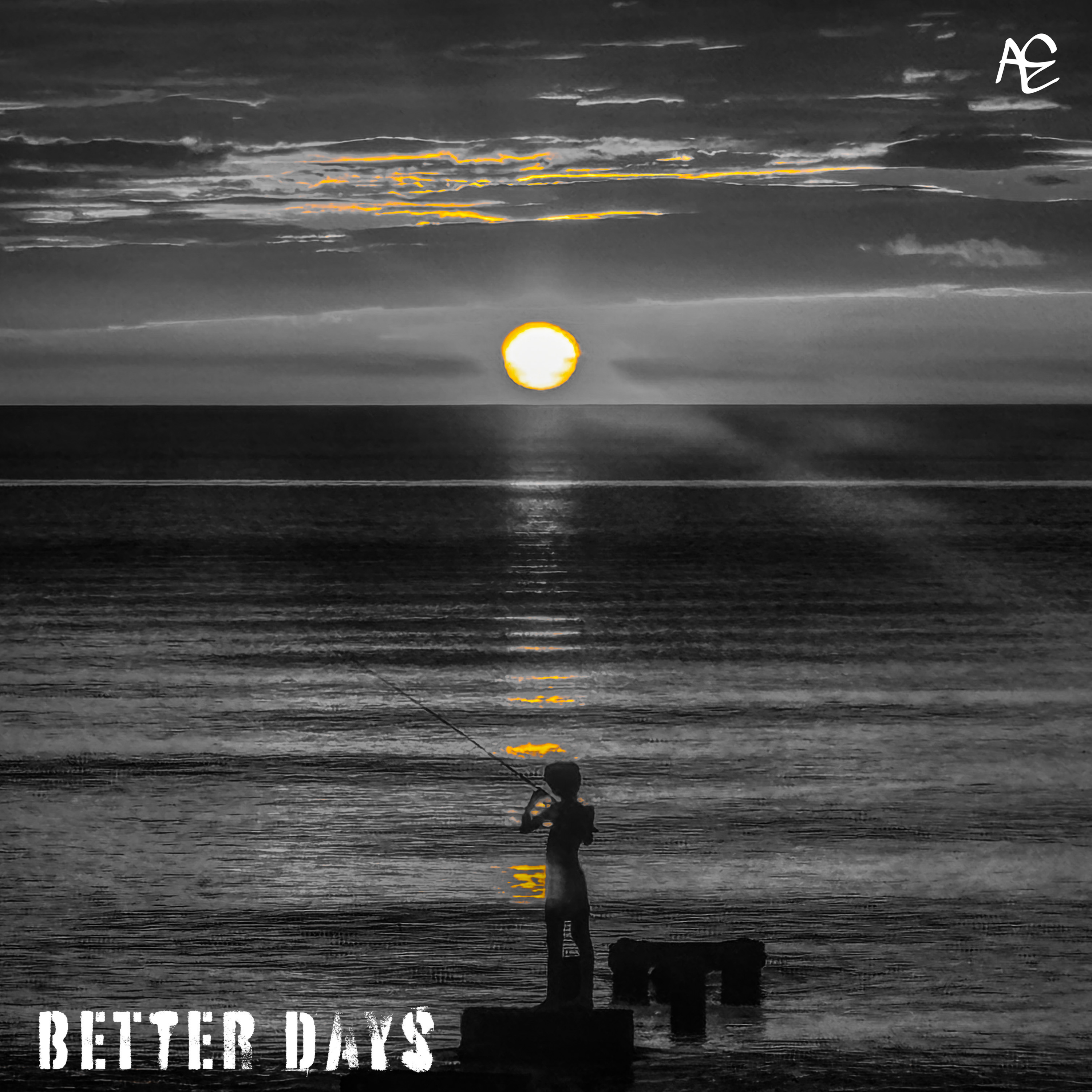
    Better Days is my perspective on time, past and present, good and bad.

    It’s about how time eventually surrounds grief, encapsulating it in a bubble that grows thicker and thicker each day, until you can barely see the scars anymore. It’s for the 40-year-old hip hop enthusiasts who maybe still got some shit from the past they haven’t completely dealt with, and for those who have dealt with their shit but in the process may have forgotten what things were like before. It’s for people who wax nostalgic about life before the internet even though they’ve been in this current state of society for so long the old world seems like a fantasy.

    It’s for the people raised in a crazy city who also didn’t realize how crazy their city was until they met people from much less crazy cities.

    Time does heal all, but the bigger the wound the longer that healing process takes. Half of us can’t even sit through an entire TikTok video, much less a recovery process that’ll take years with no set expiration date.

    That shit? You gotta handle that on your own, bruh.

    Unless…do it got a hook?
  • Miami Space Rock Heavies SUMO Set to Release Third Album

    Miami Space Rock Heavies SUMO Set to Release Third Album

    The vacuum of space is an almost perfect void, where sound cannot travel due to the lack of a medium. In this silent expanse, temperatures vary dramatically depending on exposure to sunlight or shadow; objects in direct sunlight can reach scorching temperatures over 250°F, while those in shadow can plummet to frigid lows near -450°F. This extreme environment, characterized by its silence and thermal extremes, challenges both human exploration and technology.

    But it also inspires imagination.

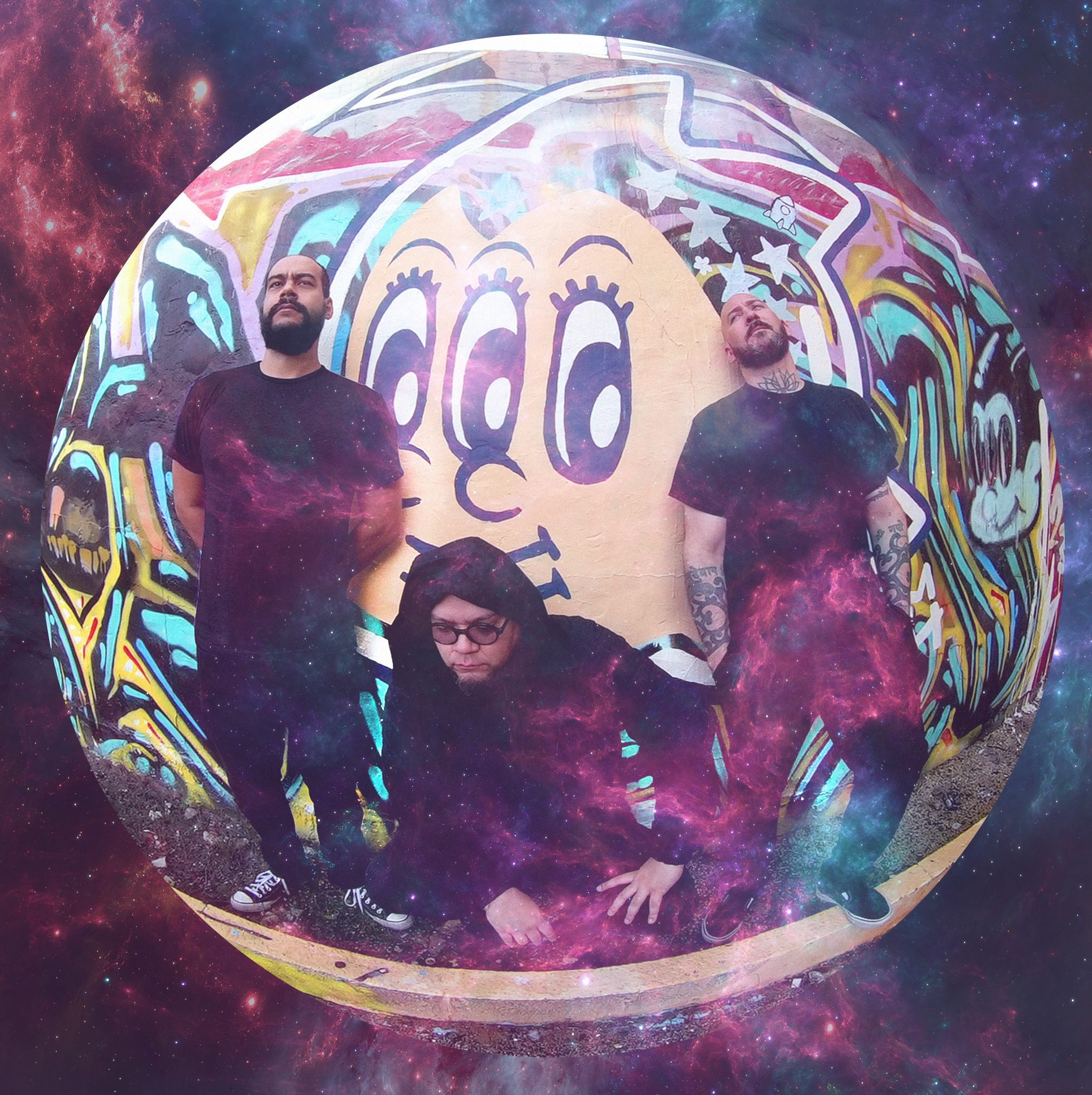
    It’s no mystery that mostly instrumental Miami band SUMO identifies with the most ethereal subgenres of rock n’ roll: post-rock, space Rock, shoegaze, and experimental. Helmed on guitar by Chris Salazar and bassist Amado Ventura, the lineup now counts on Hector Mojena behind the drums.

    Years ago, I referred to the band as a “sum of its parts forever locked in the turbulent cycle of creation and destruction,” a description I continue to stand behind. I continued the description by juxtaposing opposite forces, forces that all makeup the larger canon of science fiction and man’s relationship to space exploration. I can only think of 90’s darlings Failure having a stronger connection to all that lies beyond the stars.

    This time around, I’ll add that in my opinion, they have now surpassed former locals, The Axe & The Oak, as South Florida’s foremost eternal tinkerers. And I say this with the utmost respect for their process and methodology – a friendly jab at the length of time between releases and the few opportunities to see them live during the year. But I guess that if I must take the spirit of outer space into consideration, we haven’t exactly learned how to fold space and hyper jump between stars yet. So patience will be the key.

    SUMO New Album

     SUMO’s upcoming third album, the aptly titled III, drops December 13th and was recorded by Jonathan Nuñez at Sound Artillery Studios. Before we discuss the music, I’d like to point out the creative choices behind the cover’s design. In other releases the band has adhered to style. For the ATMOS EPs, they’ve maintained name placement with backgrounds showing planetary approximation. For their first two albums, they’ve gone with a 60’s vibe that incorporates the labyrinthine look of their logo. For III, I’m getting a weird cross between the Cube movie series, LeMarchand Boxes, and Marvel’s tesseract that can somehow also be a postcard from a beachside town – all that simply from choosing a cursive font for their name. 

    Maybe I’m reading too much into that. I probably am.

    The album takes listeners through an unrelenting sonic odyssey opening with “Alyssa” and then weaving a textured landscape of tonal odes to constellations and galaxies. The journey intensifies as it winds toward the haunting lead single, “Shadow of Antiope,” a track that effortlessly ebbs between feelings of nostalgia and pounding rhythms that rumble with unrestrained heaviness. Easy standouts “Eta Carinae” and “Cygnus” tie it all together after the appropriate disruptions of their micro-homages to the Search for extraterrestrial intelligence (SETI) with “SETI 3” and “SETI 4.”

    Founded in 2013, SUMO has independently released two full-length albums (ONE in 2018 and TWO in 2021) and three ambient singles (the ATMOS series) on their own label, Rikishi Records. All are available on sumomiami.bandcamp.com.

  • Weird Music Night Is Tonight at Satellite Art Show

    Weird Music Night Is Tonight at Satellite Art Show

    Who is John O’Donnell and why go check out Weird Music Night happening at Satellite Art Show?

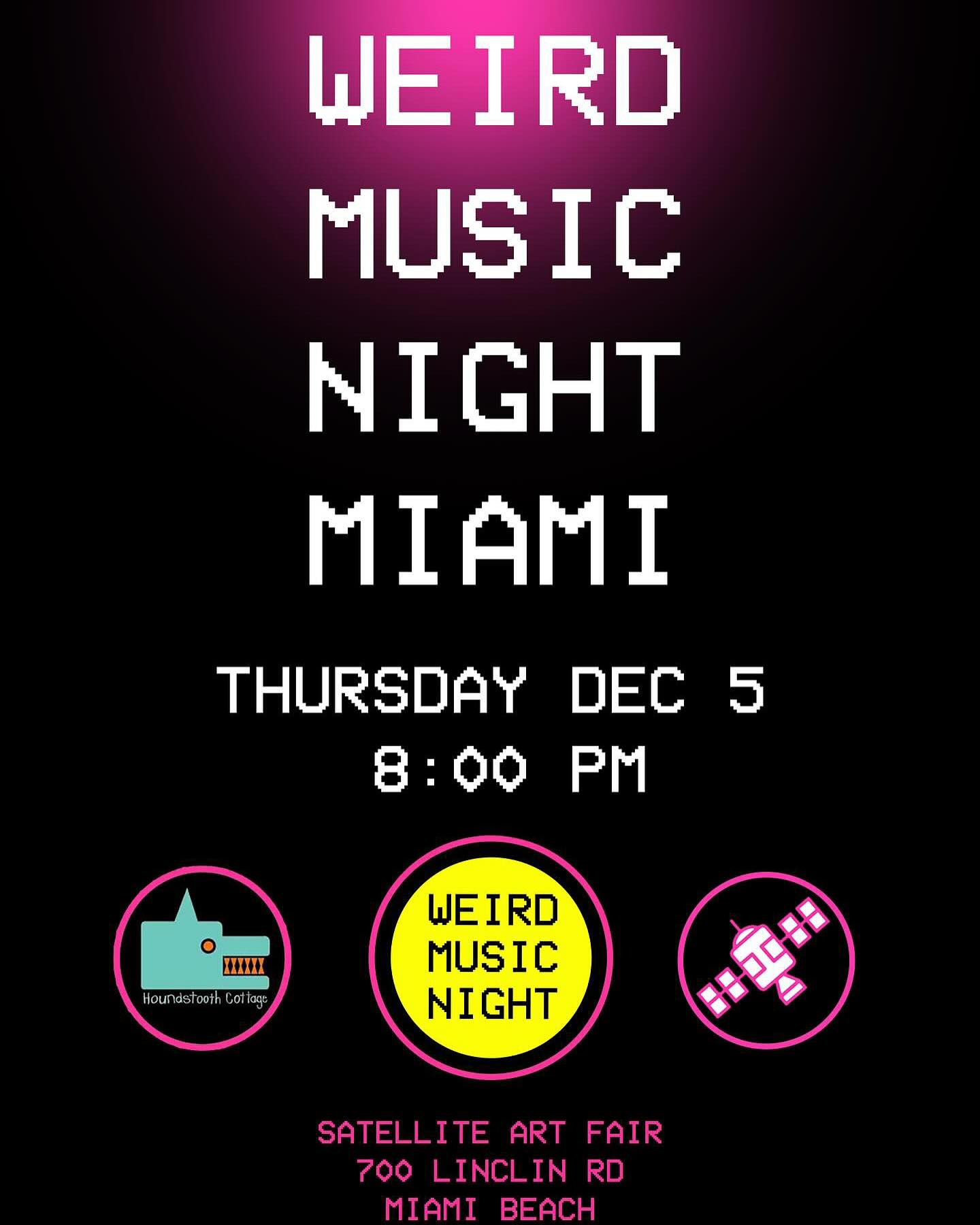
    When you think of Satellite Art Show you find a group of creatives that seem to be from a  fairytale of fantastic creatures. People spiraling from all places set the mood for a breathtaking landscape to experience art.  John O’Donnell who is curating Miami’s Weird Music Night happening at Satellite Art Show at 700 Lincoln Road tonight, Thursday, December 5, hopped on to The Jitney as we got to know a little about his own art practice that stretches you to travel into a continuum that is boundless.

    What made you start  Weird Music Night?

    John O’Donnell: “Weird Music Night” is a monthly event that started at Ely Center of Contemporary Art. The focus is on sound based experiments and performance and puppetry that is activated by sound. Most people in attendance are performers/musicians/puppeteers.

    The concept is inspired by the diverse punk scenes of the 1980’s and the mythology surrounding Japanese noise music.

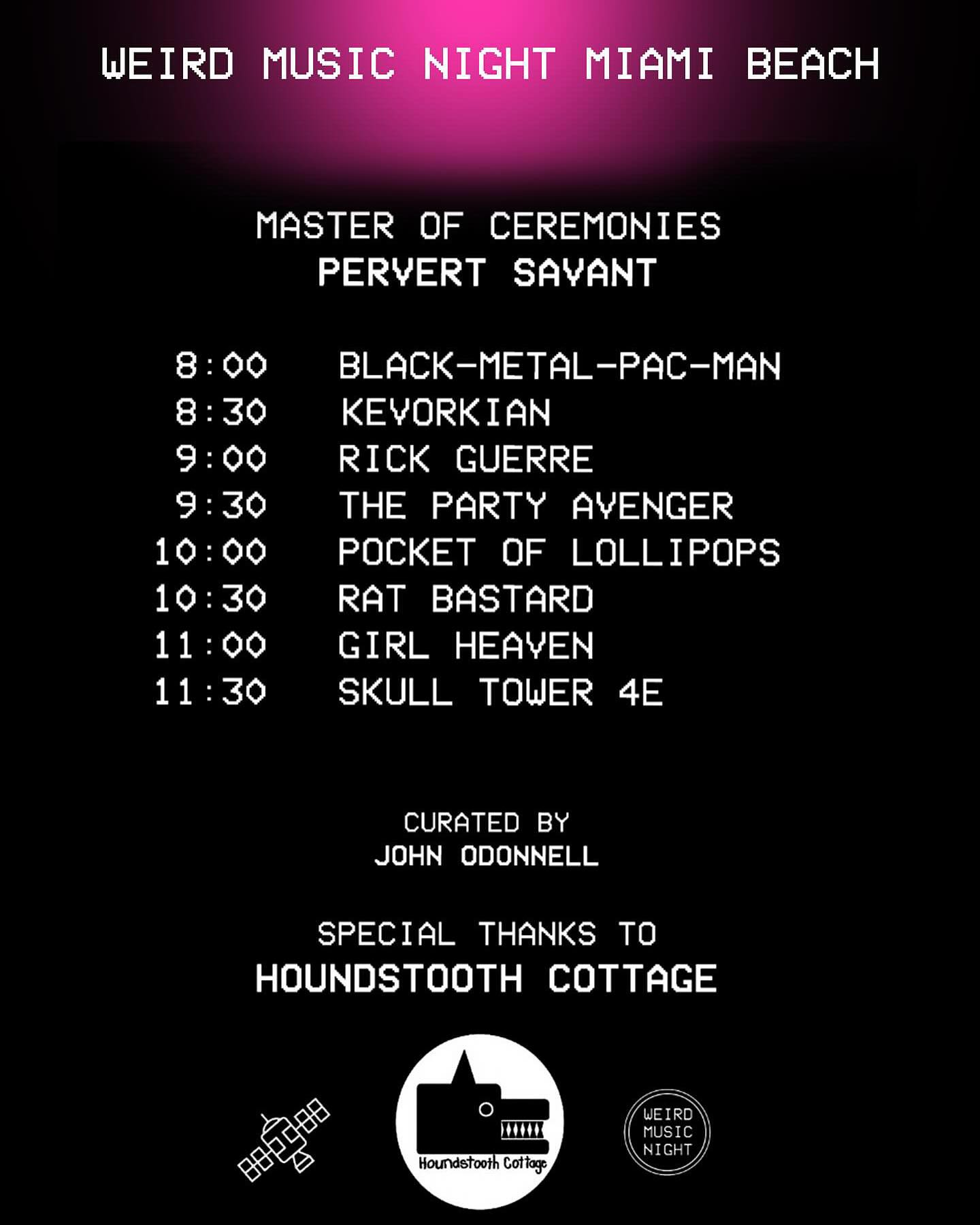
    We know you have gathered some Miami locals to collaborate on your “Weird Music Night” with other members from across the globe. I wanted to share with our audience some facts about your lineup and the event starts promptly at 8pm.  We know one of your performers Girl Heaven recently performed at III Points, but also had a glorious performance under a bridge with a small gathering. Rat Bastard is a legend in Miami, he is  not just known for his guitar he is the Noise King and he created the International Noise conference which happens in Miami every February. Other acts we are excited to see are The Party Avenger and if you know then you know, but if you don’t know you better come to find out. You can also expect Performances by Rick Guerre, Kevorkian,  Pocket Of Lollipops, Black-Metal-Pac-Man, Skull Tower 4E plus I heard a few surprises for the Thursday Dec 5, Satellite after party could pop off at any moment. Well enough about Thursday I have another question. We have looked at your other projects and performances. Can you narrow down what someone should expect, can you talk about some of the characters?

    John O’Donnell (aka Pervert Savant) is a multidisciplinary performance artist and curator whose work explores themes of absurdity, consumerism, and cultural symbolism. Based in Connecticut, O’Donnell’s practice spans performance, installation, and visual art, often blending humor with critical commentary on contemporary pop culture. Drawing inspiration from Dada and Surrealism, his performances—like the upcoming Filet Minion: Banana Horse Meat—use ritualistic actions and iconic imagery to critique how we engage with and assign meaning to mass-produced symbols.

    This ambiguity is central to his artistic vision. Rather than delivering a specific message, O’Donnell’s work acts as a mirror to contemporary society, allowing viewers to project their own understandings and emotions onto it. His use of irony and perpetual innuendo creates a space where cultural critique coexists with humor and spectacle. This is evident in his performances, where he often embodies quirky, surreal characters that reference societal issues in exaggerated, cartoonish ways. By making his work accessible and playful, O’Donnell invites art enthusiasts and casual viewers to engage with his pieces, bridging the gap between high art and everyday entertainment.

    This performance will be shared at Satellite Art Show.

    Can you tell us how you prepare for one of your performances?

    This performance project is a life’s work, it is about life, and it is about the performance of existing as an artist in a capitalist system.  A reason I wanted to commit to such a long and intentional endeavor is because from my experience as an artist and an art educator, I have witnessed dozens of artists dabble in performance and not commit to it long enough the yield the intellectual and cathartic results they anticipated.  I wanted to commit to the life of an artist, I wanted to live a new life span as a reflective and thoughtful artist who followed vision with actions, who designed a path, who embarked on a journey and learned about myself along the way.  I wanted to prove that I was serious about performance art and to oddly “stand up for what I believe in” which is living an examined, creative, and intentional life guided by an ethos of my own design.  Of course, my design is an amalgam of things I have read, seen, heard, and lived.

  • Dan Hosker Music Continuum Is This Sunday

    Dan Hosker Music Continuum Is This Sunday

    This article originally appeared in PureHoney Magazine. Check them out here.

    “Support your scene!” is the battle cry for everyone who appreciates the musicians in their midst, the creative locals that work to make their corner of the world more livable. Rob Elba remembers the scene he stepped into South Florida in the late ’80s, after playing in bands in New York and Boston, as an assemblage of “freaks and outliers” united not by a particular sound or genre, like Seattle or Athens, but by location.

    “The thing with South Florida was just that it was so isolated from the rest of the country,” Elba says. In this geographical bubble, Elba marveled “that anyone had the balls to play original music as opposed to covers.” Yet that’s what was going on from the late ‘70s onward — punks like Elba, metalheads, noise churners and rockers of every stripe doing their own thing for audiences off the radar of many national tours.

    Singer-guitarist Elba and his former Boston bandmate, multi-instrumentalist Dan Hosker, jumped right in. Their comradeship in bands including the Holy Terrors lasted into the new century, and came to a devastating end with Hosker’s death in 2012 after a car accident. Elba saw to it that Hosker’s influence would live on by founding the Dan Hosker Music Continuum, a scholarship fund for high school students pursuing the arts. The centerpiece of DHMC is an annual fundraising (but free-admission) concert in South Florida that celebrates the ragtag, unsinkable, sonically all-over-the-map scene, with Hosker as one of its truest supporters and sustainers — a prolific, roving player in countless bands and projects. “Everybody fucking loved him,” Elba says.

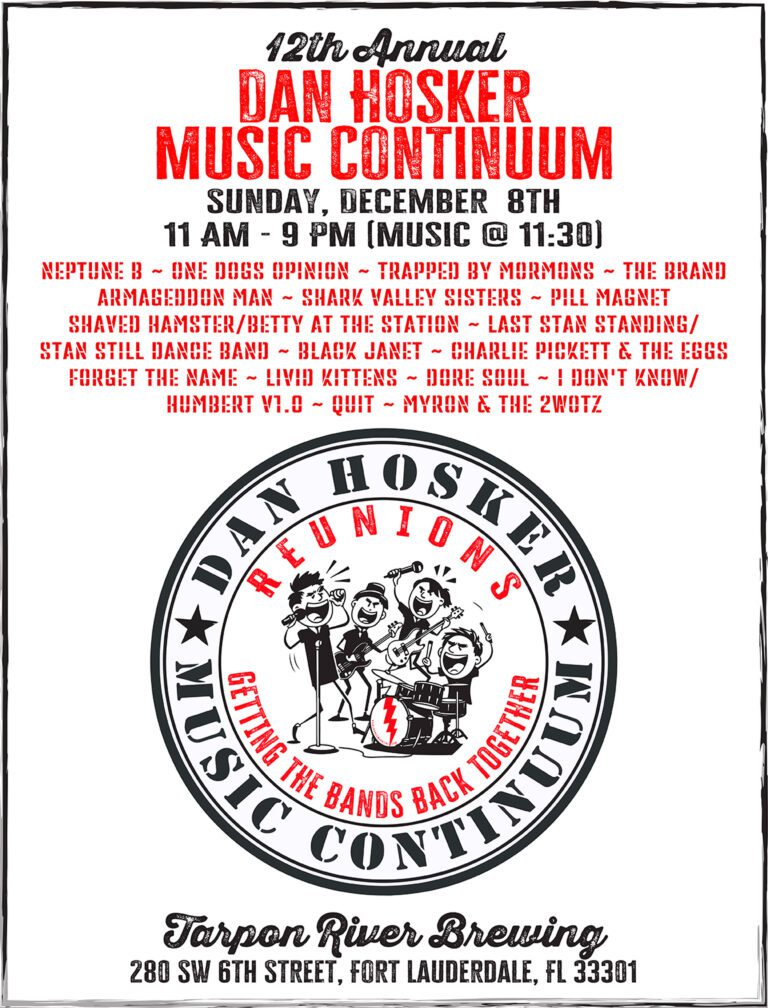
    Elba made one rule for Dan Hosker Music Continuum 12 on December 8 at Tarpon River Bend in Fort Lauderdale:

    It has to be a band reunion; no current groups or ones that never broke up need apply. “Before I knew it, we had 18 bands,” Elba says. Seventeen are playing, making the reunions-only version of DHMC the event’s biggest to date. It’s a CVS receipt of bands that defy genre, space and time all the way back to the late 1970s.

    There’s Forget the Name, who formed in 1984 and had a breakthrough of sorts to everyday South Florida when they featured in an advertisement for the now-defunct Burdines department store chain. There’s Charlie Pickett & the Eggs, the roots-punk combo that was championed by Peter Buck of REM and gained a cult following that persists. There’s Livid Kittens, tri-county mainstays in the 1990s fronted by the vixenish Paige Harvey. Their song “Flying” landed on a CMJ magazine list of 1000 Greatest Indie Rock Songs of All Time in 2004.

    Friends of the Kittens, Pillmagnet are also on board. Featuring previous members of Jack off Jill and Morbid Opera, Pillmagnet played their first show in 1996 at Churchill’s in Miami and put out a cassette-only release produced by Mark O’Toole of Trapped by Mormons, loud, fun garage punkers who will also at DHMC 12.

    I Don’t Know/Humbert V1.0, really the official band of Hialeah, are regrouping, as are punk scorchers Neptune B, fire-breathing swamp rockers One Dog’s Opinion, indie pop combo The Brand, dystopian destructors Armageddon Man, and alt-rock princes Dore Soul.

    There’s Myron & the 2Wotz, from the restless brain of noise-rock maestro Rat Bastard. There’s QUIT, whose skate-punk tracks hit hard 30 years later. Last Stan Standing/Stan Still Dance Band harken back to the scene’s earliest days, while Shaved Hamster/Betty At The Station and Black Janet feature stalwarts of the scene, some still jamming in other outfits. Finally, there’s Shark Valley Sisters, Elba’s post-Terrors outfit with Load drummer Fausto Figueredo.

    Every scene has an ebb and flow that sees new people enter and others step away to tend to life’s responsibilities. Elba lives in Los Angeles and counts himself “happily retired” from band life (DHMC gigs excepted). Some of his peers and forbears are no longer with us, their absences lending to the mythos of bands that are talked about today with high praise and tall tales of good times. “When you’re in it, you’re don’t appreciate how special our scene was,” Elba says. “I’ve never met a more interesting cast of characters.”

    Dan Hosker Music Continuum 12 runs 11am-9pm Sunday, December 8th at Tarpon River Brewing in Fort Lauderdale. Admission is a free, all ages welcome. facebook.com/DanHoskerMusicContinuum

  • Hustle Music: How Hip Hop Turned Struggle into Culture

    Hustle Music: How Hip Hop Turned Struggle into Culture

    “…The time may have come when the issue of race could benefit from a period of ‘benign neglect.’” – Senator Daniel Patrick Moynihan to President Richard Nixon in a 1970 memo

    Many Hip Hop historians agree that—if a date had to be put on it—the genre was born on August 11, 1973 in the rec room at 1520 Sedgwick Avenue in the South Bronx. That night, 18-year-old Clive Campbell—aka DJ Kool Herc—stood over two turntables at the first “Back to School Jam,” spinning records while his friends breakdanced and rapped over the mic, effectively birthing a culture. Since that Bronx party, hip hop’s spread’s gone global, adapting to the various regions across the world in a way only pop culture can. But what’s often overlooked is the reason Herc threw that party: to raise money for his sister’s school clothes.

    In other words, the first “Back to School Jam” was a hustle—a money-making venture that eventually grew into so much more. In an interview with Rebecca Laurence of BBC Culture, hip hop historian Jeff Chang says, “Hip hop did not start as a political movement. There was no manifesto. The kids who started it were simply trying to find ways to pass the time, they were trying to have fun. But they grew up under the politics of abandonment and because of this, their pastimes contained the seeds for a kind of mass cultural renewal.” [Laurence] At the core of rap’s identity is a philosophy of hustling that serves as the main thematic connection between the many subgenres the movement spawned.

    The History of Hustlin’

    Check out the disambiguation page for “hustler” on Wikipedia, and you’ll find links to related terms like “con man,” “drug dealer,” “male prostitute,” “pimp,” and “general businessman.” The connection point that makes it plausible to put a businessman in the same category as a male prostitute is each of these positions has the same goal of making money. The associations show that the notion of hustling exists in all sectors of society, with roots going back to before modern hip hop was even a thought.

    After the Civil War and the abolishment of slavery, securing regular work was tough for Black Americans, and remained so straight through the Civil Rights Movement. In a society where money is king, getting paid by any means necessary became a personal slogan for those dissatisfied with the living standards minorities were expected to accept. This period coincided with an influx of illicit substances into the United States, opening new avenues for many otherwise impoverished individuals to make ends meet outside the confines of the legal system (as frequently described in ‘80s and ‘90s Gangsta Rap). In “A Short History of Hustlin’” for NPR, Todd Boyd—Professor of Critical Studies at University of Southern California’s School of Cinematic Arts—says:

    “The concept of hustling is simply an update on the American dream for a new generation. This is all just another twist on the concept of the hard working, pull yourself up by your own bootstraps mentality that has existed in America since its inception. It just so happens that this time the impetus for such a concept is rooted in the ‘hood and the purveyors of such thinking are former drug dealers turned rappers.” [NPR]

    Take the South Bronx, for instance, where Herc’s Back to School Jam took place. During the fifties and sixties, New York’s “urban renewal” projects—like the Cross Bronx Expressway—forced many residents to relocate. Those relocation destinations were based on economic value and skin color, as historian Jeff Chang points out in his essay collection Can’t Stop Won’t Stop: A History of the Hip-Hop Generation: “[…] in the New York area’s construction explosion of the 1950s and’60s, middle-class whites got sprawling, prefab, white picket-fence, whites-only Levittown suburbs, while working-class strugglers and strivers got nine or more monotonous slabs of housing rising out of isolating, desolate, soon-to-be crime-ridden ‘parks.’”[Chang]

    By the seventies, manufacturing jobs in the South Bronx were down over half a million, with youth unemployment at 60 percent. A New York Times headline from November 4, 1972, claimed “Bronx Rate of Poverty is Highest.” Add to this a growing divide between minorities and the white people who didn’t leave for greener pastures—and therefore still lived in the neighborhood—and we see the emotional sparks that would turn into physical flames and consume the Bronx throughout the seventies. As Chang continues: “When African-American, Afro-Caribbean and Latino families moved into formerly Jewish, Irish and Italian neighborhoods, white youth gangs preyed on the new arrivals in school beatdowns and running street battles. The black and brown youths formed gangs, first in self-defense then sometimes for power, sometimes for Kicks.” [Chang]

    Hip Hop’s rise wasn’t limited to New York though,

    just as resistance to shifting demographics wasn’t limited to the South Bronx. A 1998 study by Florida International University confirmed that 1960s urban renewal projects—specifically I-95—uprooted what had been known as Miami’s Black culture center in Overtown. A 2010 NPR article by Greg Allen titled “Paying a Local Price For I-95’s Global Promise” revisited I-95’s effects, concluding that “twenty square blocks of Overtown were taken for one interchange alone, displacing some 10,000 people. When I-95 was completed in the early 1960s, a thriving community of 40,000 had been reduced to one quarter of its size.” [Allen] As a result of the construction, many Overtown residents without the means to move to other sections of Miami headed a couple miles north to Liberty City. This coincided with the Civil Rights Act of 1964, which led to many of the middle class black residents currently living in Liberty City taking their money and moving to areas they could not previously live in. The withdrawal of middle class funds combined with overcrowding and lack of economic development to sink Liberty City’s value. An article titled “The History of Liberty Square” on The Official Website of Greater Miami & Miami Beach states:

    “As a result [of I-95’s construction], much of [Overtown’s] low-income, elderly and welfare-dependent citizens migrated to Liberty City. Additionally, the Civil Rights Act of 1964 afforded blacks more freedom than ever before. The affluent and middle income African American families who established Liberty City were now leaving in droves to more desirable communities in North Miami, like Miami Lakes and Miami Gardens. This left Liberty City and Liberty Square in dire straits in the post-Civil Rights Act 1960s and ‘70s.”

    Due to neglect, poverty, and other reasons including numerous allegations of police brutality, Central Miami’s Black community grew outraged over their living conditions. This outrage mirrored the South Bronx’s, leading to a series of riots in Miami throughout the fifties, sixties, and seventies that culminated in the 1980 Arthur McDuffie riot, one of the costliest in U.S. history.

    The South Bronx and Miami are just two chapters in a much larger story though. A wave of construction projects throughout the country during this time created similar situations in almost every major U.S. city. An article for History.com titled “How Interstate Highways Gutted Communities—and Reinforced Segregation” states:

    “According to estimates from the U.S. Department of Transportation, more than 475,000 households and more than a million people were displaced nationwide because of the federal roadway construction […] The neighborhoods destroyed and families uprooted by highway projects were Black and poor […] Hardly a major city with a significant minority population went unscathed by the legislation: New York, Miami, Chicago, Minneapolis, Pittsburgh, Oakland, Nashville, Baltimore, Atlanta—and more.” [Evans]

    Living under these circumstances, those with visions of a better life looked for opportunities in the margins. Malcolm X his 1965 autobiography says it plainly when he states that “almost everyone in Harlem needed some kind of hustle to survive…” Many of Miami’s Hip Hop pioneers—artists like Uncle Luke and Trick Daddy—were born and raised in Liberty City and started their careers independently. Like their New York counterparts, these artists found a hustle in Hip Hop, bypassing the status quo and the sense of abandonment their communities felt. The notion that everybody had a hustle meant whether an individual was good or not at their hustle was a matter of performance. Swagger became a commodity; the power to talk your way into a better economic situation became a genuine talent. The abilities of a good salesman can translate to many industries, from used cars to real estate to drug dealing to music.

    Hip Hop’s Birthright

    Even though Herc’s South Bronx party is credited as the birthplace of Hip Hop, the genre’s origins are obviously more complex. Funk, for example, is hip hop’s spiritual brother. In the seventies and eighties, artists like Afrika Bambaataa and Grandmaster Flash used elements of the ‘70s funk boom to hone their style by combining record sampling with technological innovations. Similar connections exist between Hip Hop and blues. Blues songs often relate the narrator’s trials and tribulations, connecting the listener to the characters’ plights through a narrative structure. By the same token, hip hop is made up of voices relating their common experiences through narrative. In the Mixdown article “From Blues to Hip Hop: The Pursuit of Freedom Through Music,” Eddy Lim states:

    “The blues originated from enslaved African-Americans in the 16th century, when the genre gave a voice to their common experiences in a period where the majority of society was indoctrinated to both deny and eliminate their self-expression […] hip hop was conceived similarly to blues, arriving during a period of turmoil and oppression when, despite a subjective upgrade in legal status, large proportions of African-Americans were still economically disconnected from the majority of Americans.”” [Lim]

    Another lesser-discussed connection to hip hop is punk rock, a genre that also emerged in New York City. In the ‘70s, both hip hop and punk rock’s mainstream popularity growth led to overlap. Both genres were driven by youths and both embraced counterculture. As Zach Gay states in his Lemon Wire article “Historic Alliances Between Hip Hop and Punk”: “Punk and Hip-Hop are rooted in many of the same things. The same city (NYC), the same working-class conditions of poverty, the same do-it-yourself ethic…” In 1981, Blondie’s hit song “Rapture” released and featured Debbie Harry rapping, in the process shouting out hip hop legends Fab Five Freddy and Grandmaster Flash. As a reply, Grandmaster Flash sampled Debbie Harry’s shout out in his 1981 single “The Adventures of Grandmaster Flash on the Wheels of Steel.”

    Both tracks were successful.

    From Dicky to Kendrick

    The elements that created Hip Hop allow it to be flexible. As the genre exploded in popularity, it grew so big so fast that it eventually split under its own weight. The actual number of Hip Hop subgenres varies depending on who you ask. The Scene Noise article “Hip Hop Subgenres & How To Tell Them Apart” lists nine. A LiveAbout.com article “The Definitive Guide to Hip-Hop Subgenres” lists fifteen. An article for Landr Blog proposes “22 Rap Genres That Define the 50 Year Evolution of Rhyme and Beat.” Another for eMastered.com, “Types of Rap: Exploring the Genres of Rap Music,” lists twenty-seven subgenres. There’s old school, drill, jazz rap, cloud rap, gangsta rap, boom bap, crunk, chopped and screwed, emo rap, hyphy, conscious, r&b rap, trap music, g-funk, dirty south, lofi, rap rock…the list goes on. Hip hop subgenres have grown so much that it’s sometimes hard to see the similarities between them. Listen to a conscious hip hop song and follow it with some drill and you’re teleported from one part of the world to another, with little in common between the two locations. Connecting them under the umbrella of Hip Hop requires exploring thematic harmonies, such as hustling.

    In the song “Professional Rapper,” actor/rapper Lil Dicky works with Snoop Dogg to craft a narrative in which Dicky meets Snoop to apply for the fictional office position of “Professional Rapper.” The song features Snoop’s typical bravado while highlighting Lil Dicky’s lyrical skills and unconventional background: Dicky is a white Jewish man from a stable home, characteristics at odds with the historical median demographic of hip hop artists. At one point, a back and forth between Snoop and Dicky about the latter’s background touches on what that background means for Dicky’s credibility as a hip hop artist:

    “[Dicky:] I was born out of Philly grew up in a little silly old town called Cheltenham

    It’s in the suburbs, upper-middle wealth around.

    [Snoop:] So real shit you ain’t never had to struggle for much.

    [Dicky:] I wouldn’t say it like that, we just had a different kind of trap.

    [Snoop:] Elaborate.

    [Dicky:] Well I ain’t never had a tool, but I had to be the man at school.

    Like I was doing shit I had to do, so when I finished undergrad, I’m cool.

    And I can get whatever job I wanted.

    [Snoop:] But the job you wanted wasn’t all that bumping.

    [Dicky:] Yeah, and I saw it quick all the flaws that be coming,

    When you grow up like that.

    Know you been racing them rats, you ain’t been making them raps.”

    If you look at Burd—pale-skinned, shaggy-haired, kind of low-key—he doesn’t really fit the typical image of an old-school Hip Hop artist. Yet Lil Dicky has managed to make his mark on the genre with his talent and his focus on the hustle, showing that even if you didn’t grow up in the stereotypical environment of hip hop’s origins, you can still be part of the culture by—number one—having talent; number two: staying true to who you are; and number three—understanding and embracing hip hop’s hustling roots.

    Connecting hip hop with hustling helps explain some of the genre’s conventions, but it also raises some questions. Considering Hip Hop is so closely tied to the everyday struggles of working-class folks, it’s logical to wonder if the struggle is essential to Hip Hop’s existence. If we were to somehow magically fix all of society’s problems, would Hip Hop and similar genres simply vanish? Or is struggle so much a part of human nature—certain death being the ultimate struggle—that The Hustle is here to stay?

  • Sixpence None the Richer Defy Expectations

    Sixpence None the Richer Defy Expectations

    As a frat boy in small-town Ohio circa 1995, I had two competing goals.  1.) I wanted to party  2.) I wanted to be a good Christian lad.  In just one semester, I was exposed to Mad Dog 20/20, a Billy Graham crusade, “shotgunning” Natural Light, Fellowship of Christian Athletes meetings, and the music of Sixpence None the Richer.  I developed a huge crush on lead singer Leigh Nash, as well as a crushing dependence on Miller Lite. 

    To the Christian youth subculture in which I dabbled, Sixpence was the realest, rawest, and most talented band there was.  They were also one of the first Contemporary Christian Music (CCM) acts to make the distinction of being Christians in a band, not necessarily a Christian band.  Their listeners had to sometimes actively seek out the meaning in the lyrics, or even better, the meaning might sneak up on you.  

    Their hit song “Kiss Me” wouldn’t take over the pop airwaves until 1999, peaking at number 2 in the US (it just went triple platinum as of this writing).  “Kiss Me” was, intentionally or not, an act of creative and cultural defiance against the stuffy norms (mostly unwritten) of the Nashville CCM industry establishment.  

    First, only Rich Mullins could use an accordion in a song, dammit!  And could Leigh Nash tamp down her sultry sweetness?  It distracted even David Letterman, who asked Ms. Nash on Late Night how long she was in town for, and what she was doing later (she handled it like a pro). 

    Sixpence also did Leno and MTV.  Leigh Nash hobnobbed with Britney Spears for God’s sake!  However, they were still “Christian” enough for Nash to perform two songs for Rich Mullin’s “Canticle of the Plains,” a musical set in Texas, based on the life of St. Francis of Assisi. Pretty freakin’ hardcore Jesus stuff right there, brother! Maybe we won’t hold that earthly success against them after all.    

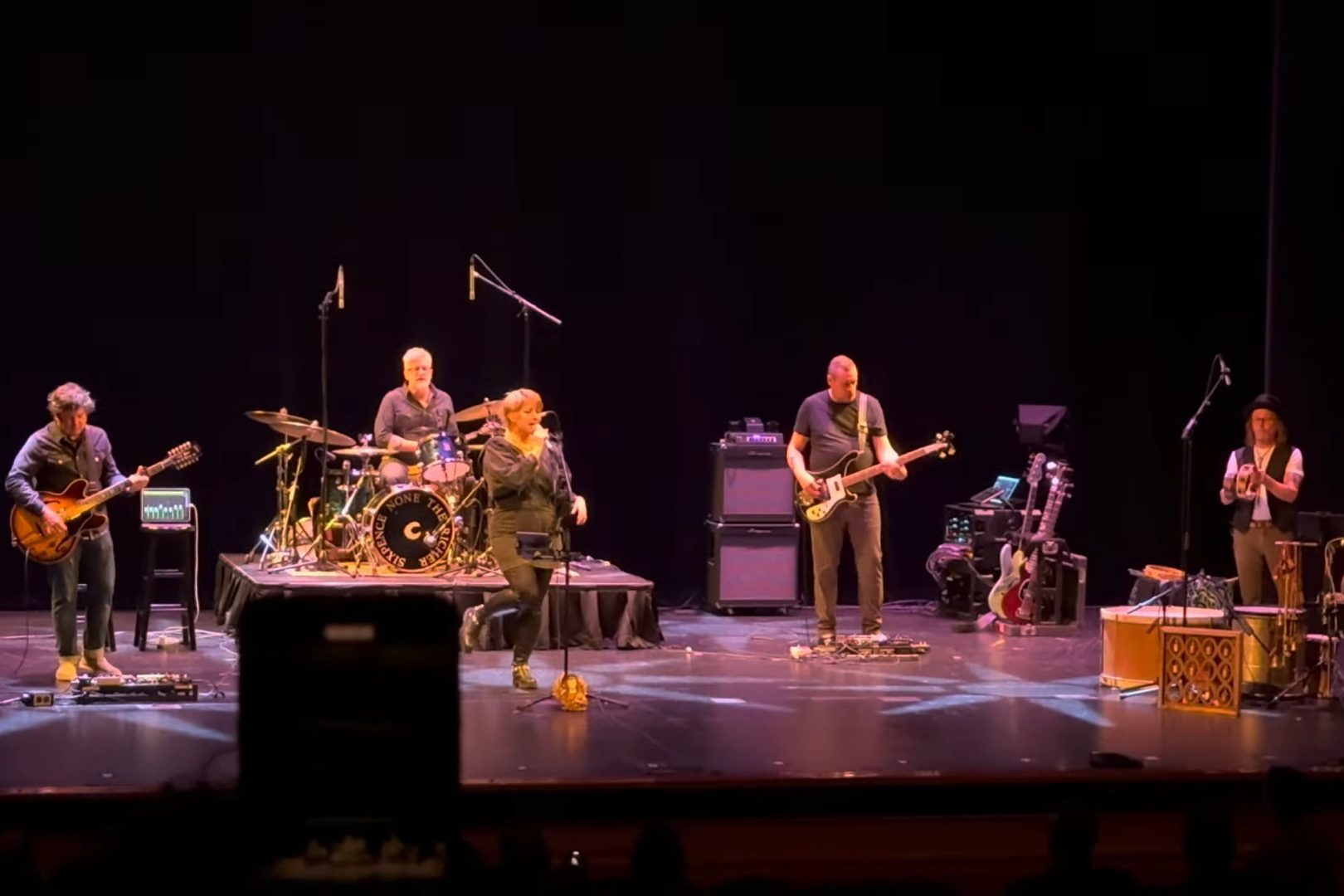
    Sixpence had later hits with covers of “There She Goes” and “Don’t Dream it’s Over”.  At the time I thought, “What a clever way to trick heathens into liking a Christian band!”  Now I think, maybe they were just having fun, like the kind we had at Amaturo Theater last Friday night. 

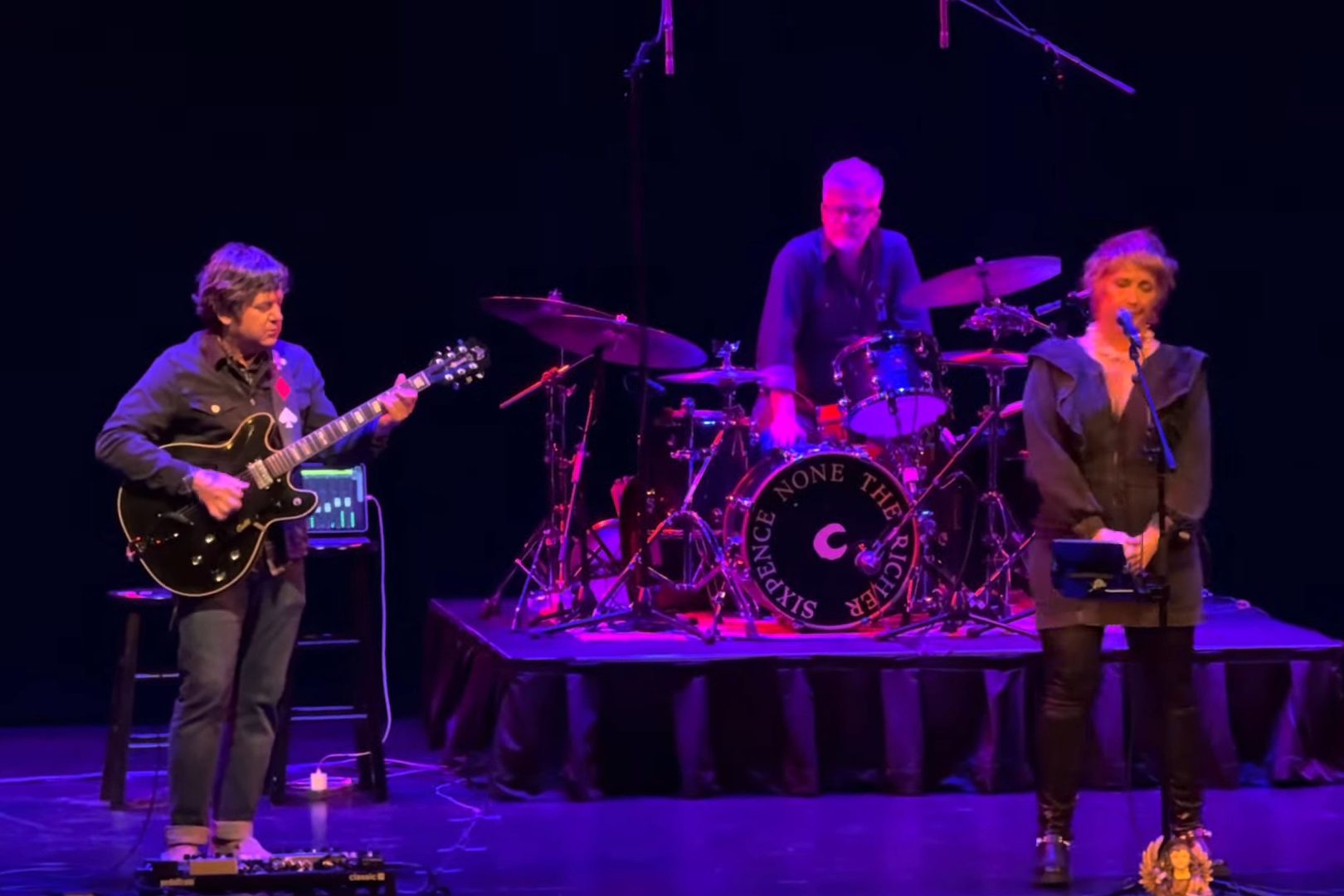
    Guitarist Matt Slocum is the 51 year old genius composer and instrumentalist behind Sixpence’s songwriting. 

    I lost track of how many guitars he used during the show at Amaturo (at least five).  I sat close enough to notice that when his guitar tech handed over a new one, Slocum was sure to make eye contact, smile, and say thanks.  Damn, what a gentleman!

    Slocum’s brilliant instrumental interludes, which are often technically very challenging (and reminiscent of The Cure or even Led Zeppelin), serve as a kind of meditative silence, tucked far enough away from the lyrics, where the Truth (yes, capital T) can make itself known, ever so gently, deeply, and lovingly.  Sixpence allows their listeners a chance to appreciate their temporal beauty and genius, as well as the Source of said beauty.  Yet there are no sermons and no Bible thumping with this bunch.  

    For example, Love, Salvation, the Fear of Death is a banger based on the most self-deprecating words of St. Paul.  It’s also great late night driving music (on repeat, of course).  It’s lyrically and musically one of my favorite songs EVER, up there with Led Zeppelin’s Rain Song and Simon & Garfunkel’s Scarborough Fair.  The bass guitar alone on this track should have won a Grammy.  Of course, they didn’t play it at Amaturo. I’m still trying to be a good Christian lad, so I’ll forgive them.     

    Here’s the night’s setlist, courtesy of setlist.fm:

    Angeltread

    Within a Room Somewhere

    Thread the Needle

    Don’t Dream It’s Over (Crowded House cover)

    The Tide

    Rosemary Hill*

    Midnight Sun (The Choir cover)

    Don’t Let Me Die in Dallas (Leigh Nash song)

    River (Joni Mitchell cover)

    Melody of You

    Homeland

    Down and Out of Time

    Julia

    There She Goes (The La’s cover)

    Kiss Me

    We Are Love


    Encore:

    Tension Is a Passing Note

    Breathe Your Name

    * Warning: Rosemary Hill (linked above) has been stuck in my head going on five days – may you fare better. 

    Leigh Nash, now 48, still glows with the beauty, innocence, and quirkiness that captured hearts when she was 20.  Her smile is unafraid. Now the mother of a 20 year old, Nash seems very much at peace.  

    Early in the show, two well-dressed young women walked out together.  “Bye, ladies!” Nash interrupted.  “Oh, we’re coming back,” they said. “No, you’re not, but that’s okay!” Nash said, creating a moment reminiscent of a seasoned road comic dealing with hecklers.  The door closes.  Nash caught herself. “Oh my gosh, did I just imitate them?!”  More laughter.  “Well, imitation is the sincerest form of flattery.”  More laughter.  “I better stop.”  I wish she hadn’t.  She really is hilarious.  

    Nash also mentioned The Chimney House, how it’s the best food ever, and that she ate way too much there, rubbing her belly.  Hey, I’m 50.  Bellies happen.  Leigh makes hers seem absolutely adorable.  

    Nash’s song “Don’t Let Me Die in Dallas”, written about her late father, was especially moving, as she was on the verge of tears before, during, and after.  She is blessed with a vulnerability that never feels forced or cringey.  Nash connects with her audience like a favorite sister, best friend, crazy wine aunt, and “the one who got away,” all rolled into one. 

    It was a more racially diverse crowd than I expected. 

    There were oldsters with kids, churchy types, and people who appeared to be on dates and just wanted to hear “Kiss Me”.  There was something for everyone and yet no pandering whatsoever. 

    Driving home sober (it’s been 21 years now, thank God) my mind wandered to Austin, Texas, near where Leigh Nash and Matt Slocum are from. I was thinking about comedian Tony Hinchcliffe, whose Austin-based Kill Tony podcast has a recurring bit where he tries to recruit a lady from the audience to kiss the occasional virgin “incel” comic.  The segment is usually accompanied by Sixpence’s “Kiss Me”.  

    Oh, please God.  Could Nash do a cameo on the show, sing Kiss Me, and heal Tony Hinchcliffe’s soul?  Perhaps she’d grow even more popular, thus tricking millions of additional heathens into a personal relationship with Jesus Christ!  Or maybe it would just be fun as hell to watch.  Either way.  

    Being old enough to see a band from my youth is disconcerting as I grapple with my own mortality.  But I feel much richer for this experience.  Not only can I reminisce about the Sixpence of 1995, but I can also appreciate their current artistry. That’s the kind of win-win that even an alcoholic Ohio frat boy can be, like, totally cool with.

  • Miami Underground: What We Did Is Secret at Book Fair

    Miami Underground: What We Did Is Secret at Book Fair

    In the 1980s a wave of artists, musicians, performers, and creatives of all stripes crashed Miami and the nearby Beaches and fashioned a DIY paradise from the abandoned theaters, seedy hotels, and cheap storefronts that had survived as relics from the Golden Age of the 1950s. “Succeeding” on their own terms—in part because nobody in the mainstream knew or cared—their smallish alt scene flourished and, arguably, ultimately, helped set the stage for the cultural explosion and Baselification that followed.

    But as much as Miami has modernized over the decades since, a DIY attitude remains essential for creators in this city. Too often, still, local talent is overlooked by a cultural mainstream that sees Miami as exotic backdrop and not as fertile creative ground.

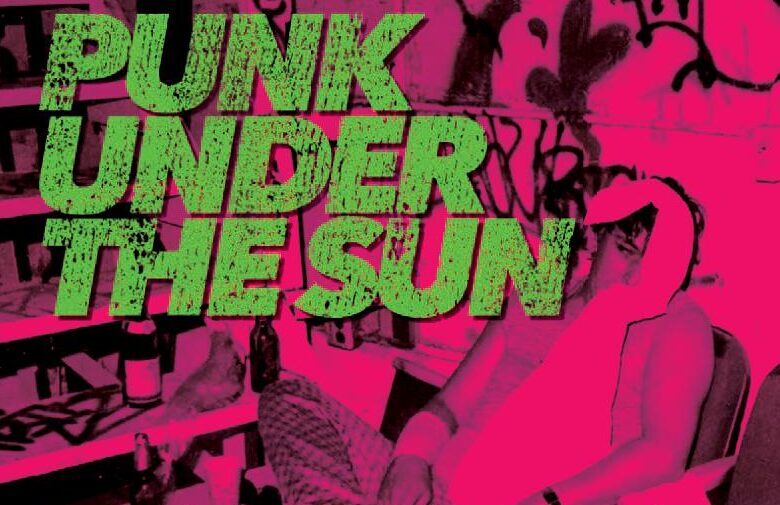
    The alt attitude that made fun things happen in South Florida and across the country back then—and now—is explored in a discussion at this year’s Miami Book Fair led by Punk Under the Sun authors Joey Seeman and Chris Potash. These two survivors of the city’s alt heyday have assembled a panel about Miami’s past and present DIY culture that includes Ale Campos and Emile Milgrim of the Miami-based band Las Nubes; Arifacts Gallery founder Howard Davis, who helped direct an underground-art scene pre Basel; and author and drummer Joey Maya (aka Joey Wrecked), who provided the driving beat behind several important punk/New Wave bands of the ‘80s.

    “As many folks from South Florida do, I left after college, moving to Portland, Oregon, a well-known DIY/punk haven,” says Milgrim. “When I returned to Miami in 2011 for family reasons, one of those kids I’d met online in the ‘90s asked me if I wanted a job at her record store, Sweat. I worked there for 11 years and throughout that same timeframe, and much due to that space and Miami’s local music community, I met friends, collaborators, and ultimately, much of my chosen family.

    “This is what music can do. This is why we get in a van and drive eight hours to sometimes play to only five people. Once upon a time we were those five people and that band changed our lives.”

    Miami Book Fair panel discussion on Alternative Culture & DIY in Miami from 1980s to Now will be held on Saturday, November 23, 11 a.m at Miami Dade College, 300 NE Second Avenue, Miami,  MAGIC Screening Room (Building 8, 1st Floor)

  • Goose: Yacht Rock Finally Comes Phishing in Miami

    Goose: Yacht Rock Finally Comes Phishing in Miami

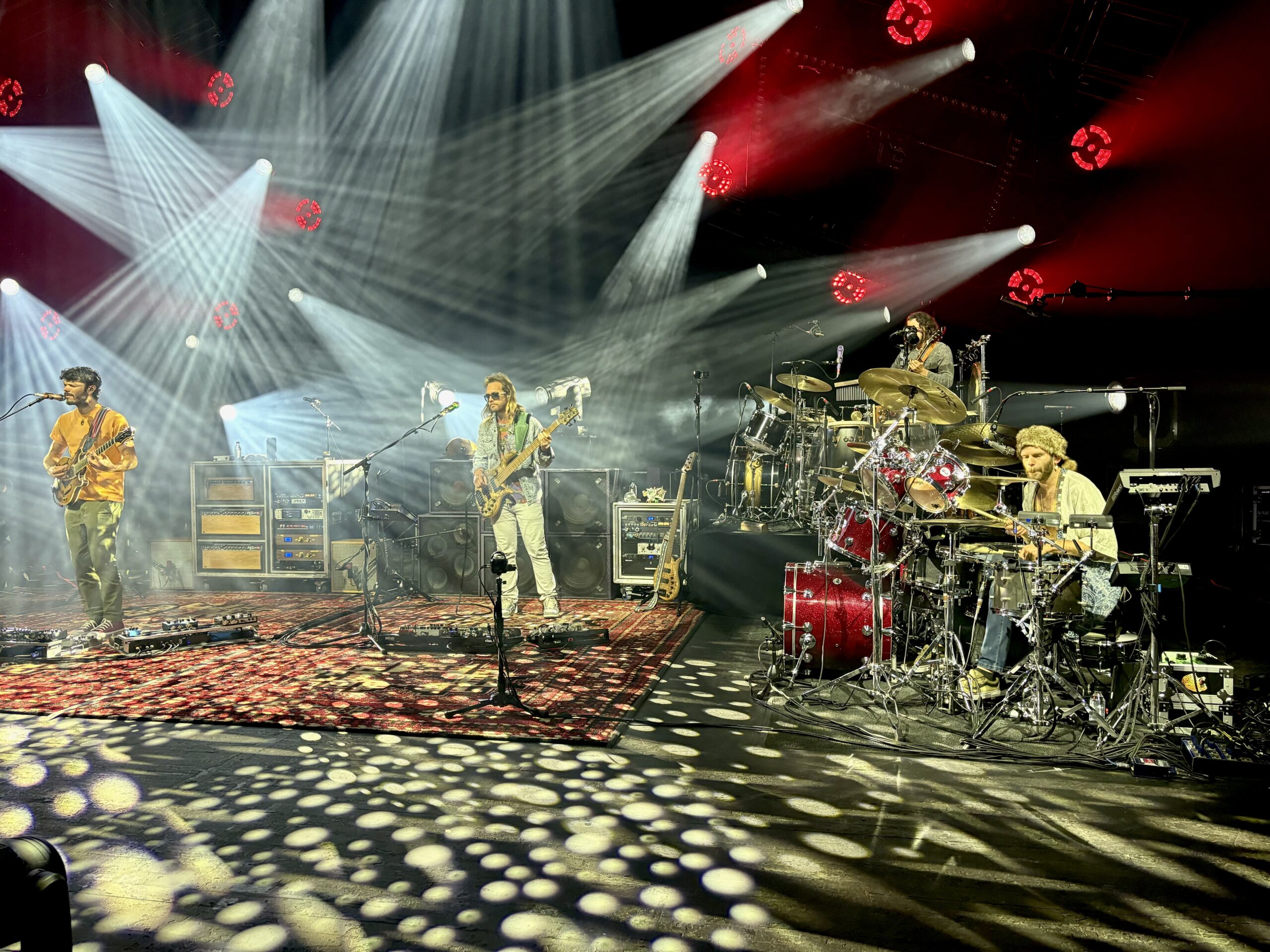
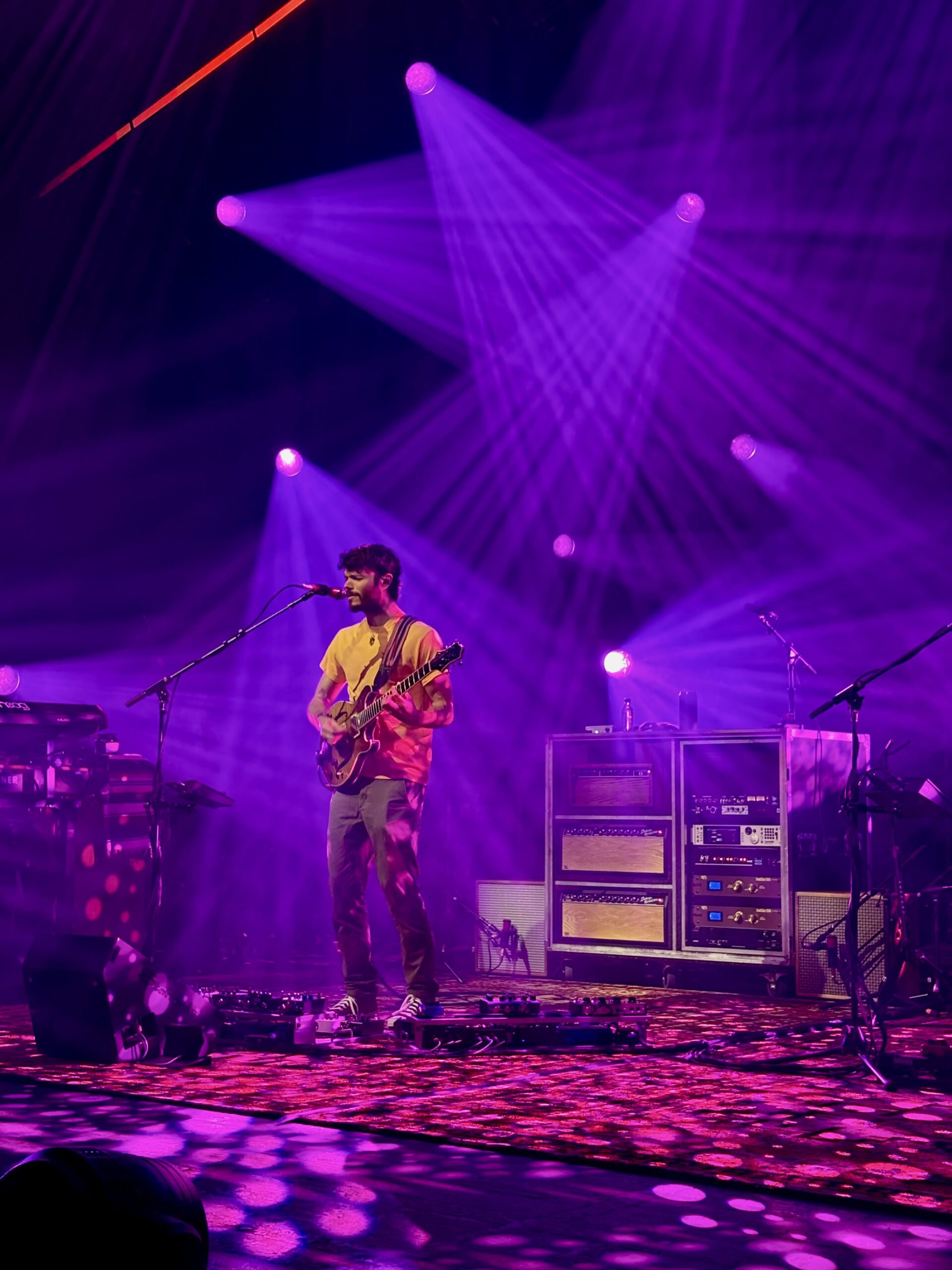
    Goose made its long awaited Miami debut at the Fillmore for the first of two shows on Tuesday, October 29th. The Connecticut based band, formed in 2014, are road savages yet they’ve never been to the Magic City.

    They did not disappoint. Halloween not yet in the air, only a few costumes, but the sold-out, older, male dominated crowd felt invigorated, excited and the band crushed.

    We first heard of Goose in 2021 from friends. The recommendation included a reference: “They are like the next Phish. Trey is a big fan.”

    So with that endorsement, we listened and waited for the band to make its way to Miami. They are indeed like Phish, but younger, fresher, tighter, less goofy in many ways. They have a cool look, mod, fresh, straight out of central booking for Stereophonic, one of the best plays we’ve seen in years. We were excited to see Goose in Miami.

    Our colleague Dave Rolland interviewed Goose keyboardist Peter Anspach for a preview piece in New Times.

    Mr. Anspach spoke of the pending shows in Miami.

    “Every show is different. Miami, I’m sure, has its own vibe, and we’ll try to match it. We won’t know until we get there what the room is like. Is the crowd energetic, or are they more relaxed? The Grateful Dead do this; so do Phish. It’s the spirit of the jam band. You’re with the audience, and you collaborate with them.”

    Goose in Miami

    Goose: not your dad’s jam band yacht rock.

    Funky, smooth vocals – when they did have vocals — no Jerry Garcia heroin induced caterwauling.

    But Goose is not yacht rock, they’re a jam band.

    More the music crescendos, the more intense the musicians become, the more mastery they display on their individual instruments as they try and keep up with the strobing pulsing lights. Which are a show all on their own and timed perfectly with the improvised beats, which seems like a feat considering you never know where the music is going next. One second it’s loud, jamming, intense- only to stop and launch into a cover of Bruce Hornsby’s “The Way It Is” — which we never imagined can go on for so long.

    First set lasted 1 and 1/2 hours with only seven songs but they all felt crisp.

    They closed first set with “Zalt” — in Miami night one it felt like crescendo musical wizardry. It’s hard to explain — you had to be there.

    Some jams, like the second set opener “Pancakes” felt chewy, hard to swallow, descending into the chaos and dissonance that define some Dead and Phish performances — jam went on too goddamn long, 23 minutes, but it got you there at the end.

    That’s when it started to feel a tad redundant.

    Like having sex with a partner you’ve been with too long.

    How do you keep a show exciting when every song is a built like an orgasm?

    Goose — somehow — makes it seem easy.

    Is one orgasm better than another? You bet!

    But it’s all about the “O.” You ever meet an “O” you didn’t like?

    Maybe that’s one of the “O”‘s in Goose.

    Maybe it lives in the “Goooooooooooosssee” chant that came at the end of every song.

    It’s a vibe.

    Like Mr. Anspach said in his preview, every show is different.

    All the more reason to be there.

    Goose in Miami Setlist

    1. The Whales
    2. My Mind Has Been Consumed by Media
      (Swimmer cover) 
    3. Into the Myst
    4. Borne
    5. The Way It Is
      (Bruce Hornsby & the Range cover)
    6. Flodown
    7. Zalt
    8. Pancakes
    9. Rosewood Hear
    10. Butter Rum
    11. Everything Must Go
    12. Animal

    13. Baby Don’t You Do It
      (Marvin Gaye cover)
    photo by Gina Salvatore
    photo by Gina Salvatore
  • Bobby Peru Plays with the Strength of Metallic Static

    Bobby Peru Plays with the Strength of Metallic Static

    You can find an unsuspecting sound from the duo Bobby Peru. The energy can be described as the strength of magnetic static, the drums and guitar pump like a pulse that coordinates every glitch install, and every beat. Their unique sound and variation elevate when you listen to all the singles they have released. Their latest EP Ivory Prior released in February of this year, is a thirteen minute run of what takes you through that sonic gallery.

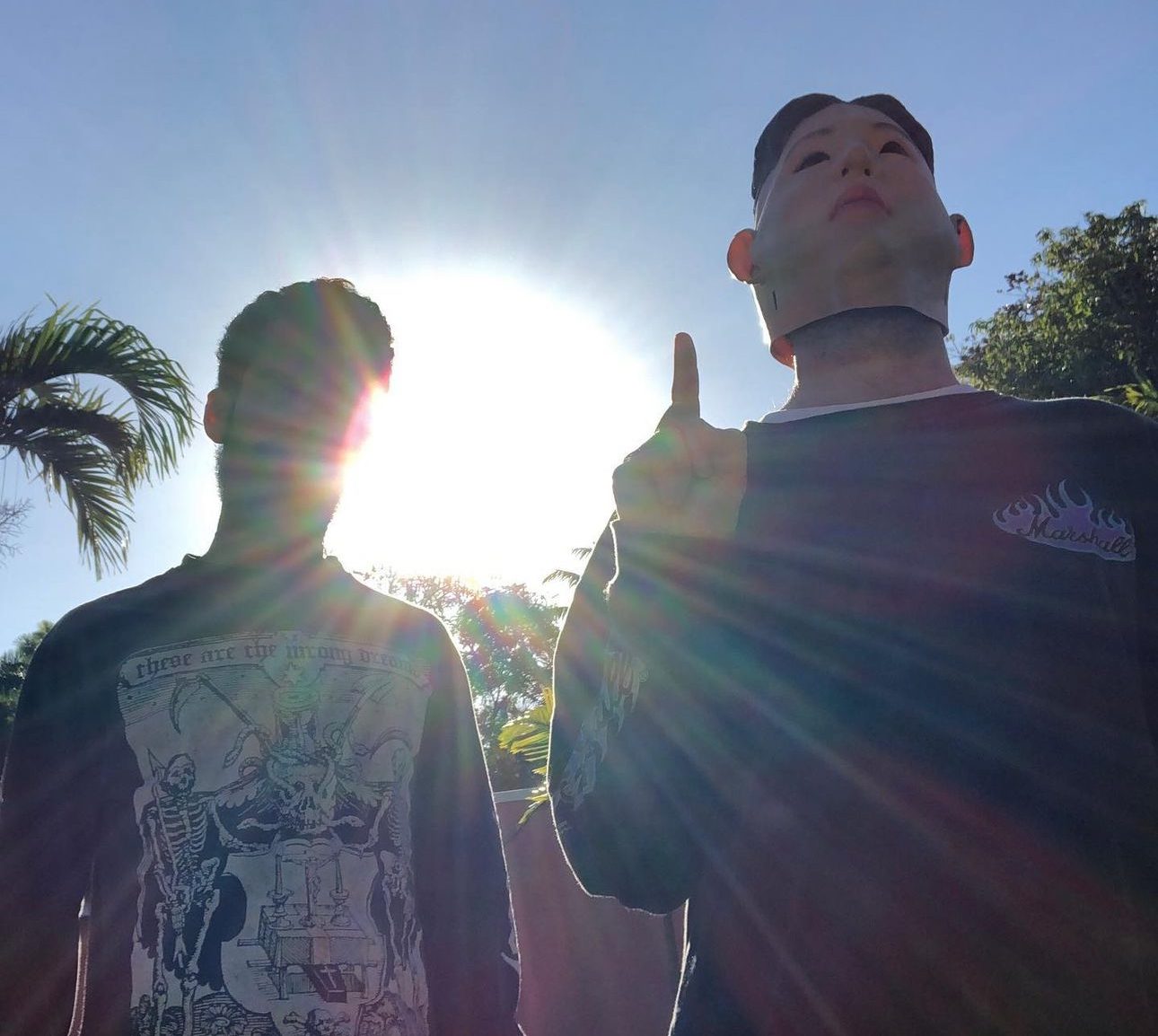
    Drummer Davin Sosa and the guitarist who goes by Robbie hopped on to The Jitney to answer our questions.

    Why the name?

    Davin Sosa: The name is from David Lynch’s 1990 film, Wild At Heart. The character Bobby Peru is portrayed by one of my favorite actors, Mr. Willem Dafoe!

    What is your practice situation and who and how do you write your songs?

    DS: We practice in my garage. We have everything we need to rehearse and record here. Most song ideas are initiated by me, and Robbie adds the melodic flesh to the skeletons I bring him. Very rarely, we’ll jam something out together and the basics of a song take shape in the moment.

    Tell us about your next album when can we expect it.

    DS: Next couple months you’ll see three new fast ones from us. Got two really interesting ones in the chamber after that. We’ll probably just release EPs and singles forever.

    Where do you come from?

    DS: Robbie and I come from the gay fires of creation that forged us all.

    Do you have a video coming out?

    DS: Not yet, but we’d like to have a cool video. Thinking of contacting my friend Bryan Adams if he has the time or desire to help us. His work is beautiful!

    What was the first album you each bought?

    DS: The first album I bought that really opened my mind was Gorillaz’ self-titled record. Catchy vocals, awesome production and experimentation. First heavy record was SOAD’s Toxicity.

    Robbie: I’ve loved music my whole life and I’m 100% sure there’s a Muppets album or something I begged my Mom for when I was five. However a really pivotal one was not even something I bought. My brother’s friend burned me a CD from Kazaa downloads that was filled with beautiful music from genres I always ignored. I can’t remember everything that was on it but it had BT, Seal, Sting, Enya, and more…up until then I stayed safe in my beloved classic rock and ‘80s/’90s glam or grunge or metal or whatever. This was around the time my tastes started expanding.

    Please provide your social media handles.

    DS: @davsucio

    R: @thehoffafactory

    If you could have a guest musician play with you, who would that be?

    Robbie: I’ll use an example both Davin and I could agree on. It would be easy to say something obvious like Danny Carey from Tool or Mike Patton (if y’all ever feel like it, fellas) – but instead I’ll choose Yasuko Onuki, singer of the Japanese experimental punk band Melt Banana.

    Share with us something you usually wouldn’t tell other people.

    Robbie: The parts in our music that have a classical or melodic sense probably come from me. It’s not set in stone, but Davin writes a lot of the punishingly heavy, chromatic stuff and I go a little more melodic. The part of my family from Wales exposed me to traditional Welsh choral music while I was growing up. Then I fell in love with choral and classical music in general.

  • Oscar Herrera: A Musical Journey Resumes with Songs For The Fallen Mountain King

    Oscar Herrera: A Musical Journey Resumes with Songs For The Fallen Mountain King

    In Edvard Grieg’s “In the Hall of the Mountain King,” the character of Peer Gynt enters the hall of the Dovregubbens (troll Mountain King) and is overcome by the sheer amount of creatures holding court at his feet. The bombastic crescendo that swirls around him is an immediately recognizable piece of classical music. Whether it’s a conscious nod or not, Oscar Herrera’s latest work certainly mirrors this ad hoc army while delivering an equally powerful punch.

    Oscar Herrera, a name synonymous with the ethereal sounds of darkwave, has made a significant mark in South Florida’s music scene through his work with bands like Black Tape For A Blue Girl, El Duende, Halo, and The Sleep of Reason. Herrera has returned to his musical roots with the release of his debut solo album, Songs For The Fallen Mountain King.

    “In April of last year, I retired from my regular job and after a 20-year hiatus, I was inspired to get back into music. I felt I had been away from music for far too long and I needed a creative outlet,” he said. To get the project together, Herrera contacted former bandmates and rekindled collaborations with musicians he deeply respects. The album features a diverse array of styles, merging rock with elements of jazz, flamenco, and theatrical influences.

    Herrera reached out to George Berkowitz, his former drummer from El Duende, after years of declining invitations to collaborate on various projects, believing he was retired. This time, he expressed his readiness to make music again. He also enlisted Greg Young, his bassist from The Sleep of Reason, with whom he hadn’t recorded in four decades, although they had performed together at the Flynn’s reunion show at Churchills in 2017. Additionally, he brought in guitarist Alex Sanchez and bassist Joe Rodriguez from Halo, for the reworked tracks “Io” and “Hell Before Sunrise.”

    Oscar Herrera Record Release Party

    One of the highlights of the album is “Father Whiskey,” arranged by the talented Alex Lacamoire, known for his work on Hamilton.  In 1994, Lacamoire was the 18-year-old keyboardist in Halo. “I now had three musicians from different phases of my musical career, musicians I admired and respected,” Herrera said, adding, “I also have my daughter Danielle and son Adrian singing on the album. They both heard music around the house growing up and we have gone to many concerts and music festivals together. When it comes to music we have no generation gap.”

    In addition to a string quartet from the Frost School of Music at the University of Miami, Herrera hired a three-piece horn section and a mandolin player from Buenos Aires, Argentina, a flamenco guitarist from Medellín, Colombia, and an R&B singer from Nashville through Fiverr and Soundbetter.

    “When the recording was done, I released it on all the major digital platforms in early March, but my dream was to have it released on vinyl,” he said. “Inspired by Black Tape’s Sam Rosenthal who has created several successful Kickstarter campaigns I decided to do one of my own. It was a nail-biting experience but, in the end, it was a success.”

    The finished product is also a testament to Herrera’s background as a graphic designer. The two-LP set comes with a full lyrics sheet and a set of tarot cards he designed. The bright red wax’s packaging is reminiscent of the Space Cadette era of local record-making.

    To celebrate the album’s release, Herrera will host a FREE listening party at Sweat Records on Friday, October 25 at 7 p.m.

    For more info and free tickets, click here.