Category: Music

  • How I Fell in Love with Hip Hop

    How I Fell in Love with Hip Hop

    As we come upon the end of the year and amidst all the Hip Hop 50 hoopla, it’s a good time to reflect on what made us love this culture in the first place.  Late Gen Xrs, Millennials, and beyond don’t know a life without Hip Hop.  Among those generations are those who either practiced or perfected an element of the culture (rapping, deejaying, breaking, and graffiti are considered the foundational elements. Others have been proposed with varying degrees of acceptance over the years: knowledge, fashion, language, Afrocentricity, ignorance…the list goes on).  But all heads can pinpoint a specific experience, an epiphany, a lightning in a bottle moment that made them lifetime lovers of the culture.

    Yes, it’s ok to love Hip Hop.  I do.  To quote the excellent title of DJ Semtex’s book, Hip Hop Raised Me.  An unknown percentage of male Hip Hop heads grew up fatherless (such as myself), and Hip Hop filled that void for better or for worse.  Yes, the highly misogynistic content of stalwarts such as Too $hort and Snoop (that’s “beloved by suburban America as Martha Stewart’s BFF” Snoop, not the “bitches ain’t shit but hoes and tricks” early 90’s version) is still being worked out among us 30 + years later.  It won’t surprise you to learn that characters such as Little Marco Rubio and Paul Ryan are declared Hip Hop fans.  But are they of the culture?  I have a hard time imagining Lil Marco blasting “Straight Outta Compton” in his Senate office, oblivious to the irony.  But what do I know? Stranger things have happened.

    Rubio did grow up in Miami, a party and music obsessed city.  To have grown up in South Florida is to be intimately familiar with Bass, Reggae, Freestyle, R&B, Funk, and depending on your nation of origin (we’re all immigrants here) Salsa, Merengue, Bachata, Kompas, Soca, Vallenato, Cumbia…get the point?  Into that mix came Hip Hop, thanks to the endless waves of New Yorkers who have been relocating to the tropics since the first rat was spotted on the subway tracks.

    Miami is also trendy, albeit before Al Gore invented the Internet, we were one step behind.  Tapes circulated in the analog world from Flea Market USA and your cool cousin from up north who came down to visit with the latest mixtape.  Like the rest of the world, Miami embraced graffiti and breaking during the magical crossover days of the early 80s, a time when Michael Jackson moonwalked into global superstardom and breakers were regulars on SNL and at The White House.  That’s when I fell in love with it.

    My epiphany and earliest Hip Hop related memory

    is going with my older cousin to see Beat Street at the movie theater in 1983.  Today derided as the weaker commercialized version of Wild Style (the first and better Hip Hop movie), it managed to reach audiences the indie art house distributed Wild Style couldn’t.  That’s where I come in, because Beat Street was released by Universal-affiliated Orion Studios, meaning my teenage cousin and my 6-year-old self could see it in Venezuela, where I was born.  To say I was blown away is an understatement.  When Ramo flexed a subway graffiti piece or DJ Double K dropped a funky beat at an illegal Hip Hop jam with pirated electricity, they became superheroes on par with Spiderman and Batman to me.

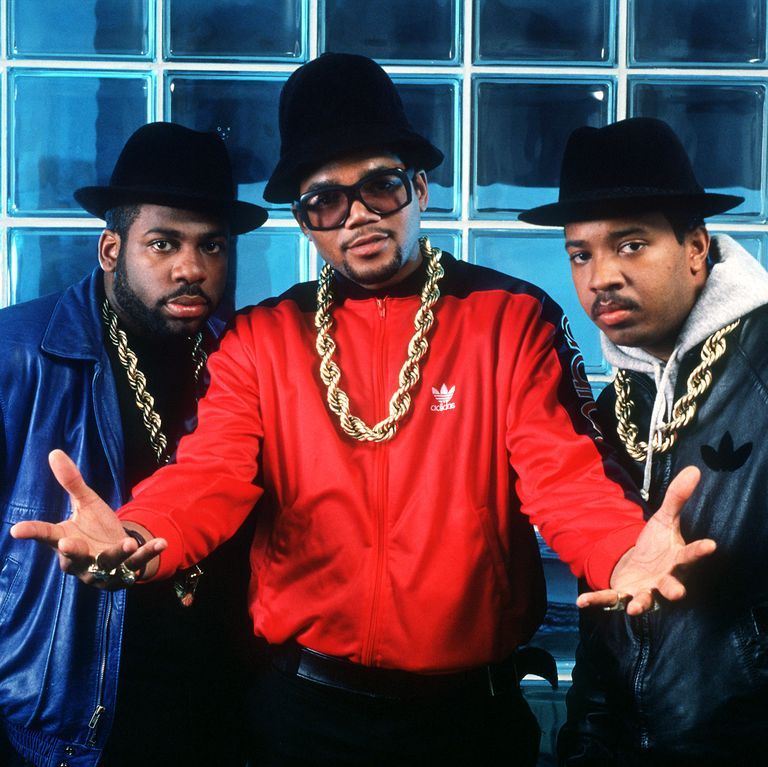
    I was blessed to travel to the States during this era thanks to my mother’s active-duty status in the Venezuelan Air Force, which in the BC (Before Chavez) years meant regular training deployments to various US Air Force bases.  I distinctly remember McDill Air Force Base in Tampa and Lowry AFB in Denver as places I touched down and lived in for a few months.  In fact, my 2nd, 5th, and 6th grade elementary school years were spent in Aurora, the Denver suburb where Lowry was located.  It was there that my mom bought me my first bootleg tapes at a flea market: Run-DMC’s “Raising Hell” and LL Cool J’s “Bigger and Deffer.”  After being blown away upon my first listen, I quickly put their posters up on my bedroom wall next to the Motley Crue and Metallica magazine page rip outs.

    Hip Hop and Heavy Metal co-existed peacefully in my childhood imagination, because they both represented youthful rebellion and masculine confidence.  Even the glammed-up rockers in full makeup got girls, to say nothing of the brand name track suits and dookie rope gold chains sported by fly MCs and their crews.  Friday nights were my favorite, because I was allowed to stay up late watching Yo! MTV Raps, Arsenio Hall, and Headbanger’s Ball.  Fab 5 Freddy and Rikki Rachtman raised an entire generation across America, and at least for myself personally, gave me a color-blind outlook.  Black, White, Beats, Guitars…dopeness is what counted then and still does.

    However, during the elementary school years I spent in Venezuela, Hip Hop was severely lacking.  Only the truly wealthy had access to MTV via expensive satellite dishes, so the culture was not broadcast like in the States.  The language barrier and everyday Latino classism and racism (“eso es musica de negros niches”) were also roadblocks to Hip Hop culture expanding in Latin America.  All of that came tumbling down once again thanks to the Internet and migration, and of course the enormous contribution made by the widely acknowledged first skilled MC to rhyme and record Hip Hop albums entirely in Spanish: Puerto Rico’s Vico C with his production partner DJ Negro, a founding figure in Reggaeton as well.

    So, while my cousins and friends in Venezuela asked, “who’s that?” when they saw my Run-DMC poster, I had memorized both albums and fiended for anything even remotely Hip Hop related.  A months-old Rolling Stone magazine with a Beastie Boys interview was gold, a dub of “Licensed to Ill” provided by a cousin who had gone to the States priceless.  When my mom married an American she met on a job after leaving the Air Force, we came to the US for good.  It was 1989, and I’ll never forget witnessing the Berlin Wall falling just a few days after we arrived in a Kansas City suburb.  I was 12 years old and transferring into 8th grade.  I attended a different school, sometimes 2 in the same year, of every grade from 1-12.  Hip Hop was my constant companion, helping me make friends over and over.
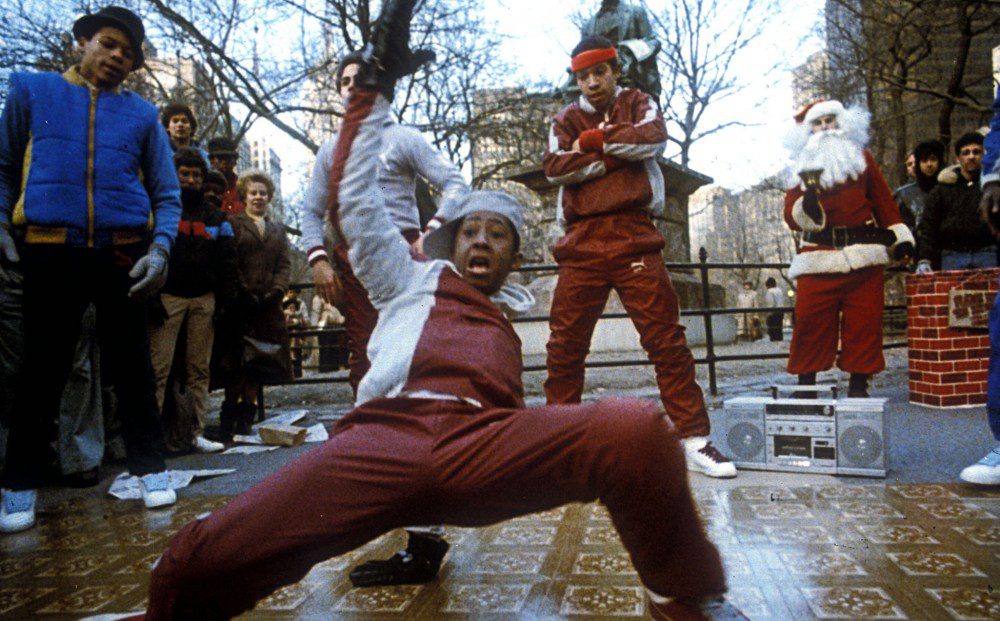
    Unlike now, not everyone was into Hip Hop.

    There was a code we abided by, and it helped me connect with other Hip Hop heads in every new school.  The code was established by how you carried yourself, what you wore, and how you spoke.  In my 8th grade class, surrounded by White kids, I was one of two Hispanics in the entire school.  But I was into Guns ‘N Roses and Slayer just like they were and spoke perfect English, so I was spared the foreign exchange student treatment.  Even with that, I stood apart with my Air Jordans and Benetton jeans.  Adhering to the Hip Hop fashion code of the time enabled me to make friends with the other heads: a few Black kids and one White boy who was down.

    I was introduced to Miami Bass by one of the Black kids, who came into biology class one day with his Walkman and a tape whose cover featured giant bass woofers stomping fools out like Godzilla: “The Bass That Ate Miami.”  I was not to arrive in the 305 until some years later, but that tape planted the seed of my undying love for the crib.  I immediately asked him if I could hold it and to my eternal gratitude he said yes.  Never mind that I couldn’t properly appreciate the tape because of being a jit with no boomin system, the notes that emanated through the Walkman headphones let me know there were other Hip Hop flavors being developed nationwide.  When The 2 Live Crew became the biggest crossover act since Run-DMC and Aerosmith, even the White boys couldn’t front.  Miami had made its name in Hip Hop, and there was more to come.

    Entering high school, which are the years where we get into the music that will accompany us the rest of our lives, I was exposed to the intricate wordplay of Brand Nubian, the rising consciousness of Ice Cube, and the musical mastery of A Tribe Called Quest.  When Lord Jamar rapped:

    “You got to know the ledge to wise the dumb

    And understand your culture of freedom

    Power equally with the Gods

    So you can build and born your cipher

    All your life you must teach truth

    Of the true and living God, not a mystery spook

    And when you do that, pursue that goal

    Which made the student enroll and only then you’ll prosper”

    The 5 % terminology and beliefs combined over the classic James Brown “Funky President” break loop blew my 13-year-old mind away.  What the hell is he talking about?  Those bars sounded like a riddle, a puzzle that I had to solve.  Keep in mind I was in Denver at the time, where the only 5 % talk was that figure being referenced as the Broncos’ chances of winning the Super Bowl.  It wouldn’t be until my first college semester that I managed to obtain the Supreme Alphabet and Mathematics by typing “5 % Nation” into a computer connected to the “internet,” an obscure academic search tool hidden in the library.

    That’s my foundation, the late 80s-early 90s golden age.

    I fell in love with Hip Hop back then and when it was my turn to bring tapes to my cousins during my teenage summer vacation visits to my South American homeland, it was “Boyz N The Hood,” “Magic Mike Drops the Bass,” and “How I Could Just Kill a Man” that I blasted in an uncle’s truck for them.  One of those cousins is now in Brooklyn, familiarizing himself with the vast Nas and Wu-Tang catalog thanks to yours truly.  They’re helping him learn English just like LL and Rakim helped me.  It’s also a window into America, because what Wu talked about in “C.R.E.A.M” and Nas in “I Can” is not exported abroad.  According to American pop culture overseas, we all live like The Fresh Prince of Bel Air, ignoring the fact that sometimes we are treated like Jazzy Jeff, thrown out of society, and having to make our presence known.

    Hip Hop can be positive, negative, inspiring, crass, dope, and wack.  It’s all those things because we human beings are all those attributes at one point or another.  Some claim to not recognize what mainstream Hip Hop has become, but that’s the older generation exercising their eternal right to criticize the youth.  Our parents did it to us when we were wearing XXL shirts and jeans blasting “fuck bitches, get money” “throw ya gunz in the air” and other uplifting positive anthems.  The question I have is what’s the difference between “Pop That Pussy” and “WAP”? Believe it or not, the culture is alive and well underneath the mainstream depraved bullshit.  Dig in those digital crates on Spotify and SoundCloud, you might find a new artist or crew that meets your standards (the algorithm and word of mouth has introduced me to Coast Contra, Roddy Ricch, Isaiah Rashad, and Navy Blue).  Then raise your glass or spark an L to another 50 years of Hip Hop and beyond, because like the Teacha reminded us: “Back in the day I knew rap would never die.”

    Word up!
  • The Lab Throw Album Release Party at The Bridge

    The Lab Throw Album Release Party at The Bridge

    There seems to be a lot of new rock n’ roll bands popping up around Miami. That’s refreshing. One of them is a good, old-fashioned, power trio, but with a whiskey chaser… The Lab.

    An unusual blend of musicians that seem to make perfect sense somehow, for this style. Frontman, Harold Trucco is the singer and also straight rips the guitar in an expressive, yet not pretentious way. If you’ve seen him, you fucking know.

    On bass is Brian Tate and on drums, Brian Lange. Both the Brians are super high-level musicians. Products of UM’s Frost School of Music. You might not have even noticed, but you’ve probably seen them on jazz gigs around town at The Corner or Medium Cool. Perhaps you’ve seen them playing with an Internationally known pop artist.

    But in The Lab, they lay down the rock hard and heavy. Offering subtle gems of musicianship only obvious to music nerds who know what to spot. To be able to do that, and still blow your face off, is a rare treat.

    Brian Lange also records some of the best bands in town out of Fazeone Studio; his spot located at The Bridge, where their release party is on October 4th.

    For those who don’t know, The Bridge is a rehearsal studio/sometime event space for some of the best musicians in Miami. The vibe is great there. The level of musicianship is the best in town. Plus, they throw a great party. The Lab’s Volume II EP release is there with SRSLY?! and Mario Giancarlo from Hunters of the Alps will DJ.

    I got with Harold Trucco on The Jitney for a quick Lab-chat…..

    How did The Lab start and what does it mean?

    Harold Trucco: Once the Brian’s and I decided we wanted to start a rock band, I made a list of covers for us to try out so we can get some gigs and get on our feet quickly. From the first note it went out the window and we just started jamming and recording right out the gate…I believe “Rollick” off our first EP was the first thing we jammed on. From there we kept saying “let’s get back to the lab” whenever we wanted to jam or rehearse at Fazeone Studio (Lange’s Studio). It was totally a placeholder name until one day we all agreed it started to stick, so we said fuck it we’re the LAB!

    For those who have never been, how would you describe your music?

    I think the LAB is equal parts firepower and fluid, ebb-flow type of rock ‘n roll. We all like totally different types of music but share the common ground of classic bands like AC/DC, Van Halen, Zeppelin, Sabbath. Brian and Brian are also such killer jazz musicians and that’s definitely a key element of the spirit of the LAB. We have some straight ahead rock, some fire-breathing-dragon metal, and then some sexy almost RnB vibes like on “Breast Pocket”. Our songs have tight arrangements but we always have an element of organized chaos.

    What do you guys have in store for us with this new EP?

    Definitely leaned into the heavier stuff this time around…the album art is literally just flames and our logo so that should tell you more or less what Volume II is about! Some of our most fun songs to play live are on this EP too;  I think “New Guy” is my personal pick. This is a fun batch of material for sure!

    Why did you select The Bridge for this release?

    It’s kind of our home court since it’s literally where “the LAB” is. We recorded Volume II out of Fazeone Studio at the Bridge so it’s kinda cool to bring it full circle and do the release party there too. Nicole from the Bridge is the shit and we’re really thankful for her letting us do our thing there. Between us, SRSLY!?, Mario Giancarlo from Hunters Of The Alps DJ’ing, and $5 whiskey cokes, it’s gonna be an absolute riot…we can’t wait to see ya there!

  • Palomino Blond Release New Record “You Feel It Too”

    Palomino Blond Release New Record “You Feel It Too”

    This article originally appeared in PureHoney Magazine. Check them out here.

    Miami’s Palomino Blond crashed into the local scene in 2018 with the fury of an angry ocean, laying down a tidal field of sonic odds and ends that wink at you and invite close inspection. To the swirl of influences, history, attitude and raw feeling that marks this alt-rock powerhouse trio, add a new full-length album, You Feel It Too.

    “We were able to tap into influences that we weren’t able to tap into before,” singer and guitarist Carli Acosta says about the group’s first album for Brooklyn’s Kanine Records. “We like bands like Boris, My Bloody Valentine, Smashing Pumpkins and Hum, which we’ve capitalized on.”

    Engineered separately by local go-to’s Jonathan Nuñez and Ryan Haft, You Feel It Too is palpably heavier than the band’s previous output, drawing on shoegaze and grunge with hints of airy dream pop. “We’ve been collaborating with Jonathan since 2019 and ever since we got a taste for his sound, we felt it clicked with us,” Acosta says. “Similarly, when we got a taste of what Ryan can do in his space with his gear, we split it in half.”

    The result is a cinematic, lush and full-bodied foundation that fully supports Acosta’s vocals without undermining the album’s titular challenge. For Acosta and bandmates in a recently changed lined-up — drummer Emma Arevalo and lead guitarist Peter Allen — the record is a pact with listeners.

    “I think that some of the lyrics can be intense and revealing, but with writing music, you sometimes talk about stuff that you wouldn’t talk about otherwise,” Acosta says. “Everyone’s their worst critic, but we were asking ourselves throughout the entire process, like, does this work? Is this cohesive enough, or is it too personal?”

    The answer is in the songs. Palomino Blond are blending gritty guitar riffage with undisguised emotion to create anthems that have resonated far beyond the Magic City’s shores. A tour with Tampa’s electronic hip-hop duo They Hate Change takes them through eight states. In South Florida in October, they’ll play Gramps and the III Points festival in Miami, and Revolution Live in Fort Lauderdale.

  • Electric Piquete on New Album, Azabache

    Electric Piquete on New Album, Azabache

    Latin funk “fusionistas” Electric Piquete release their debut full-length album Azabache on September 20. On the same day, Friday, September 20, at 8 pm you can join the band at Skatebird for their release party. Bassist and co-founder Michael Mut hopped on to the Jitney to write a bit about the record. 

    We cut “Chunk” back in 2019 for a separate project that unfortunately never saw the light of day. Ed, Chris, and I entered the Shack North studio in Hialeah to begin the bulk of the recordings on Azabache in December of 2021 with our friend, long-time producer, and collaborator Ferny Coipel. The process continued on and off through the summer of 2023. Chris recorded all of his final guitar parts at his Layland home studio.

    We’ve been covering “Viva Tirado”, the Gerald Wilson / Fania Allstars standard, since 2013 when we prepped and played a Tribute to Fania show at the old Tobacco Road, but the song has an even deeper connection and meaning to the band. Ed put it on a mixtape for me in 1993 and that was my introduction to Latin jazz and the Fania sound. I never forgot that tune, and I believe it definitely cemented my bond to Ed as a musical mentor, and seeded what would become Electric Piquete.

    “Muevete Con Ganas” has been around as a fully-realized song since about 2009. Believe it or not, it used to be called “Cheque Sin Fondo” (Spanish for “Bounced Check”), but Chris and I agreed that we needed to add vocals to it. I met MannySwagg several years ago when he was the percussionist / singer for the dynamic Sol Ruiz and her Tribu, and ran into him at the Spring 2023 Shakori Hills Grassroots Festival in Pittsboro, NC, where we agreed to collaborate somehow.
    That summer, we asked him to join us at a Miami Beach OnStage! live concert, and the chemistry and energy was off the charts! That’s when we knew he would make a great guest vocalist on “Cheque”. So, he came in and nailed the lyrics and vocals in one session, which made us rename the song to match the hook he wrote. Pure magic!

    “S.A.C.A.” is another idea that has been around for some time, and this effort finally gave us a chance to commit it to tape. “Timeless Faith” and “Decay Dance” are relatively new ideas that came together, with the former featuring our congero Raymond’s Spanish rap flow. “Paindemic” was conceived around the same time as those two, but it was finalized in the studio during the recording process.

    The bonus track “Matted Spam” was cut in 2022 for a Y&T Music Pete Ham tribute and mental health fundraiser called Shine On. It was the second time we’ve gotten an opportunity to work with Rich Ulloa, and I can’t tell you what an honor it is to be a part of something he’s put his heart and soul into. The magnitude of all the other contributing artists is amazing to us as well.

  • Sixtieth Anniversary of the Beatles at Jacksonville’s Gator Bowl

    Sixtieth Anniversary of the Beatles at Jacksonville’s Gator Bowl

    It was the biggest thing since the Great Fire of 1901—maybe the biggest thing ever to hit the city of Jacksonville—except perhaps Hurricane Dora a day or so earlier.

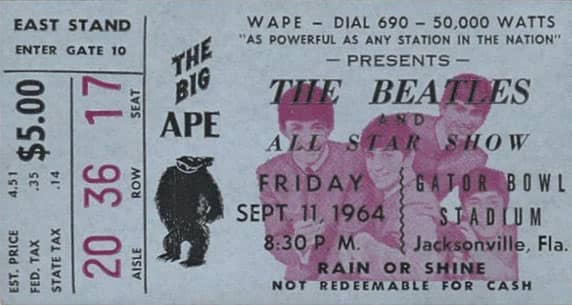
    On Sept. 11, 1964, radio station WAPE-AM brought the Beatles to Jacksonville, one of only two shows in Florida (the second being an appearance on the Ed Sullivan Show in Miami).

    The Gator Bowl show quickly sold out. However, Dora had left fallen trees blocking highways, preventing approximately 7,000 fans from getting to the Gator Bowl.

    It was the Fab Four’s first trek into the Deep South. They were scared.

    Professor Brian Ward of Northumbria University in Newcastle is working on a book about the Beatles’ complex and sometimes painful love affair with the American South. The book’s working title is, fittingly, She Loves Y’all.

    After all, most of the music the Fabs emulated came from the South. The group specialized in “covering” songs by black artists such as Little Richard and Doctor Feelgood, both from Georgia; Chuck Berry, from Missouri; and Arthur Alexander, from Alabama (the Shirelles and the Isley Brothers, both from New Jersey, were exceptions, as were a couple of Motown acts, the Marvelettes and Barrett Strong).

    The Fab Four also recorded songs by white country and rockabilly acts such as Texans Buddy Holly and Buck Owens along with Tennesseean Carl Perkins. Their biggest idol was of course Tennesseean Elvis Presley, perhaps the most revered southerner to hit the world stage.

    Hence the group’s music was, to a large extent, a reflection of the U.S. South.

    However, the Beatles, to their everlasting credit, refused to accept segregation—a sacred institution in some southern circles—and publicly stood up to support civil rights for African Americans.

    Yet the Beatles had few black fans, especially in Jacksonville. One of the reasons black teens generally didn’t dig the Beatles might be because they were already familiar with many of the artists the Beatles had covered. The Beatles’ mission had been to bring black music to white kids.

    Black kids didn’t need the Beatles—they already had the real deal.

    Kitty Oliver, an African-American scholar and retired professor from Jacksonville who now lives in Ft. Lauderdale, was one of the rare black Beatles fans. She writes in her autobio, Multicolored Memories of a Black Southern Girl, that she could not find a black friend who would accompany her to the Beatles’ Gator Bowl concert. She went alone.

    Fifty-two years later, she would appear in Ron Howard’s Beatles documentary, Eight Days a Week, and would be flown to London for the film’s premiere, where she would meet Sir Paul McCartney.

    Five days before the Gator Bowl show, the Beatles—riled by insinuations that concerts in the Deep South were liable to be segregated—issued a press statement: “We will not appear unless Negroes are allowed to sit anywhere they like.” On Sept. 8, in Montreal, the group conducted a press conference in which John Lennon orally reiterated the ultimatum, citing Florida specifically.

    Ward however, says the group’s anti-segregation proviso had been written into all the engagement contracts that he has had the opportunity to examine. He has not seen the Gator Bowl contract itself, but there is no reason to assume it would have been different.

    The point here is that the issue had already been hammered out—and settled in writing—which raises the question: why was a public showdown even necessary?

    Billee Neumann Bussard, a teen-age reporter at the scene, said that when the Beatles arrived at Jacksonville’s George Washington Hotel, they found that blacks were prohibited as guests, and this may have jolted them into action once again. The Beatles held a press conference in the hotel, where they again reiterated their refusal to perform if the show were to be segregated.

    However—this is crucial, and it’s the point many writers omit—city officials insisted to local reporters that there had not been and never were any plans to segregate the show.

    In his book, The Beatles: A Diary – An Intimate Day-by-Day History, cultural historian Barry Miles mentions the city’s claim that the show was never intended to be segregated. He may be one of few writers to ever report this. The next logical question would be why might the Beatles have launched an unnecessary press battle with public officials?

    The Florida Times-Union did respond with an editorial dig pronouncing the Beatles’ music trash and extrapolating from their lyrics that the group’s members had neither the information nor the intellect to comment on US politics.

    At bottom though, the question remains:

    what would city leaders have stood to gain by segregating the concert? Perhaps it might have—at best—gotten them some political capital with racist voters. After all, Mayor Hayden Burns had run—and won—on a segregationist platform back in 1949 and managed to hang on for four terms. He had been mayor during the city’s notorious “Ax Handle Saturday” melee in 1960, in which police had been accused of allowing racist counter-protestors to brutally beat civil-rights demonstrators in downtown’s Hemming Plaza.

    At this juncture, Burns, however, kept his mouth shut. He was in the midst of a heated campaign for governor and could ill afford a bad move. Alan Bliss, executive director of the Jacksonville Historical Society, said Burns would likely have “preferred to avert any kind of public-relations blunder [having] the potential to make Jacksonville appear backwards or racist.”

    Promoting or enabling segregation at this time would have jeopardized the city’s receipt of federal funds, since the Civil Rights Act of 1964 had recently been signed into law by Pres. Lyndon Johnson—by all reports a vindictive man with a long memory whose ire most politicos with any sense would not wish to provoke.

    Johnson happened to be in Jacksonville that very day to inspect the damage from Dora.

    Having a segregated concert would also have breached the Beatles’ performance contract. WAPE-AM station owner Bill Brennan would have had to pay the Beatles for not performing, and he would likely have gone after the city for compensation. There would have been lawsuits along with very vocal reactions from 30,000 ticketholders, most of whom held no qualms about screaming their lungs out.

    Certain City leaders may have been racists, but they were not, after all, complete eejits. Bottom line is there was almost nothing to gain and far too much to lose.

    There is a third and very likely possibility, which Ward hints at: the controversy might have been provoked by reporters who goaded the Beatles with loaded questions implying that the southern shows would, as a matter of course, be segregated, and if so, what were the Beatles planning to do about it?

    Ward states that, responding to reporters, the Beatles “kept defaulting to their contractual and moral stance that if [any shows were slated to be segregated], they wouldn’t play. When they were assured there’d be no segregation, they played.”

  • South Florida Natives Return to Play Bumblefest 8

    South Florida Natives Return to Play Bumblefest 8

    This article originally appeared in PureHoney Magazine. Check them out here.

    Three of the bands coming from other cities to play Bumblefest this month have South Florida’s complicated DNA in their genes. The founding members of Philadelphia’s Lo Fives grew up in West Palm Beach before first heading to Portland, Oregon to perfect their mystery-laden psych-punk music, and then returning east. Members of the affable punk-rock power trio Shehehe, based in Athens, Georgia, likewise spent early years in and around Palm Beach County. The leader of the Gainesville, Florida folk-punk troupe American Dream Survivors has as deep a South Florida band résumé as any you’ll find.

    For various reasons they resettled in other places. Coming back for Bumblefest, they have thoughts and memories about key times and places that they kindly shared unlocking some of their histories.

    American Dream Survivors

    “I started my music career in Palm Beach with a bunch of small, politically-driven punk bands,” says American Dream Survivors’ singer and banjoist Sergio Witis. As a teen-ager he played in Endeavored Establishment and then got what he calls his “first taste of being in a totally functional touring band,” playing bass in the hardcore punk-crust outfit Dead Patriot.

    A move to Gainesville led to his first unplugged, folk-punk foray in O’haste Annihilation, and to experiences that both uplifted him and put him at risk. “I learned so much about DIY and community thanks to places like Wayward Council, Civic Media Center and punk houses and collectives,” Witis recalls. He also battled addiction and returned to South Florida to, as he puts it, “change my life.”

    In Delray Beach around 2008 he co-founded Viva Le Vox, a band casting a raucous, bluesy, punk spell with upright bass, electric guitar, drums and a singalong air. “We had an amazing time being part of the South Florida scene during a flourishing time,” Witis says.

    He had two more bands after that, Everymen and Ghost Party, and he eventually circled back to Gainesville, where American Dream Survivors have established themselves with a hybrid of punk directness and vintage flair: Banjo, fiddle (Arthur Rosales), upright bass (Vinnie Dellucci), drums (Steve Lots), unadorned vocals and songs like “Blue Prints,” a twangy dirge about connecting with your inner child as you try to treat your psychic wounds and carry on.

    “Inner child work is something that helped me so much during a hard time in my life, and it is something I do with our clients at the mental health facility I work at,” Witis says. The quartet recorded “Blue Prints” with fellow Floridian FayePatrick Kennedy on guest vocals, a collaboration Witis found so “magical” that adding a permanent fifth member to American Dream Survivors has entered the band’s thought process.

    Lo Fives

    It will be a homecoming for Zackery Fleming and Sara Fleming, and not the first, when Lo Fives plug in at Respectable Street for Bumblefest. “We’ve played Respectables a few times as Lo Fives in the past (and I’ve played numerous times in previous bands),” says Zackery, who may be best known in South Florida for his work with indie-rock bard Josh Simkowitz, a.k.a. Chaucer. “Respectables has always been a social hub growing up in some formative years. Sara and I, now married, had some of our first meetings and experiences together there, so I’ve always held a very special place for it.”

    Lo Fives came together when Zackery and Sara relocated to the Pacific Northwest and, after cycling through various bandmates, bonded with Portland guitarist Mike Stortz. Lo Fives emerged from the PDX scene blending post-punk, psychedelia and noise into a freewheeling but focused whole that’s equal parts beat-poet strangeness and mad-science sonic curiosity.

    Stortz, still based out west, will be in town to join them on guitar. Stepping in for Joshua Soltroff, the drummer in Lo Fives’ Philly-based lineup, will be Jordan Pettingill, the backbeat engine for the low-end thrashers of Cop City/Chill Pillars.

    SheHeHe

    He didn’t yet know how to play drums or be in a band, but Jason Fusco loved music and he could dance, so the instincts and timing were already present for this punk rocker in waiting. He just needed a spark.

    Around 2006 he moved in to a drummer friend’s house near the ocean in Lake Worth. “He, a drummer starting to write songs on guitar, and me, a good dancer and lover of music, falling in love with the drums and playing music with my best bud,” Fusco recalls. “My first band, Myself Mysizzle, was born in that house in Lake Worth.”

    “We would go jump in the ocean, sometimes surfing or bodysurfing, mostly just getting our daily ocean fix, and then we’d hit a dive bar, have a beer or two, make a setlist, then head back to the house for more beers and to play music to our hearts’ content.”

    Like his future wife and Shehehe bandmate, bassist and vocalist Nicole Bechill, Cusco has South Florida roots, moved away, came back and started to see possibilities in making music. Their connection was essential to Shehehe’s formation, but a move to the Georgia college hometown of the B-52s, R.E.M., Drive-by Truckers, Widespread Panic and key bands of the Elephant 6 indieverse made everything click.

    With Noelle Shuck rounding out the trio on guitar and vocals, Shehehe have won a place for themselves in Athens — no easy feat in a cradle of modern rock that wears its laurels proudly and guards its legacy. Shehehe’s brand of punchy, crackling punk-rock evokes the hooky goodness of Ramones, Cheap Trick, Joan Jett and The Muffs with energy and co-ed glee. They fit their present surroundings, but Fusco thinks warmly of the place where he got his start.

    “It was the most wonderful place to learn an instrument and to become a musician, and was hard to leave,” he says, adding, “Learned how to play drums, surf, drive a stick shift and fell in love with my wife, Nicole, down there!”

  • Autumn 2024 Miami Concert Preview

    Autumn 2024 Miami Concert Preview

    It’s not officially fall. At least not until September 22. But school is back in session and pre-season football has kicked off, so that’s close enough to autumn for the Jitney. Without further ado let’s get in to the Jitney autumn 2024 Miami concert preview.

    Jane’s Addiction August 31 at Hard Rock Live

    The original line-up is playing it’s first South Florida date since 2010. Enjoy local boy made good Perry Farrell play all the classic alternative rock hits from “Jane Says” to “Been Caught Stealing”.

    Childish Gambino September 5 at Amerant Bank Arena

    Actor Donald Glover brings his hip-hop persona Childish Gambino to a massive arena.

    Bumblefest September 6 & 7 at Downtown West Palm Beach

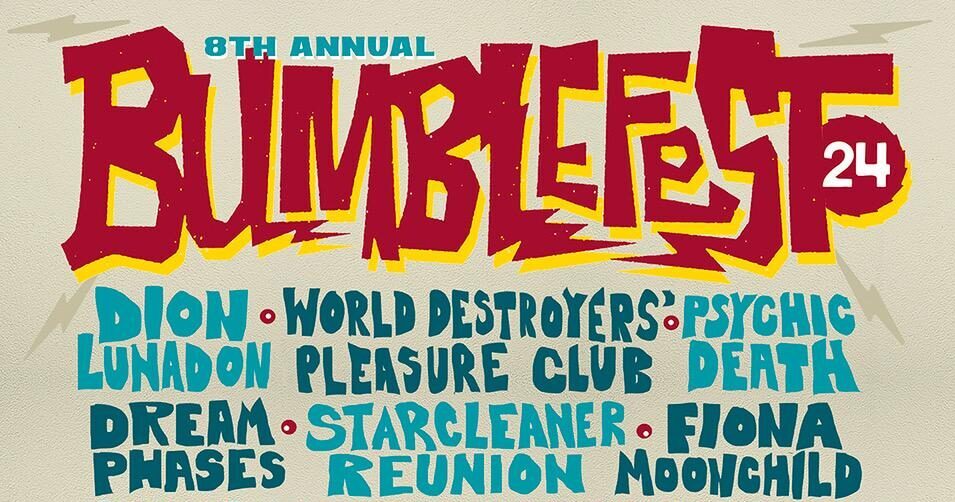
    The 2024 edition of Bumblefest features close to 20 independent acts over two nights. This year’s bill features Dion Lunadon, World Destroyer’s Pleasure Club, Starcleaner Reunion, Psychic Death, and Dream Phases among many others.

    Sigur Rós September 30 at Arsht Center

    Must be an Icelandic thing, that if you come from that Scandinavian island to Miami you have to play the Arsht Center. After Bjork played Arsht Center two years ago, her ambient music countrymen are doing the same.

    Charli XCX and Troye Sivan October 5 at Kaseya Center

    The British pop “brat” Charli XCX is back this time playing in an arena in a co-headlining tour with Australian singer-songwriter Troye Sivan.

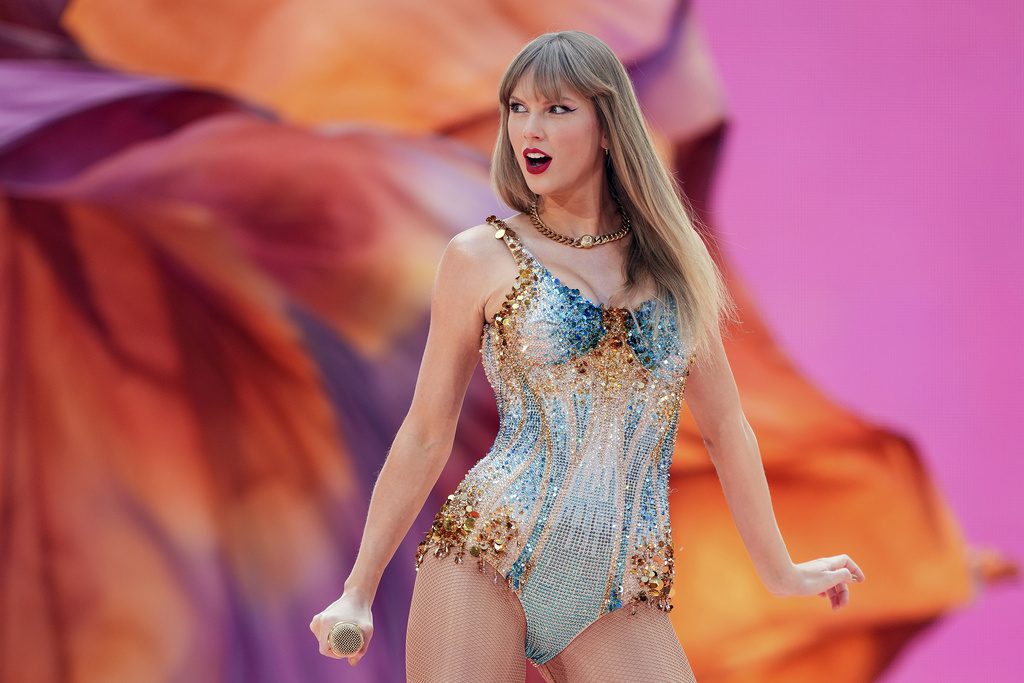
    Taylor Swift October 18-20 at Hard Rock Stadium

    Unless you have a generous trust fund, good luck getting tickets for this one. On the resale market they’re going for $2000 a seat to check out the biggest musical star of the 21st century on her Eras Tour.

    III Points October 18-19 at Mana Wynwood

    This year’s III Points features something for everyone. From the classic trip-hop of Massive Attack to classic hip-hop from Rick Ross and Raekwon to newer acts like Justice and Pinkpantheresss. Tons of your favorite local bands are on the bill as well.

    Air October 26 at Fillmore

    The French electro group play their classic 1998 record Moon Safari from front to back for all the sexy boys on this Miami Beach date.

    Billy Joel November 23 at Hard Rock Live

    At some point one of the Piano Man’s concerts will be his last one. A South Florida date always gives him a chance to play “Miami 2017 (Seen the Lights Go Out on Broadway)”.

  • Bumblefest 8 to Rock West Palm Beach September 6 & 7

    Bumblefest 8 to Rock West Palm Beach September 6 & 7

    We are thrilled to share the Bumblefest 8 lineup with you. The 2024 bill features more touring bands than ever!It has always been our goal to turn South Florida audiences on to incredibly interesting, below the radar acts from around the US. We love bringing bands down that would possibly never play our area!

    Bumblefest is a real world music discovery platform. A museum or gallery of sorts where you get the opportunity to sample works of art that you normally wouldn’t get to experience — in this case — live music — sounds and bands that wouldn’t ordinarily make the trip. Bumblefest is our communities annual cultural experience where you get to break out of your regular routine and try something fresh and new with an open mind. An exploration of sound without ever leaving town!

    Bumblefest Acts from Elsewhere:

    Dion Lunadon (NYC), World Destroyer’s Pleasure Club (LA), Starcleaner Reunion (NYC), Psychic Death (ATL), Dream Phases (LA), Fiona Moonchild (Seattle), forceghost (Augusta), Lo Fives (PHI), SheHeHe (Athens).

    Bumblefest Acts from Florida:

    Akasha System (Tampa), Siichaq (JAX), ISYA (St. Augustine), Bebe Deluxe (JAX),  American Dream Survivors (Gainesville), Rude Television (WPB), Severed & Said (JAX), Night Foundation (FTL), Justin Depth (Tampa), Kenny Moe (FTL), Mr. Entertainment + the Pookiesmackers (Hollywood), Zippur (FTL) and more!

    Bumblefest will also be a homecoming of sorts for three bands who are former South Florida residents in Lo Fives, SheHeHe , and American Dream Survivors.

    Early Bee tickets are on sale now. Buy them by clicking here. Both days for the price of one. Limited quantity, limited time!

    As always, a portion of the proceeds will go to local NFPs. Last years recipients include Sunflower Arts, Path to College, NAMI and the Dan Hosker Music Continuum.

    Take a listen to the bands of Bumblefest 8 below…

  • Hunters of the Alps on New Song “Dry Run”

    Hunters of the Alps on New Song “Dry Run”

    Miami based musician Mario Giancarlo is a bit of a renaissance man describing himself as an immigrant, a Latino, a writer, a filmmaker, and as a music industry veteran. It is his current bilingual indie-pop project Hunters of the Alps that had Giancarlo hop onto the Jitney to discuss his new single “Dry Run”.

    When did you fall in love with music?

    Mario Giancarlo: Aging myself here but when my dad played his cassette tapes of 80s Latin American crooners like Raphael and Julio Iglesias.

    How has Miami influenced you as a musician?

    In high school it made me want to be in a band, as a young adult it made me want to play in front of crowds, then later on I wanted to write better songs. Miami and its people and its musical scene is always underrated but it has shaped who I am.

    What inspired you to start Hunters of the Alps?

    A few things. I felt that my musical contribution to my previous band was overlooked and I wanted to take more control of creative decisions. This was catapulted by a gig that got confirmed to open up for Twin Shadow so I rushed to create the band and brand.

    Can you walk us through the writing and recording process of your new single “Dry Run”?

    As the forever sad boy that I have been dubbed by some, I am pretty sure I was feeling some type of way or being retrospective regarding past decisions, choices made that always come back to either haunt you or at least warn you.  Dry Run was a rough demo I made on electric guitar and I followed the melody around until i found what I wanted to say. It got some help from a few folks here and there until Rick Moon took over producing duties.

    What else does Hunters of the Alps have planned for the rest of 2024?

    Two more singles, an EP, two more music videos and West Coast shows.

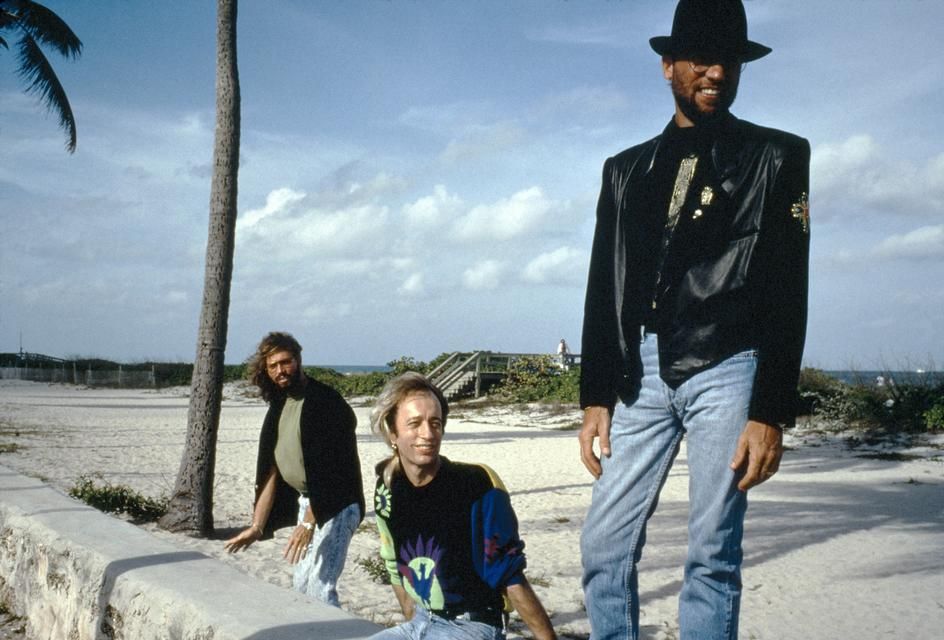
  • The American (and Miami) Dream of The Bee Gees

    The American (and Miami) Dream of The Bee Gees

    On March 4, 2007, a ceremony was held in a small park in Miami Beach, on Purdy Avenue, overlooking the Venetian Causeway and the open sea of Biscayne Bay. Until then, the park had been called Island View Park, but from that day on it would be renamed Maurice Gibb Memorial Park. Three years earlier, Maurice had not survived surgery for an intestinal obstruction at the Mount Sinai Hospital.

    The Gibb brothers sealed a pact from a very young age, which consisted of becoming one of the greatest music bands in the world. Born in the United Kingdom, they emigrated to Australia when Barry, the eldest, was thirteen years old, and the twins Maurice and Robin were eight. They soon began their musical adventures at school and with friends, then on stages and TV shows, and their album The Bee Gees Sing and Play 14 Barry Gibb Songs saw the light in 1965. Although it followed a glorious stage, Australia was neither Europe nor the United States, and the ceiling was low, and they had already reached it.

    The Bee Gees returned to England in the late sixties, where Robert Stigwood, partner of The Beatles’ manager, Brian Epstein, was waiting for them with high expectations and a contract that only needed signatures at the bottom. At first, the public was not indifferent, but they did not manage to position themselves as expected; in one of their performances, they were even pelted with eggs. At that time, the United Kingdom was the realm of The Beatles, and if The Bee Gees wanted to shine, they had to orient themselves more towards that style in both music and lyrics and move away from love ballads.

    The Bee Gees considered the idea of saying goodbye to the stage,

    but their friend Eric Clapton suggested they try their luck in America, in Miami. Clapton had retreated to Miami Beach to recover from his heroin addiction, in a house at 461 Ocean Boulevard, near Criteria Studios where he recorded Layla and was preparing his next album.

    The Gibb brothers landed in Miami Beach to spend some time at 461 Ocean Boulevard and seek, with the help of producer Arif Mardin, their change at Criteria Studios, which at that time was a mecca for musicians, where Bob Dylan, The Eagles, Bob Marley, Fleetwood Mac, and James Brown had recorded for Atlantic Records. The Bee Gees’ first single in Miami, “Jive Talkin’,” was born in the van that took them along Biscayne from Ocean Boulevard to Criteria, and it showed their other face, one with rock rhythms, which earned them top spots on the Billboard charts. The release of the album Main Course, with the tracks “Winds of Change,” “Fanny,” and “Nights on Broadway,” confirmed the quality of their new work and marked the change they had been seeking. Later came the soundtrack of Saturday Night Fever and the recognition of The Bee Gees as the greatest disco music band in history.

    In addition to Main Course, The Bee Gees recorded the albums E.S.P and Spirits Having Flown at Criteria, considered by many critics to be their best work, with the tracks “Tragedy” and “Too Much Heaven,” which took them to the Top #1 not only in the United States but also in England. By the late seventies and early eighties, the Gibb family had already settled in Miami Beach, and in some interviews, when asked why they made this city their home, the answer was that Miami had captivated them from the very first day.