Category: News

  • 📚⚡ New Voices Fiction Award Winners

    📚⚡ New Voices Fiction Award Winners

    Welcome to the New Voices Fiction Award,

    Our first contest was a success closing with 46 submissions.

    The winners have been announced and their stories published.

    1st Place Award

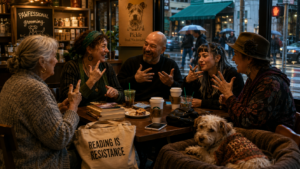
    “Deaf Dog Book Club” by Yilong Liu.

    “Deaf Dog Book Club” follows a newly widowed woman whose quiet afternoon at a coffee shop takes an unexpected turn. Funny, tender, and sharply observed, it’s a story about grief, language, connection, and finding your way back into the world.

    Click here to read the story.

    We plan to nominate “Deaf Dog Book Club” for the Pushcart Prize.

    2nd Place Award 

    “Nests and Numbers” by Brian W. Ball

    “Nests and Numbers” follows a retired IT professional confronting a devastating diagnosis while trying to make sense of the numbers that suddenly define her future. A quietly furious story about mortality, money, motherhood, and the brutal arithmetic of American healthcare. It’s a powerful American tale and we hope you enjoy it.

    Click here to read the story.


    3rd Place Award

    “Silver Dollars for Silver Tongues” by Emorra Oteca

    “Silver Dollars for Silver Tongues” follows a young wife in 1950s America as a charismatic stranger draws her husband toward the promise of easy wealth. It is a tense domestic story about ambition, trust, marriage, and the seductive power of believing in something too good to be true.

    Click here to read the story.

    Interviews with Award winners 

    As promised, the winner and runner-up both were interviewed and published.

    Click here to read the interview with Yilong Liu.


    Interview with runner-up

    Click here to read the interview with Brain W. Ball.

    2nd New Voices Fiction Award

    We truly enjoyed hosting this contest. It was so much fun.

    As a result, we have made it biannual.

    Submissions for the contest will close December 15th.

    We will build this out and increase the prize money and visibility.

    Submit here for the 2nd New Voices Short Fiction Award.


  • Uncle Scotchy & The Time Thief Book Launch This Thursday at Little River Distillery

    Uncle Scotchy & The Time Thief Book Launch This Thursday at Little River Distillery

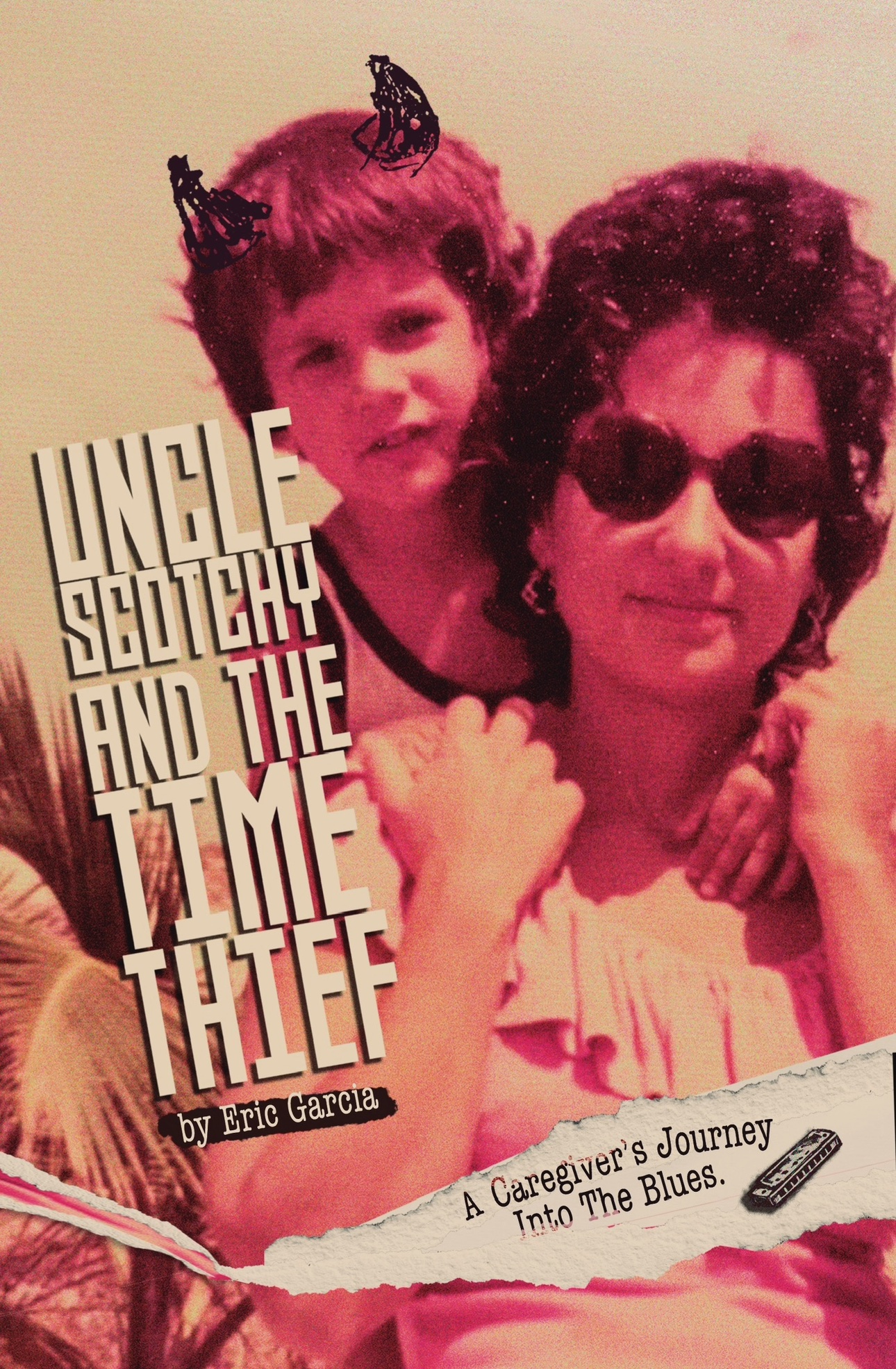
    Miami musician, writer and storyteller Eric Garcia, who performs as Uncle Scotchy, will celebrate the release of his memoir Uncle Scotchy & The Time Thief with an official book launch and signing on Thursday, November 5, from 7–9 PM at Little River Distillery.

    The book grew out of Garcia’s eighteen years as a family caregiver — eight years helping care for his mother after her younger-onset Alzheimer’s diagnosis, followed by another ten years caring for his father.

    Those experiences first became The Blues Opera, Garcia’s one-man show combining original music, storytelling, grief, dark humor and blues mythology. The production ran for 71 performances in Miami before evolving into the memoir.

    Told in twelve boxing-style “Rounds,” Uncle Scotchy & The Time Thief explores family, caregiving, memory, loss, Miami and the question of who a caregiver becomes when the caregiving finally ends. Alzheimer’s and the passage of time appear throughout the story as an unseen adversary Garcia calls “The Time Thief.”

    Garcia fronts the Miami band JUke and was named Miami New Times’ Best Songwriter in 2023.

    The November 5 launch will include a book signing, conversation about the story behind the memoir, and a free Easttop harmonica with book purchase while supplies last. Garcia is also scheduled to appear at the Miami Book Fair on Nov. 21.

    EVENT DETAILS

    Thursday, Nov. 5, 2026
    7–9 PM
    Little River Distillery
    73 NW 71st St., Miami, FL 33150

  • Travis Roig’s New Album, The Deli

    Travis Roig’s New Album, The Deli

    I’m skipping the deli puns. And I’m doing my best to ignore the deli metaphors. What I can say is this: This is as close to me singing on a barstool as you can get. Guitar in hand. No signs of a band.

    I really took my time with this one. Everything had to be deliberate. No unmotivated moves. It became a game of “What can I take out and still convey the idea?” No clutter. A real focus.

    Art could very well be imitating life. My life. Because I can say I feel the same. I can say I’m more focused today than ever. Any clutter I accumulate is swiftly swept aside.

    You know, that’s what the deli was. A place where sweeping felt like praying. Preparing food for people felt holy. My spirit pockets were always full at the deli. Let’s be pretentious and say yes, the deli was totally a spiritual sanctuary. For our customers, a place of refuge. For me, a place I could mouth off to the customers and get away with it cuz I’m “just the guy behind the counter.”

    I miss that counter. I miss that deli.

    Oh, I apparently also curse a fair number of times on this album. Earned me one of them black-and-white Parental Advisory stickers from the 80s/90s. I consider it a badge of honor.

    This album is about rain, road trips, death, and starting over.

    I’m 46 years old and I think I made a 46-year-old album. I’d call that a big success.

  • El Marciano de Miami – Chapter Five

    El Marciano de Miami – Chapter Five

    Click here to read chapter four.

    Two months in Krome, and by this time my girlfriend and I have already decided to split after all of this is over. When, if, I get out, she will go her way and I will go mine. I’ve decided not to get back together with her ever again, to leave things the way they are before they get any worse.

    We had a good run. At the end, the relationship got very cold. It was over before, and we knew it. She didn’t have to help me stay in the U.S., but she did. For that, I thank her!

    So I’m feeling a bit destroyed and empty inside, without caring about anything. I call her to tell her that I’m going to Colombia. I say, “Fuck it.”

    And she says, “OK, but I always want to keep in touch with you. I want to have your email.”

    So I say, “You know it. Good luck,” and hang up.

    I call my mother to let her know what’s up, and she says, “Don’t rush yourself. The lawyer told me the papers were about to come through, and they should be getting in soon!” We hang up.

    I take a day to reconsider, because I don’t want to wait another six months in this fucking place. I’ve already been locked up for six months, and it’s more than enough. So I reconsider and decide to wait for the next court hearing to hear what they have to say.

    # # #

    See, the first time I had a court hearing in Krome, Mr. Herewhitz, or Judge Herewhitz, a very nice and decent person, said, “It seems you have a problem with Judge Ford. He denied your bond. Why? Unfortunately, I can’t overrule his decision, so he has to decide whether to give you bond, or you can appeal.”

    I had already appealed some months back.

    The appeal said, and this came from the Supreme Court, that Mr. Ford must make another decision in Mr. Gamez’s case, one that takes into account all the new evidence and exhibits. But when my lawyer presented my file and the appeal to Judge Ford for a new decision, he just opened it, looked at my picture, threw it back on the desk and said, “DENIED.”

    That’s what my lawyer told me, so that’s what we tell Judge Herewhitz at Krome during my second hearing there.

    He says, “Send another appeal with a letter signed by me, Judge Herewhitz, as a recommendation.”

    That appeal should be getting here anytime now.

    But it doesn’t matter, because at my third hearing, about three months after I got to Krome, we walk in and say, “OK, my I-130 is approved.”

    The judge looks at the D.A. and says, “Anything else? Harry isn’t even supposed to be here this long.”

    The D.A. takes another quick look at my file. I’m thinking, “What else can they find?”

    And there goes the D.A.: “Oh, oh, he’s been convicted of a crime some years back. It’s less than 20 grams of marijuana, but possession and paraphernalia.”

    The judge says, “IRRELEVANT. This does not apply to this case. It’s obviously less than 20 grams. This doesn’t apply to him, not by law.”

    But the D.A.’s job is to get you any way they can. Since we weren’t expecting this and never had a problem with it, my lawyer wasn’t ready with those documents. So they give us a week and a half to get ready.

    In the meantime, I’ve learned how to play a million card games. And of course I’ve learned a whole lot about the legal system and the immigration system. It’s all a government mafia. I’ve learned many things.

    But anyway, we get back to court on May 4 and prove that my problem doesn’t apply to me in a negative manner. This time the D.A. says, “Proceed, Your Honor.”

    And the judge says, “Good. Let’s have the master hearing for Mr. Gamez’s residency interview on June 12.”

    I thank him, but my lawyer says, “Your Honor, can we please make it sooner? He’s been locked up for a very unnecessarily long time.”

    And the judge actually looks at me and apologizes: “I’m really sorry, son, to make you wait, but there’s been a loss in my family, and I won’t be here working for two weeks. This is the soonest I can do it.”

    I stand up and thank him again. “I’ve already waited a long time. I’m sure I can wait another month and a half with no problem, Judge. Thank you for the opportunity and your kindness, sir.”

    So we leave feeling pretty positive. My lawyer shakes my hand and tells me, “On June 12, you’re out of here,” pointing his thumb toward the door as if hitchhiking.

    And I say, “I know, but I’ll believe it when I’m out those doors.”

    In the meantime, I’m not being treated like a CIVIL DETAINEE. I’m being treated like a criminal.

    # # #

    OK, that wasn’t so bad. I go back to 14 Bravo, my pod. I tell the guys, and they get really happy for me. The same things go on every day: card games, dominoes, ping-pong tournaments we make up. It’s really fun to know you want to win the game of ping-pong you’re playing, otherwise you lose your dessert or a phone card. If you find that boring, it’s the funnest thing you can do in here. Challenge yourself!

    Anyway, I also get some good and bad news from my city of Miami. One new thing is that I’ve learned how to put pearls (this is for sexual pleasure). I’ll explain in person, or Google it later.

    In the meantime, I’m leaving all this pain of not knowing what’s going to happen to me up to time. Time will solve my problem. Time will help me organize my new life when I get out and put into practice the plans I’ve made all this time.

    Believe it or not, it seems like I can make up for the seven and a half months I’ve wasted in about four weeks. I’ve learned that everything is possible. The impossible just takes a little longer.

    I’m not going to lie. My life has changed for the better, and I’ve grown a lot. I even know what names I’d like my kids to have, what I’d do with them on weekends and where I’d take them. So when I grow old, I’ll know I enjoyed my life to the fullest. And I will. Life is long and short at the same time. It just depends on how you live it. Spend it or waste it.

    # # #

    Anyway, back in Krome, to free our minds from problems, deportations, judges, court hearings, money, everything, there’s always the best sport in the world: SOCCER!

    We have soccer games every day at 9:30 a.m. or 1:30 p.m. for recreation. We have the Colombians, Mexicans, Hondurans and Arabs. We all do pretty good. Some play dirtier than others, but overall it’s a fun fucking time for everyone. I probably see maybe two fights in total, but nothing serious. Even the officers look forward to watching the games. They have their favorites, too.

    Our team is one of everyone’s favorites because we always have Colombians, Brazilians and Argentinians. The Mexican team also has Guatemalans, and the Hondurans have Salvadorans with them. The Arab team has Turks and, here and there, one or two guys from India and Morocco. They’re the dirtiest ones.

    One of them, Narcichi, is a tall, heavy asshole who’s always looking for problems and has nothing to back it up with. He gets jumped twice with the lids of the boxes where we keep our personal belongings and some chairs. He soon learns that if you want respect, YOU GIVE RESPECT FIRST! But he learns it the hard way.

    I have a feeling something is going to happen soon, so I pray for patience.

    But on May 14 at 1:30 p.m., I’m getting ready to leave for the soccer game when the captain calls my number: “363 Colombia, pack it up. You’re leaving.”

    DAMN!! What the hell do they think we are, animals? It’s bad enough of a mindfuck that we get screwed by racist judges, robbed by lawyers, threatened by officers and treated like criminals, but we also get tossed around like cows and pigs?

    Well, after the second time around, you get used to being moved. But I want you to understand what it feels like to have no human rights whatsoever, thanks to our very critical Bush administration.

    So I pack up, get ready, and they take us back to those frozen cell units until 9 p.m., after they give us our clothes and the rest of our property. Outside our door, a little magnetic sign says:

    TRANSFERS TO GLADES

    OK, at least I know where I’m going. Been there, done that. An unfortunate feeling. So I calm down again.

    The rest of the guys have heard it’s hell. I tell them, “It’s a correctional jail. We ain’t home, but it’s not hell. Just mind your own business, and you’ll be OK.”

    But even the biggest fucking Canadian guy, a bunch of Mexicans, Salvadorans, Guatemalans and about four Colombians hate being treated as less than dirt in a place like Glades. They make a very real point of abusing your human rights. So much that even when you ask them for toilet paper, or a 50-year-old man is choking on his own saliva, they actually wait and stare and wait some more to see if he’s almost dying or just pretending!

    And of course, here we’re not people or guys or civil detainees. NO. Here we’re what they call us all the time: scumbags, motherfuckers, assholes, pieces of shit. Some even call us garbage.

    But that’s not the worst part of it, hehe. The worst part is that the people calling us these names and acting this way are now legal officers making 25 lazy dollars an hour, but they were once illegal Haitians, Mexicans, Cubans, Guatemalans, Russians, Jamaicans, Hondurans, Venezuelans, Colombians, Peruvians; anyway, you get the point.

    They don’t just turn their backs when it comes to helping other people. They do it to their own people. They bring them down to the lowest a person can sometimes feel, and they enjoy it, laughing in your face.

    Welcome to our new America! Immigrants hating on immigrants! We’re strong and we can take it, but it still hurts a strong heart!!!!

    Click here to read chapter six.

  • The Only Living Pickpocket in New York Starts GEMS with a Bang

    The Only Living Pickpocket in New York Starts GEMS with a Bang

    Miami Film Festival GEMS takes place this year from October 29 through November 5. Throughout the week they’ll be screening fifty foreign and indie films all throughout Miami. Here’s a look at some of the highlights cinephiles can catch including a rave review for the opening night film, The Only Living Pickpocket in New York.

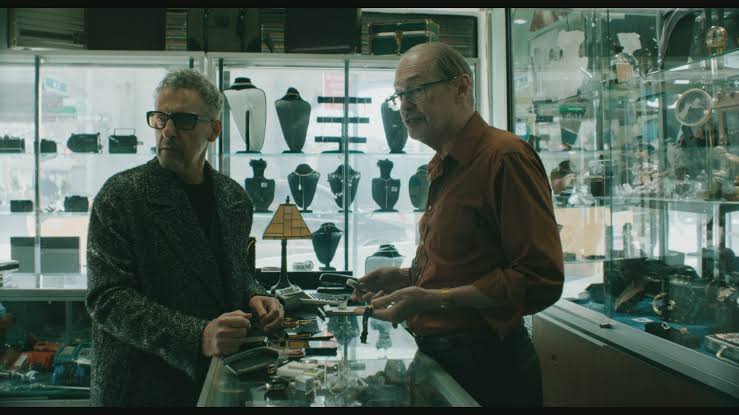
    The Only Living Pickpocket in New York

    The title tells you all you need to know about the plot of this fun crime movie. John Turturro plays the title character with all the panache you could hope for from one of the great hams of American cinema. The movie is a love letter to not just New York, and not just small time crooks who find it so hard to steal in a cashless economy, but mostly to New York indie films that they don’t make as often as they used to.

    Turturro and his old The Big Lebowski bowling buddy Steve Buscemi get to chew scenery together as they reminisce about the good old days while plenty of other great performances are thrown in from Jamie Lee Curtis and Giancarlo Esposito. While the ingenuity of the pickpocket sometimes strains credibility, the brisk ninety minute running time doesn’t give viewers time to think too hard about what they just saw. What will stick with audiences is to seize the day since you never know which pocket will be the last that you get to pick.

    The Debut

    There was a time when any time Jesse Eisenberg was in a movie, it was a call to head to the theater. Roger Dodger, The Squid and the Whale, Adventureland, and The Social Network are all stone cold classics in my household. Now Eisenberg is a filmmaker himself, after the success of A Real Pain, he now brings The Debut, about a small time community theater with big personalities.

    I Play Rocky

    They used to call any movie about an underdog The Rocky of… For example 8 Mile was the Rocky of battle rapping movies. The Karate Kid was The Rocky of karate movies. In that case is this movie about the making of the original 1976 Rocky movie, the Rocky of Rocky movies?

    Wild Horse Nine

    All the betting lines have John Malkovich as winning the best actor Oscar for this role as a CIA agent sent off to Easter Island. From director Martin McDonagh whose last movie was the great The Banshees of Inisherin.

    Bitter Christmas (Amarga Navidad)

    When he’s working in his native Spanish language I think Pedro Almodóvar might be the greatest living film director. From the title of his newest it sounds like he might be getting in the holiday spirit.


  • El Marciano de Miami – Chapter Four

    El Marciano de Miami – Chapter Four

    Click here to read chapter three.

    There are about 20 or 25 of us again on our way out of Glades, and we have to get our clothes, money and property. They’re done by 3 a.m., and now they cuff us up again from head to toe and we jump on the bus.

    I’m sitting next to my buddies Alessandro and Juancho (alias “Gasparin”). Alessandro is from Brazil. He’s a very nice and funny guy with a great heart. I’ve known him since B.T.C. This man is married and waiting for his papers, but Judge Ford doesn’t want to give him bond either because he had a DUI like five or six years ago. He’s been locked up for four months now.

    And Juancho (Gasparin) is also a very happy, funny fucking guy, a very generous person. But I gave him a couple of extra gray hairs because I used to pick on him a lot. He’s fighting for asylum and has also been with us for about four months.

    He and I were singing some old vallenato songs from Escalona, El Binomio de Oro, a little Carlos Vives and Diomedes Díaz to pass some time. Damn, those songs are awesome!

    And we finally got there. Oh, oh. We are in KROME. Yes sir, I am now officially going to be a detainee in KROME.

    # # #

    So it’s 5 a.m., and they finally take our cuffs off and we wait to be processed. Since we’ve been locked up for some months now, we’ve started to think and act like inmates. I’m not gonna tell you what we did for 22 hours in a fucking depressing, cold-ass cell because it’s not that damn interesting. But know that we played coin games against a corner wall. We also picked on and made fun of all the guards who were there pretending to do some work, not really doing a thing while we were there.

    They fed us three sandwiches during the whole 22 hours we spent there, with chips and water out of a dirty-ass sink.

    So we got to KROME at 5 a.m. on February 7, and they put us in our pod, 14 Bravo, at 3 a.m. on February 8.

    We went to sleep for two hours and woke up at 5:30 a.m. to what we would hear for the next three and a half months: “UP, UP, UP, UP, UP, UP, UP! GOTTA GET UP! GOTTA GET UP!”

    So we got up, made the line and walked outside the building toward the diner. This is kind of what boot camp would look like. They told me it was a military camp before it became an immigration facility. So we got some breakfast.

    It looked fucking great after three sandwiches and chips. We ate all of it and whatever people left behind. They give you 10 minutes to eat, and then you have to get back to the pod, but of course not without being searched by officers in case you decide to take some food back.

    On your way in, you get to see some cool little family of raccoons. They look like they all went out as a family on a Sunday morning to the zoo to see some strange and rare species of illegal immigrants. It’s very ironic to see that, as cool as it was!

    Back in the pod, all you have is a ping-pong table and a TV. Cards and dominoes are here and there if you buy them. A radio that costs about 20 bucks out on the street costs 40 bucks here.

    I fortunately got there with my buddies Gasparin and Alessandro. The rest of the guys landed in different pods. I spent the next week or so with them until one day they got Alessandro and took him back to Glades again. So now it’s Gasparin and me.

    We met Harold, another Colombian who wrote a bunch of letters for other people so they could show them to the judge. He helped about six people, and they all got out on bond. But his case was a lot more complicated than that, and those letters didn’t work for him. He got deported some weeks after we met him.

    We met a new Colombian guy who got there because he left on a cruise to Mexico, and when he got back they arrested him for supposedly trying to sneak into the country again. This guy had been a resident for a little less than 10 years. These immigration assholes are busting everyone’s balls for no fucking reason as they spend billions of dollars in the process. His name is Lucho. He’s been here for almost one week, and he’s already going crazy. Maybe we shouldn’t tell him how long we’ve been here! He he.

    We also met a very fucking cool Venezuelan dude called Virgilio (alias “El Bichito”). We all hung out, played cards and chilled.

    We also met some cool Mexican singer we called “Negrete,” who sang all the time and kept us well entertained. Great guy.

    # # #

    One time Negrete got into an argument with a Jamaican guy who happened to be an asshole. When Negrete was walking away, Jamaica kicked him in the back. So Negrete turned around and punched him twice, but I stopped him. When the officers showed up, the African American asshole officer took the Jamaican’s side and sent our Negrete to the other pod, Pod 11, with a Salvatrucha who opened his dumb mouth and called the officer a nigger.

    So Jamaica thought he could keep on being a prick because he had another buddy, a Haitian guy who we’ll call “Fuck Face.”

    We for sure did not own that pod, but these dumbasses really thought they could come and run shit. One day they tried Virgilio (El Bichito), and El Bichito didn’t hesitate to tell him, “What’s up? You got a fucking problem? Let’s go to the bathroom and talk.” The bathroom is the only place here with no cameras. But they got scared because we heard what was going on and came over. Now there were three of us and two of them, and that was that.

    But another time I was in the bathroom, and both them fucks came at me when I was on my own. So “Fuck Face” came at me first. I rushed him back toward the toilets, and he fell backward. I fell on top of him and punched him while he was trying to get up, as his buddy was punching my back and head. But by this time my friends heard the mess and came into the bathroom and threw them both to the floor. Right before we got to see a little unfortunate blood, the officers got there. They all knew those two were a pain in the ass, so they got sent to Pod 11. He he he.

    And guess what? As soon as they walked in, Negrete spotted Jamaica and followed him to the bathroom and punched him a few times, they all say, until Jamaica said, “Please stop.” Negrete actually felt bad, so he stopped the punches and then said, “You knew you would see me sooner or later, dumbass.” Jamaica never messed with anyone again. As a matter of fact, you couldn’t even hear him around.

    # # #

    Another month goes by, and Gasparin gets called to go to court. Some hours later, he comes back not looking too happy. He says, “They didn’t want to give me asylum.”

    This was a week after Raúl Reyes, second in command of Las FARC, had been put down by the Colombian military in Ecuadorian territory. That was on March 1, so Gasparin had court on the fifth or so. He had also been a victim of kidnapping by Las FARC a couple of years back. He paid his ransom and was set free. Some days after that, he picked up his things, grabbed his family and brought them to the United States of America.

    Well, Judge Ford acted like an asshole yet again and said, “I want more evidence to approve his asylum.” He and his lawyer presented newspaper cutouts, threatening letters and pictures that were sent to his home to let him know he was being followed and watched. Gasparin lost his father because of Las FARC. His father left him many farmhouses and land, and Las FARC just took over most of them, which made him come to the United States of America for help.

    So the lawyer asked the judge, “Do you actually want to see this man killed before you believe he is in real danger if he goes back to Colombia, so you can give him asylum?”

    And the judge, with that “who cares” attitude and those dumbass faces he makes, replied, “If that is what should happen to him, then I can’t help you.”

    I can just picture Judge Ford saying that. Poor Gasparin. I can imagine how he must have felt. So I bought us a soda and we cheered together: “To justice and karma, and to the day Judge Ford finds both of those in his trial.”

    Click here to read chapter five.

  • The Okras Release New Songs “Boilerman” and “Hurricane Yellow”

    The Okras Release New Songs “Boilerman” and “Hurricane Yellow”

    Oscar Sardiñas is back with some new music. The frontman for the Miami psych roc band Jaialai has two brand new songs in “Boilerman” and Hurricane Yellow”. While formerly releasing his solo work under the moniker Hurricane Yellow, Sardiñas decided on a different handle for the new tracks, now going by The Okras. Take a listen to the two new tracks below as you read our Q&A with The Okras.


    Why the name change from Hurricane Yellow to The Okras?

    Oscar Sardinas: Yeah, it was a bit clunky. It didn’t really roll off the tongue, did it? Okras is an anagram for Oscar. My boss, Bill, would sometimes title our meetings The Bile and Okra Show on a shared calendar. The word stuck. I love how the letters look. It’s an emblematic dish of the South and the Caribbean. The name is lighter. There’s lots of reasons for that name change.

    What inspired and influenced the two new songs, “Boilerman” and “Hurricane Yellow”?

    Both were written a while back. Boilerman is a nickname my partner Abby would call me when I would boil the baby bottles to sanitize them at night, when our son Theo was a babe. It was meditative, and I liked the steam on my face. She’d say “hey boilerman,” and I’d say “how can I help you,  my angel?”

    The second track is my old solo act name, Hurricane Yellow. The clunker. It’s an evocative and moody song title, though. I felt I should bury the name in a song. That one isn’t about anything specific. It’s random life in Broward stuff, deep life stuff in general, over a Krautrocky rhythm.

    Can you walk us through your writing and recording process for the new songs?

    I usually noodle on an old acoustic and come up with sketches in the living room whenever I have the time. The songs usually get put either in the Jaialai pile or the “I don’t know what this is” pile. Those typically end up being Okras. It sounds dismissive.

    I don’t mean to frame it that way. They’re just more introspective, the band (Jaialai) is more outgoing, more immediate. Recording them was fun because I did a lot of it at home. One of my recordings is built around a voice note.

    When I tracked my parts, I’d send them to my collaborators. They’re out of town, so they’d record their stuff and send it back, and I’d put it all together. It’s mostly home recordings, and we recorded some guitar and vocals with Ryan Haft.

    Any news you want to share about future plans for The Okras or Jaialai?

    Since we’re already in Q4, I’d like to record stuff to put out next year and play a bunch of shows with both acts. Ideally, turn Okras into an actual act, and have Jaialai put out some new stuff, because it’s been too freaking long.

    How are you handling this rough Miami Dolphins season?

    Oh, I’m enjoying it! Let’s go 0-17 and bring Jeremiah Smith home.

  • THE MIAMI BEACH HAIKU IMPROV POETRY SLAM

    THE MIAMI BEACH HAIKU IMPROV POETRY SLAM

    Angel – named by her Mykonos-born mother in a blend of naïve optimism and a centuries-old family naming tradition – stepped into the spotlight on The Fillmore Miami Beach stage in skin-tight black latex with decorative steel buckles and zippers, short legs bare and muscular, hair elaborately curated in multi-colored braids, looking more like a WWE Superstar than a Poetry Slam Champion ready to defend her Haiku Improv title. Her fans in the sweating crowd roared as if a rock idol had graced them with her presence, waving red roses (her victory flower). She used mindful visualization techniques from her Zen master to summon the image of herself triumphant, engulfed by red petals, as she knew she would be at the end of the evening.

    Her challenger Chiquita – named by her Andalusian father, who said he chose the name out of love for his sweet “little girl” but also just craved bananas – strode on next, a towering giraffe from her yellow cowboy boots to the halo of blond curls that set off her glowing dark skin. Admirers rose to their feet hooting, waving yellow roses, plus a few bunches of bananas which she prayed they would not throw when she beat the pants off that self-important musclebound little poetry pretender.

    Angel, the defending champion, chose heads in the coin toss; when she won she declared, like a football captain, “I opt to receive.”

    The judge (in a black robe suitable for the Supreme Court, plus red patent leather pumps and a red satin turban) pulled a card at random from the fishbowl of audience suggestions and declared: “The topic for today’s Haiku Improv Poetry Slam Final is…Heartbreak.”

    Chiquita stepped to the mic, quieted the crowd, took a deep breath, pointed at her opponent and proclaimed, (without counting syllables on her fingers):

    Crazy Angel bitch
    Breaks my heart every morning
    When she leaves my bed.

    Fans gasped, then recovered, and cheered lustily for the hot banana girl, until the defending champion took the mic, declaring to her challenger:

    You know I can’t help
    Love your smooth peel and sweet heart
    So please don’t break mine.

    Roses flew, both yellow and red; a few bananas went “splat” on the stage. The Judge, stomping their red patent pumps in appreciation, declared Angel and Chiquita the first ever co-champions of the Miami Beach Haiku Improv Poetry Slam.

    It was a warm Saturday night in early May, four days after Layla Mickey Foxx had arrived in Miami. She was almost five months past her thirty-fifth birthday, and she felt a fresh kind of freedom as she applauded and whooped with the crowd.


    That morning she’d gone down to the coffee shop on the first floor of her new apartment building for the fourth day in a row. She felt like a regular. The barista already knew her name and her order: café latte and peanut butter cookie for Mickey, she declaimed. While waiting for her drink Layla Mickey surveyed the room. She liked being Mickey in Miami.

    It was Saturday; she could see the difference from the weekday crowd. More hungover couples. Solo readers on their laptops sipping fancy coffees slowly, flicking pages gently, unrushed. A pair of fascinating looking women sat together at a four-top. One, tall as a basketball star, had an elegant, shaved head; the other was compact and powerful looking. Mickey collected her drink and approached.

    “Mind if I join you?” she asked.

    “Please do,” said the short one. “I’m Warrior Two, and this is The Queen.”

    Layla Mickey settled her drink and cookie on the table.

    “Layla Mickey Foxx,” she said, “with a double X.” She put out her hand and they shook. “Just got into town this week.”

    “Interesting name,” said The Queen.

    “My mother chose Layla because she loved Clapton. My dad chose Mickey because he loved Mickey Mantle. I chose Foxx because I hated being teased when my last name was Fuchs.” She paused, decided. “Call me Mickey. Did you know Mantle still holds records for both the most home runs and the most strikeouts in the World Series?” She felt her father’s positive energy rushing through her. He had loved baseball statistics.

    “Love those Yankees,” said The Queen. “You’re visiting from New York?”

    “I’ve moved here,” said Mickey. “I’m renting upstairs” she pointed straight up, “got in Tuesday. My stuff got stuck somewhere in the middle of the state for an extra day, but I’m all settled in now.”

    “Made you anxious, right?” asked the Queen. “All your stuff missing somewhere in bumfuck Florida?

    “Sure did. Do you know how many people get scammed by movers? I brought a few things in the car, mainly business records, but all my clothes and furniture were in that truck.”

    “What business are you in?” asked Warrior Two.

    “Oh, it’s pretty boring,” Mickey said. “Financial.”

    Warrior Two tilted her head to the side, curious. “You have business here?” she pursued.

    “I hope so. I’ve inherited my family business, but I want to take it in a different direction. Thought I had a lead on a client here working on affordable housing, but it turned out his condo project wasn’t on the level.” She decided not to share that he was the Ponzi schemer pictured on the front page of Wednesday’s local section.

    “Ah, real estate,” said Warrior Two. “Miami’s number one industry.” She made air quotes around the word industry. “Rarely on the level.”

    “I’m just on the financing side,” said Mickey.

    “It’s a very destructive business,” Warrior Two persisted, “for people who actually live here.” Her eyebrows frowned. “Billionaires snatching up neighborhoods and dropping overpriced new condos everywhere, pushing ordinary people out. The properties never fill up, except now investors are buying them for Airbnb rental. Ruins the building but the developers are long gone by then.”

    “Yes, same thing in New York. It’s terrible.” She saw no reason to mention her late mother’s involvement in those dreadful projects. “I’m not committed to real estate,” Mickey said. ”I’m in private lending, open to all kinds of deals.”

    “You’re a loan shark?” asked Warrior Two.

    “Not a shark. We help people who can’t get other financing. It’s 100% legit.” She was the only one left – the last survivor in her family. “Not ‘we’ anymore,” she corrected herself. “It’s just me now.”

    “You miss your family, don’t you,” said the Queen.

    She did. She still longed for one more adventure with her father Jake, a softhearted bookie who’d been killed on their doorstep by a horseplayer who owed him money when she was ten. She still missed quarrelling with her mother Alex who, heartbroken, had pivoted the business to coldblooded real estate lending and died of leukemia (probably caused by bitterness) just one month before. She still treasured the random moments when her magical aunt Marjorie, dead fifteen years, showed up as an opinionated hovering purple cloud.

    Mickey sipped her latte and broke off a piece of her peanut butter cookie. It smelled like magic, and she heard Marjorie’s voice, like a mantra: Try not to be afraid of things that intrigue you.

    “Yes,” Mickey told the Queen, “I miss them desperately. But I had to turn the page, start my next life. That’s why I moved to Miami.”

    Warrior Two pressed on. “Loans to those who can’t get other financing – like women and people of color?”

    “There are lots of people who can’t get traditional loans,” Mickey replied, “not just victims of the racist patriarchy.” She liked exercising her debating muscles with Warrior Two and leaning into her Mickey personality – not afraid to swing at a pitch. A few progressive buzz words couldn’t hurt to establish her bona fides.

    Up near the ceiling, Marjorie sniggered, nearly invisible lavender vapor enjoying the show. Warrior Two looked up, distracted, and then returned her attention to the conversation. In fact, most of Alex’s borrowers had been bigots who foolishly believed they’d beat her in negotiations because she was a woman. Out-thinking misogynists to maximize profit was a worthy endeavor – women taking their share – but it certainly wasn’t social action.

    “I’m looking for a different kind of client,” Mickey said, and she meant it. She’d battled against Alex’s lending to developers who priced ordinary people out of their neighborhoods, but she’d never won the argument. She pulled her shoulders back and down, sat up straight and declared, “This business is under new management and ready for change.”

    “We can introduce you to some people,” said The Queen “who might have interesting projects.” She reached for Mickey’s phone. “May I give you our contact info?” Not waiting for permission, she tapped the screen gently with a long, tapered index finger. Her nails were short and buffed, and on her index finger she wore a ring with a black iridescent stone that reminded Mickey of volcanoes she’d seen in Hawaii.

    “There you go, Layla Mickey Foxx,” said the Queen, turning the phone back. “And if you don’t have plans this evening, there’s a fabulous event at the Fillmore where you can start to meet some new friends.”


    The Miami Beach Haiku Improv Poetry Slam was indeed fabulous and the champions, Angel and Chiquita, were lofted out the door by scantily dressed friends and fans. Warrior Two appeared at Mickey’s side. “Rooftop afterparty at a ridiculously hip restaurant,” she said, “just follow the crowd.”

    It was a beautiful evening, and Mickey found herself part of a parade. Two dozen celebrants in festive costumes and strappy shoes pranced along waving flags and trailing balloons. They strutted through a palm-studded park, stopped honking traffic to cross a busy street, and reached a pedestrian-safe road where they spread out and kept dancing along to the music of a trumpet and a saxophone and a snare drum. A clave joined the rhythm section and added a mambo beat. It felt like a second line in New Orleans, heavy on the Latin influence. Mickey got into the groove with the others, in her best black jeans, silver threaded tank and red Chuck Taylors. She shrugged off her white tuxedo jacket and hung it by its little chain on her index finger over her left shoulder. They danced their way up the road and into an elevator to a rooftop bar.

    Layla Mickey Foxx stepped out of the elevator and felt as far from Manhattan as she could imagine. There was a reflecting pool, several tiki huts, at least three bars, and lush growth all around. She could see the lights of the Miami skyline in the distance. The place was full of noisy young people showing as much tanned, laser smooth skin as possible: women in tight spangly dresses displaying cleavage and legs, men with patterned shirts open to hairless chests. Mickey was happy with her outfit – classic, elegant, and comfortable, no pretense to tropical. New York’s in the house, she thought, shrugging back into her jacket.

    Warrior Two and The Queen, who had taken off her shoes yet seemed even taller in her bare feet, waved her over to a corner bar. The cocktail menu featured ingredients like peanut butter tequila, ceremonial matcha, and tobacco bitters. The glasses came with chiseled round ice cubes and herbs scattered around their rims.

    When in Rome? she thought briefly. She did love peanut butter but couldn’t quite imagine it in tequila. She chose a drink she didn’t have to wonder about.

    “A Belvedere martini,” she said to the bartender, “straight up, very dirty, with three olives please.”

    The martini was perfect, icy and crisp and salty, the chilled glass filmed with condensation. She wiped her hands on the black bandanna she always carried. The Queen grinned. “You’re not driving, are you?” she said. She led Mickey past a shallow pool that didn’t seem meant for swimming. “We’re playing Two Truths and a Lie. It’s a great way for you to get to know people.”

    The game had begun. Warrior Two pulled a chair into the circle for Mickey, next to her own. She was compact and powerful in forest green shorts and tank that showed off the muscles in her arms and legs. The Queen took her seat at the opposite side.

    “I’m Angel,” said the co-champion. Up close she was stunning, with elaborately curated hair and almost nothing else on. “My Greek mother named me and I like the irony.” Others chuckled. “Two truths and a lie: I’m the Miami Beach Haiku Improv Poetry Slam champion, I was born in a windmill on Mykonos, and I live on top of a mountain in downtown Miami.”

    An African woman in a kente cloth headwrap laughed. “Too easy,” she said. “There are no mountains in downtown Miami. That’s your lie.”

    Angel grinned. “The tallest building in Miami is a mountain to a girl born in a windmill on Mykonos, and that’s where I live,” she said. “To a poet, a metaphor is no lie.”

    Next to Angel, the towering figure with blond curls took her hand. “We’re co-champions of the Miami Beach Haiku Improv Poetry Slam, baby,” she said, “so that’s the lie. My turn. I’m Chiquita, because my dad loved bananas not because I’m a little girl. Two truths and a lie: I love poetry, I love competition, and I’m not looking for a better way to earn a living.”

    A petite woman with shaggy wolf-cut hair shook her head madly, hair flapping. “Not true,” she said, “that’s a lie. Chiquita is always looking for new ways to earn a living. Look at her social media – she’ll try almost anything. She tried to get me into a pyramid scheme selling creepy skin products made from bee venom, right?”

    Chiquita hid her laugh behind a well-manicured hand. “I thought it was a real opportunity,” she said. “My problem is I’m too trusting.”

    “It’s okay, baby,” said Angel, patting Chiquita’s thigh. “You’re a little naïve, but we still love you.”

    Heads bobbed around the circle.

    The game continued, with women telling their own lies and truths, voicing their dreams and fears. Maria wanted to buy a racehorse that was performing well in the Royal Palm Meet but she didn’t have the cash; Jeanette was passionate about mentoring women entrepreneurs, but hadn’t found the secret sauce to differentiate herself; Tina was an investigative reporter looking for a scoop; Eileen was running for mayor. Grace had bought a run-down motel and was trying to bring it up to code to open a communal residence for fiction writers. Her lie was that she had enough money to finish the renovation.

    “My turn,” said the wolf-haired one. “I’m Stella. Two truths and a lie: I’m from Boston, I’ve been divorced three times and widowed twice, and I’m looking for a better way to earn a living.” She looked around. Who would guess the lie?

    Silence. Mickey could hear everyone breathing. An enormous bird crossed the sky,  wings beating audibly.

    A Latina at Mickey’s right took a chance. “You’re too young to have been married five times. That’s the lie.”

    Stella smiled and shook her head. “Nope,” she said, “it takes practice and planning, but it’s true.”

    Someone at the other side of the circle tried. “She’s not from Boston. Her accent’s wrong. They don’t say ‘divorced,’ they say ‘di-vawst.’”

    Stella pulled out her driver’s license. “Nope, Ah’m from Baw-stin,” she said, accent broad as Matt Damon’s in Good Will Hunting. “I just polished my speaking so I could be from anywhere.”

    “You’re not looking for another way to earn a living,” Mickey said. She’d known that was the lie from the start.

    “Correct, my love,” said Stella. “Why change something that’s successful? It’s not very hard work, and most of the time it’s fun. And it pays enough that I can do whatever I want! Your turn, baby.”

    No fear, thought Mickey. How much should she share?

    “Hi, everyone. My name is Layla Mickey Foxx – you can call me Mickey. Two truths and a lie…” She inhaled and exhaled. One,” she said, counting one on her left pinkie finger, “I just moved here from New York. Two,” her left ring finger, “I have a closet full of shoe boxes filled with cash, and three,” touching her middle finger, “I’m ready to restart my family’s private lending business in Miami.”

    She sat back.

    “No one keeps cash in shoeboxes,” said the woman on her left, “that’s the lie. And if it’s not, then we need to talk about your new bank account.” She put a business card on the arm of Mickey’s chair. Her name was Rita, and she was a VP at a bank with a shoreline in the logo.

    “Nope, that’s not a lie,” said Mickey. “My closet is definitely full of cash. It’s a family tradition.” She picked up the card and tucked it into her inside jacket pocket. “We should talk, you’re right about that.”

    Others jumped in. They knew she was from New York, so her statement about being ready to restart the business was clearly a lie.

    “Well, it’s maybe a half a lie,” she said. “I know what I should do, but I need more connections to do it. It’s all about who you know.”

    A lavender cloud appeared above the circle. It was her aunt Marjorie, calling her bluff. Half a lie? she hissed. You haven’t got a clue. Mickey glanced around the circle. She could tell that only her hosts, Warrior Two and The Queen, saw and heard Marjorie.

    Warrior Two touched her shoulder. “Look around you,” she said. “Your new banker, potential projects you can feel good about, the next mayor of Miami – all right here. Any other connection you need is less than six degrees away.”

    Others nodded agreement. “We’ve got you, Mickey,” said Jeannette.

    “Okay, my turn,” said Warrior Two, “and then the Queen wraps it up. Two truths and a lie: I’m from the Bronx, I’ve been travelling on adventures with the Queen for about a decade, and I can bench more than anyone else in this circle.”

    “Hah!” the Queen snorted. “The Bronx? You can’t even say it with the right accent.”

    “Yep, that’s the lie,” Warrior Two agreed. “Your turn.” Mickey noticed that no one challenged the bench press claim.

    “Two truths and a lie,” declared the Queen, tone majestic. “One: I’m from the most beautiful place on earth, which I wrapped in a cloak of invisibility before I left so it doesn’t get ruined by tourists. Two: I left the King in charge so we could go on adventures. Three: I never miss him at all.”

    Her voice trailed off on the last phrase, and Mickey saw her eyes glisten. Marjorie shivered overhead; since her death she had been very sensitive to others’ emotions.

    “You’re pretty smart, but no one can make a cloak of invisibility,” said Tina, the reporter. “That’s the lie.”

    “Ever heard of search engine optimization?” said the Queen.

    “Of course,” said Tina, “it’s how you get everyone to find you on the internet.”

    “Exactly. This is the opposite – we get everyone NOT to find us. Takes an army of agents patrolling constantly to make sure the defense stays strong, but it works. That’s not the lie.”

    Warrior Two crossed the circle and hugged the Queen. “The last part’s a lie,” she said. “Looks like it’s time for one of your secret visits to the King.”

    The Queen brightened and stood up. “Enough games,” she said. “Let’s celebrate our champs. Who has a toast?”

    Mickey, trying not to be scared of things that intrigued her, wanted to take her place in this circle of friends. She stood and raised her glass. “I have a toast for Angel and Chiquita,” she said. Glasses rose, chatter silenced. Counting syllables on her fingers, Mickey declared:

    Here’s to our co-champs,

    whose love story in Haiku

    is so hot and sweet.               

  • El Marciano de Miami – Chapter Three

    El Marciano de Miami – Chapter Three

    Click here to read chapter two.

    Three months have gone by, to be exact, and I’ve had about three court hearings. At the first one, the judge asked me, “Have you ever been arrested?”

    “Yes, Your Honor. Unfortunately, I’ve been arrested three times before this detention,” I answered.

    The judge and prosecutor said, “NO, YOU HAVE BEEN ARRESTED OVER TEN TIMES.”

    I looked at my lawyer, and he said, “No, Your Honor, he has not been arrested more than ten times. I would know about it.”

    And the judge said, “Here in my court of law, I count traffic tickets as arrests. And since you’re not being upfront and you lied to me, I grant you no bond!”

    And that was that. Twenty minutes of nonsense. No justice at all.

    Imagine how I spent the whole month waiting for my next hearing, knowing I’d have to see that judge again. In the meantime, I became the one in charge of the recreation office. Since some rooms have T.V.s and DVD players, people can come to that office and rent movies. They don’t have to pay. They just have to give their alien number, and that’s it.

    But I had a hookup with an officer. If anyone wanted a particular movie, for a couple of bucks (twenty), I could get the officer to bring us bootlegs from downtown Miami. They cost him five bucks, I gave him ten per movie, and that’s how everyone was happy. I soon became the one who had what you needed and could get it there. Even drugs, but that wasn’t my business. In places like these, you don’t need drugs. You need games and recreational stuff. That’s what I did all day, every day.

    # # #

    Finally, the second court hearing came. I went in, and the judge remembered me. He said, “I hope you have a good reason to come and waste my time again.”

    We explained how unfair his reason for denying me bond would look if the Supreme Court reviewed the case in Virginia, where his bosses were. But he didn’t care. He said, “You can appeal my decision if you would like.”

    My lawyer said, “No, I’m going to ask you one more time for a fair bond hearing a week from today under the application of the (I. 130).”

    He gave me no bond again, but another hearing a month from then. So there goes another month wasting time in B.T. Motherfucking C.

    The third court hearing comes, and by now I’m already thinking, I’ve got no way of getting this judge to like me. So I walked in with God by my side, ready for anything.

    He made me read my traffic tickets out loud. I have two speeding tickets. Some other tickets are thanks to the crappy cars I’ve had in the past: no brake lights, tag lights, like three tickets for driving with a suspended license, and that kind of thing. I know it sounds bad, but in the meantime, he’s let people out on $25,000 bond with battery charges, domestic violence, and more.

    So there goes the judge again: “I think you are a criminal, and if I let you out on bond, you are probably going to kill somebody with that driving record. So I grant you no bond, and if you keep coming back, I will keep refusing your bond. Do you understand me, boy?”

    But this was my fate, I guess. So my lawyer decided to appeal.

    # # #

    After four months in B.T.C., I got woken up at 2 a.m. with a “PUT YOUR SHIT TOGETHER, YOU’RE LEAVING!”

    I’m half asleep, getting all my stuff together, packing it in a plastic bag and saying goodbye to my friends. The ones who are left, anyways!

    They pulled all of us out of our cell units to join the rest of the detainees being transferred. While we were walking from one place to another, I found out that the paper said:

    TRANSFER TO: KROME.

    I calmed down because I’d heard from other people who’d been there that it wasn’t so bad. They put us all in an office to give us our property and all our stuff. It’s about 4 a.m., and they finally realize that five out of the 25 of us have court hearings that morning. So we have to sit there until 5 p.m., waiting for the hearings to be over.

    By this time, they’ve already changed the plan. We’re now going to GLADES COUNTY CORRECTIONAL SHERIFF’S OFFICE.

    So we jump on the bus, cuffed from feet to waist to wrists, and get there at 7:30 p.m.

    They start by putting us in frozen fucking cells with piss, vomit and food all over. There are only two people to process all 25 of us, so we have to sit tight. They give us our uniforms, and we get to the medic. They ask us a bunch of stupid questions, and a prick officer who came out of nowhere screams, “THIS IS NOT YOUR HOUSE. YOU CANNOT SLEEP WHERE YOU ARE SITTING!”

    Even though they know we’ve been awake since 2 a.m., and it’s now 3 a.m. the next fucking day.

    We haven’t slept, they’re harassing us, and they’re not even done with the medical questioning yet. It’s now 7 a.m. when they finally finish with all of us. They send us to our pods. B-1 is where I landed.

    Here I see some familiar faces from B.T.C., so I say what’s up. But all I really want to do is sleep. I choose a bunk, #35, a top one, fix it up and crash right away.

    I wake up at 10:30 a.m. for lunch. The food is beans with water in them, potatoes and salad. No food in these places has flavor or color, so you just have to eat quickly, get full and forget what you ate.

    # # #

    My routine here is to wake up for breakfast at 5 a.m. and go back to sleep. Wake up at 10:30 or 11 a.m., eat lunch and go back to sleep. Then wake up at 4:30 p.m., have dinner and, after that, walk around an area of about 1,400 square feet for an hour, until 6 p.m. or so. Then sit down and play some dominoes, cards, chess, or stop people from fighting.

    Here people fight over the smallest fucking things, like T.V. channels or volume, or even moving a chair without picking it up off the ground. But unless I see something unfair going on, I stay out of trouble and laugh and chill in the background. Most of you who know me know that about me.

    Here in Glades, lockdown is at 11 p.m. on weekdays and 1:30 a.m. on weekends. So during the week, I work out from 11 p.m. until midnight so I can go to sleep tired. Sometimes after midnight everyone is asleep, and it’s very quiet, which is rare. I read a lot then, meditate and think of new ideas.

    Besides, by then I feel like I’ve been forgotten and left to rot in there because I haven’t heard from my girlfriend or even my mother.

    In the two and a half weeks I spend in Glades Correctional Jail, I get one letter from my girlfriend and one from my friend Andrea (thank you, by the way, Andreita). Maybe it’s just me expecting too much from the people you love and the ones who love you. But in here it hurts every minute when you’re reminded, apparently, that you’re asking too much just wanting a letter now and then.

    OK, well, leaving the drama aside, because all of that just makes you stronger and more independent in more than one way. By that time I start reading a little Bible, so I have God very strongly in my heart and soul. Then I figure God is the only one I have to prove myself to.

    Four days before leaving Glades, they were having human resources come visit the jail, so they moved and organized us the way they should’ve done before. We’d been together with rapists, murderers and that type of scum. We landed in A-1, where the friends I’d come with in the first place were. So we got together and had a good time for those four days.

    Then one day I get that letter I told you about from Andrea, so I write back right away. But no one has any envelopes. I go into the commissary computer to order some so I can send that letter, but my account is closed.

    It’s around 7 p.m. This normally means two things: the system is down, or you’re leaving to be transferred that same night at 11:30.

    I tell my buddies to check their accounts. Most of theirs are closed too, but some are still open. That tells us we gotta get ready to get the hell out of this fucking hole. It’s a great feeling, but I’m also leaving some good friends behind, like Carlos Garcia (alias “El Jupi”).

    This man has been a United States resident for over 20 years. He’s about 41 years old, owns a U.P.S. store in West Palm Beach, and has two beautiful kids and a very supportive wife. But when he was in his teens, before he turned 21, he got busted selling a great deal of drugs. He served his time, but now the law says that even if a resident has a conviction involving more than 30 grams of marijuana, that person is automatically deportable, no matter what.

    Not even paying a $25,000 lawyer helps. Carlos had one, and this lawyer just stole his money because he should’ve known that. Another lesson learned.

    Some lawyers have a license to steal your money, and they do it so shamelessly to poor people, sick people, desperate people. Remember that.

    So we say our goodbyes, and at 11:30 we all get picked up to go. WHERE?

    Good question! Where the fuck are we going now?

    Click here to read chapter four.

  • Cristal Fire Turned Grief into Solace on Blue on White

    Cristal Fire Turned Grief into Solace on Blue on White

    There is a rare kind of magic that happens when an artist decides to stop chasing artificial perfection and simply lets the music breathe. In a recent intimate conversation, songwriter Cristal Fire opened up about the deeply personal journey behind their new EP, Blue on White, a 5-track, 18-minute project that transforms profound personal loss into a comforting, healing haven for listeners.

    At its core, Blue on White is a gentle exploration of life, death, and the passage of time. Rather than shying away from heavy emotions, Cristal invites listeners into a space where hard feelings can be shared openly rather than carried alone. “Grief is better to share… because grief heals,” Cristal reflects. “This album is about grief… I hope if people have grief, they feel understood, and that they feel a safe solace where they can hide and be comforted”.

    The project’s emotional center is anchored by the title track, “Blue on White,” which stands as a subtle, deeply personal nod to loss, his grandma’s house mosaic colors and his background as a Gulliver student—written with Cristal’s late friend Katy, a cousin, and another close friend in mind. It isn’t framed as a heavy, deliberate memorial piece, but rather as an intentional moment of remembrance woven naturally into the fabric of the song, addressing generational loss, lost substance, and superficiality while pointing back toward love and wisdom. Across the rest of the EP, the tracks move through a whole spectrum of moods and reflections: “Doce Noches” brings a vibrant contrast with an upbeat rhythm and additional guitar layers designed for live stage improvisation; “Handcuffs” delves into personal reflections on constraint, struggle, and the journey toward freedom; and “If I Die” offers a raw, tender contemplation on mortality and legacy, echoing Cat Stevens-inspired acoustic storytelling to explore what we leave behind for our families and communities.

    The EP closes on a lighthearted note with “Algo Contigo (Improvisado),” which serves as a playful, creative game. Rather than a formal cover or a heavy solo performance, Cristal uses the classic song simply as a motif—noodling, playing around with the guitar, and jamming with the speaker in a spontaneous, lighthearted exchange.

    The sound reflects a simplified, romantic view of human nature—imperfect, grounded, and deeply sincere. It draws parallels to the conversational warmth of Bob Dylan, Mapache, and classic country music. The conversation also shed light on the diverse mosaic of influences that shape Cristal’s creative world—spanning a Dominican-American upbringing, classical compositions, Juan Luis Guerra’s spiritual arrangements, Bon Iver, Sigur Rós, and others. Cristal even shared a lighthearted perspective on their musical journey, including past frustrations playing trombone in jazz bands where faster instruments stole the spotlight. Yet, through every genre, it is melancholic “sad music” that holds a special place in their heart, prized for its unique power to bring comfort and validation.

    Having been curious about how the relationship between a producer and a musician can shape the sound of an album, I also sat down with Attila for a bit to discuss the nature of this raw, organic sound. Meeting the artist in his cozy home studio which he intentionally designed to feel as comforting as a living room, Attila offered a producer’s view on capturing the EP’s soul.

    Attila explained that he valued authenticity over polished studio rendering, focusing entirely on capturing spontaneous, live energy. This is his area of expertise: organic and raw sounds.

    He recorded Cristal’s vocal and acoustic guitar tracks simultaneously in single takes to preserve the natural chemistry of the performance. By intentionally avoiding traditional click tracks and heavy compression, he allowed the dynamics to rise and fall naturally, much like a conversation. Attila welcomed the room’s subtle imperfections, capturing ambient textures and plugging into vintage gear, like an old 1967 Sears two-knob tube amp, to give the record its warm, analog character while they jammed and messed around with musical ideas.

    Reflecting on their time working together, Cristal praised Attila’s deep and complex songwriting mind, noting how effortlessly he balances playful and dark dynamics while giving Cristal the space to improvise. “If I can play with my voice, I’m very much improvising… I go where the song leads me,” Cristal explained, echoing their shared desire to keep the music real, creative, and spontaneous.

    In a world that often moves too fast, Cristal Fire’s  Blue on White stands as an invitation to slow down, feel deeply, and remember that even in our darkest moments, we are never truly walking alone.