Category: News

  • Meadowlark, Pablo Torre and a Big Win for Independent Journalism

    Meadowlark, Pablo Torre and a Big Win for Independent Journalism

    Miami has always been good at creating its own media ecosystems.

    When Dan Le Batard left ESPN in early 2021, it wasn’t simply the end of another sports-media contract. Le Batard, the longtime Miami Herald columnist turned ESPN personality, teamed with former ESPN president John Skipper to launch Meadowlark Media, an independent media company with deep roots in Miami. They built a huge studio in the Elser Hotel in Downtown Miami and had a fairly wild idea: hire smart people, give them freedom, see what happens.

    What happened has been fascinating.

    Le Batard’s ESPN universe had already become an incubator for some of the smartest voices in sports media, including Bomani Jones, Mina Kimes and Pablo Torre. Meadowlark took that spirit, along with a lucrative partnership with DraftKings, and ran with it, building a company around The Dan Le Batard Show with Stugotz, national personalities, while also focusing on Miami-driven content, like filmmaker Billy Corben’s #BecauseMiami podcast.

    This has been Dan’s M.O. since his early days in Miami radio.

    Then Pablo Torre found out.

    In September 2025, Pablo Torre Finds Out published an investigation into Los Angeles Clippers owner Steve Ballmer, Kawhi Leonard and a $28 million endorsement agreement with the now-bankrupt company Aspiration. Torre’s reporting raised the question of whether the arrangement was being used to circumvent the NBA salary cap.

    It is a complicated, wonky story, involving financial records, corporate relationships, sponsorship agreements and league rules. In other words, journalism.

    Torre and his team won a Pulitzer for their work on this story. Yet no one seemed to believe their reporting or take them seriously. The “Worldwide Leader in Sports” went as far as to air an interview with Steve Ballmer, adamantly denying the allegations. It’s cringy.

    For the record, Steve Ballmer is a very rich and powerful man. In a recent survey ranking the richest billionaires in all of sports, not just basketball, Ballmer ranked third (Microsoft, 126 billion), behind Denver Broncos owner Rob Walton (Walmart, 146 billion) and Bernard Arnault (171 billion) who owns the French soccer team Paris FC.

    The media doesn’t exactly make a habit of taking on billionaires in this day and age!

    They bend the knee. Or do they?

    Largest Penalty in Sports History?

    A few days ago, the NBA dropped the hammer on Ballmer and his Clippers, amounting to one of the harshest penalties in all of sports history. Following a year-long independent investigation, the league fined the Clippers $30 million, stripped the franchise of five first-round draft picks and suspended Ballmer from league and team activities for one year. Kawhi Leonard, Steve Ballmer, and the greed of those in their universe, just crippled a pro sports team for a generation.

    And the whole thing began with reporting from a relatively small show operating inside an independent media company. That’s the part worth celebrating.

    Torre and his team kept digging while dealing with denials, skepticism and powerful people. They followed documents, found sources, kept reporting.

    This isn’t about rooting against Steve Ballmer because he’s a billionaire. It’s about something more important. Billionaires can still be questioned. And by the little guy with a small team, and enough independence to keep asking uncomfortable questions.

    And there is something beautifully Miami about Meadowlark being part of this story.

    It’s a big win for Pablo Torre. It’s a big win for Meadowlark.

    But mostly, it’s a big win for journalism.

    Le Batard Show Breaks Down the Story with Pablo Torre

    This video explains the details of this wonky, risky story.

    And you can hear the pride in Dan’s voice.


  • The Narco Kings of Miami (Update)

    The Narco Kings of Miami (Update)

    In 2017, Netflix released Narcos, one of its most successful series. Audience demand pushed it to extend for two additional seasons. Colombia and Mexico were portrayed as the epicenter of drug trafficking during the 1970s and ’80s. For years, countless productions on other networks did something similar, exploiting the narco theme on screen. The United States appeared only in the background of these series, but none focused exclusively on exposing the country’s relationship with the drug trade. And yet Miami was as much, if not more, of an epicenter than Mexico or Colombia, thanks to the Los Muchachos cartel, founded by Willy Falcón and led at the top by his brother Gustavo “Tavy” Falcón and Salvador “Sal” Magluta.

    Willy Falcón was born in Alquízar, Cuba, a town an hour from Havana. In 1967, at just twelve years old, he emigrated to Miami as part of the Freedom Flights family reunification program, which ran from 1965 to 1973. His father Arsenio, his mother Marta, and his brother Gustavo came with him. The family settled in a middle-class neighborhood that most closely resembled what they had left behind, in a city that was still largely Anglo: Little Havana.

    Willy Falcón’s childhood and adolescence mirrored that of many first-generation immigrants: a small house, public school, and early work in construction to help support the household. As the Cuban community took root in its new home, the dream of reclaiming the homeland remained fiercely alive. From Miami, conspiracies and covert operations to overthrow the dictator Fidel Castro were openly discussed. Willy was not immune to those dreams. Despite his young age, the dictatorship had left a deep scar on him: he had witnessed human rights abuses, executions, and the imprisonment of family members and friends.

    As a teenager, after dropping out of high school, Willy Falcón was introduced to older Cuban exiles—many of them veterans of the Bay of Pigs—who proposed that he receive a shipment of cocaine, sell it, and use the proceeds to purchase weapons for clandestine armies training in Central America with the aim of invading Cuba. Cocaine was illegal, but it was not yet perceived as the poison it is today. All of this, moreover, was carried out with the tacit approval of the CIA. Then came another shipment. And another. Demand was enormous, and sales were easy. Falcón saw a business opportunity.

    That was when he established direct contact with Manuel Garcés, a Colombian twenty-seven years his senior, a smuggler and drug trafficker who opened the necessary channels in Medellín and Cali for him to consolidate himself as a direct distributor. Willy did not manage these operations alone: he surrounded himself with childhood friends from exile, among them Salvador “Sal” Magluta, who became his accountant and indispensable right hand; later, his brother Gustavo “Tavy” Falcón joined them. Thus, the Los Muchachos Corp cartel was born.

    Narcos Kings

    Los Muchachos grew exponentially. By 1979, they were bringing in an average of one thousand kilos of cocaine per month. This was no longer a street-level operation but an organization that functioned like a corporation. They moved from counting stacks of cash in their homes to purchasing bank-grade money-counting machines. They later financed a businessman with five million dollars to acquire a controlling stake in Sunshine State Bank, facilitating money laundering. Shell companies soon appeared in tax havens in the Bahamas and Panama, with collusion from government officials—among them Guillermo Endara, who would later assume the presidency of Panama after the fall of Manuel Antonio “Pineapple Face” Noriega.

    They also acquired a ranch in Clewiston, in central Florida, complete with airstrips for their planes. The son of the town sheriff cooperated in exchange for money and cocaine, which he also sold on his own. Headquarters were established in Miami, at 1200 SW 49th Street, on a two-acre ranch in what is now known as Horse Country.

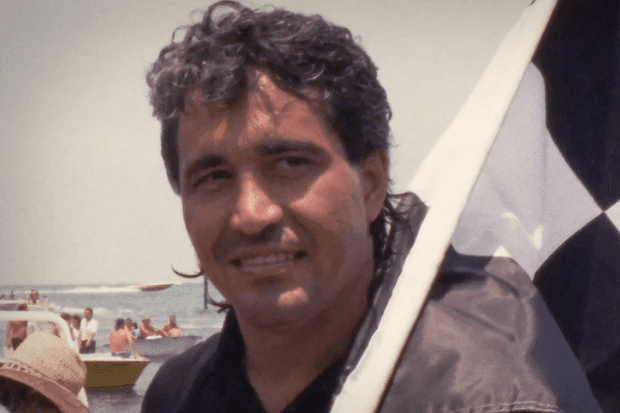
    Luxury and excess arrived hand in hand with money. Willy Falcón and his circle were regular figures at the parties and orgies of the Mutiny Hotel—they invested a million dollars in the property, money they never recovered. They owned properties, luxury cars, and women. Their greatest guilty pleasure, however, was offshore powerboat racing. The competition was fierce in Miami and across the country, and Willy, Tavy, and Sal raced in every event. Their team, Seahawk, even had a company dedicated to preparing boats with the best engines and finishes.

    During those years, Los Muchachos did business with the major cartels: Medellín, Cali, Sinaloa, and Juárez. But it was only with Pablo Escobar, boss of the Medellín cartel, that Willy Falcón formed a true friendship. He considered him a brother. They spent New Year’s together in suites at Caesars Palace in Las Vegas, vacationed at Disney, and traveled aboard the Los Muchachos jet.

    By the mid-1980s, more than eight thousand kilos of cocaine were entering the United States every six weeks. There seemed to be no limits. But behind the scenes, the government was advancing an operation to dismantle the organization. In 1982, President Ronald Reagan, after declaring the War on Drugs, announced the creation of the South Florida Task Force, led by Vice President George H. W. Bush.

    At first, Falcón and Magluta underestimated the authorities. They took minimal precautions: transferring some properties, traveling with false documents—but business continued uninterrupted. Over time, the net tightened. Properties were seized, mid- and lower-level operatives began to fall. In the early 1990s, Willy Falcón, his brother Gustavo, and Sal Magluta went underground.

    In October 1991, authorities raided Sal Magluta’s residence at the La Gorce condominium in Miami Beach and Willy Falcón’s home in Fort Lauderdale. Both attempted to escape, but the scale of the operation made it impossible. Gustavo Falcón, however, managed to flee.

    More than five years passed before sentences were handed down. During the trial, jurors and witnesses were bribed; others were murdered; some simply refused to testify. On the streets, Falcón and Magluta were seen as benefactors. Many argued that Miami had grown and evolved thanks to them and their money.

    Willy Falcón was sentenced to twenty years in prison. In 2017, after serving his sentence, he was deported and managed to avoid returning to Cuba. He currently resides somewhere in Latin America, the name of the country kept undisclosed. Sal Magluta was not as fortunate: he was sentenced to 195 years in prison.

    In 2021, Netflix released the documentary Cocaine Cowboys: The Kings of Miami, which examines the Los Muchachos case. By then, Gustavo Falcón had already been arrested after spending twenty-six years on the run. Journalist T. J. English recounts in his book The Last Kilo that when Tavy watched the documentary in prison, a guard said to him, “Oh, so you wanted to be like Scarface.” Tavy replied no—that Scarface wanted to be like him.

  • Stereo Roux: “Modern Times” and the creation of the Indie Bolero

    Stereo Roux: “Modern Times” and the creation of the Indie Bolero

    Every so often, while scrolling through the endless stream of muted videos and digital noise on social media, a single frame stops you. A clip pops up, a simple text prompt invites you to tap for sound, and suddenly you’re caught in a soundscape that feels at once intimately nostalgic and wildly fresh.

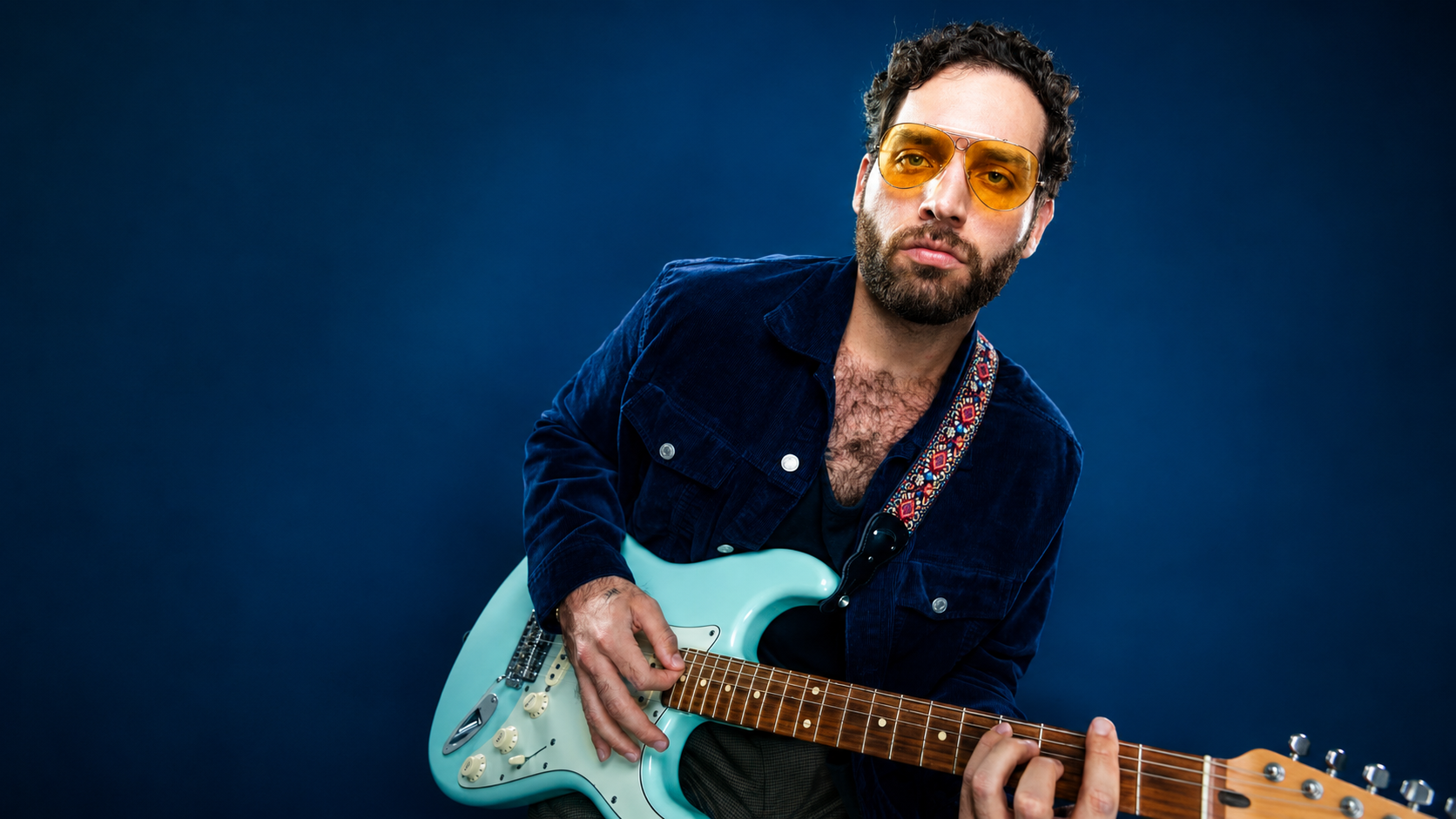
    That was my initiation into Stereo Roux—the solo project of Miami-based musician, producer, and songwriter Riccardo.

    Listening to Stereo Roux carries the exact sensation of riding a bicycle through South Florida on a warm afternoon: constant momentum, an optimistic pulse, and a bright, forward-moving breeze. His music blends the infectious hooks of early 2000s indie-pop with lush, sun-drenched dream-pop textures. But what stands out most are the choruses—built like anthems made for room-wide sing-alongs and high-energy live shows.

    In Conversation with Stereo Roux

    Music in a heartbeat: I have to be honest—today I’m starting backwards. Normally I bombard my interviewees with questions right off the bat, but today I wanted to tell you my initial impressions first. Your music feels like this incredible mix of 2000s indie-pop energy and dream-pop—reminiscent of Beach Fossils, Hotel Ugly, Chicano Batman, Mac DeMarco, and even that Lindsey Buckingham production style on Fleetwood Mac records. But what really surprised me is that this is a complete one-man project. What made you decide to take the solo, self-produced route?

    Stereo Roux: It might be a little bit of a selfish thing, honestly! I love hearing what people have to say about my music, but if someone were to tell me what to do with it while I’m making it, I really wouldn’t like that. When it comes to my own projects and my albums as a whole, I prefer having 100% of the decision-making control. I saw artists producing their own music as single-person projects, and that made me realize I could do it too.

    MIHB: That creative drive makes sense—and music has been in your life for a really long time, right?

    Stereo Roux: Exactly. My dad was pretty famous in Ecuador in the ’90s making rock music in Spanish. Ever since I was five, he pushed me to play instruments—first piano, then drums at eight. When we moved to Miami, I went to Miami Arts Charter for drums and choir. We had a little home studio that wasn’t getting used much, so every day after school, I’d take it over, record for hours on GarageBand, and learn how to layer tracks. Later on, to make sure nothing got lost between what was in my head and what reached the listener, I learned how to mix everything myself.

    MIHB: You studied Music Business and Music Tech at Miami Dade College, and later earned your degree in marketing. Does knowing marketing and audience behavior influence the way you write, or do you keep that separate?

    Stereo Roux : I try to keep it completely independent. I don’t let that guide my creation because I don’t want to make a commercial product. I don’t even listen to modern radio; I usually listen to throwback radio with older music. And I don’t let radio formatting or current tastes dictate my song lengths either—if I did, I wouldn’t be making five- or six-minute songs! My audience is small right now, but growing day by day. I’d rather experiment and step outside my comfortable box than cater to an algorithm.

    MIHB: Speaking of stepping outside the box, you mentioned you’re mixing genres on your new material—specifically incorporating Latin influences and Spanish into your tracks, like in “Los Extraterrestres.” Can you tell us about that?

    Stereo Roux: Coming from a Latin and Hispanic background, there’s so much music that isn’t necessarily explored when you’re writing primarily in English. I really want to write more songs in Spanish and bring those elements into my music. Right now, I’m finishing up a track called “Modern Romance.” It’s an indie bolero—mixing traditional bolero elements into an indie framework. It’s very different from anything I’ve done so far, and I’m super excited about it.

    MIHB: An “indie bolero” called “Modern Romance”? That sounds amazing. Is that part of a larger project?

    Stereo Roux: Yes! It’s for my second album, which is called Modern Times. The whole concept is an exploration of everything we see in front of us today—from politics to technology to modern love.

    Earlier this year I released “Modern Melancholy.” This Friday I have a single coming out called “Binary Illusions,” which is a commentary on our relationship as humans with technology and how dependent we’ve become on it. Then there’s “Modern History,” which is a bit more politically inclined. The record as a whole is just my perspective on today’s world as it gets crazier and crazier.

    MIHB: Looking ahead, what’s the next big hurdle for Stereo Roux?

    Stereo Roux: The main obstacle with being a one-man band is wanting to play live shows when you don’t have a backing band! I’ve played locally with Sofar Sounds in Miami Beach, and earlier this year I was super lucky to perform in Madrid thanks to Raw Critters—an independent Spanish blog that champions indie music purely for the love of it, selecting 10 international bands each year to mentor and showcase across Spain. It was incredible, but now I really want to play out more locally and build that live energy here. I’m actively looking for session musicians in Miami who would be interested in joining me on stage.

    Connect & Listen

    • Listen To: “Modern Melancholy”, “Modern Romance”, “Los Extraterrestres” 
    • New Single: “Binary Illusions” (Dropping this Friday!) 
    • Calling Miami Musicians: Bassists, guitarists, or drummers interested in joining Stereo Roux for live performances in South Florida can connect via Instagram (@stereoroux). 

    Music in a heartbeat is a multimedia project dedicated to documenting live shows, emerging artists, and independent soundscapes in the Miami music scene.


  • Forrest Shaw Wants You to Laugh While the Ocean Falls Apart

    Forrest Shaw Wants You to Laugh While the Ocean Falls Apart

    The ocean hates you.

    To be fair, it probably has its reasons.

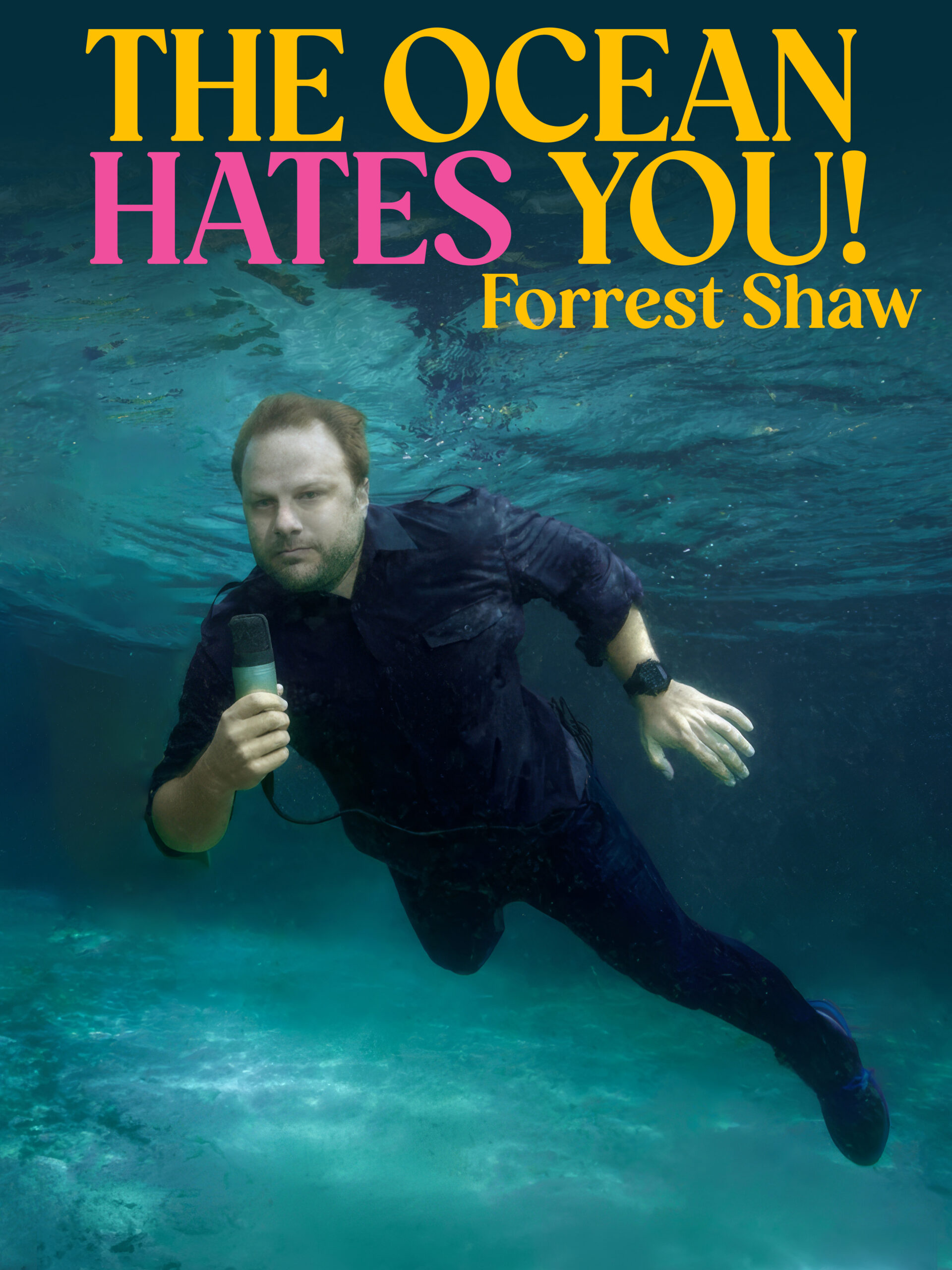
    Former Miami-based marine biologist turned comedian Forrest Shaw brings those reasons to the stage in The Ocean Hates You!, a science-based comedy show tackling climate change, pollution, habitat destruction, overfishing, plastic waste, and humanity’s rather impressive ability to mess with the most important ecosystem on Earth.

    Heavy stuff. Which is exactly why Shaw decided to make it funny.

    “Most people care about these things, but between the propaganda designed to divide us and the doom scrolling on social media, people feel overwhelmed and discouraged,” Shaw says. “I wanted to find a way to talk about these subjects that was engaging instead of exhausting, so I chose comedy.”

    Shaw comes to the material with more than jokes. Before pursuing comedy, he spent over a decade working as a marine and environmental biologist in Florida. He worked for Miami-Dade County, led its Manatee Protection Program, and managed water-quality and habitat-monitoring projects involving seagrass communities, coral reefs, and sea turtle nesting.

    So, unlike most comedians complaining about the state of the planet, Shaw actually knows what the hell he’s talking about.

    The result is part stand-up show, part science lesson, and part darkly comic love letter to an ecosystem that remains astonishingly resilient despite everything humans keep throwing at it. The evening also includes audience participation, trivia, and other surprises designed to make environmental science feel less like homework and more like a night out.

    “Comedy allows people to let their guard down and connect or reconnect with topics that might feel heavy or hopeless,” Shaw says.

    And Shaw has serious comedy credentials, too. He has appeared at Netflix Is A Joke Fest, Just For Laughs Montreal, and Moontower Comedy Festival, performed on Conan and Live at Gotham, and released his debut special, Poor Decisions.

    There’s something wonderfully Miami about the whole proposition: a former local marine biologist standing onstage making people laugh about the beautiful body of water surrounding us while explaining all the ways we’re slowly destroying it.

    The Ocean Hates You! may be the title, but Shaw’s message isn’t nihilistic. There is still extraordinary life beneath the surface, and there are still things individuals and communities can do to protect it.

    Laugh first. Learn something. Maybe give the ocean one less reason to hate us.

  • Miami-Dade Teen Poetry Contest Invites Young Writers to Explore Freedom

    Miami-Dade Teen Poetry Contest Invites Young Writers to Explore Freedom

    You crazy poets you. Their coming for our teens.

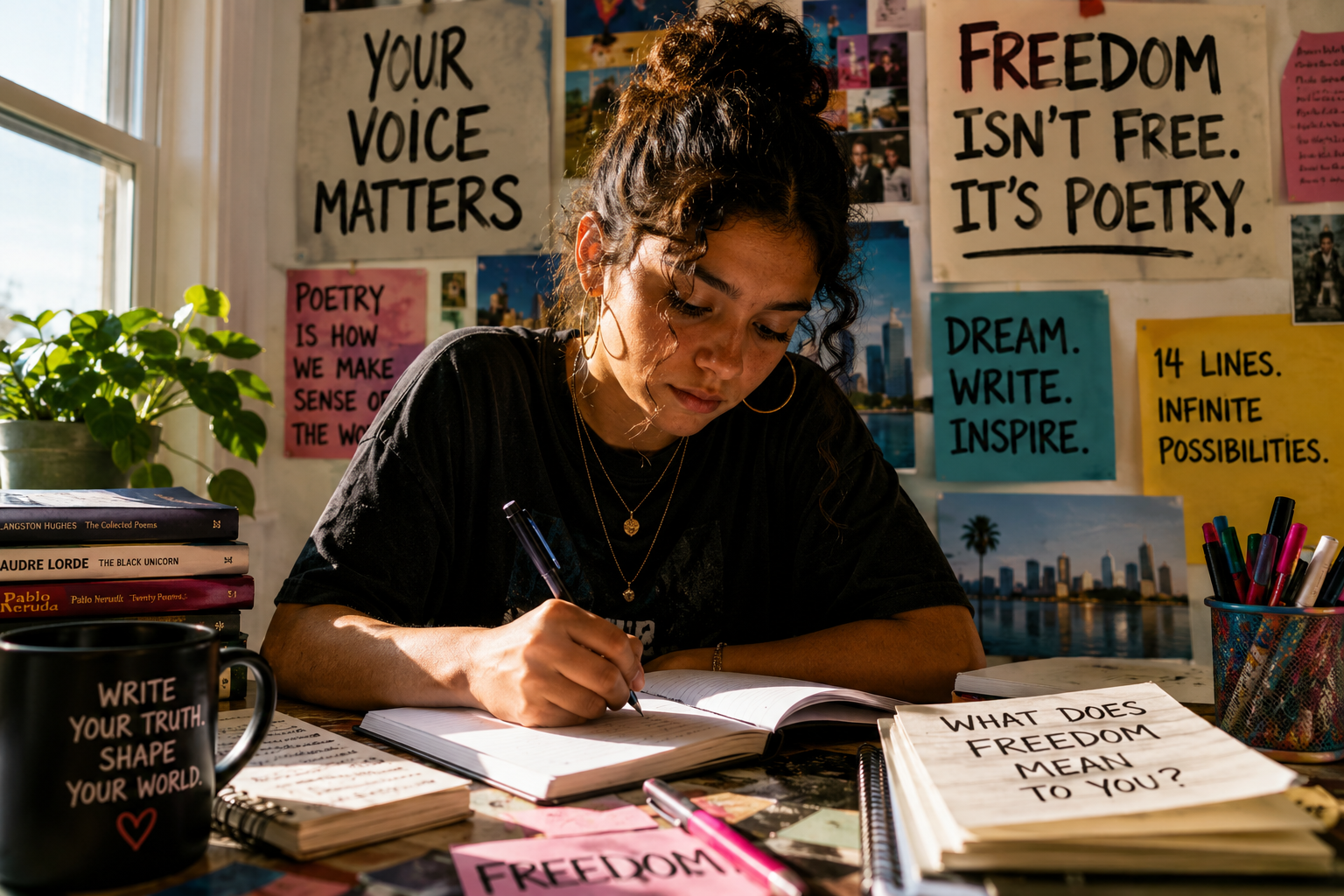
    Miami-Dade County teens will have an opportunity to put their ideas into verse this fall through a new county-wide poetry contest presented in partnership with the Miami-Dade County Mayor’s Office and the Miami-Dade County Public Library System.

    Open to teens ages 13 to 18, the Teen Poetry Contest runs from September 14 through October 10, 2026, and asks young writers to tackle one of humanity’s oldest and most complicated subjects.

    Freedom, baby, freedom.

    On a scale of 1 to America, how free are you for this contest, Miami??

    Participants will write a 14-line sonnet exploring questions.

    What does freedom mean to you and your family? Where does freedom come from? And how can we make freedom broader for everyone?

    Those are some of the questions teens are being asked to explore through a sonnet.

    Miami-Dade Teen Poetry Contest

    And what exactly is a sonnet?

    Basically, it’s a 14-line poem. Traditionally, sonnets have all kinds of rules about rhyme and rhythm and meter and other stuff your English teacher probably tried to explain at some point. But don’t worry. For this contest, the poem needs to be 14 lines, but it does not have to follow strict rules of rhyme or rhythm.

    In other words, just write 14 lines about freedom.

    But, heads up, and this is cool. There are some serious Miami poets reading these things.

    The sonnets will be judged by past and current Miami-Dade County Poet Laureates Richard Blanco, Caridad Moro-Gronlier and Nicole Tallman.

    That is a Trifecta of literary gold of national quality poetry.

    There are also free workshops scheduled throughout the contest. Tallman will host an online sonnet-writing workshop on Saturday, September 19 at 3 p.m.

    Then, on Saturday, October 3, from 10:30 to 11:30 a.m., former Miami-Dade Poet Laureate Caridad Moro-Gronlier will host “Sonnet Writing in the Insta Age.”

    We all know teenagers have a lot to say.

    Here’s a chance for them to say it, write it down and share it with Miami-Dade County.

    For more info click here.

  • Mac’s Club Deuce Celebrates 100 Years on Miami Beach

    Mac’s Club Deuce Celebrates 100 Years on Miami Beach

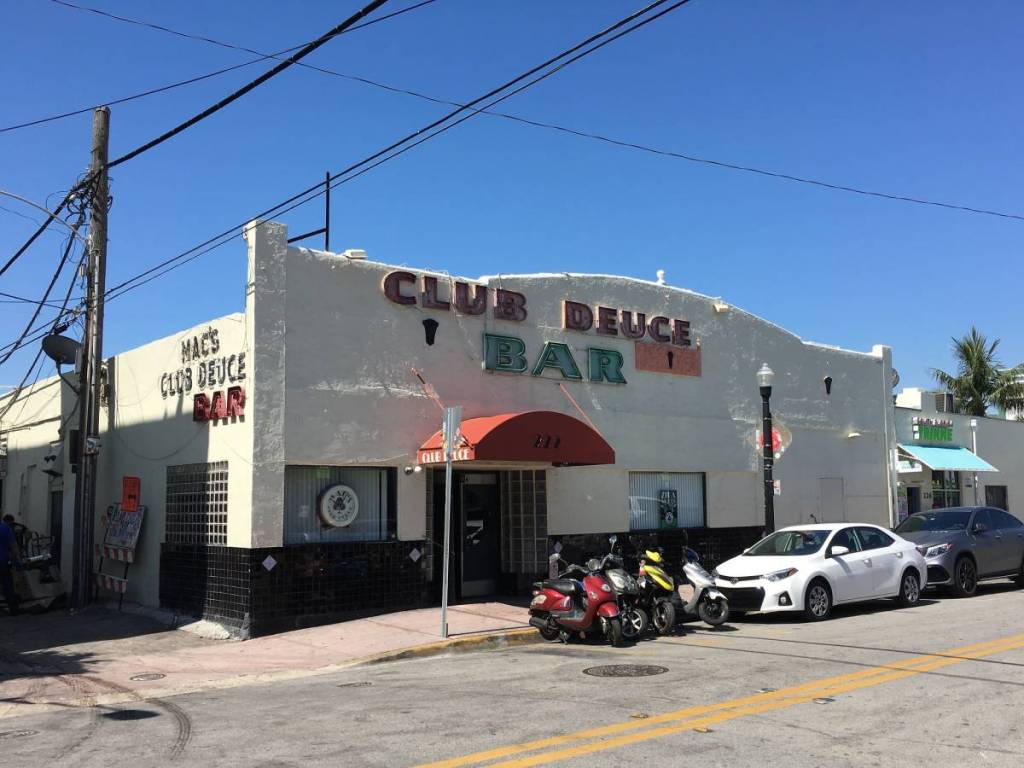
    Mac’s Club Deuce is celebrating its 100th birthday this Labor Day weekend with a massive block party on South Beach.

    The party takes place Saturday, September 5, from 4 p.m. to 11:30 p.m. outside the legendary bar at 222 14th Street. Expect music, drinks, friends, strangers, locals, tourists, and enough Miami Beach energy to power several questionable life decisions, like why did I come to the beach, exactly?

    For the uninitiated, Mac’s Club Deuce is small, dark, cash-only, and wonderfully resistant to change. There is a curved snake-like bar, a pool table, jukebox, and a century of cigarette smoke absorbed into every surface. It is part of the pantheon of Miami dive bars, up there historically with the defunct Tobacco Road and Churchill’s Pub, along with Fox’s, Duffy’s and The Taurus in Coconut Grove,  which is also older than most of our parents’ bad habits.

    The Deuce has been immortalized by the late Anthony Bourdain, appeared in Miami Vice, and attracted generations of filmmakers, artists, musicians, celebrities, locals, degenerates, and people simply searching for a dark place to drink at an unreasonable hour.

    One hundred years of anything in Miami is worth celebrating. Buildings disappear and neighborhoods get rebranded, right? Beloved institutions become condos or restaurants serving $27 cocktails with rosemary sticking out of them. The Deuce remains, stuck in its wonderful ways.

    Even if you do not consider it the best dive bar in Miami (cough, um, Mike’s at the Venetian), or even the best dive bar on Miami Beach (ahem, Ted’s Hideaway), it is unquestionably the best dive bar east of Washington Avenue between Fifth and 15th streets.

    Relax. We are kidding.

    We have nothing but love for the Deuce. It is a great bar, an institution, and this should be one hell of a party.

    Mac’s Club Deuce Turns 100

    The event is presented by the Washington Avenue Business Improvement District and promoted through Miami Beach’s tourism machinery, which admittedly waters down the whole “dive bar” element a little. Nothing says underground drinking establishment quite like an official business district activation. Still, who cares?

    If you are in town, and the temperature is not one million degrees, head to South Beach and pay your respects to a genuine Miami institution.

    It is also worth noting that Mac Klein, who purchased the bar in 1964 and added his name to Club Deuce, lived to be 101 years old. He continued working at the bar seven days a week and died in 2016.

    File that little fact away in the folder marked: Do I Really Need to Quit Drinking and Smoking Cigarettes?

    Because if that motherfucker lived to 101, none of this shit makes sense.

    But in all seriousness, from the mainland on the other side of Biscayne Bay, we wish Mac’s Club Deuce nothing but love, prosperity, and another hundred years of holding down Miami Beach.

    The Deuce stands like a wall of dive-bar resistance, keeping people from crossing the causeway and infiltrating our mainland spots like The Corner, Churchill’s, and Las Rosas.

    We love you for that, even if we do not visit enough. But we have visited plenty over the years, and we will be back. Even if you still allow smoking inside. So what if you only take cash. Whatevs if the place is so small that ordering a drink sometimes feels like playing a game of Twister with strangers. Mac’s Club Deuce has more character than Jim Carrey in Ace Ventura. More character than an overwritten screenplay. More character than most of Miami Beach combined. And we love it for exactly that reason.

    Happy 100th birthday, Club Deuce.


  • The Arsht Opens Its Doors to Miami with Cultural Celebrations

    The Arsht Opens Its Doors to Miami with Cultural Celebrations

    The Adrienne Arsht Center for the Performing Arts of Miami-Dade County (@arshtcenter) expands access to the arts with a new season of free and Pay What You Can community events. The 2026-27 Arsht Impact season features more than a dozen community engagement activities throughout the year, including Dia de Muertos and gospel celebrations; a hip-hop performance by Miami breakdance pioneers; a tribute to Haitian dance and music during Haitian Heritage Month, wellness-focused arts experiences and all-ages events across Miami-Dade County.

    A part of the Arsht from its inception, Arsht Impact education and community programs offer free access to more than 42,000 people each season, 80,000 students each year and have connected with well over one million community members since the Arsht opened in 2006.

    The following events are free and open to the public:

    ARSHT ON THE ROAD

    October 18, February 21 plus four more dates to be announced

    Free admission

    The Arsht brings free performances by local musicians, dancers and other artists to public venues throughout Miami-Dade County.

    JOURNEY TO DIA DE MUERTOS FEATURING CALPULLI MEXICAN DANCE COMPANY

    An Arsht for Miami presentation

    November 1, 2026 at 3 p.m.

    Knight Concert Hall

    Pay What You Can: Free; $10 suggested

    The event begins on Thomson Plaza with a Día de Muertos-inspired gathering featuring live music, calavera-making (sugar skulls), hands-on art activities and performances. The journey continues inside Knight Concert Hall with Calpulli Mexican Dance Company, whose vibrant production follows a small town in Mexico as residents joyfully welcome the spirits of departed loved ones. Through dance, storytelling and cultural traditions, audiences will discover the beauty, history and meaning behind Dia de Muertos.

    SOUNDS OF CHRISTMAS: A SOUTH FLORIDA GOSPEL CELEBRATION

    An Arsht for Miami presentation

    December 12, 2026 at 7 p.m.

    Knight Concert Hall

    Pay What You Can: Free; $10 suggested

    Celebrate the Christmas holiday with an unforgettable evening of gospel music, holiday joy and inspirational performances by Pastor Marc Cooper, Gospel Fest Miami artistic advisor, together with some of South Florida’s favorite gospel voices to the stage. This special concert brings the spirit of Christmas to life through powerful songs of faith, hope and celebration.

    GOSPEL FEST MIAMI: ARSHT GOSPEL CHOIR INVITATIONAL

    February 7, 2027 at 6 p.m.

    Knight Concert Hall

    Pay What You Can: Free, $10 suggested

    Back for its third year, the Arsht Gospel Choir Invitational welcomes choirs and ensembles from all backgrounds to compete for a cash grand prize and the opportunity to perform at Gospel Fest Miami. The invitational will showcase choirs from three categories: church, community and collegiate. Choirs will perform at the Knight Concert Hall, highlighting their vocal skills with originality, creativity and showmanship for a panel of judges and a live audience. Applications will open September 14, 2026.

    HERITAGE FEST

    February 20, 2027 at 12 p.m.

    Ziff Ballet Opera House

    Free or Pay What You Can

    In celebration of Black History Month, the Arsht’s 8th annual Heritage Fest invites the community to a free, all-ages day honoring the rich traditions, creativity and contributions of pan-African artists. Guests can come for part of the festivities or stay for the full celebration, enjoying food vendors, live performances, family-friendly activities and dancing. Designed to spotlight, celebrate and amplify pan-African artists in our community, Heritage Fest will begin with free family fun in the afternoon and culminate with an evening concert on Thomson Plaza.

    THE GROUND ZERO EXPERIENCE: MIAMI AND HIP-HOP CULTURE

    An Arsht for Miami presentation

    April 17, 2027 at 7 p.m.

    Knight Concert Hall

    Experience the energy, creativity and cultural impact of hip-hop featuring Ground Zero Crew, Miami’s first and most renowned world champion breakdancing crew. The evening will begin with a pre-show activation on Thomson Plaza, inviting guests to connect with the sights, sounds and spirit of hip-hop before the performance. Established in 1996, Ground Zero Crew transformed the local breaking scene and earned international recognition for representing Miami on the global stage. Joined by other Miami hip-hop artists, this electrifying production will showcase the core elements of hip-hop through breaking, music, DJing, emceeing and artistic expression.

    ARSHT PLUS

    10 performances throughout the season

    Free with performance ticket purchase

    Arsht Plus is offered free to ticket holders at select Broadway in Miami, classical music and dance performances, inviting audiences to arrive early for themed interactive experiences that extend the performance beyond the stage. Beginning one hour before curtain, these experiences are designed to deepen audiences’ connection to the art, artists and ideas behind the performance and have included dance lessons, cooking demonstrations, live music and family activities. To learn more about which performances include Arsht Plus, visit here.

    Pay What You Can

    Select Arsht Impact performances this season are offered as Pay What You  Can. Tickets are free, and guests are invited to give the suggested ticket price to help sustain live arts experiences in Miami. Guests who give the listed minimum receive priority seating in prime locations. As a nonprofit organization, the Adrienne Arsht Center invests every dollar directly into Arsht Impact education and community outreach programs that annually serve more than 100,000 people of all ages.

    *All programs, artists, ticket prices, availability, dates and times are subject to change without notice. Visit arshtcenter.org for up-to-date information.

  • Fighting The Time Thief One Juke at a Time

    Fighting The Time Thief One Juke at a Time

    To most of Miami’s live music scene, Eric Garcia is known as Uncle Scotchy, the frontman of Juke, the raw, loud, four-letter blues act tearing up local stages. But spend more than five minutes talking to him and you hit something much deeper: a kind of disheveled grandeur. The live sets are just surface noise. Underneath sits someone who studied literature in college, a former Miami New Times freelancer, an 18-year caregiver, and a writer who had to invent a demon just to survive the reality of losing his family.

    Honestly? Listening to him outline his world, you get hit with how real—and how surprisingly rare—that level of openness is. And that matters, because it shows everywhere in his work. Now, after turning his grief into a legendary 71-show theatrical run with his Blues Opera, he is preparing to release the book derived from that very performance: Uncle Scotchy and the Time Thief, published through Miami’s own Jitney Books. But to make this a reality, he needs the community’s help with the project funding via GiveButter.

    12 Rounds Against “The Time Thief”

    When the pandemic hit, Eric’s 18-year stretch caring for his mother (who lived with Alzheimer’s) and his father came to a painful close. Sitting alone in the quiet aftermath, he brought his raw accounts to weekly storytelling nights at Bar Nancy.

    “When you’re a caregiver for a long time, the hardest thing in the world is when you actually don’t have anyone to care for anymore,” Eric says. “You live for 18 years and you’re not the most important thing. All of a sudden, you have nobody. You forget how to care for yourself.”

    Those nights caught the attention of Juggerknot Theater, sparking the Blues Opera: an immersive, room-to-room performance for just 15 people a night. Over 71 sold-out shows, Eric walked small audiences through his family history, framing his mother’s fight with Alzheimer’s as a 12-round boxing match against “The Time Thief”—a fictitious blues demon assigned by the devil to tear his family apart and steal their memories.

    From the Stage to Jitney Books: The GoFundMe

    Because those 71 nights were an ephemeral, unrecorded experience, Eric needed legacy on paper. Derived directly from the narrative of the Blues Opera, the result is Uncle Scotchy and the Time Thief.

    “It wasn’t that easy… I was drunk every day, I was hammered,” Eric admits candidly. “There was a process that happened. I had to really go through it before I was like, ‘Oh, I’m alone now, let me start doing good things for people.’ You have to go through it in order to help others.”

    “What is the demon’s currency? Darkness and lies,” he continues. “If you tell the truth, that’s light. You bring light into the dark, and you have nothing to hide.”

    To get this story out into the world, Eric has partnered with Jitney Books—Miami’s premier independent micro-publisher dedicated to authentic, hyper-local stories. But independent writing requires real community backing. A GiveButter campaign is currently active to fund marketing, PR and operational costs for this project.

    Supporting the campaign doesn’t just help with the publishing of a book; it backs The Egg Project, a non-profit initiative Eric is launching alongside the release to support long-term caregivers through the forgotten aftermath—the identity loss and depression that set in after the caregiving ends.

    It’s hard not to step away from a story like this profoundly moved. Where others might have lost themselves after nearly two decades of heavy lifting, Eric went through the fire and channeled the quiet right back into helping people.

    To help bring this piece of Miami literature to life, chip in to the GiveButter and let the light do the rest.

    For more information, music, and updates on the project, visit: unclescotchy.com


  • Driving in Miami: Meaning and Misanthropy on the Road

    Driving in Miami: Meaning and Misanthropy on the Road

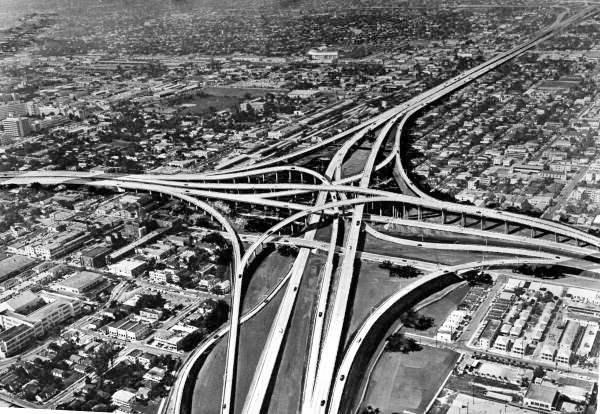
    There used to be a freeway interchange in Miami, where the Dolphin Expressway merged with I-95, that was just hell.  Commuters wanting to go north were confined to a single left-hand merge lane which, during rush hour, was invariably backed up for miles. The problem was not helped by the interchange’s proximity to Miami International Airport, Jackson Memorial Hospital, Marlins Ballpark, and downtown. Nor was it helped by the late on-ramps – built in days of lower freeway speeds and a more easterly center of population – that continuously fed commuters right into the fray.

    This meant there was always a horde of drivers cutting across the painted median that purportedly divided the northbound from the eastbound traffic, effectively converting it into the second northbound merge lane the interchange desperately needed. Tourists leaving the airport were spared this ordeal, since they’d get to go around it on their way to South Beach, but their first impression of Miami would have been the schadenfreude of watching the poor locals stuck in impossible traffic, a reminder that Miami might be a nice place to visit, but it must be such a damn hassle to actually live here.

    There is another road in Miami, one that still exists, that also deserves discussion because it has done far more damage to my soul. My morning commute to my son’s daycare obliges me to use an exit that, while not as bad as the freeway interchange, still backs up pretty far. And, just like at the interchange, there are many drivers who speed up the faster moving lane next to it and force their way in at the front. Unlike the interchange, however, the exit to the daycare is beautifully engineered. The exit is telegraphed far in advance, and the lane is long enough to accommodate the many cars who use it without blocking other lanes.

    There are no on-ramps or merging lanes to impede the flow of traffic. There’s even a protected turn at the end where it merges with the surface street, so exiting cars can, in theory, drive smoothly through the intersection without needing to stop. Every driver is given the exact same totally uncomplicated opportunity to enter the exit lane when it starts. The traffic pattern is obvious and easy to follow. But it’s a popular exit and traffic does back up, and for enough people, the extra five minutes spent in the exit lane is too much to ask when their commute could instead take an extra zero minutes at the low low cost of cutting someone off. And so, what should be a simple, smooth flowing, quick, and forgettable exit becomes an irritating daily reminder that a lot of my neighbors suck.

    I have to watch this play out every morning, and it bothers me enough that I’ve started to theorize about it. I’ve categorized the line-cutters into two camps. The first camp are the “prowlers.” These drivers take advantage of the gaps that naturally emerge in the flow of traffic. I watch them hunt for the best place to slip in, varying their speed as they size up the gaps, keeping an eye out for a driver on their phone who’s especially likely to leave an opening. Sometimes their victims come alive when they realize what’s happening and fight back, matching their speeds to block them, but this is rare. More often than not, the prowler finds their mark and slips in, causing a wave of brake lights behind them, disrupting the traffic and thereby causing new gaps for other prowlers to take advantage of, thus creating a vicious feedback loop that turns what should be a smooth flow into a traffic jam.

    Getting Deep on Driving in Miami

    Prowlers are dangerous because their bad behavior encourages the prideful drivers who’ve been in the exit lane the whole time, and who hate free riders, to drive bumper to bumper as a collective defense. Maybe in response to this norm-enforcing behavior, there are also drivers who adopt a more aggressive approach. I call these drivers the “battering rams,” since they simply force their way into the exit lane, gaps be damned. On multiple occasions, a driver has tried to force me onto the shoulder by merging, not in front of me, but into me. The last time a Tesla driver tried to do this (and it is disproportionately Teslas, I’ve kept track), I refused to give way, betting that she wasn’t willing to risk scraping her car against my Toyota. I was right, but the person behind me let her in. I watched in my rearview mirror as she gave me a big thumbs up. I’m certain that, in her mind, I’m the asshole who refused to let her in. 

    The difference between the freeway interchange and the daycare exit is a moral one. The interchange was a mess because its design couldn’t accommodate the way the city had developed around it. Its problems were structural, and the solution – tearing it down and rebuilding – was also structural.  The problem with the daycare exit, on the other hand, is not structural. The problem with the daycare exit is irreducibly human. Nothing forces drivers to merge at the last minute; they do so only because it saves them a few minutes of time at no cost to them and costs only for others. Every line-cutter, by their own volition and under no duress, chooses to inconvenience others to gain a morsel of benefit for themselves, and this is why driving my son to daycare every day hurts my soul.

    I should be specific about the harm in question. It is not the harm of the extra minutes that bothers me – the freeway interchange was much worse in this respect. Nor is it, as I once explained to a therapist, that I feel personally slighted when a driver cuts me off. We are strangers to each other, there’s nothing personal about it. Indeed (and I’m aware that I have tendency to exaggerate), but I’m inclined to interpret the disregard they show to strangers as emblematic of their disregard for humanity as such, and this is what gives the harm its particular character. It is the harm of a morally degrading nihilism.

    It is a type of nihilism because it threatens to take away some of the meaning in my life, the meaning that I get, lame as this may seem, from being a responsible driver. I want to get in the exit lane where it begins and drive its entire length, even if this takes longer. I’m pretty confident I’m not motivated in this by the desire to feel morally superior to the selfish drivers, like an ego trip or something – were this the case I’d find the whole experience fortifying, affirming even, of my moral goodness, the opposite of what I’m claiming.

    I think, rather, that the meaning I want to find on the road is the meaning one gets from cooperating with others. Driving is something we do together. While it is sometimes miserable for structural reasons (viz. the freeway interchange), most of the time it’s up to us whether it is miserable or pleasant. This is what I mean when I say that something as mundane as my daily commute is potentially a source of meaning in my life. The meaning it could offer is this: if I do a small piece of good by being a courteous driver, this is not wasted because I’m doing it with my neighbors who are also doing small pieces of good, and all these small pieces add up into a bigger good, something none of us can achieve all on our own. A pleasant commute, all the sweeter because we achieved it together. 

    But the damn line-cutters make my commute so unpleasant.

    And I think I understand why this bothers me so much more than the freeway interchange ever did. Getting cut off on the way to daycare is a double harm. There is the inconvenience of the extra minutes, the slammed brakes, etc.  – what we can call the material harms. But it also inflicts a moral harm. For comparison, legal philosophers make this distinction with regard to the harms of crime; theft deprives you of your property (the material harm), but it also deprives you of the respect you are due as a person (the moral harm). Now I’m not saying that I “own” the road and it is “stolen” from me when someone cuts me off, so the comparison is not perfect. But selfish driving morally harms the rest of us by undermining the possibility of commuting together in harmony. This is a moral, even existential, harm because what is taken away is not just the pleasantness, it’s the possibility of getting meaning from the cooperative endeavor of creating that pleasantness. They make neighborly love so much harder to feel because they exploit our cooperative instincts, like moths eating the social fabric as we’re weaving it.

    There is also a third harm on the horizon. I worry that the nihilism will win and, if it does, I’ll turn into one of the very drivers I can’t stand. After all, isn’t this what must have happened to the selfish drivers? Sure, some of them have probably always been jerks. But some of them, I assume, used to think like me, used to curse the very type of driver they now are, but who gave up on hoping that Miami’s driving culture would ever get better. When the driver in front of me decides, after spending several minutes inching forward in the exit lane, to betray their principles and zoom up the shoulder and cut in front, I know their transformation is complete. If you can’t beat ‘em, join ‘em.

    And yet, I haven’t joined ‘em. I still roll slowly down the whole length of the exit lane. I’ve even become more relaxed about letting people cut me off without a fight. This is mostly because my son is with me, and it’s just safer that way. But I hope it’s also because I’ve become better at appreciating all the good drivers. After all, for every selfish driver, there’s ten drivers still committed to driving well, and who are easy to forget precisely because they drive well. If they still find it worthwhile, even in Miami, to drive well, maybe I can take solace in that. Instead of despairing when a driver cuts me off, it can serve as a reminder that most people don’t cut me off, and this is a much more comforting thought.
     

  • Florida Gubernatorial Candidate Dotie Joseph on the Issues

    Florida Gubernatorial Candidate Dotie Joseph on the Issues

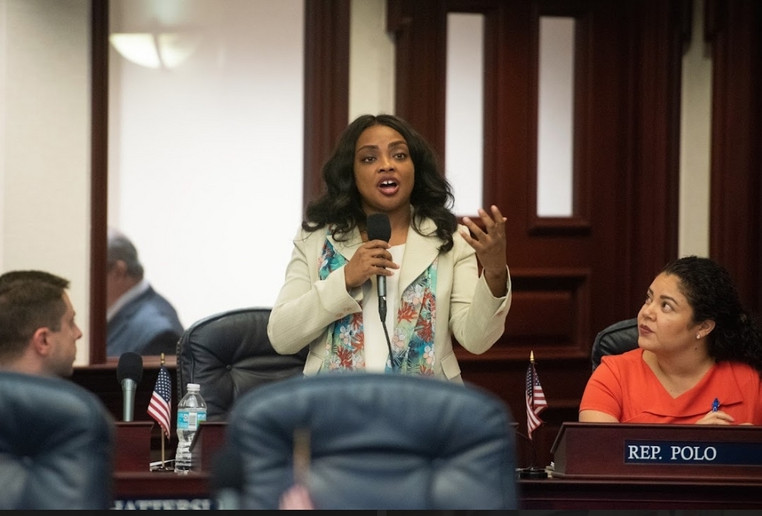
    Rep. Dotie Joseph is a Miamian at heart — she attended Norland Middle School, and the DASH Academy in the Design District — before heading to Yale and then Georgetown for her Juris Doctorate degree. The forty-five year old North Miami resident, and Haitian American, first won election to Florida’s House of Representatives in 2018, and after eight years in office, she is running for Governor of the state of Florida.

    Rep. Joseph took time out of her incredibly busy schedule to hop on board The Jitney.

    Here’s what she had to say.

    Dotie Joseph on the Issues

    What do you see as the biggest issues we face right now?

    Affordability is the crisis underneath every other issue in Florida right now. Certain politicians have been focused on propagating culture wars so we don’t see the grift that has led to everything being so unaffordable in Florida.

    Failed Republican leadership has led to skyrocketing insurance costs, more expensive gas and groceries, and less access to affordable housing and healthcare. Meanwhile, the same politicians prioritize company profits over people. Justifiably, many Floridians don’t trust that their government is working for them instead of special interests. Fixing that trust, and fixing the cost of living, are the top priorities.

    What can government realistically do to make Florida more affordable?

    Government can stop making things worse, and start being part of the solution. That means capping unjustified property insurance rate hikes and holding insurers accountable, building more affordable housing instead of only luxury units, raising the minimum wage to an actual living wage, and expanding Medicaid so healthcare costs stop bankrupting families.

    I understand the state budget and after eight years in the Legislature, I know where to find the money that already exists to help bring down costs for all Florida residents.

    Where is Florida getting education policy right, and where does it need to change course?

    Florida gets it right when we invest in early learning, like expanding pre-K access, which is something I’ll keep pushing as governor because the research is clear on how much that early investment pays off. Where we need to change course is over crowded classrooms: banning books, restricting what teachers can teach, and underpaying our educators who do some of the hardest work and most important work in our state.

    Florida also needs to get serious about updating outdated standards, including how we teach students about important subjects, like our changing climate.

    How should Florida balance growth with environmental protection and climate change?

    Growth and environmental protection aren’t opposites, they should be linked together to work to improve Florida. We can’t keep permitting development that ignores flood risk, drains our aquifers, or lets polluters off the hook, because that growth isn’t sustainable. I want to make Florida a leader in renewable energy..

    As governor, I’ll enforce our environmental laws, protect our water and coastlines, and require real transparency from developers and data centers about their environmental impact before approval, not after the damage is done.

    Gubernatorial Candidate Dotie Joseph

    What do Democrats need to do differently to connect with voters?

    We need to talk like we’re actually in people’s kitchens, not in a press conference. Too often Democrats lead with process. They lose people before we get to the part where we’re actually fighting for them. I will lead with what affects a family’s life directly, their rent, insurance bill, and kid’s school, then let the policy follow from there.

    We also need candidates who’ve been Democrats through the hard years, not just the convenient ones. Voters need to know exactly who they’re getting. Floridians are looking for someone who is going to fight for their civil rights while making the government work for everyone, not just the 1%.

    What’s an issue where you believe your political opponents have a legitimate point?

    Even where I disagree with Republicans on the solution, I think their emphasis on government accountability and not wasting taxpayer money is a legitimate concern.  Democrats should also take this concern seriously instead of dismissing it. Floridians are right to be skeptical of how their money is spent. I think that skepticism should push all of us, regardless of party, to be more transparent about it.

    Is there an issue where your own thinking has changed over the years?

    Running a statewide campaign has changed how I think about affordability. I used to think about it mostly through a legal and policy lens. But sitting with families across Florida who are one bad month away from losing everything showed me that this isn’t an abstract budget line, it’s the defining emergency of people’s daily lives. That’s part of why affordability sits at the very top of my platform..

    What brought you into public service, and what would make your time in office a success?

    I was born in Haiti, grew up in Miami-Dade public schools, and put myself through Yale and Georgetown Law. I did this because I believed in what this country and this state can offer its citizens. That’s what brought me into public service, the belief that the government should keep that potential for other people too. I’ll consider my time as governor a success if working families can actually afford to stay in the state they call home. And by leaving Florida a little more decent and a little less divided than I found it.

    Is there anything else you would like to say?

    My three main priorities are:

    1. Affordability.

    2. Civil Rights.

    3. Less Hate & More Love.

    As a civil rights attorney, I will keep fighting for everyone’s rights in our state. Including hard working immigrants who add to our state every day. And I truly do believe that we need more love and less hate in our world and in Florida. We need to provide quality healthcare, get more people in affordable housing, and take care of our seniors. These three priorities are critical for me and I will continue to focus on them. Lastly, I’m running because Florida families are tired of waiting for someone to actually fight for them. I’ve spent eight years proving I will, and I’d be honored to keep doing it as governor.

    Dotie Joseph Interveiw

    Rep. Dotie Joseph is currently running for Governor in the state of Florida.

    The primary election is Tuesday, August 18th but early voting is well under way. For more info about Rep. Dotie, click here.

    For more info about voting in Miami-Dade County, click here.