The New World Symphony’s BLUE Project will challenge any preconceived notions of what you thought a night at the symphony was all about. The cost? Pay-what-you-wish.
Founded in 1987, the New World Symphony is an orchestral fellowship program headquartered in Miami Beach’s New World Center. For almost four decades, the New World Symphony has helped to launch the careers of over 1,300 musicians globally, many under the tutelage of twelve-time Grammy award winner and Kennedy Center Honoree Michael Tilson Thomas.
BLUE (standing for Build, Learn, Understand and Experiment), is the leadership and entrepreneurial sector of New World Symphony. Started in 2018, BLUE has grown from a handful of small projects a year into one of the most popular and innovative classical music series available to audiences.
Fellows are tasked with the responsibility of creating their own event. They are in charge of everything; including what music will be played, seating layout, lighting, costumes, beverages served, and the level of audience involvement. They submit proposals for their own BLUE projects at the start of each season, and a committee votes to decide which projects are to be performed in front of an audience later during that season.
“Every single project is unique in it’s own way”, says Felice Doynov, Associate Dean of Visiting Faculty and Entrepreneurship, who heads the BLUE program.
One BLUE performance in January, Game, Set, Music, had a sports themed program featuring a piece by Mozart, John Cage’s “4:33”, and the ballpark standard “Take Me Out to the Ballgame”. Violinist fellow Marissa Weston acted as the orchestras’ commentator throughout the evening, and invited audience members to shout, clap, and sing, as they would at a sporting event.
Another BLUE performance, The Clock Strikes 2:32, was inspired by Edgar Allen Poe’s Masque of the Red Death. The audience, all wearing masquerade masks given to them by staff at the door, were transported back in time to a castle-like atmosphere by the haunting, cerebral sounds of fellow Eloise Fares’ harp.
This Wednesday, it’s viola fellow Srivishnu “Vishnu” Ramankutty’s turn to present his project. Devotion Meets Symphony will be a concert that blends classical music with Kirtan, a traditional form of music native to Vishnu’s ancestral roots in India.
“In Kirtan, there is this idea of call and response, which there is a leader who sings a call, and then everyone in the room is invited and encouraged to sing back as a response. It’s a type of art form that gets people engaged and active. So it’s the complete opposite of passive listening.” says Vishnu.
Growing up in Little Haiti, Vishnu is one of only four locals in the symphony. He was first exposed to classical music when the NWS performed at his elementary school. He began attended NWS concerts back when their home was the Lincoln Theater (now the Lincoln Road H&M store). In high school, he earned the opportunity to perform alongside the symphony.
Despite his commitment to the viola and the classical music world, Vishnu also found time to perform drums at his local temple. He became so proficient on the drums that on travels to India he would perform throughout temples there.
For Devotion Meets Symphony, Vishnu is presenting his audience with a symbiosis of the two art forms that have shaped his life. He goes on to explain, “It’s taking something that can be considered antiquated, but then realizing that the soul of that thing is still completely present three or four hundred years later. My hope is that people can experience a part of themselves that they didn’t realize was possible before”.
The concert starts at 7pm, and there will be a free question and answer program at 6:15pm for first time attendees.
“Every single concert is designed to be as accessible as possible”, Doynov states. Unlike many classical music concerts, Devotion Meets Symphony is geared towards all-ages. Limited tickets are still available on the New World Symphony’s official website.
Following Vishnu’s concert, there are two remaining BLUE concerts this season. If It Ain’t Baroque, on March 31st, and the Yellow Wallpaper, on April 7th.
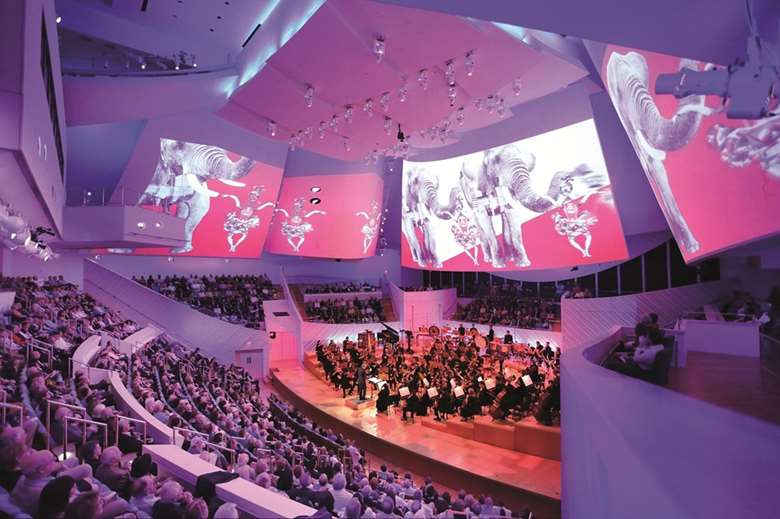
For those who have never been, the performance hall itself is a modern marvel. It was designed by the late Frank Gehry, who’s other notable works include the Guggenheim Museum in Bilbao and Louis Vuitton Foundation in Paris. In addition to BLUE programs, the New World Center also hosts both traditional and non-traditional symphony performances throughout the year. Many are simultaneously broadcast free of charge to the public on their state-of-the-art projection system at SoundScape Park, located next door. Within the New World Center there is a full-service bar, an attached parking garage, lecture halls, and a rooftop terrace offering stunning views of the Miami Beach skyline.
It is no secret that as far as music goes, Ultra is Miami’s biggest party. For those looking for something intimate, affordable, and sophisticated, the secret’s now out that BLUE concerts are the place to be.
Some scenes fade. Others go dormant; crouched low, listening, biding their time. This March, Florida punk does what it’s always done best: it reappears, loud and unapologetic, inside Churchill’s Pub, as the hardcore punk cassette label Invisible Audio stages its first-ever live festival.
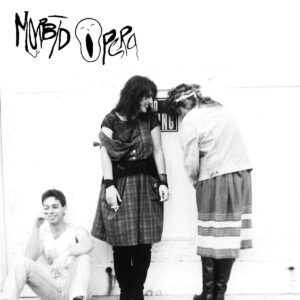
It’s a two-night collision of reunions, new bands, and shared lineage at Miami’s resurrected dive. At the heart of the inaugural Invisible Audio Fest is something even less expected than a second act for Churchill’s Pub: A reunited Morbid Opera, performing for the first time since 1995.
In Churchill’s return last September from five years of oblivion, Invisible Audio founder and promoter Flipper saw a chance to gather the hardcore punk bands that he and his friends helped ignite starting around 2016, well before COVID shuttered venues and shifted lives. “With Churchill’s back,” Flipper says, “I knew I could get people to agree to come back for reunion sets. I also wanted to bring in the new generation of bands in that style.”
The Morbid Opera reunion came together with almost suspicious ease. Prompted by Zig-Zag singer Josie, Flipper reached out to Morbid Opera’s bassist and singer Libby Bentley. They found their stories mirrored each other across decades: Fort Lauderdale beginnings and DIY necessity. “We really can’t help it that we’re from here,” Flipper says, invoking the classic Florida punk compilation.
Morbid Opera guitarist Jeff Hodapp says he never imagined the band without original members Bentley and his wife Lisa Hodapp, especially after Lisa’s tragic passing in 2010. But the invitation clicked. “Might as well give it a one-off shot,” he said, equal parts excited and nervous. Morbid Opera, with Ale Campos and Emile Milgrim of Las Nubes in the lineup, will also feature a guest appearance by Jeff and Lisa’s daughter.
It’s a reminder that Florida punk has always been cyclical, communal, and stubbornly alive. Venues close. Bands splinter. But when the lights come back on at Churchill’s, the music remembers exactly where it left off.
Invisible Audio Fest featuring Morbid Opera, Zig-Zag, A.I. Death Calculator, Problem Child, and many more on Friday, March 13, and Saturday, March 14 at Churchill’s Pub in Miami.
What makes someone a South Florida legend? What makes someone a Grandmaster DJ?
DJ Jared Cole might have a pretty good case for both.
Born in Brooklyn in 1980, Jared Cole came of age during a strange cultural crossroads. You had the death of disco, the rise of video games, MTV, and cable television. Music was everywhere, but his first real taste of moving a crowd came in the most unlikely way.
We spoke to DJ Jared Cole or Toke as his friends call him. He gave us his origin story.
In 1985, his mother brought him along to a neighborhood bar after her shift at Buddy L Toys. To keep him occupied, she handed him a dollar for the jukebox. Five-year-old Jared had an Elvis cassette at home and one favorite song called “Little Sister.” When he realized that a dollar could play the song four times in a row, he climbed onto a stool and watched what happened.
“The first time the song played, no one noticed,” Cole recalled. “The second time, still nothing. By the third spin, people started looking around. By the fourth, the bar erupted in confusion.”
It was the first time Jared realized he could control the mood of a room with music.
DJ Jared Cole
After moving through Brooklyn, the Poconos, and Virginia, Jared eventually landed in South Florida in 1994, where the hobby began to turn into something more serious. The following year, a friend heading to jail pawned his DJ equipment for $200 and offered it to Jared. He took the deal and officially began his DJ career.
He launched The Tokeable Object Project around 1998 and later founded Toker Productions, promoting concerts across South Florida starting in 2002. In 2004, he even staged what he claims may have been the first-ever 4/20 concert.
From spinning vinyl to CDs to Serato in 2007, Jared Cole has worked virtually every corner of the music scene. Between 2006 and 2008, he toured the U.S. off the strength of MySpace-era independent music success, while helping book shows for countless South Florida bands alongside DJ Immortal.
Over the years, Jared Cole has DJ’d nearly every corner of the South Florida nightlife map, from iconic venues like the Fontainebleau and Mondrian to beloved local spots such as Purdy Lounge, Blackbird Ordinary, Sweet Liberty, and Fat Cat’s.
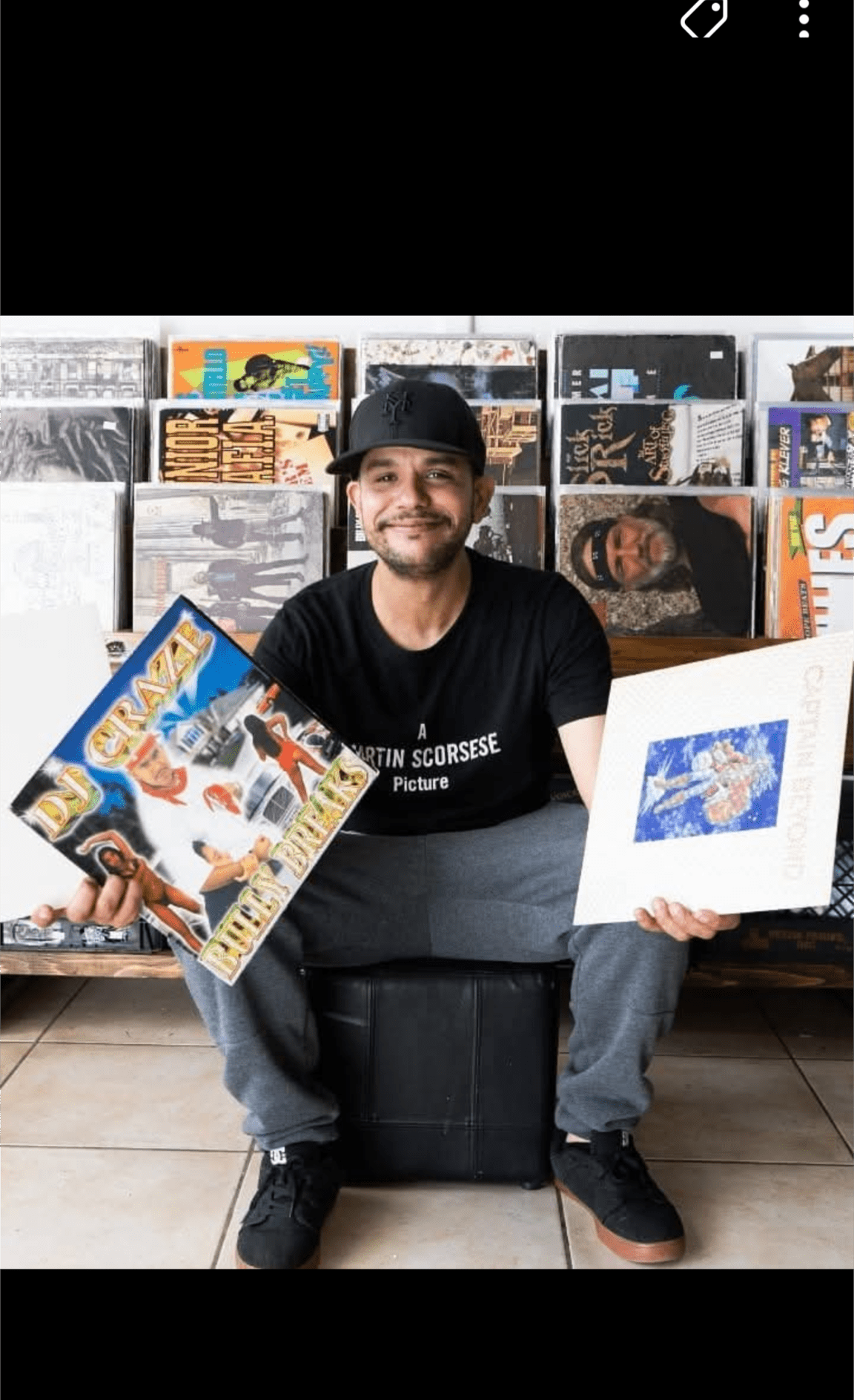
A self-described music nerd and former record store operator, Cole built his reputation on an ability to mix across genres with ease. Hip-hop, rock, electronic, funk, whatever the crowd demands. Along the way, he has shared stages or opened shows with artists ranging from legendary DJs like DJ Craze, Tony Touch, and Keoki to major touring acts including Morgan Wallen.
Decades later, Cole’s résumé reads like a tour through the evolution of DJ culture itself.
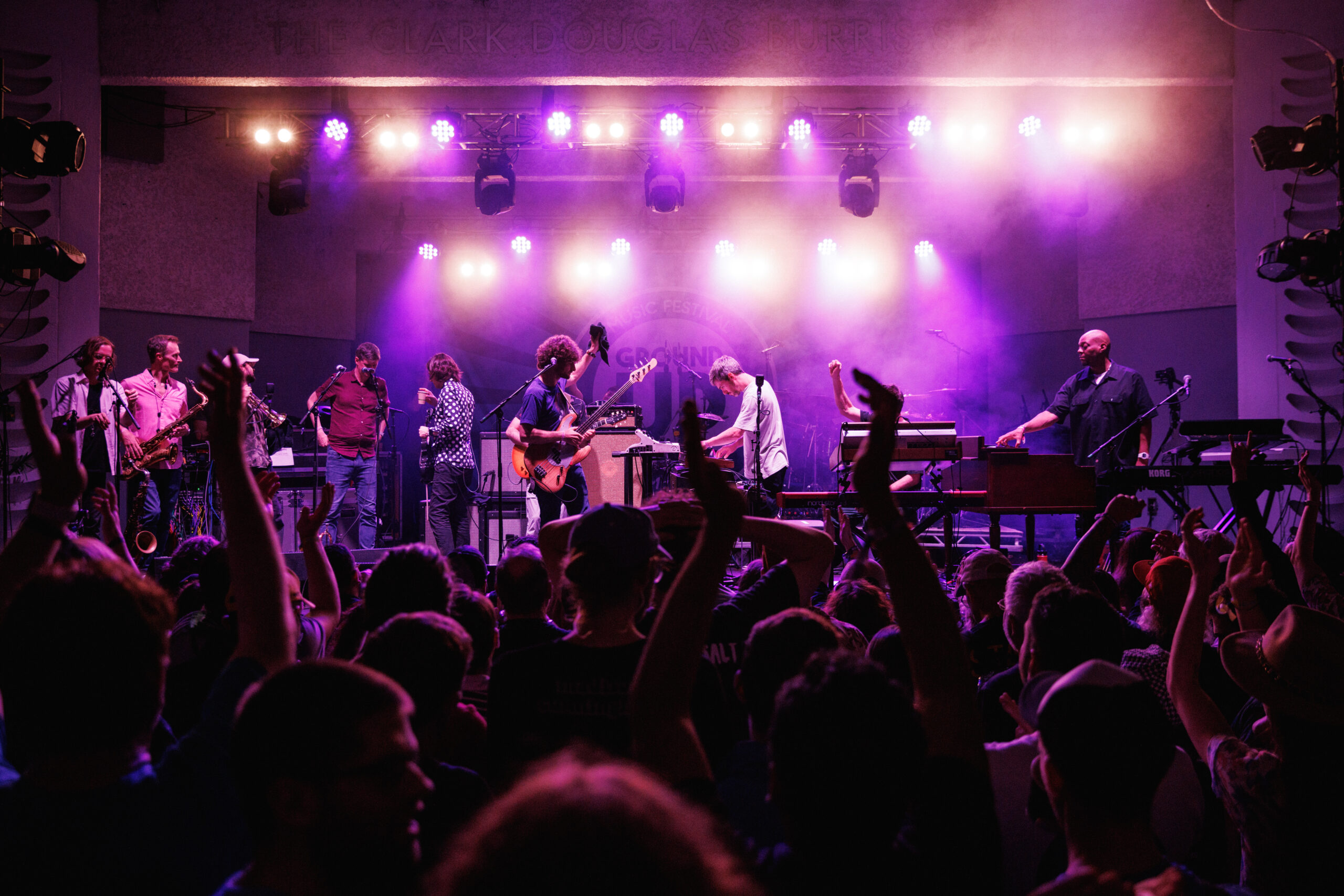
For the past decade, the GroundUP Music Festival has low-key carved out a reputation as one of the most adventurous music gatherings in the country. This March 13–15, the festival returns to the Miami Beach Bandshell to celebrate its 10th anniversary, bringing another genre-bending lineup of world-class musicians to the oceanfront stage.
This is one of our favorite festivals.
Founded by Snarky Puppy bandleader Michael League and Miami arts leader Paul Lehr, GroundUP has built its identity around musical curiosity rather than genre loyalty. Not your normal Miami party scene. Jazz, electronic music, soul, global traditions, and experimental sounds all collide over the course of the weekend in a setting that feels closer to a musical retreat than a traditional festival.
It’s great how Miami has evolved musically. We have venues like Zey Zey now and other jazz festivals like the Montreux Jazz Festival.
GroundUp was here first.
“This year is our 10th anniversary, and we’re excited to celebrate with a strong lineup,” Lehr said, pointing to artists including Flying Lotus, Patrice Rushen, Rickie Lee Jones, Bilal, Julian Lage, Isaiah Sharkey, Arooj Aftab, Alain Perez, and Varijashree Venugopal, along with the festival’s longtime hosts, Snarky Puppy.
The weekend begins Friday night with a benefit concert supporting the GroundUP Music Foundation, which funds music education, mentorship programs, and creative opportunities for musicians throughout South Florida.
Saturday and Sunday will feature performances from across the lineup, building toward the festival’s signature closing sets. “The weekend will culminate in our Family Dinner-style performances from Snarky Puppy featuring guest artists,” Lehr said. “We can’t give away any special surprises.”
Part of what sets GroundUP apart from other festivals is its unusual sense of intimacy.
Artists don’t disappear backstage once their sets end. Instead, they stay, mingle, and collaborate.
“GroundUP is known for its relaxed, intimate atmosphere and bold, genre-defying lineups,” Lehr explained. “Unlike most festivals that focus on a single genre, we pair unexpected sounds and artists together, allowing each performer’s story to shine.”
GroundUP Music Festival Celebrates 10 Years at the Miami Beach Bandshel
Another fan favorite happens after the main stage lights dim. Each night, musicians and festivalgoers head to nearby venues for late-night jam sessions, where members of the lineup sit in with one another for loose, improvisational sets that often become the weekend’s most memorable moments. In a festival built around collaboration, these late-night jams are where the music truly opens up. You will see unexpected pairings, extended solos, and the kind of spontaneous musical conversations that can’t be programmed.
It’s a jam.
We like the late night sessions more then the festival but hey to each his own.
Still, the festival’s Miami roots remain central to its identity. Lehr, a Miami native, sees the event as both a global gathering and a local cultural institution.
“GroundUP brings some of the best artists from all over the world—and a worldwide audience—to Miami each year,” he said.
Ten years in, the formula still feels rare: great musicians, a curious audience, and a weekend where collaboration matters more than categories.
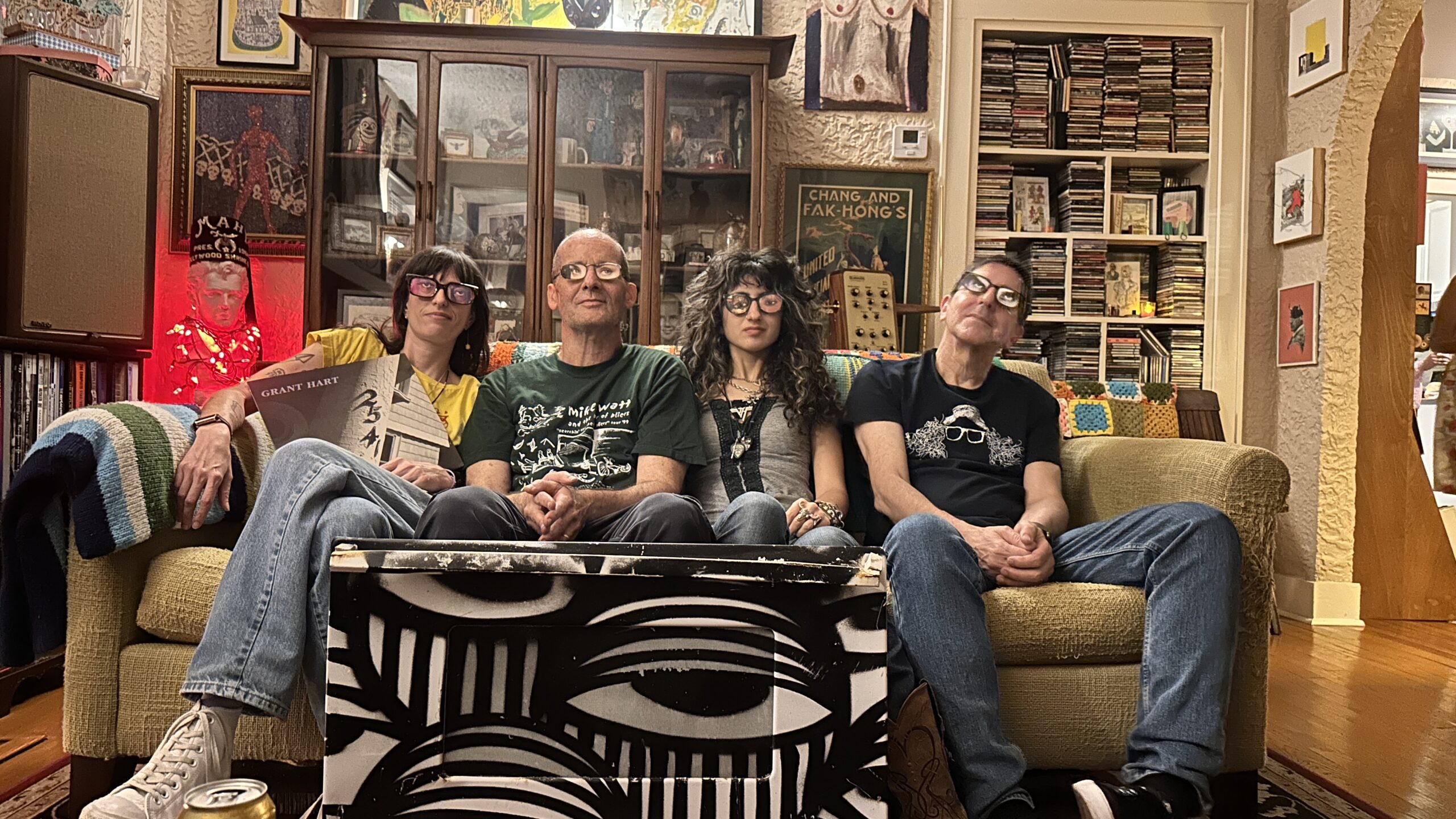
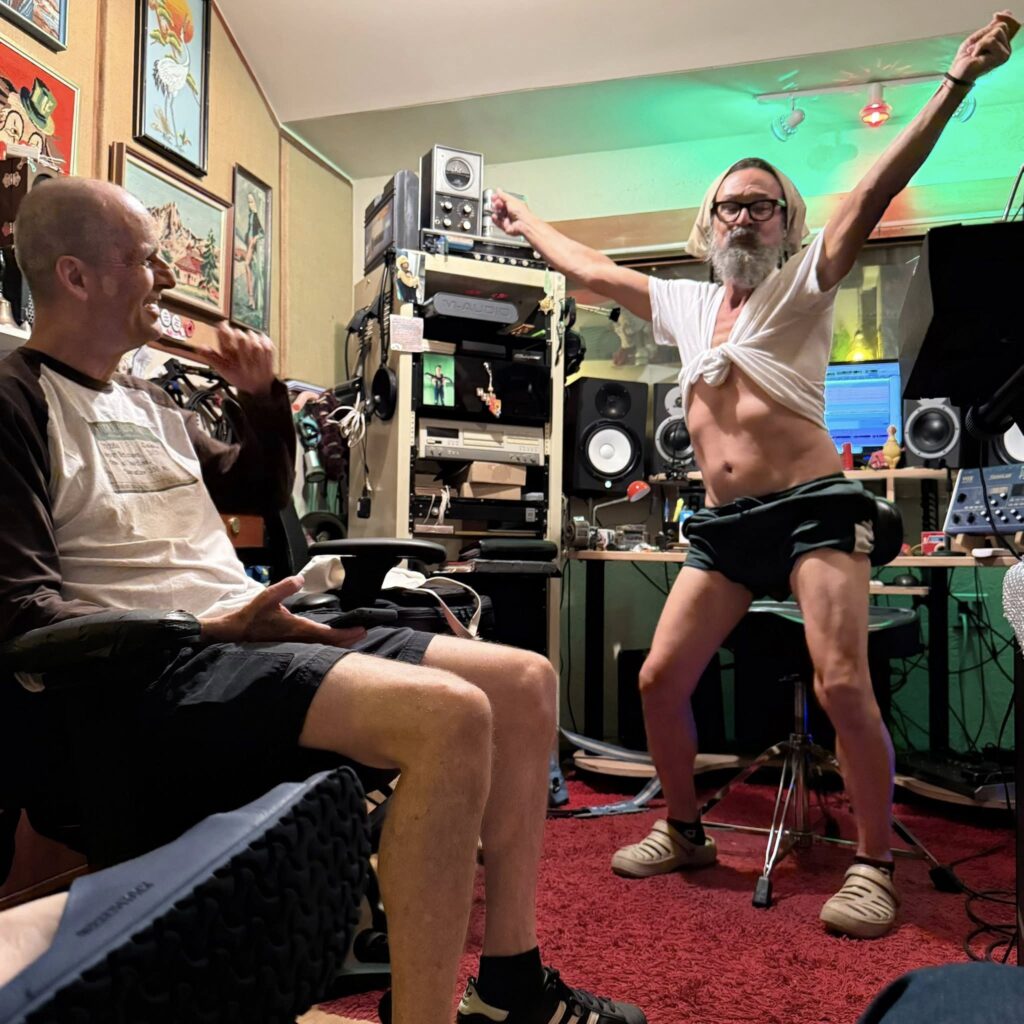
Come spend an evening on the couch with MLE and Mr. E (me) and listen as we talk about making our new album “Don’t I Know You From Somewhere?” (available here). You can listen to our conversation and read along. We tell the story of how we make an album and the friends that help us. Push play now.
MLE: Here we go. It’s January 20th, 2026, 7:51 p.m., and we are in Hollywood, Florida.
MisterE: On the couch.
MLE: On the couch in the Land of Entertainment.
MisterE: Where many of these songs started.
MLE: Yeah. So this is us talking about, “Don’t I Know You From Somewhere,” the newest Mr. Entertainment & The Pookiesmackers record, instead of writing about it, because why not?
MisterE: Seemed cool. Like the idea. And it came out December 21st, 2025.
MLE: Winter Solstice. Make Music Day. Is it something else? The 21st? No. It’s close to Christmas.
MisterE: Roberto Clemente’s number.
MLE: There you go. Roberto Clemente’s number.
MisterE: 21.
MLE: All right. Age at which you can drink. Here.
MisterE: And get a gun. But they’re trying to change that.
MLE: Wait. Isn’t it gun 18?
MisterE: They’re trying to change it back.
MLE: Oh. Okay. Well, anyway.
MisterE: Roberto Clemente.
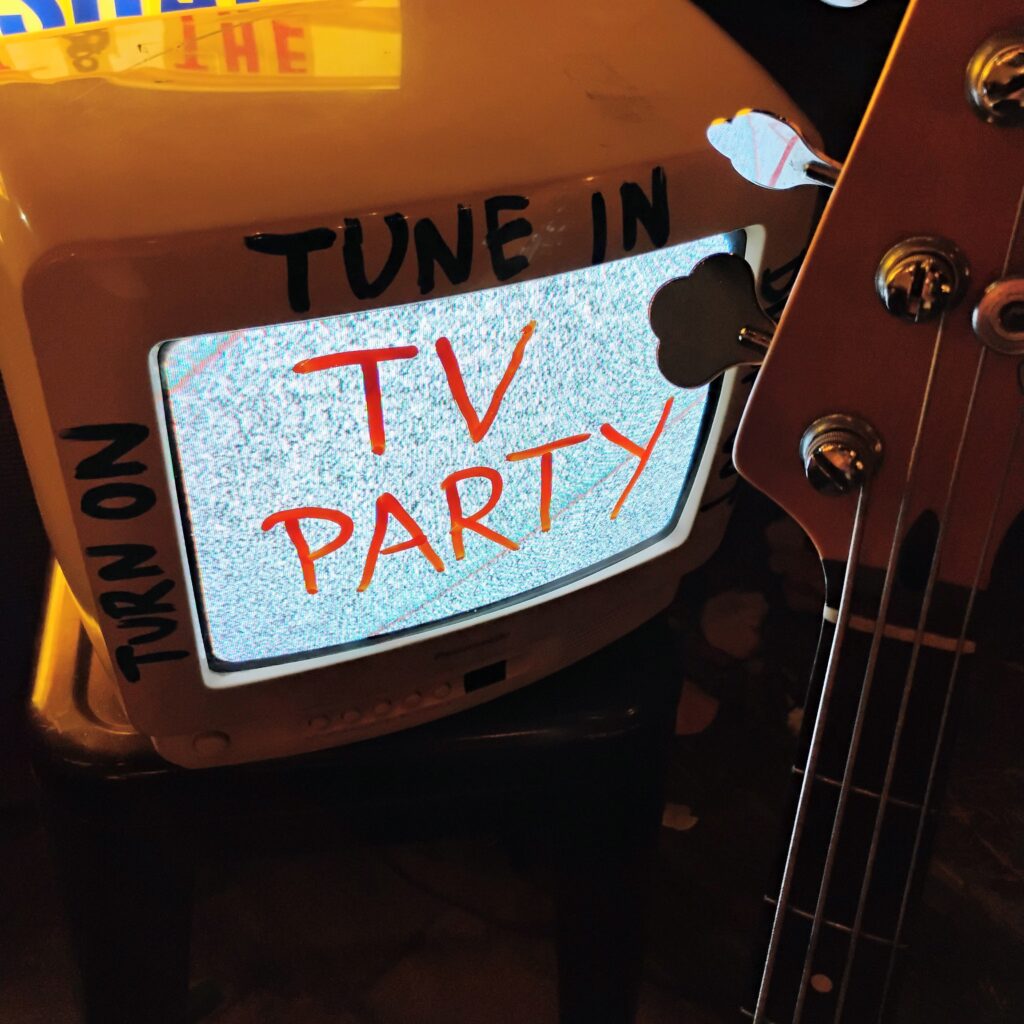
MLE: All right. So, I guess we’re going to go track by track and talk about this record, and the songs, and how it got made. Yeah. So, the first track is called “Booty Shaker,” and it’s also called the TV Party Theme, because it was in 2025 that you started resurrecting TV Party, or was it before that?
MisterE: No, we had four shows in 2025. We had a residency at the vintage in Hollywood.
Yeah. And I don’t think that at the first one we played it, but by the second one this had become the TV Party theme. TV Party was a cable access show in New York City, with a great Glenn O’Brien and a cast of characters that we do sort of like a musical of now. They played less music, talked more bullshit, and who talks more bullshit than our band? We play more music and talk less bullshit than the TV Party.
MLE: And we kind of incorporated, you know, a cover song, a different cover song each time, that would be linked to someone who recently died. So, we did the New York Dolls song, right?
MisterE: And then we finally did “Caca Disco.”
MLE: And we did Blondie, we did “Call Me.” So, yeah, so that’s just the, I guess it became the theme for the residency.
MisterE: It’s an instrumental, which is perfect for themes. And there was a couple songs on this record, and this was one where I tried to have a new style of playing, where I didn’t really play a proper chord through the song, and I just moved up and down the neck. So it has this cool somewhere between like the Minutemen and Jeff Beck “Blow by Blow.”
MLE: Yeah. And then with some kind of Miami bass drumming, like a little bit Miami bass, a little bit just like kind of, I guess, drum & bass like “Amen Break” kind of thing in there, too.
MisterE: And then during the recording, where we recorded some of this record with Ferny at The Shack North, who’s always a wonder to record with. There was this really crazy Moog part that we put in there that ended up being a ghost lyric because this is an instrumental, that… here comes the tea.!
MLE: Here comes the morphine. Yeah, but maybe that can be open to interpretation by people. Don’t want to give away what the ghost lyric is, but if you are a, you know, if you’re of the same type of mind we are, you might hear it. Alright. What’s the next song?
MisterE: I couldn’t get high.
MLE: Damn, that sucks.
MisterE: It does. That’s what this song’s about. Yeah. It’s the depression of you try, but you can’t get high.
MLE: So, what are you pointing at?
MisterE: You.
MLE: Me. Oh, well, this has been a song we’ve covered in various iterations for a long time, right? This is a Fugs song. Yeah, I don’t know. It’s a crowd pleaser, I guess, because it’s just, people, it’s funny. It’s a funny song, but I guess, you know, Fuggs songs are pretty funny in general.
MisterE: It’s a great introduction to some of the Dada that comes out of the band for sure with the lyrics to it. And for some reason, their version was like, you know, a clanky, wobbly band, which we are that, but somehow we polished it up and kind of made it a Byrds song a little bit with the 12th spring in there that Mahoney played. And it’s really great. I’m so happy to have a Fugs song.
MLE: Yeah. And it’s the people who know it, which a couple people have told me, they’re like, oh, shit, the Fugs. And it’s like, “wait, you know the Fugs?” So, that’s cool.
MisterE: And another odd part is by the time that we started doing it with this band, Nikki was playing “Goo Goo Muck” on bass. And she did that bass line. And in a different key this would be “Couldn’t Get High.” So whenever we play it live, people think we’re going to play The Cramps.
MLE: Yeah. Oh, I didn’t even know that. I mean, I guess it makes sense now that I think about it.
MisterE: So it’s kind of awesome, which, you know, there’s only 12 notes made.
MLE: Now I think we should do like a medley, even though it’s in a different key, we could still throw like Cramps lyrics in there.
MisterE: Or we could, you know, just modulate up to their thing and then make it that. All right, next is the Lions, which came from an EP that we had made a seven-inch four-song EP that was recorded both in the same places and had a very similar sound and all these songs, you know, were pretty much other than even the other cover on here, we only been doing recently. “I Couldn’t Get High” is something that MLE and I have messed around with for maybe even eight years or something. But these songs were all sort of written in the last couple of years. And when we were putting the record together…
MLE: Well, because at first we weren’t going to do vinyl. So we were just like, we’ll do a cassette, we’ll do all the new songs. Then we decided to do vinyl and it was like, well, if we’re doing vinyl, we should put more songs on it. So that’s how we basically incorporated three, right? Three of the four songs from the last EP into this, which, yeah, fuck it.
MisterE: And two, you know, it works together well, so that even made it cooler. And those three songs, Nikki plays guitar on all of them.
MLE: Yeah. And doesn’t Vullo play bass on on two of them?
MisterE: On this one, “The Lions” and on “Midnight Turns Straight Into Noon,” and I play bass on “It’s 3AM,” but those are later. This sort of an awesome rock song. We made a great video with it. And if you want to hear the fourth song on that EP, it’s part of the video of this song.
MLE: Well, the EP’s up too on Bandcamp, if you want to hear it in its own context.
MisterE: I think we can move on. Okay. “Invite Me To Your Funeral.” This one has been really great playing live because it’s not exactly us, you know,
MLE: It’s like The Cure and Bauhaus…
MisterE: And Nick Cave. Yeah. You know.
MLE: And I think people are kind of confused when we play it. Like, especially because we’ll play it kind of early in the set too. Or that’s what we’ve been doing since we started playing it live. And it’s like people are like, okay, they just did a thing called ”Booty Shaker” and “I Couldn’t Get High” or whatever, and now they’re playing a fucking dark, boomy funeral procession song.
MisterE: Right. And the inspiration is politicians out there that I may disagree with due to them trying to eliminate people and not do the right thing. So this was easier than saying, “I’d like you dead.” You know, “Invite me to your funeral. I’ll gladly attend. I will buy your casket for the good of all men.” So. And then it just goes from there. It’s really cool. It wasn’t exactly a song. It was also pretty a minimalistic way of writing this one too, the low E-string guitar thing. But it’s also the same thing going but with chords when I’m singing. Love the song, seems to like knock people out when they play it. Ferny in the studio was like, “Oh my god. None of these songs sound the same. It doesn’t even sound like the same band,” which is something that I’ve always been about anyways. And, and I think MLE plays on that song those drum sticks with the fuzzy things on the end?
MLE: The mallets. You know, yeah. And I guess when we were recording it, Omar didn’t want me to, but I had to just because of the logistics of all the things. Like I couldn’t do one stick, one mallet or whatever. And I think it turned out fine. It doesn’t sound like blown out or weird or anything. I just, you know, was good about not bashing the snare with it. Um, oh, and Ferny plays the nylon string guitar on that. So that really turns it into something that’s more, that’s why I kind of feel like it’s more like a funeral procession at that point because there’s something about the tone of that guitar that I just see people walking through the desert with a coffin or something. I don’t know. It just, it gives, it gives that kind of feel, I guess.
MisterE: And that all just happened because we were mixing the song down and Ferny’s got all this equipment around there and plopped it in. We did mention Omar, all these songs started off over at his place. We’ll just call it that.
MLE: Yeah. And we recorded the basic tracks to tape, for the EP too. So it’s like everything was the same process.
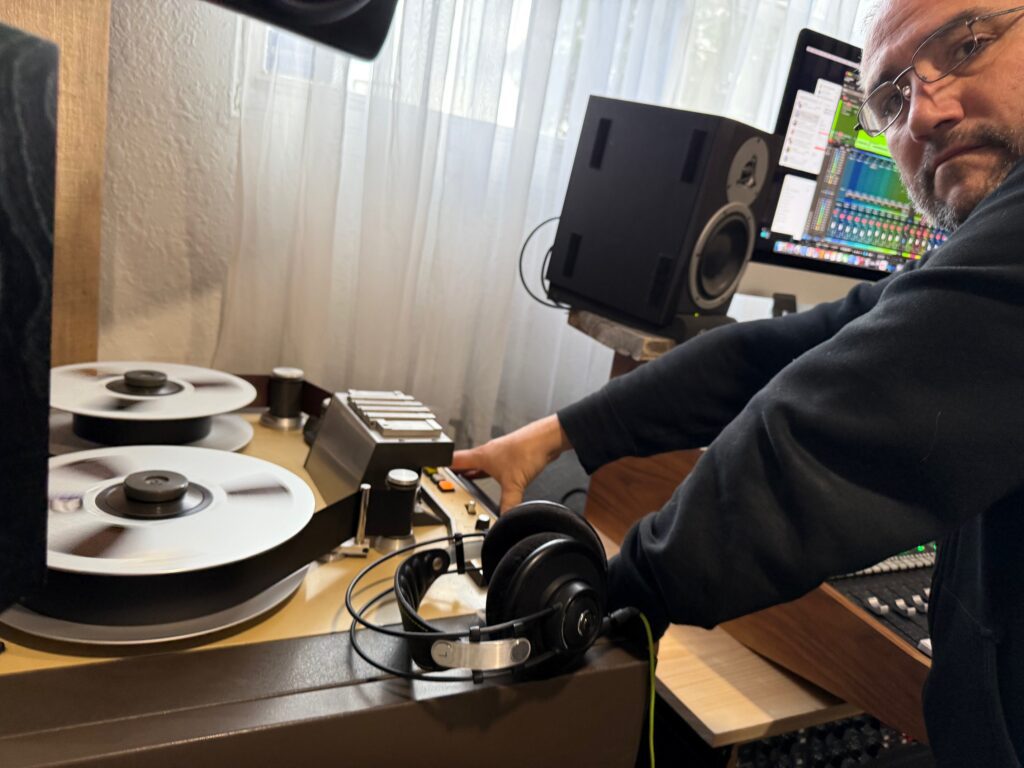
MisterE: And through I think a modern analog board that was a replica of a vintage board. I think so. Mahoney always says we made records with equipment, back to the last few records, the ones we did with Spam too, that would be just as good as any 70s studio at the time, which I think comes across somewhat in it. Anyone who’s listening to the record so far says it sounds great.
MLE: Yeah. That’s the feedback that I’ve gotten from some people like, this sounds like it’s from the 70s. And not in that like, you know… some bands are really trying to be like, “we want to sound like everything, like the songs, and this and the references and everything is 70s.” It’s not that. It’s just so, I don’t know though. It’s very direct. It’s not polished studio wizardry. It’s rock and roll with, you know, decent equipment.
MisterE: I never understood when they said “the tubes are warm” or this, that, and the other. Other than when I hear a record like that, whatever that means. That’s how they made those records.
MLE: You know, well, you have to put them in your butt to warm them up first. So it’s a process. And also, you have to find an engineer willing to do that. So it’s the guy who will put the tubes up his butt to warm them first. So shout out to Ferny. We already kind of touched on, well, we mentioned “Midnight Turned Straight Into Noon” because that’s on the EP is also on here. And it’s about Tom Verlaine, which he keeps coming back into our lives like, you know, this whole thing and then Patti Smith’s memoir. She talks about him a lot. And then the recent New York Times thing because his partner is archiving all of the stuff that he had.
MisterE: Which goes into the New York public library.
MLE: Yeah, which is funny because when I was seeing that Lou Reed or John Cage and then it’s… Tom Verlaine. And it’s kind of almost like an outlier because I guess he was so private and so just out of the limelight that I didn’t realize he had so much, like enough to create an archive in a library. So that’s fucking cool.
MisterE: Yeah, it’s awesome. And the song sort of stems from a text the day died and we just bumped a few things back and forth. And some of it was very lyrical. So that started the process. But the reality was this is the first song I ever really wrote with the William Burroughs “cut up” type of thing. My lyrics are usually, you know, just flow out of me and they’re like a Dr. Suess story that I’ve made into rock roll.
MLE: I thought you were gonna say “And they flow out of me, They’re just like diarrhea.” But hey!
MisterE: But this one I went and looked into you know different authors that had inspired them. And I cut and pasted some of the poetry and you know, out of some of those books. And then I kind of twisted around some Television lyrics in there.
MLE: Hence the title of the song too.
MisterE: Right. Yeah. And again, great response when we play it live. I think it was early on with Nikki playing guitar. And she really nailed this, you know, even though Television could be fast and complicated and stuff with their guitar licks, there was also this simplicity thing that I think she nailed.
MLE: I do too. And even the tone is pretty good. Yeah. And I don’t think that was even intentional necessarily. But that repeating line is so… Television does have a lot of repetition in it. And that really mimics that.
MisterE: And sometimes with the guitar sound it is like like you know gets under your skin a little bit or you know it’s this very trebley. And it works well. And it’s sort of meditative. It’s loud, which is a bit disturbing, but I think that’s important. It’s just great. And I totally love the “Debbie, Jane and the ghost of DeeDee we’re howlin’ at the Midnight Moon.”
MLE: The Marquee Moon.
MisterE: Yeah. That’s just awesome. Great song. I mean I’m not bragging, but everyone seems to like it and it’s cool.
MLE: All right, what’s next?
MisterE: “Zeppelin, Faeries And All Of That Shit.”
MLE: Okay. Well, you got to say why you came up with that.
MisterE: I’m home alone a lot and my poor wife has to come home afterwards. And I’ve decided that I want to make a folk psychedelic record like The Fairport Convention. And so she just turned to me and said “You mean like Zeppelin, faeries and all of that shit?” And I’m like “that’s going to be a song one day.” And that one, another one that just was pretty much an easy write. I decided it’s not exactly only in one note, but it’s basically just a run on the D chord.
MLE: Yeah. Steve loves to hang on that D.
MisterE: Yeah… And like a mix of two things going on. There’s a walk down in it. But really it’s I’m in the D position the whole time.
MLE: Well, and also when I heard it before there were drums or before it was completely done, I was like, well…
MisterE: And “Zeppelin” was in the title.
MLE: And because “Zeppelin” was in the title, I was like, well, this needs to just, the drums have to be like a shuffle, right? Kind of like a Bonham shuffle, but it goes… I hold it a little bit longer. It’s not like that exact pattern.
MisterE: Because when it comes to the D you hold it longer…
MLE: I hold the D right there. It’s kind of like a Bonham shuffle. It’s like all the shuffles together. I’m doing Purdie, Bonham, Porcaro. It’s a shuffle orgy. But not really getting fancy with fills or anything. Because the rest of the song is like that too. There’s no solos that jump out. There’s no whatever. So everyone’s kind of like keeping it even throughout the song.
MisterE: It’s definitely like a drone.
MLE: Yeah, it’s like, it’s very, it’s very drony. So it’s like psych-drone in that sense. And then Ferny plays the bass clarinet on it, right?
MisterE: And Mahoney played the Moog on it. Yeah. And the lines in that are really… they work off each other well. And as much as I play the same thing repetitively, Nikki plays the same thing repetitively. And it’s pretty long. And it’s always one of those songs that she came up with this simple but complex or complicated way of playing these notes that she’s just like, “Man, that song hurts my hand every time we play.” But as we were having it mixed by Ferny, this is the first song that he had finished on this recording of these songs. The second set of songs after the EP that we recorded that he sent back to me. And he said, “Hey, I made one edit to the song. And if you don’t like it, you know, don’t worry. I’ll put it back.” He was kind of apologetic. And like the song does the same thing through the whole thing. And he has a dropout at the beginning of the last verse.
MLE: And it’s awesome.
MisterE: Yeah, man. If anything is 70s, you know, analog sounding thing, this just is like tits.
MLE: I mean, just he pulls the D out and you know, you just have this wide open space.
MisterE: And I think it’s just bass in the clarinet actually.
MLE: Yeah, and the drums come out too, which is great because once the drums, I mean, the drums are just kind of like, they don’t stop, you know, it’s very like, you know, continuous, like a carousel.
MisterE: It’s kind of theatrical. Yeah. It’s awesome.
Last weekend, Regatta Harbour in Coconut Grove served as the backdrop for the 2026 edition of the Montreux Jazz Festival Miami. Set against the salty breeze and attended by key figures of the local industry including the Estefan family, the evening offered a journey that ranged from organic rumba to highly symbolic, choreographed performances.
The night opened with Habanero percussionist Pedrito Martínez. Raised in the iconic Cayo Hueso neighborhood of Havana, Martínez brought a trajectory that has taken him from Cuban solares to the prestigious stages of New York, where he has lived since the late 90s. His set was a masterclass in technical maturity, rooted in the “rumba de solar” tradition.
The highlights included vibrant renditions of tracks like “Habana City,” providing the canvas for Cimafunk to join in with his signature Afro-Cuban funk. A surprise appearance by Bill Murray who joined the microphone for a spontaneous vocal improvisation singing “love the one you’re with” marked the peak of the set’s organic energy. However, the finale marked a geographical shift: the last song shed its island cadence for a purely New York sound—a tight, urban ensemble reflecting his decades of evolution in the Big Apple.
Venezuelan artist Elena Rose introduced a starkly visual aesthetic, with both her and her band dressed entirely in white. Rose used the stage to reflect on her journey, primarily referencing her times in Hialeah to allude to the fact that she started from “the bottom.” It was a moment of grounded humility as she admitted to feeling “small among giants” while the hangar was illuminated in the colors of the Venezuelan flag during “Caracas en el 2000.”
The performance featured a powerful segment with Emily Estefan on drums during “Naguará.” For the remainder of the set, the artist developed a narrative based on her personality split—the transition between Andrea and Elena. This psychological framework likely came as a surprise to those who hadn’t experienced that specific narrative before, adding an unexpected layer of density to the performance. While this soul-searching approach is a core point of connection for her dedicated fanbase, for others, the atmosphere became a moment of deep vulnerability for some.
The closing set by Bomba Estéreo pushed the performance into ritualistic territory. Lead singer Li Saumet opened the set by declaring: “This is a ritual,” periodically lit candles, adding a recurring liturgical layer to the stage.
With the ambient sounds of “Pájaros” the stage was bisected by a neon green laser structure that created the effect of a cage. The spiritual symbolism intensified during “Somos Dos,” which concluded with a dance accompanied by a trumpet whose sharp phrasing evoked the sounds of a Santería ceremony. More than a performance, Li Saumet’s stage presence is a modern pagamento—a sacred offering rooted in the lineage of Totó La Momposina. By dancing with candles, Li embodies “La Candela Viva” (The Living Flame), the ancestral fire that Totó famously kept alive for decades.
The set begins with the quiet introspection of a Ritual de Florecimiento, using the candle’s light to cleanse the space and open an energetic portal. This ritualistic stillness eventually erupts into the catharsis of “Fuego,” where the tradition of the Caribbean meets the mysticism of the Amazon. It is a transformation of the stage into a primal jungle cumbia circle, proving that the flame of the ancestors never truly goes out; it just finds new ways to burn. The show ended with the opening of the VIP area to the general public, allowing everyone to be part of the same group, even for a glimpse.
Beyond the technical display and the ethical questions regarding the stage-as-ritual, there is an undeniable magic to the festival’s format. The openness of the Regatta Harbour stage creates an environment that feels niche, up-close, and almost personal. To see a legend like Bill Murray jump on a mic or to be within arm’s reach of a master like Pedrito Martínez is the true privilege of Montreux Jazz Miami.
In a city of massive, impersonal arenas, this festival offers a rare intimacy, a chance to witness the artist’s process from a perspective that feels like an insider’s secret. The stage itself remains an open invitation. Miami deserves this kind of high-level, close-quarter connection, where the music is so near you can feel its heartbeat.
The Montreux Jazz Festival Miami kicked off its third edition Wednesday night. For 2026, the festival added two nights at the historic Miami Beach Bandshell in North Beach. Wednesday’s performance celebrated the life and legacy of perhaps jazz’s most famous performer, Miles Davis. Davis, who passed away in 1991, would have turned 100 in May of this year.
The evening began with the Kind of Blue Acoustic Band. Their set began with a haunting version of “My Funny Valentine”, featuring Grammy award winning singer Lalah Hathaway on vocals. The band then proceeded to play through Kind of Blue, drowning out the sounds of nearby car horns and sirens with the familiar hypnotic tunes of jazz’s most famous album. Tenor saxophonist Javon Jackson, alto saxophonist Donald Harrisson, and trumpeter Eddie Henderson all took turns improvising solos that left the audience in awe. This all-star collection of musicians was backed by drummer Lenny White, who performed on Davis’s seminal 1969 album, Bitches Brew.
After a brief intermission, the stage, like Davis’s career, morphed into something entirely new. During his later years, Davis was anything but nostalgic when it came to his music and once compared performing old hits to eating leftover turkey. The Miles Electric Band, which more than doubled the Acoustic Band’s sextet, performed songs from Davis’s later career that still sound futuristic today. Featuring electric guitar, multiple percussionists, synthesizers, and even a DJ, the Electric Band even used a sampler to incorporate Davis’s iconic whisper of a voice into several of the songs on the setlist.
Led by Davis’ nephew Vince Wilburn, Jr, the collective had the audience singing along to “Time After Time” and “Human Nature”, two covers off Davis’s 1985 album You’re Under Arrest.
Miles was given an important life lesson by his father when he was young boy. Listening to a nearby mockingbird emulate the sound of other birds, his father lectured him on the importance of finding his own sound. Reflecting on the memory, Miles told reporters “Man, sometimes it takes a long time to sound like yourself”. With their own unique touch, the Miles Electric Band managed to pay tribute while carving their own path for a new generation of jazz aficionados.
The Montreux Jazz Festival continues Thursday evening with a performance by Makaya McCraven at the Miami Beach Bandshell. Friday, the event shifts to the Hangar in Coconut Grove, an intimate 1,500-person venue built in 1918 with a weekend of performances headlined by Jon Batiste, Trombone Shorty, Nile Rogers, Toto, and Bomba Estereo.
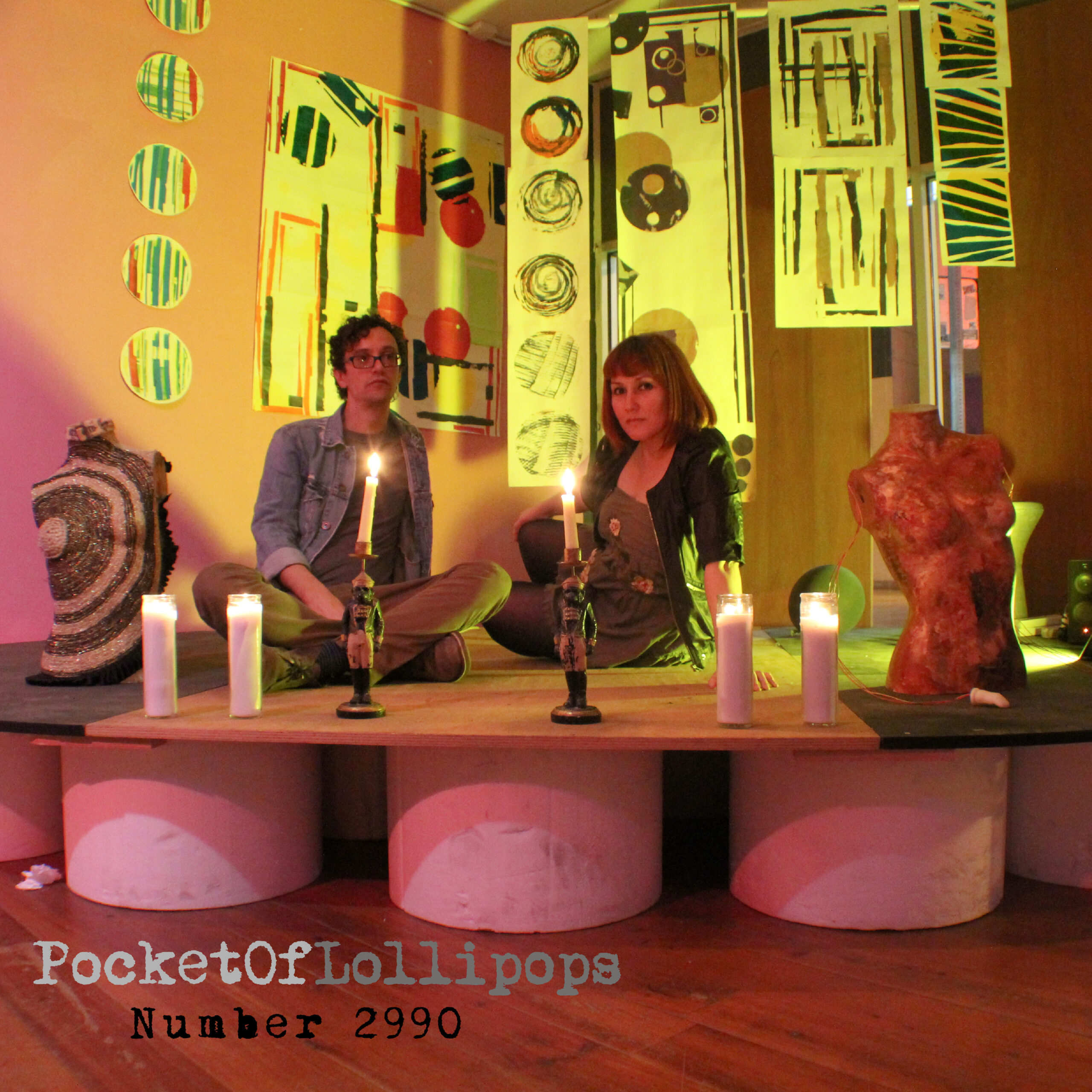
Miami’s experimental noise rock/punk duo Pocket of Lollipops known for blurring the lines between music, art, and performance, has just released Part 1 of their eighth album, Number 2990. A project that feels as much like an art installation as it does a record.
Recorded in summer 2025 and mastered by the legendary Kramer, Number 2990 is an immersive experience. Over the past six months, Pocket of Lollipops engaged fans in a unique game, releasing one track per month since July to create a looping narrative. The final track of Part 1, “Be Your Own Detective,” is described as art disguised as music and music disguised as art. A mystery that refuses resolution.
Formed by Maitejosune Urrechaga (bass, multidisciplinary artist) and Tony Kapel (drums, writer, filmmaker), Pocket of Lollipops transforms sound into surreal worlds where meaning dissolves and sensation reigns. Visual art is integral to their identity, live performance, influencing album covers and aesthetics.
Part 2 of Number 2990 will arrive in 2026. How it will be released remains an open question.
I first met Attila Mendez during a moment of vulnerability for our community: a fundraiser for Gaston Adanto. Since then, our paths have continued to cross at Cristal Jams and on the corners of Little Havana. This interview wasn’t planned with a rigid script; it was a necessary encounter between the February chill and the heat of creation. Sitting there, listening to how Attila and DShon El Villano deconstruct the reality of Miami to turn it into music, reminded me why I do this. There is a raw magic in the 305 that only appears when you stop looking for studio polish and start listening to the pulse of the street.
The air in Little Havana carried a rare, crisp edge of a cold February morning. Weird for a Miami winter. Surrounded by the neighborhood’s familiar chorus of roosters and the low, rhythmic thrum of jet engines, the conversation with Attila Mendez and DShon El Villano felt remarkably easy—just a natural flow of ideas between people who have spent plenty of time in the same trenches. It was a fluid, trilingual exchange, where sentences beginning in Spanish found their rhythm in English and occasionally hit a French note. There was no artifice, just the comfortable energy of a morning spent catching up in the chill.
The story of their partnership is a testament to the quiet gravity of the Miami creative scene. This interview’s energy was a reminder that in this city, serendipity isn’t just a coincidence; it’s a pathos.
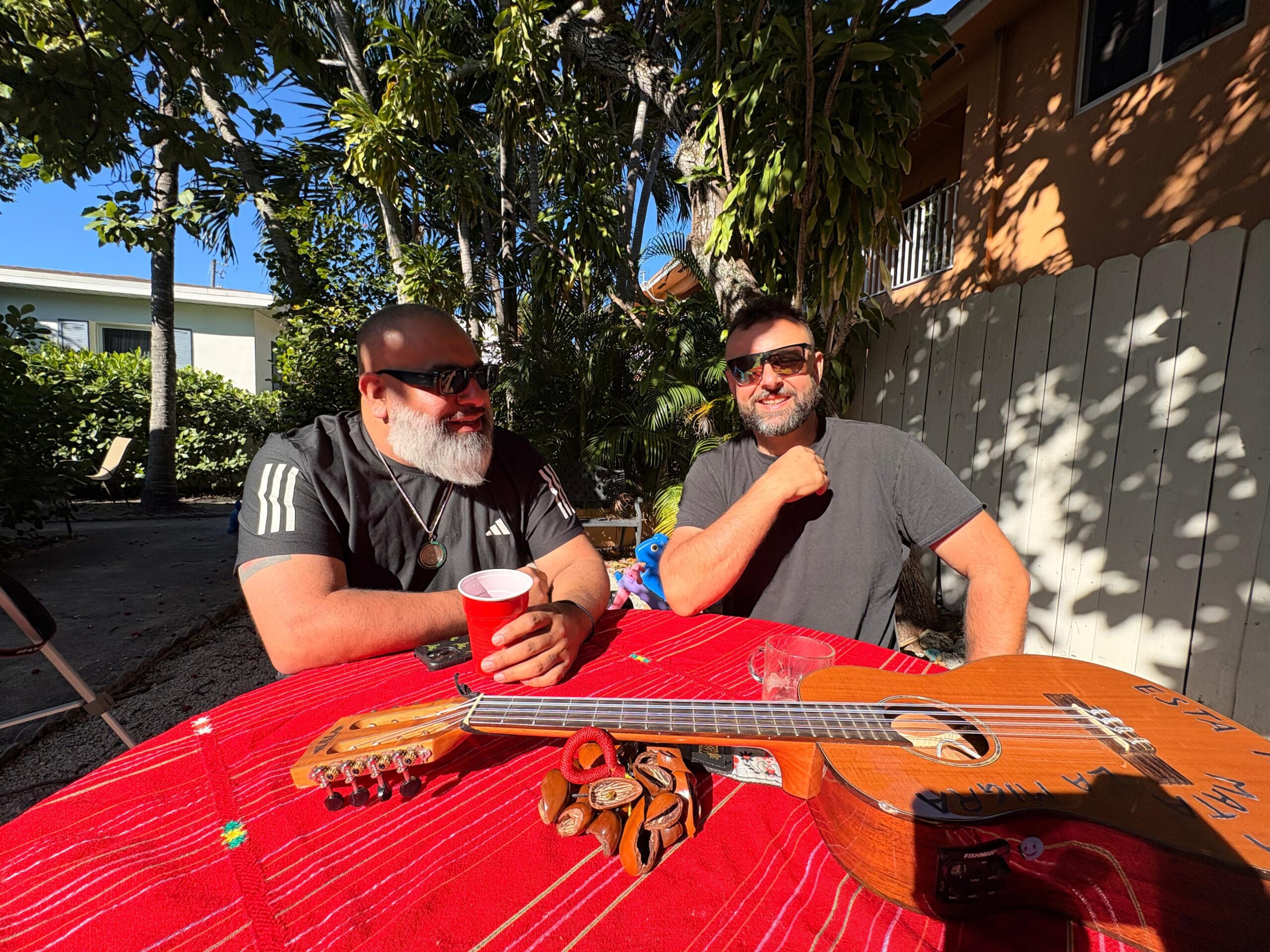
They retraced their steps back to the open-mic nights at Bar Nancy and Thank You Miami, laughing about their first encounter. Attila had arrived with a Charango tucked inside a case resembling a vintage Tommy gun. “He comes up to me and says, ‘Hey, you can’t be bringing that in here!’” Attila laughed, remembering DShon’s reaction to the “gangster” silhouette of the instrument case. Between swatting away mosquitos borrachos and leaning into the Spanglish rhythm of the neighborhood, they described a chemistry that was never forced, only discovered. Their spirit of collaboration and openness to being creative together makes them genuine, something that is greatly appreciated nowadays.
This “found-sound” philosophy is the literal pulse of their music, powered by Attila’s professional setup, Mobile Studio. For Attila, a professional recording doesn’t have to be tethered to a static, soundproof room. His studio moves with him, allowing him to capture the city’s raw frequency with high-fidelity precision. Their single, “Solo el Sol y la Luna,” was built from a collection of these sonic artifacts: a melody hummed by Attila’s wife during morning coffee and the five-note scale of a Chirophone recorded at a North Miami playground.
“I recorded it with my phone,” Attila explained. “The notes were limited, but those are the notes of the new song.” By integrating the mechanical “ring-long” of Miami trains and the “hum” of the city into his professional production, he creates something uniquely local. “Every local space has its own reverb, its own sound and echo,” he says. “It gives the music character.”
Having had a first listen to “Solo el Sol y la Luna,” I was struck by the haunting interplay of French and Spanish. It’s a track that captures a specific frequency of the city, a sound that is as sophisticated as it is raw. I also had the chance to hear an unreleased track that takes their experimentation even further: the creative well is deep. I experienced their flow first-hand by just being there, listening to their exchange.
That honesty peaks in their anthem “Fuck ICE,” where the ancient vibration of the Oud meets DShon’s modern delivery. In a city where the “artistic elite” often hide behind a bubble of silence, they chose to speak. “Art in general… each artist should use their art to comment on life,” DShon insisted. “Politics affects us all.” The lyric “I speak like this because I look like this” hung in the air, a reflection on the weight of an accent and the ghost of a “System” that can make a person disappear. For Attila, holding two first-world passports felt like a call to action. “People are literally willing to die for those documents,” he shared. “It gives me chills… it gives me the responsibility to be vocal and help where I can.”
As the morning moved toward noon, the focus shifted to the future. The upcoming collaborations move into even more experimental territory, with the duo diving into Champeta, the heavy, guitar-driven rhythms of Barranquilla. Hearing the early versions of these tracks, the fusion is startlingly seamless. “I didn’t know what to expect from that song,” DShon admitted of their foray into the Colombian genre, “but he knocked it out of the park.”
The session was a reminder that the most powerful art grows from these quiet moments, by having a heart open to really listen. For Attila and DShon, the goal is that fleeting, liberated second where an audience connects with a message. “To hear the people chanting it on stage,” DShon noted, “that’s the dream.”
Sonic Inventory
The Charango: A small Andean string instrument that first sparked their conversation due to its “Tommy gun” carrying case.
The Oud: The fretless, pear-shaped lute that provides the “spirit” and resonant echo of “Fuck ICE.”
The Braguinha: A string instrument originating from Madeira, Portugal, a precursor to the ukulele, adding a vibrant and traditional texture to the compositions.
The Chirophone: A playground instrument used to capture the “limited five-note scale” for their new single.
Mobile Studio: Attila’s professional mobile recording setup designed to capture the authentic acoustics and “found rhythms” of the city.
Full Live Interview at Musicinaheartbeat on YouTube, coming soon.
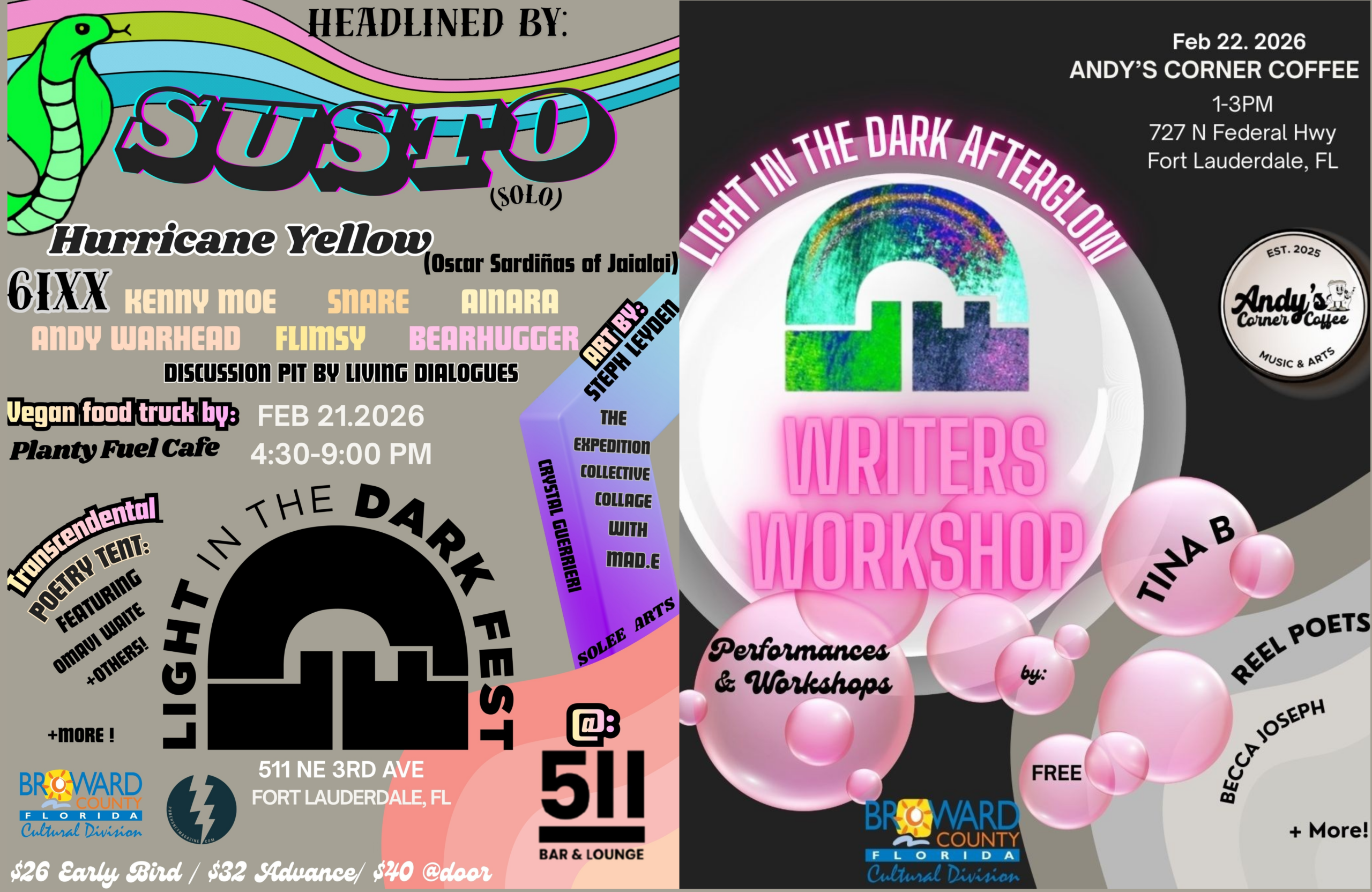
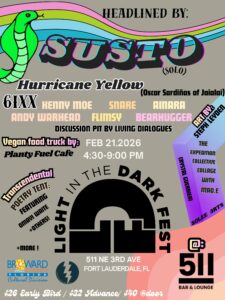
Light in the Dark 2026 is Saturday, February 21 from 4:30-9:00 PM at 511 Bar & Lounge (511 NE 3rd Ave) in Fort Lauderdale. It is sponsored by Broward County Cultural Division and Purehoney magazine and headlined by a solo performance by SUSTO. SUSTO is the moniker of singer-songwriter, Justin Osborne as a solo artist and as a full-band. SUSTOis based out of Asheville, Charleston, and Austin, and will be performing in South FL for one night only! SUSTO has played in arenas opening for artists such as Noah Kahan, Hootie and The Blowfish, and The Lumineers. SUSTO’s previous albums have been signed to Rounder Records alongside many of the other greats including Woody Guthrie, Robert Plant of Led Zeppelin, Bela Fleck, as well as New West Records which has featured many top acts such as The Wallflowers and Ben Folds.
Hurricane Yellow is the 2026 local music headliner. Oscar Sardiñas of Jaialai’s newest project, Hurricane Yellow was nominated by the Miami New Times as the “Best Solo Artist” of 2024. Jaialai was selected as the Miami New Times “Best Musical Act” of 2021, The Miami New Times “Reader’s Choice Best Band” of 2020, and various other awards. Oscar has played III Points, Okeechobee, and at the Arsht Center for the Performing Arts while also gaining national recognition on playlists such as Spotify’s Neo Psychedelic Rock.
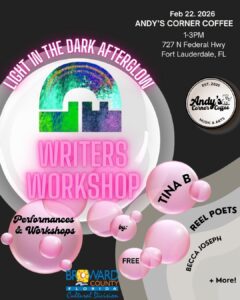
Additionally, there will be an after event (The Light in the Dark Afterglow) on Feb 22nd at Andy’s Corner Coffee in Fort Lauderdale (727 North Federal Highway). This is a free event from 1-3PM which will feature performances and writing workshops led by Tina B, Reel Poets, & Becca Joseph. This will include concurrent workshop sessions all centered around the themes of peace & environmentalism on:
-Poetry, prose, and songwriting
-Exploration of vocal performance