Category: News

  • Right Time: Music As My Protest

    Right Time: Music As My Protest

    I grew up reading a lot.

    Not just because I wanted to, but also out of a sense of self-preservation. I’ve always been a loner, overwhelmed by too many external stimuli. Books were a refuge that helped me make sense of a world that a whole lot of times seemed like it had none.

    Throughout elementary school, I gravitated toward thriller authors like R.L. Stine and Christopher Pike. In middle school I graduated to Stephen King and Dean Koontz, two guys who are still churning books out. As I went into high school and college, my reservoir of contemporary faves grew and diversified: Junot Diaz, Jennifer Egan, Ted Chiang, Don Winslow, Charlie Huston, Ta-Nehisi Coates.

    Whenever I’m confused about something, or bothered or curious, reading allows me to leave whatever room I’m in and travel through the world of literature to find an answer.

    Art in general does this, serving as both a mirror and a door.

    At some point, I stopped just loving art and needed to make it. Creation became the forward motion of life, what made me want the next hour, next day, week, month, years.

    I still get the same chill whenever I finish anything I’ve been working on, followed immediately by the desire to create something else.

    Near the end of elementary school, my parents bought a piano for the house, a black Wurlitzer some men wheeled in one day and installed in the living room. They also bought some beginner’s piano method books and got me practicing a couple times a week. But it wasn’t until middle school that I started taking formal lessons.

    What drew me to piano most was the theory, because of the math in it. I’ve always been drawn to patterns, and I love that music can be counted, the beauty of sound graphed in fractions and ratios that sync with the metronome in our ears so hearing something beautiful is equivalent to hearing something mathematically sound.

    All in all, I took piano lessons for about four years before I quit in ninth grade, a casualty of my high school desire to seem cool which required not caring so much about things that could get me labeled a nerd.

    I learned just enough throughout those four years of lessons to know that something is happening when a simple musical chord instantly changes a person’s mood, though I can’t tell you exactly what that something is.

    I spent most of the piano years trying to learn the beginning section of my favorite piano arrangement: Pachelbel’s Canon in D.

    I never mastered it. I did get to the point where I could play it, slow but clean.

    Felt like my first artistic win.

    Admission.

    Senior year 2002 I committed the same crime most of my peers did back then: bootlegging off Napster/LimeWire.

    Aside from .mp3 files that took half an hour to download and occasionally gave your computer digital herpes, I also downloaded a few programs that came with the same risk factors. One of them was Sonic Foundry ACID Pro, a sound mixing program I immediately got hooked on.

    Eventually I used ACID Pro to make dancehall and hip-hop mixtapes that imitated the mixtapes I grew up on from DJs like Black Chiney, Chinese Assassin, Renaissance and DJ Khaled (before “We the Best!” when he used to be on 99 Jamz). I called the series the C.A. Mixtapes, C.A. short for Caribbean Alliance, the name my friends and I gave our crew back in middle school.

    I made ten C.A. mixtapes between 2002 and 2006, mostly sharing them with friends. I still have them somewhere on some fossilized external hard drive.

    I learned two things during this first foray into sound production: 1) the basics of mixing, and 2) that I could sit for hours at a computer screen staring at soundwaves without getting bored.

    Music became therapy as well.

    For much of the beginning of 2004, in the aftermath of two friends being murdered and me subsequently failing out of my first year in college, I didn’t leave my room for months. And though the future got blurry as hell, I look back now and see clearly that the music — that series of mixtapes in particular — helped me venture away from a cliff I was a lot closer to than I wanted to admit at the time.

    Because there’s no point in putting that much time into making something if you’re not going to put it out there.

    I eventually got back on track, ending up at Florida State by the end of 2006. At FSU, I pivoted all my artistic energy into becoming a writer. Not to say my musical aspirations disappeared; I just went back to being a consumer.

    That is, until my junior year when I bought my first guitar; an Epiphone I mostly stared at, occasionally wrestling with the thing and coming away bruised (developing calluses is an unpleasant process).

    By grad school, I’d purchased my first electric too, an Ibanez I got because I’d read that Cobain liked them.

    Those years, learning the basics was easier because of my history with the piano. The math of it all translated.

    But even then, I still didn’t really start trying to make my own music until years later, in 2017, when I sat down and wrote my first song complete with lyrics and guitar chords. Which opened the floodgates.

    Soon, I was spending all my free time writing songs and making beats, first on the GarageBand app on my iPhone, then GarageBand on an old MacBook laptop, then GarageBand on an iMac before making the switch to Logic Pro. At every step, I produced with two rules: make it sound better than the last time I did it, and make myself smile.

    In that, my life and my music follow the same path.

    From learning ACID Pro during one of the most transitional periods of my life, to the Epiphone at FSU after leaving my parents’ house for the first time, to my forays into beat-making that taught me how to assert my own style, to the first album I produced during a worldwide pandemic.

    Music has helped steady me at every single moment, especially when life felt like — in the words of Macbeth — nothing but a brief candle.

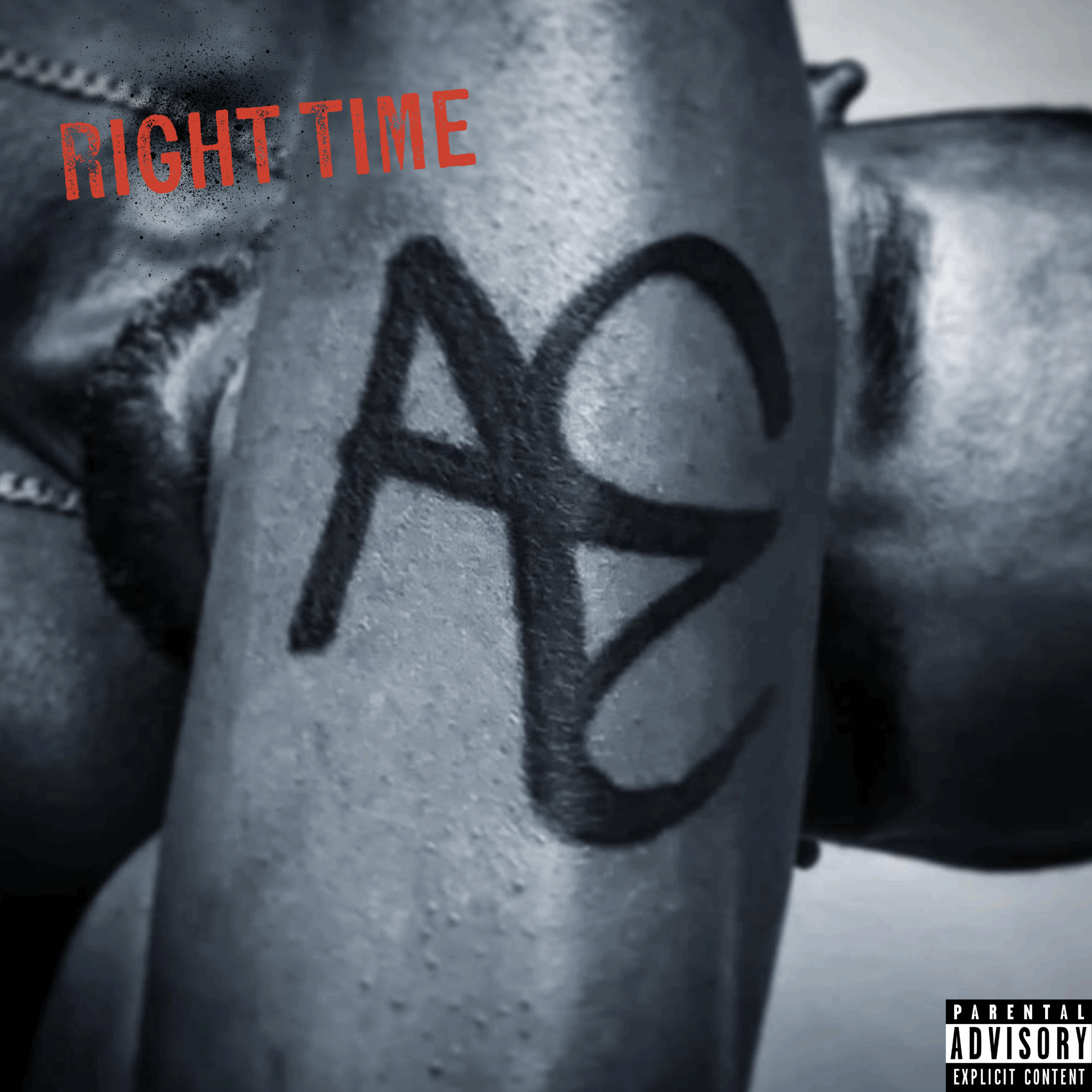
    Which brings me to the song I just released: “Right Time”

    The United States is buzzing like a Miami transformer in a hurricane, ready to pop. In my four decades on Earth, born and raised in Dade County, I’ve never seen a more tumultuous time in this country. And I can only think of a few major turning points in U.S. history that rival this moment.

    Every day there’s a new head-scratching and horrifying headline. Each fresh story comes with an internal battle of wanting to ignore it all while also needing to stay informed. In chaotic times, people choose all sorts of remedies to stave off existential fears.

    I choose art. Writing and music. That’s my lane.

    I trust the First Amendment. I trust protest. Protesting has a thousand instruments. I’ve got a master’s degree in English and a couple decades’ worth of music-making experience, so those are the avenues I’m comfortable navigating for self-expression.

    “Right Time” is about that.

    It’s about the right time to flex your strength as an intelligent individual with working critical thinking skills. It’s about the right time to do what we can to get this country back on track.

    Lawyers should protest with the law.

    Politicians should protest with politics.

    Police officers should protest with real policing.

    Coders should protest in code.

    Engineers, doctors, scientists.

    College English professors, like me.

    “Right Time” is the intersection of everything I’ve been up to now, everything I am, and everything I hope to be in the future for myself, my family, and this country. From the kid counting eighth notes on his parents’ piano to the teenager dragging loops in a dark room to the man standing at the head of a classroom asking his students to embrace the beauty in words.

    To just embrace something.

    So, press play. If you like it, pass it on.

  • The Mars Volta Brought It to the Fillmore on Halloween

    The Mars Volta Brought It to the Fillmore on Halloween

    Since 2001, The Mars Volta has been an artistic vehicle for the heavy, progressive, textural vision and music of guitarist Omar Rodriguez-Lopez and vocalist / lyricist Cedric Bixler-Zavala. Born from the ashes of the El Paso, TX post-punk of At The Drive In, the group has included a rotating cast of musicians throughout its near quarter-century existence, notably including Flea, John Frusciante, Isiah “Ikey” Owens, Paul Hinojos, Juan Alderete, and Jon Theodore.

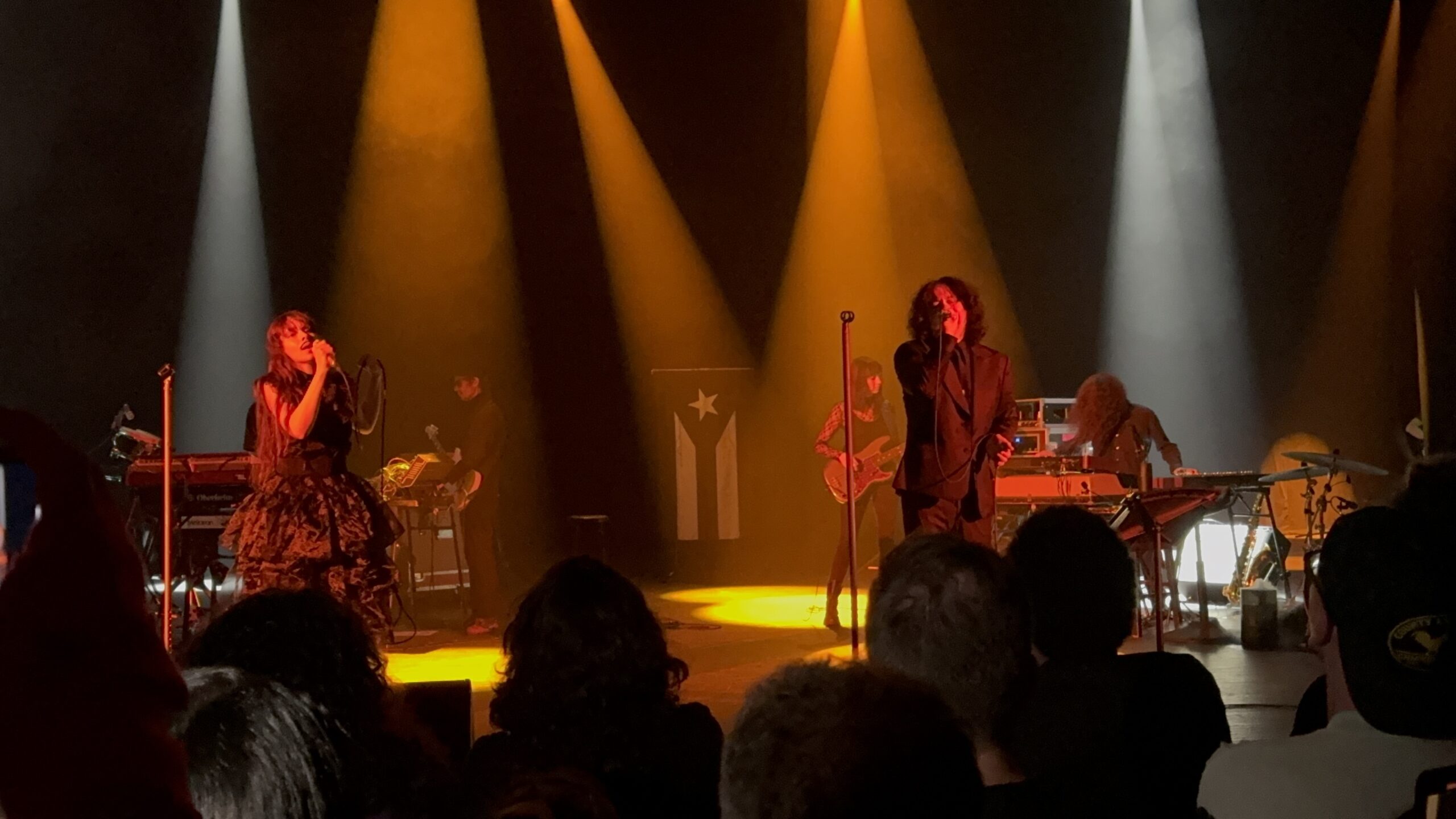
    Their latest release Lucro Sucio; Los Ojos del Vacio represents a bit of a departure from TMV’s sound, featuring more synthesizers, drum machines, and downtempo numbers than previous releases, with the exception of 2012’s Octahedron. Furthermore, it came as a bit of a surprise to fans when the band began performing the entire 18-track new release from start to finish during its summer arena opening slot for the Deftones. This is exactly what they brought to the Fillmore Miami Beach on Halloween Night, 2025.

    Bixler and Rodriguez-Lopez were joined on stage by founding bassist Eva Gardner, Marcel Rodriguez-Lopez (Omar’s younger brother – keyboards / percussion), Leo Genovese (keyboards, tenor sax), Linda Philomene-Tsoungui (drums), and Teresa Suárez Cosío AKA Teri Gender Bender, background vocals. This represents the current touring The Mars Volta Group, and they were spectacular.

    The three female, four male lineup with Cedric and Omar at the center of it took the stage and performed in all black garb. They played their set with a focused intensity that did exude joy at times, and little to no banter. The band brought a maturity to the darkness and intensity of it all. The stage featured the musicians lined up in a V formation, monochromatic lighting with lots of reds, greens, purple, a black and white Puerto Rican flag as the only prop.

    The focus remained squarely on the music and the performance of the songs in exact album sequence. A mustachioed Teri allowed for Bixler-Zavala’s haunting studio vocals with multiple harmonies to be recreated live; his voice and hers were in top shape. She functioned as a kind of physical mirror on stage. The transitions between songs were as seamless live as on the recording.

    Also noteworthy were the percussive contributions of the younger Rodriguez-Lopez, the dynamic and powerful drumming of Philomene-Tsoungui (much in keeping with the live Volta tradition), who  effectively ratcheted up the intensity of the music throughout the set, and the elder Rodriguez’s looming guitar presence.

    The band and their lack of back catalog songs did not disappoint and instead were a refreshing and satisfying alternative to a group a quarter-century in playing their tired hits. The enthusiastic applause and cheers between songs and at the end were evidence of this, as was the crowd’s reaction to Cedric’s promise to return soon because the band “loves Miami”.

    The bizarre psychedelia of openers Feliz y Dada, who appropriately considering what day it was, appeared in alien masks and whose songs were sung through a nearly unintelligible filter were amusing, if not altogether weird. Puerto Rico’s Kiani Medina (daughter of salsa legendary salsero Jerry Medina) performed a short set of her Spanish rock / alternative hybrid along to tracks and a live guitarist.

    The crowd – about half the theater at capacity, with the back-half curtained off – was clearly in the spirit, with many in full costume, presumably to enjoy the mayhem that is Lincoln Road on a Halloween night right after. Sid and Nancy, Wario, Luigi, Ozzy Osbourne, a mustachioed twenty-something lady (probably a Teri Gender Bender fan), and others all swayed to the Volta.

    This author, a fan since the band’s inception, was pleased to see Omar and Cedric at their peak powers and seemingly happy on stage. The band was extremely tight, and with the brief break up of 2013-14 and pause in new TMV music long past them, and a killer new set of songs, the next phase of the band seems anything but dark or empty.

  • The Danbury Chronicles – Excerpt from New Novel

    The Danbury Chronicles – Excerpt from New Novel

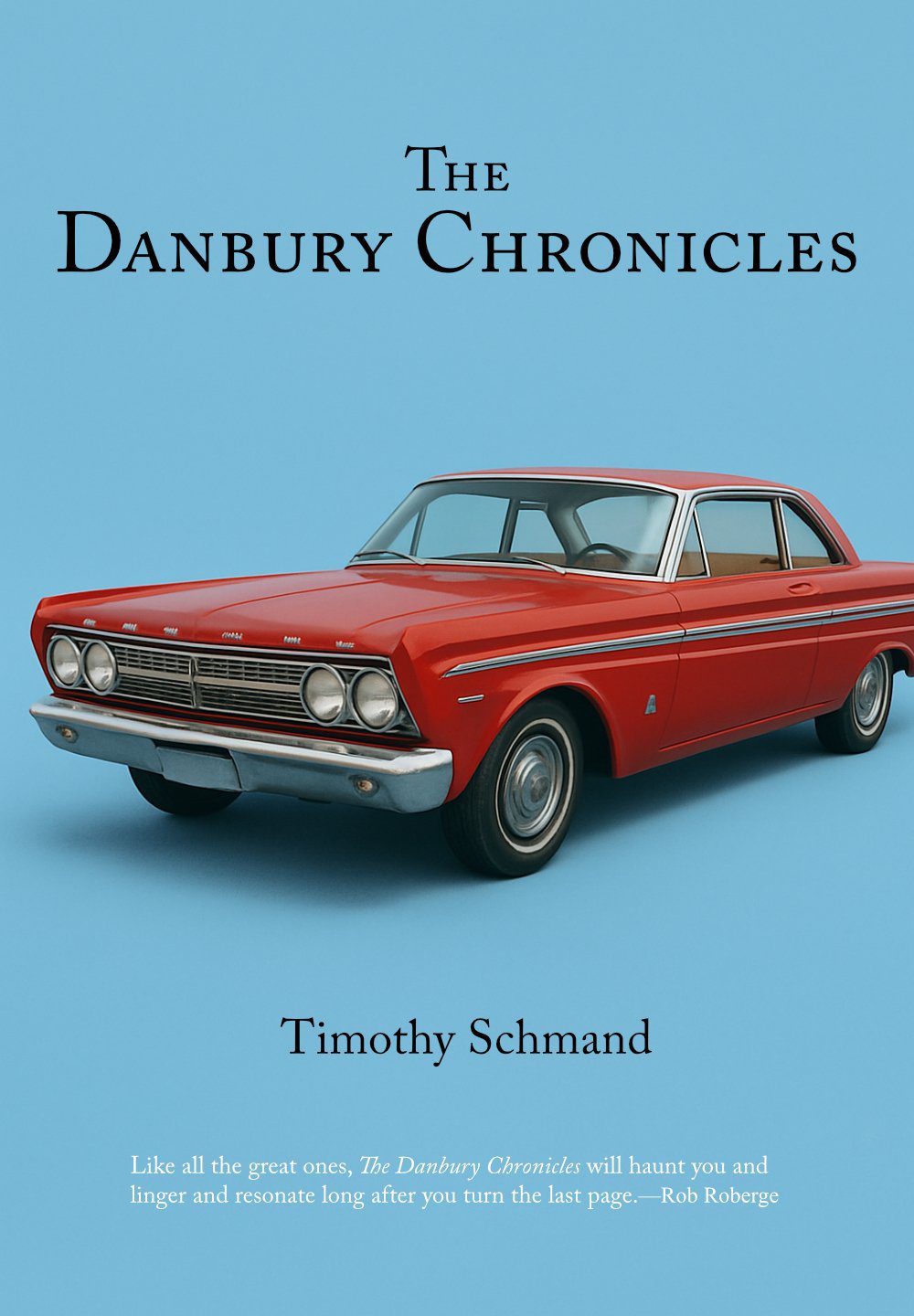
    Below is an excerpt from the new novel The Danbury Chronicles, available for purchase by clicking here. Meet the author this Saturday, November 1 at 5 p.m. at Books & Books in Coral Gables at 265 Aragon Ave.

    Three weeks of cold clear weather denied Danbury Avenue the blanket of snow needed to mask its flaws. (Polar air from artic Canada occupied the neighborhood and ignored all pleas to withdraw.) Dog turds, frozen hard as coal, peppered the sidewalk’s edge tracking the routes of the street’s free-range canines. Frosted lawns, pocked by ice coated weed-stalk (gnarls thick with burrs, frozen, thawed, and frozen again), bent earthward with the lurid curves of hand-blown glass. Tarnished leaves, dropped months before, gathered in icy clusters at the base of old maple trees occupying narrow swales between sidewalk and street. Their harried trunks (scarred by car bumpers, wayward mowers, and children’s knives) encouraged arthritic branches skyward, straining as if to pull up out of that place. Water frozen slick in sidewalk cracks and crevasses (where the maples’ roots heaved the walkways ajar) awaited an ambler’s misstep, sending them, as the denizens said, ass over teakettle to great pain and grand hilarity.

    Adjacent and across the street’s asphalt strip, three story wood frame houses lined the block. Driveway house. Driveway house. Except 73 Danbury.  The site of a decade earlier midsummer fire, the empty lot served as a reminder to the Danbury crowd of life’s vagaries – as if they needed another. The houses, most clad in cracked, peeling, and faded paints of gray and brown and blue, all had matching flats upstairs and down: two bedrooms, one bath, living room, dining room, kitchen. Some bore effusions of earlier owners’ optimism: gingerbread trim, faux fieldstone cladding, roof top dormers, and one widow’s walk. At the back end of narrow driveways, some had garages and some tiny, single-story cottages. The cottages weren’t bad for a lone man or woman, maybe a couple – possibly a family if money was a fantasy known only to others.

    Patrick Barry and his reflection studied each other in the storm door’s window at 49 Danbury’s side entrance. Hands gathering warmth in his pea coat’s lined pockets, Patrick stood in the driveway, his exhales steaming where warm breath met glacial air. His reflection lingered in the glass. Frost edged the window, framing a fun house mirror. The visual echo revealed a distorted twin. In the pane, Patrick’s red wool cap, its brim rolled once over his ears, widened and swelled outside the window’s frame. The tiny pom-pom topping the cap appeared the size of a softball. In the middle of his forehead, a thick tongue of brown hair escaped the cap and curled up toward the brim. His eyes narrowed to slits; snot-slick nostrils shrank to tiny dots. His mouth and cheeks disappeared in a needle-pointed chin. If he lifted his chin, the window rendered his red cap miniscule. His eyes emerged as depthless brown ponds; his nose, speckled with reddish freckles above runny nostrils, rivaled Rushmore in scope; his mouth, with its gapped front teeth and offset incisors, grew large enough to swallow a world. He grinned at his reflection. It grinned back. They shared a secret: the world could be seen in more ways than one, maybe more than two.

    “Cold again today,” Patrick exhaled a long cloud of warm breath into the air.

    “No shit Sherlock.” replied his reflection. “See that frost around the window. That’s a fucking clue.”

    “I was just saying…”

    “Yeah, like usual, you were ‘just saying’ THE FUCKING OBVIOUS.”

    “I say it because you don’t feel cold.”

    “Shut up. I feel cold.”

    “Bet you don’t feel anything.”

    “I feel. Just like you.”

    “You don’t.”

    “I do, SPAZZ BOY.”

    “Prove it.”

    “Take our hands out of our pockets.”

    “It’s too cold.”

    “Wouldn’t be if you didn’t lose our gloves.”

    “Our? How about my gloves. My hands. My pockets.”

    “Haven’t you figured out what’s yours is mine?”

    “Okay. You take our hands out of our pockets.”

    “If I did, I’d punch you RIGHT IN THE BEEZER.”

    Patrick leaned closer to the glass. “Here. Go ahead.”

    “FUCK YOU.”

    “You curse way too much.”

    “Too much?”

    “Yes. Too much.”

    “Really? FUCK FUCK FUCK FUCK YOOOUUUU.”

    Patrick shook his head. “If anyone hears you, they’ll think it’s me.”

    “Boo-hoo, crybaby. Nobody hears me but you. Get over it.”

  • Poolside with the Peters – Fiction

    Poolside with the Peters – Fiction

    Ronald Reagan was in office, U2 was hitting the music charts, and Juliet was grappling with an eating disorder, boyfriend issues, and a punk-rock aesthetic, always dressed in black. Her mother asked if she was attending her cousin’s wedding in Coral Gables, to which she said “yes.”  Juliet was in college  and low on funds, but her Uncle Brian, generously made certain she could attend.

    Some of Juliet’s family stayed at the Miami River Inn while the wedding party and Uncle Brian stayed at the Biltmore Hotel in Coral Gables. It was winter, the season for family weddings and funerals in South Florida. While some of the family was checking in to the Miami River Inn, Uncle Brian made an announcement. “I rented a boat for an excursion in the Bay. We can fit exactly 7 people and the captain makes 8. Who is with me? “ The aunts got first dibs, and Juliet’s  mother, eager to go, handed Juliet her 2-year-old sister and said, “You stay back with the children.” Cousin Charlie, 11,  stayed with Juliet. While one more uncle and 15-year-old cousin Margie made their way to the power boat. Juliet waved as they left the dock, and they waved back as the captain powered the boat east. Juliet and Charlie watched as the boat slowly moved under a bridge and the wake became bigger as her family cruised into Biscayne Bay.

    Juliet was saddened that she could not be with the rest of her relatives and felt the burden of caring for Charlie and her toddler sister. But there was a slight sense of pride in the responsibility. Uncle Andy, the youngest of Juliet’s uncles, hadn’t emerged from his room yet, but rumor had it that his dark room was littered with empty vodka bottles and a Vietnam War-era helmet. Juliet gathered the kids and walked back to the hotel, where they sat by the pool. She worried a little about Andy.

    Upon his return from Vietnam, Andy was Juliet’s favorite uncle. His flamboyant attire and long wavy hair and big personality mesmerized her. He wore bell bottoms and sleeveless colorful shirts and walked barefoot . His laugh and stories always drew attention. On more than on occasion , the older brothers told him to put the joint away at family gatherings. Andy brought friends to parties at her grandfather’s home of all colors and sizes. Juliet’s grandfather always welcomed them. In recent years, Juliet didn’t understand what was going on with Andy but felt something was wrong. She had overheard late night phone conversations about him and knew her Mother was sick with worry.

    Juliet, trying to make the best of the situation , asked Charlie if he wanted to swim. As they debated changing in swimsuits, Juliet caught a glimpse of Andy running out of the hotel straight for the pool. His freckled body, only covered in white tennis shorts, was a blur as he dove into the deep end letting out a grunt.

    Juliet stood up and stared at the bottom of the pool with Andy laying there. She hoped that this was some kind of game. Charlie looked at her in disbelief. “ Are you going to do something? “ He asked. Andy did not move, his body stretched out and was lying still near the pool drain.  Panic surged through Juliet’s body. . A few ideas flashed in her mind, but since Uncle Andy was easily 100 pounds heavier than her, she ran with her baby sister in her arms into the lobby and screamed for help.

    “My uncle’s drowning!” She yelled.

    The young man at the front desk, dressed in a thin black tie, white button-down shirt and black pants came running out, dove into the pool fully clothed, and made his way to the bottom. Without difficulty the front desk attendant pulled Andy up and out while he coughed and sputtered. He lay still on the concrete, eyes closed. After a moment, he came to, confused and asking, “What happened?”

    Juliet thanked the clerk and apologized. The words did not seem adequate . “ You are a hero “ she said looking him in the eyes.”  He shook his head. An intrusive thought crossed her mind. Had Andy tried to drown himself? Was he testing to see if anyone would save him? Her 11-year-old cousin, still in shock, kept muttering, “Holy shit.” Her baby sister was blissfully unaware.

    Uncle Andy lay on the side of the pool for what felt like forever. His hair was a curly tousled mess of red on top of his head. His eyes were shut. But he was breathing now.  Juliet didn’t leave the area; afraid he might try something again. Keeping her toddler sister occupied, Juliet sang rhymes and played eye spy until the boaters returned. The passengers returned oblivious to what had transpired. Juliet softly explained to Uncle Brian what had gone down, and Brian quickly went inside to thank the clerk who had already changed into dry clothes. Brian slipped the clerk a hundred-dollar bill. “ Do you need more? “ Brian asked. The clerk waved him off. “ I can’t thank you enough.” Brian said. Brian came out to the pool and took charge. “ Good job Juliet.” Brian helped Andy up and walked him to his room.

    The boaters returned to their family weekend without much discussion. Only Juliet’s younger  cousin Margie asked Juliet if she was all right. No one wanted to dwell on the accident or forget the reason we were all together, to celebrate a matrimony. What are you going to do about Uncle Andy? “ Juliet asked Uncle Brian quietly. “I’ll address it after the wedding.”  He responded.

    The anticipated nuptials took place the next day at the Church of the Little flower . Juliet found comfort in the stained glass that told biblical stories in blues, reds, yellows, orange and purple and green. The carved columns made her eyes rise and look at the wooded beams and follow the path of the hanging medieval chandeliers.  Guests were on their best behavior and in their finest threads. Andy made his way to the pew where Juliet sat  in khakis and a blue blazer with a red silk handkerchief peeping out of his chest pocket. He pulled down the kneeler and  knelt and bowed his head in reverence for a long time. Juliet wondered what he was praying about and followed his lead by kneeling. She thanked God for saving his life. Those that were aware of the previous day’s incident were grateful to see him at the church sober.

    Juliet and her aunts cried during the reading of the vows.  As people gathered outside the church after the ceremony, voices rose in laughter and chatter like a chorus. Everyone walked or drove to the Biltmore just a few yards away. The extravagant celebration included elaborate purple orchid flower arrangements, a 7-tiered wedding cake and live music which erupted in dancing and toasts.  The high spirits seemed in stark contrast to the events on the Miami River Inn. Juliet was comforted by the love and presence of her family.

    Andy became sober shortly after that weekend. Through therapy, meetings and V.A. and family support he  adopted a clean lifestyle and positive attitude, still telling stories and often the life of the party. He was the glue that kept the remaining family together after the older brothers passed. He stayed connected with everyone and always had something uplifting to say spreading news of births, nuptials, graduations, and baptisms. He became a positive force in Juliet’s life, and she enjoyed speaking with him every chance she could.

  • Dave Daniels on New Album The Cost of Living

    Dave Daniels on New Album The Cost of Living

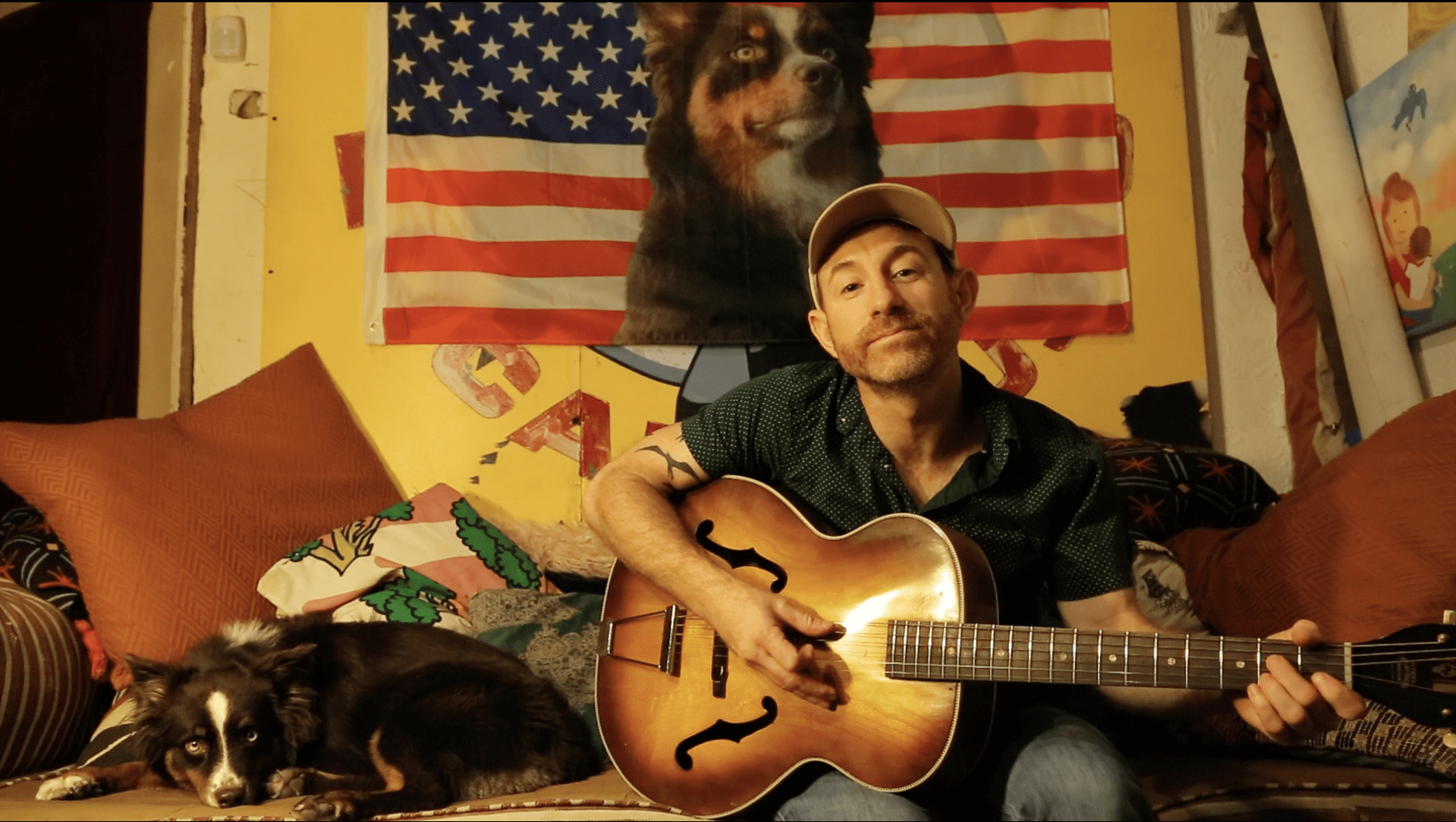
    I sat down with Miami-based songwriter Dave Daniels, whose music captures the restless rhythm and constant change of the city he calls home.

    Born and raised in Miami, he is deeply Floridian: his grandparents moved here in 1945 and his father is “a true Florida history nerd”; that could explain why Dave loves the state so much, but he admits he didn’t always understand it. “Wherever we’re from, I think there comes a point where people wanna leave, it’s that Joseph Campbell thing where we have to leave, and some people don’t come back – but if you eventually do come back – you embrace where you’re from. I had all these ideas about what Miami was” he recalls. “But once I started reconnecting — with the people, the neighborhoods, the sound — I realized I was wrong.”

    Dave Daniels was a sort of drifter for a while, reinventing himself at every place he went, a Dylanesque kind of voyager through the Deep South, playing over 100 shows annually around the US for 15 years, before returning to Miami. He then made a pact with himself:

    “I needed to make a new covenant. I was beat up. I almost didn’t make it. I stepped away from music for a decade. I allowed myself to be a civilian, you know? Have a life. I went fishing a lot. I began teaching. I fell in love, bought a house. But something was missing. And the fish stopped biting, I guess.”

    His new album The Cost of Living is a rock, folk and pop meditation on renewal and the cost (and gains) of starting over, personally, geographically, financially, romantically. “I didn’t know what to do with my life by the time the pandemic was over. My personal life – and the world itself – had been totally shaken and shifted. I needed the music again – just to connect with people,” Dave says. “To make sense of who I was, really.”

    Since 2021, Daniels has reemerged as a recording artist, performer and podcaster. “I started livestreaming in the pandemic. Imagine that! The kid that wanted to be Bob Dylan – playing coffeeshops, barn dances, the side of the road, wherever – livestreaming – but it turned out to be a healthy way to connect & to give back to the music community that helped raise me.” Daniels now hosts an international songwriter’s round every Tuesday night on Volume.com.

    His need to write again has recently shaped a new song “Mayaimi,” which is the historical name of Lake Okeechobee meaning big water– and is part of his upcoming album. The track — recorded with a string quartet – will be released on Christmas Day and is a tribute to Miami’s history and the 100-year anniversary of the Freedom Tower. It is a song that reflects on the story of the major migration waves that have shaped the city: post–World War II arrivals, Cubans seeking political asylum, and the influx of new residents after the pandemic.

    “Miami’s always changing,” he says. “That’s what makes it beautiful. Every person is part of the Miami story. All of us.”

    Dave’s upcoming album, The Cost of Living, opens with four powerful singles. The first, “Willy,” arrives October 31, with an exclusive music video premiere shared alongside this article. Then comes “Some Light” on November 21,  “Mayaimi” on Dec. 25th, and “Cost of Living” Jan 30th— the luminous closing to side one of the album that pays homage to both the city that raised him and the one he continues to rediscover.

    Like Miami itself, Dave’s music is alive — layered, emotional, and always evolving.

    To learn more about music releases, livestreams and shows, follow Dave Daniels on IG: @davedanielsmusic.

  • Alexa & the Old-Fashioneds Release Debut EP, Witches, Wolves & Murder

    Alexa & the Old-Fashioneds Release Debut EP, Witches, Wolves & Murder

    The world is about to get a little spookier. Miami-born band Alexa & the Old-Fashioneds is heading into Halloween season with their frightfully exciting first release, in the form of a three-song EP, Witches, Wolves and Murder, coming out Friday, October 24, 2025 at midnight.

    Led by award-winning vocalist and songwriter Alexa Lash (and lover of all things scary), the band’s three songs are tailor-made for haunted nights and your next costume party. It’s a dark romp through classic monsters, howls to the moon, and a tale of murder inspired by a true story (with some liberties taken).

    The Track Listing

    Track 1: “Witch in Disguise” — a song written specifically for the season, and highlights witches, wolves, devils, incantations, fortune telling and so much more.

    Track 2: “Lone Wolf” — every good song should have a bit of howling mixed in.

    Track 3: “Murder in the Basement (Eat You Alive)” — so Alexa is an avid listener of a podcast called Murder in America, and she loved the idea of writing a song that felt like an episode of it.

    About the Band

    Alexa & the Old-Fashioneds have made a name for themselves through their 90s’-esque, genre-defying approach to songwriting—merging poetry with modern pop, rock, and experimenting with genres outside the expected. It’s never about the style of music, so much about Lash’s legend-making vocals, playing frontwoman to a ridiculously powerful rhythm section and haunting guitar solos…and telling a killer story. While this EP provides a darker hue to their introduction as a band, it is really the perfect musical launch from a band that is never quite what you expect them to be.

    To celebrate the release, the band is hosting a pre-release listening party on October 18 at a secret location, releasing a very, very cool music video for track 3 on the same date of the release (premiering at 12:01 AM – https://youtu.be/SpLvoNYjsTg), and officially celebrating the release at Sweat Records on Halloween Night.

    Musicians & Artists Behind the Music

    The EP features Alexa & the Old-Fashioneds members including: vocals and rhythm guitar by Alexa Lash; lead guitar, keyboards, and spooky sounds by Marcel Salas; bass guitar by Carlos Marcano Garcia; and drums by Jonathan Colorado. Backup vocals on “Witch in Disguise” were provided by Leah Simmons. Honky tonk piano on “Murder in the Basement (Eat You Alive)” was provided by John Camacho. Ferny Coipel, who has been working with Lash since 2019, produced and engineered the EP at Shack North in Hialeah, FL.

    The song was mastered by Zach Ziskin. And the cover and accompanying art was designed by artist, Isa Martinez.

    resolution photos and interviews available upon request.

    Links to the album and additional content are available at linktr.ee/alexalashmusic.

  • Are You Hungry? Our 20th Book Is Live and Ready to Order

    Are You Hungry? Our 20th Book Is Live and Ready to Order

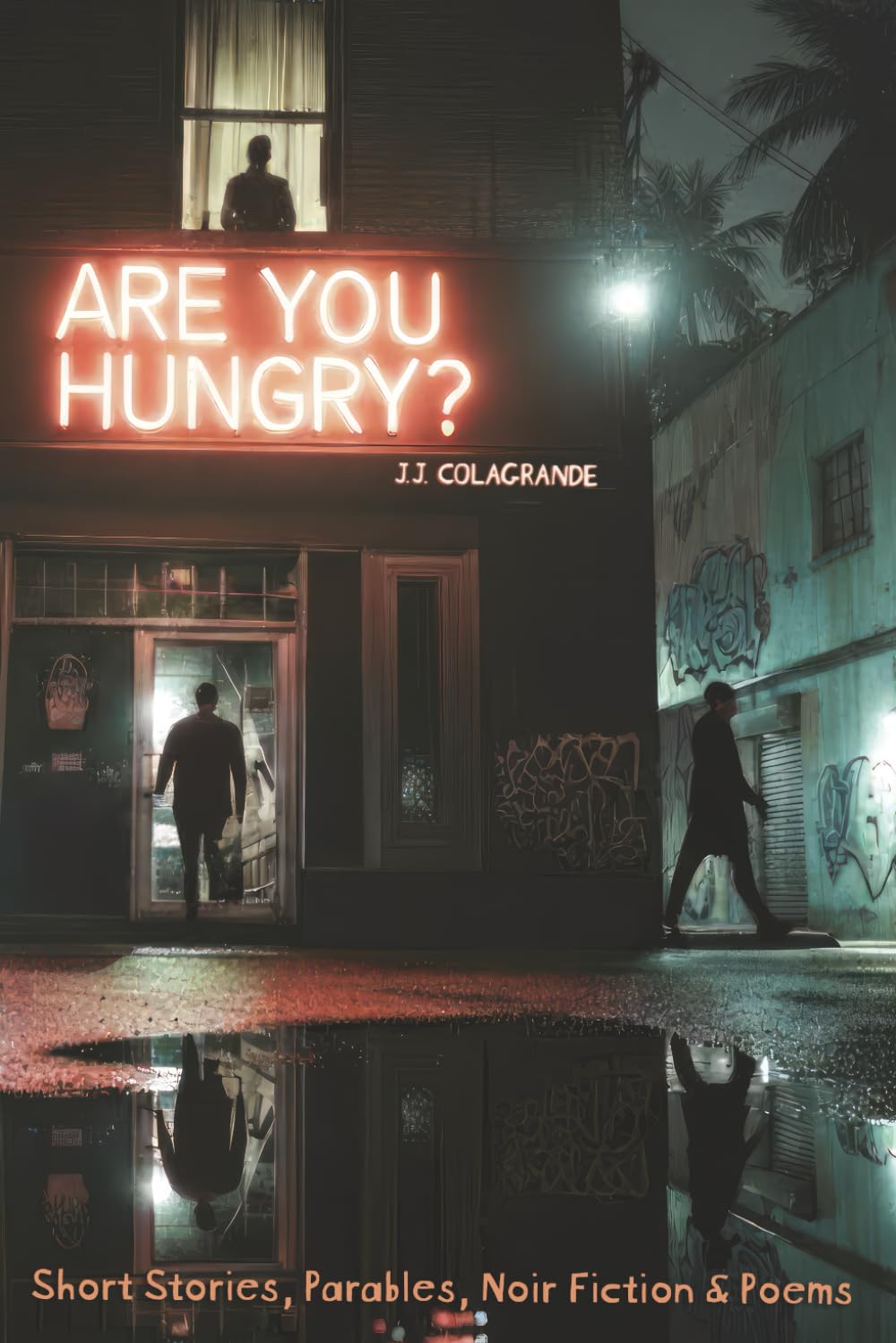
    Are You Hungry? is a collection of short stories, parables, noir fiction and poems.

    The nineteen-piece compilation revolves around the theme of hunger, whether the hunger is literal, as in a malnourished man in Brooklyn or a homeless couple in San Francisco, or metaphorical, as in the hunger for romantic love, life experience, acceptance by family, or to garner status.

    Many of the stories have karmic twists, in the vein of short story writer O. Henry.

    Other pieces are gritty, terse and hyperbolic, like Raymond Chandler.

    Are You Hungry? is largely set in San Francisco, New York City and Miami during the turn of this century.

    The collection is a brisk and entertaining read, with literary merit and panache.

    You can buy the book here or in bookstores.

    It is available as a paperback, Audiobook and e-book.


    Praise for Are You Hungry?

    “Colagrande shows his powerful narrative range with ARE YOU HUNGRY? – a collection of stories, pulp, poems, and more. Sharply-written and hard to put down, Colagrande sets the table for readers to sample or binge on this killer collection. Don’t miss it.” –  Alex Segura, USA Today-bestselling author of novels and comics: ALTER EGO, SECRET IDENTITY, DAREDEVIL, STAR WARS, SPIDER-SOCIETY and more.

    “These are stories about hunger—for love, for meaning, for one more roll of the dice. Colagrande writes clean and hits hard. No fat. No lies. Just the truth about people who want too much and settle for too little. Real stories. Real hunger. Real good.” – Aurin Squire, award winning writer of television shows and plays: THIS IS US, EVIL, THE GOOD FIGHT, IT’S A WONDERFUL WORLD and more.


    About J.J. Colagrande

    J.J. Colagrande is the author of Headz: a Trilogy, Reduce Heat Continue To Boil and Deco 2.0. He is also an Associate Professor at Miami-Dade College.

  • Rutka – Miami Natives Bring Musical to South Florida

    Rutka – Miami Natives Bring Musical to South Florida

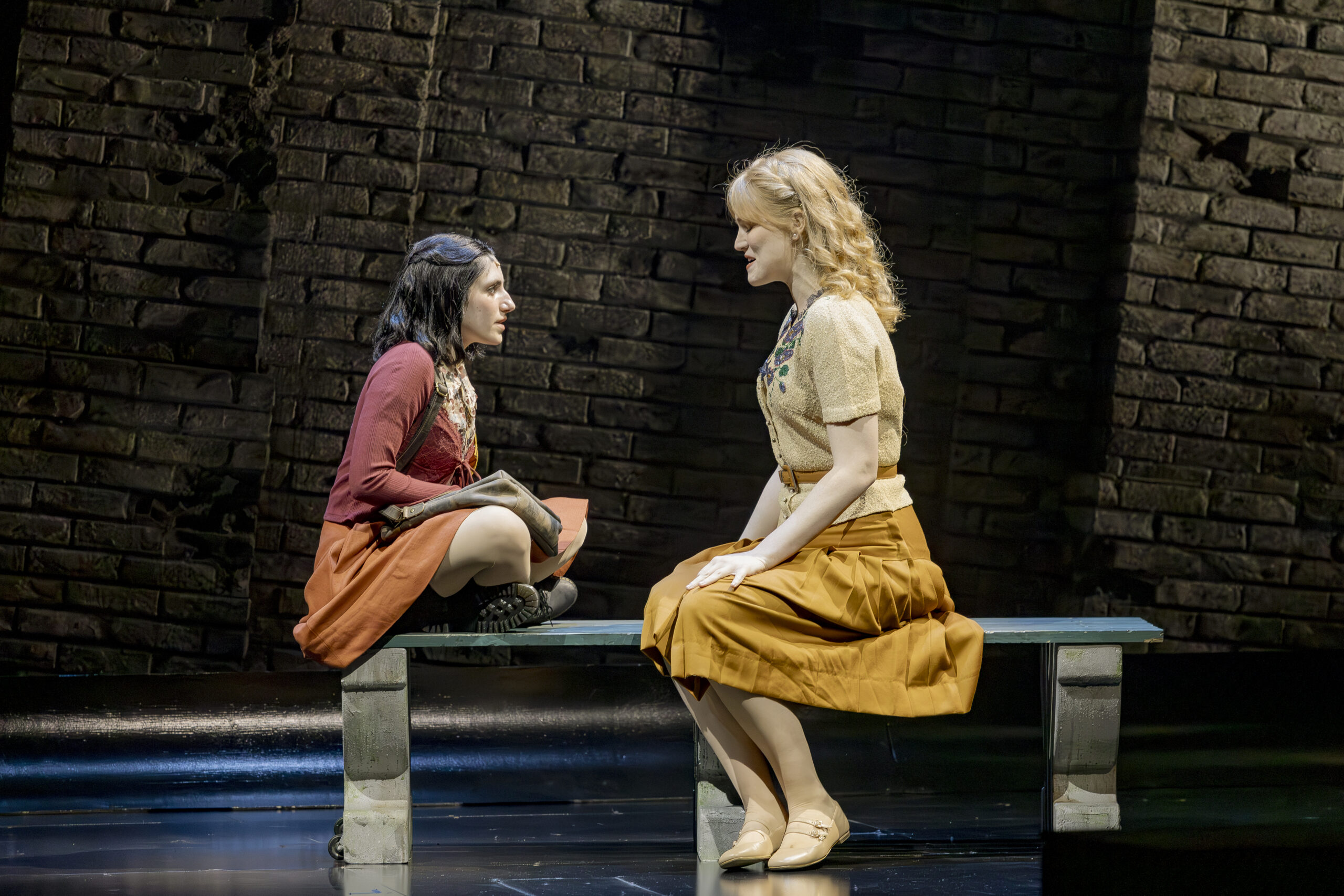
    The creators of Rutka, a powerful new musical inspired by the true story of 14-year-old Rutka Laskier, who kept a journal of her experience living in a Jewish Ghetto during World War II, return to their hometown this November for a series of multimedia events offering audiences an intimate, behind-the-scenes look at the making of the show.

    Following its world premiere in October 2024 at Cincinnati Playhouse in the Park, Rutka has moved audiences and garnered critical acclaim with its honesty, emotion, and contemporary indie-folk-rock score. The musical tells the story of a teenage girl living in the Jewish ghetto of Będzin, Poland in 1943, capturing her courage, imagination, and belief in hope and humanity during history’s darkest moments.

    The show’s lead producers, Amy Langer and David B. Schwartz, are both graduates of Miami’s New World School of the Arts and proud Miami natives. They first met in the seventh grade as students at Miami’s Southwood Junior High/South Center for the Arts, performing together in The Music Man. Their Miami roots, they say, remain a defining part of their creative lives. 

    Presented in partnership with the Michael-Ann Russell JCC, Alper JCC Miami, and Miami Beach JCC, each of the three special behind-the-scenes events will include live performances from the show featuring New World School of the Arts performers singing a few songs from  RUTKA, along with a discussion with Langer and Schwartz.

    “Bringing Rutka home feels incredibly special,” said Langer and Schwartz. “This story reminds us that even in unimaginable times, young people can choose empathy, courage, and love. Sharing that message with our hometown community means the world to us.” 

    Rutka, written by Neena Beber (The Marvelous Mrs. Maisel), also a Miami native, with music by Jocelyn Mackenzie and Jeremy Lloyd-Styles (of the Brooklyn-based indie-rock band Pearl and the Beard) explores friendship, resilience, and compassion through a modern musical lens. 

    The production is produced by David Schwartz and Amy Langer of Think System Productions, executive produced by the Tony Award-winning Cody Lassen & Associates (producers of Broadway’s Spring Awakening andIndecent, among many others), with general management by KGM Theatrical.

    Said Amy Langer, “At its heart, Rutka is a story about young people finding light in the dark, and the enduring power of empathy to build a better world.”

    More information about Rutka: www.rutkathemusical.com.

    Behind the Scenes of Rutka Event Schedule:

    Michael-Ann Russell JCC 

    18900 NE 125th Street

    North Miami, FL 33160

    Wednesday, November 5, 7:30 pm

    MAR-JCC & Temple Sinai members, Students & Seniors: $10

    General Admission: $15


    Alper JCC Miami

    11155 SW 112 Street

    Miami, Fl 33156

    Tuesday, November 18, 7:30pm

    Tickets: Alper JCC Miami and Temple Beth Am Members: $10


    Miami Beach JCC 

    4221 Pinetree Drive

    Miami Beach, Fl 33141

    Wednesday, November 19, 7:30 pm

    Tickets: Miami Beach JCC and Temple Beth Sholom Members: $10

    Noam@mbjcc.org

  • Loki’s Family Vacation – Fiction

    Loki’s Family Vacation – Fiction

    Heat shimmered over half-buried subdivisions like an oil spill, rows of rooftops melted into their joists. Above it all, the moon hung pale behind the artificial ozone net, pulsing on the horizon.

    This part of Arizona used to be known as the Valley of the Sun.

    The hover vehicle powered up and lifted from the cracked driveway of an Intervention-era military dwelling; repaired and refurbished, of course. Now a vacation rental, the place came fully equipped with a climate seal and sleep pods calibrated for the Xha’ri’s six-limbed anatomy.

    Their rental vehicle had been listed as a GEHR’T-Class ZN3 with the tagline Family-Grade Elegance for Off-world Terrain.

    Inside, Zara adjusted the strap of her embroidered robe. Her upper eyes tracked the scenery outside while the lowers checked her reflection in the mirror next to the navigation panel showing their route: PHOENIX → NEEDLE SITE, EARTHWEST REGION.

    Cultural tour mode enabled.

    We’re going to cross their ancient territory, Zara said, the clicks of her Xhariq tongue soft in the cabin. The same sands where all the other humans wandered before the Intervention. Fascinating, isn’t it?

    Vibrating with excitement, Neyla’s upper eyes went wide, the lower pair flicking toward Loki.

    Is that why they lived in caves? she asked. Because it’s so hot?

    Something like that, Zara said. They didn’t know what to do with sunlight. Their primitive eyes couldn’t handle it.

    From the containment cradle behind Neyla, Loki lay face up, strapped in. His eyes — dull gray-green with lines of weariness beneath — focused not on the conversation in the car but on the distant mountains. Blurry outlines on the horizon triggered something old and heavy in him.

    Somewhere in those mountains, a boy had once been taught that “Arizona” also meant “place of the small spring.” The word had felt sacred then. For a moment, Loki could see his mother drawing the letters in the sand with a stick, Loki tracing the lines with his finger:

    A-R-I-Z-O-N-A

    Heat sat in his throat like dust. He swallowed and it felt gritty. He tried to move his fingers to trace the letters in the air, forgetting his hands were bound beneath a padded harness, LOKI stitched in bright glyphs. The name had come from the Xha’ri child, who had gleaned it from her time with the human language archive (a database most mature Xha’ri had long ago deemed juvenile entertainment).

    Zara raised the holo-capture. First shot of the trip! Let’s do as the humans do and smiiile!

    Neyla leaned forward so her face was between her mother and father, grinning in that asymmetrical way young Xha’ri did when mimicking human expressions.

    Does this scenic route offer anything scenic other than sand? Murok grumbled from the driver’s seat, his upper eyes on the nav while the lower pair tracked the skyway.

    Zara brushed Murok off, putting the holo-capture away.

    Staring blankly ahead in his cradle, Loki watched the dunes crawl by as the vehicle arced northwest. Somewhere in his memory bank, he tasted dust in his mouth and the rough touch of another hand as small as his. A game they played near a dried creek. A lizard skipping over hot rocks. The groan of something wooden.

    Loki is quiet today, Zara said, turning back to her daughter. Maybe it senses its history.

    Neyla reached across the back row and patted Loki’s hairy arm. It’s so weird watching it try to make sense of the world.

    It’s the air out here, Murok said, matter-of-factly. Makes all these Earth animals act funny. Murok swerved around a bird. I think it’s the heat.

    The vehicle tilted gently left, its engine whispering through the sky. Behind them, what was once Phoenix receded into a mirage of suburban tombstones.

    The once-bright signage stood sun-bleached and clawed by sandstorms, slumped sideways over the building. A big red circle with half of what used to be a “K” was still visible, the rest of the sign shattered, sharp edges worn down by time. The glass doors up front were long gone, and the roof had collapsed inward.

    The hover vehicle eased to a halt beside the gas pumps, now broken twin columns wrapped in ancient vine-like cables. Murok activated the stabilizers as the vehicle settled.

    These were built during the Adaptation Period, Zara said as they stepped out into the heat. Humans were living directly in high-heat environments before we intervened. Remarkable, really, their flexibility. They functioned for centuries without temperature regulators or centralized filtration.

    Neyla stood beside her, wide eyes scanning the ruins. Her harness projected a holographic overlay onto the space that showed ghostly reconstructions of what the station might have looked like in its prime: smooth chrome kiosks, upright data beacons and umbrellas for shade.

    Was this one of their caves? Neyla asked, shielding her eyes as she looked at the gutted building.

    No, dear, Zara said. The caves were naturally-made. This was one of the field posts that we constructed for them, to gather and trade resources before The Migration Period. The Old Ones used to call it a —

    Zara squinted at her display.

     — Circle K. Which we assume was a reference to humans’ primitive mathematics. Likely ritualistic.

    Or they just really like circles, Murok grunted.

    Zara shot him a look with two of her eyes. Your sarcasm isn’t helping.

    Murok rolled his lower pair of eyes, the uppers watching the vehicle, where Loki sat still in his containment cradle. They’d opened the back door for him — It gets scared if it can’t see us, Neyla insisted — and so Loki stared at the ruined storefront. His vision swam with a spark of memory. On one of the building’s walls, he saw a smear of black paint beneath a shelf fragment. The ghost of a graffiti tag, the paint long-ago faded so the letters were indecipherable.

    The air smelled of burnt plastic, oil and pennies.

    Loki opened his mouth, his tongue dry.

    “G-g… gas… f-food…”

    It came out as barely more than a whisper, his vocal cords ragged and parched from disuse, the syllables slurred together.

    Neyla turned sharply. Mom! It’s doing the thing again!

    Isn’t that adorable, Zara said, delighted. So funny, the noises they make!

    Murok positione himself and knelt to snap a quick holo of Loki, angling it so the ruin was in the background. Wonder if it even knows what it’s doing.

    Neyla sucked in a few breaths rapidly, her version of a giggle.

    Loki opened his mouth again. “Hu…man…”

    The word felt tangled in his throat, which itself felt like it was melting. He shook his head, scraping his collar against the plastic seat.

    Neyla crouched beside him, offering him a synthetic treat shaped like a star. Good human, Loki. Do it again!

    Instead of taking the treat, Loki continued staring at the gas station ruins. A flash of his mother’s voice came into his mind uninvited: C-I-R-C-L-E. Now repeat it back to me. Her voice warm, finger tracing the letters not in sand this time but on paper.

    He had spelled it for her too. C-I-R — 

    Alright, back to the tour! Zara said, snapping the fingers on one of her six hands. Let’s not linger. The air around these old outposts tends to attract ferals.

    Murok grunted in agreement and reactivated the vehicle. Neyla bounded in, climbing over Loki to return to her seat.

    As the hover vehicle lifted off again, a gust of wind stirred the sand and the graffiti was suddenly obscured, hidden from the world in a way that felt permanent.

    The vehicle floated low across the borderlands where Arizona surrendered to what had once been California, though there hadn’t been any reliable signage in decades. Below them stretched a ruined landscape: cracked highways strangled by thorny vines, collapsing overpasses, long stretches of asphalt curling like sun-bleached paper. Terraforming spires pulsed in the distance, sleek obsidian towers humming with energy siphoned from Earth’s marrow. Near one, a cluster of human figures in gray uniforms toiled under the watch of observation drones. From this height and distance, they looked like specks of dust.

    The family passed a sign, half-buried and fused with a flowering parasite. A bunch of the letters were melted away so it just read:

    “Welco o Califor”

    Back before the terraforming, Zara said. This region had a reputation with the humans. They thought these hills were magical. They constructed a primitive but symbolic language to speak about them.

    I like that, Neyla said, nodding solemnly.

    Below them, the ruins gave way to a grid of mechanical platforms stretching across the valley. At the center, the rows of gray polymer uniforms moved in sync, heads low, hauling crates toward a shuttle bay. Their collars flickered gently with active signals, indicators of the shocking mechanisms.

    Murok pointed. There it is, he said. Resource Processing Node Eighty-Three. Fully self-sustaining. Generates fifteen megawatt-hours per cycle. They’ve even added rest pods for the workers. See there?

    He gestured toward a row of metal boxes stacked like cargo containers.

    Those are new, Zara said, leaning forward. It’s good to see more colonies adopting compassionate integration models.

    Neyla squinted. Are those humans happy down there?

    They’re not happy or sad, Zara said. Those emotions require a level of self-awareness they just don’t have. They’re most content with structure.

    Loki pressed his hand to the glass, his palm hitting the pane with a dull tap that no one noticed. He tapped again. Two soft beats. This time, Neyla looked and Loki pointed.

    What is it? Neyla said.

    Zara glanced at Loki then checked the readout on her console, which was connected to a sensor in Loki’s collar.

    Emotional stimulus spike, likely visual, she said. Could be triggered by the movement or by the horizon pattern. Zara glanced outside. Fascinating, the things that get them excited.

    Loki stared down at the figures. He tried to speak again but the words collapsed in his mouth.

    What is it, Loki? Neyla asked.

    Loki tried again, but whatever had been there was gone.

    Outside, the workers kept moving.

    The vehicle hummed and coasted forward, carrying its passengers west through what was left of the continent.

    The rest area sat on the edge of what had once been a winding mountain pass. A cracked slab of road jutted out above a scorched valley, the railing long gone and replaced by a low-energy field with a safety warning written in glyphs: DO NOT PASS! EARTH GRAVITY FATAL!

    The hover vehicle hissed to a stop.

    We should hydrate, Zara said, unpacking nutrient sticks from a cooler marked with the glyph for “travel provisions.”

    Pass me one of those, Murok said.

    The view here is famous, Zara added, handing him a stick and stepping out into the wind. This is where the Great Arrival began. Some of the original descent vectors crossed right over this ridge. Truly historic location.

    Murok exited the car and made his way over to her, squinting into the haze.

    Looks like the sun’s burnt the land, he said.

    It’s supposed to look like that, Zara said. It reflects the damage the humans did before we intervened.

    Neyla sprang down from the back of the hover vehicle with a burst of enthusiasm, wearing her learning harness. She activated it and a shimmering hologram appeared in front of her, ships descending in blue spirals of light. They touched down in slow motion, elegant tendrils unfurling from their underbellies like petals. A Xha’ri musical track accompanied the hologram, a reedy, wordless tune.

    That’s us getting here, right? Neyla asked.

    Zara nodded. Yes. That’s the exact moment we brought peace to this region.

    From the shade of the vehicle, Loki stared at Neyla’s projection, the blue light punching him both in his chest and deep inside his head, where scant long-term memories were stored. Suddenly, Loki was hiding under a wooden table in a round room made of stone, that same blue light radiating around the edges of a large steel gate. In the memory, Loki tried to stand and approach the light but his mother pushed him down, whispering:

    “Don’t look, don’t speak.”

    But Loki had looked, through the cracks of his mother’s fingers as she covered his eyes.

    He’d watched that blue fill the world.

    In his cradle, Loki’s mouth twitched, his eyes wide with fear at the recollection.

    “No…no…”

    The word came out warped, barely audible.

    Murok turned, then glanced at his daughter. I think Loki might be hungry.

    I think he’s excited, Zara said, walking over and placing a three-fingered hand on the back of her daughter’s head. That’s the power of history. We’re building interspecies empathy.

    Neyla hopped over and dropped another treat into Loki’s lap, a cube of something gelatinous that smelled like both sugar and dirt. The cube’s skin was tacky, a sweet-chemical air rising off it.

    Loki didn’t even acknowledge the treat, just kept staring out at the horizon. Neyla’s overlay had disappeared when she walked over but Loki could still see the outline of the blue spirals descending.

    Leaning over the railing, Murok took a panoramic holo-capture, then went back to the hover vehicle.

    The wind picked up slightly, a wave of dust from the far side of the overlook coming off a rusted sign to briefly reveal the text: SCENIC VIEW — Elevation 5,200 ft. One of the bolts clattered loose and fell into the valley below.

    Let’s get going, Zara said to Neyla. Wanna get there before nightfall.

    Neyla hopped back in, humming the reedy Xha’ri anthem as her mother climbed in behind her.

    In his cradle, Loki craned his neck for one last glance at the overlook.

    The hover vehicle rose and banked left.

    Behind them, the SCENIC VIEW sign fell off its hinges.

    The ruins of Seattle unfolded slowly, the jagged silhouette of the remaining skyline rising full of crumbling high-rises swallowed by moss and soot.

    In stark contrast, the streets below pulsed with hovering tour vehicles. The only structure still holding form was The Needle, rebuilt and repainted an incandescent blue.

    They coasted down through the haze and settled onto a landing pad near the base of the tower, a soft thud coming up through the arches of Loki’s feet. Around them, other vacationing families milled about with their vehicles in leisure mode, feeding on synth-snacks and posing for holo-captures, some dragging their own human pets behind them on leashes.

    Neyla bounced in her seat. We’re here! The Needle!

    Zara’s four eyes glowed faintly. Did you know there are Xha’ri out there who actually believe this was built by humans? Zara rolled two of her eyes. Only the extremists though, the ones convinced humans are sentient.

    Sentient, Murok muttered, shaking his head.

    Neyla gave her mother a curious look, all four eyes focused. They think… humans built this? Sharp intake of breath as Neyla gave another Xha’ri giggle. That can’t be true.

    A long-ago debunked myth, Zara said, looking back up at the tower. It was built by our First Contact engineers as a beacon.

    Murok looked up at it too. Still standing after all this time.

    Loki stirred in his cradle, the jostle of landing pulling him from a half-sleep. He blinked into the glare of light then froze, staring at The Needle. The angle of it, the blue light writhing gently up its sides in swirling spiral bands.

    His breath caught in his throat.

    A fractured memory flashed, strong arms lifting him in the air then settling him on a wide shoulder, the rocking of a boat below them. And a sound, his mother humming softly, a tension in it that Loki could sense. Fear, maybe. The strong arms and broad shoulder accompanied by a voice, low and reverent, easing the fear out of his mother’s voice. The world turned and The Needle came into view.

    “That’s one of the last remnants of the old world,” the Voice said. “We made that. Remember that.”

    In his cradle, Loki’s fingers twitched, his lips parting.

    “Us…”

    The word rasped out, like a broken reed in his throat.

    Neyla turned to him excitedly. What is it, Loki?

    The emotional stimulation, Zara said, a flush of pride warming her voice. It must be particularly strong in this environment.

    Murok opened the door. Better let Loki out to stretch. It’s probably getting cramped in there.

    Neyla unlatched the cradle and helped guide Loki out. He stumbled slightly as his legs adjusted to walking for the first time in hours. His eyes remained on The Needle.

    Look, Loki, Neyla said brightly, holding up a shiny toy replica of The Needle. You can keep it!

    Loki took the toy from her, clutching it with trembling hands. The toy’s seam bit into his palm, a ridge printing in his skin. A strange warmth bloomed in his chest. His throat stung with something that felt hot. Seething.

    Loki lifted a finger and pointed at The Needle. His shoulder trembled at full reach.

    “Hu…man…”

    Neyla kneeled beside him. Do you want another treat, Loki? Is that it?

    She pressed a cube of glucose into his hand. Loki stared at it, then looked up at The Needle again.

    Let’s take a holo together, Zara announced, moving to get a view of The Needle behind them.

    Loki crouched and pressed a finger to the grit, cutting a letter in a single mark: B.

    Murok took the holo from Zara and moved for a better capture angle, his heel falling on the letter and smoothing the line flat.

    Murok, Zara, and Neyla flanked Loki.

    Smile like the humans do, Zara said.

    They did and the holo snapped.

    In the reflection of the hover vehicle’s window, Loki saw himself — collar tight around his neck, face hollow. The Needle looming behind him.

    The hover vehicle canted east, rising steadily above the shattered lattice of what had once been I-5. Below them, old rusted mounds of metal rested on roads that hadn’t been used in ages, wild vines wrapped around signs and creeping out of shattered windows.

    The old world, vanishing beneath the new.

    Inside, Neyla had fallen asleep with the partition between the back seat and the trunk open, her cheek pressed against Loki’s thigh. She clutched the toy Needle to her chest, her breathing a faint static hum in the otherwise soundproof chamber.

    Chicago’s skyline is mostly leveled, Murok said, adjusting the nav-display. But the eastern towers are still there. Could be interesting for Neyla.

    Zara sipped a hydration pellet then yawned. I’d rather go farther east first. Maybe on the way back? There’s a new history pavilion opening in New York. Something about early rebellion mythology.

    I thought that place got erased eons ago, Murok said.

    That was New Jersey, she said. This is south of that.

    All these early human settlements look the same, Murok muttered, swiping the nav-display to change their destination.

    The sun had turned into a bleeding half-tangerine on the horizon behind them. The Needle shrank as their distance grew, its blue-glow spirals fading against the flare of sunset.

    In the back, Loki stirred, noticing the child’s warmth against his leg. The soft vibration of the vehicle. The not-quite silent silence.

    An image of his mother’s lips moving popped into his head, a word forming in his throat.

    “Ben,” he said, with no rasp, his voice deeper than he’d ever heard it.

    The name vibrated in his sternum more than in his mouth.

    Neyla stirred a little, rolled over and settled again.

    Up front, Zara adjusted the temperature settings. Need to make sure the captures we took at The Needle sync with my social reel, she said.

    I might actually sync one too, Murok said.

    Really? Zara said, surprised.

    The hover vehicle accelerated, its wake scattering birds from the leaning remnant of a telephone pole, now overgrown with plants and fungus.

    Ben looked out the window, his faint collared reflection staring back at him with hollow eyes.

    Check out more of my essays and stories on Medium.
  • Nicole Salgar: A Miami Artist’s Surreal Journey to Dali Museum

    Nicole Salgar: A Miami Artist’s Surreal Journey to Dali Museum

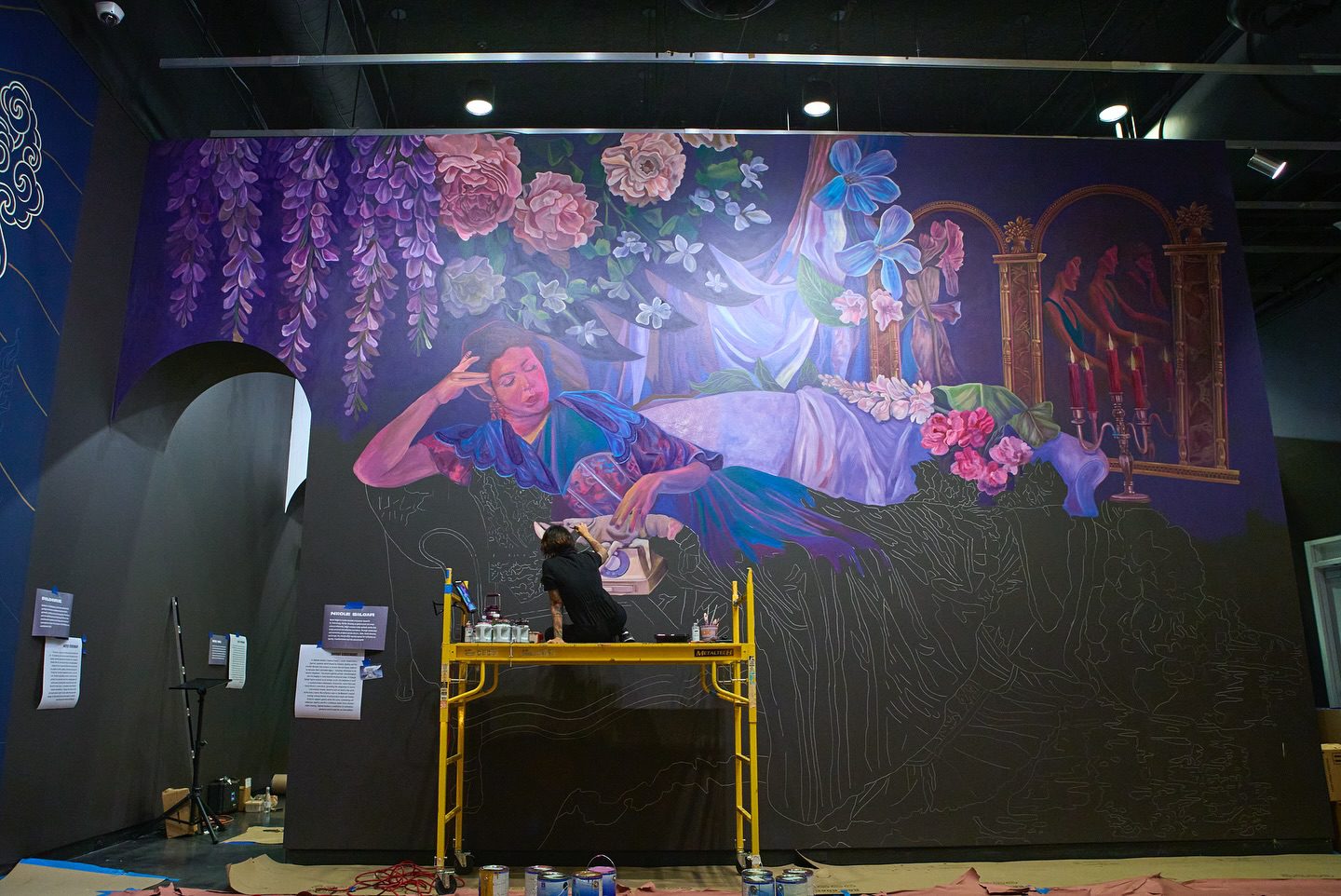
    You have just a week to see the groundbreaking Outside In exhibit at The Dalí Museum, celebrating the 10th anniversary of the SHINE St. Petersburg Mural Festival. I’ve been thinking about the show since I drove up for the opening weekend back in May, part birthday getaway, and part excuse to catch up with an old artist friend, Nicole Salgar, who was among thirteen artists selected to paint a mural for the exhibit. The Miami native’s move north mirrors a growing exodus of local talent seeking support beyond the city that helped shape them.

    A couple days after the opening, I caught up with Nicole to discuss her experience with the show and, more broadly, her decision to leave her hometown and how it has impacted her life and career. “I’m getting so much praise and support outside of Miami,” she said, reflecting somewhat wistfully on her December 2023 relocation. In less than a year, she’s felt a dramatic shift in both commercial and communal support. She hasn’t forgotten her hometown, but she has mixed feelings when she does get contacted about work back home, “I’ll have friends or clients wanting to see my work, and it feels like I have no real presence there anymore. And it made me super sad to accept that fact.”

    Salgar’s artistic evolution began far from the streets, rooted in fashion design from a young age. After graduating from Design & Architecture Senior High in 1999, she earned her bachelor’s degree from New York’s Fashion Institute of Technology, specializing in tailoring. For seven years, she created designs for Ralph Lauren and other major fashion brands, but the work lacked the fulfillment and community impact she craved. The turning point came in 2013 with her first mural, a collaboration with Chuck Berrett for The Centre-Fuge Public Art Project in Manhattan’s Lower East Side. “I got amped by the feedback from the community as I was painting,” she recalls. Conversations with muralists Damien Mitchell and Phetus opened her eyes to the possibility of making a living through public art. The early momentum of her mural career collided with tragedy the following year, when the death of her brother Louis brought her back to Miami. Painting became both expression and therapy as she immersed herself in the local art and music scene, finding support through the hospitality industry that her brother had been part of. That network led to early paid opportunities, work that showcased her evolving skills and helped her build a reputation.

    Through artist residencies and mural festivals, Salgar’s work soon appeared on walls across Israel, Mexico, Spain, Cuba, Puerto Rico, and the U.S. That global recognition underscored a painful contrast with her experience back home. “Why am I fighting this?” she wondered, seeing consistent municipal funding flow to artists in other cities while Miami’s support remained inconsistent. Her story reflects a larger crisis as cuts to public arts funding at every level push creators to seek opportunities far from home. While artists have historically migrated to cultural centers, today’s displacement feels different, driven less by ambition than by rising costs and institutional neglect. Miami, despite its reputation as a cultural hub, exemplifies this issue perfectly: rapid development and soaring rents have priced out many working artists, even as the appetite for public art grows.

    Nicole’s story represents the bigger picture of a disintegrating artist community, a canary in the coal mine for what’s happening nationwide. Adding to the frustration is Miami’s obsession with “imported cool.” Visiting artists and out-of-town collectives are often courted with premium rates and splashy press, while locals get nickel-and-dimed for projects in their own backyard. It’s a dynamic that turns cultural identity into currency; one that artists like Salgar, who built her career from the ground up, have spent years navigating. Even from St. Pete, she still sees herself as part of Miami’s fabric, but her story is a reminder that loyalty alone can’t sustain a creative community when the math no longer works.

    For those who stay, the grind looks different. Miami’s “working-class” artists, the ones who live off commissions, freelance gigs, and side hustles, operate largely outside the institutional bubble. They build their careers through social media, word of mouth, and relentless hustle, while the same small roster of names keeps cycling through the city’s grants, residencies, and museum-backed projects. Here, success often depends less on impact than on the right kind of visibility. Having the right people say your name in the right rooms, or checking the right boxes on paper so that an institution can show they are “doing the right thing” for their donors. It’s a system that rewards optics over community roots, leaving little space for the next generation of artists coming up behind them.

    The Dalí Museum’s Outside In exhibition, curated by Associate Curator Allison McCarthy, brings together current and past SHINE artists to create murals inspired by Dalí’s surrealism within the museum’s iconic walls. For Salgar, it represents more than a career milestone, “The timing and element of validation that an institution of that caliber is presenting contemporary mural artists within their walls” carries special weight, she says, especially as arts funding faces cuts nationwide.

    The show underscores how major institutions can bridge high art and community engagement. By housing murals alongside Dalí’s masterpieces, the museum elevates the medium beyond trend status and demonstrates how public art can attract both private and public support while still feeling accessible. “People interacting with passersby, people who live and are directly impacted by the finished work, get to participate in its making,” Salgar explains. That human connection, the dialogue between artist and community, remains the heartbeat of her practice.

    SHINE’s success proves what sustained investment in public art can do: since 2015, the festival has installed more than 180 murals, revitalizing downtown St. Petersburg and nurturing a supportive ecosystem where artists can thrive. But Salgar’s experience also underscores a larger challenge: creating systems that nurture local talent instead of pushing it out. Outside In, on view through October 26, 2025, offers a glimpse of what that future might look like, with immersive programs and AI-powered components redefining how museums connect with their communities.

    For Salgar, whose work now hangs steps away from Dalí’s own, the moment is both personal and symbolic. It’s proof that street art belongs inside museums… and that institutions can help sustain artists without stripping their work of authenticity. “Ride this wave,” Salgar tells emerging artists, describing what she calls “redirection” rather than rejection. The idea that closed doors can push you toward better ones. For her, that meant leaving Miami when the support wasn’t there and embracing the opportunities that were. “It’s not about giving up,” she adds, “it’s about trusting that the right place will meet you halfway.” Nicole’s journey from Miami fashion design student to internationally recognized muralist shows how resilience and community can thrive with support and recognition. For Miami, still struggling to hold onto its artists, her story is both cautionary tale and call to action.

    Photo by Joey Clay.