Category: News

  • You Are in Miami, You Know – Fiction

    You Are in Miami, You Know – Fiction

    Raul Mendoza pushed his office door closed, barely muting the sound of files grinding to dust in Nelly’s office. He turned the deadbolt’s knob; its bolt clicked home. Rounding the coffee table, he dropped onto the couch. Its cushion hissed like air escaping a punctured tire.

    Raul leaned forward and reached for a cigar smoldering in the ashtray. “How may I help you?” he asked, bringing the cigar to his lips, rotating it as he puffed. He made soft kissing sounds, reawakening the red glow beneath the inch of ash at its tip. He leaned his head back and blew a cloud toward the ceiling. Holding the cigar at arm’s length, he turned his gaze to Brian and grinned. “Cigar?”

    Brian shook his head. “Thank you, but I don’t smoke.”

    “Cigars aren’t smoked, they’re loved, caressed.” He brought the cigar to pursed lips. Puffed twice then gestured toward the humidor. “There are many beauties in there waiting for the right lips.”

    “I wouldn’t appreciate it.”

    “Rum?” He pointed at the decanter. “Anejo. You won’t find better.”

    Brian shook his head. “A little early for me.”

    “No tobac, ni rum. You are in Miami, you know.”

    “Yes, I’ve been told.”

    “You’ll get used to us.” He leaned forward, uncapped the decanter and poured three fingers into a glass. “How can I help?”

    Eyes adjusted to the bright sun light; Brian pointed at high-masted sailing yachts tied at the docks outside the window. “That’s quite a view.”

    Raul swirled the rum in his glass and waved the cigar at the window. “Water brings me peace. I am a man of the sea. A Balsero.”

    “Balsero?”

    He downed the drink in one swallow — winced, then smiled. “Si, Balsero… Those who fled Cuba by raft. My parents fled the dictatorship in nineteen ninety-four. They brought me on a raft. I am Balsero.”

    “On a raft all the way from Cuba? Wow.”

    He shrugged. “Seawater is in my blood.”

    “I bet.”

    “Mine are an island people.”

    “Cuba?”

    “Key Biscayne. Do you know it?”

    “Heard the name.”

    “Home of Bebe Rebozo.”

    “Who?”

    “You don’t know Bebe Rebozo?”

    “Should I?”

    “In Miami? Yes. Of Course. Confidante of President Richard Milhouse Nixon. Admittedly a Tampa Cuban.” He shrugged. “Still, a patriot. Hounded to his dying day by the repressive American regime.”

    “He was your neighbor.”

    “We lived on the same island.”

    “You knew him?”

    “Died when I was ten. Still, our connection runs deep.”

    Brian nodded, “I’ll have to look him up.” He pointed toward the marina. “It would take a lot of money to own one of those.”

    “Tell me about it… Dockage fees, crew costs, insurance, maintenance.” He waved away the words as if a mosquito buzzed his ear. “People say a boat is a hole in the water into which you pour money. And, still, I love it.”

    The shredder in Nelly’s office ground, coughed and stopped.

    “Raul, call your boys. I need more bags.”

    “I’m on it.” He smiled at Brian, placed the cigar in the ashtray, crossed the office, dropped into a chair behind his desk. He bent forward, disappearing. Brian heard a drawer open and close. Raul sat up and placed a black rotary dial phone on the desk’s top. “Last landline in the building. Maybe in all of Miami. My words are not drifting through the air, waiting to be caught in some nosey investigator’s net. They’re corralled by copper and rubber. Safe from…” he waved his hand.

    Raul cradled the receiver between his ear and shoulder. He dialed slowly, deliberately. After the last number he leaned back in his chair and propped his deck shoes on the desk. Nodding, he smiled at Brian and held up an index finger. “This will just take a moment.” He glanced down and smiled wider. “Oye, chico.” He paused. “Si.” Pause. “Si.” Pause. He laughed. “Ah, no.” He shook his head. “Conjo, pendejo.” Pause. “Si, necesitamos más bolsas. Si. Si. Perfecto. Ciao, chico.” He laughed… “Y tu… bye-bye.” Hanging up the phone, he cupped his hands around his mouth, and shouted, “Nelly, can you hear me?“

    “Yes, and so can all of Coconut Grove.”

    “They’ll be here in ten minutes.”

    “Ten minutes?”

    “That’s what he said, but it’ll be more like an hour.”

    “And to think they shot a man like Lincoln.”

    “Yeah. That’s a real shame.” Raul rolled his eyes and shrugged. Recrossing the room, he picked up his cigar, lay across the couch and blew a plume of smoke toward the ceiling. “Please, Brian Newell. Tell me how I can help you.”

     

  • Why the Obsession on Trump and the Epstein Files?

    Why the Obsession on Trump and the Epstein Files?

    I confess: I’ve been confused by all the buzz about Trump being implicated in the Epstein files. Isn’t he already a convicted felon? He was found guilty on 34 felony counts of falsifying business records in May 2024, related to a hush-money payment. He remains a convicted felon despite receiving an unconditional discharge, meaning no prison time, fines, or supervision were imposed.

    So why the obsession over these Epstein files?

    In an earlier post, I riffed on John Ford’s idea about the country’s need for heroes that are placed on pedestals, their mythology more important than the objective truth. I further wondered if we’re now living in a time dominated by self-styled anti-heroes: people who see themselves as like Batman, brooding vigilantes who operate outside the system for “good.”

    Trump’s legal troubles obviously didn’t end his influence, in fact they likely bolstered it. His defenders support him not in spite of his convictions, but because of them. A perceived martyr to corrupt systems. Now, with newly surfaced documents (like a controversial sketch and note from Epstein’s 50th birthday book that appear to bear his signature, which he denies) Trump’s camp is spinning it as yet another fabricated smear.

    This, to me, is the danger of the anti-hero myth: it allows one to be both criminal and crusader, sinner and savior, depending on the spin, and it feeds demand for conspiracies. So why are we even feeding into this narrative? Maybe because confronting the uncomfortable truth is harder than trading in the drama of defiance.

    At a certain point, if you keep positioning yourself inside the narrative that Trump’s supporters have built, where he’s the bad guy and you’re the good guy, you’re still playing their game. It only reinforces their version of reality and locks you into opposition on their terms. The more productive move is to step back, zoom out, and realize you don’t have to accept option A or option B. There’s a larger reality that exists beyond either of those choices.

    And of course there’s a personal lesson in that too. It’s a reminder not to reject the shadows within ourselves, but to learn to recognize, accept, and even embrace them. If we keep pushing them down, ignoring them, or casting them as diametrically opposed to who we are, we only isolate those parts of us. And when they’re isolated, they tend to cause more damage than if we had met them with honesty and compassion.

  • Margaret Cardillo: A Journey of a Local Author and Filmmaker

    Margaret Cardillo: A Journey of a Local Author and Filmmaker

    If you meet Margaret Cardillo at a café, she’ll be personable and talkative. She will go in for a hug; saying she prefers it to handshakes. In between ordering an acai bowl and finding a place to sit, she will list some of the reasons she thinks Coconut Grove is the best neighborhood in Miami. The 44-year-old author, filmmaker, and University of Miami professor was recently awarded $50,000 to put toward her feature-length documentary about local television’s Jane Chastain, who was the first female sportscaster in the United States at Miami’s WTVJ.

    Prior to receiving the grant, Cardillo had a remarkable journey toward the career she has today. Cardillo said she has wanted to be a writer since she was in middle school, even submitting her short stories to The New Yorker as an adolescent living in Naples, Florida.

    The summer before her senior year of high school, her family sent her to a Harvard Summer School program where she took a Creative Writing class. In addition to reading and writing short stories, she specifically remembers being exposed to the works of Joyce Carol Oates and John Updike.

    “I really did not want to go and of course it changed my life,” said Cardillo. “This was when I got serious about it as a life plan.”

    Cardillo went on to get a bachelor’s degree from Boston College in English and Italian. After she graduated, she was having a hard time getting hired as a writer, so she became an associate editor at Hyperion Books in New York City, working in their children’s books department, which she describes as “the next best thing because it was just such a great education in what writing is all about.”

    It was during this time that Cardillo came up with the idea of writing a different kind of biography: a gorgeously illustrated book that was almost like a gift; not something a child would have to check out of a library to do a book report on. The focus would be humanitarian and actress Audrey Hepburn.

    She proceeded to create the book a couple years later when she took a creative writing fellowship at UM. In addition to writing, she did extensive research on the icon which included reading several biographies other authors had written about Hepburn.

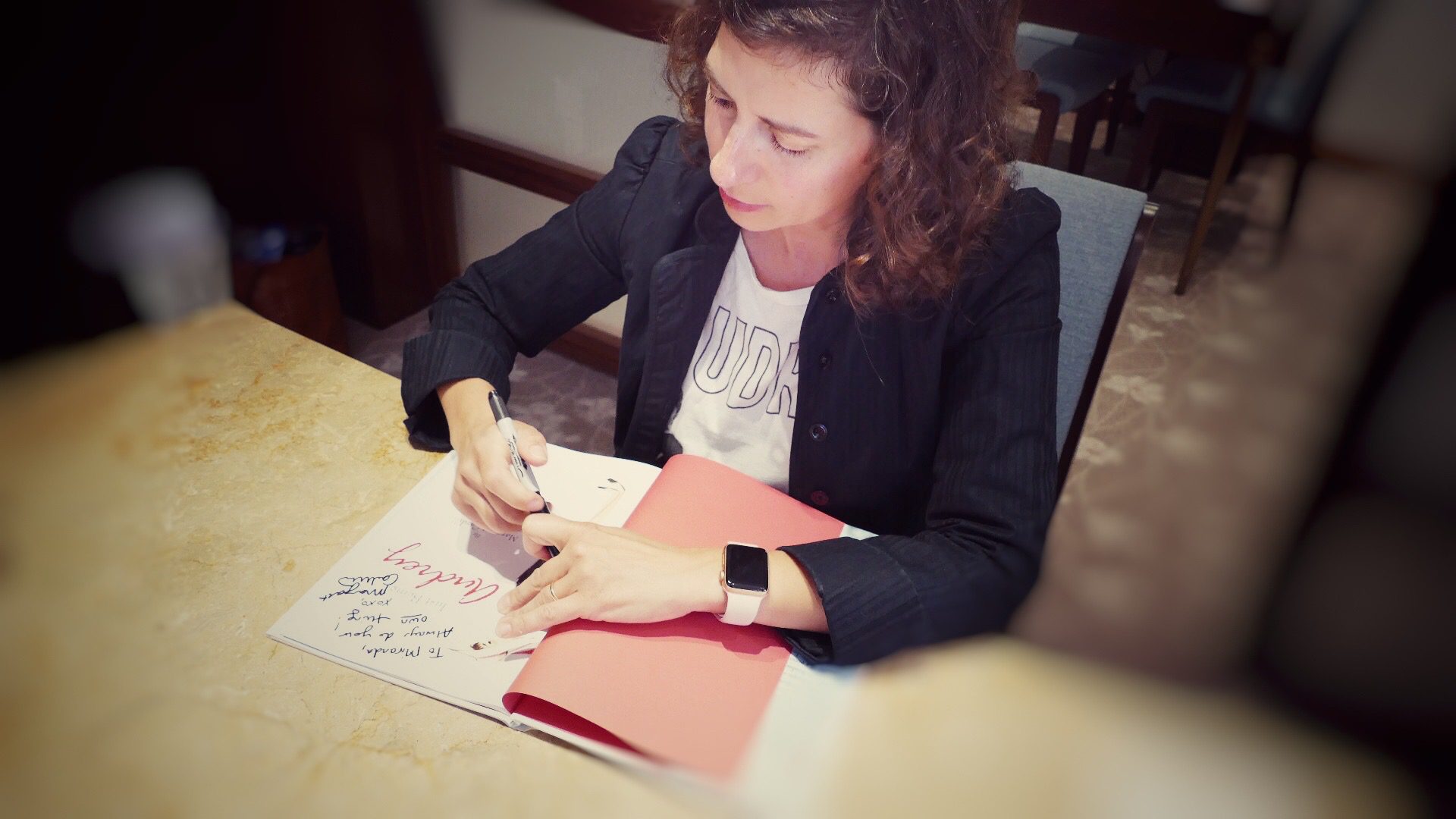
    Cardillo’s first children’s book, Just Being Audrey was published in 2011 and has gained the admiration of many, such as Marilyn Etzbach and her daughter, Cecile. Marilyn Etzbach used to be the manager of an Anthropologie store at Merrick Park. She shared that the book would fly off the shelves and the store employees also enjoyed reading it. This led to Marilyn Etzbach asking Cardillo to do a book signing.

    “She came in with a newborn,” said Marilyn Etzbach. “She was so interested in exposing her amazing book and broadening that connection that she came in at a time when a lot of people keep to themselves and stay close to family.”

    Cecile Etzbach (now 14 years old) shares the same birthday as Audrey Hepburn and has always been a fan of Just Being Audrey. “I like the way Miss Margaret presents her characters in a very related way,” she said. “She makes it easy to understand their personality….I like the way she presented Audrey only having one scarf; and she learns how to style it in many different ways and makes it work for her. I really connected to that type of problem-solving.”

    Cecile Etzbach  recalls Cardillo playing an important part in her Breakfast at Tiffany’s-themed 7th birthday party: Cardillo did a reading of Just Being Audrey and signed copies of the book for each child who attended. The celebration took place at a literal Tiffany’s jewelry store.

    Cardillo has done book signings at interesting places such as the Kennedy Center at Cape Cod, Books & Books, and a furniture store where they had authors come and they designed “writer’s spaces” based on everyone’s book.

    Cardillo has since written two other children’s books, Just Being Jackie and Dogs At Work: Good Dogs. Real Jobs. She said she likes to focus on women who have done extraordinary things. More people will see this in her currently untitled documentary about Jane Chastain that will premiere at the Miami Film Festival in April 2026.

    Cardillo received the largest prize of a combined total of $100,000 given to six Miami-based documentary filmmakers in The Louis awards. The Miami Film Festival introduced the awards, an initiative sponsored by the Lynn & Louis Wolfson II Family Foundation, in September 2024.

    An avid sports lover, Cardillo said that she wanted to make a narrative film about the 1972 Dolphins perfect season. While researching that story, she came across Chastain’s name mentioned in one line in one book. She circled and underlined it and knew there was a story there.

    “I was like, ‘this is a story I need to know’,” said Cardillo.

    Cardillo originally reached out to Chastain through email, then social media, and some of the publications where she had been published. Cardillo even tried to find Chastain’s address and her phone number. Eventually Chastain wrote back, later sharing with Cardillo that she reminded her of herself.

    Cardillo has been working on this documentary for about five years, even flying out to California and Colorado to visit Chastain, who is now 82 years old in person.

    Chastain admitted that she originally tried talking Cardillo out of it, “because I didn’t think she’d ever get it made, but she would not be dismayed.” Chastain went on to share that over the years, she has had book publishers express interest in writing a book about her experience, but it did not work out for one reason or another.  “Her enthusiasm and her spirit just endured me, so I decided to let her try,” said Chastain. “I signed a life rights agreement with her, and she was going to do a screenplay.”

    In addition to creating narratives, Cardillo works as a professor at the University of Miami where she teaches screenwriting, survey of motion pictures, and a professional development in film class called Inside the Entertainment Industry.

    She is the mother of three children, Giovanna, 12, Luciano, 10 and Giuseppe, 4. Her husband, Luke Fronefield, is also a writer.

    “I absolutely struggle with my work-life balance,” said Cardillo. “I think it’s hard to do all these things well-and I probably don’t. I take turns with them, but I’ve also come to a point in my life where I think I work really hard. I’m not the most talented, but I am one of the more hardworking people and I think that helps.”

  • Death By Holiday – Hialeah’s Voice Gets Louder

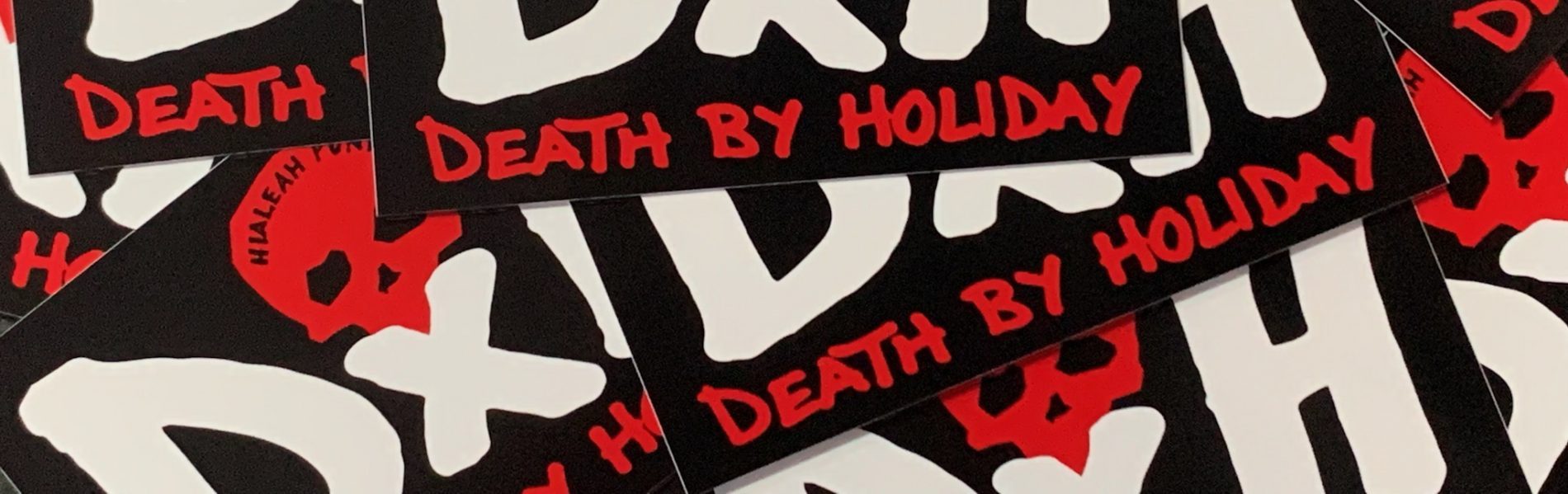
    Death By Holiday – Hialeah’s Voice Gets Louder

    In Hialeah, punk isn’t a fashion statement: It’s survival, humor, and defiance rolled into one. Death By Holiday, the Miami band that records on tape and jokes about logging onto the internet with dial-up, carries that ethos like a badge. Their sound feels torn from a Reagan-era basement show; jagged guitars, sneering vocals, and a rhythm section that kicks like a busted air conditioner in mid-July.

    Now, with their self-titled debut album due October 11, Death By Holiday is turning that Hialeah identity into a battle cry. Equal parts 90s skate-punk and 80s hardcore howl, the record channels the grit of their hometown and the urgency of today’s political climate.

    “Hialeah is an enclave of immigrants,” says vocalist and guitarist Skam Holiday. “It’s unimaginably hard to leave your home, your friends and everything you’ve spent your life building to immigrate to a foreign country that often doesn’t want you there. We are angry at the way people are being treated, and we have to say something about it. These are the messages that bubble up from places like Hialeah.”

    That urgency burns across the album’s ten tracks. Lead single “Employee of the Month” clocks in at a tight 1:51, a satirical gut punch at corporate drudgery that sounds as if The Office were conceived by punk godfather Lee Ving. Elsewhere, “Nanogators” unspools as a compact blast of paranoia and venom, while “Hialeah Efficiency” slows just enough to paint a vivid suburban portrait, its twangy edges and harmonies recalling Johnny Cash’s storytelling grit.

    Skam insists the band didn’t consciously set out to echo the punk of Reagan’s America; it just spilled out. “We wrote the songs quickly; the album was written in just a couple of days. We were all angry, so we played abrasively and screamed a lot. … I think it sounds like that because we all listened to that early snot-nosed, smart-ass punk stuff and it affected us, so I guess we made that sound unconsciously.”

    If the sound leans old school, the message cuts straight into the present. “I’m not sure about carrying the torches of punk resistance. We’re just really angry and want to affect some change, even if it’s small,” Skam says. “We’re just talking about the world as we see it, with all its misery, abuses, toxicities and hopefulness. We truly hope that message knifes through any nostalgia.”

    Death By Holiday, rounded out by Nacho Holiday on drums and Dice Holiday on bass, may trace their roots back to beloved Miami outfits like The Brand and Pale Blue Dot, but today they’re surging forward with rawer intent. “We’re doing less tinkering,” Skam reflects, “and putting a lot more trust in the trajectory.”

    The band will celebrate their debut with release shows across the tri-county area: October 11 at Poorhouse in Fort Lauderdale, November 1 at Sweat Records in Miami, and November 29 at Propaganda in Lake Worth. The album drops digitally on October 11 on Bandcamp, with a limited vinyl run available at shows.

    For Hialeah’s favorite punks, the message is urgent, the sound is abrasive, and the trajectory is set.

  • More South Florida Myths that Need Debunking

    More South Florida Myths that Need Debunking

    It seems that, here in Greater Miami we have a guy who I have properly named “Miami’s Walking Fountain of MISinformation” (no names, please—we’re British) walking around giving tours and while I can’t vouch for the veracity of lack thereof of most of what he tells the groups, I can absolute, utterly, totally assure you, dear readers, that what you are about to read is completely factual.

    You see, it seems that on every tour he has ever given, whether in Miami, Miami Beach, Coral Gables, Hialeah, Homestead, Florida City, Bal Harbor, Bay Harbor Islands, Indian Creek Villages, Surfside, North Bay Village, North Miami Beach, Sweetwater, North Miami, Aventura, Sunny Isles Beach or anywhere else in Miami-Dade County, one completely and totally without as much as a grain of factuality is certain to be spouted.

    At some point on each tour, he will stop in front of a fairly large building, usually an apartment house or a hotel and at that point he will motion the group to come in closer and when they are within acceptable very short distance from him he will point at the building and whisper conspiratorially, “that was Al Capone’s hideaway!”

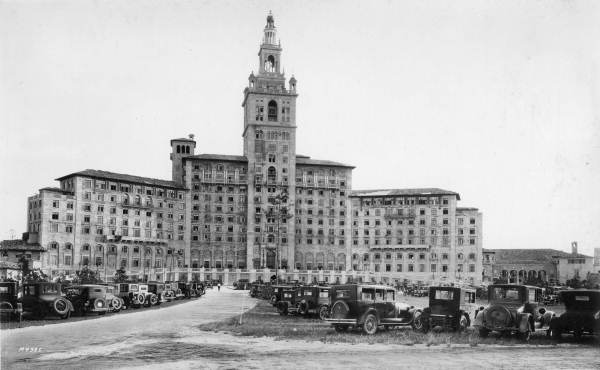
    What utter and total nonsense because, most importantly, Mr. Brown, as he was often known, didn’t have any “hideaways.” He had a house on Palm Island on Miami Beach, same recently torn down and when people ask me, when I explain the facts and the truth, “but what about the 13th floor at the Biltmore, Seth?

    And now, you get the truth and the facts: Did he go to the Biltmore on occasion? Yes, he did, but the reason was to take his son, Sonny, for his swimming lessons at the Biltmore pool. Period. And to close that part of the discussion, and simply put: Folks, there is NO 13th floor at the Biltmore. End of story.

    “Wow,” you say, “that is amazing, Seth,” and, yes, it is amazing because like the factuality of the stories below, the above, like the Orange Blossom Myth, is completely and totally without said factuality.

    And so we move on.

    “What’s next, Seth? You say. “This is really fascinating,” and, indeed it is as we move on to, when I am telling the histories of various areas of Greater Miami, a person in the audience (this occurs most frequently when I am giving the presentation–one of seven of my 15 talks and presentations which is an “adult show and tell” talk to which I bring the related memorabilia–which is titled “The History of Discrimination is South Florida,” and I am the only person in the state who gives that talk and makes that presentation, which is half Jim Crow and segregation and half “restricted clientele”) will tell me, particularly during that talk that “my grandfather told me about the signs which read “NO JEWS/NO DOGS/NO BLACKS” and to which I have no choice but to factually (there’s that nasty word again!) reply: there were no signs that read “NO JEWS/NO DOGS/NO BLACKS”

    “But” is the first part of the usual response, “my grandfather wouldn’t lie,” and the response to that is “he wasn’t lying; he was exaggerating, so let me tell you what the truth is and what the facts regarding that myth are.”

    “There were,” I explain, about seven hotels or apartment houses which did have signs reading “NO JEWS,” but, no, none of the other words,” and if there was a sign which read “NO DOGS” it was maybe twenty or thirty feet away and as for the “NO BLACKS” nonsense? Completely and totally false.”

    “Think about it. Like the rest of the South Florida was a Jim Crow state and segregation was the law, so, first, signs were not needed: remember the separate rest rooms for people of color and the separate water fountain? And, of course, in the era of segregation—the 1920s, ‘30s, ‘40’s, ‘50s and early 1960’s, did we refer to people of color as “black?” No, of course not. They were Negroes or “colored.” Period.

    And then there is always the “yes, but….” And that is “what about the sign that read “Always a view/Never a Jew?”

    The ONLY place that sign ever existed was in the attic storeroom of the Jewish Museum of Florida on Washington Avenue on Miami Beach, and how do I know? Because my friend, Ira Newman, who was, for some years, Curator at that institution, brought me upstairs and showed me the sign, explaining that it was never actually in use but was made for the museum so that it could be used to illustrate when the discrimination was all about

    So, and again going back to facts: We hold, here at The Bramson Archive, the largest collection of black Miami memorabilia (now notice the disclaimer words) in white hands in the country AND the largest collection of restricted clientele memorabilia in public or private hands in the country and while, yes, there were a very few instances (one of them at a summer resort on Lake Erie) where the words “No Jews” appeared in print, we have never seen or found, in or from any resort in Florida, a brochure, booklet or postcard with those words on it. However, there was almost no end to the “couched phraseology.”

    That term refers to the use of phraseology that means the same but doesn’t use the words “No Jews” and some of the items here at The Bramson Archive have terms or phrases such as “Restricted Clientele;” “Gentile Clientele;” “A Clientele That’s Your Sort” and a good few others.

    So that leads us to the, “oh I remember the restricted clubs that didn’t allow Jews” and, generally, I need to explain that, here in what is now Miami-Dade County, we have only five of them: Surf, Bath, LaGorce, Bal Harbour and Riviera in Coral Gables. “But Seth, what about Miami Shores and Indian Creek” and I explain that not only did Indian Creek Village’s founders include two Jewish people, but the Club’s charter, which I had privy to when I was writing the history of the Club, does not state that those of Semitic origin were prohibited from joining. Rather, the statement is that “In order to be a member of this Club, one must be Caucasian and of good moral character.” Period. Nothing about religion at all.

    So what about Miami Shores? Plenty of bigot and anti-semites there now, as there always have been, BUT: the club was built by the WPA during the Great Depression and owned by the municipality from “Day One,” and, as such, Jewish people were never, in the history of the Club, excluded.

    As for deed restrictions, yes, many throughout most of South Florida, but that has to be another story for another time

    Well, dear readers, that about covers it for this time but stay tuned for our next submission because with that one you will learn who, in World War II, the Vopos and the Sonderkommandos were and who today, the NEOsonderkommandos are, that, of course, referring to Jews who have to issue, problem with or hesitation about stabbing other Jews in the back, so stay with us, have a wonderful and happy Rosh Hashanah and Yom Kippur (Jewish Year), be well and stay safe, and, as we say in South Florida, “Thank you for not shooting—and have a MIAMI NICE DAY!”

  • Liv Cook Art Exhibition in Dania Beach

    Liv Cook Art Exhibition in Dania Beach

    This article originally appeared in PureHoney Magazine. Check them out here.

    Childhood memories often fade at the edges, their colors dimmed by time, yet the creative spark we’re born with endures. In Look What I Made, the debut solo exhibition of South Florida portrait artist Liv Cook, that spark flares back to life to remind us that creativity is as innate as breath.

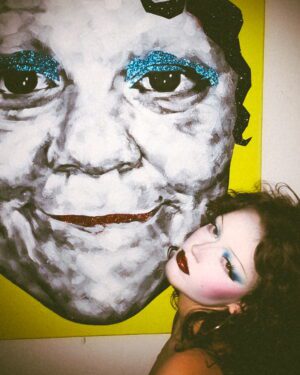
    Opening September 6 at Gasper Arts Center in Dania Beach, Cook’s exhibition transforms baby photos of herself and several fellow artists into bold, mixed-media collaborations — a tender, electric fusion of each subject’s earliest, original self and the layered identity shaped by the world.

    Cook painted the faces based on the photos, then handed the works off to each artist to complete the background in their own vibrant style. The result is a visual conversation — innocence meeting experience, individuality blending with shared creative DNA.

    “Children have the ability to express unfiltered creativity that has yet to be tainted by the external world,” Cook says. “Look What I Made offers artists the opportunity to be appreciated for just being artists, and recognizes that their physical work is just a translation of their internal raw expressions.”

    Cook’s eleven collaborators include CHNK Fondue, a fixture in Miami’s street art scene; South Florida artist and curator Kelcie McQuaid; and multimedia artist Sarah E. Huang. Cook also painted her aunt, artist Cary Daly, as a baby. She is painting her own baby portrait as well, and the audience will be invited to draw on the background at the opening! Each returns to their beginnings with Cook as catalyst, underscoring the artistic passion that manifests in infancy even as the journey to nurture it is deeply individual.

    Known for portraiture that challenges conventional beauty standards, Cook blends influences from historical painting to contemporary street art, often stepping into her own work through photography and makeup. Backed by a county Artist Support Grant, Look What I Made extends that ethos: Viewers might see themselves reflected in the tension between origin and evolution. Cook says the exhibition is also about “planting a seed” — encouraging creative intersections among artists (often solitary figures) and gesturing toward what can grow next.

    Liv Cook’s Look What I Made  runs through October 4 at Gasper Arts Center in Dania Beach. instagram.com/livcooked gasperarts.com

  • TYPOE Unveils “Paper Stage (Allegory of Life)” at the Arsht Center

    TYPOE Unveils “Paper Stage (Allegory of Life)” at the Arsht Center

    Miami has a new landmark and it’s splashed across one of the city’s most recognizable walls. And this is not a typoe: it’s amazing.

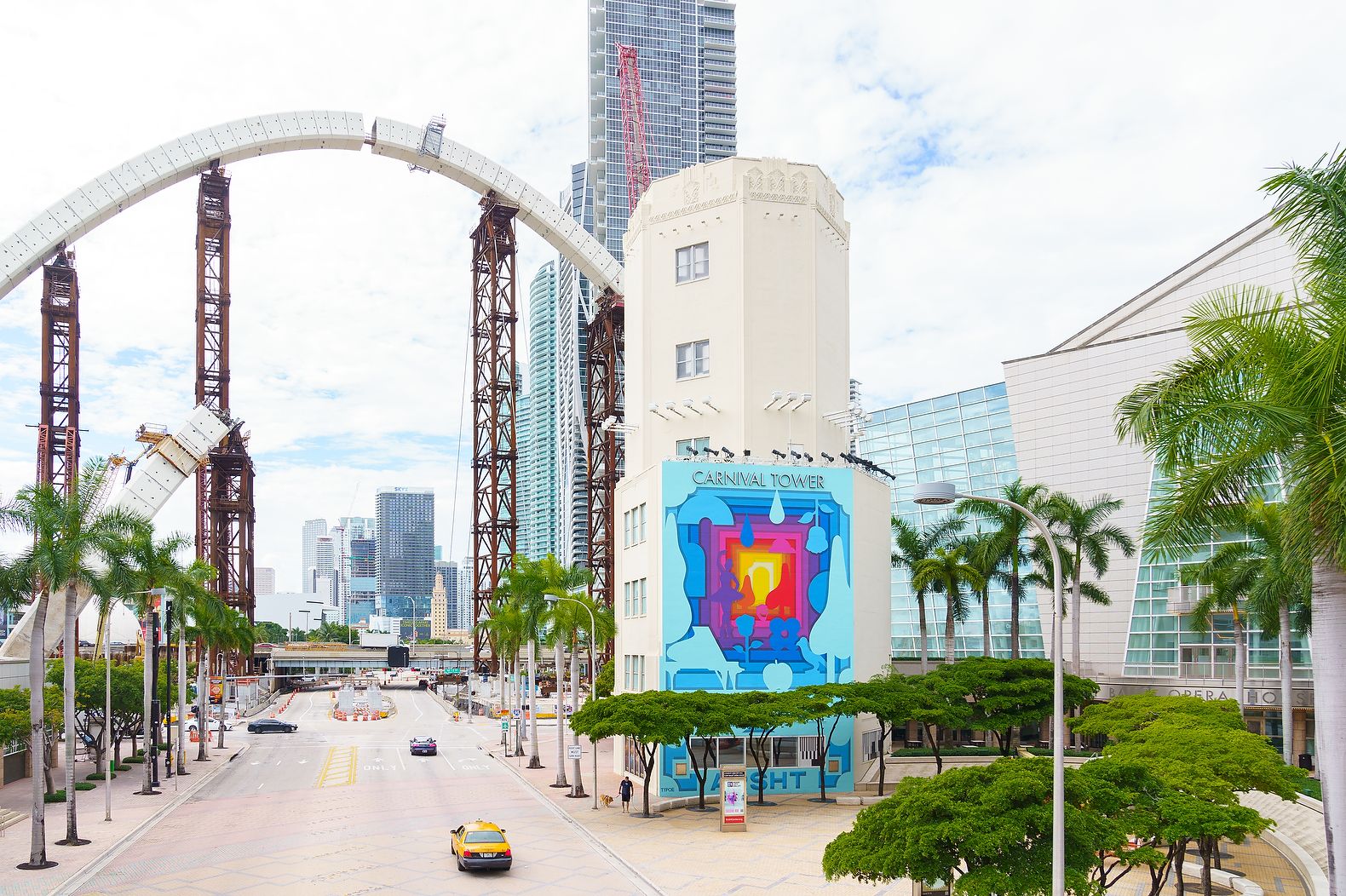
    The Adrienne Arsht Center has commissioned acclaimed Miami artist TYPOE to create a large-scale, site-specific mural for the exterior of its iconic Carnival Tower. Overlooking Biscayne Boulevard, the 20-by-30-foot work is an explosion of color and imagination, a love letter to Miami’s creative energy.

    Titled Paper Stage (Allegory of Life), TYPOE’s mural transforms the building into a perpetual performance.

    Inspired by 19th-century paper stage models, this piece invites passersby to enter their own imagination.  One would imagine a little peaceful imaginative introspection could be used at the intersection, considering all the road rage that area inspires. Anyway, now we have figures, animals, and abstract forms woven together in a playful dance of man, nature, romance, and mystery.

    Like a show that never ends, its layers reveal new meanings with every glance. Perfect for a performing arts center.

    The mural was officially unveiled on September 13. There was with a celebration on the plaza, complete with music, community, and photo ops. For TYPOE, the commission is personal.

    “As a Miami native, this project is a very meaningful opportunity to bring my vision to life in a culturally rich space,” he said. “I hope this artwork inspires visitors to connect with their own creativity and experience the unique energy of Miami, especially around the Arsht.”

    Arsht Center Typeo Mural

    This project caps a year-long collaboration between the Arsht and TYPOE. He also designed the 2025 Arsht Awards and the Center’s vibrant holiday card. Johann Zietsman, Arsht Center president and CEO, called TYPOE’s piece “a remarkable visual on one of Miami’s most recognizable buildings.”

    Also, the mural also continues the Arsht’s deep commitment to public art, following the work of major artists like Kenny Scharf, Jen Stark, Hernan Bas, and Eduardo Kobra.

    Whether you’re heading to a show, walking along Biscayne, or just cruising through downtown, Paper Stage (Allegory of Life) is impossible to miss.

    It’s Miami, in full color, reminding us that art isn’t just something we watch.

    It’s something we live.

  • Satellite of Love – Fiction

    Satellite of Love – Fiction

    Satellites gone up to the sky….

    things like that drive me out of my mind.

    I watched it for a little while. 

    I like to watch things on TV. 

    Bom Bom Bom. Satellite of Love. 

    Bom Bom Bom. Satellite of Love. 

    Bom Bom Bom. Satellite of Love.

    Lou Reed

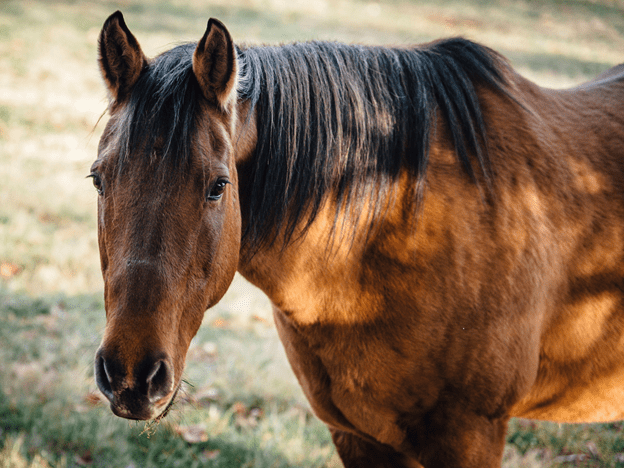
    “Juliet’s horse was bought for $600.00 including the saddle. We saved that horse from the glue factory!” Juliet’s father Larry often said. He was a fairly small horse, just barely 13 hands but he was perfect for Juliet as she was 12 years old and barely 5’ 4”. Satellite was not a fancy horse. He was part quarter horse and part thoroughbred and part something unknown, but he was extremely fast and very loyal.  He was a plain brown and had a dull coat. His head low and his neck flat with no arch so he did not look particularly regal. He was kept at the new Tropical Park Equestrian Center in West Dade near Juliet’s home.

    Juliet bonded with her horse right away and named him Satellite. She walked to the stables from her house and rode every day in Summer, either in the ring or on the trails near the park. It was 1979 and cow pastures dominated the landscape of West Dade. Satellite knew Western and English commands. Juliet often wondered how he ended up a trail horse after being trained as an English show horse. She wanted to know his whole story and often asked him directly but never got an answer. She loved to pat him on the neck, kiss his nose, groom him, and give him carrots. Her instructor, Ms. Martin taught her how to care for him, check his feet and ears, and clean the saddle and bridal with leather soap.

    Ms. Martin taught Juliet to ride with a long leg, dressage style, using her body to steer him not putting pressure on the bit.  “Lower your stirrups” she would say. “Lower your heels. Lighter in the mouth, don’t pull on the reins.” After several months of training, Satellite and Juliet were agile and responsive.

    The following Summer, Juliet entered into two equestrian competitions. One was at the Palm Beach International Equestrian Center in Wellington, and one was a lesser-known event at Tropical Park in West Dade. She entered into the easiest event first and won first place in every category: Walk, trot canter, jumping. Satellite was so excited to compete, he whinnied loudly, showing off. Several girls ran up to Juliet afterwards and asked her about him. Where did you get him? How old is he? How often do you practice? Juliet answered every question humbly. “I wish I had that horse!”  One girl remarked.

    Juliet prepared for the bigger show in Palm Beach which would be competitive. The big day came, and her father wished her good luck. Satellite and another gelding named Sam were in the horse trailer and Juliet shared the front bench with a fellow rider from Miami and the driver. Ms. Martin drove separately in her Honda with her daughter. They slowly made their way to Palm Beach County. Satellite whinnied at least 5 times on the trip and once again, long, and loud, when they arrived. Juliet could feel the tension in the air, and she and her horse shared a competitive spirit. Juliet entered into walk, trot, canter and felt really good about it. She was number 25 and had to wait her turn to enter the ring. She could hear the judge’s comment on her form as she trotted by. “Number 25” she heard them murmur.  She felt tingles go through her body when she realized that she and Satellite were in perfect synchronicity. He was truly a show horse, she thought. “I think I might have won something! She told Ms. Martin right after competing. “I don’t think so honey.”  Ms. Martin said. “It’s very competitive here. This was just for practice.” The judges announced her name over the loudspeaker. “Juliet Remines on Satellite for 6th place”. It was a huge honor as she was coming up against girls with horses worth over $100,000. These were girls whose families were competing in horse competitions for generations. Juliet proudly brought her ribbon home to show her father.

    Over the next year Juliet grew a few inches outgrowing Satellite. Her legs hung down way below his belly and she felt her weight would crush him. Juliet felt awkward and embarrassed to ride him, hating her body. A little girl from Virginia named Suzy visited Tropical Park and asked if she could ride him. She had seen them compete at the show in Palm Beach. Ms. Martin often took the younger girls out on trial with her. Reluctantly, Juliet let Suzy ride Satellite. After the ride, Ms. Martin said “They are nice together and Suzy fell in love with him.” Suzy’s father offered to buy Satellite and take him to their farm in Virginia. Juliet spoke to her father, and he arranged the deal.

    A few weeks before he was going to be sold, Juliet took him for one last ride to her home up the street to have her father say goodbye to him. They rode to her house in Westchester, mostly walking the entire way and tied him up in the yard. Juliet’s neighbor made a loud noise and spooked Satellite who bolted, breaking the harness and ran back to the stables. Cars were honking and swerving to avoid him. He was nicked in the leg at the entrance to the Park.

    Satellite couldn’t stand for a few weeks but the family from Virginia bought him anyway. Juliet was heartbroken. She felt so guilty that she had caused him harm. Suzy’s father told Juliet he put Satellite out to pasture in Virginia so he could heal. She never heard about Satellite again. Juliet fell into a depression and could not bond with another horse and for a time her grades suffered in school. Eventually Juliet moved on but was never able to completely come to terms with the events of that year.

    Dana Martin and Satellite entered Juliet’s thoughts repeatedly over the next 30 years. She often dreamed about Satellite and imagined him running free in a big open field with wildflowers. Her time with Satellite was a happy period in her life that ended rather abruptly.  Juliet came across a picture of herself in full riding gear and thought about Ms. Martin intensely.  She felt the urgent need to connect with her.   She searched the Internet with the words, “Dana Martin obituary” remembering her being in her 40’s when she knew her. However, what she found was that Dana Martin was alive and well, exhibiting her art at the Wellington Library in Palm Beach and promoting her new book about her life instructing children how to ride and care for horses.

    Memories of Ms. Martin flooded Juliet’s mind; her English accent, and her personality which was graceful, persistence, patient, and kind. She dressed in jodhpurs and riding boots daily with a button-down white cotton blouse and wore her hair very teased and full. She had Anglican features with a long slender nose and high cheekbones. Juliet remembered riding in circles around the ring on a windy day while Ms. Martin stood in the center correcting her.  Suddenly, Ms. Martin’s hair blew back. It was the first time Juliet saw a large tumor on her head. After the lesson was over, Juliet walked up to her and couldn’t look her in the eyes. “Are you ok? She asked, deeply concerned and out of breath. “Yes, honey, I’m fine.” Ms. Martin said looking away. “Are you going to have surgery? “Juliet asked.  “No, honey.  I just pray a lot.” After that day, Juliet noticed Ms. Martin taking breaks in her car, “Why does she go to her car so much? Juliet asked Ms. Martin’s daughter.  “That’s where she prays. We are Christian Scientists.” Ms. Martin’s daughter explained.

    After reading the article about her success as a riding instructor and painter, Juliet decided to reach out to her instructor on her website.  Ms. Martin called back the next day. “Is this Juliet Reminis?” She said excitedly. Juliet said “yes! Is this Dana Martin? “They had a lively talk about the horses they knew. Bean, Stanley, Willow, and Satellite. They talked about Ms. Martin’s children and Juliet’s siblings and father. They talked about the fate of Satellite after being sold to the little girl who lived in Virginia. “I was so worried about him.” Juliet said, “They were a very good family and I’m sure they took good care of Satellite.” Ms. Martin assured.  “You are featured in my book. I’d like to send you a copy. Please send me your address.”  Ms. Martin insisted. Juliet was overjoyed. “There’s still a picture of you hanging in the stables.” Ms. Martin exclaimed. “Are you still a Christian Scientist? “Juliet asked her.  “oh, yes.”  Ms. Martin replied happily. Juliet shared her experience battling cancer.  “I’m a survivor and I believe in the healing power of prayer.” “You are in the beginning of the book.” Ms. Martin explained. “In the late 80’s I was gifted the use of a piece of land near a preserve in West Palm Beach.  I was able to build my own stables and had access to the preserve for trail rides. Children came from all over Florida for lessons.”  Ms. Martin explained. Juliet imagined this idealistic place.

    Juliet received the large coffee table book in the mail a week later along with a portrait of Willow, a beautiful gray mare. Juliet looked through the book with anticipation and found a picture of herself and Satellite.

    Juliet felt a certain distance and sadness and wished she could be in the same room as Ms. Martin as they spoke about their lives. She longed for those carefree days of learning and exploring. She was relieved to have some closure regarding that chapter of her life and was comforted and reassured about Ms. Martin’s success and Satellite’s fate. Juliet prayed deeply that night for Ms. Martin and thanked “God” for all her blessings.

  • Inside Churchill’s Reopening and New Ownership

    Inside Churchill’s Reopening and New Ownership

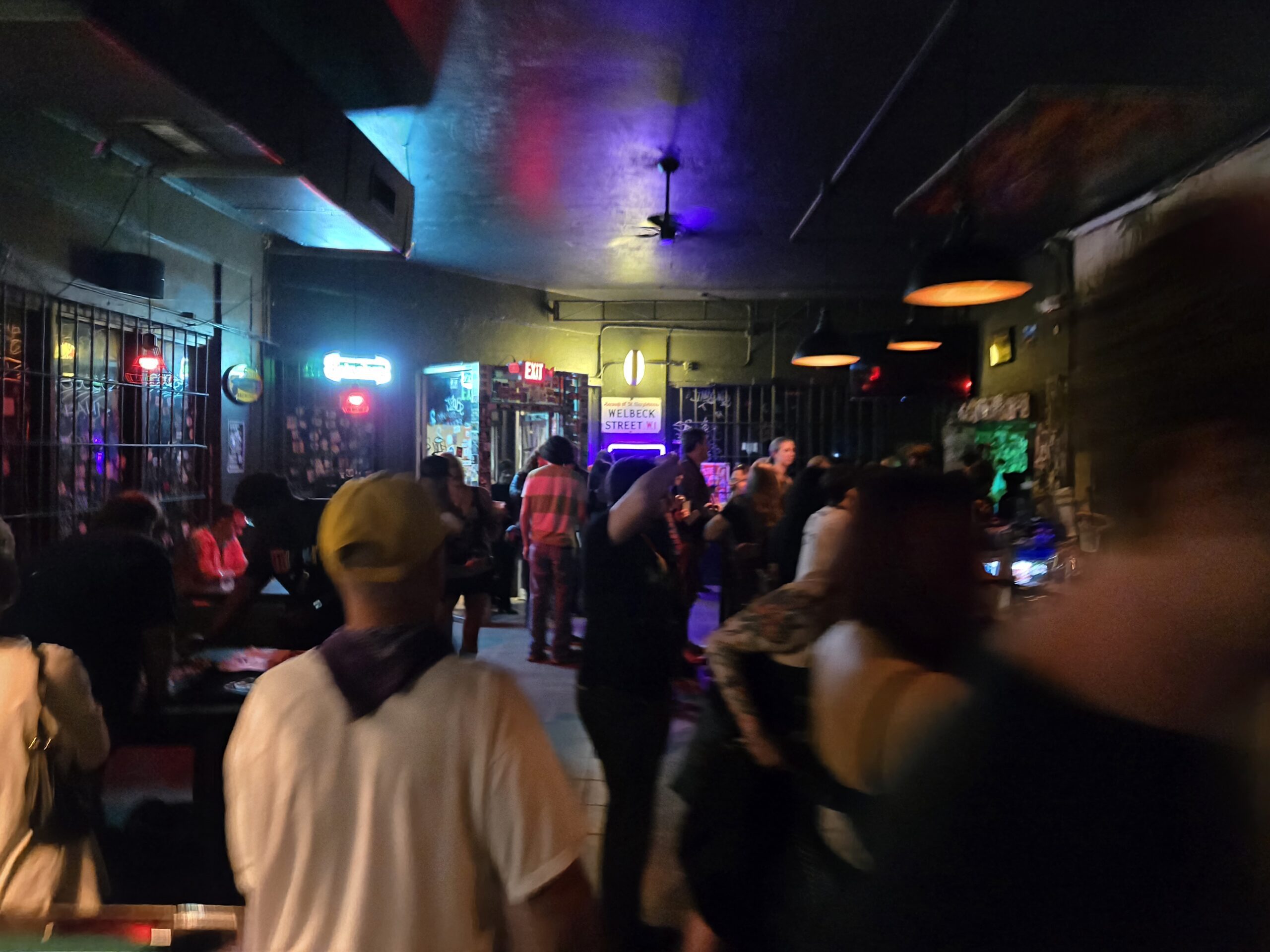
    “Looks like Trump… puffin’ on a blunt,” says Jason, as we sit at the bar Friday night, checking out our new shirts, taking in the sights and sounds of the newly re-opened Churchill’s Pub. Jason Handelsman, the Cutler Ridge-based drone songwriter and guitarist of Gucci Handelsman, is accompanying me tonight as we explore the reopening of Churchill’s. The shirt’s design features the famous scowl of the bar’s namesake staring off into the distance in front of the Union Jack. The shirt and its Magic Eye properties mirror those of the pub itself: blur your eyes and you might see remnants of the old Churchill’s, which opened in Little Haiti in 1979. Up until March 2020 when COVID forced a shutdown, the pub was the epicenter of the local music scene.

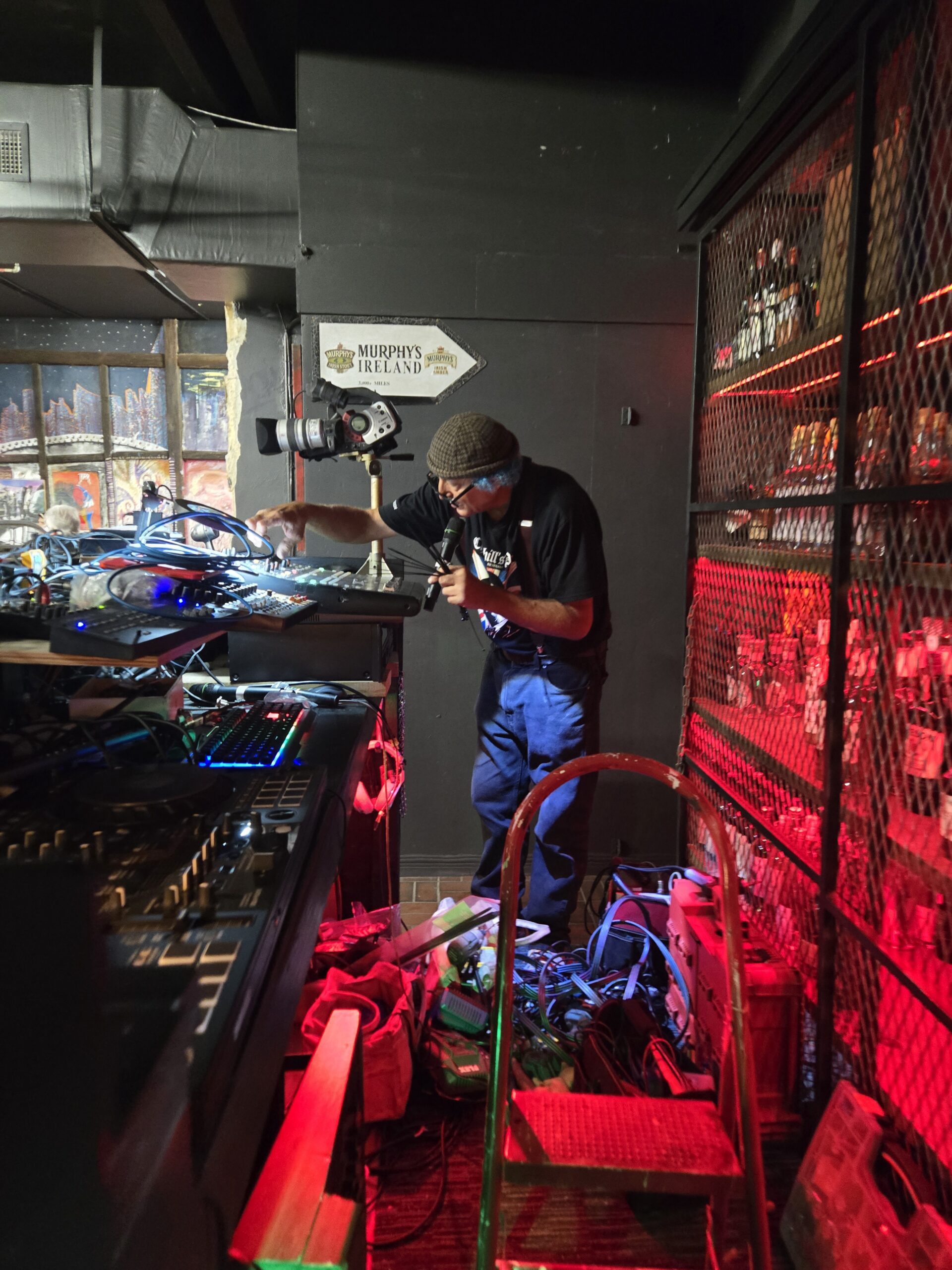
    In front of the main stage, Jason pointed out our friend and “great leader”, Rat Bastard, as he prepared the soundcheck. We watched him, back in his element, testing vocals on a microphone as he walked back and forth between the stage and sound booth. To the uninitiated, Rat’s actions seem random. For those of us who have benefitted from his work in the sound booth, we know he is carefully checking how the vocals sound in every nook and cranny in front of the main stage. Rat’s quality of work and attention to detail has long been a contributor to Churchill’s reputation as one of the best live venues in Miami.

    Rat Bastard’s presence, no matter the changes or new paint job, brings a sense of comforting familiarity to those who longed for Churchill’s return. “I have control… fuck what the music says… fuck what the music suggests” Rat muttered into the microphone. A small crowd followed him with their phones as he moved away from the sound booth again, filming him. In his wake, Liz Varnum of the band Bruvvy was quick to offer her commentary. “Rat’s kind of sexy, dude. He’s giving it… Sexiness is the vibe bro. Willem Dafoe, Liza Minelli… Rat Bastard”. Bruvvy, alongside other local acts Adhesive, Miss Michigan and Tess Gray were slated to play later in the evening as part of Churchill’s reopening.

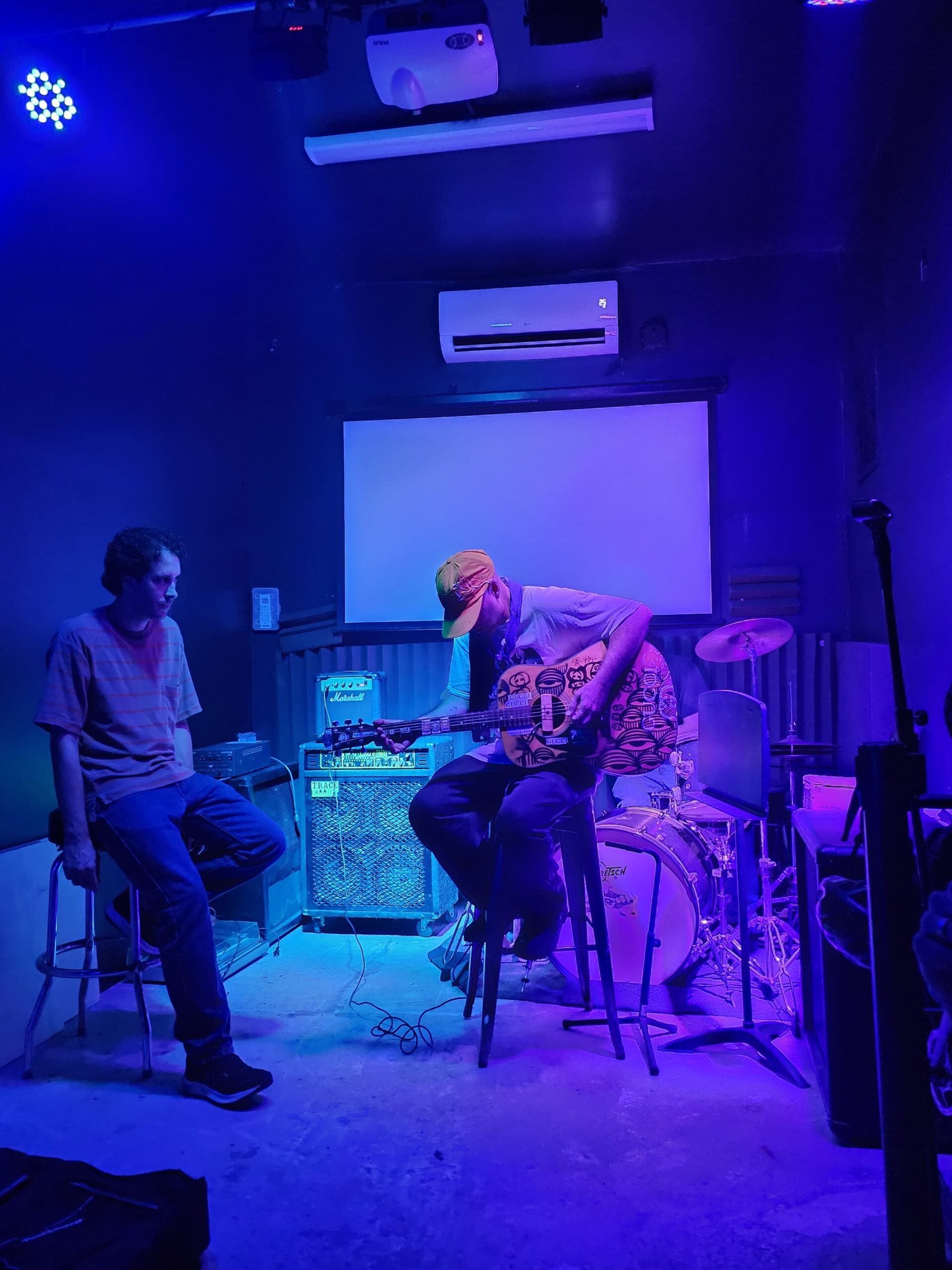
    Meanwhile, Jason Handelsman remained on a mission of his own. Though not on tonight’s bill, he was dead set on performing on the old Green Room stage. Acoustic guitar in hand, Handelsman was looking to perform a song he had written during the pandemic about Churchill’s, “Green Room”, named after the side stage at the pub where we had performed many times.

    Jason had been a regular at Churchill’s for years preceding the pandemic, hosting his own monthly night, Drop Out of Life. Once Churchill’s closed, Handelsman took his show on the road to various local venues. It had been a whirlwind two weeks for Gucci Handelsman. Our band featured on Michael Stock’s long-running “Folk and Acoustic Show” on WLRN-FM, with Arquimedes Blandonlopez on bass and Jonathan Scroggin (of Bitter Lake) on saxophone. A couple weeks later we were shut down by North Miami Beach Police fifteen minutes into our set at Original Sin Tavern on September 3rd, due to a noise complaint. The addition of Rick Smith on drums (of Torche) and Mike Duncan on bass (Black Mayonnaise) brought such a furious intensity to the quiet residential neighborhood behind the tavern that is surprising cops didn’t call for more backup.

    Back at Churchill’s, we found out the old Green Room was no more, walled off and presumably used by someone else. Handelsman and I were led to what used to be the old laundry room in the back patio. “This is the Green Room now” said a middle-aged man, wearing a red Cheech and Chong shirt. He introduced himself as Mallory. THE Mallory? Mallory Kauderer, the man villainized and blamed for the ills of Churchill’s during the last half decade? “Don’t’ believe anything you’ve heard” he said after introducing himself to us, clearly responding to our reactions. I asked if he was still involved in running the pub, to which he explained he was only here for the transition, and that the new owner Phillip Dillon was in control. Kauderer explained further that he was responsible for the changes, such as the demolition of pub founder Dave Daniels’ back house and structural integrity reinforcement throughout the pub itself. According to Kauderer, these were permitting issues that prevented Churchill’s from reopening until they were resolved.

    With the Green Room secured, and a line growing outside before the grand opening, Jason received a text from his friend and mentor, Ahol Sniffs Glue. Taking time out from his prolific Geographies of Trash project and residency with FIU, Ahol cycled up to Churchill’s Pub as the crowds were finally let in, reuniting with his old collaborator. With Jason’s guitar, emblazoned with Ahol’s iconic eyes, we finally took to the stage in the Green Room. In front of Ahol, and a few other straghlers who happened to pop in, we performed a four-song set: “Green Room”, “Die In Dubai”, “Trippin’ Balls at the Call Center”, and “Bong Hits With Pablo”. I suppose we beat the other bands to the punch in our own way, christening the new Green Room stage.

    All in all, it was wonderful seeing old friends returning to the place where many of us met for the first time. In some ways, Friday night was triumphant. From a business perspective, a bar re-opened with lines around the block, following months of hype and speculation. Most of the young patrons I spoke to were visiting Churchill’s for the first time. It was nice to see new faces, and to see a new generation finally make their way to the iconic spot. On the other hand, many questions remain. Are the old nights such as Drop Out of Life returning? What about Monday Night Open Mic Jazz Night? How will International Noise Conference work in the new configuration? Are national acts going to eventually be booked once the supply of local bands are exhausted during weeknights? Is that really Trump on the new shirt?

    Churchill’s remains familiar yet different. It has changed in many ways, which will undoubtedly rub many people the wrong way. But in a city whose only constant has been change since its founding, we shouldn’t have expected any different. Whether or not these changes work is solely up to the new Churchill’s Pub.

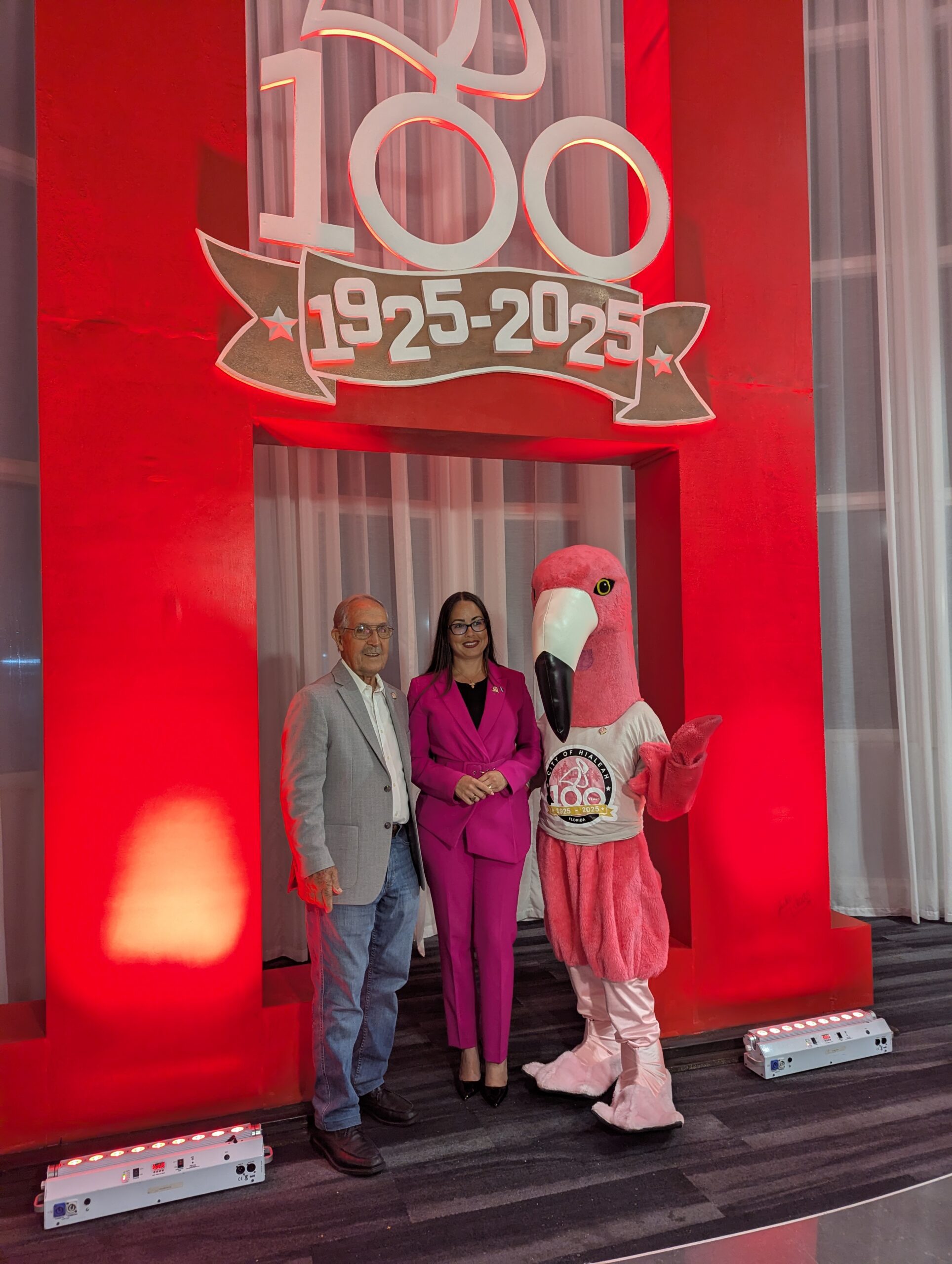
  • Hialeah Celebrates City’s 100 Birthday with Colorful Proud Art and Flamingos

    Hialeah Celebrates City’s 100 Birthday with Colorful Proud Art and Flamingos

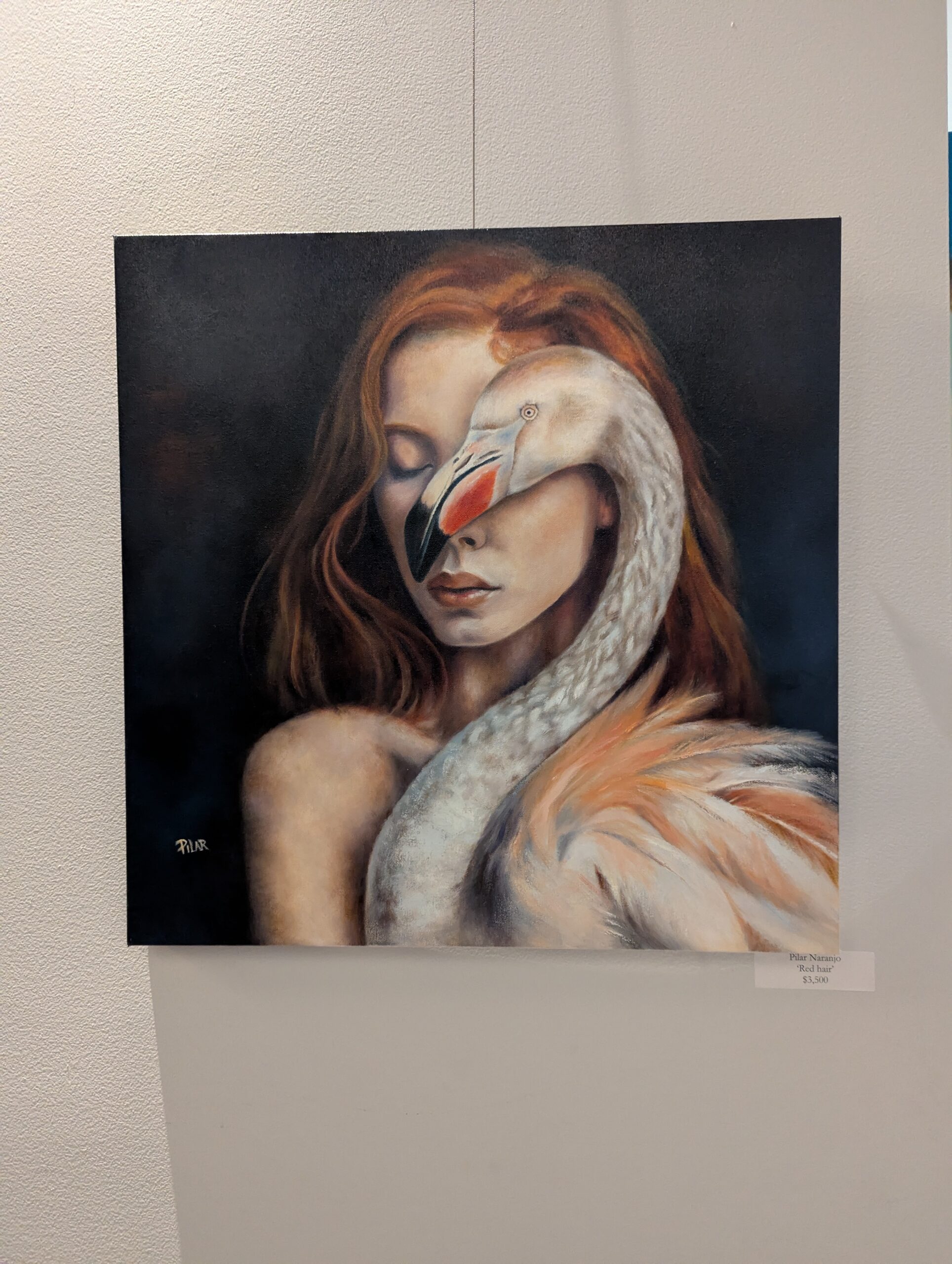
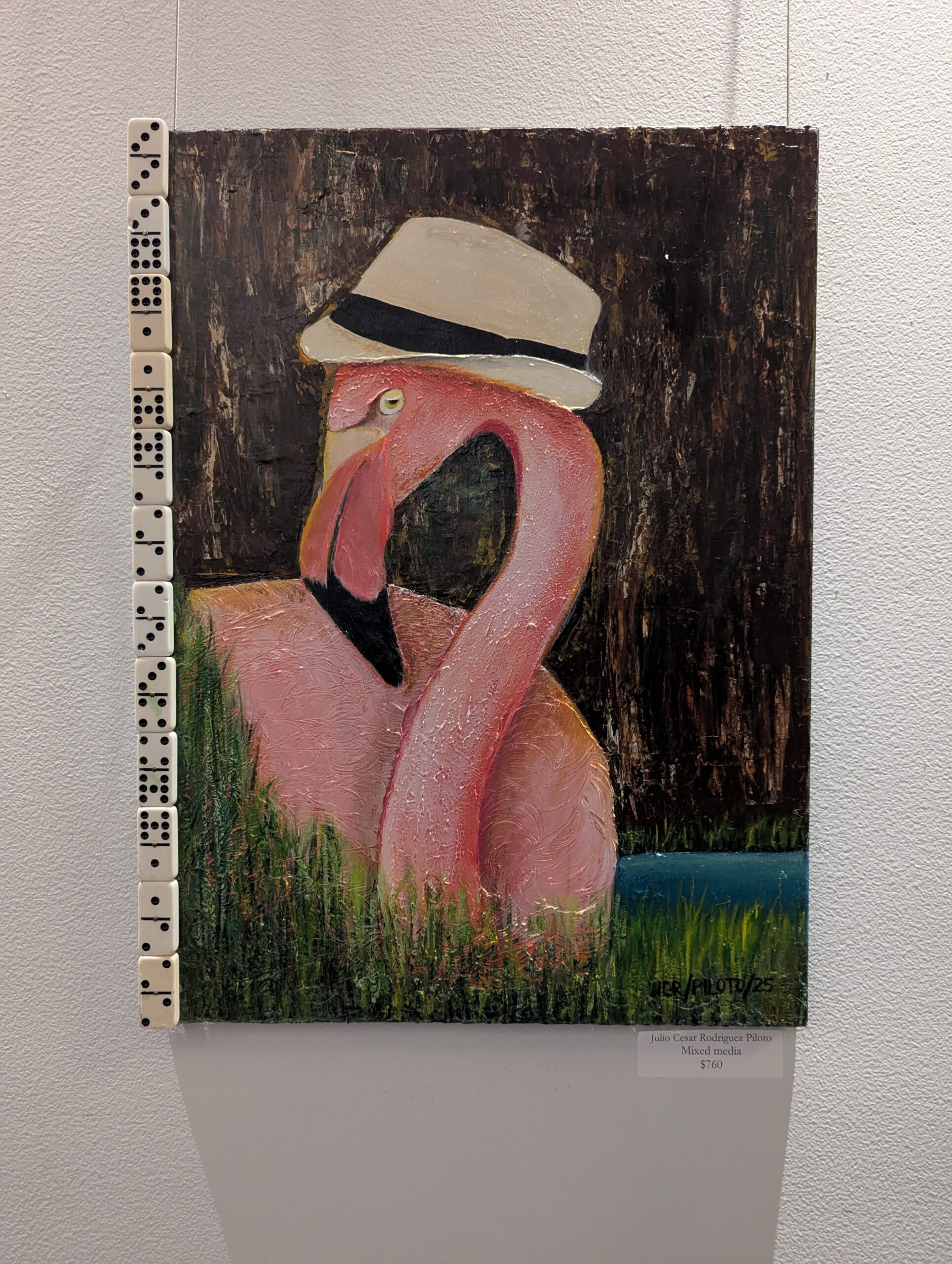
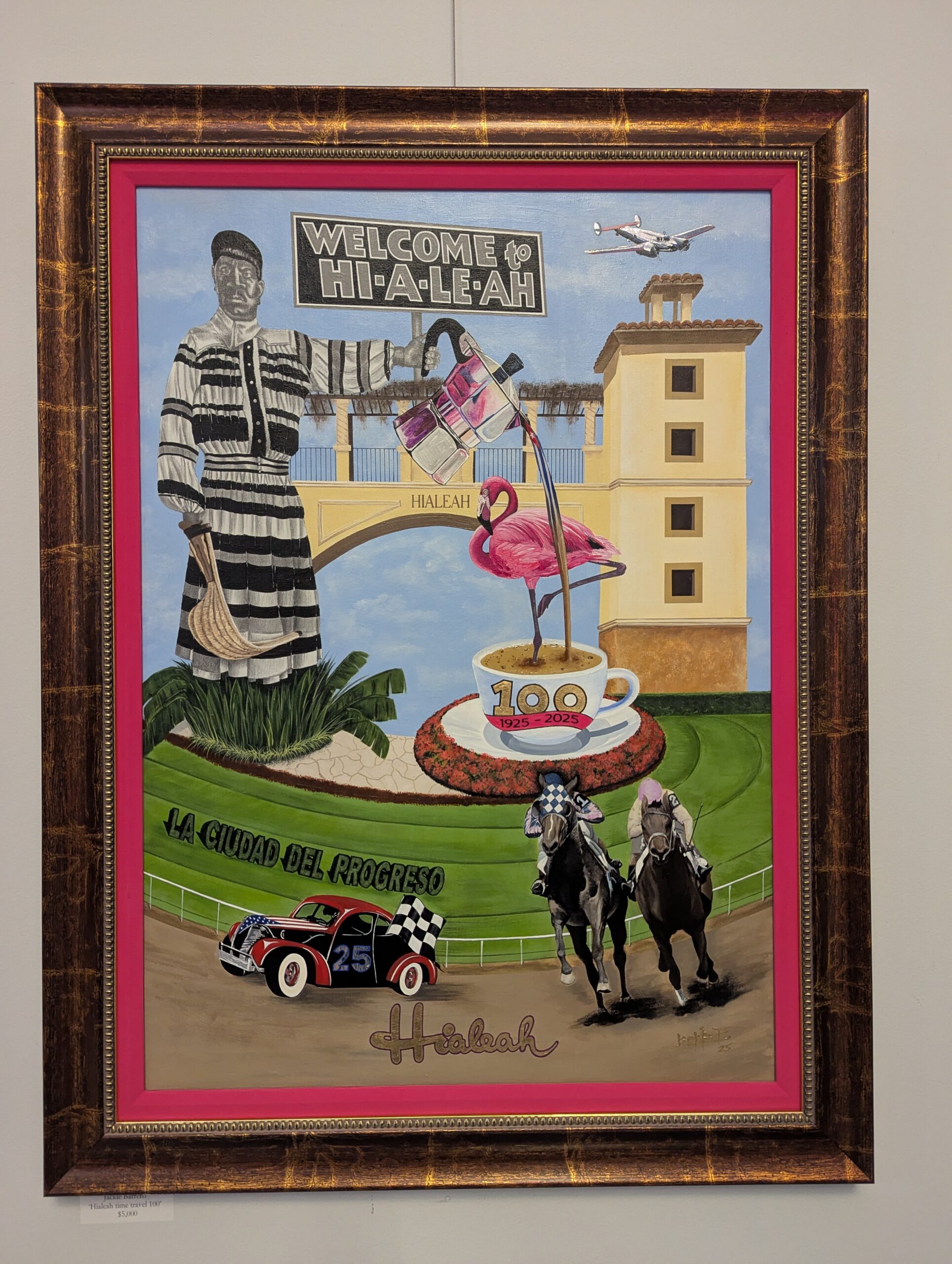
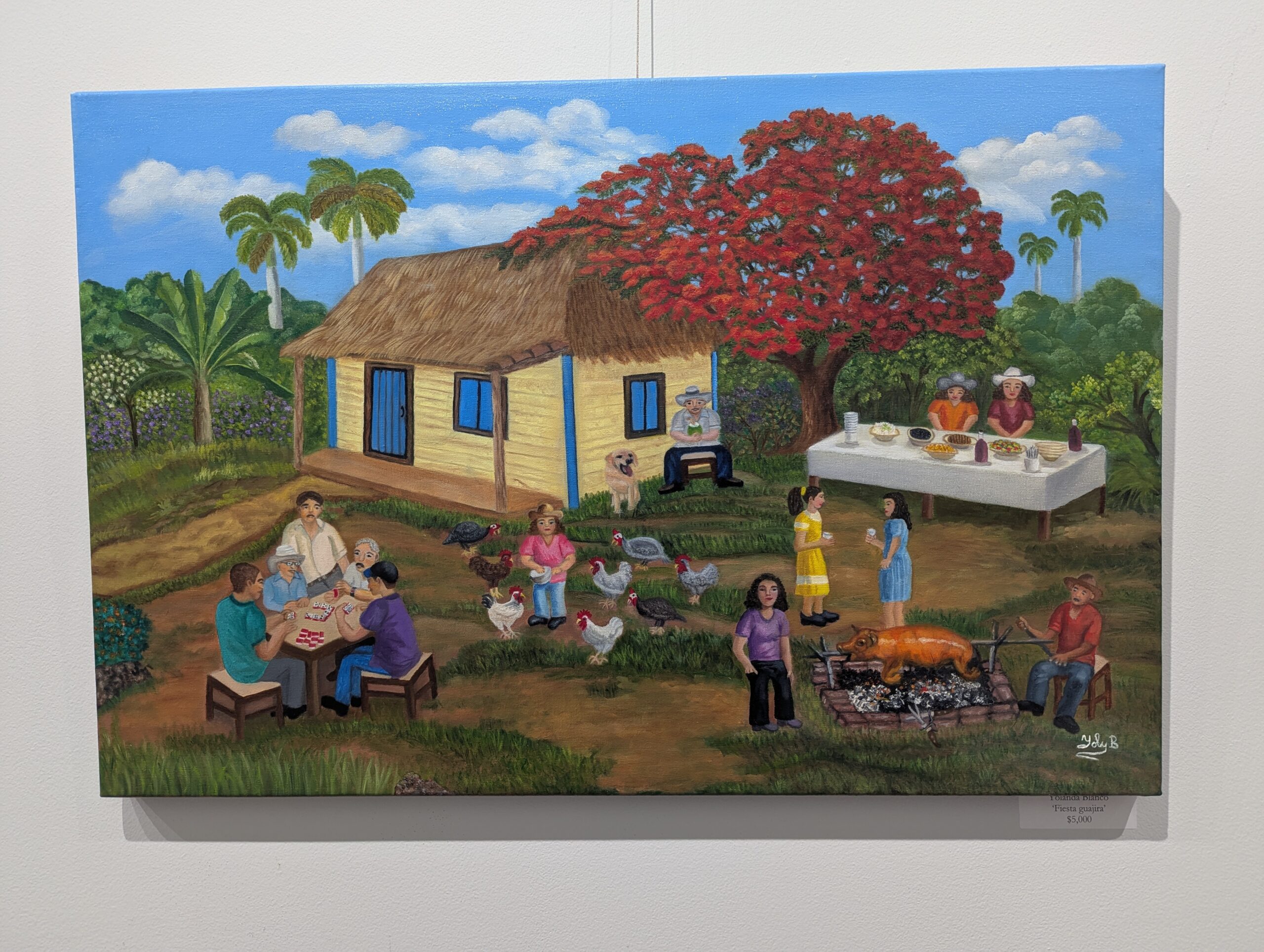
    Hialeah is celebrating its 100th birthday the only way it knows how: loud, proud, and full of art. The Milander Center has been transformed into a playground of creativity, with 101 artists showing original works that run the gamut in style and price, with pieces as accessible as $300 and as grand as $5,000.

    Opening night, September 10th, felt like the city itself had squeezed into the building. The place was packed with locals, artists, families, neighbors, shoulder to shoulder. A DJ kept the beat floating through the air while caterers weaved through the crowd handing out plates of yummy Cuban food. People weren’t just looking at art; they were dressed up, dancing, living it. The whole thing felt like a block party disguised as an art show.

    Every wall hit you with something different. Abstracts splashed in neon, pastels so soft they felt like whispers, acrylics that shouted with color. Photographs of Cuban landscapes hung next to cityscapes of Hialeah, each one grounding you in the place we call home. There were flamingos, women mid-dance, portraits of “La Conchita” the Virgin Mary who has watched over generations of Cubans here.  (Happy belated birthday La Concita).

    Hialeah History Exhibit

    This show isn’t just curated. It’s Hialeah telling its story at full volume. Cafecito in hand, dominoes clacking in the background, pig roast smoke still in the air.

    It’s all there, captured in paint, pastel, and print.

    And that’s what makes it a real centennial celebration. From Opa-locka to Coconut Grove, Allapattah to Westchester, South Beach to North Miami, dale, everyone who’s ever claimed a corner of Miami can see themselves in this work. This isn’t culture fading away.

    This is culture multiplying, exploding, dancing in the rain.

    Don’t ever let them tell you Miami culture is dying.

    It isn’t. It’s metamorphisizing. It’s blossoming.

    On opening night, people were literally carrying pieces off the walls, grinning like they’d just won the lottery. Some works were clearly made just for this event, celebrating the city’s 100th birthday. But maybe the most beautiful moment was watching 80-year-old Cuban men and women tearing up the dance floor, joy spilling from their faces.

    On a Wednesday night. In the middle of rainy season.

    It was fucking beautiful.

    Hialeah History Exhibit

    is free and on disply until October 10th — for more info click here. 


    SIDE NOTE DEEP CUT 

    We would be amiss not to mention that the mayor was there with a crew taking pics lead by a Flamingo mascot because of course…