Category: News

  • Pros and cons of the dramedy Liberation on Broadway

    Pros and cons of the dramedy Liberation on Broadway

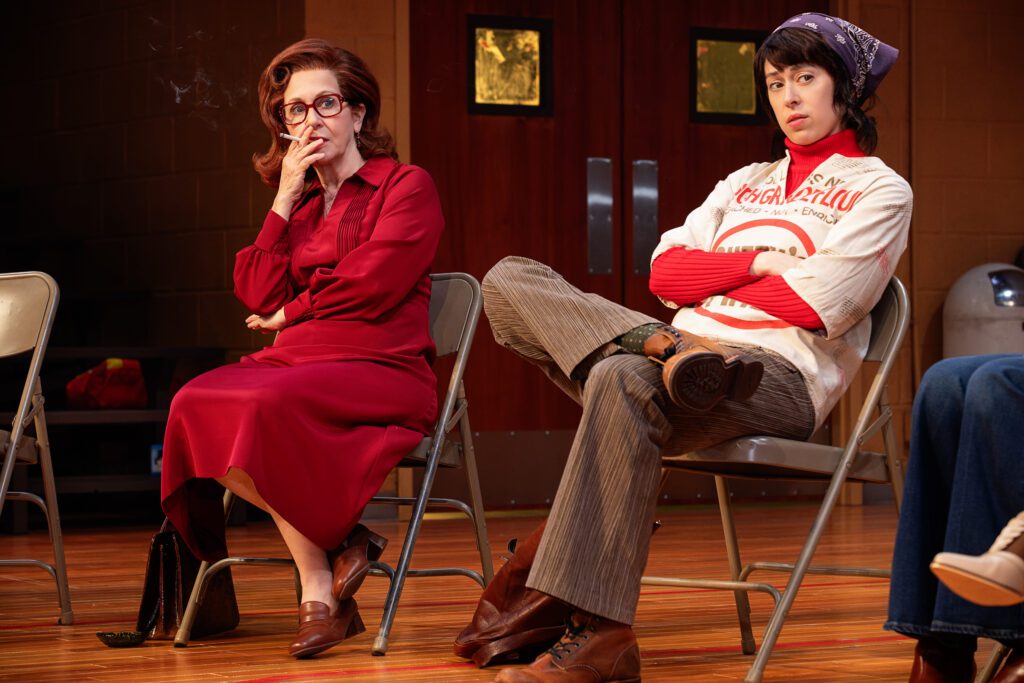
    Liberation, by Bess Wohl, directed by Wendy C. Goldberg, is now playing at the James Earl Jones Theatre. The cast, although relatively unknown, delivers strong work. Broadway veteran Betsy Aidem, who plays Margie, delivers a standout performance. The ensemble has great chemistry, excellent timing, and isn’t afraid to take risks.

    The play is receiving excellent reviews.

    That said, there are eight characters onstage, and only about half feel fully realized. Considering the play runs two hours and thirty minutes, including a 15-minute intermission, it feels like there should have been more character depth and connection.

    The piece is ensemble-driven, light on plot, and told through an unusual blend of memory, interview-style monologue, direct address, and fourth-wall-breaking. It transports us back to the 1970s and offers a compelling frame for the story, even if the structure drags.

    There are genuinely funny moments, and at least one scene that earns emotional applause for sheer bravery. But there aren’t enough of those moments. Not enough hilarity. Not enough catharsis. Not enough emotional punch. There are glimmers of greatness, but only one or two of each emotional extreme.

    Liberation on Broadway Feels Small

    The play feels smaller than a typical Broadway production, almost as if it belongs Off-Broadway. Proof of that is in the theater itself. The upper level of the James Earl Jones Theatre is closed, and even on a Saturday matinee there was plenty of space. We walked up 20 minutes before curtain and bought $40 rush tickets in Row H of the orchestra.

    The themes are meaningful. Women’s liberation. Equality. The echoes of the past reverberating into the present. There is value and nuance here. But when compared to one of the best feminist works of the past five years, the Tony-winning musical Suffs, Liberation simply does not measure up.

    This is a comedy, but not consistently a funny one. More chuckles than belly laughs. And while chuckles are fine, they do not fully sustain a two-and-a-half-hour Broadway show.

    Final assessment. This play will not shake the building or linger in your mind for long. You probably won’t regret seeing it, but you may feel unsatisfied once it ends.

    Jitney Odometer: 81mph out of 100mph

    Liberation, by Bess Wohl, directed by Wendy C. Goldberg, now playing at the James Earl Jones Theatre.

    For more info and tickets, click here.

  • Joan Crawford: A Woman’s Face – Excerpt

    Joan Crawford: A Woman’s Face – Excerpt

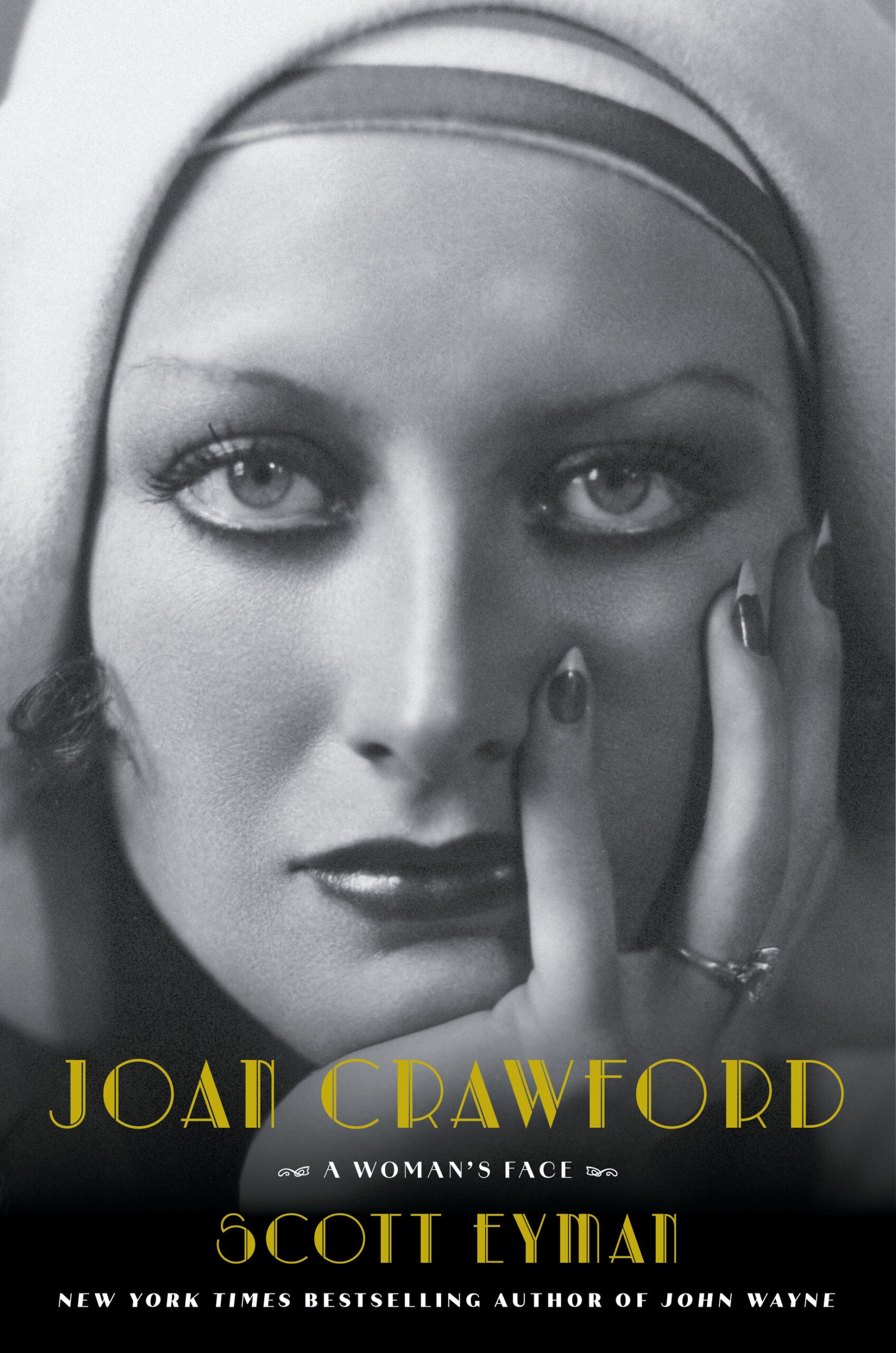
    Below is an excerpt from the new book by local author Scott Eyman, Joan Crawford: A Woman’s Face.

    Scott will be one of hundreds of authors reading and speaking at the 42nd annual Miami Book Fair from November 16-23. Scott’s reading will be at 3:30 pm on Saturday, November 22 in Room 8301. For more info visit MiamiBookFair.com.

    The film is 16mm Kodachrome, so it has those “nice, bright colors” Paul Simon sang about. The cans were stacked in the back of Joan Crawford’s closet when she moved back to New York in 1955. After she died in 1977 they sat in the closets of her daughter Cathy, and of Casey LaLonde, her grandson. The expectations were that they would be the usual movie star home movies—birthday parties with the kids in Brentwood, some behind-the-scenes shots from the studio, etc. There was some of that, but there were also several cans sealed with masking tape on which was written “Charles and Me.”

    They were Joan Crawford home movies all right, but they weren’t what anybody had expected. From her look, and from the cars on view, the bulk of them were made in 1939 or 1940 outside New York City. There are shots of the Dakota apartment building, of Central Park in the winter as well as the spring, but mostly the atmosphere is country—a glamorous movie star on strangely unglamorous vacations: trudging through the woods, lugging a rifle on a hunt for pheasant, having a cigarette by a dying campfire.

    The Kodachrome reveals Crawford’s russet hair, her freckles, even her im- promptu dance moves, as she does an enchanting little sideways shuffle while playing with her dachshund. She’s relaxed, coquettish, glowing, completely unguarded. In one shot, she’s sunbathing nude.

    There are two startling factors revealed by the footage. Most obviously, there is the way Crawford pops through the screen without the intervention of a script, editing, or even rudimentary lighting. She loves the camera and the favor is returned—she was born to be captured on film, any film, under any conditions. And the rifle, the earnest trooping through the woods, means she’s obviously shaping herself to fit in with her man’s predispositions.

    Despite her reputation as an imperious diva, this was always Crawford’s pattern. When she was married to Douglas Fairbanks Jr., she immersed herself in fiction and philosophers, albeit with a singular lack of enjoyment, while her marriage to Franchot Tone meant a conversion to the gospel of Stanislavsky.

    The man behind the camera some of the time, in front of the camera most of the time, is pushing middle age, has a widow’s peak, and sports a Bertie Wooster-ish set of hunting togs indicating a charge account with Hammacher Schlemmer. From Crawford’s body language and the intimacy of the footage it was obvious they were a couple.

    Casey LaLonde asked me if I had any idea about the man’s identity, but I was stumped. He wasn’t a director, although he could have been a producer. But why meet up outside New York City when Palm Springs was only a few hours away from Crawford’s home in Brentwood?

    I turned to A Portrait of Joan, Crawford’s autobiography, published in 1962. I didn’t expect much, but I found something dating to shortly after her divorce from Franchot Tone in April 1939: “In New York, I had met a marvelously mature man, one of the best people I’ve ever known. This man must be nameless because he was never able to get a divorce. He is a business executive, and I respect him thoroughly. Again I had to settle for a long and lovely friendship. He taught me to hunt and fish, we used to go on these expeditions with a whole group of men. The first time, I’m sure, their reaction was, Oh No, not a dame tagging along! Carried my own gun and my own camera, waded through streams in the vanguard, and at noon when we’d camp, I’d help fix lunch and surprise them with all sorts of snacks packed away in my knapsack just in case they didn’t catch any fish. This friend introduced me to politics, to banking, big business and public affairs.

    “He says I taught him to be brave, to stand up for what he thought was right, to be considerate of other human beings, especially those with whom he was working, and to be generous in giving of himself. I didn’t teach him. Those were his instincts. He merely needed someone gently to remind him.”

  • Two Strangers (Carry a Cake Across New York) Review

    Two Strangers (Carry a Cake Across New York) Review

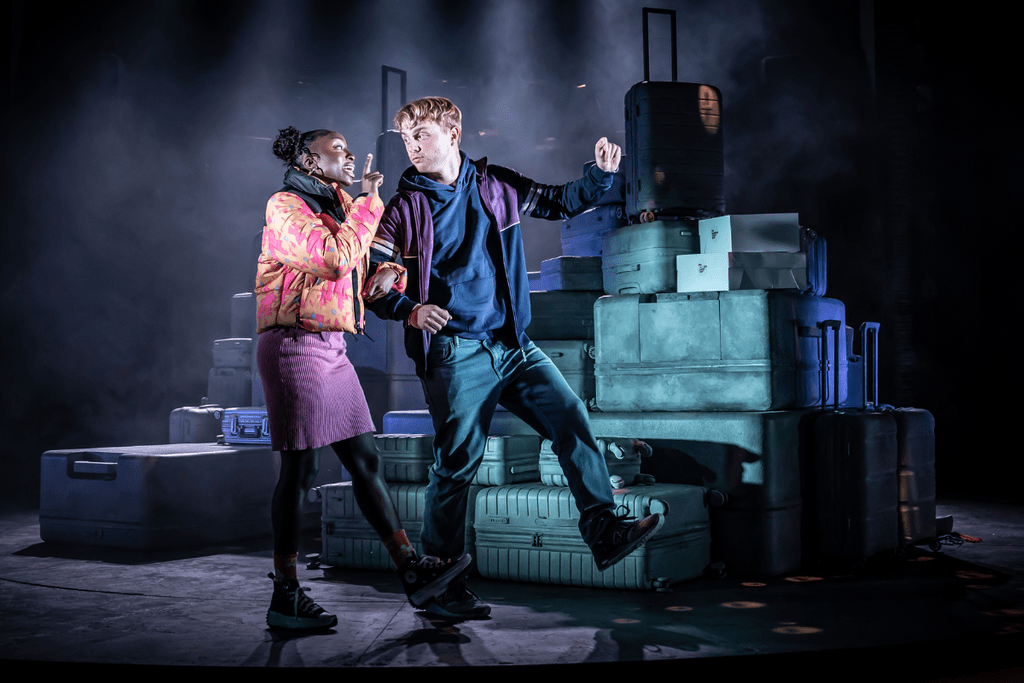
    Two Strangers (Carry a Cake Across New York) is a quirky holiday musical rom com built to warm hearts and soften cynics. It is charming, funny, minimal in staging, and surprisingly layered. This is the kind of musical that sneaks up on you, offering deep emotional resonance beneath its light, fizzy surface.

    We meet Robin, an introverted, wounded Brooklynite with Alicia Keys Hell’s Kitchen energy. She’s a barista living in Alphabet City, dealing with estrangement, scars, secrets, and an older sister who’s getting married and hasn’t even invited her. Robin is stuck. Lonely. Protective of her own heart.

    Enter Dougal. The groom’s son. British, exuberant, funny, sexy in a puppy-like way, and armed with a weirdly advanced knowledge of romance and American pop culture knowledge. He has never met his father. He has flown across the ocean to attend the wedding. He is basically a golden retriever in human form, and Robin wants nothing to do with him. Naturally, they end up carrying a wedding cake around New York together.

    Two Strangers on Broadway Review

    The chemistry is slow to thaw, which is what makes it work.

    The script gives the characters time to push, resist, soften, and surprise each other. Robin is especially well-drawn, full of emotional scar tissue that promises revelation. Dougal is both comic relief and emotional catalyst.

    The play is dialogue-driven, low-budget in scenic design, but rich in character. It clearly takes a cue from last season’s Maybe Happy Ending, though it does not reach those heights, nowhere near. Still, it has originality, charm, and two fully developed leads who are a pleasure to watch. It has a lovely score, especially the first track “New York.”

    The second act is cute but anticlimactic. The play never fully detonates the emotional grenades it sets up. Instead of a big catharsis, it keeps things soft, open-ended, and PG. Some viewers may want a bigger explosion. Others will find its restraint honest and relatable. Either way, it’s a lovely holiday show. Warm, witty, and easy to enjoy.

    Two Strangers is playing at the Longacre Theatre at  220 W 48TH ST.

    For more info and tickets click here.


  • Holy Menopause: Adventures of a Middle Aged Superheroine

    Holy Menopause: Adventures of a Middle Aged Superheroine

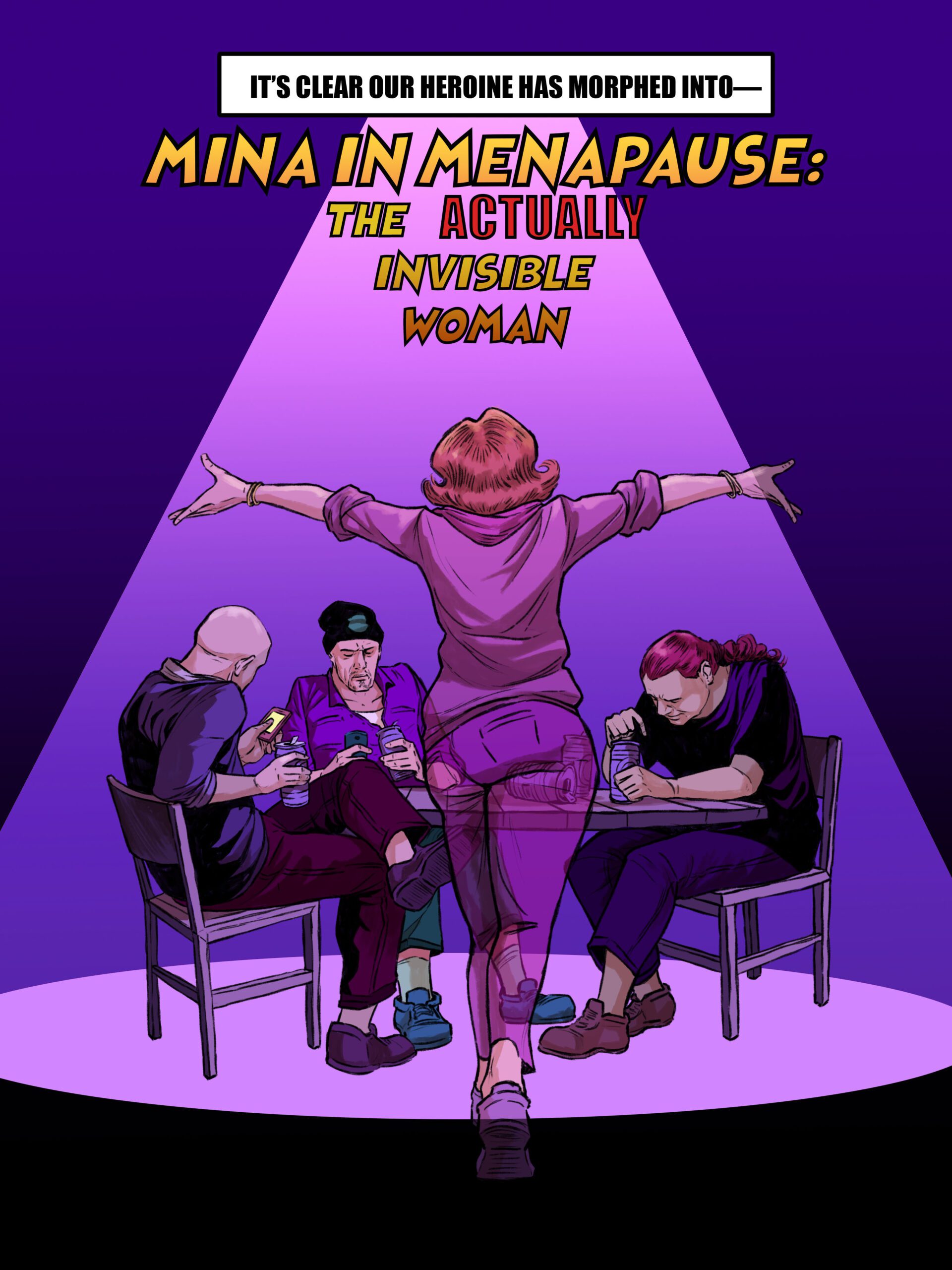
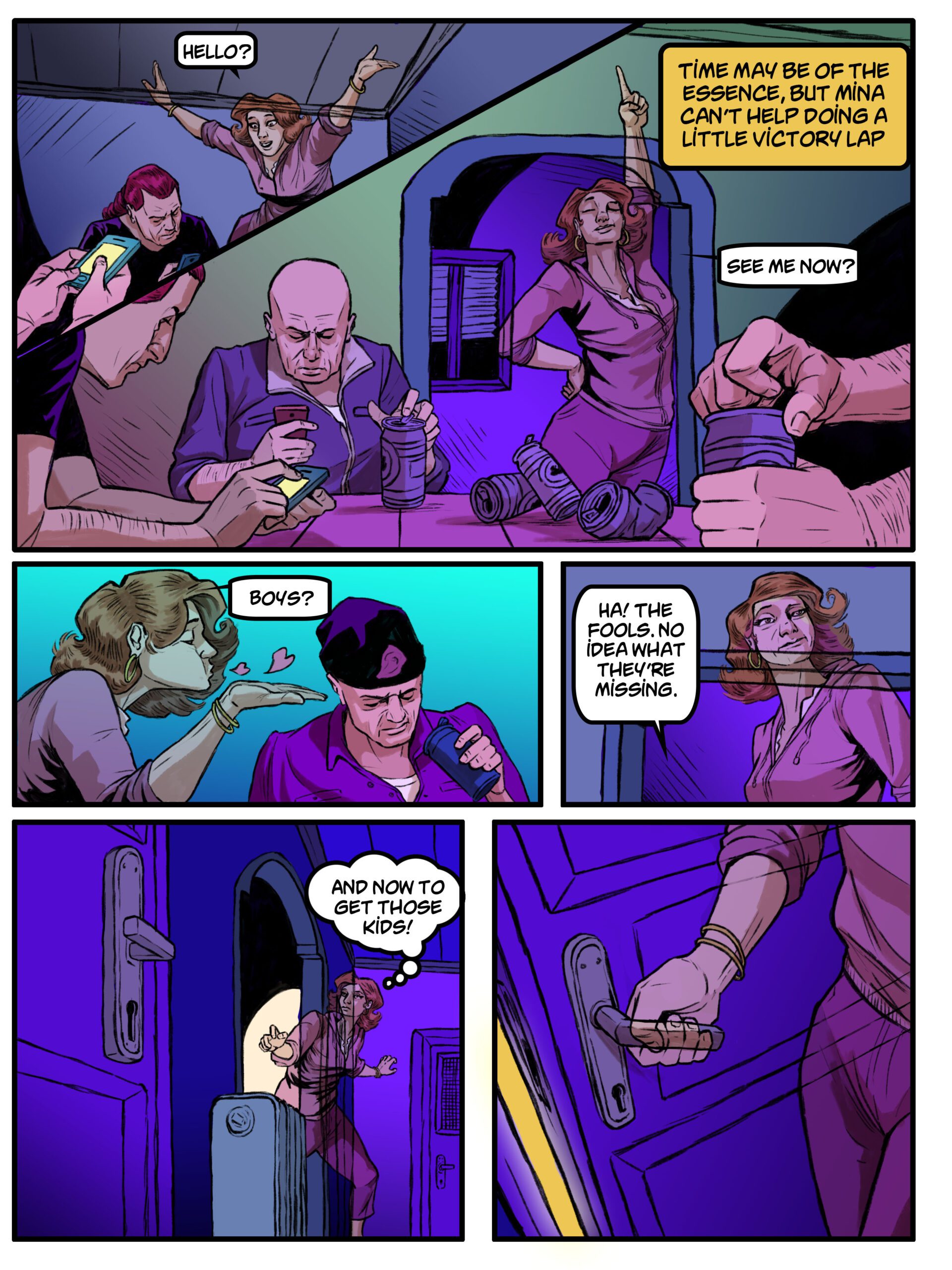
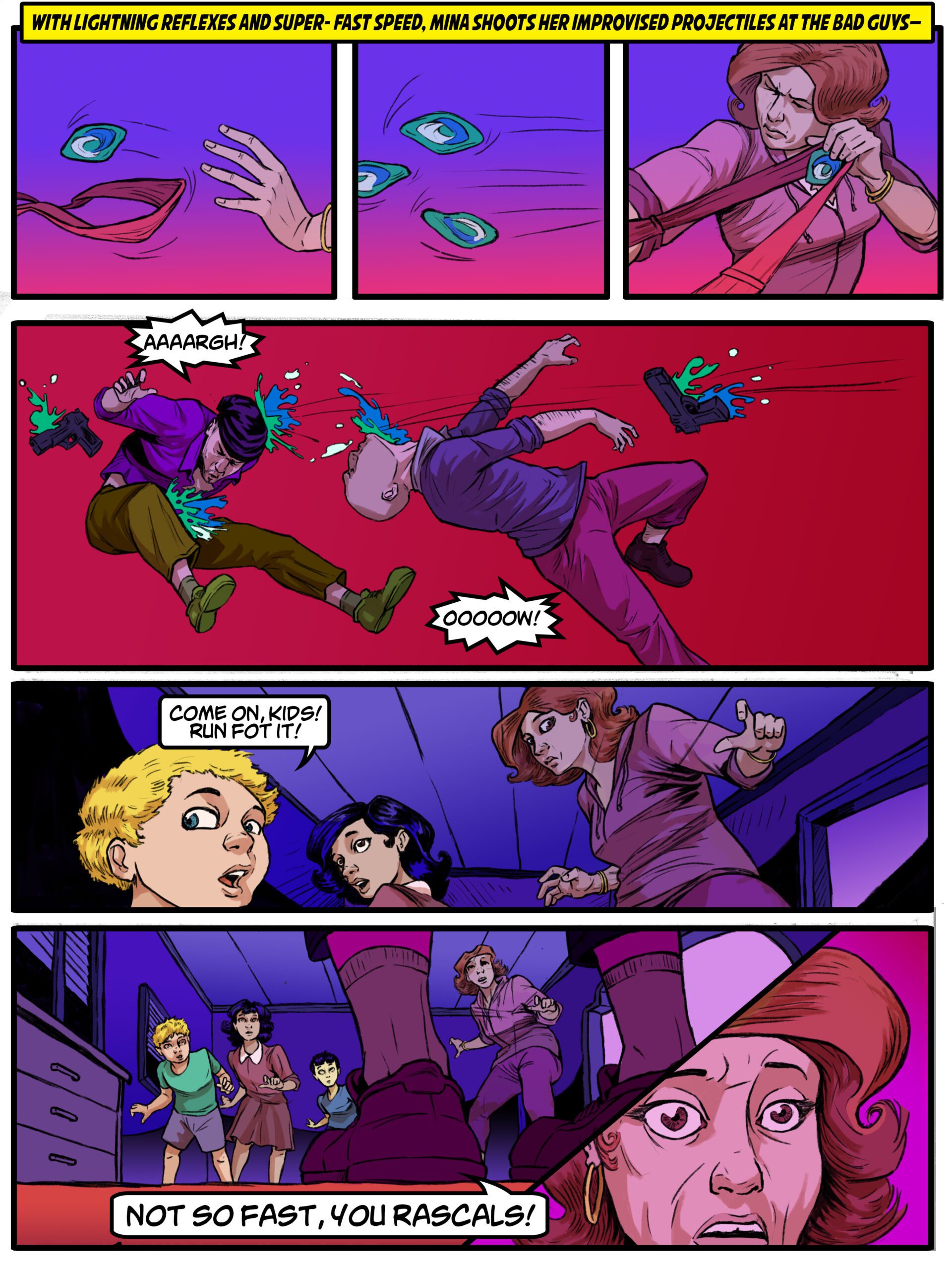
    Below are excerpts from the new graphic novel by local author Bunny Gonopolskaya, Holy Menopause: Adventures of a Middle Aged Superheroine.

    Bunny will be one of hundreds of authors reading and speaking at the 42nd annual Miami Book Fair from November 16-23. Bunny’s panel will be at 4:30 pm on Saturday, November 22 in Room 3209. For more info visit MiamiBookFair.com.


  • Here There Are Blueberries’ Haunting, Triumphant Return to Miami

    Here There Are Blueberries’ Haunting, Triumphant Return to Miami

    Miami New Drama launches its 2025–26 season with a riveting historical drama, Here There Are Blueberries, written by Moisés Kaufman and Amanda Gronich. The play first appeared as a workshop at Miami New Drama in 2018 under the title The Album. It was later developed at regional theaters, eventually reaching off-Broadway last year, where it became a Pulitzer Prize finalist. Now it returns home, full circle.

    The play is spellbinding from its opening moment to its final line. This is essential theatre. Unforgettable and overwhelmingly human. A masterwork of historical storytelling brought to life onstage. Another home run from Florida’s best theater company.

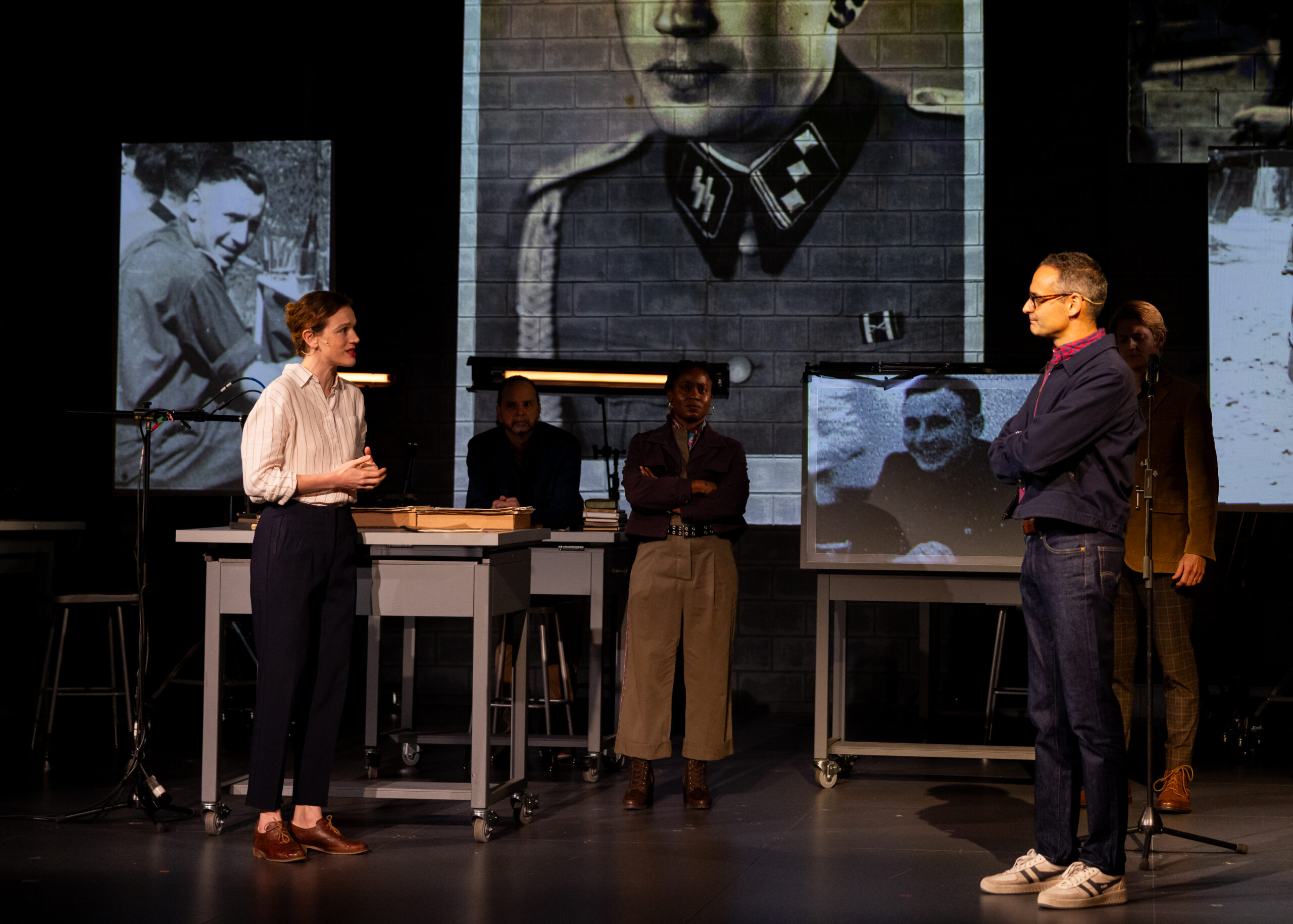
    The story centers on a photo album donated to a Holocaust museum. The album contains images not of victims, but of the perpetrators at Auschwitz. Soldiers and officers smiling, relaxing, flirting, even vacationing. These photographs force us to confront the horrifying normalcy of evil.

    The drama unfolds as museum archivists begin asking questions.

    Who were these people? What did they know? What did they do? Did they escape justice? Were they complicit, or actively murderous? Which leads to the obvious and deepest question for the audience, also the timeliest. If you were part of a fascist system, what would you do? Pretend your hands are clean? Look away? Or resist?

    Here There Are Blueberries goes out of its way to declare we must never humanize monsters. And most audience members will have it in their DNA not to humanize Nazi monsters. But at the same time, the play indeed humanizes monsters, very much like 2023’s award winning movie, The Zone of Interest.

    Blueberries raises the question of humanization only to clarify that empathy must never excuse atrocity. And they were all complicit. All of them. A late-story discovery drives that point home with brutal clarity.

    Miami New Drama’s Here There Are Blueberries

    The production itself is exceptional. Derek McLane’s scenic design and David Bengali’s projections make stunning use of the Colony Theatre, with screens displaying the haunting historical images. David Lander’s lighting deepens the atmosphere with precision and restraint.

    The cast is uniformly superb. None are local. Most have appeared on Broadway, Off-Broadway, or national tours. Their skill elevates the material even further. Delia Cunningham’s performance as Rebecca shines excpetionally bright amongst a glistening pool of talent.

    This is next-level storytelling. It’s gripping, haunting, intellectually rigorous, and emotionally devastating. It is history, memory, and moral inquiry brought to life using mystery as its storytelling device.

    Blueberries will leave you asking hard questions long after the curtain falls. Every student in South Florida should see this play. Every theater lover from Key West to West Palm Beach should make the trip.

    Here There Are Blueberries

    Now playing at Miami New Drama till December 7th.

    Click here for more info and tickets.

    Click here for $5 tickets through Culture Shock for college students.

    Do not miss it.

    Delia Cunningham-and-the-Cast-of-Here-There-are-Blueberries-
    Photo-by-Morgan-Sophia-Photography


    Cast of Here There are Blueberries. Photo-by-Morgan-Sophia-Photography


  • Zoetic Stage Takes On The Mother & the Beautiful Nightmare of Aging

    Zoetic Stage Takes On The Mother & the Beautiful Nightmare of Aging

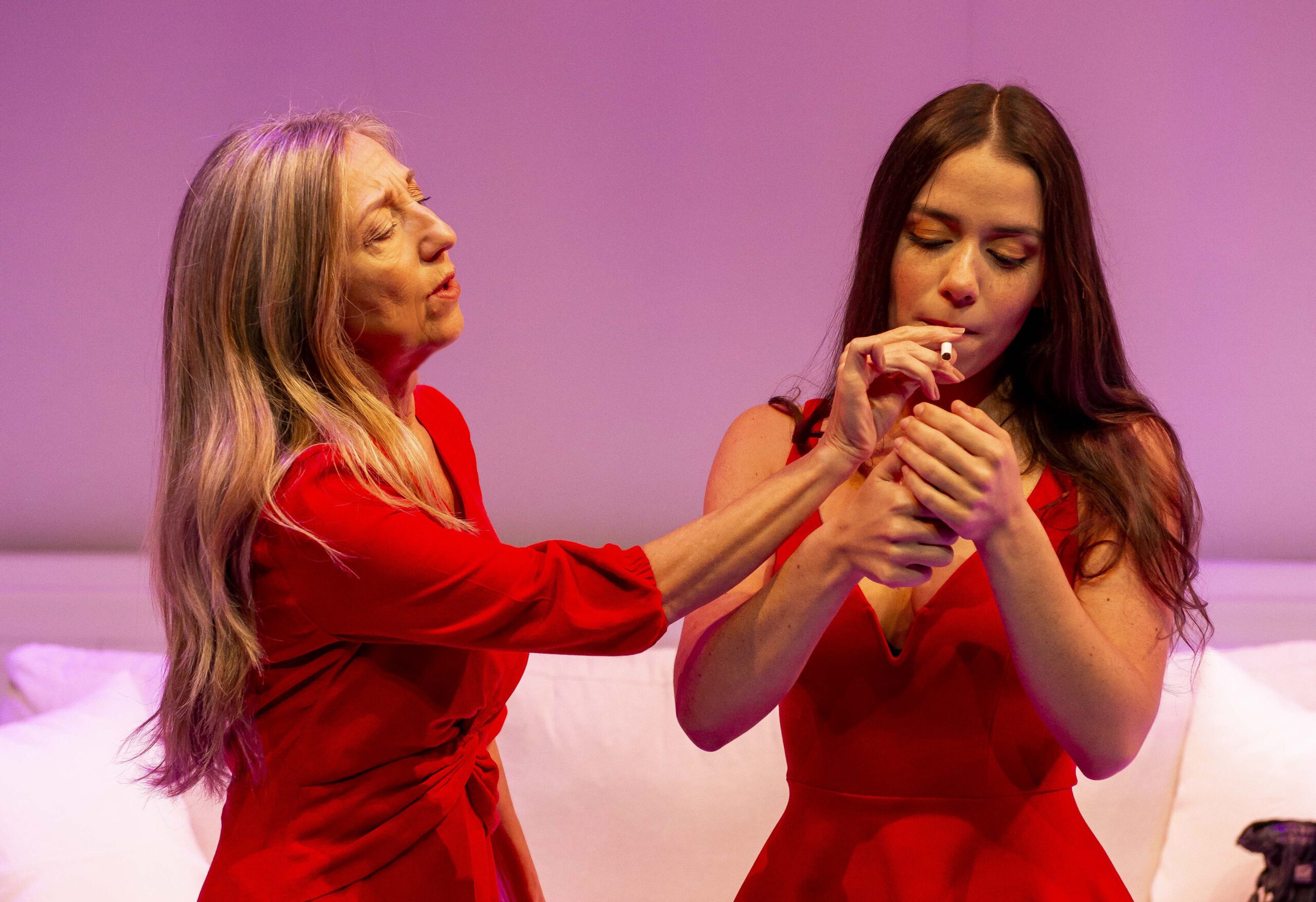
    Miami’s Zoetic Stage kicks off its 16th season with The Mother, a dark comedy by French playwright Florian Zeller. Zeller writes in an almost postmodern, slightly existential style, and although he’s French, his plays tend to explode in England first. His trilogy, The Mother, The Father, The Son , has already produced one Academy Award–winning film (The Father, with Anthony Hopkins and Olivia Coleman).

    Though it’s billed as a dark comedy, this production leans far more heavily on the dark than the comedy.

    Before Pope Francis died, a reporter asked him about the biggest problem facing the world. He answered, with real humanity, that dang pope, he didn’t say war or refugees.

    He said the biggest problem on the planet was a lack of opportunity for the young and loneliness among the elderly. That loneliness is one of the central themes of this 100-minute dramedy, along with the brutal emotional terrain of mental-health decline, specifically dementia.

    The audience leaves with more questions than answers. For sure.

    In fact, you might not feel great walking out of the theater. But the play stays with you. It needs digestion, and by the next morning, the impact becomes clearer.

    The Mother is a unique, unsettling, strangely rewarding experience.

    The Mother at Zoetic Stage at the Arsht

    Aging is a privilege, we all know that, but at what point does that privilege begin to feel like a nightmare? All of us have lost people we love, and the loss of dignity at the end of life is a wound we carry. This play dives straight into those existential questions, staging scenes that bounce around the fractured mind of someone with dementia. The effect is disorienting, captivating and impossible to ignore.

    You sit there thinking a bunch of wild thoughts. What scene are we in now? Did this already happen? Who is who? What’s real? Is this a dream? What the actual fuck?

    And those questions feel eerily close to what might actually happen inside a deteriorating mind. The play is disturbing in the best way, inventive, unsettling, gripping.

    Zoetic deserves credit for having the guts to bring such a challenging play to South Florida. Bravo to them. And kudos to the cast: eight-time Carbonell winner Jeni Hacker is extraordinary here, showing range and emotional voltage that carry the production. Stephen G. Anthony, as the Father, brings pitch-perfect timing and nuance. Brooklyn-based Allie Belttran, who plays the Girl, delivers a sharp, angsty performance that commands attention every time she appears.

    The production team deserves its flowers too. The scenic design by Jacob Brown and Becky Montero’s lighting create transitions that feel like part of the narrative itself, heightening the instability of the main character’s world. And director Stuart Meltzer, Zoetic’s founding father, should be applauded. South Florida is lucky to have theater of this caliber.

    We’re looking forward to the rest of Zoetic’s season.

    So get out there and support local theater. It matters.

    For more info and tickets click here.

  • In the Family Way: A Novel – Excerpt

    In the Family Way: A Novel – Excerpt

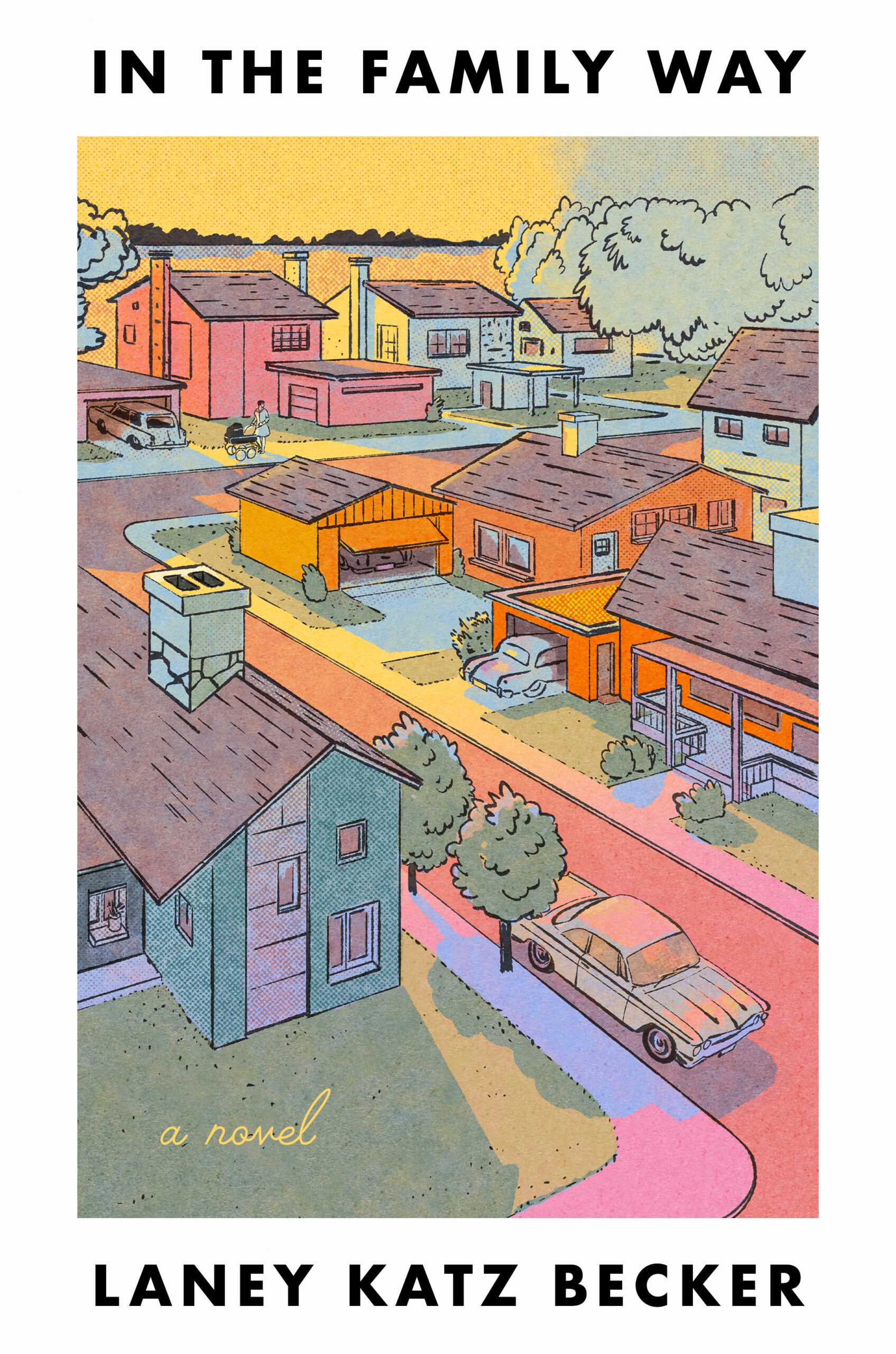
    Below is an excerpt from the new book by South Florida author Laney Katz Becker, In the Family Way: A Novel.

    Laney will be one of hundreds of authors reading and speaking at the 42nd annual Miami Book Fair from November 16-23. Laney’s reading will be at 2 pm on Saturday, November 22 in Room 8203. For more info visit MiamiBookFair.com.

    When I arrived at Raven House, the housemother gave me a cheap wedding ring that she bought at Woolworths, the local five-and-dime. “Wear this for the next two weeks while you’re here,” she said as she handed it to me. “That way, when you’re out and about, no one will know you’re not married.” A good plan, but it didn’t matter. People in the neighborhood knew who we were and why we were there, and if we left for a walk or to go to the corner market, they’d yell names at us, calling us whores and sluts and sometimes throwing things at us, like rotten fruit and even eggs. But when it was just us girls, and we were indoors, there were times when I forgot why I was there; it felt almost like a giant slumber party. Unfortunately, that usually didn’t last, and before long, I remembered my situation and started to feel guilty about the shame and embarrassment I was causing my parents.

    At first, my mom was just mad at me and kept asking how I could have been so stupid. “But I didn’t know,” I said. “How was I supposed to know?” She didn’t have an answer for me, and alternated between hugging me and sending me to my room so she could think. A few days later, she told me about Raven House.

    My dad wouldn’t even look at me and only talked to me if I asked him something directly. Even then, he kept his nose buried in the newspaper when he answered me. Then, one day, he surprised me and asked me if I had anything to say for myself. I told him I didn’t understand his question. “What,” he said, “do you have to say for yourself?” I still didn’t understand, but I told him I was sorry. He shook his head.

    “I just want to know one thing,” my dad said. “Is this the first time you’ve compromised yourself with a boy or just the first time you’ve been caught and had to pay a price?”

    Except for sleepovers at Karen’s, I had never been away from home before Mom left me at Raven House. I was surprised there were almost a dozen girls at the maternity home when I arrived; it made me realize I wasn’t alone in my troubles. A couple of them were close to the two-week mark when they could be placed with a family, but more than half were at the end of their pregnancies, and had moved back into Raven House while they waited to have their babies. In spite of there being so many girls, no one was outwardly mean, like so many of the girls at school.

    A few nights after I got there, a girl named Sheila came up with the idea that we all share how and why we wound up at Raven House. It was dark in the dormitory, except for a little bit of moonlight that crept in through the curtains. The room was not nearly well lit enough to be able to see faces, and since I was new, I didn’t even recognize anyone’s voice. But I think it was the darkness that allowed everyone to just say whatever she wanted.

    We started at the far end of the room, with the girl in the bed closest to the door. More than one girl said she was raped; two said it was by people in their families. I wasn’t sure what rape was, but one girl talked about being held down and how she kicked and tried to fight, but he put a hand over her mouth so no one could hear her scream. That gave me enough of an idea about what “rape” meant. For the first time since I found out I was expecting, I felt lucky, if you can believe it. As we got closer to me, I worried over what I would say, as I didn’t really understand exactly what had happened. The out-of- town boy rolled on top of me, and, well, whatever happened was so quick, I wasn’t even sure what had happened. But I thought if I said that, everyone would laugh at me. I decided to just string together bits and pieces from what others said and wound up with something like “My story is boring. A boy from out of town came to visit his cousins for the summer. We met, and you know how it goes, one thing led to another”—that was what I cribbed from one of the girls who spoke before me—“and here I am, knocked up”—which is another expression I stole from another one of the other unwed mothers.

    After everyone shared her story, one thing was clear: No matter how we wound up “preggers” (another word I stole that night), one thing we all had in common was that our parents didn’t want us anywhere near them where we would bring shame to them or to ourselves.


  • Ten Thousand Central Parks: A Climate Change Parable – Excerpt

    Ten Thousand Central Parks: A Climate Change Parable – Excerpt

    Below is an excerpt from the new book by local author David Brown Morris, Ten Thousand Central Parks: A Climate Change Parable.

    David will be one of hundreds of authors reading and speaking at the 42nd annual Miami Book Fair from November 16-23. David’s reading will be at 11 am on Sunday, November 23 in Room 2106. For more info visit MiamiBookFair.com.

    Every park has a history, but few parks have a story. The origin story of Central Park, beginning immediately before, during, and after the Civil War, shares the turbulent history of New York City, including its chicanery, bigotry, and crime. It is not always a pretty story. The infamous four-day Draft Riot of 1863, for example, specifically targets black workers. White rioters set fire to the Colored Orphan Asylum, and Lincoln ultimately diverts wartime regiments to restore order.

    Central Park as the first major US public works project offers jobs to the Irish and German immigrants willing to shovel muck and to cart topsoil for a dollar a day. The park also owes its origin, however, to newspaper editors and social elites who lobby for a municipal park befitting the prestige of a city that only in recent years had replaced Philadelphia as the national hub of finance, wealth, and commerce. Central Park both in its origins and in its changes constitutes a story worth telling anytime, perhaps at least once each generation, but it is a story whose successes matter anew today as grounds for hope as we face the unprecedented dilemmas of global climate change.

    There is no way to sugarcoat the damages. Black landowners who lost their homes to eminent domain likely did not love Central Park. A few terrible crimes occur, especially during the wilderness years of the 1970swhen drugs and muggings prevail. There is also no way to sugarcoat the far vaster global, damage. Thousand-year floods now seem annual events .Each year one billion birds smash into US skyscrapers, littering the sidewalks. The hottest ocean temperatures in four hundred years pose an “existential threat” to Australia’s Great Barrier Reef. It won’t work to blame Mother Nature. We humans have mass-produced the greenhouse gases that now choke the atmosphere, broil the planet, and wreak havoc on the natural world. Unless you live off the grid, grow your own food, and communicate by smoke signal, we are all complicit, as the sea levels inexorably rise.

    The highest grossing film of all time during the first decade of the twenty-first century was the 1997 bonanza Titanic. Disaster seems now all too familiar, as the unsinkable ocean liner goes under. Central Park nonetheless, in its origins, in its shortcomings, and in its changes, offers solid if neglected grounds for hope as we face the dangers of climate change that remain largely of our own making.

    Stories traditionally need heroes, even superheroes, and Frederick Law Olmsted has achieved almost heroic stature today as the creator of Central Park and as the father of American landscape design. The accolades are well deserved, but not at the start. Olmsted’s later career is impressive, including his design for the grounds of the US Capitol and for Boston’s famous1,100-acre chain of linked parkland known as the Emerald Necklace. In 2015, joining contemporaries such as Emerson, Whitman, and Thoreau, he achieved his own volume in a prominent series featuring classic American writers.  His nine-volume papers reappear in 2022 in an online edition, and a dedicated website (Olmsted .org) even helps celebrate his two hundredth birthday. When he first begins work at Central Park, however, he is a failed surveyor, failed clerk, lapsed farmer, out-of-work editor, and an impoverished journalist in his mid-thirties. Indeed, Olmsted is a mostly directionless young man with no experience in landscape design, until he lands a modest job working for the park’s chief engineer.

    Central Park too offers an oblique criticism of our need for heroes or for the addictive great-man theories of history. His lesser-known partner at Central Park, Calvert Vaux, twice comes to Olmsted’s rescue.

    A deemphasis on heroes opens up space to focus on more human-scale, collective, and collaborative actions. The creation of Central Park takes more than a village. It takes almost a decade of heated discussion in elite parlors and in gritty newspaper editorials. Receiving initial state funding in 1853, Central Park marks its official completion in 1876, after more than twenty years, financial crises, social conflict, and open civil war. London-born Vaux, as a recently naturalized US citizen, is especially sensitive to the democratic ideals of equality that he sees embodied in Central Park. Our nineteenth-century ancestors left us, in effect, a vast, artificial, living monument to democratic values built from trees, water, soil, rocks, meadows, and woodlands. It offers evidence of what the imagination can achieve in transforming urban landscapes, improving everyday lives, and making vital, measurable contributions to urban environments. Climate change can’t be altered overnight, but reflecting on the origins of Central Park may well empower people to address the crisis in their own towns and cities—perhaps one big park at a time.

    Why does the story of Central Park matter now? What makes it so urgent? Over half of the world population—56 percent—lives in cities, a figure predicted to rise soon to nearly 70 percent. Asia in 2025 has some thirty megacities with populations over ten million. In Africa, the Nigerian city of Lagos has grown from a population of three hundred thousand in 1950 to an estimated twenty-one million today. People massed in a vast modern metropolis directly impact local and even global environments, and cities are where environmental costs quickly accrue as key contributors to climate change: costs levied in fossil fuels, greenhouse gas emissions, and the byproducts of mass consumption. People are also, however, an invaluable resource in deploying creative low-tech initiatives that directly improve everyday lives. Central Park is literally built by immigrants. Irish and German workers dug the dirt, loaded the horse-drawn carts, blasted the rock, drained the swamps, and planted almost half a million bushes and trees. Today, with refugee tent cities stretching to the horizon and with displaced people yearning for employment, it is far more than an antiquarian inquiry to revisit the mid-nineteenth-century origins of New York City’s world-famous, irreplaceable Central Park.

  • We Got Company – Fiction

    We Got Company – Fiction

    Raul Mendoza picked up his cigar, lay across the couch and blew a plume of smoke toward the ceiling. “Please, Brian Newell. Tell me how I can help you.”

    “Raul, I have a problem with a homeless woman in the park. She needs services. I’m not sure who in the city handles the needs of the homeless.”

    “The needs of the homeless? That’s rich.”

    “She may have mental health issues.”

    “Most of them do.”

    “She dresses in all white. Every day she throws garbage from the seawall into the bay. Overnight security can’t catch her. She moves like a ghost.”

    “A ghost?”

    “Yes, she wraps her head in a white turban and her body in a white sheet.”

    “Raul,” Nelly called from the outer office.

    He turned his head toward the door and shouted, “In a meeting.”

    “We got company.”

    “Repeat.”

    “We got…” Something muffled her voice.

    The sound of a struggle came from the door’s far side.

    Brian turned toward the door.

    A man yelled, “Shit, she kicked me.”

    Another, “The bitch bites, too.”

    Raul sat up and reached across the coffee table, handing Brian his cigar. “Please hold this.”

    “Sure,” Brian said, taking the cigar.

    Raul crossed the room, pushed his desk against the wall beneath the windows, scrambled onto its top, unlocked two latches and pushed the windows open. He reached back for the gilt framed photo of him and LeBron James leapt out through the opening, turned back and pushed the windows closed.

    The office door’s frosted glass shattered as it burst inward.

    Five masked men in black tactical gear, from baseball caps to webbed boots, swarmed through the breach, broken glass crunching underfoot.

    One yelled, “Down motherfucker.”

    Another, “Don’t move asshole.”

    Brian tried to stand. The men swept him and the chair sideways to the ground. A chair leg cracked. Brian fumbled the cigar. A knee dug into his back. A gloved hand pushed his face to floor, pressing the nicked ear and left cheek against the cool terrazzo. A thread of smoke rose from the cigar beneath the coffee table.

    “Don’t struggle,” a man said, his breath hot and damp in Brian’s ear. His wrists were jerked behind him and bound with a zip-tie. “You’re going to stand now,” the man said. They rolled Brian onto his back, grabbed his elbows and hoisted him to his feet.

    Brian shouted, “What the hell?” He jerked at the zip-tie binding his wrists.

    Brian looked over the masks of four in front. Three had brown eyes, one wore dark lensed aviator glasses.  He sensed another behind him.

    The brown-eyed guy to his left pulled a scrolled paper from a thigh pocket, unrolled it, looked down, up, then held it alongside Brian’s face. “Wrong guy,” he said.

    “What the hell is this?” Brian yelled.

    “You sure?” asked the voice behind him.

    “What the fucking hell is this?”

    “Not a match.”

    “Jesus, fucking Christ! What the hell is this?”

    “Is it the right pic?”

    “Who the fuck do you think you are?”

    “It’s the one they gave me.”

    “Could it still be him? An old pic.”

    “Goddamn it. Answer me.”

    “Impossible.” He turned the picture to the man behind Brian. “See? Bald, beard, fat, Latin. This guy? No way.”

    Two hands gripped Brian’s shoulders and spun him around. The man wore double sterling bars on his collar. His blue eyes, above a black mask, met Brian’s; they shifted side to side, then up and down. “What’s your name?”

    “You want my name. What’s your name?”

    Someone behind him gripped Brian’s hands and bent them toward his wrists. “My captain just asked you a question.”

    “Ow. Shit,” he said. “Brian Newell. My name is Brian Newell.”

    “Can you prove it?”

    “Can I prove it?”

    “Driver’s license.”

    “In my wallet.” He gestured, chin to shoulder.

    “Check his pockets.”

    Hands reached into both Brian’s front pockets. They pulled his car’s fob from the right, iPhone from the left and tossed them onto the coffee table. Hands patted his ass then slipped the wallet from his right rear pocket.

    “Got it,” said a voice behind him.

    Brian’s wallet made a wet slapping sound when it hit the coffee table. His driver’s license — between a black gloved thumb and index finger — appeared over his shoulder. The captain took it and held it beside Brian’s face. He shrugged and tossed the license to the coffee table. “Cut him loose.”

    “Why? Just bag him. Say he’s who-ever-the-fuck. We move to the next name. It helps with the numbers.”

    “If the picture was a closer match. But this guy for that guy. No way.”

    “Bag him. No one will know… Ever.”

    The captain shook his head “Cut him loose.”

    Brian felt the zip tie tighten, then pop loose. Hands freed, he brought them up and rubbed his wrists. The men surrounding him turned slow circles checking out the room. ICE in white block letters was written across their backs.

    “Nice office,” one said.

    “That crown molding don’t come cheap.”

    “Check out that flat screen?”

    “Guy must be somebody.”

    “Yeah, somebody illegal.”

    One opened the humidor. “This illegal has great taste in cigars.”

    “Take them,” said the captain. “Raul Mendoza’s not coming back.”

    “What? You’re here for Raul Mendoza?”

    “He’s on the list.”

    “He says he’s been here since nineteen ninety-four.”

    “He’s on the list.”

    “List? What list? Who made the list?”

    “What are you, some kind of communist?”

    “I don’t have to answer that.”

    “You just did.”

    “I did not.”

    “You refused.”

    “Refusing is my right under the Constitution.”

    “Looks like we got another one with that Constitution bullshit.”

    “What’s your name?” Brian asked.

    “Let me spell it for you,” the captain said. “G-O-F-U-C-K-Y-O-U-R-S-E-L-F.”
  • Help Local Singer-Songwriter Solange Sosa after House Fire

    Help Local Singer-Songwriter Solange Sosa after House Fire

    Argentinian singer-songwriter Solange Sosa faced a devastating loss this past week when a fire completely destroyed her home, along with her father’s house next door. In a matter of hours, everything she had built, her home, her studio, and the years of creative work that defined her life and art, was gone. She lost her instruments, recordings, books, clothes, documents, and countless personal items that made up both her life and her artistry.

    “My home, my studio, and my years of creative work disappeared in the flames,” Sosa shared. “I don’t think I will ever fully recover from this. But I’m grateful to be alive, and I’m determined to start again”.

    Despite this tragedy, Sosa performed this past Tuesday with the same heart and soul that have always defined her music. The event was organized by MILFD (Man, I Love Figure Drawing), led by Pao Vales, in collaboration with Unseen Creatures, a vibrant brewery on Bird Road. The artist community came together, offering both financial support and artistic collaboration. Figure drawing enthusiasts captured Sosa and her accompanying guitarist, Fernando Farias, whose music added spiritual and sonic depth to the evening.

    There is still an opportunity to be part of this story of resilience. Sosa has launched a GoFundMe, but for those who prefer a direct approach, donations via Zelle are also welcome. Giving directly ensures that contributions go straight to the artist during her time of greatest need, without fees deducted.

    Fellow artists, including Adam LaMothe, have pledged to donate proceeds from their work to support Sosa, a gesture that beautifully combines art and community spirit.

    From the bottom of her heart, Sosa thanks everyone who helps her begin again. Any contribution, no matter how small, will help her find a place to stay, replace essential items, and slowly recover the tools she needs to continue living and creating, while also letting her know how appreciated she is in this city.

    This is a chance to join a story of compassion, resilience, and the enduring power of art.

    Zelle NUMBER: 7869349606.