Category: News

  • Jitney 2025 Miami Concert Preview

    Jitney 2025 Miami Concert Preview

    Ring the bells, sing “Auld Lang Syne,” and do whatever it takes to acknowledge we are now into 2025 and it’s time for another Jitney South Florida concert preview. Below are all the upcoming shows and festivals that have us quaking in our boots. In other words, it’s the Jitney 2025 concert preview.

    South Beach Jazz Festival January 9-12 at Various Venues

    For four days and nights, jazz heavy hitters from Lisa Fischer to Emmet Cohen will be-bop and scat all over the Beach. Sunday, January 12 is a full free day of jazz performances at 1100 Lincoln Road. For more info visit  sobejazzfestival.com.

    Molchat Doma January 30 at Revolution Live

    The Belarussian trio will have you dancing to their electronic Goth beats. Make sure to get their early for opener Sextile who had all of Miami dancing at their show at Gramps last year.

    Postcards from Paradise January 31 at Respectable Street

    Our friends at PureHoney Magazine put together another stellar indie rock line-up with La Sécurité, Dunies, Rude Television, The Dewars, Disputer, and The Grey Tone. Tickets available by clicking here.

    South Florida Folk & Acoustic Music Festival January 31-February 2 at Bergeron Rodeo Grounds

    The South Florida Folk and Acoustic Music Club presents its annual fest with two stages of acoustic music, one dedicated completely to Florida artists. For more info visit sffolk.org.

    GroundUp Family Dinner Weekend February 8-9 at Miami Beach Bandshell

    The annual beachside festival has a slight format change this year, going two nights instead of three. But each night will feature the enthusiasm of Snarky Puppy along with acts like John Scofield Trio and Living Colour.

    Kamasi Washington February 13 at Arsht Center

    Saxophonist Kamasi Washington plays his first ever Miami show. The Los Angeles native played a pivotal role in Kendrick Lamar’s To Pimp a Butterfly, but his own studio albums ain’t too shabby either. This is a treat for jazz lovers and a must see for jazz haters.

    De La Soul February 22 at Arsht Center

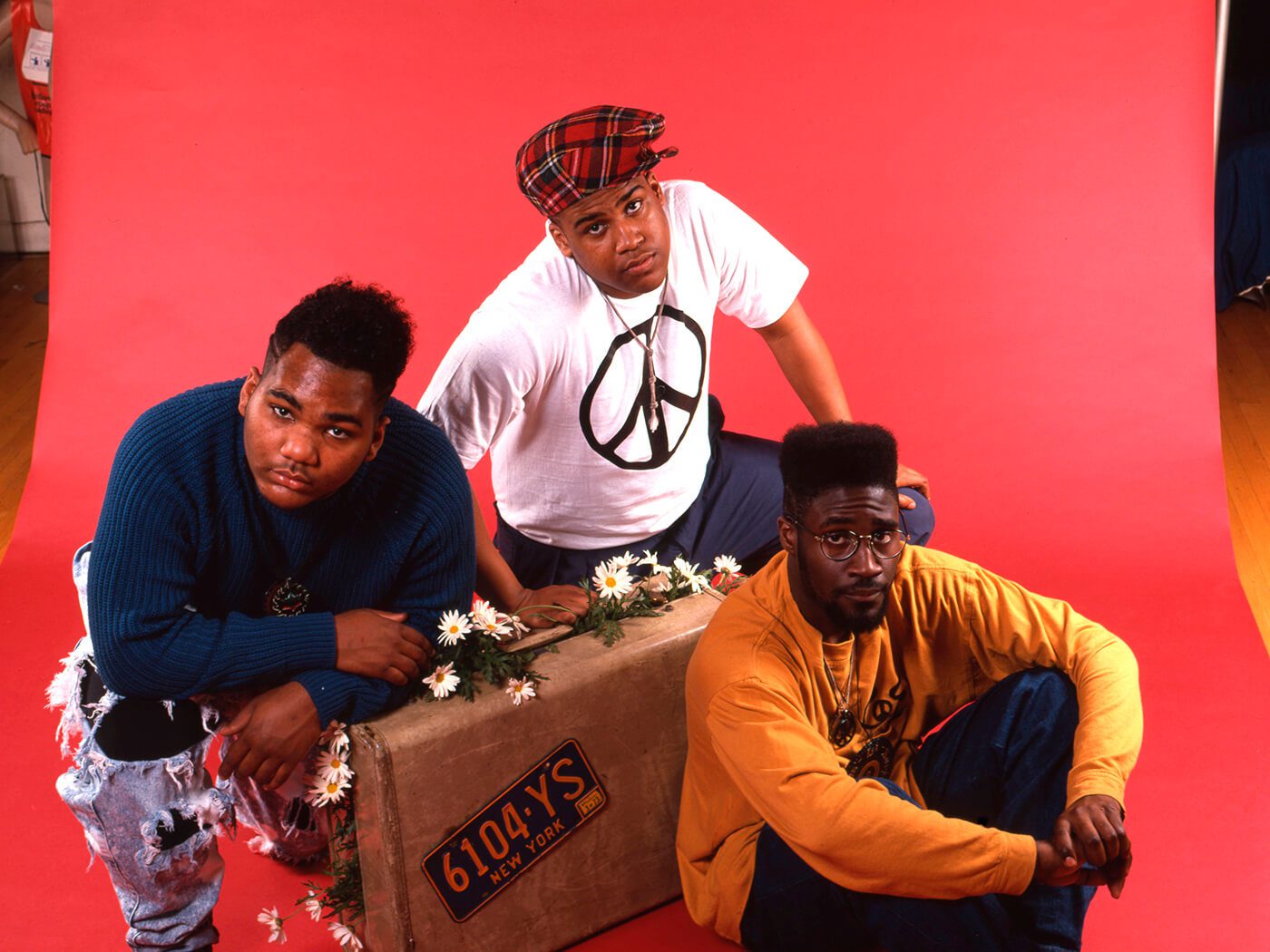
    The hip-hop legends play their first Miami show since the 2022 passing of Trugoy. They have too many great records, but if you gotta start with one the Jitney go to is Buhloone Mindstate.

    Smoking Popes March 8 at Gramps

    Is it worth attending a show to hear one song? When the song is “Need You Around” by 90’s alternative rockers, Smoking Popes, it just might be.

  • Jon Roberts – The Very First of The Cocaine Cowboys

    Jon Roberts – The Very First of The Cocaine Cowboys

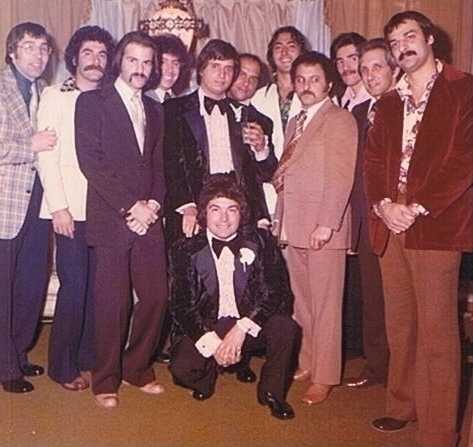
    April 6, 2008, was not a happy afternoon at the American Airlines Arena. The Miami Heat were losing to the Detroit Pistons in a key game for their NBA championship run. Despite this, the announcer in the booth energized the crowd by pointing out a celebrity in the stands, while the cameras focused on a man in his mid-fifties—stocky, with slicked-back gray hair—accompanied by his son. Fifteen years earlier, this man, Jon Roberts, had laundered a fortune of $150 million from drug trafficking, funneled money into the hands of Panamanian president Noriega, buried bags of cash in the suburbs of Miami, and acquired properties, cars, boats, and horses worth hundreds of millions. At one point, his face adorned FBI Most Wanted posters plastered across the country.

    Jon Roberts was born in New York in 1948. Of Italian descent, his family name was originally Riccobono, but he changed it. The first time he witnessed a murder, he was seven years old—the gun was wielded by his father, who was deported when Jon was still a child. Consequently, he was raised by his uncles within the Sicilian mafia of Little Italy. His childhood was marked by school expulsions, street gangs armed with fists and firearms, marijuana-clouded street corners, and petty crimes that escalated into major offenses, culminating in imprisonment for kidnapping and attempted murder. However, Roberts spent little time behind bars—barely a few months—as the military was recruiting young men to fight in Vietnam. That war would scar him deeply; he would later recount in interviews how soldiers were tied by their feet to intensify pain, or how they would hang enemy soldiers from trees and skin them alive.

    In 1968, Jon Roberts returned to New York,

    just as the city was emerging as a nightlife mecca. He ventured into the nightclub business and integrated himself into the jet set. Neon lights and expensive suits served as a façade to open the door to the drug trade and its underworld. Two years later, after a murder, he fled the city to avoid being captured by the police. His destination was Miami—a paradise of bikinis, blondes, cocktails and turquoise seas. He arrived in his car with $600 in his pocket and his dog.

    Initially, Roberts took on survival jobs in Miami, but his attempt to break away from bad habits was unsuccessful. He connected with people who introduced him to Alberto San Pedro, a Cuban drug lord. Roberts plunged into the drug trade, starting locally before expanding to other cities. He resumed his life of women, parties, vice, and glamour, cementing his place in the era of the Cocaine Cowboys and the Medellín Cartel. The Ochoa brothers, heads of the cartel, sought to expand their cocaine distribution in the United States by bringing it from the Bahamas. Marijuana had already lost its appeal and wasn’t profitable for an operation of that scale. Roberts had a racing boat docked at his home, knew about tides and weather patterns, and was connected to boat builders, sailors, and the corrupt police in North Bay Village. This combination of factors was crucial for the Ochoa brothers’ boats to transport cocaine from the Bahamas to Miami’s coastline at North Bay Village without interference from authorities.

    After the Ochoa brothers came Pablo Escobar and Griselda Blanco. While Roberts was already familiar with luxury and opulence, this new level of endless orgies at The Forge and the Mutiny Hotel—featuring Colombian cocaine, Playboy bunnies, politicians, athletes, and celebrities like Don Johnson, star of Miami Vice—elevated him to the top of the power pyramid. He even assisted the White House with the illegal transport of weapons to support Nicaragua’s Contras. On the flip side, Miami became the city with the highest crime rate in the country and the global epicenter of the drug trade. The government waged a fierce war against the cartels and their kingpins, forcing Roberts to flee once more. This time, his escape spanned a grueling five years, and no seaside paradise awaited him. Eventually, he was captured and faced a 300-year prison sentence, which was reduced to three years in exchange for his cooperation with the authorities.

    His time in Dade County Metro Jail took a toll on Jon Roberts. No longer young enough to look forward, he sought redemption upon his release, forming a family. However, he had little time to enjoy it, as cancer claimed his life in 2011.

  • Miami Stories Take Center Stage at Miami Jewish Film Festival

    Miami Stories Take Center Stage at Miami Jewish Film Festival

    Celebrating its enduring commitment to local storytelling, Miami Jewish Film Festival introduces an engaging “Made in Miami” program, shining a spotlight on films crafted by and about the vibrant Miami community.

    Among this year’s highlights is the world premiere of Miami Schmatta, a captivating documentary by Miami-based filmmakers Aaron Glickman and Clare Vickery. The film explores the city’s rich immigrant legacy and its pivotal role in shaping the American garment industry. Featuring heartfelt interviews with Miami business owners, tailors, and fashion designers, the film chronicles the industry’s golden years, its struggles amid shifting trade policies, and the enduring spirit of Miami’s creative community.

    Other notable Florida productions premiering are Miami-based filmmakers Wendy Sach’s October H8te, a timely film about antisemitism on college campuses following the October 7 tragedy, as well as Leslie Benitah’s Milk & Honey, Blood & Tears, a powerful documentary chronicling the resilience and recovery of Kibbutz Be’eri following the devastating October 7 attack. The film poignantly contrasts the kibbutz’s peaceful past with the harsh realities of survival and healing. Leslie is also celebrating the world premiere of her second film, The Last Ones of Auschwitz, a powerful film commemorating the 80th anniversary of the Liberation of Auschwitz that captures the testimonies of the last remaining Holocaust survivors, including Miami-based survivors David Schaecter, Saul Blau, Hedy Fladell, and Irene Zisblat.

    In honor of the legendary comedian and filmmaker Jerry Lewis, MJFF is hosting a special 65th anniversary presentation of his directorial debut, The Bellboy, which was filmed at the historic Fontainebleau Hotel in Miami Beach. The event will feature the attendance of his son, Christopher Lewis, an acclaimed author, who will introduce the film and participate in an extended conversation afterward.

    “The 28th edition of the Miami Jewish Film Festival is a celebration of the power of storytelling to illuminate the past, confront the present, and inspire the future,” said Igor Shteyrenberg, Executive Director of the Miami Jewish Film Festival. “From local productions that highlight Miami’s rich cultural heritage to presenting world premieres that address timely and universal themes, this year’s program reflects the resilience, creativity, and diversity of the Jewish experience on both a local and international scale.”

    Full details on the program and tickets to the festival can be found at: miamijewishfilmfestival.org

  • R.I.P. Rey “Conga” Diaz – Percussionist Extraordinaire

    R.I.P. Rey “Conga” Diaz – Percussionist Extraordinaire

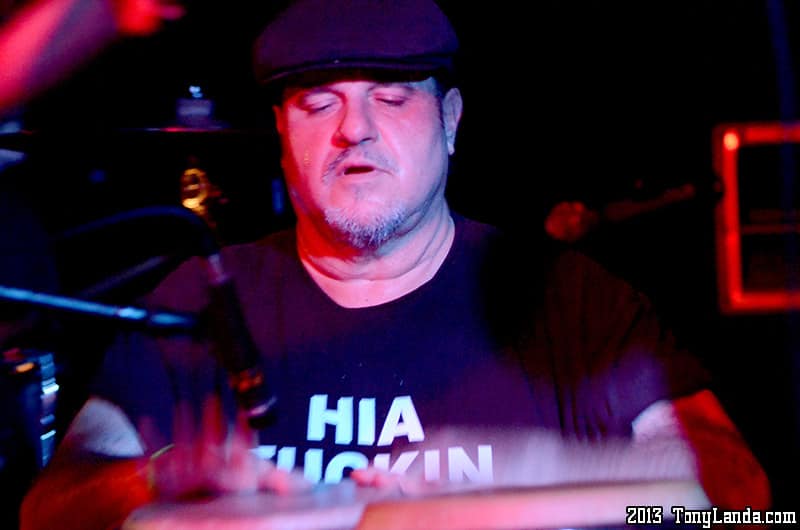
    I’ve had the pleasure and honor of playing and collaborating with many greats during my more than 25 years in professional music. By far one of the most talented, eccentric, and genuinely original characters was the late, great Rey “Conga” Diaz. He had been in poor health the past couple of years, and sadly passed away on Sunday, December 29, his birthday, with his mother and sister at his side.

    Though we weren’t as close as we once were, we had known each other for the better part of 31 years. Diaz and I were not only friends, but musical brothers, and drinking, smoking, and canoeing buddies. For years he organized an annual camping and canoeing trip to Peace River in Arcadia, FL, which once ballooned to more than 100 paddlers. The proprietors of the Canoe Outpost came to know us as the “Conga Rey” group. We had many great, noisy, boisterous, surreal, and musical times together, and one year the exaggerated pronunciation of his name as “RRRRRReeyyyy” became all the rage. IYKYK.

    We initially worked together during my first real professional recording session, for Michelle Riu’s Up, Down, and Strange in 2004 or 2005. She had a brilliant batch of songs already written and arranged, and just needed a studio band to commit them to tape. Enter the super-talented Derek Cintron on drums, guitar wizard Tony Medina, who was my then bandmate in the Pawn Shop Drunks, and producer / engineer Ferny Coipel. We breezed through the recording of the 10 or so tracks, but soon realized there were certain spots that needed something more.

    Enter Rey. Already a well-known and established percussionist, he brought a flair and a smoothness to several songs, like the sublime “Take My Suggestion”.

    I soon thereafter found myself in the same situation with the Pawn Shop Drunks when we took our foray into Latin rock. We already had a great percussionist in Tony Suarez, but our song “El Negro y la Balsa” needed some additional percussive muscle. Rey came in and deftly added timbales, cowbell, and shekere. The song was eventually released on Sony Discos, and the video hit number one on MTV Latino in 2005.

    Conga Rey once pulled together members of Electric Piquete, the Spam Allstars, Humbert, and Afrobeta for a one-off session, whose result was a totally improved soundscape of psychedelia, funk, Latin and other elements called “Black Coffee”. Though there for the original session, which was more like an extended holiday weekend hang and jam, I came in after and tracked some bass for it: https://soundcloud.com/michael_mut/rey-conga-diaz-and-friends-black-coffee. There are photos and video of this session out there somewhere (paging Tony Landa!).

    Speaking of Electric Piquete, Rey was there for the beginning. He was part of our percussion-heavy Hialeah Fest debut in 2007, which featured our band’s other co-founder Ed Rosado on drums, plus Miguel Suarez on guitar, Tony Suarez on congas, and Izo Besares on bongos, with Diaz anchoring the heavy tribal vibe. Rey was also present for many early era writing sessions, once hilariously dubbing an original song as “Cheque Sin Fondo”, a name that stuck for more than a decade) and played many early gigs. Here we are in Key Largo at Pontunes during 2010.

    I once had the pleasure of sitting in with Rudy, his deliciously funky original project with Robbie Gennet, during an early 2000s Hialeah Fest. There was no way I could ever fill in original bass player Johnny Gobel’s immense shoes, but Rey gave me the confidence to try. It was an early sign that I could sub in and play with anyone. Rey was well-known throughout the SoFla music scene and super-connected, once even winding up playing a session with the surviving members of the Doors, plus Phil Chen on bass (true story!). He, Tony Medina and I also collaborated in Playlist, a disco cover band that made some seriously groovy noise in the mid and late teens.

    Besides Rudy, Rey was an integral part of The Baboons in the early 90s, which I long admired, then became a late-stage fill-in on bass. That band was an inventive blend of world beat, funk, spoken word, psychedelia, and a lustful whimsy. They recorded a couple of albums, won a few prestigious local awards, and graced numerous stages throughout South Florida. Rey and I played the band’s 20th anniversary show at the soon-to-be shuttered Tobacco Road in 2012.

    Diaz was also a founding member or a big part of King Konga, The Weeds, Conjunto Progreso, Suenalo, The Mighty Iguanas, and many more, I’m sure.

    Rey, rest in peace. I’m sorry I didn’t make more time to go see you again after last summer. I know we will JAAAAAAMMMM together again someday. Love you, brother.

  • The Hammock

    The Hammock

    It’s really a great ride from my house to Matheson Hammock Park. It’s kind of a swampy park. Right on Biscayne Bay, with a Mangrove forest and an inlet with a little marina that boats to and from-from.

    I’ve been biking there for years.

    For a while I went religiously. Every Monday at around midday I’d pedal my beat up old mountain bike on over about 45 minutes each way. I’d always take a different way home though through the old, abandoned nursery.

    Once I got to my spot, I’d sit on the wall by the shore.

    That’s where I spread my mother’s ashes. Soon after, the eyebrows of my wonderful dog, Ali, were left there.

    Ali had glorious eyebrows.

    I remember sobbing when I cut them off when he died in my arms at the vet’s office. I put them in a little plastic harmonica case to take with me to my spot.

    A decade later, my father’s fresh ashes were brought as well. I performed the same ritual one last time.

    I had gone to visit, sit there, and reflect, less and less lately. Maybe once every couple months anymore.

    I felt sort of guilty whenever I thought about it.

    It’s never really super packed at The Hammock. Not when I go anyway.

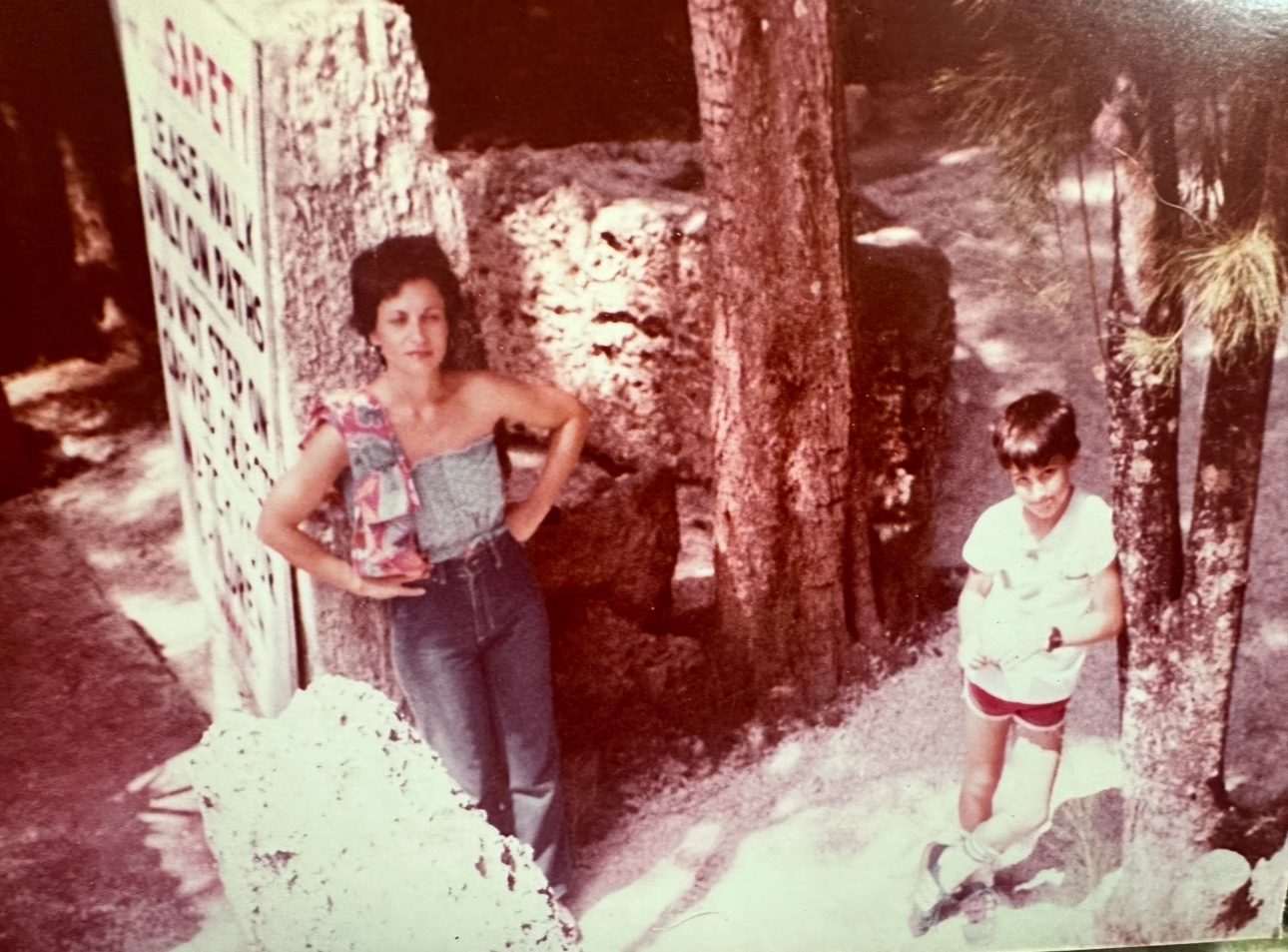
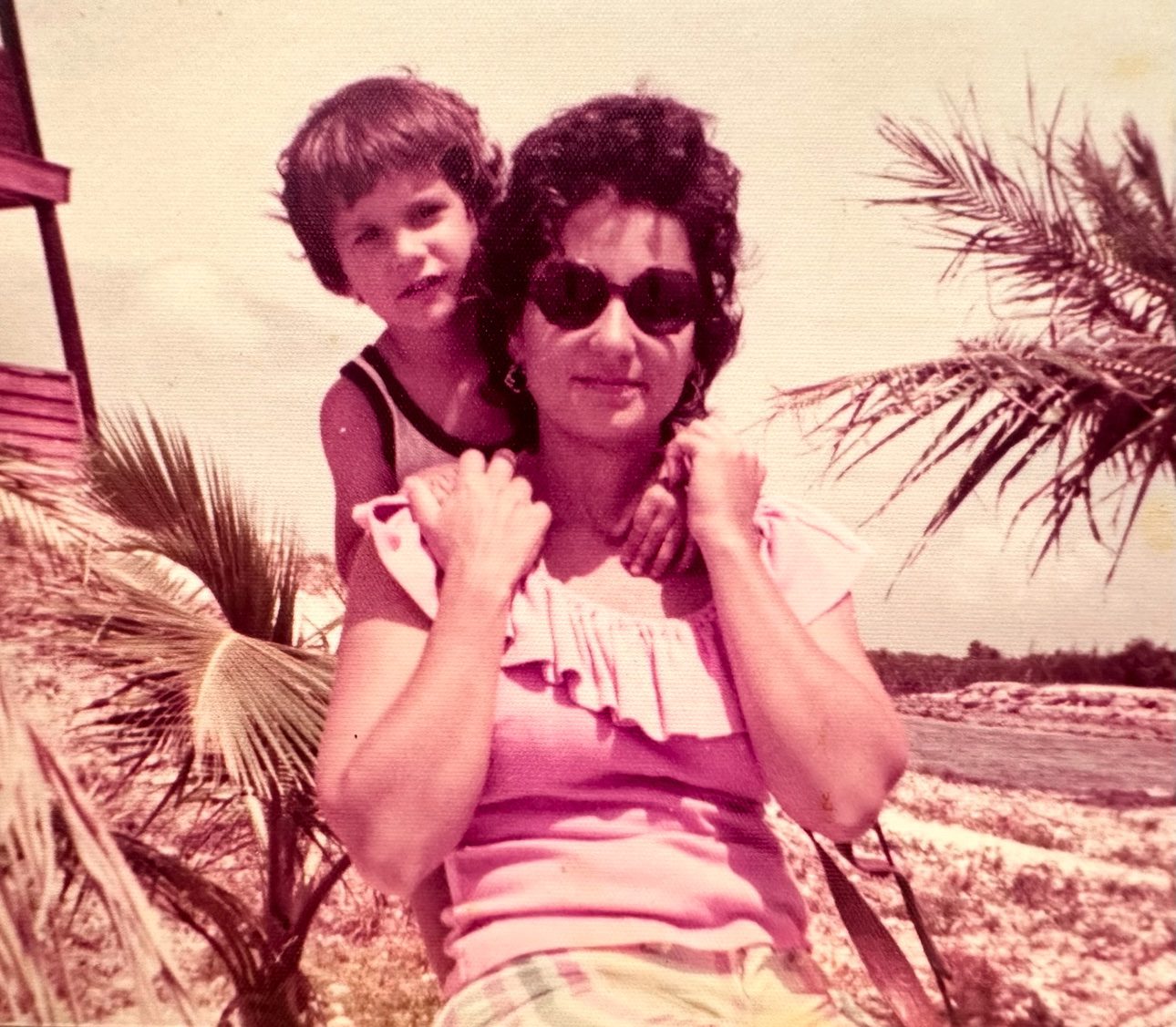
    My folks used to take me there all the time when I was little.

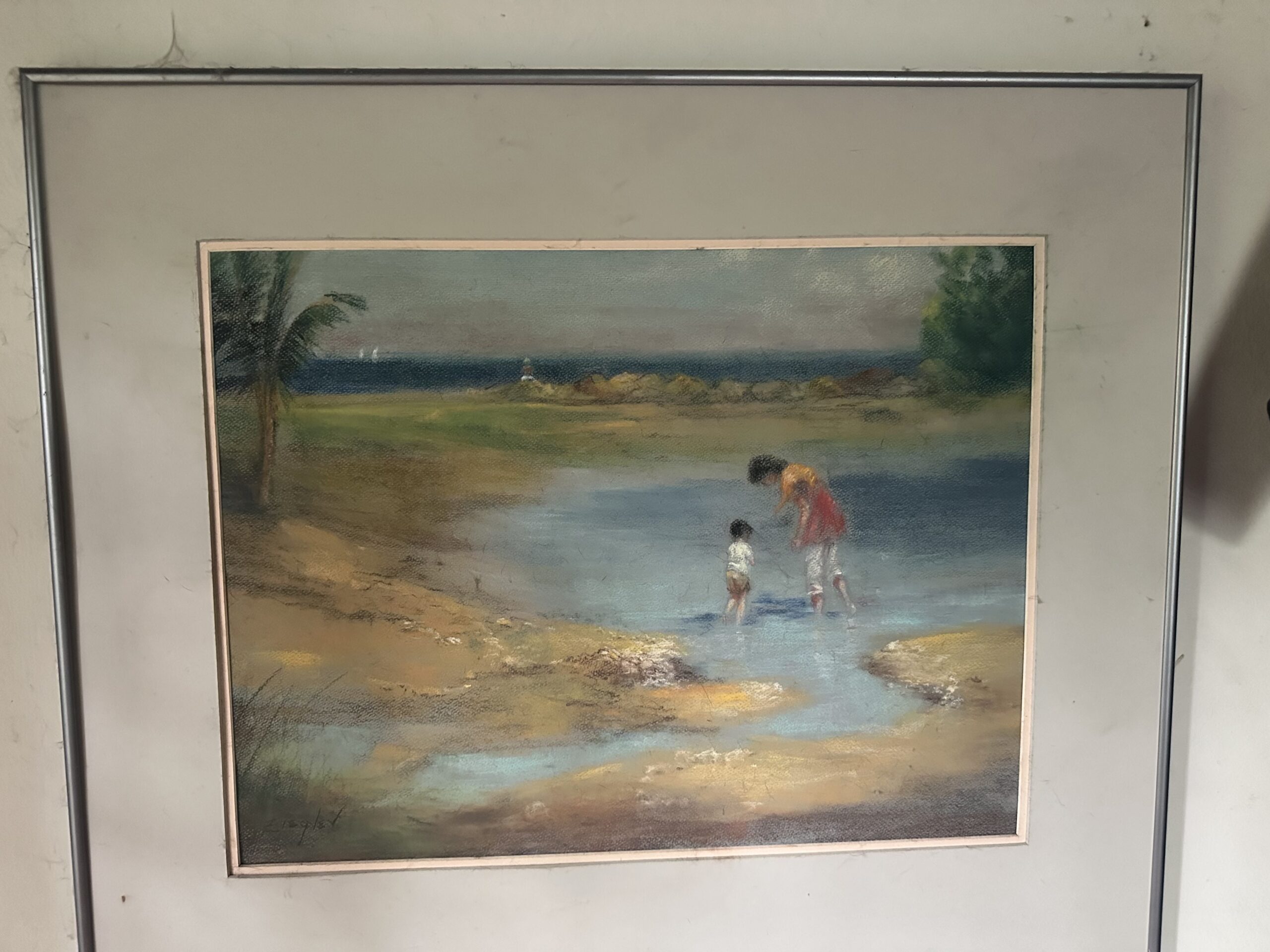
    I’d look for shells and try to catch the crazy little water animals that lived just beneath the muddy shore with my Ma. She’d root me on, plastic bucket in hand, and tell me to be careful with a smile on her face.

    My dad would usually sit on the coral wall, depending on the tide, and fish some. That’s before I got old enough to start fishing with him all the time. Before he discovered the rich, white man’s sport of tennis.

    My mother always said she wanted to be cremated when she died and her ashes spread in a free flowing body of water that goes both in and out.

    When the time came, I knew just the place.

    Right where the inlet starts, there’s that coral wall that leads to a circle. There’s a flagpole right in the middle of that circle with a plaque under it.

    The brass plaque reads:

    “You lost friends are not dead, but gone before. Advanced a stage or two upon that road which you must travel in the steps they trod.”

    Sounded pretty on the nose to me.

    The water flow situation was as requested.

    Sande would totally approve.

    I brought my pop  with me to the park on a grey Monday by that musky bay.

    Even the seagulls seemed sad. Occasional Egrets, stoic as ever.

    We parked and walked out for a while towards the flag.

    We didn’t speak. We passed the marina on the right. The mangroves seemed to crawl along with their roots exposed ,partially blocking our view of the tide pool on the left. It was for families and children to swim there, critter free.

    Once we reached the circle, I waded out into the warm, dark water, till it was all the way up to my chest. In my right hand, I had the semi see-through plastic bag that held my mother’s ashes.

    Her soot, basically.

    My father stood with his back to the coral wall and feet just touching the water. The same exact spot he used to fish from decades earlier. He was slumped over, bawling his eyes out.

    At that point, I didn’t think he’d live for ten more weeks. I could never imagine he had another ten years in him.

    It was nice and windy that day. I tore open the bag and she went everywhere. There was a lot too.  Some got on me and I kind of liked it.

    I don’t remember getting out of the water.

    That’s all I remember from that day.

    That’s all I would remember for a long time after that.

    Life was a blur.

  • Nosferatu Could Haunt Your Nightmares If You Don’t Fall Asleep During It

    Nosferatu Could Haunt Your Nightmares If You Don’t Fall Asleep During It

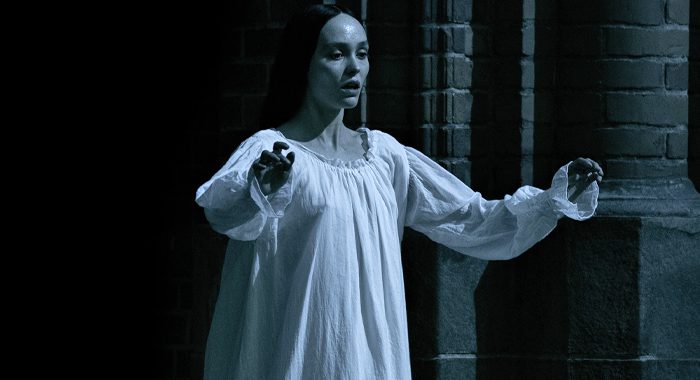
    Vampires have kind of become a joke. Hotel Transylvania, Count Chocula, What We Do in Shadows, and those hunky teenyboppers in the Twilight movies have turned the once terrifying bloodsuckers into lovable punchlines. So here comes Nosferatu, the new movie that aims to put these monsters back on the fear pedestal that Bram Stoker, Anne Rice, and Werner Herzog built.

    Helmed by writer/director Robert Eggers, Nosferatu looks amazing. If in Eggers’ fantastic previous movie The Northman, every frame looked like it could serve as the cover of a 1970’s prog rock album, any random shot of Nosferatu could serve a 2000’s nu-metal band. The production design really digs into the nineteenth century German and Transylvanian settings.

    And the movie starts off great with a young woman’s blood curdling wet dream. Her husband is given the assignment to make the six week journey to get a signature from a reclusive Count in Transylvania. It feels like we’re in for an adventure with so many wonderful visual motifs. There’s the maniac sitting in a pentagram surrounded by lit candles. Bearded gypsies play the fiddle on snow covered tundra. And then we have the dark castle that our title character calls home. Our vampire can barely breathe as he lurks in the shadows, with only in his grotesquely, long fingernails fully visible.

    The slow reveal of a monster to audiences has a noble history. We don’t see the shark in Jaws until the movie’s almost over, same with the dinosaurs in Jurassic Park.

    But the payoff has to be worth the anticipation.

    The hairless, misshapen Nosferatus of the 1922 and 1979 versions of this film are unforgettably creepy. These are beings that would haunt your nightmares. The bearded Nosferatu we get in this 2024 remake looks like a dissatisfied elderly customer at a delicatessen looking to return his soup for not being hot enough.

    There are still plenty of scares in Nosferatu. But the story kind of falls apart once Nosferatu shows up.  The rules of this world of what exactly Nosferatu is are never really explained. Screen time is divvied up to too many characters, so it’s unclear whose movie we’re watching. By the end the ticking clock you’re concerned about is not when the sun will rise, but when the closing credits will roll so you can get out of the theater.

  • Cockfighter – Charles Willeford’s Unique Novel

    Cockfighter – Charles Willeford’s Unique Novel

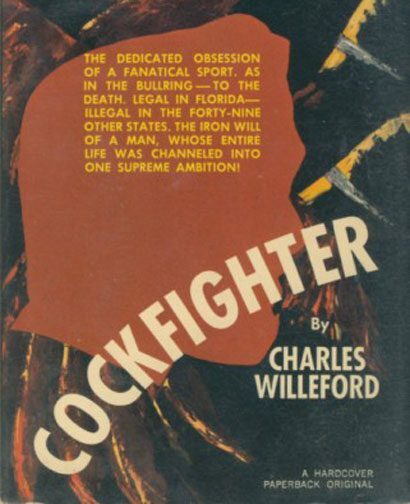
    In the 1960s, when cockfighting was still legal in the United States, Charles Willeford (Little Rock, Arkansas, 1919 – Miami, Florida, 1988)—a writer whose literature consistently exposed the harsher side of society—set his novel Cockfighter (1962). The story introduces Frank Mansfield, a 33-year-old man traveling across South Florida in his trailer, portraying a rural, redneck territory typical of the country’s interior, reminiscent of the settings found in Richard Ford or Cormac McCarthy’s works.

    This depiction contrasts sharply with Florida’s usual urban or coastal narratives——like the ones Willeford himself often set in all his other novels. At the outset, Mansfield is accompanied by Dody, a minor who serves only to meet his sexual needs and cook for him. However, after an early defeat in Belle Glade, Mansfield loses everything, including his trailer, and abandons Dody. At this point, he decides to feign the mute condition he maintains throughout the rest of the novel.

    Thus begins his descent into a hellish odyssey through Orlando, Ocala, Jacksonville, Alabama, and Georgia. Along the way, he encounters seedy bars, whiskey, sex, and fistfights, exposing the misogyny and animal cruelty pervasive in Anglo-American culture. Mansfield’s goal is to earn enough money to buy more gamecocks, continue competing, and win the coveted Southern Conference Tournament’s Cockfighter of the Year (STC) prize the narrator equates to the Nobel Prize for scientists.

    By the late 1980s, three names stood out among true aficionados of noir fiction: Dashiell Hammett, Raymond Chandler, and Charles Willeford. Just a few years earlier, Willeford, a “cursed” writer under Miami’s palm trees, was largely ignored and dismissed until Miami Blues, a novel featuring detective Hoke Mosley, catapulted him to fame and secured coverage in major publications like Publishers Weekly and The New York Times.

    Cockfighter is one of Willeford’s pre-noir novels, written during a time when his books were out of circulation and unavailable in bookstores—unattractive to publishers. It remains one of his few works that fall outside the noir genre, often regarded by readers and critics as his masterpiece and one of the “Greatest American Novels.” In fact, Willeford himself considered Cockfighter his most important book, often sending it to other writers when exchanging works to introduce himself.

    In 1974, Willeford adapted Cockfighter into a screenplay, which was brought to the screen under the direction of Monte Hellman. The author himself appeared in the film, playing Ed Middleton, one of the cockfighting competitors surrounding Frank Mansfield.

  • Condors & Chaos Release Pair of Singles that You Need in Your Spotify Library

    Condors & Chaos Release Pair of Singles that You Need in Your Spotify Library

    It’s been very pleasant to see former Modernage bandmates Alex De Renzis and (key whiz) Garcia Freundt, better known as Garundt these days, continue to make music under the guise of Condors & Chaos – backing the very talented Natasha De Renzis.

    As they told the Jitney last November, their collaborative process starts in their airconditioned garage, where Garundt’s riffs spark jam sessions, and Natasha brings lyrics and melodies to life. Alex’s drumming, known to Floridians for his stints in the aforementioned Modernage, And Then There Was You, Phantom Drive, and Hunters of the Alps is instantly recognizable for power and appropriateness. A chameleonic skill given the various acts he’s backed.

    Their singles, “Drug” and “Dust” run the range of sonic highs and lows. Grimy when needed, clean and airy when appropriate; even when things get ethereal given Natasha’s vocal range, nothing seems out of place. Imagine the muscle of arena rock informed by 90’s alt rock and late aughts indie rock birthed by a playlist heavy with Clikatat Ikatowi, the Fucking Champs, and the like but fronted by PJ Harvey – if PJ Harvey was a Latin Grammy nominee.

    Condors & Chaos

    I’m also enjoying their connective tissue to Andean culture since the condor is a sacred symbol of strength, freedom, and the connection between earth and sky. As scavengers, condors feed primarily on carrion, bringing a sense of order through a diet that plays a crucial role in their ecosystems.

    All that to say that Condors & Chaos does sound a lot better than “Condors & Order.” That’s fucking boring but we should all appreciate that we understand that in their chaos, the band restores a sense of order to South Florida’s music scene. Let’s hope these singles flesh out into a full-length release real soon. 

    Also, it should be mentioned that the image above was not provided by the band. It is the product of a violent back-and-forth with MS Copilot trying to do something quirky and fun for the layout. However, as a Jitney representative, I will continue to unleash these images into the ether if an album does not materialize within the next six months.

    In the meantime, you can catch them LIVE at Bar Nancy on December 27 and at Shirley’s at Gramps on January 11.

  • The Brutalist Is the Best Movie of the Year and Maybe the Decade

    The Brutalist Is the Best Movie of the Year and Maybe the Decade

    For people who say they don’t make movies like they used to, The Brutalist gives you a reason to head out to the theater again.

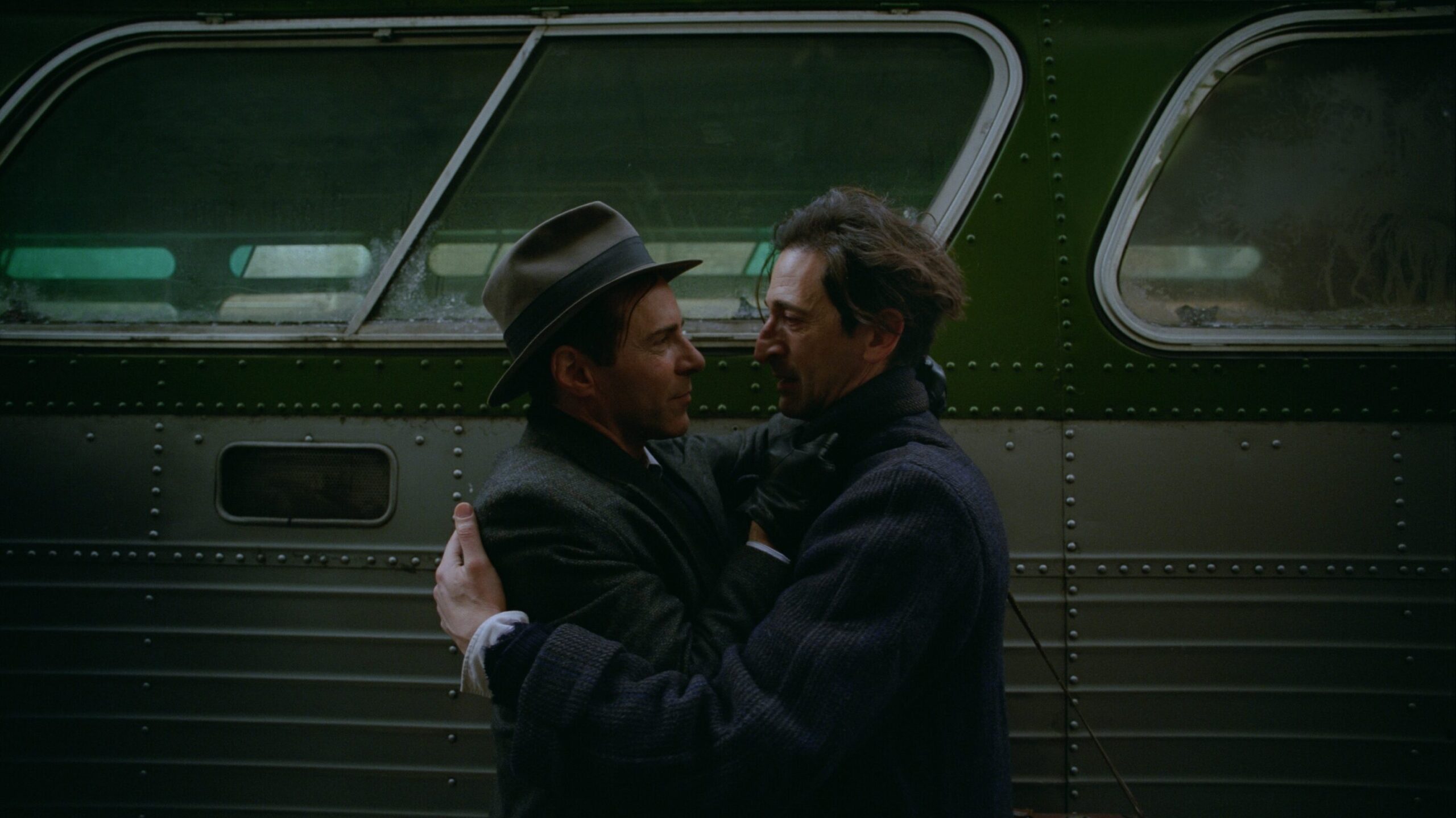
    Even though it’s a three and a half hour movie complete with a 15 minute intermission,  the title of The Brutalist doesn’t refer to forcing viewers to stare at a screen for over 200 minutes. Rather it refers to a school of architecture that the protagonist practices. Brutalism describes structures characterized according to Oxford, “by a deliberate plainness, crudity, or violence of imagery”.

    Boiled down to its simplest essence, this is a movie about a man wanting to build a building. But set in post-World War 2 America, The Brutalist is ripe with as many allegories and metaphors as you want to dig into it.

    This is the first movie completely shot in VistaVision this century. The wide screen film stock gives it a look that stands out and the cinematography leans into the medium’s uniqueness. The Brutalist finds a way to depict cities that have been filmed a million times like New York and Venice from unique angles. Even the opening and closing credits have a different stamp. The opening credits of cast and crew crawl from right to left on the screen rather than from down to up. The closing credits come at you diagonally.

    The film’s budget was under 10 million dollars.

    That’s a fifth of what The Rock gets paid for his most recent performance. And every penny seemed to be put on the screen from the period details of the production design to the replication of construction of a Brutalist form of architecture. Pre-release comparisons to The Godfather felt like hyperbole. After seeing it, I’m comfortable with that statement. It’s definitely reminiscent of the adult epics of yesteryear helmed by Coppola, Kubrick, or Lean.

    The Brutalist is the rare movie that demands to be seen on the big screen. Don’t let the obscene running time intimidate you. From the second scene on the movie flies by with dynamic visuals,  fantastic acting , and a forward moving plot. I was unfamiliar with the co-writer/director Brady Corbet. Now I need to see his previous two films.

    But first I might need to rewatch The Brutalist again.

  • Miami Jewish Film Festival Announces 2025 Films

    Miami Jewish Film Festival Announces 2025 Films

    The Miami Jewish Film Festival (MJFF) proudly announces the program for its 28th edition, a dynamic hybrid of virtual and live events featuring 133 films. Running from January 9-23, 2025, the festival will showcase 110 feature films and 23 shorts from 25 countries, including 20 world premieres, 8 international premieres, 9 North American premieres, and 6 U.S. premieres.

    As the largest Jewish film festival in the world, MJFF’s 28th Edition will host over 80 in-theater screenings across eight venues in Greater Miami, including Miami Beach, Coral Gables, and North Miami. Additionally, an online component will make over 80 films available for streaming to audiences across Florida and the United States.

    The festival’s opening night kicks off with the world premiere of Soul of a Nation, directed by Jonathan Jakubowicz. This inspiring and eye-opening film delves into one of Israel’s most turbulent chapters, chronicling the journey from crisis and division to unity and resilience following the October 7 tragedy. Featuring exclusive insights from influential leaders and a heartfelt vision of hope, the premiere will include an introduction by Jonathan Jakubowicz and producer Claudine Jakubowicz, followed by a post-screening Q&A.

    The Festival’s closing night will feature the premiere of Matchmaking 2, the latest by renowned Israeli filmmaker Erez Tadmor. This sequel to the beloved 2022 romantic drama is Israel’s biggest box office hit of the year, offering an endlessly witty and sweetly romantic take on a modern Romeo-and-Juliet tale starring some of Israel’s most dazzling young talents.

    MJFF’s Headliners program features standout selections and award-winning films from festivals worldwide. Highlights include the East Coast premiere of Guy Nattiv and Zar Amir Ebrahimi’s riveting thriller Tatami, notable for being the first film co-directed by an Israeli and Iranian; Michel Hazanavicius’ Cannes Competition title The Most Precious of Cargoes; Andres Veiel’s provocative documentary Riefenstahl about the controversial German filmmaker; the U.S. premiere of Midas Man about Brian Epstein and The Beatles; Oren Rudavsky’s intimate documentary Elie Wiesel: Soul on Fire; the Tribeca Audience Award-winning comedy Bad Shabbos, starring Kyra Sedgwick and Method Man; the Safdie brothers-produced Andy Kaufman documentary Thank You Very Much; the U.S. premiere of The Spoils, a fascinating film about restitution of Nazi-looted art; the Argentinean comedy Most People Die on Sundays, featured in Cannes’ Acid sidebar; and the Academy Award submissions for Best International Feature Film from Hungary (Semmelweis) and Slovakia (The Hungarian Dressmaker).

    Made in Florida Focus to Miami Jewish Film Festival

    Reinforcing its dedication to showcasing local talent, the Miami Jewish Film Festival shines a spotlight on “Made in Miami” movies this year, featuring several films receiving their world premieres. Among them is Miami Schmatta, a compelling exploration of the vibrant immigrant legacy that shaped the American garment industry, set against the colorful backdrop of Miami. Also premiering are Miami-based filmmakers Wendy Sach’s October H8te, a timely film about antisemitism on college campuses following the October 7 tragedy, as well as Leslie Benitah’s Milk & Honey, Blood & Tears, a powerful documentary chronicling the resilience and recovery of Kibbutz Be’eri following the devastating October 7 attack. The film poignantly contrasts the kibbutz’s peaceful past with the harsh realities of survival and healing.

    Diving into the 2025 Film Festival program by the numbers, MJFF audiences will be able to experience a lineup boasting 133 films, including 20 world premieres, 8 international premieres, 9 North American premieres, 6 US premieres, 18 East Coast premieres, 35 Southeast US premieres, and 18 Florida premieres, among others, as well as over 50 conversations with filmmakers, stars, and scholars from around the world.

    Full details on the program and tickets to the festival can be found at: www.miamijewishfilmfestival.org