Category: News

  • Hustle Music: How Hip Hop Turned Struggle into Culture

    Hustle Music: How Hip Hop Turned Struggle into Culture

    “…The time may have come when the issue of race could benefit from a period of ‘benign neglect.’” – Senator Daniel Patrick Moynihan to President Richard Nixon in a 1970 memo

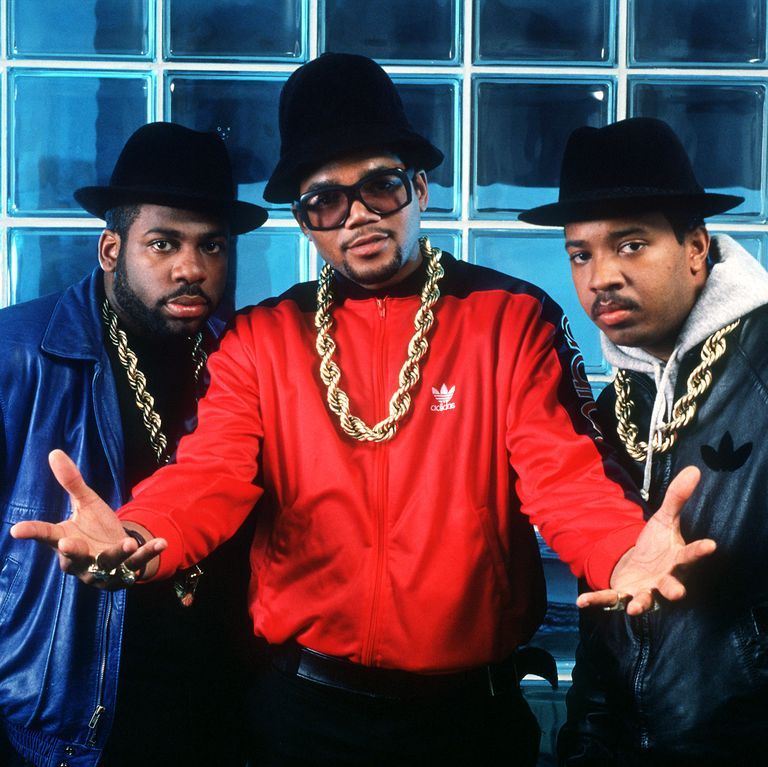
    Many Hip Hop historians agree that—if a date had to be put on it—the genre was born on August 11, 1973 in the rec room at 1520 Sedgwick Avenue in the South Bronx. That night, 18-year-old Clive Campbell—aka DJ Kool Herc—stood over two turntables at the first “Back to School Jam,” spinning records while his friends breakdanced and rapped over the mic, effectively birthing a culture. Since that Bronx party, hip hop’s spread’s gone global, adapting to the various regions across the world in a way only pop culture can. But what’s often overlooked is the reason Herc threw that party: to raise money for his sister’s school clothes.

    In other words, the first “Back to School Jam” was a hustle—a money-making venture that eventually grew into so much more. In an interview with Rebecca Laurence of BBC Culture, hip hop historian Jeff Chang says, “Hip hop did not start as a political movement. There was no manifesto. The kids who started it were simply trying to find ways to pass the time, they were trying to have fun. But they grew up under the politics of abandonment and because of this, their pastimes contained the seeds for a kind of mass cultural renewal.” [Laurence] At the core of rap’s identity is a philosophy of hustling that serves as the main thematic connection between the many subgenres the movement spawned.

    The History of Hustlin’

    Check out the disambiguation page for “hustler” on Wikipedia, and you’ll find links to related terms like “con man,” “drug dealer,” “male prostitute,” “pimp,” and “general businessman.” The connection point that makes it plausible to put a businessman in the same category as a male prostitute is each of these positions has the same goal of making money. The associations show that the notion of hustling exists in all sectors of society, with roots going back to before modern hip hop was even a thought.

    After the Civil War and the abolishment of slavery, securing regular work was tough for Black Americans, and remained so straight through the Civil Rights Movement. In a society where money is king, getting paid by any means necessary became a personal slogan for those dissatisfied with the living standards minorities were expected to accept. This period coincided with an influx of illicit substances into the United States, opening new avenues for many otherwise impoverished individuals to make ends meet outside the confines of the legal system (as frequently described in ‘80s and ‘90s Gangsta Rap). In “A Short History of Hustlin’” for NPR, Todd Boyd—Professor of Critical Studies at University of Southern California’s School of Cinematic Arts—says:

    “The concept of hustling is simply an update on the American dream for a new generation. This is all just another twist on the concept of the hard working, pull yourself up by your own bootstraps mentality that has existed in America since its inception. It just so happens that this time the impetus for such a concept is rooted in the ‘hood and the purveyors of such thinking are former drug dealers turned rappers.” [NPR]

    Take the South Bronx, for instance, where Herc’s Back to School Jam took place. During the fifties and sixties, New York’s “urban renewal” projects—like the Cross Bronx Expressway—forced many residents to relocate. Those relocation destinations were based on economic value and skin color, as historian Jeff Chang points out in his essay collection Can’t Stop Won’t Stop: A History of the Hip-Hop Generation: “[…] in the New York area’s construction explosion of the 1950s and’60s, middle-class whites got sprawling, prefab, white picket-fence, whites-only Levittown suburbs, while working-class strugglers and strivers got nine or more monotonous slabs of housing rising out of isolating, desolate, soon-to-be crime-ridden ‘parks.’”[Chang]

    By the seventies, manufacturing jobs in the South Bronx were down over half a million, with youth unemployment at 60 percent. A New York Times headline from November 4, 1972, claimed “Bronx Rate of Poverty is Highest.” Add to this a growing divide between minorities and the white people who didn’t leave for greener pastures—and therefore still lived in the neighborhood—and we see the emotional sparks that would turn into physical flames and consume the Bronx throughout the seventies. As Chang continues: “When African-American, Afro-Caribbean and Latino families moved into formerly Jewish, Irish and Italian neighborhoods, white youth gangs preyed on the new arrivals in school beatdowns and running street battles. The black and brown youths formed gangs, first in self-defense then sometimes for power, sometimes for Kicks.” [Chang]

    Hip Hop’s rise wasn’t limited to New York though,

    just as resistance to shifting demographics wasn’t limited to the South Bronx. A 1998 study by Florida International University confirmed that 1960s urban renewal projects—specifically I-95—uprooted what had been known as Miami’s Black culture center in Overtown. A 2010 NPR article by Greg Allen titled “Paying a Local Price For I-95’s Global Promise” revisited I-95’s effects, concluding that “twenty square blocks of Overtown were taken for one interchange alone, displacing some 10,000 people. When I-95 was completed in the early 1960s, a thriving community of 40,000 had been reduced to one quarter of its size.” [Allen] As a result of the construction, many Overtown residents without the means to move to other sections of Miami headed a couple miles north to Liberty City. This coincided with the Civil Rights Act of 1964, which led to many of the middle class black residents currently living in Liberty City taking their money and moving to areas they could not previously live in. The withdrawal of middle class funds combined with overcrowding and lack of economic development to sink Liberty City’s value. An article titled “The History of Liberty Square” on The Official Website of Greater Miami & Miami Beach states:

    “As a result [of I-95’s construction], much of [Overtown’s] low-income, elderly and welfare-dependent citizens migrated to Liberty City. Additionally, the Civil Rights Act of 1964 afforded blacks more freedom than ever before. The affluent and middle income African American families who established Liberty City were now leaving in droves to more desirable communities in North Miami, like Miami Lakes and Miami Gardens. This left Liberty City and Liberty Square in dire straits in the post-Civil Rights Act 1960s and ‘70s.”

    Due to neglect, poverty, and other reasons including numerous allegations of police brutality, Central Miami’s Black community grew outraged over their living conditions. This outrage mirrored the South Bronx’s, leading to a series of riots in Miami throughout the fifties, sixties, and seventies that culminated in the 1980 Arthur McDuffie riot, one of the costliest in U.S. history.

    The South Bronx and Miami are just two chapters in a much larger story though. A wave of construction projects throughout the country during this time created similar situations in almost every major U.S. city. An article for History.com titled “How Interstate Highways Gutted Communities—and Reinforced Segregation” states:

    “According to estimates from the U.S. Department of Transportation, more than 475,000 households and more than a million people were displaced nationwide because of the federal roadway construction […] The neighborhoods destroyed and families uprooted by highway projects were Black and poor […] Hardly a major city with a significant minority population went unscathed by the legislation: New York, Miami, Chicago, Minneapolis, Pittsburgh, Oakland, Nashville, Baltimore, Atlanta—and more.” [Evans]

    Living under these circumstances, those with visions of a better life looked for opportunities in the margins. Malcolm X his 1965 autobiography says it plainly when he states that “almost everyone in Harlem needed some kind of hustle to survive…” Many of Miami’s Hip Hop pioneers—artists like Uncle Luke and Trick Daddy—were born and raised in Liberty City and started their careers independently. Like their New York counterparts, these artists found a hustle in Hip Hop, bypassing the status quo and the sense of abandonment their communities felt. The notion that everybody had a hustle meant whether an individual was good or not at their hustle was a matter of performance. Swagger became a commodity; the power to talk your way into a better economic situation became a genuine talent. The abilities of a good salesman can translate to many industries, from used cars to real estate to drug dealing to music.
    Hip Hop’s Birthright

    Even though Herc’s South Bronx party is credited as the birthplace of Hip Hop, the genre’s origins are obviously more complex. Funk, for example, is hip hop’s spiritual brother. In the seventies and eighties, artists like Afrika Bambaataa and Grandmaster Flash used elements of the ‘70s funk boom to hone their style by combining record sampling with technological innovations. Similar connections exist between Hip Hop and blues. Blues songs often relate the narrator’s trials and tribulations, connecting the listener to the characters’ plights through a narrative structure. By the same token, hip hop is made up of voices relating their common experiences through narrative. In the Mixdown article “From Blues to Hip Hop: The Pursuit of Freedom Through Music,” Eddy Lim states:

    “The blues originated from enslaved African-Americans in the 16th century, when the genre gave a voice to their common experiences in a period where the majority of society was indoctrinated to both deny and eliminate their self-expression […] hip hop was conceived similarly to blues, arriving during a period of turmoil and oppression when, despite a subjective upgrade in legal status, large proportions of African-Americans were still economically disconnected from the majority of Americans.”” [Lim]

    Another lesser-discussed connection to hip hop is punk rock, a genre that also emerged in New York City. In the ‘70s, both hip hop and punk rock’s mainstream popularity growth led to overlap. Both genres were driven by youths and both embraced counterculture. As Zach Gay states in his Lemon Wire article “Historic Alliances Between Hip Hop and Punk”: “Punk and Hip-Hop are rooted in many of the same things. The same city (NYC), the same working-class conditions of poverty, the same do-it-yourself ethic…” In 1981, Blondie’s hit song “Rapture” released and featured Debbie Harry rapping, in the process shouting out hip hop legends Fab Five Freddy and Grandmaster Flash. As a reply, Grandmaster Flash sampled Debbie Harry’s shout out in his 1981 single “The Adventures of Grandmaster Flash on the Wheels of Steel.”

    Both tracks were successful.

    From Dicky to Kendrick

    The elements that created Hip Hop allow it to be flexible. As the genre exploded in popularity, it grew so big so fast that it eventually split under its own weight. The actual number of Hip Hop subgenres varies depending on who you ask. The Scene Noise article “Hip Hop Subgenres & How To Tell Them Apart” lists nine. A LiveAbout.com article “The Definitive Guide to Hip-Hop Subgenres” lists fifteen. An article for Landr Blog proposes “22 Rap Genres That Define the 50 Year Evolution of Rhyme and Beat.” Another for eMastered.com, “Types of Rap: Exploring the Genres of Rap Music,” lists twenty-seven subgenres. There’s old school, drill, jazz rap, cloud rap, gangsta rap, boom bap, crunk, chopped and screwed, emo rap, hyphy, conscious, r&b rap, trap music, g-funk, dirty south, lofi, rap rock…the list goes on. Hip hop subgenres have grown so much that it’s sometimes hard to see the similarities between them. Listen to a conscious hip hop song and follow it with some drill and you’re teleported from one part of the world to another, with little in common between the two locations. Connecting them under the umbrella of Hip Hop requires exploring thematic harmonies, such as hustling.

    In the song “Professional Rapper,” actor/rapper Lil Dicky works with Snoop Dogg to craft a narrative in which Dicky meets Snoop to apply for the fictional office position of “Professional Rapper.” The song features Snoop’s typical bravado while highlighting Lil Dicky’s lyrical skills and unconventional background: Dicky is a white Jewish man from a stable home, characteristics at odds with the historical median demographic of hip hop artists. At one point, a back and forth between Snoop and Dicky about the latter’s background touches on what that background means for Dicky’s credibility as a hip hop artist:

    “[Dicky:] I was born out of Philly grew up in a little silly old town called Cheltenham

    It’s in the suburbs, upper-middle wealth around.

    [Snoop:] So real shit you ain’t never had to struggle for much.

    [Dicky:] I wouldn’t say it like that, we just had a different kind of trap.

    [Snoop:] Elaborate.

    [Dicky:] Well I ain’t never had a tool, but I had to be the man at school.

    Like I was doing shit I had to do, so when I finished undergrad, I’m cool.

    And I can get whatever job I wanted.

    [Snoop:] But the job you wanted wasn’t all that bumping.

    [Dicky:] Yeah, and I saw it quick all the flaws that be coming,

    When you grow up like that.

    Know you been racing them rats, you ain’t been making them raps.”

    If you look at Burd—pale-skinned, shaggy-haired, kind of low-key—he doesn’t really fit the typical image of an old-school Hip Hop artist. Yet Lil Dicky has managed to make his mark on the genre with his talent and his focus on the hustle, showing that even if you didn’t grow up in the stereotypical environment of hip hop’s origins, you can still be part of the culture by—number one—having talent; number two: staying true to who you are; and number three—understanding and embracing hip hop’s hustling roots.

    Connecting hip hop with hustling helps explain some of the genre’s conventions, but it also raises some questions. Considering Hip Hop is so closely tied to the everyday struggles of working-class folks, it’s logical to wonder if the struggle is essential to Hip Hop’s existence. If we were to somehow magically fix all of society’s problems, would Hip Hop and similar genres simply vanish? Or is struggle so much a part of human nature—certain death being the ultimate struggle—that The Hustle is here to stay?

  • Envoys – Excerpt from New Fantasy Novel

    Envoys – Excerpt from New Fantasy Novel

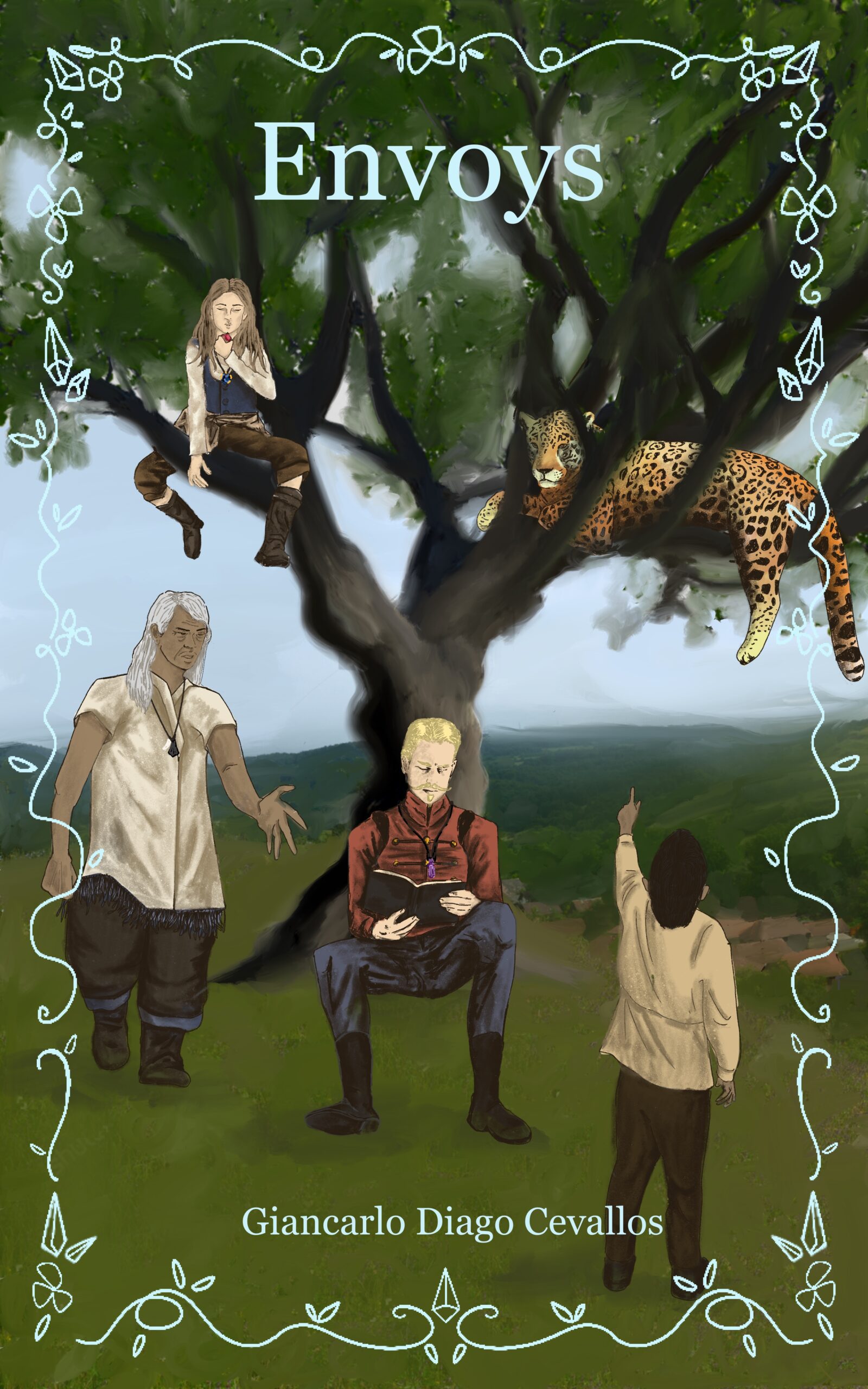
    Below is an excerpt from Envoys,  a fantasy novel for all ages written by local author, Giancarlo Diago Cevallos. The full novel is available for purchase by clicking here.

    Once, on the cold icy shore, Taran as a child had sat for an hour just looking north. Straining his eyes. When asked why he did that, Taran explained to his mother that he wanted to see the Island. She had laughed, then apologized, and explained that the Island at the top of the world rested much too far away to see, even though the Ring was the closest landmass to it.

    Taran had accepted that, but over passed time he missed the opportunity to make the long maritime pilgrimage north. Life had busied him, was all. And the chance had seemed lost forever when the Island had isolated itself. So Taran had received the news, as an adult, that the Island wanted nothing more to do with the world whose north pole it rested on.

    So Taran had lived his life among his tribe, the Skulks. These rugged and hide-clad people lived on the Ring, either fighting or befriending other tribes.

    For its part, the Ring was a circular landmass surrounding the Island. The coast was such a perfect curve, many assumed it to be carved, as if by some massive beast.

    So Taran had lived. Sometimes in danger, often in happiness, always aging. As an old man, he was next in line to be chief, and had a large family.

    Every Skulkian agreed Taran had been well blessed.

    So it was that the rest of his life seemed set.

    Taran had just one regret, that the Island had never opened again, and that no one ever knew why. Some brave Ring explorers had tried to reach it, just to be turned back by its human and inhuman inhabitants.

    But then, strange light-skinned men came on galleons from far south. Envoys of the Astrian empire, they’d explained themselves to be. Their high-masted ships brought foreign language, foreign knowledge, and alien diseases.

    As the Skulks began to grieve for their epidemic and diseased, the Astrians had already moved on, seeing nothing of worth in the Ring, and looking north.

    Taran, even through his sadness at the loss of loved ones, felt a swelling in him. Was it joy? Excitement?! Not at becoming the chief, after the bed-ridden death of the last one.

    But because after all these endless years, Taran would no longer be the gazer on a cold icy shore.

    He would accompany Astria north and reach the Island.

    The Saint, skipping across the waves, was one of the best of Astria’s fleet. Streaks of black and green and blue painted the sails and decks and hull. Two entwined anguilla eel statues rested on the bowsprit. Astria did not have a lot it could be proud of, but of this it was. Every Astrian knew how to swim before they could walk. And the pride of the sailors almost banished their homesickness.

    Taran wondered sometimes if he stood out on deck. Among spiffy sailors, who spoke a language Taran had just recently learned, he wore furs and leathers. Still, Taran kept them on. His necklace always stayed on. The faded leather cord held two charms. A faded but sharp canine tooth the size of a pinky, and a small carving of two folded hands, fashioned from obsidian.

    The ship made great progress north, faster than Taran had ever imagined the journey could be done. Within two days it could be reached. The Saint could reach the Island by nightfall. As they neared the north pole, everyone needed to wear thinner clothes, the climate warmed as they reached the Island.

    Elsewhere on the ship, snuggled between scrolls and paper, captain Radial had a dilemma.

    By then, Taran had learned how to speak Astrian while a few explorers had learned the Skulk language, but Radial still had plenty of problems going over translated reports and descriptions he’d stored in his cabin. When he stomped upstairs to confront Taran over them, the yellow feathers adorning Radial’s sweeping blue hat bounced above deck.

    Radial found Taran looking out over the ocean with a nervous smile on his face. In response, Radial tried a smile too.

    “Taran, all these descriptions from you,” which had been transcribed by Lunate, “How am I supposed to believe these…” the captain checked for the right term, hoping he got it right, “…beasts exist?”

    Taran turned around, amused. “I thought you were an experienced sea captain. Don’t you have impressive animals and monsters in the rest of the world, too?”

    “Well yes, but…” Over the course of his life, the captain had heard many tales of demons and monsters. One of his favorite tales came from a far off-land below the equator, of a demon with massive tusks and gray feet that could flatten men whole. They called it… an elephant. But the descriptions offered by Taran were so fantastical as to be mind-boggling. Not because they were unbelievable, as Radial knew the world was quite the big place with many mysteries, but because Radial’s crew would have no way to fight off such beasts if they threatened the ship.

    “Take the rammer.” said Radial. “The form of a massive goat, but its charges tear down everything in front of it like massive gusts of wind. What happens if our crew meets one?”

    “Be nice to it and leave it be.”

    “But… Eh.” The captain did not like these tales, because these monsters seemed so strong as to not fit into his fantasies of trophies and fame back home. And besides, none of his crew possessed divine powers like his emperor back home did. He switched to a different tactic. “Have you ever seen a beast? Do none wander so close to the Ring?”

    “No.” Taran didn’t elaborate, since it was a mystery even he didn’t quite know the answer to. Every tribe on the Ring held different myths to explain why animals that might as well be gods in their power only stayed around the Island and never strayed close to the Ring.

  • City Theatre Presents Black Santa! Is Florida Ready?

    City Theatre Presents Black Santa! Is Florida Ready?

    Ho, ho, ho!! Merry Christmas one and all.

    Attention theater lovers, Miami’s City Theatre is delivering an early Christmas present with  Black Santa, an absurdist comedy that examines how race and racial bias can have a foothold on one of the most benign figures — Santa Claus. The City Theatre production, by Chicago based playwright Aaron Mays, is its southeastern premier. Here’s the premise.

    Shortly before Christmas break, a third grader named Sharifa proudly declares to her class that Santa Claus is Black. It sends the school into an uproar. To quell the storm, Patrice Patterson, the school’s only Black teacher, is asked to create an ad campaign within the school to make Santa white again. As events unfold, Sharifa’s enrollment is placed in jeopardy, and Patrice must decide how to protect Sharifa and ultimately herself.

    A black Santa in red Florida? Will this cause a stir? Can we take a joke?

    We spoke to playwright Aaron Mays in anticipation of the play.

    Exclusive Jitney Interview

    Do you consider Black Santa a satire? If so, can you talk about the importance of satire in America?

    I would say yes but more specifically it’s a satirical comedy. Through this genre, we can easily examine some tough issues in American society because the humor can soften the edge of the painful realities of the situations at hand. The play pokes fun at the notion of a post-racial society shortly after Obama’s first Presidential win in 2008. For me, “Black Santa” is as absurd as it is real.

    Can you talk about using children in satire? For example, many American satires (South Park, The Simpsons, Rick & Morty) use children as a means of softening the blow. Is this a factor in Black Santa?

    In the play, there are no children in the cast. They are only mentioned in conversation. It was important to me that we only learn of Sharifa and the other students through the lens of the adults. We decided to set the play inside of a school because it’s a place that everyone is familiar with.

    Florida, as of late, hasn’t been the kindest (to say the least) to the arts. Is there any reservation or preparation about premiering a play that could spark the fuels of a culture war?

    To be honest, I was a little nervous about the reception of my play, given the state’s stance on diversity, budget cuts and ongoing book bans. The play tackles race, gender and class. But overall, it reminds us that we’ve all felt like an outsider or invisible at some point in our lives. My hope is that my play sparks a conversation about our varied experiences and how they shape our traditions.

    Anything you would like to add about your play for the Miami audience?

    Miami-Dade audiences should see this play if they want to laugh out loud. If people like the hit sitcom “Abbott Elementary” then people will thoroughly enjoy this live stage play. Also, Miami-Dade audiences will get the chance to champion local artists and a local theatre company.

    Black Santa Details

    Black Santa features an all-local cast led by Carbonell and Silver Palm Award-winner Rita Cole, and features Niki Fridh, Jeff Burleson, Robert L. Strain, Kimmie Harvey and Phillip Andrew Santiago.

    BLACK SANTA

    By Aaron Mays

    Directed by Margaret M. Ledford

    December 5, 2024 – Preview

    December 6, 2024 – Opening Night

    Through December 22, 2024

    Tickets: $56, $61*

    Carnival Studio Theater

    For more info and tickets click here 

    This article was published with the support of the Miami-Dade County Department of Cultural Affairs and the Cultural Affairs Council, the Miami-Dade County Mayor and Board of County Commissioners.

    Cover photo by Morgan Sophia.

  • I Got an Excellent Sex Education in Florida

    I Got an Excellent Sex Education in Florida

    And I mean in the classroom, ya perverts.

    We all know Florida is the place to go to get laid when you’re young and willing to fly for a tan and sex. And in the early ‘90s, at least in the Florida schools I attended, locals got a stellar, accurate sex education so they knew exactly what to do if they contracted an STI (formerly STD) in the future from one or two of those horny tourists.

    In recent years, Gov. Ron DeSantis’s right-wing administration has attacked all sorts of rights, including the right to sex education for public school students. Schools are no longer required to teach sexual health and local school districts have to submit their plans to teach the topic to the Florida Department of Education (FLDOE) for approval. And most horrifyingly, according to LGBTQ Nation, “the classes must promote abstinence and cannot include discussion of contraception or pictures of reproductive health organs.”

    Teach students about their anatomy, for the love of God. Ron may not know how to find a clitoris, but no one else should be cursed with this level of disfunction. And like why even teach sex ed without discussing birth control? Oh yeah! To make it easier to brainwash young people into giving up control over their bodies and, not to be dramatic, but their souls a bit, too. Because I’m sorry, if you don’t know much about your nether regions, your life will be limited. It’s a one-way ticket to dealing with an unwanted pregnancy in a state with a near-total abortion ban (vote yes on 4, Florida), an unwanted sexual encounter in a world that doesn’t punish perpetrators, an untreated STI that can affect your fertility, or the foolishness to vote for anti-reproductive health policies and candidates that harm you and future generations.

    A lot of Gov. DeSantis’s antics make my blood boil, but this one broke my heart. I know how much I benefited from sex ed. It wasn’t just “health class,” it was about our sexual and reproductive health and it shaped my life. I was both scared of and fascinated by STIs. I believe that getting all of the facts made me feel (key word, feel) more in control of my life — which is a miracle because we all know that sex is messy and the consequences are often out of our control.

    I think they actually started out teaching some information on the topic in elementary school, but in eighth grade we got the full egg, sperm, zygote, and chlamydia rundown. It wasn’t particularly sex positive but it was factual. Kids need the facts. I don’t remember learning much about consent, which is necessary, though I have some thoughts about how to finesse the way folks discuss consent (“enthusiastic yes” is a blog for another day) and I think consent is something that is learned through experiences outside of the bedroom (again, another day).

    You have to remember, the ‘80s were a time of fear around sex because of the HIV/AIDS crisis. Most of my friends waited to have sex, and I think that was due to the sort of terror around dying of AIDS. My parents had friends who died of AIDS in the early days, and even now, I recently had a friend die of AIDS. The disease is not gone, but since 1996 when the HIV cocktail was discovered, the fear around it has waned. I believe University of Miami played a critical role in developing the antiretroviral therapy. Fear of the virus spurred the kind of comprehensive education taught in Miami at that time. I knew a whole hell of a lot about AIDS thanks to sex ed and And the Band Played On (a must-watch), was able to understand statistics on HIV, and knew about getting tested.

    I have worked in the sexual health arena for a few years and have interviewed many porn stars in my time as a reporter. I attribute my zero squirm largely to my early sex education. I love feeling free from that squirm. I love being sex positive. I love that I have the information to teach my child the truth about their body and others’ bodies and not have to slather it with shame and fear. (Highly recommend Bodies Are Cool for the littlest ones).

    Not to belabor the point, but taking away that freedom is the goal of ending sex ed. Kids need to learn the mechanics of sex to protect themselves, not just from disease and pregnancy, but from misinformation and the influence of right wing mental predators. Education empowers, and that’s why DeSantis and his forced-ignorance army are coming after sex education.

    When we know about our bodies, we can protect them. Period. It probably won’t be me, but someone needs to form a group of bandit sex educators to teach the poor uninformed children of Florida about their bodies. I guess it could be me if I had resources. Anyone want to fund me?

    Let’s start with voting out lawmakers who want to limit public school education. Make sure you’re registered, and make sure you vote.

    P.S. Netflix’s Sex Education is one of the best shows of all time. Hands down.

    P.P.S. Here are some resources for parents.

    Follow Liz Tracy’s Substack, Not a Serious Life, for not-serious takes on pop culture, our aging bodies, and more.

  • Sixpence None the Richer Defy Expectations

    Sixpence None the Richer Defy Expectations

    As a frat boy in small-town Ohio circa 1995, I had two competing goals.  1.) I wanted to party  2.) I wanted to be a good Christian lad.  In just one semester, I was exposed to Mad Dog 20/20, a Billy Graham crusade, “shotgunning” Natural Light, Fellowship of Christian Athletes meetings, and the music of Sixpence None the Richer.  I developed a huge crush on lead singer Leigh Nash, as well as a crushing dependence on Miller Lite. 

    To the Christian youth subculture in which I dabbled, Sixpence was the realest, rawest, and most talented band there was.  They were also one of the first Contemporary Christian Music (CCM) acts to make the distinction of being Christians in a band, not necessarily a Christian band.  Their listeners had to sometimes actively seek out the meaning in the lyrics, or even better, the meaning might sneak up on you.  

    Their hit song “Kiss Me” wouldn’t take over the pop airwaves until 1999, peaking at number 2 in the US (it just went triple platinum as of this writing).  “Kiss Me” was, intentionally or not, an act of creative and cultural defiance against the stuffy norms (mostly unwritten) of the Nashville CCM industry establishment.  

    First, only Rich Mullins could use an accordion in a song, dammit!  And could Leigh Nash tamp down her sultry sweetness?  It distracted even David Letterman, who asked Ms. Nash on Late Night how long she was in town for, and what she was doing later (she handled it like a pro). 

    Sixpence also did Leno and MTV.  Leigh Nash hobnobbed with Britney Spears for God’s sake!  However, they were still “Christian” enough for Nash to perform two songs for Rich Mullin’s “Canticle of the Plains,” a musical set in Texas, based on the life of St. Francis of Assisi. Pretty freakin’ hardcore Jesus stuff right there, brother! Maybe we won’t hold that earthly success against them after all.    

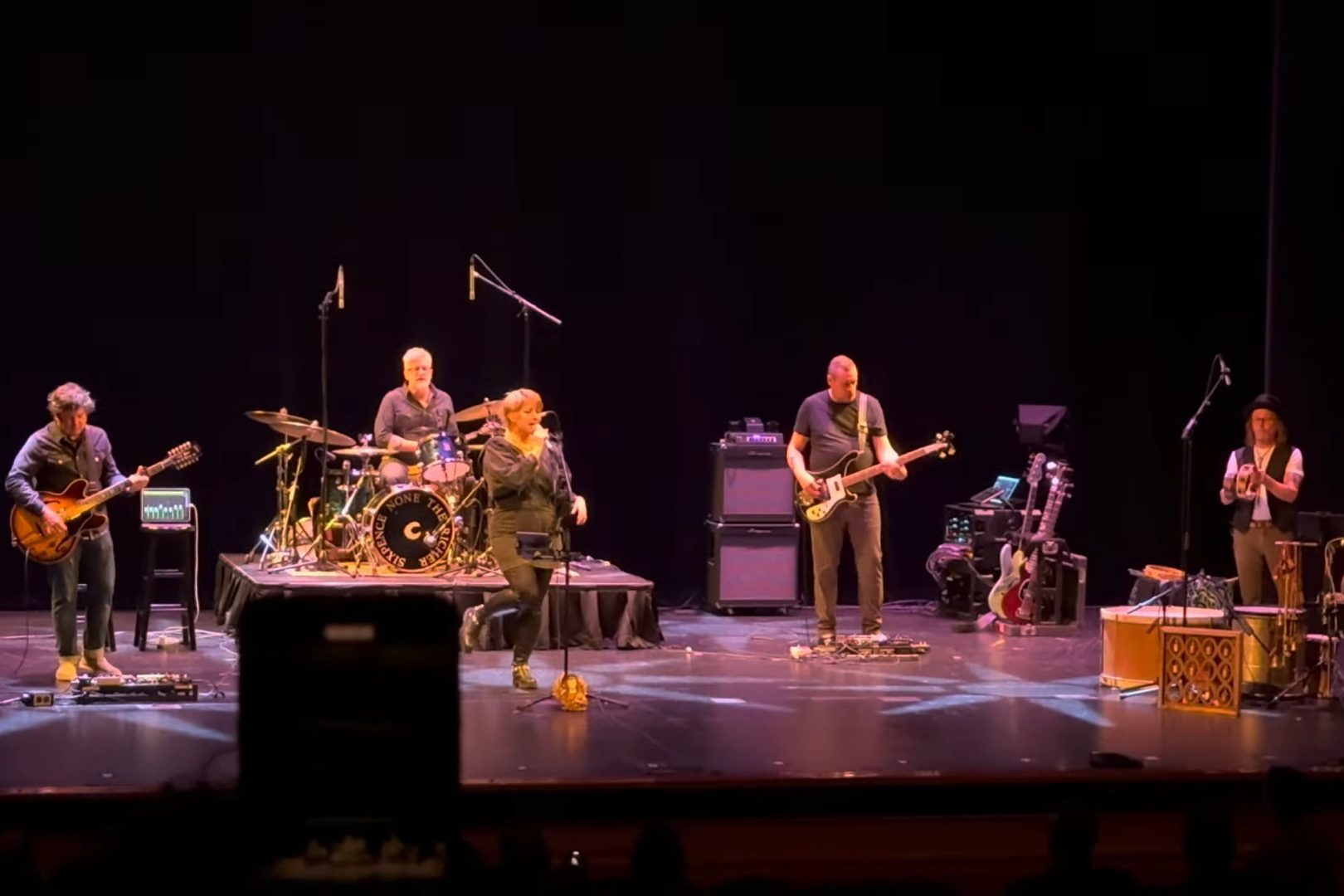
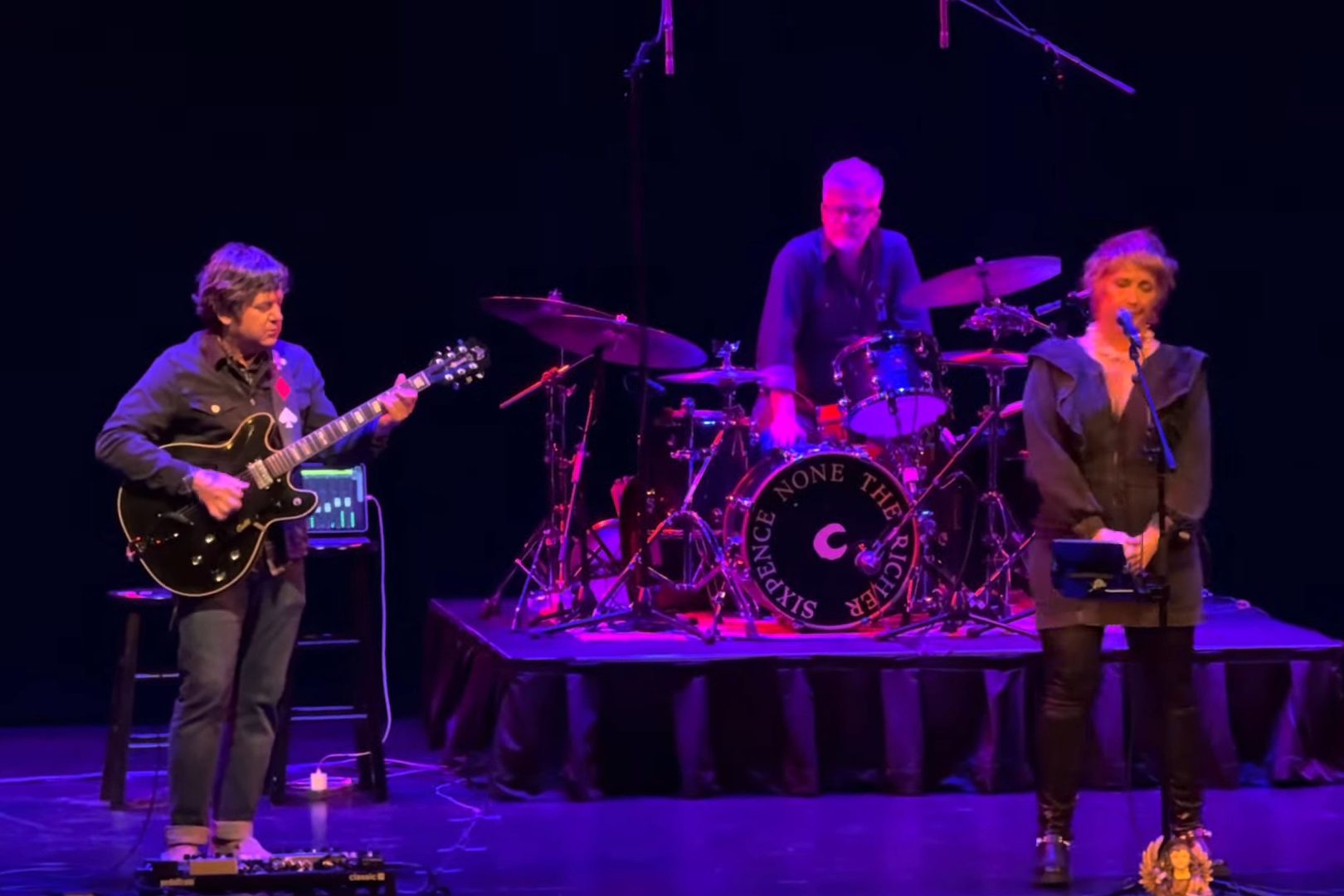
    Sixpence had later hits with covers of “There She Goes” and “Don’t Dream it’s Over”.  At the time I thought, “What a clever way to trick heathens into liking a Christian band!”  Now I think, maybe they were just having fun, like the kind we had at Amaturo Theater last Friday night. 

    Guitarist Matt Slocum is the 51 year old genius composer and instrumentalist behind Sixpence’s songwriting. 

    I lost track of how many guitars he used during the show at Amaturo (at least five).  I sat close enough to notice that when his guitar tech handed over a new one, Slocum was sure to make eye contact, smile, and say thanks.  Damn, what a gentleman!

    Slocum’s brilliant instrumental interludes, which are often technically very challenging (and reminiscent of The Cure or even Led Zeppelin), serve as a kind of meditative silence, tucked far enough away from the lyrics, where the Truth (yes, capital T) can make itself known, ever so gently, deeply, and lovingly.  Sixpence allows their listeners a chance to appreciate their temporal beauty and genius, as well as the Source of said beauty.  Yet there are no sermons and no Bible thumping with this bunch.  

    For example, Love, Salvation, the Fear of Death is a banger based on the most self-deprecating words of St. Paul.  It’s also great late night driving music (on repeat, of course).  It’s lyrically and musically one of my favorite songs EVER, up there with Led Zeppelin’s Rain Song and Simon & Garfunkel’s Scarborough Fair.  The bass guitar alone on this track should have won a Grammy.  Of course, they didn’t play it at Amaturo. I’m still trying to be a good Christian lad, so I’ll forgive them.     

    Here’s the night’s setlist, courtesy of setlist.fm:

    Angeltread

    Within a Room Somewhere

    Thread the Needle

    Don’t Dream It’s Over (Crowded House cover)

    The Tide

    Rosemary Hill*

    Midnight Sun (The Choir cover)

    Don’t Let Me Die in Dallas (Leigh Nash song)

    River (Joni Mitchell cover)

    Melody of You

    Homeland

    Down and Out of Time

    Julia

    There She Goes (The La’s cover)

    Kiss Me

    We Are Love


    Encore:

    Tension Is a Passing Note

    Breathe Your Name

    * Warning: Rosemary Hill (linked above) has been stuck in my head going on five days – may you fare better. 

    Leigh Nash, now 48, still glows with the beauty, innocence, and quirkiness that captured hearts when she was 20.  Her smile is unafraid. Now the mother of a 20 year old, Nash seems very much at peace.  

    Early in the show, two well-dressed young women walked out together.  “Bye, ladies!” Nash interrupted.  “Oh, we’re coming back,” they said. “No, you’re not, but that’s okay!” Nash said, creating a moment reminiscent of a seasoned road comic dealing with hecklers.  The door closes.  Nash caught herself. “Oh my gosh, did I just imitate them?!”  More laughter.  “Well, imitation is the sincerest form of flattery.”  More laughter.  “I better stop.”  I wish she hadn’t.  She really is hilarious.  

    Nash also mentioned The Chimney House, how it’s the best food ever, and that she ate way too much there, rubbing her belly.  Hey, I’m 50.  Bellies happen.  Leigh makes hers seem absolutely adorable.  

    Nash’s song “Don’t Let Me Die in Dallas”, written about her late father, was especially moving, as she was on the verge of tears before, during, and after.  She is blessed with a vulnerability that never feels forced or cringey.  Nash connects with her audience like a favorite sister, best friend, crazy wine aunt, and “the one who got away,” all rolled into one. 

    It was a more racially diverse crowd than I expected. 

    There were oldsters with kids, churchy types, and people who appeared to be on dates and just wanted to hear “Kiss Me”.  There was something for everyone and yet no pandering whatsoever. 

    Driving home sober (it’s been 21 years now, thank God) my mind wandered to Austin, Texas, near where Leigh Nash and Matt Slocum are from. I was thinking about comedian Tony Hinchcliffe, whose Austin-based Kill Tony podcast has a recurring bit where he tries to recruit a lady from the audience to kiss the occasional virgin “incel” comic.  The segment is usually accompanied by Sixpence’s “Kiss Me”.  

    Oh, please God.  Could Nash do a cameo on the show, sing Kiss Me, and heal Tony Hinchcliffe’s soul?  Perhaps she’d grow even more popular, thus tricking millions of additional heathens into a personal relationship with Jesus Christ!  Or maybe it would just be fun as hell to watch.  Either way.  

    Being old enough to see a band from my youth is disconcerting as I grapple with my own mortality.  But I feel much richer for this experience.  Not only can I reminisce about the Sixpence of 1995, but I can also appreciate their current artistry. That’s the kind of win-win that even an alcoholic Ohio frat boy can be, like, totally cool with.

  • Miami Underground: What We Did Is Secret at Book Fair

    Miami Underground: What We Did Is Secret at Book Fair

    In the 1980s a wave of artists, musicians, performers, and creatives of all stripes crashed Miami and the nearby Beaches and fashioned a DIY paradise from the abandoned theaters, seedy hotels, and cheap storefronts that had survived as relics from the Golden Age of the 1950s. “Succeeding” on their own terms—in part because nobody in the mainstream knew or cared—their smallish alt scene flourished and, arguably, ultimately, helped set the stage for the cultural explosion and Baselification that followed.

    But as much as Miami has modernized over the decades since, a DIY attitude remains essential for creators in this city. Too often, still, local talent is overlooked by a cultural mainstream that sees Miami as exotic backdrop and not as fertile creative ground.

    The alt attitude that made fun things happen in South Florida and across the country back then—and now—is explored in a discussion at this year’s Miami Book Fair led by Punk Under the Sun authors Joey Seeman and Chris Potash. These two survivors of the city’s alt heyday have assembled a panel about Miami’s past and present DIY culture that includes Ale Campos and Emile Milgrim of the Miami-based band Las Nubes; Arifacts Gallery founder Howard Davis, who helped direct an underground-art scene pre Basel; and author and drummer Joey Maya (aka Joey Wrecked), who provided the driving beat behind several important punk/New Wave bands of the ‘80s.

    “As many folks from South Florida do, I left after college, moving to Portland, Oregon, a well-known DIY/punk haven,” says Milgrim. “When I returned to Miami in 2011 for family reasons, one of those kids I’d met online in the ‘90s asked me if I wanted a job at her record store, Sweat. I worked there for 11 years and throughout that same timeframe, and much due to that space and Miami’s local music community, I met friends, collaborators, and ultimately, much of my chosen family.

    “This is what music can do. This is why we get in a van and drive eight hours to sometimes play to only five people. Once upon a time we were those five people and that band changed our lives.”

    Miami Book Fair panel discussion on Alternative Culture & DIY in Miami from 1980s to Now will be held on Saturday, November 23, 11 a.m at Miami Dade College, 300 NE Second Avenue, Miami,  MAGIC Screening Room (Building 8, 1st Floor)

  • Dear Mr. Person Who Represents a Developer

    Dear Mr. Person Who Represents a Developer

    Dear Mr. Person Who Represents a Developer,

    You already know my name because one of my neighbors told you. You also know my wife’s name. You also know someone has been sick the past couple days in another apartment. You know a lot of things about my building, the people in it, and you want to meet with my wife and I to divulge secrets and discuss a financial offer for my home.

    What I don’t think you know that we know is you’re not actually the developer. You’re a kind of middleman. A liaison. Really, you’re a pariah. And you’re in cahoots with a particular neighbor of mine. This neighbor may in fact believe they’re doing something good by inviting you inside. What they don’t realize is you’re Nosferatu of the Real Estate sect. Once in, you can always come in.

    There’s the familiar adage, “You can’t put Pandora back in the box.” Unfortunately, we, the building, are now suffering from it. One person’s greed, perhaps. Perhaps this person is in a financial bind. We understand you have offered this individual a $10,000 commission for every unit sold. On top of the meager profit, this neighbor will receive for their unit. I think you’ve underestimated the building. We don’t keep secrets. For better or worse.

    The owners who live here are owners who want to die here. You really can’t put a price on that. But I hear you’re trying. And from the sound of it, it doesn’t even look like you’re trying. Yes I mean millions. Yes, you can stop laughing. But seriously. Not only do we own the joint, but we also own the air above it. Yeah. We can charge for future units. I said stop laughing, it’s making me nervous. 

    Clearly, I’m a “no”. And so is my wife. And so is that live-in owner neighbor upstairs. And the live-in owner neighbor BBQing outside of their front door. And those live-in owner neighbors walking their dog. There’s more of us. Are we a perfect union? We sure are not. Can you divide and conquer? With some, sure. But unless you’re fitting us with concrete boots and throwing us in the bay we have as a backyard, you might as well consider our bodies a part of the building’s cinder blocks.

    As much as you’re poisoning our well, you’re pissing in our pool. And we just got it refurbished. Yeah, I’ve been here for many of the assessments we’ve had to bring this building back from the dead. And you think can come down here, wave a badge (okay, made that part up), and shake us down for Pennie’s, relatively? You may be a nice person, with fairly pure intentions, but as soon as you start scheduling backroom lunches, you’ve already begun pitying us against each other.

    Look. Whatever neighbor sold us out to you should avail themselves of their property. They don’t belong here. They may never have. And this person is the real sickness. You’re only a symptom. Who can know that kind of thing, right? Every process requires transparency. For example. I worked for a studio and it was time to negotiate. I remember asking my co-worker who was definitely friend material how much he asked for. I’d never been in this ditch before. And he didn’t tell me. I never looked at him the same again. That’s what you’re setting us up for. 

    Shame on you.

    As I said, we’re far from perfect. I’ve had to fake smile my way through dozens of conversations. But what I realized after living here with so many of them for nearly a decade is they feel the same way about this building as I do. I mean, I think we can all agree this place means more to my wife than anyone. And I’ll be damned if your plans get in the way of my wife’s favorite thing. So be a good guy. Back the fuck off. And forget about the time you tried destroying not only people’s houses but their lives. We are the building. The building is us. 

    Yours Truly,

    Travis Roig

    P.S. If you find me two-tapped, that’s killer talk for putting two bullets in my head. If I’m still sort of sitting up on my couch, dead hands eating on my dead knees, and my cold dead body keeps teetering back and forth, know that it was this letter, and this letter alone, that brought this on. Check my Facebook hystery cache for the real culprit!”

  • I Disappeared Them – Excerpt from New Novel

    I Disappeared Them – Excerpt from New Novel

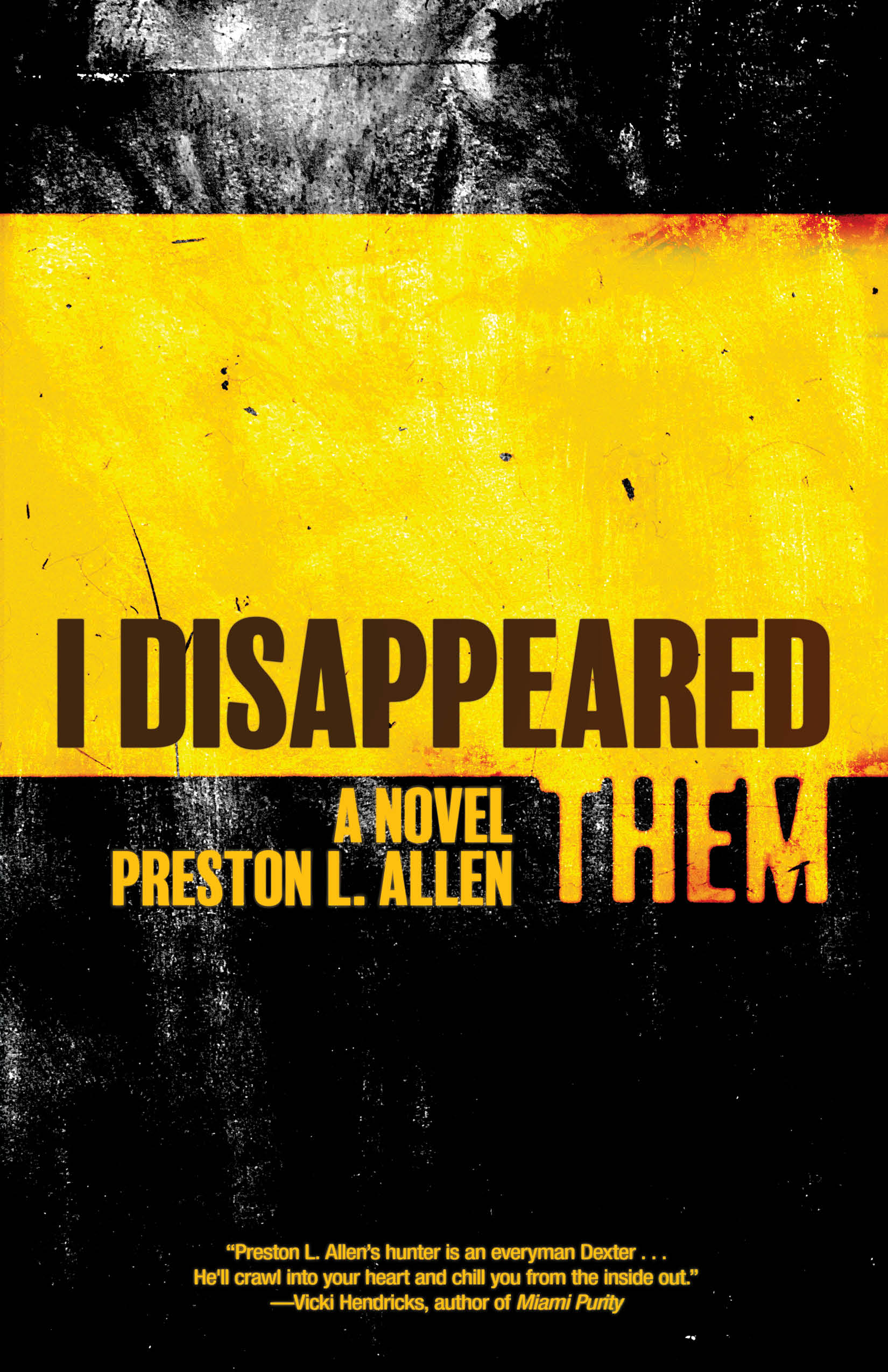
    Below is an excerpt from Preston Allen’s new book, I Disappeared Them, published by Akashic Press.

    Preston will be one of over 500 authors reading and speaking at the 41st annual Miami Book Fair from November 17-24. Preston’s reading will be at 4:30 pm on Saturday, November 23 in Room 8301. For more info visit MiamiBookFair.com.

    —There are two photos of the hunter in the ninth grade.

    In the first one, he stands alone—a monstrosity with a long, pale face, freckles, and a crooked smile. His eyes are black as a starless midnight. His long-fingered hands clutch a science textbook as gray and tattered as the noble garments that hang from his anorexic frame. If photographs possessed smell and taste, his would smell of ashes and taste of dust. He’s hunched over. He’s a walking skeleton with a twisted spine.

    He’s a five-hundred-year-old teenager fresh from the grave.

    He’s Nosferatu.

    —He’s Count Dracula.

    In the second photo, his outfit is varying shades of gray, from his name-brand sneakers to his stylish overcoat and anachronistic ascot. His outfit is composed of expensive and often clashing elements indicative of his family’s nobility and his own vanity.

    In this group shot, he stands apart from the rest. His eyes are vacant, his skin pale, for he is dead. He is a corpse who struts with flair.

    In the photograph, he stares out at you. He’s arrogant, and he loathes you.

    You are mere mortal. He is the ancient evil.

    —The other students say he is a fright in these Science Club photographs, and he would agree. In the photographs, you are seeing the hunter as the hunter once saw himself. Behold the killer inchoate. Behold the monster in his infancy. A photograph is a future memory.


  • The House on G Street: A Cuban Family Saga – An Excerpt

    The House on G Street: A Cuban Family Saga – An Excerpt

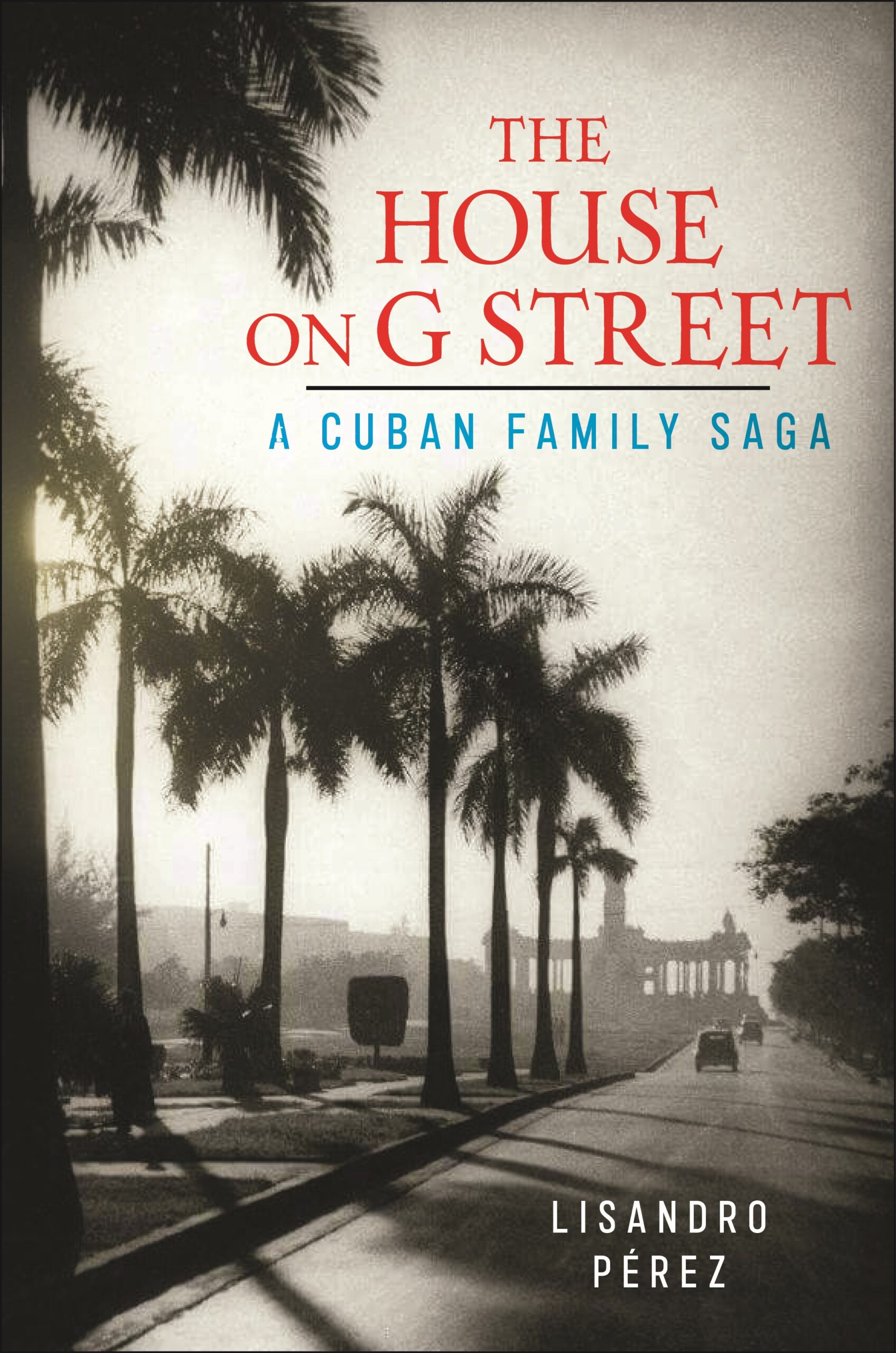
    Below is an excerpt from Lisandro Pérez‘s new book, The House on G Street: A Cuban Family Saga, published by New York University Press.

    Lisandro will be one of over 500 authors reading and speaking at the 41st annual Miami Book Fair from November 17-24. Lisandro will be reading at 5 pm Saturday, November 23 in Room 8202. For more info visit MiamiBookFair.com.

    I sit once more on the bench directly across from the house on G Street. It’s October 2015. There are many benches on the promenade that runs along the median of the street, but during my visits to Havana, I always sit on this bench, the one facing the house. 

    I sat here with my father in the year 2000, on the day of his eightieth birthday, during his only trip back to Cuba since he left the island forty years before. We both sat on the bench for a long time, gazing at the house and saying almost nothing. We can’t go in and visit the house, I told him, because it’s a day care center full of toddlers, and we can’t just walk in unannounced. We would not be welcomed. He did not question that, and I was glad he did not. At this distance, from the bench, the house did not look too different from when he lived there for eighteen years, from the time he was ten years old to the moment he left the house in a tuxedo with tails to marry my mother. The house’s exterior still had the reddish-brown color of unpainted stone, just as when it was first built. The tall iron fence that encloses the property was intact, as was the colonnade that frames the front portico. As seen from the bench, one of the columns even mercifully covered the sign near the front door that proclaimed the day care center’s name: Vietnam Heroico. 

    Had my father gone in, however, the illusion that the years had not passed would have quickly and sadly faded. His heart would have sunk at the deterioration of the interior and the many unattractive ways it had been modified to serve little children. I think he knew that. I knew it because I had been inside during previous trips, on afternoons when I waited on the bench until all the children had left for the day to walk up to the door and give the administrators or the watchman some pretext to go inside and walk around. It did not always work, but a few times it did, and I would enter and try to see as much as I could before I was asked to leave. The sharp contrast between what I was seeing and my memories of how the house looked when I was a child was jarring. But I also felt grateful that the house had not met the fate of other stately Havana homes: abandoned, or turned into a tenement, or perhaps even put out of its misery with a total demolition. The house was minimally maintained, and I felt gratified that it had served to care for generations of children since the days of, well, Heroic Vietnam. 

    But now, in 2015, everything about the house has changed since my father last saw it fifteen years before. Someone decided that, for the first time in its nearly ninety-year history, the exterior of the house needed to be painted. The dignified terra- cotta look gave way to a bright white with mustard accents. But the worst thing that happened was that Vietnam Heroico was no more. The day care center closed, and the house was shuttered. From the bench, I can see the heavy rusted chain that wraps through and around the iron lattice of the tall double doors of the front entrance, the ends of the chain secured by a huge lock. 

    I made inquiries when I first learned of the closure. Cuba’s birth rate is so low that perhaps they need fewer day care centers and there is nothing wrong with the house. But no; I found out that the roof leaks everywhere. I was told that the day care closed suddenly after a large chunk of plaster, weakened by water seepage, came crashing down from the kitchen’s ceiling. Fortunately, no one was around when it happened. With each passing day, the house moves inexorably toward abandonment and, eventually, demolition. The idea seems inconceivable. 

    The closure made me realize the depth of my emotional connection with the house on G Street, a connection I still do not quite understand. I never lived there. When my parents married, they went to live in an apartment in Miramar, a new suburb at the time. I lived in that apartment until 1960, when I was eleven years old and my parents decided we would leave the country. But every Sunday, my parents, my brother, and I would join my uncles and aunts and their children for lunch at the house on G Street. Perhaps it was the sense of belonging that came with those weekly lunches, with uncles and aunts doting over every niece and nephew, and with all those cousins as playmates. The house gave my life a sense of stability, with its spaciousness and solidness. I knew my grandfather had built it and that my father and his siblings had grown up in it. I imagined what it must have been like to live there at the time my father was a child and how the house and its occupants shaped my life in many ways. The house was the physical representation of my family legacy, and once I no longer lived in Cuba, it became in my mind the reference point for everything that had been and would never be again. The house on G Street became Cuba for me.


  • Oye – Excerpt from New Novel

    Oye – Excerpt from New Novel

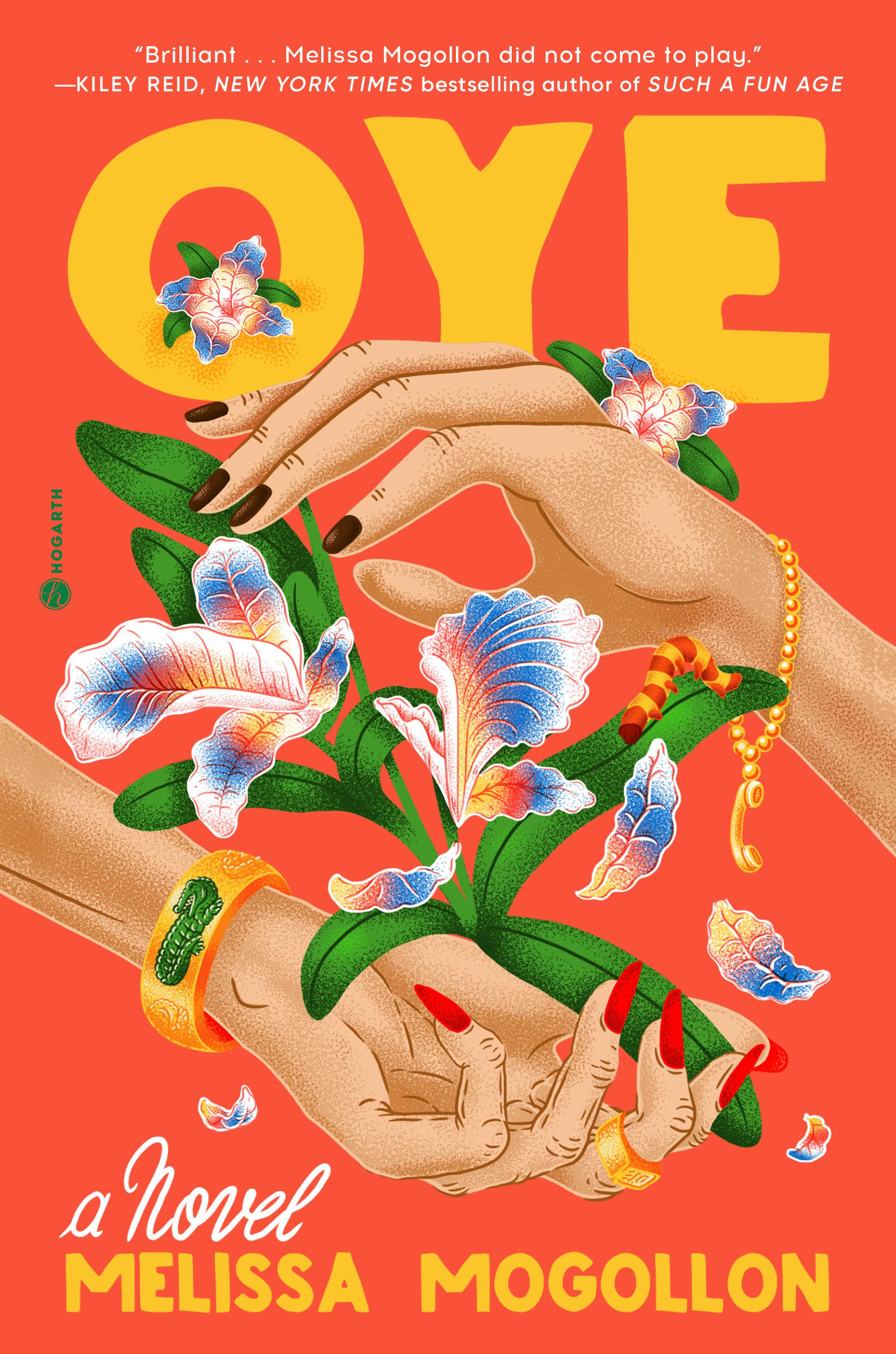
    Below is an excerpt from Melissa Mogollon’s new book, Oye, published by Penguin Random House.

    Melissa will be one of over 500 authors reading and speaking at the 41st annual Miami Book Fair from November 17-24. Melissa’s reading will be at 11 am Sunday, November 24 in The Pavillion. For more info visit MiamiBookFair.com.

    Pasame el telefono

    “I can’t believe you called me six times for this today, Mari.

    Abue is going to be fine. Whether she evacuates or she stays.

    She’s like an immortal Pokemon.

    Oh my god. And you left me a voicemail?

    I just saw the notification . . .

    You are such a closeted boomer . . .

    Well now that I know you’re alive, I’m gonna need a second to breathe.

    I thought you had been kidnapped. And the police were calling me to demand some answers, since you have me saved as ‘ICE Psychopath’ in your phone.

    Yes. Mom told me you still haven’t changed that.

    Which is not only rude, by the way, but also impractical. Have you thought about that?

    What’s gonna happen when you have an actual emergency one day?

    You’re gonna be like on your last breath, begging for help. And the cops won’t be able to reach me because my phone’s gonna be locked away in Mrs. Nelson’s desk again for ringing during class.

    Luciana Dominguez. Is that your phone?

    Yes?

    Give it. You can get it from me at the end of class.

    Wait, it’s Mari? This f***ing bitch.

    Luciana!

    Sorry. It’s just . . . my sister.

    It was on loud because NO ONE EVER CALLS ME, DUDE.

    So imagine my surprise when I get my phone back and see six missed calls, thinking that you’re either dead or I’m being framed—just to call back and get your unbearable high-pitched voice on the line screaming about our grandmother!

    Mm-hmm.

    And it’s really all or nothing with you, huh?

    Because I hadn’t heard a peep out of you since you went back to school.

    Nope. Not a single word when I texted you being vulnerable, asking if it was weird that I was starting my senior year but was still scared of Mom.

    I shouldn’t be this afraid, but her eyes are so scary. Is that normal? Should I feel more confident?

    Or during the important and personal milestone of Rihanna launching her Fenty Beauty line last week.

    Ignore my texts about Mom, I’m over it. But can you send me $30 though? It’s urgent.

    And now here you are.

    Blowing up my phone while I’m trying to prepare for a hurricane.

    Along with the underwhelming beginning of my impending adulthood.

    Thank you.

    No! Don’t start asking ‘how are you’ now, bitch.

    I needed you a month ago!

    Whatever. You’re lucky there’s a storm coming. I don’t have time to get into this.

    So tell me, is your plan to cyberbully and harass Abue into evacuating with us, too? Cuz you’re pretty good at that.

    Oh, she’s not listening or picking up your phone calls? Weird. You have the voice of an angel.

    Okay, relax, lol.

    Just text her that Jesus came to you in a dream and said there’s a one-hundred-pound weight minimum for adults to get into heaven. So if she really wants to meet Princess Diana, she’s gonna have to wait. Because it’s not in her best interest to die right now at ninety-five pounds in a hurricane.

    I am being serious, Mari? You know how Abue feels about Lady D.

    Fine. But could you at least remind her that all the stores close up during hurricanes too? As the allegedly ‘wiser,’ more ‘trustworthy’ one of us? I tried telling her myself, but she didn’t believe me.

    If you stay, you won’t be able to buy anything, Abue. Not even at Marshalls.

    Everything you say is a lie, Luciana.

    You can’t just decide that because I’m saying it in English.

    Why not? It’s the language of liars.

    I promise you that the mall will be closed, dude. You won’t be able to get in. No one is going to be here—just you and Hurricane Irma. So c’mon! They’re saying she’s going to be the worst storm of 2017. Go pack up your stuff and let’s go.

    No! I’m not a sheep.

    Ew, Mari . . . Why are you crying?

    Abue’s going to be fine! She’s not an idiot. She knows where all the shelters are, and Dad will be at the farm, only a few hours away.

    Plus—she’s still got like twelve hours left to change her mind. Mom said we’re not leaving until tomorrow morning.

    And you can even tell Abue that if she comes, I’ll let her ride shotgun.

    That way she can lean into the driver’s seat and say, ‘This isn’t the way’ to Mom like five hundred times.

    She really loves doing that, Mari! It could help.

    FINE. Then just call and confess that she needs to evacuate so you don’t feel guilty over not being home! THERE. I SAID IT.

    Oh, please. You’re a horrible liar.

    And for starters, it’s obvious. We were invisible to you until Irma found us.

    But now you desperately need Abue to stay safe, so you don’t have to come back or feel guilty if something happens.

    Since this is really all just about you and your need to control everything! Voilà!

    I’m not as stupid as everyone thinks!

    Why is Mari freaking out? Abue can make her own decisions. She’s an adult?

    She just cares, mi amor. She feels helpless from so far away.

    Well she should ‘care’ more often then. Not just when the news says there’s an emergency.

    Sure, yeah, I’m joking, lol.

    Just can’t believe that I’ll never make it to college myself.

    Since I’m going to die driving the back roads of Florida, racing a tsunami to save our grandmother.

    Next to our mother and our dog.

    Mari—relax! I’m kidding and you know it. So stop pretend-crying and spare me the act.

    You will get to escape the consequences of your actions once again, and we will all be okay. Including Rosy. And she’s the only dog I know who’s scared of clouds.

    Yes, Mom and I tried convincing Abue to come with us all week! I promise.

    We bombarded her from every angle possible: Facebook, WhatsApp, texts, and emails. Nightly FaceTimes on the iPad. Even some fake eHarmony promos. But she just wouldn’t listen. To Mom, Dad, or me—her most perfect and precious grandchild.

    I’m not leaving, Luciana.

    Fine. Your choice. I’m tired of begging.

    Though, of course, Mom then acted like Abue’s refusal was somehow my fault. Since she’s so used to you doing everything  so perfectly and flawlessly for her.

    No! Luciana! Get back on the phone.

    Why? She’s just being stubborn.

    Because she’s your grandmother. Try again.

    UGH. Hello? Abue—it’s me again. Your daughter is driving me crazy. Please don’t leave me alone with her. They’re saying this storm is going to get bad! That we really need to evacuate.

    They always say that! Tell your mother that I’m too old and the drive is too long. And I read somewhere on the internet that senior citizens who evacuate are much more likely to get injured than those who stay. Can you imagine that?! Suffering in a hospital that’s already falling apart? My girl, I’d rather be dead.

    But you’ll be with us!

    Everything I need is here. Goodbye. They say this every year.

    What about the six-foot storm surge? And the power outage?

    Tell it to come.

    Do you think that Abue won’t evacuate because she wants to be on Primer Impacto, lol? The world’s most depressing news show?

    She’s been watching it a lot lately while we’re on the phone before she goes to bed.

    Yes . . . and all they do is, like, show pictures of dead bodies on streets . . . Or run stories about dads trying to sell their daughters.

    Or flash ‘Breaking News’ alerts about the kid in the neighborhood who’s been chopping the heads off his pets.

    Last time we were at her place, she even got in my head by saying, Luciana—look. Isn’t that boy in your class?

    No. Stop. You’re gonna give me nightmares before I go to sleep.