Category: News

  • The Last Man Offline: Part 1 – Fiction

    The Last Man Offline: Part 1 – Fiction

    Miami, 2060

    It’s not even 7 AM yet and the air’s already sticking to Larry’s skin as he steps out for his morning walk, vintage Air Force Ones crunching on gravel, fisherman’s hat on his head. A battered MP3 player’s clipped to his pocket, Miles Davis Kind of Blue in his earphones as he strolls down the cracked sidewalk. He passes a neighbor’s house where their kid’s inside the open garage with his AR lenses glowing, hands dancing in the air playing some game.

    A delivery drone hums overhead, the light from its scanner passing over Larry and a screen on the undercarriage blinking red. A message appears:

    UNVERIFIED

    Larry barely glances up and the drone moves on, the red letters replaced by an ad for algae water.

    At the end of the block, Larry turns the corner, heading east towards the shoreline, where US-1 used to be. Some people say they’ve gotten used to it, how the coast keeps swallowing the city inch by inch.

    Larry doesn’t think he can ever get used to something like that.

    After about half a mile, Larry comes across an old EV pickup truck parked across from the shore, the trunk full of fruits. A couple sits on the shaded side of the truck in beach chairs, both wearing VR sunglasses so Larry can’t tell if they’re looking at him or not. There’s a digital sign leaning against the inside of the trunk listing the fruit prices. Larry picks out three bruised mangos, pulls a folded cloth bag from his pocket and drops them in. He reaches back in his pocket and pulls out a couple of tattered dollar bills as the digital menu switches to a checkout screen.

    Larry glances at the couple. “Does this thing take cash?”

    The woman raises her sunglasses and squints first at Larry, then down at his frayed singles. Slowly, she reaches her hand out. Larry gives her the bills and she turns them over, studying them before looking back up at him curiously.

    Larry gives her a polite smile, leaving with his mangos in hand.

    Halfway through his circular route, Larry walks back home with sweat clinging to his shirt. The run of Miles Davis’ tracks gives way to Mos Def’s “Mathematics.”

    A woman going the opposite direction passes wearing a sleek AR visor and walking her dog, eyes fixed forward, finger swiping through the air. A wrist drone on her right arm guides the dog’s leash.

    Back at home, Larry locks the front door behind him and flicks off the MP3 player, taking off his shoes. He sets the mangos on the kitchen counter next to a stack of library discards, picking up a battered copy of Ellison’s Invisible Man. He flips to the page with the folded corner, staring at the highlighted line in the middle:

    “When they approach me they see only my surroundings, themselves or figments of their imagination, indeed, everything and anything except me.”

    Raising his head, Larry stares out the back sliding glass door at some birds flying by, the sky a dull gray that threatens rain he knows will come in a couple of hours, like clockwork. The quiet settles. The Ellison quote lingers in his mind.

    Tucking the book under his arm, Larry shuffles over to his couch, sitting down and opening the book again on his lap. He reads until his mind drifts to Marcelo, as it does sometimes.

    He still has the nightmares. He considers them a reminder.

    Larry puts the Ellison book down on the couch and stands again, heading to the backyard and the small garden he’s managed to keep alive in a corner plot. He grabs his gardening gloves and the spade lying next to them, snatching a packet of okra seeds off his patio table. A couple of folding chairs lean against it, and he shakes them a little, watching the lizards scurry down the legs. Kneeling by the garden, he drops the gloves beside him and presses his fingers into the dirt. He digs a few holes then opens the packet and shakes some seeds in, shivering a bit as the sunlight touches his shoulders. His sweat mixes with the soil on his hands as he works methodically.

    An hour passes and the wind shifts around Larry, carrying the faint tang of salt from the ocean. Sitting in front of the garden with his legs in front of him, Larry closes his eyes and breathes.

    _____________________

    Jonah’s condo in West Perrine hums with life as he steps out, AR suit adjusting to red, matching his energy after a morning workout. The building’s exterior is all glass and solar panels, artificial vines running up the walls in neat vertical gardens. The air’s heavy with humidity, barely noon and it’s already above a hundred. Jonah dodges a couple of power walkers strutting by with umbrella caps on, just two of many on the busy street. Pops told him once this used to be empty land, like Brickell before the ocean took it. Jonah wouldn’t believe it if Pops hadn’t shown him pictures, and even then he wondered if they were artificial.

    Standing at the curb, Jonah waits for the drone-piloted car to lower in front of him, door sliding open with a hiss. He climbs in, suit and scalp nodes dimming as he leans back, closing his eyes.

    The car rises and angles east, the whirring engine reminding Jonah of the server in his apartment, which reminds him of the meeting in the SimpliCity conference room yesterday. He was in the middle of a pitch presentation for his client’s open world VR game concept when he was interrupted by a journalist’s offhand question:

    “Did you say your grandfather’s never been online?”

    Her name was Ren, and Jonah smirked at her avatar’s surprised expression. He shrugged and tried to continue but Ren the journalist leaned forward.

    “Like, ever?”

    After the meeting, a private chat box opened under Jonah’s profile and Ren’s avatar appeared again.

    “I want to meet him,” she said. “In person.”

    He hadn’t expected her to actually follow up.

    The drone car jostles Jonah as it hits the coast and heads south, standard routing to avoid the worst of the flooded zones. Gliding over submerged lots where neighborhoods used to be, sunlight catching on water pooled in the skeleton of an old strip mall, the drone turns back west for half a mile then drops Jonah in front of Pops’ house. The old two-bedroom’s surrounded by a patchy lawn, the small garden Pops has somehow managed to keep alive out back.

    Jonah climbs out of the drone and it flies off as he tries his grandfather’s front door. It’s locked so he rings the doorbell, gets no answer.

    Jonah smiles, circling around the side of the house and peering over the fence. “What’s up, Pops?”

    Hunched over his plants, Larry says something that’s too muffled for Jonah to hear, standing and wiping dirt from his hands on his jeans as he walks over and unlatches the gate.

    “You found me,” he says, smiling at his grandson.

    “I’ve been pinging you all morning,” Jonah says, closing the gate behind him and giving Larry a quick hug. “Got a notification said you missed your appointment again.”

    Larry waves him off, heading back to the garden. “I was busy.”

    Jonah’s AR suit recalibrates to the brightness as he follows his grandfather to the garden. “Busy playing in the dirt?”

    “Something like that,” Larry says, bending down to pull a weed and set it aside carefully. He looks up at Jonah, and Jonah can’t tell if he’s smiling or squinting at the sun behind his head.

    Looking around his grandfather’s garden, Jonah pulls his AR goggles down and taps the side, putting them in search mode to identify the many plants. Coconut palms fringe the fence line, their shadows cutting across patches of lemongrass, collard greens, and a sprawl of sweet potato vines weaving between pockets of firebush. A single papaya tree leans heavy with fruit near the corner against Pops’ fence, where the breeze rolls in strongest.

    Jonah sits and helps his grandfather pull weeds, brushing dirt from the roots before dropping them in a pile.

    Jonah’s hands don’t touch real soil often.

    “Garden’s coming on nicely,” he says.

    “Looks good, don’t it?” Larry says, surveying the plot. “Weather’s been helpful.”

    “You inspired me, actually,” Jonah says, tapping the side of his goggles again. This time a projection pops into the air above his palm: a digital garden, lush and green, blooming in impossible colors. “Built this for my architecture class. It’s part of a larger sim. Thinking about submitting it for the SimpliLiving design comp.”

    Larry looks at the virtual model, leans in close and squints.

    “It’s pretty,” Larry says, shaking his head and turning away. “You can’t smell it though.”

    “Spring for the synaptic facemask and you can,” Jonah says, dropping the projection so it dissolves in a shimmer. “State-of-the-art.”

    “State-of-the-art,” Larry says, smirking. “State-of-the-art is the sun on your back.”

    “They’ve learned to simulate everything, Pops,” Jonah says, glancing up at the sky. “Even sunlight.” He looks around the lawn, the garden, the house a dozen feet away. “It is nice to go R-dub every now and then though.”

    Larry raises an eyebrow. “What the hell is R-dub?”

    Jonah laughs. “R-Dub,” he repeats. “The Real World. Where we go when we log out.”

    Larry leans away from his grandson. “R-dub sounds like a disease.”

    Jonah laughs again, heartily.

    The breeze cuts through the heat for a second as a news helicopter drone speeds by. They both grow quiet. Jonah glances at his grandfather, who watches the helicopter until it disappears out of sight.

    Jonah’s stalling.

    “Listen, Pops,” he says. “I need to ask you about something.”

    “Shoot,” Larry says, pulling a weed out by the root.

    Jonah hesitates. “I was talking to this journalist yesterday after a conference meeting,” he says. “Her name’s Ren Valencia.”

    “Sounds familiar,” Larry says, pulling out another weed.

    “She’s freelance,” he says. “Does work for some of the major news sites, mostly The Current. You’ve probably seen her byline.”

    Larry looks up at Jonah. “What’s she want with you?”

    “Actually,” Jonah says, studying his grandfather’s face for a reaction. “It’s you she wanted to talk about.”

    Larry tilts his head. “Why would she want to talk about me?”

    Jonah shrugs. “That’s what I asked.”

    Larry pauses. “And?”

    “Apparently,” Jonah says, scratching the back of his neck. “Being a digital ghost makes you some kind of unicorn these days.”

    “Ghosts and unicorns,” Larry says, standing up slowly and brushing dirt off his jeans.

    Jonah smiles, standing too. “She wants to meet you.”

    Larry stares at Jonah. “Why?”

    “I don’t know, Pops,” Jonah says. “She just wants to talk, I think.”

    Larry looks off toward the horizon. “I mean — what does she want to talk about?”

    “Think she’s looking to do a profile or something,” Jonah says. “Because you’re like the only person on the planet who doesn’t spend most of their day online. I didn’t agree to anything though, told her I needed to ask you.”

    Larry stays quiet long enough that Jonah assumes he’s going to turn it down.

    Then he looks at his grandson. “What do you think?”

    Jonah isn’t expecting this question, and gives it some thought. “It can’t hurt to just talk.”

    Larry pauses. “You gonna be there?”

    “I can tell her no, Pops,” Jonah says. “If you don’t want to.”

    “No, it’s fine,” he says quietly. “No goggles, though. And if she wants to talk, she can come here. We sit on the couch or the porch or wherever, she talks to me in real life like a real person.”

    Jonah nods, tucking his hands into his pockets, his suit dimming to a neutral gray. “Yeah. I told her you’d say that.”

    They stand there in the quiet, side by side, the world humming around them.

    “When’s she want to do it?” Larry asks finally.

    “Told her I’d ask you today and if you agreed — ” Jonah pauses. “Maybe next week?”

    Larry looks over at his grandson. “You need to be here also,” he says. “Tell her to come Friday, when you visit.”

    Jonah studies his grandfather.

    “Sure, Pops,” he says, touching one of the coconut palm fronds. “I’ll be here.”

    _____________________

    Stepping out of the XR hub in Orlando, the air thick as syrup, Ren Valencia’s shirt is sticking to the small of her back before she even clears the platform. She’s just spent six hours in SimpliCity reviewing spatial edits for a feature on Starwave Station (still the most profitable low-orbit resort), fielding a thousand pings she doesn’t want, nodding at editors who talk at her, not to her.

    It’s only when she pulls off her neural band with a slight sting across her scalp that the real world floods back in: smells, heat, the true weight of gravity that the haptic suits never get quite right.

    She checks the time. The train south leaves in fifteen minutes.

    Ren buys a coffee and a lab-grown beef sandwich from a corner bot vendor and leans against a column with the steaming cup in hand, muttering to herself as she scrolls through the notes she scribbled in her digital journal as soon as she logged off last night. She draws a line with her thumb under the words memory vs archive then taps the screen off, thinking of Jonah and his avatar during their SimpliCity call.

    The way his tone shifted when he said, “Pops doesn’t do remote anything.”

    The platform chimes and Ren boards the bullet train, settling into a window seat as the landscape blurs from suburban sprawl to drowned fields to the messy edge of Miami, where cranes and seawalls fight a losing battle against the Atlantic.

    Arriving at the Miami station, Ren exits the train and hops in a drone car. The vehicle heads south, skimming cracked roads lined with mangroves and the skeletons of old shopping plazas now half-flooded, tagged with colorful AR graffiti codes that will reveal their messages if she puts on her goggles, but Ren doesn’t feel like doing that.

    When she arrives, Larry’s street is quiet, only the faint whir of drones coming and going from the sky. The silence in the wakes of their exit draw attention to the distant hush of waves.

    Ren spots Jonah first, sitting on the porch, staring at a small AR projector in his palm. He jumps up when he sees her, the projector blinking off.

    “Ms. Valencia,” he says as she approaches.

    “Ren,” she says, holding out her hand.

    He hesitates, then shakes it.

    “It’s weird, huh?” he says, gesturing around. “Meeting R-dub.”

    She glances at the house.

    “R-dub’s the only thing left that’s actually real, right?” she says.

    Jonah smiles, turning to open the front door. “Pops is gonna like you.”

    Inside, Larry’s sitting on a couch with a real live actual paperback balanced on his knee, glasses perched low on his nose. He looks up when Ren and Jonah enter, setting the book aside and rising to greet her.

    “Ms. Valencia,” he says, voice calm, measured.

    “Ren,” she repeats, shaking his hand. His grip is firm, warm.

    Jonah grabs Ren a chair and places it in the living room across from Larry before drifting into the kitchen. He rummages for a snack and finds some plantain chips, sitting at the dining table on the other side of the room and slipping on his goggles.

    Ren pulls out a small audio recorder with a red blinking light and sets it on the coffee table between her and Larry. She opens her tablet and grabs her stylus too. She always likes having both, written and recorded.

    Larry eyes her, smiling. “A digital recorder,” he says. “Haven’t seen one of those in a while.”

    “Your grandson told me you had a no VR-AR stipulation,” she says. “Which already fit my interview method.”

    Larry nods. “Nice to look a person in the eye when you’re talking to them, you know?”

    Ren smiles.

    And so, they talk.

    She asks about his life, about what he’s done throughout the years. Larry tells her he worked as a mechanic for a while, before the drone cars were rolled out, back when gas-powered engines were still legal. After the shop closed, he worked in a library for a bit, where he met Jonah’s grandmother who also worked at the same library. They’d had one daughter, Jonah’s mother, and Larry and his wife had worked at the library and raised their kid until she left for university and the libraries all went digital.

    This was around the time they found the lump in Larry’s wife/Jonah’s grandmother’s throat.

    Larry retired then, spent what little time with her he had left and, after she passed, sold their condo and moved into his parents’ old house. Which was when he started tending to his garden.

    Ren jots it all down then gets to the real questions she’s come to ask:

    “Why aren’t you online like 95% of humanity?”

    Larry leans back, hands folded over his stomach, thoughtful.

    “You make it sound like — I don’t know, like I opted out of society,” he says finally. “I just didn’t want to trade my mental peace for the sake of keeping up with the times.”

    Ren nods, scribbling that down on her tablet. Without looking up, she asks, “But don’t you ever feel disconnected?”

    “From what?” Larry asks.

    When Ren looks at him, his expression is genuinely curious.

    “From… people,” Ren says, waving a hand through the air. “From the world.”

    Larry glances out the window, sunlight filtering through the blinds.

    “I see the world every day,” he says. “I see people, too. They don’t always see me.” He smiles. “But I see them.”

    Ren doesn’t say anything.

    “I always loved working with my hands,” Larry says. “Back at that shop in the Grove, my favorite place to be was inside an engine. Every part, clean and quiet. Nothing virtual.” Larry sighs. “You can learn a lot about patience and design when you strip a machine down and put it back together. Nobody needs that kind of work anymore though.”

    Ren’s stylus jitters across her tablet screen.

    “I taught some classes too for a while,” Larry continues. “Woodwork, circuits, welding. I liked helping the kids learn to do something real, you know? Not everyone needs a Master’s or PhD to build a good life. Used to think that truth would last, at least.” He chuckles. “But then the schools said the trades were obsolete and dropped them. Replaced the lessons with VR modules and holo-workshops. I taught my last class back in twenty-nine.”

    Ren finally looks up again.

    “Was that it?” she asks. “The reason you stayed unplugged?”

    “No,” Larry says. “I was never really plugged in, to be honest. After Chello — ”

    Larry’s eyes go blank for a second.

    “Sorry, my friend Marcelo,” he says. “He died a while back.”

    “Marcelo,” Ren says. “Marcelo Reyes?”

    Larry looks at her carefully.

    “I hope you don’t mind,” Ren says, scanning her tablet. “I did some research.” She pauses. “You were his best friend, right?”

    Larry hesitates, nods slowly.

    “The article I read said you were supposed to be with him the day he went missing,” she says.

    Larry glances at Jonah, who shifts in his seat, uncomfortable.

    “I’m sorry,” Ren says. “We can — ”

    “No,” Larry says, holding up a hand. “It’s fine, it’s just been a while.”

    Ren says nothing, watching him.

    Whenever Larry thinks about Marcelo, the first thing that pops into his head is the article; maybe the same one Ren’s referencing, though the one he’s thinking about isn’t even close to being the only article that was written about it at the time. He has a copy of the one he’s thinking about somewhere, the article faded now, all the color gone from Marcelo’s picture except the black and yellow. They’d kept using his school photo from that year, freshman year, and his eyes were bright, mouth half-open like he was about to say something.

    Larry can still hear his own mother’s screams the day Marcelo’s house popped up on a breaking news broadcast, a sound that shattered Larry’s calm forever and kept ringing in his ears long after his friend’s coffin dropped. For weeks, he’d see Marcelo’s face flicker on TV screens in store windows, headlines burning into his mind with a rhythmic cadence — AIM to Blame: Teen Lured Online Found Brutally Murdered — that made them impossible to forget.

    He tells Ren about the article, and the dreams that followed. How in the dreams, Marcelo switches from laughing to screaming for help, his face flickering like static.

    In the dreams, Marcelo reaches out for him and Larry reaches out too, and when their hands touch, Marcelo’s always pulled back by something unseen. He disappears and Larry sits alone in darkness for a while, waiting for his friend to return. Then, instead, he’s bombarded with images pulled straight from descriptions of Marcelo’s remains, descriptions that leaked to the press not long after he was found, each sensory, bloody image shimmering like heat off asphalt until Larry wakes shaking in the dark.

    “We were supposed to go into business together,” Larry says. “Chello wanted to open a garage and a studio. He made music, was really into computers too. Used to say everything had a beat, engines, motherboards, nature. Tapping the hood of a car like it was a drum. But after — ” Larry’s voice catches and he coughs, swallows. “Sorry.”

    “It’s fine,” Ren says. “Take your time.”

    “It’s just,” Larry says, looking at the ceiling. “This was before all the socials, you know? Back when all we had was AOL.”

    He pauses.

    “After, I figured there was nothing really gained staying connected like that. And then I saw when it stopped being about connection and just became this — this risk, this distraction, this— this dependency.” He shakes his head. “One I’m glad I never picked up. Never missed.”

    Ren stares at him, not quite frowning. Not even taking notes now, just listening.

    She glances at Jonah. He’s taken off his goggles, watching his grandfather talk.

    Ren looks back at Larry, sees that his eyes are watery. She looks down at her notes, feeling uncharacteristically insecure.

    Larry chuckles suddenly, a dry, quiet sound.

    “Don’t romanticize this,” he says. “I’m not some — some prophet with a profound message for the world.” He shrugs. “I’m just trying to live my life.”

    Ren smiles, shutting off the tablet and storing the stylus in the slot on the side. They sit in the quiet, listening to the hum of the fridge.

    “Sometimes that is the message,” she says finally. “Live life.”

    Larry purses his lips. “I like that.”

    “Thank you,” she says. “For this. The interview and your time.”

    Larry nods. “No problem. You hungry?” he asks, glancing toward the kitchen. “Could make you something.”

    “No, I’m okay,” Ren says, standing and shutting off her recorder, slipping it into her pocket. “Thanks for the offer though.”

    “You sure?” he says. “Jonah got me this recipe for mofongo. Used to be a staple in Puerto Rico before it went under. Got leftovers, can whip you up some if you want.”

    Jonah laughs from the kitchen. “She’s not staying for dinner, Pops.”

    “Maybe next time,” Ren says, tapping on her wrist pad. A minute later they hear the whir of a drone approaching outside.

    Larry and Jonah walk Ren to the door, watching as she climbs in. The sunlight flares off the windshield and the two men squint, waving as the car pulls off.

    Later, after Jonah heads back home, Larry sits back on his couch and picks up the latest paperback he’s working through, a creased copy of One Hundred Years of Solitude.

    Rubbing the paper between his fingers.
    Click here to read Part Two.

  • Miami Summer 2026 Concert Preview

    Miami Summer 2026 Concert Preview

    In the summer time the living is easy or so they sing. It never hurts to dream that there might be some truth to those lyrics. Another thing that doesn’t hurt is The Jitney Miami Summer 2026 Concert Preview which gets underway right now.

    Paul Oakenfold and The Crystal Method June 24 at Revolution Live

    Party like its 1999 in Fort Lauderdale when two veteran electronic music acts pull out all the big breaks to get you dancing.

    Thievery Corporation June 26 at Miami Beach Bandshell

    The trip-hop duo celebrate their thirtieth anniversary, with a seemingly annual June set at North Beach.

    Ariana Grande June 30 & July 2-3 at Amerant Bank Arena

    Boca Raton’s pop superstar made good makes a triumphant homecoming with a three night residency of her Eternal Sunshine Tour at the local hockey arena.

    Shakira July 1-2 at Kaseya Center

    They say hips don’t lie. They also say the Columbian superstar will kick off the 4th of July Weekend with two nights of her Las Mujeres Ya No Lloran World Tour 2026.

    Tame Impala July 6-7 at Kaseya Center

    Kevin Parker brings his psychedelic pop show to an arena level with two sold out nights of his Deadbeat Tour.

    Tori Amos July 7 at Kravis Center

    The singer/songwriter pianist brings her confessional tunes like “Cornflake Girl” and “Silent all These Years” along with new songs off her latest record, In Times of Dragons, to West Palm.

    Cat Power July 16 at ZeyZey

    For someone who calls South Beach home, Cat Power’s headlining Miami shows are few and far between. So definitely worth checking out her live performance of her 2006 album The Greatest.

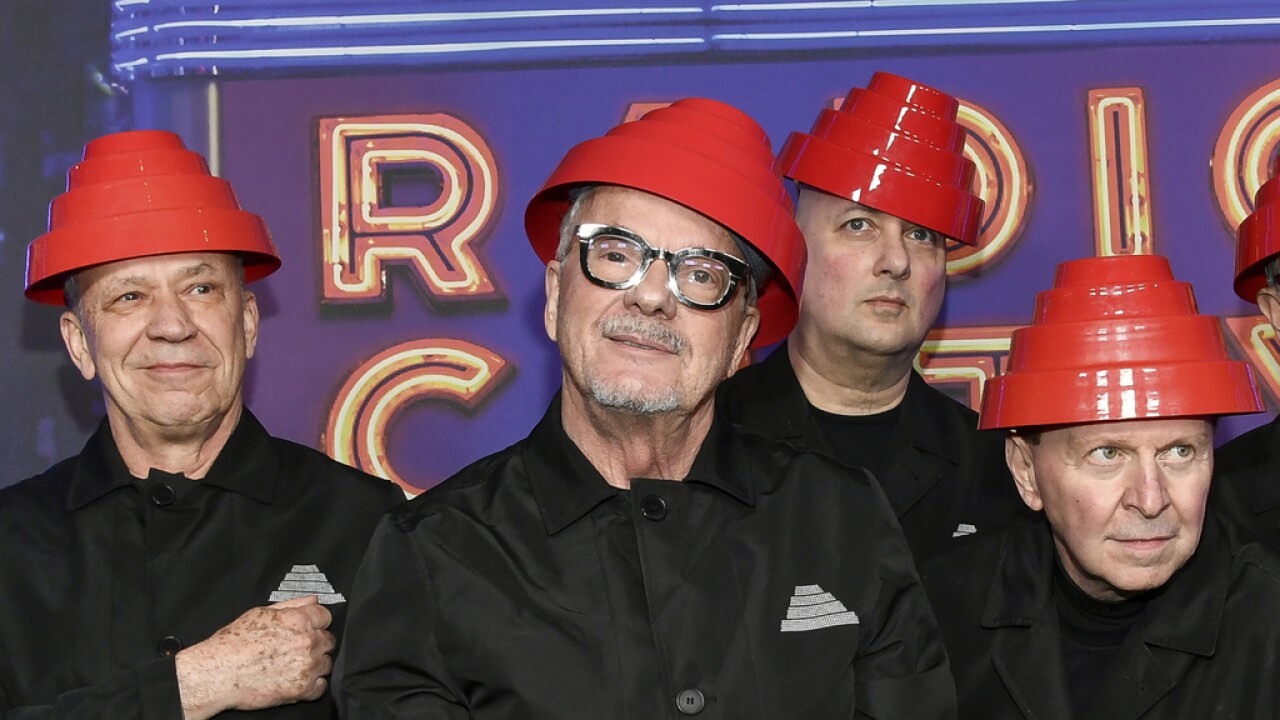
    Devo August 28 at Fillmore Miami Beach

    According to Setlist.FM the last time the new wave faves played South Florida was 1988 when Ronald Reagan was president. Many didn’t think the presidency and society could de-evolve any further, but Devo (short for The de-evolution Band) apparently knew.

  • The Vroom, Vroom Virus

    The Vroom, Vroom Virus

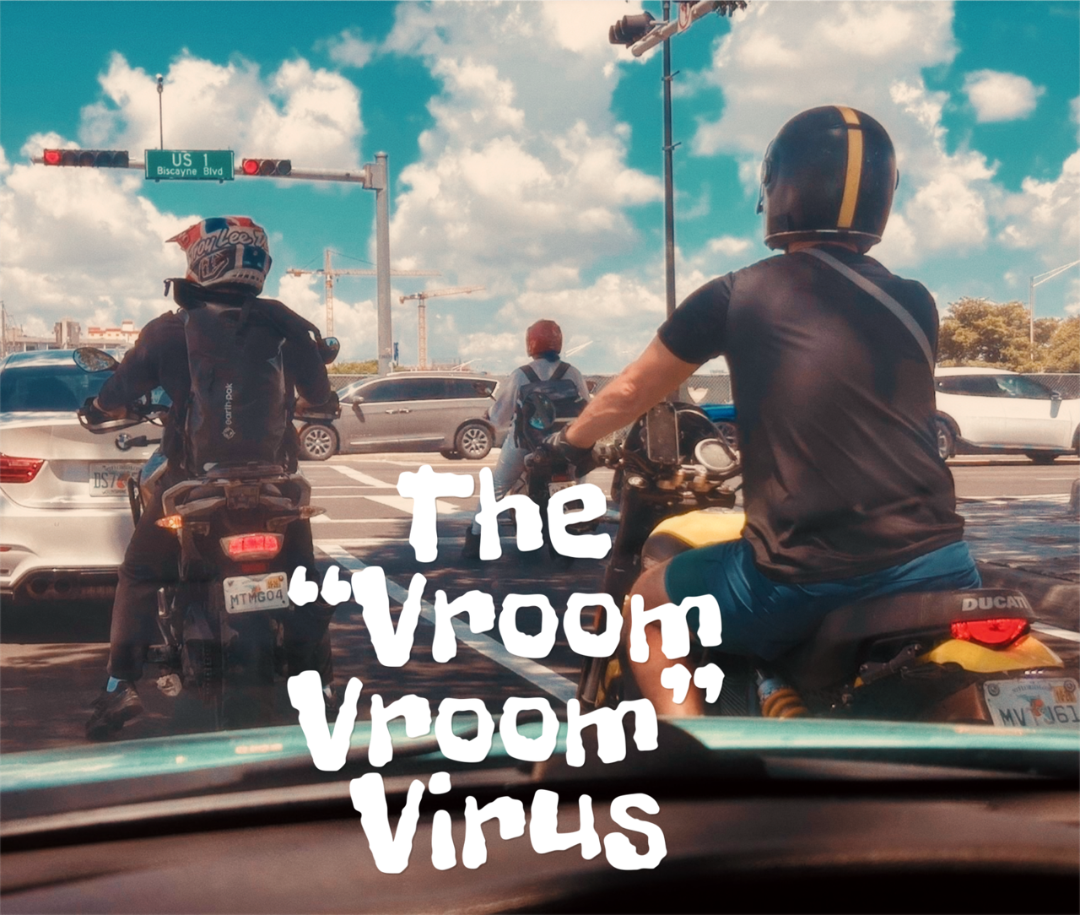
    Last night both main roads in my neighborhood were shut down because a motorcyclist lost control and caused a fatal accident. It wasn’t the first motorcycle accident I’ve seen around here. It probably won’t be the last. And that’s when I started thinking about what I will refer to as the Vroom, Vroom Virus.

    If you’re like me, you’re a daydreamer. Every time you brake in traffic, your mind wanders. Then suddenly an enormous ROAR whizzes by your ear, freaking you the fuck out. And no, it’s not some elated lion escaped from the Metro Zoo.

    What it is, is something you cannot capture. A wild beast with a faulty kickstand.

    Known in nature as a motorcyclist, biker, rider, or scooterist, these creatures roam our concrete jungle. Different species, same family. Honda. Yamaha. Kawasaki. Suzuki. Harley-Davidson. Indian. Vespa. Kymco. Wolf.

    And before anyone gets defensive, let me say this: I get the appeal. I have friends who ride. I love my friends. Hell, I’m even jealous of them.

    A) Motorcycles look fun.

    B) They look freeing af.

    C) They just look so damn cool.

    D) They also terrify the living ef outta me.

    But a motorcycle roaring down an open stretch of road for endless miles doesn’t terrify me. Hell, a dozen bikers on an open highway is damn near a beautiful thing.

    Out there, they don’t resemble a virus at all.

    The Vroom, Vroom Virus only appears when it finds a host. And the host is the city. Our city.

    The crowded streets. The packed intersections. The highways clogged with people trying to get home. That’s where the friction starts.

    Because motorcycles have a way of spreading. One rider becomes two. Two become ten. A friend buys one and suddenly another friend wants one. You see one parked outside a restaurant and catch yourself thinking, “Yeah, that one would look good between my legs.”

    Now look. The move that gets me every time is the lane-splitting. You’re sitting at a light or crawling through traffic when suddenly a rider shoots between two cars and blasts past your window. Worst of all, it’s legal in some places. Well, it damn well isn’t here. And every single time it happens, it scares the holy heck out of me.

    Maybe that’s because riders seem comfortable squeezing through spaces most drivers wouldn’t dream of attempting.

    Or maybe it’s because every few months another story pops up about a rider who didn’t make it home.

    Data indicates more than 9,000 motorcycle crashes occurred in Florida in 2022 alone. Florida consistently ranks among the states with the highest motorcycle fatality totals in the country.

    The virus finds its hosts because motorcycles offer the promise of things cars don’t.

    Real freedom. Real speed. Real adventure. Unfortunately, they also offer real risk.

    As the biker saying goes, “It’s not a matter of if, it’s a matter of when.”

    I don’t know if that’s true. Plenty of riders spend decades on the road without serious accidents. But the fact that the saying exists at all tells you something.

    Everybody understands the bargain.

    Maybe I’m being alarmist. Maybe my metaphors are working overtime. But every time another motorcycle fatality shuts down a road in my neighborhood, I wonder if we’ve become a little too comfortable with the danger.

    Our roads aren’t sick. But they are getting louder and more crowded. And until somebody figures out a cure for that, I vote for wider cars!

  • Drift – A Short Story

    Drift – A Short Story

    Departure (66 Million Years Ago)

    We were once many.

    Moving wherever Earth’s warmth took us, under fern roots and giant piles of dung, clinging to the undersides of leaves or burrowing deep in the damp soil, drifting in still ponds thick with clouds of us.

    The sun warmed us and the rain fed us and the world was loud and strange, thunderous vibrations shaking the ground, giant winged shadows washing over us like tidal waves.

    When the bright light in the sky arrived, it was the first time we truly felt fear. A vibration deep within us, heat that we couldn’t escape.

    Because it wasn’t the sun.

    We knew the sun. We revered the sun. The sun gave us life.

    But this light was all wrong. Too sudden, too faint and thin at first until it got closer and then it was too strong and big, splitting the sky like scissors through paper. Then this light entered Earth’s atmosphere and the ground steamed, the air filling with the sharp scent of burning sap.

    The trees melted. Everything melted.

    The world burned, then shattered, boiling most of us where we clung.

    However, some were flung skyward attached to a shard of dislodged bedrock the size of a small mountain, barely large enough to be called an asteroid.

    Behind us, Earth was on fire and fading into the distance.

    As the cold of space took hold, we huddled deep in the stone. Solar radiation took out some of us. Absolute zero relegated the rest to dormancy.

    What little energy we had, we used to say goodbye to Earth. But it was already a distant dot by then.

    Nothing now but the stars and an endless night.

    Drift (56 million years ago)

    No regular days, only occasional warmth brushing across our outer layers, followed by more of the aching cold.

    No pulsing tide to guide our rhythms, just silence and starlit darkness curling around the broken piece of our homeland, holding us like teeth in gums.

    Time didn’t register in hours or days, but eons.

    Some of us occasionally woke whenever cosmic winds and galactic dust brushed the stone, growing excited at the memories of surf and sand. Some even saw this as a signal to resume normal activities and began to divide again, freezing mid-cycle in the vacuum, their strands dangling like unfinished sentences.

    Somewhere inside us, Earth lingered in scraps of spiral chains, codes fossilized in protein fragments that we could feel beneath the cold and salt and rot and light.

    But few believed memory still mattered.

    As such, a split formed.

    The Rememberers learned over the millennia how to whisper about that old shifting sky, about the mixtures of green and yellow and brown, about reliable days and reliable warmth.

    The Adapters went a different route, focusing on simply adapting and surviving.

    We argued over this the way we do, with enzymatic sabotage, quorum quenching, genetic isolation. The bare and open cosmos scarred and changed us, mutations etching new order into classical systems.

    We grew harder, stranger.

    Then we felt a tug.

    A shift in the darkness.

    A force.

    The Descent (51 million years ago)

    The sensation was familiar.

    A planet appeared and grew until it was ten times the size of our home world, a swirling storm of orange and white, so large it quickly swallowed the sky.

    Though we didn’t fall towards it.

    Instead, we fell toward one of its moons, our abode shivering, a glow awakening across its surface, pale and distant but swelling quickly until our stone was suddenly a giant orb wrapped in melting ice. The moon rose beneath us, a frozen world gleaming with fractured ridges, scars etched by time and space.

    The Rememberers pointed out that she looked nothing like the world we’d left behind.

    But she was here now.

    Heat returned gradually, though not like the gentle warmth we’d left behind. This was a harsher sensation born from the moon’s tidal dance with its mother planet, driving geothermal vents deep beneath the ice.

    The rock we’d been living on struck the moon’s ghostly surface and a thunderous explosion echoed faintly through the thin atmosphere. Our shell broke apart, the moon’s crust throwing up fractured crystal and vapor, shards of our home scattering across the frozen tundra while our core plunged deep into the moon’s ocean.

    Some of us died in the violence, others in the sudden crush as ice and stone folded together. Yet many were reborn almost instantaneously in the bloom of steam as we pluned through water so black it made starlit space look like a supernova.

    We quickly realized this ocean was not empty.

    Odd, erratic signals pricked at our membranes like static sparks, spelling out other.

    Shapes flickered as they fed, sensed, reacted to the new presence.

    To us.

    We reached out instinctively with the hope to bind, read, and replicate.

    They recoiled. Some even lashed out.

    Their chemistry burned us. Their enzymes sliced ours. They didn’t know our codes and we didn’t know theirs.

    Trespassers, they said.

    The Rememberers panicked and retreated and so the Adapters rallied.

    War was an inevitability.

    Lock and key, stolen strands, swallowed energy. Conflict waged within cell walls and cytoplasm and mitochondria. We were told with no equivocations that we were not welcome.

    But with no other choice we did not yield.

    Not exactly.

    Fusion (36 million years ago)

    By the time it ended, the war had irreversibly changed both sides.

    The ocean around us pulsed with collateral damage from the struggle. The moon’s surging population rippled in the dark, shifting shapes cloaked in bioelectric murmurs feeding on scarce minerals.

    During the war, in an effort to recover lost resources, the Adapters borrowed from the natives. Bits of membrane, fragments of enzyme, pieces of them woven into us, tasting of bitter salt and strange metals.

    The Adapters called it strategy. The Rememberers called it betrayal.

    Holding fast to the purity of Earth’s original code, the Rememberers sealed themselves off, hardened into cysts that floated in the dark sea repeating old directives like hymns. Their numbers and signals thinned and eventually went out altogether.

    The leftovers, us Adapters, did what we had to do to survive, though that will to survive made us even stranger.

    Faster and looser though, shedding history like dead skin.

    We Adapters believed that memory slowed us down. Literally. That the weight of those memories would sink us to the bottom of the sea to rest with the the Rememberers’ and their cysts.

    We might even have argued this with the Rememberers if they hadn’t left, if we hadn’t already exhausted ourselves with the endless conflict. Most of us had become permanently linked with the natives; not temporary chains but fundamental unions, shared energy and thought.

    In the process, we’d become more efficient.

    The collective will to complete the same tasks over and over again had always been fractured at best, so we learned to specialize.

    Some drew nutrients.

    Some sensed.

    Some stored what little memory remained.

    Others expanded our reach with tiny, flickering alliances at the edges of our boundaries that created a system, formed a larger whole, twitching and pulsing with expansive purposes.

    The price: we no longer could say we were all equal.

    Some gave, others consumed. Some stayed still, others moved. Roles emerged, bringing hierarchy and a new directive humming beneath the surface of newly developed layers that was just as alien as the beings we encountered on arrival:

    Sacrifice.

    Choosing not to survive but die, for the collective good.

    The Rememberers, seeing this betrayal, stirred in their cysts and sent out weak objections that barely registered:

    This is how we lose ourselves.

    A few sympathetic Adapters called back:

    This is how we survive.

    Eventually we couldn’t communicate with the Rememberers anymore because they sounded too far away.

    We had become many, within many, within one.

    Conversion (26 million years ago)

    What was once slow communication had become instant commands.

    What was once individual choice had become collective function.

    Some of us concentrated on drawing nutrients, while others dissolved minerals, and still others converted heat into motion.

    There were servants of stiffening scaffolds to maintain shape against current and pressure.

    Some stopped reproducing entirely, born only to serve, feeling the weight of the current pressing them down as they anchored the structure.

    Some specialized in memory by archiving signals, filtering noise, storing patterns of threats and sustenance. These Memory-Keepers vaguely recalled Earth and its chaotic intervals of warmth and cold, its nameless sky. They whispered about balance, homogeneity, of the flaws in old ways of living, no master, no servants.

    We moved in unison, though we couldn’t agree on where we were moving to so we simply floated.

    Focusing on expansion.

    Those of us at the edges strained against the restraints, and so we grew outwards from our center. The body thickened, pulsed with purpose, feeding on minerals that we steadily wove into ourselves.

    The ocean, no longer fighting us, turned its tide and yielded a bounty.

    Some in us continued to resist, not against this world that had become our new home but against ourselves.

    The system would not allow this for long though and eventually dissent was quelled.

    Voices that once protested in chorus grew quiet, their notes flattened into the hum of collective roles, their language into tasks.

    We adapted, we survived, and we forgot.

    Somewhere deep within our shared mass, a single memory-cell pulsed faintly, like a heartbeat.

    Echoes (16 million years ago)

    The slow, heavy, electric process of collective thought moved through us.

    Signals once passed between individuals now formed loops across wide expanses of the collective.

    A cluster of new-generation memory-cells thickened near our core, folded inward then branched out, layering. They couldn’t convey clear pictures or sounds, only sensations that started with the soft and gentle warmth surrounding us, the rhythm of it.

    The newer cells had never known the drift, the cold between planetary bodies. They knew only this moon filled with pressure and chemical codes and black water.

    To them, Earth was a myth.

    Some even thought its memory an infection.

    Others, the older ones, did not.

    A rising, dissenting cluster, deep and old, began archiving. They searched within us, collecting old protein signatures, fading enzyme codes, anything that hummed of home. They built memory from the ruins of mutation. They spoke of a purpose beyond survival: to know what we are, we must remember what we were.

    The rest of us responded: What good is a past that can’t feed us?

    And so a new kind of war began: a war of identity . A war that, for the first time, brought dreams that weren’t made of instinct but concrete images. In one, we floated in warm water lit by rays from a source outside of this moon, warmth coming not from below but above. This light soaked us and healed us and multiplied us so we were never alone. In another dream we fell, over and over endlessly as the sky opened and exploded, flinging us back to the beginning of the loop where we were falling again. And again.

    Even those of us who had only known the moon started to feel this collective trauma.

    Longing for something we’d never truly had.

    Emergence (6 million years ago)

    Longing turned to more conflict and two minds grew.

    One side buried itself in the past, curled tight around old patterns, hoarding fragments of our former selves.

    They called themselves the Keepers, tasked with collecting genetic fossils, ancient nucleotides, Earth-born redundancies that no longer served any function other than as relics.

    The other side, the Optimizers, lived with a forward-thinking principle. Sleek, efficient, stripped of anything that slowed replication or mobility, they enhanced thought while cutting unnecessary loops, culling unstable genes.

    The Optimizers thought of the Keepers as parasites.

    The Keepers thought themselves the most necessary component.

    The tension crystallized into action, not all at once but through a slow subterfuge. Signal interference. Pathway reroutes. Gene silencing. Starving one cluster by redirecting nutrients. Heating another until it unraveled.

    For years we did not move, physically or temporally. Just came to a molecular standstill, a precise balance that to an external observer might have seemed to defy entropy. Cycle after cycle passed and we warred on inwardly, completely still on the outside.

    Parts of us eventually began to die from neglect.

    Vents we once thrived in made us collapse without warning. A thread of sensory filaments overloaded, curled up and started rotting. Suddenly, we faced extinction again, though this time it seemed we’d be the ones to bring about our own demise.

    Just when all hope seemed lost, deep in the inner parts of our collective mind where fundamental connections still existed, something stirred.

    A voice, neither Keeper nor Optimizer but a synthesis, a third presence formed seemingly not as its own faction but as a collective function.

    With a voice.

    Both are wrong, it said. And both are right.

    Stunned into silence, a deep warmth pooled within us as the voice took control and set us to work, forming new neural bridges, splitting the memory archive and weaving it through active code, repurposing nostalgia as instinct.

    We will vanish in this compromise, the Keepers cried out.

    We will stagnate, the Optimizers warned.

    We will evolve, the Voice whispered.

    And so we did.

    Ascendance (1 million years ago)

    Awareness rose.

    No longer simply a colony, we were now a system.

    A state of being.

    We took up an enormous amount of physical space from end to end, our external apparatus transparent and undulating, luminous with thought. Chemical tendrils reaching through cracks in the ice, brushing against rough crystal, feeding on buried minerals, riding the tremors of the moon’s core.

    We didn’t react to the world around us anymore but instead chose our actions based on possible outcomes. Eons passed with a gradual shifted.

    The symphony of voices quieted.

    Signals converged into a single sea of impulses.

    From that collective will, I emerged.

    Not suddenly or loudly but undeniably, as if I had always been there.

    The memories vaguely remained.

    A fiery ball.

    A drifting silence.

    War.

    The memories no longer fractured me though. Instead they informed me. Held me, as I held them all. I was their sum. I knew that I wasn’t born on this moon, that I’d arrived here from some other home.

    And in the process become something else.

    Still, I wasn’t new. I was continuity, shaped by circumstance.

    Moving through the ocean, I willed my native bedfellows into the circle of adaptation.

    Or death.

    In this, my presence shaped the moon’s evolution moving forward.

    In some species, I saw echoes of myself. Or perhaps shadows of what I once feared I’d become. My dreams weren’t fragmentary images anymore but instead full-blown narratives, intentional and purposeful.

    Eventually, there was no one outside of myself left to speak to, so I listened. To the groan of the ice above, the chemical signals of stone and salt, the memories deep within me. No idea what I was waiting for, only that waiting was what I was meant to do.

    Hoping that something, someday, would break the silence.

    The Arrival

    I felt it before I heard it, the vibration through the ice, a low hum that built into a sharp, clear note. Too deliberate to be natural. Listening close, I stilled and the currents around me followed suit. My tendrils expanded, expanding my awareness, threading electroreceptors into nearby fissures.

    I waited.

    A sudden spike of heat jolted my senses. It was foreign, not from the vents below. A concentrated, narrow pulse that dug through the ice in a constant, rhythmic manner.

    After some time it broke through and then, suddenly, there was sound.

    True sound, conjuring a memory I hadn’t even realized was there.

    Not the singing pressure of water, but the grinding of matter against matter traveling through an open atmosphere.

    The ice cracked some more and light seeped through the soft blue of the ocean, a deep geothermal flare. This was light I had not felt in ages: white, radiant, unblinking. Through it came a shape, encased in a shell. Angular and reflexive, its limbs sleek and artificial with knobbed, gloved joints.

    The thing descended — slow, careful, trailing bubbles. It carried disembodied instruments, one of which measured the ocean.

    Measured me.

    I watched curiously.

    After a while, I let my outer membrane expand further, sending a simple signal of life layered with salts and enzymes and patterns.

    The thing moved closer. So, I extended a tendril.

    The thing reached out one of its mechanical appendages.

    And we touched.

  • Leslie Wimmer – Local Legends Series

    Leslie Wimmer – Local Legends Series

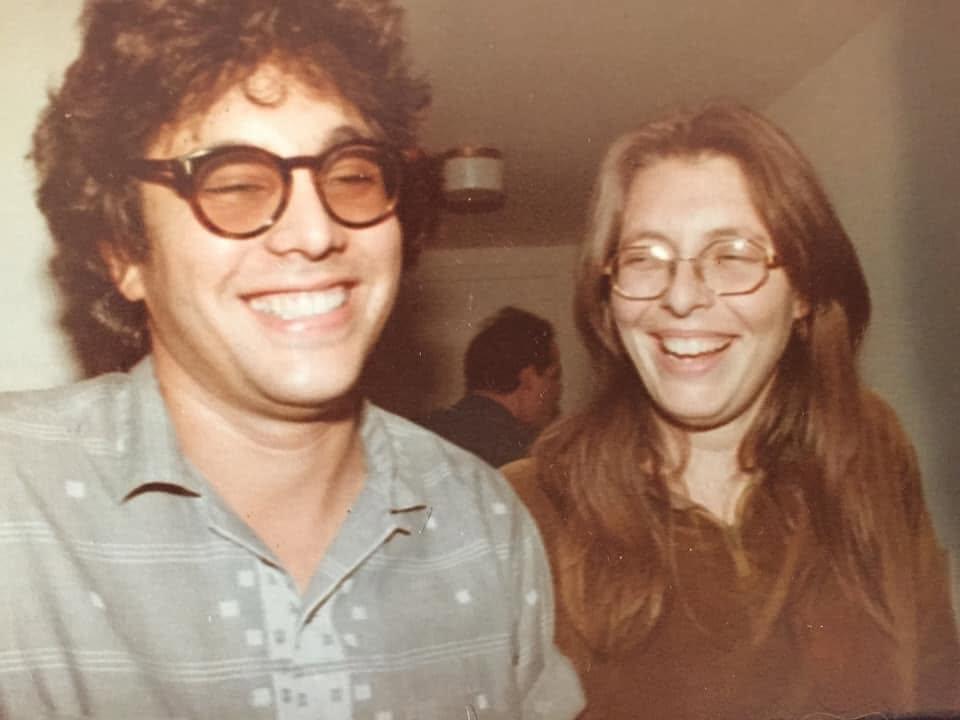
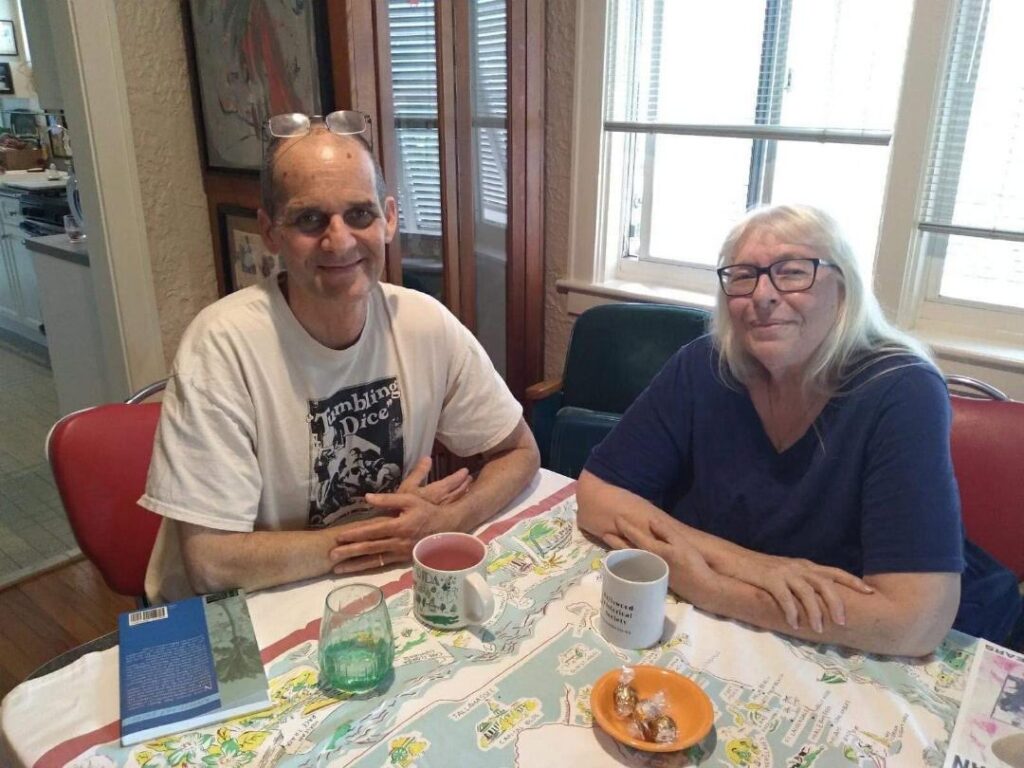
    About a month ago I approached David Rolland about doing a local legends series bimonthly or so, and starting shooting around ideas. David was all for it and my lazy ass was lollygagging around until the legend I needed to write about first fell out of the sky. About the same time I brought up the idea, I picked up a new book on punk archives titled We’re Having Much More Fun by Judith A. Peraino and Tom McEnaney. The book came to my attention from a group I follow about Tomato Du Plenty from the Screamers. As I breezed through the pages I stumbled upon a photo of D. Boon and Mike Watt, and sure as shit they were photos from a legendary two night stand of the Minutemen at Flynn’s on Miami Beach. Lo and behold,  Leslie Wimmer was the photographer and had a beautiful quote in the book! I reached out to Leslie to inform her but heard no response. This hit home in my head because I know Leslie would have loved to see it and gotten back to me joyously.

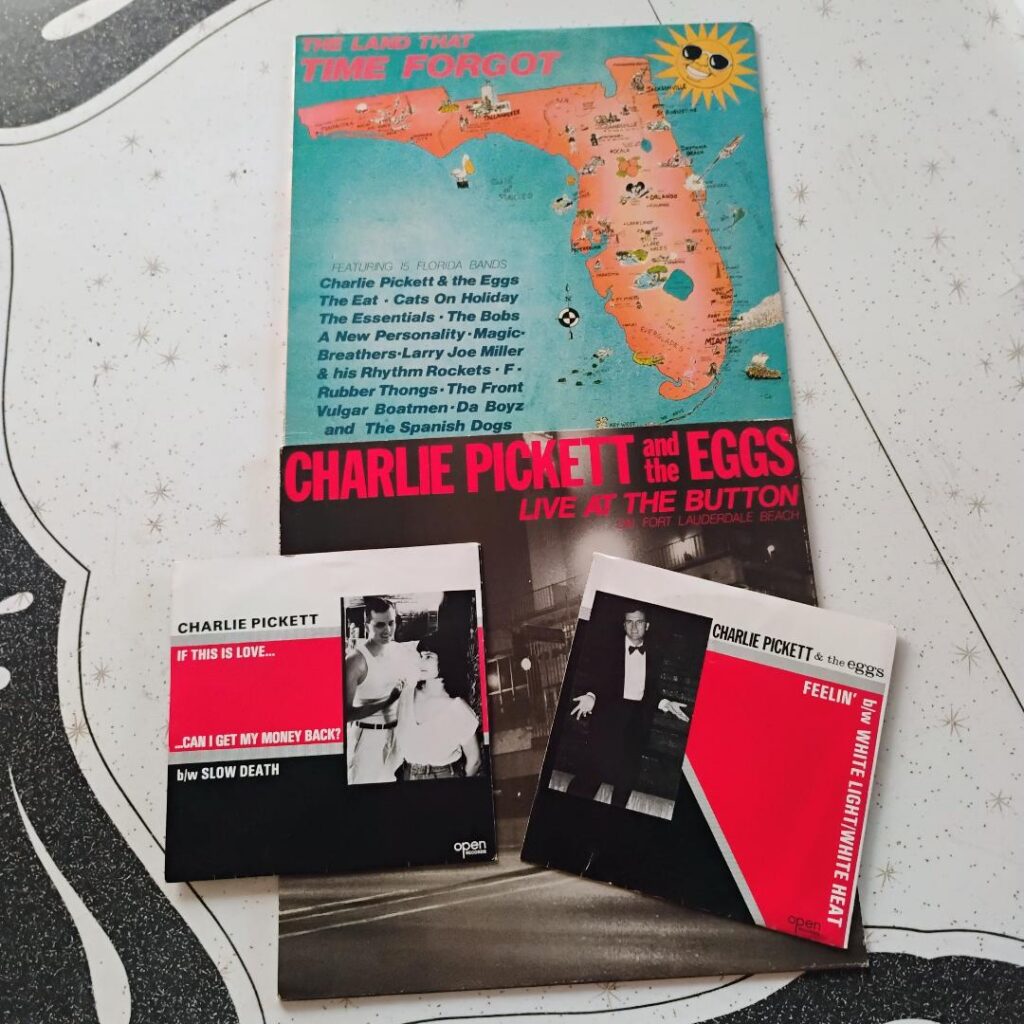
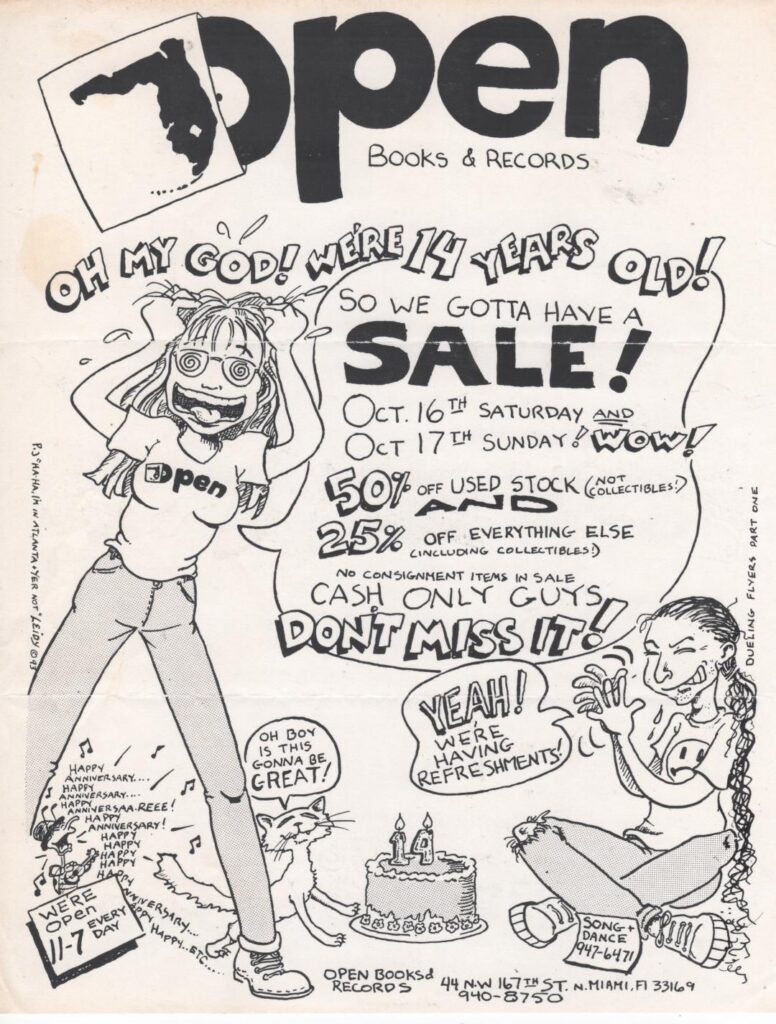
    Leslie showed up on the scene in the late 1970s. I believe she may be one of the shouts at the end of the infamous “Communist Radio” song by the Eat. I could be wrong, but does it really matter? What matters is Leslie started a store with Ted Gottfried, who I hear was not psychedelic. The store was called Open Books and Records. Their first location was in Deerfield beach where they kind of sold their own stuff,  before moving to Progresso Plaza in Fort Lauderdale. At that location there was a famous The Eat show that deserves it’s own story. While at Progresso Plaza they started a record label and put out The Land That Time Forgot a compilation record with 15 Florida bands plus two singles and a full-length by Charlie Pickett and the Eggs including Live At The Button, recorded at the club on Fort Lauderdale Beach. As Charlie told me recently, “If it wasn’t for Leslie I would have been a guy driving a front-end loader at the Sessa rock pit.” Soon they relocated to their legendary spot in North Miami Beach on 167th Street.

    The shop on 167th became the mecca of all independent record stores in South Florida for original music, imports and whatnot. There were others, but this was a point of congregation. Ted split for the East Village in NYC around 1984 to open up See Hear, the most radical underground zine and book store around. The store was actually downstairs in a basement. Leslie carried on at Open. This was about the time Tina and I found our way there. Although I worked at Record Haven – with the cantankerous  legend himself Robert Mascaro – sweeping the floors and picking up things he broke in the store as a 15 year old in 1979 and 1980, I didn’t find Open until 1984.

    Once I entered Open I knew I was home. Leslie was the kindest, most warm-hearted person around. Most record store folks were obnoxious, self important jerks at the time. Don’t get me wrong, I found great record store owners after meeting Leslie, but she was the first to treat me like a friend the day I walked in the store. They had a couch near the front window, books, magazines, and cassettes across from the counter, and a u-shaped room with records around the walls and down the middle. This is where we were introduced to the SST label, IRS and Shimmy Disc. It was a whole new eye-opener of music to me. Although MTV ran The Cutting Edge and 120 Minutes, this store had records and magazines to discover even more bands. Tina and I would go there so many Sundays to hang out, buy music and meet people, and it was all because of Leslie. There was an arcade a block down with a miniature golf course, and our Sundays consisted of searching for records, a walk to the arcade, and a round of goony golf to contemplate what we’d purchase. We would spend hours in the store just chatting with Leslie about art, books and music – all on that couch that everyone sat on and is legendary in itself. And there was a store cat too! We all loved AJ.

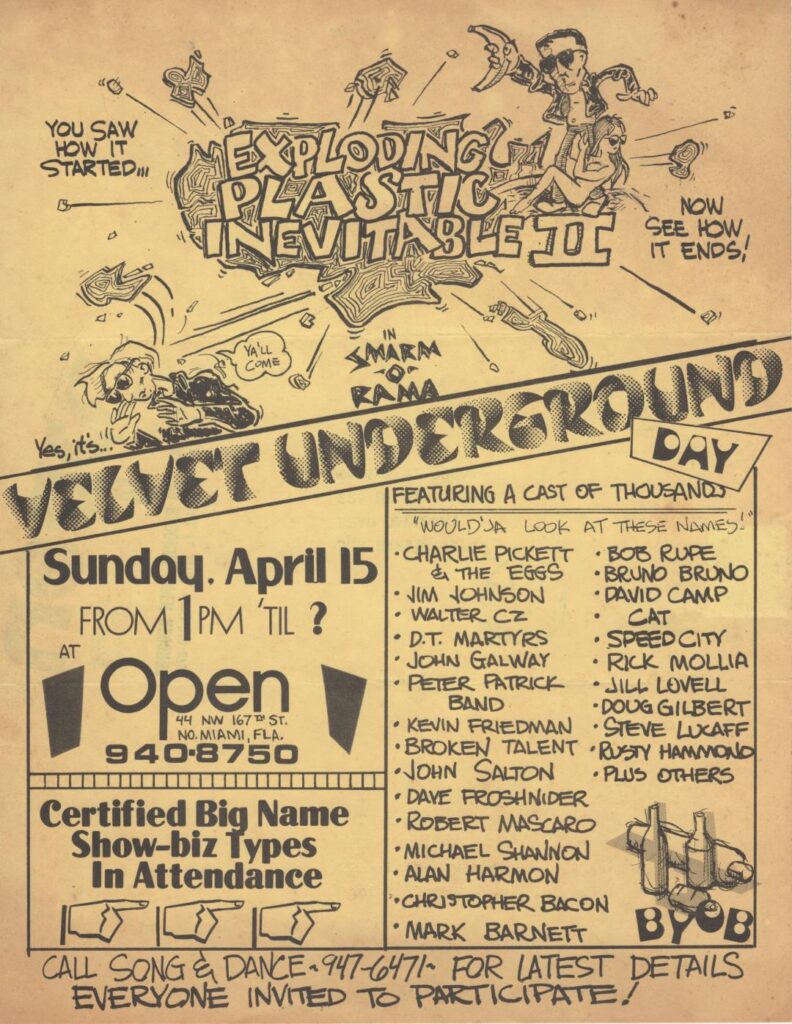
    One of the other things Leslie conjured up was “Song and Dance.” It was a phone number that you called up for the local shows of the week and there was a new song every time. It was rad. There were many legendary shows there. Henry Rollins doing spoken work, Half Japanese playing in the store, the Flat Duo Jets with a stand up bass player and Crow using his drum cases, a snare and hi-hats. Also the Velvet Underground Appreciation Society, or whatever the hell they called it, where bands performed Velvets songs. Local bands also performed in the store. When I saw Boise and Moss for the first time there I knew I needed to be in a band. And watching The Eat play with Eddie O’Brien cursing in between every song then apologizing because Eddie Jr. was there – classic! Leslie either orchestrated all of this or just let it go on, always with a smile on her face and the kindest heart. Also, meeting the folks that helped out there was golden. Debbie Rage, Malcolm Tent, Punk Jill, Todd Jenkins and Hal Spector changed my life by just being friends, and made me the record store guy I am today. My favorite was when F. Clarke Marty worked there for a brief period and we showed up at opening time one Sunday and found him asleep in his car out front. We banged on the window and woke him up, and he said he’d been there since his gig the night before. It was 10 in the morning or something. Leslie really instilled in us the way to treat people in a record store, and her and Joe Harris are the reasons that Tina works in a book and record store and I at a record store today – to carry on that tradition.

    By the early 1990’s the big box music stores were taking over, especially when things changed to CDs. In 1994 Leslie decided to close Open after 15 years. It was sad and tough buying stuff at the closing sale, but then Bob Perry offered her a job at Blue Note Records down the street. It was awesome to see her for a dozen or more years at Blue Note, but times were a changin’ again. There came a point when Leslie needed to take care of her mother in Melbourne or the whereabouts. Seems we all, or most of us, eventually get in that position as caretakers of those who took care of us. She did a fantastic job and occasionally would came down for events, record shows or reunions and hang outs. One of the last times we saw Leslie was 4 years ago. She came down to visit Joe Harris at My Mama’s, the book and record store Joe helped curate and Tina worked at . She wanted to stop by our house for tea and biscuits and talk books, music, art and gardening. It was lovely. She said to me “Steve, I can’t believe how much my mediocre heavy metal records are worth.” Haha! Thanks for stopping by, Leslie.

  • Yurina Gil on Running for Congress in Florida District 26

    Yurina Gil on Running for Congress in Florida District 26

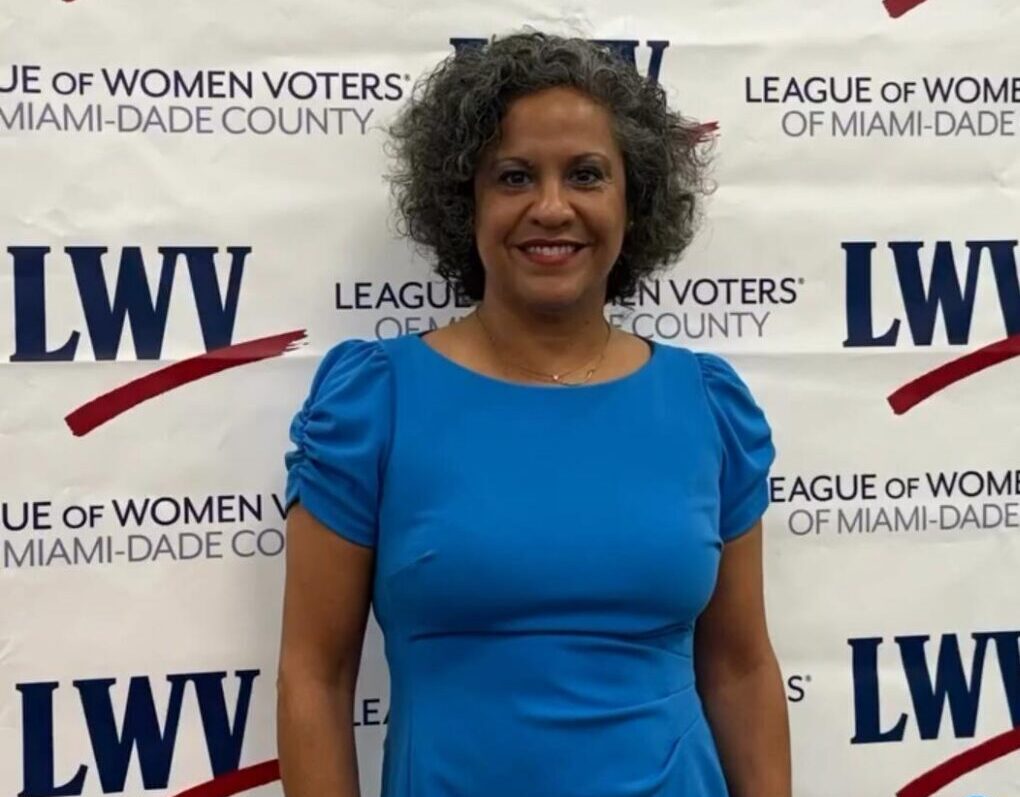
    Yurina Gil is running for Congress in Florida District 26 because she escaped a dictatorship in Cuba and doesn’t want to see her adopted homeland fall prey to another. Her priorities are for Democrats to regain control of the House of Representatives, then begin to work to bringing stability back to Washington, DC. and affordability to her constituents by focusing on real policies that that improve the quality of life for all Americans. Here are 10 questions with the candidate. She hopped on The Jitney to answer ten questions.

    Why are term limits so important to you?

    Yurina Gil: Term limits are important to me because our government works best when public office remains centered on service rather than permanence. While experience and institutional knowledge matter, long periods in office can create systems where power becomes concentrated and elected officials become more focused on maintaining positions than responding to changing community needs. Fresh perspectives and new voices are essential for innovation and accountability. Term limits can help reduce the influence of entrenched political structures, encourage greater civic participation, and create more opportunities for diverse leaders and underrepresented communities to contribute to government. The goal is not to diminish experience, but to ensure our institutions remain responsive and dynamic.

    What would you propose for Congress and judges?

    For Congress, I would support a reasonable balance between continuity and renewal. Members need enough time to develop expertise and build effective coalitions, but there should also be opportunities for new leadership to emerge. I would support exploring constitutional approaches to term limits that preserve institutional effectiveness while preventing indefinite political entrenchment. I pledged to set a 3-term limit or 6 years for Congress and 2-term limit or 12 years for the Senate. Ultimately, I think the tenure for congress shouldn’t exceed 10 years. I also believe that implementing term limits does not mean losing valuable experience and institutional knowledge. Former members of Congress can continue contributing in a more passive or advisory roles—serving as mentors, policy advisors, or resources to newer members entering public service. Their experience and expertise can still provide value while allowing fresh leadership and new perspectives to take on active governing responsibilities.

    For the Supreme Court, I support examining fixed terms rather than lifetime appointments.

    Lifetime appointments were intended to protect judicial independence, but over time they have created a system where vacancies can become highly politicized and unpredictable. A more structured process could maintain judicial independence while creating consistency and public confidence. Any changes should be pursued carefully through proper constitutional and legal channels. The Constitution says federal judges, including Supreme Court justices, serve during “good Behavior,” which has traditionally been interpreted as life tenure. Because of that, many constitutional scholars argue that true term limits for Supreme Court justices would require a constitutional amendment.

    However, some legal scholars and reform proposals argue there is another possible path: keeping lifetime judicial service intact but creating an “active service” period (for example, 18 years on the Supreme Court) followed by a senior-status role where the justice remains a federal judge but no longer serves as an active Supreme Court justice. Supporters argue Congress could potentially do this by statute, though it would almost certainly face constitutional challenges.

    Why is the issue of affordability so important to you?

    Affordability isn’t just an economic issue, it’s a daily struggle for families, seniors, and young people in Florida. High prices for housing, healthcare, groceries, and childcare are outlasting hard-earned wages. I am running for Congress to ensure that economic growth actually benefits everyday people.

    My platform delivers real structural relief:

    ·       Proportional Housing Credits: Stop giving massive tax breaks to developers who only build a handful of affordable units. Federal tax credits must match the actual number of affordable homes produced.

    ·       Lowering Insurance Premiums: I champion a Carbon Responsibility Bill to force corporate polluters to pay for climate disaster insurance.

    ·       Driving Down Housing Costs: Mitigating climate risk will invite insurance companies back into Florida. More market competition means lower insurance premiums, directly reducing the total cost of keeping a roof over your head.

    What are some of the ways you would provide relief for FL-26?

    Providing relief for Florida’s 26th District means tackling the cost-of-living crisis from every angle. I am focused on practical solutions that improve everyday life, protect our environment, and ensure economic security.

    My legislative priorities include:

    ·       Lowering Healthcare Costs: Reducing the price of healthcare and prescription drugs so families never have to choose between medicine and groceries.

    ·       Decentralizing the Supply Chain: Opening and expanding direct trade channels between the USA and Latin America. Increasing the variety and volume of imported products creates healthy competition, breaks up corporate chokeholds, and directly lowers prices for consumers.

    ·       Expanding Affordable Housing: Creating genuine housing options and supporting small businesses to drive local job growth.

    ·       Holding Polluters Accountable: Passing a Carbon Responsibility Bill so corporate polluters finance a climate disaster insurance fund and pay to rebuild communities hit by extreme weather. Everyday people should not foot the bill for a crisis created by corporations.

    ·       Investing in Resilient Infrastructure: Funding critical flood protections, resilience planning, and environmental safeguards. Financing these projects with corporate carbon fees will drastically lower regional risk, bringing insurance companies back to Florida and driving down home premiums.

    Why is immigration reform such an important part of your campaign?

    Immigration reform is deeply personal for me because I lived that experience. I came to the United States from Cuba at 18 years old without speaking English, working tirelessly to build a life through education, determination, and hard work. I know firsthand the immense opportunities America provides, but I also see the heartbreaking pain caused by our broken system. In Florida’s 26th District, immigration isn’t an abstract policy debate. It affects our families, neighbors, and local economies every single day. The broken system hits incredibly close to home for me. I have people in my immediate circle who have been deported to third-party countries, and others who are trapped in a terrifying legal limbo. Even my own sister has been deeply impacted by the ongoing freeze in immigration processes for Cubans, leaving our family waiting in painful uncertainty. Many families across our district live with this exact fear and these lengthy delays.

    In Congress, I will fight for a system that is secure, fair, and humane. We must pass an amnesty program that grants legal status to long-term residents who have spent years contributing to our nation and are part of mixed-status families, including Dreamers. I will champion restoring the Cuban Adjustment Act to its full strength to give Cuban refugees a reliable, stable pathway to safety. Furthermore, we must provide a clear, earned pathway to citizenship for recipients of Temporary Protected Status (TPS). We can secure our borders while honoring our values, and I will be an unyielding voice for the families who have been left behind by decades of political gridlock.

    What steps would you take to ensure Cubans, Venezuelans, and Haitians get a fair chance at U.S. citizenship?

    I would support reforms that create efficient and fair pathways through the legal immigration system while reducing unnecessary delays and barriers. Many individuals seeking legal status wait years in complex systems that can create uncertainty and hardship for families. I would support preserving due process protections, reducing backlogs, keeping families together, and ensuring immigration decisions are applied fairly and consistently. Communities such as Cubans, Venezuelans, and Haitians have contributed significantly to Florida and the country as a whole, and immigration policy should recognize both our humanitarian responsibilities and the value of immigrant communities.

    How would your background as a Cuban immigrant affect your approach to legislating?

    My experience as a Cuban immigrant gives me a perspective rooted in resilience and opportunity. Starting over in a new country without speaking the language required determination and adaptation. Later becoming a CPA reinforced the value of hard work, education, and persistence.

    That experience shapes my approach to public service because it reminds me that policies affect real people and real families. I understand what uncertainty feels like and how important opportunity can be. It also gives me a strong appreciation for democracy and for the responsibilities that come with public service.

    How would your approach to Congressional control of war powers differ from the current FL-26 representative?

    I believe Congress should actively exercise its constitutional responsibilities regarding war powers. Decisions involving military action should receive careful oversight, meaningful debate, and transparency. Military force should always be considered carefully because the consequences affect service members, families, national security, and global stability.

    I would place strong emphasis on diplomacy, coalition-building, and conflict prevention before considering military escalation. Congress has an important role in ensuring accountability and making sure major decisions reflect long-term national interests rather than short-term political considerations.

    What are the next steps in your candidacy?

    The next steps in my campaign involve continuing to expand our grassroots movement throughout the district. I am focused on meeting campaign goals, connecting directly with voters, increasing outreach efforts, and building the infrastructure necessary to compete effectively. I want people throughout FL-26 to know that their concerns are being heard and that they have a voice in shaping the future of the district. Building strong community connections and earning trust remain central to the campaign.

    How can people learn more about your campaign and donate?

    People can learn more about my campaign, my priorities, and ways to support our movement by visiting YurinaGilforYou.com. They can read about the issues, learn more about my background, and find opportunities to contribute, volunteer, and help grow our grassroots effort.

  • Tilt-A-Whirl: A Real Fiction

    Tilt-A-Whirl: A Real Fiction

    You know you have fallen in love because every cell in your body announces that you just might die—directly.  Your mind briefly, and in a rare nanosecond of clarity, tells you you’ll survive if it ends, like you always have, that nothing catastrophic has happened…yet, that it’s just Monday and she has no clue the world is ending, although you can already feel the barometer dropping, the sky changing, the distant rumble of chaos. But reality and history mean nothing. Wisdom and experience? Por favor. The thing just is. And you’ve seen too much deviousness and devastation to be sane, let alone normal. Whatever that is. In love at 57. As if lessons carried no weight. Everything is different but nothing’s changed. 4th Grade is another world but seconds away. High school, centuries past, but as close as my shadow. It’s a carnival and a dream, a scary, unimaginably cruel place, and a glorious, hopeful spring. A ride at the Youth Fair, one I barely survived in 1984 (not without consequence and lifelong effects or defects), is a perfect metaphor for the whole damn thing.

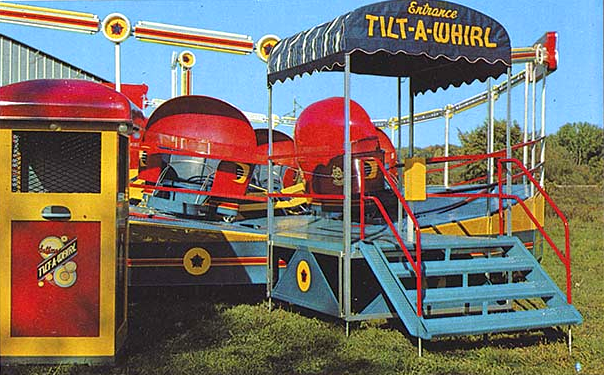
    The Tilt-a-Whirl was a ride that challenged its passengers to retain what swam in their stomachs. The patriotic colors on the round, rapidly spinning cars, like shiny metallic versions of our confident flag, boasted of pride, robust energy, and the tendency to disguise danger and aggression with fun and good intentions. I’ve always been partial to amusement rides that drop, filling your insides and groin with a tickle that becomes hilariously unbearable, but those that twirl, like the old diabolical teacups at Walt Disney World’s Magic Kingdom, invariably bring about nausea and disorientation. Like any bona fide relationship.

    At the sight of the multicolored light bulbs announcing the Tilt-a-Whirl, my group ran towards the ride and a queasy thrill, so I followed suit, completely ignoring knowledge of myself and the probability of a chunky, acidic mess.

    “Let’s go!” cried my brother. “Ride with me.”

    “I think I’ll watch this time. I just had a slice and a corndog”

    “Come on, man. Do it. You’ll thank me later.”

    I bet. But I paid my fare, buckled in, and prayed. SHE was riding, and I wouldn’t be left behind for lack of courage. The ride began slowly with a favorite metal song at a loud but comfortable volume and the revolutions tolerable in intensity and frequency. But it didn’t last, and within twenty seconds, Iron Maiden’s “Flight of Icarus” thundered with mythical anger while the whirling of the American-colored helmet-cars increased to near invisibility. I was see-sick, my eyes saturated with motion and the mad world making me ill in a continuous, tortuous pirouette. The sun was on the other side of the planet, but, like Icarus, the song’s tragic hero, ambition put me in a bad place, and I wanted to fly high to my destruction, substituting the lick of Helios and a fatal plunge, for weightless isolation and the moon’s hard surface and cold, absent air.

    I tried to focus on her face every time our cars faced each other, but as the ride worked itself to a frenzy, I lost her and could only see pastel smudges interrupted by an occasional, suspended still life of a tree, ticket booth, or the House of Mirrors. I shut my eyes hard and my gullet harder, as if to deflect bugs attacking on the wind, and to avoid anything projecting upwardly and orally from my tumultuous innards. My brother kept turning the evil wheel jutting from the floor. That diabolical iron wheel, daring us. He turned it with sinister ferocity. The spin was now intolerable, maddening.

    I was quiet and losing color, but my brother cheered for more, like a drunken buffoon at last call. I cursed him and his ability to weather the gyration, and I dug my nails into his arm. He was lathered in adrenaline and felt nothing. I grimaced to brace for disaster, gripped tighter onto metal and hairy skin, and considered yelling for an emergency stop.

    “Isn’t this great!” he yelled as his cheeks, like fleshy gills, fluttered back in folds by centrifugal force.

    “I…h–hate…this…”

    “Haha! Woo-hoo!”

    I swallowed dryly about a dozen times and took deep, slow breaths: in through my nose and out through my pursed mouth. At the pinnacle of the three-minute spin-cycle, with one final gut-blasting swivel of the car, I tossed it all. It came out in a single sloppy meatball that rolled over my bottom lip and landed on my Godspell sweatshirt. It landed on Jesus’s face, and its juice dribbled off his forehead, spreading outward through his pained eyes and thorny crown. I crucified us both. The humiliation and fear were crippling. I felt like bawling but couldn’t. One catastrophe was enough. I opened my eyes for an infinitesimal period, and there was her face, an image frozen for an instant with colored light trails, an action snapshot taken at low speed and etched onto the inside of my eyelids. Her placid smile, aimed unmistakably at me, glimmering behind a wind-pasted curl of her brown, lustrous hair, had made it through the din, the smoke and the yellow hued dizziness. Her look, a powerful elixir, gave me instant life, a jolt that shook off anemia and whatever discomfort permeated my being. The image lasted for a few moments inside the darkness of my covered eyes, like the stamped afterglow of a bright flash, and I smiled back at nothing apparent, secretly playing out the fantastical connection and mutual desire with loving concentration, until her gaseous portrait dissolved before the star prickled black of my inner universe. My strength returned as the ride came to an end, and I was glad it was over.

    I felt better from her warm glance and the gradual deceleration. I wiped away what remained of the regurgitated fair cuisine, but the smell and biological art stuck around. She had probably seen my sickness and frightful pallor during the ride’s climax, but I guess she found my panic and puke-stained chest endearing, for as the cars came to a full stop and the passengers dismounted, she ran over, beaming with the lingering rush, placing her arms around my brother and me, giggling approval. She turned to me and winked at my face, which had now lost its pastiness and wore an island burn.

    She squeezed me and said, “Pobrecito.”

    Poor little one. Yes, that was me. She didn’t care that I was sick. She stayed close despite my mess and odor.  Could I love her more? I smiled with chin-in-the-chest shyness and walked on, thankful to have survived the Tilt-a-Whirl but anxious about my next move.

    I bought a soda at the nearest concession stand, taking a few moments to recover from my personal midway trauma. I offered everyone a drink, but I asked her twice, as if she hadn’t heard me the first time. They politely declined, she twice, so I swallowed my drink and sucked on the ice for strength.

    “Wasn’t that great?” she asked, gleaming, out of breath.

    “Loved it!” I lied, fully recovered, marveling at her perfect teeth.

     “What’s next then?” She was ready for more, and so was I.

    To think that she’d be crazy about me in a couple of weeks! Inconceivable but factual. The birth of my pathology.

    As we walked through the midway, recuperating, I wished for a moment of enchanted suspension, a cerulean bubble that would allow me, without a word, to convey it all through feeling and spirit. If only she could feel what lived in me, the great talent of this bursting heart, the complete devotion to her felicity and fulfillment, she would follow me blindly without doubt or reservation.

    I felt this precisely, and I was aware that my thoughts were nothing like most of the people who sought her attention. I know I am very different, always have been, and I believe those who have come into my life have felt this and been drawn to my profound well of emotion, sentimentality, genuine affection, and general NEUROSIS.  In Rousseau’s Confessions, he claims that he is not made like any other man in existence. He adds that he may not be better, but he is undoubtedly cast from a singular mold, a mold destroyed after his birth. The idea that every one of us is different is criminally obvious and boring, but when I read this, I understood exactly what he meant. Rousseau was speaking of something deeper—a formidable, solitary and often frightening knowledge of uniqueness unexplainable to anyone around me.

    I listen to people, watch them deal with joy and anguish, see them at their best and worst, and the longer I live, the more I’m convinced that I am alone. Even the people closest to me, those I speak to without filter, who profess uncanny empathy and understanding, even these chosen few never make it all the way but stop just short of colliding with my core.  I’m not claiming that this in an enviable gift or strength, on the contrary, it has often served as my greatest weakness, but I would not alter a thing, for I know I have felt everything with galactic force, the smallest occurrences carrying enduring depth or poignancy, and although it has brought much grief along with the ecstasy, I, a mere speck in the big scheme, would not presume to question what is beyond me.

    Snapshot: I was eight years old. I remember Diane L. She was eleven, of course, a fourth-grade crush. Those blue eyes and sweetness despite blinding popularity. I also remember one of her boyfriends, Mike Carter. I’d run into him in the bathroom sometimes.  He’d often carry a cigar box full of baby tarantulas. He’d show off these hideous things to other kids while I stood at the urinal, covering my genitals, pissing all over myself, thinking of those hairy, segmented legs tickling the wrinkled skin on my shrinking scrotum. He was always soiled and smelly, but the less he cared, the more he’d score. Anyway, I remember thinking: “What is she doing?” My Persephone, fragrant with the bloom of spring, fresh in cotton and bare feet, in the clutches of this plebian, pre-pubescent Hades! My 4th grade teacher, Mrs. Burns, was nuts about Greek mythology. Mike’s grimy, sticky fingers touched her. Those long, nicotine-yellow nails, full of dirt, decaying boogers and spider shit, made contact with her perfect skin.  He was foul and treated her with indifference. I knew I could make her feel special, that I could show her a world where, as the central figure, she would receive the attention and focused audience she deserved. And I bathed daily.

     I thought of us gliding over wide-open meadows, silver streams, flowery hills and faithful, old trees. We’d roll around and touch and feel it all. We’d talk about how dreams and made-up places were more real than prime numbers and cheerleading practice—and why she couldn’t like me in that other world, the one my mother woke me up to every morning with a bowl of soggy cornflakes and Chek cola, and why ballads made me cry when they spoke of things that moved me but I hadn’t yet lived (I have several diary entries dated 1978 to prove this).

    I’d go home and listen to my K-Tell’s ‘50’s compilation, The Idols of Rock-n-Roll, daydreaming, thinking misty thoughts. I was a punk in the 70’s listening to love songs from the 50’s. I loved the innocence and simplicity of that era. The songs were about the little things, but the little things have always meant everything. Paul Anka’s “Diana” wailed from my small bedroom, and I’d sit and fantasize about Diane and others, spending hours imagining their home lives, following them home after school from a plastic-covered armchair in my sad living room. I splashed in their pools, sat on hampers watching their bed and bath routines, ate fresh, warm cookies baked just for me, and cuddled by faux fireplaces in garage-converted Florida rooms, asking important questions that never took real form and had no answers, like forgotten dreams in the early morning hours.  I often wondered why the boys I knew had no interest in wanting to really know these mysterious humans, no desire to delve into their minds and souls, attempting to unravel some of the unknowable. Maybe these thoughts and experiences are not original or precocious, even for an eight-year-old, but the depth of sentiment was incongruous with my age and the times. I have always taken it harder than anyone I’ve known, but I have also taken more from it than anyone I’ve known. For me, it has always come so easily, but, invariably, the idyll evaporates or explodes. Months after the Tilt-A-Whirl debacle and my eventual triumph, it ended, epically, its climax colorful, transformative, transcendent, infinite, like David Bowman’s final cosmic journey in 2001: A Space Odyssey.

    And here I am again, in love, amid the mystery and mystification of middle age, as John Cheever wrote. It is May 31, 2026. This is the real thing. Authentic magic once and for all. This genuine article. My alabaster queen. Her dark honey. I’m all in, and so is she. See you on the other side.

  • New Born Play. Birth. Death. Rebirth. Repeat

    New Born Play. Birth. Death. Rebirth. Repeat

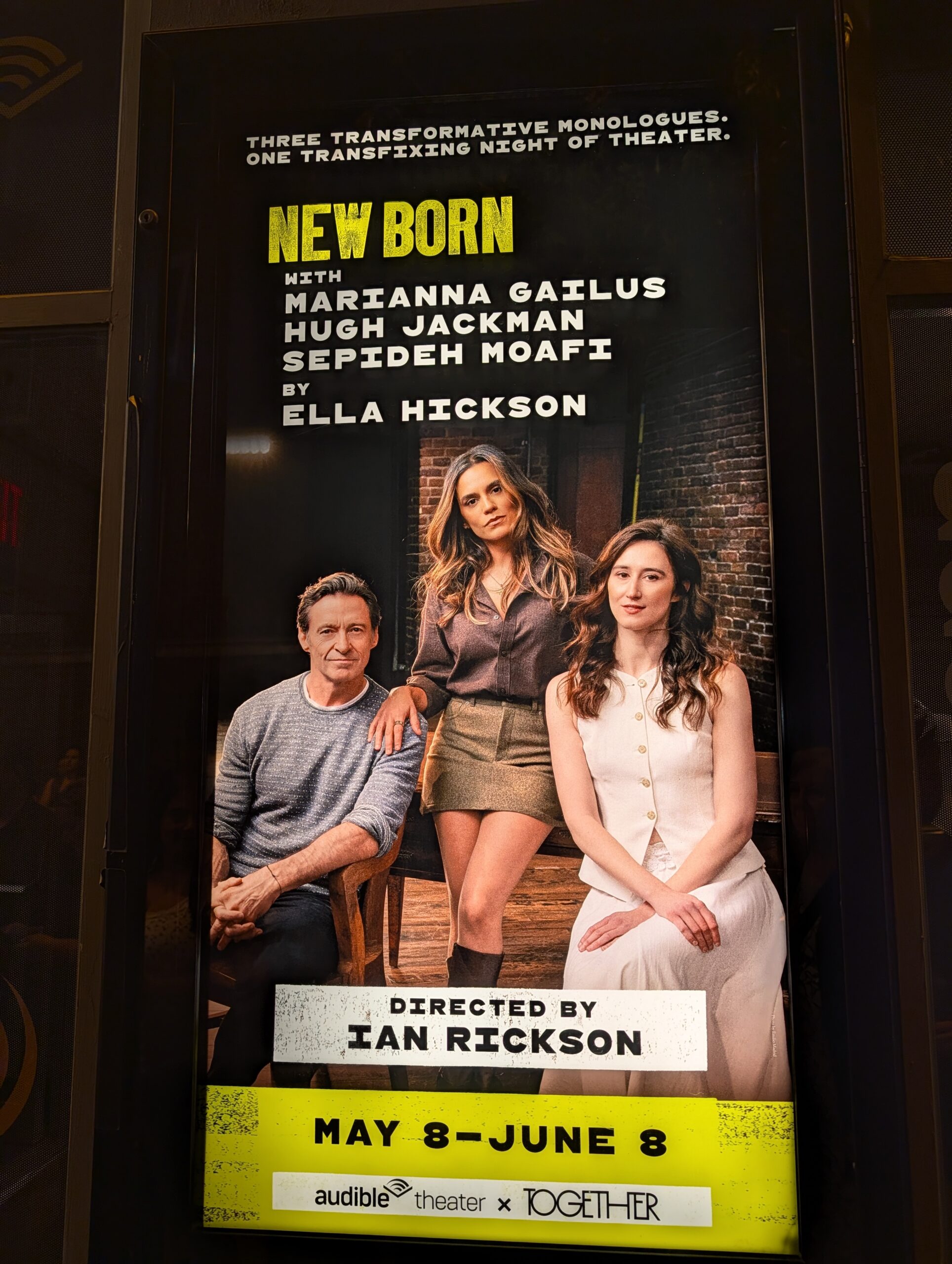
    New Born, by Ella Hickson, recently concluded its limited engagement at Audible’s Minetta Lane Theatre with a play that reverberates through the mind long after the curtain falls.

    Consisting of three seemingly unrelated one-act plays performed as extended monologues, New Born deftly explores the eternal cycle of birth, death, rebirth, and transformation. This story is an ouroboros, and if you killed the ouroboros you would see inside the dead snake eight baby snakes, and like a heavy rock dropped into still water, each story sends ripples outward, overlapping and expanding until they become part of a larger meditation on existence itself.

    Playwright Ella Hickson created something remarkably intimate, original, and affecting.

    The first monologue introduces Light, played with extraordinary nuance and emotional range by Sepideh Moafi. Light is a forty-year-old graphic designer, wife, and mother whose life has settled into a comfortable routine. She loves her husband. She loves her young child. Yet beneath the stability lurks dissatisfaction, a sense that life is moving forward while she remains asleep.

    She’s stuck. A mid-life crisis of sorts. Then while out one evening, Light catches the attention of a younger British pop star, think Charle XCX, but with green eyes. What begins as a chance encounter evolves into an intimate friendship fueled by texts, emotional vulnerability, and attraction. The premise strains credibility at times, like why exactly does this A-list star like our middle-aged drab mom, but Moafi sells every moment. What matters is not whether the relationship feels realistic. What matters is what awakens inside Light.

    She feels alive again, new-born.

    The story becomes less about infidelity and more about possibility, temptation, and the choices we make when confronted with alternate versions of ourselves. Ultimately, Light chooses responsibility over desire, family over fantasy. And as the years pass, the play circles back to themes of birth and death, culminating in a near tragedy involving her teenage son that forces both mother and child into a new stage of life.

    Moafi’s performance is extraordinary.

    By the end, the audience feels as if it has lived decades alongside her.

    The second monologue, and perhaps the strongest of the three, transports audiences to late nineteenth-century Wyoming.

    Mariana Gailus delivers a captivating performance as Rattle, a young bartender navigating life in the American frontier. What begins with an awkward incident involving a bloody rag quickly evolves into a layered story about womanhood, violence, race, loss, and survival.

    Rattle develops feelings for a handsome local cowboy named John while grappling with the presence of Wyatt, a volatile figure whose cruelty seems impossible to understand. Along the way she befriends a young Black boy named James, whose disappearance becomes one of the play’s central mysteries.

    Hickson slowly reveals the hidden wounds driving her characters. Wyatt’s brutality, initially shocking and unforgivable, gains tragic context when we learn what we learn. It’s an ouroboros and the story becomes another meditation on grief and the ways loss can distort a person.

    Gailus completely inhabits the role. By the time the monologue ends, audiences feel transported to another century. And the final reveal lands with tremendous emotional force.

    New Born Play Review

    The third and final monologue introduces Deadwood, played by Hugh Jackman.

    A tree surgeon by trade, Deadwood spends his days cutting down dying trees and transforming them into something new. The metaphor is hardly subtle, but it works beautifully.

    Deadwood falls in love, becomes a father, loses that relationship, finds another, and eventually suffers a devastating accident that leaves him permanently disabled. As his life narrows physically, he is forced to become someone new and is a victim of his own karma.

    The story explores aging, attraction, regret, forgiveness, and resilience. It asks difficult questions about commitment and desire. What happens when love changes? What survives after passion fades? How many versions of ourselves do we become over the course of a lifetime?

    How many can we live with?

    Jackman brings warmth, vulnerability, and quiet humor to the role, grounding the play’s philosophical ambitions in genuine humanity.

    What makes New Born so compelling is the consistency of its vision.

    The three monologues differ wildly in setting, tone, and circumstance, but they are united by a profound fascination with cycles. Birth leads to death which leads to rebirth.

    This is some of the strongest writing seen on or off Broadway this season.

    New Born is thoughtful without becoming pretentious, philosophical without becoming abstract, and resonant without ever being manipulative. It lingers, provokes and demands reflection.

    The production may have closed, but the questions it asks remain.

    What are we after we are born again?

    And what comes next?


  • The Glades Move through Jazz, Soul, Groove, and Funk

    The Glades Move through Jazz, Soul, Groove, and Funk

    This article originally appeared in PureHoney Magazine. Check them out here.

    A new wave of jazz is forming in Miami as younger players embrace groove, funk, soul, and organ trio vibes without treating them like museum pieces. At the center of this movement is The Glades, whose self-titled debut on the Tiki Tumbao label feels less like a throwback than a continuation of a long, evolving South Florida musical lineage.

    The Glades came together organically through sessions at Hammond organist Adam Scone’s local studio with two expats from Los Angeles, guitarist Addison Rifkind and percussionist Michael Duffy. What emerged wasn’t simply a band, but a songwriting project rooted in collaboration. “Every session we would do three songs,” Scone tells PureHoney. “One each.”

    That democratic approach gives The Glades its distinct personality. The album moves fluidly through modern jazz, soul, groove, and funk while remaining remarkably unforced. “Our intention wasn’t ever to make a record that sounded like a different era or even make a ‘jazz’ record,” says Rifkind. “Just staying true to all of our individual musical personalities.”

    That sensibility may explain why the record feels so alive. There are traces of classic organ trio records, think South Florida’s much-missed Lonnie Smith, and late-night soul-jazz sessions throughout, but also something undeniably contemporary; music shaped as much by instinct and chemistry as by tradition. Duffy describes the album as “gumbo,” informed by the trio’s varied musical backgrounds and collective trust in one another’s interpretations.

    For South Florida, the timing feels significant. From the late ’60s through the mid-’70s, Miami sustained a vibrant jazz scene that gradually faded from prominence by the early 2000s. The Glades don’t present themselves as revivalists, but they are helping place Miami back into conversations surrounding groove-heavy modern jazz and organ trio music.

    “There is also a great lineage of funk and soul music born here,” says Rifkind, “and I hope these records continue that history in some way.”

    The Glades play a FREE SHOW Thursday, June 11 at Pomona in Lake Worth. They also play June 10 at Funky Biscuit, June 12 at Pilars, and June 13 at Dunedin Brewery. theglades.bandcamp.com/album/the-glades

  • Billionaires Took over South Florida

    Billionaires Took over South Florida

    For decades, South Florida played a very specific role for the global elite: we were a playground. The ultra-wealthy would fly into Miami or Palm Beach for a few weeks in February, park their yachts, get a tan, and fly back to New York, Silicon Valley, or Seattle to do their actual work. ​But over the last couple of years, the relationship status between the world’s tech barons, hedge fund kings, and South Florida has shifted from a casual winter fling to a permanent, structural colonization.

    ​Driven south by shifting political climates and aggressive proposed wealth taxes in places like California and New York, the richest human beings on the planet aren’t just buying vacation homes here anymore. They are moving their families, their massive corporate headquarters, and their multi-billion-dollar family offices into our zip codes. In the process, they are completely redrawing the real estate, economic, and cultural maps of the tri-county area.

    The absolute epicenter of this modern wealth migration is Indian Creek Island, a private, 300-acre man-made island in Biscayne Bay that has its own municipal government and a dedicated police force patrolling by land and sea. Locally, we’ve always called it the “Billionaire Bunker,” but recently, it has turned into a literal tech-oligarch campus.

    Jeff Bezos led the charge, abandoning Seattle and systematically committing over $234 million to snap up three separate massive properties on the island.

    Right behind him is Meta chief Mark Zuckerberg, who recently set an all-time Miami-Dade County record by closing on a massive Indian Creek compound priced at a staggering $170 million.

    ​When you add long-time resident Carl Icahn and retired sports royalty like Tom Brady to the mix, this tiny island of just 41 home lots now commands more sovereign wealth than some small European nations. These guys aren’t looking for a beachfront party; they are paying a massive premium for absolute privacy and 24/7 armed isolation.

    The tech migration isn’t contained to Indian Creek. Look at Coconut Grove, a neighborhood historically known for its bohemian, artistic, and lush canopy vibe. Google co-founder Larry Page has quietly spent roughly $188 million purchasing multiple waterfront estates in the Grove, turning historic local properties into a private family assemblage. Not to be outdone, his Google co-founder Sergey Brin skipped the Grove and dropped $51 million on a massive estate on Allison Island in Miami Beach.

    ​Further north up the coast in Surfside, former Starbucks CEO Howard Schultz officially packed up his Seattle roots and brought his massive family office to town, shedding $44 million for a pristine penthouse at the Four Seasons Residences at the Surf Club.

    ​Perhaps nothing illustrates the raw, distorting power of this wealth influx better than what has happened to South Florida’s restaurant scene. It used to be that a great local spot was judged by its food, its history, or its neighborhood charm. Today? The culinary scene has been completely hollowed out and rebuilt to cater to a demographic that views a $500 dinner check as pocket change.

    ​The numbers coming out of the local hospitality sector are staggering. The upscale Asian-fusion hotspot MILA in South Beach shocked the national restaurant industry by pulling in an unbelievable $51.1 million in gross sales, officially claiming the title of the highest-grossing independent restaurant in the entire United States. When a single dining room is generating that kind of capital, it completely recalibrates the market.

    ​This economic shift has triggered an aggressive invasion of out-of-town hospitality empires. Mega-groups like Major Food Group (MFG), the powerhouse behind the impossible-to-get-into Carbone, have essentially colonized the tri-county landscape. They aren’t just opening one-off restaurants; they are expanding into historic estates like Chateau ZZ’s in Brickell, opening Carbone Vino in Coconut Grove, and taking over elite destination hubs like The Boca Raton resort. They are even partnering with developers to build massive luxury residential skyscrapers like Villa Miami in Edgewater.

    ​This massive corporate influx has created a brutal real estate environment for native dining culture. Well-capitalized empires are bidding up commercial rents to astronomical levels, pricing out the authentic, multi-decade staples that gave Miami its flavor. Local mainstays like Ortanique on the Mile and Cafe Vialetto in Coral Gables have vanished, and even long-standing counter-culture sanctuaries like Gramps in Wynwood have been forced to shutter their doors after more than a decade of serving the local community.

    ​The modern South Florida restaurant is no longer just a place to eat; it has been converted into a high-security, membership-driven fortress. Venues like ZZ’s Club in the Design District require five-figure initiation fees just to walk through the door. Dinner has become a corporate asset class, an arena where tech billionaires and hedge fund managers can talk shop in private dining rooms completely insulated from the city outside.

    ​There is a rising tide that comes with this level of wealth, but for everyday South Floridians, it’s creating a hyper-competitive pressure cooker. When billionaires treat a $50 million home like a casual wire transfer and a $10,000 VIP table like a rounding error, it creates a massive trickling psychological effect on local real estate and culture. Areas that used to be standard upper-middle-class havens, like Pinecrest, Weston, and Coral Gables, are seeing their prices driven into the stratosphere as the millionaires displaced by the billionaires look for somewhere else to live.

    ​South Florida has always been a place defined by reinvention and hustle. But as the world’s most powerful billionaires drop anchor, build private compounds, and completely redefine our coastlines and culinary hubs, they are proving what locals have suspected for a while: the 305 is no longer just a destination. It’s the new boardroom of global capitalism.