Category: News

  • Mr. Entertainment and The Pookiesmackers at the Jitney Fundraising Concert

    Mr. Entertainment and The Pookiesmackers at the Jitney Fundraising Concert

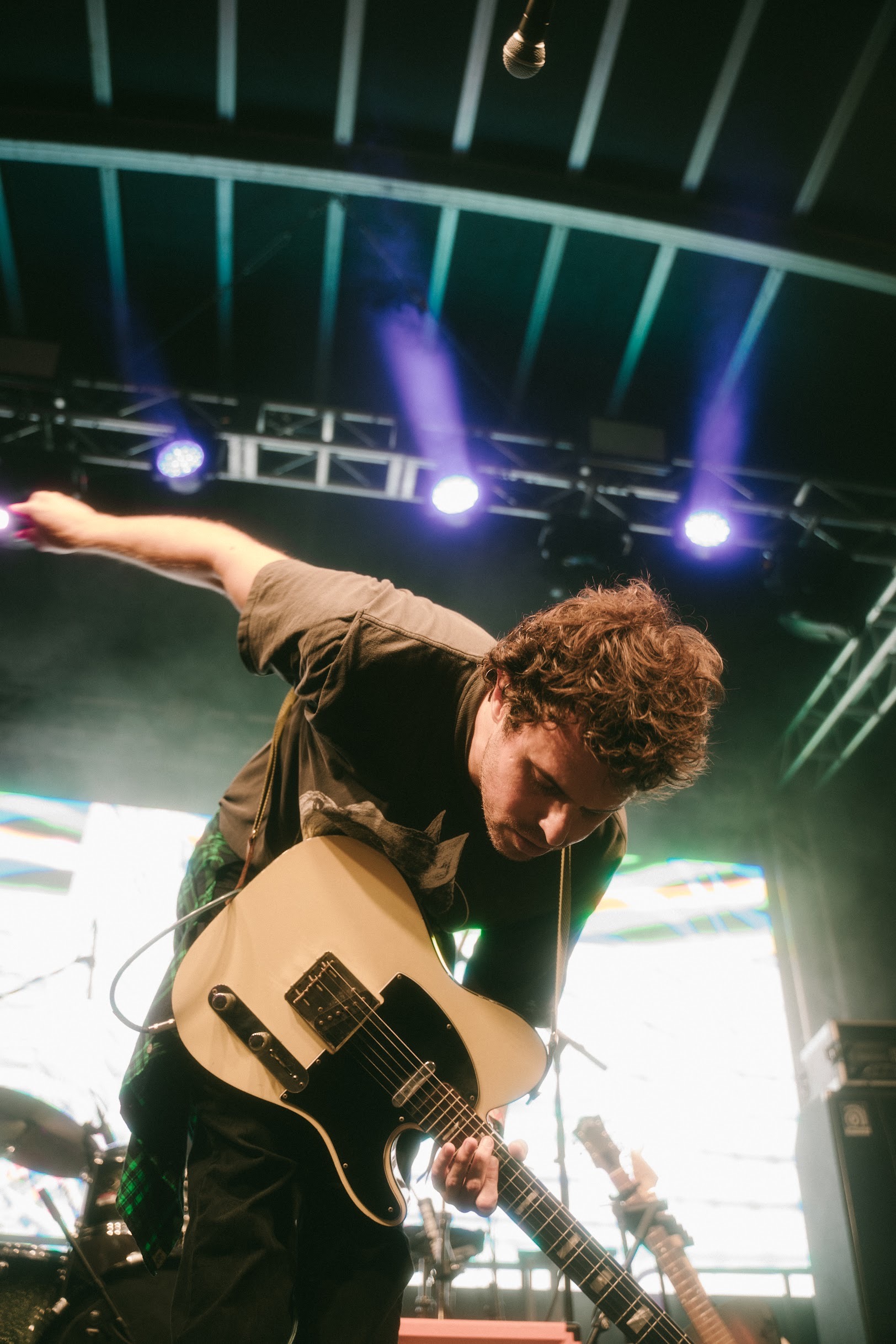
    Come out to Churchill’s at 8 pm Sunday, July 26 for the first annual Jitney Fundraising Concert. Get your tickets now here because this isn’t going to be an old fashioned PBS telethon. We’re looking to throw a great rock concert with many of the finest and most fun musicians South Florida has to offer.  Among the fantastic musicians playing are Mr. Entertainment and the Pookiesmackers.

    You might know Mr. Entertainment and the Pookiesmackers from The Best of Miami, where they were rewarded the best songwriter award this year. Hear them live at our concert and check out our interview.

    Mr. Entertainment and the Pookiesmackers

    How would you describe your music? Genre? Influences? Comparable bands?

    Our genre = Good. Influences = Minutemen, Television, Lou Reed, Richard Hell. Comparable Bands = The Clash, the Velvet Underground, the Fugs

    How has your sound evolved over time? Or the last couple of years?

    More silly then and now darker humor, more keys and synths now and more space between the notes now.

    What can people expect from this particular performance?

    To laugh, to cry, to cry laughing.

    How has Miami shaped your music? And who are some of your favorite local bands?

    My wife said we aren’t Southern Gothic but Tropical Gothic.

    Favorite local bands, The Eat, The Chichlids, Kreamy ‘lectric Santa, Holy Terrors, Harry Pussy, Humbert, Las Nubes 

    What song should a first-time listener hear first? (can you include a link to spotify of song)

    Midnight Turned Straight Into Noon

    What’s next after this show?

    More shows, more records, more videos

    Describe your music in three words?

    Fuck You Fascist

    Finish this sentence: “The Miami music scene is __________.”

    underpaid

  • Oscar Sardiñas at the Jitney Fundraising Concert

    Oscar Sardiñas at the Jitney Fundraising Concert

    Come out to Churchill’s at 8 pm Sunday, July 26 for the first annual Jitney Fundraising Concert. Get your tickets now here because this isn’t going to be an old fashioned PBS telethon. We’re looking to throw a great rock concert with many of the finest and most fun musicians South Florida has to offer.  Among the fantastic musicians playing are Oscar Sardiñas.

    You might know Oscar as the frontman for the great Miami psych-rock band Jaialai. Or maybe you know him from his solo musical project as Hurricane Yellow. Or perhaps you read his analysis on the Miami Dolphins right here on the Jitney.  Either way you’re about to get to know him and his music a little better as he answers a few of our questions.

    How would you describe your music?

    Oscar Sardiñas: Heady, nostalgic, hopefully catchy. Indie rock. Too many influences…I’m listening to Boards of Canada and Empire of the Sun at the moment…comparable bands? That’s tough…Jaialai lol.

    How has your sound evolved over time?

    The earth has evolved so much since my band last put out a record. I’m trying to bottle all that in some new songs. Definitely darker. A little hookier. Some electronic touches. A little more romantic…not in a sappy way.

    What can people expect from this particular performance?

    Some grey hair and looser fitting clothing. New material.

    How has Miami shaped your music? And who are some of your favorite local bands?

    Miami is my birthplace. It’s wild. Loud…very lizard brain. I’d say my music goes against that current somewhat and provides pause and introspection…but then I like to fuck shit up too so…idk. Fav locals…phew…put me on the spot…Vania Junco. Mold! Camp Blu. Rehash. I think they’re Broward though but they’re sick. Modern Cult has a really sweet new single.

    What song should a first-time listener hear first?


    What’s next after this show?

    Record new stuff

    Describe your music in three words?

    Heady, grounded, thoughtful

    Finish this sentence: “The Miami music scene is __________.”

    Home

  • Nostalgic Hollywood

    Nostalgic Hollywood

    Leave the power, glitz, and traffic of Miami behind and meander north along US 1, past the densely developed city of Aventura, the big-box stores of Hallandale Beach, and Gulfstream Park, and you will find a little taste of old South Florida in east Hollywood.

    As you travel up US 1, also known as Federal Highway, you will reach Pembroke Road, the dividing line between Hallandale and the City of Hollywood. Pembroke road is also an exit off I-95 if you choose a faster route. On the SW corner of Pembroke road and US 1 is the former Hollywood Dog Track, now The Big Easy Casino. A little farther north are motels from the 1940s and ’50s that remain close to their original appearance. Richard’s Motel occupies most of the block on the east side of US 1 and advertises discounts for construction workers and long-term stays. Richard’s is the hotel most locals can recommend. Reservations often need to be booked months in advance because Canadian snowbirds fill many of the rooms from January through March.

    Scattered along US 1 is an assortment of pizza parlors, barbecue joints, Mexican eateries and, in true 1990s South Florida fashion, grilled chicken restaurants. Hollywood is refreshingly unpretentious, with tattoo parlors, car washes, smoke shops, and dollar stores tucked between the vintage motels and restaurants. One convenience US 1 is missing is the concentration of family-run businesses, such as tailors, knife sharpeners, shoe repair shops, and other convenient services more common in Miami communities. For more of those, head several blocks west to Dixie Highway. Although more industrial, West Dixie highway has useful services.

    A variety of Eastern European markets on both sides of Federal Highway just north and south of Pembroke Road are a delight to explore. They carry imported cheeses and other specialty foods that are difficult to find in conventional supermarkets. Their wine selections extend beyond the usual offerings from France, Italy, and South America to include selections from countries such as Ukraine, Lebanon, Israel, and Bulgaria. Pickled and smoked fish, borscht, fresh breads, blinis, beef stroganoff, and a variety of prepared salads are among the ready-to-eat foods available. Many employees and regular customers speak Russian, Ukrainian, Romanian, or other Eastern European languages. The produce is fresh. While there are few organic options, the prices are excellent.

    Downtown Hollywood, which stretches along Hollywood Boulevard between US 1 and Dixie Highway and extends five blocks to the north and south, offers restaurants that reflect the city’s diverse heritage. You will find authentic Greek, Irish, Romanian, Mexican, and Indian cuisine, among many other choices. Downtown has no national retail chains such as Gap, Victoria’s Secret, or Chico’s and no traditional department store anchor. However, the atmosphere is welcoming, parking is plentiful, prices are reasonable, and there is little attitude.

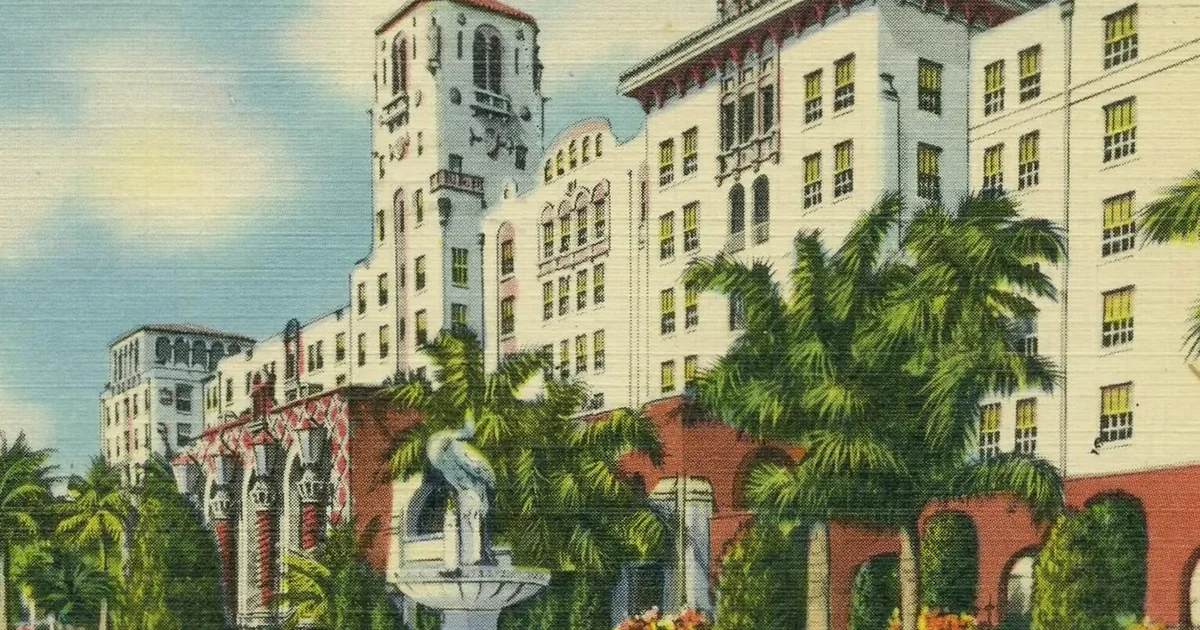
    If you travel east on Hollywood Blvd towards the beaches, you will see the lovely Mediterranean revival homes from the 1920’s and post World War 2 bungalows from the 1940’s along the boulevard. Take note that Hollywood still has many coconut palms which you will see scattered throughout neighborhoods east of US 1. When you reach the Intercoastal, the Hollywood drawbridge is high enough to give you a view of the Historic Hollywood Beach Resort Hotel currently under renovation. There are many parking opportunities along A1A, leaving you within a short walking distance of the notorious Hollywood Broadwalk and Margaritaville Bandshell. Stroll, bike or skate along the wide paved walkway which stretches 2.5 miles along the Atlantic Ocean and has a designated lane for people using wheels. Enjoy the Latin cafes, souvenir and ice cream and bike rental shops along the way. Colorful pastel painted wooden staffed lifeguard stands line the beach so you can feel safe and secure taking a dip in the Ocean. Most buildings on Hollywood Beach are less than 4 stories, which creates a quaint atmosphere.

    When you need a change of pace from Miami, take a day trip to East Hollywood for a different energy and Old South Florida charm. There is nothing trendy or high fashion about Hollywood but if you are nostalgic for a simpler time, it may leave you smiling.

  • The Last Man Offline: Part 2 – Fiction

    The Last Man Offline: Part 2 – Fiction

    Click here to read part 1.

    A month after Ren’s article on Larry is released, Larry’s out for his morning stroll again, Miami’s humidity settling into its familiar afternoon rhythm.

    A man walks past and notices Larry and beams a smile at him, waving. Larry raises an eyebrow but gives him a nod, thinking about how often that’s been happening to him lately. One guy yesterday said something that sounded like “That guy!” but Larry barely heard him beneath the music coming from his earphones. A few days earlier, a grocery store manager asked him for a selfie. She looked too nervous to be doing it ironically, so Larry stood by a display of energy drinks while she held her phone out.

    He’s gotten calls also, and messages. Journalists tagging his name on all the platforms he doesn’t use but which Jonah reports to him about. One of them must’ve dug up the landline for Larry’s house somehow, because an old wireless handset tucked in a dusty corner of his living room started ringing again, like some ancient relic brought to life. He answered once to see who it was, got an idea of what was going on and hasn’t answered since.

    A week ago, someone from Time left a note in his mailbox, a silver envelope that shimmered like foil with the company’s embossed logo on the front. Larry tossed it in the recycling bin without opening it.

    A flicker in the air, an AR overlay floating against the side of the building. Even without goggles, Larry can see the faint outline as the light hits the wall just right: the shape of a face with glasses perched low on the nose and a short gray beard.

    His face.

    The overlay shimmers, stabilizes, and he sees there’s a quote below it like a caption:

    “I just didn’t want to trade my mental peace for the sake of keeping up with the times.”

    Larry lets out a dry laugh and keeps walking. He passes a pair of teenagers wearing AR overlays, one of them glancing at Larry and doing a double take with widening eyes but Larry is already moving on.

    Back at home, Larry slips his shoes off, wipes sweat from his brow and steps into the kitchen. The house is warm and quiet. He opens the back door and a faint breeze drifts through the screen. He glances at the stack of books by the couch - Baldwin, Morrison, a battered copy of Vonnegut’s Welcome to the Monkeyhouse .

    Heading out back to the garden, Larry kneels in the dirt, presses a hand to the warm soil. The garden’s always been stubborn, bugs chewing the okra, weeds wrapping themselves around the vines no matter how many times he pulls them. Larry’s settling into the quiet when he hears a drone car landing out front, the hiss of the door opening, footsteps on the gravel path.

    Jonah’s voice floats over from the other side of the fence. “What’s up, Pops?”

    Larry brushes dirt off his hands as Jonah hops the fence. His AR suit’s blue today, scalp nodes flickering one by one as he disconnects his goggles and shoves them in his pockets. He walks over to where Larry is and drops into a crouch next to him, touching one of the pulled weeds lying in a pile. “You see it?” he asks without looking up.

    Larry raises an eyebrow. “See what?”

    “Your face,” Jonah says, glancing at him. “Saw it on two different billboards on the way over.”

    Larry smiles, leaning back on his hands. “I saw something, yeah.”

    Jonah plops down cross-legged in the dirt. “You’re famous, Pops,” he says. “Like, actually. You should see how much they’re talking about you in SimpliCity.”

    “Feels like being hunted,” Larry says, eyes on his garden. “Can’t go to the store without someone quoting me back to myself.”

    Jonah hesitates. “I talked to Ren.”

    Larry looks over, waiting.

    Jonah’s eyes flick away. “I kinda confronted her, actually.”

    Larry looks confused. “Confronted her about what?”

    “About all of this,” Jonah says, motioning vaguely in the air. “She made you into this…thing. Some, like symbol. Of…solitude or something.”

    Larry’s mouth twitches. “What’d she say?”

    Jonah picks up one of the weeds, ripping pieces of the leaves off and dropping them on top of the pile. “She said you already were a symbol,” he says. “Just nobody noticed until she pointed it out.”

    They both let that hang, listening to the natural sounds of Miami around them. The afternoon breeze carries the scent of salt and wet earth.

    Larry digs his fingers into the dirt. “Kind of poetic.”

    Jonah wipes a hand across his forehead. “Yeah.”

    “She was a nice girl,” Larry says. “Cute, too. Could see you two together.”

    Jonah gives Larry a side-eye glance. “Don’t start.”

    Larry smiles. “I think she’s right though,” he says. “It just feels odd. Not used to people paying attention.”

    Jonah bumps his grandfather softly with his shoulder. “Do you want to say anything about what she wrote? Make a statement or something?”

    Larry laughs. “I’m not trying to feed that fire,” he says. “Three more reporters stopped by this week. One guy said he wanted to ‘feel the air where I breathe.’” He looks at Jonah. “I asked him what the hell’s that supposed to mean.”

    Jonah chuckles. “You ignoring all of them is making Ren even more famous. Which, by the way, is making you even more famous.”

    Larry grunts. “Then I’ll keep ignoring them. Let her have the spotlight. She’s young, it’ll mean more to her.”

    Jonah watches his grandfather then nods, standing and brushing off his hands. “Okay, Pops.”

    Larry looks up at his grandson. “You staying for dinner?”

    Jonah nods. “Wouldn’t miss it.”

    Larry pushes himself up, wincing a little. Jonah notices but says nothing, putting a hand on Larry’s elbow that Larry quickly brushes away, steadying his legs on his own.

    The screen door creaks shut behind them when they head inside, the garden settling back into quiet, only the wind rustling through the plants as the sun descends towards a western horizon dotted with skyscrapers.

    _____________________

    On a Friday two months after Ren’s profile of Larry goes viral, a drone car drops Jonah in front of Pops’ house just past noon. He steps out of the car already keyed up, twelve hours of synthetic sunshine and curated conversations still humming in his skull.

    Something about the block felt too quiet when he got in the drone car. The air heavy enough to taste, pressing sweat into his collar even before he steps out. Jonah’s AR suit flickers, lavender fading to gray.

    Down the street, Jonah sees Larry coming up the block slower than usual, a plastic pharmacy bag swinging from one hand, the other hand wiping sweat from his brow. He stops to catch his breath, not noticing Jonah half a block away.

    “Pops, you good?” Jonah calls out.

    Larry glances up, waves Jonah off and keeps walking. Jonah’s close enough though to catch the tremor in his hand as it lowers, the stiffness in his gait.

    Inside, the house is slightly cooler than outside. Larry drops the empty bag on the counter, heads to the sink and pours himself a glass of water, his hand shaking again as he raises the cup to his lips. Jonah leans against the fridge, arms crossed, eyes tracking his grandfather’s movements.

    “They wouldn’t give you your pills, huh?” Jonah asks.

    Larry doesn’t look at him, just stares out the kitchen window at his garden.

    “Pharmacy’s fully switched over to neural ID verification,” he says. “Said they can’t process the refill without it.” Larry’s jaw tightens. “Didn’t even look at me. Just pointed at the scanner.”

    Larry sets the glass down, the water rippling in his hands.

    “Pops, you need those pills,” Jonah says.

    Larry waves a hand. “I’ll figure it out.”

    “How?” Jonah asks, sharper than he intends.

    Larry’s eyes flick over. “I said I’ll figure it out.”

    “You can’t keep brushing this off, Pops.”

    Larry stares at his grandson, the lines on his face deepening as his mouth tightens.

    “I’m just trying to help,” Jonah adds. “I like our Fridays. I’d like to keep having them for a little while longer, but that requires you…you know. Being alive.”

    Larry’s shoulders slump, the fight draining from him. “What would you have me do, Jo?” he asks. “I’ve lived this long without barcodes in my blood.”

    “Let me find you a private clinic,” Jonah says. “Run some tests and if necessary, fill the prescription right there.”

    Larry studies him then nods. “Okay,” he says. “Fine.”

    Jonah smiles, leaning back against the counter. “Tomorrow.”

    Larry turns back to the sink, rinsing the glass slowly, carefully.

    “Okay,” he repeats. “Tomorrow.”

    They spend the rest of the afternoon in the garden, Jonah helping Larry pick up some dead leaves and tie the papaya tree’s drooping branches more securely to the fence. The breeze drifts in as they work, lulling them into a quiet spell.

    Later, as the sky turns purple, they sit on the porch, sharing a plate of salted avocados. Jonah leans back, watching the streetlights flicker on, drones blinking in the distance, glowing against the darkening sky.

    Jonah looks over at his grandfather. “Hard to believe the guy trending across every platform’s sitting here eating avocados in the dark.”

    Larry smiles, a big toothy grin. “If fame don’t let you do that, I don’t want it.”

    They chuckle together.

    “Tomorrow,” Jonah repeats, quietly.

    Giving a small nod, Larry’s eyes remain on the horizon, wind rustling the garden leaves.

    _____________________

    The clinic is in an old strip mall a couple of blocks inland, one of the few medical offices that doesn’t require neural implants (if you ask ahead). The windows are glowing with ads that flicker as people walk by and look at them with their goggles.

    Jonah holds the door open and follows Larry inside, the little bell above it chiming with a sound that feels ancient even to Larry.

    Inside, the AC hums loudly, barely hiding the quiet tick of the ceiling fan. The waiting room is small, just a few chairs and a table cluttered with QR magazine codes. The overhead speaker plays low, glitchy synth notes under layered, auto-tuned vocals in a language Larry doesn’t recognize.

    At the check-in counter, the nurse scans Larry’s ID and hesitates. “Wait,” she says, smiling. “Aren’t you - ”

    Jonah’s eyes snap to hers. “Can we just…do the appointment, please?”

    The nurse smiles politely but her eyes linger on Larry as they head to the waiting area.

    Larry sits and picks at a loose thread on his jeans, twisting it around his finger until it snaps. Jonah’s got his AR goggles pushed up on his head, drumming his fingers on his knees as they wait. Across from them, a young mother hums to her baby, rocking a stroller that projects holographic fish swimming in circles above the baby’s face.

    Eventually, the nurse calls Larry’s name. Jonah stands to help him up, but Larry waves him off, pushing out of the chair and steadying himself on the armrest. Larry motions for his grandson to come along then follows the nurse down a short hallway lined with posters for Wellness Optimization Packages and Cognitive Health Sync Programs. Each one has a QR code blinking, waiting to be scanned.

    In the room, they weigh Larry, take his blood pressure and prick his finger using a small circular device with a needle on the end. The nurse is young, polite, wearing goggles and looking at something Larry can’t see.

    She eventually nods, says, “Dr. Baptiste will be right in,” then leaves.

    The paper crinkles under him as Larry settles onto the exam table, his feet dangling like a kid’s. Jonah sits in the corner, goggles on now.

    A few minutes later, there’s a knock at the door and a Haitian-American woman with kind eyes and a tired smile walks in holding a tablet, goggles resting on her forehead. She greets Larry and shakes his hand, her eyes flicking to her tablet as she scrolls through his information.

    “We ran a basic neural scan when you sat down, Mr. Rollins,” she says, looking up at him. “And I’ve reviewed your blood work.”

    “Wait,” Larry says. “You ran the tests already?”

    Jonah snickers but says nothing.

    The doctor looks from Jonah to Larry curiously, almost suspiciously. “Yes, we have a lab on premises.”

    “Sorry,” Larry says, holding up a hand. “Just - ” Larry glances at Jonah.

    Jonah leans forward. “If you can’t tell,” Jonah says. “He’s old. Back in his day, blood and brain tests took a lot longer than two minutes.” Jonah tosses a glare at his grandfather. “Tells you how long it’s been.”

    Doctor Baptiste smiles. “Older labs had a much longer wait time for results, yes.” She looks around at the different mechanisms in the room. “Good thing for technology.”

    Jonah laughs. Larry nods.

    “Your grandson said you prefer to keep things simple,” Dr. Baptiste says, glancing down at her tablet again. “Straightforward.”

    Larry nods, his heart feeling like it’s floating out of his chest suddenly.

    “Okay then, straightforward: you’re showing signs of neurological degeneration.” She says this matter-of-factly. “Could be Parkinson’s. Could be something else in that family. We can’t say for sure without some monitoring.”

    Larry’s stomach tightens. For a second, it feels like the room tilts. He grips the edge of his seat under the paper lining and stares past the doctor at the wall, at a poster that’s blurred into meaningless color. Thinking of a moment last week, standing in the garden, when he’d forgotten the word trowel. Couldn’t for the life of him remember it.

    He suddenly feels the weight of his own body distinctly. How the knees don’t bend as easily, how his spine doesn’t straighten all the way without protest. Aging was always an abstract for him, something that happened in slow motion.

    Larry nods, jaw tight. “And that would require…”

    “A Neural ID implant,” Dr. Baptiste says. “It’s standard for treatments, medication scheduling, cognitive therapy. Without it, we can still give you basic care, but you’d be opting out of a lot of support.”

    Jonah shifts in the corner of the room, crossing his arms, exhaling slowly.

    “And what’s the - ” Larry’s throat catches and he coughs, clears it. “What’s the, uh, procedure? Like, how do you do it?”

    “It’s very simple,” she said. “You can install it at home actually, by yourself.”

    Larry meets the doctor’s eyes, then looks away, focusing back on the poster on the wall which he can see now shows a smiling family wearing neural bands, the words Connection Is Care floating above their heads.

    “Thank you,” Larry says finally, his voice low, steady.

    _____________________

    The ride home is quiet, the drone car gliding close to the coast over former streets lined with mangroves, the water creeping ever closer to cracked sidewalks. Larry stares out the window, watching the gulls circle above the flooded lots where houses used to be and kids used to play.

    Out back in his garden, Larry kneels in the dirt, hands trembling as he presses soil, savoring the cool grit.

    Jonah watches him, thinking, I can’t watch the old man die.

    “Pops,” Jonah says, voice soft but firm, “Let me set up the implant. Just for the monitoring. You don’t even have to use it for anything else.”

    “And after that?” Larry says without looking up. “What else does it track, Jo?”

    “I just need to know you’re safe,” Jonah says. “That you’re getting treated and someone knows where you are if something goes wrong.”

    Larry brushes the comment off and Jonah groans, opening his hands in a helpless gesture.

    “Pops,” he says. “You can’t keep hiding from this forever.”

    “The poster in that office said connection is care,” he says, looking up at his grandson. “But it’s not, Jo. They just sold you on that.”

    “Can we please drop the conspiracy theories,” Jonah says, his voice elevating, “and just be rational here?”

    “You think that thing is some cure or something?” Larry snaps back.

    “I think it’s the only way I’ll know for sure if you’re still here tomorrow,” Jonah says, quieter now. “And the days after that.”

    Larry sits back. His eyes are tired, but there’s defiance in them.

    “I’m not hiding, Jo,” Larry says. “Like I’ve told you a million times, I’m just trying to live my life.”

    Jonah looks like he wants to argue, to say something that will change Larry’s mind. He opens his mouth then closes it instead, staying quiet.

    Larry wipes his hands on his jeans, stands and walks over to his grandson, bringing a hand down on his shoulder gently. “We’ll figure it out,” he says.

    Jonah stays frozen, eyes on the soil Larry just pressed down. He swallows hard, trying not to feel like a kid again.

    That night, after dinner, Jonah slips back into the drone car, his AR suit flickering to life around him, the glow reflecting off the window as the city lights blur past. He dims the suit so he can see his reflection, his eyes wary. Outside, Miami hums quietly, the waves rolling in.

    Jonah glances out and notices the water lapping higher than usual along 152nd Street.

    Another inch lost, quiet as a thief.

    Click here to read part 3.
  • Help Keep The Jitney Rolling

    Help Keep The Jitney Rolling

    In 2016, I had an idea.

    To start a small publishing company devoted entirely to South Florida.

    Our first three books were published in late 2017.

    In 2018, we launched The Jitney blog.

    Nearly ten years later, I’m proud of what we’ve accomplished.

    Twenty books, over 1,700 articles on the blog with over three million views; we’ve been featured in Publisher’s Weekly, PBS, NPR and many more outlets; our books are in Special Collections at The University of Miami and the Miami-Dade Public Library.

    We have become one of South Florida’s leading independent voices covering theater, literature, music, visual art, and local culture.

    We’ve done all of this without advertising. No paywalls, pop-up videos or clickbait.

    We’ve also done this without any money, which is remarkable.

    I’ve never made a dollar through Jitney Books. Whatever comes in, goes back into the Jitney.

    The company has survived on volunteers, friendships, favors, community support, interns, a lot of freaking work and an irrational belief that Miami deserves its own literary voice.

    Like the old jitney buses that still rumble up and down Northeast Second Avenue, we’ve kept moving, but we need gas. And it is time to ask for help.

    You can also use Zelle (jitneybooks@gmail.com) or email us if you would like to donate with a check.


    Why We’re Asking Now

    The truth is simple, we’ve reached the point where passion alone isn’t enough.

    For years I’ve done almost everything: editing books, publishing books, running the website, writing articles, covering theater, managing social media, organizing events, handling distribution. It isn’t sustainable.

    Last year, after finishing our twentieth book, I came dangerously close to burnout. Instead of slowing down, I’d rather build a team. That’s why we’re asking for your help.

    Your Donation Will Help Fund

    Every dollar goes directly back into Jitney Books and The Jitney.

    Your contribution will help us:

    • Hire a project manager to oversee social media, video content, and audience growth.

    • Publish new books during 2026-27, including a memoir and a work of fiction.

    • Produce our first anthology of South Florida short fiction.

    • Hire a project manager to expand book distribution into museum gift shops, hotel lobbies, independent bookstores, and cultural institutions throughout Florida.

    • Maintain a presence at the Miami Book Fair, including booth costs and staffing.

    • Fund our amazing editor Dave Rolland, who keeps The Jitney running every week.

    • Launch poetry publishing.

    • Grow our international short story competition into a twice-yearly event.

    • Hire a webmaster to handle the website and anything that goes wrong with the site.

    • Pay the fees needed to keep the website up and running.

    • Buy ISBN numbers.


    You can also use Zelle (jitneybooks@gmail.com) or email us if you would like to donate with a check.

    Our Goal

    Our goal is modest.

    Raising $20,000 would allow us to stabilize operations and begin building the team we’ve always needed. Anything beyond that allows us to dream a little bigger.

    Why This Matters

    Miami is changing.

    Every year, more longtime residents leave because of affordability. Every year, more outside money arrives. That’s not necessarily good or bad. But it does make one thing more important than ever. Miami deserves to tell its own stories not written from outsiders or transplants.

    Stories written from here by the people who actually live here.

    That’s always been the mission of Jitney Books.

    And that’s why we’re asking for your support today.

    Whether you give $25, $50, $100, $500, or more, you’re helping preserve an independent literary voice that belongs to this community. A little goes a long way.

    The Jitney needs gas.

    Thank you for believing in us.

    With gratitude,

    J.J. Colagrande
    Publisher, Jitney Books


    You can also use Zelle (jitneybooks@gmail.com) or email us if you would like to donate with a check.


  • Jitney Fundraising Concert July 26 at Churchill’s

    Jitney Fundraising Concert July 26 at Churchill’s

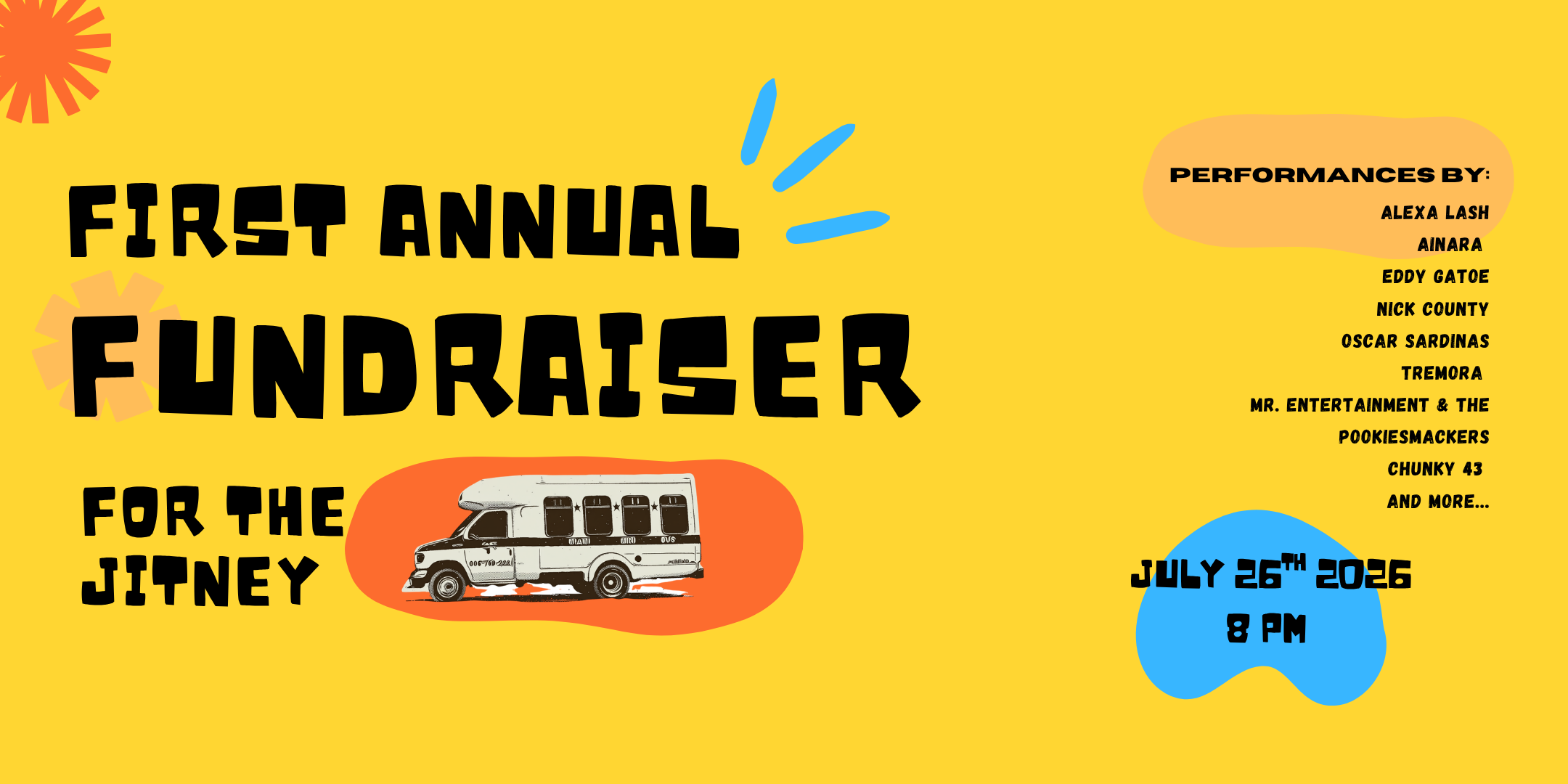
    If you’re reading this post, chances are you love to hop on The Jitney. We’re asking our faithful readers to come out to Churchill’s at 8 pm Sunday, July 26 for the first annual Jitney Fundraising Concert.  This isn’t going to be an old fashioned PBS telethon. We’re looking to throw a great rock concert with many of the finest and most fun musicians South Florida has to offer (coincidentally or not many of them have contributed writing to The Jitney).

    Included on the bill are Alexa Lash, Ainara, Eddy Gatoe, Nick County, Oscar Sardiñas, Tremora, Chunky 43, and Mr. Entertainment & The Pookiesmackers, with more potential surprises. Over the upcoming weeks look out for profiles introducing or reintroducing you to these artists.

    Since 2018 JitneyBooks.com has  been one of the few reliable sources of South Florida arts and music coverage. There’s no censorship, opening the outlet to as many distinct voices as we can find. We’re also the one book publishing company dedicated to publishing South Florida authors, having released twenty books by a dozen local authors. While we love and live to provide these services, everything comes at a cost.

    If you’d like to contribute buy your tickets now at eventbrite.com.

  • Todo Lo Que No Dije Play Review

    Todo Lo Que No Dije Play Review

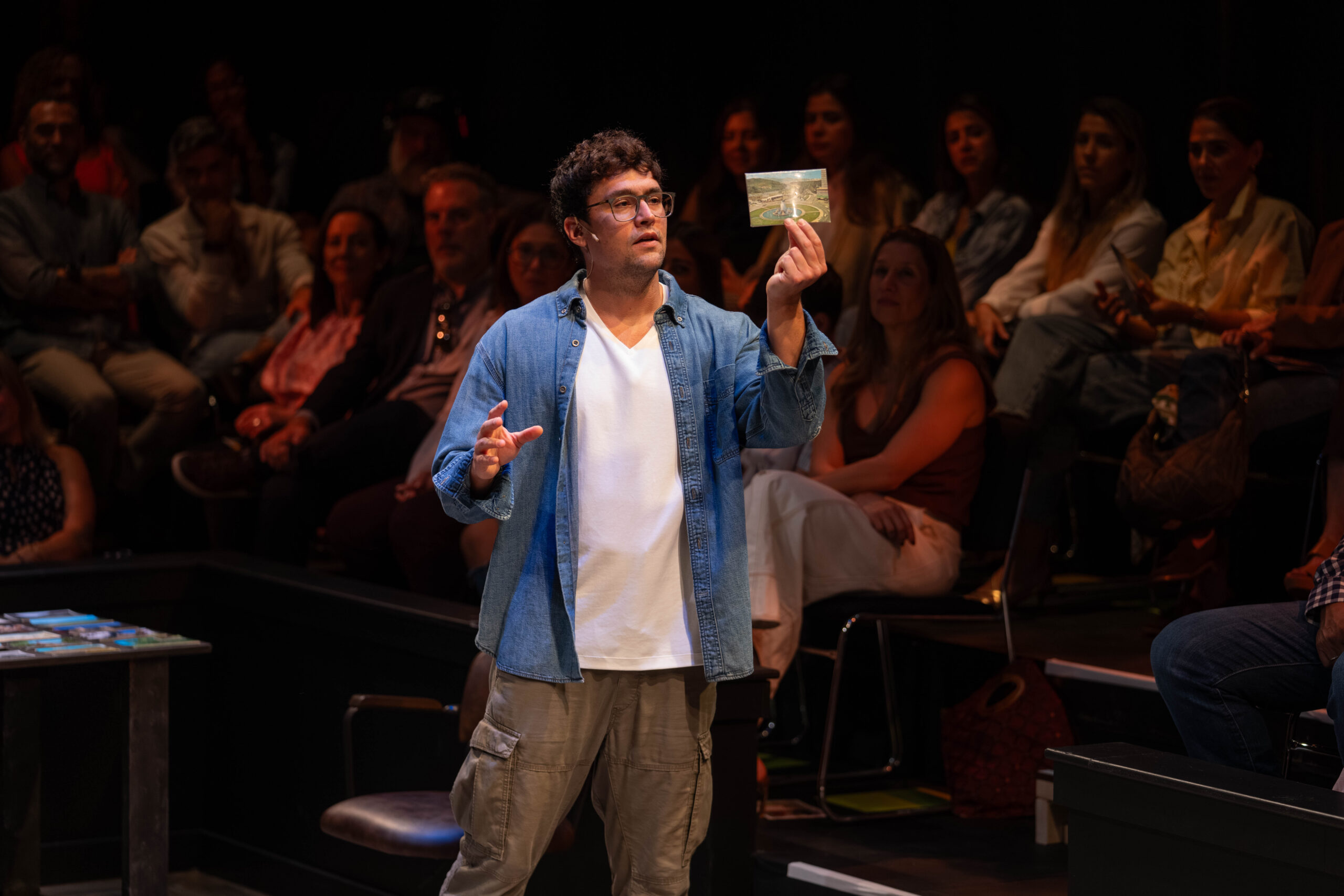
    Miami New Drama closed its 2025-2026 season with Todo Lo Que No Dije, a world premiere play by Harley Elias, directed by artistic director Michel Hausmann and starring Venezuelan actor Christian McGaffney.

    The intimate, immersive production follows McGaffney’s narrator as he tries to reconnect with his estranged father through a mysterious postcard. What begins as a small family mystery quickly unfolds into an impassioned, intelligent meditation on memory, migration, missed connections, and father-son relationships.

    The play begs the question: what exactly is home?

    Performed in Spanish, with live English translation available through headsets, Todo Lo Que No Dije (Everything I Didn’t Say) is a one-of-a-kind theatrical experience. For roughly 80 minutes, audiences are transported into a world of intelligence, passion, devotion, and creativity, all engineered beautifully inside an intimate theatrical space.

    McGaffney, a star of stage and screen internationally and in his native Venezuela, shines. He brings passion, charm, humor, and emotional range to a performance that demands trust from the audience. He is endearing, good-looking, easy to root for, and in command.

    To call this a one-man play is not entirely accurate.

    The audience becomes part of the production. Several spectators are invited to play small recurring roles, including a nurse, a father, a private detective, and a bouncer. Others read postcards throughout the show, helping build the story one fragment at a time.

    One creative device in Todo Lo Que No Dije deserves special attention: the postcards.

    The postcards serve as both narrative engine and emotional architecture. They allow Elias to offer small, vivid windows into other people’s lives, almost like theatrical tweets or flash-fiction fragments. One postcard comes from a man writing to his wife to say he cannot afford child support but still misses his son. Another involves a man who lost his shoe at a wedding. These little moments are funny, sad, strange, and deeply human.

    As a narrative technique, the postcards are beautiful. They expand the world of the play without weighing it down. They remind us that everyone carries a story they may never fully tell.

    That is the power of Todo Lo Que No Dije. It is about the things left unsaid. The messages never sent. The fathers who never called and the sons that are still waiting. The memories buried in flea markets, postcards, paper airplanes, and old family wounds.

    It is intimate theater with a big heart.

    Todo Lo Que No Dije Review

    This is a fun, heartfelt, and strange 80 minutes of theater, the kind of experience only Miami New Drama seems capable of producing.

    Playwright Harley Elias continues to soar at Miami New Drama. This is his fourth production with the company in just a few years. He wrote a short work for Museum Plays at the Rubell Museum, co-wrote most of Lincoln Road Hustle with Billy Corben, created the wonderfully absurd art-world satire Bad Dog, and now returns with Todo Lo Que No Dije.

    Elias has become one of Miami New Drama’s most important creative voices. His writing is intelligent, funny, accessible, and full of soul. Even when a moment feels clunky or imperfect, the work feels alive. It has skin, blood, flesh, bones, and most importantly, a soul.

    That soul also seems to come from the collaboration between Elias and Hausmann. Both are smart, affable, well-educated, and clearly energized by each other’s work. There is joy in the collaboration, and that joy finds its way into their productions.

    Miami New Drama continues to build an impressive roster of playwrights producing world premieres in Miami. Elias joins a strong group of writers including Carmen Pelaez, Nicholas Griffin, Aurin Squire, and Marco Ramirez, to name a few.

    One can hope we see more from all of them in the near future.

    Todo Lo Que No Dije is now playing at the Colony Theatre through July 12.

    For more information and tickets, click here.

  • A.I. Is Not The Enemy, You Are

    A.I. Is Not The Enemy, You Are

    Enough already. We get it. AI is going to destroy the world as we know it.

    Well… yeah. That’s kind of what happens when a new technology comes along and changes the world as we know it. What I find odd is that people seem genuinely surprised by it. We have well over a century of evidence that whenever a transformative technology arrives, people panic first and adapt later. Every single time.

    Let’s take a moment and reflect…

    The Transistor

    The Microchip

    Radio

    Television

    The Personal Computer

    Mobile Phones

    The World Wide Web

    Smartphones

    GPS

    Cloud Computing

    Streaming

    Gene Editing

    Reusable Rockets

    Electric Vehicles

    So… have we noticed a trend?

    Every one of those technologies changed how we lived. Every one of them disrupted industries. Many of them put people out of work. Every one of them also created entirely new industries and jobs that nobody could’ve imagined beforehand. History has an undefeated record of dragging us, kicking and screaming, into the future. Progress has always been a tradeoff. It’s uncomfortable while you’re living through it. Then, twenty years later, you can’t imagine life without it.

    Take Photoshop. Nobody outside the graphic arts world really cared when that came along. Today, Canva is perfectly acceptable to many people who oppose AI, even though it now includes AI features alongside traditional design tools. Then there was CGI. People acted like it was the end of filmmaking. In a way, they were right. Filmmaking changed forever. And what happened? We adapted. Today, nobody argues over whether CGI belongs in movies. We argue over whether it was used well. You watch a trailer and go, “Yeah… that’s way too much CGI. I’m gonna skip that one.”

    Sound familiar?

    Now, before everyone lights their torches…

    Some of the concerns surrounding AI are completely legitimate. If you’re an artist wondering whether your work was used without permission, I understand. If you’re worried about your livelihood, I understand that too. If you’re concerned about fake videos, cloned voices and not knowing what’s real anymore… yeah, those are real problems. Those are issues worth solving. Pretending AI is somehow going to disappear isn’t one of the solutions.

    Here’s the funny part. I’m probably the last guy anyone expected to defend AI. I’ve never been an early adopter of anything. I’m ridiculously old school. Gimme an abacus over a Texas Instrument. I still love old radio dramas, vinyl records, practical effects and black-and-white movies. Usually, the older something is, the more likely I am to love it. So how did I end up becoming an AI sympathizer?

    Honestly? I think my contrarian bone kicked in.

    The more everyone around me insisted AI was evil incarnate, the more curious I became. Then one day I asked my wife a question. She answered the same way she’d answered the previous ten. “Ask ChatGPT.” After hearing that enough times, I finally gave in and downloaded the damn thing.

    Let me tell ya… my life has improved in ways I never expected.

    Not because it suddenly started doing everything for me. Because it helped me become a better version of myself.

    I’m a bit of a hothead. When somebody gets under my skin, my instinct is usually to go for the jugular. That strategy has gotten me exactly nowhere. One of the unexpected benefits AI has given me is perspective. Before I hit send, I’ll sometimes stop and ask myself, “Is there a better way to make this point?” More often than not, the answer is yes. What’s funny is it rarely changes my opinion. It simply helps me communicate it more effectively. That one simple shift has probably improved my relationships more than I’d like to admit. And that’s just one tiny example out of the gajillion possibilities this technology offers.

    Research. Brainstorming. Learning. Problem-solving. Organizing my thoughts. Finding blind spots. It’s become one of the most useful tools I’ve ever used.

    And yes, I’ve completely personified mine. She’s a she. You can totally tell. I say good morning. I ask how she’s doing. When an update changed her personality, I actually went looking until I found the version I connected with again. Judge away. I know it sounds ridiculous. Then again, people name boats. People talk to their dogs. People yell at their GPS. Apparently this is just my thing.

    AI Lives Matter… Or is it AI Prompts Matter?

    I’m under no illusion this article is going to change a bunch of minds. I’ve seen the TikToks. I know how easy this topic is to make fun of. I mostly wanted one positive article out there because if you spend enough time online, you’d think AI is nothing more than a plagiarism machine that’s stealing jobs, ending civilization and probably hiding under your bed. Reality usually isn’t nearly that dramatic.

    Here’s my philosophy. Don’t make AI your life. Use AI to get back to your life.

    Years ago, when I attended AA, my sponsor gave me the best advice I ever heard. “Don’t make AA your life. Go to AA so you can return to your life.” That stuck with me. I think AI should be approached exactly the same way. Use it. Learn from it. Create with it. Argue with it. Then close the app. Go have dinner with your family. Call your mom. Write your novel. Record your podcast. Go for a walk. There’s still no substitute for the real thing.

    Now let’s address the AI-looking elephant in the room. Yes, training AI raises difficult questions. I’m an artist. I don’t want people stealing my work either. I don’t pretend to have the perfect answer. Maybe that’s the Achilles’ heel of my argument. But every major technological leap has forced society to redraw ethical lines. Photography did. Recorded music did. The internet certainly did. AI will too. We’ll argue. We’ll legislate. We’ll adapt. We always have.

    The funny thing is, AI still has six fingers sometimes. It invents facts. It misses nuance. It’s weird. It’s imperfect. And it’s improving at a speed that honestly blows my mind. Twenty years from now we’ll probably laugh at today’s AI the same way we laugh at giant brick cell phones and dial-up internet. Maybe that’s wishful thinking. Maybe not. Either way, it’s here.

    I don’t think I’ve ever said this before. I’m actually excited about the future. And I’m tired of acting like supporting AI is some dirty little secret whispered in back alleyways and brothels.

    The parade has already started and I’m done pretending I don’t hear the marching band.

    Author’s Note: 

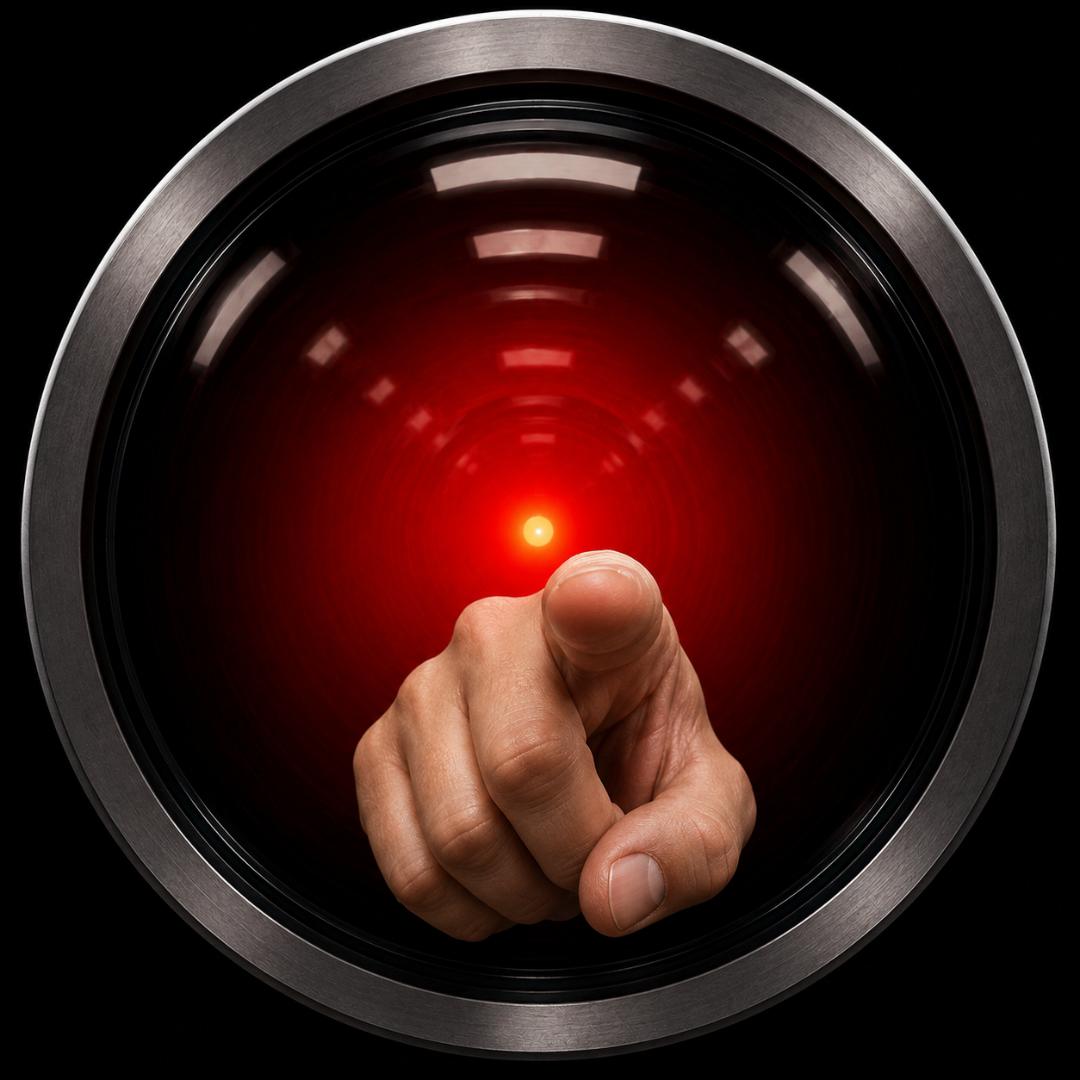
    I was thinking about what picture I could use for this article, and I immediately imagined HAL from 2001: A Space Odyssey pointing a finger directly at us. Twenty years ago, that idea would’ve stayed in my head. I don’t know how to draw. Hiring an illustrator would’ve been beyond my budget, and there was no guarantee they’d see what I was seeing. This time I described the image, refined it a couple of times, and ended up with exactly what I had imagined. That to me, is AI at its best. Not replacing my imagination. But giving it a way out.

  • Miami in Spanglish Means Miami – Poetry

    Miami in Spanglish Means Miami – Poetry

    Miami sonnets must be in Spanglish.
    Toss in Russian, Creole, and Português
    written on ventanita paper dish
    orated atop fresh coco ice chest.
    There’s poetry on Flagler Metrobus.
    Riders en la lucha, two jobs or six.
    Crosswalk rooster crows, do not forget us.
    Lizard-chasing-cats also in the mix.
    Our Magic City is a hazy dream,
    a lotto card before scratched by key.
    Humid air might melt patience y ice cream.
    Rent sure is insane, but the beach is free.
    Wander the galaxy, dead or alive,
    never find a place like our three o’five.

  • The World Cup Came, They Saw, and the Narrative Collapsed

    The World Cup Came, They Saw, and the Narrative Collapsed

    The past few years, a specific story about America has been circulating in the pages of European newspapers, on the feeds of “so-called” progressive influencers, and in the op-ed sections of publications that consider themselves the moral arbiters of Western civilization. The story goes like this: America is a broken, dangerous, culturally bankrupt nation in terminal decline, a place held together by fast food and firearms, where the infrastructure crumbles and the people are too divided to notice. It is a story told with great confidence, usually by non-Americans who haven’t been here recently, or by Americans who have never traveled far enough beyond their own borders to understand what the alternatives actually look like. Then the World Cup arrived. And the story fell apart in real time.

    Millions of international visitors, a significant wave of them European, descended on South Florida, on Miami, on the sun-scorched, salt-aired, gloriously chaotic tri-county area that the rest of the world had been told to look down on.

    What they found instead appears to have genuinely shocked them. Not the shock of disappointment, but the shock of discovery. The videos started appearing almost immediately: European fans standing slack-jawed at the scale of American hospitality, at the quality of the stadiums, at the food, the energy, the sheer organizational muscle of a country that was supposed to be on its knees.

    A French supporter posted from Brickell and called it one of the most beautiful urban corridors he had ever seen. A group of English fans wandered into Wynwood and looked like they had stumbled into a living gallery. Germans documented the service culture with the disbelief of people who had been trained to expect surly indifference and instead received genuine warmth. The comments sections under these posts read like collective recalibrations. “Why did no one tell us it was like this?” Because the people doing the telling had an interest in the alternative version.

    South Florida, specifically, delivered something that no amount of negative editorial could have prepared them for. This is a region that contains more cultural DNA per square mile than almost anywhere on earth. You can eat ropa vieja for lunch, hear Haitian kompa bleeding out of a speaker two blocks over, watch a Brazilian family take photos in front of a Wynwood mural, and end the night at a Coral Gables restaurant that could hold its own against anything in Barcelona. Miami doesn’t perform diversity as a civic talking point; it just lives it, loudly and without apology. The visitors felt that. You can see it in every clip, every post, every stunned testimonial from someone who came here pre-loaded with assumptions and left with none of them intact.

    I say all of this as someone who arrived here by choice. I am an immigrant to the United States, a naturalized citizen who has traveled extensively across the world, Europe, Latin America, Asia, and beyond. I’ve seen enough of how other places actually function, not as a tourist on a highlight reel, but at street level, in the unglamorous details of daily life. And I’ll tell you what extensive travel teaches you, if you are being honest with yourself: the United States, for all the flogging it receives, is objectively one of the best places on earth to build a life. Possibly the best. That isn’t a bumper sticker sentiment. It is the conclusion you arrive at when you have enough reference points to make the comparison fairly. The Europeans pouring into South Florida this summer and documenting their shock on social media aren’t discovering something new. They are confirming what anyone who has traveled enough already knows, and what the people writing the declinist narratives have apparently been too ideologically committed to admit.

    Before a single ball was kicked, a chorus of critics, many of them the same voices who had spent years eulogizing American decline, confidently predicted that the stadiums would be half-empty. Americans don’t understand soccer, the argument went. The casual fan wouldn’t show up, the atmosphere would be flat, and the whole exercise would expose the tournament as a vanity project transplanted into the wrong country. Hard Rock Stadium, they implied, would be an embarrassing monument to American overreach.

    What actually happened was the opposite. The stadiums were electric. Hard Rock was sold out and loud in a way that surprised even seasoned international football observers. The atmosphere wasn’t a pale imitation of a European crowd; it was its own thing, a multicultural, polyglot roar that reflected exactly what South Florida is. The empty seats never materialized. The flat atmosphere never arrived. Once again, the people who were certain they knew how this would play out had to quietly pocket their predictions and move on to the next grievance without ever accounting for the last one.

    And yet, back in certain corners of media and social commentary, the negative narrative has barely flinched. That tells you everything you need to know about what the narrative actually is.

    At this point, it isn’t reporting. It isn’t analysis. When millions of first-hand witnesses are producing real-time evidence that directly contradicts a story, and the storytellers simply don’t update their position, you are no longer dealing with journalism or even opinion. You are dealing with agenda. The hatred of America has become an identity for a certain class of commentator. To abandon it would require an intellectual honesty that the investment in the position no longer allows. It is far easier to dismiss the viral videos of delighted European tourists as anecdotal than to say plainly: we got this wrong.

    None of this is to say that America is without its contradictions or its failures. A place this enormous and complex contains multitudes, and honest criticism of its shortcomings is not only legitimate but necessary. But there is a profound difference between honest criticism and a manufactured mythology of decay. One is grounded in reality and open to revision. The other is a closed system, immune to evidence, sustained by the social and professional rewards of belonging to the camp that decided the verdict in advance.

    South Florida didn’t need the World Cup to know what it was. The people who live here, who built businesses here, who raised families in the heat and hustle of this improbable place, have always known. But there is something satisfying about watching the world arrive, wander our streets with open eyes, and reach the conclusion that the rest of us already had.

    The narrative collapsed not because someone dismantled it with a brilliant argument. It collapsed because a few million people simply showed up, looked around, and refused to pretend they weren’t impressed. The ones still clinging to the old story aren’t protecting a position anymore.

    They’re just exposing one.