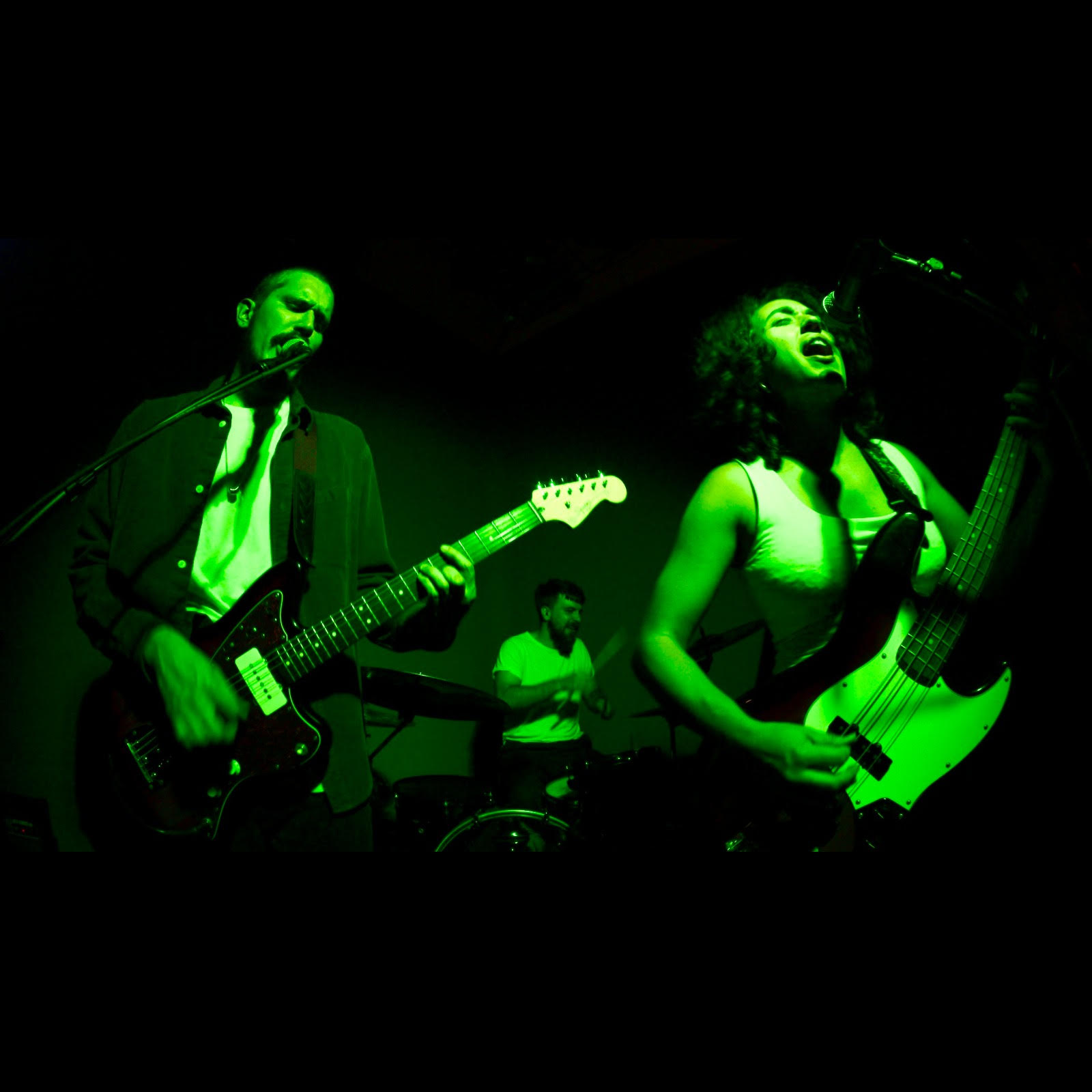
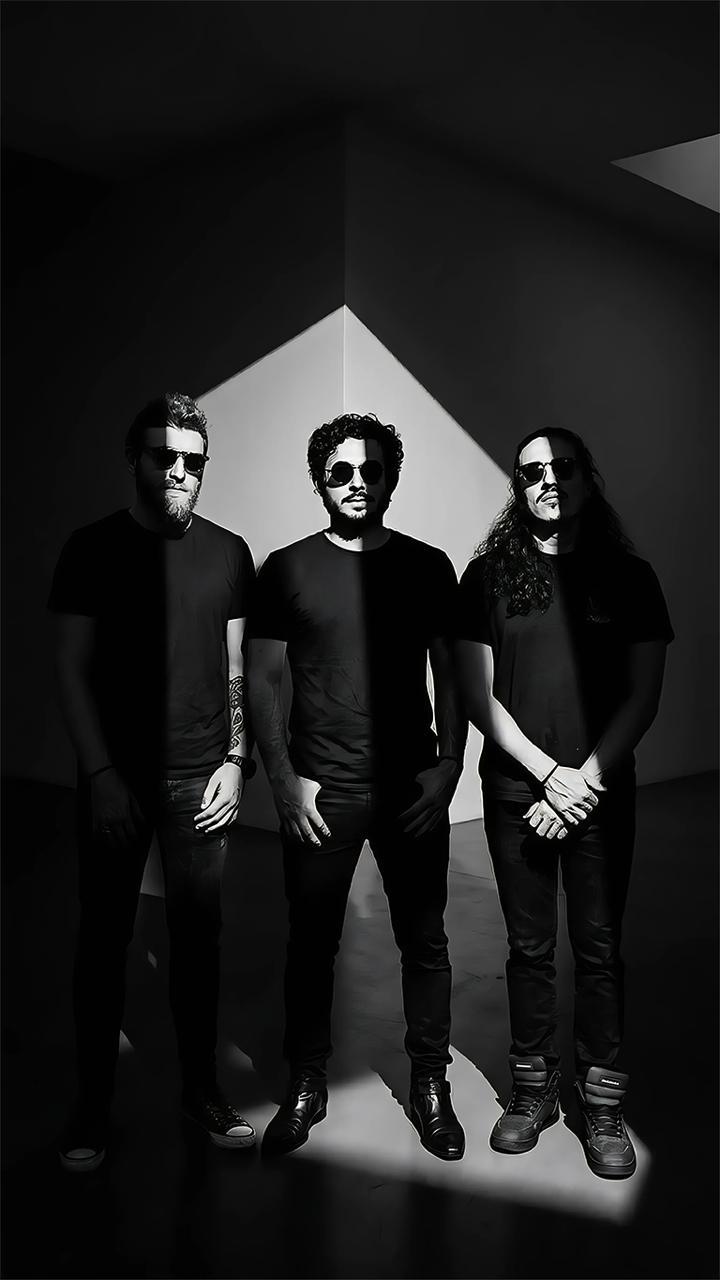
Viloria is a sonic entity operating under the mystique of transience, diaspora, with the purist legacy of Argentine rock as an inspiration.
Viloria was born out of the restless mind of Mario Viloria, a Venezuelan multi-instrumentalist whose sentimental education was forged between school choirs and the raw revelation of watching his cousin play a guitar at ten years old. His biggest influence: Nirvana.
The name Viloria was deliberately chosen to dodge genre tags. It exists solely to be “its own thing.”
The ghost of Luis Alberto Spinetta looms large here, serving as an ethical compass. Much like El Flaco, Mario treats the music and the author as an indivisible entity.
Early offerings, like the album Pez Que Fuma and tracks like “Si no estás” or “La Ciudad del Calor” create a sound of its own, much at large a successor to this Argentine rock tradition.
Viloria’s history doubles as cultural criticism. In 2019, while tracking “Algo que decir” in Chile, the project collided with a local scene paralyzed by what we diagnosed in our interview as a stultifying “national conservatism.”
In Santiago, original indie rock is forced underground, seeking refuge in living rooms because the public square remains obsessed with nostalgia acts and cover bands. Is it a lingering trauma of the dictatorship, or just late-stage globalization?
Whatever the diagnosis, Mario’s cure was constant movement. If Santiago was the laboratory, Buenos Aires was the crucible. The Argentine capital became the “supreme” backdrop where Viloria finalized an album that is a sentient map of the Venezuelan diaspora that birthed it, triangulating coordinates between Maracaibo, New York, and Buenos Aires (with the track “Chacarita” serving as a direct sonic landmark).
But traveling with a band as immigrants is no easy task.
Arriving in the United States marked the project’s final molecular shift: the transition from a solo endeavor with hired guns to a genuine creative democracy.
Mario crossed paths with Sofía at a percussion showcase, and later recruited Derek after witnessing him execute a flawless shuffle at Gramps.
The band consolidated when they started incorporating their own ideas to the band’s new album and the dynamic of “pay per gig” came to an end. It was a living thing!
It’s within this collective friction that the magic happens, like a bassline improvised by Sofía that completely hijacked and dictated the direction of a new track.
The past forged this moment: his first project Página or the mythical, unreleased records of Los Cassettes, have been left in the rearview. Backed by a welcoming community of expatriate musicians like Cuba’s Alejandro Terra, Viloria sounds like the sum of its travels: precise, self-taught, and fiercely independent.
On May 24th, Vloria dropped “Fachada”, the lead single from their upcoming record. The sound is crisp, fresh and perfect for a summer listen, mixing Spanish and Portuguese in their chorus.
They also recently played for a benefic cause in Orlando, raising funds for a local legend who got deported by ICE
It is in this day and date that I feel certain that this band is going to make waves of long lasting impact: the metamorphosis is complete and it’s now active to unfold its full range of musical effects, one track, riff, and show at a time.
This interview was conducted entirely in Spanish, with a lot of references to bands and places that created a bond without preamble. It was one of my newfound favorite bands of this year and I feel lucky and grateful for their time.
The New Voices Fiction Award presented by Jitney Books
Official Contest Guidelines
The New Voices Fiction Award celebrates bold, original short fiction from emerging and established writers alike. We are seeking compelling stories across all genres that challenge, entertain, surprise, and linger in the reader’s mind long after the final sentence. We are excited for this contest and can’t wait to read your submissions.
TO SUBMIT YOUR STORY FOR THE NEW FICTION AWARD SUBMIT HERE
Prizes
First Place
$200 Cash Prize
Publication of the winning story
Featured author interview published alongside the story
Second Place
$50 Cash Prize
Publication in The Jitney
Third Place
Publication in The Jitney
In addition to the winners, selected finalists may also be considered for longlist or shortlist recognition.
Contest Timeline
Submission Deadline: July 15
Winners Announced: Within one month of the submission deadline
Eligibility
Open internationally
No age restrictions
Writers of all backgrounds and experience levels are encouraged to submit
Must be in English
Submission Guidelines
Fiction or creative non-fiction
Any genre accepted
Minimum Length: 500 words
Maximum length: 2,000 words
Stories must be original and previously unpublished
Simultaneous submissions are allowed, but authors must notify us immediately if the story is accepted elsewhere
TO SUBMIT YOUR STORY FOR THE NEW FICTION AWARD SUBMIT HERE
Formatting Requirements
Times New Roman
12-point font
Double-spaced
Standard document margins
Include page numbers
Entry Fee
$15 reading fee
Multiple submissions are welcome. Each entry requires a separate reading fee.
AI Policy
Submissions must be the original work of the author.
Stories generated wholly or substantially through artificial intelligence tools are not eligible. The editorial team reserves the right to disqualify any submission suspected of violating this policy.
Final Judge
J.J. Colagrande
Publication Rights
First North American Serial Rights (or First World Rights, depending on publication format)
Authors retain full copyright to their work. Rights revert to the author after initial publication.
Legal Notice
This contest is void where prohibited by law.
Submissions are now open!
TO SUBMIT YOUR STORY FOR THE NEW FICTION AWARD SUBMIT HERE.
The hideousness of the unconscionable actions of General Motors and the automobile builders, tire and rubber companies, oil and gas companies and road builders to destroy America’s street and electric railways is not just “simple” fact. It has been proven time and again in articles, books and speeches, not to mention the 1952 U.S. Supreme Court verdict which found those industries guilty of conspiring to do exactly that and fined them, what, even then, was a paltry and minuscule sum, as, for the most part, the damage had already been done.
While we are not here, and the purpose of these essays is not, to give a history of what they did to corrupt transit companies management nationwide, it might be of interest to our readers to learn about what happened here “at home” in what was once “the magic city of Miami” in direct relationship to our topic, hence a bit of background might help to provide a better understanding of how (the “why” is much simpler because, simply put, the payoffs to the transit operators were too much for them to resist) all three of our Greater Miami street car operations were bustified, the last of them, the lines owned and operated by the City of Miami, being put to death in 1940. However, and as a side note, the same thing happened not just throughout Florida but nationwide.
Because so much time has passed, and so few people here in Greater Miami are still alive when the murder occurred, there are very few people who have any actual memories of the street cars in operation but, fortunately, we hold, here in and at The Bramson Archive, the largest collection of Florida street and electric railway memorabilia in public or private hands in America, hence we have the memorabilia to show, display, talk about and write about that never should have been allowed to have been destroyed mode of transit and transport.
Miami was one of the few cities in the state (and, likely, in the country, which had three of the four types of propulsion: animal powered, battery powered and electrically powered using overhead wires. Interestingly enough, there was a fourth type of real (not cutesied up buses) trolleys and in Florida only Sanford had street cars on rails which were powered with and by an internal combustion engine housed within the frame of the car and that will be included in my upcoming book, Sunshine State Trolleys: The Street and Electric Railways of Florida.
So, then, what about Miami?
We, here in Greater Miami, had three separate systems: Miami, Miami Beach and Coral Gables and one could connect between the three only on Flagler Street in downtown Miami. Miami had several lines which ran into downtown while Miami Beach had the line which crossed the County (later MacArthur) Causeway, stopped in front of the former Sears building at 15th Street and Biscayne Boulevard then came down Northeast Second Avenue to Flagler Street. Mr. Merrick, in his wisdom, built several lines serving “the Gables,” but for our purposes herein, two are notable: one operated from Coral Way south on Douglas Road (Northwest 37th Ave.) and then ran east and west in the alley next to Flagler Street, eventually moving on to City of Miami tracks on Flagler Street at Northwest 12th Avenue while the other was a high-speed interurban operation running east and west in the media of Coral Way at speeds of up to 60 MPH, then turning north to head downtown, crossing the Second Avenue bridge and onto Flagler Street..
While it is not necessary to enumerate the routes, all three systems had several distinct routes within their respective city limits, but the last streetcar, operated by the City of Miami, made its final run in 1940. And why? Because while Coral Gables’ system suffered severe damage in the October, 1935 (it might have been ’36) hurricane with a great deal of literally irreparable damage, and given that Mr. Merrick was bankrupt at the time, there was no legitimate (note that word, as “payoffs” were not and are not a legitimate reason) reason to have abandoned the Miami and Miami Beach lines.
The Miami mayor at the time tried to justify the closing-down of the Miami system by coming out with some nonsense that the trollies were old and tired and that the system was run down and in need of replacement (none of those words or phrases being factual) and with the full support of the councils (and the graft involved) the street car operations came to an end.
So, “and in closing,” and very quickly, think about this: If the streetcar operation to Miami Beach via the MacArthur Causeway had been allowed to continue, can you (the reader) imagine what an incredible tourist attraction that would have been? And then, with the Florida East Coast Railway ending operations south of the Miami River and the building of Metrorail, why in NEILGOD’s name did the powers that be not connect the south end of the Metrorail with a what is today called a light rail (the current equivalent of streetcars) line instead of paving the former tracks and building a busway? I will give them some slack this time and not accuse the late and anything but great John Dyer (first director of Metrorail with no background—none at all—in anything having to do with urban or any other kind or type of transit) of accepting “gifts,” but, actually and factually, the stupidity of not putting light rail in from the end of the Metrorail to Homestead was and is simply yet another of the unending fumbles, bumbles and absolute and utter completely incorrect decisions in the history of transit in (now) Miami-Dade County, Florida.
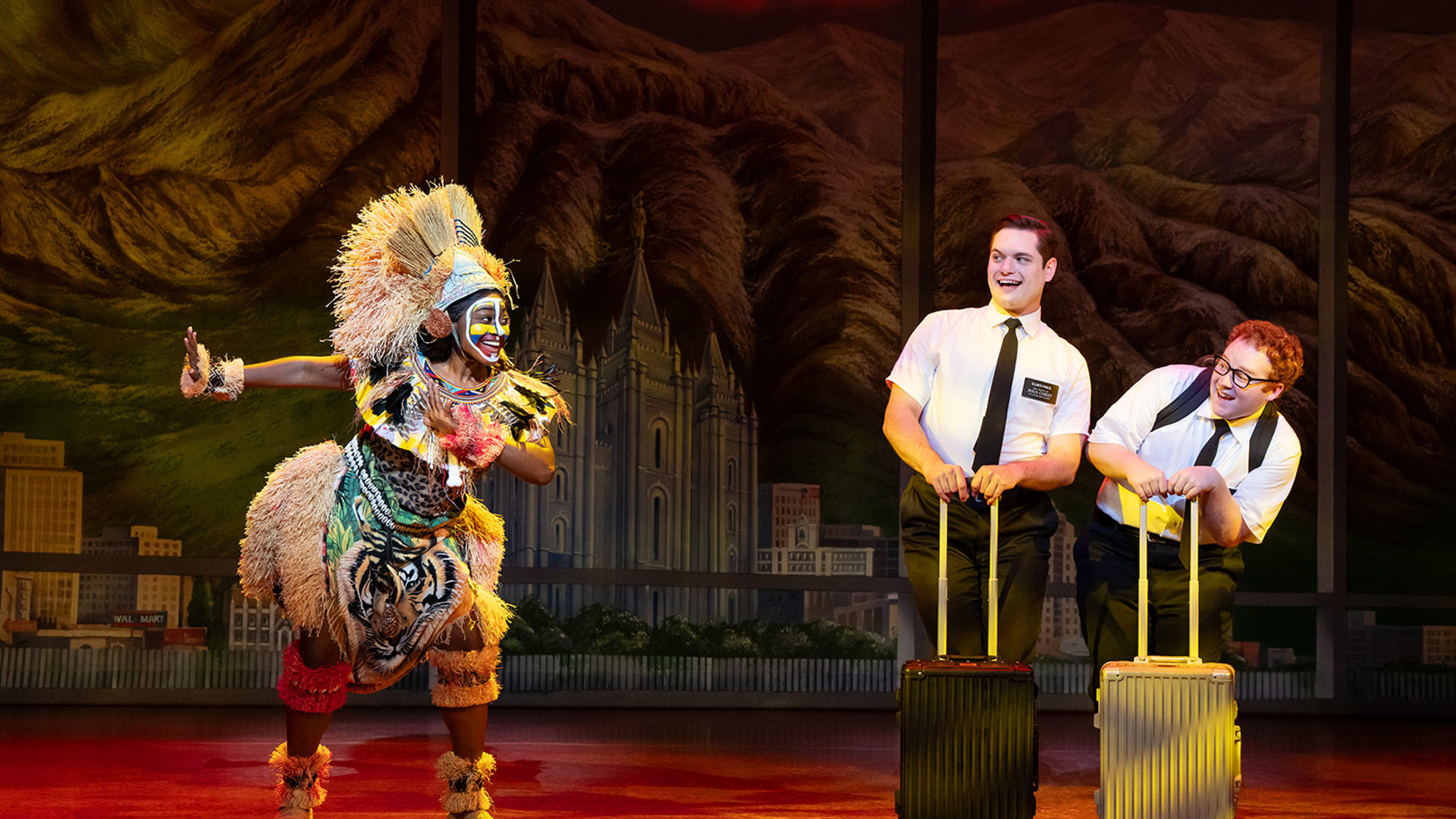
I am going to make a confession that might get me banned from certain cultural circles in South Florida: I don’t like musicals. I don’t like the sudden bursts of unprompted harmony, and I generally prefer my entertainment to have a bit more grit. But several years ago, when the touring production of The Book of Mormon rolled into the Broward Center for the Performing Arts, I took my musical loving wife to check it out.
I didn’t go because I wanted to see tap dancing or just to make my wife happy. I bought tickets because I was a massive Matt Stone and Trey Parker fan. I grew up on South Park. I’ve seen Team America: World Police more times than I care to admit, and I could easily watch it again right now. I figured that with those two at the helm, I was guaranteed to get a few good laughs.
I was completely unprepared for what I actually saw.From June 9 to 14, the nine-time Tony Award-winning juggernaut is returning to sunny South Florida, closing out the Broadway in Miami season at the Adrienne Arsht Center’s Ziff Ballet Opera House. If you’ve never seen it, let me give you the perspective of a cynic who sat in that Broward theater completely stunned.
When people tell you The Book of Mormon is funny, they usually leave out the most important detail: it is also hilariously, relentlessly, full-on offensive. There is no soft-pedaling here. If you are a seriously religious person, this show is designed to test every single boundary you have. I remember sitting there in the dark, my jaw hitting the floor at the sheer directness of the satire.
I don’t have an issue with offensive humor, I love it actually, I think as a culture, we should be able to laugh at absolutely everything. But the sheer audacity of what was happening on stage shocked me. About halfway through the first act, I looked around the room and genuinely thought to myself, “This is it. Half the audience is going to stand up and walk out at intermission.” Instead, the lights came up for the break, and the entire theater erupted into a roaring standing ovation.
Nobody left. Nobody filed a complaint in the lobby. Everyone just happily queued up for their drinks, buzzing with a kind of manic energy, and filed right back into their seats for act two. It was a pre-pandemic crowd, back when people were perhaps a little less hyper-sensitive than they are today, but even then, it was a miracle of modern theater. Parker and Stone had pulled off the ultimate trick: they made something so deeply shocking that you couldn’t help but applaud the genius of it.
To this day, I can still recall the show’s two biggest musical numbers perfectly. I won’t even repeat their titles here—that is how profoundly NSFW they are. If you know, you know. It’s the kind of songwriting that makes you laugh hysterically while simultaneously looking around to see if you’re going to hell just for listening to it. That is the magic of what will be hitting the Arsht Center next month. It takes all the tropes of traditional, bright-eyed Broadway theater and weaponizes them. The melodies are infectiously catchy, but the lyrics slice through cultural colonialism, religious dogma, and human absurdity with a scalpel.
The Verdict of The Book of Mormon
If you are on the fence about whether you want to watch a musical, or if you’re skeptical about whether The Book of Mormon is worth the hype, let me clear it up for you: go watch it. It is phenomenal, it is deeply entertaining, and it is a masterclass in comedy. Just leave your sensitivity at the valet stand on Biscayne Boulevard. You’ll walk into the Ziff Ballet Opera House expecting a standard night at the theater, and you’ll walk out completely shocked that they let them get away with it. Go check the receipts yourself.
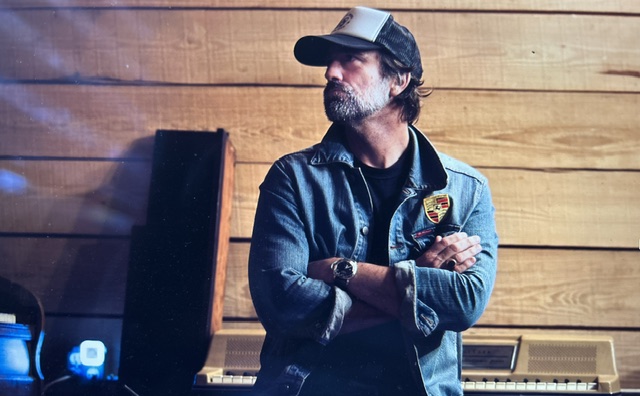
Singer-songwriter and South Florida local (well sort of!), Ryan Cooper, is celebrating the first monthiversary of his newest album release, Windowpane, a collection of 10 songs covering love, life, family, and all the good and bad moments in between. While Ryan calls Miami home most days (he has his favorite coffee shop – shout out to the Imperial Moto family), he is originally from Laurel, Mississippi and has travelled a lot for his music, going back and forth between Miami and Nashville, in addition to performing across the world in countries like Argentina. He’s a father of two. Sarcastic. Very uniquely Ryan. While the style of Windowpane is listed as Americana, Ryan’s music is a bit more versatile than that, and even contains familiar elements from late 80s and 90s, which, based on our most recent interview makes total sense:
So tell me, Ryan, how long have you been doing music?
Ryan Cooper: Oh, wow. I guess it feels like forever, but I started playing the guitar in 1994. My freshman year in college. But I didn’t start actually playing out until, I want to say, like 1998.
Maybe it’s the obvious question, but why did you even pick up a guitar in the first place?
Oh, that’s a good question. I’ve always loved music. I always sang, like, in the car. Love bands. But I never thought I could make it myself. Um, and then I don’t know, it was just like this thing in college, this guy named Leo…he had a guitar in college and he could play it and then he started teaching me things. And next thing you know, I just got one for my birthday or something like that. And said “all right, well, I’ll kind of teach myself.”
What were some of the bands that, like, were your first influences?
I mean, I loved Smashing Pumpkins in high school, but it wasn’t, like, what made me want to pick up guitar. It was just like, I think, like I said, the college experience and just wanting to do something and I loved music. I grew up with my dad. Listened to music in the car, and he was… He grew up, you know, as a kid in the ’50s, and then high school in the ’60s, and then he was in Vietnam in the late ’60s, or ’70s. So there was all these different types of music. So when I used to ride with him to school, or games, or whatnot, he was always playing, like, the Band, Janice Joplin, and Linda Ronstadt, Willie Nelson, Sade, Jim Croce, Joe Cockerson, was all this, like, different types of music flowing around. So it was always around. But I would say Smashing Pumpkins was, like the first, like push to play music.
What did you like about the Smashing Pumpkins’ music?
RC: I remember hearing like “Cherub Rock” and seeing that video and just like, it was psychedelic visually, but I think it was how the guitars were layered and the drums of Jimmy Chamberlin and the guitar playing and the melodic vocals of Billy Corgan recorded, of course. I don’t know but there’s something about that song that jumped out… It was just something about the Pumpkins I love. More than any…Pearl Jam came out when I was in high school, and Nirvana, all that grunge stuff came out, which was cool, and everybody, like, sunk their teeth in Nevermind and Ten, but there was something about Gish and Siamese Dream that just took it to another [place].
Your music doesn’t really sound that grungy, having listened to it on repeat the last few days. So how would you describe your music to someone who has never listened to you before? And then on top of that, like, how did you end up making the music you’re making now, even with all these kinds of loves at the beginning of your journey?
Well, to answer the first question, I don’t really know what it is. I’ve been told it’s Americana. I thought it was all country rock just because of some of the influences like Ryan Adams, and Pete Yorn, and all that. But the answer, the question on how did I get to the sound? I grew up in this intersection, like I said before, my dad, I was listening to Jimi Hendrix and Janis Joplin and the Band and Jim Croce, which is a singer-songwriter, right? and Joe Cocker. And then there’s Willie Nelson, and then all the stuff that my dad was listening to. And then I was growing up in the ’80s, which started with, like, ’80s, new wave, right? The Smiths and The Cure and Culture Club and Duran Duran, and then here comes the 80s hair metal bands. And then I got into, like, punk rock stuff because I was skateboarding. And then here comes grunge. And then after that, I started listening to, you know, a lot of jam bands, like Phish and Widespread Panic and the Dead. So, like, I kind of grew up and was around all this different type of music all the time. And then growing up in the South, there’s this intersection between rock and roll and country and bluegrass and jazz from [Mississippi]. So you kind of stir it all in a pot. It’s everything, there’s a little rock and roll, there’s a little blues, there’s probably some country in there as well. So I don’t have, like, one definitive genre. I think it’s just kind of like a gumbo or a mix of everything that I grew up with and where I lived.
Tell me a little more about where you’re from.
I’m from Laurel, Mississippi, which is in south central, Mississippi. about two hours northeast of New Orleans, about an hour north of the coast. And what’s interesting about my state is, like, you had the blues that was created in the Mississippi Delta. And then it was ripped off and what was created rock and roll, right? And then in the southern part of the state, you have more of the jazz influence with New Orleans. And then, if you get a little bit further north, you get more country because you get close to Tennessee. So all these artists from Mississippi were leaving the Delta. They were going north to Chicago and Memphis, and that was mixing with bluegrass and country, and then the South, so all this intermix of music was happening from these different places because of the highway that was running north and south between Chicago and New Orleans. So it’s really interesting all the different types of music that’s come out of that state.
So your album, Windowpane. Why did you choose that title for the album?
The first album [Songs for Her] was more about things that were going on inside me or inside my head and my heart. And when I was writing this one, I was more like, going to be focused on things that were happening outside my view. And one of the songs…it’s called Windowpane, it’s really literally about sitting on the couch and watching everything that’s happening outside and recognizing that, reflecting on it. So I thought it was a good kind of marriage of the 2 ideas, and that it’s not necessarily what’s happening inside…and that image that’s on the record was me being shot through a window. So it kind of all came together like that.
What are some of the influences that may have influenced the Windowpane album?
After the first album, I didn’t think I was gonna be able to write any more songs, and then I wrote, “Underwater,” which was like, okay, there’s more in there…and then one song came after another. And really what, I think, started it was, I got on all these, like, country playlists, which I didn’t think I’m a country artist, so I thought it was funny. I was like, okay…I’ll just write a country song. So I sat down and wrote “High Times”. And I was like, okay, and then I had written “Hell and Back” for a friend, and that one just kind of came, and then my buddy and I were kind of messing around, and that’s where “All I Can Do” came out…It was like, hey, these different situations have happened, and I just wrote a song about it. Next thing you know, I had multiple of those. And then the question was, okay, if you’re gonna record it, what kind of sound do you want? I didn’t want to do it in Miami again. I wanted a more Nashville, Austin sound, and that’s where I found the producer…
Do you have a favorite song on the album? Like one that you just, like, are kind of obsessed with?
Well, I told Billy, the producer, I was like, if we only put out one song it has to be “Hell and Back.” And it really was more the nature of the message, about men’s mental health, and what my friend was going through, and how it can really connect with people, to maybe talk more about what’s going on with them. But I also love, “I See Them in You”, because it’s a love song for my boys, and it reminds me of riding in the car with my dad, and that relationship between a father and son…But to answer your question, I would say, “Hell and Back,” what the message is about, how critical the moment was in the conversation I had with this individual, who was having a really hard time, and then how it ended up being produced, and the sound that goes along with it, would probably be my, I think, the most important song on it, maybe not my favorite, but the most important.
And do you have, like, a favorite lyrics from the record? Or set of lyrics, like, They’re just like, wow, I can’t believe I wrote that?
“I’d see its purpose if its made me a better man. It’d be worth it and I’d go through it all again. For them. For you. Just to help and guide you through.” [from and Hell and Back].
How was your release party? Where did you do that?
We released it in Nashville. We had a release party at a bar called Buddy’s Tiny Tonk in Nashville, where we just played the record on loop. And for me, it was about the ability to watch people and see how they reacted to it, what songs they reacted to. Do they connect with it? And then we played a show at The Basement in Nashville…played the record top to bottom in order. And I had the band that recorded the record there…And a lot of good feedback…And it’s funny, everybody has their own song.
I was just about to ask, what’s been seemingly the favorite?
It’s funny. all over the place. Like, some love “Annie Says It’s Ok,” ’cause it’s, like, a sleeper, and it kind of rocks out…I’ve been thinking about it a minute, but a lot of people like “Ugly” a lot because it’s like a punch in the face, rock and roll real quick. A lot of people love Hell and Back because of the melody. I get a lot on “Heartbreaker” because it’s like a fun, bluesy, rock and roll song. High Times, some because if they love country, and so the rock, and then “Windowpane” is kind of groovy…New Orleans, Mississippi thing. So it’s interesting to me on how each different song, um, has been responded by different types of people, what other music they listen to.
And what’s next for Ryan Cooper? Like, are you writing again? Yes. I mean, obviously, I selfishly know that you are writing a little bit, but like, as far as, like, kind of where you want to go with your next work.
So I’m gonna put another EP out at the end of June. It is gonna be 4 songs, 4 different versions of the song “Can You” from the first record… One’s a live version. 2 are EDM, like house music, remixes. And the other one is like a slow stripped down acoustic. And then, yes, I’m in the process of writing a new record, which I think I’ve got 7 or 8 now. Obviously, we worked on a few, and the idea is to get back in the studio. maybe at the end of the summer to start laying those down.
Is there anything else you want people to know about the album, about your inspirations, about anything?
Um, yeah, I mean, look, all the songs are, our stories, like they’re all real life events that have happened in my life. And I think if people resonate with, like, real, honest, original live music, and they [like] the storytelling, this is for them. I tried to mix it up and have different types of sounds that come along with those that connect with everybody, but it’s not just one thing. I think it’s kind of everything, it can be anything to anybody.
So we’re getting to the end of the interview here, but I wanted to know, since I know you’re a dad. How do your sons feel about your music?
I think they thought it was just a, uh, a thing dad was doing until they actually, like, saw their friends listening to songs or they heard it on the radio…. So now they’re a little bit more intrigued, but at the end of it, they’re so worn out from hearing, like, a 1000 different listens as you’re mixing a song, as you know.
Is there any song that they’re kind of like, sick of?
Like all of them. Because they’re always having to listen to me, you know, either the different mixes, you listen to a thousand times, or then I’m studying the songs to get ready for a show, or…
Well, do they have a favorite?
I think they like they most like Mississippi [Miles Away], there on the first record. Oh, man. On the new one, they like, um… Windowpane because it’s about their neighborhood. I’ll have to ask them on that, but that’s a good question.
Okay, well, there you go. You know, if you want recommendations for a song, his sons recommend Windowpane from the Windowpane album. Thank you, Ryan Cooper. This has been a wonderful interview.
Thank you, Alexa Lash.
Ryan Cooper is absolutely right. Everyone is going to interpret his music differently, because we all have different familiarities with different artists. Grew up in different generations. After the interview, I sat with the album again. I heard a little Jimmy Buffett. A little bit of Bobby McFerrin’s “Don’t Worry, Be Happy” in “Windowpane.” A little “Jack and Diane” from John Mellencamp in “High Times.” A little bit of the Gin Blossoms, Train, Barenaked Ladies. So give Ryan’s new album a listen, and let me know, what do you hear?
Miami is often described as a transient place, but Tamboka has spent over fifteen years refusing to fade out. Founded by jazz students now weathered musicians, the project has matured into something far more complex. It functions as a restless, shifting collage, one that has survived the city’s notorious churn by swerving through the art of mutation.
The first thing that amazed me about their sound was an improvisational approach to melodic lines and powerful shifts that don’t escape a beat.
The band is currently deep in a new phase of evolution, operating out of their studio in Fort Lauderdale. Known for a signature sound that pulls from Cumbia, Salsa, and Swing, the group is now leaning into electronic additions, layering modern textures over their technical foundation.
This latest iteration of the Tamboka collage is built on a diverse technical foundation. Founder Tyrone Iregui leads on guitar and has been the driving force behind the project, supported by Milosh Strzelczyk’s dual-threat handling of piano and trumpet and Andrea Betancourt’s mesmerizing vocals and impeccable vibes. Virtuoso Fernando Farias provides the low-end and additional guitar work, while John Santo acts as the project’s MC, cutting through the arrangements. The band’s rhythmic spine remains its powerhouse percussion section, with Abel Morales on congas and bongos and Darwish Iregui on cajon, ensuring that the “core” forged in their Fort Lauderdale studio (Space Out Studios) carries through every live set. They’re working on an album that can only be described as an evolution towards a more electronic rendition of its own original mélànge.
In our recent conversation for Music in a Heartbeat, the dialogue inevitably hit the “before and after” of the pandemic. Pre-2020 Miami sustained a functional, communicative music community. Bands looked out for one another, sharing a working map of which venues respected the craft and, crucially, which ones actually paid their talent on time.
That network has largely collapsed. The current landscape is aggressively insular, replaced by a quiet, individual scramble for survival. When discussing the local circuit, even the high-profile coastal stages, the reality is often bleak. Venues are routinely failing to meet basic professional standards, from payment delays to a general lack of rigor. It is an ecosystem that has closed its doors, leaving musicians to navigate the infrastructure entirely on their own.
Yet, Tamboka refuses to hedge their bets. They have found a steady rhythm in their 2026 residency at Tequila Town, but if you expect them to calibrate their set to match the room, you’ve misunderstood the project. They do not pivot for the venue. The music you hear on a local stage is the exact same raw, technically demanding performance they are currently pitching to major festival circuits in New York and Los Angeles.
They are a working band navigating a fractured scene, proving that even as the technology and the members change, the attitude remains.
In South Florida, we are obsessed with “the new”. We tear down historic hotels to build glass towers and pave over old neighborhoods for luxury outlets. But for those of us who spent our nights in the dim, humid corners of the local music scene, the real South Florida isn’t found in a shiny rendering of a new condo, it’s found in the grit of a hot and sweaty set at 1:00 AM.
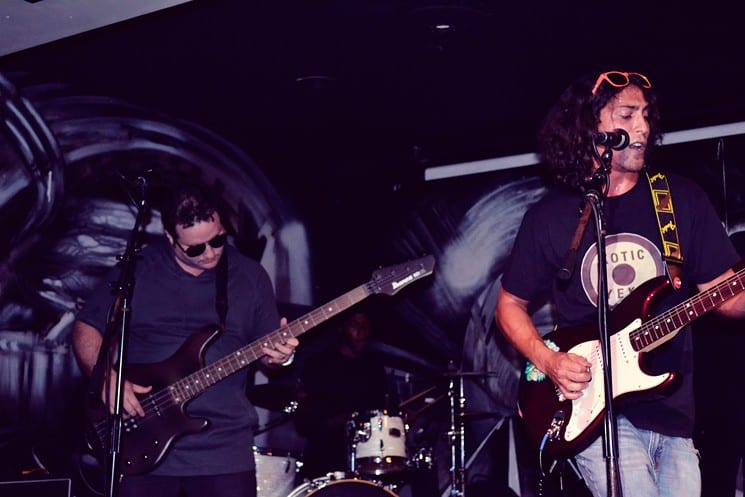
I navigated through the scene as the bass player for Xotic Yeyo, an outfit that became a staple of the local alternative-funk circuit. We were the “Disco Funk Jesus” movement of the late 2010s throughout South Florida. While we were regulars on the neon-soaked stages of Wynwood and the legendary Churchill’s Pub in Miami, we were just as likely to be found hauling gear into venues across Broward and Palm Beach County. Being in a band like that gave me a front-row seat to the raw, unpolished engine of our culture. In a town famous for “playback” performers and overpriced bottle service, being part of a live, rhythm-heavy band was our way of proving that there is still a pulse beneath the neon.
That pulse took us from the underground to the professional stage in ways only this region can manifest. For a time, we were a fixture of the live entertainment for Florida Panthers games. We’d start the night out on the Pavilion, playing for the crowds streaming through the main entrance of the arena, then haul our gear up to the club level to hit the stage during intermissions and keep the energy high after the final buzzer. It was a study in contrasts: one hour you’re playing in the sweltering outdoor air, and the next you’re providing the soundtrack for thousands of fans under the bright lights of the concourse. It was the ultimate South Florida hustle, finding a way to make the funk fit everywhere from a street corner to the executive level of a sports franchise.
There is a specific physicality to playing music here that the rest of the country doesn’t understand. It’s the 95-degree load-in through a back alley in Hollywood, West Palm, or Little Haiti, where the humidity is so thick it feels like your bass strings are fighting back. I’ve spent countless nights hauling gear through the salty air, watching the condensation form on the chrome of my bass before I even hit the first note.
People often obsess over gear, asking about specific boutique amps or vintage pedals. But South Florida teaches you a harder truth: the tone is in the fingers. In a scene where the house PA might blow a fuse or the stage monitors are held together by duct tape, you learn that your “sound” isn’t something you buy; it’s something you wring out of the instrument through sheer force of will. Whether I was playing a G&L Jazz or a short-scale Mustang, the goal was the same: provide the rhythmic anchor that kept a roomful of people moving until the sun came up.
That era peaked for us when we took that live energy into the studio with Andrew Yeomanson, better known as DJ Le Spam. Recording at his City of Progress studio in North Miami was a lesson in analog truth. Le Spam is a guy who lives the music, he’s an all-analog purist who captured our sound onto magnetic tape.
He was the one behind the board for our single “Slide to the Left,” and his influence was the secret sauce. He didn’t just record us; he dialed into the frequency of the band, capturing the “one-take” tightness we’d spent years perfecting on the road. We weren’t just playing music, we were documenting a vibe that is unique to this corner of the world, a mixture of rebellious art and pure, unadulterated party energy.
But being at the foreground of a movement means you’re the first to feel the impact when the wall hits. Just as we reached that high watermark, the pandemic arrived and effectively snuffed out the flame. It wasn’t just a pause, it was a total shutdown of the ecosystem we had bled for. When the venues finally creaked their doors open months later, the landscape had shifted. The momentum was fractured, the venues were struggling, and that specific, electric energy that had defined the late 2010s seemed to have evaporated into the stagnant air. It was a long, quiet stretch where it felt like the heart of the DIY scene had stopped beating entirely, leaving those of us who lived for the stage wondering if the “live” era was officially a relic of the past.
However, South Florida grit is harder to kill than people think. Take Churchill’s Pub, for instance. For decades, it was the dirty, beating heart of Miami’s underground, a place where you’d have a hardcore punk band followed by a country blues trio, followed by our own brand of psychedelic funk. We thought we’d lost it forever during that long silence, but as of this May, the lights are back on. Seeing DJ Oski bring MiamiPalooza back to those hallowed, beer-soaked floors on May 2nd wasn’t just a win for the scene, it was a signal that the sanctuary of the “weirdo” still has a lease on life.
The credibility of the scene never came from a social media following; it came from that “hot and sweaty” mentality. We’re from a generation of musicians who pride ourselves on the “high watermark” of the live performance. If you couldn’t deliver the groove in the moment, with the sweat dripping off your nose and the crowd pressing against the monitors in a room that hadn’t seen a working AC unit since the 90s, you didn’t belong on the bill.
Today, when I look at the South Florida horizon, the venues change and the names on the marquees are often replaced by corporate sponsors. But the soul of the place hasn’t changed. It’s there in the resurrection of Churchill’s, and it’s there in the hands of the musicians who refuse to compromise.
South Florida is at its best when it’s loud, unrefined, and unapologetically real. We might lose a few historic spots along the way, but as long as there’s a bass player somewhere in a garage from Boca to Kendall refusing to play it safe, the real South Florida is still alive. The tone, after all, is in the fingers.
I don’t know how many of you have ever had your freedom taken away from you, but it’s no fun. In fact, that very act can be more traumatic than the trauma that brought about your incarceration. I’m talking Baker Acts.
In the wrong hands, you may experience irreparable damage. And those wrong hands can be the police themselves.
The Baker Act (Florida Mental Health Act) allows for involuntary, emergency, or voluntary mental health examination and temporary detention for up to 72 hours for individuals in a mental health crisis who are deemed a danger to themselves or others, or unable to care for themselves. It is designed to provide immediate care for people with mental illnesses.
Full disclosure: I’ve been in therapy on and off for over 30 years.
I’d been Baker Acted once before, in my early thirties. In that instance, I Baker Acted myself. It was the only way to get the medication I needed at the time. But when I was released, I really did go crazy. Fortunately, my sister found a place for me to land. A dual-diagnostic center where I stayed for about a month.
That experience was unforgettable. The men I shared that apartment with, I still hold them close to this day.
But when I left, I was back out in the wilderness. Another decade went by. Even after putting down cigarettes, alcohol, and everything else, there were still gears grinding in the back of my mind.
Then I lost my father. And something broke loose.
A rage showed up that I didn’t recognize. I became a ticking time bomb, but the ticking was silent. I never knew when I’d go off.
I found a new psychiatrist. With help from my mom, we started the process. Medication, adjustments, trial and error. Trying to land on something that worked.
And then one day, I fell through the cracks. And my brain cracked with it.
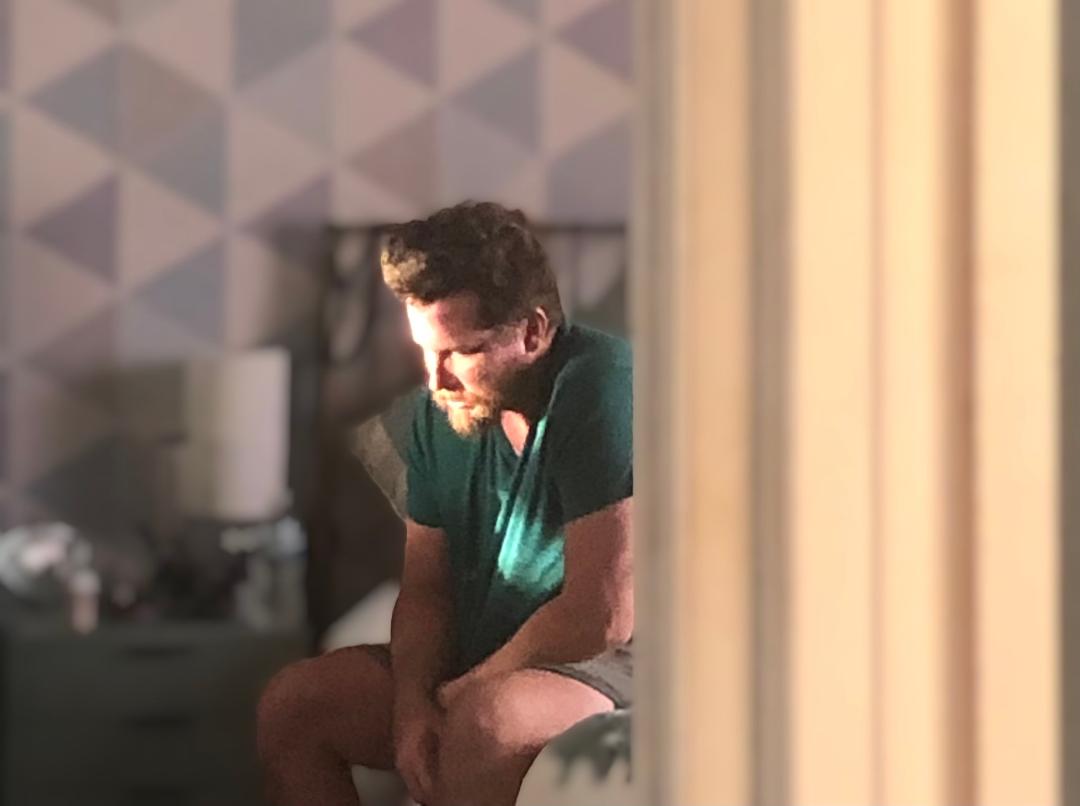
I was 44 when I woke up wanting to beat the shit out of myself. That’s what my wife saw. And that’s why, minutes later, multiple patrol cars were outside my apartment.
But here’s the thing. The episode had already passed. I wasn’t hitting myself anymore. I wasn’t yelling. I wasn’t a threat.
From their perspective, maybe I still looked unstable. Maybe they were following protocol. I get that. But in that moment, it didn’t feel like help. It felt like things were slipping out of my control.
I walked outside with my hands up. No resistance. No aggression. Just… done.
And still, it escalated. One officer locked in on me. I don’t know why. Maybe I wasn’t answering fast enough. Maybe I didn’t give him what he wanted. But I wasn’t rude. I wasn’t loud.
Then I noticed another officer, small, steady, and ready to tase me. That’s when it hit me. This wasn’t under control.
Three cops grabbed me. And just like that, metal on my wrists. The back seat of the patrol car swallowed me whole.
First time.
That’s the moment. That’s when freedom leaves your body. You can feel it drain out of you. Like it’s pooling somewhere below your feet, out of reach. And panic takes its place.
Because you realize, you have no say anymore. None.
On the way, the officer told me I was resisting arrest. That it was a felony. That I could be held indefinitely.
None of it was true. But in that moment, it didn’t matter.
At the facility, things didn’t get better. They wanted my shorts because of the drawstring. Said it was dangerous.
I pointed out that drawstrings don’t kill people, bed sheets do. That didn’t go over well. I became a “problem.”
Forty-eight hours later, I was in an Uber heading home. When I walked in, my wife was gone. No sound. No movement. Just… absence. I stood there for a second, not really knowing what to do with myself. So I did the only thing I know how to do. I started creating.
We do that, right? We take what happens to us, good, bad, horrific, and we reshape it. Try to make sense of it. Try to survive it.
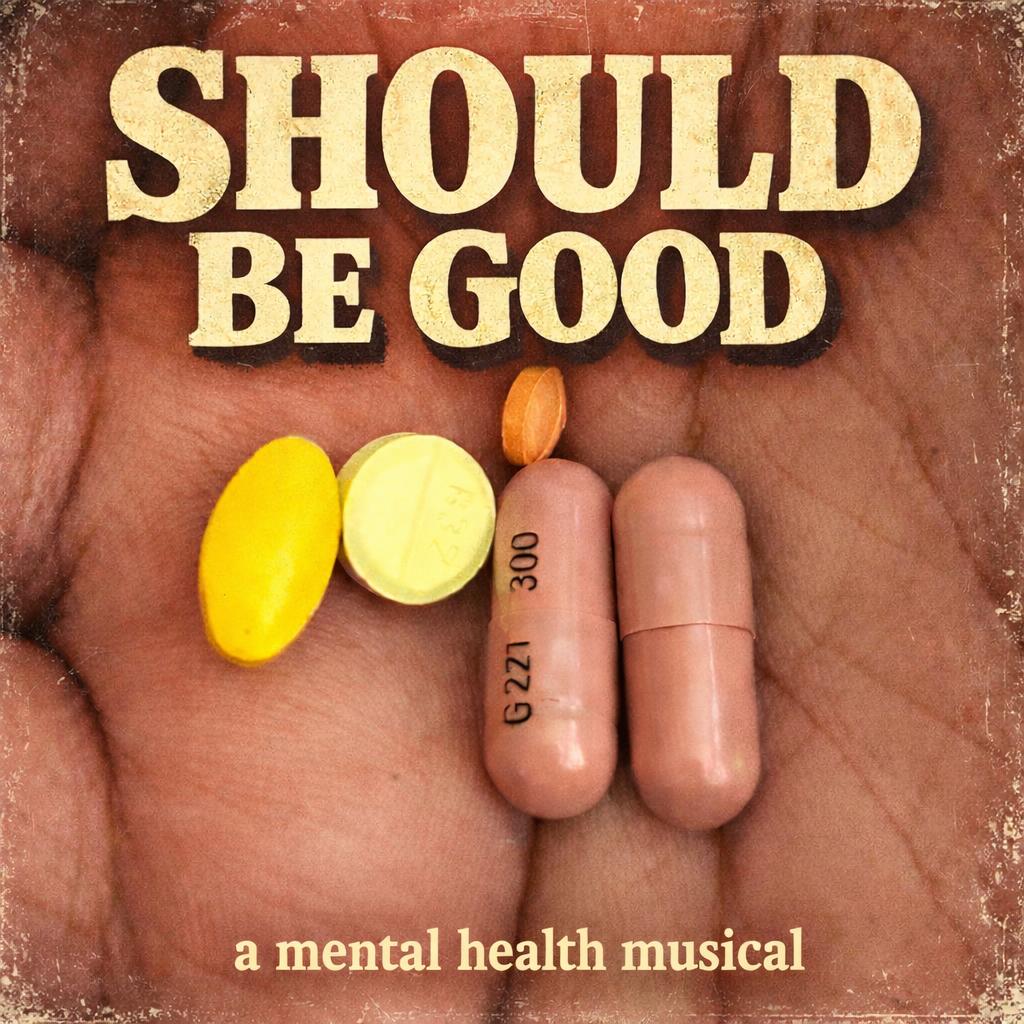
What came out of that was something I can’t easily label. It’s not an album. Not really. It’s not spoken word. It’s not quite a concept piece. It’s what I’ve been calling a mental health musical.
Since then, there’s been healing. Real healing.
I started DBT. My meds are finally dialed in. Better than they’ve been in a long time.
But I was also diagnosed with bipolar disorder. So now I watch. I stay aware. I pay attention to the shifts, the warning signs. Because I know what happens if I don’t.
A few days ago, Should Be Good quietly premiered on streaming platforms. Usually, I’d be shouting something like this from the rooftops. Not this time. This one’s different.
It’s exposed. It’s vulnerable in a way that caught even me off guard. So I’m not pushing it. I’m just hoping it finds the right person. You can stream it below.
If you’ve been through something like this, I hope it reflects your experience in some way.
And if you’ve only ever stood on the outside, watching someone you love go through it, maybe this lets you step inside for a moment. There is help out there. Real help. People who care. Places that work. Even if you don’t have money.
Start somewhere. Make a call. Send an email. Reach. Out.
And if you’re reading this while you’re in it, while things are slipping, reach out to me, too. I mean that. I know what crazy feels like.
But before I end this thing, lemme give some important phone numbers to reach out to first:
South Florida is one of the principal locations for the reemerging screamo genre. A style of music coined from hardcore subcultures in the 1990s. This music is raw and emotionally charged, often atmospheric, often dissonant, yet melodic, with interesting dynamics binding it all.
The South Florida screamo scene offers hidden treasures everywhere and this year has been great for upcoming musicians. Many screamo bands like Pictures of Lucy, Sana, and For Odette have released easily accessible music with a genuinity that makes it less about being recognized and more about being witnessed for what this genre symbolizes: community, intimacy, and authenticity.
As a frequenter of local shows I’ve recognized that this scene is less about making it out, or making it big, but that many of these musicians are groups of friends who just want to share their craft with people who appreciate their work just as much.
Pictures of Lucy
Among these new artists, a band called Pictures of Lucy has grabbed my attention as their sound falls into the classicity of post-hardcore, and abandons chaoticism and replaces it with romantic dissonance.
Characterized by a non-commercial sound and a blend of genres like screamo, post-hardcore, and math-rock, their newly released EP “POL” is energetic, emotional, raw, yet possesses a dreamy and melodic atmosphere ideal for pensivity. Honestly, their music is not easy to describe, with influences from bands like Train Breaks Down, Toe, and American Football, Pictures of Lucy has brought structure to a unique blend of genres that differs from many other bands in the Miami and South Florida music scene. This predominately female three-piece is composed of drummer Isabel Perez-Benitez, Sophia Walsh as bassist, and Dylan Arafa on guitar and vocals. Promising us a release show soon, you can find them in flyers for shows typically organized by Equinox booking and you may check their pages respectively for any updates. @picturesoflucy.sfl on Instagram.
You can find their EP, released only last week, on most platforms including Spotify and Apple Music.
For Odette
For Odette’s aesthetic presence is noticeable in both their music and the manufacture of their art and merchandise. Bella Giraldo’s and Kalimah Richardson’s vocals have an elasticity in sound that alternates from quiet and melodic to powerfully loud during screams, while maintaining and toying with delicate femininity all throughout. Their music is a blend of post-hardcore, second wave emo, and screamo. Characterized by a poetic, raw, college radio sound that is easy to get lost into. Their new EP released on February 6 offers a pleasant 1990s-like journey and showcases their impressive ability to shift through genres. Their songs often start with poetic spoken word narratives, accompanied by melodic slow-core, and follow into a speedy 1990s noise rock buildups. The band is composed of vocalist and bassist Bella Giraldo, guitarist and vocalist Kalimah Richardson, Cristina Ameller as drummer, and Jordi Perbtani on guitar.
Some of the member’s musical influences include Braid, Unwound, Daitro, Slint, This Day Forward, with some contemporary bands like Crochet, I Hate Sex, and La Dispute. If this sounds like something that interests you I encourage you to check out their debut release “Pennant” available on Spotify, Bandcamp and other platforms.
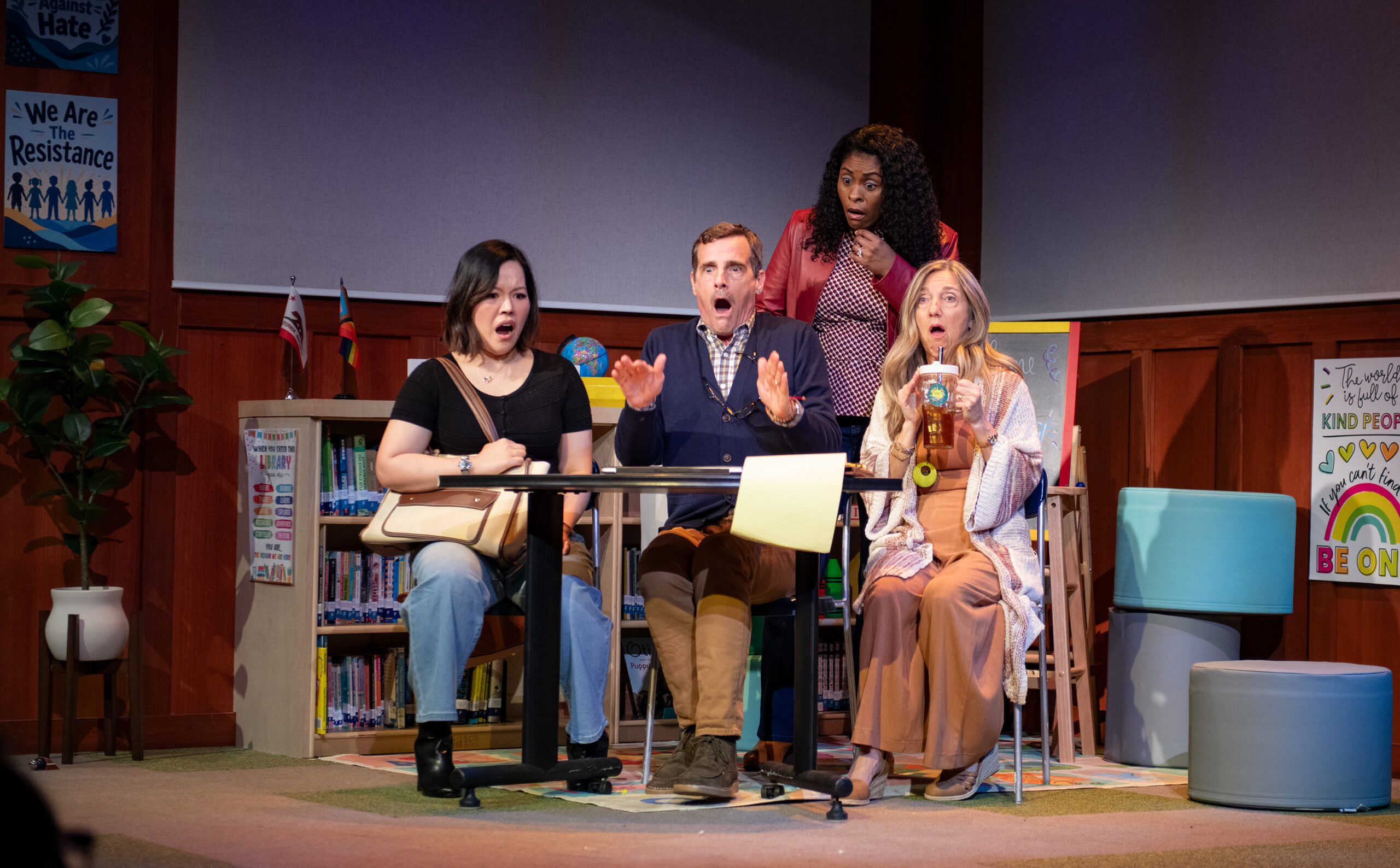
GableStage closed out its 2025 season on a high note with Eureka Day, a rip-roaring satire centered around vaccines, identity politics, groupthink, and the absurd contradictions of modern liberalism.
See this play. Bring your brain and pay attention.
Buckle up and enjoy the ride.
Eureka Day is sharp, funny, uncomfortable, self-aware, and painfully relevant.
Most of all, it is entertaining.
The third scene alone is worth the ticket price. As a mumps outbreak shuts down the school, the cast conducts a live-stream community meeting that descends into absolute madness.
Eureka Day was written in 2017, years before COVID shut down the world and vaccines became one of the most divisive social topics of the modern era.
Some audience members may not see it as a comedy. Certain scenes drift into drama, satire, and outright social horror. But to borrow a phrase from the play itself, it is hard to reach consensus.
Still, most theatergoers will likely experience Eureka Day as a comedy.
The plot centers around the board members of Eureka Day, a progressive private school in Berkeley, California, meeting to discuss the upcoming school year.
Stellar Performances in Eureka Day
Mark H. Dold (last seen in Appropriate and The Lehman Trilogy) delivers a nuanced and physically expressive performance as Don, the aging white liberal attempting to keep the entire operation from imploding. Eight-time Carbonell winner Jenny Hacker brings charm, vulnerability, and conviction to Suzanne, an older parent (her kid is in grad school) whose anti-vaccine beliefs become central to the conflict.
Ryan Didato plays Eli with ironic self-awareness and calibrated Silicon Valley smugness. Jordyn Moone delivers intense frustration as Meiko. Rita Cole brings restrained balance as Karina, the new member of the board and often the audience’s grounding force.
These five identities in one room creates inevitable friction. The play becomes a social pentagram of clashing ideologies, egos, and insecurities, masked in woke inclusiveness.
And nobody emerges clean. There is no hero. Everyone is flawed and becomes ridiculous. Suzanne perhaps is the most humanized character once the audience learns why she distrusts vaccines, but that emotional reveal doesn’t simplify our feelings towards her.
Eureka Day at GableStage
Visually, the production is first class.
The scenic design, lighting, and transitions are handled with precision.
Director Stuart Meltzer deserves enormous credit here. One of South Florida theater’s most important creative voices, Meltzer once again demonstrates why his work continues to resonate.
What also feels exciting is the larger sense of momentum and connective tissue happening within Miami theater. Jonathan Spector, the Oakland-based playwright behind Eureka Day, had his play Birthright world premier last year at Miami New Drama. That production is now heading Off-Broadway this summer. Meanwhile, Meltzer’s Zoetic Stage continues producing ambitious and intelligent work at the Arsht Center.
Seeing Miami companies support bold work, support each other, secure major productions, develop world premieres, and collectively elevate the region feels genuinely encouraging.
South Florida theater is getting stronger.
Allow for a slight correction and a jab at neighboring counties: Miami theater is getting stronger!