Category: News

  • How General Motors Destroyed America’s Street and Electric Railways

    How General Motors Destroyed America’s Street and Electric Railways

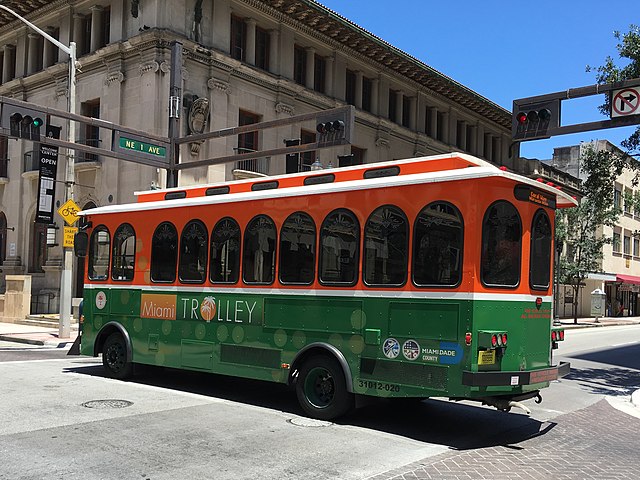
    As in so many other cities around the country, the various city governments of Coral Gables, Miami and Miami Beach decided to operate, on various routes, free vehicles mostly for their residents but available to any who care to use them. To get people to ride them they cutesied them up to look like old-time trolley cars and put the word “Trolley” on them in extra-large letters. The only problem is, no matter what you, we or they call them, they are still nothing but a g-d dang bus.

     Folks, and this simply put, if it runs on concrete, has rubber tires and is powered by gasoline or another type of fuel such as diesel, it doesn’t matter what word is put on the side of it: it is still a g-d dang bus.

     To understand this misplaced desire to—in “their” minds—make a vehicle more attractive we need to try to understand why this is being done, and the answer, no matter what the politicians want to tell us, is a nostalgia for something that we never should have lost, not here in Greater Miami, in the numerous cities and towns in Florida that had street and electric railways, and throughout the country.

    In, if I remember correctly, some time around 1965 or ’66, I did a tour of the eight remaining American cities left from the literally several hundred that had street cars or electric interurban railways in operation. And while, yes, San Francisco had it’s fabled cable cars it still had several electric trolleys on rails routes. El Paso had just closed the system but the cars were still there, in the car barn and shops, but Philadelphia, Boston, New Orleans and three other U. S. cities still had real trolley cars, not buses being falsely called trolleys. In addition to “ours” Toronto had never given theirs and still had a sizeable system operating.

    The last Miami streetcar operated in 1940 and the mayor at the time, who, like government officials throughout the country, took gratuities from the Conspiracy to hasten the changeover from trolleys to buses. That conspiracy, led by General Motors (As Captain Reynaud said, in Casablanca, when Major Strasser order him to shut down Rick’s Café, he went in, blew his whistle, and shouted “this place is closed by order of the government—gambling?!!—there’s gambling going on here, I’m shocked!” at which point a croupier came up to him and said, “you winnings, Captain Reynaud!”).

    And that, folks was exactly what happened when the Conspiracy, the automobile builders, tire and rubber companies, road builders and oil and gas companies, got together to devise a scheme to sell their goods and products. That scheme was simple: pay offs to officials of private companies operating the rail transit lines as well as government officials who could order said rail lines closed down. And they were enormously successful. “But Seth,” you respond, how do we know that what you are saying (writing) is factual? Not only is than an excellent question (thank you for asking!) but in 1952 (yes, you can look it up) the Supreme Court of the United States found the four industries, in toto, guilty of conspiring to destroy America’s street and electric railways and fined them what, even then, was an utterly and ludicrously insignificant amount, especially considering the damage they had done.

     While one of the books I am working on is titled Sunshine State Trolleys: The Street and Electric Railways of Florida and while our future articles on this topic will deal mostly with the three Greater Miami systems, Miami, Miami Beach and Coral Gables, we will conclude this first episode with two true stories directly related to the topic.

    Sometime in the early 1960s a group of Twin Cities (Minneapolis & St. Paul, Minnesota) transit executives were found guilty of conspiring to accept bribes in order for the Conspiracy to get them to give up their extensive street car and interurban railway system and convert it to buses. They did so and destroyed one of the finest interurban and intra-city rail transit system in the country.

     And the other terrible example? In none other than “the greatest city in the world” during the reign of Fiorello LaGuardia and Mayor and Robert Moses as his city administrator.

    When the fabled New York, Westchester and Boston interurban electric railway declared bankruptcy in the 1930s there was a tremendous outcry for the city to save it, but Moses stepped in and claimed that, since a good bit of that company’s lines were north of the Bronx, the only part that the city could take over was what was in that borough and because of the decision of those two rail-haters that high-speed electric railway north of the Bronx was abandoned. But with Moses it didn’t end there.

     He, never hesitating to take advantage of gratuitous offers by the Conspiracy got the city to abandon most of it’s elevated railway lines in Manhattan, but, and on top of that, he announced that he was going to present a plan to turn the subway lines in bus tunnels and get rid of the trains operating therein.

     While it doesn’t end there, we are here, and in the next posts we will focus somewhat on the street and electric railways of Florida but primarily of Miami.

  • A View of Biscayne Bay – Fiction

    A View of Biscayne Bay – Fiction

    Candy waited for Juliet to go to bed before she started making her phone calls. The house was dimly lit, and Candy sat at the kitchen table with her personal address book open in front of her, a tumbler of scotch on the rocks resting beside it. It was after 8 p.m. when she dialed her brother Mark. Within five minutes, the yelling began. Juliet couldn’t hear exactly what they were arguing about, but it was always the same topic; her brothers telling her to slow down with the drinking. The pattern never seemed to change, and neither did the tension in her voice.

    “Well, let me tell you something buddy! I float my own boat. You don’t tell me how to run my life!”

    Juliet pulled the covers over her head and hoped the screaming would stop soon. But there was something more at play beneath the surface. Candy’s erratic behavior wasn’t just about alcohol. She had moments of delusion, bouts of anxiety, and racing thoughts that never seemed to stop. She would overspend on luxury items she couldn’t afford, drive recklessly, and twitch nervously, as if her mind were always running too fast for her body to keep up. The alcohol was Candy’s medication, numbing the anxiety and pain, slowing the constant chatter in her head.

    Juliet remembered how a couple of years earlier, when she was about ten, Candy began telling Juliet that she wanted God to take her to heaven. It was just a few years after Juliet’s grandfather Patrick, had died. Candy had been very close to him, and his loss hit her hard. At the same time, Candy was embroiled in a messy divorce from Juliet’s father, while also trying to care for her own mother, who had dementia. More recently, Cany seemed to be getting worse.

    Candy lay on the couch with a glass of scotch in her hand. She called Juliet over and told her to sit beside her.

    “I died and went to heaven,” she said, her voice soft but serious. “I saw your grandfather. He told me I had to come back to take care of you.”

    It felt surreal to Juliet. She didn’t fully understand, but the sadness in Candy’s eyes was undeniable. It seemed clear to Juliet that Candy wanted to be in heaven instead of staying “ here” to care for Juliet. “Mom, you need help “ Juliet pleaded. “I’m very worried about you.“ Juliet did not know what to do.

    “I’ll be fine.”  Candy laid back. “Just let me get some rest.“  Candy rested her forearm across her forehead like an old movie star in distress. Her ivory skin looked smooth and dewy against her jet-black hair. Elvis’s Love Me Tender played softly from the 8-track player.

    “This used to be our song.” Candy whispered, closing her eyes.

    A few weeks later, Candy sank into another dark mood and asked Juliet to call her old friend Christopher Mahoney. “Tell him I’m dying,” she said, laying on the long olive-green sofa. Juliet walked to the old black rotary phone in the kitchen, dragging over a chair to reach the high-mounted receiver. She dialed Chris’s number and said, “My mom says she’s dying, and you need to come over.”

    His response was blunt. “Call your uncle Brian or your father.”

    Juliet dialed again, this time her father. “Dad, Mom says she’s dying. You have to come now.”

    He sighed. “Call your uncle Brian. He’s closer. It will take me over an hour to get there.”

    Juliet made the third call.

    Uncle Brian came through, as he always did. Within twenty minutes, he arrived with his wife. Juliet was crying in the den. Her aunt stayed with her, comforting her, while Uncle Brian spoke with Candy and convinced her to check into a mental hospital for a few days. “Let me take you to the hospital Candy. They can help you. You will get rest there.”

    Candy got off the couch, put in her coat, and mumbled “ just for a few days.” Uncle Brian escorted her to the car and drove her to Jackson.

    Juliet stayed with Uncle Brian and his wife while her mother was hospitalized. She prayed Candy would stay long enough to get real help. But Candy came home after five days; her friend Ed had picked her up. When Juliet told her she should have stayed longer, Candy shrugged it off. “I’ll be fine, Juliet.”

    Juliet’s father kept asking Juliet about Candy and didn’t like the response he was getting. “She’s acting weird Dad. Maybe you could talk to her?“ “Juliet asked. “ I’m coming to pick you up for the weekend. I’ll take care of it.” Her father said.

    Larry knocked on the front door and Candy yelled. “Come in!” He opened the door and Juliet  could see her father from the living room as he entered the foyer wearing his typical work uniform, khaki pants, and a blue Polo shirt. “Hellooo, he said drawing out the “O.” Is Juliet here?” Candy stood up.

    “Hello Larry! Come inside and sit down.” Larry wiped his feet in the welcome mat and took off his sperrys. He stepped onto the gold carpet and made his way around the coffee table and sat on the olive-green sofa. His feet nestled into the shag rug. Candy walked to the other side of the sofa and made a clucking noise which she made when she was nervous by putting her tongue on the roof of her mouth. “cluck, cluck, cluck.“  Candy sat down on the edge of the same sofa but let her long legs stick out straight so as not to split the tight white pencil skirt she was wearing. “How’s Betty?” Candy asked her former husband. “Is everything ok? ” Larry became agitated and started fidgeting with the coasters on the coffee table . “Fine. Yes.” He said. He opened the small drawer on the front of the coffee table and all three of them could see the bud of marijuana and the small pipe and rolling paper and BIC lighter lying there. Carol tried to slam the door shut and Larry let out a grunt but kept it open with his fist.

    “What the hell are you doing, Candy?” He yelled.

    “Oh. That belongs to my friend Ed.” She said.

    “Your screwing up.” He said loudly.

    “I’m taking you to court.” Candy. “And I’m taking Jule with me now.”

    “You will bring her back here on Sunday night as agreed.” Candy said.

    “Juliet let’s go! Larry grabbed her hand. “ Get your bag!” Juliet grabbed her small, packed bag and walked out of the house with her father.

    “I will see you Sunday!” Candy yelled.

    That year was one of the rockiest for Juliet. Candy broke the lease on the one-bedroom garden apartment she shared with Juliet and moved them into a much larger one a few miles away. A rent they couldn’t afford. Juliet could walk to school, but it was hard to focus when she came home to find Candy passed out drunk on the couch. Other nights, Juliet woke to the sound of Candy’s car revving in the driveway. At two in the morning, she’d be gone, speeding off on late-night joyrides, drunk and reckless. Men came over for dinner often. Candy fought with Juliet’s father over the phone frequently. Once, amid all the chaos, Juliet accidentally caused a fire in the apartment. Thankfully, she managed to put it out before it spread.

    It wasn’t long before Candy and Juliet were being evicted. Larry fought for custody and the judge in the custody case recommended Juliet stay with a neutral party. Her father asked Uncle Brian and his wife to take Juliet in while Candy went to California to visit her brother Mark, an out-of-work actor. Uncle Brian had a wife and children of his own, but he welcomed Juliet without hesitation. He was like a father to her, protective, wise, and steady.

    While Candy was in California, Juliet barely heard from her. Eventually the call came from Uncle Mark that Candy was in the hospital and wouldn’t be coming back to Miami soon.

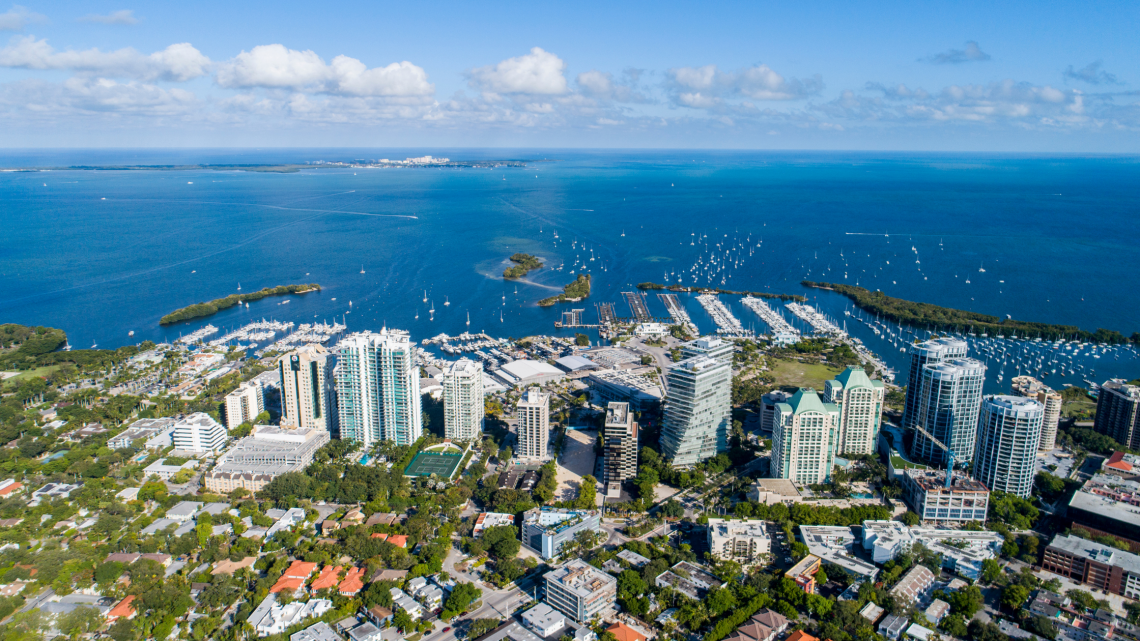
    Juliet’s father was granted temporary custody, and Juliet moved to Coconut Grove to live with him. Shortly after Juliet’s father Larry divorced his second wife, he rented a two-bedroom apartment in One Grove Isle overlooking Biscayne Bay. That would become Juliet’s new home.

    After Juliet’s father gained custody, they went straight to the ASPCA. At the shelter, Juliet couldn’t choose between two cats. One was an affectionate shiny black cat who jumped on Juliet’s shoulder. The other was a shy tabby who would need weeks of coaching. “Can I get both? Juliet asked Larry, looking up I’m at him with begging eyes. “Yes ok. But you are responsible for the litter box and feeding them.”

    Juliet’s room in the new apartment was medium-sized, with two single beds covered in navy comforters printed with tiny white flowers. A white dresser and bookshelf stood opposite the windows, which overlooked Biscayne Bay.

    “How do you like having your own room with a spectacular view?” Larry asked.

    “It’s going to be good!” Juliet responded hopefully.

    The apartment building’s lobby was grand, glass doors, marble floors and walls, and a doorman in uniform. Juliet’s father had hired a decorator who helped him choose a dark gray shag rug, a light gray corduroy sofa, and a chrome-and-glass entertainment center. Built-in white bookshelves surrounded the living room windows, filled with the latest bestsellers from authors like Lawrence Sanders, James Clavell, Jane Auel, and E.L. Doctorow.  A stack of Time and Scientific American magazines sat neatly on a polyurethane coffee table Larry had designed himself and had produced in his boat yard. A large Miriam Webster dictionary and a game of scrabble sat nearby on the bookshelves.

    Juliet stared at the books. “Have you read all these?” She asked her father.

    Of course. He said. “What’s that one about? “ she asked pointing at Shogun. The thickest one she could find.

    “It’s historical and very complex. It’s about Japan” Larry said blushing.

    On the walls were two pieces of art from his second marriage. One was a large Piet Mondrian with blocks of color and lines and the other, a surreal painting of two elderly faceless people staring at each other. The dining room had a navy-blue accent wall behind more built-in bookshelves, where he kept Waterford crystal wine glasses and silver trophies.

    “How did you win these trophies?” Juliet asked.

    “Those are my top sales trophies from conferences I attended.” Larry boasted.

    His bedroom was understated: a king-sized bed with a light tan cotton bedspread, a Ficus tree in the window, and double closets lined with a few Brooks Brothers suits, pressed button-down cotton shirts, windbreaker jackets in various lengths and colors,  wingtip shoes with shoehorns in each pair, several pairs of worn-in Sperry Docksiders and Key West Kinos in three colors. His white rattan-fronted dresser was organized with precision. Socks in one drawer, boxers in another, T-shirts in the next, and polo shirts folded neatly in another. All organized by color. The orderliness of everything surprised Juliet as it was a departure from her life with her mother.

    “You have your sox organized by color?” Juliet was surprised. “Yes. I like them that way.” Larry smiled. “Please don’t mess them up!” He said as he tussled Juliet’s hair.

    They soon toured private schools, and Juliet chose the Vanguard school which had a relaxed dress code and a diverse student body. It was less than 2 miles to Larry’s apartment . Although her father drove her for the first couple of weeks, he’d soon show her how to navigate on foot or to catch the public transportation.

    Over time, Juliet began to learn more about her father’s past. He grew up in Brooklyn, raised by an abusive mother. His much older siblings had left home early, and he often skipped school to hang around Coney Island, where he earned quarters by giving the carneys breaks from running the rides. At twelve, he built a boat and taught himself to sail. He became increasingly prone to getting in fights at school. After too many altercations, one involving the son of a mafia kingpin, he was sent to the military at age seventeen. After Korea, he got into sales, took night classes in business, and eventually found success in sales. He was divorced twice by the time fought for custody of Juliet. His father-in-law from his first marriage, Juliet’s grandfather, taught him about the luxury yacht business.

    Juliet loved to explore Coconut Grove on foot, especially in the cooler months after school. On weekends, she went to Key largo where her father had bought bungalow on the water. The first thing he did was add a second story, build a dock, and buy a catamaran sailboat. They eventually got a motorboat too, which they used for water skiing and fishing. Juliet learned to sail a 12-foot Sunfish.

    Starting at age 13, her father sometimes left her alone while he visited the keys with his girlfriends. That summer in 1980,  Juliet hitchhiked to Westchester horse stables for lessons, but after too many unsettling experiences with older men picking her up, she stopped asking for rides and started asking her father to drive her or spent her allowance on a taxi.

    Larry was one of the biggest Yacht brokers in Miami. His boatyard was on the Miami River and showed luxury yachts. 18 months after Larry gained temporary custody of Juliet, the phone calls from her mother Candy started.

    “Juliet, It’s Mom. How have you been darling?”

    “I’m fine, Mom. How are you? I haven’t heard from you.”

    “I’m coming back to Miami soon Juliet and I want you to come live with me.” Candy sounded like she had been drinking.

    “I’m ok with Dad. I’m fine.”

    “Where are you going to school?” Candy asked

    “I’m ok Mom. I like my school.”

    “I asked you where?” Candy insisted.

    “It’s a nice school in Coconut Grove.” Juliet said in a strained voice.

    “I miss you darling. Your father is not hurting you, is he?” Candy asked.

    “No mom. He’s not.”

    “You would tell me if he hit you, wouldn’t you?” Candy asked.

    “Yes. Of course.” Juliet responded

    “Well, when I get back to Miami, we’ll get a nice apartment and live together. Doesn’t that sound nice?”

    “ I’m ok here with Dad. You just take care of yourself. “

    “I want you to live with me. Do you understand?!”

    “Mom, I have to go. We’ll talk soon.”

    “You just want to live with him because he has money. Don’t betray me, Jule.”

    “Mom I won’t. I have to go.”

    Goodbye Darling. We’ll see each other soon. Be very careful darling.” Her Mother said.

    Juliet hung up the phone.

    Later that night Juliet heard Larry come home. She had eaten dinner by herself again. Larry worked long hours.

    “Hello, Darling. Are you ok? Did you have something to eat?” He yelled from the living room.”

    “Yes, I had some leftovers.” She replied. “From the Chinese place we ate at on Sunday.”

    “ Great. How was your day?”

    “Ok. Mom called.”

    There was a long silence.

    “How’s your mother?” Larry asked.

    “Well. She’s convinced you are abusing me or about to. She thinks you’re going to hit me. Why does she think that?” Juliet was inquisitive.

    “Juliet. You have no obligation to talk to your mother and I’m not going to respond to any accusations from her. I would never hit you. I made the promise to myself and your mother when you were born. I’ve stuck to it haven’t I? “

    “Yes. Ok. But did you ever hit her?” Juliet asked.

    “I’m not going to answer that. “ Larry said and walked into his bedroom shutting the door.

    The date for the final court hearing to grant permanent custody to Larry came very quickly. Larry sat Juliet down and explained she would have to speak to the judge about where she wanted to live.

    On the day of the court hearing, Juliet dressed casually but her father put on a jacket over his polo shirt. Her father seemed confident and optimistic. “You mother screwed up Jules. You understand? You’re better off with me.”  “I understand” Juliet said. She had a sick feeling in the bottom of her stomach. She dreaded seeing her Mother but wondered if they saw each other how would it feel? Would they have a chance to talk? Would they hug?”

    “Dad, Am I going to talk to Mom?”

    “I don’t know Jule. It’s up to the judge. “

    They arrived at the courthouse and went up the wide grey steps, went through security and Juliet looked up at the elaborate carved wood ceiling. Her father hurried her into the elevators. “Don’t get scared, Jule.  Just answer the judges questions.”

    She thought in the car about the pros and cons of going back to her Mother as they drove to the courthouse.  She couldn’t bear the thought of going back to her Mother.

    As they entered the courtroom, Juliet got  a glimpse of her mother in the front row wearing a large white wide brim hat and a white dress. She called out to Juliet loudly and waved. “Hello Juliet! Come say hello! It’s your mother.” Juliet’s father grabbed Juliet’s hand, and they were escorted by the bailiff to the judge’s chambers.

    Once in the chambers, Juliet wished she were invisible. She feared having to go back out and face her Mother. The judge spoke to Larry and to Larry’s attorney.

    “Mr. Reminis,  you are going to have to wait outside. “

    Larry left the room leaving Juliet with the judge and the family attorney.

    Then the judge turned to Juliet.

    “I’m just going to ask you a few questions. Please answer truthfully.

    Has your mother ever hit you?

    “Just once or twice on the rear. But honestly, I deserved it. Juliet said looking down. “ “That was when I was younger and I talked back to her. “

    “Does she yell at you? The judge said looking down at his pad of paper.  “Sometimes” . Juliet said. “Not too much.”

    “What about your father. Does he yell at you? . Juliet hesitated. “He has but not recently.”

    “Has your father ever hit you?” the judge stared at her.

    “No never” Juliet said glancing up.

    Have you ever seen your mother intoxicated? The Judge looked at Juliet in the eyes.

    “Well, yes. Most of the time. “ she answered looking down.

    “Who do you want to live with Juliet?” The judge asked his final question.

    “My father.” Juliet did not hesitate.

    The Judge said. “I’ve made my decision.”

    Juliet stayed in the Chamber while the judge delivered the decision to the courtroom. Larry made sure Candy had left the courtroom before he walked out with Juliet. Once they returned to the apartment on Biscayne Bay, Juliet went to her room. Larry wanted to celebrate and called several people on the phone to tell them the news. Juliet looked out the window at her view of Biscayne Bay, pet her black cat, and cried.
  • Artemis II: Confronting Lunar Conspiracies

    Artemis II: Confronting Lunar Conspiracies

    Growing up as a nerdy teen in South Florida, having Cape Canaveral just a couple of hours away was the ultimate flex. Throughout my youth and into my adult life, I’ve regularly made the drive to Titusville, found a patch of grass near the water, and waited for the horizon to light up. I’ve seen several launches, but a few stand out: the Cassini mission to Saturn, the final night launch of the Space Shuttle (which feels like a second sunrise), and the bittersweet moment of the very last shuttle launch in 2011.

    The recent Artemis II launch was another night mission, and while I couldn’t be there in person this time, I followed every second of it.

    The successful launch and return of Artemis II this year did more than just advance humanity’s journey toward a permanent lunar presence; it provided a definitive, high-definition reality check for a decade that has been increasingly defined by space-faring revisionism. For years, as we waited for NASA to return to deep space, a vacuum of information allowed outlandish conspiracy theories to fester. Now that the four astronauts have completed their lap around the Moon, the “hidden” mysteries of the far side have been dragged into the light of 4K resolution.

    One of the most persistent arguments among modern skeptics amplified by influential media figures is the claim that NASA “lost” the technology to go to the Moon. The narrative suggests that the Apollo blueprints were somehow shredded or that the institutional knowledge vanished, making a return impossible.

    Artemis II proved that technology isn’t “lost”, it is evolved. In fact, the SLS (Space Launch System) is a masterclass in recycling proven hardware. The four RS-25 engines that powered the Artemis II core stage weren’t just new builds based on old designs, they were actual, flight-certified engines from the Space Shuttle program. Some of these engines had already flown over a dozen missions to Low Earth Orbit before being refurbished for the Moon. The twin solid rocket boosters are essentially extended versions of the Shuttle’s boosters. By using “leftover” tech to fly a modernized version of the Apollo capsule (Orion), NASA proved that the path to the Moon was never forgotten; it was simply waiting to be applied to that purpose once again.

    For decades, armchair physicists have claimed the Moon landing was fake because humans supposedly can’t leave Earth due to the Van Allen radiation belts. They argue the radiation is so intense it would cook any astronaut who attempted to pass through.

    Artemis II navigated this “death trap” like a Sunday stroll. The mission confirmed what scientists have known since the 1960s: radiation is a matter of dose and duration. By passing through the belts at high velocity and utilizing Orion’s advanced shielding, which is significantly more robust than the original Apollo hulls, the crew traversed the danger zone with no ill effects. The data transmitted back during the transit has officially invalidated the claim that the belts are an impassable barrier, showing that with 21st-century monitoring, the risk is a manageable engineering hurdle, not a cosmic “No Trespassing” sign.

    The most sensationalist theories have always focused on what lies on the far side of the Moon, the hemisphere that never faces Earth. Jason Jorjani, a self-professed philosopher, has famously speculated about a “breakaway civilization” hiding on the Moon, supposedly utilizing suppressed Nazi technology.

    He isn’t alone. Richard Hoagland spent years claiming that grainy, low-resolution NASA photos showed “domed cities” and glass towers in the lunar highlands. Even Ingo Swann, the famous government-contracted “remote viewer,” claimed to have psychically seen advanced alien structures and “people” living in the shadows of the far side.

    Artemis II has effectively acted as a giant flashbulb for these dark corners. The high-definition, multi-spectral imaging captured during the flyby reveals a landscape that is undeniably desolate. From the Orientale Basin to the far-side highlands, there are no cities, no Nazi bases, and no glass towers. There is only a jagged, beautiful, and crater-pocked wilderness of regolith. The “structures” touted by theorists turned out to be nothing more than pareidolia, the human brain’s tendency to see patterns in the chaotic shadows of low-quality photography, or simply brazen fabrications.

    For the layman following these stories through podcasts and alternative media, there is a simple takeaway. We live in an era where “questioning the narrative” is seen as a virtue, but there is a line between healthy skepticism and manufactured delusion.

    If a commentator or influencer claims we “don’t have the tech” or points to the far side as a secret alien headquarters, they are ignoring the literal tons of flight-proven hardware currently sitting in the Pacific Ocean and the 4K footage available to anyone with an internet connection. These theorists aren’t offering a “hidden truth”; they are selling a fantasy that depends on you not checking the receipts. Artemis II didn’t just break records; it broke the fever dream of the lunar conspiracy movement.

  • Basquiat Comes to Bonnier Gallery in Little River

    Basquiat Comes to Bonnier Gallery in Little River

    Miami’s art scene does not die in the summer. Not everyone is hiding indoors from the humidity like raccoons avoiding daylight. If you are paying attention, signing up to the right newsletters, a show like this pops up and reminds you that Miami has evolved into a full-time cultural city.

    The Bonnier Gallery is presenting Jean-Michel Basquiat: Selected Works, 1978–1988, a massive exhibition featuring approximately 100 works spanning Basquiat’s entire documented career. Curated by Grant Bonnier, the exhibition runs Wednesday through Saturday, 11 a.m. to 6 p.m., through June 30, 2026, at the gallery’s space in Little River.

    And honestly?

    This is the kind of exhibition that elevates not just a gallery, but an entire city.

    Basquiat remains one of the most mythologized and culturally important artists of the late 20th century. The Brooklyn-born artist exploded out of downtown New York under the graffiti tag SAMO before becoming one of the defining figures of Neo-Expressionism. His work fused text, anatomy, jazz, race, history, capitalism, celebrity, and Black identity into canvases that still feel urgent nearly forty years later.

    Raw,  chaotic, smart, punk rock, beautiful.

    What makes this exhibition special is its scope.

    The show traces Basquiat’s evolution from teenage postcards and collages to major late-period works completed shortly before his death in 1988. Paintings, works on paper, sculpture, photography, collaborative works with Andy Warhol, and rare ephemera all help paint a fuller portrait of the artist beyond the mythology.

    It is rare to get this kind of concentrated Basquiat exhibition outside of major museums or international art fairs. The fact that it is happening in Miami, in late May and June, says something important about where the city is culturally right now.

    Founded in 2018, The Bonnier Gallery has steadily built a reputation for thoughtful postwar and contemporary programming with an emphasis on minimalist and conceptual work, while also supporting dialogue between visual art and literature. But this exhibition feels like another level entirely. Bigger. Bolder. More ambitious.

    And that matters.

    Because there is a growing “Miami Full Time” movement happening culturally. A rejection of the idea that Miami only matters during Art Basel, Formula 1 weekend, or tourist season. Increasingly, the city’s galleries, theaters, musicians, filmmakers, writers, and artists are creating year-round ecosystems that rival larger cultural capitals.

    This Basquiat exhibition feels like part of that movement.

    Miami is not dead in the summer. Quite the opposite.

    But the people paying attention already know that.

    (Unfortunately you missed the opening night jam May 9th, but the exhibition runs to June 30th). For more info about this exhibition, click here.

  • El Marciano de Miami – Chapter One

    El Marciano de Miami – Chapter One

    I spent nine months in my mother’s womb before I was born, which was a painful but nice story for her. And then I spent another nine months in custody of the immigration system to be reborn again, which was only a good story for those who benefited monetarily. In my case I benefited from wisdom because I never had enough time on my own to think. And by wisdom, I mean I know what to do with my life now, not yours. You can call me El Marciano, Spanish slang for “the alien,” a name that in this story means both an outsider and one caught in the machinery of immigration. I hope you can learn from my story. Enjoy.

    On September 26 of 2007 in New York City at 10:00 in the morning I thought “Damn I’m so lucky.” I almost missed my bus, but I got to the station right on time. I jumped on my bus and I’m ready to get to Miami. I’m dead tired and now it’s time to spend 32 hours inside a bus from NYC to Miami. I have a couple of beers for the ride, a brand-new pack of smokes for the stops, and some food. “I’m Ready.”

    Between stations and stops I slept like 10 hours. The other 14 hours I spent thinking about how I can get some new work done. Also fix my life a little better than the way I was living it. “I got it,” I said. Life isn’t so hard. You just must go and do the things that make you happy, and it better be now because there might not be a next time. I was coming back home to ask my girlfriend to marry me and to travel the world together. Yeah, I had my mind made up. I felt so happy. It takes a second for your life to change, but it took 24 hours to get some change in my life.

    On September 27 at 2:00 a.m. I got a text from a friend of mine. She says, “dude my fucking boyfriend is cheating on me.” She’s crying nonstop, so I tell her “don’t worry, it’s his loss. He’s not worth your tears. You’re a very sweet girl to be crying for a three-month old relationship with some prick.” I calmed her down a bit by telling her how the tour with I.R.A. went.

    I said “those guys are awesome. Baltimore was full of great people. Boston is beautiful. The kind of place you just fall in love with and want to stay and live there forever. New York is always fun, but this time it was better than ever. I spent a couple of weeks with some great friends. Some I haven’t seen in years. This was an experience that I’ll never forget or regret.”

    My friend feels better over the phone while I’m telling her this, but she’s been crying so much, she’s exhausted, so she says “Thank you for listening and the words and the company at 3:00 a.m. So, we say good night and she goes to sleep. By this time, I start noticing that the driver is starting to drive in between lanes, and there are only two lanes. Ours and the upcoming traffic, so I went to the front and asked the bus driver if everything’s ok. He replies “Huh?” I repeated my question and then said, “of course I’m ok.”

    I started thinking of my friend Albert who once was coming from Texas on the same bus company I was in, and the bus driver killed himself slamming the bus straight into an eighteen-wheeler. Almost everyone got hurt on that bus, my buddy hurt his mouth badly against the seat in front of him, so he sued and got a settlement; good for him!

    Back on my bus ride the bus driver is stressing me out. The rest of the people are asleep except one other guy and me. I go to the bathroom to see if it’s possible to smoke one cigarette there because if not, I must wait until 9:30 a.m. in Jacksonville, but guess what, the bathroom has a little window, and I can smoke a cigarette, so I did. I was sliding side to side in that little bathroom. I was so worried that I smoked two cigarettes in a row. I said, “world take me in your hands wherever you want me to go.” I went back to my seat to try to fall asleep.

    I thought of my brother Danny, my friends Luke, Pat, and Cesilia until I fell asleep. I woke up in Jacksonville at 9:30 a.m. in the fucking greyhound station. “One hour stop!” screamed the bus driver, as we all leave the bus to eat a little breakfast. I had a pretty good sandwich and coffee as I charged my phone in the cafeteria. It’s about 10:30 now. Time to hop on the bus and finally get to Miami.

    I made the line and showed the driver my ticket. He tells me, “long ride huh?” I said yup, can’t wait to get home as a guy dressed in forest green uniform puts his hands on my chest and tells me to leave the bus line to speak to him. “Are you a gang member?” he asked disgustedly while looking at my tattooed arms. Before I could say no he asked “are you a Salvatrucha, a mara 13? You look like one!” I replied, “No sir, I don’t belong to any gangs; I’m my own person.”

    He pushed me towards the wall so I couldn’t run away and says, “show me your green card and I’ll let you go” as he was literally grabbing my balls as he searched me because that’s apparently what they do.

    I told the asshole immigration officer that I was in the process of becoming a resident because a member of my family was sponsoring me, so I gave him my social security number. He pretended to call and got no answer from an HQ office. So, he says “you are under arrest and detained, grab your shit, you’re coming with me,” as he handcuffed my left wrist only.

    I jumped on the bus and got my bag and bass. Before I touched the ground to leave the bus the officer said, “you better not have any weapons or drugs on you cause then you will make my day, I’ve been waiting to beat someone’s ass.” I laughed as he then handcuffed my other wrist.

    We took a short ride to the immigration office building. Not a thing that I showed him of the papers I had my family fax him made him release me, so at 5:30 p.m. he took me to Nassau, the county jail in Jacksonville for the night. What a night. For those of you who don’t know, when you get arrested it takes about 12 hours or more to be processed before you even get to see a bunk and rest a bit.

    When I finally made it in, I met the guys that were there. I saw no real danger and fell asleep. Woke up an hour later at 9:00 a.m. or so, to be transferred. So, we all hop on a tiny van. They put 10 of us in what seemed to be space for six then drove for about three hours and got to Orlando, near the airport. Everyone thought they were putting us on a plane to get deported right away.

    Instead, they put us inside some warehouse cell units to spend three more hours waiting for the B.T.C. drivers to come for another crop of illegal aliens. I laughed when they said that. They finally got there and then took us for another ride. This one was a shorter ride, but it felt about an hour long. When we finally got to B.T.C., the Broward Transitional Center, another group of asshole officers grabbed our balls again. Some were trying to make fun of a Mexican guy who was apparently the stereotypical Mexican, short and whatever the fuck they were saying and laughing about.

    I could tell the guy was a good, hard-working person that I felt I should’ve defended because he didn’t speak any English, but in these places, you are better off remembering their faces and names for when they need something from you. Some days later we found one of those guy’s wallet on his desk and we took it, he’s probably still wondering who took it, that fuck head. Karma is a bitch.

    Anyways… we went into B.T.C. This place is sort of a camp where they hold you until they figure out what to do with you. They had an asshole judge, this prick named James Rex Ford. His daddy apparently invented the cruise control feature for the FORD car company, so imagine how spoiled this asshole was, but more on him later.

    As they intake us, I manage to grab a hold of my cell phone to text some friends and family to tell them the address of where I’m at. A good eight hours pass, and we finally got taken to our cell rooms. I got # 322. Luckily, I got the one right next to the officer’s desk, who I called my personal secretary and security guard.

    These rooms fit up to six people. I got a bottom bunk out of two Haitian guys and a Jamaican kid who was crying. His name was Darren. A very nice guy, but very easily influenced by his buddies. They always took advantage of him.

    He was crying because just some days back, his girlfriend gave birth to his first son and he was the happiest man on the world but had just been picked up by immigration at his work, so he cried the pain away. These Immigration assholes are the best at destroying families.

    There were also the other two Haitians. They were just speaking in Creole so I could only catch a certain number of words. All I could tell was that one of them, the older one, was mad, he was very mad, with sweat on his forehead, and the other Haitian was telling him something to calm down. They were both waiting to be deported.

    The Haitians are the ones that get it the worse. If they want to fight their case, they must stay detained for about a year and if they are getting deported, they still have to wait six more months. Pretty fucked up.

    So, I said hello, introduced myself, and felt a chill vibe. I made my bed up and laid on it on my back facing up, with my hands behind my head and wondered, “what now?”

    Click here to read chapter two.

  • Is Billie Eilish: Hit Me Hard and Soft the Future of Moviegoing?

    Is Billie Eilish: Hit Me Hard and Soft the Future of Moviegoing?

    It had been too many months since I sat in a movie theater. My local multiplex closed down and there hadn’t been a flick that lured me to spend the required time and distance to partake in one of my favorite hobbies, moviegoing. But my nearly teenage (gulp) daughter loves Billie Eilish. So we, along with her friend, made the long and arduous journey to see Billie Eilish – Hit Me Hard and Soft: The Tour (Live in 3D).

    Despite the unwieldiness of the title, it tells you in twelve words, an em dash, and two parentheses exactly what you’re going to see over the next two hours. In glorious three dimensions you see the pop superstar perform the Manchester UK concert off her last tour.

    Interspersed among the concert footage, you see co-director James Cameron, interview his co-director Eilish.  He doesn’t ask her any hard hitting questions. It only shows Billie in the most favorable light. But this movie isn’t for those looking for insight on the human condition, rather it is meant for Billie Eilish super-fans to delight in the presence of their favorite performer.

    On that front the movie delivers. My daughter and others in the audience were singing along with every memorized lyric. They waved their arms just as the hologram fans at the actual concert were doing on the screen. As I tried to sit back in the malfunctioning reclining seat of the once state of the art Dolby theater, I wondered if these kind of movies are what will save movie theaters.

    It costs hundreds of dollars to see Billie Eilish in a live venue.

    Plus you have to have access to a major metropolitan area that would have a venue that could host her. For anywhere between eleven and twenty-five dollars fans can simulate the communal experience of going to see their favorite singer outside their home. Depending how this movie does along with the success of the current Michael biopic, I wonder if concert movies will be the new comic book movie. The big attraction that draws a large subset of people away from their small screens to the big screen.

    I doubt most future 3-D concert movies will look as good as this one as they won’t have the benefit of James Cameron directing them. Cameron pretty much revolutionized the modern 3-D movie with his Avatar franchise, and surprisingly is seen holding the 3-D cameras throughout this flick as someone else films him filming Billie Eilish.

    A lot of the movie’s 3-D effects are spectacular from the opening song where Eilish seems to be running right in front of you to when the confetti pops out of the streamers during the finale. What is most jarring is seeing the three dimensional cell phones held by fans at the concert, meaning you’re watching someone filming many, many others filming a concert. The question now is whether 3-D is enough of a draw to get superfans to leave the ease and comfort of YouTube concert footage.

  • Spirit’s Demise Is a South Florida Tragedy

    Spirit’s Demise Is a South Florida Tragedy

    I’ll be the first to admit it: like many others, I never really enjoyed flying Spirit. I’ve had a handful of experiences with them over the years. Some were perfectly acceptable, while others were absolute nightmares. But in all fairness, I’ve had those same “horrible” experiences with the major legacy carriers, too. Sometimes, air travel just isn’t great, regardless of the logo on the tail.

    However, despite the jokes and the “bare fare” frustrations, Spirit Airlines was a point of pride for South Florida. It was our scrappy, Dania Beach-born underdog. On May 2nd, that underdog finally stopped fighting. The yellow planes are grounded, the kiosks are dark, and 17,000 people (thousands of them our neighbors) just lost their livelihoods.

    The news of the shutdown has triggered a wave of digital celebrations. From X to TikTok, people are “resting in peace” to Spirit with memes about “pay-to-breathe” fees and tray tables the size of postage stamps. Even here in South Florida, some are cheering, citing their own nightmare layovers or the lack of legroom.

    But celebrating the demise of a Low-Cost Carrier is a classic case of “careful what you wish for.” These airlines played a mechanical necessity in the market. They were the only thing stopping the “Big Four” (American, Delta, United, and Southwest) from turning the industry into a total monopoly. Spirit acted as a ceiling on ticket prices. When they disappear, that ceiling is gone. Without the “yellow plane” option, that $150 flight to see family in Medellin or Chicago just became $500, and the Big Four will have no reason to lower it.

    Beyond the market economics, there is a deep human reality. Spirit wasn’t just a fleet; it was 17,000 jobs. In South Florida specifically, the impact is a local economic earthquake. Between the massive corporate headquarters in Dania Beach and the primary crew base at FLL, we are looking at roughly 4,000 local jobs vanished in a single weekend.

    These aren’t just faceless “executives.” These are the neighbors we see at Publix. Pilots who lived in Davie, flight attendants who called Hollywood home, and mechanics in Miramar who kept those engines running. On Friday, they were part of a legacy that revolutionized air travel for the working class; by Saturday morning, they were being told “customer service is no longer available” via a website banner.

    The scene at Fort Lauderdale Airport was haunting. Terminal 4, usually a chaotic hive of travelers headed to the islands, has become a ghost town. The bright yellow kiosks are dark. The “Home of the Bare Fare” signs now hang over empty stanchions. While competitors like JetBlue and Frontier have stepped in with “rescue fares” to help stranded passengers, the atmosphere at the gate is one of mourning, not just inconvenience. For the ground crews and the local vendors in the terminal, the silence is deafening. They aren’t just losing a tenant; they are losing the foot traffic that kept the airport’s economy breathing.

    The tragedy is compounded by the fact that this didn’t have to happen. The blocked JetBlue merger is now looking like a catastrophic judicial miscalculation. When the federal judge blocked the $3.8 billion deal in 2024, the argument was that it would “protect consumers” by keeping a low-cost option independent.

    ​Instead, that decision acted as a death sentence. By preventing Spirit from merging into a stronger entity, the court left it exposed to the skyrocketing jet fuel prices driven by the recent conflicts in the Middle East, prices that reportedly spiked above $4.50 per gallon this spring. Without the capital or the infrastructure of JetBlue to lean on, Spirit’s cash reserves evaporated. The irony is bitter: in the name of “competition,” the government effectively cleared the way for the Big Four to tighten their grip on the sky.

    Spirit failed for several reasons. The blocked merger, $2.5 billion in losses since the pandemic, and finally, a fuel crisis that provided the final blow. But its absence leaves a vacuum that won’t be filled by “better” airlines; it will be filled by higher prices and underserved routes. Spirit flew to places the big legacy carriers deemed “unprofitable,” connecting people who otherwise couldn’t afford to fly.

    The social media jokes might be funny today, but they’ll taste a lot more like ash when the summer travel season hits and South Floridians realize that the “cheap seat” is officially a relic of the past. For Dania Beach and the thousands of families now scrambling to find work, May 2026 isn’t the punchline to a joke. It’s the end of an era for the hometown underdog.

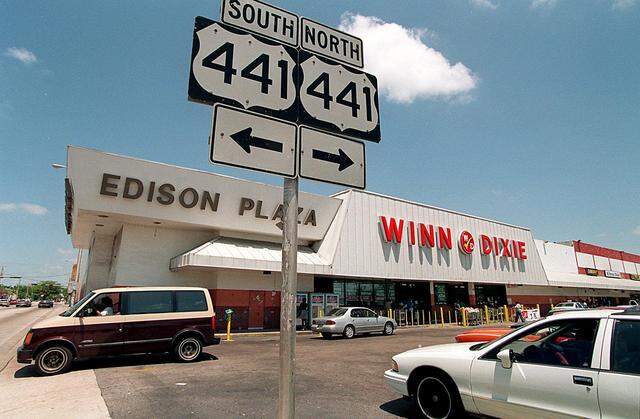
  • Poem for a Winn-Dixie Bagboy – Poetry

    Poem for a Winn-Dixie Bagboy – Poetry

    You’ve been a lifelong fan of professional wrestling.
    You have a girlfriend the dairy stocker claims no one
    has ever seen. You know toothy dinosaurs can defeat
    fire-breathing dragons because you saw it on cable
    TV. You do not drink alcoholic beverages; except for
    that one time at your cousin’s party and you felt
    awful the next day—your head a swollen watermelon
    begging for Gallagher’s sledgehammer. You own
    three, maybe four pairs of black Dickies work pants
    and you worry that the dusty scuffs, like fluorescent
    battle scars, are not the rewards of your working
    virtue but accumulating proofs of clumsiness. You
    once took a cruise to the Bahamas with your cousin,
    leaving from Ft. Lauderdale which posed a series
    of issues for your suburban Kendall-locked mind.
    You sleep very well at night because you like your
    job and exceed expectations. Your older brother
    teases you to no end but you know he means well.
    You tell girls they are pretty when you think they are.

  • 561 Music Festival Is This Saturday

    561 Music Festival Is This Saturday

    This article originally appeared in PureHoney Magazine. Check them out here.

    In March 2021, Ben Childs and Hector Diaz had the idea to start the 561 Music Podcast to spotlight diverse local music. Five years in, the Killbillies band members couldn’t have predicted that they’d establish an authentic brand enveloping a music school, podcast and festival all into one. 

    The 561 Music Festival began as a 400-person festival in 2022 at Mathews Brewing Company in Lake Worth and since exploded to a 5,000-person one last year at the Meyer Amphitheatre in West Palm. Now with three stages, the 561 Music Festival can showcase even more local and regional talent in the same space — on what was formerly prime SunFest weekend.

    Diaz said that they locked down the Meyer last year after SunFest organizers announced in 2024 that the festival would no longer take place during its traditional timeslot — the first weekend in May — and released their reservation on the amphitheater. “I woke up that morning and called Ben, and I said, ‘Are we completely insane if we approach the city and ask if we can have the amphitheater for that same date, that same weekend that everybody expects music at?’” Diaz says. “So we did. They approved it. We paid the money, we got the permits, we got everything going.”

    For year five, concertgoers can see musical acts on two additional stages besides the massive main one: one at the opposite end of the field and the other at Palm Beach Post Park, just south of the amphitheatrer. Despite adding more to the roster (art vendors, food trucks and alcohol), the amount of sponsorships keeps festival admission free. 

    The jam-packed 30-band lineup covers virtually every musical genre under the sun from all across Florida. You have alternative rock (ALYK, Sandman Sleeps), reggae (Roots Shakedown, Nostaljah), garage punk (Blabscam) and even surf country (Brett Staska). And if you want a taste of the finer things the festival has to offer, VIP tickets are available for $50 and include light bites, a private bar and a swag bag. (Fans can use the code MOSAIC26 at checkout for BOGO tickets.)

    Diaz attributes the festival’s exponential success to its wildly eclectic lineup. “Some festivals are very specific to a genre. Ours is all over the place,” he says. “And that’s part of the charm. There’s nothing like it around here right now.”

    561 Music Festival runs 11:30am-10pm Saturday, May 2 at Meyer Amphitheatre in West Palm Beach. Admission is free. 561musicfestival.com  GET VIP TICKETS