Movies & TV & Theater on TheJitney is Miami’s cultural corner booth, the one where the cortadito hits hard and the takes hit harder. This page is for people who live their lives between art openings, Heat games, and late-night arguments about whether the new A24 movie was genius or basura. Everything here moves with Miami speed. Reviews are not academic snoozers. They’re fast, emotional, sunburned dispatches from someone who has seen too much, feels too much, and still shows up for another round.
Miami movies and theater.
Film coverage jumps from Wynwood-indie-weirdo vibes to blockbuster spectacle at Dolphin Mall. TV gets the same locally-sourced treatment. Prestige dramas, trash TV, guilty pleasures you’d never admit at Panther Coffee but binge anyway at 2 a.m.
Miami movies and theater.
Theater, though — that’s where the page breathes. Broadway, Off-Broadway, tiny Miami rooms where the AC barely works. If a show risks something, if it tries, if it even thinks about having corazón, it finds a home here.
This isn’t some neutral critic voice. It’s Miami talking. Sweaty, loud, honest, a little chaotic, and deeply in love with storytelling — the kind that rearranges your soul, at least for the night.
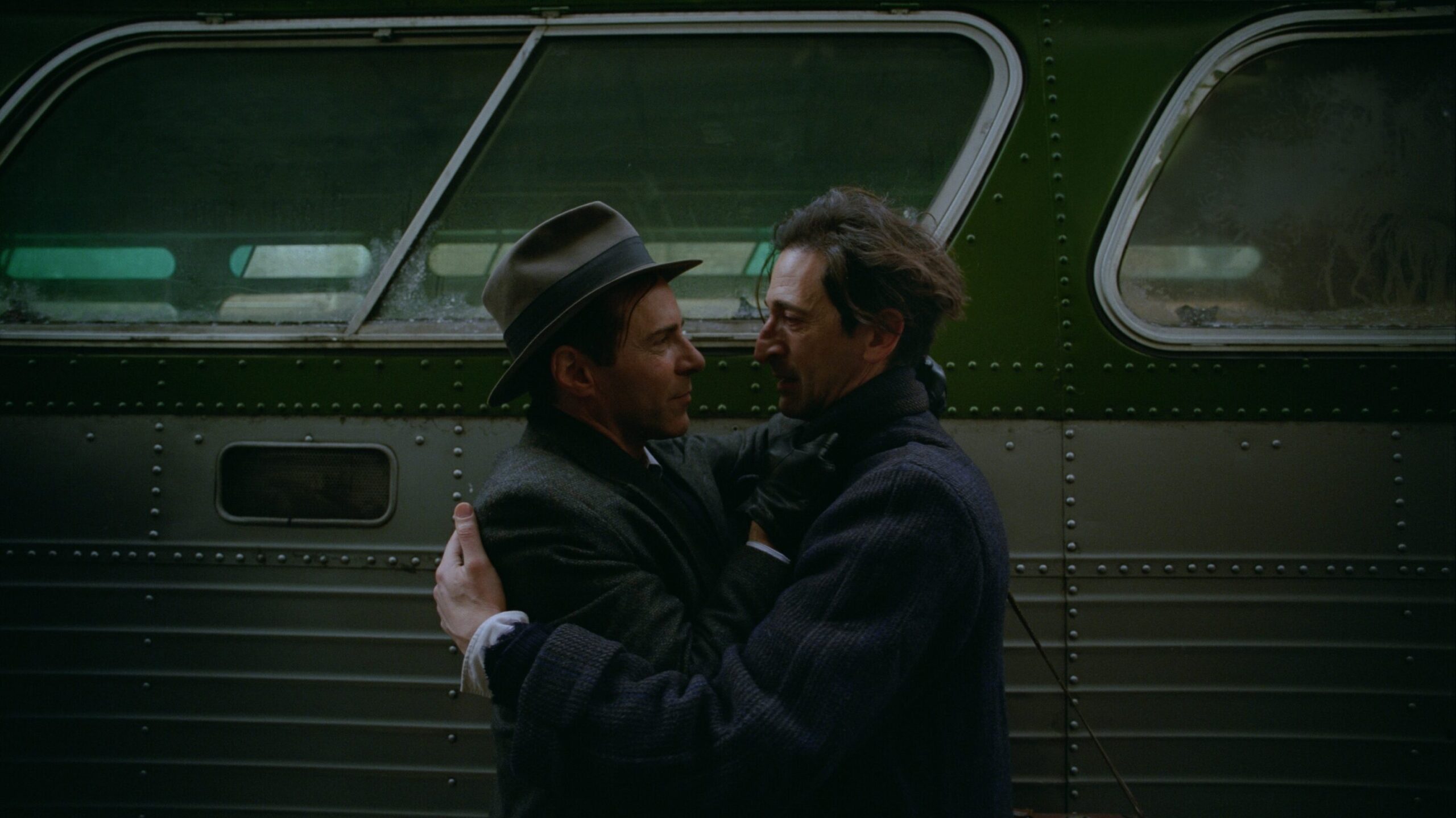
For people who say they don’t make movies like they used to, The Brutalist gives you a reason to head out to the theater again.
Even though it’s a three and a half hour movie complete with a 15 minute intermission, the title of The Brutalist doesn’t refer to forcing viewers to stare at a screen for over 200 minutes. Rather it refers to a school of architecture that the protagonist practices. Brutalism describes structures characterized according to Oxford, “by a deliberate plainness, crudity, or violence of imagery”.
Boiled down to its simplest essence, this is a movie about a man wanting to build a building. But set in post-World War 2 America, The Brutalist is ripe with as many allegories and metaphors as you want to dig into it.
This is the first movie completely shot in VistaVision this century. The wide screen film stock gives it a look that stands out and the cinematography leans into the medium’s uniqueness. The Brutalist finds a way to depict cities that have been filmed a million times like New York and Venice from unique angles. Even the opening and closing credits have a different stamp. The opening credits of cast and crew crawl from right to left on the screen rather than from down to up. The closing credits come at you diagonally.
The film’s budget was under 10 million dollars.
That’s a fifth of what The Rock gets paid for his most recent performance. And every penny seemed to be put on the screen from the period details of the production design to the replication of construction of a Brutalist form of architecture. Pre-release comparisons to The Godfather felt like hyperbole. After seeing it, I’m comfortable with that statement. It’s definitely reminiscent of the adult epics of yesteryear helmed by Coppola, Kubrick, or Lean.
The Brutalist is the rare movie that demands to be seen on the big screen. Don’t let the obscene running time intimidate you. From the second scene on the movie flies by with dynamic visuals, fantastic acting , and a forward moving plot. I was unfamiliar with the co-writer/director Brady Corbet. Now I need to see his previous two films.
But first I might need to rewatch The Brutalist again.
The Miami Jewish Film Festival (MJFF) proudly announces the program for its 28th edition, a dynamic hybrid of virtual and live events featuring 133 films. Running from January 9-23, 2025, the festival will showcase 110 feature films and 23 shorts from 25 countries, including 20 world premieres, 8 international premieres, 9 North American premieres, and 6 U.S. premieres.
As the largest Jewish film festival in the world, MJFF’s 28th Edition will host over 80 in-theater screenings across eight venues in Greater Miami, including Miami Beach, Coral Gables, and North Miami. Additionally, an online component will make over 80 films available for streaming to audiences across Florida and the United States.
The festival’s opening night kicks off with the world premiere of Soul of a Nation, directed by Jonathan Jakubowicz. This inspiring and eye-opening film delves into one of Israel’s most turbulent chapters, chronicling the journey from crisis and division to unity and resilience following the October 7 tragedy. Featuring exclusive insights from influential leaders and a heartfelt vision of hope, the premiere will include an introduction by Jonathan Jakubowicz and producer Claudine Jakubowicz, followed by a post-screening Q&A.
The Festival’s closing night will feature the premiere of Matchmaking 2, the latest by renowned Israeli filmmaker Erez Tadmor. This sequel to the beloved 2022 romantic drama is Israel’s biggest box office hit of the year, offering an endlessly witty and sweetly romantic take on a modern Romeo-and-Juliet tale starring some of Israel’s most dazzling young talents.
MJFF’s Headliners program features standout selections and award-winning films from festivals worldwide. Highlights include the East Coast premiere of Guy Nattiv and Zar Amir Ebrahimi’s riveting thriller Tatami, notable for being the first film co-directed by an Israeli and Iranian; Michel Hazanavicius’ Cannes Competition title The Most Precious of Cargoes; Andres Veiel’s provocative documentary Riefenstahl about the controversial German filmmaker; the U.S. premiere of Midas Man about Brian Epstein and The Beatles; Oren Rudavsky’s intimate documentary Elie Wiesel: Soul on Fire; the Tribeca Audience Award-winning comedy Bad Shabbos, starring Kyra Sedgwick and Method Man; the Safdie brothers-produced Andy Kaufman documentary Thank You Very Much; the U.S. premiere of The Spoils, a fascinating film about restitution of Nazi-looted art; the Argentinean comedy Most People Die on Sundays, featured in Cannes’ Acid sidebar; and the Academy Award submissions for Best International Feature Film from Hungary (Semmelweis) and Slovakia (The Hungarian Dressmaker).
Made in Florida Focus to Miami Jewish Film Festival
Reinforcing its dedication to showcasing local talent, the Miami Jewish Film Festival shines a spotlight on “Made in Miami” movies this year, featuring several films receiving their world premieres. Among them is Miami Schmatta, a compelling exploration of the vibrant immigrant legacy that shaped the American garment industry, set against the colorful backdrop of Miami. Also premiering are Miami-based filmmakers Wendy Sach’s October H8te, a timely film about antisemitism on college campuses following the October 7 tragedy, as well as Leslie Benitah’s Milk & Honey, Blood & Tears, a powerful documentary chronicling the resilience and recovery of Kibbutz Be’eri following the devastating October 7 attack. The film poignantly contrasts the kibbutz’s peaceful past with the harsh realities of survival and healing.
Diving into the 2025 Film Festival program by the numbers, MJFF audiences will be able to experience a lineup boasting 133 films, including 20 world premieres, 8 international premieres, 9 North American premieres, 6 US premieres, 18 East Coast premieres, 35 Southeast US premieres, and 18 Florida premieres, among others, as well as over 50 conversations with filmmakers, stars, and scholars from around the world.
I arrived in the States when I was just a little kid, only 2 years old, after my parents made the tough decision to leave Nicaragua. Back then, Nicaragua was just emerging from a civil war, caught in a struggle between a dictatorship and the group that called themselves the Sandinistas. The Sandinistas managed to overthrow the government, but soon they started pressuring young Nicaraguan men to join the army.
My dad wanted something better for our family, so he and my mom decided to flee. We settled in Miami, in a vibrant neighborhood called Little Havana, where the majority of folks were just like us: Latino and fresh off the boat. The culture was rich, filled with the lively spices of our food, the rhythms of our music, and the joy of our dances. Growing up in Little Havana felt like living in our own little world, a true Latino hub.
Now, growing up in Miami in the ’90s had its challenges. Drugs and gangs were everywhere, and for a young guy like me, it was a constant battle to fit in at school while trying to stay out of trouble. It was especially tough being an immigrant, trying to adapt to a culture that wasn’t mine. I was just learning to speak fluent English when I started elementary school, and by middle school, I had my share of bullying. People would make fun of my accent, my clothes, and even how I looked. Miami was a place where fighting for relevance felt like the norm. Even though Miami has been a haven for Latin American immigrants since the ’60s, many of us didn’t feel welcomed. Eventually, the bullying pushed me to take self-defense classes. Before I knew it, I was fighting back, and things quickly escalated into something much darker.
With gangs taking over the streets, conflicts in schools often ended in street fights. It was brutal and violent, and long before the tales of the cocaine cowboys hit the scene, young Latino boys were already caught up in gang fights that sometimes had deadly outcomes. But that was the reality; if you wanted to stand up for yourself, words just wouldn’t cut it. The kids in your neighborhood became your family, and your family became your gang. Just like any family, we looked out for one another. If that meant throwing down, then that’s what we did.
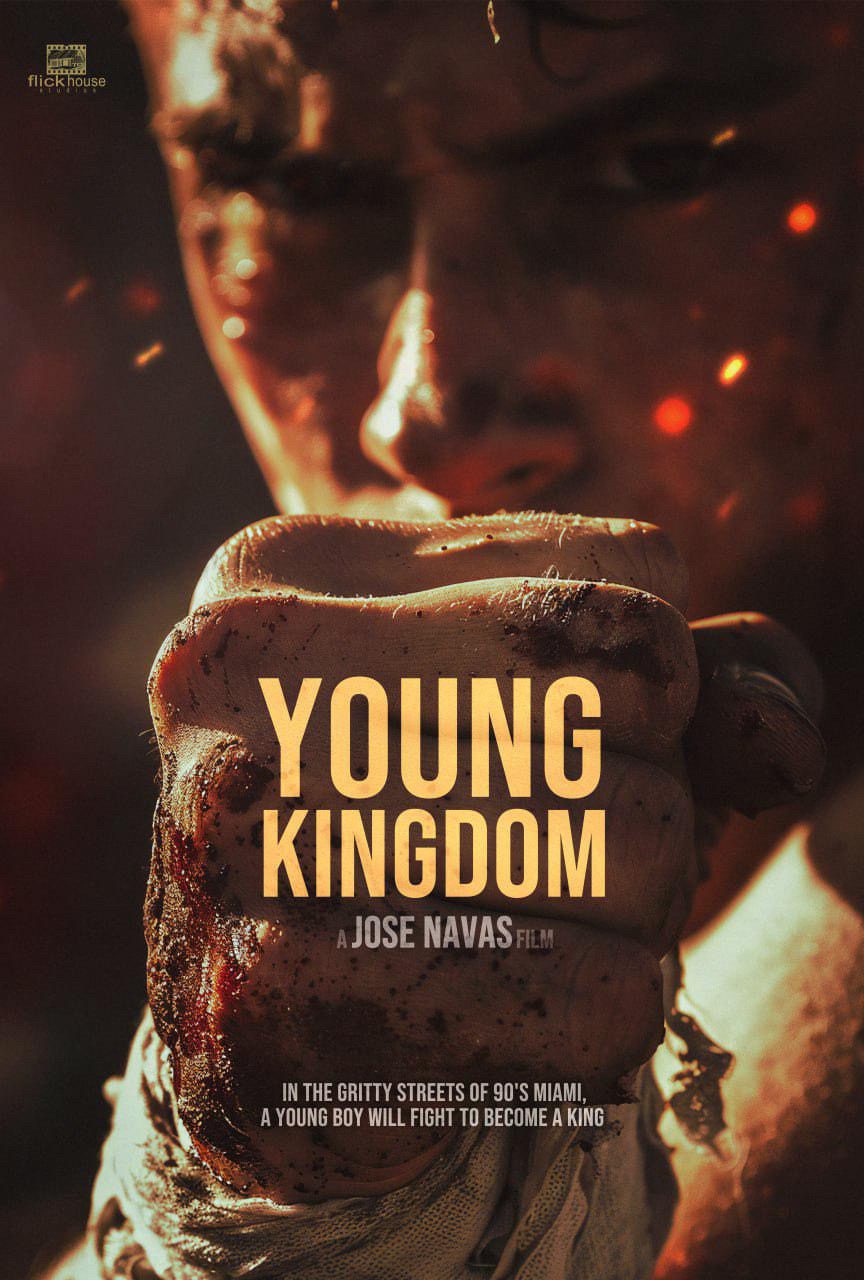
This backdrop inspired my upcoming film, Young Kingdom, set to premiere in 2025.
It follows the story of Andres, a young Latino teenager in Miami who suddenly finds himself leading his gang while caring for his sick mother and trying to keep his younger brother away from the dangers of street life. Andres is a skilled fighter, taking down rivals in street brawls, making him a force to be reckoned with. When he learns that his mother needs life-saving surgery that the insurance won’t cover, he decides to steal drugs from a ruthless Mexican gang to get the money. But this choice leads to consequences he never saw coming. At the heart of the film is the theme of family. For Andres, taking care of his mother means providing for them financially, and as a brother to young Santi, it means shielding him from the violence while teaching him about bravery. For his gang, it means navigating a maze of challenges to ensure they remain strong and united.
With Young Kingdom, I aim to tell an authentic Miami story, filled with real characters and themes that resonate with our city. Creating films in Miami has always been a struggle, largely because the financial support for filmmakers here is nearly nonexistent. There are no major studios or writing rooms, which means big deals often happen elsewhere. Los Angeles has long been the filmmaking capital, but even they’re losing projects to states with better incentives, like Georgia, New York, and Texas. Florida has often played second fiddle, and it shows in the number of movies set in Miami but filmed in other states.
This isn’t due to a lack of talent or compelling stories—some of the freshest filmmakers are emerging from Miami and gaining international recognition, like Barry Jenkins, the Oscar-winning director of Moonlight, and Phil Lord, who won an Oscar for his work on the Sony animated Spider-Man films.
Just like Andres in Young Kingdom, our local filmmaking community is made up of resilient storytellers who refuse to be silenced. We’re creatives with powerful stories to share with the world. We’re dreamers with endless ideas, and just like Andres, we’re determined to keep fighting to tell our stories, validate our careers, and build our industry right here in Miami, even when we get knocked down. We’ll keep getting back up and pushing forward. Keep an eye out for Young Kingdom!
These are just a few of the common impressions regularly manufactured by the eminent North American motion picture industry about itself. But more than impressions, these are the lures of hundreds of thousands of striving hopefuls who wish to ascend to the stratospheric heights that the silver screen represents to so, so many. They are constantly beckoned to sell themselves and the world for a mere dollop of that ever-elusive but ever-potent Hollywood nectar.
But does any filmmaking exist outside of those tall, gilded and highly fortified ramparts? And if it does, what do we make of it? Does the result of approximately equal picture-making labor possess the same majesty and seeming importance of the corporate-forged media regularly shoveled over vast distances into our cineplexes and onto our streaming devices? Could it ever? I mean, what is filmmaking sans Hollywood?
Oolite Arts, an arts-supporting non-profit in Miami began offering an answer in 2018. Amid a dearth of substantial organizational support for local filmmakers in the Magic City, the organization began offering generous residencies and micro-budgets (in the amount of up to $50,000) to select local filmmakers in order to produce their first feature-length films. The program continues six years later.
I applied in the inaugural year but I suspect I was disqualified on account of having begun production on my submitted feature project (which saw completion and release in 2019) before their decision was made. Eager to a fault, I suppose.
Among the chosen creatives of the Cinematic Arts Residency’s first year was one Monica Sorelle. Some weeks after the victors were announced, I attended a film screening at Coral Gables Art Cinema of which the selected filmmakers were in attendance. The calm-voiced Monica immediately struck me as mature, capable and determined. I was also charmed to learn that we had both been film students at University of Central Florida (she attended a few years after my time there). Never a sore loser, I wished her good speed on her journey, one which I knew by then was far from a walk in the park for anyone.
Between that interaction with Monica and my next,
much transpired: a pandemic, a staggered recovery from said pandemic, my completion of three feature films, Monica’s completion of Mountains and plenty of maturity, experience and wisdom garnered in both of us, no doubt. The occasion for our second meeting was the 14th Annual Miami Media and Film Market held at Biltmore Hotel in Coral Gables earlier this year.
Following a panel of local filmmaking luminaries, of which Monica was one, I used up my Q&A question opportunity to offer a brief, radical polemic to the panel and the audience about the need to support more local, bottom-up filmmaking activity. After the panel was over, I approached Monica and further explained my impassioned view. Monica seemed sympathetic but my main purpose was not necessarily to proselytize but to pleasantly engage and commiserate with another local, microbudget feature filmmaker; especially one whose career was beginning to take off.
Learning of her film achieving nation-wide theatrical distribution, I promised I’d attend the first showing of its kind at Coral Gables Arts Cinema some months later.
Promise kept, I arrived at Coral Gables Art Cinema last Friday with an e-ticket for Monica Sorelle’s Mountains – purchased not too long after they became available. In the lobby, I ran into the film’s producer Robert Colom, who I would run into regularly at local film events before the pandemic, and enjoyed his familiar amiability. Soon after that encounter, I found Monica and expressed my excitement about the film. She urged me to share my thoughts with her afterward and to “Be nice.” Of course!
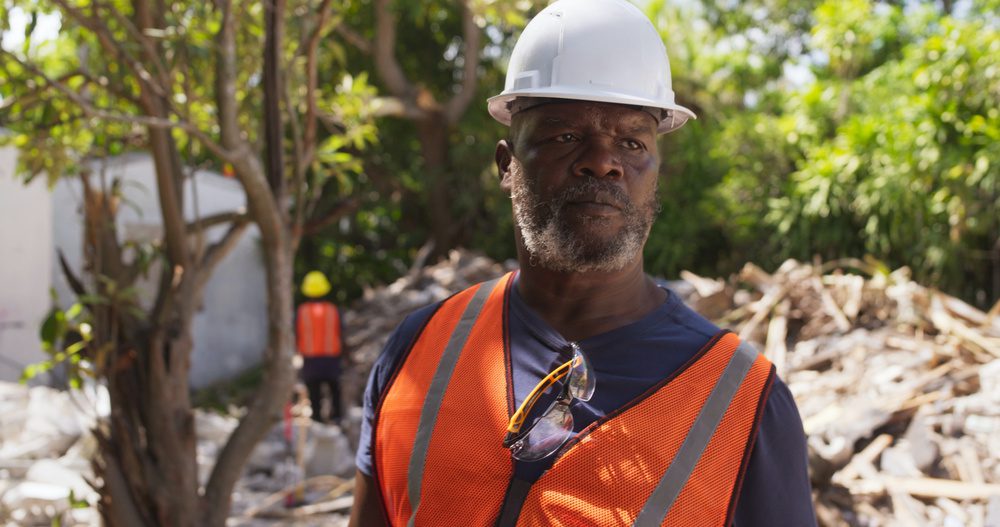
In Mountains, we meet a construction worker
and Haitian patriarch Xavier (Atibon Nazaire), his wife Esperance (Sheila Anozier) and their adult son Junior (Chris Renois). The film is set almost entirely within Little Haiti, a culturally rich Afro-Caribbean neighborhood adjacent to Miami’s far more upscale urban center. However, as we follow the slice-of-life episodes of Xavier and his family throughout the film, the encroachment of upscale development represents a threat to the very identity, integrity and survival of Little Haiti and its short-strawed denizens. Providing a richly ironic touch and no doubt the genesis point of this entire film idea, Xavier is written as a character with a direct hand in the destruction of his ethnic enclave as a demolition crew member. It’s a poignant and thought-provoking premise of which its resulting body could only be rendered as effectively as it is here by someone touched by the reality of this issue – that’s Monica Sorelle, a Haitian-American partly raised in Little Haiti.
The dramatic – and even comedic (courtesy of the stand-up stylings of Renois) – performances throughout the film are accomplished, appropriate and effective. The technical quality of the filmmaking is also impressive considering the relatively modest budget of the film. Co-written with Robert Colom, Monica’s script translates into a sterling example of a social realist drama; quiet and demure but pulsing with a kind of populist resistance to the familiar, wearying designs of unseen, moneyed interests.
Mountains, achieved on a microbudget, flies in the face of our country’s oligarchic and plutocratic film industry. More crucially, it begs the questions: What else can talent and hard work accomplish with far less means than debt-ridden, cash-hemorrhaging Hollywood? What do we really need to create a memorable, worthwhile couple-o’-hours for an audience of moviegoers? What if every major city and town exhibited the work of their own local filmmakers in their own regional cineplexes? And what if accordingly leveling the playing field broke the enslavement of aspiring filmmakers bound and stifled by Hollywood-sized ambition?
Maybe we’re not ready to answer all of these questions just yet. But we’d be damned if we ignore them and fail to realize that the oyster of possibility is pried that much more open with films like Mountains.
Mountains is now playing locally at Coral Gables Art Cinema, AMC Sunset Place and AMC Aventura courtesy of nation-wide, theatrical distribution by Music Box Films.
You can’t beat going to the movies for free. This year to celebrate their tenth anniversary, Popcorn Frights Film Festival will make a cheapskate movie lover’s dream come true by offering almost their entire in-theater experience free.
This year’s celebration of horror movies will take place from August 8-18 at the Savor Cinema Fort Lauderdale and Paradigm Cinema’s Gateway Theater.
The festival will feature 83 short films. 11 of which will make their world premiere at Popcorn Frights Film Festival. Among the shorts is their “Homegrown: 100% Pure Fresh Squeezed Florida Horror” program that is dedicated to Florida’s local filmmakers and homegrown talent.
For those with longer attention spans there will also be plenty of feature length films including re-screenings of beloved old school screamfests like Candyman. Those that are scared to fall asleep can enjoy Up All Night with Freddy, an overnight marathon of all the Nightmare on Elm Street flicks featuring the scariest horror icon of them all Freddy Krueger.
Along with the old movies, there is also plenty of new.
Opening night has a double-bill. It starts with the world premiere of Epic Pictures’ Beezel. Described as “an unforgiving and utterly frightening morality tale about a cursed home and the sinister secret dwelling beneath its floors — an eternal witch with an insatiable thirst for the souls of the living”. Part two of the double feature showcases the Florida premiere of the serial killer thriller Strange Darling.
According to their press release, “Additional films receiving world premieres at the festival are the sci-fi thriller The Bunker starring Tony Todd, Tobin Bell, and Chelsea Edmundson. The wild descent into a psychedelic Lovecraft nightmare Voidcaller. The darkly twisted Drive Back that puts a fresh spin on slasher conventions. The demonically frightening Birthrite about a mother’s ultimate sacrifice. And the mystery riddled Lizzie Lazarus, which follows two strangers carrying a corpse through the woods looking for a mythical zone.”
For more information and schedules visit the festival website at popcornfrights.com.
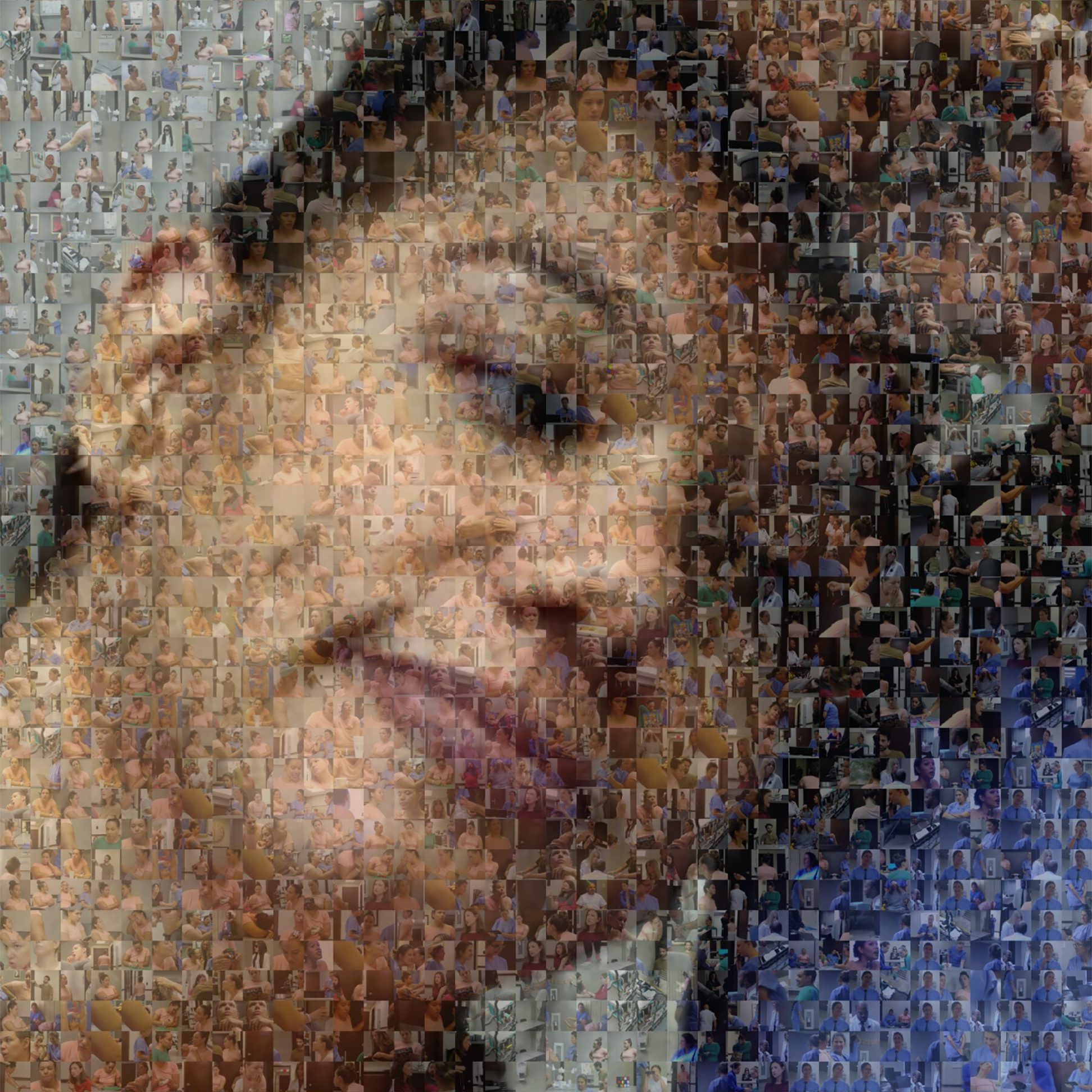
After several local, public screenings, my 3rd feature film Death Cleaning has made its streaming debut. I wrote, produced, directed, shot and edited the film. You can find my 2023 flick on Amazon Prime Video and YouTube. Death Cleaning introduces a far-off future where a fleet of sentient robots, interested in preserving human history, have discovered a data card containing a video record of a cantankerous young woman’s stay at a drug rehab clinic. The following is an explanation of the film’s most distinctive formal features without spoiling anything.
Non-Linearity
Following introduction to the Post-Human Custodial Authority’s description of a particular data card recovered as part of their archeological mission, we’re dramatically informed that the data card’s “ORIGINAL FILE ORDER HAS BEEN LOST!” The following body of the film then presents 180 video files in a non-chronological order.
A beginning, then a middle and then an end. Such is the structure of virtually all narratives designed from the immemorial to the present. Maybe we start from the middle or the end on some occasions. Maybe we go backward sometimes. But whether chronology is obeyed or not, some coherent sense of causality between the scenes, sequences or acts is a fundamental tenet of narrative design in any medium. And for as long as I’ve been writing scripts for the moving pictures, I’ve honored this basic assumption.
Well, after some time, my legs started feeling stiff from assuming the same position for over two decades. So, I decided to flip – or scramble, more precisely – the script. The decision to arrange the 180 scenes of the script with a complete disregard for chronological linearity took a page (no pun intended) from my memoir-ish 1st book 20 Years a Filmmaker in which its 125 chapters are ordered by theme, not timeline. This complete and quite gleeful abandonment of logical order among all of the scenes allowed many of the film’s thematic and metaphoric ideas to be more strikingly juxtaposed and presented.
I’ve grown accustomed to comparing the film to a sausage. In a sausage, there is an equal distribution of every edible part of the respective animal (read: beginning, middle and end) throughout. As a result, structuring the film in this way brought an irresistible tautness to its design from end to end. You’re in the middle of it from the get-go!
While a reliance on the cascading variety and near-complete dispensing of the expectation of narrative direction may risk confounding the viewer, I believe it introduces a new way of experiencing a fictional drama. The sheer zest this choice brought to the writing, production and editing of the film cannot be overstated. And despite being the filmmaker responsible, I actually don’t have the overwhelming majority of the scene order committed to memory. As a result, every viewing is a new experience!
Limited Perspective
We are informed that the video files on the data card being recovered consist of “videographic therapy footage recorded by [an] unidentified patient.” This establishes the perspective or point-of-view by which we experience the events of the film.
Omniscient or God’s-eye perspective is a primal instinct of any artist or storyteller. Without the slightest hesitation, children automatically assume this particular creative vantage point in their drawings or stories. For the artist and storyteller, young or old, the ability to assume any angle on any event and enter into the mind of any imagined character can go unchallenged for decades. Operating in this mode, nothing is off-limits. The world, fictional or otherwise, is bound only by the limits of one’s imagination.
But most of the time, I feel omniscient perspective is irresponsibly applied, particularly in film, among both amateurs and professionals. If you assume God-like observational powers, a filmmaker of any stripe must be ready to wield their camera with preternatural precision and intention. A high standard has been set by many of the medium’s forebearers but it is often not met out of costly expense, lack of talent, laziness or any number of other reasons. But there is an alternative to omniscient perspective in film, though far less popular – it’s called subjectivity.
For as long as I’ve been writing and producing feature films, I’ve felt stifled by the ubiquity of the omniscient posture in our saturated mediascape. Subjective perspective has, in turn, allowed me to craft films that have freed up my creativity by accommodating my relatively limited resources, particularly when it comes to the in-universe source of the video (e.g., webcam records in 2022’s State v. Unknown and microscopic drone recordings in 2019’s For My Sister). Defining a more finite perspective for a film’s narrative has also carried the added benefit of casting me as a figure in the narrative of the film not unlike how I involve the acting talent I work with. In the case of Death Cleaning, I assume the role of a (mostly) silent videographic therapy patient armed with a simple camcorder whose videos reveal the events of the film. In so many ways, these sorts of deliberate constraints paradoxically free me up rather than tie me down.
Recording Implements
Following from my choice to pare down the perspective of the narrative was my decision to record the 180 scenes of the film with a $55 HD camcorder. Yes, you read that correctly. I paid Amazon $55 for an off-brand HD video recording device.
Both professionals in the film industry and independent filmmakers, with rare exceptions, place a tall emphasis on pictorial definition and beauty when it comes to the motion picture image. Death Cleaning, for better or worse, bucks this sacrosanct predilection. Throughout the film, the quality of the video we’re watching can appear quite grainy and lacking in sharpness. The nature of the camera operation is clearly hand-held and the shakiness, particularly on zoomed-in shots, is regularly apparent. And because the audio quality of the camcorder was utterly deplorable, all of the dialogue and sound effects heard in the film were recorded with my Android phone.
Why did I choose to upset the natural order of things with this utter disregard for image and audio fidelity? The simple answer is that the low-fi video and audio is justified by the film’s established limited vantage point (described above). Moreover, I take a bit of inspiration from Nintendo. Yes, the video game company. I’m obsessed with their ethos which prioritizes the mechanics of gameplay over high-rated resolution and technical specs. It’s the innovation and intelligence behind their products that matters more than their superficial sheen. Although I gave up console gaming years ago, I highly respect the legendary Japanese game maker’s often wildly successful model of operation. You learn from the best!
Framing Device
The film features a green-tinted framing device which, at its bookends, provide some context for the body of the film (i.e., description of the activities of the so-called Post-Human Custodial Authority). There are also two related interludes placed at approximately the first and second third of the film. These interludes are akin to public service announcements produced by the robotic custodians which shed light on their view of the fallen human species.
The use of a futuristic framing device is also a characteristic of my previous two feature films as well (i.e., police webcam access in State v. Unknown and the time-traveling nanodrones in For My Sister). In these previous films and in Death Cleaning, the framing device serves to quickly orient us toward the nature of the body of the film we’re about to experience. Because omniscient perspective, described earlier in this essay, is a basic assumption of most narrative media, most content does not require a framing device. But if the tables were turned and omniscience was regarded as unusual, viewers would need some sort of courteous guidance from the media’s creators.
Unremarkable Protagonist
The focal point of the 180 video files we’re presented with in the film is Nev Templeton, the daughter of an esteemed senator. She was court-ordered to the drug rehab facility for a period of 90 days after being found by police under the influence of a “hyperopiate” called “happyfunjoy.” She is not happy with the arrangement, to say the least.
But why grant so much attention to such a flawed, passive and unexceptional character as Nev Templeton? Principally, compassion. But a more artistic reason involves my choice to flip the mostly aloft, driven and distinguished character of Cal Modesto in my previous film State v. Unknown. Contrast and inversion often motivate many of my creative choices. I also loved the idea of hinging an elaborate film production, involving considerable commitment, organization, planning, leadership and cooperation, on a fairly unremarkable character who exhibits virtually none of those qualities and is in essence quite heretical toward them.
To conclude this essay, an important consideration in staying motivated over the course of a career making films or any form of art is the sustainment of freshness in the work and zeal in the attitude. This means seeking out exciting, original and often untried ways of dealing with structure, perspective, technology, narrative, etc. In an environment of so much corporate-driven production – particularly in film – independently operating artists and creatives should always try to keep the soil as freshly tilled as possible by experimenting and taking bold risks. If we don’t, who will?
Back in middle school, our tiny, musty library had a book sale once a year. They were school sponsored, I think, but among all the YA books and Guinness Book of World Records were, oddly, copies of 1001 Dirty Jokes or some such variant. I’d always pick one up. It felt like I was getting away with something. My 8th grade friends and I would then excitedly leaf through the book, usually during class time, trying to find a joke to out dirty the last dirty joke we’d read out loud. This was fun for a little while, but it didn’t take long before we’d tire of the salacious material and move on. I mean, who wouldn’t quickly burn out on an interminable parade of foul language describing various body parts, what comes out of them, and what people may or may not do with them?
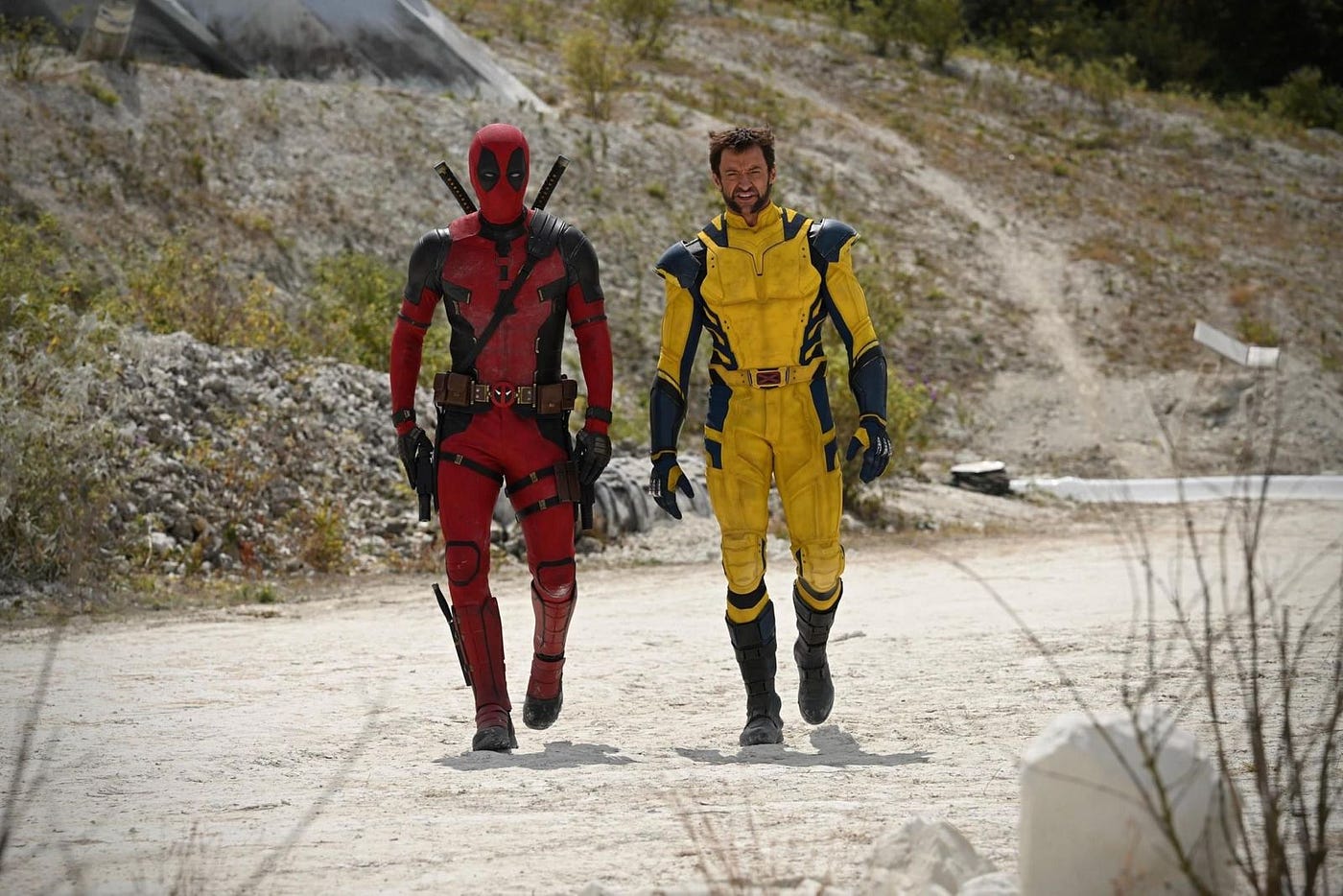
Ryan Reynolds and Shawn Levy, apparently. They can’t seem to get enough. The star and director, respectively, of Deadpool & Wolverine, the third entry in the highly lucrative comic book franchise, present us with an endless barrage of filthy jokes and gory violence, and it wears out its welcome almost immediately. In this case, before the end of the opening credits, an interminable action scene where the titular heroes take down an army of goons although one of them (spoiler alert) is a desiccated corpse.
This is the first appearance by Ryan Reynolds’ fourth wall breaking, “merc with a mouth” in the Marvel Cinematic Universe. His presence was, of course, facilitated by the Walt Disney Company (which owns Marvel Studios) subsuming 20th Century Fox Studios, the original home of the Deadpool films. And while the earlier two entries in the franchise were definitely “R” rated endeavors, they didn’t come off as desperate in their need to shock as this third entry does. The filmmakers are clearly overcompensating in their need to prove they won’t capitulate to their new, kid friendly Disney overlords.
The crass jokes and over-the-top violence lose their shock value quickly.
And look, the child who nervously bought that 1001 Dirty Jokes book is still alive and well inside me, so a well placed “fuck,” or a jolt of well-timed violence is still effective, even exhilarating, but when presented as repetitively as they are here, it all just becomes numbing. Novocain for the brain.
To fill out the runtime between all the sarcasm and carnage, Deadpool & Wolverine awkwardly inserts mawkish “emotional” moments that don’t feel remotely earned. Hugh Jackman returns to his most famous role as the Wolverine, the adamantium clawed, fan favorite superhero, but he’s saddled with endless scenes of drunken sadness and remorse for something he either did or didn’t do in his past. It takes entirely too long to reveal what happened and is painfully underwhelming once divulged. And having Deadpool make a pithy joke about how long it took to reveal this backstory doesn’t remotely negate the crummy writing (credited to five people, including Ryan Reynolds himself), it just highlights it.
Admittedly, I missed the details of this Wolverine’s backstory because of how it was delivered, a teary-eyed monologue of self-contempt, slurred out between dramatic chugs of alcohol. These scenes are direct callbacks to Mr. Jackman’s “final” turn as the character in the overwrought Logan. In my review for that film, I proposed a drinking game where you take a shot every time Wolverine said some variation of “I’m not the person you think I am…”. Well, prepare your livers because we get the exact same dialogue repeated here once again, so please forgive me for checking out in the middle of it.
The rest of the movie is devoted to the film’s only real raison d’être, cameos. Admittedly, most of them are fun, especially an early one (around the 40-minute mark) that manages to surprise twice and even had curmudgeonly me laughing with appreciation. As much as I loathed Deadpool & Wolverine, I wouldn’t dream of spoiling them for you. It’s pretty much the only real fun the movie has to offer.
But the Deadpool & Wolverine cameos are hollow and inconsequential.
They have no lasting impact on the story or the cinematic universe. They exist solely to rile up an already devoted audience. Indeed, the press screening I attended had a room full of critics clapping like trained seals. But the movie is simply sifting through the detritus of comic book culture (in this movie’s case, literally), dusting off old, semi-forgotten properties and characters and cramming them down the ever-expanding maw of an all too eager audience willing to lap up every last dusty crumb of nostalgia.
It’s all bread and circuses. Superficial appeasement. And despite all of its edgy posturing with jokes at the expense of the studios that made it, Deadpool & Wolverine feels like nothing more than a two-hour explanation of what happens to the assets of one studio when it’s assimilated by another. It’s corporate propaganda masquerading as avant-garde.
There is a sacred covenant between audiences and filmmakers. The audience will give the filmmaker their undivided attention. In exchange the filmmaker will educate, enlighten, or at the very least entertain the audience.
Some filmmakers believe there is another option. They think they may challenge the audience.
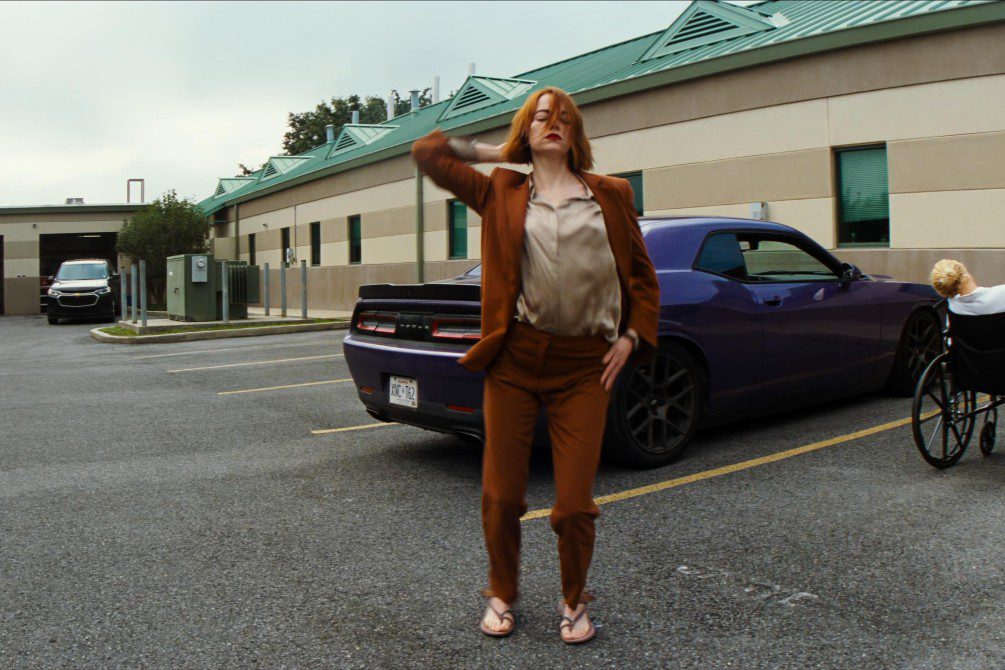
Whether you feel that is acceptable or not will shade how you feel about the new movie Kinds of Kindness.
The first challenge from the new movie by Greek director Yorgos Lanthimos comes in the lengthy 2 hour 45 minute running time. Second, is that it tells not one story, but three, each ending with its own brief closing credits. Third, there are graphic, anxiety inducing moments of self-mutilation and animal cruelty. The final challenge Kinds of Kindness confronts its audience with is that none of the stories unfold in a traditional manner.
There are beginnings, middles, and ends to all three stories. But there are no obvious lessons to be had. Nor connections between the three stories, except for the same actors playing different roles in each tale.
To paraphrase a great poet, I’m willing to admit I’m not the brightest tool in the shed. Perhaps to a more learned observer, Kinds of Kindness makes all kinds of sense. There are after all dissertations written that Jackson Pollock’s paintings embody the human experience, whereas to my untrained eye it looks like paint splattered randomly on the canvas.
A certain kind of viewer could have great fun trying to make shape out of the seemingly random occurrences and scenarios presented in Kinds of Kindness. Another kind of viewer will take offense to this lack of cohesion.
Do you like your pie served to you warm on a clean plate? Or do you prefer your pie shoved violently into your face? Your answer will be as valid a predictor as any whether you will enjoy this movie.
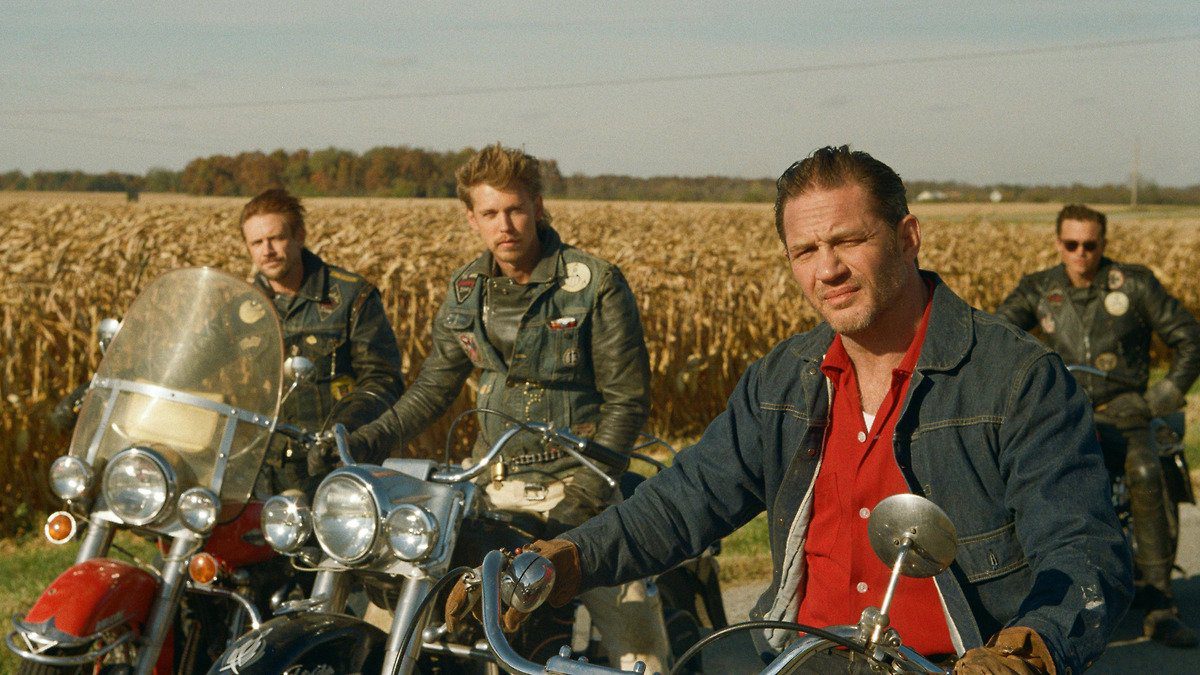
There have been a million movies based on comic books, a thousand based on video games, and at least one based on a board game, so it shouldn’t be too hard to base a movie on a photo-book as The Bikeriders espouses itself to be in the opening text.
Directors have long pitched their movies with look books that if bound and reproduced could double as coffee table photo-books. Seems like it would be an easy hop, skip and a jump to adapt a photo-book with cool images, as Danny Lyon’s The Bikeriders did capturing Midwestern 1960’s motorcycle enthusiasts. All you’d need to do is write a script with a tight story featuring leather and denim clad outlaws riding aerodynamic, high speed pieces of machinery.
The Bikeriders movie however doesn’t really sweat having much of a story.
Instead it casts a bunch of your favorite character actors from Tom Hardy to Michael Shannon to the good looking dude who played Elvis, and that one guy from The Walking Dead, and that other guy from Narcos, and puts them in a bunch of ultraviolent scenarios.
The closest thing to a plot in The Bikeriders is a young photojournalist is interviews a biker’s girlfriend about his Chicago biker club, The Vandals. But the interview never really goes anywhere. There is no arc of characters, nor lessons learned. It’s just one incident after another without any real exploration of their inner characters or motivations.
Why do all these antisocial ne’er do wells want to hang out with each other at fast speeds and snub their noses at polite society?
Who cares, this movie says.
Instead it’s just a brisk two hours of kicking ass and driving fast. The actors seem to be having fun and that enthusiasm carries over to the audience. Maybe this is how a faithful adaptation of a photo-book is supposed to work? A bunch of cool similarly themed images without any cohesion binding it all together.
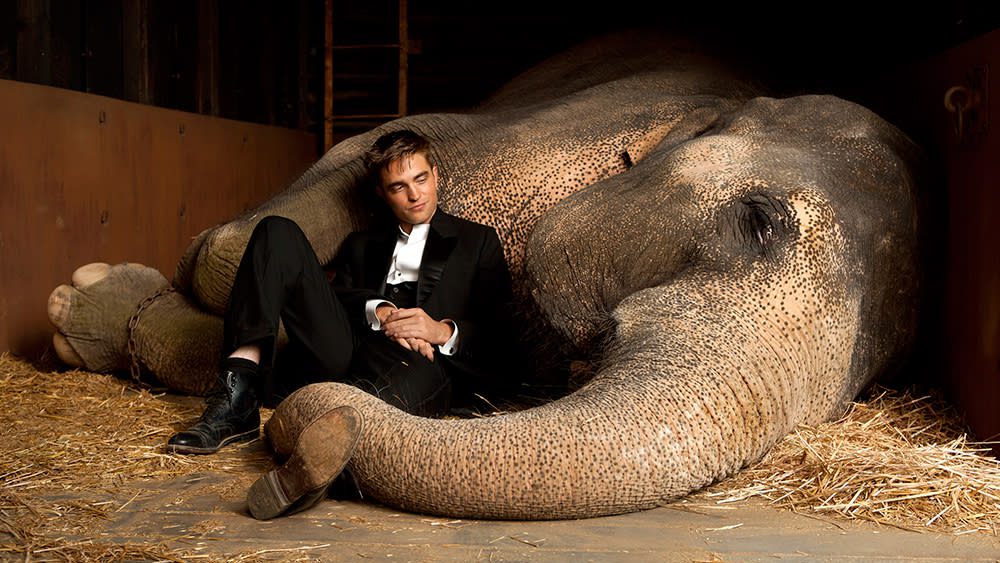
Water for Elephants is an above average play that is both entertaining & well-staged.
As a storyteller, inclined to lean into the story above all else, there is a slight spectrum as to gauge this popular musical. The spectrum based on your personal tastes and inclinations.
The story is not original, as you probably know, it’s based on an old 2006 nonfiction bestseller by Canadian-American writer Sara Gruen. It was an incredibly popular book.
Set in a modern nursing home, the play tells the tale of Jacob Jankowski (Gregg Edelman) thinking back on his youth (Grant Gustin). We’re back in 1931, the golden era of American circuses and roadside attractions, Jankowski, a recently graduated veterinarian, joins the Benzini Brothers, the biggest show in town before Ringling, and also home to “the stampede” — a legendary tragedy that is revealed at the end.
A love triangle ensues between Jankowski, the ring-leader August Rackinger (Paul Alexander Nolan) and his wife and star of the show Rosie (Isabelle McCalla). On one hand, it’s a fine story, there’s a hot- headed villain in August and a dreamy eyed hero and a femme fatale love interest. There’s a smorgasbord of secondary characters, both good and evil, all engaging and investable. And of course, there’s the animals and acrobatics. It’s quality. And from a Directorial perspective, it’s quite a dazzling feat.
Water for Elephants Story
But on the other hand, the story is a little basic, especially with its two main themes: be nice to old people & animals have rights. Yeah. We know. These themes, although important, seem obvious in 2024, maybe they weren’t in 2006, but they are now, so it dilutes this play from achieving any true cathartic now this is important feeling (unlike Suffs, for example).
Water for Elephants, story-wise, feels a tad watered down, and not important today, and as a result, the show leans heavy on acrobatics and puppetry to induce wonderment into its audience. And there’s a place for puppets and acrobatics, but it’s not in the storyline of a solid, powerful script, so, as a result the play feels a little too much like a circus, gimmicky.
Just a little.
Sans a slightly weak script, and an overabundance of circus tricks (which most would love by the way), this play is filled with great acting, charismatic choreography, and more than enough story to keep you engaged. Plus, and this is always important, they nail the ending, from every angle, thematically, emotionally, production and story wise.
We recommend this play strongly.
Water for Elephants is nominated for 7 Tony Awards, including Best Musical, Best Book of a Musical, Scenic & Costume Design, and Directing.
The Jitney is in NY writing reviews of Tony nominated plays.
Water for Elephants is currently playing on Broadway.