Jackline Marshal has worked at Ada Merritt Junior High for thirteen years.
Thirteen.
She counts them sometimes, late in the afternoon when the building goes quiet and she can only hear the fluorescent lights hum their one flat note.
The staircases have the same iron railing as always, rusted with age. She has watched hundreds of children run their hands along it. Sticky fingers. Book bags swinging on one shoulder. In her memory, she goes to call after them:
Don’trun!
But she won’t have anyone to call after anymore.
The courtyard fills every morning and empties every afternoon. The knowledge that it will never again fill with small pattering feet and shrieking laughter sits heavily in her chest. From the second-floor window, she watched the sun set over it. Thirteen years of that particular slant, the way it falls through the trees.
She knows which floorboards creak.
She knows where the spring showers drip through the ceiling in April.
She knows things no one will think to ask her before they close the doors for good.
She has not always been old, people forget that.
The children see the glasses, the greying roots, the slow way she moves between the shelves now, and they think she has always been old.
They call after her:
MissMarshal!MissMarshal!
And they ask for things, experiences, knowledge that they can’t yet name. But still she finds it for them; places hardcovers, paperbacks, comic books and magazines into their small, awaiting hands.
She always goes back to her first day here. When she was still creeping into middle-age,
When she stood in the doorway of her library and felt certain she was exactly where she was supposed to be.
She holds that memory now how you hold a book you just finished, a good book, that you know you are about to set down forever.
You know you will never be the same again, but you wouldn’t give up that experience for anything.
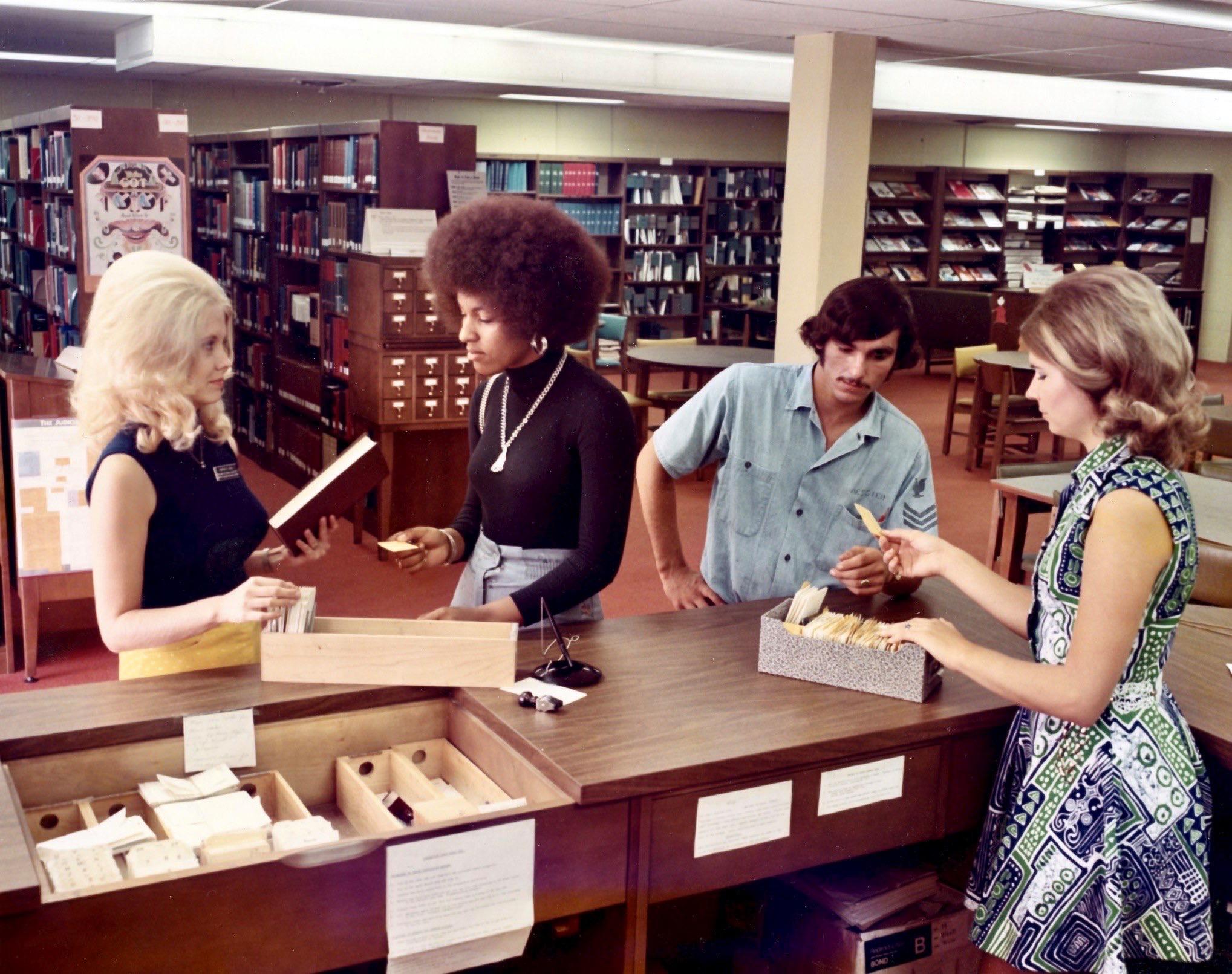
The card catalogue is gone now. That was the first thing.
Then the big reference encyclopedias. Then the newspapers. Then something else she can’t remember. Then something else.
Packed away into boxes.
Sent away with the children to Booker T. Washington and Shenandoah. Empty shelves, empty halls.
She could have gone with them, taken the pay cut or the demotion,
but she knew deep down there was no place for her there. This school will be the final resting place of her career.
She will still dust the shelves one final time. She will check the return cart. She will stand at the window and look at the courtyard, the trees, the children rushing through the dimming light like they have somewhere important to be.
And they do. They still do.
She will step out of her creaking library door and walk down the iron-railed staircase and she will not look back.
Not because it doesn’t matter, but because it matters too much,
and she is tired,
and she is ready,
and she has given this place everything left she had to give.
“Round One” is an excerpt from the upcoming book “Uncle Scotchy & The Time Thief” which is also being adapted to a theatrical experience with the stories inspired by The Blues Opera.
Now that I was back in Miami, explaining my return to people I knew would take a bit of finesse. My father made it clear that my mother’s Alzheimer’s was something that only immediate family would be privy to.
It broke my heart to leave San Diego. Whenever anyone would ask why I came back after those eight years, I had a hard time putting together the sentence, “I just missed Miami and wanted to come back home.” I’ve never been a good liar, and this was a whopper.
I understood that my parents were secretive by nature. My mother was a proud and strong woman, and my father understood that completely about her. They didn’t want the diagnosis-sympathy or for anyone to treat us any differently. But I’m not so sure that if it were any other disease we would have handled it that way.
I came to learn that Alzheimer’s is commonly regarded as a dirty little secret amongst the families of the afflicted. Most folks seem more comfortable announcing a graphic diagnosis of colon cancer than “the ‘A’ word.” Particularly in Latin cultures. They just don’t talk about dementia in general.
The more I experienced the disease, the more I understood things I had not recognized before. I would recall family visits on Noche Buena when one of my Cuban aunts or uncles that I looked forward to seeing just stopped talking to everyone. If I asked for them, my relatives would tell me they were just tired. I’d catch glimpses of them sometimes — alone in a room, staring blankly at a TV for hours. If I tried to call their names, they might turn their heads for a moment with a hint of confusion, then settle back into whatever novela rerun they were watching for the hundredth time. The dementia-related tells are easy when you know the look.
I didn’t know the look yet back then.
The thing at first with my mother was that most of the time she seemed just fine. She was still pretty functional. There wasn’t a problem with her that one might recognize unless you put in some hours with her. Over time, little things would reveal themselves. She might become confused or repeat a question, but she always played it off really well. Almost gracefully.
We had to close her art gallery down. That was the first step. It was clearly overwhelming her. At first, we set up a small gallery in our converted garage so my mother could deal art out of the house. But that didn’t last long.
The big decision my father and I had to make was her car — when to take it away for my mother’s safety, as well as everyone else’s. Cars were a big part of our family. My father was a car salesman. That’s what started it all.
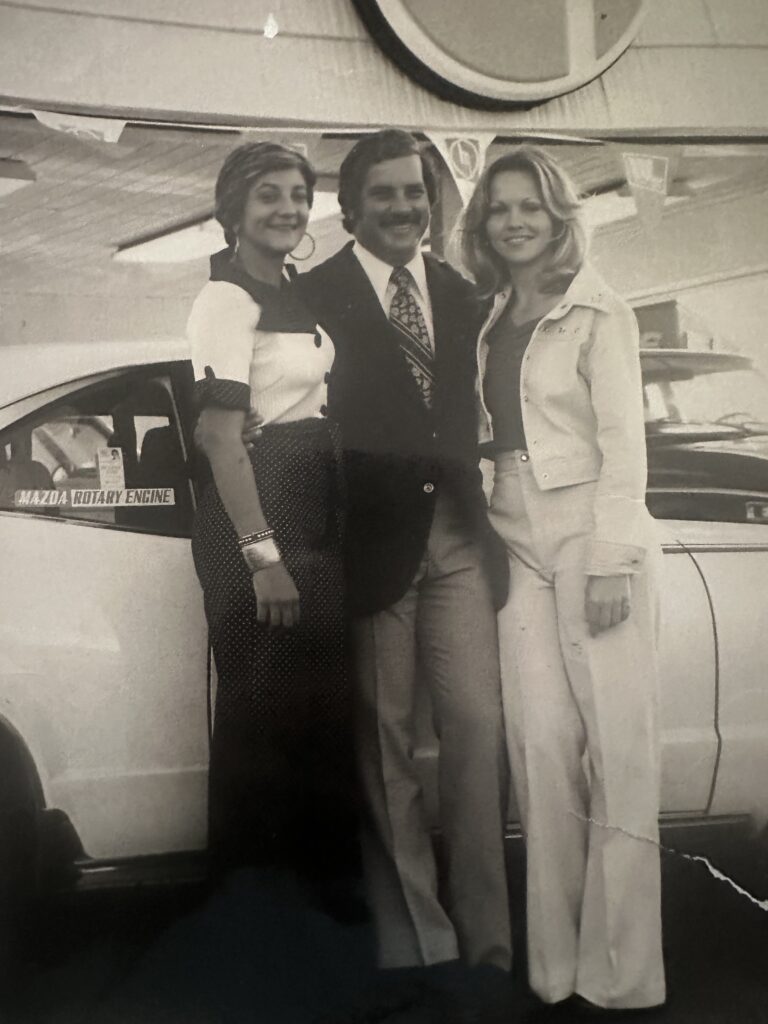
In 1966, my father was selling cars at a Ford dealership. This cute little Jewish girl and her father were locked in negotiations with my smooth-talking Cuban father — jet black hair and a cartoonishly large mustache. It could not have been an easy sell with my mother. It took all the charm and patience that Victor Garcia could muster. Those were two key traits of a good salesman, and he wore them like his left and right arms. Patience was his left, and charm was definitely his right. That was clearly his first test with my mother, and he passed. He sold her a brand new, powder blue Mustang fastback.
Whenever my pop told the story of their meeting, he would always laugh and add, “It’s a good thing I gave her a great deal too. I wound up picking up the payments!” Indeed he did.
However, it wasn’t so much the sale itself that led to their first date. My mom left her little green umbrella in my pop’s office. This is where the tale diverged when I was growing up, depending on which parent was telling it. My father’s theory was that she left the umbrella on purpose so she would have to come back to the dealership without her strict Jewish father by her side and give my pop the opportunity to ask her out. Which he did, of course. My mother, however, went to her grave insisting that she simply left the umbrella by accident and had no such ulterior motives in mind.
But everyone knows — a lady never tells.
Nevertheless, it’s safe to say that a green umbrella is responsible for my existence. Life’s funny, huh?
Both my mother and I owned quite a variety of vehicles over the years. Just about every few months, my car salesman pop would find an opportunity for a trade or upgrade with something coming through at work, and we’d have to drop everything and run to the dealership to swap cars. Usually, it was when he’d take something in trade with slightly fewer miles, a little newer, and a little more value. The make and model made no difference for my next vehicle. Sometimes I’d wind up with a beige Chevy Nova, or a hot pink Corolla. I’d get what I got, and that was it. That was the deal. The cars stopped mattering to me very early on — I usually wouldn’t drive anything for more than two or three months anyway. It came to the point where I always kept a Phillips head screwdriver in my glove compartment for when my dad would call me with the secret code words: “Eric. Clean out your car and get the fuck down here.”
My mother’s situation was a little different. When she had her eye on something, Victor found a way to get it for her. Sande’s final car would be a burgundy PT Cruiser. Turbo, too. That woman liked to go fast. She always had things to do.
I was teaching tennis to a group of kids one hot summer afternoon when my phone rang. It was my mother.
“Honey, I’m lost.”
“What do you mean you’re lost, Ma? Where are you?”
The phone was wedged between my shoulder and my ear as I kept feeding balls out of the basket to the sweaty little brats.
“I don’t know, honey. I’m lost.”
I put my racket down and told the kids to start picking up balls as I walked to the side of the court. “Can you describe anything around you? A building or something?” She mentioned an oddly shaped church, and I knew just the one. It was on 104th Street. Not far away.
I yelled over to the pro teaching the same after-school clinic on the next court to watch my kids and run a game or something. He was confused but nodded as I ran to the parking lot.
When I got to the church, there she was. Pobrecita. My mother was sitting in her little PT Cruiser on the side of the road. Windows up. Hands on the wheel.
I pulled up behind her and walked over, motioning for her to put her window down. She did… Halfway… She was embarrassed.
“It’s okay, Ma. It’s a little weird in this neighborhood. I get lost here sometimes too. Just follow me home, okay?”
She just looked at me and put her window up. No words. Then she followed me home.
We both knew. Things were changing. There was nothing to say.
It was that evening that my father and I came to the verdict that we had to take her car away. It was a big deal, and it tore him up. My mom was a very independent woman, and he was scared about how she might handle it. Everything was always a battle with her. But when we told her, she didn’t really say anything, and that was kind of scary. She just went to her dark room and lay down for a while — just like she would so many times over the years to come.
Now my mother would need to be driven everywhere she needed to go. My pop worked six days a week, so that became my new job. On top of that, the doctor told us she must never be left alone anymore. I had to start taking a lot of time off work. That would take some explaining to my boss and co-workers.
My father and I finally agreed that the Alzheimer’s would go public. We put the word out in our circles. Everyone was sympathetic. It was a difficult time.
The most frustrating part of it all was how good my mother was at hiding her condition. She became an excellent actress. My pop and I took her everywhere with us and she was a fucking angel. She smiled and said hello to everyone. She laughed when everyone laughed. Never spoke unless spoken to. This was not my mother — so docile and agreeable. But people loved her, and she was so good at faking her way through conversations.
I could tell when she was lost and didn’t really know what was going on. I was her son. But no one else really could. It was eerie seeing her fake her way through social situations at restaurants and family gatherings — grinning, arm in arm with my father. It was almost like she was pretending to be human.
What was so frustrating about all that was the conversation I would have with people when she wasn’t around. It was always the same; “Your mom seems good,” they would always say. I’d say, “Yeah, I know,” almost as if everything were fine. Just about each time, they’d follow with something like, “I couldn’t even tell she’s got it.” They were low-key insinuating that what my mother had wasn’t so bad and maybe my father and I were overreacting. What the fuck was I supposed to say? She was different at home. Erratic mood swings were becoming more frequent. She would repeat questions ad nauseam. I couldn’t just tell them that. I had to eat it. The Time Thief had to love that shit.
It wasn’t until we had a big lunch with the family that people started to notice something wasn’t right with her. It was at a Cuban restaurant called Casa Larios. I forget the occasion, but everyone was there.
One by one, our large table ordered their food. There were a few pan con bistecs appearing. An order or two of ropa vieja flying around too. I got picadillo — even though they didn’t make it with raisins like my Abuelita used to make it. (There is a secret war among picadillo lovers about that which I won’t get into.) A couple of people just had croquetas and café con leche. Then Sande ordered something that made a few people pause.
My mom ordered a batido de trigo… and that’s it.
That’s a traditional Cuban milkshake made with whole milk, vanilla ice cream, tons of sugar, and puffed wheat cereal. It’s fucking amazing, really. I used to make them all the time as a kid. But for lunch, it was a bit odd. An odd order for an adult. Especially since my mother was a vegan.
Nobody mentioned it. The food came as the family talked and carried on. But my mom just sat there with the batido straw in her mouth, taking long sips from the frosty dessert glass. In between sips she’d murmur, “Ohhh. That’s good. This is really good, Victor.” My pop was right next to her and pretended he didn’t hear each time.
The waiter came by, and my mother ordered another batido de trigo. He went and got it while she sat in silence. When the second one arrived, she was both surprised and happy. My mother inhaled it faster than the first — again with the “Oh, Jesus…this is really good.” People started to notice. The whispering started.
Then she asked for a third. The waiter paused and glanced at my father and me, wanting to make sure he’d heard her right. My father nodded, and the waiter went to fetch it. This one took a bit more time to go down, but she narrated her pleasure in between sips just the same.
Everyone finished their lunch. It was time for the bill. My mom asked the waiter for another batido de trigo. This time the waiter stopped and stared at my father and me as if to ask what he should do. The whole table fell silent.
“You heard her, dude!” I snapped, breaking the awkward moment. He stared back at me with that same confused look. “Get her the fucking shake! Make it to go!”
I’m usually very nice to servers, but this guy was killing me and making the situation extra weird by treating my mother like a child in front of the family. Only me and my dad are allowed to do that.
The bill was paid. My mom got her milkshake to go, so she was happy. We said our goodbyes to the family and nobody mentioned anything to us about what they were all probably about to discuss on their respective rides home. I didn’t care. I was just happy it was over and my mother got what she wanted.
In the car, Sande enjoyed the hell out of that to-go Styrofoam cup of dairy and sugar goodness — just like it was the first one she’d had all day. She sat shotgun, as usual. I sat in the back, in the middle with no seat belt. That way I could keep eye contact with my pop in the rearview mirror so he could let me know what he needed or what he was thinking without words. I could also scootch up between them if there was an argument I needed to interject on.
“Well, Pop,” I said. “I don’t think anyone has housed four batidos de trigo at Casa Larios before. Especially anyone that small. I bet she set a record.”
We started cracking up. Even my mom was in on it. “Maybe they should put her picture on the wall,” I added. We laughed all the way home. We had to. As he turned onto the main road, my pop giggled, “Did you see that fucking waiter’s face? He didn’t know what to do!”
It was nice seeing my mom crack up again with tears coming out of her eyes and a milkshake in her hand. I’m pretty sure she didn’t even know what we were laughing at, but it didn’t matter at all.
The Time Thief had won round one easily. I’m sure he was laughing too. I just don’t know if he was laughing with us or at us.
It’s the age-old question, as a band loses its original members, at what point does it become simply a tribute band. We all know how important original singer and songwriter Pete Shelley was to the Buzzcocks. Now that Shelley has passed away, can they even be called Buzzcocks, and are they worth seeing?
The short answer, it depends.
If you like Steve Diggle’s contributions to the Buzzcocks, if you love their (his) 2026 album, Attitude Adjustment, which is really good by the way, then of course you go see them. As an added bonus, you’ll get to hear a generous portion of Pete Shelley’s hits. If you don’t know what those magnificent, youth-altering Shelley songs are supposed to sound like, even better, you’ll hear them through fresh ears. Alas, I do know those Pete Shelley songs.
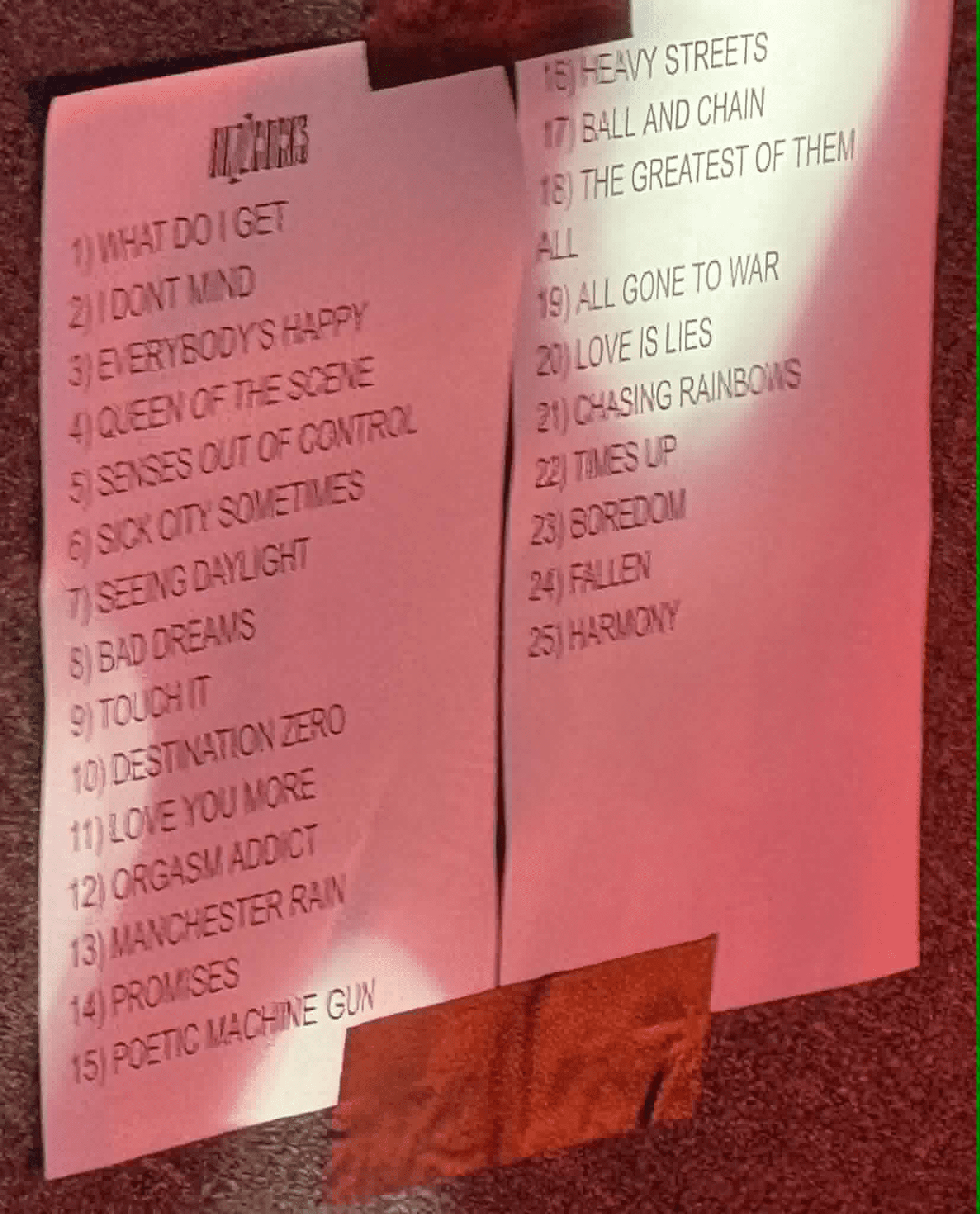
The concert began with Shelley’s “What do I Get,” “I Don’t Mind,” and “Everybody’s Happy Nowadays.” I should have been swept away by an uncontrollable tidal wave of joy, of nostalgia, of THIS IS SICK! I wasn’t. Not at all. It sounded like bad karaoke. It’s not like they weren’t capable of playing the songs the way Pete Shelley intended, not at all. The drummer, Danny Farrant, is red hot and the guitar player, Mani Perazzoli, and bass player, Chris Remington, are more than equipped to play the right notes at the right time. No, it seemed on purpose.
Either Diggle wanted to make a statement that this was HIS band, or maybe he thought the audience would be confused by two very different styles of songs. Either way, the Pete Shelley Buzzcocks gems sounded castrated. The songs were awful.
The set list pivoted to 25, mostly Steve Diggle compositions, all played to perfection. I did my best to regain enthusiasm. After all, I am a HUGE Buzzcocks fan, and was not going to let my disappointment that this was clearly not the Pete Shelley show ruin the night. I downed my Jack n Coke and was treated to a strong finish of “Boredom,” “Ever Fallen in Love,” and Harmony in my Head,” which is a Steve Diggle song that rivals the best of Shelley’s. At the behest of Diggle, who was having the time of his life up on stage, I screamed out along with the enthusiastic crowd the lyrics of these all-time favorite songs.
They’re definitely not a tribute band. They are Buzzcocks, but they’re Steve Diggle’s Buzzcocks, not Pete Shelley’s Buzzcocks. In spite of my earlier kvetching, I’m happy for this 71 yr. old man. He didn’t just phone in the gig, he exposed his heart and soul and left it all out there. I believe Pete Shelley would want nothing less. Long live the memory of one of the greatest punk bands ever, and long live Steve Diggle’s Buzzcocks also.
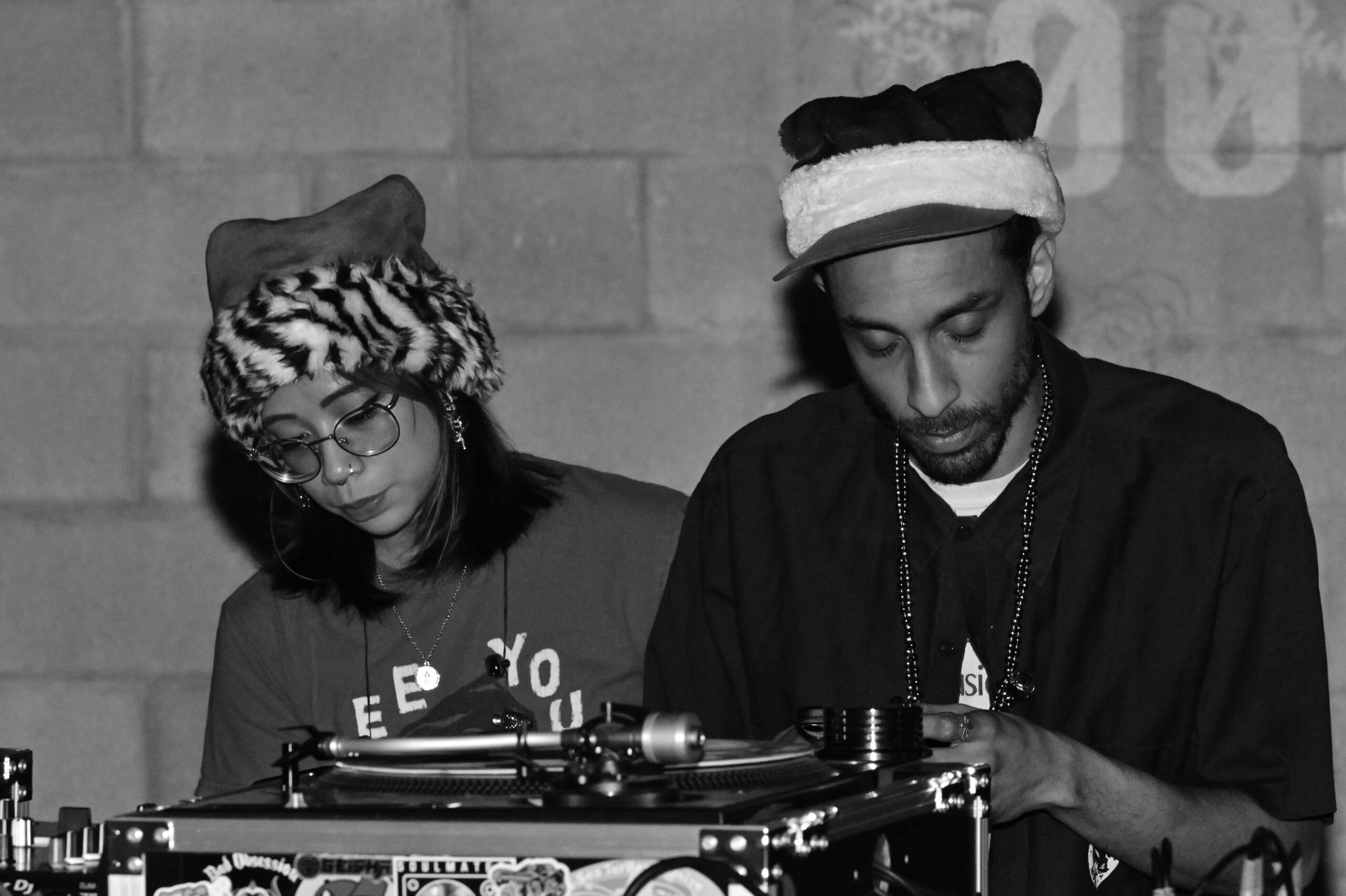
Good Problems Collective is excited to announce – after a successful year-long residency at Respectable Street – SOUNDLAB, South Florida’s premier artist and producer showcase, will be moving to MAD Arts museum in Broward County beginning in April, 2026.
Known for its immersive exhibitions and a convening home for artists and community members, MAD Arts was selected as the perfect location to continue building on the success of SOUNDLAB.
“We have full confidence in the team’s ability to successfully manage this creative project,” said Marc Aptakin, Founder and CEO, MAD Arts. “Beyond presenting strong individual works, we are particularly interested in how SOUNDLAB can serve as a gathering point for artists to explore the field of sound together, fostering dialogue, collaboration and a stronger sense of community through artistic exchange.”
The first SOUNDLAB at MAD Arts is set for April 4, 2026 and will feature the following producers:
Over the course of the last year, SOUNDLAB has built a strong and consistent community of supporters, which included 600+ sign-ups, featured 180 artists and 30+ producers, with artists traveling from Orlando, Tampa and California to participate in the event.
This event was made possible through support from the Broward County Cultural Division by way of the FY26 Artist Support Grant. The Good Problems team looks forward to working with MAD Arts and connecting with more Broward County musicians and artists.
Good Problems Collective is looking forward to the next chapter of the SOUNDLAB journey and invites the South Florida creative community to join the team for this free event.
“I have some bad news, darling. We can talk more when you come home for the holiday break. You’re coming home, aren’t you?”
“Yes, Dad. I got my ticket. What happened?”
”I have some medical issues I need to take care of. When you come home for Winter break we will talk more. I’d like you to consider coming back to Miami for your studies while I get help.”
“Help for what?” Juliet was now terrified.
“I’ll explain when you get home. It’s manageable. But I need you to come home.”
Juliet transferred to University of Miami half-way through her Junior year in college under duress. She tried to look at the positives: she could access a wider selection of courses in her major, American Studies and be closer to some of her old friends. Although devastated by the news of her father’s diagnosis, she knew he had a very good chance of beating it if he followed the treatments as recommended. Juliet made the choice to move back to Coconut Grove with trepidation. She had been living on campus at a SUNY College in the Hudson Valley in NY for two years and had started to enjoy college life.
The curriculum at her new school in Coral Gables was rigorous, stacked with 300 level classes. Constitutional Law, American Literature, American Art. Sociology and government were the most riveting for her. She was struggling with the new environment and thought about seeking help from a counselor for her ADD diagnosis. She was almost denied a scholarship due to a low grade from her previous college. On the first day of registration, she visited student services and took the first available appointment with a counselor.
Having grown up in a home where politics were discussed regularly, her father Larry read a few newspapers daily, watched the news screaming at the television; she was aware of the importance of staying abreast of current events. She just didn’t fully understand everything that was happening. She was hoping to get clarity and be able to participate in discussions. The government and society class focused on a book by Max Weber called “Economy and Society” and a book called “The origins of Totalitarianism” by Hannah Arendt. Juliet was intimidated at first when she went to the bookstore and saw the books were huge.
“What class are you reading those for?” A tall dark-haired student caught her attention standing in front of her in line.
“Society and government. with Shipman.” She said rolling her eyes.
“I’m taking a class with him too,” he said. “He’s a legend. I’m looking forward to it.”
“I don’t know anything about him. I just liked the class description,” she responded.
“Have you ever read “We the Living” by Ann Rand?” she asked him.
“Oh, I hate her. She’s a sellout, “ he said.
“But her first novel was so incredibly romantic. I loved it! I haven’t read her later stuff. It inspired me to take more classes about politics.”
“That’s cool. Well good luck reading those. “ I’m Jack.”
“Juliet,” she said.
“See you around.”
Juliet read an excerpt on the cover of Weber’s book as she waited in line. Later that night at home in Coconut Grove she began to get the flow of the writing and the gist of the books. Juliet became more and more intrigued and convinced that totalitarianism could happen anywhere.
On the second day of class Professor Victor Shipman dove into the discussion by asking, “Does anyone have a better understanding of what happened in Germany to cause the holocaust after reading the assignments?”
Juliet raised her hand. “I’m beginning to understand now. I never did before…”
Another female student spoke immediately, interrupting Juliet without raising her hand and said, “I read this and I still don’t understand. It’s unfathomable. Jewish people didn’t deserve to be killed. What is there to understand?” She stared at Juliet. Juliet turned red. Her heart started racing, feeling embarrassed and misunderstood.
“I think the Germans were brainwashed.” She said quietly, attempting to finish her thoughts.
A third student spoke up, “I think saying they were brainwashed is an oversimplification.”
A fourth person raised her hand and said “I’m Jewish and I don’t fully understand but I think Germany was sick and ripe for something like this to happen. They were so demoralized, they needed a scapegoat.”
Juliet sometimes felt intimidated by some of the other students, but it didn’t stop her from raising her hand and speaking because she desperately wanted to be heard and learn. Like her father, her emotions ran high on political topics, and she often couldn’t contain her thoughts. The professor liked to take a break to tell jokes which the men in the room loved but some of the women disdained.
“It’s time for a break.” The professor said. “Talk amongst yourselves if you wish.”
He went back to his desk looking for something and drank out of a metal tumbler. A pack of Camel cigarettes, a lighter and an ashtray sat on the edge of his desk. After a long silence Professor Shipman eased into one of his notorious crude jokes.
The men in the class chuckled and said “One more!”
After the giggles and the eye rolls, Professor Shipman twirled his short hair with his finger and leaned on one leg as he gently brought the conversation back. ‘If any of you read about the author Max Weber, you would know he died years before Hitler, Mussolini or Stalin took power. Was he warning people?” Professor Shipman asked.
“Depends on who is reading,” a young man said.
“I think it can be seen as a warning.” Juliet said.
“What other Countries have been influenced by charismatic authority?” Professor Shipman asked.
“Cuba” a young man finally spoke. “My parents were forced to leave when I was a child. They would have been imprisoned or worse if they had not escaped to Miami.”
“Yes. That’s a strong example,” the professor continued.
“Hannah Arendt wrote after World War 2 after escaping the holocaust. Having read the assignment, do you think she was influenced by Weber?” Shipman continued.
“Yes, but she doesn’t t talk about it,” a student remarked.
“Where do their writings intersect?” Shipman asked.
Juliet raised her hand. “They both wanted people in a democracy to have discernment and understand authority and government to avoid disaster.” Juliet said.
“Yes. Democracy is not a spectator sport. It takes participation and engagement,” Professor Shipman said. “We need informed citizens who are willing to speak up in defense of justice.”
After class ended, Juliet became intrigued about Max Weber and wanted to know what his intentions were and what his personal life was like. She sat in the hospital waiting room while her father met with his oncologist and reflected on what she learned. How could Weber have known what was coming? She asked herself. What had he observed? She was convinced he must have been a visionary. Her thoughts seesawed between worrying about her father and reflecting on class assignments. She looked forward to her counseling appointment the following day. She wondered about Jack and if he were single and wondered if she would run into him again. That thought made her smile.
The counselor’s office was in the student services building on campus. The psychologist specialized in learning disabilities. Juliet was greeted by a slender woman with glasses with her hair pulled back. The office was damp, dimly lit and the walls were covered in shelves that were filled with books.
“I’m Dr. Elsie Sebastian. You can call me Elsie. “ She said, holding out her hand. Juliet smiled and shook the doctor’s cool clammy palm. “What brings you here?”
“I was diagnosed with ADD in high school and I’m having trouble concentrating . I’m under a lot of pressure right now. My father’s sick so I just transferred here. The classes seem hard. I was hoping you could help me get through some of my classes. Maybe give me tips on how to keep my stress down?”
The doctor hesitated before answering. “We can certainly work on that. Are you on medication for your diagnosis?”
“No. I was for a little while in high school. I’d rather not take drugs.”
“I’m not a psychiatrist so I do not prescribe medication, but I can refer you to someone if we decide that’s what you need. Just so you know, ADD has been renamed ADHD just this year. There’s been new research about the benefits of mindfulness which can be achieved partly with breathing and meditation and cognitive therapy. What are you experiencing?” The doctor asked.
“I’m having trouble focusing. Sometimes I can’t read.”
“Have you tried deep breathing or meditation.”
“Not really. I drink coffee and it helps me focus but then I can’t sleep.”
“I’d like to hear more about your medical history. Let’s set up a longer appointment for next week and we can get to know each other. I think I can help you.”
“That sounds good. Thank you.” Juliet was relieved.
Juliet felt hopeful and looked forward to seeing Elsie again. A few days later, after reading Weber’s life story, his influence on modern thought and his time spent institutionalized due to poor mental health, Juliet became convinced Weber was highly sensitive and felt the weight of the world on his shoulders much like herself.
She went home to have dinner with her father after her fourth week of the semester. “What are you learning?” Larry asked as soon as they sat down to eat.
“Basically, that democracy is fragile and you have to fight to keep it running well. If you don’t speak up for others who are mistreated, you may be next.”
“That sounds important.” Larry said, smiling.
“Listen, Jule. I don’t want you to worry too much about me. I’m stage one. As long as I can get through these treatments, I should be fine. I love having you here and we are saving money on room and board by living at home. Your scholarship is helping a great deal. I’m very proud of you.”
“Thank you” Juliet said blushing.
“I have an appointment at Baptist every Wednesday morning. Can you go with me? The doctors said it’s best I don’t drive myself home.”
“Of course, Dad. I’ll give you my schedule, so you know when I’m available.”
“Well, I want you to have some fun too. If you can leave Wednesday mornings open, we should be fine.”
“That’s fine, Dad. You didn’t touch your food. Are you ok?”
“I hesitated asking you to come home to help but now I’m glad I did.” Larry said.
“I’m glad to be home too.” Juliet said unconvincingly, looking down at her food. She didn’t have much appetite either.
“ Dad, I’m seeing a therapist through school to help me with my ADHD. I think it might help.”
“Why is that honey?” Larry said.
“Remember, I was diagnosed with ADD in high school because I talked so much? They call it ADHD now. “
“Oh. Ok. But that’s natural when you’re smart like you. You’ve always been curious.”
“How long are you in chemo, Dad?” Juliet was staring at her father.
“It will be about 3 months. 12 rounds. Once a week. By the time Summer rolls around I’ll be done. Maybe we can take a nice long trip to the Keys once I’m finished.”
“I don’t know how long I’ll be able to stay, Dad. I miss NY. I had made some new friends up there.”
“You are all I have Jule. I need you to stay at least until I recover.”
“Let’s see how the next few months go. I’m really just getting settled in. I’m going to lie down. Let me take your plate.”
Juliet kissed her father’s forehead, did the dishes, and went to her room feeling the weight of her father’s comment. Class assignments swirled around in her head, but she was too tired to work. Her thought drifted back to what she had been reading.
What disturbed her most about Professor Shipman’s class was not only that totalitarianism had happened in the past, but that could happen again, quietly, gradually and with the participation of ordinary people who believed they were doing the right thing. She realized that Weber hadn’t been predicting specific leaders or regimes. He had been describing human weakness: the desire for certainty, the comfort of obedience, the dangerous appeal of charismatic authority in times of desperation. Perhaps his writing wasn’t a prophecy so much as a reflection of human foibles.
Juliet understood that learning wasn’t just about knowledge. It was also about responsibility. Democracy had to be taken care of and nurtured just like her father. She wondered how many people would pay attention to warnings. Juliet awakened to the reality that democracy was the freedom to love who you choose to love, the freedom to have different opinions and not be persecuted for them. Democracy meant religious and intellectual freedom. All things her father had taught her to value and that she had taken for granted. Freedoms that could be lost. The semester helped to shape her thinking. She gained purpose and direction as she became a caregiver for her father, her democracy and herself.
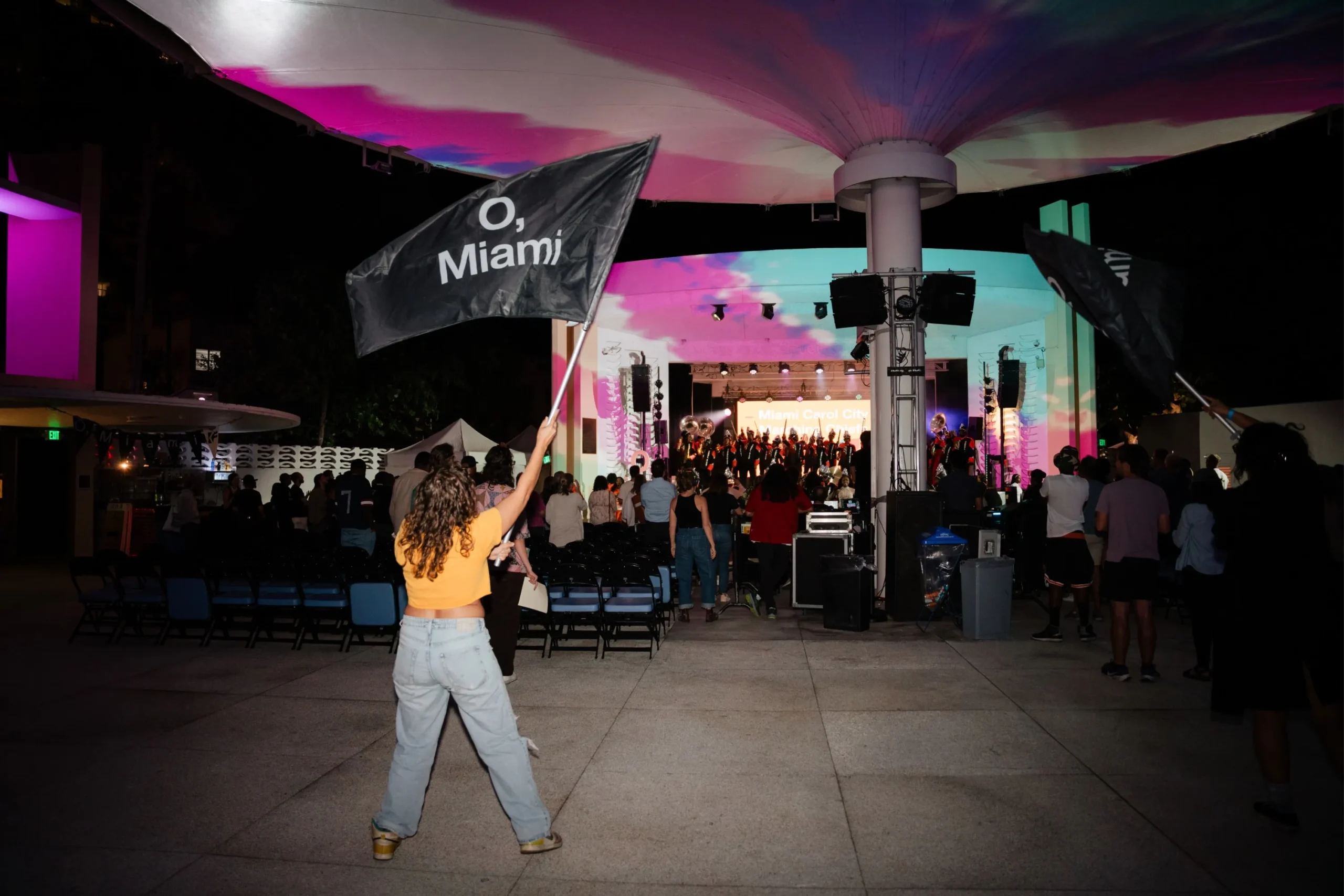
Every April, for fifteen years now, Miami does something quietly radical. It turns the entire county into a poem.
The O, Miami Poetry Festival returns April 1–30 with its annual month-long explosion of readings, performances, pop-ups, and creative experiments across Miami-Dade. The mission remains delightfully ambitious. The organizers want every single resident of the county to encounter at least one poem during the month. And over the course of fifteen years, they are pretty dang close to accomplishing that mission.
That mission means poetry doesn’t stay politely inside bookstores or lecture halls. It shows up everywhere — on beaches, in bars, at parks, museums, libraries, and late-night gatherings where literature collides with Miami nightlife.
2026 O, Miami Highlights
The festival kicks off with one of its biggest celebrations. The Full Pink Moon Festival Launch Party on April 2 at the Andaz Miami Beach. It’s exactly what it sounds like, a moonlit beach party where poetry mingles with music, drinks, and the ocean breeze. If there’s a moment when Miami poetry looks less like a classroom and more like a nightlife scene, this is it.
All aboard!! Another standout is TRAIN-LEGGERS, a collaboration with the beloved free-book movement Bookleggers Library. Hosted at the Gold Coast Railroad Museum, the event blends poetry readings with the group’s signature mobile library, turning a train yard into a literary hangout where poems, books, and community circulate freely.
Elsewhere, the festival dips into classic Miami eccentricity. Our personal favorite this year is the O, Miami Quinceañera, a celebration marking the organization’s coming-of-age milestone with poetry, music, and the kind of playful cultural mash-up that only makes sense in this city. This should be dope. This a must go!
It’s crazy that it’s been fifteen years!
Later in the month comes one of the festival’s most beloved gatherings: the ZipOdes Finale at Vizcaya Museum & Gardens. The event brings together finalists from the festival’s famous “Ode to Your Zip Code” project for a waterfront evening of poetry readings, drinks, and celebration inside one of Miami’s most stunning historic estates.
The concept behind O, Miami is simple but powerful. Poetry shouldn’t be rare or intimidating. It should appear everywhere — in unexpected places, in unexpected moments, sometimes even at a party.
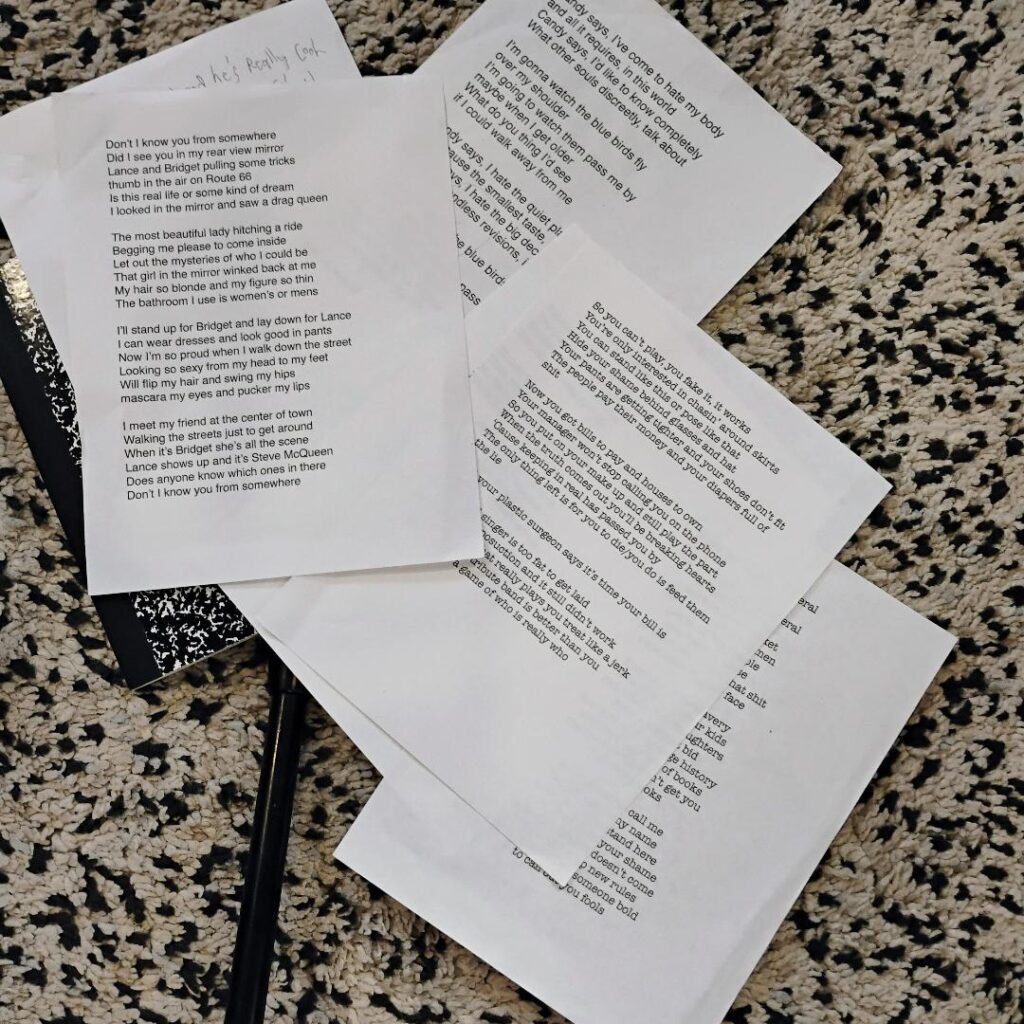
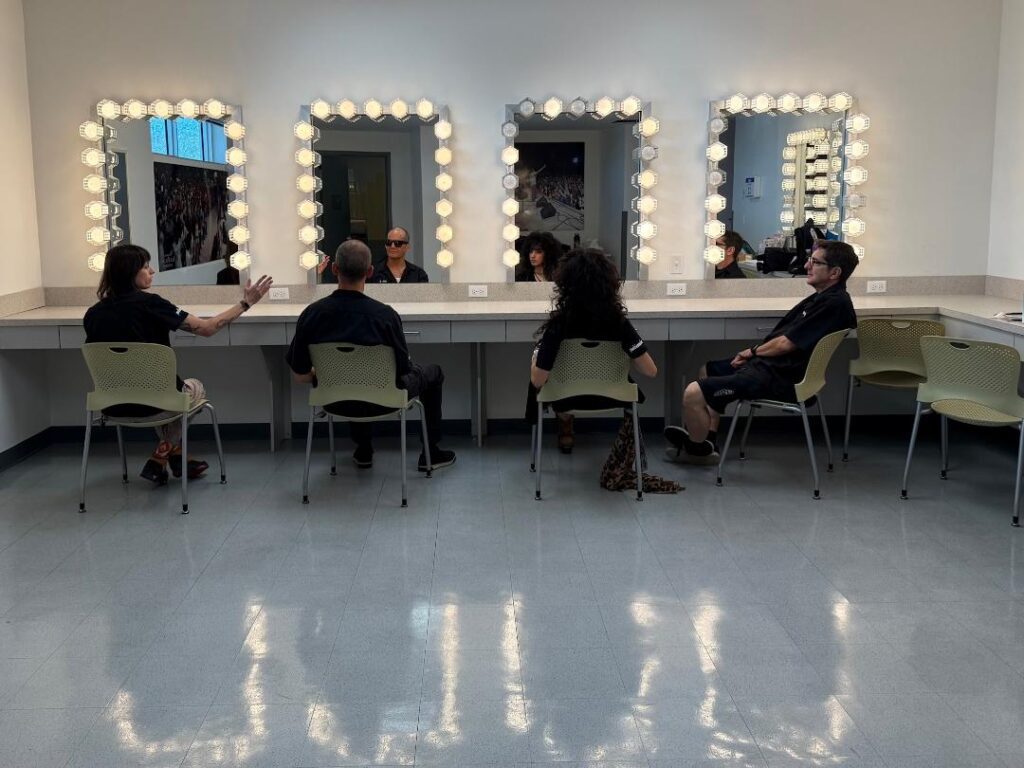
Come spend another evening on the couch with MLE and Mr. E (me) and listen as we talk about making our new album Don’t I Know You From Somewhere?(available here). You can listen to our conversation and read along. We tell the story of how we make an album and the friends that help us. Push play now and click here for side 1.
MisterE: Alright. Side two.
MLE: Side two begins with “Merkin For The Man,” which you know, that’s a little bit of a play where it’s like “Workin’ For The Man.” But if you don’t know what a Merkin is, you can look that up. And this kind of like a cross between The Cars and Devo music-wise and then lyrically it’s basically making fun of Vince Neil. I don’t know what else.
MisterE: Sort of was a mix between Motley Crue and Gene Simmons because it was at the time that Gene Simmons had to sit on stage for a gig in Rio De Janeiro. And the last thing I want to see is Gene Simmons’ fat cottage cheese ass hanging out of this goddamn leotard with that squirrel wig that he had.
MLE: At least Peter Criss just looks like an old lesbian now. He let it just go. The other guys, not so much, uh, R.I.P. Ace, I guess, whatever. I’m not a KISS fan.
MisterE: And it definitely seemed like if I was going to write… I always hated that idea of tribute bands and cover bands and how they were stealing the soul of these other bands, but somehow now some of those cover bands are actually better than old cottage cheese ass.
MLE: Yeah. I mean, my favorite KISS songs are covers, Melvin’s cover, and fucking Red House Painters cover.
MisterE: Oh, and The Replacements. It’s funny as shit. There’s a wacky keyboard line to it.
MLE: There’s a cowbell. There’s hand claps.
MisterE: I’ve wrote some joke songs before, but not a lot. I used to write more joke songs than I do now, but this was one that brought it back. And I think two things happened. Once we started making it the Cars tune, you weren’t into the song at all at first. You’re like, “this song’s not finished,” you know? And then there was a point where the Cars thing was happening. But when she finally heard the lyrics to it and you heard the dig on, “the only guy in the band.”
MLE: Oh, the Mick Mars?
MisterE: Yeah. Yeah. Yeah. “The only guy plays in the band, you treat like a jerk” thing. You’re like, “this song’s about Vince Neil!” Well, I guess so, you know, and it wasn’t even guessing so, but it’s awesome.
MLE: But we’ve been making fun of Vince Neil for a while with this fucking chicken wing special.
MisterE: Well, that was the thing. I wanted to title it “The 72 Chicken Wing Special,” but then you came up with “Merkin For The Man.”
MLE: Well, because I was thinking that, “Merkin For The Man” could be like another way of saying like a toupee or a hair piece. Merkin, but “for the man!” So anyway, I feel like we really overthought such a stupid fucking song.
MisterE: Yeah. Yeah. But totally different, cool, like opening thing. And then we move on to “Did I Ever Tell You?” So, just kind of a joke on myself. Because it’s pretty much, I wake up and I say, “oh, did I tell you?”, and usually when I say that, they’ve heard the story like 15 times before.
MLE: Yeah. And also the title of the album is “Don’t I Know You From Somewhere,” which is referencing something else and someone else who says that a lot. So there’s a lot of, yeah, it’s just inside jokes, which that’s what every fuckin’ band should have.
MisterE: So this was another song where I just put my fingers in a different spot.
MLE: Not on the D.
MisterE: Not on the D, but I don’t know what it’s on. And I tried to play weird configurations of how I was setting up on the guitar and, you know, and I was slashing at it a little bit and making like neat noises that wasn’t specifically like, “oh, what are you playing, Steve?” It was like, everyone had to listen and go, “I have to play this for that” because I wasn’t even sure what I was playing. And it’s really cool. It has some very drastic, karate chops to the music and some of the studio effects of the echo or reverb in between those things just sounds great. And that we could eliminate the click things in between because I could never time it right. Nikki and you would be right on and I would be goofing off. Lyrics, I kind of like the whole thing about meeting God.
MLE: More drugs, less guns. Yeah, yeah. If anyone has quaaludes, call me.
MisterE: And if you do have quaaludes, you’ll probably still be awake at 3 a.m.
MLE: Yeah, which is the next song. Which is the last one that’s from the EP, which was kind of like, I feel like that was the single or the, you know what I mean? I feel like that’s a song that people were like, “that’s a good song” when the EP came out. All the songs are good, but I think that that’s the one that really resonated with people.
MisterE: And Mahoney had used previous on some of these other songs, the Mellotron, we have a Micro Mellotron. And the string section’s cool. It kind of, again, this was like, I was so many just open chords and barre chords that, you know, I didn’t often mess around with the F chord, but with the other strings open around it. And this kind of had a similar thing happened in part of the “Song from the Bed,” from Berlin, the Lou Reed record that, if you listen in there, I kind of say a line that’s similar to one of those in that song. And it kind of also has a weird Zeppelin feel to it. The chord change.
MLE: I could see that like when it gets to the chorus.
MisterE: It’s a cool song. I really like it. How it goes down and just sounds great. Everything sounds good on it. I think we recorded it well.
MLE: Yeah. I’m not mad at the drums on it.
MisterE: Yeah. And I think with “Zeppelin, Faeries And All Of That Shit,” I don’t think you even really had come up with a drum part. Other than like two weeks before we recorded it.
MLE: Yeah. Well, I mean, barely, and I was just like, I’m just gonna play this extended shuffle and not fuck around.
MisterE: So on the first EP we knew the songs really well. And then the other seven or eight songs or even more, some we knew well, the cover, one of the covers we knew well, with both of them probably by that time. But, the other ones, we had a few solid and a few that you mostly came up with the drums pretty late, and they’re awesome on here.
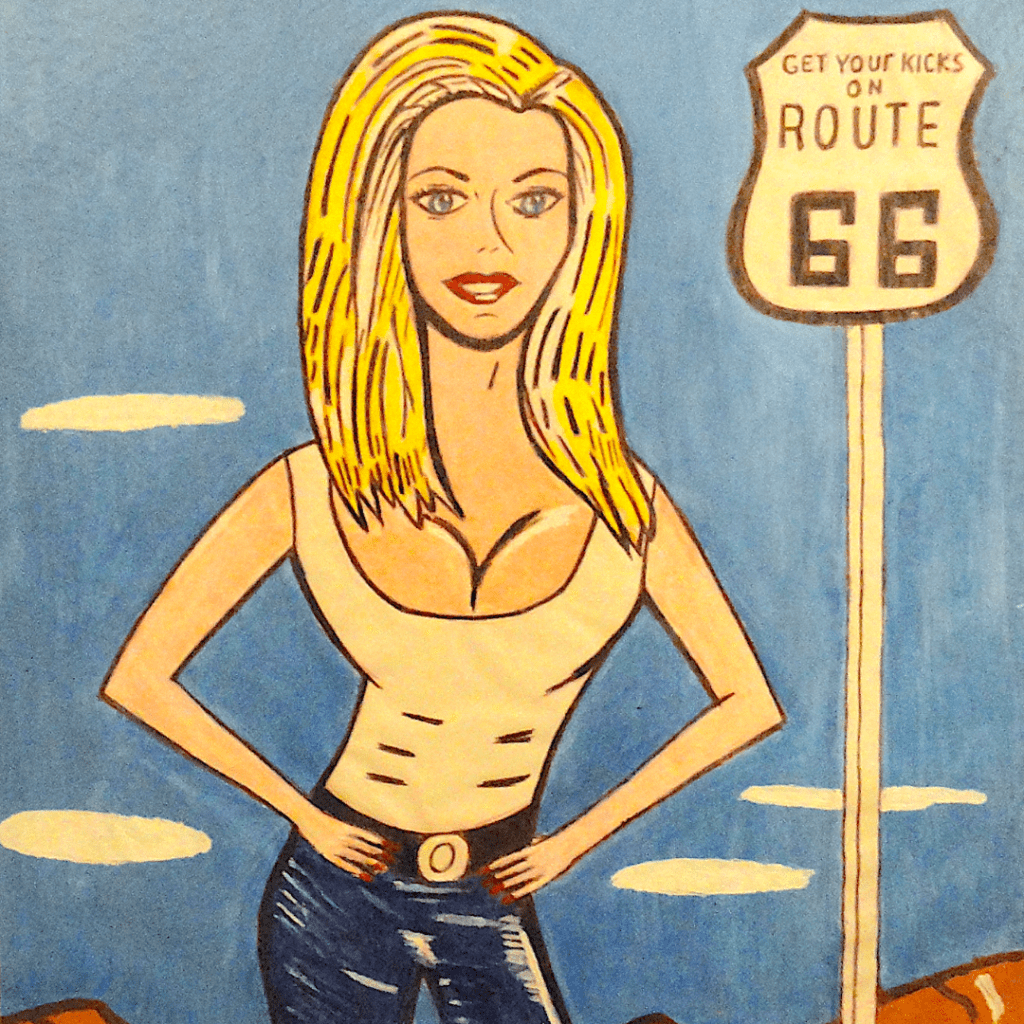
MLE: Yeah. It works. So the next song is “Lance & Bridget,” which is about my dad and my dad, same dad, or my brother likes to say our dad and our mom, but not really. It’s our dad who was a crossdresser, but he didn’t know we knew, and also we didn’t at the time. We were kids, or actually my brother didn’t really know about this until I told him way later. And anyway, his alter ego, we’ll call it that, “Bridget,” is a woman, I guess he wanted to be. So he used to paint her and draw her from like the 70s up until 2003 when he kind of stopped painting because he had a stroke. And Steve wrote a song about it, and then he died because Steve writes songs about people and then they die right after. True story. Um, it’s not that cut and dry, but, one of his artworks of Bridget is the album cover. So you get that.
MisterE: One of his last ones.
MLE: It is. Yeah, that Bridget, that was a 2003 Bridget. So yeah, that would be one of the last paintings he did of this version of himself, I guess. And one of his pieces of art is also on the back of the record. It’s different. It’s not like a figure of a woman, but it’s a lot of the style’s very pop art. So we went with that for the cover and it doesn’t say anything else on the cover except for what it said in the original painting, which is “How do you like me now asshole?” I guess that could be the alternate title for the album. “Don’t I know you from somewhere?” “How do you like me now asshole?” We’re just asking people questions. And man, that song’s good. We got Broadway superstar Harris Milgrim, AKA my brother, to sing, to do some Merry Clayton stuff on there, which he recorded in a closet in Queens. And it’s fucking awesome.
MisterE: Yeah, it was great fun too, it was a good wordplay. The title of the song had something totally different that happened and we pulled off some crazy prank with this title and this song to begin with, but there was already this mindset of us writing a song about Lance. And it came to fruition actually, Emile, a few Christmases ago, had given my wife Tina and I one of Lance’s paintings. And it was Bridget down on Route 66. So some of those lyrics are in there, but by the time we had decided to make a record, that album cover art, just this painting in general was, I don’t want to say his masterpiece, but it was the one that would look great on an album cover. And I see it places now and it’s sticking out of the thing and you only see this part, and everyone sort of faces it up. And anyone that I’ve shown it to, they’re like “whoa, that’s a great album cover!” It is cool. And when I visited Lance the first time, he had probably eight or nine of them up in his room. And I very much felt that there was some Pettibon feel and some manner from what they said. And then also,
MLE: Lichtenstein was his big one.
MisterE: Yeah, for sure. But also “Songs About Fucking,” you know, there’s something that was like, “oh, this is something similar to this and it works great.” Yeah, album cover art. It’s a great song. Sounds cool. Good guitar work going back and forth with, with Harris too. We worked that together.
MLE: Oh, yeah, that’s right. And it’s nice and short too. Like, I feel like it gets the job done, you know. It didn’t need to be a longer song.
Mr. E: And then we sort of end it off with a cover of “Candy Says.” We’ve been doing “Candy Says” for about three years.
MLE: Why did we start doing it? Oh yeah, for that art thing where I stood on the $30,000 concrete sack or whatever.
Mr. E: Yeah, were about 12 sacks of concrete in a hotel on Biscayne Boulevard that still had hourly rates.
MLE: Oh, yeah.
Mr. E: I think we did the Lou Reed thing after that.
MLE: We did do the Lou Reed thing after that.
Mr. E: Yeah, so this was a start of that.
MLE: Oh, and that was the whole idea because you and Nikki were playing. So I sang through the contact mic tin can thing that I made to do that performance. Because was it like an Art Basel adjacent thing? So we wanted it to be a little weird. I think that’s what it was.
Mr. E: And so, some of the comments I’ve got is like, “you’ve made it your own.” And of all, Kramer, who masters our records, was like, “oh, that’s a nice version of ‘Candy Says’ you have.”
MLE: Even though you have this fucking idiot singing it. I’m singing that song. And I’m not the best singer, but I think what really works is the phrasing, which is what Ferny said too, because I don’t sing it like the original. And I don’t sing it like how you sing it when we do it live. Because when we decided we were going to record it and that I was going to sing it, I kind of like researched versions. And the one that really, really jumped out at me – again, I’m not saying I sing well like this person – but in terms of the phrasing, was Beth Gibbons doing a version of it live. And I just really thought the phrasing was so emotive that I was like, “okay, I’m going to sing it with this cadence.” And that worked.
Mr. E: For some reason, I feel this is the version that Candy would have liked the best.
MLE: Maybe.
Mr. E: It has a little more sympathy to it. Or empathy? I never know what’s the difference between those words.
MLE: I mean, potato, potato. No, they are different, but yeah, I get what you’re saying. You know, because I kind of feel like the original, even though it’s supposed to be, it’s almost a little bit first person perspective. It’s hard to feel it. Just because, I don’t know, still a great song, maybe this just kind of, again, I think the phrasing, Beth Gibbons’ take on it really resonated with me. So there we go.
Mr. E: And I think also cool that it’s another place where the Mellotron shows up. And at the very end, Mahoney sort of plays a French horn-sounding thing that makes it for better or worse, almost Beatle-esque.
MLE: Yeah. And triumphant. Yes. Because I feel like this song is very bittersweet, it’s melancholy, you know, like “if I could…”, you know. And then we kind of take it into that, with the end, we are kind of like “if I could walk away from me” and we’re like, okay, now we’re walking away, now we’re going into that, you know.
Mr. E: Yeah, kind of Steve Drozd too, from the Flaming Lips when he played keyboard parts, that’s like somewhere in between symphonic and late 60s-sounding music. So it’s awesome.
MLE: There you go. Yeah. There is a hidden track on this, which I love that there’s a quote unquote hidden track, but it’s on vinyl, so like you can see it. You know how you get the CDs with hidden tracks, but you couldn’t see it. And you’d just be like… it would keep playing. And then you know, you’d be tripping and it’s like two a.m.? And then all of a sudden it’s like “akfhlfiashflaiushfluhsf!!!” after like 30 minutes of silence or something.
Mr. E: You say that… So that Zaireeka record. My friend, Rob Hall had conjoined the whole thing. So we could listen to it ourselves, but he added weird shit on the end. Like, really weird shit. And he did personal ones for everyone. And like maybe an hour after the thing or 45 minutes or whatever it said, “Steve and Tina wake up!” And I would turn it off before that would ever happen. You know, like, “oh, just nothing going on.” And I’d leave the room, but occasionally… it took me like a year before I got to the “Steve and Tina wake up!” part. I think he had a lot of long stuff, but then there was a long space in between. So we have this hidden track that when at first I told Kramer I said, “wait 30 seconds before it comes on” but he said “no one’s ever going to listen to it if it’s after 30 seconds.” He said “seven to ten seconds or they’re going to take off the record.” And I wasn’t so sure about that.
MLE: People leave it going. I mean, I sometimes I’m inside and a record finishes and I’m walking around and forget
Mr. E: I’ll go over night where it’s…
MLE: Whatever, Kramer.
Mr. E: I couldn’t convince him.
MLE: Anyway, it’s there, but you can literally only hear it if you buy the record. It is not online. It is not digital. That’s it. So deal with it. But if you are a South Florida musician or music scene or art scene or whatever scene person who has spent time in South Florida over the past 40 years, you will appreciate this track, or we think you will. So you know, it’s up to you. It’s free!
Mr. E: Yeah. It’s free. If you buy the rest of the record.
MLE: Yes. It is a bonus.
Mr. E: I think I think that’s awesome. I think we’re good.
MLE: Totally awesome. And I’m just going to say – we’ll see if they put this out – but we did this for the Jitney instead of writing a piece. Hopefully this will be transcribed. But if not, yeah, I don’t know.
Laura: You can’t take Miami and put it inside a little box. It’s within you. You can’t put a yellow cardigan on and say, “Oh, Miami, I am going to cover you up with my little yellow caca cardigan.” It can’t happen that way.
Jenny: Okay. Well, let’s take the tetas out.
— Laura Di Lorenzo and Jenny Lorenzo on Pero Like Presents: “Women Transform into Chongas”
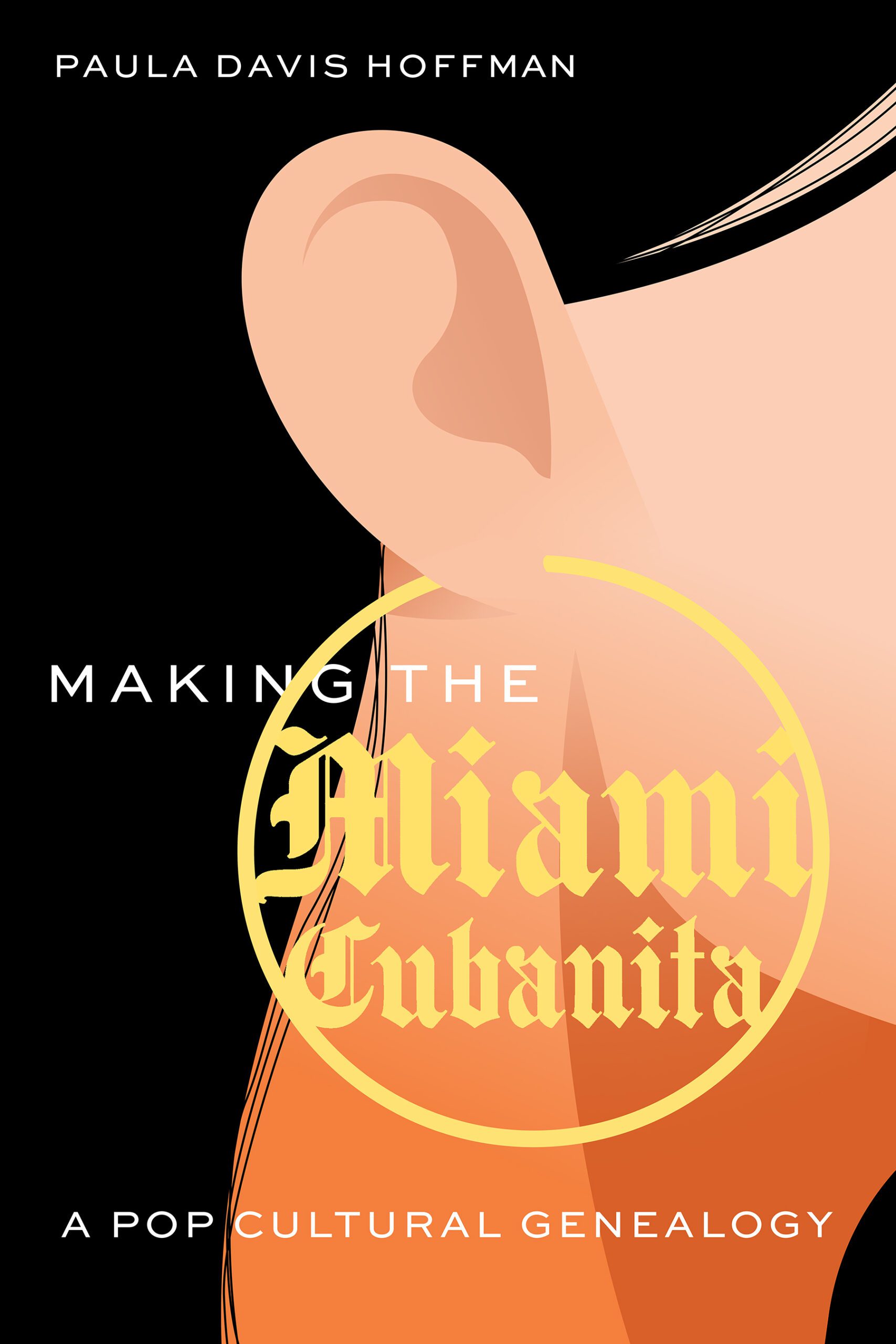
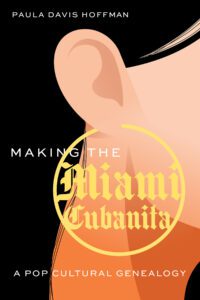
What follows is the story of a group of young women who empowered themselves by exaggerating ownership of an ethno-racial identity they were explicitly forbidden to assume. Amid communal efforts to scramble back to the white side of the color line, llegaron las chongas (the chongas arrived), but they were gyrating in the opposite direction. Nobody knows exactly when the term “chonga” was first hurled as an insult, but at some point in the late 1980s a gaggle of Miami cubanitas redefined cubanidad on their own terms. Growing ubiquitous in South Florida in subsequent decades, their signature aesthetic provoked ridicule and enmity in the Cuban exile community, which coined the term “chonga” to describe these wayward daughters. This was not typical intergenerational conflict; older and established Cuban exiles were waging a battle for the hard-won ethnic capital that had once propelled them to the top of immigrant prestige. The sparkle was wearing off the Golden Exiles, and every flick of a chonga’s thick black eyeliner stained the community’s white skin brown. The insult was a call for hegemony, a protection of privilege, and a battle for whiteness. Miami Cubans had come too far to let these little niñas ruin their model-minority status with lip liner.
Elsewhere, I argue that chongaism was born at a time of deteriorating racial privilege and was a way to assert and define an identity that was increasingly contested. By the late 1980s, abiding by middle-class norms of white respectability was no longer the protective or viable measure it had once been for Miami’s Cuban community. In defiance of an unobtainable standard, many young women embraced the pan- Latin classification that their parents had long resisted, adopting sartorial signifiers of a tough sexuality that proudly advertised their otherness. To Cubans driving around with “Yo no soy hispano . . . yo soy cubano” (I’m not Hispanic . . . I’m Cuban) bumper stickers, watching these young cubanas don expressions of brownness was una barbaridad (a barbarity) because it jeopardized the ethnic capital their parents and grandparents had carefully cultivated.
Although the practice of regulating the behavior and appearance of young women is not exclusive to any one community, I contend that this particular struggle (of the chongas) in this particular community (Cuban Miami) at this particular time (the late 1980s and early 1990s) and in this particular space (South Florida) differed from typical intergenerational conflict because of the particular sociopolitical import carried by the image and reputation of young cubanas at the time…
In the 1980s and early 1990s, the city was under a microscope. Across disciplines, scholars and cultural critics published books investigating Miami. While their perspectives differed, they agreed on one inescapable principle: Miami at this time was like no other place on Earth, and part of what made it so was a frightening acceptance of exile-on-exile domestic terrorism. The following examples of contemporary works about Miami establish the lengths the exile community underwent to punish anybody not in line with a narrowly defined understanding of cubanidad. Some of the works cited below claimed that a de-escalation of terrorism occurred by the early 1990s, but in both 1992 and 1994, Human Rights Watch issued separate reports strongly condemning the city for violence and intimidation against those exiles who were not in line with the community’s right-wing ideology.
In 1987 celebrated author Joan Didion published Miami, a social and political analysis in which she marveled at the impact Cuban exiles had had on the city. As a well- traveled white woman, she noted that Miami was hardly the only American city with a sizable Spanish-speaking population. But unlike cities such as Houston and Los Angeles, where Spanish was “ambient noise” spoken by underclass service people such as waiters and car washers, in Miami, Spanish was spoken by the movers and the shakers, the people who ate at restaurants and drove expensive cars and adorned their fancy houses with expensive landscaping. Arguing Miami Cubans operated in a parallel culture to the once-dominant Anglo structure, she warned of a dangerous underside to the Golden Exiles. Much of Didion’s work focused on the prevalence and social acceptance of exilic political violence.
In 1993 sociologists Alejandro Portes and Alex Stepick illuminated the exile community’s response to its drastic change in reputation after the 1980 Mariel boatlift in City on the Edge: The Transformation of Miami. They argued that first-wave Cubans turned their attention inward and silenced detractors, ramping up efforts to present a monolithic and positive image. Journalist David Rieff’s 1993 The Exile: Cuba in the Heart of Miami and historian María Cristina García’s 1996 Havana USA: Cuban Exiles and Cuban Americans in South Florida, 1959– 1994 also focused on terrorism. Rieff and García addressed the Miami Cuban community’s anxiety over the Americanization of the next generation more than did the aforementioned authors, but they still did not draw attention to chongaism, the burgeoning subculture I explore in part 2 of this book.
These authors writing in the late 1980s and early 1990s omitted important voices, which were discounted and overlooked because they belonged to those preteen and adolescent girls who were quickly earning their community’s scorn— the chongas. Originally used to stigmatize cubanitas challenging their community’s white-centered acculturation, staid gender norms, and stifling behavioral mandates, the label has now blossomed into something much bigger. It is important to recognize that the impulse behind intra-exile political violence and this derogatory label of “chonga” were not unrelated. Both were based on an us-against-them mentality and were intended to punish those exiles who refused to conform to a narrow understanding of Cuban American identity. Exiles attempted to create a unified vertical community by punishing political dissidents, and in the late 1980s and early 1990s, suspected communists were not the only victims of their aggressive repudiations of difference. Nobody was ever bombed or killed for being too “chongalicious,” but the bravery of young women performing non-whiteness at a time when their volatile community was desperately trying to reanimate their once-pristine and whitewashed reputation amid drastic status reversal should not be discounted.
Some songs take years to arrive where they’re meant to be. Not because they weren’t written or recorded, but because life intervened somewhere between the moment the tape started rolling and the moment the music could finally find its way out into the world. For Miami musician Gaston de la Vega, that journey has taken nearly two decades.
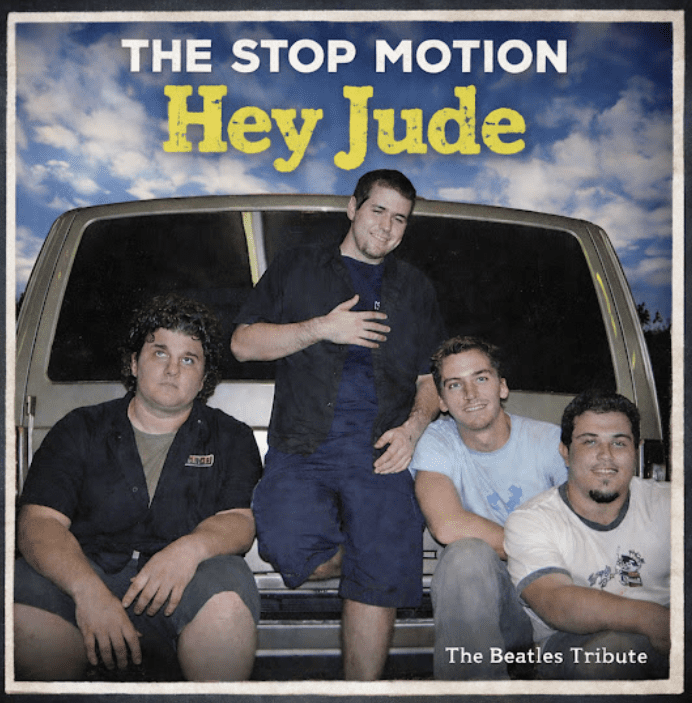
Recently, de la Vega returned to a set of recordings made by his former band The Stop Motion, a group that was very active through Miami’s music scene in the mid-2000s. Among the unfinished tracks was a cover of The Beatles’ “Hey Jude,” a song the band had originally prepared for a Beatles tribute show at Club 5922, presently the notorious South Miami strip bar, the Booby Trap.
“The show was put together by Local Yoda, Ed Artigas,” de la Vega remembers. “There were lots of bands that participated. One of my favorite ones was Faller, before they became Vidavox.”
The night left its mark. The band always planned to record their version of the song properly when they eventually tracked a full-length album, which would’ve been the follow-up to 2002’s Crushed, that Artigas released on his Spy-Fi label. But like so many plans made in rehearsal rooms and late-night conversations, the record never quite materialized.
“The band ended up splitting up around 2006,” he says. “The full length was never finished.”
What remained were fragments, tracks recorded but incomplete, songs waiting for background vocals, mixing, and the small but crucial touches that turn recordings into finished music. Years later, de la Vega began revisiting the material. What started as a casual attempt to tidy up loose ends slowly turned into something more deliberate.
“I spent a good seven years filling in the spots that we didn’t get to finish,” he explains. “Background vocals, post-production, whatever I could do to bring the songs closer to what they were supposed to be.”
Then everything disappeared. “I ended up losing everything that I worked on.”
For a while, the project seemed finished for good, not because it was complete, but because the files themselves had vanished. But about a year later, he stumbled across some of the original session files, tucked away like a time capsule from another era.
The rediscovery gave him a chance to start again. “‘Hey Jude’ was the first song from that full-length album that I decided to work on.”
The finishing touches would eventually travel far beyond Miami. The track was mixed and mastered in Trujillo Alto, Puerto Rico, by guitarist Joey Carmona-Mojica, a longtime friend and collaborator who plays in the Puerto Rican punk band La Experiencia de Toñito Cabanilla$$$, a group de la Vega describes affectionately as “the NOFX of Puerto Rico.”
The recording itself captures a moment in time. The Stop Motion lineup consisted of Juan “John” Lopez on vocals and guitar, Alex Garcia on guitar, Aristides “Ari” Dimitriou on drums and percussion, and de la Vega on bass, vocals, and percussion.
As happens to many bands that once shared dreams of glory, the members eventually drifted into different lives. Lopez moved into teaching, Dimitriou pursued academic work that took him from the West Coast to Baltimore, and Garcia’s path became something of a mystery, last spotted in Los Angeles running a clothing and media company.
De la Vega remained close to the music. While working in his family’s translation and interpreting business, Precision Translating Services, he continued writing and recording songs at home, often with the quiet help of his family.
“The songwriting adventure started out as a means of therapy,” he says. “Just to get my feelings out in a productive way.” The finished version of “Hey Jude” now carries a voice that wasn’t present in the original sessions. Toward the end of the song, a young voice rises behind the chorus.
It belongs to Ever, de la Vega’s son. “For years he’d been listening to the song while I worked on it here and there,” he says. “If you solo the backing vocals, you can hear him repeating what I’m singing.”
The moment feels less like a studio trick and more like the quiet passing of a torch. “He definitely has my love for music,” de la Vega says. “He’s already more talented at piano than I am.”
That influence has already found its way into other recordings. On a recent SUBEESU track titled “Everything Hurts,” Ever’s piano appears quietly mixed in with the chorus.
If the Stop Motion recordings feel like echoes from another chapter, de la Vega’s musical life has continued unfolding in new directions. He still plays with long-running friends in Han & The Wookiees, a project that began more than twenty-five years ago, playing house parties at his parents’ home. He records music for other artists, uploads forgotten local recordings through his digital imprint Vinyldabber Records on YouTube and teaches guitar to younger players just beginning to find their footing. Watching a student suddenly understand the instrument, he says, is one of the most rewarding parts of the process.
“To see them do something effortlessly that they couldn’t do at the start of the class, that’s such a cool thing.” As for The Stop Motion, a reunion seems unlikely. “I do not see that happening,” he admits. “Never say never, but I think that ship has sailed.”
There was a moment years ago when the band gathered again in The Annex in Hialeah, a rehearsal space run by local tastemaker and enfant terrible Ferny Coipel of Humbert fame. De la Vega set up a couple of GoPros and let them roll while the group played together again, just to capture the moment. But the flame never quite returned.
These days, he’s content doing something else: finishing what the band started. Piece by piece, he’s bringing the unfinished Stop Motion album back to life, one track at a time.
Sometimes a band’s story ends with the last show. Other times, the music simply waits, patiently, quietly, until someone is ready to listen again. And occasionally, the song that finally emerges carries more than the sound of the past.
When Les Standiford received the offer to direct the Creative Writing program at Florida International University, he didn’t hesitate to accept and pack his bags. It was the 1980s, and although Miami was going through a period marked by violence and social crisis, it was emerging as an attractive literary destination for writers. The Miami Book Fair had just launched its first edition downtown, local noir was gaining international recognition, and authors such as Russell Banks, Charles Willeford, and Elmore Leonard were publishing works that are now considered classics of Miami literature.
Born in Ohio in 1945, the son of a truck driver and a factory worker, Standiford discovered—thanks to his community’s librarian—that books could open doors to worlds far more complex and diverse than those of his everyday life. His education, like that of so many who live several lives before fully committing to writing, was erratic. He enlisted in and was discharged from the Army, passed through law school—where he became disillusioned—and then psychology, where he earned both a bachelor’s degree and a doctorate. Creative writing seminars and workshops followed, along with pieces in magazines and journals, and that first manuscript that took twenty years to find a publisher.
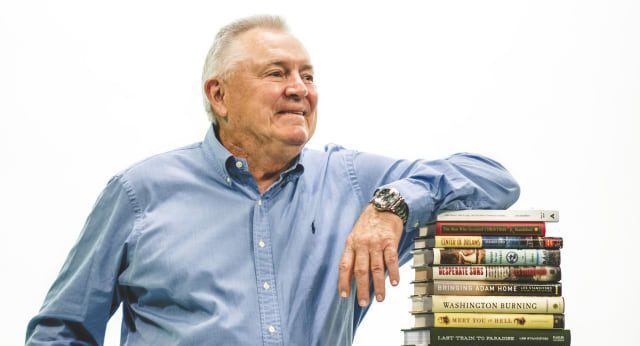
The publication of Spill in 1990 not only marked his literary debut; it paved the way for someone who would become one of the essential figures in Miami literature. His career goes far beyond the fiction that fills the shelves of Barnes & Noble and Books & Books. In addition to founding—and continuing to direct—the Master’s program in Creative Writing at FIU, Standiford has documented the city in nonfiction books such as Center of Dreams: Palm Beach, Mar-a-Lago, and the Rise of America’s Xanadu and Last Train to Paradise, required reading for anyone interested in Miami. The latter recounts how Henry Flagler arrived in swampy Florida, built his hotel empire, founded the city of Miami, and connected the state from Jacksonville to Key West with the monumental East Coast Railway.
At the same time, Standiford has established himself as one of the most authoritative voices in Miami noir—not only through his crime series starring John Deal, but also through his deep knowledge of the genre. Proof of this is his work as editor of the anthology Miami Noir, where writers such as John Dufresne, Tom Corcoran, Paul Levine, and Lynne Barrett tell stories of crime and violence set in different corners of the 305. And Miami Noir: The Classics, an anthology that recovers texts by the most emblematic figures of Miami noir since its beginnings, including Elmore Leonard, Edna Buchanan, Charles Willeford, among others.