Category: News

  • GableStage’s Sotto Voce Whispers Its Way Through History and Love

    GableStage’s Sotto Voce Whispers Its Way Through History and Love

    The sound of the ocean. A wisp of seafoam frozen in the air. Tides tango, a soft kiss from a wistful breeze — the poetry of memory — a vacillation in time, love and loss, a soft whisper, a low voice — this is Nilo Cruz’s Sotto Voce now playing at GableStage.

    The play is wrapped around the story of the MS St. Louis, a ship filled with Jewish refugees who fled Europe in 1939. They were denied entry into Cuba, the U.S., and Canada, and sailed back to Europe. Many assimilated into different countries, but about 300 ultimately wound up killed in concentration camps. It is a story that carries shame.

    The story of the St. Louis is a cautionary tale about our responsibility to neighbors in need, and about acceptance in the face of nationalism. It’s relevant today.

    The frame of Sotto Voce is as follows.

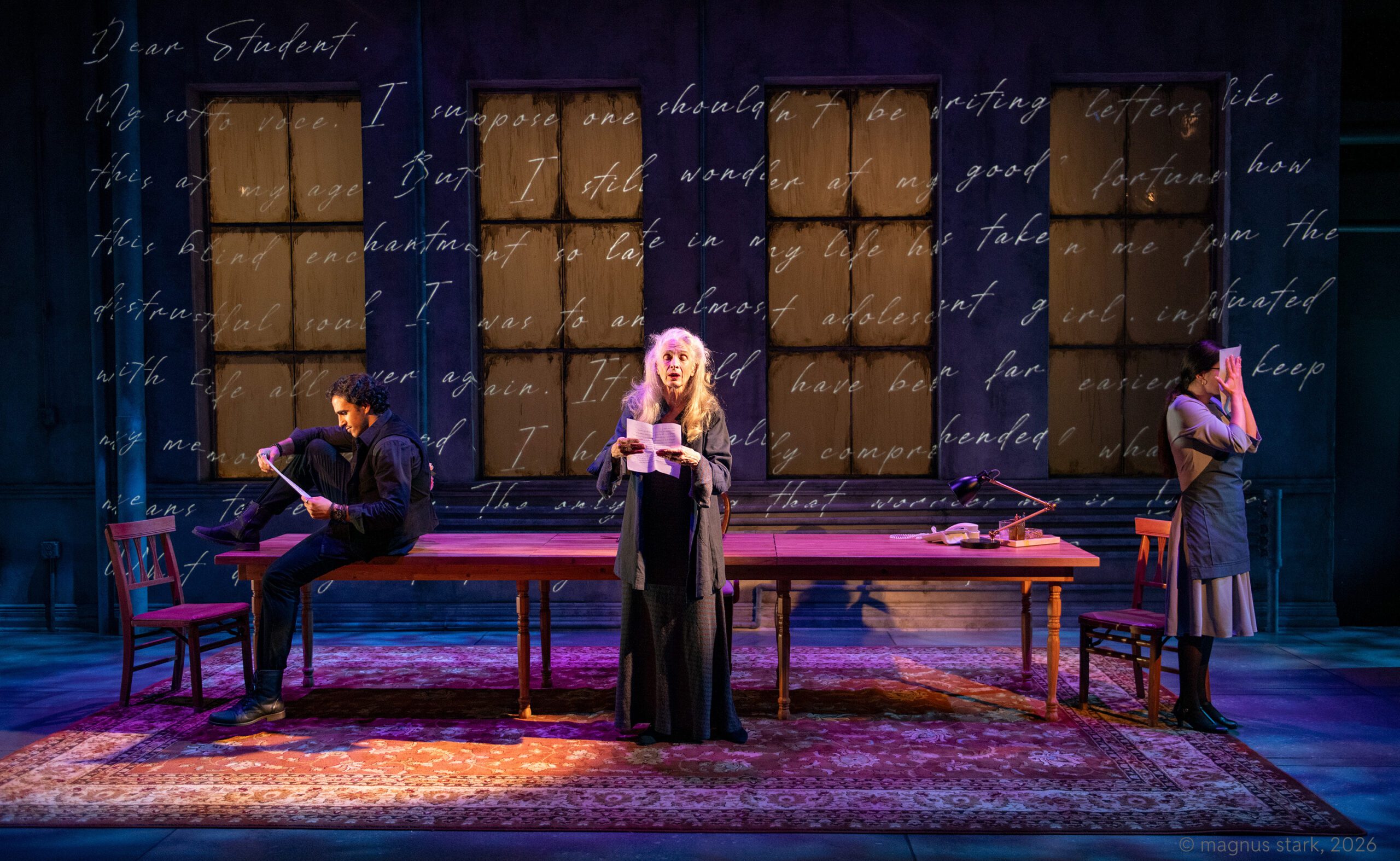
    Bemadette Kahn (Sara Morsey) is an 80-year-old German author living in Manhattan. Saquiel (Gabriell Salgado) is a young researcher from Cuba who is obsessed with the story of the St. Louis. He interviews Bemadette after finding letters, private correspondences between Bemadette and her old lover, Ariel, who ultimately perished.

    Like Titanic, the story unfolds through an older narrator traveling back in time, revisiting her relationship with Ariel before the voyage.

    The play is a subtle lullaby of memory and loss.

    It is a poetic meditation on love, belonging, and the weight of history.

    Yet the play is also more disguised as a historical drama.

    Sotto Voce Review

    Scenes at times shift between the present and past, but this two-act, 120-minute play, with a 15-minute intermission, is not grounded in action or traditional historical drama. Much of the play consists of characters talking to one another, in the present, trying to connect. The researcher struggles to reach the reluctant author, while a third character, Lucila (Claudia Tomás) the author’s assistant, a young Colombian woman, triangulates the drama, offering comic relief, sparking moments of chemistry and desire for life.

    The acting is steady. Sara Morsey delivers a deep impassioned performance. Claudia Tomás is a delight, bringing whimsy and real chemistry. And Gabriell Salgado is a stud, in range and presence. Salgado is one of South Florida’s most prolific actors, appearing in productions it seems like everywhere. We last loved him in Lincoln Road Hustle. His career appears destined for bigger things, in television, perhaps film.

    The play itself is literary in its ambition but unusual in its use of point of view. It bounces between emails, phone calls, letters, diary-like passages from Bemadette’s book, and third-person scenes that occasionally slip into flashbacks. The point of view shifts a lot for a play.

    The challenge is that this constant shifting doesn’t leave enough space to ground emotional depth or raise the dramatic stakes.

    The story moves like the ocean, back and forth, breaking and receding, perhaps intentionally, perhaps like memory.

    Memory, as years pass, becomes quiet, subtle, lingering in the psyche.

    But we don’t forget.

    Therefore, it is fitting this drama unfolds in a subtle manner, like a whisper or a soft voice (sotto voce translates to soft voice). There are no loud bangs. There is no traumatic, confrontational use of suspense, conflict, or resolution with dramatic stakes. The story, like the sea, like memory, vacillates. In its subtle vacillation lies its value and entertainment.

    Sotto Voce

    world premiered Off-Broadway in 2014, written and directed by Nilo Cruz. It was later performed in Atlanta, Washington, D.C., and Portland, Oregon, and now arrives in Miami, once again under Cruz’s direction. It is playing at GableStage until Feb 15th.

    For more info and tickets, click here.

     

    photo by Magnus Stark
    photo by Magnus Stark
  • ROTHKO NO. 9, 1948 – Poetry

    ROTHKO NO. 9, 1948 – Poetry

    .I.

    My father was born in 1948. Between ‘53 and ‘59 Cuban guns

    had secured communism as the island’s way of life—well,


    a version of it more in spirit with turpentine-thinned

    cadmium red and the scent of orange mangoes than with


    Marxist/Leninist leanings. He didn’t know it then, it was too early

    to be prophetic, but it would chase him from home again.


    .II.

    The specter of death—black veils, scythe, cold breath—is Shâchath’s most popular look in art

    and thought and though he buckles at bloodied post and lintel,

    he’s never merciless like the guillotined historical revisions of Antoine de Saint-Just or the

    poetic justice of Mengele’s bloated lungs in Brazilian waters; no, he’s white-hot

    glow sometimes and a most welcome visitor to the abode.


    .III.

    My parents hired a housepainter when I was a teenager, Don Hildegardo,

    who was old to me then but couldn’t be much older than me now.

    He had the confidence of a man who knew the world conformed and met his terms.

    He hated microwaves; didn’t trust them, and would leave his lunch

    Tupperware in the middle of the yard for Miami’s sun to warm.


    .IV.

    Isaac’s old man, Spaniard, perpetual 7 a.m. beard—eternal dangling cigarette, fabricated the

    best window treatments in South Florida in the late ‘90s;

    verticals, curtains, drapes, valances, blinds—venetian and contemporary;

    he installed them himself with that old school sense of pride. Wasn’t always like that, early on

    his competitor’s subpar product ruled supreme before he dropped

    Fidel from the shop’s name.


    .V.

    I’m not sure the bokeh effect

    is deliberate or just

    a foil to technical limitations


    but I’ve always felt an odd ease

    when ‘70s flicks bring

    rainy, nighttime street scenes into slow focus,


    lights casting acid blotter auras,

    the motion of vehicles a hazy lumber

    melting into themselves.


    .VI.

    Translucent bottles—imperfections of heat and chance.

    Gold chloride, uranium oxide, manganese, cobalt,

    antimony, copper, lead, selenium compounds—electric,

    living; permutations of alchemic byproduct.


    .VII.

    Venezuela elects novelist Gallegos as its first honest president

    and almost immediately, a coup d’état overthrows him,


    installing the brutal dictatorship of Pérez Jiménez who goes on to enjoy

    a decade of savage impunity until he’s overthrown himself.


    Stalin buddies up with Chairman Mao and in an unrelated event,

    implements the Berlin blockade. Suicide bombers tear up Ben Yehuda,


    Jeffers drops his double-axe, Roethke finds his lost son,

    Cadillacs get tailfins, Rufino Tamayo captures butterflies.


    .VIII.

    Lady the Manatee births a single male calf—dubbed Baby—

    the State of Florida’s permit allows owner Sammy Stout dominion

    over one beast so Baby’s gotta go. Rechristened Snooty,

    he’s granted official mascot status for Manatee County in ’66


    and enjoys a life of relative leisure and tranquility

    safe from propellers and unscrupulous swimmers.

    July 23, 2017—two days after his birthday, Snooty drowns

    in a freak accident involving a hatch malfunction in his tank.


    .IX.

    One day, the black will swallow the red—but not Daugavpils,

    the city of red bricks.

    One day, gods and monsters will cancel each other out, their mythomorphic

    tragedy playing to the triumph of razorblade,

    palette knife drama—all colors have multiforms, all reds live without

    ideology or worry on stretched canvas.


  • Miami-Dade Public Library Presents 2026 Local Author Book Fair

    Miami-Dade Public Library Presents 2026 Local Author Book Fair

    Immerse yourself in South Florida’s vibrant literary scene at the Miami-Dade Public Library System’s 2026 Local Author Book Fair. The event takes place at the Main Library, located at 101 West Flagler Street in downtown Miami, on Saturday, January 24, from 11:00 a.m. to 5 p.m. This free, day-long celebration brings readers face-to-face with some of the region’s most exciting voices, alongside nationally recognized headliners.

    This year’s featured keynote presenters include New York Times bestselling author Brad Meltzer, five-time Emmy Award winner Ron Magill of Zoo Miami, longtime Miami sports columnist Greg Cote, and Miami-based author Asha Elias.

    More than 80 local authors will be available to talk about their books, creative process, and inspiration. Books will be available for purchase, and authors will be on hand to sign copies and discuss their work.

    Aspiring writers are encouraged to roll up their sleeves and take part in interactive workshops covering editing, publishing, marketing, and other essential tools for authors at every stage.

    Among the many literary partners is our very own Jitney Books. Stop by and say hello to J. J. Colagrande and check out the Jitney’s latest publications. Local partners include O, Miami, the Society of Children’s Book Writers and Illustrators and the South Florida Writers Association.

    The event offers fun for the whole family, with craft activities, storytelling sessions, and a special performance of The Snow Queen by Atlantic Coast Theatre. The Teen Zone will include workshops on character drawing and animation.

    Free parking is available at the Cultural Center Garage (50 NW 2nd Ave) with ticket validation. The Main Library is conveniently located across the street from the Government Center Metrorail Station, making it easy to attend by public transit.

    For more information, please visit www.mdpls.org/author-fair.

  • Avenue of the Arts Festival Hits Fort Lauderdale This Weekend

    Avenue of the Arts Festival Hits Fort Lauderdale This Weekend

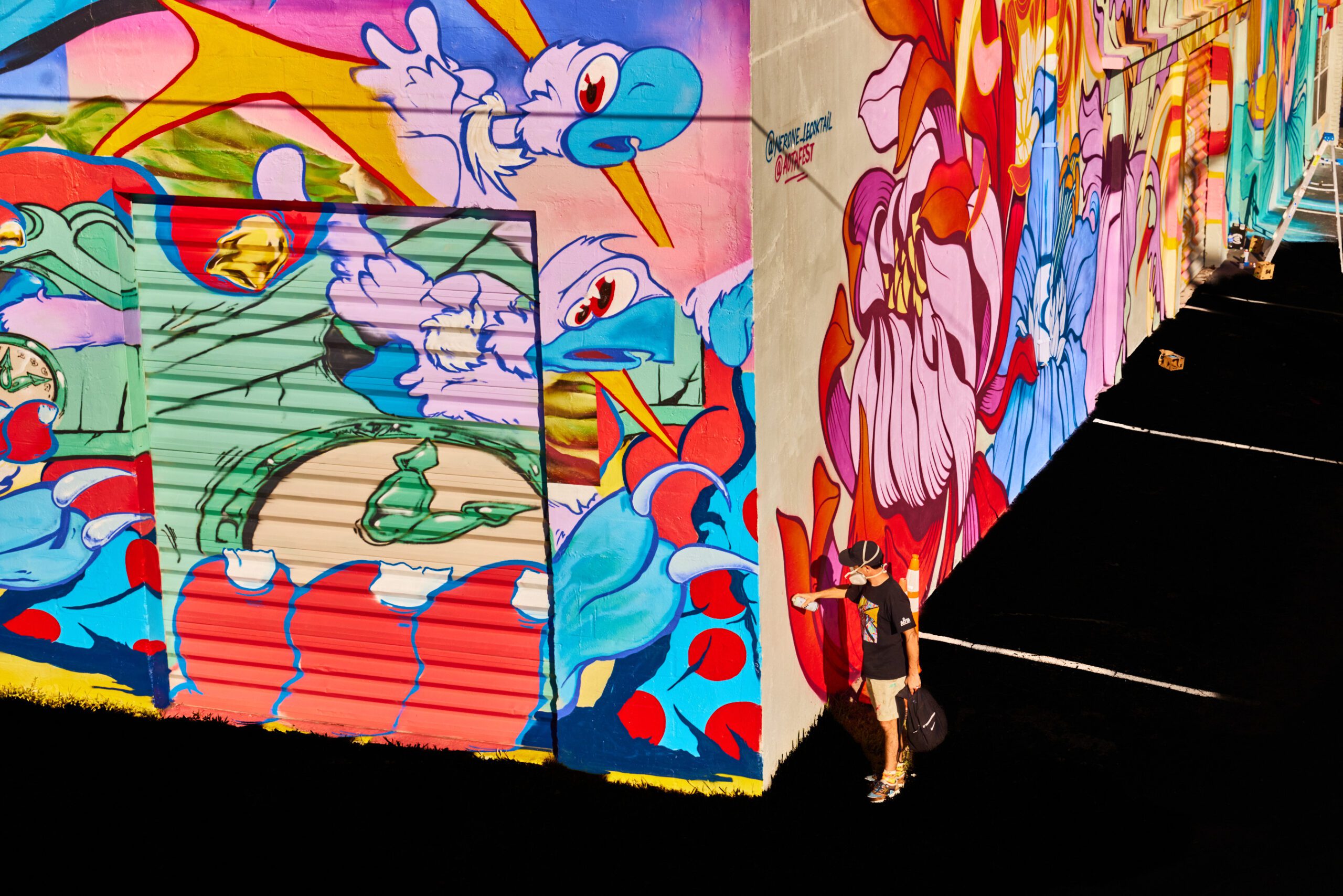
    The Avenue of the Arts Festival returns for its fourth year from January 21–25, 2026, transforming Northwest 7th Avenue and surrounding Fort Lauderdale neighborhoods into a vibrant, open-air gallery where public art, education, and community converge. The Avenue of the Arts Festival is a community-centered visual arts festival held annually in Fort Lauderdale, Florida. Dedicated to public art, education, and cultural accessibility, AOTA Fest commissions local, national, and international artists to transform urban spaces into shared cultural assets, free and open to the public.

    Over five days, residents and visitors will experience live mural painting, immersive fiber art installations, gallery exhibitions, artist meet-and-greets, student field trips, and interactive programming, all free and accessible to the public.

    It is rooted in Historic Sistrunk, a corridor rich in cultural history, small businesses, and hand-painted signage. By placing large-scale murals directly where people live, work, and walk, the festival builds on that existing creative language, turning NW 7th Avenue into a walkable, outdoor museum stretching from Broward Boulevard to Sunrise Boulevard. Five new large-scale murals will be added to the Avenue of the Arts corridor, each one an installation that will remain long after the festival ends.

    Some participating AOTA Fest 2026 artists include: Max Kolo, CP Won, Nerone, Ales, Zoinky, Michele Del Campo, and Luis Valle.

    In addition to watching murals come to life, the public is invited to:

    – Take free guided mural tours

    – Meet artists at the Artists Appreciation Party at Rhythm & Vine

    – Participate in student workshops and interactive art classes

    – View fiber art installations at South Side Cultural Arts Center

    – Attend the “20/20 Vision” gallery exhibition at Plunge Beach Resort

    – Collect artist signatures in the Black Book

    – Enjoy custom AOTA beer at the end of guided tours

    There are also ongoing opportunities for volunteers, sponsors, and property owners to support the festival, whether by hosting a wall, assisting with tours, or contributing to youth education initiatives.

    For more information, full schedules, and artist details, visit: www.aotafest.com

  • This Italian is a Made Sub Born in Miami Shores

    This Italian is a Made Sub Born in Miami Shores

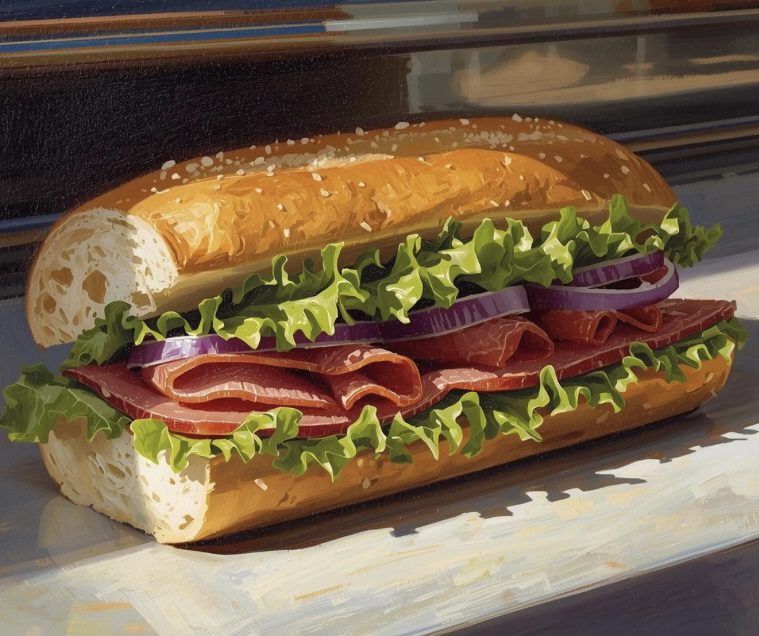
    The Italian was originally invented invention in Portland, Maine. By a baker named Giovanni Amato some time in the early 1900s. But THIS Italian was born in a deli in Miami Shores, Florida some time in the late 90s. The deli? Norberto’s New York Style Deli. Eating one from Publix now, a decade after the deli closed its doors, an entire lifetime’s worth of memories comes rushing through my head. All connected to this one locally made sub.

    I think now’s a good time to present to you all the ingredients it takes to create this Italian sub. As you’ll see, almost every item will come from a different person. The bread itself came from one family. I would pick that up. The ham, salami, and provolone came  from another person. The homemade Italian dressing was from my boss’ wife. The spicy mustard you spread across the bottom piece of a slick of bread, that came off a Boar’s Head truck. And don’t forget the boss’ son bringing in out fresh vegetables everyday.

    Pull out the ham, pull out the salami, pull out the provolone and you’d be meeting Orlando, our delivery guy for all things ham, salami, and cheese. Big cheeses. A Latin singer’s hair style. But a linebacker’s body. You could hear his dolly squeaking through the back door before hearing him greeting everyone. Orlando’s always an occasion to whip up a colada and get in some great talks while my boss made his order. We’d talk about everything. Sweet  dude. Really helped us in leaner times. Still in touch.

    Every morning it was my job to drive over to what was this German bakery. They called it Ness Kondetori (which basically means “pastry shop”). A mother and son ran it. The son stepped up when his father passed They were so sweet. They freshly baked our French bread every morning. At one point, the son married. And none too soon later his wife took of with their kid. Not long after that they closed their doors. I loved going there though. They had the coolest, tastiest items. And also these weird German magazines. Their French bread was the very foundation for this Italian sub.

    Now it was my boy Nayo’s job to drive over to Eden Market. Cuban-run, family owned. And they had everything. Plus our veggies. Their cafeteria counter was the best. You’d bump elbows with all walks of life. You’d know their first name or their profession or some teacher you shared. Best. Fucking. Cafe con leches. Nayo, former breakdancer/current honorary Wu-Tang member, would throw back a colada shot, put all the veggies in his car, and get ‘em to the deli minutes after opening. These veggies are what made the lettuce and onion coupling status public. They provided the crunch for the bite, but also the net for the dressing.

    That would be our homemade dressing. Nayo’s mom Teodora, short, short hair, pretty, she was a culinary badass. Back in New York, she used to cook for diplomats. Now to be honest, I don’t remember exactly what she used. I know there was garli, vinegar, olive oil, and something else. Dammit. Maybe black pepper. Whenever I was out of the stuff, I took the bottle back to the kitchen, and after enduring Teodora calling me a pendejo, she’d take the bottle. Only to return with it full again. A homemade elixir worthy of royalty.

    I’ve left out the last two ingredients because I didn’t outline this article. However, they both do come from the same place. So we can bring this thing home together. I’ve already mentioned Boars Head’s criminally overlooked spicy mustard. How I ever thought to spread that stuff across the bottom half of the bread, I’ll never know. Did my boss, Norberto, a dashing mustached man, suggest it? Did Nayo? Teodora? Maybe a customer?

    I really wish I could remember. But something about the collision between the dressing and this mustard transcends taste. And the final meat to be applied right under the provolone? Capicola!!! The gnarliest lookin slice of meat in the whole lot. It almost looks like it’s gonna attack you. It crumbles. It has sharp edges. And it’s always a pain in the ass to clean the slicer after using it. It sort of sticks to everything. I know I’m not selling it right, but it is, what I think, that which makes the Italian a real Italian wherever you go.

    So while I try to defrag and buffer by eating my Italian, the idea that almost every part of it came from somewhere else with a story behind it. So many of the places and people aren’t around anymore. For various and usually sad reasons. But when I smell this thing, when I bite into this thing, memories fly through my mind like a spinning Rolodex. Sad is right. These days, there is no local deli. No place where people  can commiserate, bs about anything, no risk of offending anyone, all the while they wait for their order.

    Not many things contain the kind of power that this sub possesses. In the words of Indiana Jones, “It belongs in a museum!” Well, I think I can end this article  with one question: Who knew an entire lifetime could be wrapped up in deli paper?

  • French-Canadian Oi! Béton Armé Returns to Churchills

    French-Canadian Oi! Béton Armé Returns to Churchills

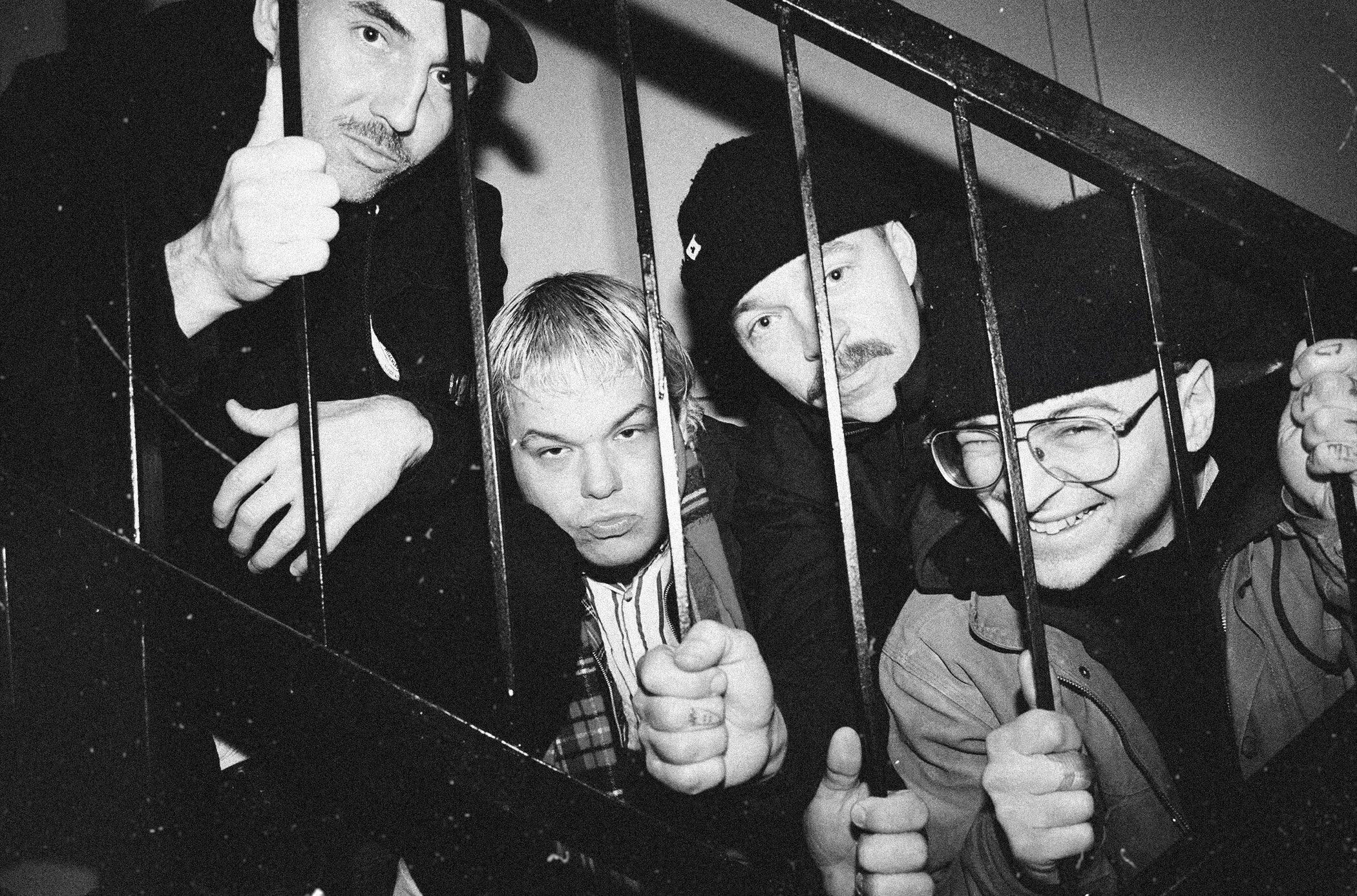
    Béton Armé sound less like a band chasing revival and more like one excavating a lineage that never quite disappeared. Emerging from Montreal’s densely layered underground, the group fuse the blunt discipline of hardcore with a distinctly French-Canadian inheritance, one that traces its roots not only through North American punk, but back across the Atlantic to the austere, working-class militancy of 1980s French punk and Oi!

    Ideologically formed in 2016 by guitarist Olivier Bérubé Sasseville, Béton Armé finally took off as a project in 2018 drawing heavily from the era when French bands treated punk as a vehicle for class consciousness, cultural resistance, and linguistic assertion – insertion points that resonated with Olivier’s background in history and subcultures. The rigid tempos, chant-ready structures, and street-level urgency that define Béton Armé’s sound echo the spirit of early French Oi! and cold-blooded punk, music that valued cohesion and resolve over flash or individuality.

    Singing in French is central to that project. In Béton Armé’s hands, language becomes both anchor and weapon, reinforcing their ties to Quebec’s long history of cultural self-definition. Their vocals land with the authority of slogans rather than confession, aligning the band with a tradition that viewed punk not as self-expression, but as collective stance.

    What makes Béton Armé compelling isn’t nostalgia, but synthesis. The band refracts those European influences through Montreal’s own history of political tension, bilingual friction, and DIY resilience. The result is music that feels disciplined without being sterile, an aggression rooted in purpose rather than chaos.

    In an era where punk often circles back on itself, Béton Armé look outward and backward at once, reconnecting French-Canadian hardcore to a broader Francophone tradition. Theirs is not a reinvention, but a reminder that some forms of resistance never go out of date, but rather, wait to be reassembled.

    Miami’s Pena Máxima operates squarely in the tradition of working-class punk, drawing on the genre’s emphasis on unity, directness, and lived experience with a not-so-subtle debt to soccer hooliganism. Their sound is built on mid-tempo drive, anthemic rhythms, and blunt delivery rather than ornamentation.

    Additional opening support includes Melbourne’s GAVL, and locals AI Death Calculator and Red Flags.

    Tickets are available by clicking here.

  • Bug Broadway Review: This Play Crawls Under Your Skin

    Bug Broadway Review: This Play Crawls Under Your Skin

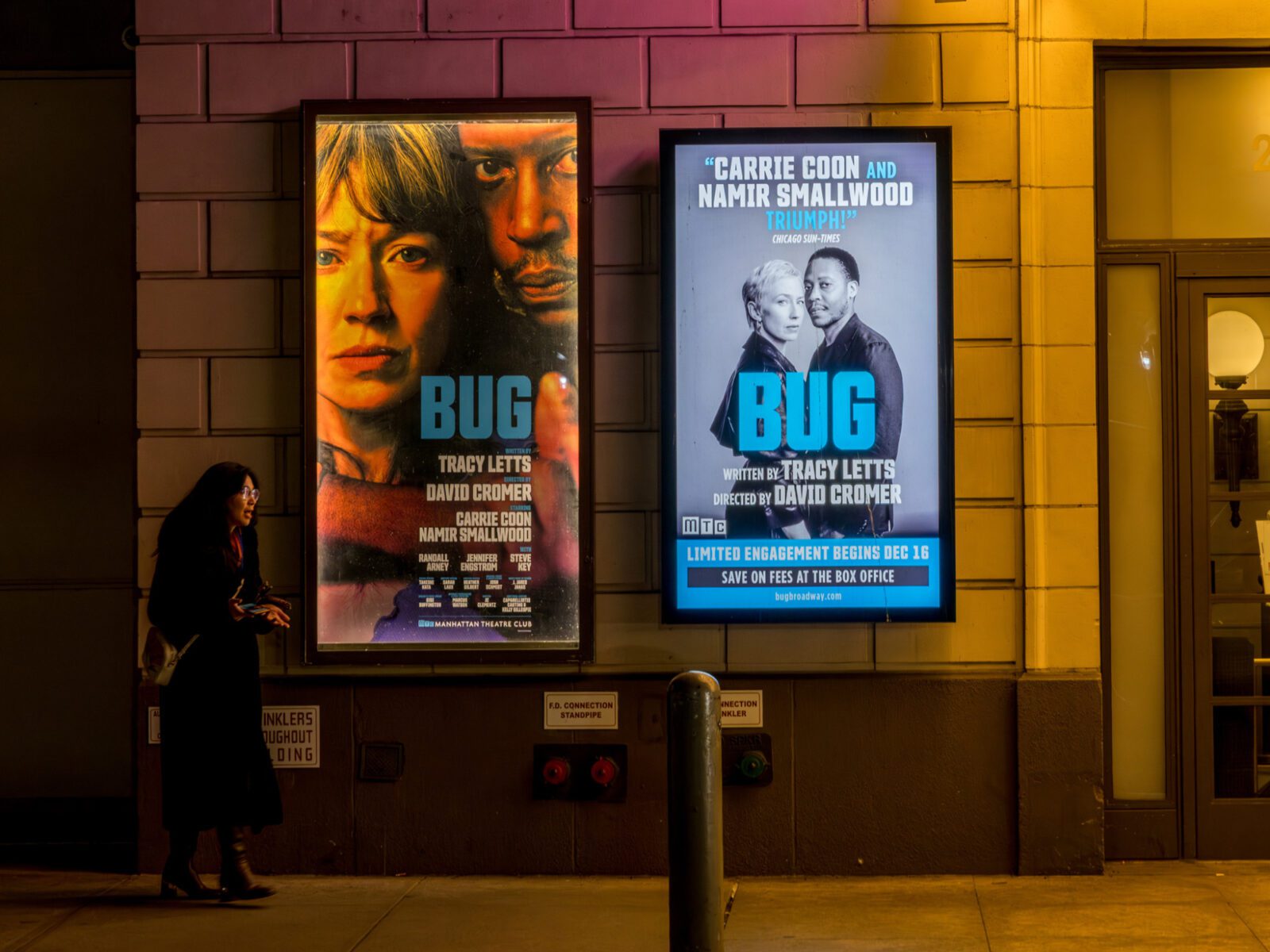
    Bug is a play by American playwright Tracy Letts, starring Carrie Coon and Namir Smallwood.

    It first premiered in London in 1996 and is currently making its Broadway debut at the Manhattan Theatre Club, at the Samuel J. Friedman Theatre.

    Most of the play takes place in a seedy motel room. A lonely cocktail waitress, Agnes, is living there, on the lam from her violent ex-husband, Jerry, who has recently been released from jail. One night, Agnes’s lesbian biker friend introduces her to Peter, a Gulf War veteran and drifter.

    Agnes gets involved with Peter, who grows increasingly paranoid about a bug infestation in the hotel room. This soon connects to a web of conspiracy theories involving the government. The play explores love, paranoia, addiction, conspiracy, and Agnes’s slow descent into insanity under Peter’s influence.

    This psychological thriller is gut-wrenching and tense. It will make you uncomfortable in the best way. You will cover your eyes during certain scenes. The performances are courageous, compelling, and traumatic. The chemistry and nuance between the actors are extraordinary. Both actors will almost certainly be nominated for Tony Awards under Best Revival of a Play.

    Bug Broadway Review

    On a deeper level, this play is more relevant in 2026 than ever.

    We give it five stars, a 96 out of 100.

    That said, this dark, twisted psychological thriller is not for everyone.

    And yes, we hate to get all freshman composition on you, but this play demands to be viewed through Ernest Hemingway’s Iceberg Theory, you know, the idea that only 20 percent of a story is visible on the surface, while 80 percent lives underneath in context and subtext. If you understand the cultural language and history beneath Bug, you will get far more out of it.

    If you don’t, you may only see a redneck woman and an African-American veteran holed up in a motel, smoking crack, having sex, getting paranoid, violent, and descending into addiction and madness. You might cringe at the self-harm and brutality and leave wondering what the hell you just watched, especially if you came for Carrie Coon fresh off The White Lotus and The Gilded Age.

    But if you go deeper, you’ll recognize how profoundly American these themes are: addiction, misinformation, domestic violence, paranoia, delusion, mental health decline.

    When the play was written in the mid-1990s, the internet was just being born. Misinformation was only a seedling. In 1996, Bug was a warning. In 2026, it’s a mirror.

    Even the word “bug” matters. In ’90s slang, to bug out meant going crazy. You buggin, meant, hey, you’re losing your grip. Language matters.

    In law enforcement, a bug is a listening device. Without cultural context, those meanings disappear, and so does the play’s power.

    There’s a moment in the Apple TV+ series Pluribus where a character (Carol) doubts her apartment has been bugged, and another character (Manousos) new to American culture, takes the word literally, picturing an insect. Again, language matters.

    This is not a feel-good night at the theater. It’s raw, violent, sexy, and deeply American. It asks uncomfortable questions about trust, trauma, and the stories we choose to believe when reality starts to fracture.

    Bug is tense, moody, dark, sexy, strange, riveting, and deeply unsettling.

    It’s not fun but it’s necessary.

    You will leave shaken and in that discomfort, you’ll know you felt something. That is all great drama ever promises.

    Bug opens January 8 and runs for a limited engagement.

    For more info and tickets click here.

    Sidenotes and ramblings

    The last two plays we’ve seen featuring strong, young African American men—Purpose and now Bug—present their male leads as essentially asexual despite the presence of sex, raising the question of coincidence or something more deliberate at work.

  • Miami Jewish Film Festival Returns

    Miami Jewish Film Festival Returns

    The Miami Jewish Film Festival (MJFF), the world’s largest Jewish film festival, proudly announces the full program for its 29th edition, returning January 14-29, 2026, with its most expansive lineup to date. This year’s Festival will present 139 films from 20 countries, including 105 features and 34 shorts, featuring 15 world premieres, 19 international premieres, 13 North American premieres, and 3 U.S. premieres. The hybrid festival will offer more than 90 live screenings across eight venues throughout Greater Miami, expected to welcome over 50,000 attendees, alongside an online program showcasing more than 80 films available to audiences across Florida and the United States.

    Opening the Festival is Once Upon My Mother, a triumphant and big-hearted French box-office hit that celebrates the transformative power of maternal love. The premiere will take place at the historic Miami Beach Bandshell amphitheater, where more than 800 guests will join acclaimed director Ken Scott for an unforgettable evening under the stars. Closing the 29th edition is the International Emmy Award–winning Israeli drama The Ring, a powerful and deeply emotional odyssey following a father and daughter’s journey from Tel Aviv to Budapest as they search for a gold ring that once saved their family during the Holocaust. Headlining this year’s slate is the world premiere of From Cuba to America, a made-in-Miami portrait of beloved community icon George Feldenkreis and his extraordinary journey from Havana to building the Perry Ellis fashion empire. Featuring original music by Grammy-winning legend Emilio Estefan, the film reflects Miami’s creative spirit and the Festival’s commitment to celebrating local storytelling.

    Also debuting as a headline premiere is Influenced, a laugh-out-loud, big-hearted comedy starring Jill Kargman, Gwyneth Paltrow, Drew Barrymore, Matt Damon, and David Krumholtz. Director Rachel Israel and Jill Kargman will attend the highly anticipated world premiere event. The Festival will welcome more than 75 filmmakers and distinguished guests from around the world. Among this year’s international guests are Amanda Peet and director Matthew Shear, who will present the charming romantic comedy Fantasy Life, also featuring two-time Oscar nominee Judd Hirsch, Alessandro Nivola, and Jessica Harper. Peet will also introduce a special nostalgic screening of the modern classic Igby GoesDown. Acclaimed producer Nancy Spielberg and award-winning Israeli filmmaker Tom Shoval will be inattendance for the premiere of their timely new documentary A Letter to David, following David Cunio, abducted from an Israeli kibbutz on October 7. Additional guests include trailblazing singer, songwriter, and pop-culture icon Carol Connors for the documentary Elvis, Rocky, and Me; Israeli comedic duo Guy Amir and Hanan Savyon for the premiere of Pure Luck; legendary documentarian Alan Berliner presenting Benita; and filmmaker Paula Eiselt premiering her joyfully nostalgic documentary We Met at Grossinger’s.

    By the numbers, the 2026 Miami Jewish Film Festival will showcase 139 films, including 15 world premieres, 19 international premieres, 13 North American premieres, 3 U.S. premieres, 8 East Coast premieres, 48 Southeast U.S. premieres, and 20 Florida premieres, along with more than 50 conversations with filmmakers, artists, and scholars from across the globe. Full program details and tickets are available at miamijewishfilmfestival.org.

  • Zoetic Stage’s The Inheritance, Part One is a big ask that is boldly answered

    Zoetic Stage’s The Inheritance, Part One is a big ask that is boldly answered

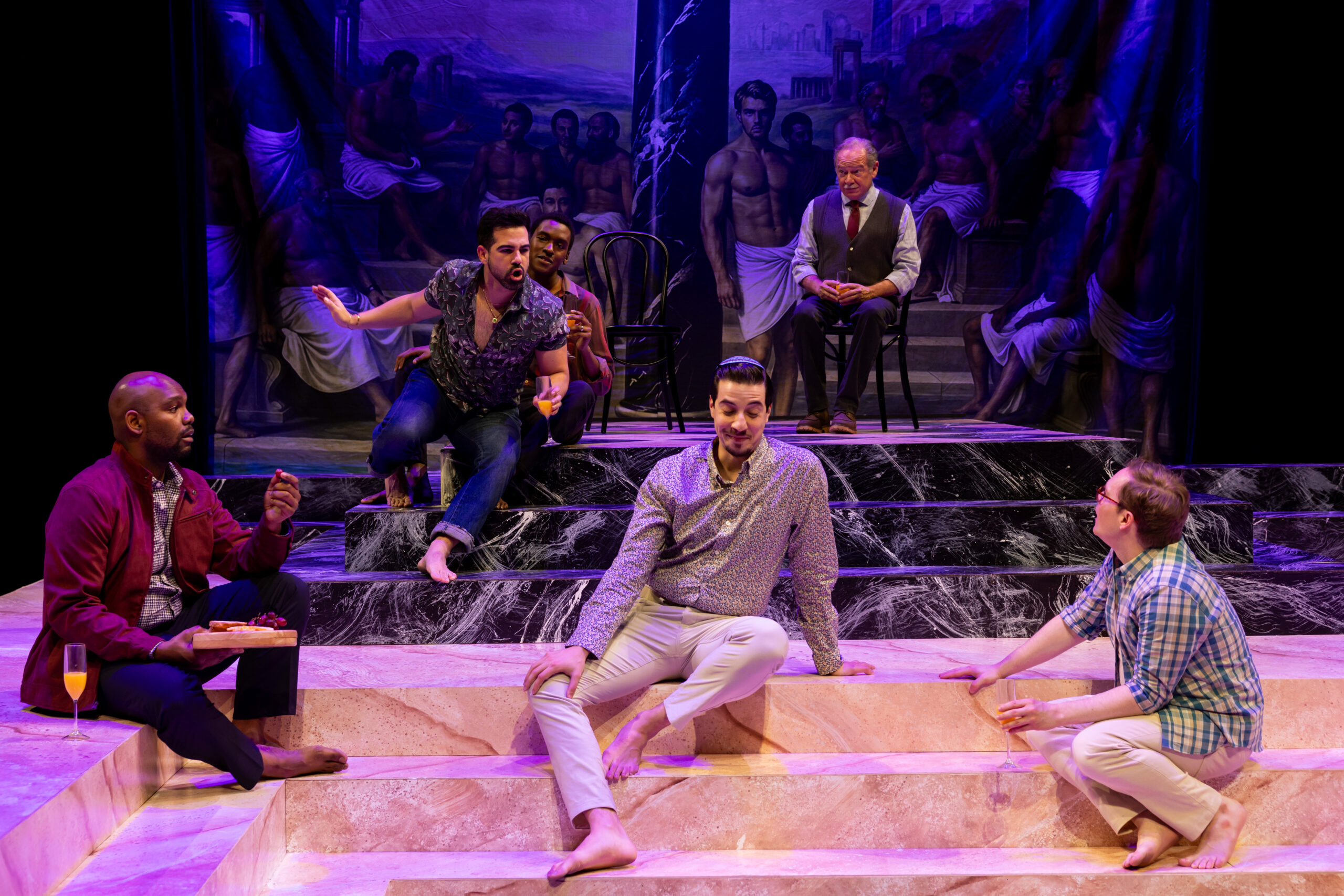
    Kudos to Zoetic Theater’s audacity to take on The Inheritance, Part One, a work of great scale and density. A three-and-a-half-hour drama about being gay in Manhattan is not an easy sell. But it’s precisely that ambition that makes this production of The Inheritance, Part One feel exciting and necessary, even when it isn’t always fresh.

    The idea of committing to a three-and-a-half-hour play about multiple generations of gay men living in Manhattan, staged at a regional theater, felt like a big ask. Three acts. Two ten-minute intermissions. This is four hours of your life. Yet what unfolds is bold, ambitious, grounded, occasionally transcendental, and often simply wonderful storytelling.

    The play weaves together crisscrossing generations, parallel narratives, and overlapping lives in a way that feels intimate, personal, and deeply engaging. When it works, and it often does, it feels timeless, emotionally rigorous, and genuinely compelling.

    Among the highlights of Part One is Anthony Michael Martinez’s portrayal of Toby Darling, a thirty-something writer who describes himself as a kind of gay J.D. Salinger, complete with a self-aware, gay Holden Caulfield stand-in. Martinez commands the room with a nuance that is both cocky and vulnerable, giving Toby a depth that slowly reveals itself. It’s a performance that anchors the play.

    Another standout is Alex Weisman as Eric Glass. On the surface, Eric appears fragile, almost transparent — as his name suggests — but he’s anything but shallow. Weisman plays him with warmth, vulnerability, and surprising confidence. His timing is excellent, and his character becomes even more essential as the play progresses.

    At its core, The Inheritance asks two major questions. What does it mean to be a gay man in America? And what does it mean to be human?

    When the play leans into the second question it explores love, loss, loneliness, and connection. And the play feels alive, original, and emotionally resonant. When it leans too hard into the first question, it feels slightly dated in 2026, weighed down by familiar tropes and ideas that no longer feel urgent in the same way.

    The Inheritance Part One Review

    The title itself points to the play’s central metaphor, inheritance. What do we receive from those who came before us? Property. Money. Influence. Trauma. Political struggle. The fight for rights. This idea blankets the play, sometimes elegantly, sometimes heavily.

    Directed with clarity and confidence by Stuart Meltzer, this production showcases the strength of the Zoetic Stage ensemble. With twelve male actors bouncing off each other like pinballs, the staging is dynamic and alive. Meltzer and his real-life partner, playwright and actor Michael McKeever, continue to prove why Zoetic remains one of the most vital companies in the region.

    There is a lot to track. It’s epic. Be on the lookout for emotional triangles, offstage histories, layered storytelling. If you lose focus, the final act can feel confusing and exhausting. But if you stay with it, the writing is strong enough to reward your attention.

    The Inheritance, Part One originally premiered in London in 2018, went on to Broadway, and won major awards, including the Tony for Best Play. Now, seeing it staged locally at this scale is both impressive and encouraging. It’s not perfect. It’s long and demanding. At times, it feels overstuffed.

    But it’s also brave, thoughtful, and deeply human.

    For a regional theater to kick off the year with something this ambitious says a lot. And most of it says the right things.

    For more info and tickets click here.

    The Inheritance, Part One is playing at the Arsht Center until Jan 25.

    Pictured-–-Randall-Swinton-Alex-Weisman-Angel-Dominguez-Imran-Hylton-Larry-Toyter.-Photo-by-Morgan-Sophia-Photography
  • Joumou – New Year Soup

    Joumou – New Year Soup

    Over the years, I’ve worked with many people of Haitian descent, and I’m always impressed by their work ethic, humility, intelligence, deep faith, and often their command of several languages. I’m also in awe of their mastery of spices.

    For years, I was convinced there was a secret ingredient in Haitian cooking, some magical spice or combination I couldn’t possibly replicate. I assumed there must be something used in Haiti that we Americans simply didn’t have access to or didn’t know about.

    My search for this mystery began in 1994 when I worked for the City of North Miami. One day, a coworker named Marie heated up her soup in the office microwave, and an aroma, rich with cloves and warm spices filled the room.

    “What is in there?” I asked, breathing in what felt like heaven.

    “Squash, cloves, celery, thyme, vegetables,” she replied casually.

    She handed me a bowl to try. I became suspicious. I had cooked with all of those ingredients before, yet I had never produced anything that smelled or tasted like this.

    “Is there a secret ingredient?” I asked.

    Marie just shook her head.

    Fast forward twenty years. I now work with a woman who, every January 2nd when we return from the holidays, brings in a massive pot of Joumou, Haitian New Year’s soup. She makes enough for the entire building and arrives with it hot and ready in a 25-gallon steel pot. The first time I tasted it after all those years, I immediately asked for the name so I could look up the recipe and finally uncover the hidden ingredient.

    “Joumou,” she said with a smile. “Freedom soup. It brings good luck.”

    Joumou has a long and powerful history. In the 1700s, under French rule, enslaved Haitians were forbidden from eating it. The soup was so highly regarded that only white slave owners were allowed to enjoy it. When Haiti gained its independence on January 1, 1804, Haitians reclaimed the soup as their own and renamed it “Freedom Soup,” a symbol of victory, resilience, and independence.

    I eventually realized there is no secret or hidden physical ingredient. Joumou is made from common vegetables and spices that, when brought together with care and tradition, create an extraordinary aroma and spectacular flavor. Add to that its history and symbolism, and the result is truly unforgettable.

    What makes Joumou special to me is the reminder that cooking for others is a gift  that rewards both the giver and the recipient.

    Every December, our office takes up a collection for our soup maker to show appreciation for her hard work throughout the year. She’s a contractual employee who does an excellent job. The collection isn’t meant for her to spend on us, yet that’s exactly what she does. She says she wants to return the gratitude and share good luck with everyone. Perhaps the soup tastes better because it comes from the heart.

    Sharing our cultural traditions through food and stories is one of the many things that makes South Florida so special. When you combine that with gratitude and generosity, Miami becomes something magical, a hearty stew of history, perseverance, and love.

    I’m determined to make a pot of Joumou that rivals my coworker’s, but even with all the right ingredients, I doubt I’ll ever come close.