Category: News

  • Rosie – Fiction

    Rosie – Fiction

    Every morning when the home room bell rang at David Fairchild Elementary, the class lined up by size order, girls in one line and boys in another . In 5th grade, Juliet was the second-tallest girl in class; the tallest was Rosie Rodriguez. Rosie had begun bullying Juliet the year before, cornering her in the bathroom, threatening to beat her up after school, and stealing her lunch money. Rosie was assigned as Juliet’s understudy for the lead in the school play and told her, “If you don’t drop out, I’m going to kick your ass.” Juliet promptly went to the teacher and told her she didn’t want to be the lead anymore. The teacher suspected something was amiss but had no proof. “ Did Rosie threaten you? “ Ms . Cunningham asked Juliet in private. “ No. I just haven’t been feeling well. “ Juliet responded.

    Soon Rosie accused Juliet of sticking her tongue out at her, though Juliet had only been licking her lips nervously, and Rosie announced to all her friends that she was going to “kick Juliet’s ass after school.”

    A crowd of kids surrounded Juliet in the playground after the final bell. Many were boys much larger than she was, chanting, “A fight! A fight!” and insisting Rosie was about to beat Juliet up. Rosie stood staring at Juliet, and Juliet stared back. Juliet didn’t flinch or cry.

    Suddenly Juliet’s best friend Janet screamed from the path leading to the street, “Juliet! Your mother’s here to pick you up! Hurry up!” Juliet bolted toward the street. Her mother wasn’t actually there. She and Janet ran home together, adrenaline pumping through their bodies and out of breath. “ Oh my God! Thank you Janet! Juliet said panting with exhaustion.

    Juliet came home from school day after day and told her mother everything, but her mother always gave the same advice: “Speak up and use your fists! Stand up to her, Juliet!”

    Both of Juliet’s parents were fighters. Her mother had grown up with four scrappy brothers who fought constantly. Her father’s nickname was “punchy” in high school and he’d been kicked out of school for fighting and sent to serve in the military at age seventeen. He was a boxer in the Army. Her father spent a few hours showing Juliet how to fight, holding out his hands and coaxing Juliet to punch his palms. “ Harder, Harder.” He insisted. “You have to fight back.” He also showed her how to stand with both feet separated almost at a 45 degree angle dispersing her weight evenly. “ Tuck in your chin, Juliet” He kept reminding her.

    But Juliet could not bring herself to fight Rosie Rodriguez. She had too much empathy for her. Physical fighting was just not in her spirit. She told her mother, “But I feel sorry for her. I think she’s being treated badly at home.

    Eventually Juliet’s mother called the principal and raised hell. She demanded a meeting with Rosie’s mother. On the day of the meeting, she stood and shouted, “If your daughter doesn’t stop bullying Juliet, you’re going to have to deal with Candy Reminis!. Nobody mistreats my daughter!”

    She jabbed her finger into her own chest as she yelled, spit flying. Rosie’s mother sat in disbelief and nodded saying “ I’ll take care of it. “

    Juliet feared things would get worse but to her surprise, Rosie left Juliet alone at school. Soon after the meeting with the principal, Rosie called Juliet’s house.

    Juliet was sitting in the den  watching I Dream of Jeannie in black and white when the phone rang. She picked it up. It was Rosie Rodriguez.

    “I want to come talk to you,” Rosie said. “I want to apologize.”

    She asked Juliet for her address, and Juliet, ever trusting, gave it to her.

    After hanging up, Juliet called her mother. “Rosie is coming over to apologize,” Juliet said excitedly.

    Her mother, still at work, screamed, “Don’t open the door! I’m coming right home! Call Janet and have her come over!”

    Janet lived up the street and was Juliet’s fearless best friend, four inches shorter and twenty pounds lighter but unafraid of anyone. Her older brother often beat on her and she fought him off. Janet rushed over on her bike, hid it in Juliet’s garage, and planted herself in front of the front door.

    “Don’t come out,” she ordered Juliet.

    Rosie rode up on her bike and told Janet she was there to see Juliet.

    Janet replied, “She’s not coming out. Go home.”

    Rosie insisted she just wanted to apologize. Janet said she would relay the message. Rosie rode off on her red Schwinn.

    Juliet still wanted to believe Rosie had meant to apologize. “I think she really wanted to apologize, Mom,” Juliet said more than once.

    “Juliet,” her mother answered, “as long as she leaves you alone, it’s over. Just stay away from her. You are starting middle school soon so you will have a fresh start.”

     The following year, Juliet entered 6th grade at Ponce de Leon Middle School. It was overwhelming for her and she hoped to make new friends and fit in. As she walked the crowded halls, going from one class to another, she saw Rosie pushing another girl up against the lockers, threatening, “I’ll kick your ass if you don’t give me your lunch money.”

    Juliet shouted, “Leave her alone!”

    Rosie looked at Juliet and let the girl go. Juliet started walking a little faster and got a lift in her step, hoping Rosie wasn’t coming after her. A week later, Juliet found out Rosie was moving away, out of South Florida, with her Mother. Juliet never saw her again. Janet said “ good riddance. “ when she heard the news. Juliet felt a sense of relief but had nagging questions lingering in her mind. Why had she targeted me?

    Twenty years later, Juliet saw Rosie’s face again. Not in a hallway, but framed in a cheerful profile picture on a mutual friend’s Facebook page. Rosie looked older, softer, smiling into the camera as if she had never threatened anyone in a school bathroom. Juliet felt a wave of anxiety come over her. She prepared herself for several conversation scenarios before she got up the nerve to reach out.

    “Hello! Remember me?” Juliet typed.

    She hoped that time had softened Rosie.

    “Yes, I remember you,” Rosie replied. “Hello, old classmate!”

    Juliet hesitated only a moment before asking the question that had wanted answered for decades: “Why did you bully me in grade school?”

    Rosie didn’t answer right away. Days passed. Juliet almost convinced herself to let it go.

    Finally, a message arrived.

    “I was angry all the time back then,” Rosie wrote. “You always got attention. You talked about vacations with your father. I didn’t have a father. I guess I took it out on you.”

    Juliet stared at the words, unsure what she felt. It didn’t really resolve her feelings of weakness. She could understand the hurt behind Rosie’s words, but she couldn’t quite accept it as the whole truth. She typed back carefully.

    “Well, I hope things are going well for you now.”

    Rosie never answered.

    Years passed, and Juliet stayed close with Janet, her fierce defender. But as Janet drifted deeper into politics and began making racist remarks, Juliet felt the shape of their friendship warp into something she could no longer recognize. Letting go of Janet was painful, but necessary. Juliet knew loyalty mattered but so did the kind of person she chose to be and who she chose to associate with.

    Sometimes, when Juliet thought back on it all she realized something she hadn’t understood as a child. Rosie’s cruelty hadn’t defined her, and Janet hadn’t saved her. What had carried her through was her own refusal to become hardened, even when everyone around her told her to fight.

    And that was something Juliet felt proud of.
  • The Hulk and Blackness: Growing Up Angry in America

    The Hulk and Blackness: Growing Up Angry in America

    “To be a Negro in this country and to be relatively conscious, is to be in a rage almost all the time”— James Baldwin

    “In August, the overall unemployment rate was 4.3 percent, while the Black unemployment rate was 7.5 percent. As predicted, August’s jobs data shows an unsteady labor market and disproportionate impacts for Black workers.”

    – August 2025 Jobs Day Analysis, Joint Center for Political and Economic Studies

    My first semester at Florida State University in 2007, I attempted to join a fraternity in the North American Interfraternity Conference (NIC). The NIC is a division of fraternities throughout the country that are sometimes called the “white fraternities and sororities,” as opposed to those in the National Pan-Hellenic Council (NPHC) ,  nicknamed The Divine Nine which are sometimes called the “black fraternities and sororities.”

    The NIC fraternity I was trying to join had just been allowed back on campus after serving a suspension from a hazing incident a few years earlier. Its national organization was formulating the FSU charter around a group of us who would become brothers.

    True to form, I was the only black guy in this NIC-fraternity group. Nothing new to me. I’ve been the only black guy in a lot of academic and social circles throughout my life.

    We started hanging out a lot to get ready for initiation that fall, and while drinking beers at somebody’s apartment one day, one of my future brothers — a Jewish dude — asked me matter-of-factly why black guys are so angry.

    He followed this by saying that I was different, that I wasn’t like other black guys he’d met.

    This was one of the few people I genuinely liked in the group too. He was from a small town in Iowa. I assumed his knowledge of black men and black culture was learned through like… The Boondocks.

    So, I shrugged. Said, “I don’t know.”

    A few weeks later I dropped out of the fraternity rushing process.

    I did so after an apartment/pool party where most of my future brothers split their time between a) snorting coke, b) doing keg stands, and c) talking about trying to get a group of women who were tanning by the pool to come inside and get drunk with them so they could do the things some drunk men like to do to drunk women.

    I never heard anything about lack of consent, but I didn’t get the vibe that would’ve stopped anybody.

    I was a fly on the wall for the little bit I was there before I started feeling like I couldn’t breathe. Eventually, I told them I didn’t feel well and went to my car where I sat behind the steering wheel and had a panic attack. I’d had them before and have had them since — I’m an anxious person — but that was a particularly memorable episode.

    My most prominent memory of my time with those guys is the raw electricity in their eyes that day as they cheered and leered and raged.

    “As of 2022, Black people were admitted to jail at more than four times the rate of White people and stayed in jail for 12 more days on average across the 595-jail sample, contributing to the larger increase in population observed for Black individuals.”

    – Pew Research Center

    I work and live where I grew up, Miami, and will probably live out my days here. I’m 42 years old, my family’s here, my friends, my wife’s family and friends. Also, Miami is one of the few cities in the south that doesn’t have the stigma of overt racism.

    Yet even here, it’s impossible not to notice my blackness.

    I’ve always been a reader and a writer. I’m a nerd all around, proud Star Wars and MCU fanboy. One of my favorite Marvel characters is the Incredible Hulk, who’s most interesting for me because of the Jekyll/Hyde nature of his Bruce Banner/enraged green monster split.

    Though I was a fan, I didn’t grow up seeing any correlation between myself and Hulk. Hulk is the personification of might. I was a small, skinny boy same as I’m a small, skinny man.

    In adulthood, the metaphor sharpened though.

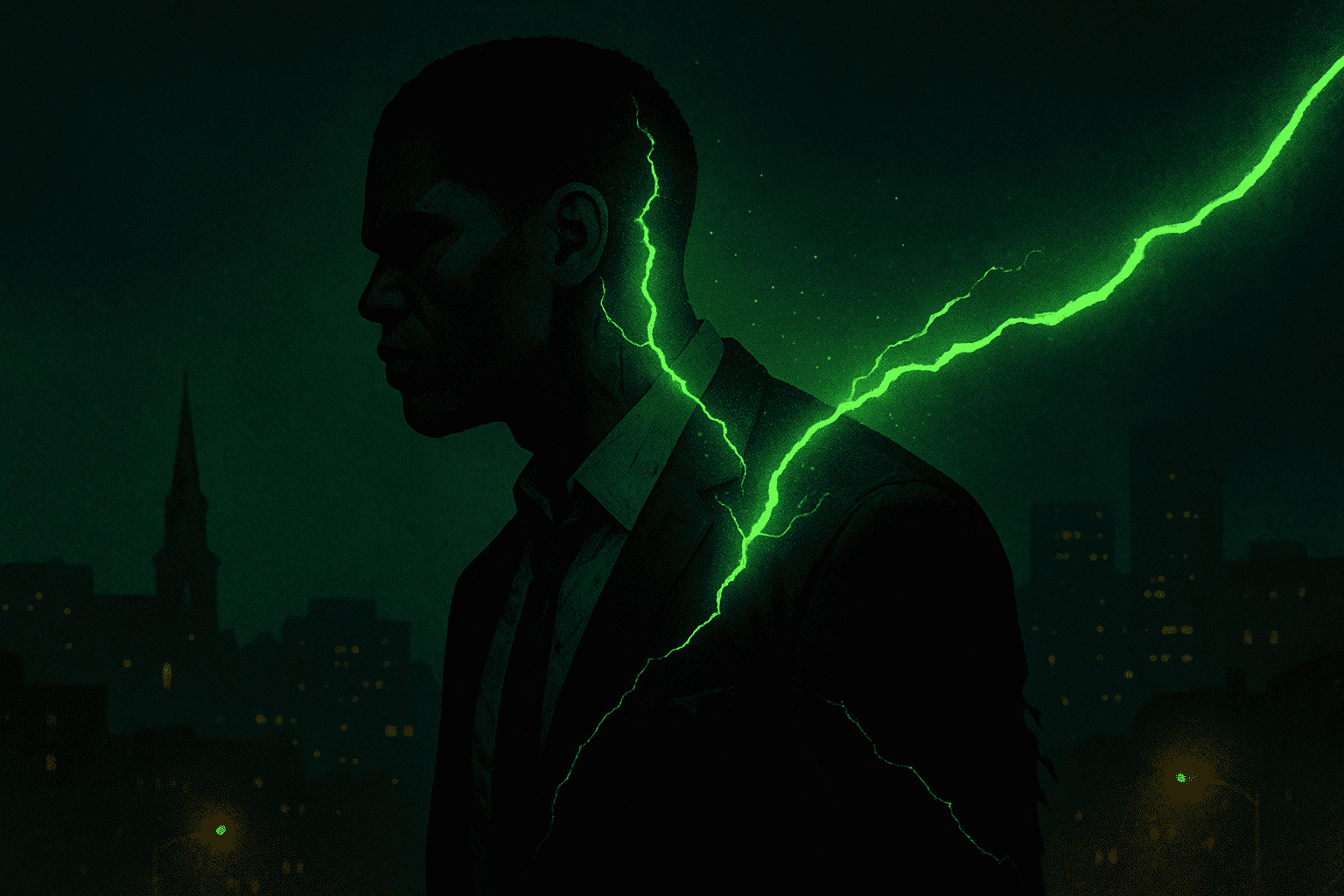
    To be a respectable black man in America is to be a perpetual Bruce Banner, struggling not to let out your inner rage for fear that public reaction will be the same as public reaction towards Hulk in Marvel’s universe, every angry step a threat to mankind.

    One of my favorite lines from the first Avengers movie is when Captain America asks Bruce how he controls his anger — and therefore the monster. Slowly transforming into the Hulk, Bruce responds “That’s my secret, Cap: I’m always angry.”

    If I could speak now to the guy from Iowa who asked me that question that day— why are black guys always so angry? — I’d send him the clip of that scene.

    “Racial disparity within school discipline practices runs through the entire educational continuum, with evidence indicating unacceptable trends as early as preschool. Black preschoolers represent less than 20% of the population but are the subjects of nearly half of exclusionary disciplines in preschool settings.”

    – National Library of Medicine

    I was sitting in my room that day, watching highlights from game six of the 2015 NBA finals when my phone buzzed; a CNN notification reporting nine people had been shot in a church in South Carolina.

    By the next morning the story had a name and a body count and nationwide attention as Dylann Storm Roof was apprehended in North Carolina. He later confessed to the murders, claiming it was his attempt to start a race war.

    After spending an hour among people armed only with bibles, Roof stood and told the congregation, “I have to do it. You rape our women and you are taking over our country. And you have to go.” He then proceeded to shoot all but one woman who he kept alive to carry his gospel.

    In the aftermath, simmering outrage led me to re-read something I hadn’t read since college: Dr. Martin Luther King’s eulogy at the 16th Street Baptist Church in Birmingham after the bombing that killed four young girls and injured over a dozen others.

    One quote stood out:

    “They say to each of us, black and white alike, that we must substitute courage for caution. They say to us that we must be concerned not merely about who murdered them, but about the system, the way of life, the philosophy which produced the murderers. Their death says to us that we must work passionately and unrelentingly for the realization of the American dream.”

    I read this and thought about how hard it must have been for Dr. King to be calm during all that. I also thought that Dr. King’s genius lay in his innate understanding of the intricacies in American white anger.

    Dr. King wasn’t an advocate of peaceful protest for the hell of it. He saw what peaceful protests did to the hateful parts of the general American public.

    It exposed them.

    It brought their anger and prejudices to the surface where they could be recorded and televised and judged by the world.

    It was, in part, the televised rioting against nonviolent protesters in Selma that led to the passage of the Voting Rights Act.

    It’s hard to deny what’s right in your face, though people try.

    Dylann Roof — a white supremacist — murdered nine innocent people in a church. He acted alone in the attack, but he didn’t come out of nowhere.

    Living in a culture that cultivates this, next to the living memories of ancestors who were forced to immigrate and slave and serve — black anger was and is inevitable.

    N.W.A. was one of the first hip-hop groups to gain a national spotlight in the ‘80s.

    Niggaz Wit’ Attitudes.

    I sometimes wonder where people think that attitude came from.

    “…despite decades of desegregation efforts, more than half of students still attend schools that are located in either predominantly white (26%) or predominantly nonwhite (27%) school districts. Nationwide, white school districts received $23 billion more in funding in 2016 than school districts that mostly served students of color. This means that the average white school district received $13,908 for every student, while nonwhite districts received $11,682 per student.”

    – Library Research Service

    We too often reserve the word ‘racist’ for open extremists, which lets everyday racism off the hook.

    People like Dylann Roof allow white Americans to have a poster boy they can point at like, See? I’d never do that shit. Therefore, I’m not racist.

    Racism is not a statement though. It isn’t a set of words. It isn’t a fired gun. It’s a way of life.

    Racism is embedded across institutions and the day-to-day. It’s the idea that, because I was born to Jamaican immigrants, I’m automatically considered a second-rate citizen, judged by my ability to “overachieve” and either fit or break stereotypes I had nothing to do with setting.

    Growing up Black in America also requires carrying the weight of history.

    Louis CK was one of my favorite comedians before he exposed himself as a weirdo with his predatory sexual proclivities. Prior to him getting canceled, CK had this one quote from one of his specials:

    “Here’s how great it is to be white: I can get in a time machine and go to any time, and it would be fucking awesome when I get there! That is exclusively a white privilege. Black people can’t fuck with time machines! A black guy in a time machine’s like, ‘Hey, anything before 1980, no thank you. I don’t want to go.’”

    I laughed really, really hard the first time I heard that.

    “As the Pew Research Center documented after the 2024 election, Congress remains substantially more white and male than the American public […] Congress has diversified in the last 40 years, to be sure, but these shifts have not kept pace with U.S. demographic shifts. Consequently, the racial gap in representation has not changed significantly in recent decades.”

    – Pew Research via Good Authority

    My absolute favorite superhero is not the Hulk but Spider-Man. Growing up nerdy, skinny and bookish, I was drawn to the character who was also a nerdy teenager, albeit one who gained magical superpowers after getting bit by a radioactive spider.

    Yes, I know he’s white.

    This was the ’90s. Most of my favorite superheroes were white. As were the most lauded actresses, singers, models and politicians of that time. Most of the faces with power and visibility I saw growing up were white, or at most non-Black. This felt normal in the rooms I moved through.

    My parents taught me to be proud of my blackness though, as they taught me to be extra respectful of white authority figures to avoid unnecessary conflict. They taught me to study hard and get good grades and exceed white people’s expectations of my race, to fit into society as much as possible for an easier future. I thank them for this, because without them who knows where I’d be.

    But this defensive strategy also creates a skewed sense of identity.

    To get the education my parents wanted for me and to achieve my long-term goals, I had to grow up around a lot of white people because around-white-people is where the opportunities were. This also meant frequently feeling alienated, with both subtle and blatant acts of racism thrown in my face on a constant basis.

    Naming each instance is counterproductive, since the point is the apathy with which it’s met.

    It’s not that this white guy with a shaved head in a bathroom in Austin, Texas thought it was okay to call me a nigger then shut the lights off on his way out while I was peeing. It’s that I wasn’t the only person in there when it happened, and none of us did anything about it.

    It’s not that the white Tallahassee cop with a handlebar mustache pulled me over the night of Obama’s 2008 election victory and issued me a ticket for disturbing the peace because I honked at a drunk white guy who was ironically celebrating Obama’s victory when he stepped out into the street in front of my car. Or that the same cop — unprovoked — asked my white girlfriend sitting in the passenger seat if I was bothering her.

    It’s that I smiled and took the ticket, begged my girlfriend to stop trying to argue with the man, and told him to have a nice evening.

    It’s not how many times I’ve been called “cute…for a black guy” by non-Black women, or had to seal my lips while the mother and/or father of a non-Black woman I was dating talked negatively about my blackness like it was a foundational bullet point in their argument against my worth.

    It’s that it all seemed normal to me, to my friends, to everybody.

    The girl who was in the car with me when that cop pulled me over after Obama’s win, I dated her for a little over three years. She was Irish and Italian, raised near Daytona Beach in the small, predominantly white city of Palm Coast that sits right next to the small, predominantly black city of Bunnell. Palm Coast is nice, a beach town. Bunnell—literally across the train tracks — is not.

    Visiting this girl’s hometown was one of the first times I ever dealt with blatant racism, which is to say I didn’t deal with it because I didn’t know how.

    I didn’t know how to handle being called a nigger in front of my girlfriend.

    I didn’t know how to handle her crying when people she’s known her whole life called her a nigger-lover.

    I didn’t know how to handle — after the implosion of our relationship — that same girl calling and messaging me with the same racist remarks she decried while we were together.

    I still don’t know how to handle a society that tells me the only valid response to shit like that is to ignore it, brush it off, hold my head up and keep walking.

    “Throughout 2024, hard-right groups used state legislatures and school boards — particularly in the South — as battlegrounds to target Black and Brown communities, women, immigrants, Jewish people, Muslim people, Indigenous communities and LGBTQ+ people. Many of the extremist actors focused on whitewashing American history through book bans and changes to curriculum, pushing for companies to eliminate all DEI initiatives, and threatening violence against election workers.”

    – Southern Poverty Law Center

    I think a lot about that kid who was almost my frat brother and the question he asked so casually: why are black guys so angry?

    In reality, he asked the one question every white person should be asking: why are black people — or brown people, or LGBTQ and other marginalized communities — so angry?

    Education could help.

    Desegregation was not a failure as some Americans might think. However, it was implemented wrong. Sticking two people together and telling them to get along without teaching them how or why they should goes against the nature of the human psyche.

    For two people to get along, they have to learn about each other’s history and culture. This breeds empathy, and empathy is an antidote to bigotry.

    America’s racism is stupid. Stupid and idiotic and enraging.

    It’s also neglectful.

    Two common responses to neglect are sadness and anger.

    Plenty of Black people are sad.

    I’m just not one of them.

  • 2025 Was Such a Good Year for Music in Miami

    2025 Was Such a Good Year for Music in Miami

    Miami is an intrinsically musical place from its rooted Caribbean influences to the unusual birds that come and grab a little bit of our heat.

    It takes nerves to consider oneself a local. What makes you one? I guess surviving each and every little nuance with the slightest complaint, like Cubans say, “esto es así,” a self-proclaimed c’est la vie, accepting the city you’re bound to without paying too much attention to its adversities. It is expensive, some would say overpriced, but we come to value it in the most inadvertent moments: a colada in between shifts, the always beautiful weather, food in all of its variants, and the warmth of Spanish in every corner.

    I want to make a Momentum 2025 music Miami list of concerts, albums, shows, and songs. Not the best ones, not the most remarkable; just what they were for me and how I experienced them.

    January

    California Honey Drops at the Miami Beach Bandshell 

    Their sound: pristine.
    The vibes: infinite.

    Since I was invited last minute, I hadn’t listened to these guys before and didn’t know what to expect. I couldn’t believe I was experiencing such a high-quality show. The beginning of the year brought with it my first big rush of musical energy. The air smelled like nature. Everyone was waving and cheering; most of them—true fans—were singing the songs.

    Lead singer Lech Wierzynski has an old soul and the energy of 200 singers all at once. Their unusual instruments (washboard, anyone?) and their instrument swaps are a high-caliber experience.

    It was my first encounter with musicians after a concert—being able to talk to Johnny and say, “Hey man, you rocked!” I remember inviting them to see Tremora, a local Miami band who is also part of this momentum. In retrospect, that was kind of wild of me.

    February

    A good run of contacting local musicians and researching the local scene resulted in one of the first multi-band shows of the year: I got to see Perro Negro, The Zappe Cats, and Condors and Chaos on the same night at Savage Labs.

    This allowed me to introduce myself to them, and the idea of a seemingly possible music channel—where I could introduce local music to a wider audience via social media—was born. This idea brewed in my mind for the following months. The Zappe Cats made a particularly strong first impression.

    Shout-out to Eddy Gatoe from Girl Blues Band for telling me about it.

    March

    Khruangbin. But not only that: Helado Negro doing soundcheck, humble, generous, while allowing us to enjoy his unique sound. Then, Khruangbin.

    Visuals, pantomime, and so many conversations that followed the show with my friend Lexi—all of them recorded. Something was definitely brewing by then. A girl can dream. A girl was dreaming big, with both feet on the ground, like Regina Spektor says.

    April

    The Hermanos Gutiérrez concert at the Fillmore was spiritual and peaceful. Adrian Quesada was there too, and we got a first listen to an album that Rolling Stone would later acclaim for doing “for psychedelic boleros what the Buena Vista Social Club did for the Cuban son,” setting a very high bar for the sequel. They debuted the song Tres Hermanos right then and there.

    Hermanos Gutiérrez presented their music with intention and grace. Witnessing their performance brought me back to my beloved desert of New Mexico and Chihuahua—places they happened to mention between songs as sources of inspiration. Their music comes from the exact same place I once called home. One of the songs even carried a motif based on “Amo y Esclavo,” which moved me to tears.

    I would consider this one in my top three.

    May

    Locally speaking, Lagniappe became my favorite place to listen to live music. I got to see House Savage, Electric Kiff, and Maya Azucena. SoFar Sounds was another great experience, with Tremora’s lead singer, Carlos Escanilla, performing alongside various artists.

    June

    This month, I got lucky and won tickets to see Vampire Weekend. They asked me to talk about my experience getting the tickets and about the concert and that was it for me. I felt the calling stronger than ever. It became something I needed to do.

    I had always been a writer, but my transition into music journalism surprised even me. I was finally able to put together the two things I love most. With patience and love, Music in a Heartbeat was born.

    July

    Things evolved quickly. I scheduled my first interview. I reached out to a musician whose music I had just discovered and who felt deeply aligned with my taste. We ended up having one of the best conversations of the year: Chris Logan, the Border Town Kid.

    I wrote an extensive article, now available on my Substack. That same month, I started my YouTube channel and recorded my first in-studio interview with local band Tremora, a band I had been following for months, whose sound had already captured my attention. You can find it on Music in a Heartbeat.

    August

    August heat brought along a Mississippi original: Yot Club. I had been anticipating this show all year, and it was everything I hoped for—and more. His energy and charisma were present in every song. The shoegaze comparisons come from the dreamy, atmospheric textures, the use of chorus, reverb, and distortion is my favorite kind of sound.

    I had a blast, a sweaty one. He closed the show with a cover of “Keep On Going With the Flow,” and it was deeply comforting. A full text can be found on my Substack.

    La Santa Cecilia also blessed us with their presence this month. I had never cried and had so much fun at the same time. We need to have them visit us more often.

    The very next day, I attended another unforgettable concert: rising star Alexa Lash and Blue Mystic. One of my top ten moments of the year—it felt like watching two crescent moons rise at once, two flowers blooming in parallel motion.

    September

    September was a month of preparation, contemplation, and music. I attended Project Sirena, an initiative by Alexa Lash that showcases female singer-songwriters from Miami’s local scene—a true community service that continues to grow and flourish, like everything meant to last.

    I also recorded my interview with The Zappe Cats, which was posted the following month. I genuinely enjoy recording interviews in the studio. Every step of the process has taught me something new, and this experience was no exception. The Zappe Cats are as talented as they are warm and humble.

    October

    I published my interview with The Zappe Cats, an experience that was fulfilling from beginning to end.

    That same month, I wrote an article and attended a fundraiser for Gaston Adanto, a young musician whose story is as inspiring as his music is vibrant and full of life. This event would not have been possible without Andrew Frix of Frix and Friends, who organized the fundraiser and played most of the night for friends and family. One of my top moments of the year.

    I also attended my first-ever pre-album release listening party, hosted by Alexa Lash.

    November

    November, my birthday month, came with quieter, more reflective energy. I wrote an article about a devastating fire that destroyed most of Solange Sosa’s material possessions and collaborated in efforts to raise funds for her resettlement. Her concert was delicate yet powerful, filled with intention.

    I also attended a Balthvs concert and wrote a review, which you can find on my Substack. I’m proud to say they liked it. Top concert of the year.

    For my birthday celebration, I went to see Cumbiamba. Although their set felt shorter than I wished, I enjoyed every moment.

    December

    How are we closing this year?

    You’ll find me in the New Mexican desert, enjoying a cold one with my old ones—maybe riding a horse into the horizon. But before that, I’ll attend Helado Negro. And maybe—just maybe—he’ll be my last interview of the year.

    Thank you for being part of this incredible year—the best of my life.

    With love,
    Magno

  • Sonora Tukukuy Play Miami Beach Bandshell Thursday Night

    Sonora Tukukuy Play Miami Beach Bandshell Thursday Night

    This article originally appeared in PureHoney Magazine. Check them out here.

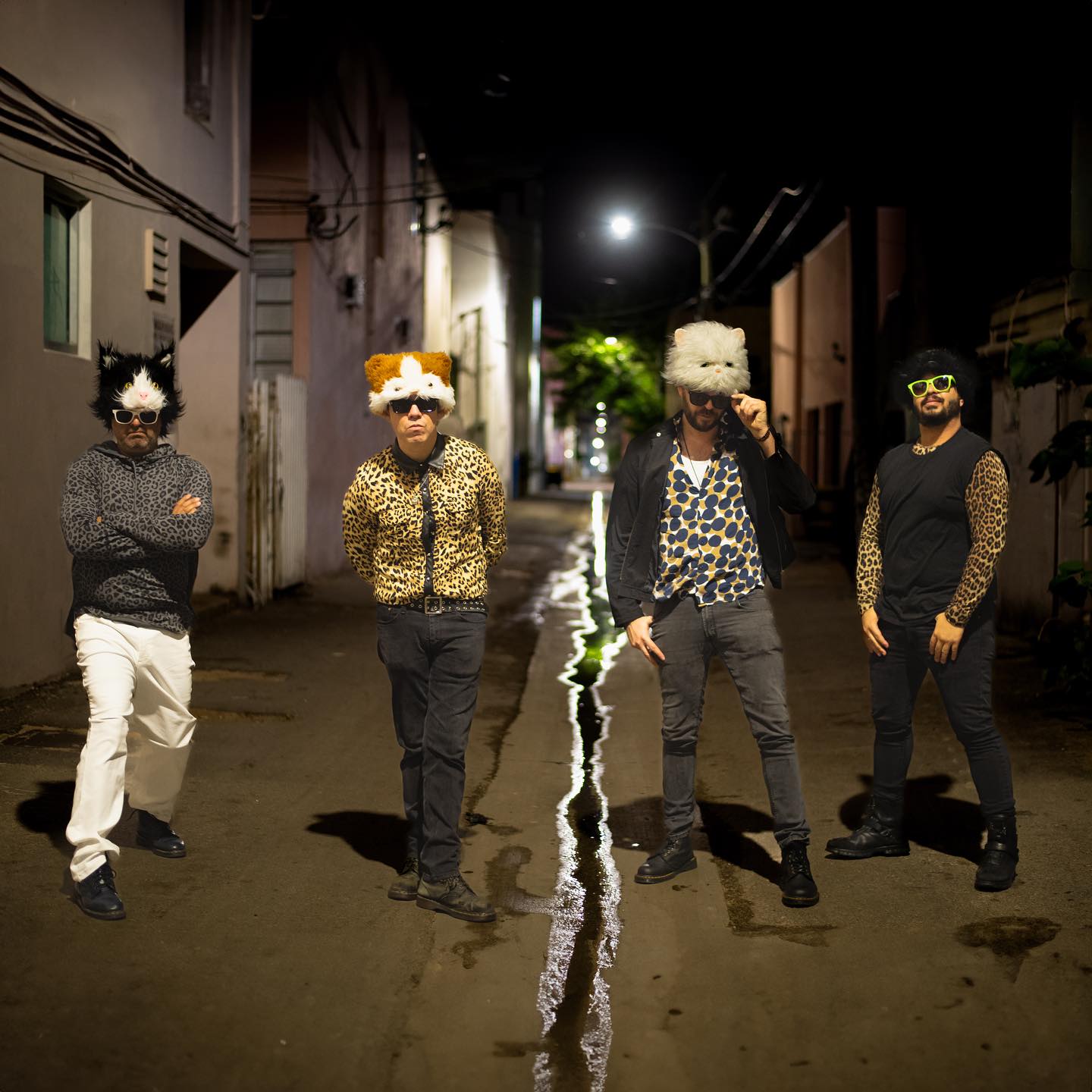
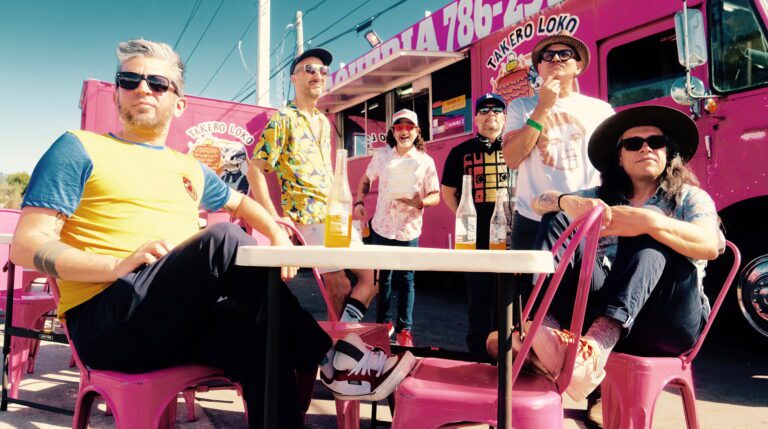
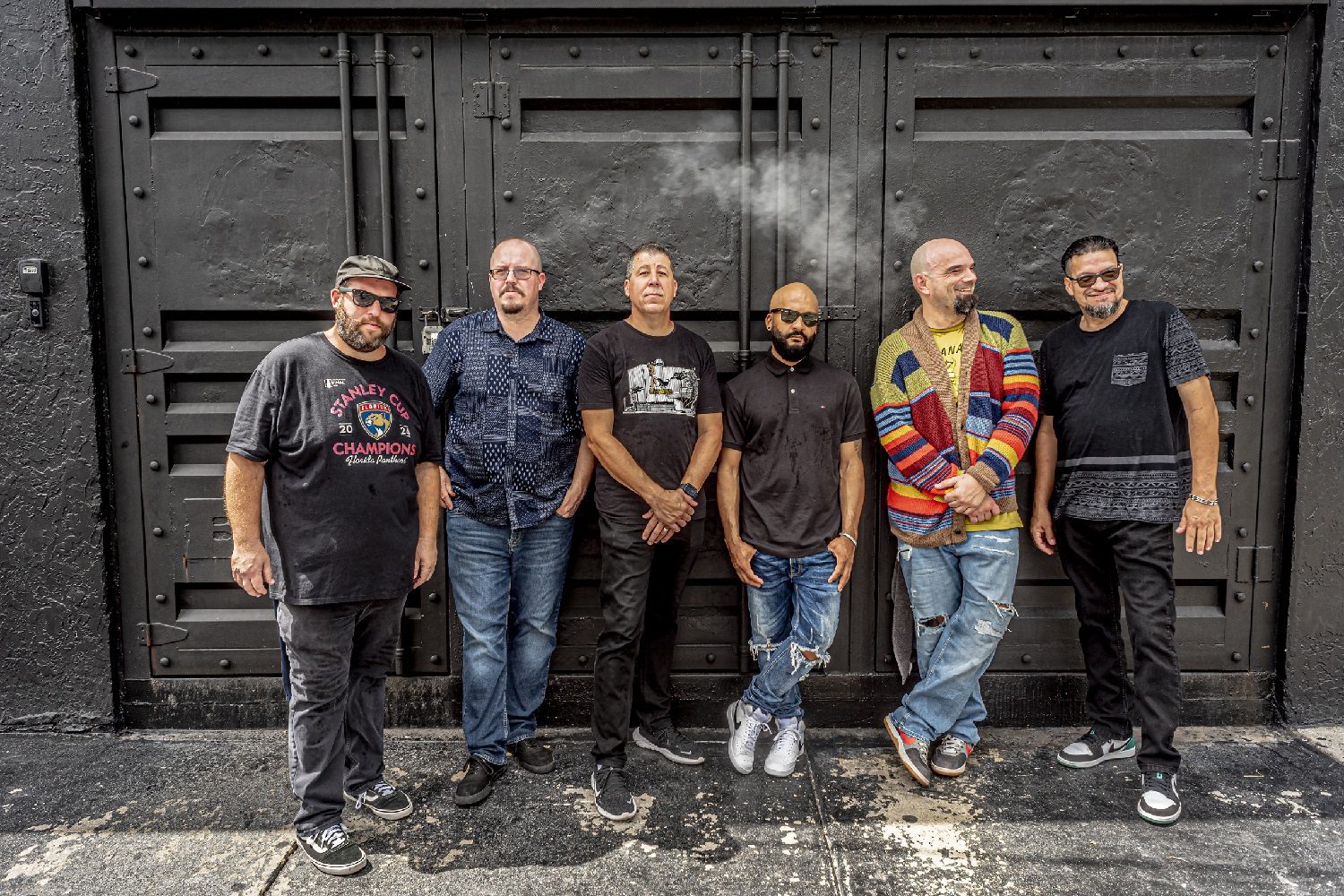
    In a city where rhythms collide as naturally as languages, Sonora Tukukuy have emerged from Miami’s post-pandemic haze with a pulse that never stops. Born out of long friendships, late-night jams, and overlapping band histories that stretch back to the late ’90s, the group’s hypnotic blend of cumbia, funk, and psychedelic groove feels like a communal exhale: A dance floor therapy session stitched together by rhythm and memory.

    For this Latin American sestet, cumbia with its telltale double beat wasn’t a choice so much as a birthright — “something that’s always been part of our bloodstream,” band member Gabriel Ayala says. “Its elasticity and generosity as a genre made it the perfect canvas to channel everything we were feeling and to let the sound evolve with us.”

    Peruvians Ayala and Roberto Taninaka, Venezuelan Alex Izaguirre, Colombians Alejo Angee and Jorge Moreno, and Argentinian Daniel “Dito” Reschigna carry serious Miami pedigree, with roots in local acts like Minimal, Estacion Local, Soniko, Aura Band, and Panasonicos. Their union feels like the natural next step in the city’s ongoing evolution: musicians raised on Latin rock, punk, and funk rediscovering the cumbia heartbeat that once pulsed through backyard parties and block gatherings in the southwest suburbs.

    “Miami may not be the first city people associate with cumbia,” Ayala says, “but it’s made of collisions; cultures, sounds, and stories constantly blending.” From the sprawl of Cutler Bay and Homestead to the warehouse spaces of Allapattah, the band finds inspiration in the city’s creative edges, where the spirit of improvisation and collaboration still thrives. Their music is born between worlds, proud of its heritage yet unafraid to wander. With cumbia landing in Berlin clubs and Tokyo record shops, Sonora Tukukuy see expansion, not dilution. “Cumbia doesn’t lose its roots,” Ayala insists. “It extends them.”

    With six singles out and a full-length debut coming in December, produced by local artist Delusion Bay, the band’s momentum feels unstoppable. It’s a love letter to Miami, to its rhythm and resilience, and a promise that the Tuku familia will keep growing, one sweaty, joyful dance floor at a time.

  • Las Vegas Fever Dreams and $#!+-Stained Capitalism: Are You Hungry? (Book Review)

    Las Vegas Fever Dreams and $#!+-Stained Capitalism: Are You Hungry? (Book Review)

    In Are You Hungry?, J.J. Colagrande gives us a vivid, erratic, and ultimately unforgettable ride through contemporary America’s underside—where yoga meets roulette, where poverty meets performance, and where storytelling becomes both confession and catharsis. Published by Jitney Books, a proudly Miami-rooted press, the book unfolds as a triptych: a collection of linked and unlinked stories that channel the voice of a nation fumbling for meaning inside its own delusions. This is fiction with an open fly, America talking to itself in the mirror after too many drinks.

    Colagrande’s gift is rhythm. His stories—especially “Looking for Margarita,” which opens the collection like a cracked neon sign buzzing—are delivered in a kinetic first-person voice that is part beat poet, part stand-up comic, part manic street preacher. Keith, the protagonist of this Vegas-set odyssey, is a lost yogi looking for a waitress who may or may not exist. Or may or may not love him. Or may or may not be a prostitute. What begins as a desperate romantic search becomes an extended metaphor for America’s obsession with chance, identity, and illusion. There’s something theatrical about Keith’s narration. He speaks in spirals and mantras, making every detour another step on his spiritual disintegration.

    The entire story takes place in a single day, but its emotional span feels longer. Colagrande builds momentum with recursive dialogue and interior monologue, pushing the reader deeper into Keith’s paranoia. Characters come and go like slot machine hallucinations: Boom Boom, Uncle Vinny, Lorraine/Scarlet—caricatures of Vegas nightlife who may just be extensions of Keith’s own psychological fragmentation.

    But it’s not chaos for chaos’ sake. Colagrande is playing with form. The story reads like a confessional one-man show—almost theatrical in structure. We’re Keith’s audience, and like the hotel clerk David he speaks to, we have no choice but to listen. And slowly, we realize: it’s not about Margarita at all.

    Are You Hungry? Review

    The second part of the book, “Little Ado About Nothing,” is an odd and experimental interlude. Here, Colagrande dips into poetic surrealism, offering fragmented sketches of places—San Francisco, Paris, New Orleans—through the eyes of a character named “nothing.” There’s no plot here, but there is tone: ironic, wistful, and jazz-inflected. These pages function as palate cleansers between the heavier narrative arcs, even if they flirt with indulgence.

    Then we arrive in Florida. The final section is rooted in Miami and its orbit: Coral Springs, the Keys, cruise ships, the psychic heat of South Florida. Stories like “The Green Crusader” and “The Box” are grounded in realism, but always with a tilt. One centers on a privileged twenty-something trust-fund kid defecating on hundred-dollar bills in public toilets as an anti-capitalist performance. Another follows a pizza delivery guy in Coral Springs unraveling the strange secret of an old coworker’s mysterious cardboard box. These stories evoke a dirty, dazzling localism—tropically absurd but emotionally sincere.

    Colagrande’s Miami isn’t pastel and yachts. It’s immigrant, weird, broke, sunburnt. It’s where people hustle, con, lose their minds, or find a new one. There’s also a deep tenderness here—especially in “The Sea Lion,” a story about a father trying (and failing) to impress his daughter during a weekend visit. The final image—him pretending to be a sea lion to make her laugh—is equal parts ridiculous and heartbreaking. And that’s Colagrande’s alchemy: take something pathetic, rub it raw until it shines.

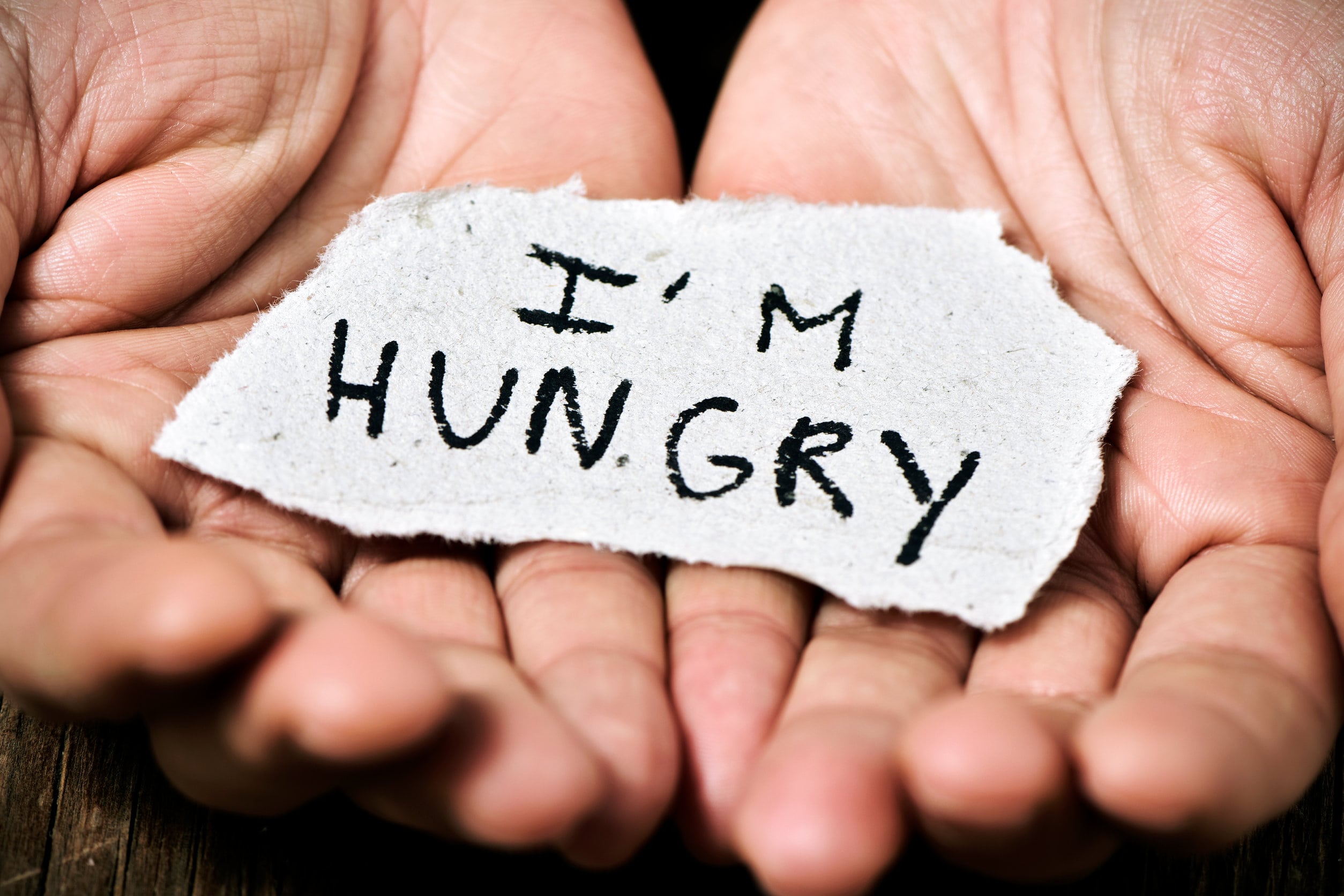
    The title of the book is a question, and it’s not rhetorical. Everyone in these pages is hungry—for love, for a break, for spiritual absolution, for connection. Hunger becomes a stand-in for longing itself. What Colagrande suggests, wisely, is that hunger isn’t the problem. It’s the choices we make to feed it.

    Click here for more info and to buy the book.

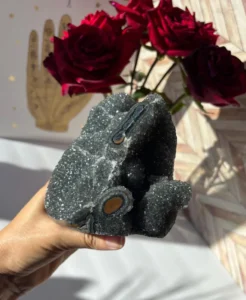
  • Handmade Crystal Jewelry & Healing Crystals at The Finds Within

    Handmade Crystal Jewelry & Healing Crystals at The Finds Within

    Crystals have a way of finding us when we are ready. Sometimes we are searching. Sometimes we are simply listening.

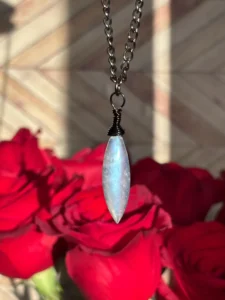
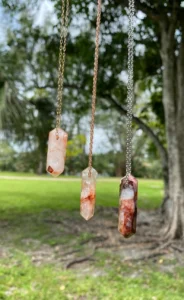
    At The Finds Within, you will find a thoughtfully curated collection of healing crystals and handmade crystal jewelry, chosen with care, intuition, and intention. Every crystal, every necklace, and every statement piece is selected to support energy, beauty, and personal connection.

    This is a space for those who believe that what we wear and what we surround ourselves with carries meaning.

    For more info and to buy crystals click here.


    Curated Healing Crystals for Energy & Intention

    Each crystal in this shop is chosen slowly and intentionally.

    We spend countless hours selecting stones that feel aligned, balanced, and energetically supportive.

    You will find:

    • Healing crystal tumbles for everyday energy

    • Crystal towers and spheres for meditation and sacred spaces

    • Unique statement crystals that anchor a room or ritual

    • One-of-a-kind stones chosen for their character and vibration

    These are not mass-selected crystals. They are carefully curated healing crystals meant to support intention, grounding, clarity, and flow.

    If a crystal catches your eye, there is usually a reason.


    Handmade Crystal Jewelry Made With Intention

    Every piece of jewelry at The Finds Within is handmade crystal jewelry, created with care and presence. No two stones are ever the same, and no piece is rushed.

    From crystal necklaces for everyday wear to bold statement crystal jewelry, each design is made to feel both wearable and meaningful. These pieces are meant to move with you, hold energy, and become part of your daily ritual.

    Handmade crystal jewelry allows the natural beauty of each stone to lead the design. The crystal always comes first.

    For more info and to buy crystals click here.


    Choosing the Crystal That’s Meant for You

    You do not need to know everything about crystals to choose the right one. Often, intuition does the work for us.

    Some people choose crystals for healing, others for protection, creativity, grounding, or self-expression. Some are simply drawn to a stone without explanation. All of these reasons are valid.

    When you browse The Finds Within, allow yourself to notice what you are drawn to. The right crystal tends to resonate quietly, not loudly.


    One-of-a-Kind Crystal Jewelry & Statement Pieces

    Many pieces in this shop are truly one of a kind. Once they find a home, they are gone.

    These unique crystal necklaces and statement crystal pieces are created for those moments when you want jewelry that feels powerful, expressive, and energetically aligned. Moreover, they are designed to stand out while still feeling deeply personal.

    This is crystal jewelry for those who value individuality and intention over trends.


    A Small, Women-Owned Crystal Shop

    The Finds Within is a small, women-owned crystal business rooted in care, patience, and authenticity. Every order is packed with attention and gratitude, and every piece is chosen with respect for the material and the person who will receive it.

    So, whether you are gifting a crystal to someone you love or choosing one for yourself, the intention behind it matters.


    Discover the Crystals That Call to You

    Crystals are teachers, companions, and mirrors. They remind us to slow down, to listen, and to trust what we feel.

    Explore the curated collection of healing crystals, crystal towers, crystal jewelry, and handmade crystal necklaces at The Finds Within and discover the piece that feels aligned with where you are now.

    Sometimes the crystal you are looking for is already looking for you.

    For more info and to buy crystals at our Etsy shop click here.

  • Electric Piquete Release Their Version of “Jingle Bells”

    Electric Piquete Release Their Version of “Jingle Bells”

    When James Lord Pierpont first penned “Jingle Bells” in 1857, it was originally titled “The One Horse Open Sleigh”. There was no way he could ever imagine that it would become a Christmas standard, and that it would be rerecorded with a Latin and blues shuffle feel by Electric Piquete 168 years later.

    When the band was still in its early stages, it regularly gigged at Dolphin Mall in Sweetwater. Those grueling three one-hour sets, sometimes played in a 90-degree swelter, steeled the band’s Latin funk sound and made the members better players.

    During the holidays, the mall would inevitably roll out the Christmas décor and host a “magical snowfall”. Being gamers and the shopping clientele ~90% Hispanic, the band learned and began performing several holiday standards, including “Feliz Navidad”, “Little Drummer Boy” (redux and recorded as “Little Conga Boy”), and “Jingle Bells,”  all with a heavy Latin flavor.

    This year, in the spirit of the festival of Yule, overeating, and maxed-out credit cards, Electric Piquete decided to capture the song and release it in time for the holidays. The first spin happened on WDNA during Viviam Maria’s December 3 Cubaneando show; it’s now streaming on YouTube.

    After shedding the track in early October, drummer Ed Rosado, bassist Michael Mut, and keyboardist Charles Gardner entered the Shack North Rehearsals and Recording mid-November and put down the basic tracks live in a session engineered by longtime friend and band producer Ferny Coipel.

    A couple of weeks later, Robert Smiley (tenor sax) and Patrick Araujo (trumpet / flugelhorn) came in and cut horns. Coipel sprinkled in some guitar for effect, and Rosado topped it off with some percussion flourishes.

    Wishing everyone a safe and Happy Holiday season, and a healthy, happy 2026! Thanks for listening and supporting the band all these years.

  • Run Pendejo – Fiction

    Run Pendejo – Fiction

    Brian’s left shoulder and knee hurt where he had landed. A brown scuff marred the seersucker at his knee and the jacket’s seam had torn at the shoulder. His bowtie needed attention. The office door hung from a single hinge; its shattered glass glittered on the floor. The finely made chair, one leg broken, lay on its side. His wallet’s contents spilled across the coffee table like a gutted fish, beside his, car fob, iPhone, and portfolio. Beneath the table, Raul’s cigar smoldered on the floor.

    Brian straightened the fallen chair. It toppled as soon as he released his grip. He bent to the coffee table, pushed the wallet’s contents back in and began reorganizing his pockets. Wallet to right rear, car fob front left, iPhone right. He dropped to his knees, fished Raul’s smoldering cigar from beneath the table and placed it in the ashtray. Reaching for the decanter, he poured a glass of rum, took a sip, decided it wasn’t a good idea, drained the glass and poured another. Drink in hand, he dropped onto the couch. What did they mean, “Bag him?” He took another sip. Could they make him disappear? Put him on a secret list. Or on no list at all. Would he cease to exist?

    He tossed back the drink and put the glass on the table. Cradling his head between both hands, elbows on knees, he stared at the gold flecks in the black terrazzo between his feet. Fan twisting overhead, he closed his eyes, shook his head and reopened them. The fluorescent orange zip tie that had bound his hands lay on the floor beside the broken chair. Raul’s cigar smoldered in the ashtray.

    The black phone atop Raul’s desk rang.

    Brian started at the sound. It rang three times before he crossed the room. It rang once more as he lifted the receiver to his ear.

    “Run pendejo,” a man yelled. “ICE is after you.”

    “They’re already here.”

    “Who’s this?”

    “Who is this?”

    “I asked first.”

    “I answered the phone.”

    “Do you know who this is?”

    “No.”

    The man hung up.

    Brian placed the receiver back in its cradle.

    Swamped in an angry sea of cream-colored folders, Nelly Sheridan rocked side to side, struggling

    against fluorescent orange zip ties binding her to a chair. Earmuffs from her sound reducing rig covered her eyes. She gnawed at the blue bandanna wrapping her mouth. Her office door hung sideways on a single hinge. Beside her, The Exonerator’s screen was blank, its maw dark, empty as a black hole. Brian waded through hip-deep folders, lifted the earmuffs from Nelly’s eyes and loosened the bandanna from her mouth.

    “I can’t reach my vape,” Nelly shouted, “I have a prescription. You’re denying me access to medical care.”

    “I’m not denying you anything.”

    “Who’s that?” She looked up.

    “Brian Newell.”

    “The new Pearl?” Squinting, she struggled against the zip ties. “For Christ’s sake, cut me free.”

    “With what?”

    “Jesus. Don’t men carry knives anymore?”

    “You can’t bring weapons into public buildings.”

    “Tell that to that bunch that tied me up.” She jerked her head toward her desk. “Check the top drawer.”

    Brian struggled, dragging one leg after the other through waist high files and pulled open the desk’s top drawer. A narrow metal tray along its front held twisted blue elastic hair ties intertwined with strands of white hair. A nickel sized red, white and blue “McGovern for President” button nested in a pile of silver paperclips, red pens lay beside blue pencils, and a yellow birthday cake candle, wick blackened, a pink frosting crust at its base lay atop a pair of scissors with silver blades and red plastic grips. “Found your scissors,” he said.

    “Great job, Columbus. How about you cut me free.”

    Brian waded back through the files and clipped the zip ties.

    Nelly stood, patting her chest. “See my glasses?”

    Brian scanned the sea of files. He spotted a cracked lens to his left and twisted earpieces still attached to the bejeweled chain to his right. “They’re broken.”

    “Bad?”

    “I see two pieces.”

    “Goddamn them to hell.” Nelly pulled the vape from her rear pocket, sucked a big inhale, and held her breath before releasing a pink fog into the air. Head dropping, she staggered, then straightened. “In my desk. Lowest drawer on the right.” She snapped her fingers. “Come on. Let’s see a little hustle.”

    Brian wriggled back through the files, cleared a mess of paper away from the lowest drawer and pulled it open. A damp, navy blue bathing suit lay folded across a white towel. “There’s a wet bathing suit and a towel.”
    “Under the towel. My swimming goggles.”

    Brian pushed the suit and towel aside. Black framed goggles stared at him from the drawer’s bottom. “Found them.”

    “Great job. How about you give them to me.”

    Brian recrossed the files and handed her the goggles.

    Nelly eased the them over her head, adjusted the lens at each eye and focused on Brian. “Did Raul get away?”

    Brian peered into Nelly’s eyes, framed by the black swimming goggles. “He climbed out a window before ICE broke down the door. They thought I was Raul.”

    “You, Raul Mendoza? Wonder where those boys went to school.” She scanned the office. “What a mess. I hope they didn’t damage the machine.”

    “That’s what you care about? That machine?”

    “What should I care about?”

    “They just blindfolded you and tied you to a chair.”

    “And you cut me free.” She swept her hands across the files. “If I let every little interruption keep

    me from my job, I’d never get anything done. That’s the second time the feds paid me a visit today. The first ones didn’t get past the outer office. Education shows.”

    “Right.” Brian said, nodding, though unsure what he agreed with. “I’ll just get my portfolio from Raul’s office and head back to the park.”

    “Smart thinking, Einstein.”

    Brian returned to Raul’s office. Broken glass ground against terrazzo underfoot. He retrieved his portfolio from the coffee table. He scanned the office: the ruined door; the pillaged humidor; the smoldering cigar; the broken chair; the empty rum glasses. Only the fan spinning overhead persevered.

  • Miami’s Biggest Night of Storytelling is The Moth GrandSLAM

    Miami’s Biggest Night of Storytelling is The Moth GrandSLAM

    Ding, ding, ding .. ladies and gentlemen, please stand up, and make some noise ….

    Storytelling heavyweights are about to collide in one of Miami’s most iconic cultural spaces. On December 12, from 7:30 to 9:30 p.m., The Moth and The Black Archives team up to present The Moth GrandSLAM. This is the championship round of the city’s most beloved, nerve-wracking, heart-thumping storytelling event.

    There are many storytelling events in Miami, most recently our friends at the Bass museum have started a monthly, but The Moth is the o.g. aka the mother-load of dumpster-funk reveals. Originating in NYC in 1997 and going strong on NPR nationally since 2009, to say this event is fly is an understatement, it’s moth.

    If you’ve never seen a GrandSLAM, imagine the Olympics of vulnerability. The Moth invites the winners of their open-mic StorySLAMs from throughout the year back to the stage. This time to compete for the title of Miami GrandSLAM Champion. These aren’t polished actors or MFA darlings, they’re regular humans who stepped up to a mic, told a true story with no notes and no safety net, and won the room. Now they return for one final showdown.

    Ten storytellers, ten true tales, judged not by pyrotechnics or performance tricks but by raw honesty, timing, wit, and emotional punch.

    The Moth in Miami

    It’s happening this Friday inside the Historic Lyric Theater, a building that has held a century’s worth of triumph, struggle, joy, and art in its bones. This adds a layer of gravitas you simply don’t get in a standard black-box theater. And a reason to get to Overtown before the entire city is eaten by Miami’s mothra of moneylaudering and overdevelopment.

    This space remembers every voice that’s passed through it.

    On GrandSLAM night, it holds ten more.

    The Moth isn’t just performance. It’s communion. It’s strangers deciding, in real time, to trust a room full of people with something true.

    On December 12, a new champion will get their crown. For more info and tickets click here.

    Looking back at the history of The Moth.

    v

  • Freddie Mercury and Queen over the Water

    Freddie Mercury and Queen over the Water

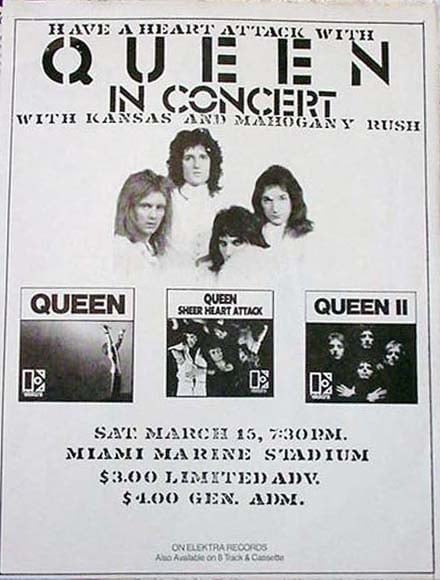
    Queen performed 704 concerts over their sixteen-year career. That journey, like that of any band starting from nothing, was built step by step: the album Queen I opened doors for them in the United Kingdom, and Queen II pushed them into the spotlight. Their immediate ambition was to conquer the United States, and the formula for doing so was already underway. “Killer Queen” was hitting the airwaves with force, and “Now I’m Here” finished winning over audiences. Both tracks were part of Sheer Heart Attack, the album that carried them to Boston, Cincinnati, Cleveland, New York, Miami, and a long list of other cities.

    The Miami show was scheduled for May 15, 1975. The tropical weather, however, seemed intent on ruining it: a storm flooded the city and forced its cancellation. The tour continued to Japan, and there was no room for rescheduling, but losing this date was unthinkable. It was their only open-air show in the United States, in a place that felt dreamlike to a band accustomed to the gray skies of The UK: the Miami Marine Stadium, a venue with a floating stage over Biscayne Bay. The band managed to set a new date two days later, and the concert became an absolute triumph. Freddie Mercury, still in his early bloom, dressed in white with long hair, overflowed with talent before a crowd that vibrated not only from the stands, but also from boats and surfboards gathered in front of the stage.

    The Miami Marine Stadium had been standing little more than a decade. It opened in December 1963 on Virginia Key, part of a project meant to inaugurate the nation’s first powerboat-racing circuit. These were years in which that sport was undergoing an extraordinary boom, and Miami wanted to be at its height. Beyond nautical competitions, the stadium was meant to host concerts and all kinds of performances.

    For the design, the city hired the firm Pancoast, Ferendino and Burnham. The commission fell to Hilario Candela, a 27-year-old Cuban architect. Despite his youth, he arrived with a remarkable résumé: he had worked in Havana for the firm behind the legendary Tropicana cabaret and, once in Miami, contributed to the construction of the first buildings of Miami Dade College. The city administration wanted a simple, low-cost project, but Candela proposed a structure with a distinctly refined aesthetic: a concrete, seafront stadium for seven thousand spectators, complete with a floating stage. After long negotiations—and concern that the project would exceed its one-million-dollar budget—an agreement was reached. Construction took six months and stayed within cost.

    The stadium lived fifteen years of splendor. From its stands, audiences witnessed boxing matches, major concerts, the filming of Clambake with Elvis Presley, and political events such as Richard Nixon’s campaign rally. But by the early 1980s, its decline had begun. New venues like the James L. Knight Center and the Miami Arena pushed it aside, and Hurricane Andrew in 1992 sealed its fate: structural damage forced its complete closure.

    Since then, the Miami Marine Stadium has lingered in limbo. Some administrations have proposed restoring it and transforming it into a cultural landmark; others have argued for its demolition. None of the plans have prospered. Today it rests beside the Rickenbacker Causeway, its bleachers covered in graffiti, an abandoned monument to Hilario Candela’s architectural dream and to that unrepeatable night when Queen quite literally sang over the water.