Category: News

  • The Grand Vizier and Lesser Beings – Fiction

    The Grand Vizier and Lesser Beings – Fiction

    On the security counter’s far side, a woman watched Brian Newell’s approach. Red lipstick outlined her mouth. Rouge smeared both cheeks. Wearing a blue nylon jacket with City of Miami stitched in white script on the left and Sylvie on the right, she adjusted the quilt on her shoulders and pointed to a worn wooden cigar box. “Folder under the box. Keys, wallet, phones, anything metal, goes in the box.”

    Brian put his portfolio on the counter, the cigar box on top, then dropped car’s fob, wallet, and iPhone into it. He shot his right wrist forward, exposing the Cartier watch his father gave him at graduation. “What about this?”

    “Is it real?” Sylvia squinted, shook her head. “No. You’re fine. Step through.”

    She used a shuffleboard stick to push the portfolio and box down the counter, past the metal detector.

    Brian stared at his watch as he stepped through the metal detector into city hall’s lobby. Lights didn’t flash; sirens remained silent. He glanced back at Sylvie, picked up his wallet and iPhone in his right hand, fob in his left and turned back to test the detector.

    “That watch is a fake, honey,” Sylvie said. “Trust the machine.”

    Brian looked back through the portal to his past. Disappointments lurked everywhere.

    Brash laughter and shoes scraping the terrazzo floors heralded the arrival of Miami’s political cognoscenti into city hall’s lobby. Surging from entryways left and right connecting commission chambers and offices beyond, thirty-seven people (if anyone bothered to count) in twos, threes and mores filed in. The city’s grand vizier and lesser beings, dressed in smart and rumpled suits, elegant and plain dresses, torn jeans and cargo shorts, shouted histories, lies, and prognostications. Enemies stood close, lips to ear, smiling as they whispered threats. Friends kept a distance, patting arms, shoulders, and backs, pretending to listen. Those nearest to Brian saw him first. Their nattering stopped mid-sentence, mid-word. Silence washed like a wave across the lobby. Heads turned, eyes widened, jaws slacked. They stood still as a courtroom sketch; all eyes focused on him.

    The grand vizier, Romero Ruz-Gonzalez — Romey to friends, smarmy dirtball to foes — officially deputy director of finance, unofficially custodian of slush funds, mayor’s nephew, vice-mayor’s brother-in-law, and fourth cousin of Fidel Castro, raised right fist to lips and cleared his throat.

    At the prompt, Alberto Crespo, the multi-chinned Director of Protocol – freshly planted hair plugs sprouting like spring peas from his pink dome – announced from the back of the pack, “Ladies and gentlemen, allow me to introduce the next Artie Pearl. Newly arrived in our Magic City from points north, I give you Mister Brian Newell. According to the city’s organizational chart, which I consulted just this morning, he’s the one hundred and seventy-fourth most important person in our fair city’s government, between the Clerk of Parking Lot Management, Lines and Striping, and the Director of Purchasing, Bulbs and Luminaires. Act accordingly.”

    Brian rose on his toes and shouted to the voice. “I’m the new director at Stobo de Pas Park, but not the next Pearl.”

    “Oh pobrecito,” cried Donora Sánchez, the mayor’s side piece and Crespo’s assistant. All she’d squeezed into a red and white polka dot frock that morning jiggled like Jello. “This little one doesn’t think he’ll get caught.”

    “I’ll only get caught doing my job.”

    “That’s the spirit, son,” cheered Father Richard, the defrocked priest and diocesan lobbyist. Dressed in a black mock turtleneck, he gripped the silver crucifix dangling around his neck. “To one who has faith, no alibi is necessary.”

    The vizier recognized Aquinas. He laughed and snapped his fingers. “Good one, padre…”

    “I knew Arthur Pearl,” cried Dotty Blucher, the Assistant City Attorney for Domestic Animal Abuse and Licensing. “He was a real charmer.”

    “Yeah, a snake charmer,” piped up Haulover Jenkins from Solid Waste: Recyclables and Dead Animal Removal.

    “See how far that gets him in Pensacola,” intoned Josephine Biggers, a long-suffering inner-city children’s advocate. “Think of what we could of done with all he stole.”

    Anti-aging activist Rodrigo Duharte, who looked ninety at sixty-seven, chimed in, “Guys like Pearl always end up on top.”

    “Let’s ask Father Dick,” added commission gadfly, Emile Johansen. “Which was it, Father Dick? Top or bottom?”

    “Father Richard,” the priest corrected.

    “No need for that kind of talk,” Josephine Biggers scolded.

    “What kind of talk?” Emile replied. “Plain English? The truth?”

    “Gutter talk.”

    Just Johnson, Stephen “The Fatman” Teitelbaum’s bagman asked, “What did Pearl do? I never did hear.”

    “He got caught,” squealed Donora Sanchez. Delighted with the joke, her Jello shook from top to bottom.

    “The Fat Man would say there’s a lesson in that.”

    Solomon Raffe, Assistant City Attorney for Internecine Disputation and Negotiation — Rabbi Samuel Raffe’s son and his life-long disappointment — said, “My father claims there’s a lesson in everything.”

    “Fraud,” Emile piped in. “They got him on – fraud.”

    “Fraud?” squealed Donora. “That’s a funny word. So small. Seems harmless.”

    The vizier spoke again. “Criminal deception for financial or personal gain.”

    “That’s half the people in this room,” suggested Haulover Jenkins.

    “Just half?” Emile cried.

    “That’s not funny,” said Josephine Biggers.

    “Then why are so many laughing?”

    “Laughter can be a nervous response to a known but unacknowledged truth,” suggested Solomon.

    “Oh, look at you mister psychologist philosopher,” Emile said. “Mister big pants.”

    “I got a hypothyroid, like my mother’s brother, Martin. May his memory be a blessing.”

    “And you, new guy,” yelled Emile. “What’s your job? Do you know?”

    “To make Stobo de Pas Park the best park in America… in the world.”

    The vizier and the lessers fell against each other, howling.

    Brian rose up on his toes and pointed. “Have you all always been so jaded?”

    Solomon Raffe said, “He thinks we’re jaded.”

    “We are,” replied Emile.

    “We are?”

    The vizier said, “Everyone who’s not jaded raise your hand.”

    Brian thrust his right hand high and surveyed the crowd. Only Josephine Biggers joined him, holding both hands above her head.

    Brian looked left and right. “Are we the only ones?”

    “No,” Donora said, gesturing with her chin and the rest of her. “Look behind you.”

    Brian looked over his shoulder. Sylvie held her right hand high.

    “Thank you,” Brian said.

    “That watch is still fake,” she said.

  • Carrie Sieh on Miami Artist Census

    Carrie Sieh on Miami Artist Census

    The Miami Artist Census (MAC) is an independent, artist-run research initiative that identifies and maps the needs of Miami-based artists. The first of its kind in Florida, MAC is made for artists by artists and a county-wide data project that collected information to help public and private funders know where and how to allocate funding for local artists and provide public officials with the data needed to support policies responding to artists’ needs and give artists a powerful tool for self-organization and communal advocacy.

    The first report of findings by the MAC was released this week and highlights six key areas of interest with digestible nuggets of data and simple easy-to-read charts. The two-page report, titled “Prologue: The Big Picture”, is now available to download on the independent group’s website. Team member and artist Carrie Sieh hopped on The Jitney to talk about the organization and the findings.

    What is the Miami Artist Census and why is it important?

    Carrie Sieh: The Miami Artist Census is an independent, artist-run, data-driven research initiative. We survey artists in order to collect, analyze, and share information about who we are, what we do, and more.  We modeled our survey after the Los Angeles Artist Census, which was founded by Tatiana Vahan in 2020. Tatiana generously shared the LA Census survey structure with us, and we modified it to make it Miami-specific.

    As cultural producers, artists do work that is valuable to the broader community—monetarily, of course, but also in other ways that may be more intangible or ephemeral. And yet, a lot of artists in Miami are struggling. We’d like to see that change. So, by surveying artists, we’re piecing together a deeper, more detailed understanding of the problems that impair artists’ practices, and encouraging the development of data-driven solutions to those problems.

    Why survey the artistic community now?

    I would say that it’s not so much about choosing this particular moment, but rather that this happens to be the time that circumstances favored our coming together to accomplish this. The core of the MAC team formed in May of 2023 during a meeting of Artists4Artists, which is an artist advocacy group that misael soto started. So this is already more than two years in the making.

    What do you hope to accomplish by sharing the results of the Miami Artist Census?

    We would like to see Miami become a place where the vast majority of practicing artists are thriving, not just surviving. We think that one way to do that is to disseminate information that artists can use in self-advocacy, and that arts organizations and arts-related government agencies can use in policymaking, standard-setting, and mission-fulfilling.

    Also, we hope that as we continue to share our findings, more artists will choose to participate and be counted next time.

    We’d also love to hear feedback, both from within and outside of the artist community. We’d like to know how it’s been helpful and how it could be improved. What else would it be useful to know about artists? What else do artists think it’s important to measure?

    What are some of the most important topline findings of the “Prologue: The Big Picture”?

    I think one of the most important findings is that 75% of our respondents have considered leaving Miami because of the challenges they encounter here. That’s probably not news to most artists, but I think it may be surprising to the general public, and maybe even to collectors.

    Another important finding is that a significant percentage of the artists we surveyed are struggling financially—which manifests as carrying debt, inability to access affordable healthcare, and lack of studio space. 50% reported having gone without a basic necessity in the past two years.

    Are you an artist yourself?

    Yes! Every member of our team is an artist.

    What is your educational background?

    My BA is in Art, with a focus on painting and photography, and I have a Master’s degree in Library and Information Science. I’m the library director at Istituto Marangoni Miami, where I also sometimes teach a Research Methods class.

    Who are some of your favorite local artists?

    We have so many fantastic artists here, I don’t think I could choose even a few. And I’m reluctant to highlight my own personal favorites in the context of talking about the Miami Artist Census, which is about all of us, as a group. So I’d rather just say that there are many exceptional artists here, at every level of recognition.

    What are the next steps / action items?

    We’re planning to release five more monthly mini-reports this year, and then a final full report in January. We’d also like to create an online dashboard that anyone can use to interact with the data. Since some people haven’t used an interactive data dashboard before, and since many artists are rightfully concerned about privacy, I want to clarify that when we talk about interacting with the data, we mean data that has been anonymized and aggregated. Every individual artist’s survey response would remain private, because the spreadsheets where the data is stored would not be shared. So, say an arts organization wants to know how artist income in a range of zip codes relates to hours per week spent on art practice. They would be able to click some buttons or move some sliders in the dashboard and then see some charts that illustrate that information.

    As with so much of what artists do, a lot depends on obtaining funding. We’re a small team, and still almost entirely self-funded. For this first round, we focused on visual artists living in Miami-Dade—though with the understanding that “visual art” can be interpreted to include work with sound, text, performance, and so on. We would love to open things up to include other South Florida counties, artists working in other disciplines, and maybe even artists who used to live here but have left. I think it would also be interesting to survey collectors, gallerists, grantmakers, and employees of arts institutions. We want this to be sustainable over the long term, though, so I think it’s important that we’re careful not to grow too quickly.

    The U.S. Government conducts a constitutionally mandated census every 10 years – when is the next MAC planned for?

    Our goal is to conduct the Miami Artist Census every one to two years.  We would love to open the survey again in January 2026, but it’s too soon to tell whether that will be possible.

    Where can our readers learn more about Miami Artist Census and read the report?

    On our website and Instagram (@miamiartistcensus). Click here to read the report on the MAC website.


  • Whole Foods Edgewater / Midtown Now Open (review)

    Whole Foods Edgewater / Midtown Now Open (review)

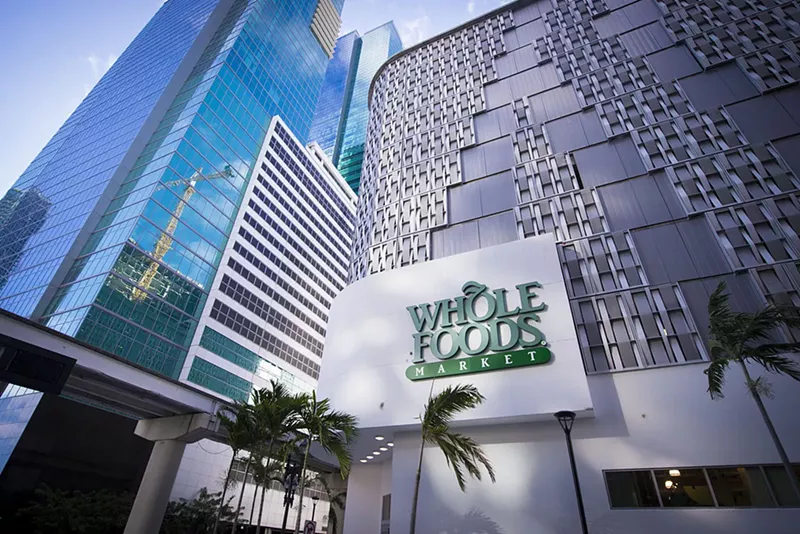
    Residents and workers in Midtown and Edgewater have a new avocado on the block. As of June 26th, right on schedule, the Whole Foods at 2910 Biscayne Blvd is now open. We stopped by on Day 1 to see and write an unbiased review. First off, the parking lot is narrow and hard to navigate. There aren’t a lot of spots. There is ticket-less free two-hour parking, so that makes it efficient for entering and exiting but the lot is narrow. The entrance in on the ever-crowded 29th street. We predict fender benders and scratches.

    The escalator down from the parking lot is strange. You descend one floor, then the next escalator down you have to walk around. It’s strange, you have to see it to understand.

    We recommend walking, if you can.

    The store itself is not really big. It’s about the size of the Publix on 20th Street.

    When you walk in there are fresh flowers to the right. The produce section is nice and stocked, and it just feels like a Whole Foods, which is encouraging. There is a big neon sign saying Midtown.

    Um, fail –this Whole Foods is in Edgewater, not Midtown.

    Directly past the produce section, meat, poultry and fish. There’s a sign “Land and Sea” which in new age terms means “Vegan’s Nightmare.”

    Heading south along the back, twelve rows in the whole store. The rows are not wide. In the back middle, the alcohol section with beer and wine. The beer selection is not as stocked with local craft beer as you’d think. The wine selection bigger and varied.

    Behind the booze is dairy, all typical Whole Foods stuff.

    The deli. There’s a small cheese section, a little sushi stand, and pizza maker. The bake shop, salad bar, hot bar, all that you would expect. There is a coffee shop inside the store.

    The checkout section is not that big. There are five lines with human beings, and a self-checkout stand with six stations. On opening day, it didn’t seem too difficult to checkout.

    Whole Foods Edgewater / Midtown Review

    The Whole Foods is not groundbreaking, design-wise. On the second floor, there is ample seating, which makes the place attractive as a lunch destination. The style is loft-ish, with open air ceilings and AC vents. There is no art and the décor is rather basic and dull.

    The location is convenient. The seating ample. But we would choose the Trader Joe’s only two blocks away, where you have murals of Miami legendary artist Lebo, rest-in-peace.

    There is potential for this Whole Foods. It doesn’t take advantage of Miami’s uniqueness. Blocks from Wynwood, there could be murals and installations from locals. The Herald reported this Whole Foods would have a local feel. We did not feel that. This place could learn from Trader Joe’s because so far, this WF is just basic being basic.

    The Edgewater / Midtown Whole Foods is a 7 out of 10 or a B-minus.

  • Bianca Utset on Taboo

    Bianca Utset on Taboo

    From June 26-29, City Theatre’s Summer Shorts will perform  short plays by Miami’s best emerging playwrights at the Sandrell Rivers Theater. In this series the playwrights share a little with the Jitney about their work.

    Miami is a unique city, in that the question that usually follows “What’s your name?” when meeting a stranger is “Where are you from?”

    You’re Colombian? That means one thing. You’re Venezuelan? That means another. You’re Cuban? I know you already. My play Taboo is what happens when this mindset backfires during a game night amongst friends, and how cultures can clash over something as simple as a bowl of chips.

    In recent years, many a New-Yorker have moved to Miami and redefined what our city is. It is the city of Pilates and coffee shops and clubs. Miami, as I knew it, was always the city of La Carreta, pin-pan-puns, and the Afilador truck. My inspiration for this play came from a joke about mariquitas, also known as plantain chips. We laughed at the audacity of someone not of the culture thinking they struck gold with this “brand new” delicious snack that is now rebranded as a “Low-Cal Lightweight Snack Seasoned with Pink Salt from the Himalayas.” Taboo explores this threat of cultural erasure in the Latino community and what it’s like to feel like an outsider in your own home.

    Whether you enjoy Pink Himalayan salt dusted banana chips or mariquitas, you will have a blast watching Taboo. I am grateful to City Theater as well as my playwriting mentors for giving me this opportunity and helping hone my voice to say something meaningful while staying true to myself.

  • Miami Immersive Intensive Launches This June

    Miami Immersive Intensive Launches This June

    An exciting cultural milestone is happening right here in Downtown Miami with the first annual  Miami Immersive Intensive (MII), co-produced by two of Miami’s leading arts innovators—Juggerknot Theatre Company and Live Arts Miami—from June 26–29, 2025.

    Miami Immersive Intensive is more than a training—it’s a movement. Designed as a four-day convening of national and local artists, MII features workshops, keynotes, and curated immersive outings with pioneers in the field, including:

    • Mikhael Tara Garver, director of Disney’s Star Wars: Galactic Starcruiser
    • Lauren Storr, Senior Producer at Punchdrunk (Sleep No More)
    • Alexandra Renzo, Creative Director at Meow Wolf

    And we’re especially proud to spotlight Miami’s own local legends:

    • Octavio Campos, acclaimed choreographer and director of intermedia performance
    • Pioneer Winter, award-winning dancer and artistic director of Pioneer Winter Collective
    • France-Luce Benson, celebrated playwright of Miami Bus Stop Stories
    • Natasha Tsakos, known for pioneering live performance in microgravity
    • Tanya Bravo, producer of Miami Motel Stories and founder of Juggerknot Theatre Company

    This initiative marks a turning point in Miami’s cultural landscape—creating access to world-class immersive training without having to leave the city. We’re positioning Miami as a global hub for immersive storytelling, with a program designed to train local and national artists in the tools, language, and methodology of immersive and site-specific experiences while fostering collaboration with industry leaders both nationally and internationally.

    For more information and to register for tickets visit miamiimmersiveintensive.com.

  • Lost in Hollywood: The Sad Saga of Gainesville’s Mudcrutch

    Lost in Hollywood: The Sad Saga of Gainesville’s Mudcrutch

    Former Tom Petty and the Heartbreakers’ guitarist/co-writer Mike Campbell recently published his memoir, Heartbreaker, which debuted at No. 9 on The New York Times’ best-seller list. There are a few items of interest he left out.

    Tom Petty’s country-rock group, Mudcrutch, shriveled from a working quintet to a struggling trio. Suddenly the sound was thin—like their meals.

    In 1972, the Allman Brothers Band—who had won a talent contest in Gainesville three years prior and were, in a sense, an inspiration for the members of Mudcrutch—would score its first top-forty hit with “Ramblin’  Man.”  The Allman Brothers Band was hitting its commercial peak. Rock was becoming big business.

    Meanwhile, back in Gainesville, the remaining members of Mudcrutch were scuffling. They needed to fatten their sound—and their wallets.

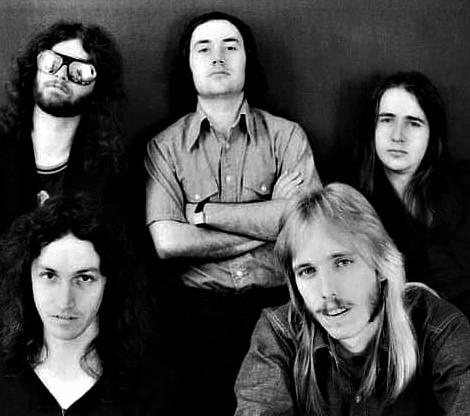
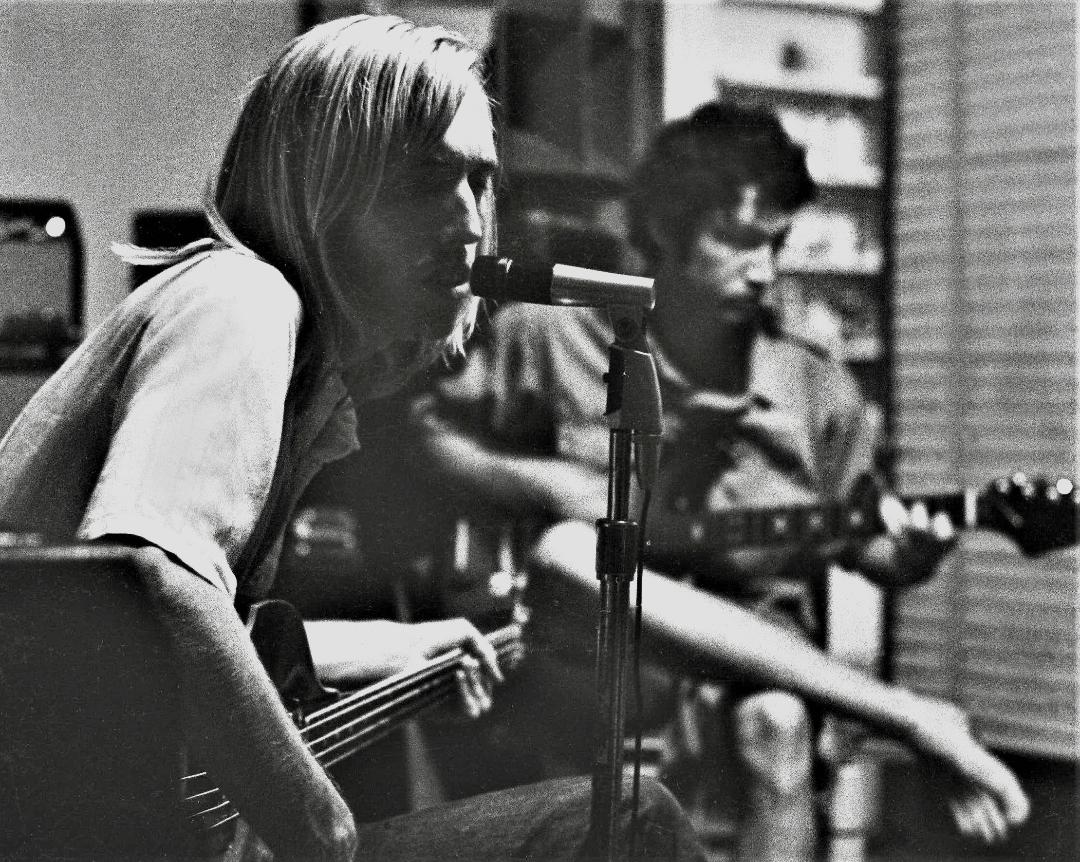
    Mudcrutch, an outgrowth of Gainesville teen band the Epics, consisted of Gainesville native Petty, on bass and vocals; Mike Campbell, a University of Florida dropout from Jacksonville, on guitar; and drummer Randall Marsh, from Bushnell. Singer Jim Lenahan had been with the group for a year when he was canned in early 1971.

    Guitarist Tom Leadon, younger brother of Eagles guitarist Bernie Leadon, had lost Mudcrutch its house gig at Dub’s Steer Room, a Hogtown live-music institution. For his hotheaded confrontation with owner James W. “Dub” Thomas—which cost the members their steady paychecks—Leadon was summarily dismissed.

    Leadon, at brother Bernie’s behest, packed up and went west, where he quickly found work as a musician. Before long he had assumed brother Bernie’s place in Linda Ronstadt’s band.

    They heard singer-guitarist Danny Roberts, formerly of Lakeland trio Power, performing in a duo with his sister at a show both acts were playing in Gainesville. Petty immediately saw the answer to Mudcrutch’s dilemma. Without consulting the others, he invited Roberts to join Mudcrutch. He didn’t know what he was getting himself into.

    Neither did Roberts.

    Power, later re-named New Days Ahead, had been a prominent Central Florida band. Roberts played bass but was also quite proficient on guitar, as Petty and Campbell noted at his Gainesville duo performance. He also sang lead, in a powerful blues-inflected style not unlike Gregg Allman’s.

    Blogger/musician Jeff Calder, also from Lakeland, wrote, “[In] 1970, thanks to Power’s regional success, [Roberts] had made a strong reputation for himself within Southeastern musical circles, far more so than his fellows in Mudcrutch….” Calder further stated, “By no means had Mudcrutch been a bad band, but they were nebulous…. That changed when Danny Roberts moved to Gainesville. His professional experience was of greater compass. He helped the band organize more serious demo sessions, and the group’s songwriting improved almost overnight. He alternated bass and guitar with Tom, and, with the additional support of Danny’s blues-influenced vocals, the music of Mudcrutch finally received its first dimension. By April 1973, their new authority was undeniable.”

    In keeping with the hippie ethic, rock groups in the early 1970s (and beyond) were generally viewed as communal entities in which all members were considered equal and had access to songwriting and songwriter royalties. This didn’t work out too well for the Who, for example, when bassist John Entwhistle would write a silly song about a spider, or for Cream, whose drummer Ginger Baker’s songs weren’t even in the same league as Jack Bruce’s.

    The years 1972 and ‘73 were a turning point for music in the Anglophone world. There was a change in the wind. Bands with singular names like Jefferson Airplane, Cream, and Mudcrutch were giving way to retro-style group names, plural nouns like the Eagles, the Modern Lovers, the Ramone, the Cars, et al. In addition, long, indulgent guitar solos were going out of style. Short, sharp songs were the coming thing. It was a bit nostalgic.

    What is more, there would be a return to a laser-like focus on the lead singer in groups such as Iggy Pop and the Stooges or David Bowie and the Spiders from Mars. Rock acts were emerging in which one person’s image, voice and vision was not only predominant but ruled the band. This was true for the Ronnie Van Zant of Lynyrd Skynyrd as well as for early-Sixties-inspired singer-songwriter Bruce Springsteen, whose band members and fans called him “the boss.”  Springsteen released his debut album on Columbia Records in 1973.

    A contingent of pop-music fans emerged who seemed to be sick of collectivist groups and were hungering for a singular individual’s worldview and philosophy. It appears that Denny Cordell saw this movement coming and decided this was what he wanted for Mudcrutch. He presumably foresaw that Tom Petty could fit into this “new wave” of music and designed an album cover that would appeal to punk sensibilities, with Petty donning a leather motorcycle jacket. Campbell comments: “We seemed vaguely lumped in with the punk scene…. We figured it was just about the picture of Tom on the album cover, the leather jacket…. The Ramones, a band I loved, wore motorcycle jackets. Must be the same type of music.”

    However, Mudcrutch—following the Beatles model—had originally been presented to its musicians as a collective: all the members would theoretically be equal partners and would split all proceeds equally as well as the glory. Technically there was no leader. This hippie-ish philosophy ran directly counter to Cordell’s plan—and would have to be modified. Unfortunately, Cordell did not make his objective—to make Petty the undisputed boss—clear to all the members of Mudcrutch—perhaps because he knew there would be a revolt.
    Tom Petty knew it too. In fact he didn’t like the idea.

    And indeed there was a revolt—several actually. Petty would often be accused of tyrannical behavior—and that accusation may contain a grain of truth at times—but at this staage he had very little if any choice ion the matter.

    Even before the group moved to Los Angeles, guitarist Tom Leadon found out who was the boss when he disobeyed Petty by taking club owner Dub Thomas to task for some offhand, disrespectful remarks he’d made, after Petty had forbade him to do so. There was no debate, no vote. Petty simply stated Leadon had to go—and it was done.

    Keyboard virtuoso Benmont Tench had been a part-time member of Mudcrutch until just before the members packed up to leave for Los Angeles, when Petty somehow convinced Tench’s father—a judge—that it was actually a good idea for Tench to quit college, move to L.A. and take a stab at the music biz.

    Roberts was under the impression that this was his band as much as anyone else’s. He found out to his shock, that things would drastically change, even though he was the one who had driven Petty to Los Angeles in his Volkswagen van in their first expedition to L.A. Roberts was in large part responsible for getting the group in the door at Shelter Records, where he befriended publishing manager Andrea Starr, who—perhaps unbeknownst to the others—went to bat for them at the label. But the hippie ideals the band had taken to heart as gospel were vaporized when money came calling. Investors call the shots, not lowly musicians.

    Roberts says he saw the writing on the wall and quit. Campbell writes that he was relieved to see Roberts gone: “Danny could feel himself getting pushed to the side. He fought for his own songs. He campaigned for himself [via Andrea Starr] inside the label…. I didn’t like his songs, and I didn’t really like his playing anymore.”

    Campbell further elucidates his thinking at this point. In his view, it was all about supporting Petty, who had the strongest songs: “Danny had to learn his place in the band. It wasn’t about him. It was about this thing we had built years before he even joined. And to me, [it] was built on Tom’s songs and Tom’s voice. That was the band. …  To come in to that and make it about yourself? That pissed me off. We needed to find the humility to focus on what would make us great and get behind Tom’s songs.”

    According to Campbell, Roberts also said some nasty things on his way out that put him on Petty’s “shit list” forever.

    Petty immediately called Tampa-area bassist Charlie Souza to replace Roberts. He became a problem as well, but this situation was dealt with—this time—quickly and definitively. Souza, like Roberts, had insisted on contributing unwelcome material: “It was one I wrote about a spaceman and a UFO coming down,” Souza told biographer Warren Zanes. “Tom thought I was nuts….”

    The next musician to chafe under Petty’s new regime was drummer Randall Marsh. Marsh made fun of label head Cordell, sarcastically referring to him as “Denny Daddy,” presumably accusing Petty of meekly acquiescing to Cordell’s dictates.

    Petty hated confrontation.

    According to Campbell, he preferred “covert aggression.” Campbell—who was nonetheless staunchly in Petty’s camp—uses this very term to describe how Petty managed conflict.

    Despite all this, Petty insisted to biographer Zanes that even after Roberts left, he still wanted another singer and writer in the group. Petty at this point still did not see himself as the star of the show. He did his best to resist the way his band was being “packaged” by the label. Bands often do not like being packaged. It took some arm-twisting by label president Denny Cordell to make it work.

    Cordell made it plain that he did not subscribe to Mudcrutch’s hippie-communalist ideology. It was a committee with too many members, not able to get things done in a timely manner, and studio time was money—a ton of money. Even if Cordell had wanted to go along with the band’s laissez-faire program, it was unfeasible to support five band members; finances had gotten to the point where he could hardly support one. And there had been very little if anything to show for it all.

    That was the deal; take it or leave it. Petty astutely gauged that any deal was better than no deal. He was effectively forced by Cordell to sack the whole band. Campbell, however, whom Petty saw as indispensable, was given a last-minute reprieve.

    The crux of the morale problem was that Cordell left it to Petty to break the news to the boys in the band. This would have been best coming from a manager—whom the group did not have at this stage—or ideally from Denny Cordell himself. Petty himself had to take the heat. Drummer Marsh was so upset by his sacking that he refused to speak to Petty or Campbell for decades. Petty tried to explain to Marsh and Tench that he had no choice: it was either this or the unemployment line for him—and he had a wife and a daughter to support.

    After a failed experimental period using session musicians, this same ideological conflict again reared its head. Petty picked up an ostensibly new group, dubbed the Heartbreakers by Cordell, with three members of Mudcrutch—Petty himself, Campbell, and keyboardist Benmont Tench—with the addition of Gainesville musicians Ron Blair and Stan Lynch, who were participating in a demo session for Tench. Petty’s new manager, Tony Dimitriades, a London-based music attorney brought in by Cordell, hammered out a deal in which Petty would get fifty percent of the group’s earnings (on top of his songwriter royalties); the other four members would split the remaining fifty percent.

    New drummer Stan Lynch, whom the members had known since his days with Gainesville rockers Road Turkey, would be somewhat mollified by this financial setup but evidently could not stomach being ordered around by Petty and would occasionally become physically menacing.

    Lynch somehow managed to hang in there long enough—twenty years—to see a few humongous paydays and to connect with other L.A.-based musicians such as former Eagles member Don Henley as a co-writer. Lynch finally moved back to Florida, where he bought a ranch in Melrose, just outside Gainesville and scored a newfound career as a Nashville-based songwriter with several big hits under his belt, including a number-one country hit for Tim McGraw.

    Campbell himself admits to being appalled a time or two with Petty’s newly instated imperious persona. However, he made a conscious decision to go with the flow and allow himself to become rich beyond his wildest dreams. Unlike Lynch, Campbell was able to swallow his pride. He was more than handsomely rewarded.

    Campbell at one point had a family to support and was starting to get irritated about not being remunerated for all the extra work he’d been contributing to the recording project for the group’s 1979 album Damn the Torpedoes. After some urging from his wife, Marcie, Campbell finally worked up the nerve to confront Petty. Besides his co-writing, for which he would receive extra royalties, “I played all the guitar parts and some of the bass and added the extra instruments and came up with a lot of other ideas. And now I was working on the mixing too [in other words, he was de facto co-producing the album]…. So I was thinking I could get a little bit more of the pie on this one because I was such a bigger part of it…. Tom stared back at me. “Yeah, but I’m Tom Petty….” I realized he was serious. That was really his [only] answer.”

    Campbell continues: “I gave him a long, hard look. It didn’t even seem to register with him. I might as well have been trying to stare down a brick wall. I turned, biting my tongue with all my might and went back to work.”
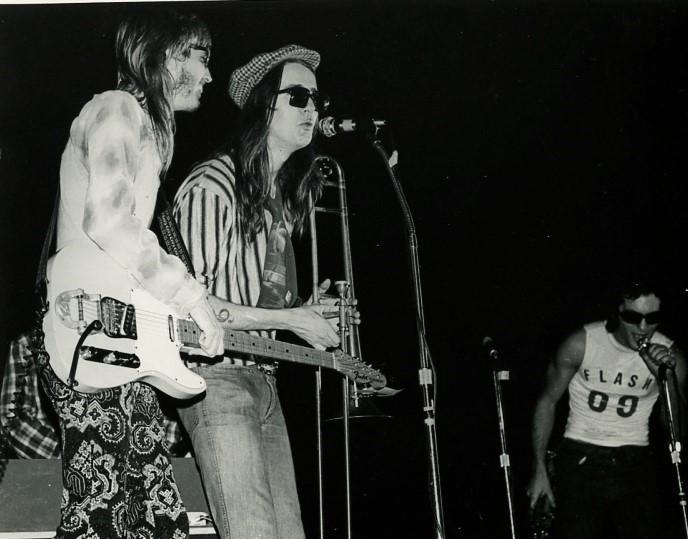
    Petty by this point was clearly drunk on himself. But as Campbell and others—including Petty’s managers and producers—concluded, he had every right to be because he came to the table with the right stuff and was going to make them all rich. Damn the peccadilloes.

    Campbell came to terms with this cold, hard reality. He realized he would make a lot of money if he just kept his mouth shut. Ultimate it boiled down to a simple decision: kiss the ring or get out. The others—Danny Roberts, Randall Marsh, Charlie Souza and Stan Lynch, who either could not or would not bite their tongues—would fall by the wayside. Only Lynch landed on his feet.

    In 2007, after seeing the documentary film Peter Bogdanovich put together on his career, Runnin’ Down a Dream, Petty, perhaps feeling nostalgic for the old days, decided to put together a Mudcrutch reunion with a four-piece edition of the group: himself, Mike Campbell, Tom Leadon and Randall Marsh. Former singer Jim Lenahan, who had been with the group from 1970 to 1971, refused to discuss the reunion and his omission from it. Danny Roberts (1972-1975) and Charlie Souza (1975) were not consulted.

    Roberts was shocked to discover his image had been airbrushed out of one of Mudcrutch’s 1974 publicity photos. “I try not to be bitter, but I can’t but be a little hurt by such an intentional snub,” Roberts said in an interview. “I thought Tom was bigger than that.”

    Mudcrutch embarked on a small West Coast tour and then disbanded for several years. Petty seemed to relish playing bass again and not always being the center of attention. Jaan Uhelszki writes,

    It was as if Mudcrutch allows Petty to reconnect to his younger self, a Tom Petty who still lives inside the Gainesville city limits, earning $100 a week playing Dub’s, hosting ad hoc music festivals at their base in a remote, dilapidated wood-frame house. In other words, a Tom Petty unencumbered by global fame.

    Another Mudcrutch reunion followed in 2016, which comprised the final studio recordings Petty made before his death in 2017. Tom Leadon died in 2023.


  • Cristina Pla-Guzman on I. You.

    Cristina Pla-Guzman on I. You.

    From June 26-29, City Theatre’s Summer Shorts will perform  short plays by Miami’s best emerging playwrights at the Sandrell Rivers Theater. In this series the playwrights share a little with the Jitney about their work.

    Perfect, profound, pure, complete—all of these are synonyms for the word unconditional. 

    Unconditional. Not many things in life are truly unconditional; in fact, I have found that many things are conditional: problematic, contingent upon, doubtful, so much so that unconditional love can sometimes feel like something found only in fictional stories.

    That notion was completely challenged once I became a mother. My husband and I fell in love so completely that we brought two people into this world. My heart has been stretched in ways I never anticipated, especially after receiving my oldest daughter’s autism diagnosis. As we move in and out of doctor’s appointments, work with a team of therapists, and continually meet new challenges, my guiding light is the unconditional love I have for my daughter. While my oldest daughter can’t say how much she loves us, we so deeply love her.

    What I hadn’t expected was to see that same love pouring from my youngest into her older sister. Siblings of children with disabilities are a blessing to their families and a gift to the world. They teach the world how to love unconditionally.

    The idea for my play, I. You., was born out of grief. My grandmother passed away recently. I still feel her love for me and my daughters, even though she is no longer with us. That kind of unconditional love transcends death. Out of that grief, I. You. emerged—a loosely autobiographical story with a sprinkling of magical realism. A love note to my family.

    I. You. is a deeply moving play that explores love in the face of grief and uncertainty. After the death of her beloved Abuela Yiya, a mother finds herself struggling as she navigates her eldest daughter Sophia’s autism diagnosis. At the heart of the story is the extraordinary bond between sisters: Victoria, the younger daughter, becomes a bridge to her nonverbal sister, speaking a language only love can translate. I. You. is a story of unconditional love and the sacred language only family can speak.

    I am so grateful for the opportunity to participate in CityTheatre’s Summer Shorts. I hope you’ll be part of the audience to witness some amazing new work from my cohort.

  • Miami Marlins Presents Book Swap Night June 20

    Miami Marlins Presents Book Swap Night June 20

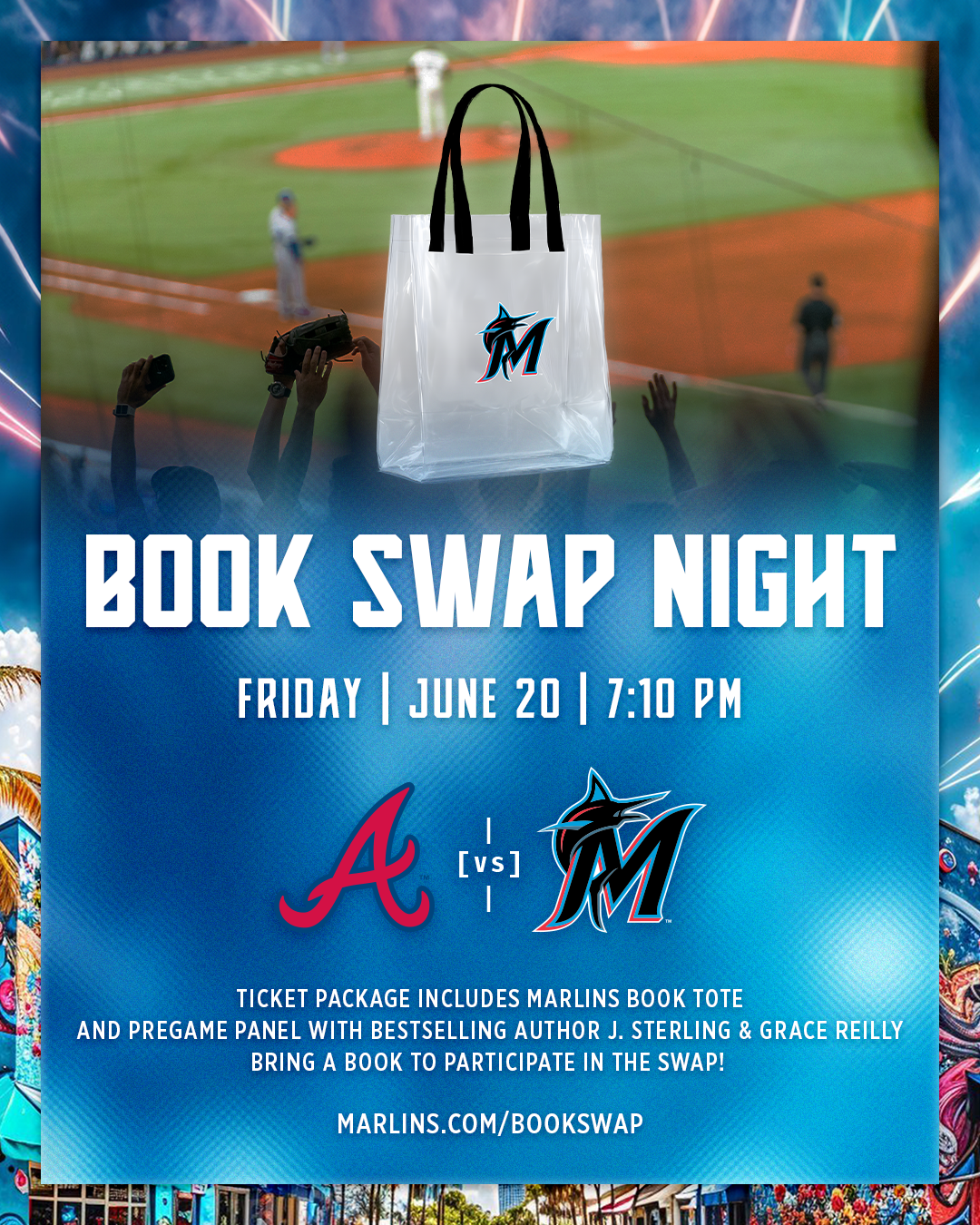
    Summertime is here and that means two of our favorite past times: baseball and reading. Thanks to a wonderful new Miami Marlins event, now in its second year, you can have both at the same time. Catch a game and a book at the 2nd Annual Miami Marlins Book Swap Night.

    Details are easy. Buy a ticket, bring a book and enjoy a wonderful literary event before the ballgame. This year the Marlins are playing the Atlanta Braves.

    The ticket package includes a Marlins Book Swap Night tote bag, and access to a pregame panel at 5:30PM in their Blue Moon Brew Hall.

    The program features New York Times and USA Today bestselling author, J Sterling. Author of “The Perfect Game” and “The Boys of Baseball” as well as USA Today bestselling author, Grace Reilly. Author of “Stealing Home” and “First Down.” Catch the theme?

    The panel will be hosted by Elina & Amanda of Girl, Please! Podcast

    What a wonderful event designed to inspire a new generation to gather in the name of books. And of course, baseball.

    Hope to see you there!

    For more info and tickets, click here.

    Miami Marlins Book Swap Night

    Although there is no sound in this video, last year’s event sure looked cool.

  • Ultra Music Festival Presents Bayfront Bark, a Pet Adoption Fair

    Ultra Music Festival Presents Bayfront Bark, a Pet Adoption Fair

    Giving back to the community at large is a wonderful act of gratitude and service.  Ultra Music Festival is committed to this act of compassion and this Saturday’s pet adoption fair “Bayfront Bark” is testiment.

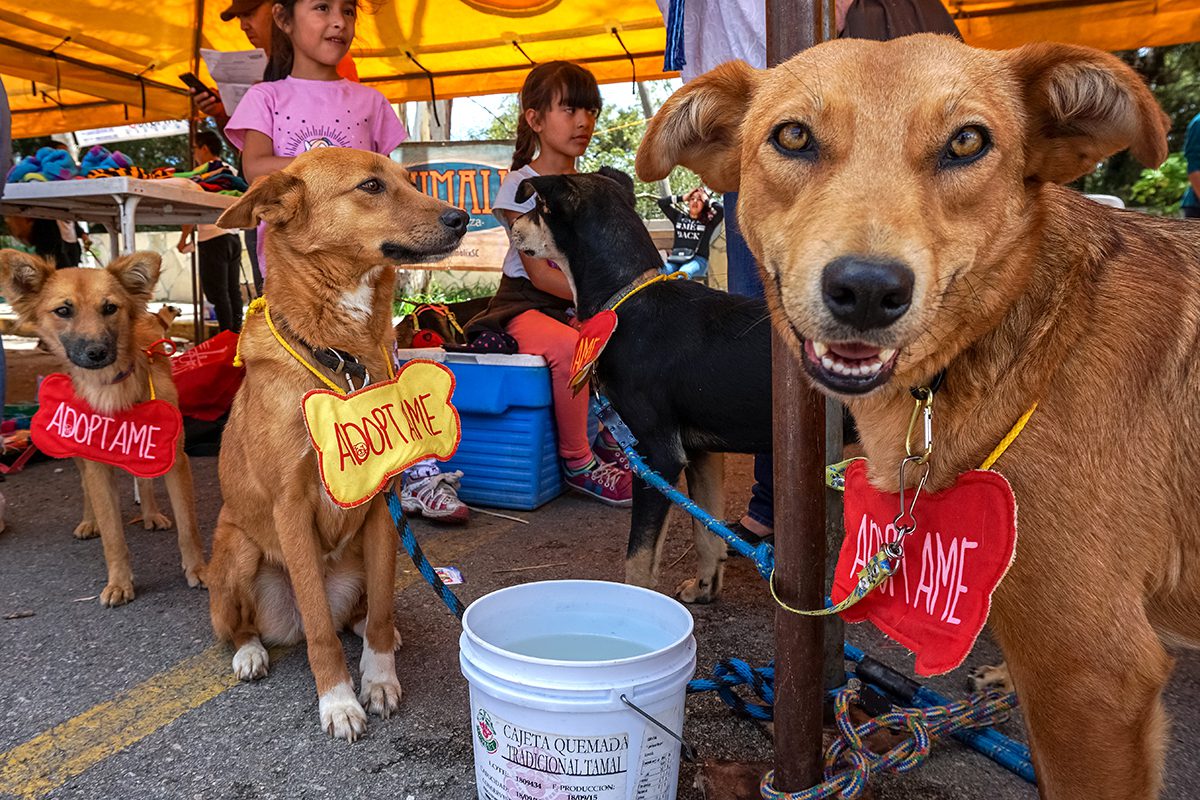
    Ultra Music Festival has announced its next community event Bayfront Bark, a free pet adoption event taking place on Saturday, June 21 from 10:00 AM to 1:00 PM at the Dog Park located in the southeast corner of Bayfront Park. The event aims to support local animal welfare efforts and help connect adoptable pets with loving families.

    Woof!

    What do we all have in common? Our environment? Love? Care giving? Loss? Music? How about our animals?

    According to a recent Channel 10 report, dogs are being dumped in Miami Dade like never before, and estimates indicate 30,000 dogs are without home.

    How about making that number one or two lower and adopt a stray today!

    Because of its worldwide reach due to Ultra Worldwide, one can argue Ultra is the most successful music festival in the world and it’s not even close! (take that Coachella and Outside Lands). It’s good to see the homegrown staple give back! Those of us that live here know how small of a large city we really are! Events like this (moreso than the festival itself) truly create the pride we have in the 305.

    Tithing isn’t just for patrons of a synagogue, mosque or church.

    Go Ultra!

    Ultra Music Festival’s Bayfront Bark

    Bayfront Bark is being produced in collaboration with Miami-Dade County Animal Services, Bayfront Park, the City of Miami, and the Miami Police Department. The event will feature free adoptions, ice cream, and limited giveaways (while supplies last) including Ultra merchandise, pet products, and branded swag. All adoptions are first-come, first-served with a valid photo ID.

    Sponsored by Ultra Music Festival as part of its Mission: Home initiative, the event underscores Ultra’s continued commitment to giving back to the Miami community through meaningful local partnerships.

  • Jitney Miami Concert Preview – Summer 2025

    Jitney Miami Concert Preview – Summer 2025

    It’s been hot for so long in Miami, it’s hard to remember summer doesn’t officially start until June 20. Now that the cruelest season of all (at least according to Taylor Swift) is within reach, let’s take a look at what musicians are coming into town. Here’s the Jitney Miami concert preview – Summer 2025 edition.

    Thievery Corporation June 20 & 21 at Miami Beach Bandshell

    The electronic music favorites kick off summer with a pair of dates at The Bandshell. Friday night is already sold out, so if you’re interested mark off the Saturday gig on your calendar.

    Blue Oyster Cult July 3 at Hard Rock Live

    Am I the only person in the world excited to see these classic rock dinosaurs? Perhaps. But this iteration still has original members, Buck Dharma and Eric Bloom, and I’ve got to hear them play “The Reaper” and “Burnin’ For You” at least once in my life.

    Os Mutantes July 9 at ZeyZey

    If you never heard the 1968 self-titled debut album by Os Mutantes, stop what you’re doing and take a listen. The Brazilian group whose name translates from Portuguese into The Mutants, mutated psychedelic music through a South American lens and made it their own. Sergio Dias is the only original member still in the band, but well worth checking out if they can recapture the old magic.

    Glom July 11 at Gramps

    The quiet indie tunes of this Brooklyn band make their Miami debut at Gramps. Come early to check out Virginia openers Drook.

    Coldplay July 26-27 at Hard Rock Stadium

    I’m not a fan of the Brit rock band, but this is undoubtedly the biggest rock show of the season, so it would be malpractice not to include the singers of  “Yellow”, “Clocks”, and many other anthems that are inserted in countless television episodes tor remind viewers that they are alive.

    The Weeknd August 15-16 at Hard Rock Stadium

    The Canadian pop star will play all his hits on the two nights of his After Hours Til Dawn Tour.

    The Who August 16 at Amerant Bank Arena

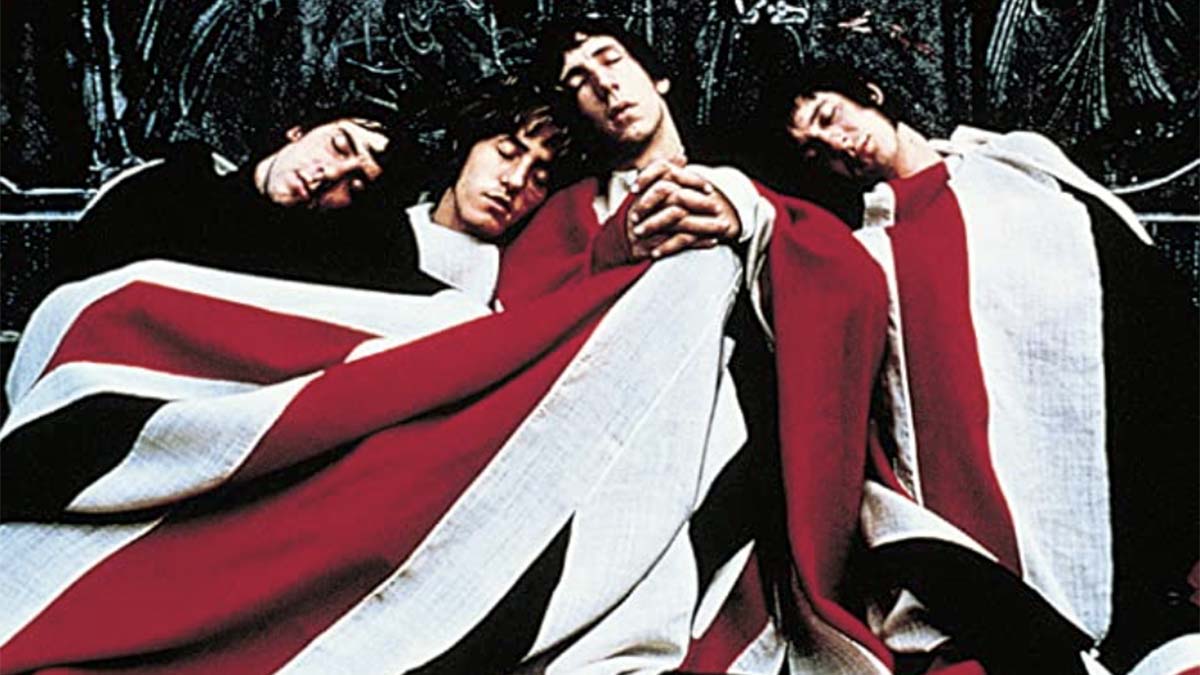
    The classic rock band have threatened for decades to call it quits. This time they swear it’s over as they dubbed this tour, The Song Is Over – North American Farewell Tour of which their south Florida show is the opening date.

    Lady Gaga August 31, September 1 & 3 at Kaseya Center

    The pop/movie star brings her Mayhem Ball tour to Miami for three nights of over the top extravagance.