Category: News

  • Florida Supercon Gives Us a Chance to Praise Lost

    Florida Supercon Gives Us a Chance to Praise Lost

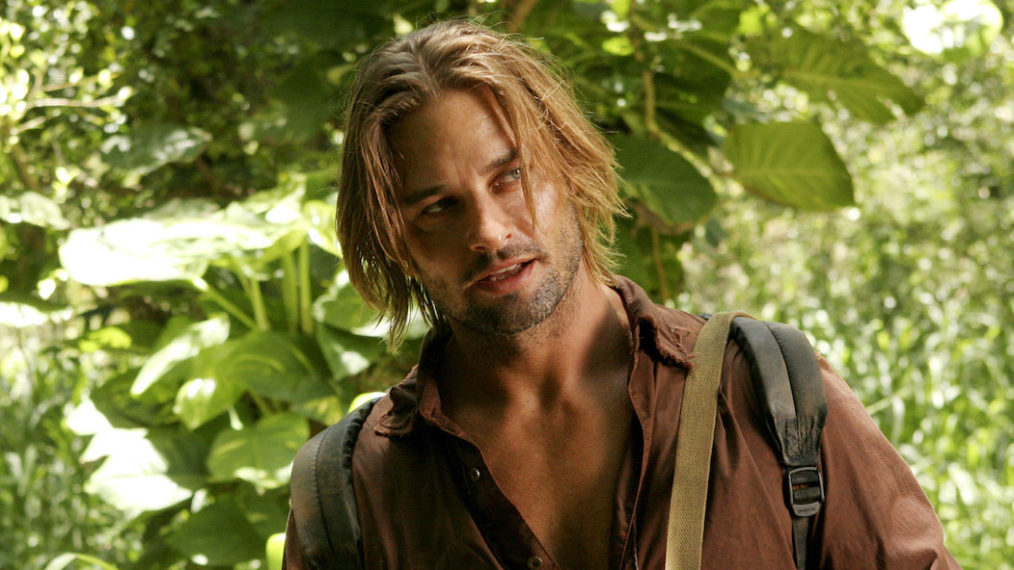
    Florida Supercon, held this year July 18-20 at Miami Beach Convention Center, always has a plethora of guests from geek culture.  Whether it’s comic book artists like Michael Golden who co-created Rogue from X-men or Bob Hall who drew West Coast Avengers or  movie actors like John Boyega from the new Star Wars movies or Jeremy Renner from Avengers. The one that has me most geeked out this year is Josh Holloway who played Sawyer and Henry Ian Cusick who played Desmond on the TV show Lost. Here are my thoughts I wrote on the show back in 2010 right s it was about to wrap up. 

    Last year a friend invited me to grab a drink with her on a Wednesday. I said, “Sure”, but then I remembered the TV show Lost was on that night. I wanted to stay home, but wouldn’t that be pathetic? This was the first time since Seinfeld left the air that a television show inspired such an internal debate.

    An argument could be made that in the last decade television has surpassed movies in quality. While snobs in the twentieth century (of which I am a spiritual descendent) bragged how they didn’t own a television, they might now seem more learned by not knowing how much a movie ticket costs. The Wire, Six Feet Under, Arrested Development, and Da Ali G Show all surpassed anything on the big screen.

    DVDs freed television shows to no longer have to be procedural. Each season could now be a 22 hour movie and the entire series could be a 100 hour epic. The ability to stretch a story beyond two or three hours, allowed the writers to give the characters more depth and freed them to be more experimental. It also allowed a viewer to catch on to a show three years after it started and not have to be a slave to the scheduling.

    This is how I got involved with Lost.

    When I saw the first commercials during halftime of NBA games I thought it was a spin-off from Survivor. People swore by the show, but I avoided it as I figured network television  couldn’t offer anything worthwhile. Finally in the summer of 2008 with too much time on my hands I borrowed season one from a friend.  The first volume chronicled a group of survivors of an airplane crash and their struggle to live on an apparently deserted island.  But not only is there more to the island than meets the eye, there is also more to the survivors. Each episode showed their adventures on the island, but each hour also flashbacked to a different character’s life before the fateful crash.

    While the first season had too many cheesy interludes where the characters would climb a tree for five minutes or a shirtless Sawyer would wade in the water for a beefcake moment too long, the creators had already mastered the ability to build intrigue and end each episode with a bang. A common complaint is there were too many questions and not enough answers, but isn’t the first rule of show biz to always leave the audience wanting more? The cliffhangers got me watching an entire disc in one sitting and then an entire season and then another and then another. When season five started I had to watch it the first minute it was available, which was Wednesdays at 9 PM.

    The show has evolved into something unique. Star Trek was mocked because its fans took it too seriously. I once had an English professor who went on a mite too long about how Spock, Kirk, and McCoy represented the id, ego ,and superego. But one can’t watch Lost without exposing your inner geek. Each line of dialogue, each wayward glance has significance that could keep you speculating for hours. Egyptian mythology, Biblical allegories, famed philosophers, and Star Wars references are all thrown together into this crockpot. If James Cameron could have put a fraction of  such thought and creativity into Avatar’s story I’d understand why it’s breaking box office records.

    I feel like a stooge providing all this gushing free publicity for ABC, but Lost is really that good. So if you’ve got plans for Tuesday nights at nine don’t ask me along, you might feel rejected.

  • Ruth (Fiction)

    Ruth (Fiction)

    I met Ruth at work in 1998 while she was getting her second master’s degree at the age of 60. Her first was in Fine Arts from the University of Miami. We were like oil and water at first.   From day one, she was blunt and didn’t sugarcoat anything. I met my match. 

    While working together at a work event she said.

    “You’re too nice. That’ll get you eaten alive.”

    “I’m not that nice.” I said with raised eyebrows.

    And on another occasion. “You’re gaining weight.  You need to exercise more.”

    “I’m over 30!” I insisted. 

    We both laughed, even as we held our ground. Over time, I realized Ruth was usually right, and she always had my best interests at heart, even when her delivery was sharp.

    She was manager of a library in the city of Miami for a decade until the age of 70. Ruth didn’t just run a library; she orchestrated a cultural hub. She brought in performers, artists, and managed to secure donations for countless events. Night and day, even after retirement, she was on the go.

    “I have a show at the New World Symphony this week, a play in Coral Gables Friday, and am going to show my jewelry to a boutique on Saturday,” she’d say casually, as if that weren’t enough to exhaust three people.

    Most museum gift shops in South Florida carried her jewelry pieces. Her jewelry was colorful, striking, and unique. 

    Years later, a developer bought her building on Biscayne Bay. She called me the day the offer came in.

    “They want to pay me to leave. Can you believe it? I have no choice.” 

    I helped her navigate that transition. Her health was fragile, and living alone was not going to work much longer.

    “I don’t like the idea of giving up my independence,” she admitted.

    “You’re not giving up independence,” I told her. “You’re choosing a place where you can keep living, fully.”

    She moved to a nearby independent living residence, just a few miles from me. I visited her as often as I could despite my work schedule.

    I visited Ruth one last time in the fall of 2024.

    The door was ajar, latch undone, so I walked right in.

    “I left it open for you,” she called out from her chair. “Saves me the walk and you the knock.”

    Her trained service dog, a Bichon Frise, Loli, greeted me with a wagging tail and no bark. Just pure joy.

    Her apartment was spotless, every wall covered in her oversized, vibrant paintings. Recessed lighting complimented the art and stained-glass lamps. Her black leather L shaped sofa sprawled across one wall. Peruvian runners and statues adorned her side tables. 

    “We’ll go in a few minutes. Sit down. I’m almost ready.”

    Her dear friend Matt was there too, giving me a warm hug and a peck on the cheek.

    “You’re just in time,” he said. “She’s been talking about this lunch all morning.”

    She carefully packed up her traveling oxygen machine.

    “I hope we see some people I like in the dining room today.”

    “Our reservation is for 2 p.m. We better go.” She slipped on her sandals, put on her blue sequins jacket, put her traveling oxygen and small purse over her shoulder, asked Matt to lead Loli on the leash and off we went. 

    As we walked, I admired her sparkling jacket.

    “I love your jacket!” I said.

    “Consignment store. Last month.”

    Matt leaned towards me and whispered,

    “She’s had it for ten years and won’t let it go.”

    We laughed softly. The sequins were patchy, but Ruth strutted like a queen. Her ballerina frame still graceful, her black taffeta pants flowing behind her.

    At the front desk, she greeted the hostess.

    “We’d like the window table. The one overlooking the patio.”

    The staff smiled, happy to see her.  She knew them all.

    “How’s your sister and the baby?” she asked the waiter.

    “Did you finish that last exam?” she asked the hostess.

    But once we sat, I could tell she’d overdone it. Her breathing was shallow, and she quietly slipped the oxygen tubes back under her nose.

    “Bring me whatever looks good,” she said. “No Shrimp.”

    I returned with a plate of roasted lamb, vegetables, and a slice of cheese cake. The chef was known to be five stars, and today’s buffet lived up to every expectation. 

    As we ate, old friends stopped by our table.

    “Ruth! You look beautiful! When are you inviting me to see your paintings?”

    She waved them off.

    “I’ll let you know”

    Her art had been featured on the resident’s website, but Ruth was selective about who she let in her apartment. You could always tell who she liked.  

    We talked about symphonies and plays, about old friends, former husbands, and colleagues. 

    I went home by 9 p.m. with a full heart. 

    A few days later, on the way to a coworker’s viewing, I got a text that Ruth had passed. Just like that, the world dimmed a bit.

    Her life came flooding back. Stories she’d shared: living on a kibbutz in her 20’s, working in marketing in New York City in her 40’s, spending years in Bahrain in her 30’s with her husband.

    “I wore capri pants and rode a bike through the neighborhood. You’d think I was starting a revolution,” she once told me, laughing.

    She had an insatiable lust for life. Always present, always bold.

    And I’ll never forget how she pinched my husband’s butt every time he hugged her.

    “He’s a good man! Don’t lose him!” she’d say, making him turn beet red.

    Once, I told her, “You remind me of that line from West Side Story. ‘When you’re a Jet, you’re a Jet all the way, from your first cigarette to your last dying day.’”

    “Oh I don’t know, she said humbly.” 

    Ruth was family. A woman who inspired others to embrace joy, seek beauty, and never say no to a meal with a friend. 

  • Shivva- Local Rock Band on their Blissful Noise

    Shivva- Local Rock Band on their Blissful Noise

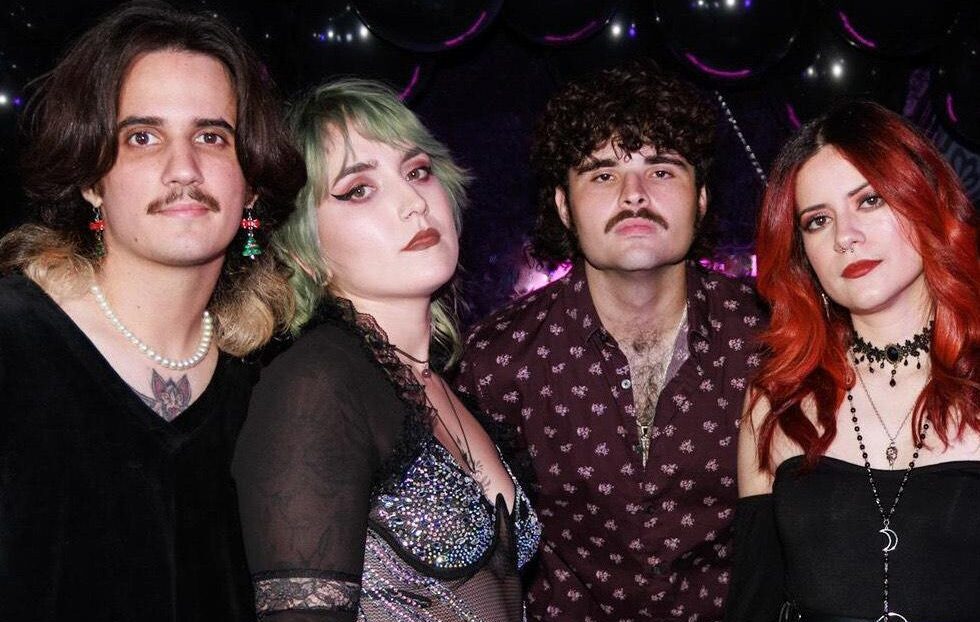
    Emerging from South Florida with a sound soaked in dreamy textures we find Shivva. Their sound has steadily built a reputation for emotionally charged songwriting. Their music is a sonic collage of swirling guitars, synths, hazy vocals, and raw vulnerability drawing from the forgotten treasures of shoegaze and dreampop. Shivva hopped on to the Jitney with their big feelings of blissful noise.

    Why the name Shivva?

    Shivva is a name we came up with. We started with “shiv” but wanted it to sound cuter, “shiva” being phonetically nice to say and has a more feminine vibe that parallels our music. We also liked the idea of what Shiva the deity represents, the Hindu god of destruction and rebirth. The idea of addressing inner darkness being necessary for transformation. 

    What is your practice situation and who and how do you write your songs?

    Our practice situation is we travel between Homestead and Doral. We meet at our guitarist Yardley’s house to track and record demos and our drummer Sebastian’s house for full band rehearsal. Songwriting, Shivva is a big collaboration and we all contribute in the songwriting process. Someone will present an idea or concept and each respective person writes their own parts and we bounce ideas off one another in the process. 

    If you can have a guest musician play with you who would it be?

    Melanie: Belinda Butcher from My Bloody Valentine would be extreme. Or if we ever got the chance to work with Danny Elfman that would be a dream.

    Monica: Alex Gehring from Ringo Deathstarr or Rachel Goswell from Slowdive- both of these bands influence Shivva, I’d love to pick at their brain!

    Yardley: Sam Ray from Teen Suicide 

    Sebastian: Zach Schwartz from Spirit of the beehive! 

    Tell us about your next album when can we expect it.

    Currently in the works.

    Share with us something that you wouldn’t usually tell other people.

    Monica and Melanie have been on TV. Sebastian likes to do archery with Yardley

    Where do you come from?

    Shivva came to fruition in Kendall, but our members come from different parts of SFL!  

    Do you have a Video coming out?

    Soon.

    What was the first album you each bought?

    Monica: The Emptiness by Alesana 

    Mel: Animal. this is a tough one a lot of my early music was illegally downloaded and I have no memory of my first purchased album

    Yardley: Fever by Bullet for my Valentine 

    Sebastian: Random Access Memory by Daft Punk 

    Anything else you want to tell me or provide to include into this?

    We are so thankful for anyone who invites us onto a bill, has asked us to collaborate with us, comes out to our shows, and who supports us as individuals with this project and the band as a whole.  

    Please Provide your Social Media handles.

    Instagram is: @shivvamusic.  Linktree for all links: https://linktr.ee/Shivvamusic?utm_source=linktree_profile_share&ltsid=6986d820-5a17-4580-9db4-c0e2de9147f6

  • There Were Only Two Women in My Life I Ever Wanted to Marry

    There Were Only Two Women in My Life I Ever Wanted to Marry

    There were only two women in my life who I ever wanted to marry.

    I used to say that “one of them was a nice Italian girl from Bay Ridge, Brooklyn.” Turned out she wasn’t so nice; thank NEIL, GOD, that I didn’t marry her, and, truth be told. Myrna saved me from her.

     Yes, I did meet and go out with some very nice girls when I was at Beach High and later, but with only one exception, Maryann and Myrna were the only two who I ever wanted to marry.

     After I graduated Beach High in June of ’62, as a swimmer I wanted to go to a school with a great swimming program and my dear and longtime and still great friend, Charlie Clark and I decided to go to 1/2SU. (You’ve heard of that place—home of the semi-holes—as I certainly had no interest in being a fartin’ tater in Gainesville).

     Well, one term was it for me and while I met a really nice girl by the name of Molly Alderson, who lived in 1/2assee, how could it work? She lived there and I lived on Miami Beach. Anyway, once the NOT fahn Southern anything but gentlemen of Kappa Alpha (fraternity) firebombed the TEP house there (proud to say that I am still a TEP) I decided that place wasn’t for me and I came home in December and immediately went to work at Fontainebleau, where I was hired first as a cabana boy, then, shortly asked to become teen-age counselor and then, after Ziggy Lane, our Director of Entertainment, left, Bert Sheldon 27, 1976, a bit more than ten years later.

     I have always been a virulent anti-smoker, but one night, going back to work after taking care of the day time activities I walked through the Fleur de Lis dining room and saw two women at a table, an older lady and this incredibly sexy younger lady holding a cigarette. I was stunned and resolved to meet her on the pool deck the next day.

     The following day I looked for her endlessly but, no, she was not there until, some time after noon, she suddenly appeared, holding a cigarette and approaching her I immediately said, “how come every time I see you, you’re smoking,” to which she replied, catching me off guard, “I didn’t know you were watching me so closely!” I rebounded quickly, introduced myself, told her who I was, pointing out the words “Fontainebleau Social Staff” in blue on my white t-shirt, was my part of my daily daytime outfit of white socks, white tennis shoes, white beach boy shorts and the aforementioned t-shirt, so she know I was “for real.”

     We arranged to go out that night after work and she was to meet me in the lobby at about either 9:00 or 9:30. I was there waiting when she suddenly showed up (wearing, I think it was, a light blue just about knee-length dress with, on the front, three huge flowers, the likes of which I had never seen before) and, oh, was I taken.

     We went for a bite and then back to my house on Biscayne Point on Miami Beach and made love and I brought her back to the hotel. When I came in to work in the morning and went to the Chez Bon Bon coffee shop for breakfast she was there with her dear aunt, with whom she had made the trip and introduced me. Of course, she had a cigarette in her hand but I never ever, before or after, saw a woman who looked so sexy smoking. Later she told me that she had been worried all night that when I came in in the morning I wouldn’t want to see her and that when I smiled and sat down she was incredibly relieved.

     The relationship began and she came up to Cornell twice for fraternity weekends and my fraternity brothers—no exaggeration—with their dates sat there staring at her with their mouths wide open, she was that sexy-looking. We talked on the phone and saw each other until I was ready to leave for Christmas break and head for New York City where I had gotten a job as a student dining car steward with the Pennsylvania Railroad and when I called her to tell her she told me that she and Sammy, who she had been dating for seven years before I met her, were getting married. It broke my heart.

     I was on my way back to school in January of ’68 (they got married in August of ’67) and there were no more trains from Penn Station to Ithaca so I had to take the bus from the Port Authority bus station at 41st Street and 8th Avenue and she—Maryann—was still in my heart, so I called her at her office from the pay phone on the southeast corner of 41st and 8th and when she answered the phone, “Marubeni” (the Japanese import-export company for which she worked) I said, “Are you happy?” and she replied “no.” Well, dear readers, that was the beginning of an eight-year affair over which time she was going to divorce him and never did and which didn’t end until I told her that Myrna and I were getting married. The rest of that part of the story will be in the next issue!

     I lived on Biscayne Point at the north end of Miami Beach and went to Biscayne Elementary School at which there was a sixth-grade teacher by the name of Mrs. Waller. I didn’t have her for sixth grade but she had a reputation as being the toughest teacher in the school, and, interestingly enough, she and her family lived on Biscayne Point, also, and her daughter, a lovely blonde girl by name of Roberta, would be taking her daily walks when I was jogging. We would smile at each other, eventually saying “hello” or “good morning” and shortly thereafter stopping to chat. On one of those chats she invited me to a party in far South Dade County to which I replied by asking if we were going as dates, to which she responded, “oh, no, just come down and maybe you’ll meet somebody.” O M G was somebody or something smiling on me that day!

     In those days we did not have high schools with the 5AAAA and lower numbers for athletics, they were all Classes “A,” “B” and “C” based on student body size and the only class C basketball player ever to be named “All-City” by the Miami Herald was the late, great Oliver “Butch” Stallings” who went to school at St. Patrick’s High School on Miami Beach. At some point, I met Butch while I was working at Fontainebleau and gave him a job as one of my counselors, which developed into a warm friendship. After I learned that Roberta and I would not be going to the party as dates, I called Butch and said, “why don’t you come to my house? I’ll drive and maybe we’ll meet somebody nice,” to which he agreed. The party was one week and one day after Thanksgiving of ’73 and it turned out to be the luckiest day of my life.

     We went to the party—“way down south”—and I walked around for about 35 minutes not seeing a single person who I wanted to meet. At that point I went to the front door, put my hand on the door knob and then said to myself, “wait a minute, where do you think you’re going? You brought Butch and, obviously, you can’t leave him here” at which point I turned to look at the room and scan for him and directly across the room, standing against the opposite wall, was one of, if not the most stunningly beautiful woman I had ever seen and I stood there, literally, with my mouth hanging open. All of a sudden, Butch was standing next me and he grabbed me by the forearm “You wanna’ meet her?” he said,” to which I replied “do you know her,” to which he then answered with “don’t worry about it” and he dragged me across the room.

     When we got to that lady, he grabbed her by the forearm and said to her, “what’s your name?” and she, looking up and smiling said “Myrna.” “Myrna, this is your new friend Seth. Seth, this is your new friend Myrna. Now you can’t say you haven’t been properly introduced.” I was standing there with, literally, my knees knocking and thinking to myself, “holy cow, is this woman gorgeous, but wait a minute, she lives all the way down here and I live on the beach and she is G. U. (Geographically Undesirable for the unaware)” “Well,” I thought, I’ll ask for her number and maybe come down once or twice to take her out. So I did (ask for her number) and much to my gloriously happy shock and surprise (remember, this was before area codes) she said “864-3012.”

     “864” I almost yelled, “that’s a North Beach number—where do you live?” And when she told me “The Treasure House on Treasure Island” I nearly plotzed (Yiddishism for fainted!) and said “that’s incredible—I live on Biscayne Point—we’re only seven minutes or so apart.”

     Well, ladies and gentlemen, boys and girls, we will conclude that part of the story here, also, with another “to be continued” because I want you to be excitedly awaiting the second parts of both stories, but, and in short and suffice to say, I was Myrna’s third and last husband, she my first and only wife and the only time she ever smoked was between husbands. She brought me my family (other than my beloved brother, Bennett, Beach High ’70 and his daughter, my beautiful niece, Dara, they now being part of our one wonderful family) and our marriage lasted nearly 47 years, she passing away on September 7th, 2023 at the age of 90, looking like she was 50 when she died, keeping in mind that I chased that woman for three years before she caught me!

     Hope you enjoyed this real and true anything but a bubbemisseh (another Yiddishism for fable or fairy tale) and looking forward to seeing you on the next go-around.

     With warmest good wishes to all, and, as we say in South Florida, “thank you for not shooting and have a MIAMI NICE day!”

  • Viva La Parranda Triumphantly Returns to Miami New Drama

    Viva La Parranda Triumphantly Returns to Miami New Drama

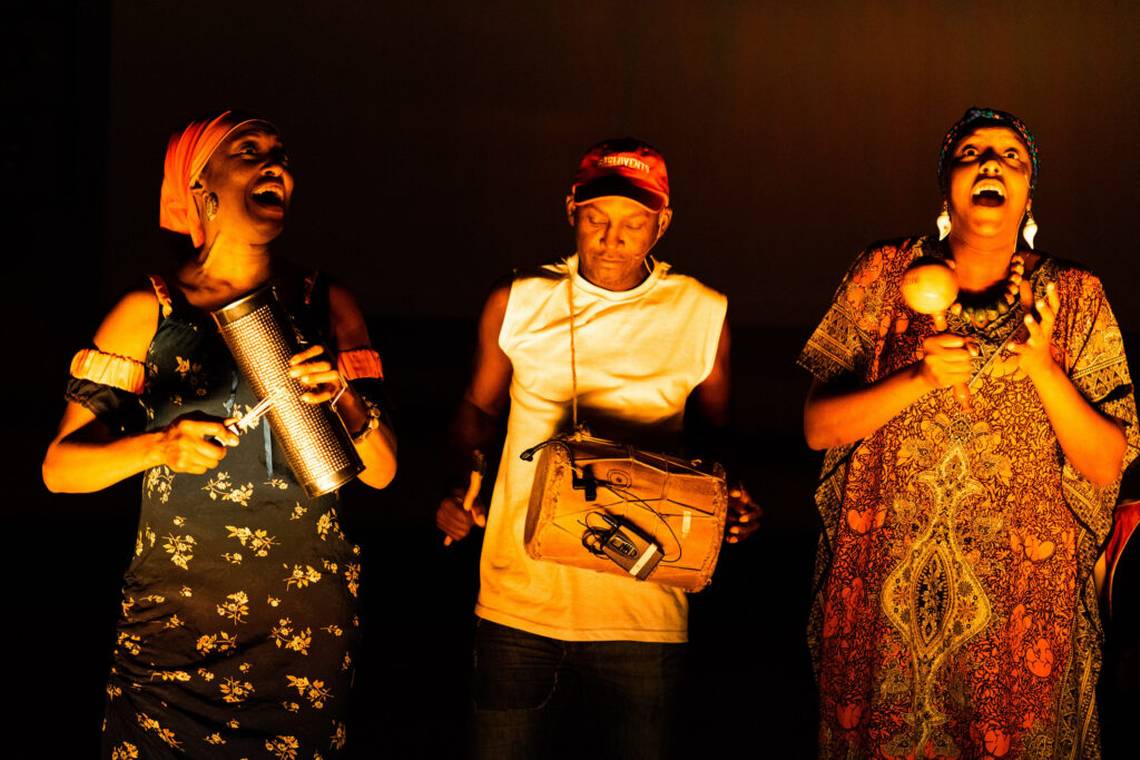
    Viva La Parranda is an enchanting exploration into the simple yet tumultuous lives of a group of Venezuelans from El Clavo, a small village in the forest about two hours outside of Caracas.

    It is a warm and inviting musical documentary that will fill your heart and stomach with joy and compassion.

    La parranda translates to “the party” and is a Spanish phrase similar to la fiesta. The play is performed in Spanish with English subtitles.

    Viva La Parranda is fun, compelling and outside-the-box immersive theatre.

    Audience members are invited to dance on stage, and after the show there is a potluck of sorts, as theatergoers can and should eat the sancocho (a hearty stew) that has been cooking since the start of the show.

    The sancocho is the most important narrative device in this piece. The moment you walk into the theater you smell it, and your brain and microbiome are triggered into a sense of comfort, a gut feeling that you are home. Throughout the entire performance the soup is cooking – you literally see and smell the steam as it rises into the air and you hunger for what comes next.

    They use the food as a narrative bridge between the personal tales that the troupe members share. And when the sancocho is done, the play is over. We highly recommend consuming the soup, it’s delicious. And it would be great if they sold a jar on the way out, easily worth twenty bucks.

    Viva La Parranda Comes Full Circle

    Viva La Parranda world premiered in Miami at MND in 2019 – we were there – and since then the performance has traveled all around the world. To come back to Miami is very much a homecoming.

    There are eight members in the parranda, led by Betsayda Machado, a widely recognized singer in her home-town region since the age of seven. Other members include Blanca Castillo, a retired nurse; Youse Cardozo, a firefighter; Asterio Betancourt, a former basketball player; Nereida Machado, Oscar Ruiz, Adrian Gomez and Nelson Gomez.

    For Venezuelans in exile or who have migrated to the U.S., the play is a cultural hug—proof their roots are still dancing even if they’ve moved a thousand miles away.

    For Latinos of all flavors, it’s a colorful fiesta celebrating the beautiful chaos and richness of their traditions. And for anyone in the audience, no matter their background, it’s a reminder that sometimes, music and community are the best medicine—and the best party. And right now, this is a lesson more timelier than ever.

    Viva La Parranda plays at Miami New Drama until July 27th.

    For more info and tickets, click here.

    Click here for a sancocho recipe if you want to make it at home.


  • We’re Not Living in a Science Fiction Movie: Why Real Science Takes Time

    We’re Not Living in a Science Fiction Movie: Why Real Science Takes Time

    I was making coffee the other morning while listening to a physics podcast, when the guest—a cosmologist and college professor—shared an anecdote that made me pause. During a lecture on exoplanets, one of her students asked—earnestly, the professor said—why us humans haven’t tried to contact the other intelligent species that are out there. The professor, a kind person, didn’t snap back with what I would have said, which is some form of “What the hell are you talking about?” Instead, she gently explained that we can’t contact other intelligent alien species because we don’t actually know if there are any other intelligent species out there. At all. Not even a hint.

    The student was stunned.

    We live in a world where the entertainment industry delivers us a consistent stream of sci-fi stories. From Star Trek to Star Wars to Arrival to 3 Body Problem, sci-fi novels, TV shows, and movies depict realities where alien civilizations, artificial gravity, and lightspeed travel are not just possible but fully realized.

    But in reality…no, we haven’t found intelligent life beyond Earth.

    No, we don’t have artificial gravity on spaceships.

    No, we can’t time travel, teleport, or access alternate dimensions, at least not yet.

    When we don’t recognize where science actually stands, we form unrealistic expectations. Then, when anticipated breakthroughs don’t arrive overnight, trust erodes, with disappointment and disillusionment following close behind.

    All of it starting with where our expectations come from.

    The Gap Between Science Fiction and Science Reality

    We live in an era where special effects and CGI-heavy movie scenes make scientific miracles look routine. Fictional narratives toss around terms like “quantum entanglement,” “neural link,” or “gravity drives,” and since these are phrases involved in real-life theoretical concepts, they sound plausible enough that the story feels real.

    This idea is the backbone of good sci-fi—it engages the imagination and can inspire innovation, so long as audiences can distinguish what’s possible from what’s fiction. But when that line blurs too much, unrealistic outlooks take hold, collapsing into cynicism when progress isn’t instant.

    To be clear, I’m not blaming sci-fi creators…partly because I am one, but also because most authors and filmmakers don’t aim to mislead. They use real science mixed with imaginary concepts to spark the same wonder they feel themselves. It’s not their fault when audiences can’t separate fact from fiction, but that confusion still occurs.

    Take the show Black Mirror. One of my favorite episodes, “San Junipero,” depicts a society where it’s possible to upload your consciousness to a simulated reality after death, living forever in a digital heaven. The main characters are two women who love each other and have chosen to be together in this afterlife reality, reliving the story of how they met. It’s a beautifully executed episode about love, memory, and second chances set against neon-soaked beaches and synthwave soundscapes, and went on to win two Emmys (it’s also one of the very, very few Black Mirror episodes with a happy ending). But, in the real world, we’re nowhere near the technology needed to upload a human consciousness. The current state of neuroscience doesn’t fully understand how consciousness or memory encoding works, much less how to digitize it. Even optimistic projections place this technology decades at a minimum and more likely centuries away, if it’s possible at all.

    Another great sci-fi series, The Expanse, shows a future where humanity has settled the solar system and established a fully self-sustaining Martian colony with advanced tech for domed cities and terraforming. But in reality, NASA and SpaceX are still only in the planning phases of sending the first humans to Mars, ever. So far all we’ve sent are a few billion-dollar rovers. We are nowhere near building Martian cities, let alone manufacturing a breathable atmosphere over there. The initial challenges—radiation shielding, food production, sustainable life support, astronomical funding—mean even the most rudimentary Martian colony is still a distant prospect.

    Then there’s one of my favorite movies, Her, where Samantha, an operating system with a warm, soothing voice, becomes a fully sentient AI capable of love, self-awareness, and complex emotions. Today, while AI has advanced in pattern recognition and can generate human-like text, a true sentient consciousness with self-awareness remains out of reach. Experts still debate if AGI—artificial general intelligence—will happen at all, and even if it does nobody is clear when or what exactly it will look like. Current systems like ChatGPT may sound conversational, but they don’t understand or feel in any human sense.

    The Paradox: Disbelief and Hyper-Belief

    What baffles me is this: the same cultural force that makes people believe we’ve got sci-fi-level technology is also feeding the growing distrust of science itself. It’s a paradox: many claim the moon landing was faked, vaccines are a scam, or climate change is a hoax, yet many also believe we should already have flying cars, Martian colonies, and sentient AI.

    Both of these beliefs shouldn’t coexist, but in humanity they do.

    Science fiction is powerful because it’s emotionally convincing. It packages the futures we desire in clean narratives where scientific miracles arrive just in time. But due to a lack of understanding about how science actually works—messy, nonlinear, and self-correcting—changes in scientific consensus are often seen as evidence that scientists don’t know what they’re doing, rather than as a natural part of the process. Sci-fi primes us to expect fast, clean results, but real science is meticulous.

    As S.A. Applin writes in her Vice piece, “Science Fiction Is Not Social Reality”: “Gadgets, services, and technologies work in Science Fiction because it is fiction […] their authors or filmmakers showed them working […] because in fiction, it is very easy to make things work, because they aren’t real and don’t need to actually work. Realizing the unreal from fiction will not make that realization work in the same way in real life. It can’t. The context, timeframe, and people are different. Most importantly, Science Fiction is fiction.”

    When even a small portion of society takes the forward-thinking of sci-fi as a guarantee, or mistakes the unnaturally clean logic of a story for how science functions in the real world, they can become suspicious of scientists and disillusioned with the world they live in. This confusion doesn’t just impact how we talk about technology while we’re hanging out with friends or having a conversation with family; it has real-world consequences for how we fund, support, and trust the processes that will actually get us closer to the futures we want.

    Real-World Consequences of the Paradox

    The consequences of a lack of trust in science can be seen all around us.

    Many people—possibly conditioned by science fiction narratives to be wary of government conspiracies and biological weapons—felt suspicious about the Covid pandemic and the subsequent vaccine rollout even though decades of groundwork in mRNA technology made the “overnight” breakthrough possible. As Dr. Sabrina Assoumou, a BU School of Medicine professor, explains in regard to the vaccine, “I think there is a perception that things moved very fast, but we want to underscore that the technology being used now was being studied for a decade.” Johns Hopkins Medicine similarly clarified that “Vaccine developers didn’t skip any testing steps, but conducted some of the steps on an overlapping schedule to gather data faster.” The science was real, the breakthroughs were earned, but public expectations of what science should look like led many to dismiss legitimate progress.

    Then there’s the strange tension between flat Earthers, moon landing deniers, and people who believe that interplanetary travel is imminent. There are people who insist NASA faked the moon landing while simultaneously championing Elon Musk’s plans for space colonization in our lifetimes, distrusting the same scientific institutions and processes that would make that effort possible.

    It’s also telling that in the same species, we can find these two extremes: biohackers who believe radical life extension and digital immortality are around the corner thanks to CRISPR, AI, and nanotechnology, and vaccine skeptics who distrust these very technologies, fearing microchips and unnatural interventions. Both ends of this spectrum are shaped, in part, by sci-fi narratives—one fueling hyper-belief in imminent breakthroughs, the other fostering suspicion toward proven science. Together, they illustrate the divide in how we engage with science, a divide that often stalls the incremental progress needed to extend human lives.

    These contradictions have consequences that reach beyond internet debates.

    The Importance of Understanding the Scientific Process

    It’s easy to dismiss all of this as just another cultural quirk. A weird but harmless inconsistency in the digital age. But the confusion between science fiction and scientific reality is not harmless. It directly impacts how we think about, fund, and support the research that shapes our future.

    We’re at a moment of high stakes. From climate change to pandemic preparedness to the governance of artificial intelligence, we are facing challenges that require public trust in science and a collective willingness to fund long-term, careful work. If we expect science to deliver clean, rapid, cinematic breakthroughs, we’ll be disappointed, growing cynical and impatient just when patience matters most.

    The reality: real science is slow, careful, and methodical. It is a self-correcting, error-seeking process, peer-reviewed and incremental, rarely delivering the kind of “aha” moments that science fiction promises. Or as Ed Yong writes in The Atlantic, “This is how science actually works. It’s less the parade of decisive blockbuster discoveries that the press often portrays, and more a slow, erratic stumble toward ever less uncertainty.”

    It’s that stumble that has given us vaccines, clean water, space travel, and the technology you’re using to read this right now; it’s that stumble that will get us closer to the futures we want, one step at a time. Sci-fi should inspire us to dream, but it isn’t a roadmap; it’s a vision board. It can light the spark, but we need disciplined science to turn it into reality. Without clear public understanding, we remain stuck between disbelief and disappointment. We should celebrate real science, educate our communities about how it works, and protect its integrity so we can continue moving forward.

    Because the only way we can continue reaching for the stars is if we keep our feet firmly planted in reality.

  • People Used to Eat Manatees?

    People Used to Eat Manatees?

    Did you know that manatees used to be eaten? I’m not saying they should be, but they used to be!

    Mr. Skeptical sees the headline and flips. “I’m going to get other subscribers and a bunch of pitchforks and burn your house down.”

    “Take a chill-pill, will you? Just because I mention manatees used to be eaten doesn’t mean I endorse it. I don’t think we should eat manatees, but I do think it’s important to realize that we used to.”

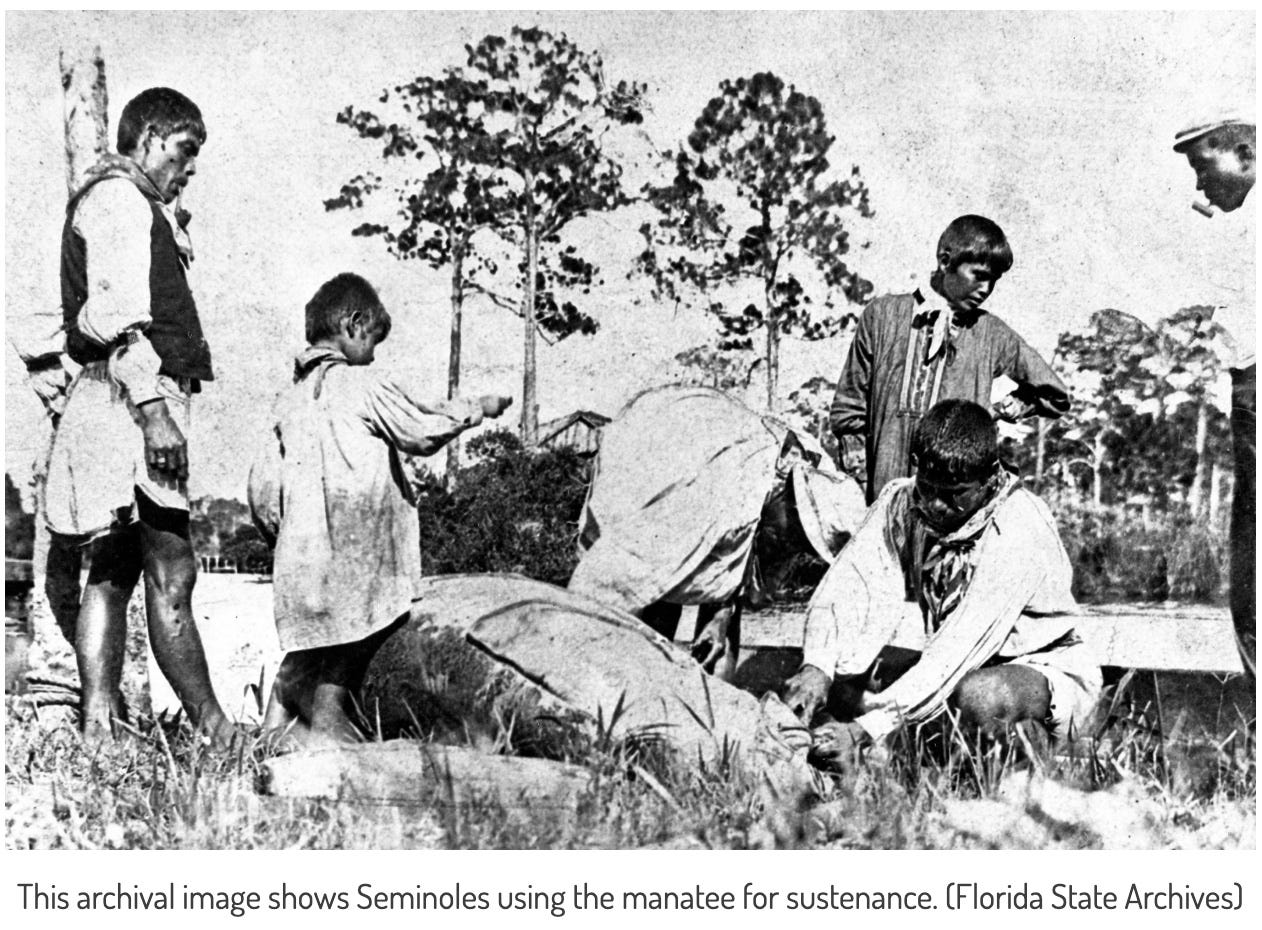
    In the past, sea cows weren’t sacred mascots, but a source of sustenance. Manatees once fed Indigenous peoples and settlers across the Americas. Globally, their cousin the dugong, still ends up in cooking pots across the Pacific.


    “They’re called sea cows for a reason. Historically eaten in Florida, the Amazon, and Africa. If they had four stomachs, they’d be ruminant royalty!”

    Mr. Skeptical has calmed down some. “Protected, endangered, and cute. You’re pitching a cookbook for manatee jerky?”

    His sarcasm is sooo irritating. “No. Besides, manatees are hind-gut fermenters, not ruminants. One stomach, huge cecum—like horses, not cows. They don’t have a four-chambered stomach like cows, buffalo, and lambs, so they aren’t the most ideal when it comes to edible meat for humans. And instead of eating them, we need to protect them. Sadly, it’s not humans eating them but us messing up the environment that causes more of their deaths.”

    Consider the American Bison. Once teetering on extinction, it now roams ranches and reserves in the hundreds of thousands. What changed?

    We started eating it.

    “Ah yes,” Mr. Skeptical smirks, “nothing ensures your survival quite like being delicious.”

    “Indeed. The bison’s comeback isn’t just a tale of ecological benevolence—it’s a triumph of market forces. Unlike the manatee, protected and practically sacred, the bison earned its rebirth by becoming profitable. Ranchers breed them, consumers crave them, and the species survives.”

    “Funny,” says Mr. Skeptical, “when the bison was just a symbol, it got slaughtered. Once it became a product, it got saved.”

    I raise a brow. For once, he might be onto something.

    Manatees, meanwhile, are protected from dinner plates. Their survival hinges on donations, government budgets, and moral sentiment. Noble, yes. Sustainable? Not always.

    “But if manatee meat ever became a delicacy,” Mr. Skeptical muses, “they’d be breeding them in sea farms by now.”

    I nod, slightly horrified—but also intrigued. I add, “This is so that our readers realize that we as humans are hunters and we ate any meat we could get our hands on. Even horses were eaten by us for a way longer period than since we recently started riding them.”

    Mr. Skeptical adds, “Next you’ll be lobbying for whale bacon. Leave the sea cows alone, Hermann—they’re slow swimmers, not fast food.”

    I take a deep breath and force myself to calm down, knowing that he gets off on making me look bad in front of the readers. “I’m not for slaughtering manatees and whales, but when it comes to invasive species in Florida like the iguanas and lionfish, I’m all for killing and eating them.”

    Be aware.

  • A Forgotten Friend

    A Forgotten Friend

    Oscar Senior took a ride on his bike. Gloria had decided to take the bus because she felt too old to ride on the bike with Oscar.

    The humble light-blue house of Josefina, Gloria’s mother, was six miles away from their home. They both had gone to visit the old folks—it had been a while since they last saw each other. Actually, Josefina had been sick for quite a long while. She had gotten the flu really bad, her knees had gone weak, and the veins on her legs had thickened—blue, sometimes purple—but her daughter had come over with Oscar, and she was going to be okay.

    Gloria had gone to nursing school, and she really knew how to handle the injection needle. Who knows exactly how many injections she had given to people; everyone in their neighborhood knew she was a certified nurse, and most of them had gone to her house once or twice for an injection or two.

    Now Gloria found herself inside her mother’s house, the same exact house she had lived in ever since she was a little girl. After fifty-some years, she was back in the old house, and as she injected the antibiotic into her mother’s left arm, Gloria thought about her childhood. She thought about the many little details engraved in her memory—the walls of her mother’s house, the old tile floor, the high ceilings, her long-lost friends, her five sisters, and her two brothers. She thought about them as little girls and boys, and she thought about time—how it had gone by so fast. Gloria thought about her three kids, and how each of them had started their own family life. She thought about Oscar Junior and his pregnant girlfriend, and the baby boy inside her belly.

    “What are you thinking about, mama?” Josefina asked.
    “My son. I’m thinking about my son.”
    “Which one, Carlos?”
    “No. Oscar. Wow, I can’t believe he’s having a baby boy.”
    “Yeah, me neither.”

    Gloria had already injected the antibiotic into her mother’s arm, and an hour had just passed since she’d arrived at the old house.

    “Look, there comes your husband.”
    “Where?”
    “There.” Josefina pointed with her right arm toward the outside. Her left arm felt numb, with a constant electric shock of pain.

    Gloria looked through the windows and kept her eyes on Oscar.

    Oscar rode his bike down a little hill where the main street pavement had been laid, about fifty feet in front of Josefina’s old house.
    He maneuvered his bicycle and stopped it right at the front gate. Got off. Parked it under the tropical shade of an almond tree. Opened the front gate slowly and walked in under the tin roof of the front porch.

    Oscar walked into the house through the front door, feeling out of breath. His legs felt weak, and sweat slowly ran down both sides of his forehead.
    “You had me worried there for a moment, my love,” Gloria said to him.
    “Oh, I’m okay, my princess. It had been a while since I last rode that bicycle.”
    “I know,” Gloria replied.
    “Why don’t you sit down and rest? I’ll make you some good coffee,” said Josefina.
    “Thank you,” Oscar replied.

    He sat down on Josefina’s old, comfortable couch and took a deep breath. Then he sighed.

    Josefina, with caution, stepped down into the kitchen, which was at a lower level than the living room, and started heating the water for coffee. Gloria and Oscar sat by themselves under the living room ceiling and looked at each other. Gloria smiled at him. He smiled at her. They both had puppy eyes, and it was obvious that love was now stronger than ever.

    After a while, Josefina walked back into the living room and handed Oscar a warm cup of good Honduran coffee. She sat next to him on the couch. Gloria sat at one of the chairs at the dining table. The three of them talked and laughed for a good while. And after five whole hours, they all felt tired. Oscar and Gloria decided it was time to head back to their small house.

    They both kissed and hugged Josefina. Gloria gave her an extra hug, and they embraced tightly for a moment.

    Meanwhile, Oscar stood outside the house, under the cool tropical shade of Josefina’s almond tree, and thought about his cockfighting chickens. He thought about training them some more. Thought about taking them to competition. All his life, Oscar had been a fanatic of the cockfight. He owned seventy-two fighting roosters and sixty-three fighting hens.

    Finally, Gloria came out of her mother’s house and closed the front gate behind her.

    “Are you taking the bus again?” Oscar asked.
    “Do you want me to go with you?” she asked.
    “Only if you want, but it’s a long ride. Maybe you should take the bus.”
    “Okay, I’ll take the bus.”
    “I’ll walk you to the bus stop.”

    They started walking toward the main street hill, and halfway there they both turned around and looked at the house, as if looking for Josefina. And she was there—standing behind the front gate of her house and under the tin roof of her porch. Gloria and Oscar waved. Josefina waved back. They kept on walking and started climbing the hill. Reached the main street. Crossed it, making sure there were no cars coming either way. They got to the bus stop. Oscar parked the bicycle off to the side. He held Gloria’s hand. Gloria held his. They kissed. Smiled. And waited for the bus to come.

    After a moment, the bus finally arrived. Gloria got in, paid her fare. The bus started moving. She looked out through the window, searching for her husband. He was still there. Standing. Waiting for her to look. He knew she would. And she had. They stared at each other and smiled. Oscar waved. Gloria didn’t. And her bus was now very far away, heading toward their neighborhood.

    Oscar unlocked the parking pedal of the bicycle. Walked it a bit. Then hopped on. Started pedaling. He was in motion. Slowly gaining speed. Now going fast—fast enough to feel and hear the wind in his ears.

    Between Josefina’s house and the house Gloria and Oscar owned, there were six miles of sugarcane plantation. While riding, Oscar settled into a comfortable pedaling rhythm without even noticing. There was a nice fresh afternoon feel to the air, and Oscar had not started to sweat. He had rested his knees for five hours, and they didn’t feel weak—they felt strong. His knees felt young and light.

    He rode on the narrow side of the main street that was dusty and kept the road to himself there, careful not to ride in the center lane—this part of town had a reputation for bad drivers. Oscar Senior had always preferred his horse ride over the bus ride because he knew too many people—or should I say, too many people knew him—and to avoid the small talk, he’d take the long way, because the long way was lonely and quiet and peaceful.

    Halfway home, in the middle of all that sugarcane, Oscar stopped pedaling. Slowly, his bicycle coasted to a stop. It had been a long day and full of nothing. No action. The sun looked good—giant and orange. He felt a little out of breath, but that was okay.

    Right where Oscar stopped, there in the middle of the road and the sugarcane, he gave a deep sigh and thought about his kids. Gloria’s kids were the same kids Oscar thought of whenever he thought of his kids. Now he thought of the youngest—Carlos Antonio Fuentes—who had recently moved out and into a small, simple place he and his girlfriend had found on the skirt of Merendon Mountain.

    “Goddamn it, Oscar, you did it,” he said to himself.

    The orange Central American sun was going down slow and majestic, and Oscar loved to catch the sun on its way down. Every day around this time, he made sure to be out in the open, looking toward it. But he would never look straight at the sun. Instead, he liked to contemplate the mix of colors in the Central American sky.

    Today the sky looks nicer than yesterday, Oscar thought.

    And while thinking that, he noticed how it was getting dark and late. So he pushed his bicycle forward, hopped on, and kept heading toward his house. The colors in the sky were fading. The sky was now not so pretty. And Oscar knew this, but still, he kept looking up while riding the old horse.

    Then he heard a voice. The voice came from behind.

    Oscar turned his head and looked back.
    Someone was riding a bicycle toward him—but they were too far away to make out.
    “Oscar!” the voice called again.

    Oscar stopped completely. Turned. Waited.
    The man got closer.
    He looked familiar.
    Oscar squinted, trying to recognize him.
    Then the man spoke again—

    Oscar turned. The sun hit his eyes.

    He squinted. The man on the bike called his name again.

    “Oscar!”

    Oscar couldn’t see his face. The light was too strong.

    The man got closer.

    It was Bonerges.

    His childhood friend.

    Oscar hadn’t seen him in years.

    They once rode a small boat together to the center of Ticamaya Lagoon. They scattered Bonerges’ father’s ashes that day. It was his father’s birthday. A lightning storm broke open the sky. They never forgot it.

    That same lagoon had almost drowned them once.

    They were teenagers then. They had skipped school. The day was too beautiful to stay inside. A group of girls was going to the lagoon. They followed. Showed off. Ran into the water laughing, chasing each other.

    They wore jeans.

    Bad idea.

    The jeans pulled them down fast. Like stones. They couldn’t swim right. They panicked. Yelled. Water in their mouths.

    One of the girls jumped in.

    Lorena Duranza.

    She swam hard and fast. She went under. Came up. Shouted:

    “Take off your pants! You’re sinking!”

    They did. Handed them to her.

    She held their jeans in one hand and told them to swim.

    They swam.

    The other girls waited on the shore. Laughing. Nervous. Clapping for Lorena.

    Two skinny boys. Cold. Ashamed. Chicken skin on their arms. Hands covering themselves. Laughing. Embarrassed.

    Now they walked together again. Pushing their bikes. Quiet. Remembering.

    Oscar thought about Lorena.

    He didn’t say it out loud.

    He just walked.
  • This Summer I’m Going to Get a Tan

    This Summer I’m Going to Get a Tan

    This summer, I’m planning to tan again. Not like I tanned as a teenager with olive oil slathered on and no drinking water in sight, but like a middle aged woman should: rarely, moisturized, and hydrated.

    In 2021, after spending more than a year indoors, growing more and more sallow, I went to the beach in Miami without sunscreen. It was a terrible decision. And so stupid because after more than a year of wearing masks to protect my health (and the health of others), I likely doubled my chance of having skin cancer because my unprotected flesh got scorched.

    I spent the rest of that trip with a painful, feverish second degree sunburn. Before that, I was a tan person with some freckles, after, I became a freckled person who sort of tans. It was the event that aged my skin.

    I haven’t tanned properly since because I’m scared of sun damage. But this summer — the summer the U.S. bombed Iran unprovoked, the summer masked ICE agents kidnap and deport people without trials to third countries, the summer democracy was buried in America — I’m just going to let myself get at least one tan with my new dry, freckly skin.

    Some of my happiest memories are laying out in the sun, crisping under swaying palm trees next to a body of water. Tanning is a multi-sensory experience: the Vitamin D feels great, but so does the sweat and heat, and I love the smells of a beach or pool day. It’s therapeutic, frankly.

    I’ll be honest. I’m also going to tan for the same reasons I wasn’t tanning — superficial ones. The thing that got me to start using sunscreen was signs of aging. It feels sort of silly right now with the future so uncertain to be so cautious. Like, I use a tinted sunscreen to keep me from getting sun, but am adding artificial color back on my face. Every time I apply it, it kind of annoys me.

    At the moment, not being able to age with a tan annoys me more. Let me turn into fruit leather if I want!

    I know people have complicated feelings about their skin tone. I certainly did as a swarthy child in a mostly pale extended family. I decided to accept myself pretty early on because, then as now, I hated the false white supremacist notion that being fair is the ideal. Whatever your skin tone, it’s a good skin tone. Whether in nature or in culture, there is strength in diversity.

    We’re literally on the brink of WWIII, can we not just love ourselves as we are?

    I’m not trying to have another epic lockdown sunburn. I won’t go without sunscreen all summer, but I’m frankly tired of planning for the future of my body at this exact moment. I want to spend a summer in it, wearing a bikini, consuming chips and dip, lots of water, magazines, and enjoying my God-given melanin.

    Follow Liz Tracy’s Substack, Not a Serious Life, for not-serious takes on pop culture, our aging bodies, and more.

  • The Rascal House

    The Rascal House

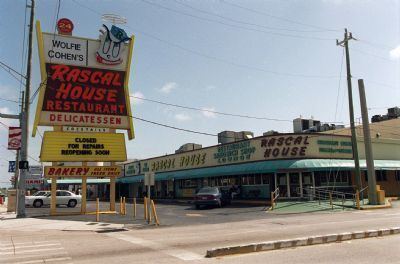
    Every few Sundays throughout the 1980’s my family would make the long drive to Sunny Isles to visit The Rascal House. This delicatessen off Collins Avenue  was massive. There were two gigantic dining rooms that seemed the size of an aisleless supermarket. But no matter how many seats they had, there was still a long line to get a table. Sometimes we waited 45 minutes which seemed like an eternity to a kid in an age before portable screens. I’d often soothe my impatience by  telling myself this was like The Magic Kingdom only for elderly Jews.

    Just like Disney World had Mickey Mouse, The Rascal House had their own cartoon logo, a little rascal whose face greeted you on their massive roadside sign. Also on the sign were various puns and one-liners you might find on a fortune cookie. Some examples I found online included “While we stop to think we often miss our opportunity” and “the smell of pickles/ brewed in brine/ and cabbage soup/ that tastes like wine”.  Inside were also a few life size sculptures of the cartoon rascal frying an egg.

    But the main attraction was the food. Even before you ordered anything, they fed you well. Metal bowls of pickles, cole slaw and various other pickled entities were left for you. Then came the basket of rolls and butter.

    The menu was as massive as the dining space. It went on forever. I’ve been vegan for so long it’s hard to recall how I salivated for the beef stew filed with large chunks of cow and smaller portions of potatoes, carrots, and peas. And then there was the large bowl of matzah ball soup where our whole table had a laugh when a waitress took  away Grandpa’s bowl as he was in midbite.

    The desserts were the restaurant’s pride and joy. They had them on display to tempt you. Huge pies the size of a car tire filled with apples, cherries, or blueberries. Strawberry shortcakes and lemon meringue, coffee cakes and crescent rugalachs.

    I’d often eat so much I had to lie down on the cushioned booth as the adults kept eating or waited for the check. The sound of all the conversation and the forks clanging into the plate and the glasses of water banging on to the tables was almost as loud and constant as that of the waves slamming into the shore at the beach.

    The waitresses wouldn’t take your money. You had to go up to the cashier by the exit to pay. Sometimes I’d get impatient with the whole Rascal House ritual and I’d wait by the cashier for us to go home. I still have a vivid memory of seeing some old guy settling up. He coughed up a big piece of phlegm, only to spit it unapologetically on the diner floor.  To a ten year old that was the height of comedy.

    As the decades passed, we’d still occasionally make the pilgrimage to the Rascal House. Some time in the 90’s they added television screens which was always showing sports highlights.

    Time marched on and each visit the dining rooms were a little less crowded. Their loyal customers passed away and in March 2008, they served their last corned beef after 54 years in business. For a while it was a gourmet market called Epicure, taking advantage of its supermarket size. Epicure closed down in 2017 and ever since then the building at 17190 Collins Avenue has stood vacant, haunted by the ghosts of pastramis past.