Category: News

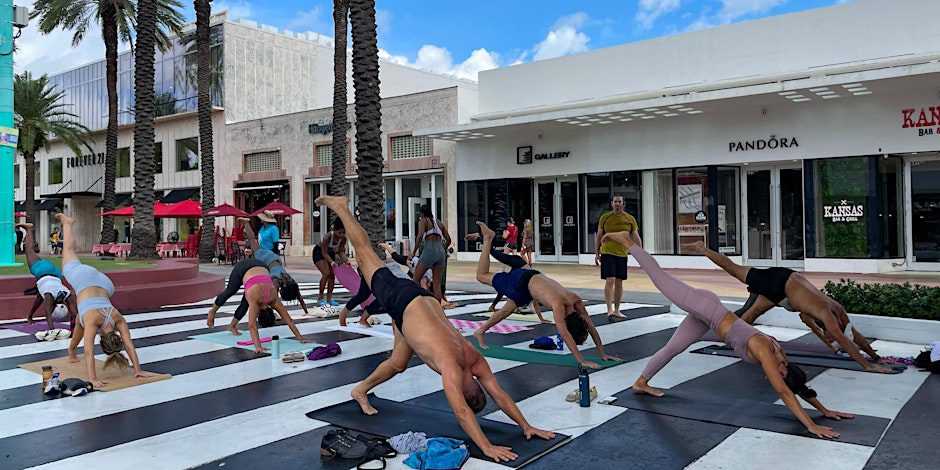
  • Free Yoga Sunday Mornings at Lincoln Road

    Free Yoga Sunday Mornings at Lincoln Road

    I’ve never been very flexible. Not with restaurants or politics. But even less so with my body than with my mind. Even as a kid I couldn’t touch my toes without  bending my knees.

    So I was a reluctant tagalong when my love interest suggested last spring to go to Lincoln Road to take advantage of the free Sunday morning yoga at Euclid Circle. We got our mats down just before the 10 am start time.  Radha led us though a few breathing exercises. Then we slowly started moving our bodies around. Before we knew it I was sticking my left leg up in the air while the rest of my body was in a downward dog position.

    Just as things were getting a little too strenuous for my middle aged physique that was dripping all kinds of sweat in this South Florida humidity, the hour was already almost up and we went back into meditation and breathing exercises. We rolled up our mats. On the walk home I realized how great I felt and have tried to attend every Sunday morning since.

    I assume the class is more set up for novices like myself, but I’ve noticed some pretty fit people able to contortion their bodies into crazy positions in attendance as well.

    For those who might think it strange to do yoga in an outdoor, public mall. The location and the time make it fairly secluded. I’ve tried doing the sunrise yoga at the beach, and surprisingly there’s less distractions and stimuli at Lincoln Road where you can lose yourself in the moment.

    It’s been a great highlight for each of my weekends. My posture’s improved. It’s made me more conscious of my breathing and even made me the slightest bit more flexible.

    I still can’t touch my toes however.

  • Edna Buchanan – The Wild Detective

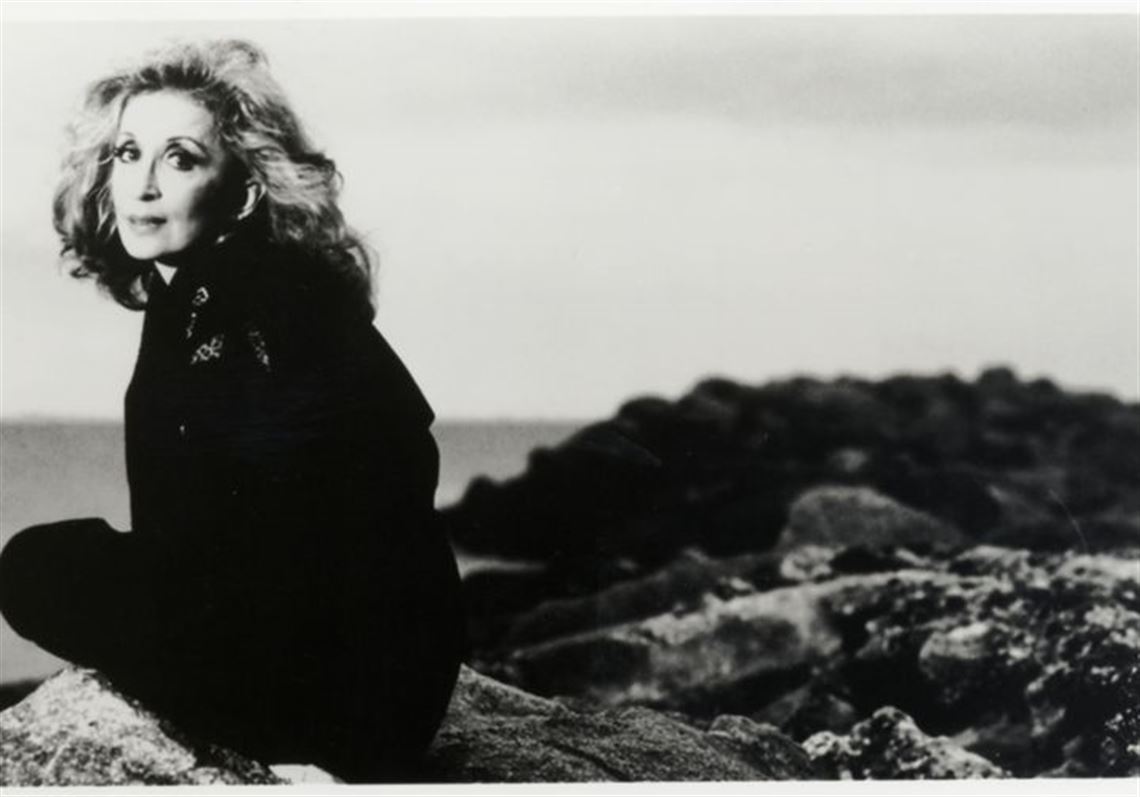
    Edna Buchanan – The Wild Detective

    This is an excerpt from Pedro Medina León’s book  TOUR: A Journey Through Miami’s Culture  where each chapter highlights an underknown aspect of Miami’s unique history.

    On July 11, 1979, around two-thirty in the afternoon, a truck stormed into the parking lot of Dadeland Mall, Miami’s busiest shopping center at the time. Armed men emerged and unleashed a hail of bullets inside Crown Liquors Shop. The aftermath left a trail of injured victims, bullet casings, blood-stained asphalt, shattered glass, riddled car bodies, and the lifeless bodies of Germán Jiménez Panesso and Juan Carlos Hernández. Jiménez Panesso, a Colombian drug lord, and Hernández, his bodyguard, had become casualties of a targeted hit—an act of retribution amidst the Cocaine Cowboys War, attributed to the infamous “Black Widow,” Griselda Blanco, also known as La Madrina.

    The year 1979 is etched into Miami’s history due to its rampant violence, recording 360 homicides. The following years, 1980 and 1981, saw even higher numbers, with 569 and 622 murders, respectively. Maybe the most significant event that scared the city was the Dadeland Mall massacre. These were Miami’s savage years, but they were also the years when newsrooms buzzed late into the night with the aroma of strong coffee, including that of Edna Buchanan at The Miami Herald.

    Edna Buchanan was born and raised in Paterson, New Jersey.

    From a young age, she displayed a keen interest in creative writing. Regardless of taking a few workshops, financial necessity led her down different paths, and at age twelve, she began working to help her mother, starting at a coat factory, then at Woolworth’s, in a baby clothes store, and even at a photo studio. Attending college was never an option after high school.

    In the summer of 1961, Edna and her mother vacationed in Miami, and it didn’t take long for her to realize that Miami Beach would be her new home. She sought out creative writing workshops, which serendipitously led to a column at the Miami Beach Daily Sun, where she spent five years covering local news. Her big break, however, came at The Miami Herald. Despite initially battling sexism from editors who relegated her to minor stories, Buchanan went on to cover 5,000 crimes over sixteen years, including 3,000 murders.

    Buchanan’s approach was more detective than journalist.

    It was she who traced the owner of the truck from the Dadeland Mall massacre back to his home. Following two failed marriages, with only her cat waiting for her at home, she spent countless hours immersed in newsrooms, morgues, police stations, and crime scenes. She gathered the clues needed to craft stories worthy of the front page because, as she always maintained, the difference between her job and others’ was that her readers would find themselves engrossed in a compelling narrative.

    In 1986, Edna Buchanan won the Pulitzer Prize for her investigative work. That same year, The New Yorker published a profile of her, “Covering the Cops,” written by Calvin Trillin, which stated that two of the most talked-about figures in Miami were Fidel Castro and Edna Buchanan. By the end of that decade, she retired from journalism to pursue her passion for writing books. To date, she has authored more than twenty works of fiction and non-fiction, including the Britt Montero series, featuring a crime reporter for a major Miami newspaper, a character now emblematic in local literature.

  • The Lab Throw Album Release Party at The Bridge

    The Lab Throw Album Release Party at The Bridge

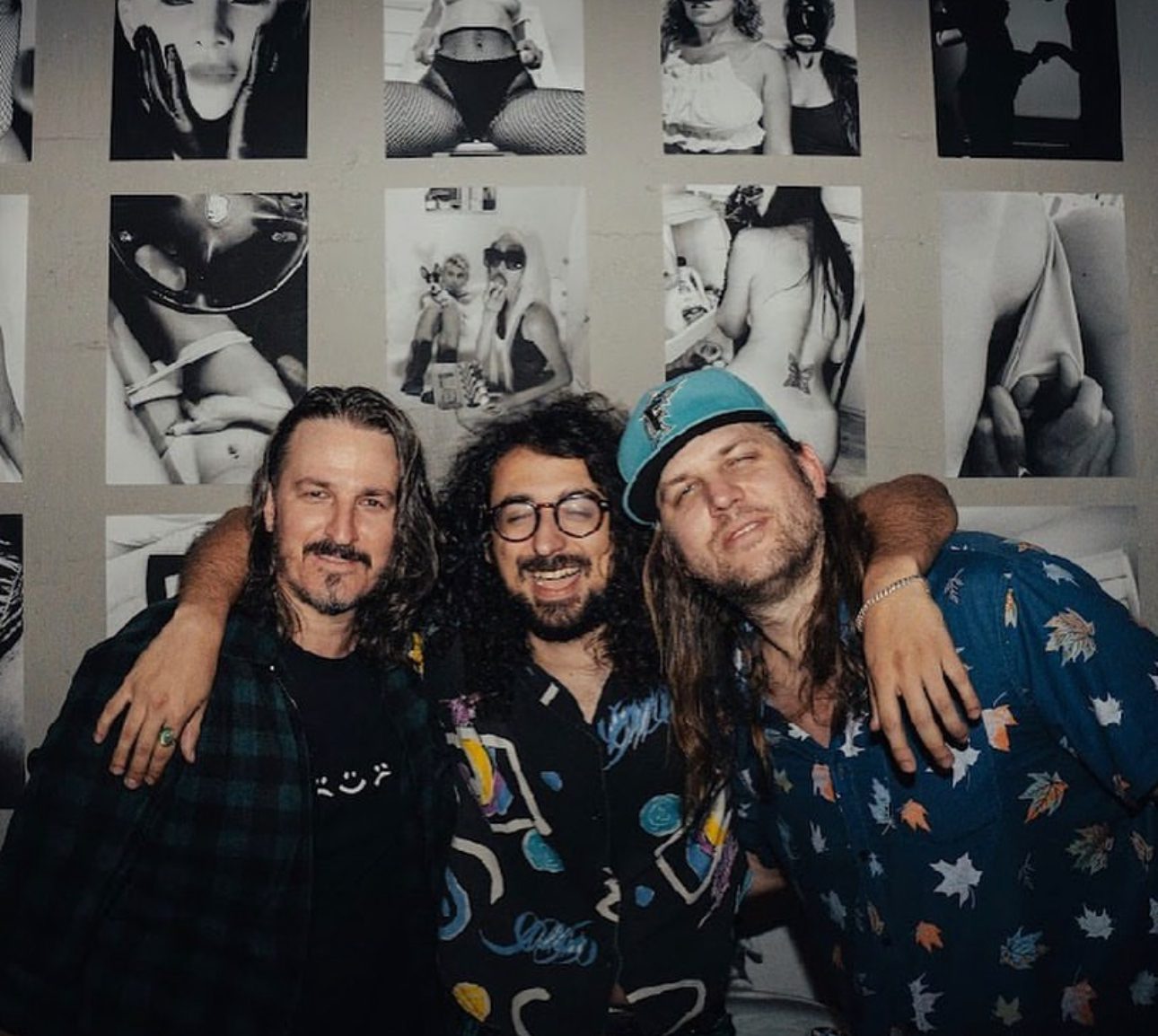
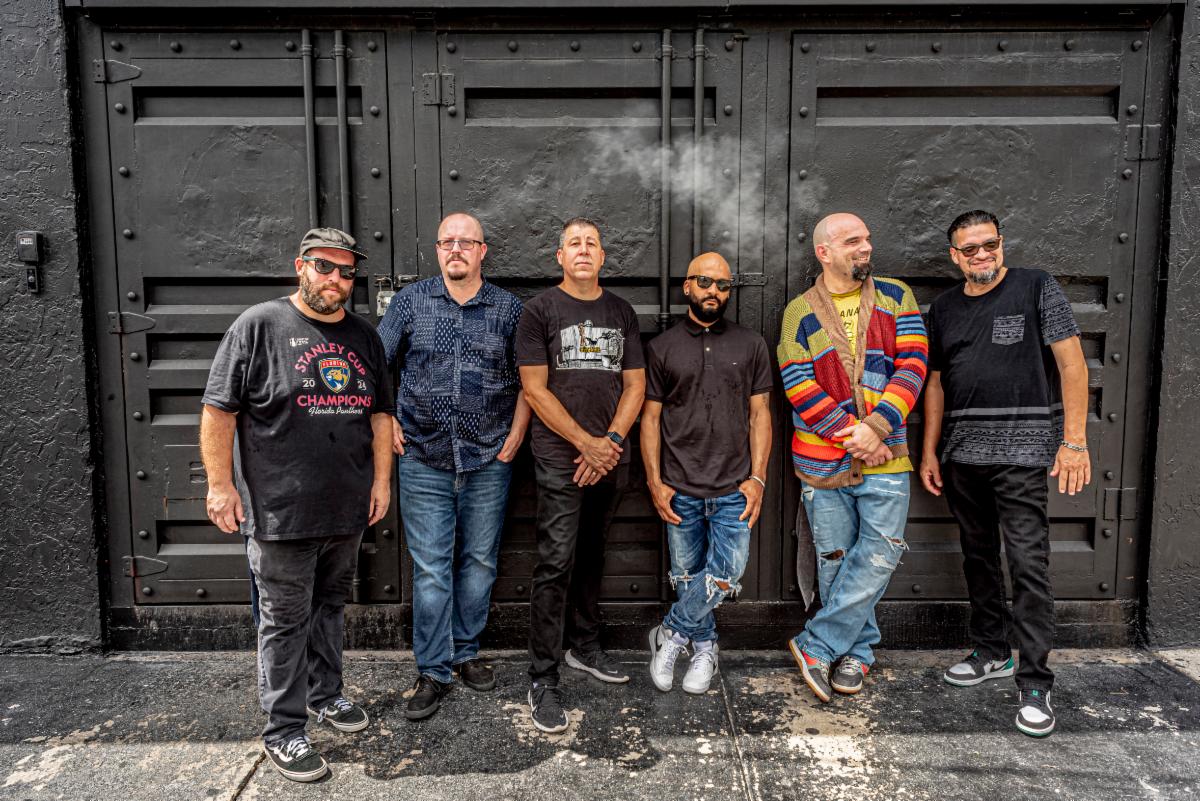
    There seems to be a lot of new rock n’ roll bands popping up around Miami. That’s refreshing. One of them is a good, old-fashioned, power trio, but with a whiskey chaser… The Lab.

    An unusual blend of musicians that seem to make perfect sense somehow, for this style. Frontman, Harold Trucco is the singer and also straight rips the guitar in an expressive, yet not pretentious way. If you’ve seen him, you fucking know.

    On bass is Brian Tate and on drums, Brian Lange. Both the Brians are super high-level musicians. Products of UM’s Frost School of Music. You might not have even noticed, but you’ve probably seen them on jazz gigs around town at The Corner or Medium Cool. Perhaps you’ve seen them playing with an Internationally known pop artist.

    But in The Lab, they lay down the rock hard and heavy. Offering subtle gems of musicianship only obvious to music nerds who know what to spot. To be able to do that, and still blow your face off, is a rare treat.

    Brian Lange also records some of the best bands in town out of Fazeone Studio; his spot located at The Bridge, where their release party is on October 4th.

    For those who don’t know, The Bridge is a rehearsal studio/sometime event space for some of the best musicians in Miami. The vibe is great there. The level of musicianship is the best in town. Plus, they throw a great party. The Lab’s Volume II EP release is there with SRSLY?! and Mario Giancarlo from Hunters of the Alps will DJ.

    I got with Harold Trucco on The Jitney for a quick Lab-chat…..

    How did The Lab start and what does it mean?

    Harold Trucco: Once the Brian’s and I decided we wanted to start a rock band, I made a list of covers for us to try out so we can get some gigs and get on our feet quickly. From the first note it went out the window and we just started jamming and recording right out the gate…I believe “Rollick” off our first EP was the first thing we jammed on. From there we kept saying “let’s get back to the lab” whenever we wanted to jam or rehearse at Fazeone Studio (Lange’s Studio). It was totally a placeholder name until one day we all agreed it started to stick, so we said fuck it we’re the LAB!

    For those who have never been, how would you describe your music?

    I think the LAB is equal parts firepower and fluid, ebb-flow type of rock ‘n roll. We all like totally different types of music but share the common ground of classic bands like AC/DC, Van Halen, Zeppelin, Sabbath. Brian and Brian are also such killer jazz musicians and that’s definitely a key element of the spirit of the LAB. We have some straight ahead rock, some fire-breathing-dragon metal, and then some sexy almost RnB vibes like on “Breast Pocket”. Our songs have tight arrangements but we always have an element of organized chaos.

    What do you guys have in store for us with this new EP?

    Definitely leaned into the heavier stuff this time around…the album art is literally just flames and our logo so that should tell you more or less what Volume II is about! Some of our most fun songs to play live are on this EP too;  I think “New Guy” is my personal pick. This is a fun batch of material for sure!

    Why did you select The Bridge for this release?

    It’s kind of our home court since it’s literally where “the LAB” is. We recorded Volume II out of Fazeone Studio at the Bridge so it’s kinda cool to bring it full circle and do the release party there too. Nicole from the Bridge is the shit and we’re really thankful for her letting us do our thing there. Between us, SRSLY!?, Mario Giancarlo from Hunters Of The Alps DJ’ing, and $5 whiskey cokes, it’s gonna be an absolute riot…we can’t wait to see ya there!

  • Palomino Blond Release New Record “You Feel It Too”

    Palomino Blond Release New Record “You Feel It Too”

    This article originally appeared in PureHoney Magazine. Check them out here.

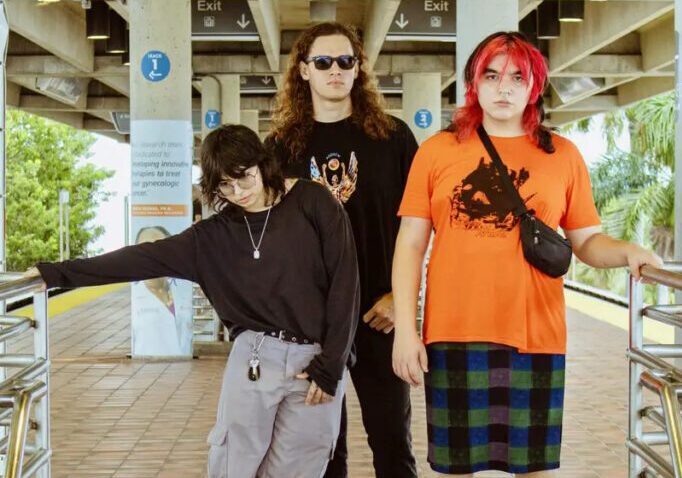
    Miami’s Palomino Blond crashed into the local scene in 2018 with the fury of an angry ocean, laying down a tidal field of sonic odds and ends that wink at you and invite close inspection. To the swirl of influences, history, attitude and raw feeling that marks this alt-rock powerhouse trio, add a new full-length album, You Feel It Too.

    “We were able to tap into influences that we weren’t able to tap into before,” singer and guitarist Carli Acosta says about the group’s first album for Brooklyn’s Kanine Records. “We like bands like Boris, My Bloody Valentine, Smashing Pumpkins and Hum, which we’ve capitalized on.”

    Engineered separately by local go-to’s Jonathan Nuñez and Ryan Haft, You Feel It Too is palpably heavier than the band’s previous output, drawing on shoegaze and grunge with hints of airy dream pop. “We’ve been collaborating with Jonathan since 2019 and ever since we got a taste for his sound, we felt it clicked with us,” Acosta says. “Similarly, when we got a taste of what Ryan can do in his space with his gear, we split it in half.”

    The result is a cinematic, lush and full-bodied foundation that fully supports Acosta’s vocals without undermining the album’s titular challenge. For Acosta and bandmates in a recently changed lined-up — drummer Emma Arevalo and lead guitarist Peter Allen — the record is a pact with listeners.

    “I think that some of the lyrics can be intense and revealing, but with writing music, you sometimes talk about stuff that you wouldn’t talk about otherwise,” Acosta says. “Everyone’s their worst critic, but we were asking ourselves throughout the entire process, like, does this work? Is this cohesive enough, or is it too personal?”

    The answer is in the songs. Palomino Blond are blending gritty guitar riffage with undisguised emotion to create anthems that have resonated far beyond the Magic City’s shores. A tour with Tampa’s electronic hip-hop duo They Hate Change takes them through eight states. In South Florida in October, they’ll play Gramps and the III Points festival in Miami, and Revolution Live in Fort Lauderdale.

  • Negative 3 Yards and a Cloud of Dust: Dolphins’ Offensive Line Could Derail Season

    Negative 3 Yards and a Cloud of Dust: Dolphins’ Offensive Line Could Derail Season

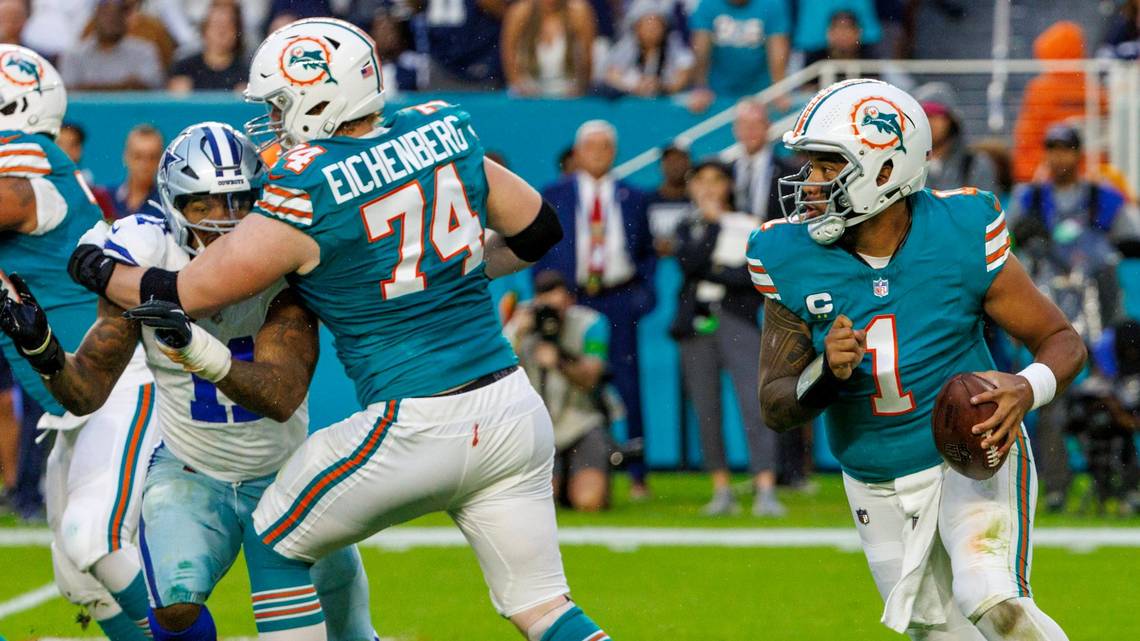
    In the waning minutes of last Thursday night’s game between the Miami Dolphins and the Buffalo Bills, Dolphins quarterback Tua Tagovailoa frantically ran to pick up a first down. In the heat of the moment he decided to lower his head and “truck” Bills safety, Damar Hamlin.

    The collision wasn’t unusual in an NFL game, but after the play, Tua remained on the ground, his right arm suspended in fencing posture. It was an all too familiar sight. As Tua sustained an even more horrific version of this injury on Thursday night football two years ago. So today, I put on my tinfoil hat and ask… was this a case of an undersized, injury-prone quarterback extending a play? Mismanagement of on-field personnel? The dreaded Amazon Prime injury curse? Or all of the above?

    In 2022, Tua Tagovailoa sustained three documented concussions.

    That offseason, Tua addressed the issue head on. He bulked up 30 pounds and took jiu-jitsu lessons to learn how to fall correctly and protect his head. Sliding or throwing the ball away on broken plays became his MO. As a result of this work and new philosophy, Tua led the league in passing yards, was voted to his first pro-bowl, and most importantly, didn’t miss a game. Fast-forward to 2024. Tua decides, “You know what? Maybe I should shed the weight again to be more mobile.” That’s understandable, Tua; just remember to slide and avoid getting hit.

    So Thursday against the Bills, amidst a piss-poor performance overall, Tua tried carrying the team on his back. The road to hell is paved with good intentions, and sometimes you can’t protect people from themselves. I understand wanting to play hero ball when you’re down, but the bigger question is, why are you down?

    You were supposed to be the favorite this year. You’re playing at home, their roster is depleted, and you have more superstars. This presents an even bigger question: why have the Miami Dolphins not invested to protect these superstars? Including the 212 million-dollar “Samoan Sniper” himself. On the contrary, they released their most consistent offensive linemen, Center Connor Williams and Robert Hunt. To top that off, promising left guard Isaiah Wynn has been injured since week 7 of last season.

    Now, I’m not a numbers guy, but ever since Wynn went down, Pro Bowl running back Raheem Mostert hasn’t had a hundred-yard game. This can’t be a coincidence, right? When you start playing football, even at an early age, the old heads throw two cliches around all the time: “defense wins championships” and “the game is won in the trenches.” Apparently someone powerful enough to assemble the Dolphins’ roster either hasn’t heard those sayings or is arrogant enough to think they don’t apply to them. I say this because after losing all three key pieces heading into this season while propping up all-pro veteran Tackle Terron Armstead, the Miami Dolphins have done nothing to address this glaring issue.

    Any franchise worth its salt in the NFL would make this a priority.

    With protection, Tua is deadly accurate, conducting our high-flying offense like a basketball point guard. Distributing the ball to arguably the fastest skill position players ever assembled on one team in NFL history. When the offense is clicking, it’s a symphony. It’s “basketball on grass.” Tyreek Hill, Jaylen Waddle, De’Von Achane, and Raheem Mostert catch cleverly designed passes in space and blaze past defenders for chunk plays and touchdowns all day. But on occasion, they meet a smart opponent that takes these options away, smacks them around, and forces Tua to extend the play and improvise. That’s when things almost always go south.

    Woe is me…this is a typical scenario any NFL quarterback will have to face, let alone one on a team with any thoughts of even sniffing a ring. Lamar Jackson, Josh Allen, Jalen Hurts, and arguably the most talented quarterback of all time, Patrick Mahomes (there I said it), all have the speed to extend plays and the physical power to occasionally lower the shoulder like Tua did and truck a stationary defender to gain extra yards when needed. You know what they also have? Elite offensive lines.

    So why are these teams investing to protect their more physically imposing franchise quarterbacks while the Miami Dolphins, who have a more undersized quarterback with a significant injury history, refuse to? It’s honestly baffling. We can only speculate, but fans and even the local press have been banging on the table about this for a while (savvy ones since the Brian Flores era). Even at press conferences, these rightful concerns have been met with smug dismissal by GM Chris Grier and occasionally by coach Mike McDaniel. In fairness, I think McDaniel’s just falling on the organization’s grenades at this point.

    That said, is anyone in the building bringing this stuff up? It’s so glaring to dingdongs like me who sit on a couch and hope for the best every Sunday. What do we know, right? Does former backup Center Jack Driscoll get embarrassingly tossed to the turf by Vita Vea this preseason, or Ed Oliver and AJ Epanesa taking everyone’s lunch money last Thursday not get under their skin? Even worse, how about being the team that boasted the second-to-last Pass Block Win Rate in the NFL (49%) last season? This is how you choose to protect your 212 million-dollar franchise quarterback?

    If the definition of insanity is doing the same thing twice, expecting a different result, then the Dolphins don’t qualify because they technically haven’t repeated themselves; they’ve downgraded significantly. So late in the third quarter last Thursday, with our beloved Fins down 31-10 against the Bills, our franchise quarterback pressed again. I don’t blame him. When your interior offensive line can’t get enough push to convert a 4th and one consistently, even with a stable of high-profile running backs, it’s a telling sign that your team lacks substance.

    This team has made national headlines two weeks in a row for issues that run deeper than sports.

    This week, the story is our quarterback’s health and when or if he’ll play again. Yet, ever since they drafted their beloved quarterback, who was severely injured even at the time of the NFL draft (rehabbing a dislocated right hip four years ago), it makes you wonder, have they not seen enough? What will it take for the Miami Dolphins to invest in strengthening their offensive line to protect him and changing our team’s identity for good?

    As Dolphins YouTube legend Reason of “Phinside the NFL” states, this team will only go as far as the offensive line takes them, and it’s clear to see they won’t get very far if they don’t upgrade it immediately, even with the addition of seasoned Lamar Jackson clone Tyler Huntley. My thoughts go out to Tua and his family as they find themselves navigating this frightening situation. They also go out to the front office and scouting department. I hope they self-reflect and realize you can attempt revolutionizing the game with blazing speed and clever play design, but at the end of the day it’s football, and there are 11 meaner dudes on the other side of the line who know, when push comes to shove, they can take our lunch.

  • Electric Piquete on New Album, Azabache

    Electric Piquete on New Album, Azabache

    Latin funk “fusionistas” Electric Piquete release their debut full-length album Azabache on September 20. On the same day, Friday, September 20, at 8 pm you can join the band at Skatebird for their release party. Bassist and co-founder Michael Mut hopped on to the Jitney to write a bit about the record. 

    We cut “Chunk” back in 2019 for a separate project that unfortunately never saw the light of day. Ed, Chris, and I entered the Shack North studio in Hialeah to begin the bulk of the recordings on Azabache in December of 2021 with our friend, long-time producer, and collaborator Ferny Coipel. The process continued on and off through the summer of 2023. Chris recorded all of his final guitar parts at his Layland home studio.

    We’ve been covering “Viva Tirado”, the Gerald Wilson / Fania Allstars standard, since 2013 when we prepped and played a Tribute to Fania show at the old Tobacco Road, but the song has an even deeper connection and meaning to the band. Ed put it on a mixtape for me in 1993 and that was my introduction to Latin jazz and the Fania sound. I never forgot that tune, and I believe it definitely cemented my bond to Ed as a musical mentor, and seeded what would become Electric Piquete.

    “Muevete Con Ganas” has been around as a fully-realized song since about 2009. Believe it or not, it used to be called “Cheque Sin Fondo” (Spanish for “Bounced Check”), but Chris and I agreed that we needed to add vocals to it. I met MannySwagg several years ago when he was the percussionist / singer for the dynamic Sol Ruiz and her Tribu, and ran into him at the Spring 2023 Shakori Hills Grassroots Festival in Pittsboro, NC, where we agreed to collaborate somehow.
    That summer, we asked him to join us at a Miami Beach OnStage! live concert, and the chemistry and energy was off the charts! That’s when we knew he would make a great guest vocalist on “Cheque”. So, he came in and nailed the lyrics and vocals in one session, which made us rename the song to match the hook he wrote. Pure magic!

    “S.A.C.A.” is another idea that has been around for some time, and this effort finally gave us a chance to commit it to tape. “Timeless Faith” and “Decay Dance” are relatively new ideas that came together, with the former featuring our congero Raymond’s Spanish rap flow. “Paindemic” was conceived around the same time as those two, but it was finalized in the studio during the recording process.

    The bonus track “Matted Spam” was cut in 2022 for a Y&T Music Pete Ham tribute and mental health fundraiser called Shine On. It was the second time we’ve gotten an opportunity to work with Rich Ulloa, and I can’t tell you what an honor it is to be a part of something he’s put his heart and soul into. The magnitude of all the other contributing artists is amazing to us as well.

  • A Journey Down – A Lyric Essay

    A Journey Down – A Lyric Essay

    The Jitney is committed to publishing more original Fiction and Poetry from Miami-based writers.  This original prose poetry is by Jose Norono. “A Journey Down” is lyrical and fun, playing with history, linguistics and identity in a free-form, original way. It is a wonderful piece of writing from Norono, a recent graduate of FIU’s MFA program in Creative Writing.

    We hope you enjoy this slice of literary pie.

    To get the most of the poem, we recommend reading it out loud. Or, if you ask nicely, who knows, maybe we can arrange Jose to read it to you over the phone. Enjoy!

    “A Journey Down” by Jose Norono

    Crest·fal·len adjective:

    From crest +‎ fallen, from the appearance of a horse with its crest (head) on its chest after defeat in a battle.

    There are times when I find myself staring into one of our local abysses, be it the sea or the sky, and I am entranced by the turmoil of the waves or the stillness of the clouds. I see a rainbow in the distance arching downward into the horizon’s pot of gold; and just as I am about to lunge towards a friend to tell them about it, I stop. Because the rainbow is only an illusion, and even if they could see it, it would not be mine to share.

    As·sas·sin noun:

    From Medieval Latin assassinus, from Arabic ḥashshāshīn, member of Nizari branch of Ismaili Muslims, literally hashish-eater. Originally a derogatory nickname with reference to the supposedly erratic behavior of the members of the sect, as if they were intoxicated by hashish.

    When I am walking towards my car and I hear someone call my name from the blackness behind me, I feel as if a large chain connected to my stomach has just been whipped and yanked. I feel a compulsion to turn, and yet I always resist it. My feet trudge forward, sinking into the swamp as my spirit wears and tears until my head gives up before my body, turns, and finds itself staring into darkness with eyes devoid of light.

    Sand·wich noun:

    Mid-18th century: named after the fourth Earl of Sandwich (1718–92), an English nobleman said to have eaten food in this form so as not to leave the gaming table.

    I have always found it quite very funny how, the more things change, the more they just stay the fucking same.

    Broad·cast verb

    1767, meaning dispersed upon the ground by hand, in reference to seed, from broad (adj.) + past participle of cast (v.). The figurative sense of widely spread is recorded by 1785. As an adverb from 1832.

    I once had a dream where I jumped off a large cliffside, disconnected from any actual cliff. When I started falling, I was immediately buffeted by powerful winds. Gale after gale pounding my flesh, I stayed airborne by the sheer strength of the four winds scattering me across the sky. Air would hit me straight on the jaw, then on the stomach, the on my left leg to send me spinning; then on the back to straighten me out. The fall lasted for a good three minutes until my body finally became too tough and tender for the breeze to juggle. I began to fall. I was reborn under punches, and right before I hit the ground, an epiphany struck my heart:

    I’m so thin.

    Fair·y noun:

    From Middle English faierie, fairie, from Old French faerie, from fae + –erie, from Vulgar Latin *Fāta (“goddess of fate”), from Latin fātum (“fate”).

    I cannot enter a house that has an iron horseshoe hanging above the door. I must answer when my true name is spoken. I must not bother a man who wears his clothes inside-out. I must not associate myself with hard tack bread. Some bells will draw me out, and some bells will draw me in. I cannot disturb any man who has found a four-leaf-clover, for they are lucky today, and thus they are safe.

    Do not tell me your name. Do not make a promise that you cannot keep. Do not lie to me, as I can tell. Do not dance in my presence. Do not draw cold iron in my presence. Do not say sorry in my presence. Do not be indebt yourself to me. Do not mention a newborn. Do not say thank you. Do not accept this coffee I just brewed for you, although it is nice and hot, although the smell is intoxicating, although I have made it with love.

    Whis·key noun:

    1715, from Gaelic uisge beatha “whisky,” literally “water of life,” from Old Irish uisce “water” (from PIE *ud-skio-, suffixed form of root *wed– (1) “water; wet”) + bethu “life”

    When I was a kid, I loved  swimming. I would swim and swim for hours in our local pool, under the harsh, dry Venezuelan sun, spinning in circles under the chlorine water. I would thrash until my muscles were sore, wading my way through the water.

    I always wanted to stretch my arms out like a star under that water, and take a deep breath, to find out that I had gained the ability to breathe submerged. I wanted to be able to swim forever, into the depths of lakes. I wanted to be able to ride waves with just my feet, to crash on land with such impact rain falls for an hour. I wanted to be struck by lighting and to find out I could fly.

    Ber·serk adjective:

    From Old Norse berserkr (“Norse warrior who fights in a frenzy”), probably from bjǫrn (“bear”) + serkr (“coat; shirt”), referring to the bearskins  warriors wore.

    When I was growing up, I was not compelled to be a scientist, or a journalist, or the head of some large company. I did not want to engineer or build, or do other people’s math. I was possessed by a passion for unimportant things.

    Video games and their stories became the fire in my blood. Suddenly I wanted to draw, to write, to show people how my two action figures were striking each other. I wanted them to feel the passion that I felt, to spread the fire. Because I did not want to be the only one burning.

    O·ver·cast adjective:

    From Middle English overcasten, equivalent to over– +‎ cast. Compare Swedish överkast.

    O·ver·kast noun:

    a bedspread, a bedcover.

    Whenever you find yourself staring at your own personal abyss. Do not be afraid to share what lurks within your darkness. Because I know you are not really staring at the sea, or the sky, or the stars. You are staring beyond them into a mirror, a mirror that shows only you. In a blank void, surrounded by your burning fires of various colors. I want you to feel possessed by these flames. So that when you mouth opens, only heat comes out. And as the heat goes on, I need you to spread it. So that everyone can see that which moves you and tears out your soul.

    You are your own personal rainbow.

  • Why the Movie “Mountains” Is Important

    Why the Movie “Mountains” Is Important

    Multi-millions.

    Red carpets.

    Franchises.

    Celebrity.

    Glamour.

    Wealth.

    Escape.

    These are just a few of the common impressions regularly manufactured by the eminent North American motion picture industry about itself. But more than impressions, these are the lures of hundreds of thousands of striving hopefuls who wish to ascend to the stratospheric heights that the silver screen represents to so, so many. They are constantly beckoned to sell themselves and the world for a mere dollop of that ever-elusive but ever-potent Hollywood nectar.

    But does any filmmaking exist outside of those tall, gilded and highly fortified ramparts? And if it does, what do we make of it? Does the result of approximately equal picture-making labor possess the same majesty and seeming importance of the corporate-forged media regularly shoveled over vast distances into our cineplexes and onto our streaming devices? Could it ever? I mean, what is filmmaking sans Hollywood?

    Oolite Arts, an arts-supporting non-profit in Miami began offering an answer in 2018. Amid a dearth of substantial organizational support for local filmmakers in the Magic City, the organization began offering generous residencies and micro-budgets (in the amount of up to $50,000) to select local filmmakers in order to produce their first feature-length films. The program continues six years later.

    I applied in the inaugural year but I suspect I was disqualified on account of having begun production on my submitted feature project (which saw completion and release in 2019) before their decision was made. Eager to a fault, I suppose.

    Among the chosen creatives of the Cinematic Arts Residency’s first year was one Monica Sorelle. Some weeks after the victors were announced, I attended a film screening at Coral Gables Art Cinema of which the selected filmmakers were in attendance. The calm-voiced Monica immediately struck me as mature, capable and determined. I was also charmed to learn that we had both been film students at University of Central Florida (she attended a few years after my time there). Never a sore loser, I wished her good speed on her journey, one which I knew by then was far from a walk in the park for anyone.

    Between that interaction with Monica and my next,

    much transpired: a pandemic, a staggered recovery from said pandemic, my completion of three feature films, Monica’s completion of Mountains and plenty of maturity, experience and wisdom garnered in both of us, no doubt. The occasion for our second meeting was the 14th Annual Miami Media and Film Market held at Biltmore Hotel in Coral Gables earlier this year.

    Following a panel of local filmmaking luminaries, of which Monica was one, I used up my Q&A question opportunity to offer a brief, radical polemic to the panel and the audience about the need to support more local, bottom-up filmmaking activity. After the panel was over, I approached Monica and further explained my impassioned view. Monica seemed sympathetic but my main purpose was not necessarily to proselytize but to pleasantly engage and commiserate with another local, microbudget feature filmmaker; especially one whose career was beginning to take off.

    Learning of her film achieving nation-wide theatrical distribution, I promised I’d attend the first showing of its kind at Coral Gables Arts Cinema some months later.

    Promise kept, I arrived at Coral Gables Art Cinema last Friday with an e-ticket for Monica Sorelle’s Mountains – purchased not too long after they became available. In the lobby, I ran into the film’s producer Robert Colom, who I would run into regularly at local film events before the pandemic, and enjoyed his familiar amiability. Soon after that encounter, I found Monica and expressed my excitement about the film. She urged me to share my thoughts with her afterward and to “Be nice.” Of course!

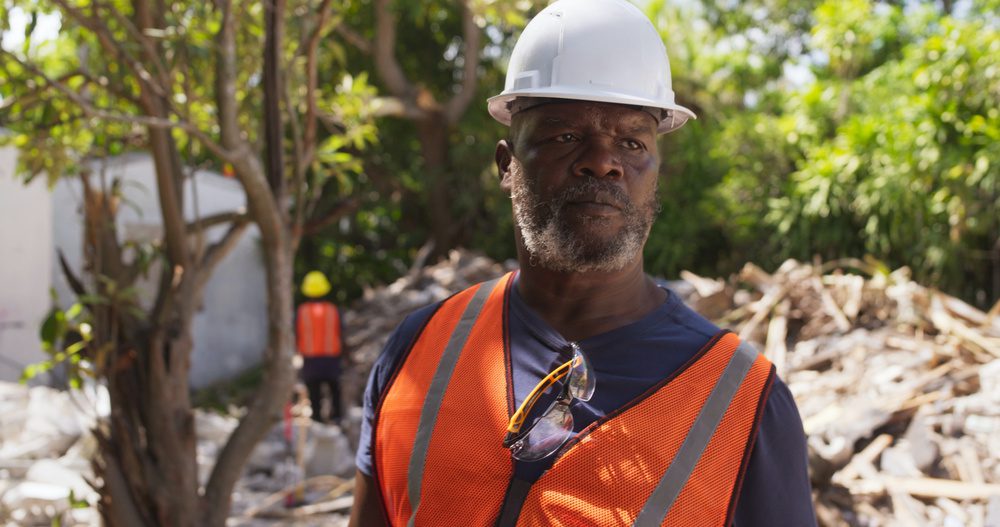
    In Mountains, we meet a construction worker

    and Haitian patriarch Xavier (Atibon Nazaire), his wife Esperance (Sheila Anozier) and their adult son Junior (Chris Renois). The film is set almost entirely within Little Haiti, a culturally rich Afro-Caribbean neighborhood adjacent to Miami’s far more upscale urban center. However, as we follow the slice-of-life episodes of Xavier and his family throughout the film, the encroachment of upscale development represents a threat to the very identity, integrity and survival of Little Haiti and its short-strawed denizens. Providing a richly ironic touch and no doubt the genesis point of this entire film idea, Xavier is written as a character with a direct hand in the destruction of his ethnic enclave as a demolition crew member. It’s a poignant and thought-provoking premise of which its resulting body could only be rendered as effectively as it is here by someone touched by the reality of this issue – that’s Monica Sorelle, a Haitian-American partly raised in Little Haiti.

    The dramatic – and even comedic (courtesy of the stand-up stylings of Renois) – performances throughout the film are accomplished, appropriate and effective. The technical quality of the filmmaking is also impressive considering the relatively modest budget of the film. Co-written with Robert Colom, Monica’s script translates into a sterling example of a social realist drama; quiet and demure but pulsing with a kind of populist resistance to the familiar, wearying designs of unseen, moneyed interests.

    Mountains, achieved on a microbudget, flies in the face of our country’s oligarchic and plutocratic film industry. More crucially, it begs the questions: What else can talent and hard work accomplish with far less means than debt-ridden, cash-hemorrhaging Hollywood? What do we really need to create a memorable, worthwhile couple-o’-hours for an audience of moviegoers? What if every major city and town exhibited the work of their own local filmmakers in their own regional cineplexes? And what if accordingly leveling the playing field broke the enslavement of aspiring filmmakers bound and stifled by Hollywood-sized ambition?

    Maybe we’re not ready to answer all of these questions just yet. But we’d be damned if we ignore them and fail to realize that the oyster of possibility is pried that much more open with films like Mountains.

    Mountains is now playing locally at Coral Gables Art Cinema, AMC Sunset Place and AMC Aventura courtesy of nation-wide, theatrical distribution by Music Box Films.

    Read more from the author on his blog.

  • I Was A Pre-Teen Wrestling Fan

    I Was A Pre-Teen Wrestling Fan

    I must’ve been 8 years old. And I was the only one left in my living room. So immediately I started sliding the channel changer switch down the dial. There was no remote. Just this box. Rectangle. With a switch that went left and right across the face of the thing. Then I stopped it. And there, scrapping it out in the middle of the ring was Hercules and the Junk Yard Dog. 

    I’d never seen anything like it. These characters already so indelible after watching only one match of theirs.  But I had to switch it. Somebody was coming. So I caught just a couple minutes of these cartoonish Gods duking it out in some arena somewhere. I knew my parents weren’t so keen on me watching this stuff. But I was bit. I don’t know how I did it. But slowly I worked these incredible personas into my public life amongst my family members. Coliseum Home Video became my pipeline to everything behind the pay wall events.

    Funny enough, my therapist at the time, I must’ve been 9, would see I’d bring in this huge binder full of wrestling magazine clippings, newspaper cutouts, and an assortment of other paraphernalia. During therapy, he’d have me reference this binder. Tell him about what’s going on in the wrestling world. What I didn’t know, was my considerable knowledge on the subject, brought him and his wrestling fan son closer together. Heavy trip for a 9 year old.

    I only saw one live match. It was at the old Miami Arena (the destination for a future Royal Rumble). I remember watching Bret “The Hitman” Hart and the Big Boss Man, in person. The Hitman would give his reflective glasses to a fan before each match. The real ones were pink. My mom took me. It was an incredible evening. My toys come to life. Those 2D muscled images now in the third dimension. I did come back to the same arena for the biggest show in the profession, Wrestlemania 6. The main event, Hulk Hogan vs The Ultimate Warrior. 

    I was a Warrior fan. Wore a mask of what he painted on his face. Wore colorful arm ties like he did. That Jake “The Snake” testing The Ultimate Warrior by having him endure difficult and macabre trials storyline was legit terrifying. My friend, David, was a Warrior fan, too. It was he and me, 10 years old, cheering on our favorite while all the Hulkamaniacs around us booed us. It took major cojones to break away from Hulkamania. And there, on three huge screens suspended from the roof of the arena, The Ultimate Warrior became World Wrestling Champion. It was kinda quiet. Except for us.

    As I got older, Randy “Macho Man” Savage became my favorite wrestler. He was smaller than most guys, but fire on the mic, and electric in the ring. His manager/sometimes wife Miss Elizabeth had been my first real crush. Their real-life relationship played out as story fodder for their professional narrative. They were even married on a pay-per-view. That was when you used to pay a one-time fee for a one-time event. Sadly, both Randy and Elizabeth died way before their time. 

    I think I stopped watching wrestling when I hit high school. High school was pro wrestling. Work out. Build a persona. Learn to grapple with others. Hopefully become popular. Use that popularity to leverage fortune. It wasn’t until maybe a couple of years after I graduated I would start hanging out with someone who was still watching wrestling. I couldn’t believe it was must-see TV for my friend. I was introduced to new characters like The Rock, “Stone Cold” Steve Austin, and Kane.

    The thing is, it didn’t resonate with me like it used to. Was it different or was I? I still have the toys. They have spot-on likenesses. And perform the move they’re known for. I also had the wrestling ring the commercial referred to as sold separately, The plush action figures called “Wrestling Buddies” you could lock arms with or fold their arm up to hit you. Take the cushions off the couches, lay them on the floor, and have your own wrestling matches in your home. 

    I’d say 20 years have passed. And recently, I’ve started to do what the millennials call a deep dive. My wife can’t relate. I can imagine she’s thinking, “Travis Roig, why are you watching half-naked gym-soaked dudes slamming their sweaty bodies into one another?” It’s kinda fake but not really. And everybody’s in on it. There’s no converting her. But now as the middle-aged man my “man weight” tells me I am, I see these gentleman a lot differently. 

    What I see now is their sacrifice. These real people doing this very real job night after night sometimes 300 days out of the year. And then there are the weekly TV shows, the pay-per-views, the appearances, some making movies, and others having to wrestle in Japan to make more money. Or having to change wrestling organizations because where you’re at now has a thick glass ceiling in terms of money and advancement. Let alone, the steroids, the drugs, the women, the cars, the children, the houses, that came along with this profession’s global exposure. 

    I like watching these guys work. I like that this weird thing that everyone bought into was designed for the audience. Strictly, for the audience. The audience can create careers or destroy them. It’s live. Applause doesn’t lie. You may have heard the term “kayfabe”. In the wrestling world, it means no matter what, you stay in character. It’s that agreement that makes these people special. These grown-ass men. Putting on tights and make-up. Their family’s back home watching them that one time a week. There’s nothing fake about wrestling.

    And… I’m a fan again.

    P.S. I defy you not to cry at the end of Wrestlemania IV. It’s on Peacock. Go watch that entire show.  Watch Macho Man work. It’s a thing of wonder.

  • Sixtieth Anniversary of the Beatles at Jacksonville’s Gator Bowl

    Sixtieth Anniversary of the Beatles at Jacksonville’s Gator Bowl

    It was the biggest thing since the Great Fire of 1901—maybe the biggest thing ever to hit the city of Jacksonville—except perhaps Hurricane Dora a day or so earlier.

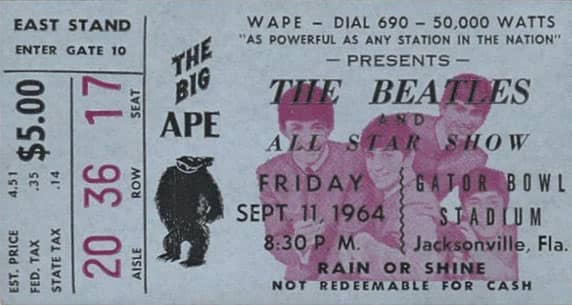
    On Sept. 11, 1964, radio station WAPE-AM brought the Beatles to Jacksonville, one of only two shows in Florida (the second being an appearance on the Ed Sullivan Show in Miami).

    The Gator Bowl show quickly sold out. However, Dora had left fallen trees blocking highways, preventing approximately 7,000 fans from getting to the Gator Bowl.

    It was the Fab Four’s first trek into the Deep South. They were scared.

    Professor Brian Ward of Northumbria University in Newcastle is working on a book about the Beatles’ complex and sometimes painful love affair with the American South. The book’s working title is, fittingly, She Loves Y’all.

    After all, most of the music the Fabs emulated came from the South. The group specialized in “covering” songs by black artists such as Little Richard and Doctor Feelgood, both from Georgia; Chuck Berry, from Missouri; and Arthur Alexander, from Alabama (the Shirelles and the Isley Brothers, both from New Jersey, were exceptions, as were a couple of Motown acts, the Marvelettes and Barrett Strong).

    The Fab Four also recorded songs by white country and rockabilly acts such as Texans Buddy Holly and Buck Owens along with Tennesseean Carl Perkins. Their biggest idol was of course Tennesseean Elvis Presley, perhaps the most revered southerner to hit the world stage.

    Hence the group’s music was, to a large extent, a reflection of the U.S. South.

    However, the Beatles, to their everlasting credit, refused to accept segregation—a sacred institution in some southern circles—and publicly stood up to support civil rights for African Americans.

    Yet the Beatles had few black fans, especially in Jacksonville. One of the reasons black teens generally didn’t dig the Beatles might be because they were already familiar with many of the artists the Beatles had covered. The Beatles’ mission had been to bring black music to white kids.

    Black kids didn’t need the Beatles—they already had the real deal.

    Kitty Oliver, an African-American scholar and retired professor from Jacksonville who now lives in Ft. Lauderdale, was one of the rare black Beatles fans. She writes in her autobio, Multicolored Memories of a Black Southern Girl, that she could not find a black friend who would accompany her to the Beatles’ Gator Bowl concert. She went alone.

    Fifty-two years later, she would appear in Ron Howard’s Beatles documentary, Eight Days a Week, and would be flown to London for the film’s premiere, where she would meet Sir Paul McCartney.

    Five days before the Gator Bowl show, the Beatles—riled by insinuations that concerts in the Deep South were liable to be segregated—issued a press statement: “We will not appear unless Negroes are allowed to sit anywhere they like.” On Sept. 8, in Montreal, the group conducted a press conference in which John Lennon orally reiterated the ultimatum, citing Florida specifically.

    Ward however, says the group’s anti-segregation proviso had been written into all the engagement contracts that he has had the opportunity to examine. He has not seen the Gator Bowl contract itself, but there is no reason to assume it would have been different.

    The point here is that the issue had already been hammered out—and settled in writing—which raises the question: why was a public showdown even necessary?

    Billee Neumann Bussard, a teen-age reporter at the scene, said that when the Beatles arrived at Jacksonville’s George Washington Hotel, they found that blacks were prohibited as guests, and this may have jolted them into action once again. The Beatles held a press conference in the hotel, where they again reiterated their refusal to perform if the show were to be segregated.

    However—this is crucial, and it’s the point many writers omit—city officials insisted to local reporters that there had not been and never were any plans to segregate the show.

    In his book, The Beatles: A Diary – An Intimate Day-by-Day History, cultural historian Barry Miles mentions the city’s claim that the show was never intended to be segregated. He may be one of few writers to ever report this. The next logical question would be why might the Beatles have launched an unnecessary press battle with public officials?

    The Florida Times-Union did respond with an editorial dig pronouncing the Beatles’ music trash and extrapolating from their lyrics that the group’s members had neither the information nor the intellect to comment on US politics.

    At bottom though, the question remains:

    what would city leaders have stood to gain by segregating the concert? Perhaps it might have—at best—gotten them some political capital with racist voters. After all, Mayor Hayden Burns had run—and won—on a segregationist platform back in 1949 and managed to hang on for four terms. He had been mayor during the city’s notorious “Ax Handle Saturday” melee in 1960, in which police had been accused of allowing racist counter-protestors to brutally beat civil-rights demonstrators in downtown’s Hemming Plaza.

    At this juncture, Burns, however, kept his mouth shut. He was in the midst of a heated campaign for governor and could ill afford a bad move. Alan Bliss, executive director of the Jacksonville Historical Society, said Burns would likely have “preferred to avert any kind of public-relations blunder [having] the potential to make Jacksonville appear backwards or racist.”

    Promoting or enabling segregation at this time would have jeopardized the city’s receipt of federal funds, since the Civil Rights Act of 1964 had recently been signed into law by Pres. Lyndon Johnson—by all reports a vindictive man with a long memory whose ire most politicos with any sense would not wish to provoke.

    Johnson happened to be in Jacksonville that very day to inspect the damage from Dora.

    Having a segregated concert would also have breached the Beatles’ performance contract. WAPE-AM station owner Bill Brennan would have had to pay the Beatles for not performing, and he would likely have gone after the city for compensation. There would have been lawsuits along with very vocal reactions from 30,000 ticketholders, most of whom held no qualms about screaming their lungs out.

    Certain City leaders may have been racists, but they were not, after all, complete eejits. Bottom line is there was almost nothing to gain and far too much to lose.

    There is a third and very likely possibility, which Ward hints at: the controversy might have been provoked by reporters who goaded the Beatles with loaded questions implying that the southern shows would, as a matter of course, be segregated, and if so, what were the Beatles planning to do about it?

    Ward states that, responding to reporters, the Beatles “kept defaulting to their contractual and moral stance that if [any shows were slated to be segregated], they wouldn’t play. When they were assured there’d be no segregation, they played.”