Category: News

  • My First Name Is Fictional

    My First Name Is Fictional

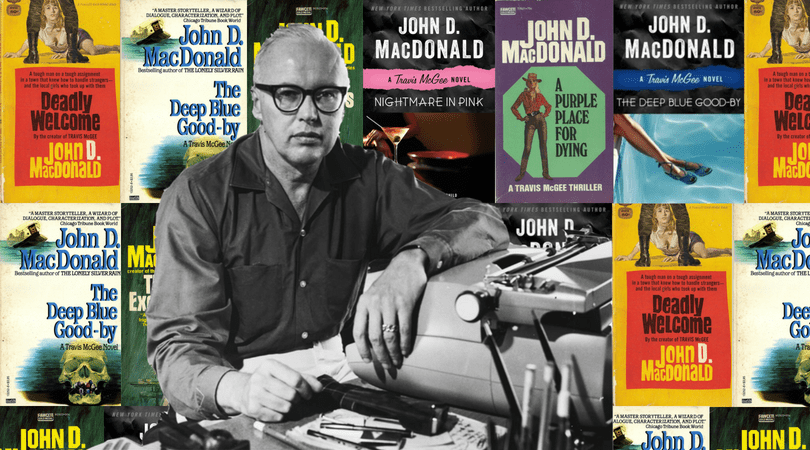
    Normally, you’d flip through a book of baby names. But not my parents. My parents did take my first name from a book. But it wasn’t a book of baby names. It was a book of mystery. A noir. Written by a Florida writer you may or may not have heard of before. His name is John D. MacDonald. And what this man did is something I can only dream of at this moment.

    John D. Macdonald is a bit of an enigma. And what he managed to do was pull off a series of novels starring the same lead in all of them. And each book, get this, has a color in the title. That’s right. The Deep Blue Goodbye. A Tan and Sandy Silence. Nightmare in Pink. A Purple Place for Dying. The man wrote 21 of these. All the while, his stand alone novel count is in the high double digits. An enigma, this man. Prolific.

    And very Florida. In my opinion, no one has come close to MacDonald’s oeuvre. No one’s come close to the kind of noir only these novels possess. There were two film adaptations, which varied in results. Fairly lackluster receptions, to be real. However, his standalone novel The Executioners was the basis for both versions of the film Cape Fear. You know Cape Fear. Both films had exceptional receptions. Because both are great. But something about John D. MacDonald’s mystery series could never fully translate to the screen.

    But I digress. It’s taken me a while to figure out what exactly I am, and 44 years into this life, it’s finally clear. Not to say I’ll ever make a dime at it, but everything I do revolves around writing. And one day not too long ago I realized, oh that makes sense. I haven’t stopped writing one way or the other since I was in Kindergarten. I wrote when I didn’t have to. And as I advanced past the next grade, another teacher would allow me to throw on these little plays at the end of the day. I’d have one clip board of pages that we’d have to hand to each other to read your lines. Why these teachers let me, I’ll never understand it. I was a bad kid, too. And they showed me grace. I haven’t called up those memories in ages. 

    Speaking of memories, I used to open up a gym at 5am sometimes coming off of Molly. And what got me through these mornings, was my birthright. I’d get lost in the aged pages of my parents’ original paperbacks. The smell alone if these things would transport you. I’d watch daylight emerge from behind John D. MacDonald’s words. Write down the gym members number. Sip one of those workout drinks. Read another couple pages. And so it went. Then a 9 am cup of Cuban coffee and one more hour to go. 

    My parents instilled a sense of awe in my sister and I about all things Florida.

    My aunt and uncle ran the biggest bookstore in Florida. St. Pete’s, specifically. Named Haslam’s. It’s been said Jack Kerouac’s ghost roams the aisles on the grounds. No photographic evidence provided. Only witness accounts. But they’ve housed every Florida author there was, is, and if it was still on, would be. There’s a pretty intimidating host of Florida writers past, present, and those on the come up. I hope to share some bookshelf space with some of ‘em. But I only have my sights is one guy. That MacDonald guy. 

    Obviously the main character’s name is Travis and now it’s obvious what and why my parents named me. And more than the name, it’s the philosophy I inherited from both my parents, and a Florida writer named John D. MacDonald. Really, it comes from the mouth of Travis. Not me, Travis. Him, Travis. Travis McGee, in fact. His philosophy is such: Live your retirement throughout your life. And that is something I chase everyday. Something I honor both who I come from and where. Something from the imagination that spurred a pulp noir mystery series about a reluctant investigator named Travis McGee who lives on a houseboat called The Busted Flush.

    I love my name. I love the story behind it. I love the humid mysterious allure of Miami. The corrupt city government. Maybe a woman in peril. A friend dies. Everything’s connected. The only evidence, circumstantial. I think I’m on to something. Full disclosure, I’ve already written 2000 words. So while I finish this first draft, you guys go check out John D. MacDonald’s Travis McGee series. And remember how much cooler my parents were than yours. Just saying. 

  • The Briefest History of Miami Literature

    The Briefest History of Miami Literature

    Miami’s literary scene began to emerge between 1887 and 1896 with Kirk Munroe, a traveler and itinerant adventurer who, upon arriving in Florida, was captivated by its natural beauty and settled in Coconut Grove. He also founded the public library.

    The next notable author on the list after Munroe is Marjory Stoneman Douglas, daughter of the then-owner of the New Herald, remembered for her books on the Everglades and her activism for nature and women’s rights. There are other names, of course, but Miami didn’t make its mark on the U.S. literary map until the late 1970s and early 1980s, with its Noir literature gaining popularity thanks to the TV series Miami Vice and the cultural clash between Anglos and Latinos.

    For many, if not most, the father of the genre is Charles Willeford, with his Hoke Moseley series—a detective who breaks the mold of the strategic and meticulous private investigator, instead presenting us with a marginal character who lives in a low-budget hostel and solves his cases using unconventional and rude methods. However, this Noir had its roots several years earlier, in the 1960s, with John D. MacDonald and his twenty-one novels featuring Travis McGee, a man who lives on a fifty-two-foot boat anchored in Bahia Mar, Fort Lauderdale, The Busted Flush—Don Johnson of Miami Vice wasn’t the first to live on a boat!

    Although McGee is not an investigator, he takes justice into his own hands whenever he sees something threatening another person’s integrity. Like Moseley, Travis McGee has also his own investigative methods, and as he applies them, he takes us into the most sordid places of Miami and Fort Lauderdale.

    John D. MacDonald was born and raised in Pennsylvania, in an affluent family, and after finishing his studies at Harvard, he joined the military and fought in World War II. After completing his service, he moved to Florida, set aside his bourgeois habits, began writing noir fiction, and lived several years in economic hardship until he sold his first hard-boiled short story to a magazine, marking the beginning of his extensive literary career, which includes nearly eighty titles.

    The novel that opens the Travis McGee saga is The Deep Blue Good-by, a sort of introduction to this antagonistic and endearing character, in which his first case involves helping a friend, a dancer in a gentlemen’s club, who has been deceived and swindled by Junior Allen. Amid a gallery of grotesque characters and a tour of much of South Florida’s coastline, McGee will gradually expose Allen, realizing he’s not just a swindler but someone far more dangerous. While MacDonald’s pages reflect an Anglo Miami from sixty or seventy years ago, difficult to imagine in today’s cosmopolitan and Latin city, his literature remains relevant, receiving praise from the most authoritative voices in the genre, like Lee Child and Stephen King.

    On October 2, 2004, the city of Fort Lauderdale celebrated the “John D. MacDonald Day” was celebrated in Fort Lauderdale. Nearly three hundred people gathered at Bahia Mar, where Travis McGee anchored The Busted Flush, declaring it a literary landmark of Florida.

  • The Bicycle Thief

    The Bicycle Thief

    I hate the cockroach. Drivers that cut you off without concern deserve a special place in hell. But there is no creature lurking in the shadows of South Florida that I hate as much as the bicycle thief. Nothing is as fun and freeing as cycling around, but there are countless creeps among us who do all they can to rob you of that joy.

    It is like that old Jerry Seinfeld joke, “Wherever women are, we have a man working on the situation right now. Now, he may not be our best man, okay, we have a lot of areas to cover, but someone from our staff is on the scene.” That’s how I feel the bicycle thief guild works.

    However much time and care you put into keeping your bicycle securely locked, they find a way to take it. It can be a hardcore u-lock or a heavy bundle of chains, but they find a way to take what is yours.

    I’ve had them break into my car to take a bike, I’ve had them take it in broad daylight, and right in front of my front window.  One time we biked to the movies, locked up the bike and they took the seat. We got it replaced and took off the seat whenever we parked it. The next week they decided to take the whole bike. But at least we still had the seat.

    I registered a bike with the police department as they recommended.  When that bike eventually got stolen, I went to the police department to report it. They told me not to hold my breath.

    My favorite story was about a woman who parked her bike in her apartment building’s garage. One morning she noticed her bike was gone. There was a security camera that filmed a thief using some kind of torch to melt the lock. She gave the footage to the police who also told her not to hold her breath.

    One day walking around the neighborhood, she saw the thief with her bicycle. She called the cops. They told her they couldn’t do anything. And so she followed the bicycle thief. She saw him go to a convenience store and left her bike unlocked. She ran for her bike and pedaled as fast as she could.  When in Miami…

  • Bumblefest 8 to Rock West Palm Beach September 6 & 7

    Bumblefest 8 to Rock West Palm Beach September 6 & 7

    We are thrilled to share the Bumblefest 8 lineup with you. The 2024 bill features more touring bands than ever!It has always been our goal to turn South Florida audiences on to incredibly interesting, below the radar acts from around the US. We love bringing bands down that would possibly never play our area!

    Bumblefest is a real world music discovery platform. A museum or gallery of sorts where you get the opportunity to sample works of art that you normally wouldn’t get to experience — in this case — live music — sounds and bands that wouldn’t ordinarily make the trip. Bumblefest is our communities annual cultural experience where you get to break out of your regular routine and try something fresh and new with an open mind. An exploration of sound without ever leaving town!

    Bumblefest Acts from Elsewhere:

    Dion Lunadon (NYC), World Destroyer’s Pleasure Club (LA), Starcleaner Reunion (NYC), Psychic Death (ATL), Dream Phases (LA), Fiona Moonchild (Seattle), forceghost (Augusta), Lo Fives (PHI), SheHeHe (Athens).

    Bumblefest Acts from Florida:

    Akasha System (Tampa), Siichaq (JAX), ISYA (St. Augustine), Bebe Deluxe (JAX),  American Dream Survivors (Gainesville), Rude Television (WPB), Severed & Said (JAX), Night Foundation (FTL), Justin Depth (Tampa), Kenny Moe (FTL), Mr. Entertainment + the Pookiesmackers (Hollywood), Zippur (FTL) and more!

    Bumblefest will also be a homecoming of sorts for three bands who are former South Florida residents in Lo Fives, SheHeHe , and American Dream Survivors.

    Early Bee tickets are on sale now. Buy them by clicking here. Both days for the price of one. Limited quantity, limited time!

    As always, a portion of the proceeds will go to local NFPs. Last years recipients include Sunflower Arts, Path to College, NAMI and the Dan Hosker Music Continuum.

    Take a listen to the bands of Bumblefest 8 below…

  • Is the Balloon Museum really a Museum?

    Is the Balloon Museum really a Museum?

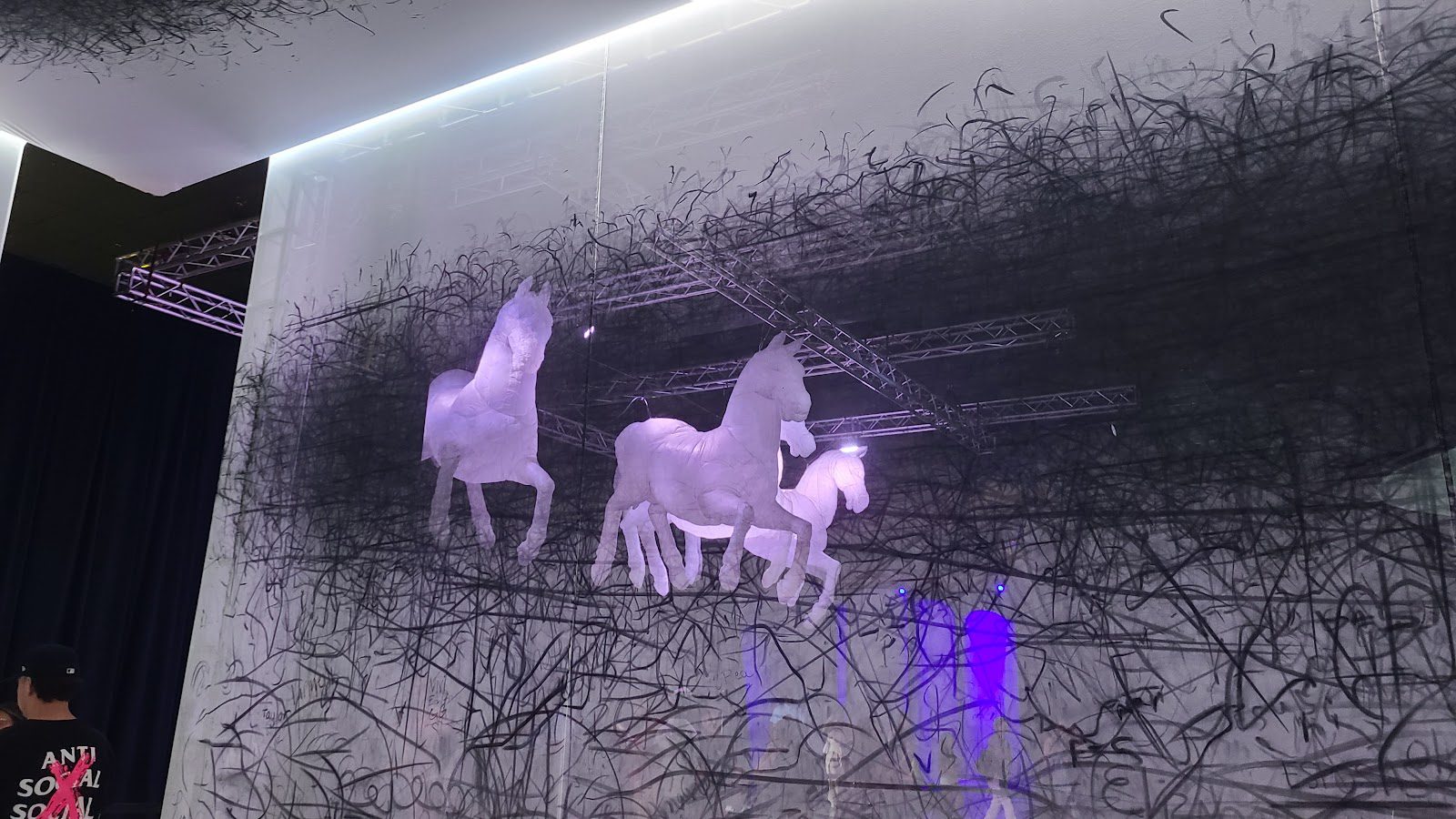
    The buzz started in June from influencers posting first looks. Then came press release-induced puff pieces on major news outlets and tourism organizations. Now the word is officially out: the new Balloon Museum is open in Wynwood. But what about this latest Instagram photo op makes it worthy of the moniker “Museum”?

    They’re not the first or the last attraction to include that title in their name. It shows a lack of responsibility (or self awareness) to use a word that comes loaded with so much meaning and importance to cultural significance so wantonly.

    The concept of a museum traditionally evokes images of historical artifacts, significant art collections, and educational exhibits. However, the emergence of spaces like the Balloon Museum raises questions about the evolving definition of what constitutes a museum. This most recent foray is far from the first. The Lock and Load “Gun Museum,” the Museum of Ice Cream, the Museum of Illusions, and the Paradox Museum are some of the others. These attractions prioritize interactive, visually appealing experiences designed to draw in crowds and generate social media buzz, and of course, sell tickets.

    Other places like Superblue, Wynwood Walls, and Artechouse don’t blatantly tout the title of “museum” in their official communications. But they still end up on Google or tourism lists in the museum category. This inclusion alongside established institutions further muddies the waters. As these trendy experiences multiply, garnering attention and dollars from the public, more traditional museums are shifting their curatorial direction to compete for ticket sales.

    The Bass Museum in Miami Beach has increasingly incorporated interactive and photogenic elements into its exhibitions. Like their recent Anne Duk Hee Jordan exhibit titled “I will always weather with you”, a room surrounded by trippy mirrors and filled with interactive elements. The Pérez Art Museum Miami (PAMM) and others have also embraced this trend, with exhibits that encourage visitor interaction and photo opportunities.

    These shifts raise concerns among museum professionals and cultural critics. The fear is that in the quest to remain relevant and financially viable, museums begin to prioritize style over substance. They opt for exhibits that attract social media attention at the expense of more enriching or culturally significant works. This potentially disregards the educational mission that has traditionally been at the core of museum practice. And beyond that, it likely influences the type of work that artists are creating. The challenge for contemporary museums is to strike a balance between being visually engaging and maintaining their role as custodians of culture and history.

    The Balloon Museum serves as a case study in this broader debate.

    It invites us to consider what we value in our cultural institutions. How do we define the spaces that house our collective heritage? While the social media-friendly environments undoubtedly draw crowds and generate revenue, it is crucial to ensure that they do not dilute the educational and cultural significance that the term “museum” has long represented. I was given the opportunity to visit the Balloon Museum, and while there were some cool elements, it certainly did not evoke the feeling of being in a museum (in spite of the staff making a point of including the full “balloon museum” any time they mentioned the place by name).

    In the end, the conversation about what qualifies as a museum is more than just semantics. It reflects broader societal shifts in how we consume culture, engage with art, and understand history. As we navigate this evolving landscape, it is essential to keep the core mission of museums in sight. To educate, to preserve, and to inspire, not only in the stated goal but in actual execution.

  • When Hippies Took over Miami

    When Hippies Took over Miami

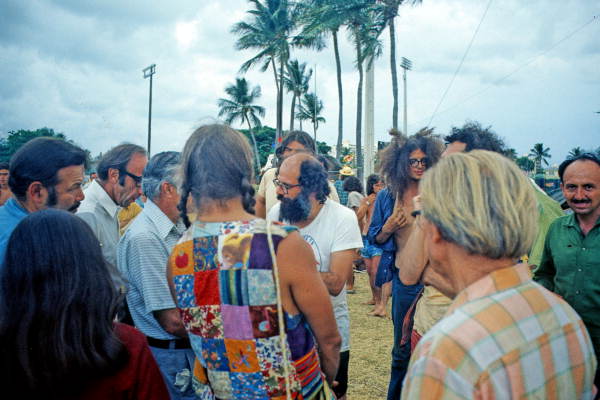
    The Marine Stadium on Virginia Key once witnessed a crowd of young hippies raising their “Make Love Not War” signs in front of Allen Ginsberg, who was about to read his poems. It was the afternoon of December 22, 1969, and the recital was brief: amidst the verses of “Kral Majales,” the police turned off Ginsberg’s microphone for comparing the repression of the Miami Police Department to that of Prague.

    Lawyer Tobias Simon took the case to court, arguing that Ginsberg’s right to freedom of expression had been violated. The ruling was in favor, and the recital was finally held in January (the next public appearance of Allen Ginsberg in Miami was in 1972, in Miami Beach, at the door of the Convention Center, protesting at the Republican Party Convention, and later at The Miami International Book Fair).

    The counterculture movement of the 1960s brought forth ideas that changed our way of thinking. Many of them were spread through underground newspapers such as Los Angeles Free Press, The Berkeley Barb, and the East Village Other. These low-budget tabloids battled censorship and were collectives of artists, writers, and musicians in their twenties who, with a pop style far from the formalities and solemnities of mainstream press, carried messages against the Vietnam War, capitalism, and in favor of equal rights for African Americans and women, and supported the Cuban Revolution—though those that became politicized lost their luster. Charles Bukowski, Hunter Thompson, P.J. O’Rourke, Ginsberg, and many other now-famous names took their first steps with these outlets.

    While San Francisco and New York were the strongholds of counterculture,

    the movement also reached Miami, and the first underground pages were written in 1969, in the underground newspaper The Daily Planet, from Coconut Grove, Miami’s bohemian neighborhood. It was at the Grove also, around those years, where the Woodstock festival was conceived in a marijuana paraphernalia shop, and Jim Morrison was arrested on stage at the Dinner Key Auditorium in what would be the last great concert of The Doors.

    Behind the editing and cultural management of The Daily Planet was Jerry Powers, a 22-year-old from New Jersey, music lover, columnist, and radio show host who invited Ginsberg to the poetry reading at the Marine Stadium, the afternoon of December 22nd, on Virginia Key where he was censored.

    At that time, Miami was a conservative, right-wing state, and Powers faced repression not only on that occasion but on many others and even faced charges for distributing The Daily Planet on the streets of Coral Gables because its content was considered obscene. In addition to the Ginsberg event, Powers organized four more events at the Marina Stadium, hosted cult radio shows, and The Planet remained in circulation until 1974. Later, he moved with his family to New York, and years later, he returned to Miami with a different idea that led to his new publishing project: Ocean Drive Magazine.

  • Popcorn Frights Film Festival Returns to Fort Lauderdale

    Popcorn Frights Film Festival Returns to Fort Lauderdale

    You can’t beat going to the movies for free. This year to celebrate their tenth anniversary, Popcorn Frights Film Festival will make a cheapskate movie lover’s dream come true by offering almost their entire in-theater experience free.

    This year’s celebration of horror movies will take place from August 8-18 at the Savor Cinema Fort Lauderdale and Paradigm Cinema’s Gateway Theater.

    The festival will feature 83 short films. 11 of which will make their world premiere at Popcorn Frights Film Festival. Among the shorts is their  “Homegrown: 100% Pure Fresh Squeezed Florida Horror” program that is dedicated to Florida’s local filmmakers and homegrown talent.

    For those with longer attention spans there will also be plenty of feature length films including re-screenings of beloved old school screamfests like Candyman. Those that are scared to fall asleep can enjoy Up All Night with Freddy, an overnight marathon of all the Nightmare on Elm Street flicks featuring the scariest horror icon of them all Freddy Krueger.

    Along with the old movies, there is also plenty of new.

    Opening night has a double-bill. It starts with the world premiere of Epic Pictures’ Beezel. Described as “an unforgiving and utterly frightening morality tale about a cursed home and the sinister secret dwelling beneath its floors — an eternal witch with an insatiable thirst for the souls of the living”. Part two of the double feature showcases the Florida premiere of the serial killer thriller Strange Darling.

    According to their press release, “Additional films receiving world premieres at the festival are the sci-fi thriller The Bunker starring Tony Todd, Tobin Bell, and Chelsea Edmundson. The wild descent into a psychedelic Lovecraft nightmare Voidcaller. The darkly twisted Drive Back that puts a fresh spin on slasher conventions. The demonically frightening Birthrite about a mother’s ultimate sacrifice. And the mystery riddled Lizzie Lazarus, which follows two strangers carrying a corpse through the woods looking for a mythical zone.”

    For more information and schedules visit the festival website at popcornfrights.com.

  • Local Film ‘Death Cleaning’ Available Now to Stream

    Local Film ‘Death Cleaning’ Available Now to Stream

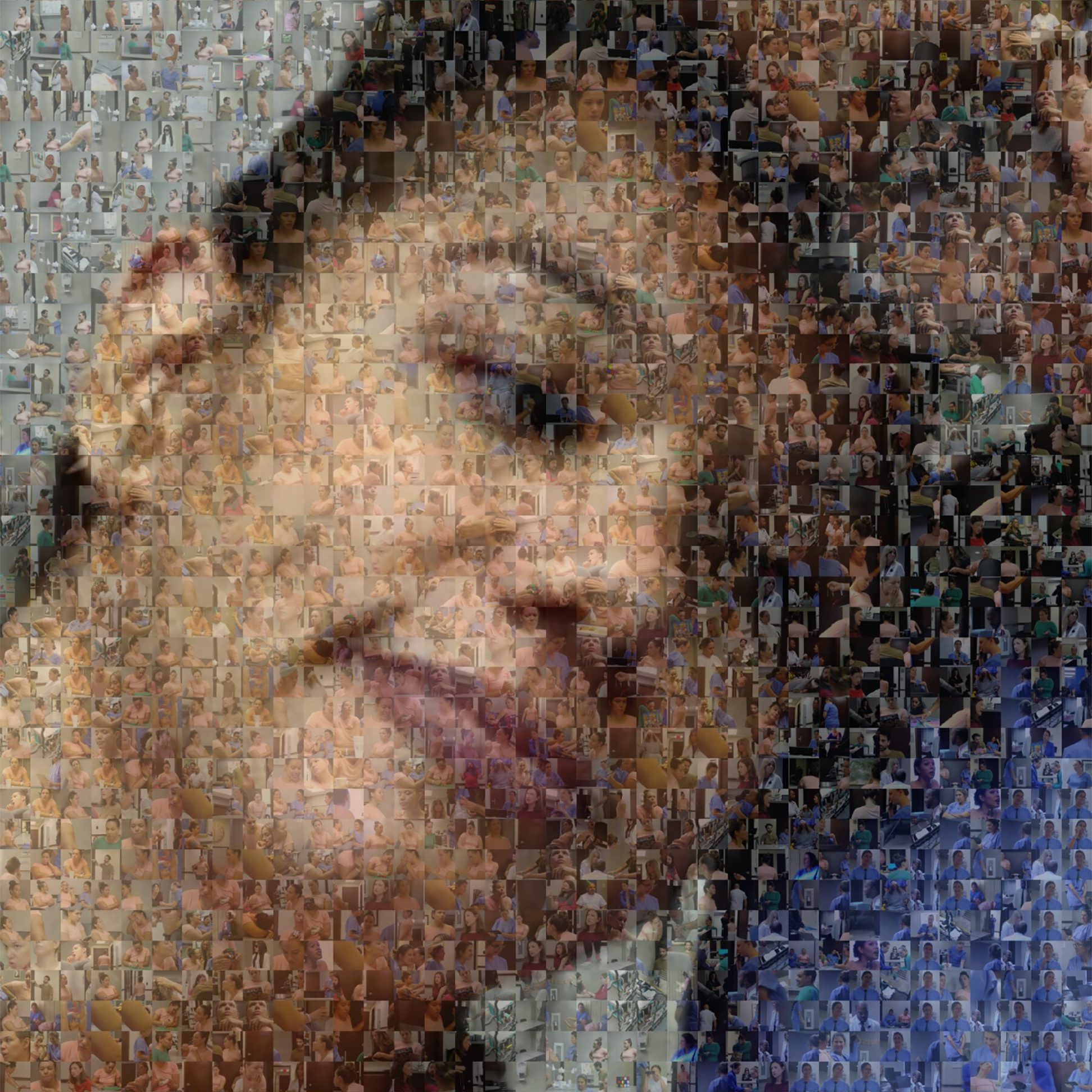
    After several local, public screenings, my 3rd feature film Death Cleaning has made its streaming debut. I wrote, produced, directed, shot and edited the film. You can find my 2023 flick on Amazon Prime Video and YouTube. Death Cleaning introduces a far-off future where a fleet of sentient robots, interested in preserving human history, have discovered a data card containing a video record of a cantankerous young woman’s stay at a drug rehab clinic. The following is an explanation of the film’s most distinctive formal features without spoiling anything.

    Non-Linearity

    Following introduction to the Post-Human Custodial Authority’s description of a particular data card recovered as part of their archeological mission, we’re dramatically informed that the data card’s “ORIGINAL FILE ORDER HAS BEEN LOST!” The following body of the film then presents 180 video files in a non-chronological order.

    A beginning, then a middle and then an end. Such is the structure of virtually all narratives designed from the immemorial to the present. Maybe we start from the middle or the end on some occasions. Maybe we go backward sometimes. But whether chronology is obeyed or not, some coherent sense of causality between the scenes, sequences or acts is a fundamental tenet of narrative design in any medium. And for as long as I’ve been writing scripts for the moving pictures, I’ve honored this basic assumption.

    Well, after some time, my legs started feeling stiff from assuming the same position for over two decades. So, I decided to flip – or scramble, more precisely – the script. The decision to arrange the 180 scenes of the script with a complete disregard for chronological linearity took a page (no pun intended) from my memoir-ish 1st book 20 Years a Filmmaker in which its 125 chapters are ordered by theme, not timeline. This complete and quite gleeful abandonment of logical order among all of the scenes allowed many of the film’s thematic and metaphoric ideas to be more strikingly juxtaposed and presented.

    I’ve grown accustomed to comparing the film to a sausage. In a sausage, there is an equal distribution of every edible part of the respective animal (read: beginning, middle and end) throughout. As a result, structuring the film in this way brought an irresistible tautness to its design from end to end. You’re in the middle of it from the get-go!

    While a reliance on the cascading variety and near-complete dispensing of the expectation of narrative direction may risk confounding the viewer, I believe it introduces a new way of experiencing a fictional drama. The sheer zest this choice brought to the writing, production and editing of the film cannot be overstated. And despite being the filmmaker responsible, I actually don’t have the overwhelming majority of the scene order committed to memory. As a result, every viewing is a new experience!

    Limited Perspective

    We are informed that the video files on the data card being recovered consist of “videographic therapy footage recorded by [an] unidentified patient.” This establishes the perspective or point-of-view by which we experience the events of the film.

    Omniscient or God’s-eye perspective is a primal instinct of any artist or storyteller. Without the slightest hesitation, children automatically assume this particular creative vantage point in their drawings or stories. For the artist and storyteller, young or old, the ability to assume any angle on any event and enter into the mind of any imagined character can go unchallenged for decades. Operating in this mode, nothing is off-limits. The world, fictional or otherwise, is bound only by the limits of one’s imagination.

    But most of the time, I feel omniscient perspective is irresponsibly applied, particularly in film, among both amateurs and professionals. If you assume God-like observational powers, a filmmaker of any stripe must be ready to wield their camera with preternatural precision and intention. A high standard has been set by many of the medium’s forebearers but it is often not met out of costly expense, lack of talent, laziness or any number of other reasons. But there is an alternative to omniscient perspective in film, though far less popular – it’s called subjectivity.

    For as long as I’ve been writing and producing feature films, I’ve felt stifled by the ubiquity of the omniscient posture in our saturated mediascape. Subjective perspective has, in turn, allowed me to craft films that have freed up my creativity by accommodating my relatively limited resources, particularly when it comes to the in-universe source of the video (e.g., webcam records in 2022’s State v. Unknown and microscopic drone recordings in 2019’s For My Sister). Defining a more finite perspective for a film’s narrative has also carried the added benefit of casting me as a figure in the narrative of the film not unlike how I involve the acting talent I work with. In the case of Death Cleaning, I assume the role of a (mostly) silent videographic therapy patient armed with a simple camcorder whose videos reveal the events of the film. In so many ways, these sorts of deliberate constraints paradoxically free me up rather than tie me down.

    Recording Implements

    Following from my choice to pare down the perspective of the narrative was my decision to record the 180 scenes of the film with a $55 HD camcorder. Yes, you read that correctly. I paid Amazon $55 for an off-brand HD video recording device.
    Both professionals in the film industry and independent filmmakers, with rare exceptions, place a tall emphasis on pictorial definition and beauty when it comes to the motion picture image. Death Cleaning, for better or worse, bucks this sacrosanct predilection. Throughout the film, the quality of the video we’re watching can appear quite grainy and lacking in sharpness. The nature of the camera operation is clearly hand-held and the shakiness, particularly on zoomed-in shots, is regularly apparent. And because the audio quality of the camcorder was utterly deplorable, all of the dialogue and sound effects heard in the film were recorded with my Android phone.

    Why did I choose to upset the natural order of things with this utter disregard for image and audio fidelity? The simple answer is that the low-fi video and audio is justified by the film’s established limited vantage point (described above). Moreover, I take a bit of inspiration from Nintendo. Yes, the video game company. I’m obsessed with their ethos which prioritizes the mechanics of gameplay over high-rated resolution and technical specs. It’s the innovation and intelligence behind their products that matters more than their superficial sheen. Although I gave up console gaming years ago, I highly respect the legendary Japanese game maker’s often wildly successful model of operation. You learn from the best!

    Framing Device

    The film features a green-tinted framing device which, at its bookends, provide some context for the body of the film (i.e., description of the activities of the so-called Post-Human Custodial Authority). There are also two related interludes placed at approximately the first and second third of the film. These interludes are akin to public service announcements produced by the robotic custodians which shed light on their view of the fallen human species.

    The use of a futuristic framing device is also a characteristic of my previous two feature films as well (i.e., police webcam access in State v. Unknown and the time-traveling nanodrones in For My Sister). In these previous films and in Death Cleaning, the framing device serves to quickly orient us toward the nature of the body of the film we’re about to experience. Because omniscient perspective, described earlier in this essay, is a basic assumption of most narrative media, most content does not require a framing device. But if the tables were turned and omniscience was regarded as unusual, viewers would need some sort of courteous guidance from the media’s creators.

    Unremarkable Protagonist

    The focal point of the 180 video files we’re presented with in the film is Nev Templeton, the daughter of an esteemed senator. She was court-ordered to the drug rehab facility for a period of 90 days after being found by police under the influence of a “hyperopiate” called “happyfunjoy.” She is not happy with the arrangement, to say the least.
    But why grant so much attention to such a flawed, passive and unexceptional character as Nev Templeton? Principally, compassion. But a more artistic reason involves my choice to flip the mostly aloft, driven and distinguished character of Cal Modesto in my previous film State v. Unknown. Contrast and inversion often motivate many of my creative choices. I also loved the idea of hinging an elaborate film production, involving considerable commitment, organization, planning, leadership and cooperation, on a fairly unremarkable character who exhibits virtually none of those qualities and is in essence quite heretical toward them.

    To conclude this essay, an important consideration in staying motivated over the course of a career making films or any form of art is the sustainment of freshness in the work and zeal in the attitude. This means seeking out exciting, original and often untried ways of dealing with structure, perspective, technology, narrative, etc. In an environment of so much corporate-driven production – particularly in film – independently operating artists and creatives should always try to keep the soil as freshly tilled as possible by experimenting and taking bold risks. If we don’t, who will?

  • Oscar Armando Fuentes Aguirre & Gloria Esperanza Zuniga

    Oscar Armando Fuentes Aguirre & Gloria Esperanza Zuniga

    The below is an excerpt from the new book, Relics of the Heart: Stories of my Family. It is available to purchase by clicking here. 

    My father relates that when he was 17, my grandfather took him to enroll at the Air Force base near San Pedro Sula’s international airport, which was a short distance from his home in San Cristobal. He had been getting into too many fights, and Grandpa Toño feared that something bad would happen to him if he didn’t straighten up his life at an early age.

    The Air Force seemed like the perfect solution. My father recalls that when they arrived at the admissions office, they were told that all the slots were filled and that they would have to wait until next year when recruiting sessions would begin again. On his way back home, my grandfather made it clear to my father that he needed to do something positive with his life so that he would not end up living on the streets, that he needed to straighten his path; otherwise, he would have to look for a job to help with expenses at home.

    The next day, my father saw an ad in the newspaper looking for cooks to work aboard a cargo ship traveling to Europe. Those interested had to be willing to commit to a 12-month contract. According to my father, my grandfather was very supportive of this job opportunity, even though my father was only 17 years old. Eight months passed, and his job on the ship had a work schedule of 40 hours a week, with time off for recreation and rest. The cargo ship carried hundreds of containers filled to the brim with Honduran coffee, roasted or decaffeinated, the country’s main export, accounting for 22% of Honduras’ total export earnings. The ship had already made stops in the eight countries scheduled on its shipping route, including the Netherlands, Germany, Belgium, France, the United Kingdom, Italy, Spain, and Portugal.

    Its last stop was Monrovia, Liberia, a common stopover for ships due to its strategic location in West Africa. My father tells a story of a trip back to Honduras when one of the older sailors, who for no reason at all, did not like my father from the first day he boarded the ship. This older sailor liked to get drunk on his days off, and on a foggy night, when my father was leaning on the edge of the stern of the ship, watching the sharks eat the ship’s debris, this sailor appeared out of nowhere, grabbed him from behind in a choke hold, laughing. In those days, it was not uncommon for a man to fall overboard and disappear into the water, and my father feared for his life. He tells how he had to find the strength he didn’t have to free himself from the sailor’s stranglehold, stomped his toes hard with his right leg, hit him in the stomach with his elbow, turned to face him and hit him in the face with his right hand, and the man recoiled. That’s when the sailor grabbed a 2×4 plank of wood, and my father lunged across the floor toward a hammer that had been left there with other tools. The sailor swung the plank of wood toward my father’s head, and my father swung the hammer at the plank, splitting it in two.

    The sailor then lunged at my father in a blind, drunken rage, intent on pushing him over the edge, my father threw the hammer with his right arm and hit the sailor in the center of the forehead, knocking him down.

    “You killed him!”

    someone shouted in the distance, running towards them through the fog of the night.

    “What have you done, young man? You killed him, look at all that blood!” the man continued nervously.

    “He’s not dead, look at him, he’s breathing, he’s also very drunk, and besides, he attacked me, he tried to throw me overboard,” my father said nervously and agitated.

    Three more sailors arrived and took the sailor away. The ship’s captain appeared through the fog, smoking a cigar, walking, limping toward my father.

    “Are you all right, boy?”

    “Yes, Captain, he attacked me from behind and wanted to throw me overboard, and I…”

    The captain interrupted him with: “Yes, I know, boy, I saw the whole thing from the upper deck, but this wooden leg didn’t allow me to get there in time to stop the fight.”

    “So, I’m not in trouble?” my father asked.

    “No, you’re not in trouble because you didn’t kill him with that hammer. Get out of here and go rest.”

    “Thank you, captain!” said my father, walking away, feeling relieved.

    Back at the Port of Cortes, Honduras, my father waited with his bag of clothes over his shoulder, while my grandfather exchanged a few last words with the captain, shaking hands and walking away from the ship in my father’s direction.

    On the trip back to San Cristobal, they didn’t say a word to each other, my father was sure he was in deep trouble with his dad, but just as they entered the San Cristobal colony, my grandfather said to him:

    “Yesterday your friend Chico came by looking for you, he said that you should get in touch with him, that he got you a job as a masonry helper.” It was then, in 1971, that he met my mother, Gloria Esperanza Zúñiga, at a bus stop near the Leonardo Martínez Valenzuela Hospital.

    “It was 2:00 pm, and my father and his friend Chico were laying cement blocks across the street from the Leonardo Martinez Valenzuela Hospital in San Pedro Sula. They were adding an extra room to a small single-family house, and both sat on plastic buckets upside down on scaffolding 16 feet high. They worked together in a rhythm: cement, block, tap with the wooden handle of the masonry tool, level and repeat.

    “At 2:30 p.m., the alarm on Chico’s watch began to ring. My father finished the last piece of cement on the last block, while Chico poured hot black coffee into two small cups and handed one to my father.

    Then, they heard the hospital bell ring.

    They sat there drinking their coffee and waiting for all the beautiful hospital nurses to leave the building. They had been admiring the nurses in their white uniforms for almost a month, and my father had his eye on one nurse in particular.

    He had heard the other nurses call her by name and learned that her name was Gloria, but he wanted to know more about her, dreamed of meeting her someday, falling in love with her and even marrying her.
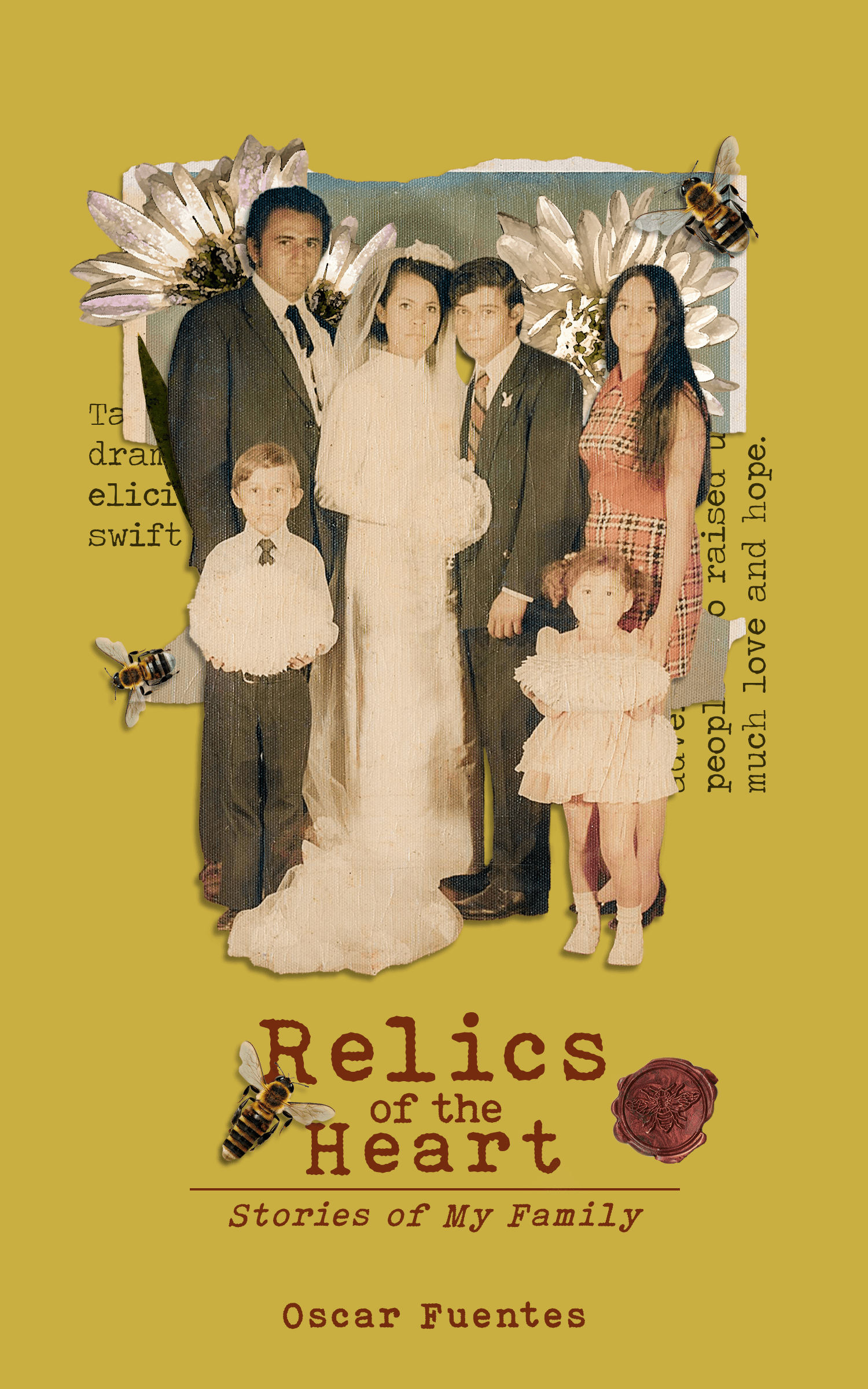
    “Suddenly, the front doors of the hospital opened and the crowd of nurses dressed in white, with their white caps and white shoes, came out in all directions.

    Oscar: [Looking at Gloria with determination] Chico, today is the day. I can’t just dream anymore. Gloria is my birthday present to myself.

    Chico: [Smiling] Go ahead, Oscar! Go and talk to her.

    [Oscar combs and curls his hair, climbs down from the construction scaffolding, and approaches Gloria (my mom) while she waits at the bus stop.]

    Oscar: [Nervous, but determined] Hi! My name is Oscar Armando Fuentes. Sorry if this sounds a little strange, but today is my birthday, and I’ve been looking forward to meeting you for a long time.

    Gloria: [Surprised and smiling] Happy birthday, Oscar Armando Fuentes! I am Gloria Esperanza Zúñiga. Did you really intend to meet me?

    Oscar: [Smiling with relief] Yes, Gloria. I’ve been watching you for the past few weeks and somehow today I felt I had to take the plunge and say “hello.”

    Gloria: [Flattered] That’s very sweet, Oscar. I had noticed you too.

    [Oscar and Gloria begin to talk animatedly as they wait for the bus together. They discover common interests and feel a special connection.

    [Finally, Gloria’s bus arrives.]

    Gloria: [Preparing to board] I have to get on the bus, Oscar. It’s time to go back to my neighborhood, Calpules.

    Oscar: [Walking her to the bus] I understand, Gloria. It’s been a pleasure meeting you.

    [They say goodbye with a smile, and my mom gets on the bus. My dad watches her walk away and then heads back to the construction scaffolding where Chico is waiting for him.]

    Chico: [Anxious] Oscar! How did it go?

    [My father returns to work with a smile on his face, hoping that this is the start of something special.]

    Oscar: [With a dream in his eyes] Unbelievable. Her name is Gloria Esperanza. Gloria Esperanza, Gloria Esperanza, Gloria Esperanza.

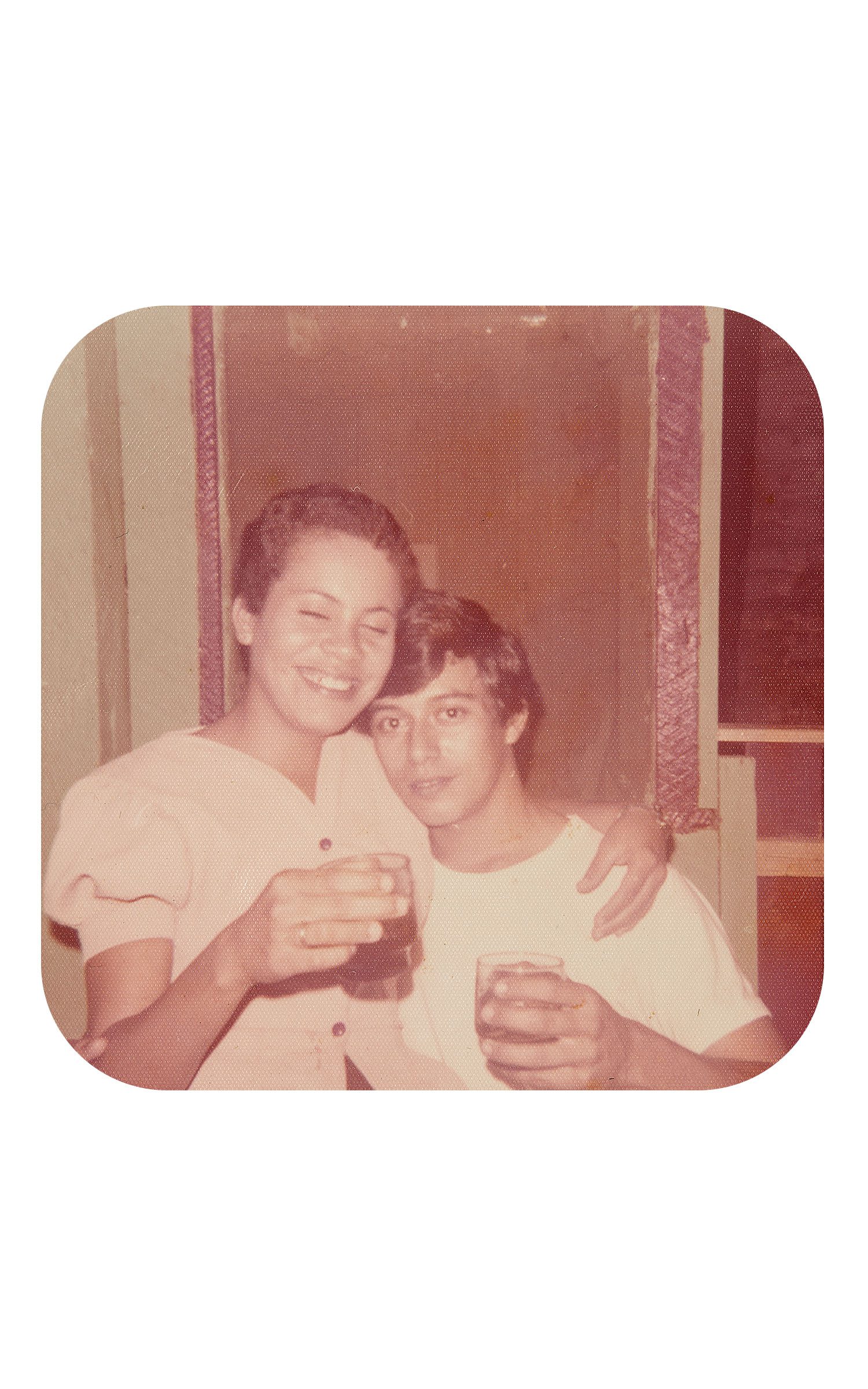
    My dad tells how three months later, they got married in the Catholic church in Ciudad La Lima, that my grandfather Toño had rented a big bus to bring my mom’s whole family from Calpules to the church and that someone had written on the outside, “Just Married,” and then they tied a bunch of empty cans with string to the back of the bus so they would make noise against the pavement as they drove, and that they said their vows with the Virgin of Suyapa watching them, and that it was the best party in the history of Calpules.

    My mom tells that the wedding party took place at El Barracón, that my grandmother Fina and her sisters and brother were very happy and attentive to all the guests, that my grandfather Toño built a makeshift bar to serve drinks, and even my grandfather Carlos, who never drank, got drunk that night celebrating the wedding of his first-born daughter, his little girl, his nurse.
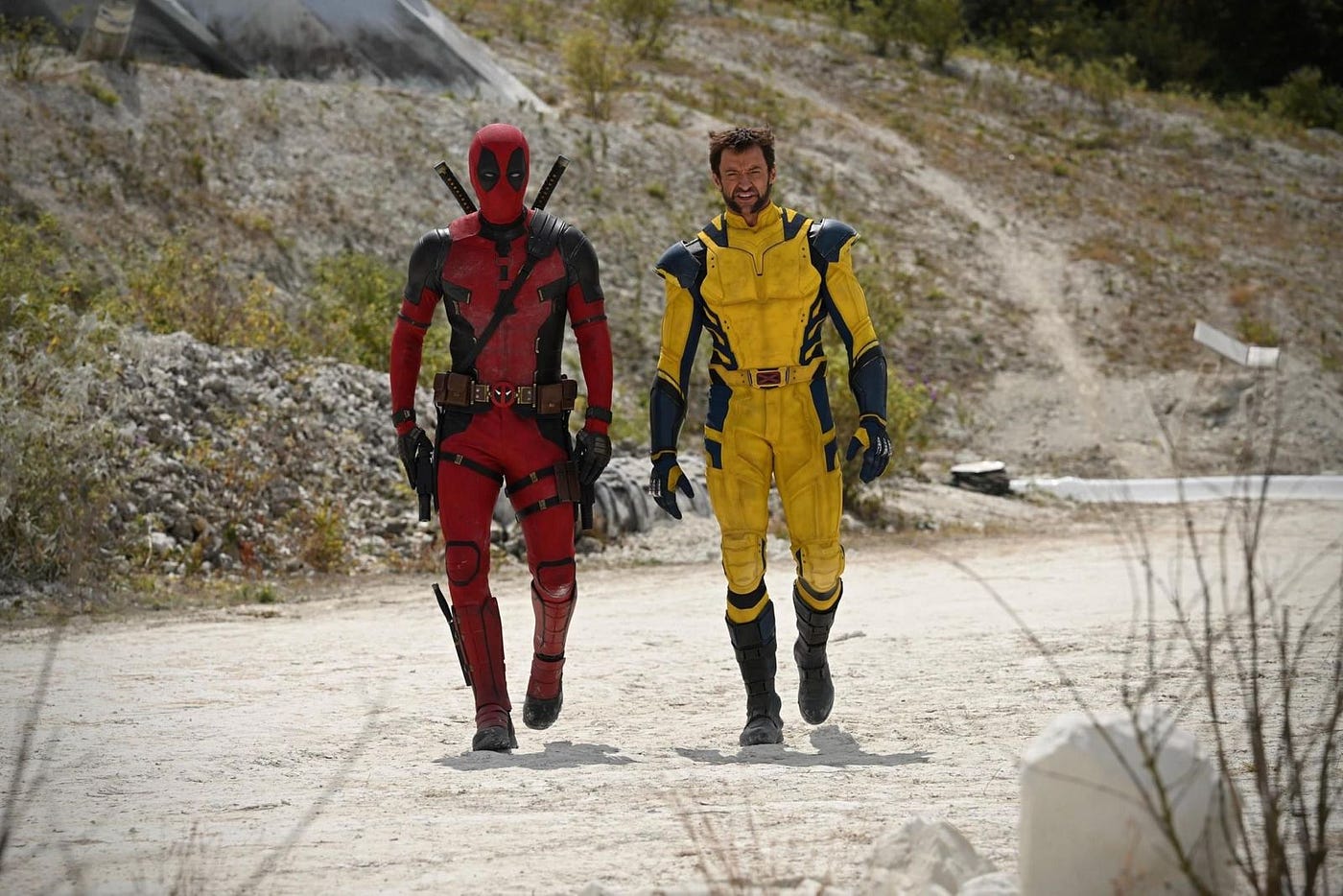
  • Deadpool & Wolverine Is as Musty & Lame as a School Book Sale

    Deadpool & Wolverine Is as Musty & Lame as a School Book Sale

    Back in middle school, our tiny, musty library had a book sale once a year. They were school sponsored, I think, but among all the YA books and Guinness Book of World Records were, oddly, copies of 1001 Dirty Jokes or some such variant. I’d always pick one up. It felt like I was getting away with something. My 8th grade friends and I would then excitedly leaf through the book, usually during class time, trying to find a joke to out dirty the last dirty joke we’d read out loud. This was fun for a little while, but it didn’t take long before we’d tire of the salacious material and move on. I mean, who wouldn’t quickly burn out on an interminable parade of foul language describing various body parts, what comes out of them, and what people may or may not do with them?

    Ryan Reynolds and Shawn Levy, apparently. They can’t seem to get enough. The star and director, respectively, of Deadpool & Wolverine, the third entry in the highly lucrative comic book franchise, present us with an endless barrage of filthy jokes and gory violence, and it wears out its welcome almost immediately. In this case, before the end of the opening credits, an interminable action scene where the titular heroes take down an army of goons although one of them (spoiler alert) is a desiccated corpse.

    This is the first appearance by Ryan Reynolds’ fourth wall breaking, “merc with a mouth” in the Marvel Cinematic Universe. His presence was, of course, facilitated by the Walt Disney Company (which owns Marvel Studios) subsuming 20th Century Fox Studios, the original home of the Deadpool films. And while the earlier two entries in the franchise were definitely “R” rated endeavors, they didn’t come off as desperate in their need to shock as this third entry does. The filmmakers are clearly overcompensating in their need to prove they won’t capitulate to their new, kid friendly Disney overlords.

    The crass jokes and over-the-top violence lose their shock value quickly.

    And look, the child who nervously bought that 1001 Dirty Jokes book is still alive and well inside me, so a well placed “fuck,” or a jolt of well-timed violence is still effective, even exhilarating, but when presented as repetitively as they are here, it all just becomes numbing. Novocain for the brain.

    To fill out the runtime between all the sarcasm and carnage, Deadpool & Wolverine awkwardly inserts mawkish “emotional” moments that don’t feel remotely earned. Hugh Jackman returns to his most famous role as the Wolverine, the adamantium clawed, fan favorite superhero, but he’s saddled with endless scenes of drunken sadness and remorse for something he either did or didn’t do in his past. It takes entirely too long to reveal what happened and is painfully underwhelming once divulged. And having Deadpool make a pithy joke about how long it took to reveal this backstory doesn’t remotely negate the crummy writing (credited to five people, including Ryan Reynolds himself), it just highlights it.

    Admittedly, I missed the details of this Wolverine’s backstory because of how it was delivered, a teary-eyed monologue of self-contempt, slurred out between dramatic chugs of alcohol. These scenes are direct callbacks to Mr. Jackman’s “final” turn as the character in the overwrought Logan. In my review for that film, I proposed a drinking game where you take a shot every time Wolverine said some variation of “I’m not the person you think I am…”. Well, prepare your livers because we get the exact same dialogue repeated here once again, so please forgive me for checking out in the middle of it.

    The rest of the movie is devoted to the film’s only real raison d’être, cameos. Admittedly, most of them are fun, especially an early one (around the 40-minute mark) that manages to surprise twice and even had curmudgeonly me laughing with appreciation. As much as I loathed Deadpool & Wolverine, I wouldn’t dream of spoiling them for you. It’s pretty much the only real fun the movie has to offer.

    But the Deadpool & Wolverine cameos are hollow and inconsequential.

    They have no lasting impact on the story or the cinematic universe. They exist solely to rile up an already devoted audience. Indeed, the press screening I attended had a room full of critics clapping like trained seals. But the movie is simply sifting through the detritus of comic book culture (in this movie’s case, literally), dusting off old, semi-forgotten properties and characters and cramming them down the ever-expanding maw of an all too eager audience willing to lap up every last dusty crumb of nostalgia.

    It’s all bread and circuses. Superficial appeasement. And despite all of its edgy posturing with jokes at the expense of the studios that made it, Deadpool & Wolverine feels like nothing more than a two-hour explanation of what happens to the assets of one studio when it’s assimilated by another. It’s corporate propaganda masquerading as avant-garde.