Category: News

  • The Greatest Of All Time

    The Greatest Of All Time

    This is an excerpt from Pedro Medina León’s book  TOUR: A Journey Through Miami’s Culture  where each chapter highlights an underknown aspect of Miami’s unique history.

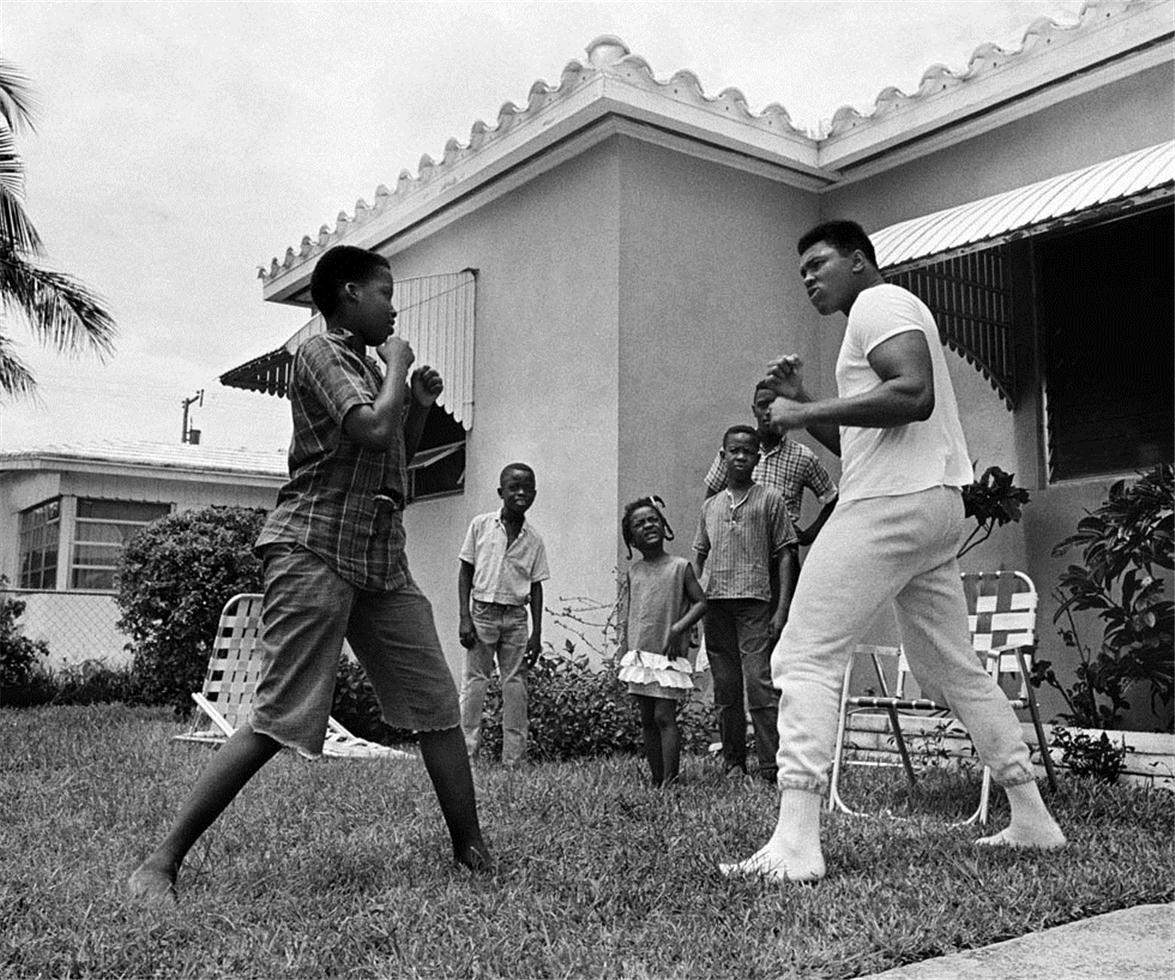
    Miami Beach sunrises were altered in 1961, when an African-American man started running down the MacArthur Causeway every day at five o’clock in the morning. He was tall and sturdy. A perfect silhouette. Racial segregation was so brutal at the time, that a person of color could not walk down the street after sunset. The Civil Rights Act, which sought to put an end to this, wasn´t signed until 1964.

    The first time that Cassius Clay (Louisville, Kentucky, 1942- Scottsdale, Arizona, 2016) stepped into a boxing ring he was twelve years old. Since that day he knew he wanted to be a world champion and it became his priority, even more than school. His accomplishments started early. At eighteen he won a gold medal at the Olympic Games (Rome 1960). He needed a sponsor to improve his career, but boxing was considered almost only for blacks and the only one’s supporting him were mobsters. Working for the Mafia was not an option. He had to knock on many doors until he finally got Louisville Group´s support.

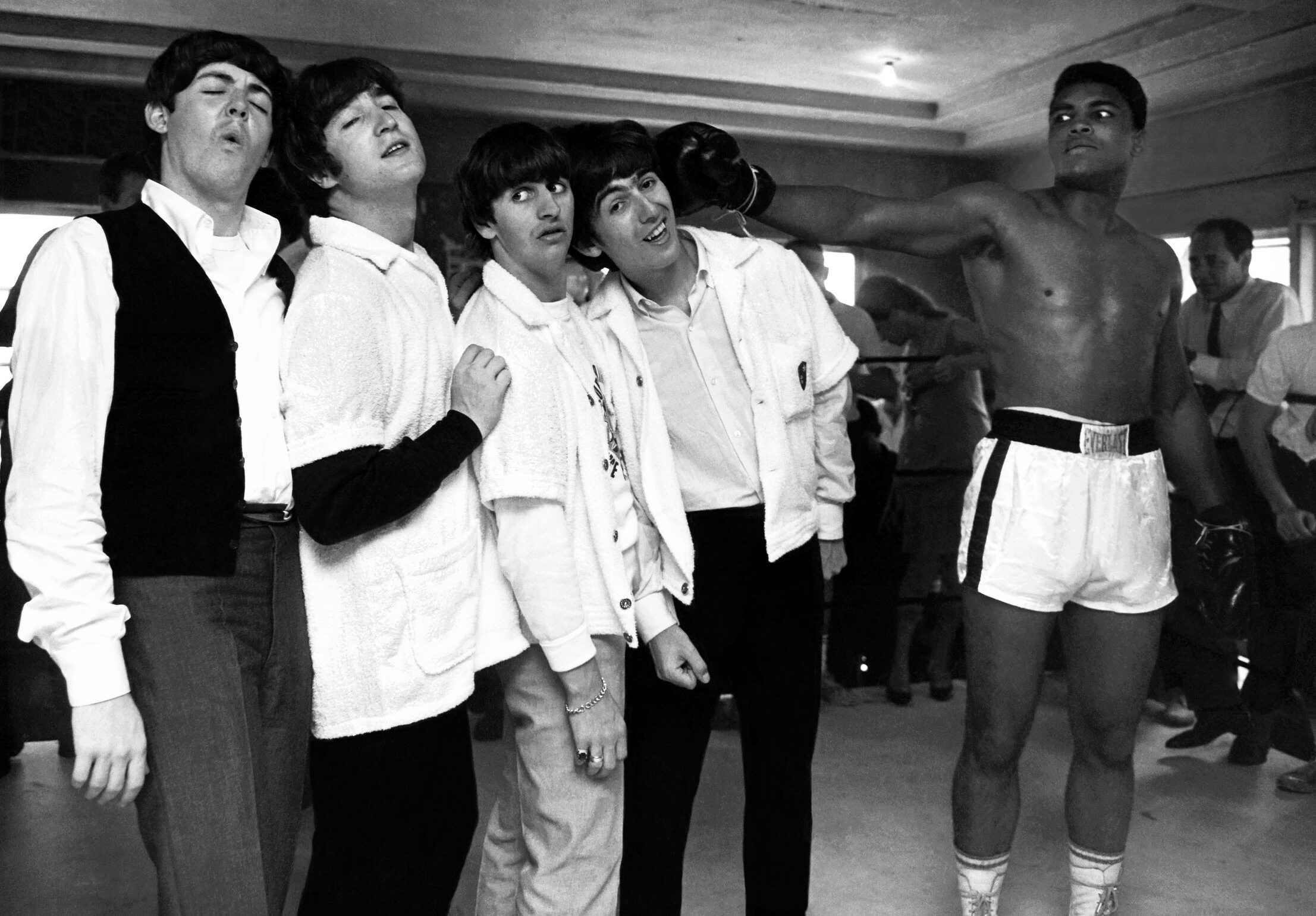
    Clay’s training began in San Diego, but it didn’t prosper due to a lack of understanding between him and his trainer. Then there was an opportunity to move south, to Miami, to train with Angelo Dundee, whom he fortunately knew. Cassius Clay landed at the Miami International Airport with his twenty-one years and the firm conviction of dethroning champion Sonny Liston. He settled on a motel on Biscayne Boulevard and immediately started his routine. He got up at five in the morning, jogged down the MacArthur Causeway towards the Fifth Street Gym on Washington Avenue, where he had a historic encounter with the Beatles, during the trip they made to sing on the Ed Sullivan show at the Deauville Hotel in Miami Beach, which served as a springboard for their success. He spent hours in the gym and would eat and drink frugally. While consolidating his boxing career he converted to Islam to openly fight for equality and claim the rights of his race. The Islamist leaders supported him. Malcolm X even visited Miami to spend a season with him, which cost him the respect of the community.

    With nineteen fights, all in his favor, Cassius Clay challenged Sonny Liston. The fight was scheduled for February 25th at the Miami Beach Convention Hall. Liston, twelve years older than Cassius and trained at the Missouri State Prison, was sponsored by the Mafia and considered the match an audacity on Clay´s behalf. Insults and threats grew between each other, although the bets were towards Liston, who was a great boxer. He was the great champion.

    Clay’s strategy was to physically deplete his rival and knock him out between the seventh and eighth rounds. Sonny Liston, on the other hand, went in for the kill. Cassius Clay fought against Liston and the rejection of the nearly nine thousand spectators, except a few, like Malcolm X, who was seated very close to his friend´s corner. The first three rounds were for Clay, but in the fourth he began to lose his sight and Liston recuperated his points and climbed higher. It is an almost proven fact that, in the break between the third and fourth rounds, Liston ordered them to spray a poisonous substance in his gloves to blind his opponent. At the end of the fifth round Clay had recuperated and, in the sixth, lashed out in such a way that Liston asked to stop the fight before starting the seventh and fled to the hospital with a dislocated shoulder, deep wounds on his face, broken ribs and two missing teeth. Meanwhile, at the Miami Beach Convention Hall, the new heavyweight champion, euphoric and delirious, shouted to journalists and the public to eat their words.

  • 2024 Miami Dolphins Season Preview

    2024 Miami Dolphins Season Preview

    I remember exactly where I was the last time the Miami Dolphins won a playoff game. The game was blacked out in Miami and we were too broke to buy tickets.  It was December 30, in the year 2000, so you couldn’t watch the game on a pirated live feed on your phone. A friend and I went to Sandbar in Coconut Grove thinking sports bars wouldn’t be blacked out as well. Unfortunately, the rules applied and they could only play the audio. But when the game against Peyton Manning and the Colts went into overtime, they figured a way to turn on the video and we watched Lamar Smith run into the end zone. I don’t think there were drinks on the house, but there might as well have been as everyone cheered with joy.

    As a Dolphins fan I’ve been chasing that high ever since. No team in the NFL has gone as long without winning a playoff game as our Dolphins. We’ve had 4 presidents, a plague, 9/11, and 16 models of iPhones since that last postseason triumph. Some suckers think this year will be the end of that drought. Those believers undoubtedly have the leases for a few bridges in their back pocket.

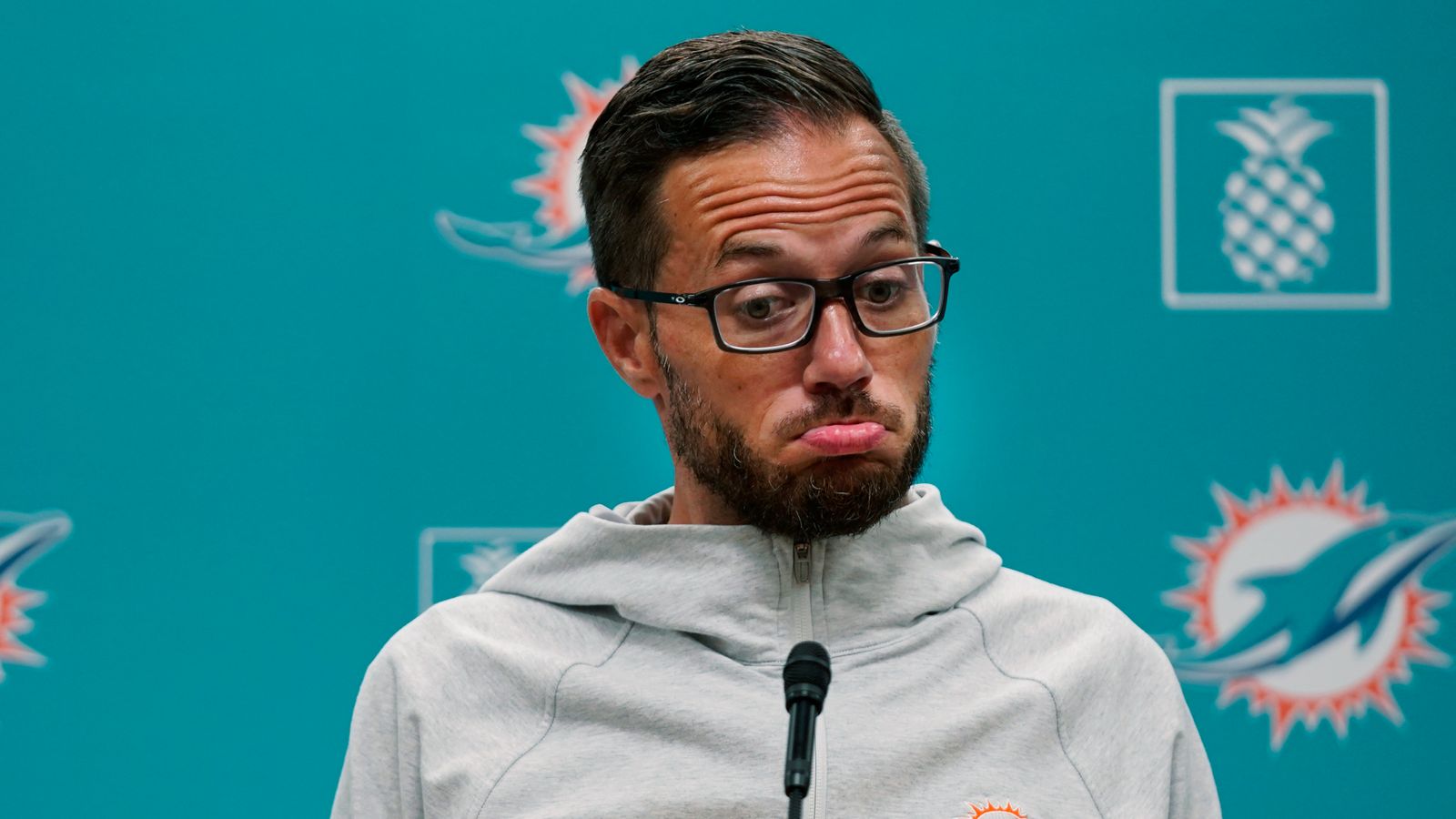
    For the third season in a row, the Dolphins are coached by Mike McDaniel, who has been touted by the media as a genius in spite of underachieving the last couple years. McDaniel has the aura of a Silicon Valley conman. He and his publicists keep touting how innovative he is, but investors wait for years and still see no results. McDaniel says by being a compassionate, empathic leader he will guide his team to victory in a game where the players have to knock each other to the ground.

    What inevitably happens is when the weather is warm this Dolphins team does well. But when the weather gets cold and it is more difficult to pass the ball, the team falls apart.

    Entering his fifth year, quarterback Tua Tagovailoa has shown himself to be a McDaniel kind of player. Against crummy opponents when the sun is shining, Tua is a world beater. When it gets cold and the opponent is tough, he shrinks. It was really disappointing and revealing to hear Tua in an offseason interview whine about how his former coach Brian Flores was too mean to him. If words can hurt him what about the sticks and stones of the pass rush of the Baltimore Ravens or Kansas City Chiefs?

    Who knows? Maybe McDaniel and Tua can reinvent the wheel

    and win with a kinder, softer approach than the toxic masculinity that Bill Belichick, Vince Lombardi and Don Shula preached, but I definitely wouldn’t bet on it as long as football remains a contact sport.

    If the Dolphins do make it, it’ll have to be on the backs of their wide receivers. Tyreek Hill was recently voted by his fellow players as the best player in the NFL at any position. Jaylen Waddle isn’t a shabby #2 either. Last year’s running back corps of Raheem Mostert and De’Von Achane were beasts as well.

    But what scares me is who the Dolphins lost. Their center Connor Williams opened so many holes and is now gone. More alarming is on the defensive side of the ball. Defensive tackle Christian Wilkins and linebacker Andrew Van Ginkle were shown the door. Both made so many big plays over the last few years.

    Disappointingly defensive coordinator Vic Fangio was exiled. His old school, no-nonsense football mentality where he’d say things like, “As they say in the maternity ward, don’t tell me about the pain, just show me the baby,” wasn’t appreciated in the McDaniel locker room where all sharp corners are taped over.

    I’d love for McDaniel to make me eat my harsh words. I’d love to learn that positivity and powerpoints can overcome 100 years of football history that show the meanest and the toughest are the ones that win.

    My prediction after looking over the schedule is a repeat of the last two seasons. The Dolphins will feast while the weather is nice against a soft schedule and start 6-1. Then around Thanksgiving with a series of tough opponents and cold weather road games, they’re going to fall back to earth and end the season at 10-7. They’ll depend on the kindness of other teams on whether or not they make the playoffs to lose a postseason game in a frigid Baltimore, Cincinnati, or Buffalo.

  • South Florida Natives Return to Play Bumblefest 8

    South Florida Natives Return to Play Bumblefest 8

    This article originally appeared in PureHoney Magazine. Check them out here.

    Three of the bands coming from other cities to play Bumblefest this month have South Florida’s complicated DNA in their genes. The founding members of Philadelphia’s Lo Fives grew up in West Palm Beach before first heading to Portland, Oregon to perfect their mystery-laden psych-punk music, and then returning east. Members of the affable punk-rock power trio Shehehe, based in Athens, Georgia, likewise spent early years in and around Palm Beach County. The leader of the Gainesville, Florida folk-punk troupe American Dream Survivors has as deep a South Florida band résumé as any you’ll find.

    For various reasons they resettled in other places. Coming back for Bumblefest, they have thoughts and memories about key times and places that they kindly shared unlocking some of their histories.

    American Dream Survivors

    “I started my music career in Palm Beach with a bunch of small, politically-driven punk bands,” says American Dream Survivors’ singer and banjoist Sergio Witis. As a teen-ager he played in Endeavored Establishment and then got what he calls his “first taste of being in a totally functional touring band,” playing bass in the hardcore punk-crust outfit Dead Patriot.

    A move to Gainesville led to his first unplugged, folk-punk foray in O’haste Annihilation, and to experiences that both uplifted him and put him at risk. “I learned so much about DIY and community thanks to places like Wayward Council, Civic Media Center and punk houses and collectives,” Witis recalls. He also battled addiction and returned to South Florida to, as he puts it, “change my life.”

    In Delray Beach around 2008 he co-founded Viva Le Vox, a band casting a raucous, bluesy, punk spell with upright bass, electric guitar, drums and a singalong air. “We had an amazing time being part of the South Florida scene during a flourishing time,” Witis says.

    He had two more bands after that, Everymen and Ghost Party, and he eventually circled back to Gainesville, where American Dream Survivors have established themselves with a hybrid of punk directness and vintage flair: Banjo, fiddle (Arthur Rosales), upright bass (Vinnie Dellucci), drums (Steve Lots), unadorned vocals and songs like “Blue Prints,” a twangy dirge about connecting with your inner child as you try to treat your psychic wounds and carry on.

    “Inner child work is something that helped me so much during a hard time in my life, and it is something I do with our clients at the mental health facility I work at,” Witis says. The quartet recorded “Blue Prints” with fellow Floridian FayePatrick Kennedy on guest vocals, a collaboration Witis found so “magical” that adding a permanent fifth member to American Dream Survivors has entered the band’s thought process.

    Lo Fives

    It will be a homecoming for Zackery Fleming and Sara Fleming, and not the first, when Lo Fives plug in at Respectable Street for Bumblefest. “We’ve played Respectables a few times as Lo Fives in the past (and I’ve played numerous times in previous bands),” says Zackery, who may be best known in South Florida for his work with indie-rock bard Josh Simkowitz, a.k.a. Chaucer. “Respectables has always been a social hub growing up in some formative years. Sara and I, now married, had some of our first meetings and experiences together there, so I’ve always held a very special place for it.”

    Lo Fives came together when Zackery and Sara relocated to the Pacific Northwest and, after cycling through various bandmates, bonded with Portland guitarist Mike Stortz. Lo Fives emerged from the PDX scene blending post-punk, psychedelia and noise into a freewheeling but focused whole that’s equal parts beat-poet strangeness and mad-science sonic curiosity.

    Stortz, still based out west, will be in town to join them on guitar. Stepping in for Joshua Soltroff, the drummer in Lo Fives’ Philly-based lineup, will be Jordan Pettingill, the backbeat engine for the low-end thrashers of Cop City/Chill Pillars.

    SheHeHe

    He didn’t yet know how to play drums or be in a band, but Jason Fusco loved music and he could dance, so the instincts and timing were already present for this punk rocker in waiting. He just needed a spark.

    Around 2006 he moved in to a drummer friend’s house near the ocean in Lake Worth. “He, a drummer starting to write songs on guitar, and me, a good dancer and lover of music, falling in love with the drums and playing music with my best bud,” Fusco recalls. “My first band, Myself Mysizzle, was born in that house in Lake Worth.”

    “We would go jump in the ocean, sometimes surfing or bodysurfing, mostly just getting our daily ocean fix, and then we’d hit a dive bar, have a beer or two, make a setlist, then head back to the house for more beers and to play music to our hearts’ content.”

    Like his future wife and Shehehe bandmate, bassist and vocalist Nicole Bechill, Cusco has South Florida roots, moved away, came back and started to see possibilities in making music. Their connection was essential to Shehehe’s formation, but a move to the Georgia college hometown of the B-52s, R.E.M., Drive-by Truckers, Widespread Panic and key bands of the Elephant 6 indieverse made everything click.

    With Noelle Shuck rounding out the trio on guitar and vocals, Shehehe have won a place for themselves in Athens — no easy feat in a cradle of modern rock that wears its laurels proudly and guards its legacy. Shehehe’s brand of punchy, crackling punk-rock evokes the hooky goodness of Ramones, Cheap Trick, Joan Jett and The Muffs with energy and co-ed glee. They fit their present surroundings, but Fusco thinks warmly of the place where he got his start.

    “It was the most wonderful place to learn an instrument and to become a musician, and was hard to leave,” he says, adding, “Learned how to play drums, surf, drive a stick shift and fell in love with my wife, Nicole, down there!”

  • AI Stole My Writing Jobs

    AI Stole My Writing Jobs

    When ChatGPT hit the web, the open AI tool sent the world into a futuristic tizzy. It can write so much freaking stuff for you — though it doesn’t cite where on the web it stole it from. It can create schedules, assess online trends, proofread, copy edit. I mean, I really don’t even know all the shit it can do, but I know that it can do work that I have been paid to do better as a writer and editor.

    Did I ever think I would have to consider changing careers in my 40s because robots stole my job? I mean, I guess. But last summer, as a freelancer who works on contract, I lost almost all of my steady work. Sure, there were unrelated budget cuts, but my steady work was work that AI can do — social media, email writing, even grant writing. The complicated stuff that requires a human brain and heart usually arrives as one-off projects that come along infrequently.

    The cold comfort of AI complimenting my writing when I ask it to proofread my cover letters, saying things like “this is well written,” or noting that “writer Liz Tracy” “brings a thoughtful and engaging perspective to her subjects” isn’t enough to get me through these tough times. I need my career back, or a new one.

    I didn’t mind the hustle of the freelance life because it meant I didn’t have to apply to jobs — people often came to me — and I didn’t have to commit to working on one thing every day. Variety is the spice of life, is it not? But I think that my days of making sustainable money as a freelance writer are gone. Maybe the robot can find me a job next?

    Anyway, I asked ChatGPT to write a blog about AI stealing writer’s jobs. The robot could not have written a more boring article. But I guess it’s informative? Change or die, it says.

    ChatGPT’s article on erasing an industry:

    “The Rise of AI and the Changing Landscape of Writing Jobs

    In recent years, the rapid advancement of artificial intelligence (AI) has sparked debates across various industries, and one area where its impact is especially notable is in writing. From generating articles to crafting marketing copy, AI tools are increasingly taking on tasks traditionally performed by human writers. While this technological shift brings numerous benefits, it also raises concerns about job displacement and the future of the writing profession.

    The AI Writing Revolution

    AI writing tools have come a long way. Models like OpenAI’s GPT-4 can produce text that closely mimics human writing, offering coherent, contextually relevant content at an unprecedented speed. These tools can generate blog posts, create engaging headlines, draft reports, and even write novels. For businesses, this means cost-effective content creation and faster turnaround times. For individuals, it means an array of tools that can assist with everything from brainstorming ideas to polishing final drafts.

    The Upsides of AI in Writing

    1. Efficiency and Productivity: AI can handle repetitive tasks, such as generating standard reports or creating product descriptions, freeing human writers to focus on more creative and complex projects. This efficiency can lead to increased productivity and allow for quicker content updates.
    2. Cost Savings: For many organizations, AI tools present a more affordable option compared to hiring a full-time writer or freelancer. This cost-saving aspect can be particularly appealing for startups and small businesses with limited budgets.
    3. Accessibility and Assistance: AI writing tools can aid non-writers in crafting content. For instance, a business owner without writing expertise can still produce polished marketing materials with the help of AI, leveling the playing field.

    The Challenges and Concerns

    1. Job Displacement: As AI writing tools become more proficient, there is a legitimate concern that they might replace human writers, particularly for tasks that are formulaic or standardized. This could lead to job losses and reduced opportunities for those who rely on writing as their primary source of income.
    2. Quality and Authenticity: While AI can produce technically correct text, it often lacks the nuance, creativity, and personal touch that human writers bring to their work. There’s a risk that over-reliance on AI could lead to content that feels generic or lacks depth.
    3. Ethical Considerations: The use of AI in writing raises ethical questions about authorship and intellectual property. For example, if an AI generates a piece of writing, who owns the rights to that content? Additionally, the potential for misuse, such as creating misleading information or deepfakes, is a growing concern.

    Navigating the Future

    So, what does the future hold for writers in an AI-dominated world? While AI is undoubtedly changing the landscape, there are several ways for writers to adapt and thrive:

    1. Embrace the Technology: Writers can use AI tools to enhance their own productivity and creativity. By integrating AI into their workflows, writers can leverage these tools to handle mundane tasks while focusing on high-value work.
    2. Develop Unique Skills: Human writers excel in areas where AI struggles, such as creating deeply emotional narratives, providing personal insights, and offering original perspectives. Developing these unique skills can help writers stand out in an increasingly automated industry.
    3. Stay Informed and Adapt: The field of AI is rapidly evolving, and staying informed about the latest developments can help writers adapt to new tools and opportunities. Continuous learning and flexibility will be key to staying relevant.
    4. Advocate for Fair Practices: Writers and industry professionals can work together to ensure that AI is used ethically and that fair practices are established regarding authorship and intellectual property.

    Conclusion

    The rise of AI in writing is both exciting and challenging. While it presents opportunities for greater efficiency and innovation, it also brings concerns about job displacement and the quality of content. For writers, adapting to this new landscape involves embracing technology, honing unique skills, and advocating for fair practices. By navigating these changes thoughtfully, writers can continue to find their place in a world where AI is an increasingly significant player.”

    Follow Liz Tracy’s Substack, Not a Serious Life, for not-serious takes on pop culture, our aging bodies, and more.

  • 5th Street Gym Was a Knock Out in South Beach

    5th Street Gym Was a Knock Out in South Beach

    When Chris Dundee first traveled to Miami, the city was a prosperous seaside paradise. World War II had recently ended, and the transfer of troops to South Florida, which they used as a base for their military training, left significant capital circulating. Dundee, a boxing promoter and entrepreneur seeking to distance himself from the mafia that controlled boxing in Nevada, Philadelphia, Los Angeles, and New York, saw potential in Miami and didn’t hesitate to return.

    Chris Dundee began his work by organizing fights on Tuesdays at the Miami Beach Auditorium, attracting the attention of fans, the press, and major boxers. With a set schedule of fights, the next step for Chris Dundee was to create a space where boxers could train and prepare. In a modest second-floor corner at 5th Street and Washington Avenue in South Beach, together with his brother, the legendary trainer Angelo Dundee, he opened the doors of the 5th Street Gym.

    An iconic image of Miami is the one where The Beatles are seen with Muhammad Ali during their visit to the gym while he was doing his exercise routine. While it’s true that Ali’s presence brought global attention to the Miami boxing scene, especially in 1964 with the epic, historic fight against Sonny Liston, which attracted over eight hundred journalists, the 5th Street Gym had already secured its place as the number one gym in a small elite group of five gyms, which included Gleason’s, Stillman’s, and Furkie’s in New York, and The Main Street Gym in Los Angeles.

    No world title contender missed the opportunity to train in Miami. In total, twelve titles were born here, and its long list of prominent boxers includes Roberto “Mano de Piedra” Durán, “Mantequilla” Nápoles, Sonny Liston, Joe Louis, Willie Pastrano, and many others.

    If there’s something Miami struggles to preserve, it’s history, which is why it often goes unnoticed. The Bee Gees’ recording and rehearsal studio, for example, is now an oil change shop. The stage where Jim Morrison and his band The Doors performed for the last time has been demolished. The legendary Coconut Grove Playhouse theater seems likely to meet a similar fate.

    The 5th Street Gym is no exception.

    The building at 501 Street and Washington Avenue, where it was located for three decades, was demolished and replaced by a parking lot. Now a CVS pharmacy operates there.

    The 5th Street Gym has changed locations and owners. Although it has lost the prestige that once set it apart, it still holds charm for South Beach residents. One of them is the best selling Trainspotting author Irvine Welsh who during his seasons in Miami, spends his mornings among the forest of heavy punching bags hanging from the ceiling or in the ring.

  • The Crime of Irvine Welsh

    The Crime of Irvine Welsh

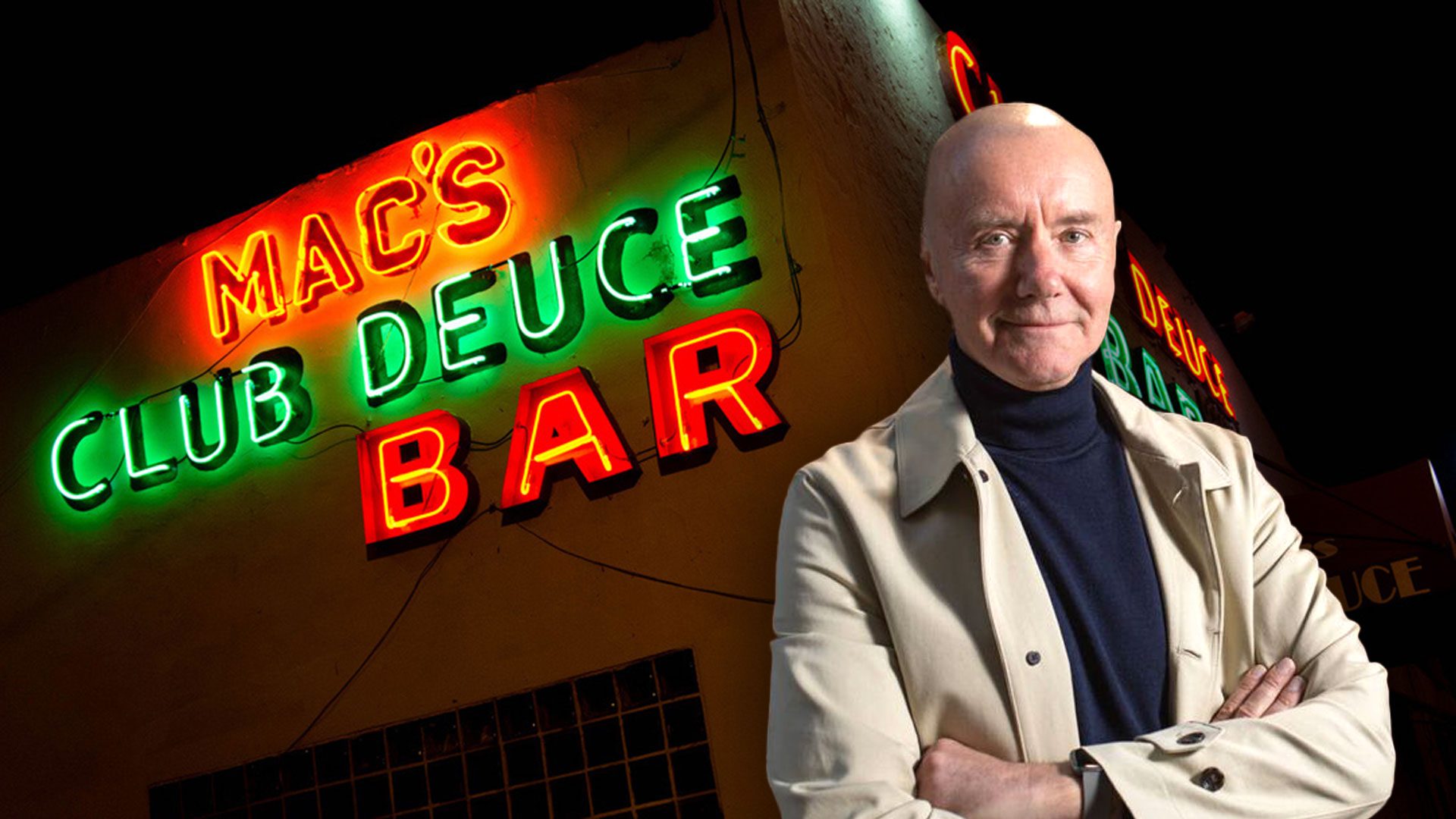
    Mac’s Club Deuce only accepts cash in exchange for beers, rum, vodka, and whiskey. Its decadent atmosphere is scratched by red and green neon brushstrokes, while in the background, near a pale-cloth pool table, songs by The Smiths, David Bowie, The Cure, or The Clash play.

    It is the oldest bar in Miami, a neighborhood bar, unpretentious, not suited for Instagram socialites, nestled in the heart of South Beach since 1926, and until recently, Mac Klein, the 101-year-old owner, was the one filling the glasses during Happy Hour from eight in the morning to five in the afternoon. Scenes from Miami Vice were filmed at the Deuce, and it has served as a haunt for Iggy Pop, Anthony Bourdain, who considered it one of his favorite places in the world, and Irvine Welsh, author of the best-selling novel Trainspotting, who got inspired here for triggering one of his most interesting books.

    Accustomed to dividing his residence between the slate-colored skies of his native Scotland and the winds of Chicago, a few years ago Welsh was seduced by the palm trees of Miami Beach and established one of his trenches there. Irvine Welsh’s Miami is not the Miami of rooftops where Cosmopolitan glasses are raised, but a more underground one. And that is precisely what motivates Irvine Welsh to create fictions like he did in his novels Crime and The Sex Lives of Siamese Twins, a story that ridicules the cult of gyms, diets, and shaved bodies that rule South Beach.

    In Crime (2008), Irvine Welsh introduces us to Ray Lennox,

    a cocaine-addicted Scottish police officer who has just closed a pedophilia case that has mentally affected him, and his boss gives him a few days off to distance himself. That’s how he ends up in Miami Beach with his girlfriend Trudi. But after hanging out with some old friends, Lennox succumbs to the anxiety of the night and leaves his hotel room on Collins Avenue without Trudi.

    His destination is the Deuce, where the false promise of neon hooks him up with Starry and Robyn, two women with whom he snorts lines of coke and then takes a bus to Robyn’s house in Little Havana. There the party continues with snorting, music, and sexual encounters until some strange friends of Robyn’s interrupt, and Lennox finds one of them sexually abusing Tianna, Robyn’s ten-year-old daughter. This marks the end of Lennox’s vacation, as after a fight with the men and Robyn’s escape, he takes charge of protecting Tianna, spiraling through the seediest parts of Miami and Fort Lauderdale, as his police instincts uncover that Robyn’s friends are part of a pedophile network.

    What’s interesting about Irvine Welsh’s perspective is that it’s neither Latin American nor Anglo, and thus his view may be the most objective to expose and narrate Miami’s miseries. Crime reveals a marginal city, leaving us with what is likely a great novel of contemporary Miami, or if not, certainly what will become a classic of Miami literature from this era.

  • A Clean Break – Part 3 – Tallahassee

    A Clean Break – Part 3 – Tallahassee

    Click here to start at part 1 or you can click here for part 2.

    I was happy to be fifty-five in a place that made so much of me. A place that welcomed me when I was 18 and mostly clueless about everything.  I drove into Tallahassee via North Monroe, a street bulging with parts of me now coming to life. I looked for places that should have been there, Barnacle Bill’s, The Fourth Quarter, places where I treated my roommates and brothers to regal multi-course meals, surf and turf and double Crown Royal whiskies all night long when my financial aid kicked in, squandering most of my Pell Grant money on a single debauched night and afterparty, gleefully frightened by poverty in the white hot glare of the dreaded morning after. And I’d do it all over again. But they were missing, these places, these repositories of ecstatic history and painful lessons, their existence razed by time and University stardom, prestige, and upscaling. 

    I was late. The car needed to be at Enterprise by 5:00 p.m. It was now 5:30, and Brother Miguel’s text was terse and ball breaking. He had every right. I had too much solitary, meandering fun and reflection along the way, and I had not accounted for the loss of an hour when I crossed time zones. As I approached Enterprise, I see a tall man standing next to a shorter one, two unlikely sentries guarding the locked front door of the establishment. The shorter one, without question, was Miguel, but there was no mistake about who was in charge. I was certain he was going to bat for me, demanding with all the charm of a banker, which he is, that I be given a bit of slack. I landed quickly and jumped out of my golf cart. Keys were handed over, eyes rolled, and Miguel came in for the hug, a huge mischievous grin on his fatherly mug. We jumped into his SUV and headed to dinner. 

    Our destination was Table 23, a stylish eatery in what is now considered Tallahassee’s Midtown. There was a surprise afoot, but Miguel hadn’t mentioned a thing. As we made our way to the center of the restaurant, I spotted a high four top with a familiar profile taking a sip. Brother Keith was there, waiting, taking time from it all to come see an old friend. He looked over with his signature grin and we all clustered by the table for an embrace and happy reunion. It had been 10 years since we last saw each other—all of us (including others not present—Pete, Frank, Alex, Willie, Charlie) taking part in a fraternity Induction Ceremony for Miguel’s sons. We now talked of old times and our current blessings, survival whisking to the top of the list. After dinner, we said goodbye, and it was a touching moment, a feeling not unlike a permanent goodbye. We never neglect expressing our love, which is true and honorable among brothers, and that is a good thing. 

    We drove to Miguel’s home as the sun was setting. The weather was fine, brisk and clean, a deep blue with yellow-fire streaks in the resplendent sky, and the release of a much-needed respite gave way to serenity. My mind drifted at times, but the substance and grace of the moment never left me. It stayed there, doggedly.  

    I have known Miguel since 1987, when I first arrived at FSU, green and dazed—we were part of the same pledge class—and I have known Maggie, his better half, since our sophomore year in high school. To say that there is rich history is a heavy understatement. Besides being true friends, they have always been generous to a saintly degree. Miguel and Maggie live in one of the most beautiful areas I’ve ever seen, a veritable wonderland of natural splendor. Their stately Antebellum house is nestled in a 5,000-acre nature preserve. The Maclay trails are breathtaking, five and a half miles of lush and vibrant flora and abundant fauna (most of which hang out in Miguel’s backyard, since his obsessive life-hobby, maybe even purpose, has become feeding and conversing with every animal, all of whom, by the way, have names, my favorite being Izo, the giant albino opossum). The nature preserve’s crown jewel is Lake Overstreet.  

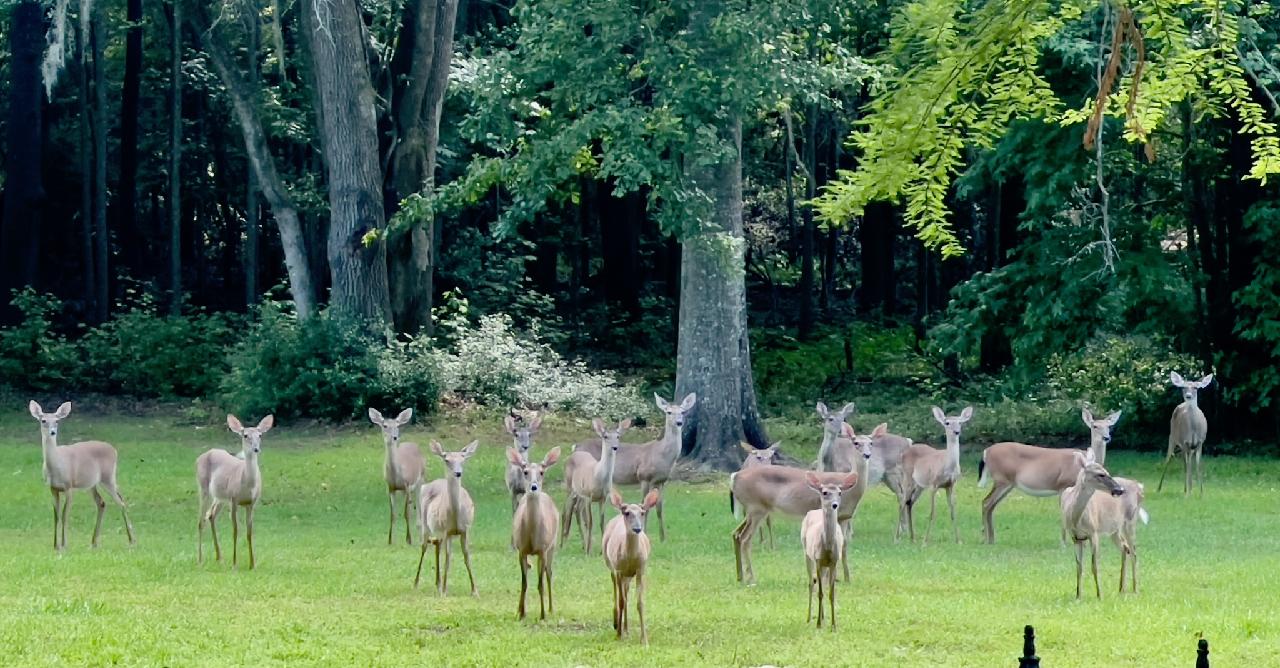
    We arrived and unloaded two large Hefty bags full of food and made our way to his backyard. I was confused, but he insisted that it was my second surprise. You never know with Miguel. The best way to describe the feeling of anticipation when he’s about to unveil something is Giddy Terror. He begins to rip open the sacks, grabbing fistfuls of bread and other things, lobbing them over the low gate onto the sprawling greenery of his backyard wilderness. I helped, of course. Then, we waited. It was spooky, but not as endearingly creepy as what was about to happen. Five minutes later, the field was dense with deer. Poised  and elegant, glaring at us with trepidation and a little malice, to be frank. It was a scene from a Jordan Peele film. The spell was broken, and these lovely creatures dove for the grub, leaving not a single morsel for the other critters scuttling about. 
    That night we caught up, sprawled on the sofa and easy chair. After we spoke of our children and the history of this glorious homestead Eden, and remembrances of all hues, shapes and sizes, my friends decided to help plan my itinerary for the following day. They made a list, and I was happy to follow. I insisted on at least one bookstore and a walk through my beloved campus. They had my room ready, the same room I stayed in ten years before, and I was delighted. I settled into bed, and after five or so pages from Rushdie’s Quichotte, I was unconscious. 

    I woke up to an empty house. My friends were at work, but they’d left the keys to their brand-new SUV. It was the Home Alone/Ferris Bueller effect on a cool, blue-skyed Friday morning, and I felt free, exhilarated. I had much ground to cover, all of it in one day. First on their list was Maggie’s coffee bar suggestion. She knew of my fondness for a great cup of strong coffee and suggested the Lucky Goat. The place was perfect. A lovely barista gave me the rundown on their roasted beans and the company’s charming moniker. I ordered their “Drip of the Day” with a “Shot in the Dark”. She had my ticket.  

    I made my way onto Centerville Road, which leads to Bradley’s Country Store (Number 2 on their list), and serves as the main general store between Tallahassee and Thomasville, Georgia. Miguel swore it was the best homemade sausage on the planet, and I was looking forward to a hearty meal. The place was from another time, all lumber and country fare, an ancient jukebox with The Crew Cuts and Fats Domino, a front porch with rocking chairs older than Foghorn Leghorn. The house specialty was indeed delicious, spicy and smoky. I sat on the front porch, rocked through my meal, washing it down with an ice-cold glass-bottled coke. I purchased a jar of Bradley’s Vidalia Onion Steak Sauce. This was Miguel’s only request, which he strongly insisted I execute, lest I find myself homeless for the night. They sold antique compasses at the checkout counter.  I bought one for my son, and one for someone else I care about. A small token of affection, a faithful magnetic device in case they ever lose their way. 

    I then drove towards My Favorite Books, a used bookstore in midtown Tallahassee. The glass cottage store was inviting, comforting, full of great books, weighty volumes and antiquarian gems. I left with Peter Matthiessen’s In Paradise and July, July by Tim O’Brien. Fortunate finds by two National Book Award winners. I was happy and ready for my campus walkabout, bracing myself for the inevitable, the sentimental surge that would soon engulf me.  

    Before I made it to campus, I drove down West Tennessee. So many memories. A trip to Atlanta came to the fore. Summer of 1990. The Econoline van idled outside the Delt House. There were four of us, wickedly ecstatic, hellbent on driving to Cobb County. Buffett was performing at the Lakewood Amphitheater. We didn’t know it then, but said concert would be immortalized on Feeding Frenzy, a legendary live album. We drove to Mike’s Beer Barn on Tennessee Street, a Farm Stores-looking shack that sold kegs in a drive through setup. We threw our money together, pulling just enough to score Busch. The Barn provided an ice-filled tub and tap, too. Finally, we had the cargo bay’s centerpiece. This illegal, ill-advised and unanimously-agreed-upon stupid idea made us quiver with joy. Our quest: empty the keg and nail and commit to handicapped memory every single syllable and nuanced delivery of Buffett’s live version of “God’s Own Drunk” from his 1978 live album You Had to Be There. We accomplished our mission. 

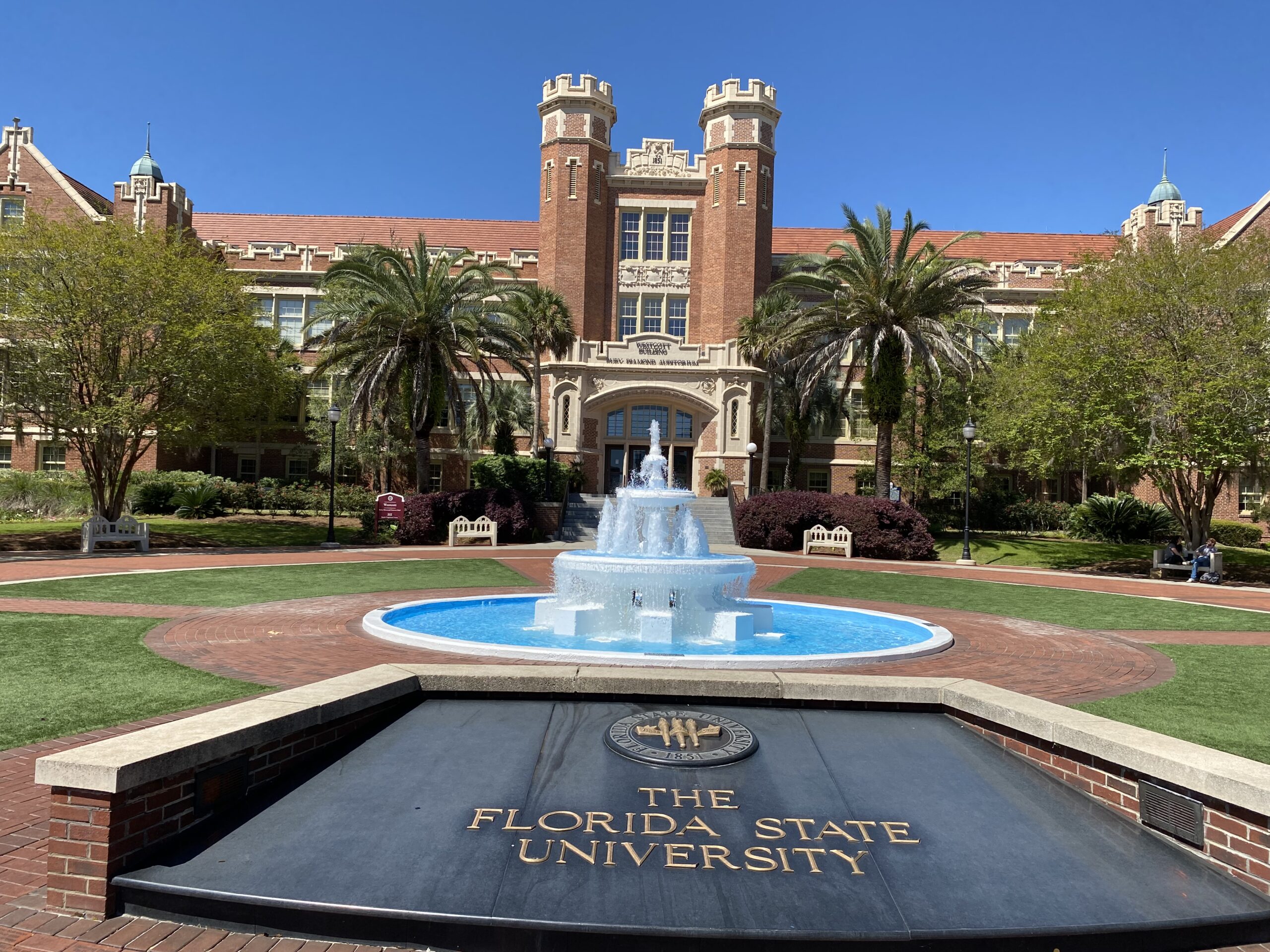
    I then drove onto College Avenue and headed straight for the Wescott Building. I parked illegally and walked right up to the familiar, iconic fountain. I dipped my hand in the water, remembering a cold winter night thirty-seven years before when I was thrown in, naked, in 25-degree weather. I had just lavaliered my first college girlfriend. A lavalier is a small pendant you bestow upon your beloved as a promise of your devotion. Tradition dictated that said romantic schmuck be kidnapped by his brothers, have his clothes ripped off and dunked in the legendary fountain as punishment and ridicule for sentimental foolishness. But I did it, and I loved it. I serenaded CK, guitar in hand, on the front lawn of her sorority house. The song was Delta Girl, and it goes like this: 

    “Delta Girl, we drink a toast to you 

    Smiling eyes and hearts forever true 

    May God bless you, your whole life through 

    May he guide you, Delta Girl 

    And when the sun of life begins to set 

    May you know our hearts are with you yet 

    And may these words you ne’er forget 

    We love you Delta Girl 

    My Delta Girl” 

    I was nervous but armed with feeling. The performance was inspired, the memory true and evergreen. She came out of the house, beaming and tearful, a trail of sisters in her wake, and I placed the necklace and charm around her pretty, pale neck. Ten minutes later I was dripping, freezing, streaking across campus, seeking refuge from the elements and humiliation. I was rescued by three Pi Phis in a Jeep Wrangler. But it was one of the best memories I have, a landmark episode in a college career replete with them. Brother B-Rock also lavaliered his girlfriend on the very same night. There’s a picture floating around somewhere—or maybe it’s now resting quietly in Miguel’s Life Museum, an attic-like space that covers the entire third floor of his mansion, a venerated collection of mementos and memorabilia—of B-Rock and me, completely exposed, an action shot frozen in time, mid-splash and jubilant celebration. B-Rock, my beloved Delt brother, may he rest in peace.

    I only have room for a few more impressions. Walking through campus was a mental and emotional chronicle. I walked by Landis Green, a student Mecca in the heart of FSU, a sprawling fertile oasis of youth, frisbees, Hawaiian Tropic, large beach towels and tiny bikinis, music of every flavor and era, sweet fruit and Fiji water, piles of slender paperbacks and a sea of reflecting iPhones. It hasn’t changed much, save for the electronics. So many celebrations, debacles, victories and heartaches on that verdant expanse. 

    I passed by the Paul Dirac Science Library, where I worked, one of the many jobs I held during my tenure, reshelving incomprehensible books, loitering in the dark and uncertain aisles of quantum mechanics, toying with General Relativity and Schrodinger’s Cat. I walked by the Williams Building, where I took most of my literature courses, a sacred, stained-glass and red brick structure where I learned about Paul Theroux and Toni Morrison, Eudora Welty and Faulkner, Flannery O’Connor and Percy Shelley, a haven for the art and language I’d pursue and find meaning and sustenance in for the rest of my life.  

    There were countless more encounters with my past. I’ll share one more. I finally reached McCollum Hall, the place where I lived during my sophomore year. I had my own Say Anything moment there, two years before Cameron Crowe placed a boom box over John Cusack’s head to the haunting beauty of Peter Gabriel’s “In Your Eyes”. But it wasn’t my idea; I’m not that cool. CK and I had broken up—all my fault. The details don’t matter because what chiefly remains, what most of us can still conjure with ease, what rises above it all and endures, are the wondrous and tender things that made our hearts almost burst.

    On that night, we were sitting in her Classic, yellow Datsun 240Z, right in front of McCollum Hall. We were making up, celebrating the joy and hard-missed intimacy we felt after a little time away. My room had a balcony facing the driveway. Alex, my big brother, who lived in the apartment right above, knew we had reunited, so he brought out his stereo—separate components (no boombox), turntable, receiver, wired speakers, the whole lot, and placed the cumbersome hi-fi setup on the thick cement wall of his balcony. With Pete, my roommate looking on, Alex gently blasted Jimmy Buffett’s “Coast of Marseilles”. They walked back inside our dorm as CK and I found our way back to each other. She and I were three stories below, but the music made its way inside the perfect little ember warming the musty interior of her sleek and sexy sports car. 

    I drove back to Miguel’s house, ruminative and happy to be alive. I showered and read. Maggie returned from work less than an hour later, and we took a walk through the stunning Lake Overstreet Trails. We made it all the way to a large gazebo/deck overlooking the lake. It was magnificent, quiet and still, spiritual. On our walk back, as we reached their home, I was overtaken by the majesty of hundreds of white flowers blooming with delicate, porcelain grace. I hadn’t noticed these angels upon my arrival. They were now radiant in the vigorous light of the late afternoon sun. Maggie tells me these ravishing flowers are azaleas, and I’m the better for this knowledge.  

    Miguel drives up soon after, and, of course, there is a plan already in motion. Next stop: Georgia. We hopped in the truck and headed for Thomasville. Food is the thing in Thomasville. So is the history, architecture and southern charm. We drove through town, taking in the red and brown brick and lush foliage, the inviting eateries and little playhouses, the old lamp posts and celebrated landmarks. One of these, The Big Oak, is, well, exactly what it says—and, supposedly, the largest and oldest in the country: 339 years old, 155-foot spread, 70 feet tall, with a trunk circumference of 27 feet. We made it to our chosen spot for dinner, Sweet Grass Cheese Shop. The fare was royal. There were a variety of cheeses, from creamy, subtle brie to sharp Manchego and herb-infused cheddars. They were served with blackberry patch preserves, house B+B pickles, roasted Schermer pecans and crackers, artisan mustard, their very own, famous pimento cheese on flatbread and on and on. A perfect repast with perfect company.  

    We were soon back on the road headed for Melhana Plantation, where the first screening of Gone with the Wind took place, back in 1939. The grounds were magnificent, the beauty surpassing all expectations. The large, white plantation house (now a chapel), where Hollywood execs and glamorous stars first screened the film, was imposing. It was a strange feeling, somewhat dichotomous—darkness visible, palpable in the presence of such natural splendor. But the beguiling landscape, coming to full sumptuousness in the gloaming, was sublime.  
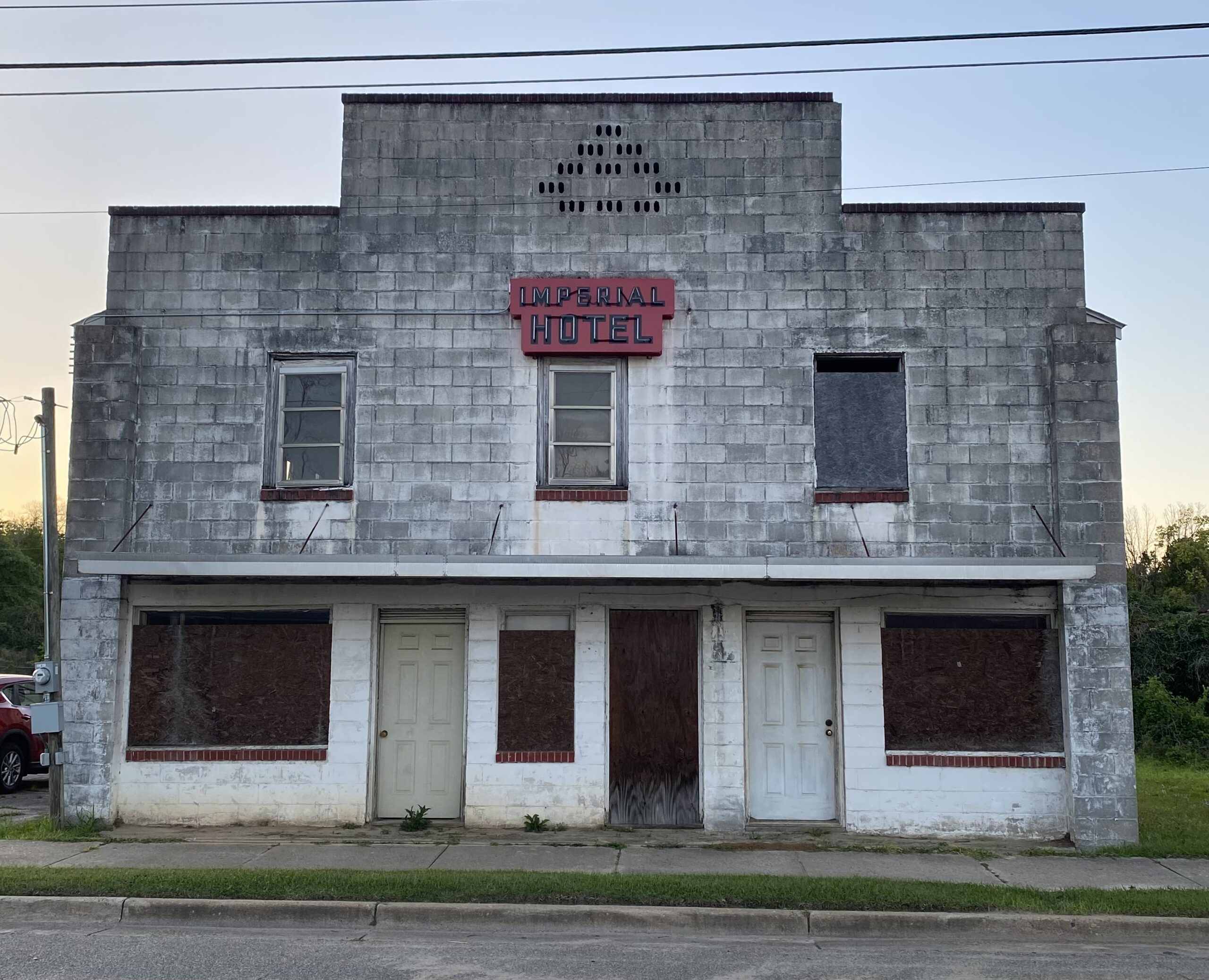
    Miguel brought up Peter Farrelly’s film Green Book. I told him I enjoyed the film very much, and we discussed the story, the solid acting and direction. He had another surprise, he said. We drove away from Melhana and stopped at what’s left of The Imperial Hotel, which was featured in the original Green Book travel guide and the movie. I was very moved by the experience. The hotel has been vacant since the early 2000’s and is now but a ruin. Apparently, it was purchased in 2018, and the owner is working to preserve its history. This remains to be seen.  

    Our final stop was a hidden gem at the edge of Tallahassee. Fish Camp is a bar, restaurant, music venue, bait shop, and mini marina. Perched precariously on the edge of Lake Lamonia, Fish Camp is a rustic establishment with a sweet-rough atmosphere, its patrons an eclectic collection of souls, a cast from a film Fellini would have made in the South. The evening was cold and crystal clear. There was a bar inside the main shack, taps pouring, oysters being shucked, laid exposed and almost quivering on ice-covered aluminum platters. I bought us a round and we headed outside, the dusk now engulfing our little sliver of planet. 

    We walked up to the lake. What was left of the sun generously gifted us a cosmic painting I could not turn away from, colors and grandeur the likes of which I’d never seen. I stood there at the end of the pier until the last brush stroke obliterated the separation of water and sky, leaving only pinpoints of fiery specks expertly strewn across the eternal black dome. We walked back to a picnic table as the house band broke into song. It was an unlikely tune, a song I was not expecting from this outfit, but one nonetheless orchestrated by fate. The three of us looked at each other two bars into the first verse of The Mavericks’ “All You Ever Do is Bring Me Down”. 

    I was dazed and filled with joy at that very moment. I thought perhaps Miguel had made the request surreptitiously, but I was happy to learn that it was a simple case of serendipity. We made our way home through the canopied night roads and arrived home tired but fulfilled. I said my goodbyes with customary emotion, thanked my good friends for all of it, and we retired to our rooms for the night.  

    I flew back to Miami in the morning and finally walked inside my cherished little place, grateful for what just passed and the comforting rush that only getting home can provide. I unpacked, showered, and sat on the couch. The sturdy sentinels flanking my entertainment center, containing the art of a million words, stood loyal and welcoming. I was tempted to revisit something familiar, curative. But I sat down to write instead. I didn’t get far, but I began to make something. I was ready for what lay ahead, reaffirming that everything new and all that is old is nothing more than the present.
    Back to the Operating Theater, as promised. This is what I remember: 

    Fade IN: I was in the room, on the table, IV needle stuck deep into a thick vein on the back of my right hand. I had the anesthesiologist on one side and his chipper assistant on the other. There was the expected trite and detached humor, the jokes and comments common among medical professionals about to render you dead to the world. “Okay, here comes the good stuff,” says the chipper one. “Just count back from ten, slowly.”  

    “Doc, could you please give me ten seconds before you plunge?”  

    He heartily agreed. I wanted a moment to clear the space, discharge all thought, blank out my inner world. I wanted to clean the palate for whatever came as the drug swallowed my consciousness. Presently, I felt the painless puncture of ice-cold fluid entering my vein.

    SMASH CUT: I am in a theme park. My son, Colin, is about twenty feet away from me, hanging over a metal rail at the end of a water ride, Jurassic Park River Adventure. He is nine years old. We hadn’t ridden the attraction, but the climax at its end was the thrill for my boy. I watched him for almost an hour. He wouldn’t leave the spot, and I gladly indulged him. Time after time, the cars shot down the flume, thoroughly soaking all spectators. He looked back every time a wave crashed into his small body—looked back with such innocence, unrestrained joy and love, his beautiful little face, effusive and fully cognizant of how much his father loves him.

    DISSOLVE: A face emerged, slowly but vividly. A good face. A loved one. A face that floated out of the ether and hadn’t changed in twenty years. And she smiled. FADE TO BLACK.
  • HistoryMiami’s “Our Sacred Places” Delivers the Good Vibes

    HistoryMiami’s “Our Sacred Places” Delivers the Good Vibes

    Our beloved HistoryMiami museum’s new exhibit SANCTUARY: Our Sacred Places opened August 22nd with a jam packed reception filled with some of our city’s most beloved artists, philanthropists, and cultural enthusiasts. The night was classy and immersive, featuring a Mexican indigenous dance ceremony by Ameyal Institute, and a resounding gospel choir led by Hued Songs.  

    If you missed Opening Night, all’s good-in-the-hood.

    This is all about the exhibit, a massive display of photography by Little Haiti photographer, Woosler Delisfort.

    According to HistoryMiami, the exhibit “delves into the spiritual origins of Miami’s Indigenous, African and Caribbean communities by capturing moments of divine connection in temples, churches, and mosques. The more than 100-piece exhibition highlights how these cultures are harnessing sacred spaces in Miami as vital sources of life, both politically and spiritually.”

    You have to see this exhibit. It’s encompassing, engrossing and very special to our hometown city. The exhibit is fire, rain, earth, wind, up, down, left, and right on!! It’s a homage to our cultural heritage’s safe spaces and sacred places. Places where we worship our elders. Where we worship and give respect, ceremony and sacrifice to a higher power.

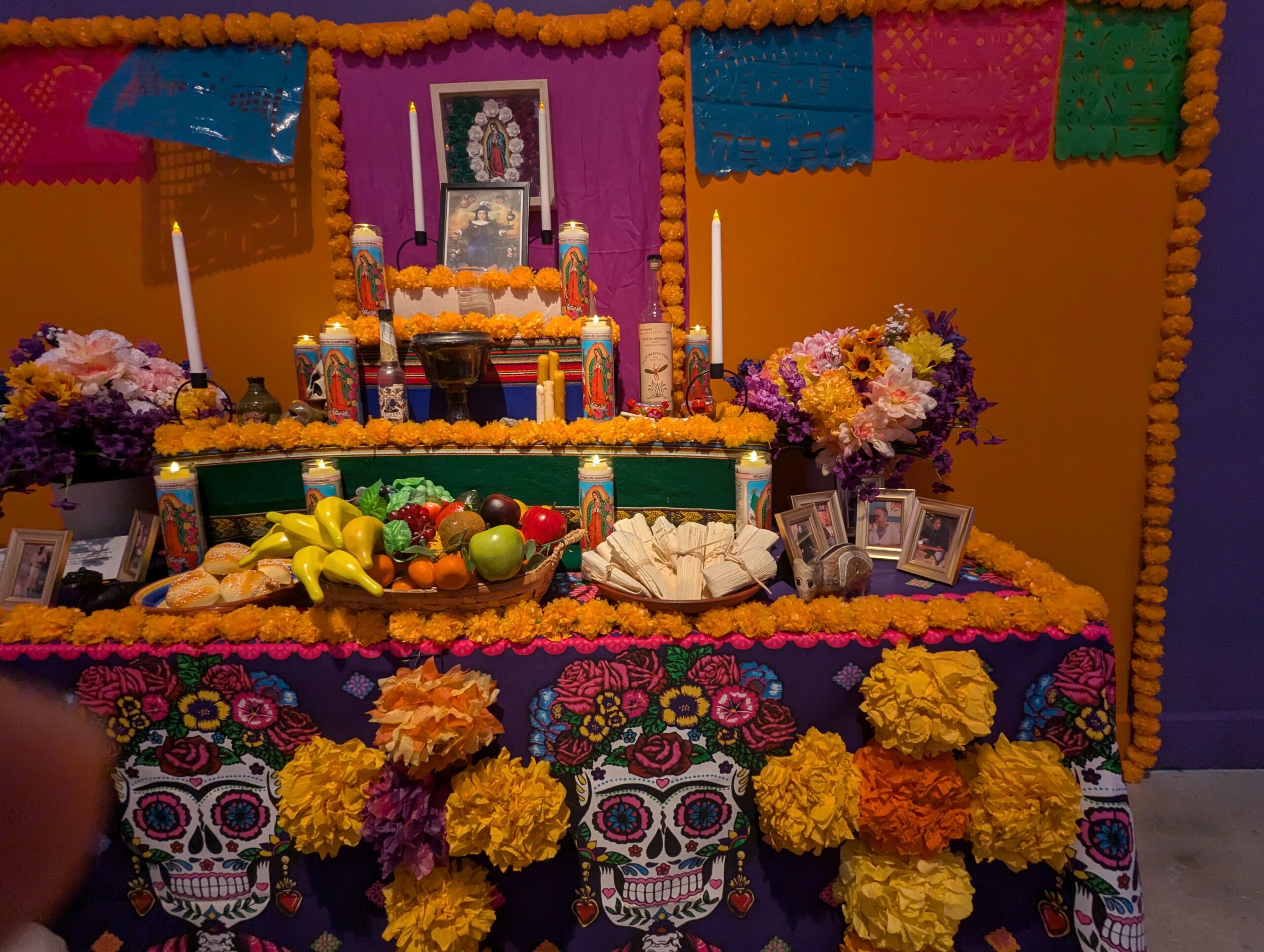
    You will be transported to a Haitian Vodou baptism ceremony on Dania Beach. You will see offerings at a Día de los Muertos, or Day of the Dead, altar in Little Havana. And a Muslim man praying inside Miami’s oldest mosque.  You will encounter alters, with pictures of ancestors, passed on elders, and all sorts of ways to commune with them.

    The exhibit, on the 2nd floor on the museum, is on display until January 26th, 2025 — so you have plenty of time. Check it out and bring a friend or child. Share the news with your students, colleagues, congregations and clubs. This one is dope.

    For more info, click here.

    And check out opening night and a preview below.


    View this post on Instagram


    A post shared by HistoryMiami Museum (@historymiami)


    View this post on Instagram


    A post shared by HistoryMiami Museum (@historymiami)

  • Autumn 2024 Miami Concert Preview

    Autumn 2024 Miami Concert Preview

    It’s not officially fall. At least not until September 22. But school is back in session and pre-season football has kicked off, so that’s close enough to autumn for the Jitney. Without further ado let’s get in to the Jitney autumn 2024 Miami concert preview.

    Jane’s Addiction August 31 at Hard Rock Live

    The original line-up is playing it’s first South Florida date since 2010. Enjoy local boy made good Perry Farrell play all the classic alternative rock hits from “Jane Says” to “Been Caught Stealing”.

    Childish Gambino September 5 at Amerant Bank Arena

    Actor Donald Glover brings his hip-hop persona Childish Gambino to a massive arena.

    Bumblefest September 6 & 7 at Downtown West Palm Beach

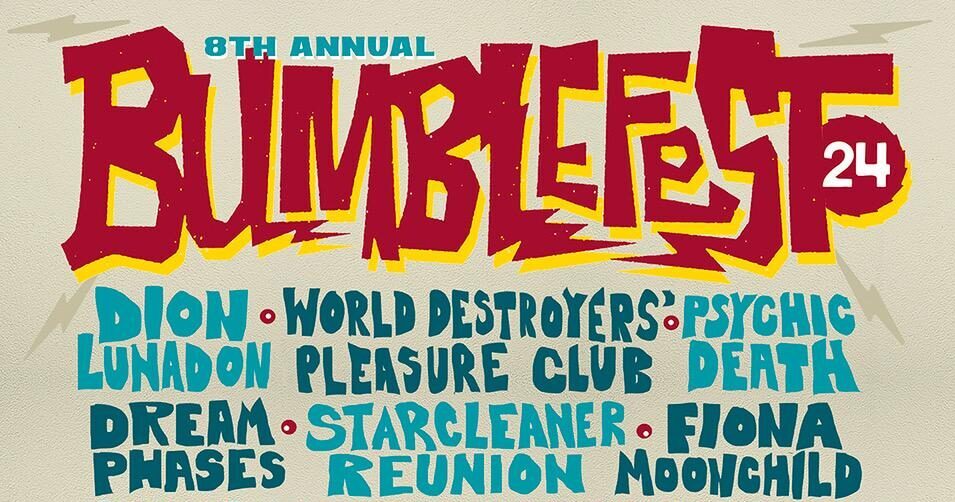
    The 2024 edition of Bumblefest features close to 20 independent acts over two nights. This year’s bill features Dion Lunadon, World Destroyer’s Pleasure Club, Starcleaner Reunion, Psychic Death, and Dream Phases among many others.

    Sigur Rós September 30 at Arsht Center

    Must be an Icelandic thing, that if you come from that Scandinavian island to Miami you have to play the Arsht Center. After Bjork played Arsht Center two years ago, her ambient music countrymen are doing the same.

    Charli XCX and Troye Sivan October 5 at Kaseya Center

    The British pop “brat” Charli XCX is back this time playing in an arena in a co-headlining tour with Australian singer-songwriter Troye Sivan.

    Taylor Swift October 18-20 at Hard Rock Stadium

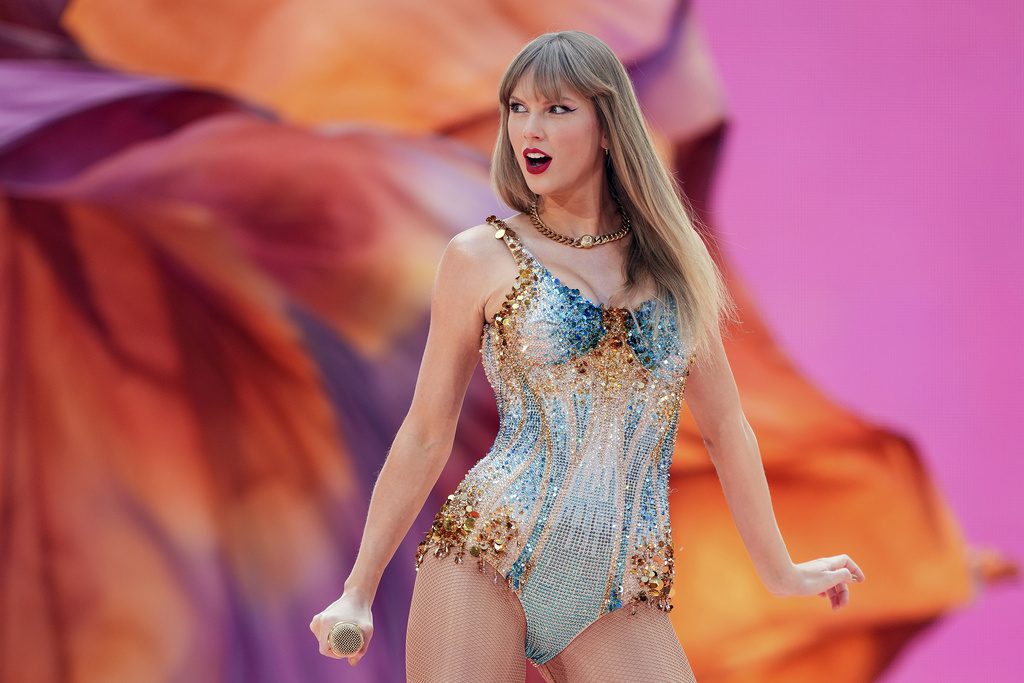
    Unless you have a generous trust fund, good luck getting tickets for this one. On the resale market they’re going for $2000 a seat to check out the biggest musical star of the 21st century on her Eras Tour.

    III Points October 18-19 at Mana Wynwood

    This year’s III Points features something for everyone. From the classic trip-hop of Massive Attack to classic hip-hop from Rick Ross and Raekwon to newer acts like Justice and Pinkpantheresss. Tons of your favorite local bands are on the bill as well.

    Air October 26 at Fillmore

    The French electro group play their classic 1998 record Moon Safari from front to back for all the sexy boys on this Miami Beach date.

    Billy Joel November 23 at Hard Rock Live

    At some point one of the Piano Man’s concerts will be his last one. A South Florida date always gives him a chance to play “Miami 2017 (Seen the Lights Go Out on Broadway)”.

  • A Clean Break – Part 2 – Scenic 30A

    A Clean Break – Part 2 – Scenic 30A

    Click here to read Part 1

    This should have been finished weeks ago, but then surgery happened. I couldn’t fully reflect on my travels through the recovery process. I hope we can pick up where we left off without incident. I will circle back to my Operating Theater experience presently, but let’s get back to my humble getaway narrative. 

    My Clean Break was half full. As I drove away from Pensacola, I felt the joy and rush of spontaneous excursion. I-10 would get me to Tallahassee sooner, and that was the original plan, but Brother Miguel’s insistence on 30A opened my journey to new prospects and wanderlust ebullience. I promised myself a meal and a swim in a few spots along the way. I will record these succinctly, for they were simply delightful and reflective pit stops, respites swathed in bold and sometimes quietly opulent flavors, brilliant sun and bracing saltwater.  

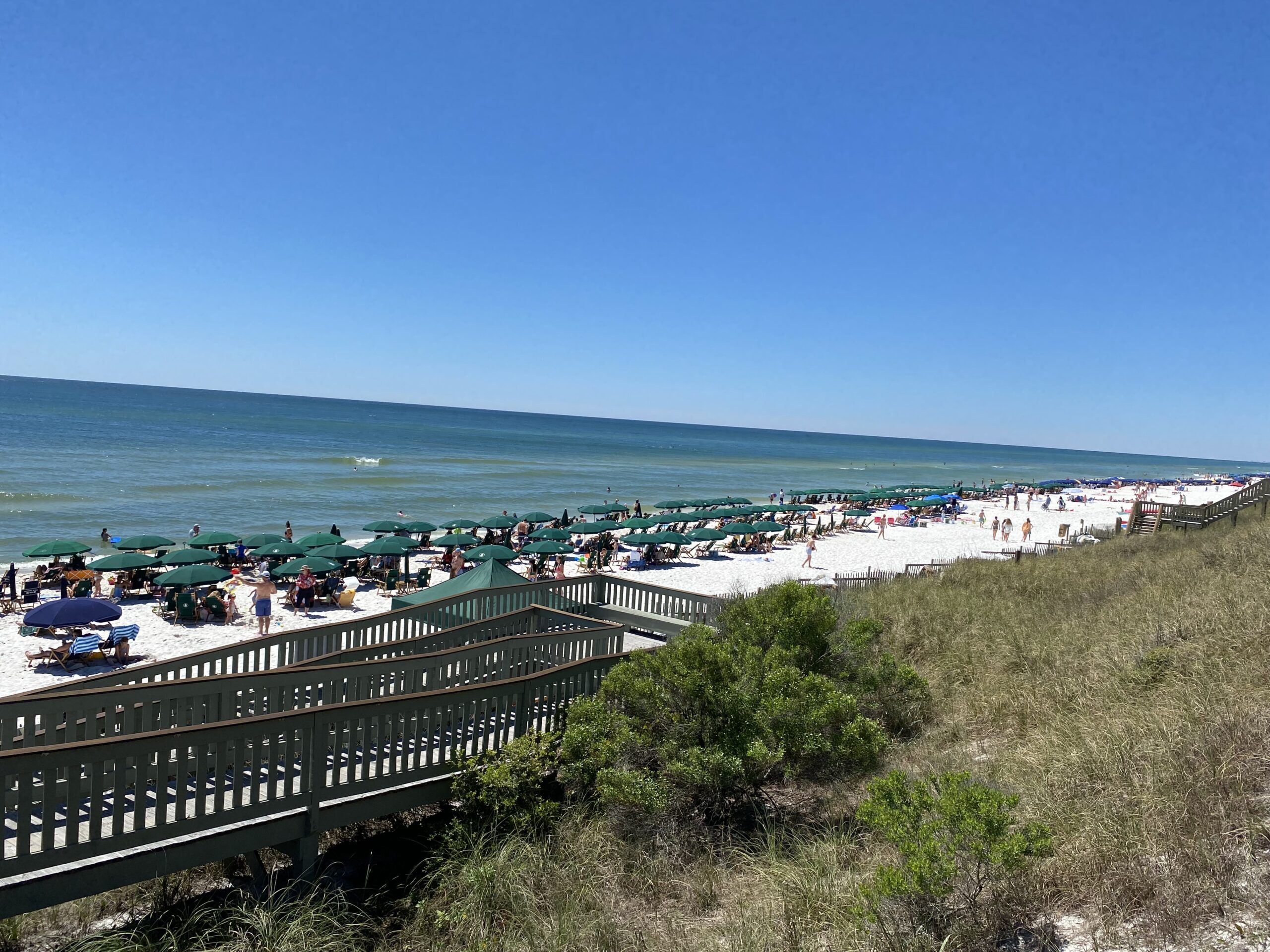
    In Destin I had little neck clams with butter, lemon and finely chopped flat-leaf parsley. The beach was packed, the water refreshing after a long walk. 

    Then I drove on to Seaside. I’d visited the Truman Show set in another life, and a slow drive through its Easter egg colors and eclectic design was lulling. I found a loophole onto the sand and ran towards the shore. I swam until my limbs were heavy, my heart pumping hard, my mind on nothing. I found a lavender-colored shack and had seared scallops with basil, garlic, salt and pepper. Fresh and plump, with a squirt of Crystal for piquancy. 

    A brief aside: the best scallops I’ve ever had were savored at Harry’s Seafood Bar and Grille. French Baked Scallops, the menu called them, and all I can remember is sweet, succulent meat, sharp, tangy parmesan, and a hearty gravy that I won’t attempt to deconstruct, except to say that God and sex were in the recipe. Did I mention that this was in Lakeland, Florida? I know. Lakeland. It was one of the happiest dinners of my life, and I will always be glad that it happened. 

    After dinner, sated and anticipating the next great thing, despite the weariness of a long and arduous day, we walked out into the clear, cold night. We were still warm. The small-town roads were empty, an amber glow from streetlamps lighting the moment. We gently crashed into one another and held fast, for longer than we thought possible. Then we raced, laughing like children. I was ahead by only a little, but, like Orpheus, the irrepressible need and doomed urgency to look back was irresistible. 

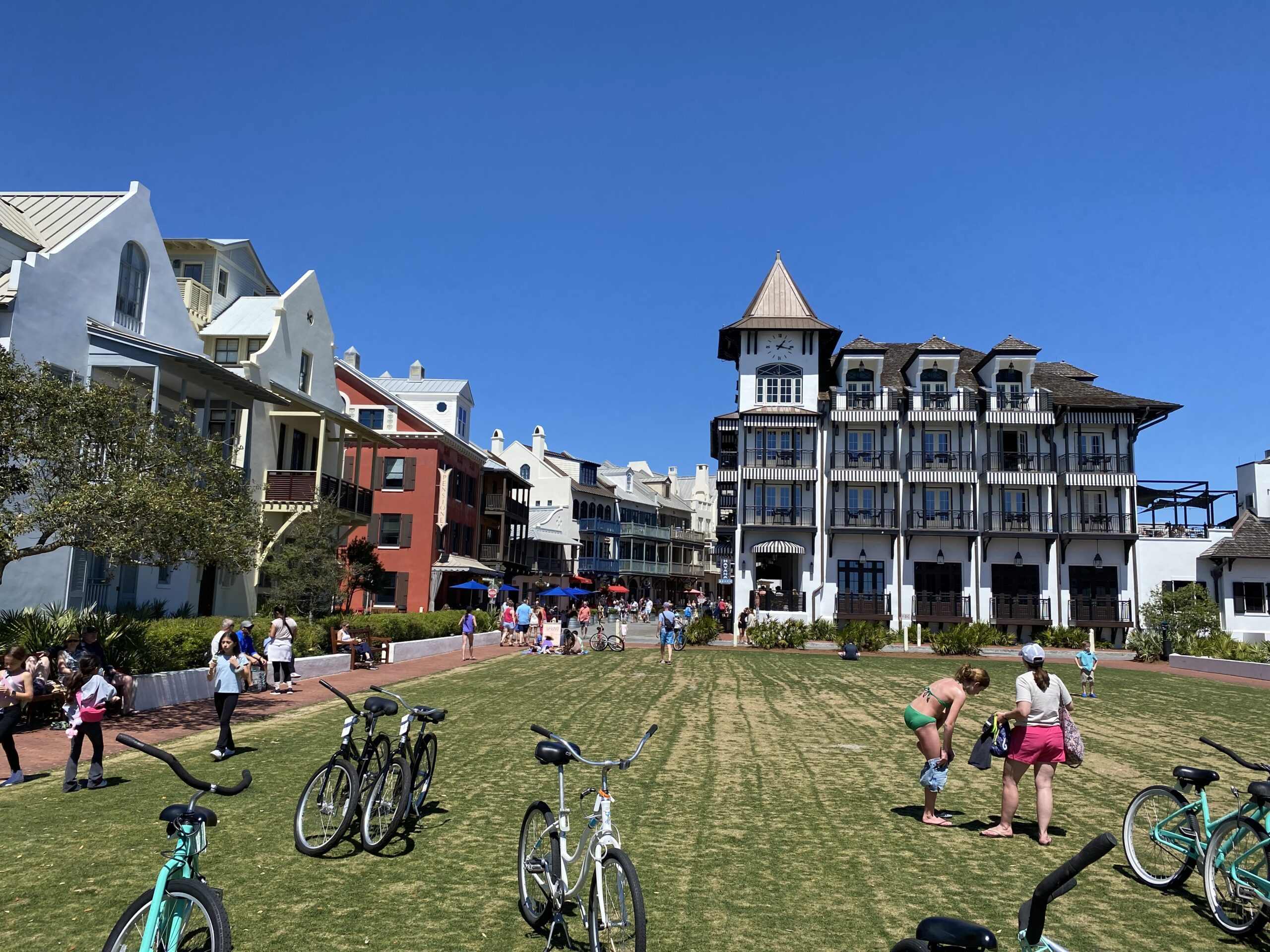
    Back to 30A. Next stop: Rosemary Beach. I was on a reconnaissance mission. Staking out the place for a future visit filled with all the things we stay alive for. The place, I must admit, was a bit magical. Spring break ruined it, of course, but the storied beach town was an elaborate playset, a miniature world designed for a movie about a resort at the edge of the afterlife. The homes and hotels were lovely, the grassy town center surrounded by European colonial architecture beguiling, adorned in a vivid color palate, rocking your senses with visual harmony and quaint flair, the likes of which I’d never seen. 

    I felt like a Lotus-Eater. I didn’t want to leave, but I wasn’t sure it was good for me. The boutiques and overly posh atmosphere were occasionally off-putting, but I left wanting to return on another day, with company, during a quieter season. I needed a special card to make it onto the beach, a card given to residents and renters only, but I didn’t have one—apparently, no one told them I was coming. Suffice it to say that the water was chilly and restorative, the sand like talcum, the sights Venusian and titillating. 

    Click here to read Clean Break Part 3.