Category: News

  • Chia Is Perfect to Grow in South Florida

    Chia Is Perfect to Grow in South Florida

    The following is an excerpt from the new book, Epic Edible Plant Allies: Over 30 Plants for a Better World.

    Maybe I am a grouchier gardener than I like to think, so go ahead get out all the jokes now. Cha-Cha-Cha Chia! The infamous commercial inevitably comes up whenever I mention this amazing plant, which of course causes me to sigh heavily and roll my eyes.

    So what is a chia pet, really? A chia pet takes the somewhat unique ability of chia seeds to “gel up” when hydrated, and thus are easily spread and will stick to pretty much any shape. You can put “chia beards” on things for instance or create similar art projects. The seeds sprout and grow very easily, another aspect that lends itself to novelty applications as such.

    Hopefully you have heard about the health benefits of consuming chia seeds, as this information has crossed over into the mainstream over the last twenty years or so. They are high in antioxidants, calcium, protein, and healthy fat — an Omega 3 dominant fat that is hard to come by. Where they shine the most, in my opinion, is their fiber content — specifically their soluble fiber content. Insoluble fiber can be thought of as roughage — such as broccoli stalks. Soluble fiber is quite different. It is typically more necessary for most people and harder to come by in foods. Chia is one of best most amazing sources of soluble fiber in the world, and along with it comes all the other nutritional benefits listed above.

    The only drawback for chia from a health perspective is that is high in lectins, something that certain people should avoid and most of us would do well to not overconsume.

    Chia is super easy to eat and prepare,

    one of my favorite aspects of chia. You take some chia seeds and soak them in water. They gel up, just like in the commercial, and you can drink this straight, put it in smoothies, add it to yogurt or kefir, make all sorts of puddings with it, and even use it as an egg substitute in cooking.

     We like to put six tablespoons or so in a quart mason jar of water each night, let it gel up, stir it well, and place it in the fridge for the next day. My son absolutely loves it and we sometimes call him “Chia Man!” in jest. He’ll drink it straight and loves it mixed in his yogurt or even cottage cheese. It is a great way for kids, or anyone, to get that extra fiber.

    One of the things I have noticed with my son loving it so much is that when you drink it straight, it really is satisfying from a hydration perspective. It quenches the thirst far more than just water. I suspect that is because the living seeds, when they gel up after being hydrated, create structure for the water. Structured water is an entirely other topic unto itself, and its proponents suggest getting it in the following ways: living spring water, water vortexer devices, products like analemma, and eating fruit like watermelon. Chia is by far the most convenient way to structure your water that I have encountered.

    Chia, in parts of Mexico and Central America, where it is from, was famously used by warriors and especially runners of different groups there. The chia seeds gave them long lasting energy (and hydration) in order to accomplish incredible feats of endurance and athleticism.

    How to Grow Chia:

     Chia is super easy to grow, with a caveat that I’ll talk about a bit later. The seeds sprout easily, as mentioned. They can be planted dry or hydrated first before planting, just as you would if making a chia pet or soaking for consumption.

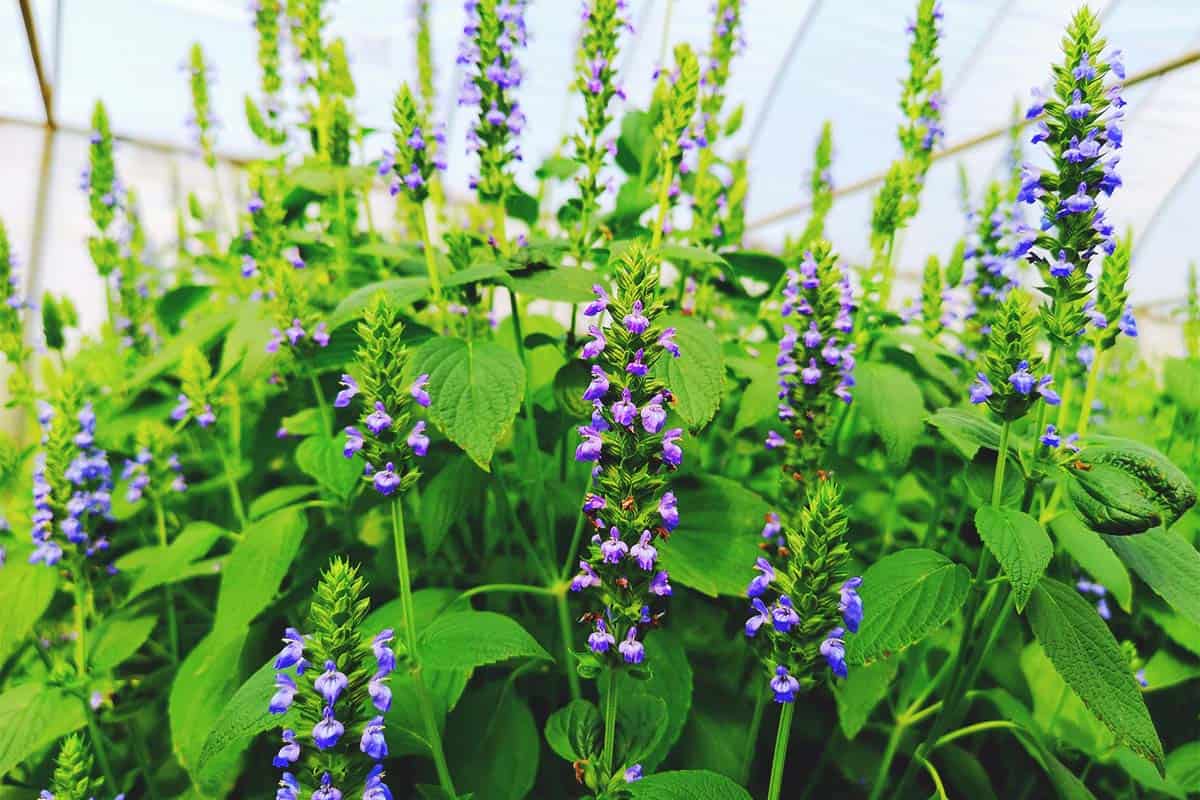
    Chia is in the mint family. In fact it is in the genus Salvia which is to say it is a sage. Although it does share this familial relationship with many of our common herbs, it is still widely pest and disease resistant. It is also pretty tolerant of poor soils and even drought. Its attractive clusters of purple flowers also attract lots of beneficial pollinators, including bees.

    I first grew chia by accident by simply throwing out some soaked chia that was left in the fridge for too long. It grew and sprouted only a few feet away from the chicken coop door, on a steep, eroded hill with terribly poor soil, near a black walnut tree — an extremely inhospitable environment for most plants. They not only grew but thrived and flowered, despite the chickens, the soil, and the high heat and drought we had that summer. I never watered them or cared for them in any way. Did they produce more chia seeds for me — no, but we’ll get that next.

    Chia is a subtropical plant that can be grown as an annual, anywhere with at least some moderate (or even super high) heat in the summer. But the issue with chia is that it possesses what they call day length sensitive flowering. That means the plants only start to flower once the nights become as long or longer than the days. So not starting to flower until fall when this is triggered, in most places in North America, they will succumb to frost before their seeds can ripen. That is what happened to mine.

    They can be grown for seed in warmer parts of the country such as Florida and parts of California and Texas, for instance. The normal, commercial chia is Salvia hispanica, and there are other species as well. One of them is Salvia columbariae, which is native to the warm parts of the desert Southwest and California. These plants are wonderful, and when I lived in California, I always dreamed of growing fields of them. However, they are very small plants, and they produce very little seeds compared to the standard, S. hispanica — the normal chia.

    Another variety you can find is Saliva tiliaefolia, often called Tarahumara chia, from the name the Spanish gave to the group of people called Raramuri, who utilized chia to feed their famous long distance runners. This chia is from higher altitude areas and is not dependent on day length to induce flowering, thus has a much higher potential to be grown in colder areas. Experimental Farm Network offers seeds from this species that have been selected to survive in more northern climates.

    I grew the Raramuri chia last year with some success. It produced a beautiful plant that attracted lots of bees. I found that they fell over without support, unlike the “normal” chia, and they produced fewer seeds overall. But it was far better than my experience with S. columbariae chia and was super promising, nonetheless.

    There is a company called Heartland Chia, based out of Kentucky that has bred a variety of the “normal” chia that does not have day length sensitive flowers. I grew that last year with great success.

    In fact, these were the first seeds that my son (not even 18 months at the time) and I planted together. Although still very young, he knew what chia seeds were. I carried him, and we went around tossing the tiny seeds all over the garden — and had to, of course, eat a few along the way. This was just a little experiment we did, but at the end of summer, we had several ripening on the plants. We would go out on his suggestion and strip the dried flower and seed heads off the stalk. I’d hold the fluff in my palm, and he would blow the dried flower bits and chaff away, leaving the beautiful tiger-striped seeds in my palm. We would eat them together — great nature and food bonding experience for us.

    Harvesting the seeds is the probably the biggest drawback of growing chia, but if done correctly, and especially if you have any commercial equipment, it is not that difficult. Chia is fairly productive when you think how dense the seeds are and how much gel they can make, but is on the lower side compared to other commercial crops. If you want to grow chia for more than its beauty, pollinator attraction, or novelty, you’ll need a field of it.

    Recipe: Chia Pudding

    There are so many recipes online for chia pudding that I suggest finding one that sounds good to you and making it. I will suggest however, if you are not looking to make something fancy to serve to impress people, but like us, like to make something that is easy and delicious to conveniently feed your family, do the following:

    Take 6 or 7 Tbs of chia seeds and soak them in a quart of water. Stir to break up any clumps and let the mixture completely “gel up.”

    Add this gel to yogurt or coconut milk along with some fruit, and stir. Strawberries, raspberries, and pomegranate are my favorites. If you need it to be sweeter, a spoonful of maple syrup or honey is nice, and walnuts or pecans are also nice additions.


  • Make Music Miami Returns on Summer Solstice

    Make Music Miami Returns on Summer Solstice

    This article originally appeared in PureHoney Magazine. Check them out here.

    In South Florida’s rhythmic epicenter, Miami, the cultural scene booms like the percussion ensembles the city is known for, and one event stands out: Make Music Miami. An offshoot of the eclectic Fête de la Musique in Paris, this global music festival ushers in summer solstice, June 21, with a local pulse all its own. Variations play on the same day in as many as 2,000 Make Music event locations globally.

    It’s the Magic City edition of a worldwide happening that promotes kinship through music and vice versa. Founded in 1997, Make Music Miami calls on just about everybody to turn any sidewalk, park and alleyway into dance space, and gives them room to groove at live shows and participatory events scheduled across The 305.

    “Make Music Miami is both an invitation to enjoy music and a call-to-action to make music happen in your neighborhood,” main organizer Justin Triegar, also known as the co-founder of Buskerfest Miami says.

    There’s even an open-call “match making” portal on Make Music Miami’s website to find creative partners for new events. Anyone and everyone in Miami-Dade County can join the musicians, bands, dance groups and venues — both traditional and non-traditional — assembling under the Make Music banner. And whether or not you’re dreaming up an event of your own, you can also play along: Seasoned performers and  first-time strummers will find a place in this musical mosaic. And every Make Music event is free to attend.

    Make Music Miami is not about big names and mammoth stages.

    It’s about bringing music back to its roots, back to the people. But there are great acts on tap, with Miami Beach Bandshell as a flagship venue and many of South Florida’s grassroots stars already aboard. Jazzy serenader Etienne Charles, Vincent Raffard of the French Horn Collective, veteran punk rockers Mr. Entertainment and the Pookiesmackers, swamp troubadour Lone Wolf One Man Band, singer-songwriter Alexa Lash, and the funky triumphant grooves of Charles TRAD305 — with more TBA as of our press time — are just some of the attractions at a day to remember. Artists from as far afield as Atlanta, Georgia, will also be on hand to help make this a truly borderless affair.

    “We want to empower artists and people who own or manage property to self-organize events for Make Music Miami,” Triegar says. “The festival is meant to demonstrate the potential of bringing live music to nontraditional venues like small businesses, libraries, public parks, urban centers — really anywhere that people can gather to celebrate the arrival of summer.”

    In previous years, Make Music Miami has seen impromptu jam sessions springing up in parks, libraries, and street corners. One particularly memorable moment for Triegar was when a group of people gathered in Shenandoah Park carrying nothing but flower pots as makeshift drums. “It was a powerful reminder of the transformative power of music,” he recalls. It’s moments like these that make Make Music Miami more than just a festival; it’s a bridge across languages and cultures.

    While Make Music Miami is all about live performances and community engagement, technology also plays a role. In past years, the festival has boasted a mobile webcast crew to livestream multiple events. This year’s streamcasting plans are still up in the air, but count on the Miami Beach Bandshell performances to be beamed to screens in real time.

    As Make Music Miami enters its next chapter, there are changes on the horizon. This year marks the final hurrah for Triegar as conductor, with the nonprofit cultural events producer Olympia Arts poised to take the reins next year and beyond. But no matter who’s at the helm, the music will always play on.

    So grab a friend and follow the sound, knowing that people around the world will be doing the same, because in a chaotic world we all need more chances to share in the music that lives inside each of us.

  • Eric Garcia on New Album, Leave Uncle Scotchy Alone

    Eric Garcia on New Album, Leave Uncle Scotchy Alone

    Eric Garcia is a staple of the Miami music scene. Whether as a booker, through his band Juke, performing a blues opera, setting up a storytelling night, or even as a longtime contributor for The Jitney, the man is always active. His latest creative endeavor is a solo album he titled, Leave Uncle Scotchy Alone. Before its release on vinyl and streaming, Uncle Scotchy hopped on The Jitney to promote his crowdfunding campaign which you can donate to here.

    When did you first fall in love with music?

    Eric Garcia: That’s a long story, but as far as Blues, I really fell in love with it when I was 17, as a freshman at the University of California at Santa Cruz. I took acid with my roommate and had a record player. He put on the album Hard Again by Muddy Waters, and I literally lost my mind.

    How has Miami influenced you as a musician?

    I don’t think that anyone can argue that Miami is known for its Blues scene. But Miami has so much musical talent from all over the world. Some might argue more than it deserves.

    I’ve always been super low key proud that my band, Juke, isn’t a traditional Blues band in many ways. Most of the guys I’ve played with in the band have been tremendous musicians, but very few would be considered “Blues guys”.

    I think that has led to some nice growth and evolution to the music that I love. The more I let everyone be them, the better the results seem to be. And the more interesting to play and listen to, I think.

    What inspired Leave Uncle Scotchy Alone?

    A great friend of mine, and original keyboard player in Juke, really inspired it. Ryan Gregg. He’s up in Jersey now, making music and really hustling in a positive way. He has a band as well, but released a solo record of just him on the piano, playing and singing his songs.

    It really touched me and made me really listen to his awesome lyrics and absorb them more.

    About 6 months ago I quit drinking. Yeah, I know. Uncle Scotchy quits…believe me, I earned the name enough to last the rest of my life. I needed something productive and creative to do. Something in and on my own timeline and schedule.

    I recorded the song “40 Mile Gaze” at FazeOne studios with Brian Lange. He’s awesome. Then I really took my time with the rest and recorded the rest at home. Usually late at night when restless.

    It was therapeutic.

    Can you walk us through the writing and recording process for Leave Uncle Scotchy Alone?

    I am guilty of not recording or being a fan of the recording process through the many years of my career.

    As far as writing, I have stacks and stacks of songs…finished, unfinished,  some too hard for me to play live, some even forgotten.

    I kind of realized recently that I’m not really a young man any more, and maybe I should record them somehow. Any how. As a time capsule. Because that’s really what songs are for most musicians…a time capsule of how you were feeling about something at a certain time and how that feeling sounded to you or through you.

    So, when I decided to bite the bullet and actually record myself at home, it took patience. It can be frustrating when learning. Thank God for YouTube. I don’t know how I learned anything before that!

    As frustrating as it was, recording mostly just my vocals, guitar, and harmonica is the simplest form of recording. I have a nice mic and nice interface. That’s the most important thing.

    It surprisingly wound up being super fun, even though it took forever.

    I turned my bathroom into an isolation booth so I could record vocals at night. My window doesn’t close all the way in that room, so I used an old doggy bed I don’t use anymore and like seven rolls of toilet paper to block the window and make it “sound proof”. It’s amazing what you can come up with when you need to. The rest I just recorded in my living room. Fortunately I finished recording before it got hot again, so I didn’t have to keep turning the AC and fans off each time I wanted to lay something down!

    Now that this album is almost out in the world, what’s next for you?

    I guess I kind of zigged, so now I want to zag.

    I have a ton of songs that demand a bigger sound with more musicians that are better than I am.

    So the next will be a full collab album.

    I’ve been in this music world/business for a long time now. I’ve been fortunate to befriend some incredible musicians whom I look up to.

    Some are in Miami, and some are not. Either way, the next record will incorporate different people on each song. I’m pretty excited about it actually. I just need to see this through all the way first, or I get too distracted….like a small cat.

    A small cat that has been doing this music thing for a long, long time.

  • Al Capone Never Had a Miami Hideaway: Debunking More Miami Historical Myths

    Al Capone Never Had a Miami Hideaway: Debunking More Miami Historical Myths

    It is possible—if not likely—that we are, here in South Florida, burdened with the worst and most egregious myths (total anti-fact) and absolute falsehoods and we will begin this short series of debunking the nonsensical fol-de-rol which, because it has been repeated not only so frequently but by people who know that what they are spouting off is simply not true, is what makes the doing-so even more egregious.

    The first of those shameful (and totally false) bubbemissehs (for you gentiles, Yiddish for fable or fairy tale) is the one which invariably starts with the story of how Miami came into existence and it was in no way, shape or form in the manner which, sadly and unhappily, has been accepted as truth by the gullible, but, and even worse, has been spouted off by people who actually know that what they are saying has no basis in truth or fact, and this/that of course is the orange blossom fable.

    In the unlikely event you haven’t heard this utterly shameful concoction, it is the “oh, Julia Tuttle send Mr. Flagler some orange blossoms, so he extended the railroad to Biscayne Bay” nonsense. That story, absolutely, totally and completely without basis in truth or fact, has, sadly to report, not only been regurgitated through several generations of Miamians, but, worse (if not worst) has been further propagated by people who know that said story is totally false and has no basis in truth or fact, as was explained in our previous article, as in “it never happened,” and, indeed, it never did occur.

    The story is totally and completely fallacious and was exposed to you, our readers, in our last issue/submission as was the actual and factual explanation of how and why Mr. Flagler extended the railroad to the shores of Biscayne Bay, and it was absolutely, positootly, beyond a dadow of a reasonable shout, NOT because Julia Tuttle sent him some orange blossoms, a totally made up and shamefully without basis in truth or fact bubbemisseh.

    Worst of all, of course, is that it has been propagated as fact almost since “the beginning” and nothing of the kind ever occurred as was explained in this writer’s last submission. (Think about it: After the great and terrible freezes of December, 1894 and January and February of 1895, some woman sent Mr. Flagler some orange blossoms claiming that “the region around the shores of Biscayne Bay is untouched by the freezes” so he extended the railroad 65 miles without verifying said story? NONSENSE. And, again, the facts were explained in this writer’s last submission, so we respectfully suggest that you read said previous piece and learn what the truth is and what the facts are about how and why the railroad was extended from West Palm Beach to the shores of Biscayne Bay, arriving here on April 15, 1896 in the form of a construction engineer’s train, with the first passenger train arriving one week later, on April 22, 1896 and the first excursion from the north leaving Jacksonville on May 11, 1896.

    “But wait! There’s more!” And the “more” is that the second biggest (or worst) fable or fairy tale, or, as noted, bubbemisseh now must also be exposed for the totally ridiculousness which it is, and that is the completely false story, given on almost every walking tour by Miami’s walking fountain of MISinformation (no names, please—we’re British) as he stops in front of a given house or apartment building somewhere on almost every walking excursion, brings the group together, points at the structure and whispers conspiratorially, “that was Al Capone’s hideaway.”

    WHAT?!! What kind of pure and utter nonsense is that? Mr. Brown (his nom de plume) didn’t have any hideaways, not in a house or apartment house anywhere in South Florida or in the Biltmore Hotel in Coral Gables. (Yes, he did go there, but to take his son, “Sonny,” for swimming lessons), and, indeed, he did have a house, recently torn down, on Palm Island on Miami Beach and if there was any kind of a hideaway for Mr. Brown, that—and only that—was it.

    So now, dear readers that you are aware of the facts and the truth related to the two biggest loads of hooey in Greater Miami history, we will, in the next issue or two explain what the facts are and what the truth is regarding a number of other South Florida fables, fairy tales and, yes, fol-de-rol. We’ll see you again soon.

  • What the World Needs Now Are More Avocados

    What the World Needs Now Are More Avocados

    The following is an excerpt from the new book, Epic Edible Plant Allies: Over 30 Plants for a Better World.

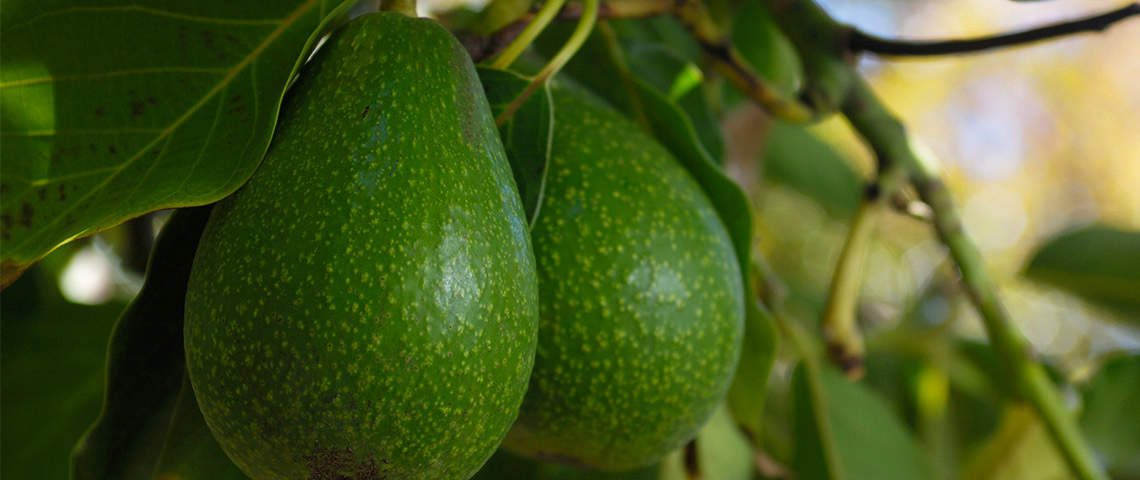
    Avocados nowadays aren’t really considered that uncommon of a fruit, but they sure are very unusual! There is really nothing else like them. They produce a large fruit that is loaded with fat. There are very few fruits in the world that contain any significant amount of fat. The olive is another that comes to mind. Some even theorize that avocados were at one point in history dispersed by megafauna (giant animals) that ate the fruits whole and then pooped out the pit as they made their way through the landscape, spreading the plant.

    They certainly have been deliberately grown and spread by humans for a very long time. Avocados, like sweet potatoes, are one of those foods that is okay for almost every specialty diet. They even work for keto diets, and are great for young children, athletes, and pretty much everyone. No controversy really exists with eating avocados. Pretty much all agree: they are good for you!  They are, oddly enough, toxic to most other animals, which I find to be a bit unusual.

    There is plenty of information out there on how to grow avocados, and I am no professional avocado farmer. But I will give you my two cents on them and hopefully reduce this information to something that is easy to understand and can provide a nice overview.

    There are two basic types of avocado — “Mexican” and “Guatemalan” are what they are typically called, indicating where the different types originated. The Mexican types are generally much more cold tolerant than the Guatemalan types. The Mexican types also have anise smelling leaves when crushed; the Guatemalan types do not. There are hybrids of them in existence as well. There is a lot of confusion out there with Florida types versus California types, but these terms are broad and for most people extremely misleading. What you are looking for should be plant-specific, not some category imposed on the them. “Hass” is a variety that most people are used to, the most commonly sold variety, and it should be taken as nothing more than just one variety called “Hass,” that happens to be very common. There are lots of different type avocados with different skins, different sizes, different oil content, different cold hardiness.  Many avocados are not tolerant of any frost at all, and others have been reported to be hardy down to nearly 10 degrees Fahrenheit (for short periods).

    Beyond that, there are A types and B types. A and B here simply refers to the time of day different parts of the flowers open. For instance an A type’s flowers have their female parts open in the morning and their male parts open in the evening. The B type avocados do the opposite.  So, you need an A and B type fairly close together for optimal pollination and fruit set.

    Avocados are not easy to grow, as far as my criteria goes.

    They cannot take much cold and some varieties cannot tolerate any frost at all. They typically don’t do that well in containers, and if they do, they don’t yield very much. They also don’t like extreme heat and are prone to get their trunks burned by the sun, damaging the plants or killing them. That is often why you see the trunks of avocado trees painted white to protect them (a wise practice). They are fussy about soil, too — not too wet, not too dry — and they must have good drainage.

    Avocados should, in my opinion be constantly allowed to cross and select for cold hardiness. Is it possible that genes could develop naturally to allow for a shorter season, more cold tolerant avocado? Seedling avocados with this in mind should be planted out by the millions of acres in my opinion — even if the avocado produced is quite a bit smaller. Is there a deciduous potential in the avocado gene pool? There is a citrus that is deciduous (Poncirus) and there is a cold hardy, deciduous member of the otherwise tropical family, Annonaceae — the paw paw.  So, who knows, but I wish more would try breeding and selecting them for cold hardiness.

    They are great climbing trees.

    There is another great aspect of avocado trees when mature that I want to mention — they can be great climbing trees. Their strong but not too large branches are smooth to the touch and as a former tree-climbing enthusiast, it was one of my favorite trees to climb. They are similar to the California bay tree (same family), which I climbed a great many of in my twenties. Avocado trees are valuable and slow growing, so do not climb anyone else’s tree — what if you broke a branch?  The owner would be greatly ill with you.

    Years ago, when I lived in Silicon Valley, my friends and I found a large, mature avocado tree in one of the neighborhoods. It was January and the tree absolutely loaded with fruit. The fruits were a bit smaller than the normal “Hass” variety, and the skin was very thin and shiny black — and smooth! I had never seen avocados like that before. We tasted them and they were delicious and super oily! But certainly different from Hass. We all agreed that we liked them even better. I did not know at the time, as I was just beginning my journey to learn about plants and farming, that they were the “Mexicola” variety. One of the more cold hardy Mexican types of avocado.

    The three of us climbed up in the tree and started picking what we could reach. This was how I first learned about what great climbing trees avocados are. After consuming those in a short amount of time, we decided we needed a tool to assist us. We went to Home Depot and bought a fruit picker. This was intended for citrus picking but worked perfectly for the avocado tree. It was a long yellow pole that you could extend with a little claw like basket on the end. We gathered as many as we could from outside of the tree, and then we climbed the tree with the fruit picker to get even more.

    The tree must have been over 50 feet tall.

    One of our friends was a guest from Venezuela, a small young man, built like a monkey. I had never seen anyone so good at climbing. He went out on smaller branches that us mere normal-sized mortals dared not, and gathered a bunch more of the fruits that way.

    They were not all soft-ripe. In fact, you harvest avocados when they are still hard and let them ripen up at home. So we had baskets and basket of avocados that we enjoyed. Many of the folks in the house were vegan and poor, so it was a welcome score.

    A fond memory I have of these avocados is the game time guacamole we made with them. The particular football game where we pigged out on this amazing guacamole was none other than the infamous “Tuck Rule” game. For those of you are that  are American football fans, you’ll know exactly what I am referring to. For those that aren’t, it was the game with one of the most controversial calls by the officials of all time, that led to a rule called the “Tuck Rule.” It forever changed the destiny of football, by kickstarting Tom Brady and the unmatched reign of the Patriots for two decades. To add to this story, Tom Brady was from the town we were living and watching the game in.  They were playing the Raiders, the local team. It was one of those big games where everyone in town was watching or at least aware of it, even the non-football fans. I will always associated “Mexicola” avocados with football and this time of my life.

  • Summer 2024 Miami Concert Preview

    Summer 2024 Miami Concert Preview

    Though summer doesn’t officially start until June 20, who are we fooling? Ask your air conditioning or your internal body temperature and they’ll tell you summer in Miami started weeks ago. But let’s split the difference and say summer starts on Memorial Day Weekend which means it’s time for our Jitney summer 2024 Miami concert preview.

    Idles June 10 at Revolution Live

    The loud British rock band play their first ever South Florida show where they’ll undoubtedly bring the energy and a mosh pit.

    Justin Timberlake June 15 at Kaseya Center

    From NSYNC to The Trolls, JT with his eight #1 hits has often times lived up to his self-imposed not-so-modest nickname of The Prince of Pop.  On his The Forget Tomorrow World Tour, he’ll perform all his hits.

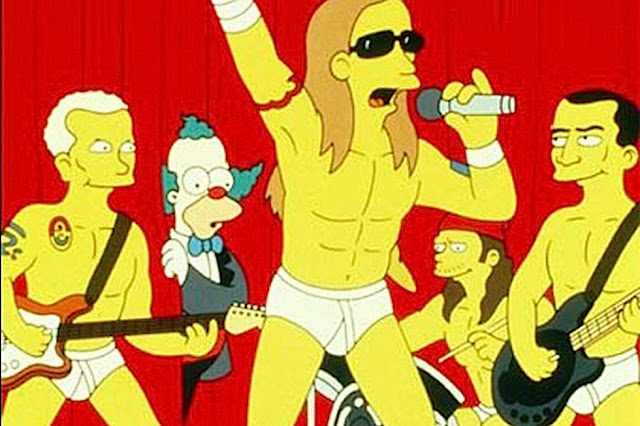
    Red Hot Chili Peppers June 23 at Hard Rock Live

    It’s hard to believe the once young upstarts of funk rock are now in their sixties. But singer Anthony Kiedis, bassist Flea, and company are still out their screaming “Give It Away” and “Suck My Kiss”.

    Jacuzzi Boys July 18 at Miami Beach Bandshell

    Miami’s favorite garage rock band play a free outdoor show at the Bandshell as part of their North Beach Social series.

    DIIV July 21 at The Ground

    Anyone who made it on time to last fall’s Depeche Mode concert knows this is a concert to go to. The Brooklyn quartet brought a dreamy shoegaze sound when they opened for a disinterested aging Goth audience at the cavernous Kaseya Center. I’m looking forward to seeing what their show is like in a more intimate setting.

    Missy Elliott July 25 at Amerant Bank Arena

    I’m always confounded by what acts can fill up an arena and which can’t. I suppose it makes sense with all her #1 hits that Missy “Misdemeanor” Elliot would play a sports arena with her hip-hop, r&b, and pop hits. Ciara and Busta Rhymes will also be on the stage.

    The Marias July 27 & 28 at The Fillmore

    The Los Angeles indie pop band have a two night residency on Miami Beach where they’ll play and eclectic bilingual medley of songs.

    Ladytron August 26 at Culture Room

    It was a surprise to see this British electronic act are back on the road. At their last South Florida show back in 2011 they put on a set that had all of Grand Central dancing into sweaty oblivion.

  • “Water for Elephants” Broadway Musical Review

    “Water for Elephants” Broadway Musical Review

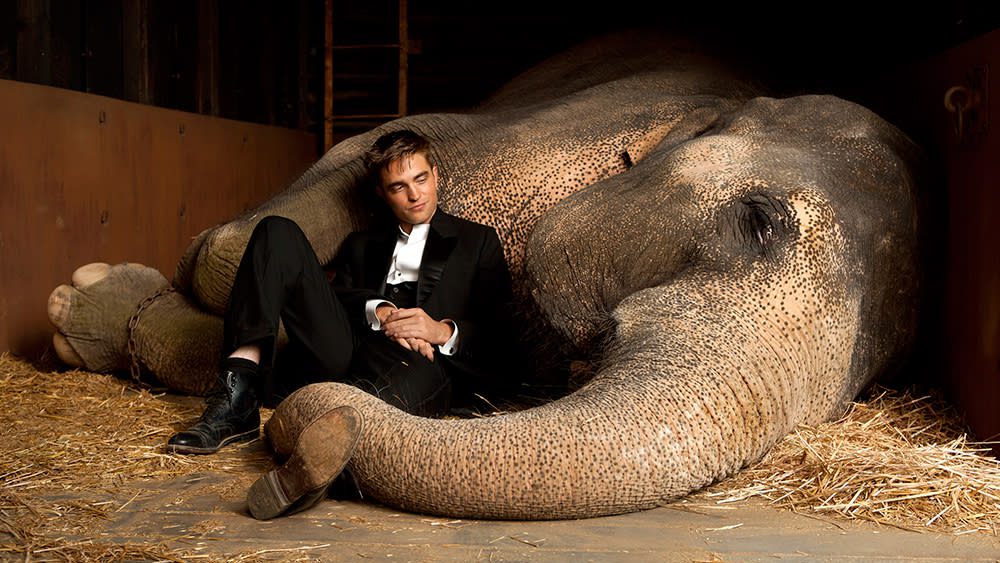
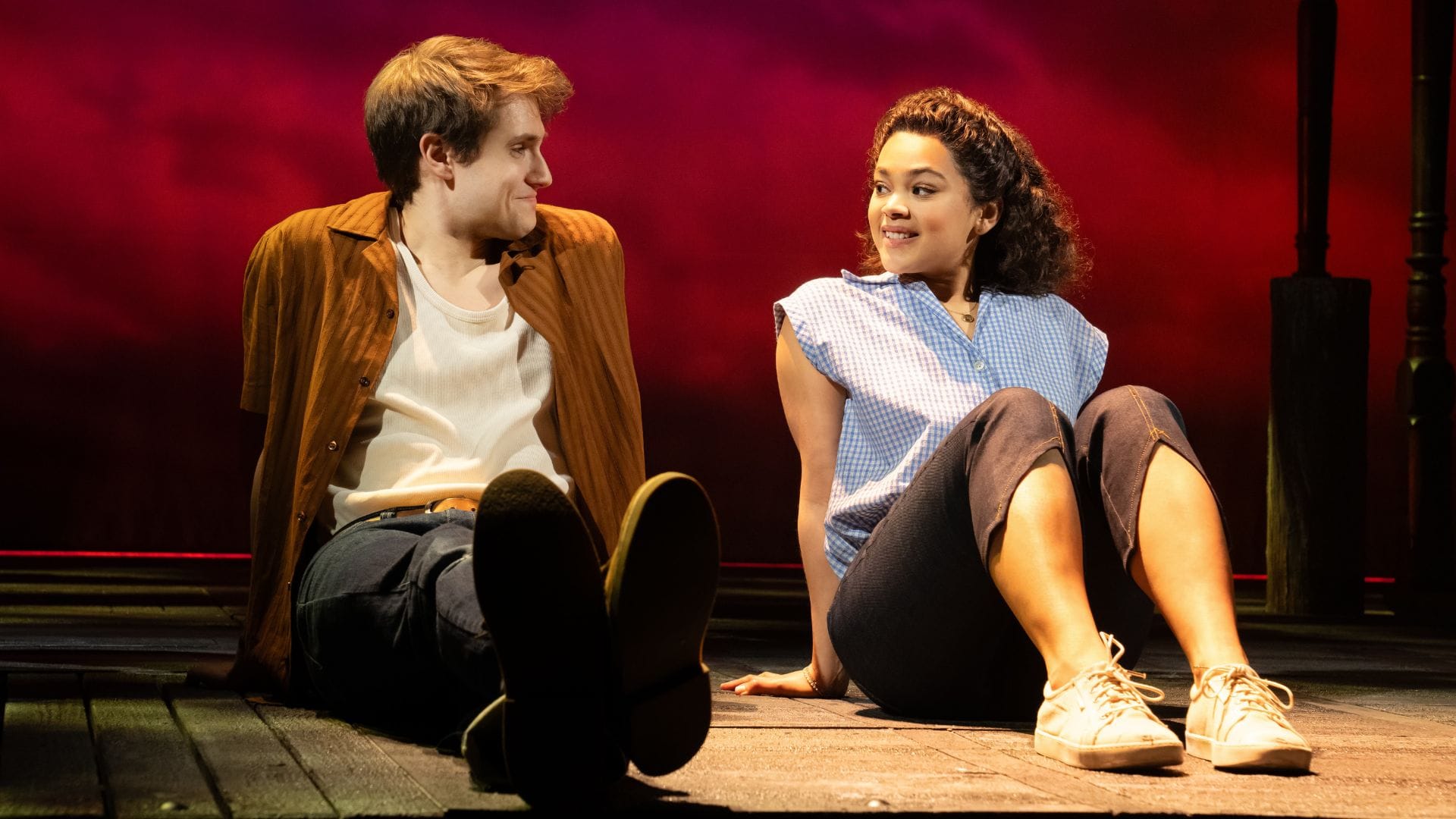
    Water for Elephants is an above average play that is both entertaining & well-staged.

    As a storyteller, inclined to lean into the story above all else, there is a slight spectrum as to gauge this popular musical. The spectrum based on your personal tastes and inclinations.

    The story is not original, as you probably know, it’s based on an old 2006 nonfiction bestseller by Canadian-American writer Sara Gruen. It was an incredibly popular book.

    Set in a modern nursing home, the play tells the tale of Jacob Jankowski (Gregg Edelman) thinking back on his youth (Grant Gustin). We’re back in 1931, the golden era of American circuses and roadside attractions, Jankowski, a recently graduated veterinarian, joins the Benzini Brothers, the biggest show in town before Ringling, and also home to “the stampede” — a legendary tragedy that is revealed at the end.

    A love triangle ensues between Jankowski, the ring-leader August Rackinger (Paul Alexander Nolan) and his wife and star of the show Rosie (Isabelle McCalla). On one hand, it’s a fine story, there’s a hot- headed villain in August and a dreamy eyed hero and a femme fatale love interest. There’s a smorgasbord of secondary characters, both good and evil, all engaging and investable. And of course, there’s the animals and acrobatics. It’s quality. And from a Directorial perspective, it’s quite a dazzling feat.

    Water for Elephants Story

    But on the other hand, the story is a little basic, especially with its two main themes: be nice to old people & animals have rights. Yeah. We know. These themes, although important, seem obvious in 2024, maybe they weren’t in 2006, but they are now, so it dilutes this play from achieving any true cathartic now this is important feeling (unlike Suffs, for example).

    Water for Elephants, story-wise, feels a tad watered down, and not important today, and as a result, the show leans heavy on acrobatics and puppetry to induce wonderment into its audience. And there’s a place for puppets and acrobatics, but it’s not in the storyline of a solid, powerful script, so, as a result the play feels a little too much like a circus, gimmicky.

    Just a little.

    Sans a slightly weak script, and an overabundance of circus tricks (which most would love by the way), this play is filled with great acting, charismatic choreography, and more than enough story to keep you engaged. Plus, and this is always important, they nail the ending, from every angle, thematically, emotionally, production and story wise.

    We recommend this play strongly. 

    Water for Elephants is nominated for 7 Tony Awards, including Best Musical, Best Book of a Musical, Scenic & Costume Design, and Directing.

    The Jitney is in NY writing reviews of Tony nominated plays.

    Water for Elephants is currently playing on Broadway.

    For more info and tickets click here.

  • The Magic That Was Voice Acting

    The Magic That Was Voice Acting

    It was almost 10 years to the day, I took my first steps into another dimension. It was gray. The walls. The halls. What looked like an office building actually housed recording studios. Of all shapes and sizes. Now, those first steps alone have changed my life more than any I’ve ever taken. Standing in the lobby, my feet still hurt from the ill-sized shoes I wore for work earlier that day. My best friend Tony told me they needed voice actors where he worked. And now, in a few minutes’ time, I’ll be interviewing for the next 10 years of my life. 

    His name was Martin. He wore a fedora. The goatee said “Billy Joel fan”. That isn’t an insult. He was the gatekeeper. And his name isn’t Martin, but only for this article’s purpose. 10 minutes earlier I did good by bringing by a couple coladas and making sure the English Department staff took their shots. And now, Martin and I sit across from each other in the lobby. Basically, we just got along. And I was finally excited about something. Excited about something with zero anxiety. My feet still hurt is all.

    We laughed, Martin and I, sitting there. Good laughs. We listed our favorite this’s and favorite that’s. Days later, I was again sitting across from Martin. This time at the semi-mythical La Carreta. I was officially being anointed a dubbing “director” over Marlboros, pork bits, and beers. By no means was I an actor. At least by my definition. I had experience. I had schooling. But “directing” was my new calling. And my aching feet were just fine with that.

    At one point during the interview process, I was led through a door.

    The big studio was Studio 5 (now split in half, tragic). It was the first studio on the left. Walking in it felt both impressive and intimidating. But there was a couch in this one, so, yay feet! Okay. Now, imagine commanding half a spaceship. Huge TV on wall. Two big monitors on either said of the desk. One for the engineer. One for the director. A separate isolation booth ran the length of Studio 5. You could watch the actor record their performance  in a very theatrical way. The other booths were a fraction of this room’s size. Literally, this one was on another planet. 

    Normally, it was dark. The light fixtures dim. But there were scripts glowing green on screens of black. Time codes. Both in codes and out codes line the left hand side of the script. ProTools. The recording holy grail, industry standard software. And when Martin asked me and the other guy applying who wanted to try “directing”, I swooped into the opportunity, sitting down in the empty swivel chair and naively starting to co-pilot. Up key. Space bar. Up key. Edit text. Off I went like Dorothy and Alice. 

    I did some theater in my day, but these people, these “dubbers”, were actors. Real actors. I’d read about them in the newspaper dozens of times over the years. And now here I am, scrolling through a script and making sure what they say makes sense, making sure they start and stop when the gangster or animated banana starts and stops, and me, make sure their performance matches that on the screen in front of us. 

    That’s dubbing. And it’s an art form that goes largely unnoticed and heavily criticized. Every thing “we” know about dubbing is a Bruce Lee movie. Every thing “we” know about voice acting, anime. Sadly, most of this content will never be seen by the actors behind it. Unless it stars the latest Nickelodeon teen sensation and/or breakout SNL star. Anyway. It’s crazy, laying your voice on top of someone else’s. But to me, magic was moving into in our little world.

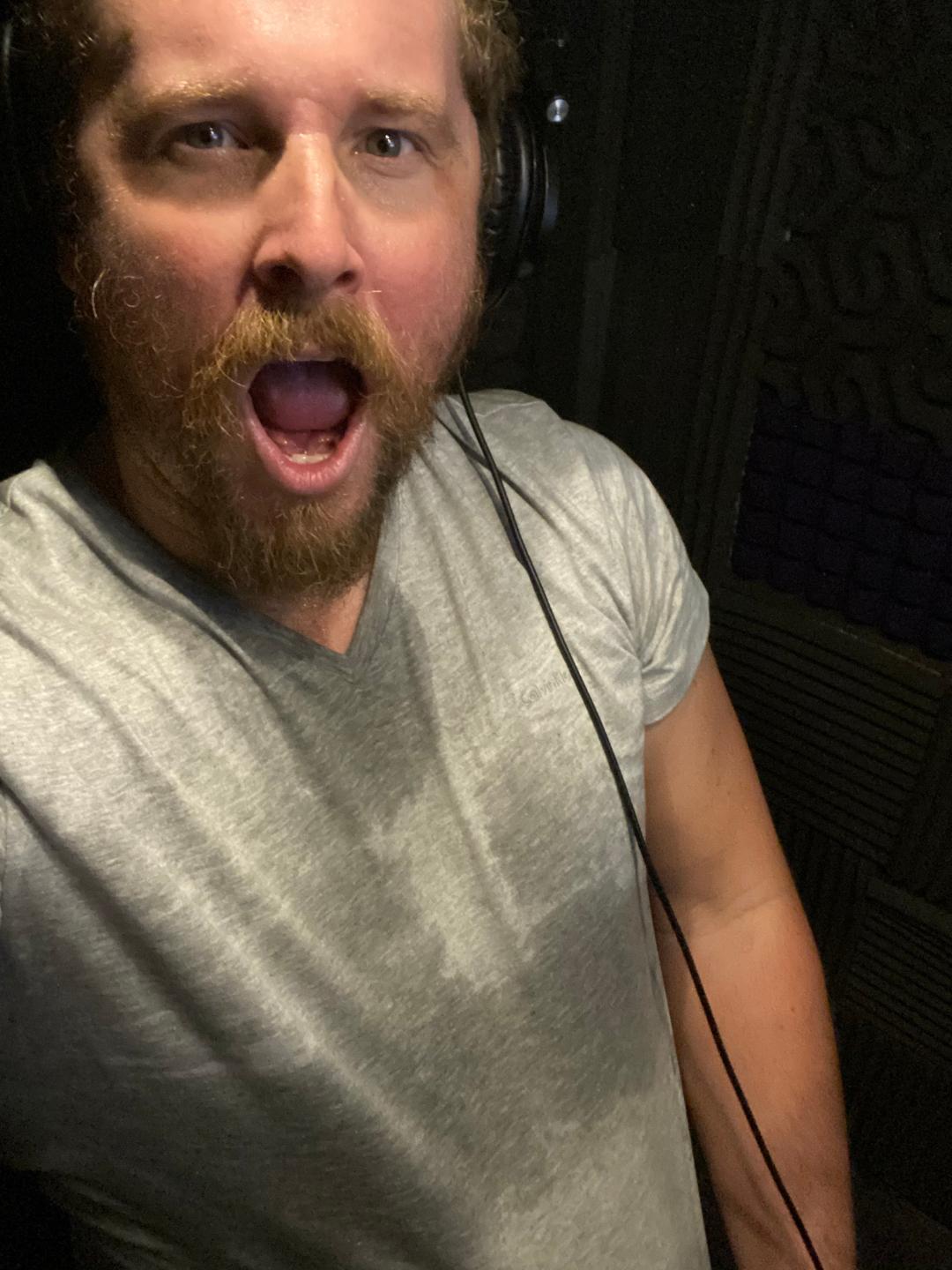
    First time I tried VO, I was needed to cheer for 30 seconds. It’s called Crowd Work. Bottom of the barrel type stuff but incredibly necessary (you can still make a good buck or two off of it). The engineer in my ears tells me 2 seconds. 1 second. I start yelling random sports stuff, and then I began clapping. To my embarrassment, they had the clapping, the applause (they always do) they didn’t need mine. I was mortified. 

    But I was also bit.

    Maybe I could be a magic maker like these people. I loved directing and recording, but as an actor you could crawl inside the screen. And for someone with my debilitating fashionable anxiety, I could perform in front of maybe two people tops and not like a whole audience. That suited me just fine. So I asked for every “Man 1” or “Cop 2” and yes, “Crowd Work” because to me, I was working up the magic making ladder. 

    The booth became my home. But what I hadn’t realized was I was leasing. By now, though, I could talk about a thousand shows I was in. And all the experiences I had as both someone who recorded and directed these things, and also someone who voiced twice as many. But this isn’t about my experience. It’s about all of ours’. Us, the voices. The ones who lose a parent and are sitting in the studio lobby the next day waiting to record one retake (one line of dialogue) because “It has to go out today!”. 

    I’m afraid that scenario’s fairly common. People assume since we can make so much money in so little time (and sometimes we can). But we can also be treated like garbage. On a regular basis, we’re made to feel like anyone can do our job. It’s even posted on studio walls advertising “no acting experience is necessary”. My home now threatened by each of the neighborhood bullies. By that I mean the studio heads. The CEO’s. And soon, the people who run other departments are just as willing to threaten to take your work away for only asking an innocent question.

    There is one show I do want to talk about. A show called Avenida Brasil (or Brazil Avenue). This is the one you hope they’d all be like. Look, every show has its ups and downs (script problems, bad casting, time constraints), but it’s rare does the whole damn thing fit from floor to ceiling. It’s rare you know you’re working on something special while you’re working on it. This was one of those. I felt more like an audience member than part of the crew. The care and talent that went into this thing seemed otherworldly at the time. I was a very, very, very small part of it. It was already in production when I got there. I was lucky and spent a good deal of time in Studio 5.

    And why? Well, the two leads in Avenida Brasil were powerhouses.

    Their characters, Carmina and Nina, powerhouses. The two female voice actors hired to dub these characters, powerhouses. I “directed” both of them. And got to watch what were really 4 incredible performances. The two on the screen. And the two in the booth. Duh, I stayed out of their way. I found that’s real “directing” hence the quotations I include around the word director in this article. But if we needed another syllable to match a mouth flap, I’d be there for them. It’s imperative you hire real actors. Anyone can sync a line, but only the real actors can live it, too. Sure they may get grouchy from time to time, but don’t fire them or put them on a “don’t cast” list. It’s only because they’re sleepy from living their dream. 

    The rest of the cast of Brazil Avenue was literally filled out with award winning actors. One voice actor in particular even took on two roles. The male lead Jorjinho and the sometimes-slow-to-react Adauto. Normally, you wouldn’t utilize one actor for two roles, but because they had who they had to portray these two characters, it was another amazing session with another brilliant actor, who could not only technically accomplish what as a voice actor has to do to dub what they’re saying, but switch from two distinct roles as we’d have sometimes upwards of 7 episodes to record in one session. That’s 14 episodes playing two roles. The emotional marathon is real. And so were the tears, on both sides of the booth. 

    But, sitting there, taking everything in, I thought I made it. This wasn’t work. This was magic. And it was my job to keep appreciating what I’ve come to learn very few people do. These people, the voice actors, give a full time commitment to a part time gig. In the back of my mind, I knew something wasn’t fair about that. Unfortunately, the shiny veneer of voice acting began to crack with the first thought like that.

    No screen credit. A voice actor can work a lifetime and still no one knows their name. And creating a name for yourself can mean potentially working the Cons/Signing events. I mean, a whole body of work can easily mean nothing to the world at large. Or even just within the industry. Again, oddly, it’s a job where studios consistently let you know you’re replaceable. There’s an old saying I’m going to straight up butcher: “You can take a great actor and turn a garbage script into gold. But you can’t take a garbage actor and turn a shit script into gold.”… Or something like that. 

    Here’s what I’ve seen. I’ve seen creative and humane atrocities take place on a plot of land I once worshipped. I’ve seen amazing 10 year veteran actors fired because a “director” that had been there only 3 months didn’t like something about them. And apparently CEOs go along with this gross, unprofessional behavior. HR departments gunning for people to “make examples out of them”. Casting departments who cast more out of spite than creativity. Even Script Departments complicate what’s easy and ignore what’s right. It’s not every studio. It’s not every CEO. But boy oh boy does it feel like it. I’m sure this behavior may even go unnoticed by the higher ups. I hope that’s the case.

    These were people you smiled at and asked about their lives.

    Maybe had a beer with that at one time. Smoked a joint together on Halloween. You’d see them in those gray halls, outside eating, having cigarettes. I’ll never understand why these people turn on the hate. It’s almost like this industry alone courts a certain toxicity of a person. Like it lies dormant until they step into this business. It’s both traumatic and bewildering. So much so that a few trips to the therapist may be in order. Not kidding. To be fired over nothing does irreparable things to a mind and heart.

    It’s been 10 years since Avenida Brasil. In that time, the industry was in a boom. And I had a good run as a useful voice actor in town. I would do just crowd work, I love this job so much. You kind of have to though. You could be on top one minute with three leads in three shows, then at the end of the session, you gotta do some cheering. But back then it didn’t matter. I couldn’t get to the studio early enough, and I certainly couldn’t leave late enough. The triple coladas. Those flaky empanadas. The cigarettes. I couldn’t wait to record. As “director”. As voice actor. Get me to the next line. The next scene. The next episode. I met my wife here. Yep! She played Nina. (gasp!) The twist reveal! 

    I married the girl behind the girl. The girl in the booth. The girl who really represents a golden age. When the right people were in charge, the right actors were in the right roles, and it felt like we were all on the same team. However, recently, from our vantage point, weird professional vendettas, a complete lack of empathy, and a quickly eroding standard of quality dismantled the industry from the inside out. It got rusty. This magic machine running without the one thing it needs: magic. 

    But there’s time. The magic makers are still out there. They will come back. The suckers, they are. Because they, the suckers, are me. I’m them. Another magic-seeking weirdo in the bunch who can make silly voices into a microphone and somehow get paid for it. 

  • “The Notebook” Broadway Musical Review

    “The Notebook” Broadway Musical Review

    This season is seeing a plethora of classic books adapted into Broadway plays, The Outsiders, Water for Elephants, The Great Gatsby and The Notebook.

    We want to be brief in our review of The Notebook, one of our favorite books of all-time, and arguably the most romantic story ever in the cultural canon, take that Shakespeare and James Cameron.

    This play is a dud. It does not live up to the novel or even the movie. More than likely, it will not have you grabbing for a box of Kleenex (infamously sold at the concession stand). Give their marketing team a Tony Award for all the hype that concession received).

    Granted. You might cry at the end.

    But you’re way more likely to fall asleep than feel emotional as this musical is bogged down in its own sentimentality. The songs often feel tedious and monotonous rather than cathartic or emotional (it’s just one sad Broadway ballad after another sad Broadway ballad).

    Because of the musical’s overuse of sentimentality, The Notebook is completely redundant. There are a few scenes that stand up (older Allie lost in her memories; older Allie starting to remember her husband older Noah only to fail and cause chaos (end Act I); and maybe the scene with the kids and grandkids) but nothing in the musical resonates because it just falls into another sappy sad ballad.

    Another sad Broadway ballad followed by another sad ballad = shuteye, better sleep, calm, sleep score, pillow, slumber – should we keep naming the most popular sleep apps of 2023. You get the point.

    The Notebook Conclusion

    Our expectations were too high going into The Notebook. That didn’t help, but at the same time, it’s not a good play due to its overuse of sentimentality. The acting is solid, especially older Allie (Maryanne Plunkett) and older Noah (Dorian Harewood). No question there.

    But the younger versions of Allie and Noah don’t move the needle. Their scenes are not memorable and blend together. Also, there’s “younger” Allie and Noah and “middle” Noah and Allie who are basically the same age, only ten years apart. And plot-wise, you want to kill Allie’s mother who basically gets away with her sabotage with a throw away line “I guess I owe you an apology, Noah.” Cue eyeroll.

    One very positive thing to say about The Notebook: they will get you at the end, which is something.

    But overall, we do not recommend!

    The Notebook Musical

    The Notebook is nominated for 3 Tony Awards, including Best Actress in a Musical, Best Actor in a Musical, and Best Book of a Musical, which we can hardly believe the latter.

    The Jitney is in NY writing reviews of Tony nominated plays.

    The Notebook musical is currently playing on Broadway.

    For more info and tickets click here.


  • Passion Pit Slays New York City

    Passion Pit Slays New York City

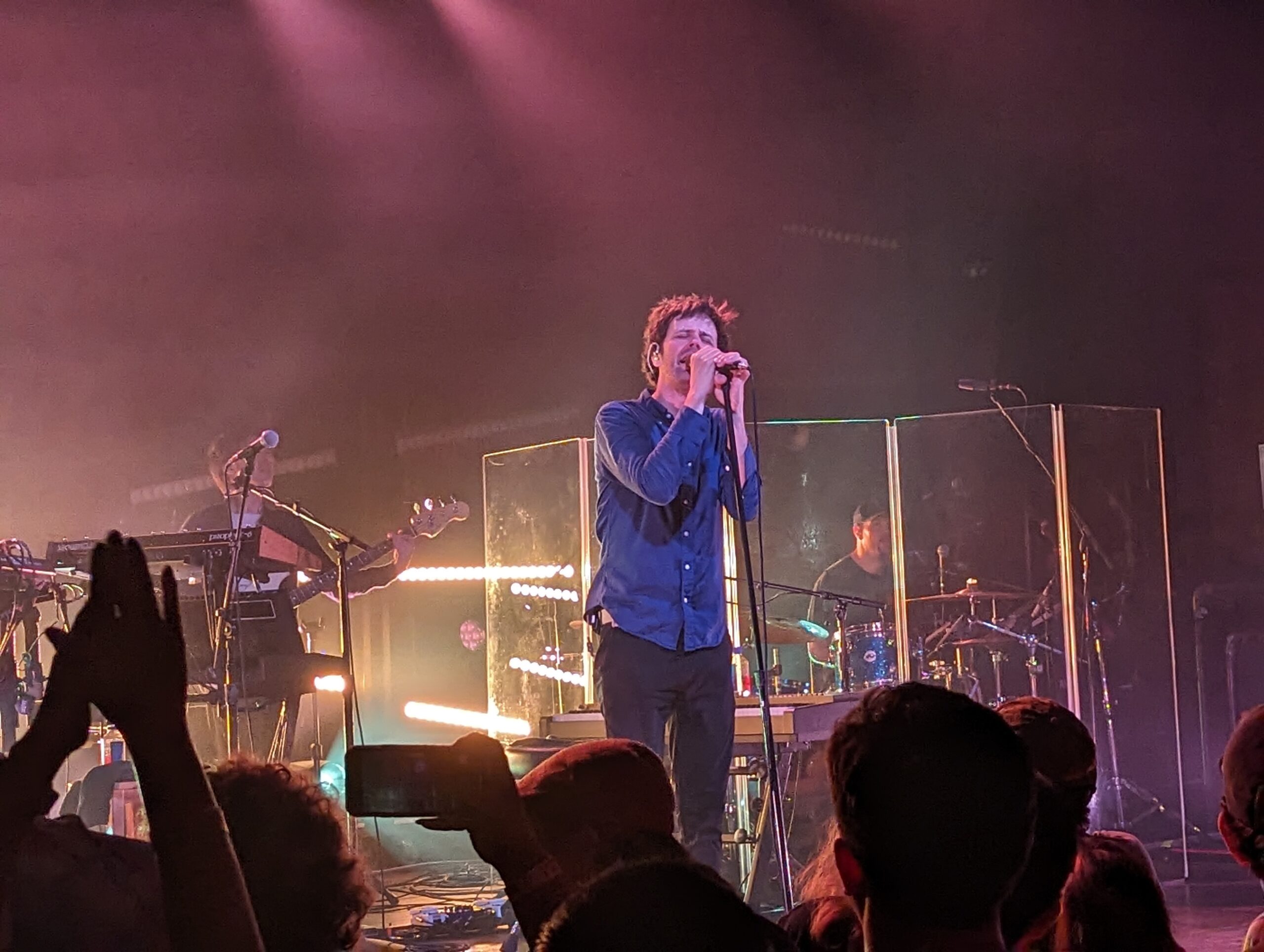
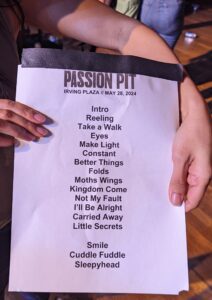
    Passion Pit played their first show in New York City in five years to a packed house at Irving Plaza. The Boston-based quartet came on stage at 9:15pm and slayed from the start, quickly kicking off the gig with fan favorites “Reeling” and “Take a Walk.”

    They jammed.

    The 16 and over crowd, ranging in age, but more young than old, more female than male, was into it. The vibe was eclectic and electric as they settled into the set with softer songs “Eyes” and “Make Light” and then they proceeded to jam through sixteen tracks with an easy effort.

    The show was fun, intimate and colorful. The lights at Irving Plaza were vibrant and constantly changing, keeping the intimate sold-out crowd engaged and happy, with plenty of opportunities for great pictures.

    About half way through the set lead singer Michael Angelakos took some time to monologue, admitting he wasn’t big on “banter” because he tends to ramble. Before it got anywhere near awkward, Angelakos thanked the crowd and expressed gratitude and excitement for being back on the road. It was a fun, quick show, bringing nothing but good vibes to the Tuesday night NYC crowd. Passion Pit kicked off their first of three shows in New York and it was good to see the band back on the road, jamming.

    Passion Pit in New York City

    The show was sold out but on ticket exchanges like Vivid Seats tickets pleasantly sold for below value. We paid $40 to buy the tickets the day before, but they were selling for as little as $25 an hour before.

    Drinks at the legendary venue were above average, costing $30 for two beers. The staff were cordial and the whole vibe was safe.

    After ending the show and saying goodnight they quickly came back out for an encore that included three songs, ending with crowd favorite “Sleepyhead.”

    Michael Angelakos, who loves to sing with his tongue out, confessed he was working on new material, the news invoking a rise in the crowd.

    After the show the New York crowd left expeditiously ending a quick fun night for all those who were lucky to attend.

    Jitney Notes

    We first saw and interviewed Passion Pit in 2009 or 2010 at Lollapalooza as they were emerging. They were really down to earth people and good energy.

    This isn’t our best or most detailed journalistic piece, it’s rushed and half-ass, but we wanted to give Passion Pit some love and free media. They deserve it.

    Passion Pit is currently on tour. To catch them in a city near you click here for details.