Category: News

  • SZA Review Miami Facts

    SZA Review Miami Facts

    SZA in Miami grade : B –

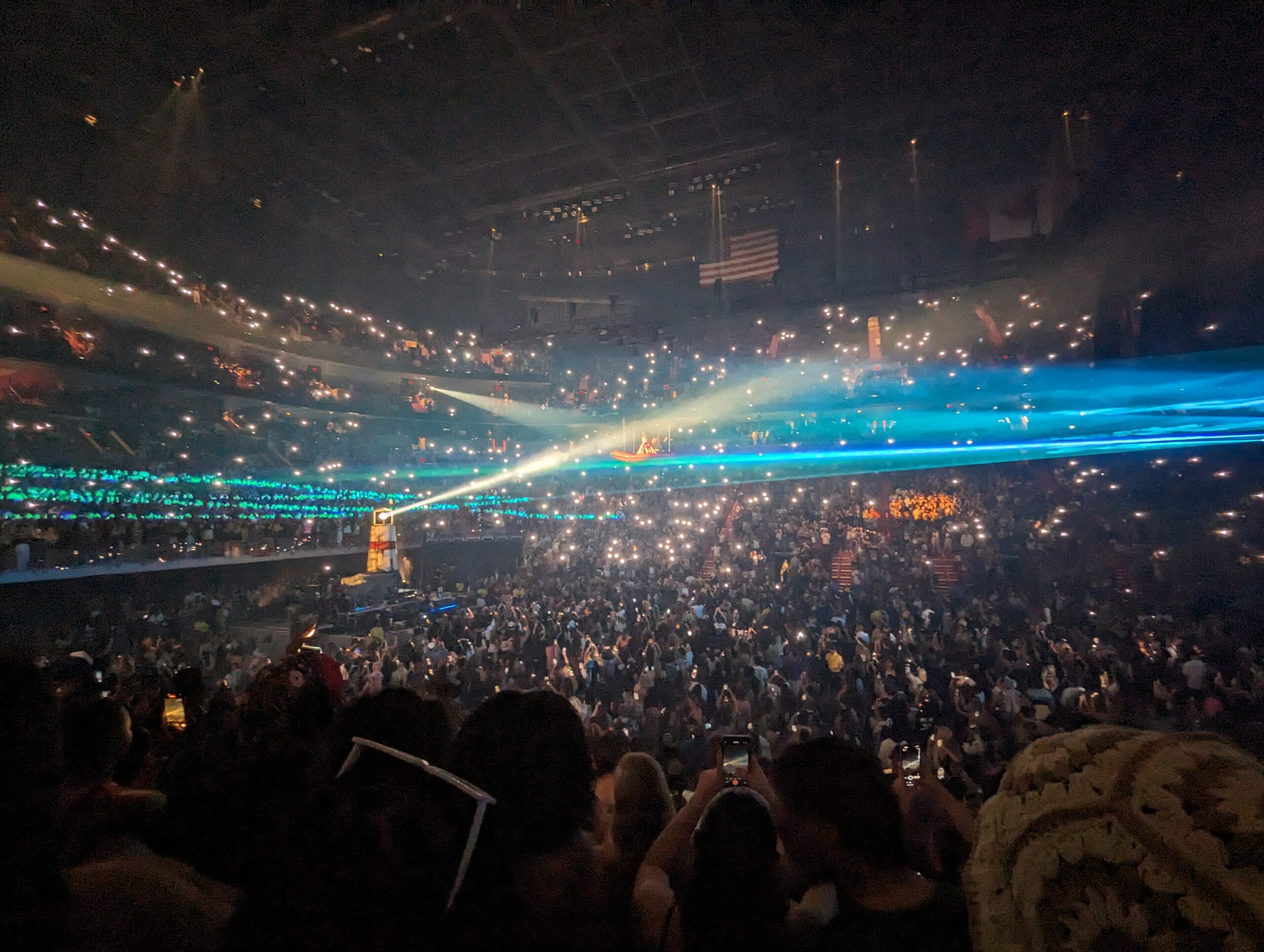
    SZA launched the third leg of  her world tour in Miami on September 20th, 2003 on a hot, humid, night to a fully sold out crowd that was BEYOND excited. The crowd, about 75% to 80% female, age range 15 to 23, on average. She came on about 30 minutes late, at 9:30pm at the Kesaysa Center in Downtown Miami.

    It was a dope show but it wasn’t all that.

    Our conclusion is what’s up???

    SZA in Miami

    The crowd was mad electric and so excited before SZA came on.

    Crowd was screaming to tracks the DJ was playing.

    SZA came on, the crowd went bananas like ballistic.

    20,000 people yelling with pure banshee energy. Energy was sick throughout the night.

    SZA looked amazing and sounded sultry like she does.

    The set design was very Broadway-esque, throughout the night. Think there were about four different set design  & costume changes,  all around the theme of nautical vibes. She’s on her SOS  (like help I’m in danger) tour so water is the vibe.

    SZA played often with a live bad and often with four dancers beyond her.

    She played over 30 songs in a 90 minute set.

    Towards the end the show, in the third act, she was elevated above ground singing songs.

    Moving around the arena singing on a orange life boat.

    And then she came back and closed the show back on stage.

    (set list to follow on bottom of post)

    The most positive aspect of the show was that the crowd really, really enjoyed it.

    CONS OF SZA IN MIAMI

    Something was off. Not sure what or why.

    Starting with the delay in the start time, about 30-minutes late.

    We asked employees at Kaseya, she was supposed to go on at 9pm.

    Fine. Whatever. It’s Miami time, we are used to it.

    But everything felt off. Maybe they are rusty, fine.

    But maybe this is just what the show is.

    The vibe definitely tried to be Broadway-esque — big production.

    Think they were just rusty. The choreography was not always in sync with SZA.

    The sound wasn’t great and at times they used pre-recorded sound.

    SZA is an amazing singer and artist and storyteller, her live show, at least in Miami didn’t show anywhere the quality of her tracks on YouTube, which are cinematic.

    The show was a little flat. And felt rushed at the end.

    But the crowd loved it, which honestly that’s all that matters.

    Or does it?

    **

    **

    f**k me for writing negative thing about SZA but somethin was off..


    SZA Miami Setlist

    – “PSA”
    – “Seek & Destroy”
    – “Notice Me”
    – “Conceited”
    – “Love Galore”
    – “Broken Clocks”
    – “Forgiveless”
    – “Used”
    – “Bag Lady”
    – “Ghost in the Machine”
    – “Blind”
    – “Shirt”
    – “Smoking on My Ex Pack”
    – “All the Stars”
    – “Prom”
    – “Normal Girl”
    – “Garden (Say It Like Dat)”
    – “F2F”
    – “Drew Barrymore”
    – “Doves in the Wind”
    – “Low”
    – “Lifeboat”
    – “Open Arms”
    – “Supermodel”/”Special”
    – “Nobody Gets Me”
    – “Gone Girl”
    – “SOS”
    – “Kiss Me More”
    – “Love Language”
    – “Snooze”
    – “Kill Bill”
    – “I Hate U”
    – “The Weekend”

  • Yo Tu Pana, Tú La Mía: How A Small Idea Became a Local Movement

    Yo Tu Pana, Tú La Mía: How A Small Idea Became a Local Movement

    Just like so many ideas came to be, the first spark of inspiration for Pana MIA was on a humid Miami night. A bit buzzed and floating in a chlorine- laden pool, Annette turned to me and proposed extending our deeply influential support of each other into a community effort. After years of living in South Florida, we had both become disheartened by the capitalistic hustle culture that cultivated a constant feeling of competition between everyone we met.

    What if, instead of a constant need to be successful as an individual, there existed a collective of artists and vendors from all backgrounds thriving together? What if, instead of keeping resources and knowledge as a coveted secret, people who wanted to begin their journeys as artists or businesses could lean on others who had experience? What if, there were one centralized place you could go to locally source anything and everything you could want?

    South Florida has garnered a sort of reputation for its integral belief that there “isn’t enough room for everyone,” which upholds a culture plagued by gatekeeping and competition. Instead of allowing oneself to be happy for others’ successes, the mindset of the society has ingrained in us to envy others, even if we are both striving for the same things– recognition, love, and encouragement.

    Pana MIA was created as a way to push against these notions.

    It manifested as a mission to create an openly accessible platform for the public to directly engage with the local economy and community. Attract those that want to support local to the local artisans, businesses, artists and organizations that are painstakingly trying to reach them. It was a learning process for us both, and we began feeling completely out of our depth at the face of this immense project. But the more our vision developed in real life, the more people began to understand what we were trying to do, and became invested in the concept of a community that genuinely wanted to see each other reach their potential.

    Something we noticed soon after we began our community organizing project was that there are many groups doing very similar things to us, but in various niches that didn’t often intersect. So what became an objective for us was being the web that connects all these various groups so there can be active collaboration, exposure, resources, and audience perception. Note: Our goal isn’t to merge all the groups in South Florida into one, super-group, but instead establish a strong support system between them to reinforce their strength.

    As Anette describes: the coral reef and algae have a symbiotic relationship.

    The algae provides shade from the harmful sun, and in return, the coral provides nutrients for the algae. We want a similar relationship to be formed between our movement and the South Floridian local economy. Local businesses, creatives, and grassroots organizations  are fundamental to the social-cultural ecosystem that is South Florida!

    Of course, while there are some who are resistant to this movement of ours, our reception into the South Florida community speaks for itself. In one year, we have successfully onboarded 400 local creatives, entrepreneurs and organizations into our Local’s Directory. We’ve put on 4 successful shows with exclusively local artists and vendors, collaborated with 14 local venues and organizations, and we’ve interviewed 25 local changemakers and artists on our podcast. Our growth feels in part attributed to the sense that we are meeting a need for connection in this landscape. We are only as successful as the panas (Latine slang for friend, homie. In Pana MIA a Pana is a member of our directory, a local South Florida creative, business and/or organization) that make up our collective, and we are just getting started.

    To get involved, become a Pana or donate to our initiative visit www.panamia.club We are constantly evolving and creating more ways to serve our community- the more we grow, the bigger impact our mission can make.

    Yo Tu Pana, Tú La MIA.

    This Sunday, September 24th at Dear Eleanor, 148 NE 28th St, Miami, FL 33137, we’re throwing “El Igor y Sus Panas”,  from 4 to 8 pm.

    Imaginate that it’s Sunday afternoon, and you’re chilling with the homies. The vibes are immaculate thanks to the illuminating tracks of DJ Luna and Rolling Royce. A line-up of your soon to be favorite local acts including El Igor, Zephaniah, Bella Lavish, El Gato, Sasha Camille and promise a decadent and indulgent afternoon. Soon the air is filled with electrifying bass and your ears are tingling. As you hit the dance floor, you find yourself singing along to lyrics you can’t quite understand. It’s a tantalizing blend of cultures, a healthy fusion of sounds—it’s what we like to call a Cultural Salad.

    Ahora levantate, ponte hyper! We’re here to celebrate the diversity that makes Miami so…Miami—transcending boundaries from street culture to urban hip-hop y más. Bring the panas, everyone is welcome.

    Secure your spot by purchasing tickets on Shotgun for $15-$25.

  • A Haunting in Venice and Cassandro – Jitney Movie Roundup

    A Haunting in Venice and Cassandro – Jitney Movie Roundup

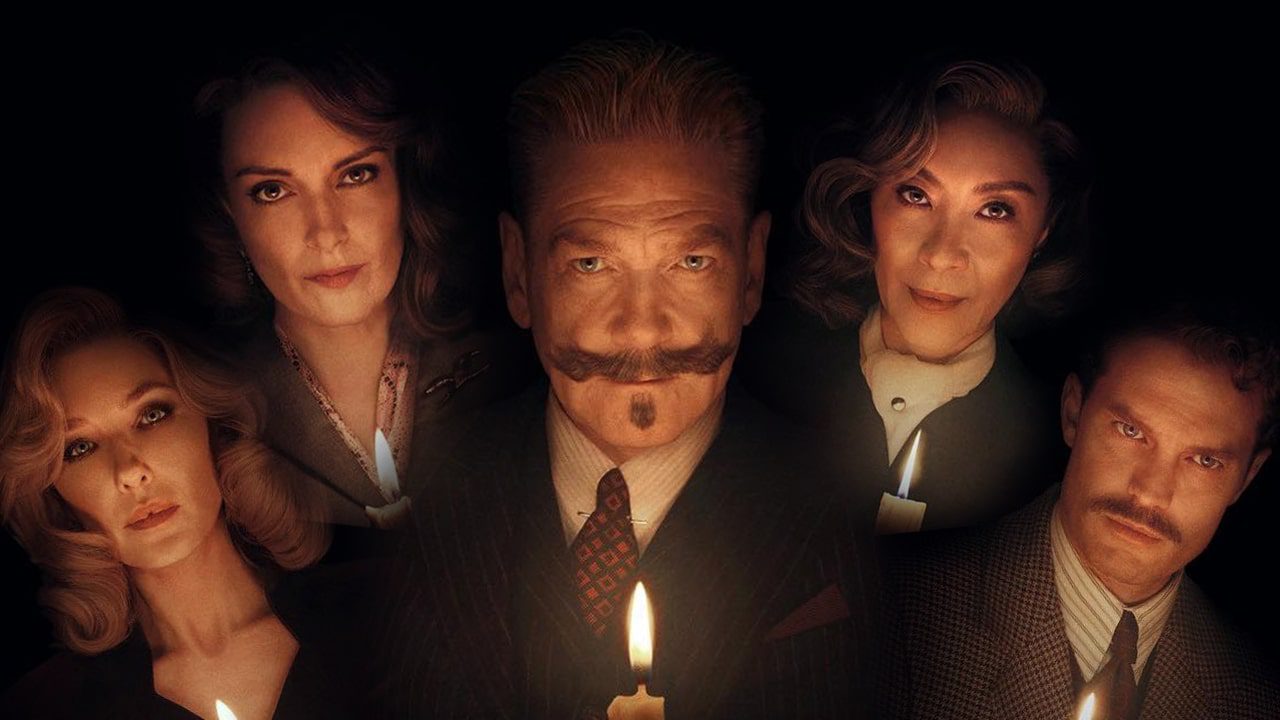
    I’m not too big a fan of when movies make a big deal about their plot twists. The trend probably started with 1995’s The Usual Suspects where a movie stops itself in its tracks to show the audience how everything they just watched was not as it seemed. Then through a series of flashbacks you discover the truth which is generally not as clever as the film presents it to be. So I was doubly surprised that the twist in the new Agatha Christie adaptation A Haunting in Venice not only got me, but also left me pleased to get got.

    I’ve been digging this whole whodunnit renaissance of murder mystery movies starring a large cast of characters where anyone could be the culprit. You’ve had a pair of Knives Out flicks. Now comes the third movie where Kenneth Branagh plays Hercule Poirot. Branagh hams it up with Poirot’s Belgian accent. He plays him like a smarter version of Inspector Clouseau. Poirot wears a ridiculous walrus mustache and loves chomping on pastries, but he always figures out the what, who, and why behind a murder.

    These movies follow the Agatha Christie formula. A bunch of people are in an exotic locale when a dead body ruins their good time. Everyone is a suspect. Right when you think you know who was the killer, that person ends up dead. Then Poirot (or Miss Marple or some other detective from the Agatha Christie literary universe) explains who killed who and how.

    A Haunting in Venice is different.

    It is filmed as though it was a supernatural horror movie complete with all that genre’s tropes from jump scares to ghosts of dead bloody children whispering.

    But in the finale A Haunting in Venice does something, if not revolutionary, then a trick I’d never personally seen a movie pull off before. There’s a twist that not only shifts the plot, it also shifts what genre this movie belongs to.

    Cassandro

    Cassandro tells the true story of Saúl Armendáriz, a struggling Texan wrestler who has an epiphany. If he’s going to make it big in the ridiculous world of Mexican wrestling, then he needs to go all in on ridiculousness. He creates the character of Cassandro, a character so flamboyant he’s known as  the “Liberace of Lucha Libre”.

    For the first hour I thought Cassandro belonged firmly to one of my favorite genres, the gritty underdog story. From Rocky to Hustle & Flow to Million Dollar Baby, I always enjoy seeing an unlikely hero from the wrong side of the tracks triumph in their chosen craft.  And in its first sixty minutes Cassandro seems to be a worthy successor for the last great wrestling movie, The Wrestler. It does a great job of depicting the world Cassandro comes from and who he is as a character. The wrestling scenes are impressive and filled with violent danger.

    But halfway through the movie collapses with the weight of an off the rope bodyslam. I don’t know if it’s because of the fact that pro wrestling is more of an athletic performance where outcomes are decided in advance than an actual competition,  but all of a sudden it’s not clear what the stakes are.

    It’s not for Cassandro to win a championship. Maybe it’s that an outwardly gay character can be cheered for? But it doesn’t clearly depict why the crowds go from hurling homophobic slurs at him to cheering him on. So you’re left feeling you watched an ineffectual public service message, rather than a film that if it hadn’t lost direction should have brought tears to your eyes.

  • John Tovar Tribute at Bougainvillea on Saturday Night

    John Tovar Tribute at Bougainvillea on Saturday Night

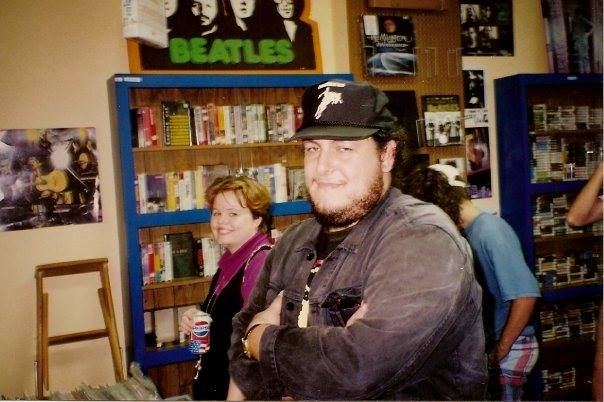
    Local music man John Tovar passed away this past May. The manager and talent scout was a pivotal player in the local music scene. He was involved with just about every guitar based band that broke out of South Florida in the latter part of the 20th century.

    Abel Folgar in his obituary in the New Times, described Tovar as, “instrumental in the national success of local outfits, including Nuclear Valdez, the Mavericks, Marilyn Manson & the Spooky Kids, and the Goods”.

    This Saturday, September 16 from 7 -10 pm, friends and loved ones will pay tribute to Tovar at Bougainvillea’s Old Florida Tavern. Bougainvillea’s is located at 7221 SW. 58th Ave. South Miami.

    The night is being billed as “The Life of a Music Man-A John Tovar Retrospective and celebration of life”. There will be a  musical performances by artists that were managed by Tovar. Among the confirmed performers are Ryan Bauta and Loui Daniels.

    The Saturday night event is free and open to the public.

  • R.I.P. Michael Carlebach – Photojournalist, Author, and Teacher

    R.I.P. Michael Carlebach – Photojournalist, Author, and Teacher

    With the passing of Michael Carlebach at age 78 on August 22, 2023, I’m sharing this story about Carlebach from my personal Miami Herald archives. He was a revered photographer, mentor and educator at University of Miami from 1978 to 2005; a prolific photojournalist; and author of nine books, according to his website michaelcarlebach.com.

    One of those books was “Working Stiffs: Occupational Portraits in the Age of Tintypes,” published in 2002 by Smithsonian Institution Press. I happened to catch Carlebach in his office in the early stages of preparing “Working Stiffs.” No surprise, this story was published on Labor Day in 1999.

    A LABOR OF LOVE RECALLS THE WAY WE WERE

    By ELISA TURNER, Herald Art Critic

    Monday, September 6, 1999

    A country milkmaid and a fleet of Fed Ex carriers are stomping about in Michael Carlebach’s office, joined by tinsmiths and carpenters, women rolling cigars and a man wielding a block of ice.

    They make up an impromptu – and, of course, wholly imaginary – Labor Day parade, for all these workers are in fact memories of real laborers past and present. They live on in photographs that Carlebach, a professor in the Communication and American Studies departments at the University of Miami, has assembled into a remarkable record of the way we once worked.

    Most of these images – except for the energetic workers of various ages, gender and color whose photos decorate a white Fed Ex box – are from the late 19th Century. They are the size of a compact mirror, printed on thin sheets of blackened iron coated with collodion.

    Called tintypes, they were once hugely popular, a cheap alternative to the more expensive and fragile daguerrotype. More durable than a pair of overalls, tintypes reflected the Kodak moment of choice for thousands of American workers who paid a few pennies for the pleasure of acquiring a small self-portrait with the tools of their particular trade. You could keep it in your pocket, stamp and mail it to distant relatives, tack it to the wall with a nail.

    After the rise of factories in the 20th Century, this process died out; it now seems quaint. Historians have largely overlooked these modest but resilient mementos of a very different workplace, Carlebach says. But to him, the turn of our own century is the right time to rediscover the story tintypes can tell.

    “The place of work in American culture is not the same place it was 100 years ago,” he says. “Work is a way to get rich, to go to the Gap and the Shoppes at Sunset Place. It’s not so much an ideal in and of itself. Back when these pictures were made, there was a nobility to work, whether you were a fence maker or a milkmaid. These people were proud enough of what they did to present themselves as workers.

    “We don’t do that anymore.”

    Itinerant photographers

    A gifted photojournalist, Carlebach speaks almost affectionately about the direct, artless technique of tintype photographers. They were itinerant workers likely to set up shop at county fairs and have remained as anonymous as their subjects. Often, they’d add a rough dollop of pink to a woman’s cheeks, a bit of gold to buttons. Their cloth backdrops, featuring leafy glens and shadowy castles, sometimes sagged, spotlighting their clumsy trompe l’oeil settings.

    Carlebach holds up one of his favorite tintypes, a man dressed in overalls and tie holding a hammer at his side with the resolute posture of a soldier with bayonet. Then there’s the dashing young man in a sporty cap and bow tie standing next to a bicycle with gleaming spokes. “I love this guy. He’s probably a messenger, perhaps even with Western Union. You can see this man is proud of what he does. He has a good job with a modern bike. Maybe he sent it to his mom.”

    Think about it. When was the last time you went out of the way to have your picture taken with your computer or speaker phone? And in family photos, workaday tools can’t compete with the charm of pets, kids on new Rollerblades and trips to the beach or the mountains.

    “Labor Day,” muses Carlebach, “used to honor the working man. Now it’s a vacation. It’s also a day to go out and spend money on the things we are proud to be photographed with.”

    This change in attitudes toward work had caught the attention of Mark Hirsch, senior editor at the Smithsonian Institution Press, which has published two books by Carlebach on the history of American photojournalism. Hirsch says he’s in the “talking stage” with the UM professor about his proposed book on the often touchingly earnest and intent workers in a collection of some 80 tintypes owned by New York photographer Ken Heyman, Carlebach’s cousin and co-author for this project.

    “I think what Mike is trying to get at is the transition from a society that celebrates making things to a society that celebrates owning things,” says Hirsch. “To me, it really points up a respect for physical labor that is clearly evident in America before and after the Civil War and is less evident today.”

    Michael Carlebach Worked with Pride

    That attention to the hands-on tools of labor – rather than its fruits – is part and parcel of the post-Civil War era when the economy was battered by a severe depression, and when having a good job was a particular source of pride.

    Still, it’s the pride in craftsmanship that seems most striking – and fleeting – in these shiny pocket-size portraits. Hold one in your hand, tilt it in the light, and watch it flicker in a second from a window into the past to a blurry mirror of present surroundings.

    “All of our crafts are sold through Pottery Barn,” grumps Carlebach, managing a smile at his overstatement. “This is looking into a piece of American culture – one which if it isn’t altogether gone, it’s fast disappearing.”

    Alison Devine Nordstrom, director of the Southeast Museum of Photography in Daytona Beach, shares Carlebach’s affection for these no-nonsense workaday images.

    Innocent reflections from Michael Carlebach

    She points out that the genre hasn’t completely vanished, but that its decline holds up a compelling mirror to a past that can look almost innocent to us now, especially as collectors and scholars begin to focus more on the social history embedded in antique, anonymous photographs.

    “I’ve seen a couple of pictures of people peering into microscopes. I’ve seen pictures of people at the typewriter, mostly women, and I’ve certainly seen a lot of pictures of women at the stove . . . But the craft industries, like carpentry, are on the decline, and service industries are on the ascent. It’s much harder to represent a service industry. There’s something wonderful about making things, and that kind of labor we miss.”

    Today’s images of labor can be packaged as artfully as the tintypes were artless. Consider the calculated sense of pep permeating the Madison Avenue-styled Fed Ex workers on the box in Carlebach’s office. These folks hold their rapid-delivery packages with the stylish fervor usually reserved for models in J.C. Crew Catalogues. Smartly turned out in navy shorts and shirts, they could be performing a corporate line-dance. These Fed Ex workers promise an indispensable alternative to that bike-riding, bow-tied messenger of decades ago, and they’re surely helping us sprint into a century during which few would notice if tinsmiths and milkmaids disappeared from the dictionary.

    Just as important, despite their slick and cool efficiency, the Fed Exers represent a racially diverse population, one that’s conspicuously absent from these tintypes.

    “African-Americans would have run into considerable resistance from white photographers. We were thoroughly racist back then,” says Carlebach. In the late 19th Century, however, “there were black photographers, and there’s probably a cache somewhere of tintypes of black people. There’s so much that hasn’t been discovered. People overlooked this because they thought it wasn’t worth anything.”

  • Can History Repeat Itself? – 2023 Miami Dolphins Preview

    Can History Repeat Itself? – 2023 Miami Dolphins Preview

    They say history repeats itself. Miami Dolphins fans should hope so.

    Flashback to 2008. The only time since Bill Clinton was president that the Miami Dolphins won their division. The New England Patriots were the heavy favorites to win the AFC East division. The New York Jets had just signed multi-time  MVP Brett Favre from the Green Bay Packers to be their quarterback while the Dolphins signed the Jets’ quarterback Chad Pennington.

    And what happened?

    New England quarterback Tom Brady got knocked out in the first game of the season. The Jets and Favre started off hot only to fade down the stretch, where Pennington’s steady hand led the Dolphins to as much glory as they’ve seen in the 21st century.

    Now it’s 2023 and look at the similarities. The Buffalo Bills  are the heavy favorites to win the AFC East division. The New York Jets had just signed multi-time MVP Aaron Rodgers from the Green Bay Packers to be their quarterback while the Dolphins signed the Jets’ quarterback Mike White.

    Can history repeat itself?

    If the Miami Dolphins have any hope of that being the case it will probably come down to the play of Mike White.

    Yes, Tua Tagovailoa is the Dolphins starting quarterback. But in Tua’s three years with the Dolphins he has shown two things. He is a winning quarterback when he plays. The Dolphins have a 21-13 record with Tua as  starter. Unfortunately he has also shown his body is not made for the rigors of football. He has never been able to play a complete season in college or the pros whether due to hip, rib injuries, or last year’s concussion epidemic.

    Based on previous seasons the Dolphins have to be prepared to play at least  four games without Tua available. The last couple years the Dolphins backups failed. In 2022 they went 1-4 including the playoffs when Tua missed an entire game. In 2021 the Dolphins went 1-6 without Tua. Mike White will need to do better than Jacoby Brissett, Teddy Bridgewater, and Skylar Thompson when he subs in for Tua.

    To help White out the Dolphins have perhaps the best wide receiver in football in Tyreek Hill and an awesome #2 in Jaylen Waddle.

    I wasn’t prepared for how good Tyreek Hill is.

    His hands were strong enough to steal interceptions into first downs. He’s also speedy enough to make a three yard play into a touchdown. In my 33 years of watching the Dolphins, Hill was undoubtedly the best receiver I’d ever seen in a Miami uniform. He’s probably also the best offensive player the team has had since Ricky Williams. But for all of Hill’s talent the limitation of the wide receiver position (barring direct snaps) is you need a quarterback to get them the ball. And last year in the last three games of the season without Tua, Hill disappeared.

    The Dolphins decent running back squadron is led by Raheem Mostert. There are rumors the Dolphins are trying to trade for one of the best running backs in the  game in the Indianapolis Colts Jonathan Taylor. I’d feel a lot better about the Dolphins’ chances this season if they pulled the trigger on the trade, but the Dolphins are being stingy on giving up their first round pick. Maybe in 2024 they can draft better than a 24 year old running back that has rushed for the fourth most yards of anyone in the league since he was drafted in 2020, but I doubt it.

    Defensive coordinator Vic Fangio was the Miami Dolphins big offseason acquisition.

    Well actually it was cornerback Jalen Ramsey, but an injury has the all-pro out until December. So we have to see if Fangio is as brilliant as everyone says to scheme last year’s underachieving unit to competence. The 2022 Dolphins defense took quite a step back from the turnover creating machine they were under previous coach Brian Flores. All-pro cornerback Xavien Howard seemed to lose a step and they couldn’t stop anyone on 3rd and 4th downs.

    But beyond all this criticism the Dolphins still managed to back their way into the playoffs last year with a 9-8 record. Sure that same won-loss record got Brian Flores fired as head coach the previous season, but somehow Dolphins current coach Mike McDaniel is considered a genius for stagnation even with the cheat code of having Ty Hill on his team.

    I get the reputation McDaniel has built up. He graduated from Yale, he wears glasses, the dude has to be smart, right?

    But the only genius I saw exhibited from McDaniel last year was in his public relations. He showed up at Heat and Panthers playoff games. He did any interview that would have him.  The guys is very social media savvy. He always knows where the camera is and how and where to take a selfie. But he wasn’t too top notch in decisions made on the football field. Last year’s playoff loss to the Bills was due in part to McDaniel not getting the calls into the huddle in time resulting in costly delay of game penalties.

    Maybe with reps McDaniel will improve his game management skills?

    But I’m a long suffering Dolphins fan. So it’s hard to ever see the glass as half full. While many are calling McDaniel the next Don Shula, I see too many similarities to Adam Gase.

    And so with all that being said after looking up and down the Dolphins schedule I see history repeating itself. But not in 2008 AFC East division championship style.  Rather I see the Miami Dolphins having their third 9-8 season in a row.

  • Mold! on Their Brand New Self-Titled Album

    Mold! on Their Brand New Self-Titled Album

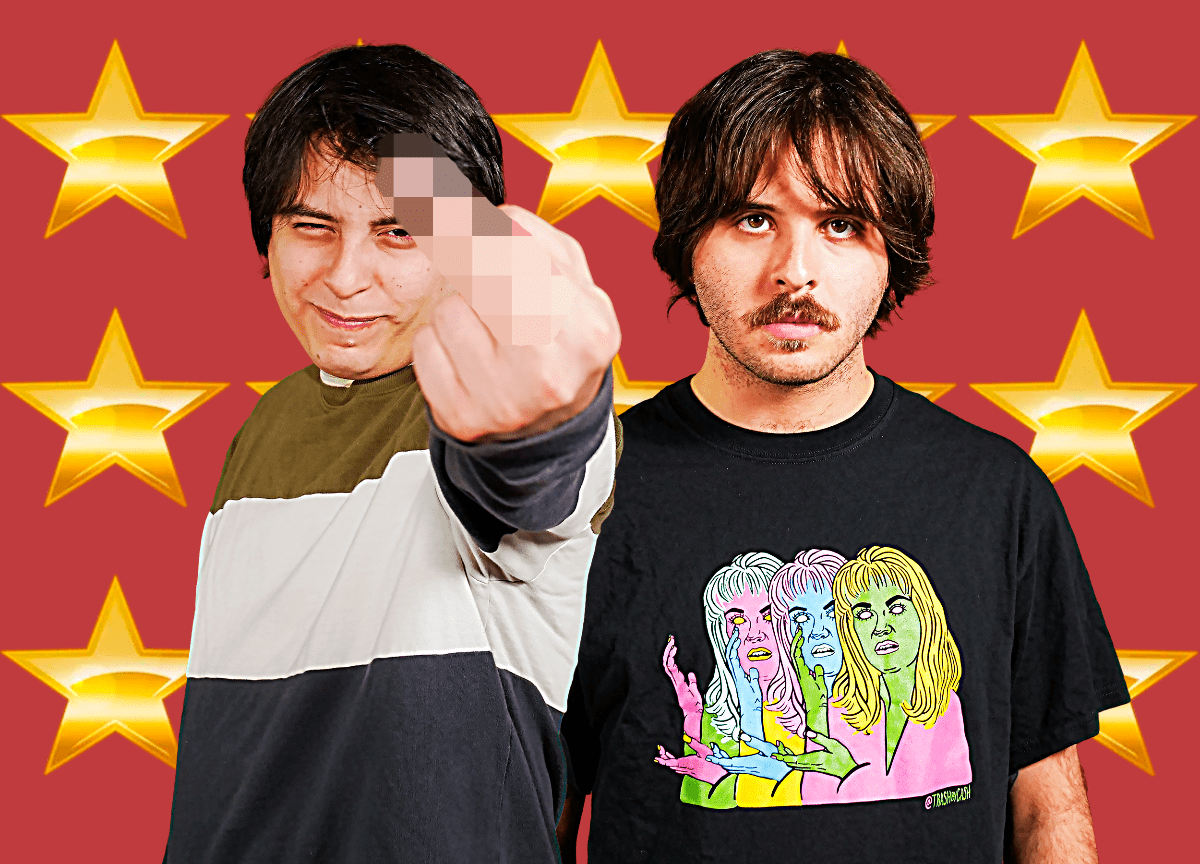
    On Saturday, September 9 Miami rock band Mold! are putting out a ten song self-titled record. Made up of guitarist Carlo Barbacci, bassist Bronto Montano , and drummer Frankie Lujan the album Mold! strives to be a rock and roll narration of the immigrant experience.  Carlo Barbacci and Bronto Montano hopped on to the Jitney to tell us a little more about the album and the record release party September 16 at Gramps.

    How did Mold! first get together as a band?

    Carlo: Mold! Started after the migration of me and Bronto in 2017. We knew each other back in Peru, hang out a little but we started making music together here. It was a little bit imminent that was gonna happen.

    How has living in Miami influenced you musically?

    Carlo: Miami’s punk scene is amazing and as soon as I went to my first show here (which was at Gramps actually) I instantly was moved by what the bands were doing and I decided that’s the music I wanted to make here.

    Bronto: Hard to describe. It does a lot.

    What inspired and influenced  your new self-titled record?

    Carlo: We wrote these songs channeling our ups and downs as immigrants in USA. We were probably mostly inspired by the sound we have as a band, we wanted to make a record that is all about our sound, and I guess that’s why the album is self titled.

    Can you walk us through the process of writing and recording the songs on Mold!?

    Carlo: The process for this particular album was first we have jam sessions, then we take what we like and we build a song structure, then we polish our parts and record them again. Once we have the demos, we rehearsed for probably six months twice a week with Frankie on drums. Then we went to Ryan Haft and we re-record everything professionally, then at another studio we recorded vocals, keys, rhythm guitars, then Ryan Mixed it and Carl Saff mastered it.

    What can we expect from your album release party at Gramps on September 16?

    Carlo: Definitely among the best local shows of the year. We will have records and T-shirts.

    Bronto: Y’all can expect a fun night with our favorite bands from Miami. We have very special guests WRONG (members of Psychic Mirrors, Torche, Capsule), Palomino Blond, Frogs Show Mercy. Music will be from 7pm to 11 on a Saturday. Tickets are only $15 but will go up to $25 on the day of. Lot of alcohol, pizza and a sweaty night.

    Got any other plans for the rest of 2023 you want to share?

    Carlo: Doing a bunch of touring, some local shows too, iii points. Also we’re very focused on the pre-production of the next album.

  • Rehab Beach

    Rehab Beach

    It was a day that bounced around the calendar. All of us had been in rehab for various amounts of time. Me, maybe two weeks. Two weeks either in the apartment, the vans they drive us around in, the recovery center itself, or a sober meeting of some kind. I saw a palm here and there. A lot of parked cars. And this was really everywhere I went. No, there was that one time we went to the movie. No, we also hit up Dave and Busters when it was closed. They closed it for us. So. Much. Fun. It was just men, addicts. Young and old, acting as if they came into an endless supply of quarters. Even still, with all those flashing lights, the rooms were dark and windowless. 

    I was scared. Not at Dave and Buster’s, but the day. The day bouncing around the calendar. It’d been so long since I really ventured out into the world. These days were marred with forces too many of us face. I preferred the safety of my bedroom… or a studio. But the day. The day now had a date. And that date was in a couple days. Saturday. See, I still remember. I remember because Saturday is when the world comes tumbling out of their vehicles, setting up their coolers and rolling out their blankets. I know I have a towel. But I don’t think I have shorts. An avalanche of anxiety comes crashing into my chest.

    I couldn’t punk out. The guys were so excited about this excursion. And I was doing all I could to fit in with people way more, let’s just say, adventurous than I am. Now look, I wanna believe that I was handed an extra pair of shorts, and that was the end of it. But I could swear I thought I’d just go in with my underwear on. I had underwear. I know this. However, the more I sit with these thoughts, I bet my friend Mike gave me a pair of his. We bonded over a particularly fancy soap I’d split with him when we got our money for groceries. It had to be Mike.

    In the van, everyone was in a great mood. We listened to a lot of hip hop and I felt so old when they’d band together and recite the lyrics with the song. I also felt kinda lucky that it’s these guys who were turning me on to a genre I left behind when a couple famous rappers got shot. We pull up beside a high grassy area. Doors thrown open. Coolers pulled out. I’d say there were about 15 guys, in various states of dress, pushing through the brush, and marking out our territory. There was our driver/counselor and one the main dudes that run the place. And me. Terrified to ask for some lotion.

    I wasn’t terrified because of anyone there, though I probably should’ve been, it’s just at that time I wanted to remain invisible at all costs. And asking meant engaging and that didn’t work for me. But I guarantee you, someone gladly gave me lotion. Someone who probably broke into someone’s house, tied up the occupants, put guns in their faces, just for some antiques and pocket change. However, under the incredible blue sky we lucked into that day, where even a felon looks like an angel in that light. And it must’ve been at the calling of someone in the water that I stop being weird hanging out alone on my towel and join everyone in the South Florida waters.

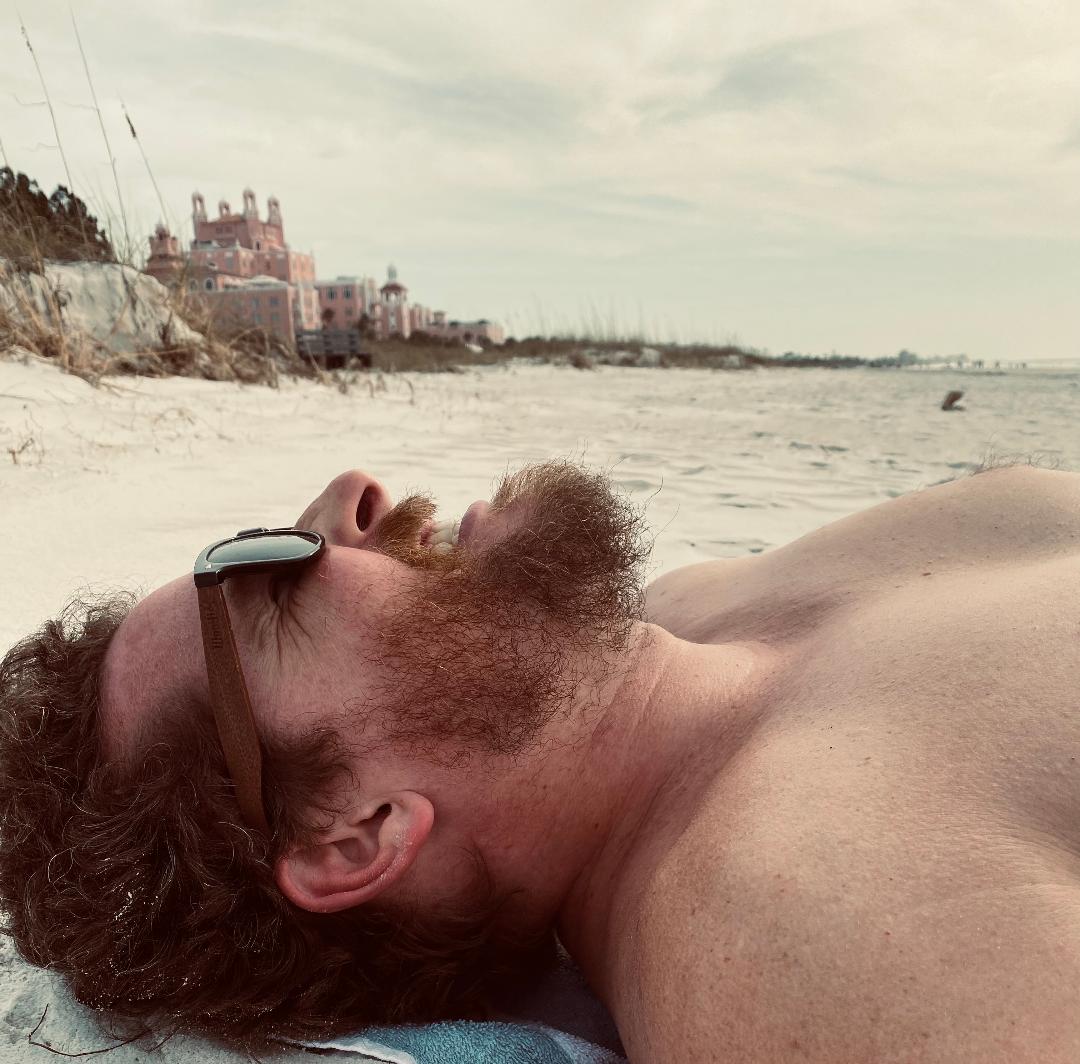
    My memory improves greatly at this juncture. At that time, hell even now, I couldn’t tell you when the last time I was at the beach was. To me, I was on a different planet. It’s so bright in my memory. It was probably smack dab in the middle of the day. That day. Feet raking across the hot said. Then they hit water. The relief. I looked around and thank God there some train wreck bodies out there. I mean I was translucent. Interview With The Vampire veins. But as the water rose higher around me, as I walked closer to the guys playing and laughing, a change was taking place. A metamorphosis. 

    Now I can project this on to these gentlemen, the changing, and speak to the idea we all were experiencing the same thing. I really want to. And I’ll tell you why. There was this moment. More than a moment. Maybe a good five minutes. The entirety of us guys were as such that you could see everybody from where you were. And at first, we all looked up at the same time. Some closed their eyes. Others had on sunglasses. While a hold out or two was watching everyone to this thing. When we all turned back our attentions to each other, the water around us was sparkling everywhere you looked. You could almost discern small sparkly auras framing the faces of these angels.

    Seconds later, the sparkle returned to the sea, the sun hid behind some clouds, and we were back to throwing around a frisbee. It wasn’t so much longer that it was time to pile into the van. There were some left over drinks and snacks so the ride back became a mobile picnic. Most of us looked a lot healthier with our sun burns. You normally wouldn’t do your naughty things out in the sun. The night had just as much to do with our thinking. Dark thinking. Thinking behind the clouds. But here were all 15 of us. Smiling, laughing. Relishing our time together. We know how easy life can slip away. But it’s a lot harder to do when you’re at the beach, in the water, surrounded by sparkles, with the best people life can cram you in a van with.

  • “A Call to the Ancestors” Tells Story of Lincoln Memorial Park

    “A Call to the Ancestors” Tells Story of Lincoln Memorial Park

    They are defiant. They are resilient. They are spirits of the disappeared and displaced, once forgotten by many in Miami, now reclaimed by ambitious events and exhibit in “A Call to the Ancestors”. It spotlights the fate of historically Black cemetery Lincoln Memorial Park. Founded nearly a century ago in Brownsville, for decades Lincoln bore scars of immense neglect. It’s now cleaned and groomed, reclaiming and honoring those spirits from its storied past.

    As Leonard Pitts, Jr. writes, Lincoln is where “lynching victims and millionaires alike” rest together in cramped company, in segregated witness to the vicious, murderous Jim Crow era. Honoring this memory matters more than ever, as we now witness calls to diminish Black history, to erase past terror and triumph.

    C. Isaiah Smalls II underscores the urgent lesson of Lincoln. He writes, “Black history—and places like Lincoln—cannot be exterminated—for they hold the key to a better future.” He calls us to act in response to these attacks on American history. Without question, they imperil our democracy.

    Looking beyond Lincoln Memorial Park, “A Call to the Ancestors”

    explores how we remember and honor our ancestors for a better future. We’re invited to share rituals shaping our past, present and future moments in Miami. These mirror Miami’s crossroads identity, perched at the edge of rising, at-risk waters. It’s where cultures spanning the Caribbean, Central and South America, Africa and other regions collide and embrace.

    This sometimes bittersweet embrace can produce welcome moments of risk-defying joy and healing for Miami’s multiple communities, suffering twin assaults on civil rights and natural resources. In these Little Haiti galleries, defiance and resilience, beauty and respect meet in art and words.

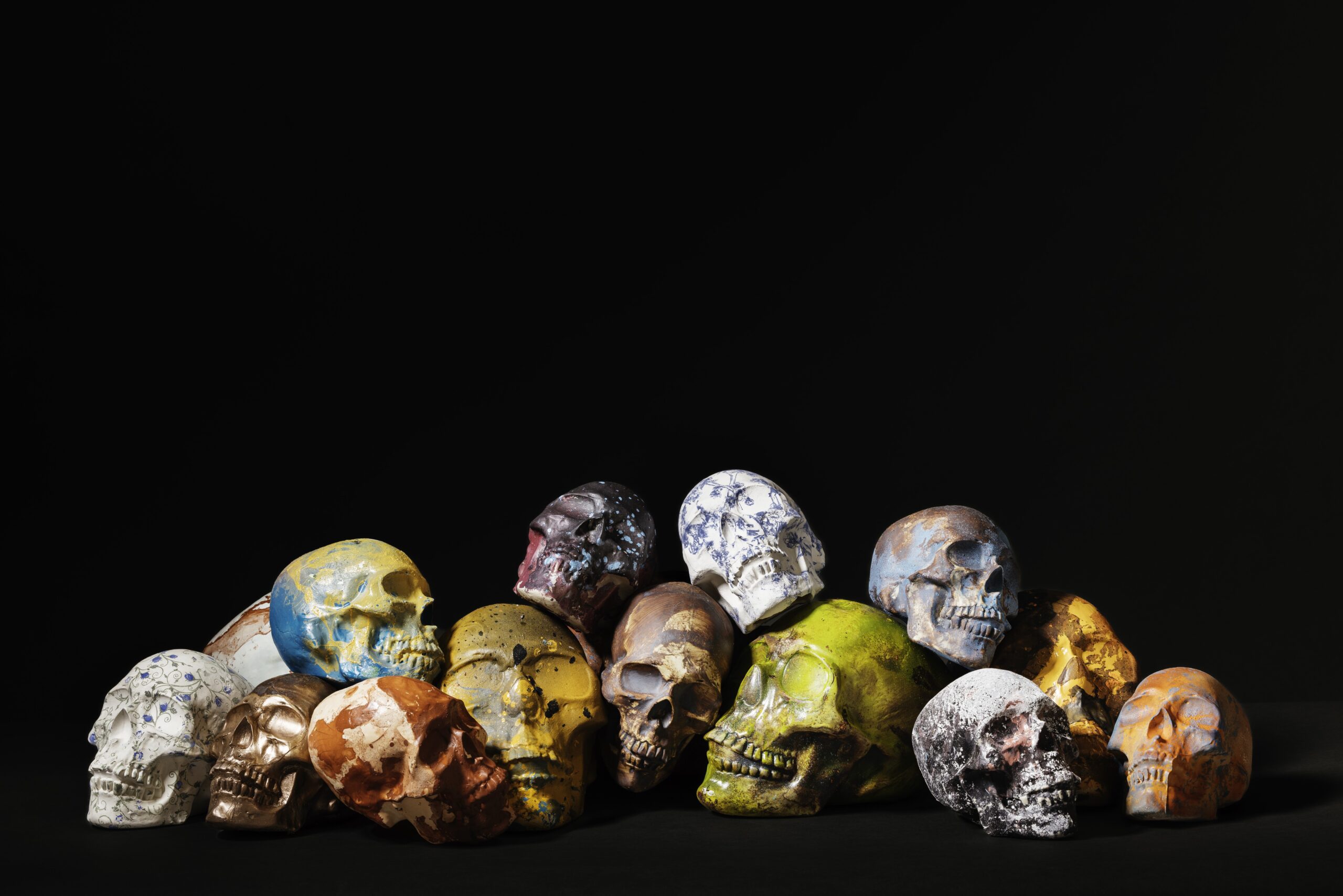
    Morel Doucet creates porcelain ceramic skulls for “Bones to Belonging: Skulls as Markers of Resilience and Identity.” He explains that the skulls are painted with patterns from various cultures including Mexican, Haitian, and Australian Aboriginal. Such skulls recall exuberantly decorated sugar skulls exchanged during Mexico’s Day of the Dead gatherings as well as European memento mori traditions. These skulls honor and celebrate those departed for the afterlife, reminding the living that earthbound life is finite.

    Sugar, and its back-breaking production by enslaved laborers on deadly lucrative Caribbean sugar plantations, commands metaphorical power in Edouard Duval-Carrié’s painting “Beast of Burden.” After surviving Middle Passage horrors, millions of enslaved Blacks died prematurely on these plantations. Silver glitter sparkles like sugar throughout this nocturnal scene, stripped of tropical colors. A naked Black man gingerly crawls forward despite certain death ahead. Behind him is a cave, reminiscent of secretive places where enslaved Blacks and Indigenous peoples gathered for rites bridging passage from their terrestrial world to places beyond. On his back is a mandala bearing a constellation of circular forms. It opens to a non-Western spiritual space transcending the cruelty of colonialism.

    Muralist Lionel Milton paints “strange fruit” dangling from branches of a broadly brushed tree, its trunk emblazoned with the face of a Black person who seems to possess a “third eye,” signifying spiritual enlightenment in Hindu and Buddhist beliefs. Here, this “third eye” may suggest that the lynching victims are rising beyond their bodily desecration on earth. Dominating the tree’s canopy are five oversize heads or masks, outlined in rapid strokes to evoke Black larger-than-life spirit guides.

    “What do we salvage from the past? Of the lives of the dead?”

    asks novelist Ana Menéndez in “Vidrio: The Face in the Glass.” What can be salvaged, she answers, is recognizing how ancestors continue to shape the present. For Ana, the face in the glass belongs to her and her late maternal grandmother Manuela, to whom she bears a near-perfect likeness. A piercing childhood memory still haunting the novelist is her grandmother’s cry of “Vidrio!” This was a worried admonition to avoid stepping on shattered, fractured glass. Manuela was born to Lebanese immigrants in Cuba in 1926 and later immigrated to the United States. She was her family’s gifted seamstress and storyteller. In conversations, she stitched together tales of daily life burnished by precisely observed details. Hampered by insular, fracturing anxieties of exile, her grandmother, Ana believes, lives a second life through her own published storytelling. Ana became the novelist her grandmother was meant to be.

    Inviting reflections on dignity restored to once severely neglected Lincoln Park Memorial Cemetery, “A Call to the Ancestors” is curated by Carl Juste, directed by Rebecca Friedman and Juste. It casts a wide net throughout diverse communities and creatives, revealing multiple ways to bid farewell and still hold close ancestors during their passage through the universe. In these galleries, sugar skulls and shattered glass, secretive caves and strange fruit are just some of the conduits for keeping ancestral connections active and alive.

    This essay was commissioned by Carl Juste and Rebecca Friedman for “A Call to the Ancestors,” on view at IPC ArtSpace and Little Haiti Cultural Complex from September 15 through November 5, 2023.

  • Patrick Anderson on Debut Novel “Riders in Disguise”

    Patrick Anderson on Debut Novel “Riders in Disguise”

    My job as a creative writing professor at Miami Dade College is to help students dissect the narratives that intrigue them by breaking down how the author constructed a given story using the major elements of fiction: plot, character, setting, point of view, and theme.

    It’s a mantra at this point, those words.

    I’ve studied and lectured about them so much they’ve seeped into the very fabric of my being. With my career aspirations as both a teacher and an author becoming intricately intertwined over the last decade and a half, my way of thinking about almost everything is framed around those elements, including the reasons why I wrote my debut novel, Riders in Disguise.

    Set in Miami in the eighties, Riders in Disguise follows four characters from different walks of life as they navigate one of the most tumultuous decades in Miami’s century-plus history. It’s easy to explain the location choice. I was born in South Miami in December 1983 and therefore lived through the era in question, albeit too young to grasp the complexities and contradictions of a city experiencing a boom like no other.

    When I think about 1980’s Miami,

    I feel like a child at his parents’ house while they’re throwing a party, forced to watch curiously from his bedroom doorway as the adults dance around the living room having the time of their lives. This curiosity stuck with me through college and found renewed fuel in 2006 when I first watched Billy Corben’s iconic documentary, Cocaine Cowboys. Admittedly, the film’s descriptions of brazen acts of violence are what initially piqued my interest in the topic. But as the lure of bloodshed faded, my fascination lingered on Miami’s symbiotic relationship with that specific decade, cementing a truth that I hadn’t really grasped before: Miami as I know it—the place where I was raised and which I love wholeheartedly—literally grew out of the eighties.

    Beyond the Miami–Vice-meets-Scarface glitz and glamour and carnage, the eighties and everything it’s known for—parties and cocaine, the crack epidemic, skyrocketing murder rates, Mariel, Liberty City riots, cultural shifts that bore a Miami hip hop scene—shaped today’s South Florida.

    During that first viewing of Cocaine Cowboys, I realized my base knowledge of Miami’s history was cursory at best. I still saw Miami just as the city I was born, nothing more.

    The desire to write something like Riders in Disguise was there,

    I just didn’t have enough details yet. I look back now and feel a bit naïve, like that child in his room again, sleeping soundly in bed while the party outside rages on and the city he looks to for comfort snorts a line off a coffee table.

    As the years passed and I read more into Miami’s dramatic history, I realized that the narrative of the story I was trying to tell had to be driven by a combination of its main characters and the momentum of the decade. Riders in Disguise is divided into three parts, each taking place on a single day in 1979, 1980, and 1981 respectively.

    Through the main characters, the reader gets a glimpse into four very different Miami communities. Tina Pacheco is a budding photo-journalist who lands a gig at the most prestigious newspaper in Miami after capturing images of the 1979 Dadeland Mall Massacre. Ralph Williams is a seasoned homicide detective and Vietnam war veteran trying to do his job amid a historic crime wave and growing corruption within his own department. Tommy Muñoz is a Pedro Pan survivor who is unwittingly (and violently) dragged into the world of drug trafficking when his wife’s uncle hires him as a driver. And then there’s Rig Lopez-Campbell, an impoverished middle-schooler growing up in Liberty City as the crack epidemic gets underway.

    Each characters’ individual tale is a branch of the larger overarching narrative in Riders in Disguise. Their trajectories throughout the novel (and the planned trilogy) aim to shed light on the multifaceted storylines Miami residents experienced throughout the eighties, with the burgeoning drug war and its long-term impact lying center stage.

    As I was plotting out the initial version of Riders in Disguise over a decade ago,

    I quickly realized that I was one of dozens upon dozens of writers choosing to tackle the subject of drugs and violence in the eighties. This lack of distinctiveness almost made me abandon the project. I actually did put my pen down for a while. I continued researching though, and happened upon a couple of different works that gave me some perspective and an angle I could claim as my own.

    One of these works was Don Winslow’s Border Trilogy (The Power of the Dog, The Cartel, and The Border). In this collection of novels, Winslow explores the War on Drug and its effects on Southern California and Mexico, combining research and masterful storytelling to great effect. As I read (and re-read) the trilogy, it occurred to me that I wanted to do what Winslow was doing, except in Miami. The scope and character choice for Riders in Disguise was also inspired by The Wire, David Simon’s five season epic that I like to consider a visual novel more than a simple TV show.

    But while these works and others like it helped me see how I could better incorporate years of research into a single narrative, it was one particular film that cemented the theme of Riders in Disguise in my mind: 2016’s Moonlight, directed by Barry Jenkins and adapted from Tarell Alvin McCraney’s unpublished semi-autobiographical play “In Moonlight Black Boys Look Blue.”

    Sitting in a theater on a random Tuesday evening (prime movie-going time, let me tell you) I found myself immersed in a narrative that seemed both familiar and foreign to me; familiar in that I grew up around these types of characters, and foreign in that I’d never seen them portrayed on the big screen in such a manner. It was the first major film production I’d ever seen where the writers and directors handled the story of a destitute kid from the ghetto with such respect and compassion for its protagonist. Walking out of the theater that evening, it hit me that Riders in Disguise was primarily the story of Rig and—through him—Miami’s black community.

    In Riders in Disguise, Rig’s perspective is the antithesis to one-sided narratives about people from his background, offering an empathetic window into the life of an individual thrust into unsavory circumstances by the harsh reality of this country’s historical legacy. Where the other three main characters’ lives and stories are inspired by everything from newspaper articles to historical documents to real life interviews with a largely white community, Rig’s story is firmly entrenched in Miami’s black history, with much of his narrative inspired by the autobiographies of Miami legends like Luther “Uncle Luke” Campbell (The Book of Luke: My Fight for Truth, Justice, and Liberty City) and Maurice “Trick Daddy” Young (Magic City: Trials of a Native Son).

    A lot of Rig’s story is also loosely based on my own personal experiences.

    Cousins who served jail time for drug possession only for those same drugs to now be legal where they live. Myself and friends and acquaintances perpetually harassed by law enforcement throughout the years for seemingly no other reason than our being young and black. Though my parents live in a middle-class part of the city, going to public school in Miami makes nearly all of us “hood-adjacent.” As a result, I grew up with many people suffering through the same challenging circumstances as Rig experiences in Riders in Disguise, circumstances frequently exacerbated by the absurdity of outdated drug laws that have unjustly destroyed families, neighborhoods, and entire communities.

    Riders in Disguise is really a story for and about them.

    Each semester I end my creative writing classes with a discussion of revision tactics, looking at how they put together the first drafts of their stories, the commentary they received during workshop, and how they can use that commentary to improve their story for final draft submission. In constructing the many (many) drafts of Riders in Disguise over the years, the narrative remained foggy for a while. At first I thought this murkiness was a result of me trying to do too much, telling too epic of a story to handle on my own.

    Then it occurred to me that I just hadn’t had the right experiences yet to visualize the point I was trying to make. The type of experiences that could give me the perspective I needed to know how to arrange the elements of fiction around that point. I’m thankful now that it’s all come together, and I look forward to hearing Miami’s thoughts on the result.

    You can buy Riders in Disguise online here.  Come  out to hear Patrick Anderson speak at Books & Books Friday, September 15 at 7 p.m.