Category: News

  • Mary May I – Is it Possible to Have a Relationship with a Narcissist?

    Mary May I – Is it Possible to Have a Relationship with a Narcissist?

    Welcome to Mary May I, the Jitney’s newest column where Mary C. Smith dispenses all types of wisdom. If you have a question for Mary that needs answering you can ask her  at  OMGhelpisHere@gmail.com.

    Is it possible to have a relationship with a narcissist? – Being Tried in Tamarac

    Short answer, yes. But you can have relationships with all kinds of douchey people. I see people trying to pick the least douchiest. 

    No, it doesn’t work like that. No baby, you need to vibe higher. 

    I don’t entertain that fuckery for long.  Sometimes it takes a minute for them to show it and for you to see it. But when it’s out, it’s out and you can’t stuff it back in them. I would rather be alone. When you are with a narcissist ya kinda feel alone a lot of the time anyway. 

    So why deal with their dishes and laundry AND INSANITY? Bye now. 

    How the hell can you live and enjoy every inch of your life (which you should be) snap snap when you have that rain cloud all up in your biz?

    If it walks like a narc and talks like a narc, have that narc take you to dinner and gently guide them from your life. 

    This also takes skill, it’s tricky because they are really good at reeling you back in. I can teach you my ways.  I make them feel like breaking away was their idea. 

    Stop letting your brain think, and your heart sink and feeling like you don’t exist. Recognize and acknowledge that grody vibe you get. You know the one I’m talking about, I know that you feel it. 

    If you stay, don’t complain. You can’t be mad at a dog for doing dog things. Now that you know you can’t blame them for being themselves, ya dig? Stop gaslighting yourself. Be strong. 

    Make sure you look just as good leaving as you did when you were coming. Love yourself enough to be a confident partner.

  • Juan Carlos Badia Cabero Makes Art to Match His Mood

    Juan Carlos Badia Cabero Makes Art to Match His Mood

    This article originally appeared in PureHoney Magazine. Check them out here.

    In times of turmoil, art is a powerful tool. Be it as a coping mechanism or as an agent for change, the arts provide a therapeutic release for both practitioner and beholder. For Palm Beach County artist Juan Carlos Badia Cabero, his portraiture practice would take a turn into therapy after the social unrest events of 2020 and a fortunate scroll through his Instagram feed.

    Born in Honduras to Spanish parents, he’s been an artist since he was 20 years old. Beginning as a muralist and faux finisher, he’s worked with glass, wearable portrait miniatures and beading. Throughout his practice, he has gravitated towards natural and feminine motifs as a way to express his emotions.

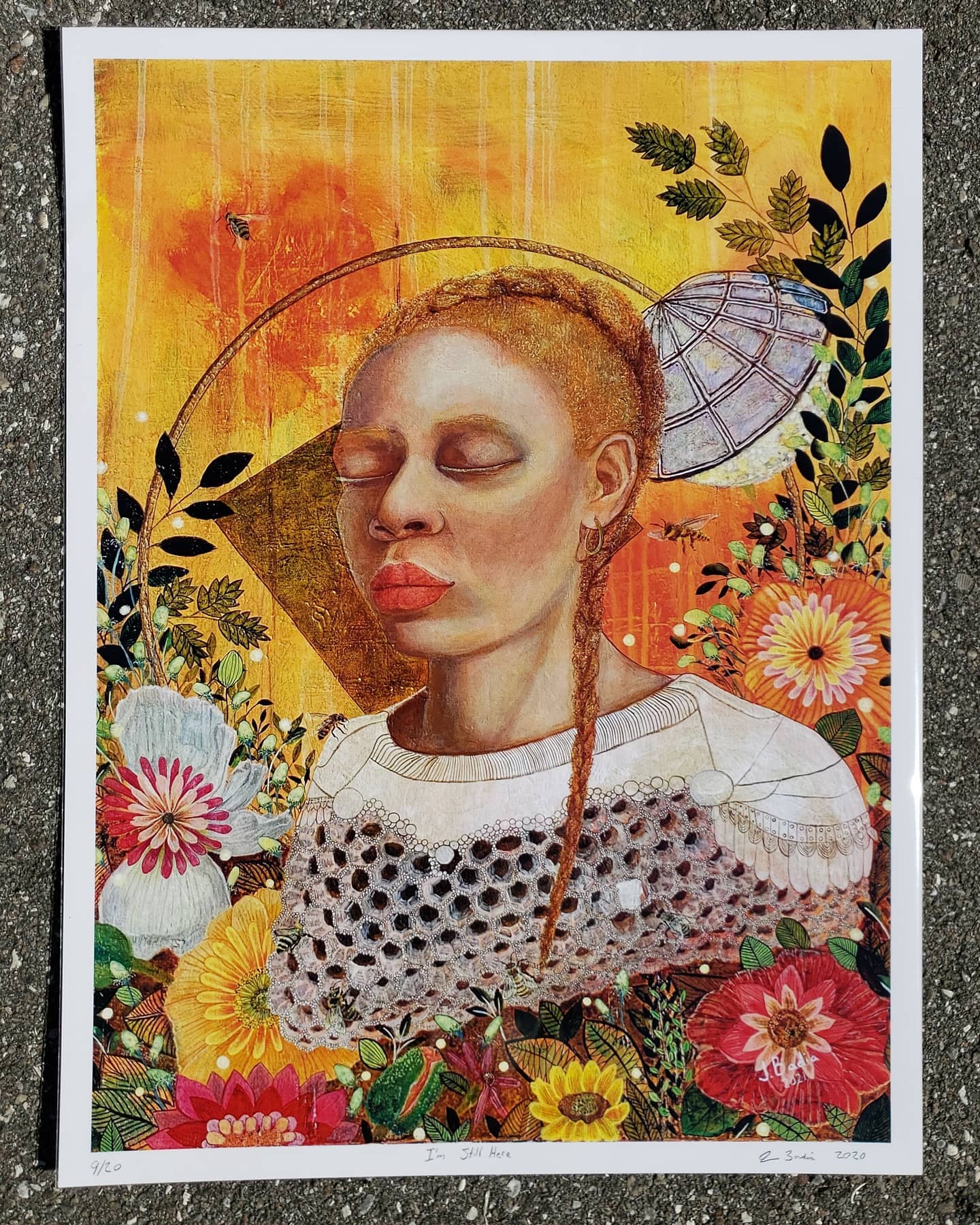
    “I started working on this painting from a frustrated mood,” he says about “I’m Still Here,” one of his most recent portraits. “I was outraged over the discrimination that was going on, not just here in the U.S., but all over the world.”

    After exercising through a palette of pigments to match his mood, Badia Cabero came across a photo of Oxana, an albino model from Milan, Italy. Fascinated by her story – dealing with the cruelty of internet trolls and the like – and her awareness activism for albinos, he felt a connection to his frustrations. “I couldn’t help but paint her, I immediately felt her frustration with the human condition,” he said.

    In “I’m Still Here,” Juan Carlos Badia Cabero populates the tableau

    with his familiar themes as inspired by the strong resolve of his subject. Numerous flowers and plants surround her as a stylized, almost art deco lamp hangs behind her above an ominous square shape. Her blouse devolves from neo-epaulettes into an M.C. Escher-like active beehive – far from unsettling surrealism, she refocuses the painting beyond the sum of its parts.

    “Her quiet energy is like a self-meditation energy and her beauty is unique,” he says. “I’ve used symbols in the painting that reinforce that and help tell her story.” The square represents the discrimination of “square-minded individuals” present in today’s society, the lamp’s cover prevents the light to shine on her but she’s still radiant and the beehive is a shield protecting her from society.

    Creating the painting helped him navigate a tumultuous year, equipping him to face a world struggling to be better. Whatever tomorrow brings does not matter to him, he’s ready to take it one day at a time. “My obligation as an artist is to respond and interpret the world around me,” he said. “It’s our job – my job – as a creative individual.”

  • 2021 Miami Jewish Film Festival Preview

    2021 Miami Jewish Film Festival Preview

    With movie theaters still among the least desirable places to go, the 2021 Miami Jewish Film Festival is doing something cool for this year’s program. From April 15-29, the festival will make over a hundred movies available to stream for free to anyone around the world. As a member of the critic’s jury and as a moderator on a couple of their virtual panels, I had an advance look at much of the selection of the 2021 Miami Jewish Film Festival. Here are my unsolicited thoughts on some of those movies.

    Different Johns

    I’d never heard of John Cohen before watching this 90 minute documentary, but man, did he live a fascinating life. Not only was he a musician who palled around with Bob Dylan, not only did he take famous photographs of all the famous beat poets and New York folkies, but he also was a bit of an adventurer, travelling through the Appalachian Mountains and Peru to document forgotten cultures.  Different Johns is a bit dry at times, if you can’t get through a typical PBS documentary without reaching for your tablet you probably won’t have the attention span for this, but for patient viewers this movie shines a light on a life well lived.

    Tomorrow’s Gone

    This Hebrew language documentary also features a musician you’ve never heard of. This time it’s Charlie Megira, the man who wanted to be the Israeli Elvis. He never found that level of adulation, but over the decades he collected a cult following for his rock and roll. If like me you enjoy documentaries about outsider musicians like The Devil and Daniel Johnston and for Rodriguez in Searching for Sugar Man, this is the movie for you.

    Josep

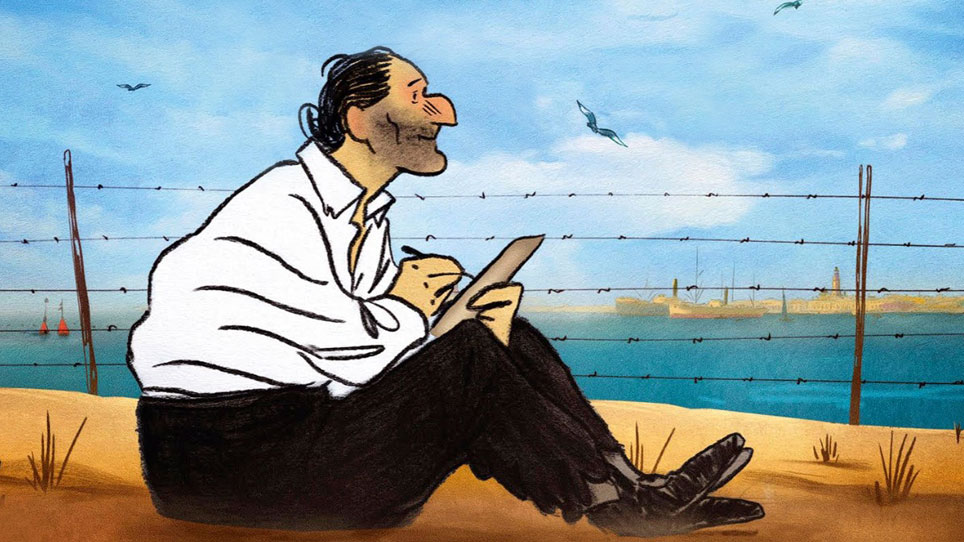
    You’ve probably never heard of Josep Bartoli either. The artist was imprisoned in a French concentration camp after fighting on the losing side of the Spanish Civil War. If you think once you’ve seen one concentration camp movie, you’ve seen them all, Josep serves as a breath of enlightening air. It’s a cartoon and in the tradition of the great comic book Maus, Josep shows unlikely artforms can make the horrors of war appear even more vivid. It’s a beautiful and powerful movie for those who don’t mind watching their cartoons with subtitles.

    Tomorrow, When the Apricots Bloom

    Who knew there were so many obscure subjects worthy of documentaries? This distinctly titled movie introduces us to the Frenkel Brothers, three guys who pioneered animation in Egypt in the 1930’s.  Their most famous creation, Mish-Mish Effendi, is described as the Egyptian Mickey Mouse, but their cartoons are much more reminiscent of The Fleischer Brother’s Popeye and Betty Boop cartoons.  When the documentary focuses on the animation and the lives of the long since departed brothers the movie shines.  As a pop culture junkie I couldn’t get enough of the footage of their cartoons. But unfortunately much of the film’s running time is spent talking with the Frenkel Brothers’ much less interesting surviving descendants rather than discussing their art.


  • Who Needs a Realtor?

    Who Needs a Realtor?

    Do you really need a realtor to sell your house? Most would say, “Of course you do!” Last week, I sold my house of 22 years without hiring a realtor. I saved a bundle ($20,000) by doing so. Heck, the house sold for $60,000 more than it was appraised for as recently as July. In my opinion, it helped I didn’t have a realtor yapping in my ear, “Lower the price!” Be forewarned, if your goal is to get top dollar for your house, you have to learn how to do a realtor’s job, and learn to do it well. And that isn’t easy. Here’s how I did it.

    Before putting the house for sale, I repaired even the most minor of flaws. I pressure cleaned the driveway, the patio and the roof, and professionally polished the floors. Even in my dingy garage, I installed fancy Decora switches and slapped on a fresh coat of paint. I then worked to get the outside of the house to look as manicured as a Four Seasons. I saved a fortune on landscaping, which is mostly labor costs, by doing the work myself. Only then was I ready to list it.

    Everyone knows about seller websites like Realtor and Zillow. Realtors will see your listing there, but they may not show it to their clients. Why? Because they know they’re only going to make 3%, not their usual 6%. I didn’t get much action on my house until I listed it on FSBO (For Sale By Owner) and paid for an MLS listing. I also upgraded my cheesy, store-bought sign to a professionally made For Sale sign and hired a professional real estate photographer to take stunning pictures of my home. Before long, I had a steady flow of potential buyers.

    The only issue that remained was what price to accept. Unless you live under a rock, you are already aware the real estate market is hysterically hot right now. I knew it was just a matter of  time my house would sell, and so I remained patient and stuck to my price. Sure enough, two weeks into January, I was offered $15,000 less than the list price, which was a solid offer. The only stipulation I added was the house be sold as-is without any further price concessions. The buyer agreed, so a deal was struck!

    For closing, I hired an attorney that I trusted. Prices vary from $500 to $3,500, so choose carefully. 60 days after signing a contract, the sale closed. The only scary issue I experienced afterwards was that my mortgage balance had not yet been paid-off four days after closing. My lawyer, Jay E. Auerbach, did his best to reassure me. “It is very, very rare that an escrow agent runs off with money they are holding,” he told me. Nevertheless, I didn’t breathe a sigh of relief until the money was deposited into my account.

    Would I use a real estate agent the next time? I couldn’t use an agent this time because it wasn’t economically feasible. But an outstanding real estate agent is well worth the fees they earn. So yes, I plan to use a real estate agent when the need arises again.

    Is it possible to sell a house for top dollar without an agent? The answer is yes. Heck yes!

    Now you know how. http://mirziamov.ru

  • Miami Musicians Pay Tribute to ‘Lost’ Liverpool Genius Jimmy Campbell

    Miami Musicians Pay Tribute to ‘Lost’ Liverpool Genius Jimmy Campbell

    There was no plan to make a whole album of Jimmy Campbell songs – but it happened!

    The name Jimmy Campbell may not be on the radar to even the most enlightened 60’s & 70’s music aficionados. It’s the unfortunate legacy of the Liverpool singer-songwriter who had plenty of opportunity but little luck. His music remains something of an obscure treasure, that when discovered, opens up a world of emotional, heartfelt, honest songwriting. I was an instant fan once obtaining copies of his solo records. A feat which until their re-release in 2009 was a difficult task. He only made three, between 1969-1972, and they were all flops. The music recorded with his bands prior (The Kirkbys, The 23rd Turnoff) were also criminally unsuccessful affairs.

    There was a period of time in my life where I could relate a little too much to his songs. The loneliness and despair being all too familiar. I was so fond of the songs I covered quite a few with my band Ex Norwegian over the years. However, the idea to do a full album of his songs never occurred to me. Back in the early days of Ex Norwegian, I got in touch with Mark Johnston who was putting together a tribute album (and, incidentally, ended up on this new album). I duly submitted a version of Campbell’s “Darling Sweetheart” recorded with the band but ultimately, that project never got off the ground. However, the idea must have stayed with me.

    With some new studio gear to test out last Summer, I put down a few songs…all of which were Jimmy Campbell tunes. Next thing you know I have almost a dozen. I enlisted my longtime friend, and unofficial Ex Norwegian member Fernando Perdomo to play drums. We’ve been friends since high school, technically meeting even before that, at an elementary school gig. Yeah, we’ve been gigging since then!

    Anyway, instead of finishing the recordings myself, which would require me to sing many songs out of my range and/or style, I asked around for help. The results manifested in the form of an album: Ex Norwegian And Friends Sing Jimmy Campbell. An overdue tribute to the great, genius songwriter.

    I managed to get fellow Miami-an and songwriting champion Jim Camacho involved with the project via the song “Don’t You Ever Think I Cry” – a track which originally appeared on an album by Campbell’s band Rockin’ Horse in 1971; it’s a record that is essentially proto-powerpop. It’s what the Beatles may have sounded like if they kept to their early Mersey sound all those years.

    Camacho lends his amazing vocal talent to this song that’s best described by Aquarium Drunkard as “confessional, observational, [and] dramatic.” The arrangement, however, goes into more of a Big Star direction, with some lap steel guitar, jangly 12-string acoustics and a touch of electric piano ala Billy Preston making it a quite powerful rendition.

    The rest of the album features artists from all around the world. Some artists I knew, some I didn’t and even some legends from my record collection. While coordinating it all was a bit of a nightmare, I’m very pleased with the results and I hope the goal to simply turn more people on to Jimmy Campbell’s talent is reached. And perhaps a parallel musical connection between the two port cities of Miami and Liverpool has been made too.

  • Fangfest – A Pandemic Conscious Gathering

    Fangfest – A Pandemic Conscious Gathering

    Too many of my musician friends haven’t played live now in over a year. Many of them don’t intend to play soon. The devastation experienced by musicians due to the pandemic has been nothing short of jarring. Tours cancelled, plans dismantled.

    Though we can’t quite say we are safe as of yet, live events seem to be trickling back into our lives. One such event, FANGFEST, is planned for the coming days.

    That said, event planners have kept the pandemic at the forefront of their minds. As such, the fest will be held outside, in a parking lot, at the corner of 55th St. and NE 2nd Ave. in Miami’s Little Haiti neighborhood.

    Providing the stage is Ray, known by some as Fulltime Mötherfucker, who rolls in with his converted camper. This camper, from which a stage protrudes, has allowed for shows to go on outdoors with ample space for distancing.

    This event, previously billed as the Drop Out of Life Fest by madman and curator Gucci Handelsman is intended to be “the feast of the celebration of the writing of the book of law“ according to Gucci himself.

    To the layman, this translates into a three-day fest with the acts including Human Fluid Rot (Pompano Beach), Black Mayonnaise (Ohio), HeadFoam (Miami), and many more.

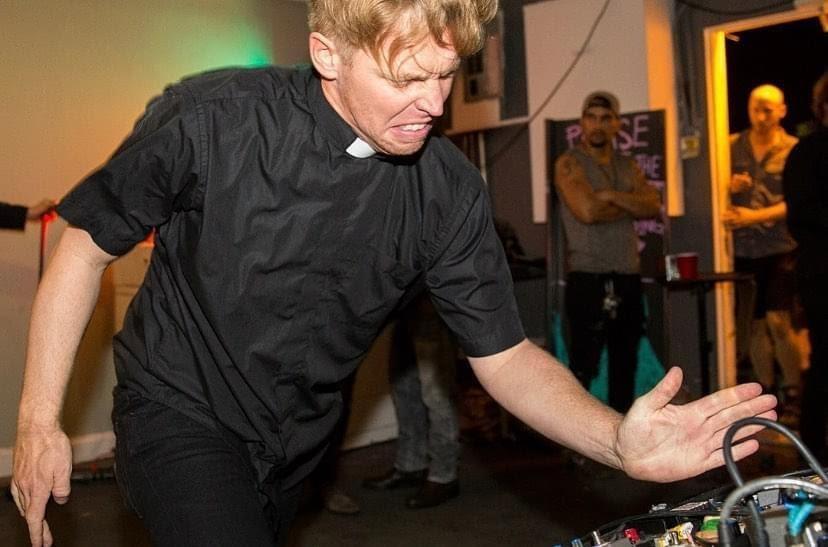
    In addition to musical acts there will also be a live fetish performance on Saturday night by yours truly, performing as Bateman In Bondage, which is a part of BDSM.

    The three-night affair starts on Thursday, April 8 at noon “Miami time“ and closes out in the wee hours of Sunday morning. There are talks of pizza. Mask up & BYOB.

  • South Florida Poets in Their Own Words

    South Florida Poets in Their Own Words

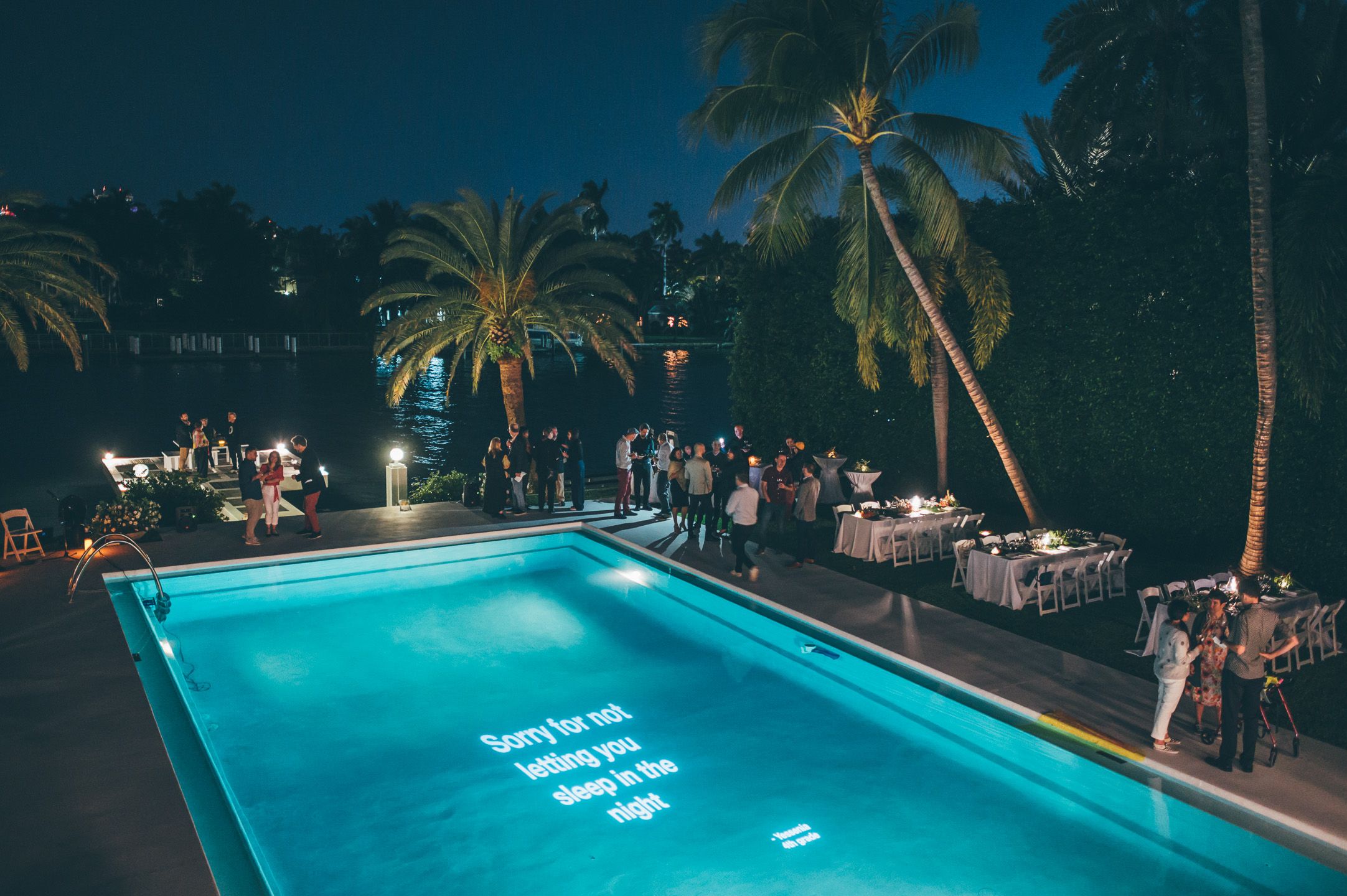
    On April 7 at 8 pm a quintet of South Florida poets will virtually recite their poems as part of O, Miami Poetry Festival. The Zoom reading will be followed by a live Q&A that you can register for here. To get you excited we’re presenting  you works from some of the participating poets.

    an argument for the existence of a higher power by Brendan Walsh

    evidence:
    the gumbo limbo tree’s bark resembles the roasted flesh of tourists
    the alligator’s patchwork pitch hide
    the snapping turtle swims like a feather on the surface of a pond
    the ibis’ cumulus wings inflate like plastic bags
    the flesh of tourists is roasted like a gumbo limbo tree

    analysis
    but it could have been a cold rock hurtling through the sky.
    a faint white light, barely visible. a lifeless spot in a constellation.
    instead, each thing begins to resemble another.
    a pillar of sundust, a dirt-dry tortoise, a pile of palm hulls,
    is so terribly close to a thing we love

    conclusion
    there’s a highway straight through the Everglades;
    flatswamp, an asphalt scalpel where roadkill raccoons
    bloom pink, the flies like watermelon seeds

    Snapper Creek Sonnet by Maureen Seaton

    Now I’m almost killed (again) on the Snapper
    Creek Expressway, my shadow left behind on
    blacktop like a map of this precarious sinking
    city. So I invent an odd task for myself—
    ephemera, I decide, harmless but illegal, that
    tissue in felon wind, a blip beneath radar—
    and I enjamb the law in small ways, felonious
    poems sailing from the sealed lips of mermaid
    sculptures, the tentacles of banyans, stuffed
    into bottles I toss into Snapper Creek (the
    creek, not the suicidal highway), begging fish,
    fowl, and humankind: O, Miami, save us.
    WHAT THE WHITE GIRL ASKED AT OUR 20TH HIGH SCHOOL REUNION by Caridad Moro-Gronlier

    Why weren’t we friends in school?

    We weren’t friends because I knew
    you hung out in the American parking lot
    unlike my boyfriend who parked his Stingray
    in the Cuban one on the other side of school. Of course
    I hung out there. Not that you would understand
    why being his girl meant I could not
    sit in your car at lunch and listen 70
    your Def Leppard, your Motley Crue,
    leave him to fend for himself.

    We weren’t friends because he courted me
    old school, couched beside my father
    every Sunday while I served apprentice
    to my mother, her eyes onion stung,
    arms spattered with marrow and lard,
    who played at loving her place at the stove.
    Rules I had not learned how to break, yet.

    We weren’t friends because I envied
    the way you weren’t allowed to settle,
    how you were allowed to date
    assorted breeds of boys who strutted
    across the lawn to ring your bell. Your dad
    waved his blessing out the door and didn’t worry
    because he taught you to discern, to choose
    among them, taught you to drive
    yourself, headlights set on more
    than the slam of the same car door,
    even if it was a Corvette.

    How to Not Forget by Gregg Shapiro

    Roll up the grey rugs with the black rubber backing
    put down on the slick bamboo floors in the main
    bedroom and office to prevent her from sliding

    as her back legs began to fail. Return the six unopened
    cans of prescription food to the pet store, not bothering
    to stop crying as you hand the clerk the receipt and she

    processes your credit card refund as she repeats, “I’m
    sorry, I’m so sorry”. Gather the orange, blue and white
    plastic bottles of pills from the vet, the pharmacy

    at Publix, over-the-counter at Walgreens, rattling
    the contents like giant sand grains in clogged hourglasses.
    Do not flush them down the toilet or toss them

    in the trash. Put them in a drawer until you are able
    to go online and research proper methods of disposal.
    Wash and dry her white ceramic water bowl and silver

    metal slow-feed bowl. Put them in a cabinet, on a shelf
    where you will see them only if you know enough
    to look at where they are. Collect the grooming tools;

    the Furminator, the flea comb, shampoo, toothbrush
    and liver-flavored toothpaste. Store them in a giftbox
    on the closet floor, under the sweaters you never wear

    in Fort Lauderdale. Take her long black nylon leash
    from the hook by the door to the backyard, clicking
    the clasp to the rhythm of your sighs. The leash you will

    donate to the local animal shelter, careful not to look in
    the cages where homeless dogs, waiting to be adopted
    by loving humans will surely spot the vulnerability

    in your eyes. You’re not sure why, but you take her toys –
    the bright green tennis ball, the Hurl-a-Squirrel, the red
    rubber Kong frisbee, the chew toy made from black and

    red firehose material and the green mallard that squeaks
    when you squeeze it, directly to the garbage. Maybe you don’t
    think there is another dog in the world who could possibly

    enjoy them as much as she did. This is what you keep:
    the hundreds of photos taken over the course of almost
    14 years, stored on flash drives, CDs and your computer.

    The martingale collar with the yin and yang pattern and
    the bone-shaped dog tag with your name and home address
    engraved on one side and “Hi, My Name is k.d.” on the other.

    FROM HERE TO ETERNITY by Denise Duhamel

    I crossed the wooden steps to the hot sand and ran
    into the rip current, each toss and tumble, the opposite
    of the massages you used to give. The fish and rocks, the sudden cold spots,
    the seaweed slaps, a mouthful of salt. I flung myself
    into the plunging breakers, their fierceness and froth, the terrible
    twinkle of sun. Batter my heart, backwash and trough. Fling me to the ocean floor.
    The surfers were out for kicks. The lifeguard blew a whistle—
    shark alert. I fought the plunges and swells, kicking you again
    though you had left me for good. I stewed, angry in this angry womb.
    A board flew over my head. All went black,
    and then I was reborn, Deborah Kerr ashore without her Burt Lancaster.
    Embarrassment. Melodrama. Mouth-to-mouth with a stranger.
    I crossed the hot sand and the wooden steps and wrapped
    myself in a towel, having taken the beating, having sought it. Thank you, sea,
    for spitting me back, delivering me.

  • Zoo Miami Update – Their Tiger Is Still Sleeping

    Zoo Miami Update – Their Tiger Is Still Sleeping

    I went to Zoo Miami while fasting during one of the hottest days of the year. It’s one of the only outdoor excursions in Miami where clear skies won’t work in your favor. To make matters worse, it was my “sober week”, which meant I was excluded from partaking in the one activity that could have made this obligatory trip bearable.

    The walk from my parking space to the entrance took longer than my visit. It’s been over 20 years since I last went to the zoo and aside from being able to use the barcode on my iPhone to scan my ticket, not much has changed. The illusive Sumatran tiger still hasn’t woken up from his nap, the Galapagos Tortoise is right where I left him, and the Western lowland gorilla continues not to give a shit about your monkey noises.

    I found the whole experience quite depressing.

    There’s no way these animals are having a better time in Zoo Miami than they would otherwise be having with their buddies in the wild. Take the hippos for example. These are social beasts who are used to hanging out in groups of up to 10 to 30 at a time. They live for two things: Filling their bellies with grass and floating in the water. It seems like a fairly easy environment to recreate if you were trying to makeup for the kidnapping. Instead what I found were a pair of homeless hippos munching on sun-scorched grass in a backyard that couldn’t have been much larger than my grandmother’s in Kendall. The only amenities offered were a PVC pipe pumping water into a kiddie pool, a tiki hut for one, and an offensive blue inflatable ball reminiscent of the ones they used to play with in Africa. My only hope is that these two are madly in love and that their passion for one another transcends their suffering. I wish there was more I could do.

    I wasn’t surprised to find the elephants in a similar situation with the same lost look on their face that all of the animals seemed to be wearing. “How did we get here?” The world’s largest land animal confined to a few acres of real estate stuffing hay in its mouth while the woman next to me struggles to zoom in with her bedazzled acrylics.

    We made our way towards the giraffes who spend most of their lives standing up but not for what they believe in because they were no better off than the other prisoners. That’s a lie, they are the only animals in the park that you’re allowed to feed by hand. 50 people waiting in line six feet apart is a great way to keep me moving.

    The Warthogs and Red River Hogs were lying down in resignation. I needed air conditioning.

    I must have tapped into the collective consciousness or half the park had come for the indoor insect exhibit. I found it ironic that the smallest residents had the largest living areas relative to their size. I’m pretty sure the lined tree snail is in heaven. We were an hour in and I was done.

    We went back outdoors and I checked out after the North American Raccoon. I stood next to the splash pad in a delirious state of exhaustion trying to figure out how to cool myself off without sending parents into a panic. I resigned to a heat stroke. Luckily, my better half was in need of sustenance and was ready to leave Zoo Miami.

    Trying to find the exit was harder than trying to get the lowland gorilla’s attention. After multiple failed attempts at retracing our steps, we found the way out. It’s incredible how much energy awaits you at the end of an unpleasant experience. I skipped towards the gift shop and took one last look at the Indonesian temple. The Sumatran tiger is still napping.

  • P. Scott Cunningham Talks the Return of O, Miami Poetry Festival

    P. Scott Cunningham Talks the Return of O, Miami Poetry Festival

    Throughout April you might notice Miami seeming a tad more poetic. That is because on the fourth month of the calendar the Magic City gets taken over by O, Miami Poetry Festival. Starting on the first of April  O, Miami Poetry Festival will bring rhythm and verse to our city  with all kinds of activities and events. O, Miami  founder P. Scott Cunningham hopped on to The Jitney to give us a feel for what we can expect from this year’s festival.

    What originally inspired you to start O, Miami Poetry Festival?

    P. Scott Cunningham: I went to grad school at FIU for fiction, but fell in love with poetry while studying with Denise Duhamel and Campbell McGrath. At the same time, I was also falling in love with Miami, which was still new to me, even though I grew up 45 minutes away in Boca. I started doing some grassroots organizing, and that led me to proposing the idea of a festival that celebrated Miami through the lens of poetry to the Knight Foundation. They said yes, and that started the journey.

    What are some of the highlights you’re most excited about for this year’s festival?

    This is a tough question because honestly, I discover the festival in the same way the audience does. Because our model is so heavily based in collaboration, I often don’t know the full extent of the programming until it’s happening. That may sound like a dereliction of duty, but it’s the only way to make a festival that feels larger than the sum of its parts. The most fun of the festival for me is working with other people and handing over creative control. That said, I’m very excited about the Opa-locka Light District. It’s a project we won a Public Space Challenge grant from Miami Foundation to do, and basically, it involves projecting the poems of Opa-locka residents onto sidewalks, buildings, and streets. I’m also excited about “Poetry in Bloom,” which will put poems, curated by SWWIM (Supporting Women Writers in Miami) inside floral arrangements.

    Because of the pandemic and social distancing what changes did you have to make with this year’s edition?

    Because the pandemic is still happening, we’ve largely cut in-person events out of the schedule, which is sad, because we love experiencing poetry in unlikely places around Miami. That kind of site-specificity is usually at the heart of what we do. To counter that, we’ve invested heavily in poetry-in-public-places. There will be a ton of places and times where you can interact with poems inside of the infrastructure of daily life in Miami. We also put an emphasis on online gatherings: ways we can create creative intimacy across the barriers of distance.


    What about Miami makes it a positive (or negative) spot for poetry?

    I believe Miami is the most poetic city in the United States. I believe that (1) because organizers in other cities always tell me they marvel at what happens here and (2) because we’ve been going around Miami for over a decade now attempting to bring poetry to Miamians and finding out, over and over, that they already have it. Miamians are naturally poetic. They have deep, personal connections to the art form. They are comfortable with absurdity. They’re expressive, compassionate, and imaginative. We’ve been asked on multiple occasions to bring O, Miami to other cities, and I’ve said no because I don’t know if other cities could pull off what Miamians do.


    Who are some local poets that people should be reading and listening to?

    There are so, so many, and I’ll name a few, but let me first point out that at the heart of the festival is the belief that poetry is a function of communities, not individuals. The words come through individuals but the poetry itself flows out of the community. Poets are like fruit. Their work dies if the vine it’s not connected to the tree, to the soil, to the water, and to the sun. We should never make the mistake of believing that the fruit appears whole cloth from thin air. That said, I love Legna Rodríguez Iglesias, and I think she’s one of the most dynamic young poets in the whole country. Arsimmer McCoy is writing my favorite poems about Miami places. Caridad Moro-Gronlier just came out with a new book, Tortillera, I’m very excited about. And then there are also “Miami” poets who aren’t living here right now, like Gabriel Ojeda-Ságue, Leslie Sainz, Connie Mae Oliver, and Stefanie Fernández. I’d also recommend a Miami novel that reads like poetry, Fiebre Tropical by Juli Delgado Lopera.


    What is your advice to aspiring poets?

    I apologize if this is too specific. First, don’t worry about writing poems. Instead, organize your reading life. First create a folder on your computer for other poets. Mine is called, “OPP” for “Other People’s Poetry.” Create a file for each poet and type out the poems you put in there, don’t just copy and paste. Yes, this takes longer, but if you’re not taking your time with this, do you really care about it? Then, once you’ve got a bunch of poet folders, create a “book” of poems you love by other poets in one document. Make a title, a table of contents, everything you’d do for your own manuscript, but it’s completely composed of other people’s poems. Try to make it the length of a real collection and don’t be afraid to revise it or re-do it. If you’re tending to this “garden” on a regular basis, you’ll end up writing plenty of poems. However, in the event that you still feel like you’re not writing enough, just pick a poem out of your OPP book and write an imitation of it.

  • The Red Window Release Debut Gothic Album Afterlife

    The Red Window Release Debut Gothic Album Afterlife

    This article originally appeared in PureHoney Magazine. Check them out here.

    There’s something menacing buried in the opening synthesizers, drums and vocal taunts of “Afterlife,” the title track for the Red Window’s debut album. It’s that sense of foreboding that creeps over characters in a horror movie who know their end is near. And then the saxophone kicks in.

    The Red Window is a renewed musical collaboration by Joshua Strawn, a writer, producer, and multi-instrumentalist known for his work with experimental metal outfit Vaura and electronic project Azar Swan, and South Florida synthpunk pioneer Jeremy Kolosine of Futurisk and Receptors fame.

    The pair date their friendship and collaborative energy to the turn of the century when Kolosine, then residing in Roanoke, invited Strawn to join his dream pop/shoegaze band Shakespace. After the band disbanded, Strawn relocated to NYC in 2004, forming the gothic rock, post-punk outfit Blacklist and getting involved with a few other musical projects.

    On reuniting for this project, Strawn likens the compositions to Leonard Cohen songs that “sound like contemplating the abyss while staring at a ceiling fan at 4 a.m. in a dark, sweltering New Orleans apartment” – which is where he currently resides. Kolosine, on his end, has returned to South Florida. “Funny enough, the same house Futurisk began in ‘79,” he said. “My old bedroom is my studio now.”

    In Afterlife, Strawn’s vocals, synths and saxophone parlay Kolosine’s guitars and keys. The result conveys the splendor of cinema and environment. Danceable, sure, but also for reflective relaxation, indicative of the musical cleanse Kolosine underwent. “I purged my personal angels and demons,” Kolosine said. “Inspirationally, of course the usual and obvious Bowie, Ferry, Eno but also old Nat King Cole and Jim Reeves in a twisted way.”

    The LP, released last October, suffered minor delays during production due to a shortage of transparent inner sleeves, is a beautiful object. A dark black outer sleeve features a windowpane die-cut revealing the crimson vinyl. The absent label makes way for a Giacometti-like drawing of a man contemplating a skull – save for the band’s name etched into the runoff groove, the mystery of anonymity and voyeurism holds.

    The duo is anxious to perform again and are finalizing their follow-up. The band is nonplussed by the new geographical norm for musical creation. “Creative work has been a saving grace for me through all this, not just the joy of making art but reinforcing my support network,” Strawn said. The limited-edition vinyl is available at theredwindow.bandcamp.com