Category: News

  • Lynyrd Skynyrd’s Allen Collins Was the Craziest Sumbitch I Ever Met

    Lynyrd Skynyrd’s Allen Collins Was the Craziest Sumbitch I Ever Met

    The first time I saw Lynyrd Skynyrd guitarist Allen Collins was in 1969, when I went with a group of hippies to the Comic Book Club in downtown Jacksonville, where One Percent was the house band, to score some acid.

    Collins was leaning against a wall outside the club, long and lean, dressed entirely in white, looking like John Lennon on the cover of The Beatles’ Abbey Road. This getup became Collins’ trademark for a time; he even wore white tennis shoes, the kind women wore. This was topped by a huge head of shoulder-length, curly hair.

    A few days later my friends and I ate the acid. It was Friday night. The five of us wound up at the Sugar Bowl, a teen club in a working-class subdivision called Cedar Hills, where several prominent musicians were raised, including Collins and future Skynyrd members Leon Wilkeson and Billy Powell, guitarist Jeff Carlisi (of .38 Special), singer-guitarist Don Barnes (also of .38), and keyboardist Kevin Elson (later sound mixer, recording engineer and producer).

    One Percent, soon to become Lynyrd Skynyrd, was performing that night. There was a scuffle; some local rednecks had invaded. They were harassing hippies and got into a battle with an off-duty cop who served as a security guard. Someone pulled a knife. More cops materialized. Since we were just starting to get off on the acid, my friends and I hauled ass out of there.

    I ran into Allen Collins again in 1978, a year after the infamous plane crash, when my second wife and I were living in a small house in Murray Hill.

    We were eating at Church’s Chicken on Cassat Avenue and Plymouth Street, when in walks Collins, who gets in line behind me. He seemed to recognize me. I told him I knew Wilkeson, whom I had met at the Forrest Inn, while he was with a group called King James Version. Collins sat down with my and my wife, and as we were leaving he offhandedly asked if I knew where he could buy a junk car for about a hundred bucks. He said he liked to take them out in to the woods and roll them. This was his idea of fun.

    Not long later, I met Marion “Sister” Van Zant up the street at Dunkin’ Donuts, where she worked as a waitress. This was a year after Skynyrd’s plane crash. She invited me to the Van Zant house and introduced to sons Donnie and Johnny. I had already met Donnie in 1970 when I auditioned at Kevin Elson’s parents’ house for Sweet Rooster, a group that morphed into .38 Special.

    I told Sister about meeting Collins at the chicken place. She said Collins was a disaster behind the wheel and told me a story Johnny Van Zant had related: he had been pulling out of the Krystal on San Juan Avenue recently and was run off the road, nearly hit, by a crazy driver coming around the corner too fast in the wrong lane. Johnny honked at the guy, and the guy gave him the finger. The offending driver was Collins, of course.

    In early 1985, I was working with Filthy Phil Price and drummer-singer Carl De Blasio at Mac’s Mustang Lounge.

    One night Allen Collins came in the bar with his drummer-driver Steve Reynolds.

    Collins apparently liked what he heard because the pair came back the next night and again the next weekend. I know this was late February, because Collins threw a pie at me on my birthday—Skynyrd had a tradition that anyone having a birthday got a pie in the face. I’m on the bandstand; Collins comes rushing toward me with a key-lime pie; I duck; he misses me and flings key-lime goo into my Echoplex. He laughs. I fail to see any humor in this. That unit cost me $150, which was a lot of money for me at the time, and was ruined beyond repair. But he meant it affectionately.

    Collins wanted to put a new Allen Collins Band together, and he wanted me as lead singer and second guitarist. He also needed a bass player; Price was offered the position. He already had a drummer—who doubled as his chauffeur—so De Blasio was left out.

    The reason Collins needed a chauffeur was because he’d had his license revoked and was not allowed to drive. Reynolds and Collins picked Price and me up to bring us to Collins’ estate in Mandarin. On the way, Collins decides he wants to drive. Here we are, doing 50 miles per hour through a 7-11 parking lot. Trying to stay calm—I realize he is messing with our heads—I say, “Allen, who is going to clean up your nice leather seats?”

    “What do you mean?” he replies.

    “I mean you are scaring the shit out of us.”

    He cackles.

    “Allen, if you want to kill yourself, that’s fine, but please don’t take us with you.”

    He turns back to face us, left hand on the wheel, still doing 50 mph. “Ah, ya buncha pussies.”

    Scuffling to survive, Price, De Blasio and I travel to Vidalia, Ga., to become the weekend house band at the Golden Nugget, a medium-sized nightclub. After a few weeks Di Blasio disappeared, perhaps because he was resentful about not being included in the new Collins project. Price and I came into the club one afternoon and the drums and sound system, which De Blasio owned, were gone.

    Fortunately, there was a band down the street with an excellent drummer who also sang very well and owned a decent sound system. His name was Scott Sisson. He’d just had a falling out with a band member who’d disparaged his wife. Scott came over to our band that afternoon and literally saved the day.

    Collins and Reynolds drove up from Jacksonville to see us on a Saturday. We gathered at Sisson’s house in Lyons that afternoon. Collins taught me how to play the riff to the “The Last Time” the correct way. Keith Richards, he said, had shown it to him personally (this was a credible claim since the Stones and Skynyrd at one point shared a manager, Peter Rudge).

    Collins also claimed he had boinked Chaka Khan on Skynyrd’s tour bus. This is notable because certain Skynyrd members were notorious bigots. However, Collins did not appear to be one of them.

    Collins spots some pills on a coffee table, snatches a handful and gulps them down. Sisson’s wife says, “Allen, you eejit! ‘Em were my burf-control pills.” Allen grins like the Cheshire Cat and shrugs.

    I said something Collins didn’t like—can’t recall what—and he retorts, “Fuck you, you Jimmy Dougherty-lookin’ motherfucker,” and hurls a half-full Heineken bottle at my head, which goes whizzing by my ear (Jimmy Dougherty was the previous lead singer for the Allen Collins Band). The bottle sails butt-first through the drywall, landing with its neck sticking out.

    I should have quit then and there, but the lure of being in a big-time, touring rock band was too powerful.

    Collins was to “sit in” with us that night at the club. Word got around, and the place was packed with Skynyrd fans. Collins emerged from the bathroom, stumbling up onto the bandstand, which had a railing in front. Collins couldn’t even get his guitar—a very valuable 1957 Gibson Les Paul—on. I had to hold it up for him and fasten his strap (see photo).

    I take the mic and ask the audience to welcome Allen Collins to Vidalia. The crowd roars.

    Collins grabs the mic. “You buncha fuckin’ punks,” he rails. “I’ll kick anyone’s ass in this room right now.”

    People are looking at each other wondering what to think.

    Assuming this is some kind of redneck humor, I grab the mic and say, “Can y’all say ‘Fuck you, Allen’?”

    “Fuck you, Allen!” the audience roars in unison.

    Everyone laughs, including Collins.

    We start playing “The Last Time.” During the intro, Collins falls headfirst over the railing and hits the floor with his face. He is out cold with his feet still up on the railing, sort of hanging there. His beautiful Les Paul is broken, the headstock severed from the neck, dangling by the strings.

    I had been trained never to stop playing in the middle of a song no matter what happens, because if there’s a melee, stopping will draw everyone’s attention, whereas if you keep playing, a lot of people won’t notice. I was afraid stopping would draw more attention to the situation. So we kept going and left him lying there face-down for what seemed like a very long time. Someone from the audience eventually got up and helped him.

    Collins gets up and dusts himself off. He wanders over to a table where there is a birthday cake set out. He grabs a piece of cake and hurls it at the birthday girl, who doesn’t know about the pie-in-the-face tradition. She ducks; he misses. She complains to her boyfriend, a big guy in a ball cap.

    Reynolds grabs Collins and shuffles him out the door and into Collins’ white Lincoln. They go to the motel, get their stuff, and head back to Jacksonville, a two-hour drive. We don’t hear a thing that night or the next day from either of them.

    Price and I are driving back home to our apartment in Jacksonville. There’s a short-cut on State Road 15 running through Blackshear that leads back to U.S. 1. There used to be a stop sign at this corner fastened to a four-by-four post stuck in the ground. But now the post is broken off about two feet up, no stop sign in sight.

    Price looks at the stump and says, “I’ll bet you anything Allen did that.”

    “Did what?” I reply.

    “Look where the post is whacked off,” he says. “About the height of a car bumper. I bet Allen was driving and ran over it.”

    On Monday we get called to a rehearsal at Collins’ house on Plummer Grant Road. Reynolds opens the garage door to get something out of the Continental’s trunk. There is a huge dent in the trunk’s lid.

    “How’d that happen?” I ask. Price looks over at me, eyebrows arching.

    “Allen decided to drive home,” Reynolds replies. “He hit a stop sign on the way back. It broke off, went flying up in the air over the top of the car and landed right there.”

    Price busts out laughing. “I told you,” he says. We swore we would never again get into a car with Collins at the wheel.

    We go into the rehearsal room; Collins is there with a beautiful sunburst Rickenbacker. I was to co-write some songs with him, which meant he would come up with the germ of an idea and I would flesh it out. He began to sing me something he was working on. I was amazed at how much he sounded like Lou Reed—whom I liked—and told him so. Collins, however, apparently loathed Reed—I think he assumed Reed was gay—and flung the Rickenbacker at me. Lucky for him I caught it in midair, before it too hit the wall.

    After he cools down, he picks up a Stratocaster and we start rehearsing “Sweet Home, Alabama.” It’s only 7 p.m., and he’s already too drunk to play. We’re all embarrassed for him. He puts his guitar down and says, “I’ll be right back.” After waiting an hour, we go into the house to look for him. There he is, passed out in a La-Z-Boy with a bottle of Jack beside him. There is a thick, black steak scorching in a skillet, filling the kitchen with smoke.

    Collins had every reason to self-medicate. Not only had his band been destroyed in a plane crash, he himself had suffered a broken neck and nearly lost an arm. On top of all this he’d had to deal with the shock of his wife’s death three later. “That’s what destroyed him,” Skynyrd keyboardist Billy Powell (who died in 2009) told interviewer Marley Brant. “He dove into a bottle and never came out.”

    Collins was actually a sweet guy

    if you could catch him sober, which might be for about 20 minutes after he woke up. The only other times I saw him behave gently was around his daughters, whom he adored and they him.

    In any case, I could not stomach working with him anymore. I had other fish to fry. Atlanta label Hottrax, which distributed my record, “Fuck Everybody,” called and said the song was building a buzz and that I should get my own band together and bring it to Atlanta for a showcase. So that’s what Price and I concentrated on. This was late summer in 1985.

    I really don’t know—no one does—what happened on the night of January 29, 1986, but knowing Collins I have pretty fair idea. Collins was driving his new Ford Thunderbird home down Plummer Grant Road with his fiancée, Debra Jean Watts, in the passenger seat. He was not supposed to be driving. I am speculating—this is an educated guess, taken from experience—that she probably yelled at him to slow down, pull over, stop acting so stupid. He probably got distracted and swerved. Maybe she grabbed the wheel. Maybe they got into a tussle doing 80 miles per hour.

    In any case, the car spun out of control and ended up in a culvert. Both were thrown through the driver’s-side window. Watts died from her injuries.

    Collins suffered a broken back. He wound up paralyzed from the waist down. Mutual friends told me that there might have been a chance for recovery had he taken his physical therapy seriously.

    Collins was charged with DUI manslaughter. At first he denied having been driving, but fibers from his shirt, embedded in the driver’s-side door, indicated otherwise, plus there was a huge bruise on his right side where Watts had collided with him.

    Reynolds, who was very close to Collins and Collins’ father, Larkin, doesn’t agree with the conclusions of the police report. Neither did Larkin Collins. Reynolds says Larkin told him both Collins and Watts were ejected out the passenger side and that Collins went out the window before Watts.

    It was clear to most people who knew him that it was not safe to get into a vehicle with Collins, even if he wasn’t driving. While sitting in the passenger seat, Collins enjoyed scaring the hell out of drivers—and anyone else in the car.

    “He would stomp his foot down on top of mine [on the gas pedal],” Reynolds says. “The next thing I knew we’d be doing 100.” Collins would also yank the steering wheel. “He most likely did that while Debra was driving,” Reynolds adds. ”I was wise to his pranks and could see them coming, but she wasn’t ready for that.”

    Collins finally pled no contest, claiming he had no memory of the incident. Taking his injuries into consideration, the assistant state attorney, Wayne Ellis, asked for leniency. In addition to probation, the judge ordered Collins to organize and participate in an anti-drunk-driving campaign.

    In 1987, Collins and his father decided to re-form Lynyrd Skynyrd for a “tribute tour.”  The remaining Skynyrd members agreed, along with Ronnie Van Zant’s younger brother, Johnny, who would take center stage. Collins served as musical director. He chose Randall Hall, who had been in the Allen Collins Band, as his replacement.

    To honor his probation, he appeared, wheel-chair bound, before every show to provide a short lecture on the consequences of drinking and driving. Collins developed chronic pneumonia and died in January 1990.

    The band, however, carried on with the help of several replacements taking the place of dying members—guitarist Gary Rossington is the only remaining founder—and has been touring regularly since. It’s still a money machine, and the southern-rock style forged in Jacksonville refuses to die. It’s possible the group might not have gotten back together without Collins’ urging.


  • Mary May I – Should I Say Something to an Alleged Abuser?

    Mary May I – Should I Say Something to an Alleged Abuser?

    Welcome to Mary May I where Mary C. Smith dispenses all types of wisdom. If you have a question for Mary that needs answering you can ask her  at  OMGhelpisHere@gmail.com.

    At the playground my child saw a classmate she hadn’t seen in six months. Last we heard from the boy his mother had taken the two of them to a shelter for victims of domestic violence. The mother told my partner and several other mothers that her husband hit her and their child. Now half a year later here was the boy with his Dad at the playground seemingly having a good time. The father said hello to me. We are acquaintances. We don’t know each other’s name, but we do know each other’s faces. I was polite to him and said hi back and made small talk acting like I never heard he was a wife and child beater. Was that wrong  of me? Should I either have shunned him or confronted him about the alleged abuse? – Confounded in Coconut Grove  

    Wow. Kudos. You kept it light, acknowledged him with respect. I feel you did the right thing. 

    No one wants to hear this, and it pains me to write it. There are three sides to every story. 

    With that being said, the only person here that deserves any concern, is the child. You did the right thing for him by not confronting his Dad and possibly making a scene. Divorce, arguing parents and a volatile home life  are traumatic enough. I wouldn’t do anything that would prevent him from taking his son to social situations. The more eyes on them, the better. This child has emotional AND physical scars to deal with and my heart goes out to him. 

  • Tech Art South Florida Competition Calls for Entries of Digital Art

    Tech Art South Florida Competition Calls for Entries of Digital Art

    This article originally appeared in PureHoney Magazine. Check them out here.

    Calling all South Florida members of the STEAM — science, technology, engineering, art, mathematics — community: Now’s your chance to make something truly interactive on the web and showcase it for a chance at some cold cash.

    The inaugural Tech Art South Florida Competition, happening this summer, aims to support the UX/UI community and highlight local talent. Participants can submit web browser-based interactive digital art pieces that will be judged July 21-26, with the winner chosen on July 31. Due to COVID-19 guidelines, the event will happen over Zoom.

    Organizer Cristina Escalante says it’s an opportunity for people to think about the web browser “as a place where they can make things people can interact with.” She wants participants to know that the web is a place that offers numerous possibilities for visual and auditory experiences. Escalante is the CEO of The SilverLogic, a Boca Raton-based software development company that is sponsoring the event. She got the idea for the competition after being on the mailing list for New York City’s Monthly Music Hackathon for many years. One Saturday a month, programmers, musicians, and artists come together to “hack” projects exploring music. Escalante kept hoping an event like this would happen in South Florida, but it never did.

    An ongoing campaign led by Miami Mayor Francis Suarez is luring tech players to South Florida, touting the area’s beautiful weather and lack of income tax. All of this sounds great, but Escalante has one problem with it: no mention of the locals. “If you invite a whole bunch of tech executives without highlighting the people who make up the community, you’re leaving something off the table that should probably be there,” she says. Thus, Tech Art South Florida was born.

    The competition will start with a kickoff event on June 21, during which potential participants can ask questions. Around that same time, sponsor Boca Code will be hosting a workshop on how to deploy a website, since this will be helpful for participants. A panel from the STEAM community will judge each piece on aesthetics, interactivity, and execution.

    But what exactly is “digital art” you ask? It can be anything from interactive guitar tutorials to glass bottles audibly clinking on the Jarritos soda website.

    “If you don’t know Photoshop, you can do interesting things that are interactive with HTML,” Escalante says. “It forces you to think about making images a conversation… a two-way conversation.”

    The Tech Art South Florida Competition happens via Zoom July 21-26, with a kickoff event on June 21. For more information visit TechArtSF.com .

  • What Would a World Without Bob Dylan Look Like?

    What Would a World Without Bob Dylan Look Like?

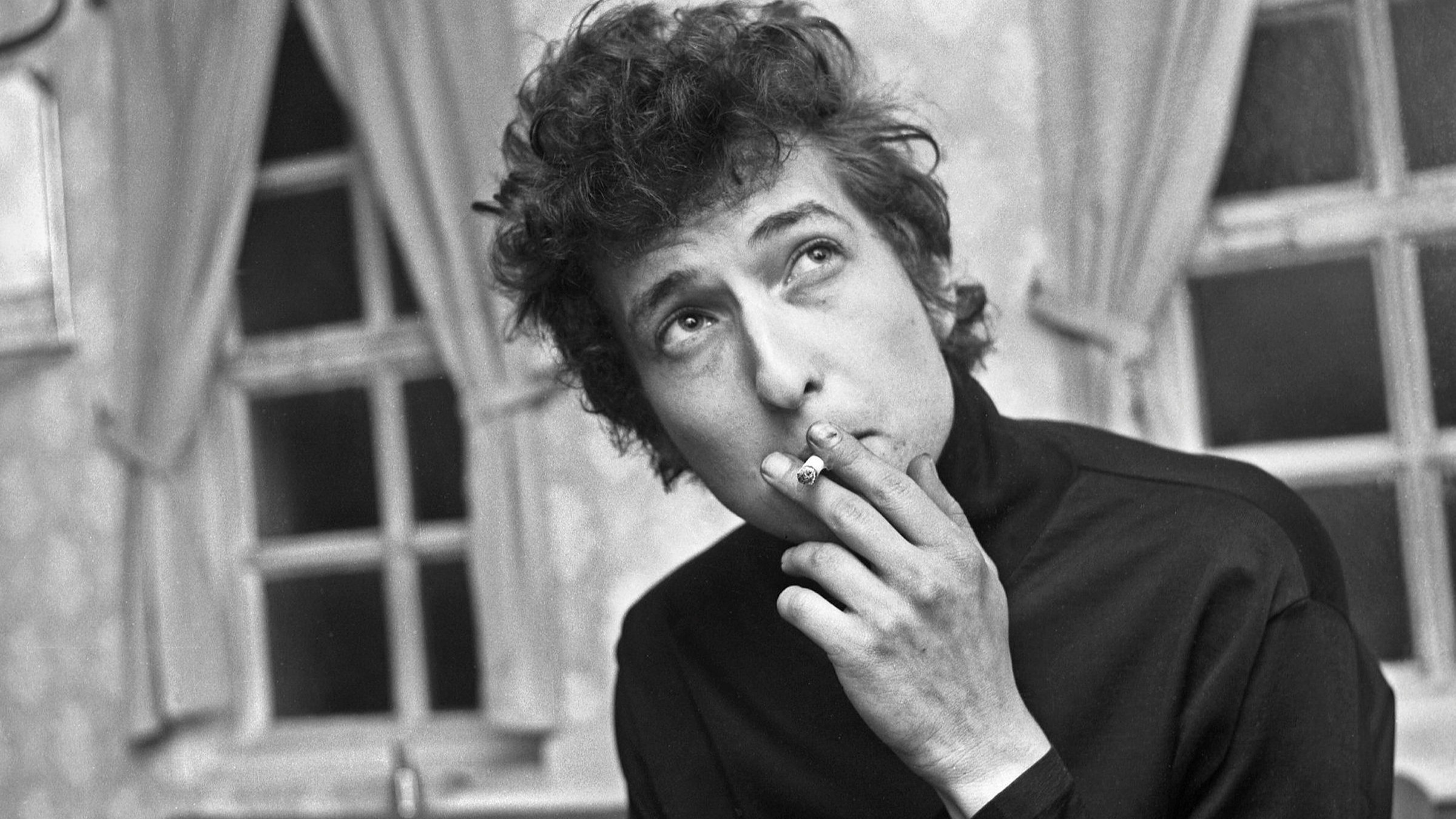
    Bob Dylan just turned 80! It’s not a stretch to say he’s influenced music history as much as anyone else. But what if Bob Dylan never played music?

    Old fans of Marvel comic books will recall a series titled What If in which Uatu the Watcher, a giant baby-faced alien, would peek into alternate realities and tell readers what the world would be like if Peter Parker was never bitten by a radioactive spider or if Bruce Banner’s pants didn’t stretch when he became the Incredible Hulk.

    Usually the smallest difference would create a butterfly effect that would mold a vastly different world from the one we were used to. In that spirit let’s take a look at what our world might look like if Robert Zimmerman had never decided to pick up a guitar and become Bob Dylan.

    1959: University of Minnesota

    Freshman Robert Zimmerman decides to hunker down and study for dental school so he can make a steady living and contribute to society by improving people’s smiles.

    1963: Selma, Alabama

    Civil rights protests fall apart as interest wanes in nonviolent marches without the Dylan-penned songs “Blowin’ in the Wind” and “The Times They Are a-Changin” to sing along to. There are only so many times one can sing “Amazing Grace” over and over again.

    1964: Liverpool, England

    Without Bob Dylan to introduce them to marijuana in a New York meeting, the Beatles instead begin hitting the bottle. Their youthful experimentation with alcohol leads to the classic songs “Got to Get You Into My Throat,” “Strawberry Rum Forever,” and “Lucy in Quiet Urban Outdoor Room.”

    1965: Newport Folk Festival

    The concert, headlined by Joan Baez and Pete Seeger, goes well enough. A controversy erupts when a Greek vendor runs out of ground beef and buns and has to replace his hamburgers with gyros. Excessive booing and cries of “Judas” are halted only when an emergency run to a local grocery store is made.

    1966: Hibbing, Minnesota

    Robert Zimmerman sets up a private dental practice in his hometown. Business is slow until he runs radio advertisements with the catchy jingle “Like a Broken Crown.”

    1968: Nashville

    Johnny Cash doesn’t have Bob Dylan to record some songs with, so he turns instead to Tiny Tim. Their album of duets burns people’s ears and discourages ABC from giving Cash his own variety show for fear of what other unholy alliances it might create.

    1969: Woodstock

    Since Bob Dylan never called Woodstock, New York, his home, concert promoters instead decide to throw a three-day festival of peace and music in Sheboygan, Wisconsin. A whole generation says if you can remember Sheboygan, you weren’t really there.

    1979: Hibbing

    After much thought and meditation, Robert Zimmerman decides to convert.

    He becomes a periodontist.

    1988: Hollywood, California

    The Traveling Wilburys record their first album. This rock supergroup consists of Roy Orbison, George Harrison, Tom Petty, Jeff Lynne, and Tiny Tim.

    1997: New York

    With Bob Dylan’s son Jakob Dylan not having the connections for his band the Wallflowers to make it big, MTV now has leftover airtime with the vacuum left by no video for “One Headlight.” This allows MTV more freedom to showcase more of Hanson’s “MMMBop” and the Spice Girls’ “Wannabe.”

    2021: Hibbing

    Robert Zimmerman retires from his practice, giving him more time to spend with his grandkids. He’s considering picking up a new hobby. He hasn’t decided whether that should be learning Portuguese or taking guitar lessons.

  • Anti-Semitism Isn’t a Matter of Semantics

    Anti-Semitism Isn’t a Matter of Semantics

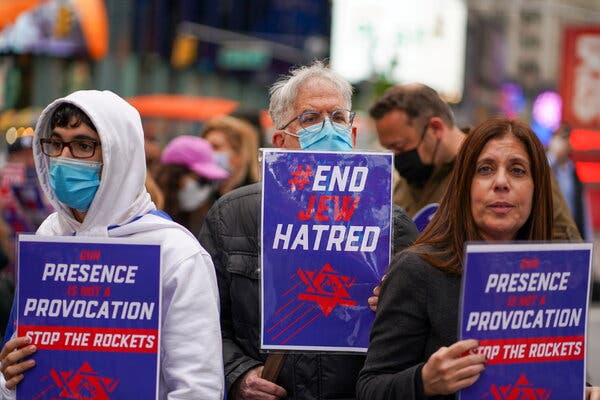
    In the past few weeks, there has been a wave of social justice influencers who have taken up #freepalestine as their cause of the month. Ordinarily I wouldn’t pay too much attention, knowing they’ll move on to the next cause soon enough. However, as more  people I know have begun changing their Facebook profile pictures to include Free Palestine, or reposting articles clearly pushing one-sided narratives, it became hard for me not to weigh in. Especially when the supposedly “anti-zionism” tack it has all been taking has been directly tied to seeing the drastic upswing in anti-semitic attacks around the world.


    View this post on Instagram


    A post shared by Nuart Festival (@nuartfestival)

    I first posted a screenshot of a major street art festival’s infographic explaining the supposed distinction between antisemitism and anti-zionism in my IG stories with my thoughts overlaid on top as follows:

    “This is what’s scary… people encouraging others not to think and instead embrace their rage and take action. Humans acting in thoughtless anger en masse is one of the most destructive and insidious forces on Earth. I learned all the stories growing up, the Holocaust, the pogroms in Russia, the crusades, and countless others throughout history. I always dismissed them as phenomena that didn’t have anything to do with my life in contemporary civilization. But here we are, not even a century after the most recent attempt to exterminate my people, and there are palpable echoes of the rhetoric used to justify violence and discrimination against us. I completely understand the desire to stand up for oppressed people, and I empathize with both the Palestinian and Israeli citizens (of all religions) caught in the crossfire of this tragic generations-long war steeped in senseless religious ideology, led by extremists on both sides. But for the first time in my life, I’ve found myself concerned for my future safety as a Jew and that alone speaks volumes…”

    After posting that, I had a friend DM me,

    “Really? concerned with your safety?” which I responded to and resolved amicably. But it led me to write a follow up on my personal Facebook page (including the screenshot from my stories) as follows:

    “No, I don’t think I’m in imminent danger of bodily harm realistically. I’m a white-passing 6’1” male and live in a generally safe part of a minority-majority populated city. But when I say ‘concerned for my future safety’ what I’m referring to is the very real accounts (written and filmed) of increased altercations between Jews and those claiming to support the cause of freeing Palestine (forget that most of them don’t even really understand what is happening there and are just influenced by social media). These are a litmus test of the general feeling towards Jews held by the rest of the world. You can make the anti-Zionist is not anti-Jewish claim all you want. I call it nitpicking semantics so that you don’t come off as prejudiced, despite being just that. Because people who see themselves as generally good don’t like to face the fact that they share traits they vilify in others. The irony being that if they just accepted the bias and worked on addressing it within themselves, I could respect them rather than just being dumbfounded and disappointed at the unwillingness to recognize it.

    And hey, I get it, despite being a tiny speck of a % of the world population (0.02%), Jews put on a good show. It’s easy to see why there’s the perception that Jews run Hollywood, the banks, and are generally successful and privileged. Because there are certainly a number of high profile successful Jews in the spotlight (for good and bad reasons). And it’s certainly possible there’s an element of jealousy from our fellow minorities linked to that perceived inherent advantage. But the truth is, Jews run the gamut from poverty stricken all the way up to the 1% just like most ethnicities. 

    The other truth is that as a minority group, we’ve faced displacement and persecution longer than any other, going back to our inception as a people and on through the present day. So maybe we can also just chalk it up to Darwinism and the fact that we’ve had to learn to survive in the diaspora since the time of the Romans when they first dispersed us from, you guessed it, Israel (just a tad bit before the 1948 kerfuffle). Most of your ancestors needing to find ways to survive in the face of adversity probably gives you some ingrained characteristics that help you do the same.”

    So to get it out of the way:

    Do I think that everything the Israeli government is doing is justified and beyond reproach? Not by a long shot (just like our own right here in the US) and I’ve said so repeatedly.

    Do I think that means they don’t have a right to exist as a country, and/or deserve to be dismantled and wiped from the map? Absolutely not.

    Jews fought for their right to exist independently and secured that freedom by whatever means at their disposal, despite having just had their global population decimated. Just. Like. Every. Single. Other. Country. On. The. Map. They certainly did it more recently than most, and ironically it was the land their ancestors inhabited in the first place, unlike America and most of the other countries that no one suggests dismantling for comparable (and generally worse) affronts.

    But bringing it back home and away from the grander global political sphere:

    Yes, I have genuine and valid concerns for the safety of my people as a whole. I have family directly affected by violence towards Jews in Israel, France, and other countries across the globe. And here in our backyard, I don’t have much trouble envisioning a dystopian future where right wing extremist groups like the Proud Boys and left wing extremist groups like Antifa find common ground in a mutual scapegoat so conveniently on the shit list for both sides (as has literally happened countless times throughout history, and across the globe).

    And so yeah, I think about my family, myself, my daughter, and what this world will look like for us in the next year, and the next decade. If the war is still raging on (some people really forget so easily that it’s a war, with two sides and infinitely complex dynamics between them) between Israel and the Arab nations that surround it, at what point does it become enough justification to start taking out your anger on me personally?

    Despite having gotten into lengthy debates

    with several people over this issue in the past few days, I only encountered one person with an opposing view who could contradict me using logical arguments that included a proposed solution to the conflict which also didn’t entail the erasure of Israel as a country, or concessions which would certainly lead to its destruction. Aside from that outlier, it’s always the same talking points: I don’t have a solution, but what they’re doing is wrong. Or, they’re stronger, so they have a responsibility to do better. Or, just because they were victims of a genocide doesn’t excuse them committing war crimes.

    I’ve repeatedly stated my position that the Israeli government is mishandling the war (because once again, what’s happening there now is the result and continuation of a generations-long war; not apartheid, not gentrification, or any of the other words being misused by trendy internet personalities) and that I have no doubt there is a culture supporting mistreatment of minorities within Israel’s borders and certainly in Palestine by Israeli army/police forces.

    But my position is the same as it is for the systemic racism, violence, and discrimination that happens here in our own country against minorities. We need to change the system via the structure it is built upon if we are going to reshape its future. Which may include totally revamping or getting rid of elements of that structure. But never have I contemplated or endorsed the destruction of the United States as a viable solution to the problem, and certainly not through violent means. America has a ton of problems, but at the end of the day it’s where I choose to call home, because we’re supposed to have the freedom to create the kind of life for ourselves that we envision.

    Why then should I stay silent when I see people calling for the destruction of my people’s only “backup plan for when the shit hits the fan” on this planet? That the shit might hit the fan is not a paranoid delusion. Read your history (pick whichever objective source you like) and familiarize yourself with the many times throughout history that Jews have been persecuted on a mass scale, expelled from countries they thought of as home, and vilified. So while I might not endorse all of Israel’s politics, or want to live there myself presently (barring unforeseen circumstances) I am certainly comforted that it’s out there if I ever need it.

    Why is my right to voice support for the existence of a country for my people less valid than a Palestinian supporter’s right to demand theirs? At no point, in no way shape or form have I ever said or believed that Palestine shouldn’t have independence or exist at all. And that’s in spite of the fact that in maintaining their independence they demand the abolishment of Israel and removal of the Jewish people from their land (which is me putting it euphemistically because what they really call out for is the death of all Jews).

    So I ask:

    If Palestine is given back any of their previously held territory, and all Jews willingly give up the land they (arguably certainly) currently own there, where do those Jews go? What measures do you propose to ensure that no further violence is carried out by Hamas (or anyone else from within Palestine) against Israeli citizens? What collateral do you place at stake in return for the lives that will be lost if you’re wrong when you say “as long as they get their land they will have no reason to attack Israel”?

    Or take it a step further, to appease those who don’t even think Israel should exist at all:

    Give all the land back to the Palestinians (ignoring the objective fact that Jews have been there throughout history including and predating the Arab control of it). What then do we do with the 9 million people (about 80% of which are non-muslim and would not be able to stay under the change of governance because they would be actually ethnically cleansed based on countless and well-documented evidence from the past)?

    Will the US open their doors to them all? Do they get divided up among the world’s leading nations? How are the refugees from countries like Syria, Haiti, Cuba, Morocco, and countless other war-torn countries being treated today as they flee discrimination and hostile environments? Will you open your home to a Jewish family fleeing the land their predecessors called home for generations? Is there a Syrian refugee currently getting meals and support in your dining room? Can you blame Israelis for fighting tooth and nail to preserve what they see as their only bastion in a world that has consistently and mercilessly thrown them away whenever conditions allowed?

    If you can’t present a viable solution to the above problem, I would humbly suggest you either start working on being able to, or shut up about a situation you don’t fully understand and/or aren’t equipped to address. Instead try to focus that energy on the multitude of problems plaguing the less-fortunate in your own backyard every day and try to create some positive change in this world.

  • Parking Tickets In Miami Are Too Damn High

    Parking Tickets In Miami Are Too Damn High

    It seems petty, but one of the big issues that’s attracted my attention lately is the cost of parking tickets in Miami Dade County.

    I’ve tried to find answers for why the fee of a casual parking ticket was doubled, from $18 to $36, but those answers haven’t been forthcoming.

    Before naming names, let me address the issue:

    The zillion UberEats and Doordash drivers who comes by my restaurant to deliver food tell me that that, on a good day, a food courier will earn like $9 an hour.

    That’s a good day.

    For the most part, since they’re contract workers, the courier companies are free to pay these workers less than minimum wage ($8.65 in Florida, as of January 1). And so that’s generally what they earn.

    They earn between $7 and $9 an hour.

    I work in an affluent neighborhood in Miami called Coral Gables.

    Along the curbs of Coral Gables, or in the garages, you’ll probably pay between $2.50 and $5.00 an hour in parking. The garages will sometimes cap the cost at $18 or thereabouts.

    At the restaurant where I work, I earn, in wages, $5 per hour. If I don’t get enough tips to average those hourly earnings up to minimum wage, the company will pay up, and I’ll get minimum wage.

    Let’s say it’s a rainy Tuesday at the restaurant, just a couple people come in, and I end up going home with minimum wage earnings.

    After a six hour shift, during which I earn roughly $48, I will have paid almost half of my wages in parking.

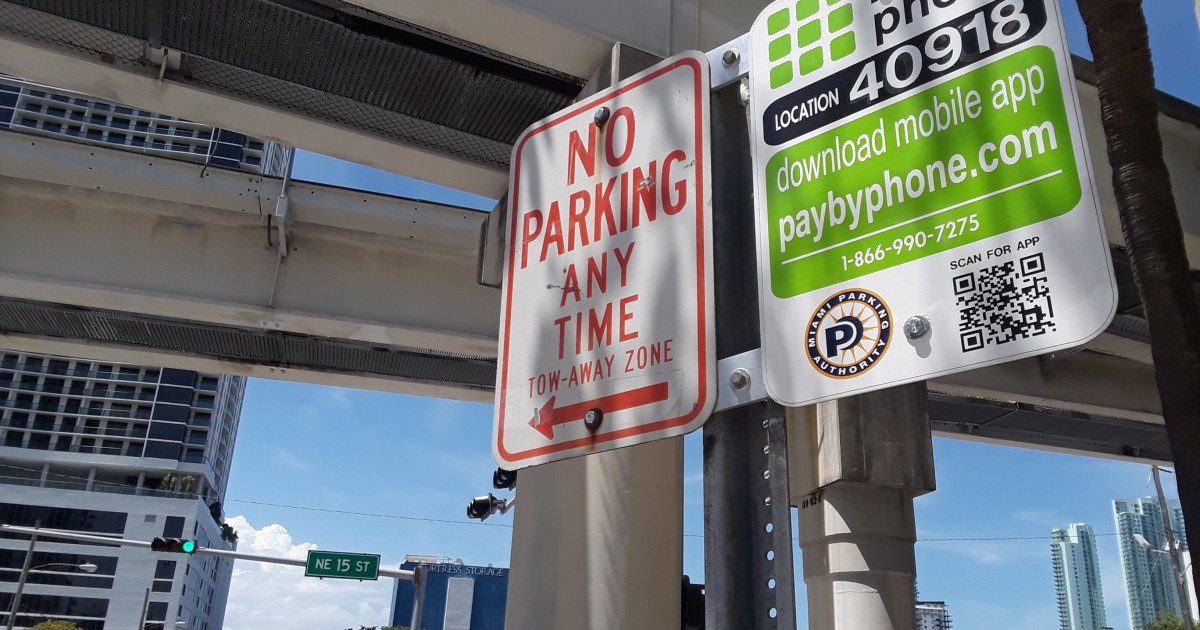
    If, in Coral Gables, you stay in your parking space for a longer stretch of time than you paid for, you’ll receive a parking ticket costing $36.

    When a food courier, who earns less than minimum wage, has to park their car at the curb, run into the restaurant, collect a meal, and run out to his car again, he’s risking a $36 penalty for not getting there in time.

    And let’s say that, most likely, this courier for Doordash is earning $7 an hour.

    If he’s worked for five solid hours, driving and delivering meals and sweating about it and being urgent and punctual, and he happens to park at the curb in front of my restaurant for a minute too long, and he gets a ticket–his entire workday will have been for naught.

    And it happens all the time.

    An elderly food courier recently ambled back into the restaurant, teary-eyed, asking what she could do about the ticket she just got because it literally annihilated all of her earnings for a full day of what amounts to manual labor (you might not think that being a food courier is manual labor, but I’ve done it, and I’ve worked in high-traffic restaurants, and I can assure you: there’s hardly a difference).

    The parking fee is immoral. In saying that some or other district or city or municipality should be ashamed of hosting it, the obvious response will be that its officials have no authority over the price of parking tickets. Somebody, though, must have a say in this. And if it’s a problem that’s effecting people in the community, there oughta be some avenue of rebuttal.

    Or, at the very least, an inquiry should be met with an answer, a misconception with a correction.

    When I tried making my case to Kevin J. Kinney, Director of the city’s Parking Department, in an email dated February 26, he didn’t respond. I instead got an email from someone in his office explaining to me that, contrary to what my frustration might suggest, parking tickets in our area have been among the cheapest in a vast space until 2019, when a vote by county commissioners agreed to raise the parking fee from $18 to $36.

    I mentioned that I was occasioned to write the email after receiving, in relatively quick succession, three parking tickets. He then offered to pacify me by forgiving one (he specified: one) of my three tickets.

    After several attempts to reach the office of Eileen Higgins,

    the commissioner for District 5 (where I live), hoping to learn how this price hike happened, and where she stands on it, and whether or not she agrees that it’s a burden to the rich and an attack against the poor, I still have no answer. (To clarify: while the cost of living in Coral Gables is high, its streets are occupied by many more lower-income service workers than residents.)

    I’ve emailed Commissioner Higgins’s office repeatedly, inviting her for a guest appearance on Thousand Movie Project Podcast to discuss the larger political moment and, tangentially, how a person might engage with their local government in order to avoid such things as price hikes; I’ve called her office twice, and on both occasions was told, by the person answering phones, that she (the person answering the phones) would “do research” on the matter of parking fees, and get back to me; when these proved dead ends I tried, more recently, to engage Commissioner Higgins via Instagram DM, dated April 20.

    She left me on read.

    The likelihood of getting in touch with anyone in a position of local authority who will take accountability for the price hike in parking tickets and offer, as explanation as to why the money garnered from parking tickets is so critically important as to warrant the routine financial hobbling of poverty-wage workers in Miami-Dade County–well, the likelihood of such a response is obviously small.

    Probably impossible.

    But even in lowering my sights from the frustrations of national politics, against which the average voter is of course gonna feel totally impotent and helpless, I’m genuinely surprised to learn that even a glancing survey of one’s neighborhood authorities will turn up the same sort of evasion, indifference, and bloodletting of the poor that characterizes the national scene.

    I guess the pain of such realizations is just, as an athlete might put it, naivete leaving the body.

  • It Once Snowed in Miami?!?!?

    It Once Snowed in Miami?!?!?

    As the weather becomes unbearable in South Florida people take refuge in a variety of ways.  Some dive into the ocean, others take a dip in a pool.  Then there are those that crank their air conditioning down to subzero temperatures. I look for relief in the dusty archives of history, where believe it or not, you can discover it once snowed in Miami.

    South Florida’s weather has been recorded consistently  since 1899. In that 122 year span there has only been one instance of snow.

    It took place on January 19, 1977. On a Wednesday morning from 8 to 9:30 a.m. snow flurries of up to a quarter of an inch fell on Miami Beach, Homestead, and even out in the ocean in The Bahamas.

    A combination of record low temperatures (it plunged to 25 degrees at the Miami airport) and an impeccably timed weather system combined for the perfect circumstances for a once in a century Miami winter wonderland.  Remarkably not a single fatality was reported in South Florida due to the abnormal weather. The freeze did mess up  our agriculture. Oranges after all were not meant to grow in freezing temperatures.

    The snow happened a year before I was born. But I remember my grandmother telling me stories about it. She just clocked in for work at a JC Penney’s in Broward when everyone went nuts. My grandmother had just relocated from Chicago.  She’d lived through fifty plus years of hard winters,  so didn’t ever want to see snow again. But coworkers dragged her outside anyway. The memory stuck with her in how all these native Floridians were reacting to the snow like they just saw aliens landing.

    Right now with the temperature rising and the “feels like” metric nearing triple digits it can sometimes feel a close encounter with ET would be more likely than snow falling in Miami.


  • ProjectArt Presents Digital Imprint – A Virtual Art Exhibition

    ProjectArt Presents Digital Imprint – A Virtual Art Exhibition

    Editor’s Note: On Thursday, May 27 from 7-8 p.m. ProjectArt and MOCA will present Digital Imprint.  The virtual art show features work created during  artists’ tenure as part of ProjectArt’s residency where they taught, mentored youth, and created art in partnership with the Miami-Dade Public Library and the New Orleans Public Library.  You can RSVP for the virtual event here. Below one of the artists, Susan Feliciano  shared her experiences.

    As a result of the pandemic, we literally, from one day to the next pivoted our delivery method from a bricks and mortar setting to an online platform. The challenge before me was not only to create an art curriculum to teach virtually but also one that was engaging, interesting, and interactive. All my training and experience up to that point was for in person teaching face to face. The question was not can I do this? We were too far along the path. Instead, the question was how do I do this now, like right now? The technology was here, and the students were waiting.

    The first step for me was to get mentally prepared. Distance learning was fast becoming the new normal. Now it was my turn to teach through a screen, monitor, and camera. I had a new set of teaching methods to learn and visual resources to create fast. There was very little to time to rehearse. It meant rebuilding the projects, replanning the activities, and redeveloping the procedures to virtually perform the tasks.

    Working with the 13 – 17 years old students had its advantages and provided a tremendous amount of freedom to be creative. As a group they readily absorbed complex concepts and had the technical skills to execute their ideas quickly. For 4 or 5 weeks they focused on a different media which included photography, drawing, poetry, and collage. They developed work centered on a variety themes such as Memories, Connections, and Anatomy. Their final project is a culmination of all their work produced throughout the program titled Reconstructed Narratives.

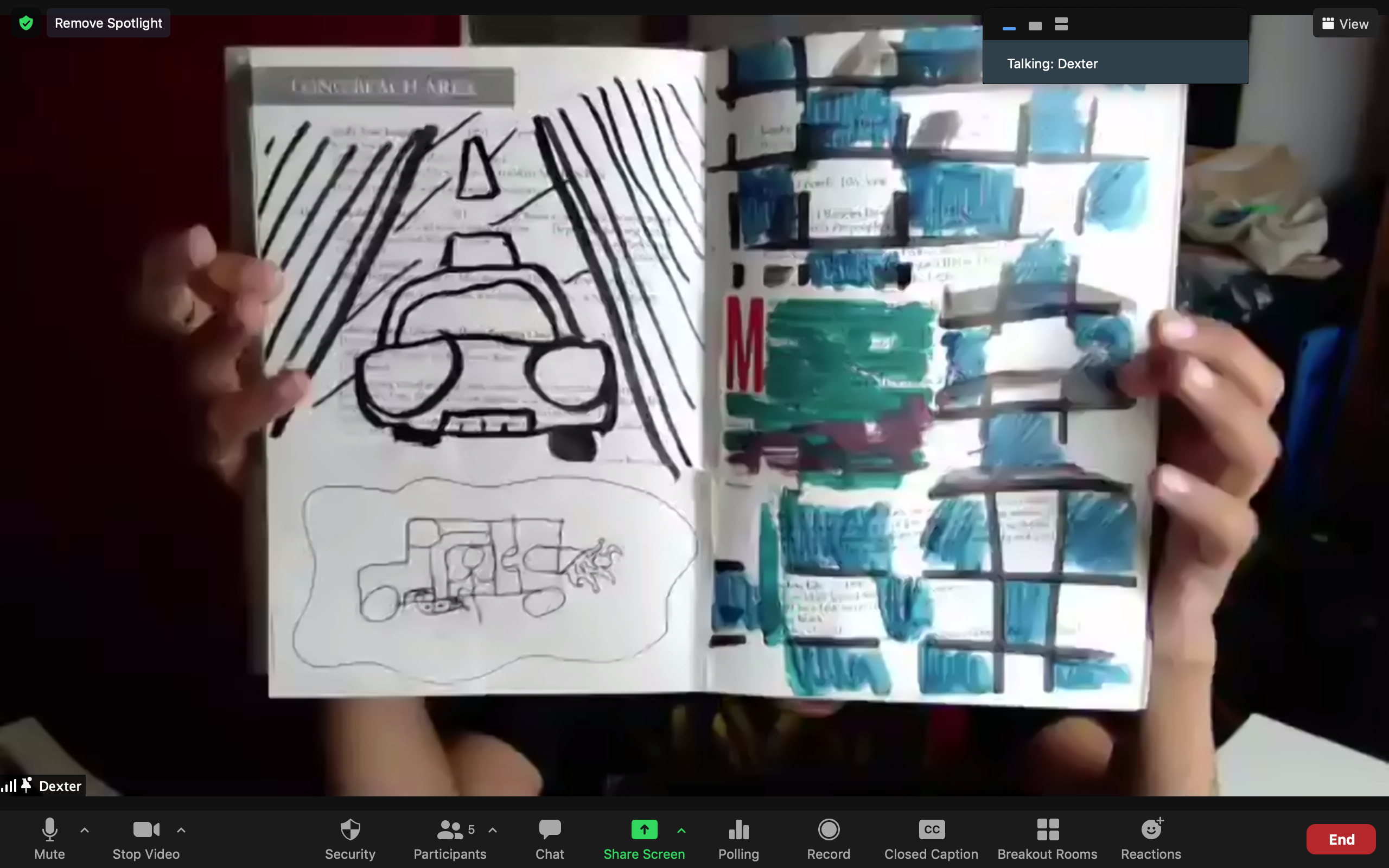
    Each student received an art kit with a variety of art supplies along with a hardcover book. Their individual books ranged in topics from dinosaurs to chairs. The purpose of the book was to use it as an artist uses a sketchbook, to work on ideas. They were encouraged to work directly on top the pages. So, instead of looking at a white page and starting from a blank space. Each of their pages had pictures and/or text which served as a springboard for their imagination.

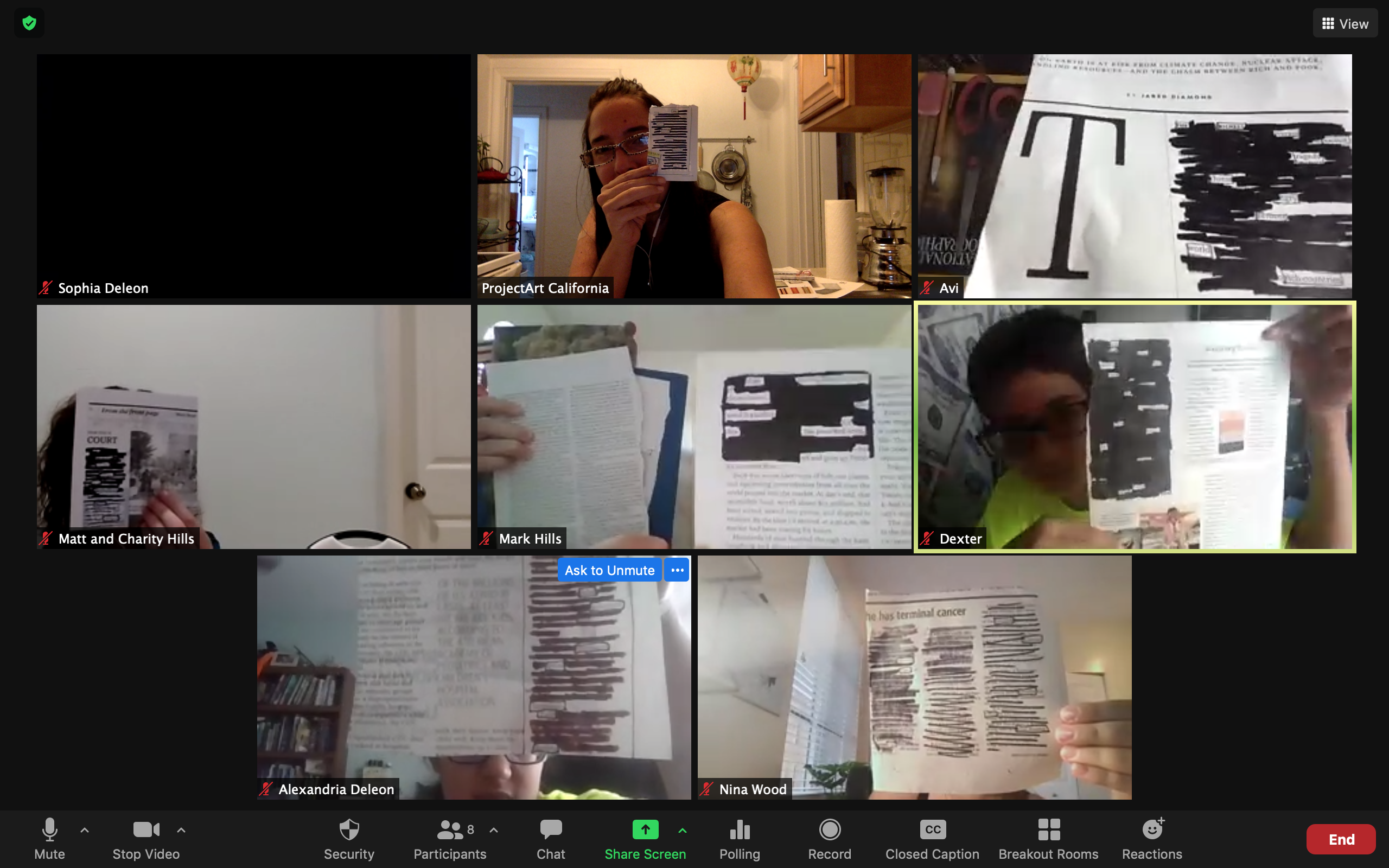
    As a starting point, they created black line poetry from the copy of newspaper articles.

    The process began with them selecting and circling words that called to them or captured their interest. Next, they drew lines with a black marker through the words and sentences not circled. One by one we read the poems aloud during our weekly class meetings. Some were funny, others were logical, and a few were lyrical. Then they selected images that connected with key words in their poem. These images came from a variety of sources including their own drawings, sketches or photographs.

    They had photographed fruits and vegetables, the anatomy of their face, and things they hold. They had studied different points of view, composition, editing and lighting techniques to create a series of sublime black and white photographs. They used those skills to build a visual bank of images. Now they were able to arrange and compose these images and reconstruct new narratives onto the pages of their book. They made two-page spreads adding vivid color and bold lines connecting their thoughts and creating their story. The book is a visual journal documenting their art practice and linking their ideas about themselves, others, and the community they live in.

    Now a little bit about my own practice and the new work that is part of the ProjectArt exhibition.

    As part of the residency, we the artists are given the opportunity to explore and develop a social practice alongside an artistic one where one informs the other. Three areas of that I am currently exploring are psychological and physical spaces, the emotional force of color, and the beauty of impermanence.

    A Conversation on Canvas, my entry for the show features fiber artworks using ECO dyes reflecting on the spaces women occupy and the cultural ties that bind them. As a Miami Resident Artist, I designed a series of flags to commemorate the 100th year anniversary of the 19th Amendment granting women the right to vote. Each artwork explores a different social landscape through the processes of dyeing, weaving, and sewing.

    The flag series incorporate the colors used by the American suffrage movement. These textile works use ECO dyes a sustainable practice of adding color from plant-based materials. Turmeric, black beans, coffee, and avocados are used both for their hues and our shared cultural connection.

    Drawing with needle and thread, portraits of girls are rendered onto the surface of the canvas. Each face is based on drawing studies I used to teach in class where students took turns posing as models and artists. These images represent the future stitched into the present as part of a long history. The four mandalas, circular woven designs, are featured in A Conversation on Canvas II, they are part of a collaboration between my mother, sister, niece, and myself representing three generations of women.

    This flag project is a work in progress changing over time and impacted by place. It was first part of the group exhibition, 40 Women Pulling on the Threads of Social Discourse by FAMA, Fiber Arts Miami Association at The CAMP Gallery in Little River, Florida. Then it traveled to the Dominican Republic where it was featured virtually as part of a solo exhibition organized by the Centro Cultural Domínico Americano de Santiago. Expanding to two flags it is now part of the virtual group show Digital Imprints presented  by ProjectArt Miami in partnership with the Museum of Contemporary Art.

    When I thought of the title of the exhibition “Digital Imprints” what came to mind was the word huellas meaning fingerprints in Spanish. If you look up fingerprint the literal translation is la huella digital. Here digital refers to your fingers, your digits. It is fitting that the exhibition title uses the term digital used to represent technology but also can mean fingers, a means to create, communicate, and feel.

  • Mary May I – Is It Too Late to Send Sympathies?

    Mary May I – Is It Too Late to Send Sympathies?

    Welcome to Mary May I where Mary C. Smith dispenses all types of wisdom. If you have a question for Mary that needs answering you can ask her  at  OMGhelpisHere@gmail.com.

    A friend lost her father a few months ago, she told a small number of friends through our group chat.  Since then I haven’t done anything to express sympathies more personally, like flowers or a card. The pandemic breaks the normal connectivity and social patterns we have relied on in the past.  Is it too late? – Sympathetic and Apathetic in South Miami

    You have 99 problems but sending belated condolences is not one.  Grief is the funkiest topic and I could talk about the behaviors it brings out in people forever. The truth is that loss becomes more about the folks that are left behind.  Three months is around the time that the calls and notes start to wane.  The wound is still fresh though.

    My Mom always said to make sure to check up on people after the casseroles stop coming.   A beautiful card with a heartfelt message is always welcome, right?  Get to the post office toot sweet and send out that love.   Your friend will be happy to find something other than a bill in her mailbox. Those good vibes come back 10x.  It’s a beautiful thing.

    Over the past year my workplace has held periodic open Zoom calls as a forum for colleagues to express their feelings regarding social justice issues.  Many people (including me) have found them inspiring and eye-opening.  Others have privately expressed that they consider them a waste of time.  The calls are not mandatory to attend, can I advise the naysayers to simply not dial in? Or do I have an obligation to challenge them to find meaning and empathy in these sessions? – Conflicted in Coconut Creek

    This is a refreshing and progressive approach to social causes.  Impressive. Kudos to your employer.  You know what is most definitely a waste of time?  Telling a closeminded person anything that may expand their awareness and improve any situation that does not directly relate to them.  Not a firable offense but It certainly makes you less hirable.  Tell them to turn off, tune out and to step away from the Zoom.   Sounds like someone needs to make a change to their career.  They have stopped growing.  Sad. I don’t feel it is your responsibility to convert them to a reasonable human.  Life is all about connecting.  More so now than ever.  Thoughtful debate is always welcome, bad vibes are not.  Don’t let anyone rain on your parade.  Best to shoo that pest out of your good energy. Some people just like to ruin things.  Move away from them.

  • Metaphysical Hotline, an otherworldly theatrical experience

    Metaphysical Hotline, an otherworldly theatrical experience

    Live Arts Miami has done it again with Metaphysical Hotline.

    In the final performance of an environmentally themed season, Live Arts Miami is producing a world class, conceptually brilliant and engaging work of fine art by local artist Fereshteh Toosi.

    Metaphysical Hotline is simply luminous.

    Here’s the concept.

    You, the participant, fill out an interesting, well-designed, thoughtful, personal online questionnaire (takes 7 to 10 minutes).

    Then, you choose a day and a time you would like to be called. If chosen, and you will be, you will receive a personal 40-minute phone call from a psychic medium to discuss your connection to an ancestor. The ancestor will not be from the past, but from the future.

    The conversation will be a discussion of your legacy, specifically pertaining to the environment and the planet we all share.

    It’s brilliant. Metaphysical Hotline is basically an intimate immersive theater experience but in a remote setting. All during this pandemic, it is hard to pinpoint or imagine a better conceived art experience.

    You will receive a phone call and from the comfort of your own home, or the serene setting of a local park or beach, you will experience smart, interactive  multi-dimensional, multi-generational theater, leaving you slightly better for all of time. That’s pretty cool.

    So take the questionnaire now.

    Listen to the call for submissions.

    Share the idea with a friend via social media or text.

    And watch the promo video below.

    Metaphysical Hotline.

    Performance dates are June 4-13.

    Questionnaire deadline May 23rd, but may be extended.

    Location: your phone

    Cost: FREEEEEEE