Category: News

  • Tossed to the Wind: Stories of Hurricane Maria Survivors

    Tossed to the Wind: Stories of Hurricane Maria Survivors

    Editor’s Note: Below is an excerpt from “Tossed to the Wind: Stories of Hurricane Maria Survivors,“ written by María T. Padilla and Nancy Rosado and published by University of Florida Press. The book’s authors will be speaking virtually at this year’s Miami Book Fair which you can sign up for here.  

    Flying to Puerto Rico on October 20, 2017, the first thing that caught my eye was the harsh contrast of the cerulean-blue tarps covering so many homes in San Juan and its surrounding area versus the grayish brown of . . . everything. It was one month to the day that Hurricane Maria had devastated the island and destroyed its power grid, leaving more than 3 million people in the dark. In the moments just before landing, there came the immediate realization that what I and the other passengers on the flight had brought to help our compatriots and families would have little to no real impact. It would not be enough, I perceived as my eyes filled with tears. The magnitude of the devastation that Maria caused as it ripped through Puerto Rico was incalculable a month later, a year later, and even to this day in mental and emotional terms.

    The sense of hopelessness was palpable but never more so than after nightfall, when the dark blue sky illuminated nothing, and there was little left to do but wait for sleep. It was in the stillness of the dark, after batteries had given out and candles had melted into wax sculptures, that people faced the loss of control over their lives. The daylight had tricked everyone into thinking that in some way, however small, they still held the reins. But it was not true. It was in the night that Puerto Ricans rediscovered that their force of will had been overpowered by the forces of nature.

    Relief efforts focused on the basic requirements of food, water, and shelter. The priority of fulfilling these needs seemed to preempt another need that only now is beginning to be addressed: mental health services. And with good reason. All things tangible became a primary focus while the seemingly diaphanous was placed on hold. Nonetheless, in the aftermath of disaster we instinctively tend to repeat our experiences out loud to family and friends, trying to merge and make sense of our memories, physical experiences, and emotional states. It is a way of making sense out of the senseless. Just as important, storytelling also allows us to control and manage the chaos, if only in our minds, that comes in the wake of disaster.

    Having arrived in Puerto Rico with supplies to distribute as part of a relief project called Adopta un pueblo, my coworkers and I had the opportunity to interact with communities across the island. Our experience from town to town was quite consistent. We would deliver supplies to an individual or family, and they would, with no prompting, gift us with amazing stories of survival, loss, and hope for recovery or a new beginning in the States. My coworkers and I learned that to pause and listen in the midst of handing out supplies was as valuable and important as distributing the supplies we had brought. The small gift of time from total strangers allowed for validation and the processing of feelings and emotions that might otherwise have remained an internal conversation. These stories had a profound impact on us. Inevitably, as evening fell and daylight gave way to darkness, we discussed what we had heard as the unpleasant odor of the diesel that powered home generators filled the air around us.

    Mission completed, we returned to central Florida only to find the entire state preparing for the influx of Puerto Ricans fleeing the island. While I busied myself with raising funds to purchase solar light bulbs to send to communities in Puerto Rico to help combat the depression that seemed to come with nightfall, welcome centers had opened at major airports to provide thousands of Maria survivors with immediate services such as filing FEMA (Federal Emergency Management Agency) claims, searching for housing, and obtaining driver’s licenses. Chaotic at times but still functional, the welcome centers offered evacuees a sense of order, hope, and normalcy—a far cry from the frustration and disorganization they experienced on the island.

    In assessing the needs of the evacuees, the intake workers of various agencies at the airports became the first to hear their stories of despair, survival, and hope. There is bravery in leaving all that you have and know to start over as a stranger in a strange land. Under more normal circumstances, the excitement of a new beginning and new possibilities is balanced by the deliberate planning for contingencies to generate a successful outcome. But these were not normal circumstances. For the many who made the decision to leave Puerto Rico after Hurricane Maria, their bravery was overshadowed by a question of survival.

    Their homes and cars had been destroyed, schools and hospitals closed, and jobs lost, and the uncertainty of obtaining food and water on a consistent basis forced the realization that life on the island as they had known it would never be the same. Thus, it was not a question of choice but of how and when to leave for those whose children suffered from serious illnesses or had special needs; for seniors who had lost their homes along with a lifetime of possessions; and for anyone who felt the fatigue and uncertainty of trying to rebuild their lives amid utter chaos.

    Upon arriving in Orlando, I felt the weight of the narratives I had been privileged to listen to in Puerto Rico. I became aware of a different type of narrative, a continuing narrative, of the evacuees who had journeyed to central Florida, focused more on adjustment and overcoming obstacles, while feeling resentment at having been driven from their homes, the life they knew, and the country they loved. I am convinced that these stories are part of the long Puerto Rican experience in the United States and are worthy of being documented lest they be forgotten or distorted by time.

    With this in mind, I contacted my friend María Padilla, a former reporter for the Orlando Sentinel and editor of two Orlando-area Spanish-language newspapers, and suggested we collect the oral histories of those who had left Puerto Rico after Hurricane Maria in an effort to document the continuing Puerto Rican migration to central Florida. We shopped the idea around until, fortuitously, a mutual academic friend, Patricia Silver, an expert on central Florida’s Puerto Rican diaspora, pointed us in the direction of the University of Florida Press, which enthusiastically embraced our ideas. Tossed to the Wind: Stories of Hurricane Maria Survivors is the result of our efforts.
  • Florida Is the Strangest Political Dichotomy

    Florida Is the Strangest Political Dichotomy

    All the way back on Tuesday night when it looked like Donald Trump was going to be reelected President I couldn’t believe the state I was living in. It was a state of confusion and dismay, but it was also the state of Florida. How could we collectively rehire a leader who wrecked our economy and our health? Were we really as meatheaded as Florida Man memes portray us to be?

    But what confused me even more was that Florida Amendment 2 passed raising the state’s minimum wage up to $15. Raising the minimum wage to a more livable amount goes against everything Donald Trump stands for and yet the amendment passed with over 60% of the vote. This is the third straight Florida state-wide election where a “progressive” amendment passed with over 60 % of the vote and the candidate that supported that amendment lost.

    In 2018 Florida Amendment 4 passed with over 60% support restoring voting rights to felons who did their time. Yet that same year Ron De Santis won the right to be governor and Rick Scott got to be our senator, both adamantly against the amendment. In 2016 Florida Amendment 2 won 70% of the vote legalizing medical marijuana, but we elected Donald Trump to be president and Marco Rubio, who spoke out against the amendment. to be senator.

    Books have been written about how people vote against their own interests, but I’d never seen it embodied in such clear terms. Three straight times Florida voted for particular laws, but then  also voted for representatives against those same laws.

    Last week I was mulling over these issues on the phone with a friend. I was walking down Calle Ocho killing time as my car was being repaired and somehow the telephone conversation took us to a place where I loudly exclaimed, “Donald Trump Jr. is a joke.”

    I had forgotten where I was. A man sitting on a bench quickly reminded me as he started yelling at me aggressively in heavily accented Spanish. I picked up my pace as he continued to shout at me. In hindsight I don’t think the guy knew English and didn’t understand what I said beyond the Donald Trump part, but my immediate reaction was he wanted to beat me down because I had slurred the son of his political hero.

    Cubans in Miami have picked up the reputation of being blindly in love with the Republican party and I unconsciously went along with that assumption as truth. But maybe the heckler was voicing disapproval with Donald Trump Jr? Or maybe he was just a madman howling at the late afternoon moon?

    It’s hard enough to make sense of an individual person. Then what use is there in finding rationality in an entire state?

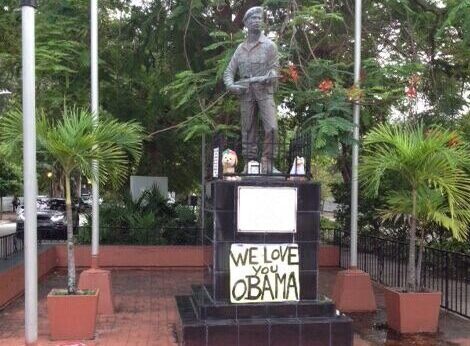
    As my walk continued I passed the Bay of Pigs monument. There was the bronze statue of Nestor “Tony” Izquierdo pointing his gun right at me, but things were slightly different. Perched at his feet were stuffed animals and at his pedestal was a sign that read “We love you Obama”.

    I stooped to take a picture of this. Other pedestrians passed it too. No one else thought much of it. Political contradictions are so commonplace here, it didn’t even deserve a second look.

  • Sex, Lies & Restaurants

    Sex, Lies & Restaurants

    I just quit my job at a restaurant whose cuisine isn’t based on a culture so much as an income level: sixteen dollar sandwiches, cuts of steak that cost a tenth of my rent.

    The seating at this place is mostly outdoors, and it rains every day, so twice a week there’s a screwball opera on the patio: millionaires running through the downpour with a sixty dollar fish in their hands.

    Also I was being trained by a nineteen year old who talked nonstop about his sidehustles, about the fortune-making loophole or niche he’s just discovered, and it reminded me of an old friend I ran into at Starbucks who, in describing his top-secret app-developing venture, lowered his voice and leaned toward me and said, “Imagine Tinder, but for golf,” and I told him that while I myself have never known anybody who solicited sex on a golf course I am, admittedly, unfamiliar with the rules of the sport.

    But yes the nineteen year old: he’d be telling me where to store the sauces, or how to cut the burrata, and then suddenly he’s telling me about his success as a daytrader and how he sometimes makes a couple thousand dollars a week just moving money around on his phone and I nod as he talks and widen my eyes at the number.

    I tell him I’m impressed. And I think it would be perfectly appropriate to ask why he spends thirty hours a week over a dish pit if he’s earning so much money on his phone, but if you go around pulling at loose threads all day pretty soon we’ll all be naked.

    Point is: I had no business working there.

    Also, I couldn’t eat almost anything off the menu.

    It sounds more restrictive than it is but I can’t eat cream-based anything. No seafood either. And I only eat red meat when my enemies suffer hardship.

    Also nothing deep-fried. And almost everything on this place’s menu was deep-fried seafood in a cream-based sauce.

    The only time I lament these restrictions is on dates. One dollop of alfredo sauce and I’m horizontal for a day. So I choose plain dishes when I go to restaurants. Chicken and rice, a salad with no dressing. Chicken quesadillas with no sauce happen to be my favorite food already and if your response here is to ask whether I also enjoy plain glasses of milk and missionary sex the answer is yes and often at the same time.

    Speaking of which: a friend and I were getting drinks at Mary Brickell Village last week and during a lull in the conversation he widened his eyes and said, “Oh!” and then reached into his pocket and pulled out a wadded napkin and thumbed it into my palm and said, “I brought this for you.”

    I took the napkin and thought, If there’s semen in this…, but then I unraveled it and no, it was a pill.

    Cialis.

    I said, “Ah. Yes. For all the sex I’m having. Thank you.”

    He said, “Even if you don’t think you need it, try it.” He told me the Cialis gave him a reputation at the restaurant where he works and that he’s now having threesomes with two servers on a regular basis. Best sex of his life with sex toys, he says. He asks me if I’ve ever had a threesome and I tell him no, that I prefer to disappoint just one woman at a time.

    But now I’ve got this pill.

    I start thinking of how great my performance could be. What a stud I’d become. A Cialis success story. My grinning face on pamphlets and pill bottles, winking in thirty languages. I’d become famous in Japan, incredibly famous, and travelers from my high school graduating class (Miami Palmetto Senior High 2009) will be humbled indeed to reach that foreign shore and find my winking face upon the currency.

    But it also seems more fitting a fate that I should pop my Cialis on a night where magic’s gonna happen, things are getting hot and heavy with my date, and then, as I’m waiting for the pill to take hold, I cast an eye over to the bottle beside my bed and see in small print what Cialis is truly made of.

    Deep-fried seafood in a cream-based sauce.

  • Miami Dade College Offering Free Tuition for Spring Term

    Miami Dade College Offering Free Tuition for Spring Term

    Nope, it’s not socialism. Nor is it a scam or a hustle or a political anything. It’s very simple. Higher education could be free next term at Miami Dade College.

    In an unprecedented move to inject enrollment into a potentially difficult term, the school is offering to cover tuition for up to 13 credits for Spring term, starting on January 6, 2021. Click here for more info.  To receive free tuition,  you must register for classes by this Friday, November 6th. Also, you must apply for FAFSA, which is Financial Aid. Now, if you already receive Financial Aid, then you’re good, you don’t need free tuition because you are already eligible. But, if you don’t qualify for Financial Aid, this promotion effects you.

    Is This For You?

    If you are young, living at home, and still dependent on your parents who might make too much money for you to qualify, this incentive will benefit you. Also, if you thinking about changing careers or picking up a new skill, this could totally be for you.

    This is awesome, by the way. The school is also offering 6 credits for free to anyone who is new to the college OR students who have been away from school for a year. With the pandemic likely to effect society into the Spring, maybe this is the perfect time to take some classes.  There will be all sorts of options for students with many classes offered in either Blended or fully Online modes. Some classes may meet fully in person if conditions allow, but it is too soon to know for sure. Remember, you can also register for mini-term classes which are a fast and efficient way to cruise towards a degree or certificate.

    Miami Dade College Rocks

    Choose from more than 300 distinct degree pathways leading to bachelor’s degrees, associate in arts and science degrees and numerous credit certificates in growing fields, including Cybersecurity, Digital Marketing, Supply Chain Management, Information Systems Technology, Nursing, Education, and more.

    For more info click here.

  • The Last Resort: Jewish South Beach, 1977–1986 by Gary Monroe

    The Last Resort: Jewish South Beach, 1977–1986 by Gary Monroe

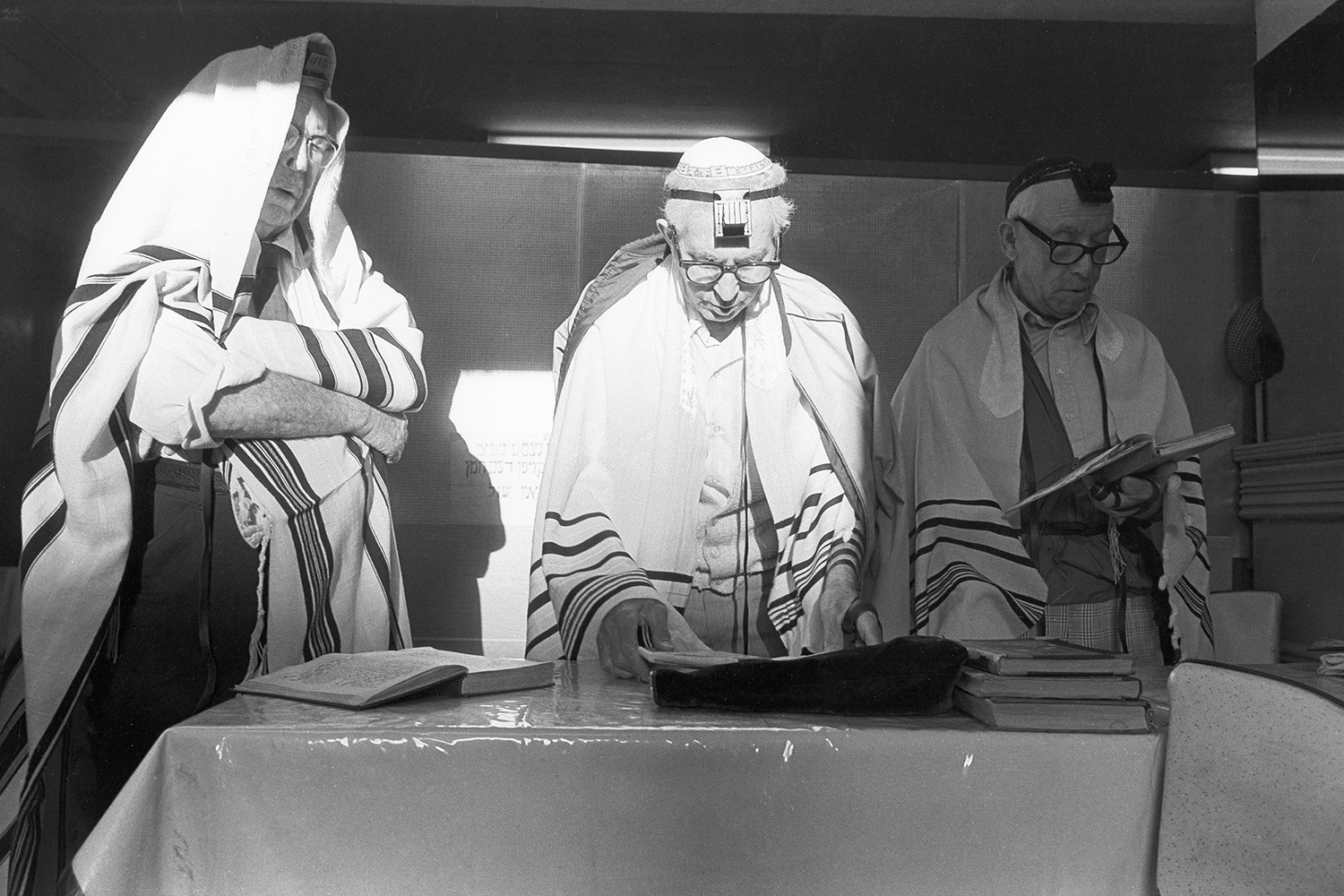
    Editor’s Note: The photographs you see are from the new book “The Last Resort: Jewish South Beach, 1977–1986“. All photos were taken by Gary Monroe and the book was published by University Press of Florida. Gary Monroe will be speaking virtually at this year’s Miami Book Fair which you can sign up for here.

    Morning prayer, 1983

    There was considerable orthodoxy in South Beach. Many of the hotels along Ocean Drive, Collins Avenue, and Washington Avenue converted card rooms and social halls into makeshift shuls (synagogues) to accommodate their clienteles’ needs of twice-daily prayer. The shuls are gone now, replaced by bars and restaurants.

     Lummus Park, 1977

    Lummus Park was central to life in South Beach. People would bring their folding lawn chairs here to enjoy an afternoon of socializing.

    Musicians, 1978

    Musicians brought their instruments to Lummus Park, attract­ing audiences. Gatherings of varying sizes formed for a few hours of socializing; they often sang, typically in Yiddish.

    Exercise group, 1978

    Exercise groups formed most mornings along Lummus Park, a strip of land that ran between the beach and Ocean Drive. Rose Silverman, who often started the session by doing a headstand, led this group, the most popular one.

  • Pre-Election Day Jitters

    Pre-Election Day Jitters

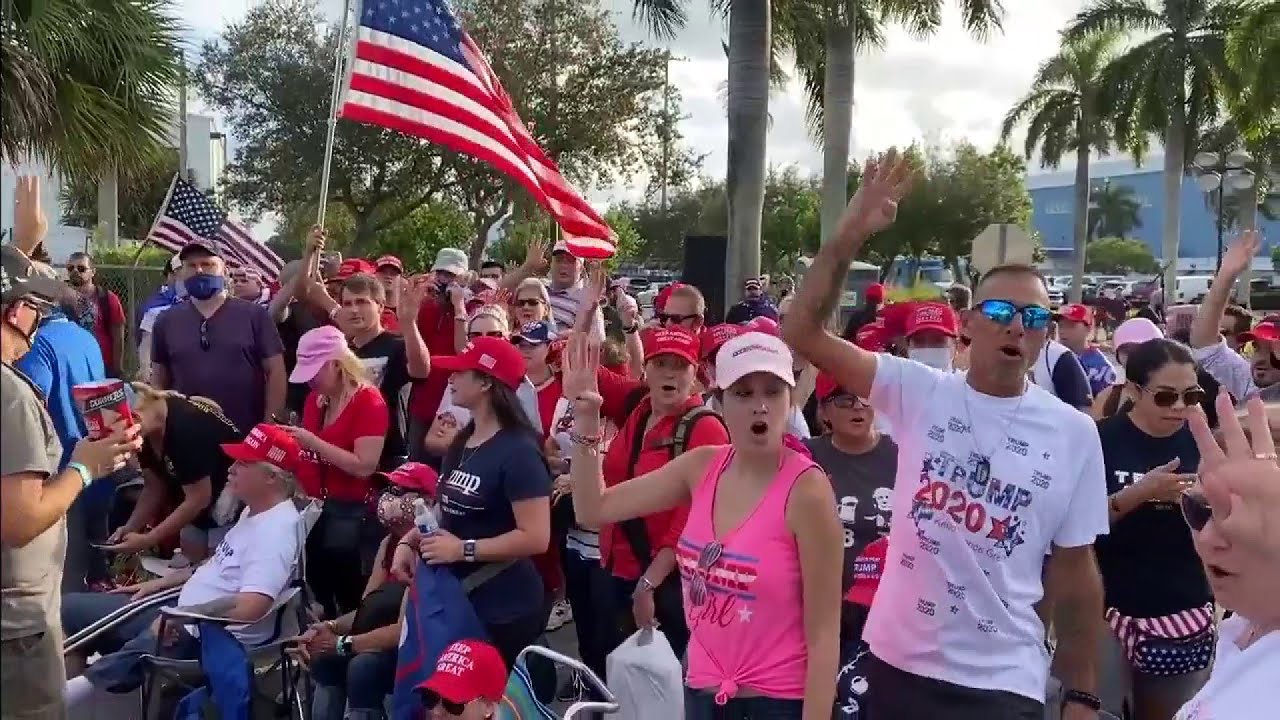
    Driving towards the Rickenbacker Causeway I could see a man waving a giant flag reading “Trump for president”.  It was a normal enough sight for a Sunday before a presidential election. If I had taken a picture though there would have been one glaring detail that would allow you to pinpoint this was 2020 rather than any other election year. The man with the twenty foot flag was wearing a face mask.

    Maybe the flag bearer was a mercenary, being paid to advertise for Trump. I’d like to think he was a brain damaged soul offered a few yummy candies in exchange for waving a flag without knowing who it was he was advertising for.

    Because otherwise how can he not make the connection? People are dying all around us and entire industries have gone extinct. As a constant reminder of these failings we must all cover our mouths and noses.  And yet you mean to tell me there’s someone of sound mind who wants the man who drove us to the precipice of this cliff to have his hands on the wheel for another four years?

    But the scary part is the flag waver is not alone. At least 40 % of voters will select Donald Trump as president. And I’m terrified that it will be a whole lot more.

    When the pandemic started I wasn’t too critical of the president. This was an insane plague, a force of nature, what could man do against it? But as the days turned into weeks and now months, you start comparing how our country is doing compared to others and it’s pitiful. The nation of Japan just announced they have just passed 100,000 COVID cases throughout the entire pandemic. So what, you might say, they have a third of the US population. But then you learn the US had 90,000 cases alone last Thursday. In one stinking day the United States had almost as many cases as Japan had in nine months.

    Every presidential race, we’re told this is the most important election of our lives. This is the first one where that might be true. When the electoral college selected Trump as president in 2016, I wasn’t a fan of his ignorance, but he seemed to have a certain sense of humor. Maybe the next four years would end up like an ’80’s Rodney Dangerfield comedy where a wisecracking sex addict found himself with the keys to the White House? But instead we’re in the middle of a disaster movie. 236,000 Americans have died of COVID.

    I’m not a fan of Joe Biden. For a lefty like me Biden’s got a lot more in common with Ronald Reagan than he does with Bernie Sanders. But at this point I’d think a farm animal would keep us safer than the incumbent. Even  Ronald Reagan looks good in comparison to our current leader.

    He did after all leave us this one piece of wisdom back in 1980, “Are you better off today than you were four years ago?”

    If enough Americans vote with that question in mind I’d feel a lot safer for our future.

  • Poll Workers Applaud & Cheer First Time Voters

    Poll Workers Applaud & Cheer First Time Voters

    It’s happening all across Miami-Dade County.

    Citizens are voting for the first time in their lives. They arrive at the poll confused. Inform the Miami poll workers “this is my first time voting. What do I do?” The poll workers then yell, “we have a first-time voter!” And what happens? The precinct breaks out in applause. Cheers and clapping.

    It’s the coolest choir for Democracy. It’s not legal to record inside a poll-station so we don’t have any video but it’s happening.

    If from Miami, maybe you’ve experienced it.

    This is not a normal occurrence in America

    I’ve voted in every election since 1994 and never experienced this in cities I’ve lived, like New York, Tucson, AZ, San Francisco, Ft. Lauderdale, Coral Springs, or even in Downtown Miami. But in South Miami, it happened this year, twice while voting. Several college students in my classes also testified that the same experience occurred.

    How cool is that?

    Is it because Miamians are loud? One almost expects the poll workers to whip out pots and pans, a local custom when the city celebrates? Or is it because Latino’s appreciate the value of having the freedom to express themselves at the polls?

    Probably a little bit of both.

    Miami is one of the richest cities in America

    Miami is rich in wealth, an abundance of sunshine and, on the shallower end, plenty of material beauty. The city is rich in diversity and culture, running the gamut as a gateway into the Americas and Caribbean.

    Miami is also filled with the riches of freedom as percentage-wise, a large portion of its population is composed of first generation Americans. In other words, much of Miami’s 3 plus million residents were not born in the United States.

    As a result, during major Elections, like this year, you have many, many relatively new citizens who have never voted in the United States. Many of these new Americans have immigrated from countries where you can not vote, like Cuba. Correction, you can vote in Cuba but there is only one political party: Communist.  Or countries where voting is untrustworthy, like Venezuela, where “mysterious” fires burned thousands of voting machines in its last election.

    Listening to poll workers applaud your right to vote, whatever the reason, is pretty damn cool. So, if you haven’t already, experience it yourself and vote!

  • Bill Baggs Was More than a Park – Excerpt from New Biography “A Nervous Man”

    Bill Baggs Was More than a Park – Excerpt from New Biography “A Nervous Man”

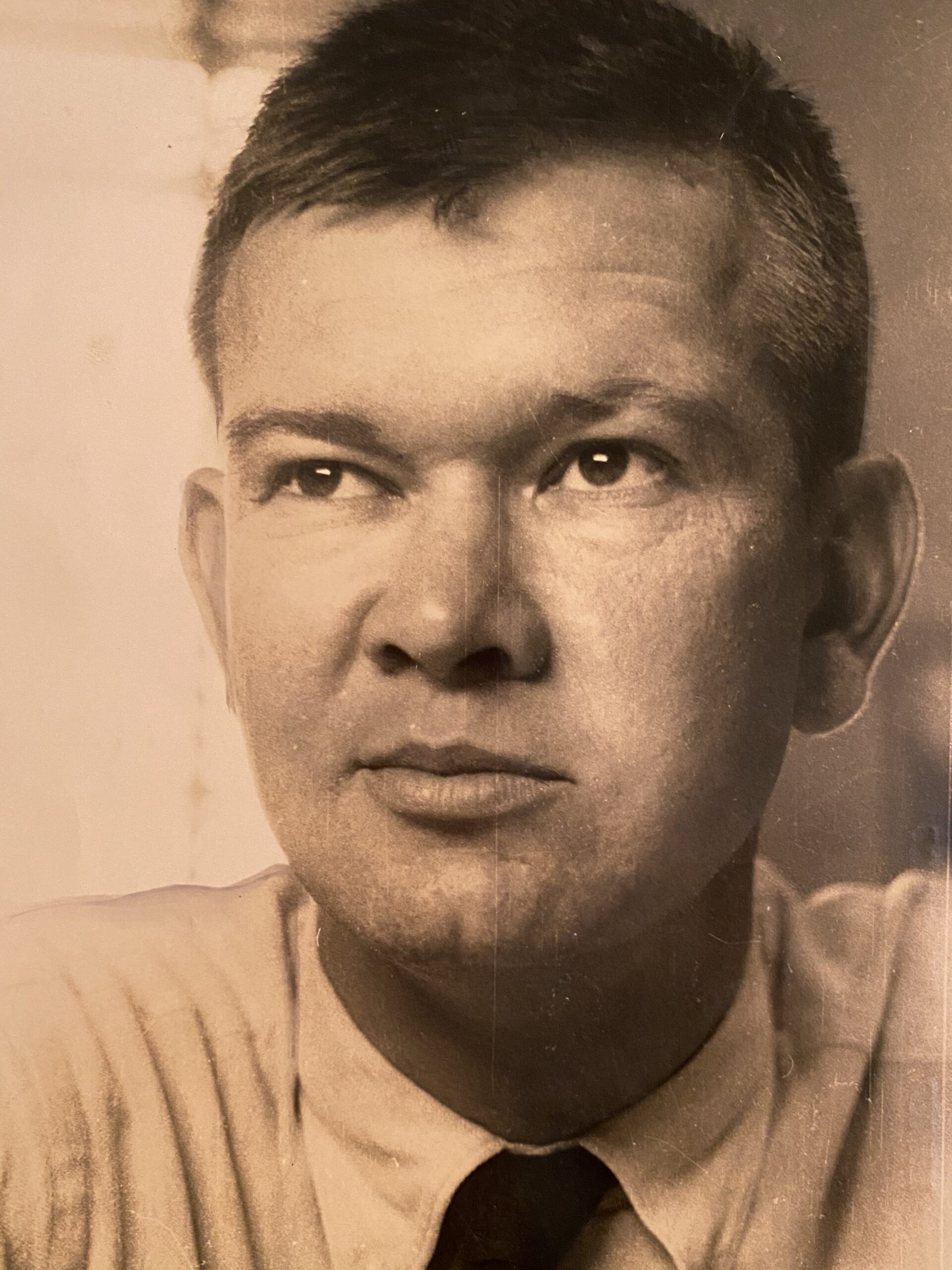
    Editor’s Note: Below is an excerpt from “A Nervous Man Shouldn’t Be Here in the First Place: The Life of Bill Baggs“. It is a biography of the late Miami News editor written by Amy Paige Condon and published by University of Georgia Press. The book’s author will be speaking virtually at this year’s Miami Book Fair which you can sign up for here.  

    On the morning of October 6, 1962, before he left for work, [Bill] Baggs received a call on the secure line at home. No one knows if the call came directly from [President John F. Kennedy] or one of his aides, but whoever called provided Baggs with intelligence on Cuba—a list of possible missile launch sites on the island. Baggs immediately contacted his Latin American editor, Hal Hendrix, who for weeks had been running down rumors that the Soviets were building half a dozen, maybe more, ground-to-ground intermediate-range missile launch sites throughout Cuba, capable of blasting missiles with nuclear warheads as far south as the Panama Canal and as far north as the interior of the United States. The list provided by Baggs confirmed Hendrix’s leads.

    As his reporter worked quietly to verify the information through other channels, Baggs performed a little gumshoe reporting himself. He tapped into the network of Cuban exiles who had provided him with verifiable leads in the past. He met with a young fixer at the English Pub at the Jamaica Inn on Key Biscayne—one of Baggs’s favorite haunts. There, the young man, who had just returned from Cuba by way of Mexico, revealed that an increasing number of Russians were living on the island and had almost completed a launch site near the village of San Cristobal.

    Baggs passed on the information to Hendrix, who wrote the lead story for the next day’s paper. “Soviets Build 6 Cuban Missile Bases” screamed the seventy-two-point headline on October 7, 1962. The News was the only paper with the story.

    The White House officially denied the intelligence reports. Undersecretary of State George Ball had even said the week before that Cuba was “still not a military threat.”

    News editor John O’Neill challenged Baggs and refused to publish any further reports by Hendrix until the White House, State Department, or Defense Department went on the record. Baggs, of course, would not and could not reveal his source, and so relented, keeping to his pledge to not direct his editors how to cover the news. Instead, he created a work-around by pushing Hendrix’s evolving Cuba story to the editorial pages. Even as the administration overtly pushed for restraint from the news media for purposes of “national security,” Baggs’s obligation came first to his family, his staff, his readers, and his community, who were all quite aware something dire was afoot and that they were at ground zero either the attack, the response, or both. Military convoys carrying as many as eleven thousand troops, eighteen thousand tons of equipment, and more than five thousand Marines clogged U.S. 1 heading south to Opalocka, Homestead Air Force Base, and Key West. Four hundred Navy ships filled the waters around the peninsula, and pleasure boaters were warned to keep close to shore and to avoid the Windward Passage. The noise of jet engines pierced the quiet at all hours.

    Meanwhile, seven Pan Am planes awaited the go-ahead to fly to Cuba and transport eleven hundred Bay of Pigs prisoners to safety if negotiations succeeded between the Cuban government and New York lawyer James Donovan, who had brokered the release from a Soviet prison of U-2 pilot Francis Gary Powers two years earlier. With increasing tensions among the United States, Russia, and Cuba percolating among the U.N. Security Council members, the talks, so close to being completed, appeared likely to break down.

    Four days after Hendrix’s first story appeared, the Kennedy administration remained publicly silent, even as Havana claimed the United States was violating its airspace and a group of exiled commandos known as Alpha 66 raided the Cuban village of Isabella de Sagua—a badly timed maneuver. In an editorial on October 13, Baggs speculated that the Soviets were using Cuba as a testing ground for America’s potential response to any aggressive move on West Berlin.

    Despite the imminent threat of war, Baggs kept an appointment to cover the seventeenth anniversary of the United Nations. Secretary Adlai Stevenson had invited him along with McGill and Ashmore. It also got Baggs closer to the chess game between Kennedy and Khrushchev. On the way back to Miami, he stopped in Washington for a round of meetings, perhaps to help Kennedy polish the televised speech the president was to give the next day, Monday, October 22, in which he finally confirmed for the American public what Hendrix had reported two weeks earlier.

    On hearing Kennedy’s address, Baggs’s father-in-law, Big Craig, summoned his daughter and grandsons to Athens, Georgia, but Baggs would not hear of it. “Rather bluntly,” according to his wife Frec, Baggs informed her that “the bombs would pass over Miami and land in Georgia.” Still, with jets roaring over Miami constantly, there would be no calming their fears.

  • A Florida Vote is the Most Important Vote in the World (Update)

    A Florida Vote is the Most Important Vote in the World (Update)

    A Florida vote is gold right now.

    Do not take this election for granted. It is closer than you think. Despite President Trump catching COVID, the pandemic, the anti-science sentiment, the economy, social justice issues — literally all the things, this race is close. Super close. Don’t trust or listen to the polls. They were wrong last time and they are easy to manipulate.

    If you want proof this race is close, follow the money.  According to recent gambling data, almost 75% of online betters are choosing Trump to win the election. As a result the odds are tighter than just a week ago. This baby is going to be close and it might come down to Florida. Again.

    Florida, Florida, Florida

    There is no question if Biden is the winner of Florida he will win the election. If Trump has any chance, and he does, believe it, he will 100% need to win Florida. Biden can still win the election by losing Florida and sweeping Pennsylvania, Michigan and Wisconsin. This is certainly possible. He is from that neck-of-the-woods.

    President Obama chose Joe Biden as Vice President in part to help him carry The Rust Belt.  But listen. Both Pennsylvania and Michigan will not announce their results on Election Day.  Rather stupidly, they do not begin counting mail-in-ballots until Election Day and will need a couple of days.

    Facts!!

    At the end of the day, again, and as usual, a Florida vote is the most important vote in the country. If Biden wins Florida and wins mightily, it will be an early night on Election Day. If Trump wins Florida this election will delve quickly into free-for-all chaos as the world watches and waits for Michigan and Pennsylvania to count mail-in votes. There will be accusations of fraud. The counting of the ballots will be liable to voter intimidation.

    It will be like the Recount of 2000, in Florida.

    But honestly, the race is close in Florida.

    No offense to California or New York, you may have a loud presence culturally and online, but your voice at the political ballot box means essentially nothing. California and New York will vote Democrat.

    Florida? We honestly don’t know.

  • Early Voting in the Midst of a Kendall Pandemic

    Early Voting in the Midst of a Kendall Pandemic

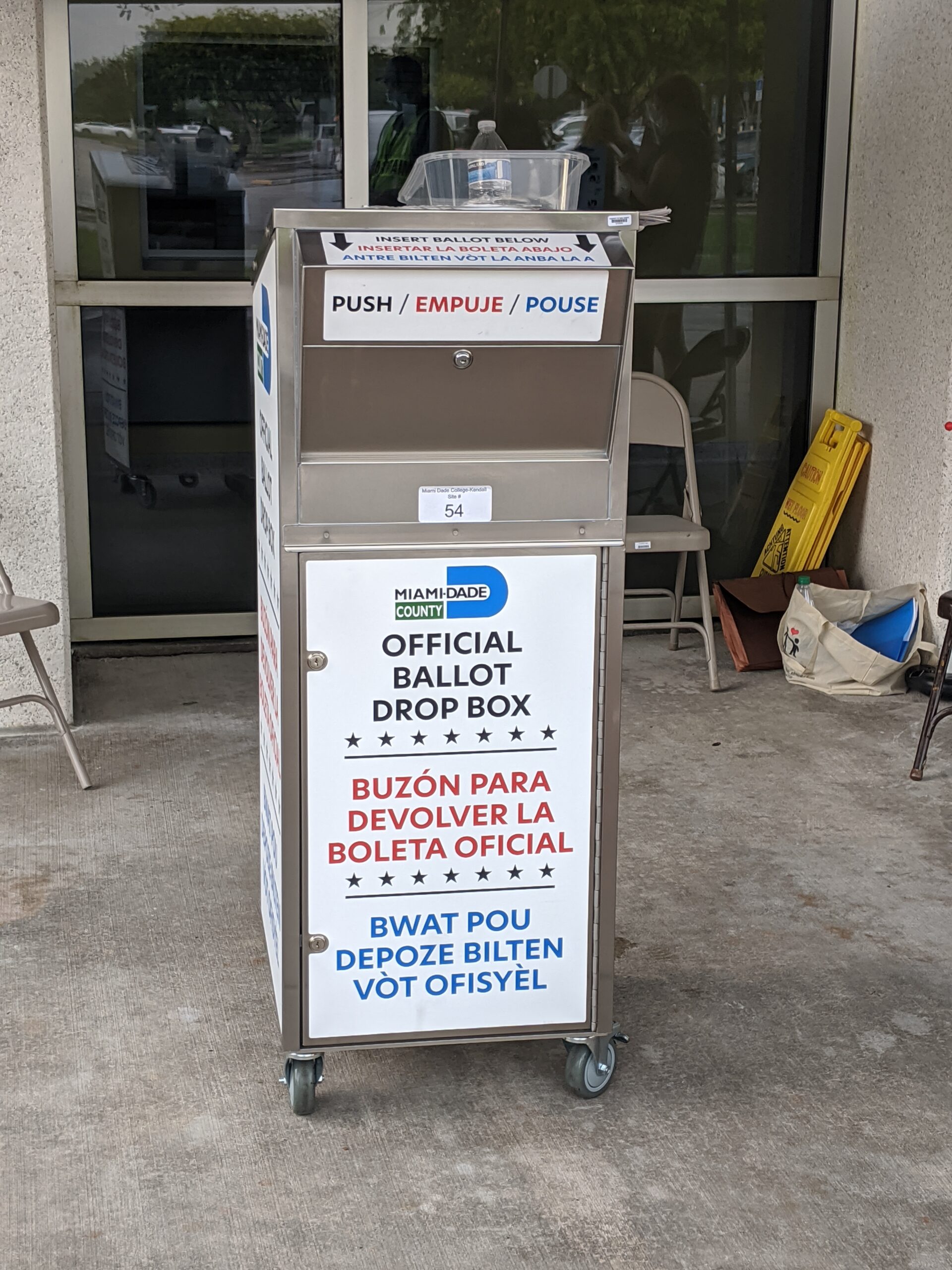
     We waited outside, the long lines stretching longer than the wait at a water park on a hot summer day. We waited, some of us standing, some of us in wheelchairs, some of us in our scrubs from  our hospital jobs. We waited in the rain with dark umbrellas, the line crawling slowly until we finally arrived, rising with our blue masks pasted to our faces, glancing at the floor while keeping six-feet distance. Some of us were tired and unslept. Some of us were angry we didn’t vote by mail.

    We waited in the light of day, for the rain to subside, and finally, inside the library room, the booths were packed with people like cans of sardines. Our hands trembled, our thoughts jittering in our brains like gnats scattered in the sunlight. The people so close to us, we could hear their breathing. The only thing preventing us from getting COVID-19 were the plastic separators in the booths and the coverings on our faces. We disinfected our hands after using the public pens, and now we knew a little of what people with OCD must feel every day.

    We got our “I Voted” stickers and left the small room, and once again waited in the rain for another day when the country wasn’t led by a fascist-leaning president: a man who calls COVID-19 “the China virus,” who when asked to condemn white supremacists said: “stand back and stand by.” But enough of him; there are people dying from COVID-19, bodies piling, funerals unattended, a country in mourning with no place to grieve

    Maybe one day we’ll break down the walls of that infamous house in Washington, D.C., a White House that was built by Black slaves. A symbol of systemic racism and deep inequality. Capitalism in the United States is this in a sentence: 1/10 of 1 percent of the population owning the lives of the working class. A system where corporations are legally considered people. Where “the economy” takes precedence over the lives of citizens, and where millions of people live in poverty.

    Maybe one day we can finally say this is truly a democracy, a “government of the people, by the people, for the people.” Maybe Lincoln’s words will not live in vain, and there will be “a new birth of freedom.” Or maybe we are living in the remains of democracy, and we are witnessing the rise of an oligarchy and the rise of another Hitler.