Category: News

  • Crispy Streets is Miami’s First Korean Corn Dog Food Truck

    Crispy Streets is Miami’s First Korean Corn Dog Food Truck

    Food in Miami tends to be Hispanic wherever you go. If you need to find some Cuban Cafecito there’ll, be a spot within a mile, but when it comes to anything else you might need to do some looking. There are a number of Chinese restaurants and Japanese sushi places that are all the rage right now, but if you are looking for more Korean-style food those numbers are still very few.

    The creative southern Asian meal-on-a-stick, otherwise known as a Korean corn dog, started increasing in popularity during 2016. It’s a perfect, trendy treat, not only to eat, but for social media to feast their eyes on. However, the only way to get a Korean corn dog was to drive hundreds of miles to Orlando.

    Until now. The delectable treat has come to the streets of Miami.

    Crispy Streets is Miami’s first Korean Corn Dog food truck, with, of course, a fun Latin mix to the recipe. First making its social media presence in March 2021, the food truck quickly rose to grow a following of just over ten thousand followers. This small local business has a lot to offer with a vast majority of options on the menu, from seven crispy creations to choose from, three refreshing boba flavors, churros, and, their latest addition, street fries!

    In true Southern Korean fashion, the menu offers an option of half dog or half cheese. The Latin mix comes into play with menu options such as the ‘Cuban Guy’, ‘Fried Guavita’, and ‘El Santiago.’ The menu also includes a vegan option for those who would still like to try the meal on a stick with no meat. Deviating from the traditional recipe, Crispy Streets offers to include ingredients typically served in a Hispanic fashion, adding that sweet and savory touch to that crunchy and salty goodness.

    Setting up shop at a gas station on a corner of 8th street, only twenty minutes from me, I had no choice but to fulfill a long-term craving. The first detail of notice, the Crispy Streets team provided the best customer service with only a few words. The ordering process made quick and simple. On to the menu, prices are relatively cheap making it easy to come back for more. Already gone twice, and it can be confirmed that anything on the Crispy Streets menu is going to be good.

    From the crispy creations, the ‘Cheesy Couch Potato’ is the best standard Korean dog you can get. It’s simple but the potatoes wrapped in the fried batter adds that extra crunch. The ‘Fried Guavita’ guava and cream cheese drizzle with queso frito on top, the true Miami style. Another popular creation, the ‘Flamin Inu’ fried with ramen noodles and topped off with hot Cheetos, definitely try it for that major crunch factor. The newest addition of the street fries was the standout dish. The combo of fries with all the sauces and toppings is the perfect comfort food. A definite must-try from the menu.

    Crispy Streets food truck although relatively new, provides really good food and care for their customers. I highly recommend  anyone in the Miami area who has been craving Korean corn dogs  to check the truck out. Check them out on Instagram here.

  • Ten Things You Might Not Know about Florida’s History

    Ten Things You Might Not Know about Florida’s History

    The below is an excerpt from James C. Clark’s book A History Lover’s Guide  to Florida. You can see James C. Clark  at the Miami Book Fair on Saturday, November 19, at 12 p.m. in the MAGIC screening room at building 8.

    It is a simple question that children learn in school: How many original colonies were there? I bet you said 13. Right?

    The correct answer is 14. Number 14 is Florida, and we don’t talk about it because while the other 13 colonies fought for independence from Britain, Florida remained loyal to King George.

    It was so loyal that three signers of the Declaration of Independence were imprisoned in the old Spanish fort in St. Augustine, and British troops used Florida as a base.

    Florida’s history has always been different. As the historian Michael Gannon pointed out, by the time the Pilgrims and Jamestown settlers arrived, St. Augustine was already undergoing urban renewal.

    Because so many Floridians come from somewhere else, few know the state’s rich history. Here are ten things you might not know!

    • The first president to come to Florida was Chester A. Arthur in 1883, who could not go south of Kissimmee because there was no telegraph, and could not be out of touch.
    • Florida helped three future presidents achieve a national reputation. Andrew Johnson and Zachary Taylor came to fight the Seminoles, and Teddy Roosevelt and his Rough Riders embarked for Cuba from Tampa.
    • The first passenger airline began in Florida in 1914. Tony Janus flew passengers from St. Petersburg to Tampa in an era when no bridges connected the two. It lasted only a few months. Four airlines, Pan American, National, Air Florida, and Eastern, started in Florida.
    • Carl Fisher built the Indianapolis Motor Speedway and invented the first automobile headlight. He used his fortune to develop Miami Beach.
    • Fort Mose, the first free-Black settlement in the New World, was established near St. Augustine in 1738.
    • Tallahassee became the capital of Florida in 1824 because it is halfway between Pensacola and St. Augustine.
    • In 1896, Henry Flagler’s railroad reached Miami, although he predicted the town would never be more than a fishing village.
    • Fort Taylor in Key West and Fort Jefferson in the Dry Tortugas were obsolete before they were finished and have never been used in battle.
    • Walt Disney chose Orlando as the site for his new amusement park on November 22, 1963. Several hours after picking Orlando, he learned that John Kennedy was assassinated in Dallas.
    • Donald Trump isn’t the only president to own a home in Florida. John Kennedy, the Bush family, and Richard Nixon had Florida homes.
  • UNSIN Festival Celebrates Independent Music in Miami

    UNSIN Festival Celebrates Independent Music in Miami

    UNSIN, a new free festival in Miami celebrating independent, immigrant-made music, will launch Saturday, November 5 at Oasis Wynwood, 2355 N Miami Ave.

    Founded by Immigration Records, a record label and agency supporting immigrant artists in the United States, UNSIN will feature over 18 performers across two stages drawing from a variety of genres, from indie pop, rock and experimental to R&B, jazz, funk and hip-hop. Visitors will enjoy some of Miami’s finest bands, DJs, singers and rappers, including Cesar Paniagua, Mision Hip-Hop, Musiana, Hunters of the Alps, and more, as well as food and beverage vendors and a vintage market.

    Meanwhile, UNSIN’s daytime panel program aims to help educate and uplift artists and music professionals at all levels, with speakers discussing music production, marketing and releasing music and building community and culture in Miami.

    The festivities begin at 1 pm, with panels running until 5 pm and music until 3 am, closing out with a reggaeton party courtesy of Perreo Galactico.

    “Immigration Records works with emerging talent to produce and distribute music, events and other creative content,” said UNSIN founder Julian Duque in a statement. “We do this for the love of connecting through music, for the love of spreading a message and to connect communities through the power of live music.”

    UNSIN is generously supported by Believe, Gibson and Topo Chico. Admission is free with RSVP. For more information on lineup, additional acts, set times and more, follow UNSIN on Instagram.

  • Source Amnesia – A Poem by Julie Marie Wade

    Source Amnesia – A Poem by Julie Marie Wade

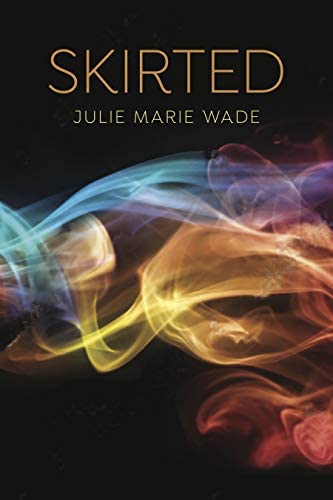
    The below poem “Source Amnesia” appears in the poetry collection Skirted. You can see Julie Marie Wade  at the Miami Book Fair on Saturday, November 19, at 4:30 p.m. in room 6100.

    The day has come, your mother has forgotten.
    Your father tries to remember,
    but she erases him also, so the pages of his
    knowing are torn clean through, like the
    garments of a prophet transfigured.

    —————————————————

    Your mother resolves this arbitrary hour,
    on this ordinary summer day, that you are
    worth more to her elapsed than alive—
    a figment now, a figure no longer.

    —————————————————

    Meanwhile, in an airport lavatory,
    you scrub your hands.
    Meanwhile.
    A soft word.
    Essential, luxurious
    as soap.

    —————————————————

    Your mother is disgusted.  The thought
    of you touching a woman disgusts her so
    deeply she can think of little else.  But now
    when she thinks of you, it is like gazing
    at the smashed fist of a broken mirror—
    its spider webs of glass—unable to admit
    reflection.

    Two skeletons—faceless, fleshless—
    knocking bones beneath translucent sheets.

    —————————————————

    Your father browses dime stores, delays
    his return to the brick bunker-house on the
    seaside lane.

    If only he could remember:
    the special significance of the colored tags,
    how much off today, how much tomorrow.

    —————————————————

    It is not the way she imagines.  You are not
    the way.               Still, the mounting alarm
    after all these years—reeled back in, cast &
    re-cast in the long distant pantomime of
    her disappointment.       And when you look
    over your shoulder in the bathroom mirror,
    there is no one visible, no one who would let
    herself be seen.

    —————————————————

    Meanwhile, your father continues
    to mean well—his intentions
    useful & robust
    as a fist against
    a concrete door.

    —————————————————

    On the small perishable province between
    innocence & guilt, you have woven
    your nest, stitched up your solitude, begun—
    if only begun—to lower the louvered blinds
    of your heart.

    Loathing is easy, obvious,
    but the essential luxury—indifference:
    to begin—if only begin—to turn a cold
    shoulder to the non-figure whose breath
    steams slow flowers up the glass.

    —————————————————

    Meanwhile.  The woman who touches
    your freshly washed hands is nothing
    like your mother.  Thank God for that.
    Thank God.

    —————————————————

    Your father: contusion of aimless love,
    Protestant ambition. Praise God for the woman
    who sews his pockets shut, seals off the portal
    to temptation.

    O, for the change slipping through,
    the linty sourballs!

    O, for what threatens to pass!

    —————————————————

    Some arbitrary hour of this ordinary
    summer a woman is washing clothes—
    washing them & hanging them out to dry.

    You may recognize her as your mother;
    you may not.

    In the end, it makes no difference.
    She will not recognize you.

    Outside in the morning chill, she pins
    each garment to the wire tree, shrill bird
    tilting on its rusted axis.

    The pockets of her apron bulge with wooden pegs.
    The shoulders of her blouses rise with yeast of cushions.

    In this light, she is not beautiful—
    not even a little—
    but you wish you could love her
    just the same.

    —————————————————

    Meanwhile.

    Your father wanders through parking lots.
    Your lover lingers near the refreshment stand.

    —————————————————

    You have choked back everything
    human: terror, honor, tears.
    But now maybe you would if you could…
    would meet her face to face—casualties
    of the broken light, calluses on time’s
    ancient weary heels—

    Instead, you turn your palms upward
    under the low heat, wiggle your ten
    good fingers on your two strong hands,
    consider the blessing of skin: the skiff of
    her breath, the wave of your flesh—
    gratitude, lust, compassion.

    —————————————————

    So you leave a room with a faucet
    for another without one, knowing a faucet is
    a valuable thing, knowing you take nothing
    if not your own life in your hands.

    On the small perishable province
    between restoration & regret,
    a body still bows, still bends:

    Be it a sink, or a spigot, or
    a wild spring—

    you see her clearly:  there,
    always: that stranger—she, you—
    kneeling now, washing her hands.

  • Heisenberg at GableStage Delivers a Powerful Portrait of Relationships

    Heisenberg at GableStage Delivers a Powerful Portrait of Relationships

    Months ago, when GableStage announced its 2022-23 season, Heisenberg (its first play of the season) jumped off the page. The name has pizzazz and a certain cachet. Certainly, any fan of the Breaking Bad universe would immediately think of Walter White’s alter-ego, the notorious Heisenberg — this play is not about Walter White or Breaking Bad, not close.

    Heisenberg the play by Simon Stephens is a love story between two polar opposites. First produced in NYC in 2015, the story is set in modern London, with a scene in New Jersey.

    Georgie Burns is a hyper, fast-talking, quizzical, nymph, played to perfection by Margery Lowe. She’s a sizzling firecracker with no boundaries, manic at times, in her body language and diatribes. She’s pure movement, in many ways, impossible to hold down.

    Alex Priest (Colin McPhillamy) is the polar opposite, also played to perfection, he’s a stoic man, sullen, downcast, defensive yet steadfast. He’s a 75-year-old man, (33 years older than Margery), a retiring butcher, never married, with no kids. But Priest is a man who’s experienced a lot of loss, like a lot of loss, but it’s all long gone and buried in the past. And he’s stuck, in many ways.

    That’s the premise. Alex is stuck. Georgie can’t sit still.

    This is the “uncertainty principle” the play is named for.

    Werner Heisenberg was a German chemist and father of quantum physics. His “uncertainty principle” basically states that it’s impossible to measure both the position and speed of a particle. In other words, in human terms, if we know where you are, you aren’t really moving, so you’re stuck. If we only see your speed, or how fast you’re moving, then we don’t know your position, or where you are.

    Make sense?

    Heisenberg the play

    It’s kind of fascinating if you think of that principle and relate it to the human condition and the relationships we have in our life. Usually, one person is stuck (in a loveless marriage or relationship, in a stagnant career or job) and the other one is moving, often without direction.

    Heisenberg the play is a thinker. It’s bizarre and quirky, fast paced and eclectic. An intimate curious portrait of the inner dynamics of human relationships. Dense in dialogue, Heisenberg is as entertaining as it is unsettling. One of the weirdest love stories you’ll ever see on a stage.

    It’s captivating, slightly frightening, but not spooky.

    Heisenberg shows us how fragile the human condition is. This play, executed to perfection by GableStage, dissects that truth down to subatomic levels. Don’t miss this one. It’s a doozy.

    Heisenberg is now playing until November 20th. For tickets and more info, click here.

    Heisenberg Fun Fact

    Actor Colin McPhillamy was an original cast member of one of the best plays produced in the last 10 years, The Ferryman. That play crushed London and Broadway in 2017-18 and starred Paddy Considine, among others, who just played King Viserys in HBO’s wildly popular House of the Dragon.


  • Jorge Drexler on the Importance of Connection

    Jorge Drexler on the Importance of Connection

    Uruguayan musician Jorge Drexler is coming back to Miami on November 3 at the James L. Knight Center after being nominated for nine Latin Grammys on his first album in five years, Tinta y Tiempo . Sitting down for an interview, Jorge Drexler takes us into further into his mind.

    The beginning of his music career came later than many would expect. Before dropping everything to pursue music at 30, Jorge Drexler had a proud career as a doctor specializing in otolaryngology. “I left all of that for a flat in Madrid with nine other people from Uruguay.” He further elaborates on studying music since he was five and started studying music around 18 for ten years. “It was always there for me. You can do both things.”

    While specializing in medicine he was able to support his first two records. Now fully a musician, releasing his 14th studio album, we discuss the recent album, his process, and the challenges around it all.

    The album Tinta y Tiempo was the result of a difficult process for Drexler, in the midst of it he has a new team to please, had too many expectations, and his writing process was not working in the lockdown. The pandemic environment took away a crucial element of his personal writing process, the people that surround him. He paints the picture of Sunday home-cooked dinners with his family and friends, he tells me on Sundays when he is surrounded by his loved ones is when he shares his songs. Being on lockdown it was harder to actually finish songs without that human element. “If I knew where good songs came from, I’d go there more often.”

    Questioning him on his writing process, he continues by saying “Nothing works, nothing is ever a guarantee, there is no formula for it.” His fourteenth studio album goes over these themes of the permanence of ink and allowing time to do the job, it is all about the master plan, as titled after the opening track. The bigger picture, in the end, is always love.

    Receiving 15 awards, and over 55 nominations additionally with nine current nominations, Jorge Drexler is accomplished in medicine and music, he is highly accomplished. Yet when questioned on how he feels about these awards he affirms his celebration and gratefulness but says they are distractions. “I try not to bring awards into the equation, it makes things easy to get distracted.”

    We talk back to his  Academy Award for “Al Otro Lado del Río”, written for the film The Motorcycle Diaries, and how confusing it was for him. How could an obscure, non-commercial and emotionally connected album about the lowest point of his life won such an award? “I want to make a living with my music, I don’t want all the irrationality of fame, I don’t need that power,” he adds that he hates calling his supporters, fans, “If you want to truly know someone, give them power.” Largely acclaimed and rewarded, we discuss his point of view surrounding failure and success, “failure and success are the same, the death of the artistic process.” He continues, “when you make eye contact with success, you become a statue of yourself.”

    Sitting down with Jorge Drexler, his humility and love for his craft is very tangible. An artist who truly cares and has a profound love for what he does. To hear him perform in person and experience the love in his music, join Jorge Drexler at the James L. Knight Center in Miami on Thursday, November 3.

  • Antonia Wright Pushes Back on Abortion Ban at Spinello Projects

    Antonia Wright Pushes Back on Abortion Ban at Spinello Projects

    In shocking irony, the death in North London of revered feminist artist Paula Rego at age 87 on June 8 coincided with intense debate over whether abortion would remain legal in the United States.  Nearly three weeks later, Supreme Court decision Dobbs vs. Jackson Women’s Health Organization overruled historic 1973 decision Roe v. Wade conferring on women the right to an abortion.

    Rego is hailed for her “Abortion Series,” a large-scale series of pastels from the late 1990s. They were conceived to protest the defeat of a 1998 referendum to decriminalize abortion in her native Portugal.  Her art was later credited with altering public opinion to allow legal abortions in Portugal in 2007.

    In this influential series, a single-clothed woman in anguished pain is depicted alone, sometimes curled in a fetal position in bed or with knees drawn up next to a bowl. She’s a grim survivor of an illegal abortion. “I didn’t want to show blood, gore or anything to sicken, because people don’t want to look at it then,” Rego said at the time. “And what you want to do is make people look.”

    Miami artist Antonia Wright is among a growing number of women artists who share Rego’s outrage over anti-abortion forces and who create art in protest. “With the reversing of Roe, I feel anxiety for younger women and the fear they must have around unexpected pregnancy,” Wright says.

    She’s also a board member of Planned Parenthood and mother of two young children. Her arresting art is now on view at Spinello Projects.  It addresses women’s challenged right to control their reproductive health. The work is both fierce and delicate, resonant with terrible beauty.

    At Spinello, Wright’s “I Came to See the Damage That Was Done and the Treasures That Prevail” brings together photograms, glass sculptural objects, video, and a tough-to-forget sound art installation, “Women in Labor.”

    While Rego said she wanted to make people look, Wright wants to make people listen.  There’s absolutely nothing to see in Wright’s “Women in Labor.” What you do see unfolds only in your imagination. Wright gives us no visual cues, only absolute darkness, surely recalling life inside the womb.

    To experience “Women in Labor,” you walk into the darkness of a single gallery. A cacophony of screams soon surrounds you. You’ll hear a shrill bleat. It sounds like an animal brought to slaughter. Then ragged, wordless shouts multiply. They rise into a horrific crescendo. They suggest the ear-splitting chaos of a mass shooting.

    Abruptly, moans soften into frail sweetness. There’s low, rhythmic breathing, an almost ecstatic, even orgiastic sigh. It dissolves into seconds of silence, of peace. And then a strident wail tears into more tumult, a butchered world of pain where peace is a shredded memory.

    Wright calls “Women in Labor” a “data sonification artwork” for our post-Roe era. It’s produced by an algorithm she developed with data reflecting miles women must travel in 11 states with abortion bans  in order to receive an abortion. That mileage data has been randomly combined with soft and more intense sounds of 11 women in labor.

    Because this installation is operated by a self-generative program, the sequence of sounds constantly changes. “You’ll never hear the same sound combination twice,” she says.

    Those more intense and tormented sounds signify how women’s reproductive rights are being violated by anti-abortion legislation, requiring the labor of traveling long distances to receive this procedure. Economic pain is also part of the labor, Wright explains, as such travel often means women must do extra work to pay for a hotel and, if they are mothers, childcare.

    “All of that labor is time and money,” she says.

    How did Antonia Wright get these indelible sounds of women giving birth? Partnering with a lawyer to create a contract, Wright explains that she asked her own midwife to sign a contract stating that Wright owned the sounds the midwife recorded from her patients. While the actual women whose sounds we hear signed a contract agreeing to participate anonymously in this artwork, Wright reveals that the audio includes sounds recorded from her own labor.

    The artist says she offered to pay the midwife for her work recording these sounds, but the midwife declined. Wright adds that she hired a woman-owned business to distribute gift baskets with post-pregnancy presents to the women who participated.

    “I know it seems contradictory to think about women having babies in the context of abortion rights,” says Wright. “But for me, it’s part of the same conversation about reproductive justice and letting women make decisions over their own health care.”

    Prolific and innovative, Wright excels at mining visual and verbal metaphors. It’s no surprise that her website lists an MFA in Creative Writing and Poetry from New York’s New School, as well as exhibits in New York, Los Angeles, Vienna, Buenos Aires, as well as Miami.

    Performance has long been part of her practice. At Spinello, the video “And So With Ends Comes Beginnings” was shot when Antonia Wright was nine months pregnant. Filling the screen is her belly protruding from a bath of non-toxic silver paint. As she breathes, her voluptuously rounded belly rises and falls against a swirling waterscape soon overlaid with scenes of cranes and housing from Miami’s nonstop construction. Eventually, her belly recalls a deserted island engulfed by water. Unnerving and mesmerizing, this video depicts the resilient treasure of a new life entering a world awash in challenges wrought by rising seas.

    While Miami’s famously blue waters are absent from that video, they are indirectly present in her intensely blue cyanotype photograms, created when paper is treated with photosensitive chemicals and exposed to sunlight. Wright’s photograms bear white clusters of circular lines, echoing the sheet of glass she placed over each paper, then slammed with a hammer before exposing it to sunlight.

    Evoking assaults on glass ceilings for working women, these photograms deftly layer beauty with violence. Wright affirms a shocking post-Roe world of pain we can’t ignore.

    WHAT: Antonia Wright: “I Came to See the Damage That Was Done and the Treasures That Prevail”

    WHEN: noon to 5 p.m. Wednesday through Saturday, by appointment only, through Oct. 29

    WHERE: Spinello Projects, 290 NW 7th Ave, Miami

    COST: Free

    INFORMATION:  646-780-9265 or spinelloprojects.com

    This article appears via Artburst Miami, a nonprofit source of dance, visual arts, music and performing arts news.

  • SUMO Bring a Heavy Heavy Sound

    SUMO Bring a Heavy Heavy Sound

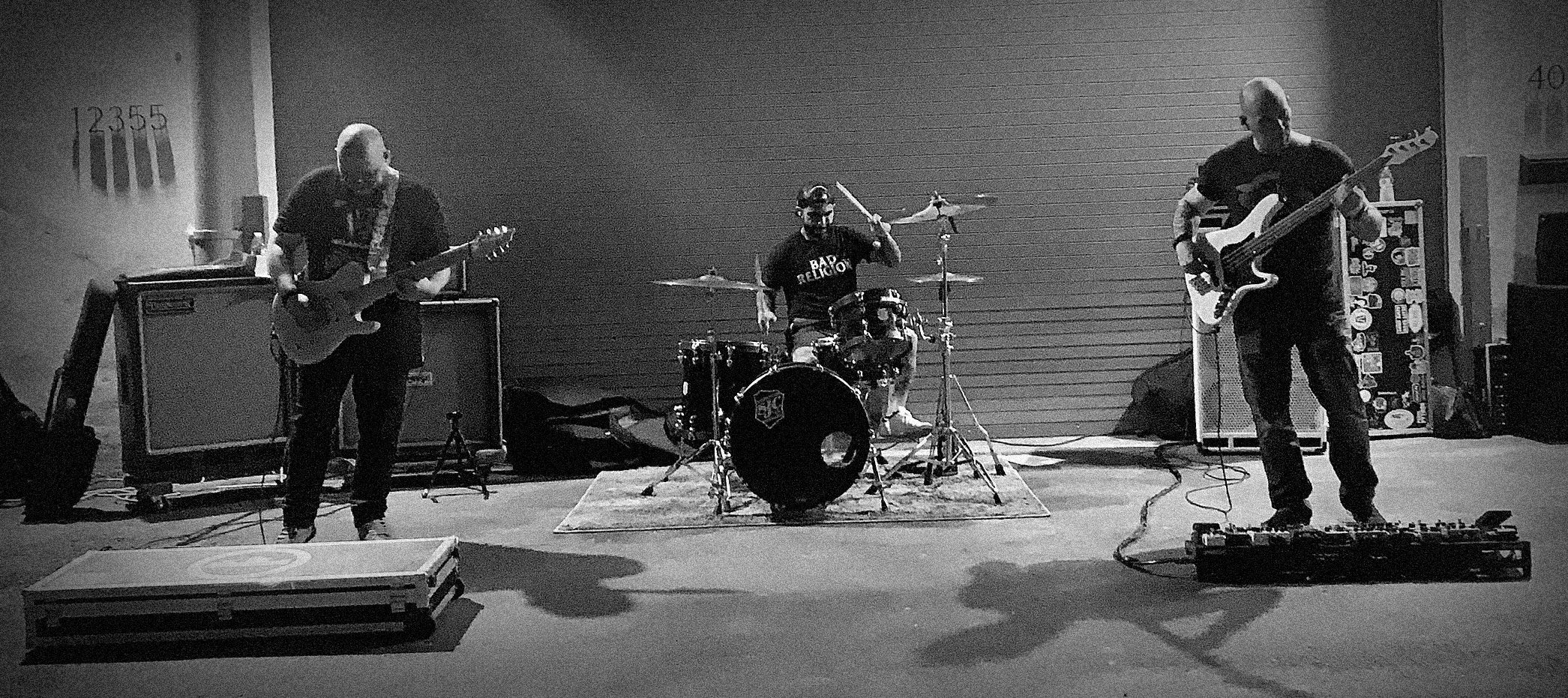
    It’s a sunset bike ride during the green explosion  And after the show we share a smile and sink like a stone. There’s always beyond the stage to share. Intense waves of elegant melodies. And after you could’ve talked and I wouldn’t have cared – outside sounds are drowned out – so what do we care. I can barely see a flaw in the flow and down below the low tones of the 8 tens. It’s a 1,2,3… and go, let me introduce you to SUMO and its members Amado Ventura, Alex De Renzis, and Chris Salazar.

    Why the name Sumo?

    Chris: Well I’ve wanted to use that name for a long time. In my previous band (Vidavox) I brought it up while we were looking for names. We decided not to use it because it was used by another band. Fast forward a couple years later and I felt the name fit for this bands sound. The whole sumo wrestling thing is a mixture of really beautiful traditional elements, music, wardrobe, and spectacle. Then you mix that with the actual sumo and wrestling. large, powerful, and at times violent and ugly to some. I found that dichotomy really fit our sound. It’s something that at least for me is very important to have in music. A great sense dynamism. It’s something that stuck with me ever since I got into bands like the Pixies when I was younger.

    Alex: Always found the choice to name the band Sumo interesting, considering they were a very well known band from Argentina. Being that I’m actually from Argentina as well, now I find it kinda cool that we get to share the name with such a great and influential band.

    What is your practice situation and who and how do you write your songs?

    Chris: when it comes to practice we share a space with several other bands. It helps keep the rent low and instead of renting a space hourly we get to keep our stuff there. As for writing songs we all collaborate. Most of the time we have a simple idea, something very basic but with a hook. Me and Amado start working it into more of a structure. Once we have that we bring it to Alex and we finalize everything. During every step things change specifically when we add percussion. Whole new ideas can come when you add a beat and a rhythm to something.

    Amado: Chris brings the jangles and the pretty stuff. I tend to bring the chaos. Alex brings the stability and glue to that and then we swap those responsibilities (sometimes multiple times in the same song).

    Alex: What these guys said. One thing I’ll add is that the process is long. Which isn’t a bad thing. We really try and make sure we complement each other, and that we are not stepping on each other’s toes. Example, if Amado or Chris are playing a busy riff, I try and keep the drum parts extra simple.

    If you can have a guest musician play with you who would it be?

    Chris: I’d like to jam with a multi-instrumentalist. Tom Jenkinson, Jim O’rourke, Prince.

    Amado: Colin Stetson. Since Chris added a dead guy, then I’ll add Ornette Coleman.

    Alex: Another dead guy for me- Jeff Buckley.

    Can you talk about your most current release/record?

    Chris: Our last record “TWO” was a cool “quarantine” recording experience. We got to record with Jonathan Nuñez at his studio Artillery Sound. It was special for me cuz I knew going in we would have a lot of gear to mess with. And during a time when no-one was able to play out it came as a relief for us musically. Plus I got to use my Kiesel 8 string guitars on it. Guitar wise, the album has a more spacey surfy atmosphere on one end and a more aggressive attack on the other plus everything in between. If you like reverb drenched cleans, gritty overdriven guitars, and thick booming distortion I think you’d dig it. Not to mention the bass and percussion too.

    Amado: TWO definitely feels more like its own breathing thing, not that ONE didn’t have that, but I think we managed to capture everything organically in that room (first time I haven’t used a DI and just mics in maybe 25 or more years). It’s most obvious on the vinyl release with the difference between side A and side B, which just worked out naturally since we weren’t sequencing it with that in mind.

    Alex: “Two” is special for me, considering most of the drum parts on “One” weren’t written by me. I added and tweaked stuff but for the most part kept things as is. The song “Ton” on that album was all me, however. But back to “Two”. I had a lot of fun with this album. I went the “less is more” route. I’ve always been a pretty busy drummer and decided to keep things simple and really left room for the instruments to breathe and capture that spacey, big sound.

    Tell us about your next album. When can we expect it?

    Amado: We’re only a few songs deep into the process at the moment and nowhere near demoing them yet. If I had to guess on a timeline, though, I’d put it around late summer to early fall of 2023, which seems to be our natural timeline for streaming and, depending on the planet whenever it is that we’re done mastering, a few months after that for the vinyl release (unless we can get a decent release date for it and match it with streaming release dates).

    Share with us something that you wouldn’t usually tell other people.

    Chris: I have a very nostalgic thing for Cindy Lauper.

    Amado: It is by will alone I set my mind in motion. It is by the juice of Sapho that thoughts acquire speed, the lips acquire stains, the stains become a warning. It is by will alone I set my mind in motion.

    Alex: I hate avocados.

    Where do you come from?

    Chris: I was basically raised here in Miami, but I was born in Santiago Chile.

    Amado: I am a meat popsicle.

    Alex: Humans first evolved in Africa, and much of human evolution occurred on that continent. The fossils of early humans who lived between 6 and 2 million years ago come entirely from Africa. Most scientists currently recognize some 15 to 20 different species of early humans.

    Do you have a video coming out?

    Chris: I got an idea for a video for our song “Antiope”. Just waiting to have a little money for it. We do have one video for “NGC123” our first album though.

    What was the first album you each bought?

    Chris: the legit first album I ever bought with my own money was And Justice for All by Metallica on cassette. That same day my mom threw it away cause she thought it was evil or something. Which then I immediately went back to specs and stole it. Sorry mom. Your fault though.

    Amado: These were thanks to birthday money,… it’s a tie between Ornette Coleman’s The Shape of Jazz To Come and The Ghostbusters Original Soundtrack. Both were bought the same day at the infamous Miami Depot in 1984.

    Alex: Guns N’ Roses – Use Your Illusion I and II

    Anything else you want to tell me or provide to include into this?

    Chris: Any bands out there that would like to play a show with us, or need a band to fill a spot hit us up either on Insta or at hello@wearesumo.com. With so few venues left it’s getting really tough to get regular gigs, so hit us up!

    Amado: Chris and I also started our own label, Rikishi Records, as a joke that turned into a very real thing. It really only exists to release our own stuff but we’ll also be putting out vinyl releases of some of our older bands as well,… one day.

  • The Prick That Won’t Let His Wife Play Her Own Golf Game

    The Prick That Won’t Let His Wife Play Her Own Golf Game

    Editor’s Note: The below is an excerpt from Michael J. Urann’s new book, The 18 People I Hate Playing Golf With, available to purchase here.

    I’d been dating Leah for five years. We met in college, moved to Los Angeles with our degrees in Media Arts, and set out to conquer Hollywood. Pro tip: It helps if you know people high up in Hollywood already. If you don’t, you’re hitting a blind tee shot into the wind to a 10-yard wide fairway with O.B. on both sides. In other words, good luck! She’d been an athlete her entire life and was recruited at two Big 10 schools to play softball while playing basketball in the winter. In her infinite wisdom, she decided to forego sports scholarships and pay her own tuition to Emerson College because she had wanted to write feature film scripts for as long as she could remember. I’ll be forever[1] thankful that she did, or we wouldn’t have met.

    Working in Hollywood can be lonely. Everyone has an agenda. It makes your good friends into really good friends because finding new people to connect with here inevitably leads to too many nights reading their terrible scripts or attending shitty comedy shows only to find out later they were ‘Bringers”[2].

    I had given up other sports after Little League. I was a decent pitcher but couldn’t hit at all. Golf was my thing, and I played every Saturday with my poker buddies but always felt guilty leaving her alone at home for six hours while I got my round in. After a couple of years, I decided that I should get her a set of clubs and some lessons.

    Prowess at other sports doesn’t always translate to golf. It may give you a leg up athletically, but the golf swing is a lifelong struggle. Harv had told me years ago that he tried to teach Mom, and it was the “worst decision he ever made.”  I never found out why, but The Fabulous Judi never came across as someone who would like golf, so I just went with it.

    Not wanting to repeat the same experience Harv had,  I decided was that it shouldn’t be me to teach her. I’m terrible at it. I can tell you when a decent player makes a bad swing without seeing the ball’s flight but crafting a swing from scratch is above my pay grade. It’s probably above yours, too, so please consult your local PGA Professional or risk sticking your friend, relative, spouse, or child with a catastrophic swing that they’ll spend the next 50 years trying and failing to correct.

    Leah’s lessons went pretty well. She was coming across the ball and flaring shots right but almost always in play. My dreams of her softball skills producing a 100MPH swing speed and playing the Blue Tees with me went away somewhat quickly, but after a few months, she could play the forward tees and get around well enough not to make any list in this publication[3]. She made a birdie the second time we played a regulation length course on the 5th hole at DeBell G.C. in Burbank. She stiffed an 8 Iron to 6 inches; a proud moment I was glad to witness.

    I genuinely liked playing golf with my wife. She wasn’t great, but I didn’t worry about her being bored at home. Eventually, she discovered Tae Kwon Do and stopped playing. It was too slow for her. She’s now a second-degree black belt who could fuck me up if necessary.

    Don’t be scared of getting your spouse out there, gents. As long as your expectations are realistic and you’re not an asshole, you get to play golf instead of going on some godawful hike.

    Every now and again, I’ll be paired with a twosome of a husband and wife when I’m playing solo or with one other guy. It’s not every time, but more often than not, the man will basically attempt to tell the woman what to do on every shot. It starts like this; the guy hits his tee shot, gets in the cart, and drives to the forward tee where the woman gets out. OK, fine so far[4].

    Then, for some inexplicable reason, he gets out of the cart and walks over to the tee with her. Why? If I did this with a friend playing a forward tee, they’d look at me like I had three heads. He then watches her practice swing – often times instructing that another practice swing would help – before finally telling her to hit the ball. Sometimes, if she hits a poor shot, he will make the decision that she should hit another ball.

    As of this writing, I’ve been with my wife for nineteen years. If at any point, for any reason, in any situation, I looked over her shoulder and took over the decision-making for her like that, I’d get murdered. So why do guys think it’s ok to do it on the golf course? Moreover, why in the hell do women put up with it? Have you ever watched a cringe-worthy moment on TV that you just have to look away from? That’s how I feel when I see a guy doing this. If you can’t let her play her own game, don’t play golf with her.

    [1] Until she divorces me, but books live forever, right?
    [2] ‘Bringer’ shows mean that the comedian buddy you have is only getting on stage if he coaxes enough unsuspecting friends to attend said show.
    [3] She took too many practice swings, but don’t tell her I said that. Thanks.
    [4] Well, sort of, it’d be better if the forward tee player walked ahead so they were ready to hit.
  • El Igor Wants to Liberate his People in a Different Kind of Way

    El Igor Wants to Liberate his People in a Different Kind of Way

    “Miami is an immigration hub. Everyone can take advantage of everyone’s differences.,”  said 25-year-old upcoming musician, El Igor. Coming from Cuba and living his entire life in Miami, he discussed the current Miami art scene, the lack of diversity in music shows, and what people want to see after the pandemic.

    El Igor spent his early college years in Missouri under a soccer scholarship. Entering the small art scene in Missouri he played with gender roles in the clothes he wore. A boy wearing his mother and sister’s clothes, people liked how he looked. “I Figured they might like my art too.” Art of any form is with you for such a long time, he tells me he’s been writing since he was 10 or 11, rap battles with his friends, songs a 10-year-old would write about. Coming back from Missouri to Miami at 21 he was writing music more now, writing it more for expression, it’s like therapy for him he said.

    During the pandemic lockdown was the beginning of his receiving recognition. Locked at home with a small set up in his room, he began to put out low-production music “I didn’t think anyone was listening.” Igor confessed to me that before Miami had officially opened back up from lockdown, he was already performing at underground shows. His musical influences, Los Aldianos, ‘The Village People’ continue to inspire his music and his message. A group of men in Cuba speaking against the government, and eventually they grew so big the government could no longer ignore them.

    Coming from a country with so much poverty and corruption, Igor emphasizes his privilege to come from Cuba and make art. Most Cuban parents want their children to pursue something like medicine or law, coming from an impoverished country can you blame them? Now there is a large Cuban community in Miami, and several artistic Cubans are growing up facing that rejection from their families. “I want to create music that people can relate to and leave a positive influence, I want to free my people, wherever they’re from.”

    El Igor expresses himself with his music typically in Spanish. Miami is the spot for Spanish artists everywhere, yet he finds himself the only one performing in his native language when he goes to shows. “And why stop there? Why aren’t I seeing people perform in Creole?” We talk about the lack of unity in Miami, there are multiple circles and lots of things happening so it’s important to move in different circles. This is how he builds a loyal audience, it’s important to spread your work everywhere, and build community. “People are hungry for something alternative, something different after the pandemic.”

    Never facing discouragement, always with a sense of impatience to grow. Just hoping to continue growing from here, Igor tells me, he does not wish for crazy success, he would just like to live comfortably doing what he loves. 2,000 Spotify listeners, music videos constantly produced and the recent album Miami 2019 going well, El Igor is on the rise in Miami.