Category: News

  • Why Are Airlines Selling Round Trip Cross Country Flights for $41?

    Why Are Airlines Selling Round Trip Cross Country Flights for $41?

    COVID-19 is a dangerous disease. It is so highly contagious any location that houses gatherings of more than ten people have been closed down by the government. As you well know, bars, restaurants, schools, even playgrounds and parks have been shuttered. But throughout this whole awful crisis commercial passenger airplanes have continued to fly the friendly skies.

    I have yet to read a good explanation of why an antique store or comic book shop that sees 20 customers on a good day has to lock its doors, while a passenger plane that houses 240 passengers in the closest possible quarters breathing the same recycled air are allowed to continue to sell seats.

    Out of a grim sense of curiosity, I sought out how much tickets to travel now cost. I was surprised to learn on American Airlines you can fly from Miami to Boston  round trip for $41. You can also get direct tickets from Miami to Los Angeles for the same insane price. Not one way. Round trip.

    Again to repeat for emphasis…

    You can go round trip from Miami to Los Angeles and back again for forty freaking dollars and eighty cents and that includes taxes! A round trip ticket from Miami to Orlando on a Greyhound bus costs more than that.

    Now don’t all rush to log on to Expedia at once to see the Hollywood sign. This wasn’t meant to encourage more travel during a pandemic that was caused in large part by globalization. But rather to point out the hypocrisies and arbitrary nature of this quarantine.

    These low priced airfares are meant to encourage people to take part in a dangerous activity for which there is no demand. No restaurant  is allowed to have people step into their business to sell their product. Why are the rules different for American Airlines?

  • What It’s Like to Be an Online Student

    What It’s Like to Be an Online Student

    As the country collectively shuts down due to the COVID-19 outbreak, many students are forced to continue school online.

    Online teaching isn’t a new concept, but as the virus continues to spread, online classes will probably be the only way to get an education in the coming months. As an online student myself, taking classes online is easier than most might believe.

    Compared to in person classes, online teachings are done on your time and your pace. It reduces stress, and for students who have major test anxiety, it can be extraordinarily helpful when you are in the comfort of your own home.

    With the infected rate rising, and a vaccine just being submitted what’s it like being an online student?

    My day starts off at 1:00 p.m.

    I get up have some lunch, and log into my classroom blackboard, then I check my assignments and plan accordingly. After that I head to the lessons plans and proceed to read the lecture/ power point that the professor has set up.

    During this time, I try to pace myself. So, I’ll take mini breaks throughout my study time. I’ll play some games, watch a bit of Netflix then return to my studies. When that is done, I dive back into what the professor has laid out and take the quizzes/ test ahead of time, so I don’t do it last minute.

    Quite frankly, being an online student is a blessing in disguise. It’s helped me a lot when it comes to test taking and it teaches me responsibility. Instead of waking up at an ungodly hour and trudging myself to a cold classroom and a grumpy professor, I’m able to focus on hobbies that I like while also getting an education.

    In the end, we don’t know when this virus is going to pass. It could clear up in a few weeks, it could take a year. What’s certain is that life as we know it changing rapidly, and it’s time that we adapt to these challenges; because in the end, whatever happens, certain things we’re used to will be changed forever.

  • The Hunt Is a Cult Classic for the Quarantine Era

    The Hunt Is a Cult Classic for the Quarantine Era

    I started writing a review for the new movie The Hunt, a week ago with this introduction…

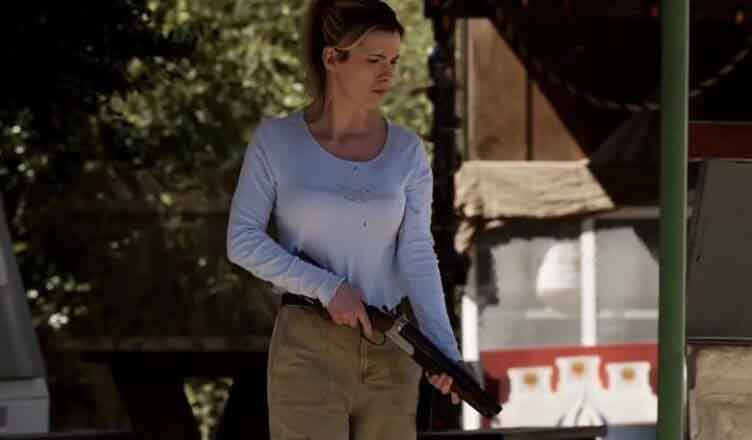
    This is no time to go to the movies, as we are all seemingly starring in a film where nobody knows the ending. But if you are enough of a cinematic daredevil to risk the perils of coronavirus germs on your theater seat, The Hunt might be the movie for you.

    One part violent exploitation B movie, another part  societal satire, it’s a shame because we’re in the midst of an outbreak that no one is going to see this movie.

    In the week since I saw The Hunt at a press screening with only three other attendees, society has changed. With movie theaters closing for the foreseeable future, late comers seemingly lost their chance to see this movie. But with The Hunt becoming  available today to legally stream at home, I thought I should finish the review for a flick worth your time.

    In all probability, even if COVID-19 didn’t enter our vocabulary, audiences would not have flocked to see The Hunt. It’s too violent. It’s too on the nose with its  satire. It’s too unsparing in cynicism with how stupid we as a society can be.  I wouldn’t put it exactly on the level of Fight Club or Idiocracy, but The Hunt shares enough of their brutally unsympathetic DNA that I could see its reputation following a similar arc. Forgotten and ignored in theaters and then over the years rising as a cult classic.

    It’s better to go into this movie cold. So as far as a plot synopsis I’ll simply share The Hunt‘s vague IMDB blurb, “Twelve strangers wake up in a clearing. They don’t know where they are, or how they got there. They don’t know they’ve been chosen – for a very specific purpose – The Hunt.”

    Written by Damon Lindelof and Nick Cuse, this is a worthy encore for their modern classic of a television series in Watchmen. The Hunt doesn’t have quite as many twists and revelations as that HBO series. But just like in Watchmen there are no dull moments in this lean script. Characters and plot only get enough screen time to service a point on how broken we as a people are and then it moves on to something else.

    This is not a movie to watch with your multi-generational family. There is violence that will make some people suffer nightmares and others laughing fits.  But during these strange, uncertain times The Hunt is almost a nostalgic portrait of a simpler era.

  • Local Podcast “That Record Got Me High” Deep Dives into Albums

    Local Podcast “That Record Got Me High” Deep Dives into Albums

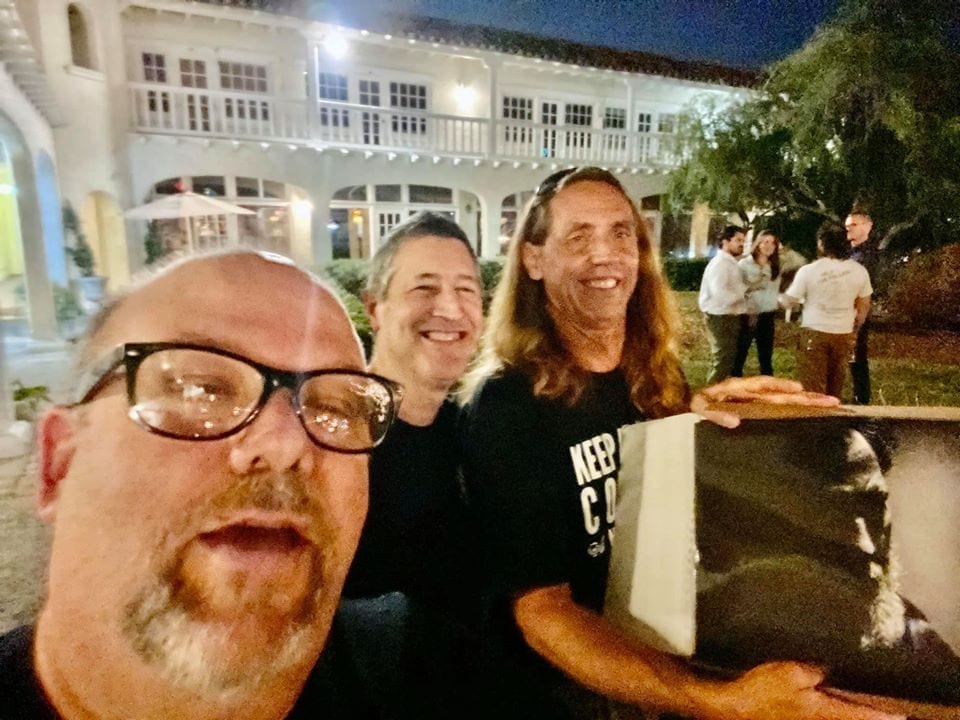
    “That is Barry Stock. And that is Rob Elba.” So begins each episode of That Record Got Me High podcast. In one, fast-paced hour, they flood you with more information about a record than you may have thought possible. When they’re through, that record will never be the same again. Guaranteed.

    As the name That Record Got Me High implies, they or a guest pick an album that is meaningful to them. Barry and Rob then dissect the stuffing out of it. The resulting podcast is chock full of nerd-like information, but yet funny and entertaining as well. The duo play off each other effortlessly.

    Their plan from the get-go was to figure it out as they went along and upgrade their audio equipment as their finances allowed. The important part was to be consistent. 104 consecutive episodes later, it’s fair to say they’ve hit the mark. Furthermore, the podcast is even better now.

    Rob Elba: I found myself listening to music podcasts and getting annoyed. I felt Barry and I could do it better. I know. How many people say that and don’t do anything about it? Well, we felt it was important to actually do it. So, with just our phones we recorded the first episode, Radiohead’s OK Computer. That was April of 2018.

    Barry Stock: I have a penchant for getting to the root of things. I enjoy the detective work. Rob on the other hand, prefers digging in to the people in the band and the history of the group. We attack the album from different perspectives.

    Barry: Adding guests was the third secret sauce. They bring a perspective we may not have thought of. We are able to play off of them, and off each other.

    Rob: Yeah. People could get sick of just Barry and me. Guests bring something that’s unexpected. Even if it’s an album we don’t love, we are willing to hear why our guests love it. Instead of bad mouthing the record, we try and find common ground.

    Barry: One of my favorite episodes was an artist I don’t particularly like (Howard Jones). The guest, Cathi Marro, was so passionate in discussing the record we at least gained an appreciation we didn’t have before.

    That’s what makes the podcast so interesting. The audience gets to listen to albums they may have otherwise skipped and learn things they probably never would have. On the last Wednesday of each month, there’s even an exciting live taping of the show at Laser Wolf in Ft. Lauderdale http://rusbankinfo.ru/zaimy/moneyman/.

    You will find the entire library of That Record Got Me High podcast on every streaming platform including by clicking here. A new episode is released every Saturday. If you enjoy the podcast, and you will, please consider becoming a patreon. For as little as a dollar a month, you will be encouraging Barry and Rob to keep getting us high on music.

    What record got you high? Tell Barry and Rob about it at trgmh33@gmail.com. They may even ask you to join them as a guest to discuss it. Let the brain flood begin!

  • Andrew Gillum WTF

    Andrew Gillum WTF

    Andrew Gillum, 40, unfortunately for Democrats, is the most recognizable Democrat in Florida, the most important swing state in the country.

    4,043,723 Floridians voted for the progressive Democrat for Governor in 2018, a race he barely lost. Gillum could’ve run for Senator, or Governor again, and now, it all appears ruined. And in his most embarrassing moment, he might’ve thrown away more than a legacy.

    What happened? In case you’ve been distracted? On Thursday March 12, right in the middle of a breaking pandemic, Andrew Gillum was caught in a bizarre scandal. He was busted in the swanky Mondrian hotel on South Beach with a man overdosing on meth.

    The man, Travis Dyson, 30, is reportedly a gay porn star and escort who goes by the alias Brodie Scott. Can’t make this up. Dyson told the Miami New Times him and Gillum were friends, since last spring.

    Andrew Gillum: (Spring) Breaking Bad

    Andrew Gillum, married with three kids, was too “inebriated” to talk to police who responded to the overdose. Gillum, according to the police report, was throwing up in the bathroom, incoherent.

    There were three bags of crystal meth found in the hotel, which is apparently not a crime when cops are called during an overdose.

    According to Florida’s Overdose Defense, the person overdosing or assisting an overdose is “immune from prosecution.”

    Gillum claims he was not on the drugs, only alcohol, no arrests were made, therefore no drug testing facilitated. We’ll never really know.

    MiamiSometimes!!??

    Andrew Gillum is a paid CNN contributor, as of Jan. 29, 2019.

    Media contracts are usually annual, which means he likely renewed a month ago. This Sunday night, March 15, Andrew Gillum announced he is entering rehab and laying low from the public eye, although no media yet exists on his current CNN contract. They’re kind of busy.

    Although it is true no one should be judged by only their worst hour, this is arguably a death sentence for the rising Democrat’s political career. The hypocrisy would be glaring for him to contribute to the progressive movement. His point of view on anything moral would be rendered moot and counter-productive at this point.

    Such an important point in time too! The absolute worst time for a scandal, on the eve of the Florida primary, in the middle of a public emergency. In a state likely to be hit hard by the pandemic, and a state swinging more and more to the right, Andrew Gillum certainly didn’t help leaders on the left, up and down the state’s ballot.

    Gillum probably feels really bad right now and that sucks, but man, so do the 4,043,723 Floridians who voted for him.

    This scandal will haunt Democrats come November.

  • Miami Mayor Francis Suarez Is Video Blogging His Coronavirus Infection

    Miami Mayor Francis Suarez Is Video Blogging His Coronavirus Infection

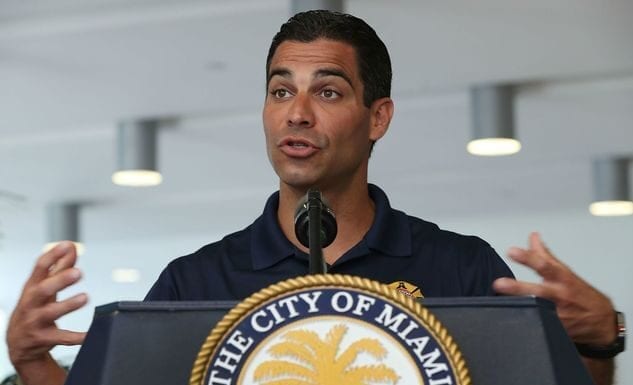
    In this age of oversharing it seemed strange that  no one was streaming a video diary of what it was like to suffer from  coronavirus. True, only NBA stars and political leaders  currently have the pull to get tested, but in our Facebook Live era, you’d think someone out there that was infected would chronicle what suffering from this virus that we hear so much about and know so little  was like. Fortunately City of Miami Mayor Francis Suarez is filling that void.

    It’s not a coincidence that Americans only started taking coronavirus seriously on Wednesday night when both actor Tom Hanks and NBA player Rudy Gobert reported positive. In order for people to get a handle on the unknowns of coronavirus we needed to attach a human face to it. Since none of our friends, family, nor acquaintances have access to being tested, it took a celebrity to make this feel real. It will be even more of a public service if someone out there put a public face to what the symptoms are. For the last couple days Mayor Francis Suarez has been doing just that.

    On his Twitter account @FrancisSuarez and on his Instagram account @francisxsuarez, the Miami mayor has posted videos in both English and Spanish of what he is physically going through. So far he just describes himself as feeling run down. We wish him and everyone infected a speedy recovery, but wherever this journal takes him, we hope  Suarez will continue sharing and provide some first hand insight to something we’ve only thus far heard terrifying second hand reports about.


    View this post on Instagram


    Day two of living with COVID-19. Here’s how I’m feeling as well as some updates.

    A post shared by Mayor Francis Suarez (@francisxsuarez) on


  • Hialeah Little League, John Lennon and First Love

    Hialeah Little League, John Lennon and First Love

    Palm Springs Junior High, Fall 1980

    The day I met her began uneventfully and, predictably, self-consciously. The tender, doughy rolls around my torso served as insulation from popularity and the responsibility of fitting in. My Toughskins and counterfeit Izod Lacoste pullovers guaranteed total freedom from the opposite sex. In bed at night, I lived fantasies bursting with conquests and victories. I slew bullies, loved cheerleaders, saved the student body on countless occasions in heroic fashion, but I’d always fall asleep defeated with the cold truth and my heavy, murky existence. I deeply felt, somewhere below my gut, where little could reach, that I could dazzle if given the chance. This would have to wait, for I was a twelve-year-old kid trying to get a grip on it all, a fresh fat-body in the trenches of junior high school, negotiating the mines strewn by adolescence. I had experienced the pangs of crushes, being the victim of quite a few throughout my elementary school years, but nothing could’ve prepared me for the wrecker ball about to annihilate my fragile blood pump.

    That morning, drenched in sweat after waiting in the baking sun outside of Cambridge Square, my Section 8 apartment building, on West 18th Avenue and 56 Street, in Hialeah, I stepped onto the bus, thinking about food and the cafeteria’s daily special. I was a romantic in theory but a simple glutton in practice, and I knew the weekly menu by heart. Food was solace and shame. Oh, and both my parents worked at Tres Monitos Bakery. Ya tu sabes.

    My transportation to Palm Springs Junior High was one of those small private numbers with a terrible paint job and the word “Caution” misspelled on its rear doors. Mr. Anton’s converted van smelled of vinyl, sweat, and Pixie Stick powder. He greeted me with a sleepy liquid drawl that made his lower jaw appear unhinged and reminded me of my unpaid weekly fare. Ambrosia’s “You’re the Only Woman” was oozing from the van’s crap speakers. I sat next to Arnie, one of my best friends at the time and talked about his new Slingerland drum set, my new copy of Double Fantasy, and our baseball game that night. We decided that Lennon was God, and that Andy Newmark, although tasty as hell on the album, couldn’t compete with Ringo’s playfulness and charm. We were thrilled at Lennon’s comeback and considered “Starting Over,” the record’s first single, a beautiful song. We reluctantly agreed to just deal with Yoko. Bur Arnie was appalled, “The witch continues to hang around. And she’s still screeching and got writing credit on the album!”

    “Well, at least he’s out of the house and making music.”

    So unthinkable, that he’d be dead in a few months. In its place, we would’ve sooner believed anything anyone would’ve told us—the most preposterous prophecies and unlikely catastrophes and apocalyptic scenarios. It was that impossible.

    Our game that evening was against Havana, the best team in the league.

    I loved night games: the lights, the sharp, cooled diamond, the bubblegum-chewing, short-skirted sisters of my teammates and opponents, and snacks afterwards at Lil’ General Food Store, a seedy mini-mart on Okeechobee Road, where we’d always stop for a soda and a Slim Jim. My brother and I also purchased our copies of Hit Parader and Creem magazines there every Wednesday after the game. Reading about the latest antics and newest releases from the hottest musicians was a great post-game thrill. The interviews were a special treat. We read them with relish, planning our own responses to questions we were sure to be asked in our starry futures. The pictures were colorful, bold and screamed of sex and debauchery and jets and stadiums and female fans, and we couldn’t get enough.

    We played for Cubanos Libres, a private baseball league owned and managed by two Cuban all-stars from the fifties. My community held the sport to their bosom as tightly as their rich culture and heritage, and my father wouldn’t allow us to play in a program without proper Cuban representation and coaching. (He finally allowed me, in 1982, after two years of ball-breaking and lobbying, to play for H.A.A., the Hialeah Athletic Association).The teams in this exiled league were named after provinces in Cuba and the program was designed and run like the big leagues on the island. I loved to play and didn’t care about countries, provinces, uniform colors, managers or umpires. Baseball was my charming slice of Americana, and pro ballplayers were my national heroes. Great skill was paramount, but they were also bred to value finesse and athletic elegance, qualities embodied in the debonair but wholesome demeanor of major league stars. Their healthy smiles and clean swagger spoke volumes of their conquests on and off the field, and I admired their quiet confidence and knowing air.

    I was a devoted ballplayer with aspirations backed by a sliver of talent and a slab of enthusiasm. My brother wasn’t very good, and while I was behind the plate, managing field operations as catcher, JC was out in left field, cursing my parents and quietly humming Donna Summer.

    Music and baseball were the only two things that made me happy. I invested all my time and energy in both, dreaming big that one of the two would hit in the long run. They were things that came naturally, so I nestled in their safe rules and rhythms. I could talk and play baseball, and I was born with strong melodic and rhythmic instincts. I also had more than adequate knowledge of pop and rock music. Friends would come to me with trivia, often quizzing me or challenging me, trying to stump me with a magazine or book in hand. Other times they’d come begging for relief or salvation, driven half-crazy by an irretrievable fact, lyric or melody line, the mental shrapnel that lodges temporarily in crevasses too deep to recover and keeps sleep at bay. I’d help them with an effortless answer and restore their peace of mind. These marginally compensated for everything I lacked.

    As we approached the light green and gray building, we remembered that Monday meant spaghetti, and we were happy. Our spaghetti was special. The cafeteria ladies with their shower caps and plastic gloves made it just right. The sticky noodle and beef-sauce casserole, covered with a waxy orange cheese blanket, was our favorite. Our ladies used ice-cream scoops and skillfully placed two perfectly round spheres onto the entrée space of our cardboard trays. I always had seconds; never having the experience of trauma on a full stomach, I seldom denied my appetite full satisfaction.

    I finished my double portion and made my way towards the exit. Trays were dumped in a hole on the wall. A metal slide, attached to the hole, would ease the trays into large garbage cans, avoiding the splatter. The smell, rancid and sweet, embodied by Pedro, the alcoholic custodian guarding the rubbish flume, was a prelude to Mrs. Fedish’s science class.

    “Dame tu leche, chico!” was Pedro’s customary command.

    He’d always ask for and keep the unopened milk cartons. He’d make us place them in a box he’d carry home with him every afternoon. Sometimes he’d actually remove a roll or some remaining grapes from a tray and devour these leftovers right in our faces. His one good eye was quick, but his other filmy one, plagued by cataracts, was Poe material. Pedro was a fascinating and grotesque creature, a Homeric caricature. He was our very own Polyphemus: one-eyed, greedy, mean and stupid.

    In those years, Palm Springs was on a strange but student-friendly schedule. Eighth and ninth graders attended classes from 7:00 am to 12:00 pm, and seventh graders were in session from 12:00 pm to 5:00 pm. We all loved it and thought it was ideal either way. Seventh graders got to stay up late and sleep in, and the rest had an early start but a full day to blow off steam following their scholastic torture. So I was able to briefly brush by my brother after lunch, which began at 11:00, just before my classes started at noon.

    After giving up my milk and dumping my tray, Arnie and I departed in subtle, underclassman fashion, and I walked out into the bright sunshine lighting the grassy courtyard. I saw my brother in the distance, an entourage swarming about him, the nucleus tolerating numerous, dancing electrons. As they approached, all movement slowed down, and I gradually detached from my corporal confinements, observing the progression of moments from the outside, somehow removed and suspended. The sharp glint of her smile transfixed me. I watched in terror and prayed to my God, like something in Borges’s Ficciones. I asked for some frozen time, a period killing the external but permitting me to breathe, a little grace play existing nowhere but within me, giving me room to muster courage, wisdom, a trace of coolness, just an hour of merciful slack, where I could assess the situation, buttress my buckling knees and failing heart, but the world never stopped, and God had jokes.

    On my brother’s arm, walking with the spirit and confidence of a Hollywood slayer, but the wholesome affability of the girl next door, was the loveliest creature I had ever seen. It wasn’t just her looks, it was a composite beauty that radiated from sheer existence and overwhelmed the senses with enchantment. Still buoyed and stupid from the impending, magical confrontation, I witnessed my brother soundlessly speaking to me, and the panic of being known as a complete moron for the next three years transported me back into my chubby frame. This was the moment when life as I knew it ceased to exist. He introduced me in front of several people, and her behavior was natural and horrifying. She softly pinched my cheek and said, “He’s so cute!” The most dreaded sentence in the English language for a fat kid. Spontaneous combustion would have been a welcome comfort.  My bowels were scared sh**less, and, with a pathetic smile, I made a beeline for the restroom.

    I sat in a stall for a while, playing the scene over and over. The humiliation was bad, but worse was the deep and unshakable impression of her touch, her face and her smell. There was a fast, heavy thudding in my chest, and I could not understand why I felt like crying. My previous crushes were from afar, and I gladly settled for distant worship. I was satisfied with my lot, for I was always attracted to the unattainable. This one followed my unavailing pattern, but it was different. I wanted more than anything to actually participate this time. A condition and reality reserved for the anointed, not the poor and portly.  It was more like an unbearable need, a hopelessly insatiable hunger.

    I had just met her, but I wanted to hold her hand, walk her to the curb and wait for her bus—not in typical midday fancy, the kind I wallowed in with catatonic intensity, making me late to first period on a regular basis—but for real, an act of physical veracity, a departure from the world inside my dreamy escapades. The tears that were now brimming were caused by the absurdity of this notion. In what universe could this happen? The fact that I would never engage in that innocent and benign activity with her crushed and flushed me into despair. For the first time I was destroyed by the futility of my desire.  A bit dramatic in the telling, I admit, but not as dramatic as the bout of dejection that followed that landmark commode crisis. My first week in junior high ended with the beginning of my life’s story. It set the tone for the next four decades, a doomed, quixotic theme for a lifetime.

    The story continues here…

  • Before Coronavirus Panic There Was Zika Apocalypse

    Before Coronavirus Panic There Was Zika Apocalypse

    Anyone with an eye on the media, social or otherwise, has to be in a bit of a panic. It’s all coronavirus, all the time. The number of cases are spreading exponentially. A quarter of Italy’s population is under quarantine. Music festivals, tennis tournaments and possibly the Olympics are all being cancelled. It’s enough to give those who were in Miami four years ago a strange case of deja vu.

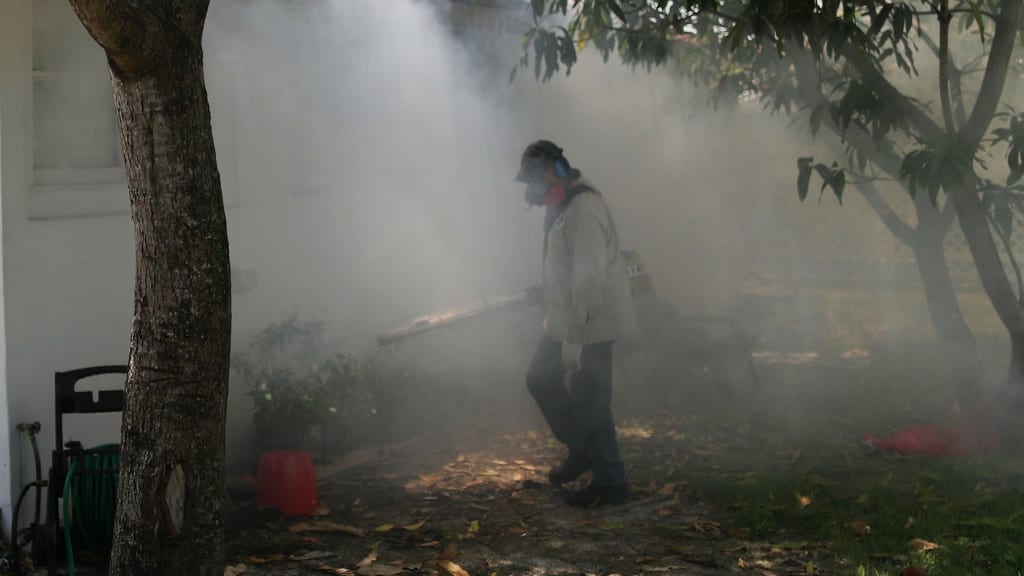
    Back in 2016, Zika was all the rage. The mosquito transmitted disease was going to wreak havoc on South Florida. A generation of  Miami babies would be born with abnormal sized heads, as a supposed result of a mother being infected with Zika. The only thing that would save us all was spraying the poisonous insecticide Naled in the air.  Fortunately the Zika pandemic, never came to be.

    Either we were saved by scientists and the government from certain doom, or the Zika scare was media hype. It has never been investigated or explained whether we were protected by cautious heroism or nearly driven mad by greedy fearmongers.

    With that in mind we’re going to take a look back at some of the more sensationalistic Zika inspired headlines from four years ago. All taken from legitimate sources of journalism. Perhaps recent history will provide some perspective for the current mood about coronavirus.

    Zika virus ‘spreading explosively,’ WHO leader says By Greg Botelho, CNN.

    The Zika virus “is now spreading explosively” in the Americas, the head of the World Health Organization said Thursday, with another official estimating between 3 million to 4 million infections in the region over a 12-month period.

    Why Zika Is This Year’s Scary Virus by David Quammen, National Geographic.

    It is “spreading explosively” in the Americas and may be the next public health emergency.

    Around July 4, a patient entered an emergency room in Miami-Dade County with a fever, a rash and joint pain — three of the four classic symptoms of the Zika virus.

    Zika virus now actively spreading in Miami Beach, CDC expands travel advisory by Brady Dennis, Washington Post.

    Florida Gov. Rick Scott confirmed Friday that the Zika virus is being spread locally by mosquitoes in Miami Beach, a development that marks an expansion of the outbreak in South Florida and immediately prompted a new travel advisory by federal officials.

    The Zika Olympics The upcoming 2016 games in Rio de Janeiro have sparked a debate about how much risk is too much by Julie Beck, The Atlantic.

    Rio de Janeiro’s hostship of the 2016 Summer Olympics has had the unfortunate distinction of becoming a lightning rod for Zika panic. This is not only Olympic Summer—it is Zika Summer, with rising northern hemisphere temperatures bringing the possibility of Zika’s mosquito steeds riding north and furthering the spread of the outbreak that is already affecting nearly 50 countries and territories.

    Birth Defects Rise Twentyfold in Mothers With Zika, CDC Says by Donald G. McNeil Jr., New York Times.

    American mothers infected with the Zika virus last year were 20 times as likely to give birth to babies with birth defects as mothers who gave birth two years before the epidemic, federal health officials said on Thursday.

  • Miami International Film Festival’s 2020 Highlights

    Miami International Film Festival’s 2020 Highlights

    It’s that time of the year again. Spring is right around the corner. Miami is not so slowly warming up again. *Sigh*. But there’s good news. It’s also time for Miami Dade College’s annual Miami International Film Festival, now in its 37th year. Running from March 6 through March 15, the festival spotlights indie and international movies, with a focus on Ibero-American (yeah, I had to look it up also) films. Screenings will be held all over Miami, including the Olympia Theatre (what an amazing venue…what uncomfortable seats), Silverspot Cinemas (really comfortable seats), the Tower Theatre, and the Coral Gables Art Cinema.

    What follows is a quick look at some highlights from the upcoming festival. There’s definitely more going on than listed here, certainly more than I could possibly do justice to in a short column. Well, that, and… I’m a little lazy. But for the full lineup check out the festival’s website.

    The Burnt Orange Heresy

    This year’s festival kicks off with the opening night film, The Burnt Orange Heresy, which closed out the prestigious Venice Film Festival last year. This neo-noir’s got a good cast, what with Mick Jagger (though more of a cameo, I hear), Donald Sutherland and Elizabeth Debicki starring. The movie’s based on a Charles Willeford novel of the same name (more on him in a bit), though its Miami setting has been moved to Italy by director Giuseppe Capotondi. Gotta go with what you know, I guess, but its Lake Cuomo setting is picturesque.

    Danish actor Claes Bang stars as an art dealer roped into a scheme to steal a painting by a famously reclusive artist. What starts out as a light and airy romance with Debicki as an American traveling abroad turns more menacing as Bang’s art dealer allows his ambitions to overshadow his morals.

    The movie was picked up by Sony Pictures Classics for distribution and opens in limited release (usually that means New York and L.A.) on the same night it debuts at the film festival. So if you want to catch it early in Miami, this is the only way. Debicki was amazing in 2018’s Widows, between her and a score from the fantastic Craig Armstrong, this one might be worth a look.

    Miami Blues 30th Anniversary Screening

    And speaking of Charles Willeford, one of the Florida resident’s most famous novels was Miami Blues, which was turned into a memorable Alec Baldwin and Jennifer Jason Leigh starrer back in 1990. Tarantino-eque before that was even a thing, Blues was kind of ignored upon release. Cool that MIFF is giving it some overdue attention with a special 35mm screening.

    Chateau Vato

    I’ll be honest. I’m including this one because it was written and directed by Tom Musca, who teaches film at the University of Miami, my alma mater where I studied all things movies. This one’s a comedy, a seemingly all too rare commodity at film festivals, and it stars Paul Rodriguez (remember him? If you’re of a certain age, as I am, the comedian’s name might ring a bell). Rodriguez plays a gardener who tends to the estates of Miami’s richest. When one of these elites dies unexpectedly, Rodriguez’s character moves his family into the deceased man’s mansion. Comedy of errors ensue.

    This one’s low budget for sure.  But, you know, it looks alright. Some of the cinematography is high end and the locations, especially the mansion, are nice. The title makes me want to vomit, but you’re not going to forget it. Could be fun.

    Charm City Kings

    A movie about dirt-bike riders in Baltimore who “rule the summertime streets” according to the festival’s website. Barry Jenkins, the director of Moonlight and the underrated If Beale Street Could Talk, is involved with this one. But look closely and his involvement is listed as “from a story partially conceived by…” That’s like calling a napkin a “Picasso” because he may have sneezed into it once. But Jenkins’ name got my attention.

    Knight Heroes (2020 Edition)

    Nope, not a movie (though it is a cool title!). Rather, it’s a program that features interviews with emerging talent from South Florida. What’s exciting is the talent on display this year. Three directors will be involved: Stella Meghie, whose romantic The Photograph opened wide this past Valentine’s day; Ari Aster, the horror auteur fast making a name for himself with films like Hereditary and last year’s Midsommar; and Lulu Wang, the Miami raised filmmaker whose second film was The Farewell, a comedy-drama that blew me away (it’s streaming for free if you’ve got Amazon Prime. Definitely check it out). All three talents will be discussing their influences, styles, and sharing their general filmic insights. It’s a rare chance to see a group of skilled artists discussing their craft in a live setting.

    Mucho Mucho Amor

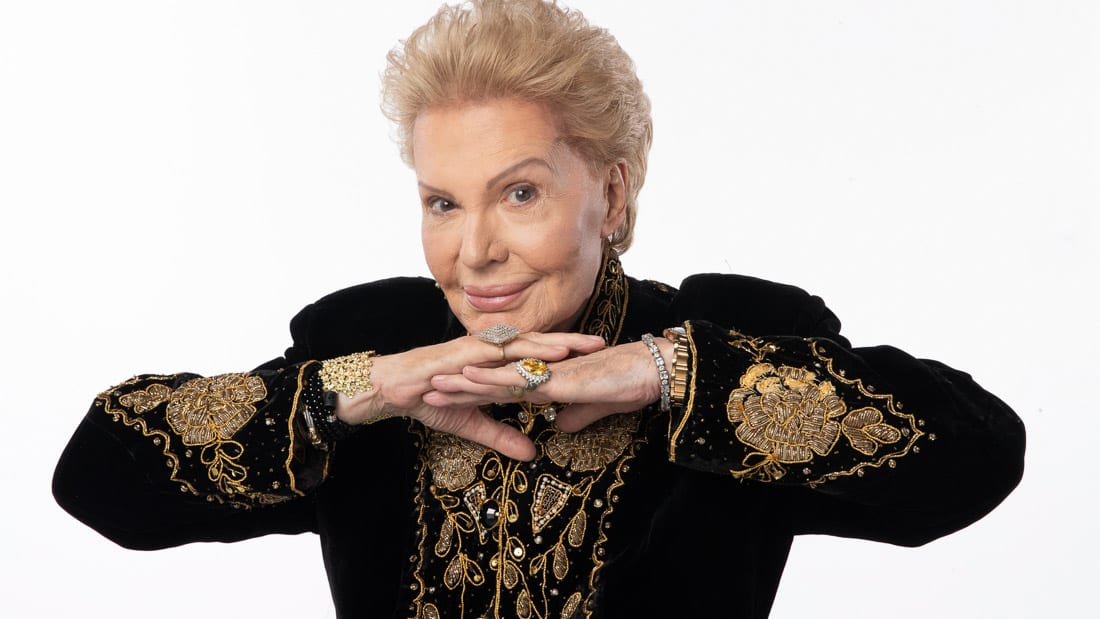
    The festival’s closing night film is a documentary about Puerto Rican astrologer, Walter Mercado. I don’t speak Spanish, yet I remember coming across his predictions on Univision and watching them as a kid, transfixed. Didn’t know what he was saying, but was entertained by his over-the-top outfits and demeanor. The recently departed Mercado was and still is a fixture in Miami’s culture. A newly discovered shrine in my neck of town definitely bears that out. What better way to close out the fest than with a 305 icon like Mercado?

  • Josh Fox’s The Truth Has Changed Is a One Man Show for the Trump Era

    Josh Fox’s The Truth Has Changed Is a One Man Show for the Trump Era

    After being nominated for an Academy Award, you’d think everything would be peachy for Josh Fox. But after his documentary Gasland  was nominated in 2011 for an Oscar, Fox received a lot more hate than his fellow nominees. “The oil and gas industry threatened me and my family. They made two feature films calling me a liar. They published articles saying I was funded by Vladimir Putin.” Fox accepted that he had made powerful enemies by trying to expose the evils of fracking. What startled Fox was in 2016, he saw the same misinformation techniques put forth in the 2016 election. “All the same people who came after me Steve Bannon, Breitbart, Cambridge Analytica, shifted their focus on getting Donald Trump elected.”

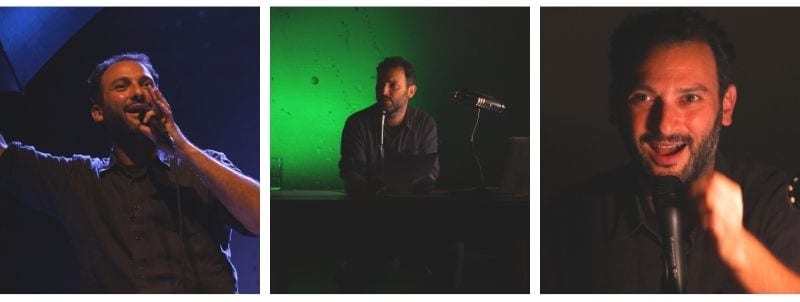
    Out of this realization came his one man show, The Truth Has Changed which will be performed March 13-15 at MDC Live Arts Lab and March 20-22 at The Light Box. It is a multimedia performance utilizing music and film, but mostly features Josh Fox explaining why due to climate change our world is going down in flames. Or in Miami’s case going down in a rising tide. “The show is a wake up call. But it is also uplifting because you’ll be in the room with people who want to do something about it.”

    Fox was originally commissioned to do the show for an HBO television special. He created something influenced by Spalding Gray’s one man show Swimming to Cambodia. When the television plans fell apart he decided to take The Truth Has Changed  on the road.  “The primary issue in the piece is how the oil and gas industries, big data, and white supremacy are working together. We’re going to need a program of civilization-wide change. Something like the Green New Deal is the only thing that will work fast enough to keep Miami above water. We need a World War 2 style mobilization. We have to treat fighting climate change like we fought Hitler.”

    Fox says the show is not a didactic lecture. “I think you need a division between art and activism. The play is about the emotional struggle in how do we live in a world if we can’t understand what’s happening?” After each performance will be a discussion featuring different Miami environmental campaigns, that will be about activism rather than art.

    Fox hopes the show will persuade people of the urgency of our predicament. “Climate chaos will lead to as many deaths as World War 2. Miami very soon will be completely underwater if we don’t do anything about it.”