Category: News

  • For Sienna Takabe, Sculpture is Wearable

    For Sienna Takabe, Sculpture is Wearable

    For Sienna Takabe, sculpture is wearable. I was first introduced to her work by the director of Central Fine gallery and was very much pleased. Through her architectural gestures; she joins the handful of ultra contemporary artists making waves today such as Emma Stern, Vickie Vainonpaa, and Olive Allen.

    I recently sat down with the 23 year old Miami based artist; where we were joined by Baths, the curator of Piero Atchugarry gallery. Takabe informed us of artists like herself and Iris van Herpen who are pushing boundaries in art and fashion.

    I hear a lot about California’s effect on Hockney paintings, what effect do you feel Miami is having on your practice?

    Sienna Takabe: When I originally decided to move here from the West Coast I chose Miami because it’s something very different from the moody grunge of Seattle. I was anticipating flashy, dreamy gaudiness. A place where I could design more freely and wear my own pieces in crowds that would understand them. While I have found the noise of Miami to be comfortable and what I had hoped, I was surprised to find a community of serious and prominent artists. I’ve discovered a world where people make one of a kind, handmade, irreplaceable objects of adornment and entertainment.

    Since living here, the way I think about designing has begun to shift away from practicality, not only its wearability but also its replication. Rather than watering down my aesthetic to be consumable I’m pushing for it to become something that is observed and using the human body as a base for sculpture and textile design.

    Your installation at The Sagamore Hotel, curated by Carolina Toncovich, caused a bit of a stir.  What were you thinking about going into that exhibition?

    My work takes inspiration from gothic lolita, Harajuku fashion and the works of Rei Kawakubo and Yohji Yamamoto. I spent some time in Tokyo as a model where I worked closely with local fashion students. I became increasingly more interested in the creative side of the industry and began creating my own character through styling and photoshoots. Upon returning to the U.S. I learned how to sew and started cannibalizing materials around my house for fabric like curtains, blankets and dresses.

    With the aesthetics I picked up from Tokyo and my experiences in the world as a femme presenting girl, I’m interested in taking the unapologetic sweetness of lolita fashion and contextualizing it in the world where evil exists.

    For my piece at the Sagamore I wanted to use recognizable parts of garments that are associated with beauty and sexuality and then create something awkward. It features a disassembled corset, straps from lingerie, and sheers and silks from sleep wear. They all come together as a grim, freakshow-esque restrictive bodice and 10 ft long sleeves. The garments that are intended to show more skin are instead stacked and collaged together to create an entirely immobilizing garment. It portrays a girl who had sex appeal shoved down her throat then turned around and said “This is what you wanted?”
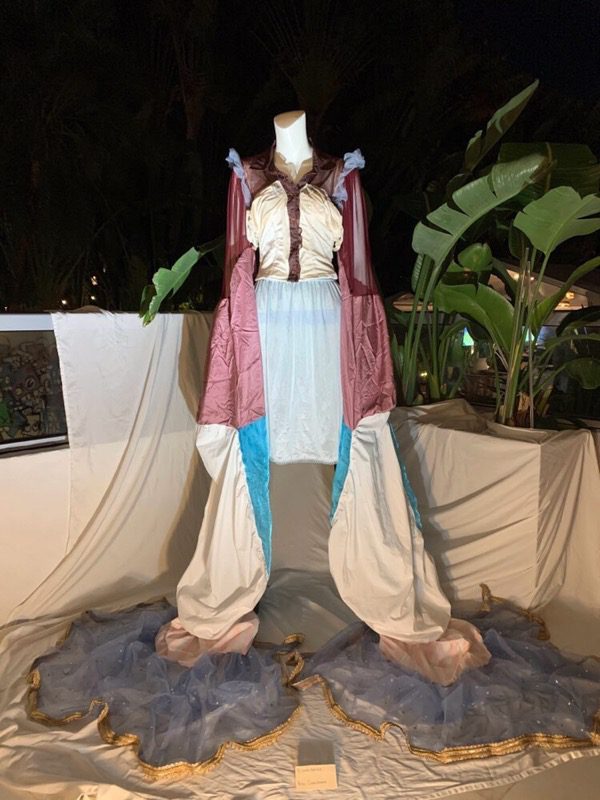
    So how did you go from sewing found materials to thinking sculpturally?

    I first started thinking more in terms of unconventional clothing and filling up space with structure when my artist friends asked me to design their performance costumes. I had complete creative freedom, I would listen to their music and mostly intuitively sew without making patterns. The point being that the piece was visually engaging and a spectacle for the audience.

    Rather than building off of a base structure, I often start from the shoulders or neck then build down piece by piece to make a final form. Since I am not formally trained in garment construction, my process is innately unique to how I understand textile manipulation and how clothing can adorn the body.

    I think recently I’ve especially stepped away from ready to wear and focused more time into using my fabrication voice for art. My recent collection uses unconventional materials like vinyl and weapons embedded into otherwise delicate pieces. Which obviously are useless in an everyday wardrobe, so I had to ask myself “what am I making this for?” And I’ve come to understand that while I do design popular ready to wear, there is also an ultimate, ultra me who creates art for the spectacle. While technically this would be my couture line, I am very inspired by my visits to the MET fashion exhibits and think that there is something so powerful in seeing art that I could literally place myself in. To think, who would I be on a day that I wear that piece?
  • Abel Folgar on His New Collection of Poetry “Renault 30”

    Abel Folgar on His New Collection of Poetry “Renault 30”

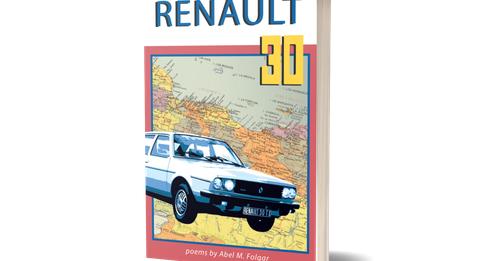
    Miami based writer Abel Folgar has a brand new book of poetry out, Renault 30, published by HINCHAS Press. The book is decribed as “a sepia-toned drive through the dusty highways of 1980’s Venezuela”.

    Folgar a long time local music journalist for Miami New Times, PureHoney Magazine and even this very website you’re reading, hopped on the Jitney for an in depth talk about his new collection.

    What inspired your new book Renault 30?

    Abel Folgar: I had the idea for a collection of poems for a few years but didn’t have, or rather, I wasn’t seeing the connective tissue required to make it happen. The COVID-19 pandemic, terrible as it was in the early days and continues to be, was a blessing in disguise for me. Transitioning to working from home freed up those commute hours and I was able to allocate that time to reading. As it happened, I reread m loncar’s (Michael Loncar’s stylized named) collection, 66 Galaxie, and that inspired me to get back to writing poems and revisiting that folder of old pieces most writers keep in a drawer somewhere.

    This book’s spiritual birth was that. From there I made the connections between older poems and new ones and a memoir-like narrative emerged. I’m no gear head or car aficionado, but in paying my respects to loncar’s titular automobile, I thought long and hard about a car that had an impact on me and that was my dad’s Renault 30. My dad’s always been an excellent driver but in all my childhood memories of him tooling that French rocket through the crazy streets of Caracas, Venezuela, he’s a total icon and his soundtrack is the majestic purr of the 30’s V6.

    What’s your process for writing poetry?

    Most of the time I’ll have an idea or get inspired by something that I come across but the truth is, all writing as you know, takes work. In this particular book, that meant looking at poems I wrote 20 years ago under the lens of the experiences I’ve had since. It meant working on new poems with the goal of fitting them into this collection. It also meant research and recall. I have a large family, displaced all over the world since the days of the Ottoman Empire on one side, and the French takeover of Corsica on the other, but what fit here was my great-granduncle’s car accident and the generational trickle down effect. It also made me evaluate the Venezuela of my memory and the Venezuela of today. In order to keep myself from straying too far, I followed loncar’s book structure and that helped bring together these stories of a country that could’ve been more, my relationship with my family, and the automobile industry into what I’m hoping to turn into a multi-book poetic bildungsroman.

    As a writer do you have to use a different part of your brain to write poetry than you do for your music journalism?

    I’d have to say that I was – am – very lucky to begin my adventures in writing in print media. I was (and continue to be) blessed with incredible and patient editors who helped finetune the wordsmithing back in the days of copy by the inch. There are infinite lessons in newspaper and magazine writing that translate very well into other forms of writing – especially poetry. Thanks to that, I can lean into that world when I’m trying to physically shape a poem. In trying to adhere to a visual, the way a stanza looks, that kind of thing, the newspaper/magazine background helps. My mentor in college, the great Butler Waugh used to tell me “listen Bunkie, writer’s write.” I always understood that as a push into writing in a way that all the writing I ever did had some kind of symbiotic connection. It’s a two-way street, some of the more “flowery” language in my articles comes from wearing the poetry hat.

    The Jitney published your translation of the novella, Juego de Chicos. Did getting so deep into another writer’s brain affect you as a writer?

    That one had some regional challenges since the original author is from Argentina and I’m from Venezuela. Not all Spanish is the same, slang is different, etc. I enjoyed that project for that reason to be honest. I guess it’s the closest I’ll get to method acting? What helped in that project is that I have Argentinian family so I was able to vocalize the novella in that voice as I fitted the prose into English. There were some things I just couldn’t capture so there were two or three creative choices that had to be made in order to translate the overall feeling of those particular passages. It’s a great story too, and I was glad to be able to bring it to an English-speaking audience. And it’s a gorgeous book, like all Jitney releases.

    Can you share a poem or an excerpt of the poem from the book with us?

    Absolutely, here’s the title poem:

    RENAULT 30

    This is a machine, and it eats paint chips—

    so many that they’ve become clogged

    into an eye-clawing Jackson Pollock irritation;

    slowing everything down from the accumulated

    chemicals sandbagging the critical avenues

    of its electrical brain. We are going to a game.

    We can see it through a window but

    the window somehow blocks most of the light.

    We’re in my dad’s sandy champagne-colored

    Renault 30, the greatest car ever imagined,

    the greatest car ever made, the greatest

    vessel for living that the gods of all religions—

    in rare accordance—could ever create.

    This might be the mechanized distillation of

    liberté, égalité and fraternité but to us criollos,

    in the land Bolívar made and el muérgano de

    Chávez eventually destroys, this is the

    Renól treinta in criollo parlance y es tremenda

    máquina mi pana, sape gato y burda de arrecha.

    We can feel everything crack under the weight

    of dried organic matter. Everything’s opaque.

    Like a Bunsen burner jetted its flame at it.

    Memory assaults the whiteness of its empty

    corridors—alarming shadows in its wake.

    There’s a prosthetic limb caught in the

    terrible moisture of a tornado somewhere.

    Where and how can people buy Renault 30?

    The Renault 30 paperback is currently available at hinchaspress.com and will soon be available on Amazon in print and eBook versions. I hope that, more than enjoying the poems, readers will go down Google historical rabbit holes concerning pre-communist Venezuela. In today’s atmosphere, as one of the growing immigrant groups coming into the US, I hope I can do my part to demystify misconceptions and present a positive picture of a vibrant culture that has a lot to offer. I mean, who doesn’t like tequeños, arepas or a nice glass of Ron Diplomático?

  • Where Does Jerry Garcia and Punk Rock Cross the Road?

    Where Does Jerry Garcia and Punk Rock Cross the Road?

    Let’s start in the early 80’s with the greatest punk-rock-hardcore band of all time, Black Flag. They were and still are huge Dead fans! Black Flag alumni Henry Rollins has shared:

    “I was in a band called Black Flag. Our roadie Tom was our road crew t-shirt salesman, and he was a Dead guy. He’d follow The Dead around when he wasn’t with us, and he had a suitcase of cassettes. I heard that he had the 45-minute “Dark Star” or that really fun show where Bill Graham bet the band that they couldn’t play Blues for Allah all at once, and I started dubbing those tapes off of him. Because as soon as I heard them, I just loved them. And so, with my meager earnings—I made crap money in those days—I’d buy used copies of Aoxomoxoa, Anthem of the Sun, Workingman’s Dead. Early Dead.”

    While Black Flag founder and lead guitarist, Greg Ginn has said, “My favorite band was always and still is the Grateful Dead.”

    Jerry Garcia with The Warlocks (before they changed their name to, Grateful Dead) were the in-house band at Ken Kesey’s Electric-Kool-Aid-Acid-Tests. Jerry Garcia is thus a Guitar God. Another time, I was watching Dave Chapelle’s Half Baked, and I decided to hit the DMT. I opened my eyes and saw this scene:

    Dave Chapelle’s Half Baked masterpiece is really the CIA turning their most elegant rock star JERRY GARCIA, into a Marvel level superhero! However, to many of us in the real world…Jerry Garcia was and always will be on the same level as Tony Iommi…just at the opposite end of the bookshelf. Jerry had so much grace and humility. That’s why thousands of “Deadheads” followed him around like a religious cult for over 30 years. Also, many music lovers say it is quite possible that if the Grateful Dead didn’t do their thing in the mid to late 60’s, Punk Rock would have never been invented by the Ramones.

    That being said, “The Barn at Mt. Crowley” will be hosting Miami’s only “Jerry Garcia Punk Rock Birthday Bash” this Sunday July 31st, 2022. The event will begin promptly at 4:20PM and continue until sunset. Participating artists include:

    Echo Beauty Terror

    Black Mayonnaise

    Gucci Handelsman

    Rat Bastard

    Bitter Lake

    And others.

    The Barn at Mt. Crowley is located at 14300 SW 192nd St. 33177.

  • Miami 4 Social Change Youth Festival Inspired and Uplifted

    Miami 4 Social Change Youth Festival Inspired and Uplifted

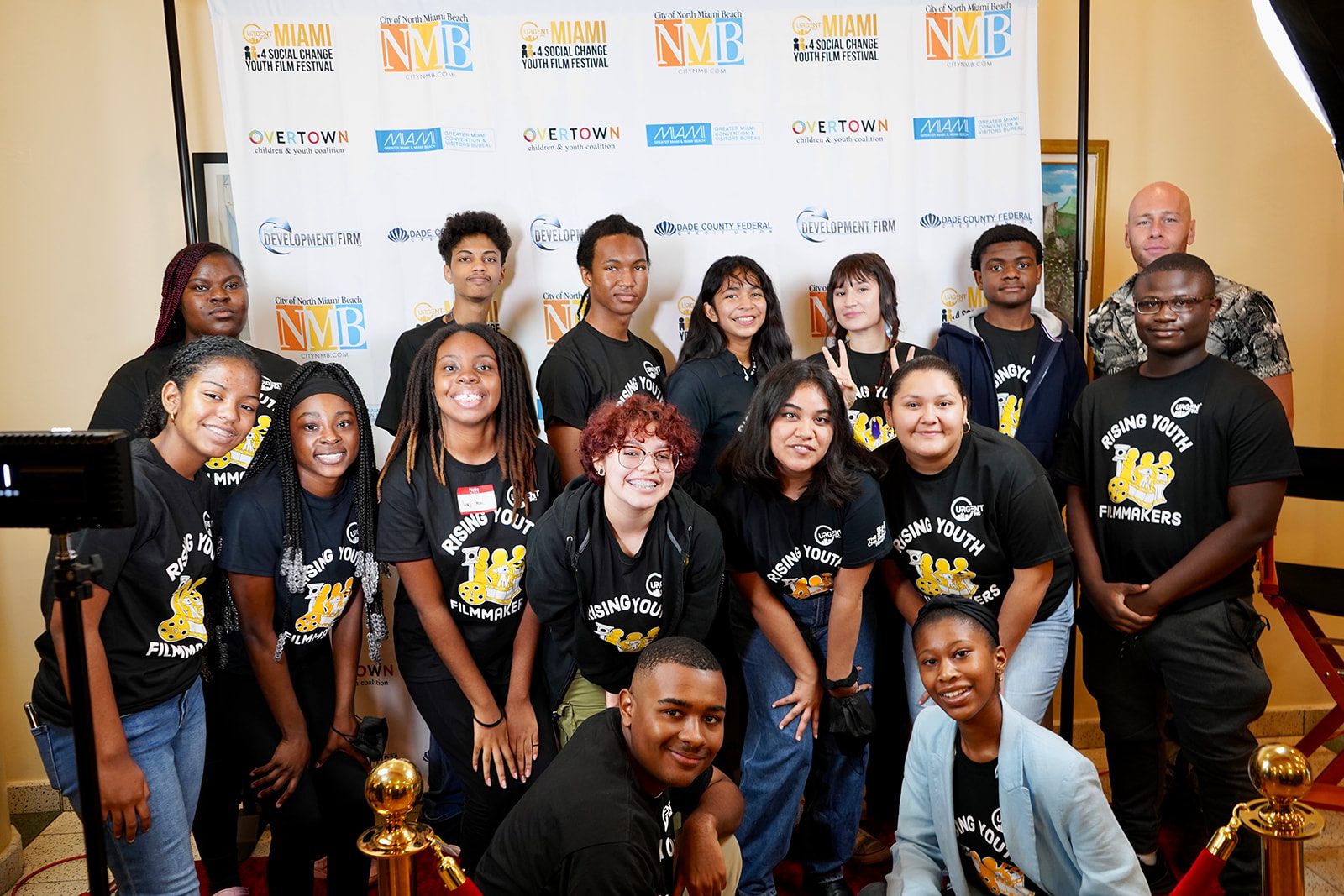
    We live in an age where it is easy for  media to take over. When it comes to young people in particular, it can be hard to tame the beast that is social media. The Miami 4 Social Change Youth Festival presented by URGENT, Inc. does so and does so well. This dynamic two day event was dedicates itself to showcasing the talent of youth under the age of twenty-four.

    “We started the youth film festival seven years ago because we were operating a program called FACE (Film, Art, Culture, and Entrepreneurship), and that program is designed to introduce teens to creative careers. The kids were creating such great work that I thought more people needed to see what is coming out of our young people”, says Dr. Saliha Nelson, who serves as CEO of URGENT, Inc. a non-profit creative youth development organization dedicated to empowering young creative minds to transform their communities.

    One of these talented creatives is Shayla Smikle, a recent high school graduate who describes herself as “outgoing and shy” and is the writer of the short film Super-Hero. “It’s about a guy who just feels unmotivated. He’s going through a lot of stuff in life. It’s almost like no one understands him and he’s just trying to build back up that motivation. He actually gets that spark of motivation inside the film.” Smikle started on her creative journey as a digital film intern and an apprentice of Urgent Inc. “When I applied for this internship, I did not know what I was getting into. I thought I was just going to be doing something like automatically taking pictures and videos. I didn’t know I was going to be getting so many tools and steppingstones to be able to build myself and grow to the person I am now. When I first came in, I barely knew how to turn on a camera to take pictures.”

    Other compelling short films at this year’s 4 Social Change Youth Festival included Make A Wish, which showed the vulnerability of a child’s happiness and Home, a story about how sometimes the lines between reality and misapprehension can be blurred.

    The festival’s main goal seems to be helping youth, even ones that do not have work that will be showcased at the event. The festival included masterclasses taught by industry professionals and speeches by celebrity guests. This year’s roster included workshops about public relations, improve, and broadcasting; and a speech by model and actor Sergio Delavicci who gave a riveting talk about following your dreams and the importance of being your own best advocate. “I feel like the youth is the future of this country,” says Delavicci. “And it is the responsibility of individuals like myself to set an example for this generation so this generation can set a good example for the next generation.”

    With interesting entertainment and fun atmosphere, this year’s Miami 4 Social Change Youth Film Festival was a successful one.

  • Moms For the Suppression of Liberty’s Guide to Teaching About You Know What*

    Moms For the Suppression of Liberty’s Guide to Teaching About You Know What*

    Knowledge is not power.  Knowledge is confusing.  We know that.  The more you know about mustard, the more difficult it is to decide.  When you’re in the condiment aisle at Publix you could stand around for hours trying to decide between that Frenchie stuff or real mustard from the good old USA.  The same is true about You Know What (YKW).  The more you know, the more trouble it causes. Take our advice, you really want to stay away from that Frenchie stuff.

    Let’s face it, we don’t want to talk about YKW except to make sure that nobody else talks about YKW.  All this hooey about teaching YKW in schools has got to stop and stop NOW. Do you think our parents and grandparents were taught about YKW in school?  Do you think they spent all day in a classroom with a bunch of strangers, led by some globalist, lefty communist groomer, talking about putting the whoozits in the whatzits?  No, they did not.  They spent time in church, on their knees, participating in a spiritual tradition that goes back at least 2,000 years. And they were better for it. They learned about YKW when they absolutely needed to — when it happened. That’s how it should be today.  Nobody taught our parents or grandparents about YKW, but they figured it out.  We’re here, aren’t we?  We know how that happened. Psych…

    This country was better off when Father Knows Best, Leave it to Beaver, and Perry Mason were on TV. When there weren’t 300 million different television channels, half devoted to perverted YKW, and all funded by Bill Gates and George Soros to turn us into obedient YKW-crazed zombies. As part of our research, we’ve watched plenty, so you don’t have to. No need to thank us.  Sometimes the thingamajig is so big it won’t work with the doohickie. How is that helping anybody?

    We don’t want to return to the Stone Age, but we do see a lot of positive things that came out of the Inquisition. We’re looking for a return to a time before science and rational thought hijacked our education system.  When there wasn’t all this talk about ‘reproductive rights’ and ‘gender role fluidity.’ We don’t even know what that means.  We want to return to a time when there wasn’t all that supposed “scientific” language for the hoohah or the diggity dong, or the schpeckle and the fazoocas.  High school students don’t even think about YKW unless some left-wing lib groomer with a degree in YKW leads them down the road to depravity.  We’ve all seen it happen.

    Not many people know this, but there were no supposed ‘gays’ in the United States before 1972.  You can look that up.  Back then boys were boys and girls were girls. Sure, some boys liked Judy Garland and American Musical Theater, but they didn’t make a federal case out of it.  Same with girls who were tomboys.  They just wanted to play sports.  Nothing wrong with a little field hockey, softball, or basketball.  They didn’t feel the need to steal half the consonants in the alphabet and throw them in our faces all the time. Then Richard Nixon was hounded from office by the left-wing liberal mob, and you see where we’ve ended up.

    Think about it: what’s the biggest selling point when you’re buying a house these days? Closets, right?  Everybody needs more closet space, including the good old USA.  We need to start putting some of this stuff back in our national closets PERIOD. Oh, not that “period” – that’s what we call a visit from our sick old aunt. Period, meaning end of discussion.

    *(You Know What is ESS-EEE-EXX, and the less said about that the better)

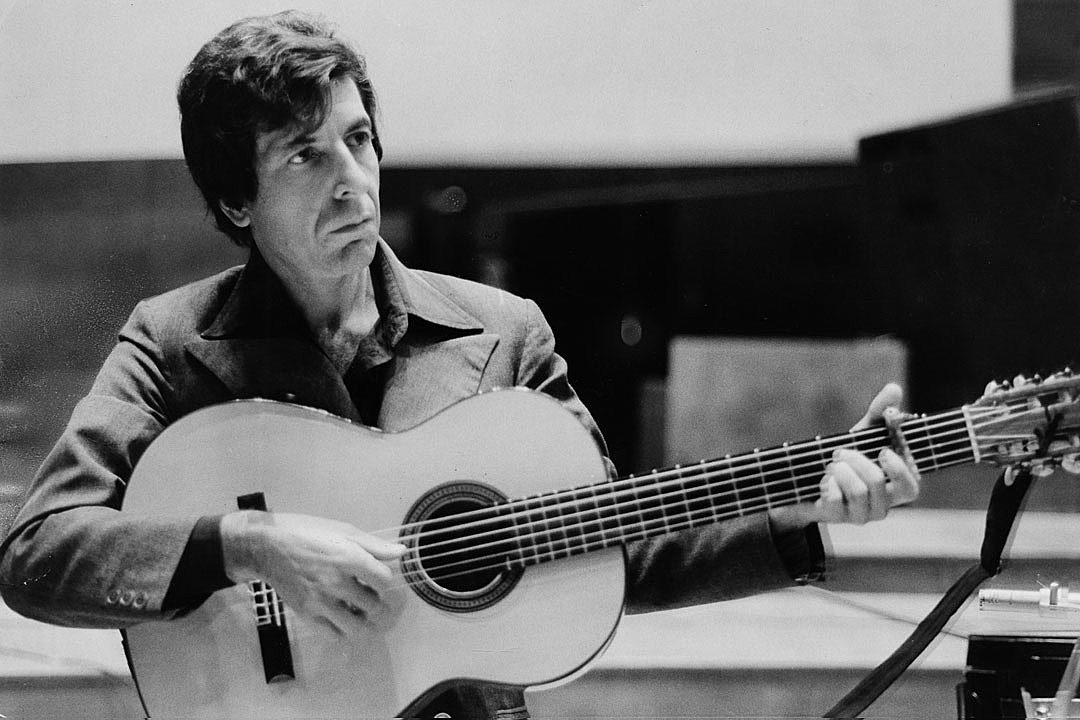
  • Hallelujah: Leonard Cohen, a Journey, a Song Is a Different Kind of Music Documentary

    Hallelujah: Leonard Cohen, a Journey, a Song Is a Different Kind of Music Documentary

    I thought that six part Beatles special Get Back, ruined music documentaries for me. Through a combination of exhaustive footage, a relaxed running time, and what I assume to be deepfake technology, Peter Jackson took you inside the Beatles rehearsal space where you could see our beloved Fab Four actually create songs. Since then I’ve tried to watch acclaimed music documentaries about bands I love like Todd Haynes’ The Velvet Underground or am unfamiliar with like Edgar Wright’s The Sparks Brothers, and have found myself utterly bored with a parade of talking heads telling me why these bands were so great instead of showing me why they’re great.

    For the first half hour I was worried Hallelujah: Leonard Cohen, a Journey, a Song fell into that same trap. Cohen in my mind is one of the great earnest songwriters of the 20th century. I’ve never been able to appreciate poetry, but I’d study the liner notes of his lyrics as I played his greatest hits trying to figure out the tricks to write something so sad and simultaneously moving.  I knew the outlines of his life story, how he became a musician relatively late in life writing his early songs on Greek isles, how he gave it all up in the ’90’s to become a monk and then was forced to tour again late in life due to financial difficulties.

    Hallelujah: Leonard Cohen recounts all those familiar moments, but it also has a few tricks up its sleeve that make it stand out. First they have a ton of footage from Cohen’s various interviews over the years before his 2016 death. As a lyricist Cohen obviously had a way with words, but he was also an eloquent speaker. He was quick with both a joke and an interesting insight.

    The second gimmick of the movie is an hour into it, the documentary reveals itself to be as much about one song as it is about a man. They take a deep dive into the song “Hallelujah,” not just how Cohen came up with the words, but how the song has become a standard in the Great (North) American Songbook. From John Cale to Jeff Buckley to aspiring American Idol contestants, you see how the song has grown a life of its own beyond Cohen’s gravelly voice.

    While I would have appreciated some more uninterrupted performances by Cohen, rather than just a snippet here and there of him on stage,  Hallelujah: Leonard Cohen does a solid job of presenting what made Cohen so special.  I still wouldn’t put “Hallelujah” in the top ten of a Cohen playlist, but this doc makes a convincing argument of why it should be at the top.

  • Daniel Newcomb Documents a Fading America

    Daniel Newcomb Documents a Fading America

    The folks at Nikon knew they had a hit on their hands back in 1986 soon after they released the N2020, their first foray into an emerging market for point-and-shoot autofocus 35mm film cameras. They might also be thrilled to learn of the impact they had on one young man growing up in an old, photogenic stretch of Florida.

    Photographer Daniel Newcomb credits his father for sparking his picture-taking dreams by first acquiring the N2020 through a work-points rewards system and then installing a dark room in the laundry room at home. It was all uphill from there for this successful architecture photographer and artist. In a new exhibit, Downtown Dreams,” at The Peach art space in West Palm Beach, Newcomb shows his blend of film and digital photography in a series of images of city cores that inspire him aesthetically while reflecting elements of his commercial work.

    “My commercial photography is similar to the art side in that, in my work, I create for interior designers, architects and hospitality companies,” Newcomb said. “I basically make photographic art of another artist’s interpretation of space.”

    Realizing clients’ vision comes with the added perk of travel, which provides his artistic eye with plenty of locations to photograph. Reminiscing on the Norman Rockwell feel of the Ft. Myers of his youth, Newcomb credits a steady diet of American travel writers oft-associated with/and influencing the Beat Generation. Steinbeck, Bukowski, Kerouac,  and Fante, among others. Newcomb’s art recalls the poignant observations of a fading sense of community captured in Ben Katchor’s long-running comic, “Julius Knipl, Real Estate Photographer.”

    Recalling the Ft. Myers of the 70’s, Newcomb points to the apocalyptical abandonment of his community as his coup de théâtre. “I fell in love with the old hotels, theaters, bars, and department stores that were being lost to developers that had too much stucco in their buckets,” he said. “In America we don’t value architectural time periods and cover them up with bad facelifts.”

    Alongside his mission to document as much as he can of a fading America, Newcomb has undertaken another hobby — raising honeybees — and given it a historic focus: He and his son turn the fruits of their apiaries into mead, an ancient beverage made from fermented honey. Newcomb says he dreams of “retiring” with a combo mead/cider house and art gallery. In the meantime, attendees to his art exhibits can sample his homemade meads.

    This article originally appeared in PureHoney Magazine. Check them out here.


  • Champlin in Memoriam Remembers Surfside Tragedy through Art

    Champlin in Memoriam Remembers Surfside Tragedy through Art

    In times of grief and loss, art speaks the compelling language of solace. Consider the many millions who’ve visited possibly the most profound work of public art in the past century, the Vietnam Veterans Memorial in Washington, D.C.

    We’re living among moments of crisis, from mass shootings to war in Ukraine. Reasons to grieve bombard us daily. Art can offer a respite, an opportunity to console the soul.

    It’s no surprise that in recent years more public art memorials are being created and planned to honor lives lost to gun violence.  In 2020 at the Bakehouse Art Complex, Chire “VantaBlack” Regans began her large-scale mural “Say Their Names: A Public Art Project,” commemorating lives taken by many forms of violence and abuse.

    On Monday, June 20 the $2.3 million “Curtain of Courage Memorial,” in undulating bronze and steel, opened to the public in San Bernardino, Calif. It honors families and a community scarred by mass shootings there in 2015. Other memorials are planned in Orlando, Las Vegas, and Charleston, South Carolina.

    The first anniversary of another catastrophic tragedy, the collapse of Champlain Towers South condo in Surfside on June 24, 2021, recalled a daily unspooling of horrific news as we learned how 98 people were killed. It’s considered one of the deadliest construction failures this country has witnessed.

    Surfside resident Oliver Sanchez took the first anniversary of the tragedy to heart. He mounted an affecting one-month exhibit, “CHAMPLAIN in memoriam,” at Swampspace, his Design District gallery and studio space.

    It pays homage to first responders and a community’s need for comfort following a stunning disaster. Calling on talents of his close network of artists, some of whom he has previously exhibited, Sanchez curated a selection of painting, poetry, photography, and installation art by 12 visual artists.

    On the opening night of the exhibition, on Friday, June 24, plaintive, soothing strains from a flute and harmonica played by Surfside resident Marcos Winer filled Swampspace, reprising what he did after the collapse. Winer would go to the site almost daily, recalls Sanchez, playing on the beach “for the lost souls hovering there. He did this for the dead, not for the living.”

    Wanting to recognize the first anniversary but unsure at first if the exhibit was a good idea, Sanchez remembers some discouraged him by saying, “We’re moving on.” A veteran figure in Miami’s art community, he decided to mount it anyway.

    “I hope it helps people process their grief on whatever level they are experiencing it.  Grieving is a part of life,” he says. “Art is healing because it brings our feelings to the surface.”

    Sanchez points out a large painting by New World School of the Arts grad and faculty member Reinier Gamboa, who’s created murals in Wynwood and Little Haiti. “It’s really the anchor for the show. It’s so prophetic.”

    Gamboa’s 2021 “Ruins of Miami” shows an angelic statue reaching out in a gesture of benediction amid piles of concrete rubble. In the background, glimmers of silver light may evoke slim but determined hope as they pierce darkening clouds over the ocean. Flying ibis, as graceful as ballerinas, elude a snarling dog. Dwarfing the statue in the foreground is a massive piece of earth moving equipment.

    A smaller, less imposing painting from 2020 by Kiki Valdes also employs Christian imagery. It shows a crowd gathered around a crucified Christ, their distraught expressions somewhat in the style of Otto Dix, whose art was shaped by the trauma of World War I. “I painted this during COVID in Wyoming. I was painting all about spirituality,” Valdes says.

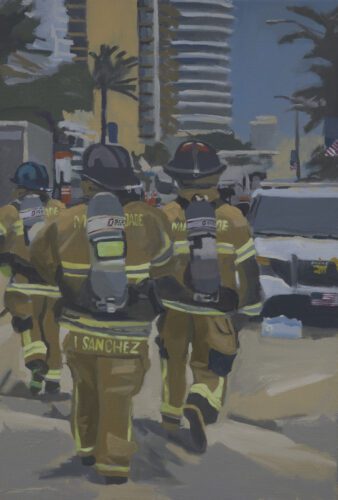
    Other artists acknowledge first responders. In her gouache illustration on a digital print background, Ruth Burotte portrays a wide-eyed young woman in hard hat and boots. Eddie Arroyo, painting from a photograph taken by Sanchez, renders green-uniformed responders viewed from behind as they walk toward their shift at the site. Their no-nonsense professionalism is clear; their facial expressions must be imagined.

    Some artists convey the tenor of those days in the immediate aftermath. Photographs by Tina Paul and Arhlene Ayalin record a community coming together to support each other. People contemplate a make-shift memorial on Harding Avenue. They gather in prayer when it was announced operations would shift from rescue to recovery.


    “I was trying to get a sense of the beauty and sadness, not really to concentrate on the horror,” Paul says.

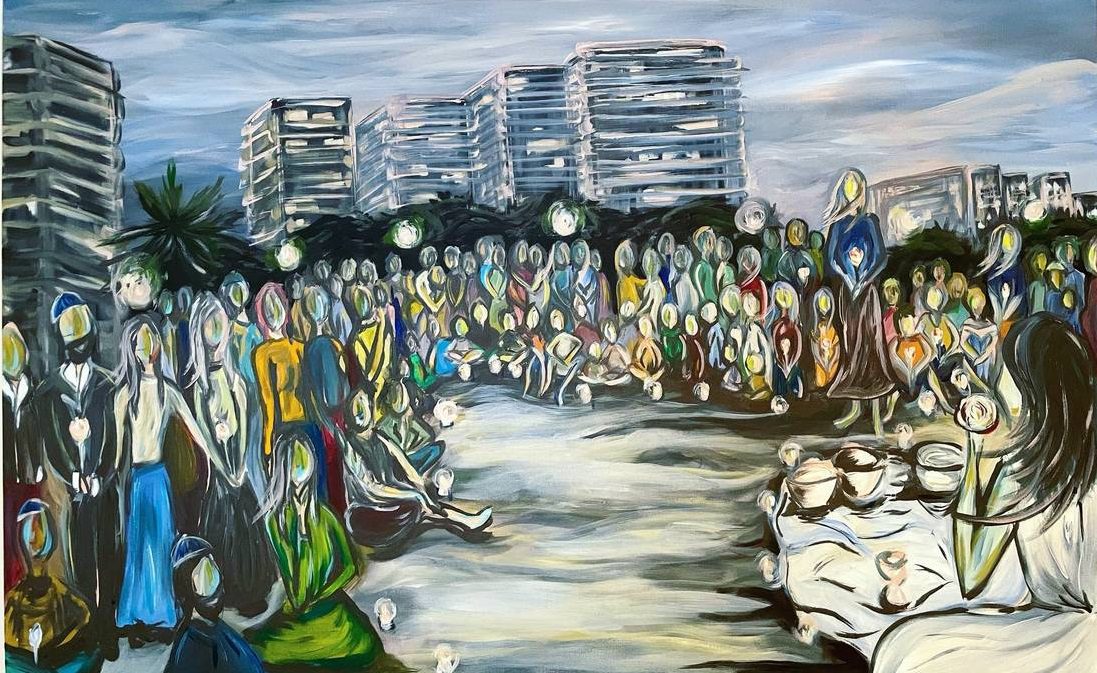
    Resembling spirits themselves, intimately side-by-side figures in McLean Fletcher’s painting depict a prayer vigil soon after the collapse.

    As a self-appointed historian of the disaster, Sanchez contributes an approximately 15-minute slide show, with 100 photographs presenting early history of Surfside, pivotal moments of June 24, 2021 and continuing to the present.

    Art by Sharif Salem honors the memory of his father Nabil Salem, a longtime Miami resident and advocate for Lebanese immigrants, Sharif explains. Nabil died of cancer on July 4, 2021. Together the two watched television news about Champlain while Nabil was hospitalized. For the son, losing his father and the Champlain collapse are intertwined memories.

    “At that time of the search for people, we were going through my dad’s last days. He was very concerned about the other people,” Sharif says, recalling how his dad, despite deteriorating health, fretted that the search was too slow.

    Sharif has enlarged scans of his father’s official ID document in Beirut, showing a black and white photograph of his father at age 16, with notations in French and Arabic. In this context, his art may only seem tangential. It is richly telling for multi-cultural Miami.

    “CHAMPLAIN in memoriam” is presented in partnership with Global Empowerment Mission, a disaster relief nonprofit based in Doral. Some works are for sale and a portion of the sales will be donated to GEM.  “If people want to support their efforts, they can give directly to Global Empowerment Mission,” explains Sanchez. “They’re really doing the hefty lifting.”

    This article appears via Artburst Miami, a nonprofit source of dance, visual arts, music and performing arts news.

    WHAT: “CHAMPLAIN in memoriam”
    WHEN:  noon to 4 p.m. Monday through Friday or by appointment through Friday, July 22.
    WHERE: 3940 N. Miami Ave., Miami
    COST: Free
    INFORMATION: swampspace.com or 305-710-8631
  • Steve Bannon and the New, Improved Nazis

    Steve Bannon and the New, Improved Nazis

    “We Build the Wall” fundraising fraudster and loser in the congressional contempt indictment game of chicken, Steve Bannon, on his 15 December 2021 War Room podcast, during a chat with Jason Miller, a former Trump campaign hack spokesperson, predicted a 100-year MAGA party reign. Say what you will about Bannon’s sartorial choices or his willingness to scam MAGA movement disciples out of their hard-earned cash, masking personal financial gains in political rhetoric, he’s no dummy.  His ‘reign’ reference is an echo from eighty-seven years in the past.  On 6 September 1934 Adolph Schicklegruber, who most of the world remembers as Adolph Hitler, claimed, “It is our wish and our will that this Reich shall last for one thousand years…”

    It appears Ober Fuhrer Bannon is playing the Joseph Goebbels’ character in the Donald Trump Traveling Medicine Show. Goebbels served as Hitler’s Minister of Propaganda from 1933 to 1945.  The most recognizable Goebbels’ propaganda tactic resurrected by the MAGA crowd, “If you tell a lie big enough and keep repeating it, people will eventually come to believe it,” along with that other old chestnut, “Propaganda works best when those who are being manipulated are confident they are acting on their own free will,” helps explain our current political situation.  Like supporters of autocrats and authoritarians before him, Bannon doesn’t concern himself with the niceties of electoral politics when the outcomes disappoint.

    As the January 6, Congressional hearings make increasingly clear, the insurrection at the Capitol, intended to prevent the orderly transfer of power from one duly elected president to the next, was not an organic event, fueled by disaffected voters and Black Lives Matters members masquerading as white supremacist fringe groups, but planned and encouraged by the then President of the United States and his enablers.  That list of sycophants and toadies includes the usual suspects from the far-right shadows of American politics as well as a Nosferatu-esque flatulent, a pillow clutching infomercial delusional, a similarly countenanced wife of a Supreme Court Justice and, of course, Steven Bannon.  The January 6 Capitol attacks also had their echo in the past.  Ninety-nine years prior, in November of 1923, Hitler and his cronies staged a similar event — The Beer Hall Putsch.

    The Beer Hall Putsch

    During World War I, Germany, and all the other combatants, experienced battlefield death on an industrial scale.  Estimates of German losses range from 1. 9 – 2.9 million war dead – representing between three and four percent of that nation’s population.   In its aftermath, surviving widows, orphans, and disabled vets totaling twice the number of those killed on the battlefield all depended on the government for support. That post-war German government, the Weimar Republic, its first constitutional government, struggled with extraordinary reparation costs owed the victors, hyperinflation, high unemployment, the demoralizing effect of a lost war and the subsequent blood feud assignment of blame.

    Between 1919 and 1923, competing interests from across the German political spectrum (Communists, Militarists, Fascists) staged four separate uprisings challenging the central government.  Those factors, along with Benito Mussolini’s successful 1922 “March on Rome,” which toppled the Italian government into Fascist hands, inspired 34-year-old Adolph Hitler to lead a Nazi Party insurrection against the Bavarian regional government — planned as a precursor to challenging the national government of the Weimar Republic.

    Bavaria at the time was led by a triumvirate, composed of civilian, state police and military leaders, which had its own plan to install a nationalist dictator. On 8 November 1923, the triumvirate had gathered at the Burgerbraukeller, a large Munich beer hall, to give speeches to a crowd of 3,000.  Six hundred members of Hitler’s Storm Detachment (think Oath Keepers and Proud Boys wearing lederhosen) surrounded the beer garden.  A machine gun was set up in the auditorium and Hitler with 20 supporters stormed the hall.  To capture the crowd’s attention, Hitler fired a shot into the ceiling, yelling, “The revolution has broken out.”

    With the triumvirate leaders held in a separate room, Hitler returned to the auditorium and addressed the crowd, encouraging the overthrow of the central government in Berlin.  Hitler left the beer hall that night.  In his absence the leaders of the triumvirate were allowed to leave, denying the putsch putative accomplices or unwilling hostages. The following day, approximately 2,000 Nazi supporters attempted to storm the Bavarian Defense Ministry.  The uprising was repulsed, resulting in the deaths of four Bavarian State Policemen and 16 coup supporters.  Hitler was arrested two days later.  Found guilty of high treason at a trial before sympathetic judges, he received a five-year sentence, serving only eight months, during which time he dictated ‘Mein Kampf’ to his cell mates. A decade later, Hitler became the German Chancellor and Fuhrer, 19 months after that.

    Its Echo

    The January 6 Insurrection, like Hitler’s Beer Hall Putsch, failed.   The United States is not the Weimar Republic.  It’s not paying unsustainable reparations for a lost war fought on its soil.  Nor is it experiencing the hyperinflation that helped doom the Weimar Republic. The U.S. had, until the recent past, the reasonable semblance of an electoral tradition, where the candidate with the largest number of votes was declared the winner and the loser accepted defeat.  As witnessed, the tactics learned from Joseph Goebbels’ “Idiot’s Guide to Realizing an Authoritarian State” have proven effective in altering that landscape.

    Citizens, enticed by a smorgasbord of conspiracy theories perpetuated by entrepreneurial propagandists have been tribalized into warring factions.  These agents peddle a fun-house reflection of reality, where verifiable truth is discarded for the comforting lie. These agents, and their fellow travelers, are trafficking in a future where the rule of law devolves into a cult of personality. These agents of fear fan the flames of resentment, creating an ‘us’ in opposition to ‘them,’ rending the sense of common purpose – idealizing civil insurrection – and appearing to desire a civil war.  Germany lay smoldering in ashes ten years, eight months, and one day after Hitler made the prediction of the thousand-year Reich.  One hopes for the sooner demise of Bannon’s.

  • An Elegy for Churchill’s and Las Rosas

    An Elegy for Churchill’s and Las Rosas

    Dearly beloved, we are gathered here today to mourn the loss of Babylon Sisters: Churchill’s Pub and Las Rosas. They were like San Francisco and Los Angeles to me: both so beautiful in their own way, while burning fires and earthquakes rocked the outer rims of their metropolis.

    The dire situation leaves one new venue for hardcore-experimental-noise-artists to perform in Miami-Dade County: Mt. Crowley. The first show at this underground space was the International Noise Conference kickoff back in late January 2022. Since then, they have had 305 Fest, 420 Fest, Book of the Law Feast, and plenty more.

    On a recent Saturday (June 25th) at Mt. Crowley, there was an exceptional seven hour matinee (curated by Eclectic Overdrive of Rochester) in the empty barn from noon-7pm. Rat Bastard (Opa-Locka), Black Mayonnaise (Ohio), Carnecuelpo (North Bay Village ), Eso-terrorists (Rochester, NY), Hooded Figures (West Palm Beach), Bitter Lake (Coral Gables), and other artists worked together to create a truly epic event.

    Our Great Leader, Rat Bastard spoke with confident authority and crazy hand gestures as he set up his Sunn Stagehand 212 amplification system. We stood under a canopy just outside the barn as Black Mayonnaise finished off a sick set.

    “I am the mascot of Churchill’s!” Rat Bastard exclaimed, “That’s why they want me involved…but I don’t wanna be involved anymore…listen man, come by my warehouse… The New Churchill’s of Opa-Locka…Because it’s in Ali-Baba!”

    He laughs uncontrollably and continues, “Remember Ron Sass? I used to call him Ron’s Ass!” After saying that, Rat Bastard plugged his guitar into the Sunn amplifier and proceeded to perform one of the best live solo guitar pieces I have ever seen. Rat Bastard has certainly added pep to his step these last few decades! The man is a fine wine getting better with age.

    Rat was also featured on saxophone with Gucci Handelsman earlier that day. Soon after our stellar performance he said, “I never use guitar pedals when I play my guitar and I never use a guitar when I play my guitar pedals…” He was looking at my pedalboard and inquired as to why there were so many knobs on my MACRODOSE PEDAL  Macrodose Envelope Filter with BLEND – AllPedal.

    In order to answer Rat’s question about the most wicked guitar pedal on earth: the Macrodose envelope filter, I must astral project or travel in time to where I left off last November in my Jitney piece about Microdose Miami, the Psychedelic Drug-Venture-Capitalist convention that took place downtown:

    “We just witnessed the great Mike Tyson speak about many spiritual and healing aspects of psychedelic drugs,” said a vendor in the Adrienne Arsht Center lobby, who claimed to be a certified Shaman (he was dressed like one and had small colorful flyers on his table).

    The Shaman informed me of an Ayahuasca Church he was affiliated with, located a mere half hour south of Downtown Miami. There, I would be able to legally experience Dimethyltryptamine (DMT) aka “THE TOAD”: I asked the Shaman about their DMT ceremony, particularly the “Hold 3 Big Hits in Forever” controversy which surrounds DMT.

    He answered, “You are standing in a lit-up boxing ring with Iron Mike Tyson himself. You both put on boxing gloves, he is going to punch you, but that is ok…he is the GOAT, and you need this form of therapy in your life right now. Mike Tyson’s punches will go from One to Ten…One being a very soft punch, five being the “breakthrough” level, and ten being enough to cause very serious injury or even death. You can try to block the punches, but Mike Tyson is doing this out of love…he does not want to hurt you.”

    The Shaman taps my shoulder and continues, “The first three punches are ok…you start to feel the effects…but by the fourth punch you want to stop. That is enough…But wait! You will take one more hit…the fifth “breakthrough”. Maybe it has knocked you out. You lie on the mat with tears flowing from your eyes yet feeling an extremely powerful energy inside. This is not losing, this is winning! Kid Dynamite himself, Mike Tyson helps you stand up, gives you a hug, and you go back to your corner…to your coaches and medical advisors…”

    So, a hit of DMT is like getting punched in the face by Mike Tyson…softly at first? Nonetheless, the Shaman’s analogy was a good sales pitch. It subconsciously prompted me to seek out and take part in a real DMT ceremony a few months later!

    “The invisible lady making love to you and me/ Joe Rogan turns into Hulk Hogan at WrestleMania Three/ Cyndi Lauper Captain Lou Albano and Mr. T / or that time I drove my car into the deep blue sea/ I’m drowning I’m drowning,” they sang as I blew out the smoke from my third DMT hit. Must’ve been about twelve minutes with the “Mechanical Elves” before my geometrically swirling brain came to its senses.

    I met eight Mechanical Elves, and as I came down from the DMT peak, they seemed to be trying to tell me their individual names. I just couldn’t make it out and hear them clearly. The elves disappeared into a spiraling white light of death as I slowly opened my eyes. I could still hear them singing Oompa-Loompa style: “Now it’s necessary to act like an undercover agent/ Grinding their hate/ trying to stay patient.” Back on solid earth with my eyes fully open a peaceful onlooker asked, “What was it like?”

    I took a deep breath and replied, “DMT…It’s like watching Gene Simmons giving Paul Stanley a big French KISS…while chugging gallons of Kim Kardashian’s golden PISS…”

    Part 2

    Guitar players who work with effect pedals know how addictive they can be. We need more and more pedals, spending all our money, until we get that perfect high. Pedals can be as intoxicating as any mind-altering drug! They make a little guitar sound like a thousand lions roaring in the jungle, a million frogs croaking in the rainforest, a nuclear bomb exploding for hours… Stomping on the pedals, turning their knobs, and having such complete control over the guitar’s massive tone is kind of like hitting the DMT.

    In fact, that very evening I returned home from my first DMT ceremony, I was surprised to find the Macrodose pedal waiting inside my mailbox. I had ordered it a week earlier from All Pedal. I brought the little hunk of metal inside my house, plugged it in to my Boss BCB-90, and ran the output through my Sunn Solarus. My signal went through the pedal, out the Solarus, and we dropped out of life to the riff filled land.  

    I closed my eyes and strummed again. The elves were still whispering into my ear, “The ultimate source of creativity is divine/ Flashes of genius inside your mind/ Facing fear and failure we will find/ God is Music…Drone-Pop is so hardcore/ We declare Holy War!”

    The drone pulsation got medieval as I adjusted Macrodose pedal’s six smaller knobs labeled: “Warp”, “Frequency”, “Depth”, “Blend”, “Res”, and “Free”, then tweaking the two larger “Shape” and “Mode” knobs. A short-wave-oscillation bounced off the walls as I had an epiphany!

    “The Mechanical Elves…their names…these knobs…” The knobs on the pedal had the names of the eight Mechanical Elves I had met on my first DMT trip two hours prior: Warp, Frequency, Depth, Blend, Res, Free, Shape, and Mode! I turned each knob on the pedal, thinking about what a strange world this is. Blinking red and blue lights under the eyes of the animated face had a hit of LSD on its tongue and caught me off guard.

    The sounds I was making with my new Macrodose pedal mixed with lingering effects of DMT had me on a Rocketship to God! I had never heard my guitar make NASA type noises before. The Macrodose pedal’s lo-fi squelch was activating a strange creative DMT frequency inside: “Sitting in our bodies all alone/ Deep inside my head a constant drone/Absorbing Sunn Solarus through my skin into my bones/ God is Music.” I could feel positive energy vibrating from my Sunn amp.

    The Mechanical Elves’ voices whispered into my ear again, “My mama once dropped me off in the parking lot at a Grateful Dead concert.”

    I pushed the tiny silver switch in the middle of the Macrodose pedal from “HP” (high pass) to “LP” (low pass). For a moment I could not breathe…there was no air in the room…only this horrific rumbling sound oozing out of my amp. I stomped on the pedal, turned Sunn Solarus off, and stepped outside to catch my breath. I had already died once that day…or at least my ego did.

    Gucci Handelsman performs with Rat Bastard and Black Mayonnaise, Sunday July 17th at Books & Books Coral Gables in the Courtyard beginning at 3:05 pm