Category: News

  • Ten Questions with Casa Tiki’s Rick Sarille

    Ten Questions with Casa Tiki’s Rick Sarille

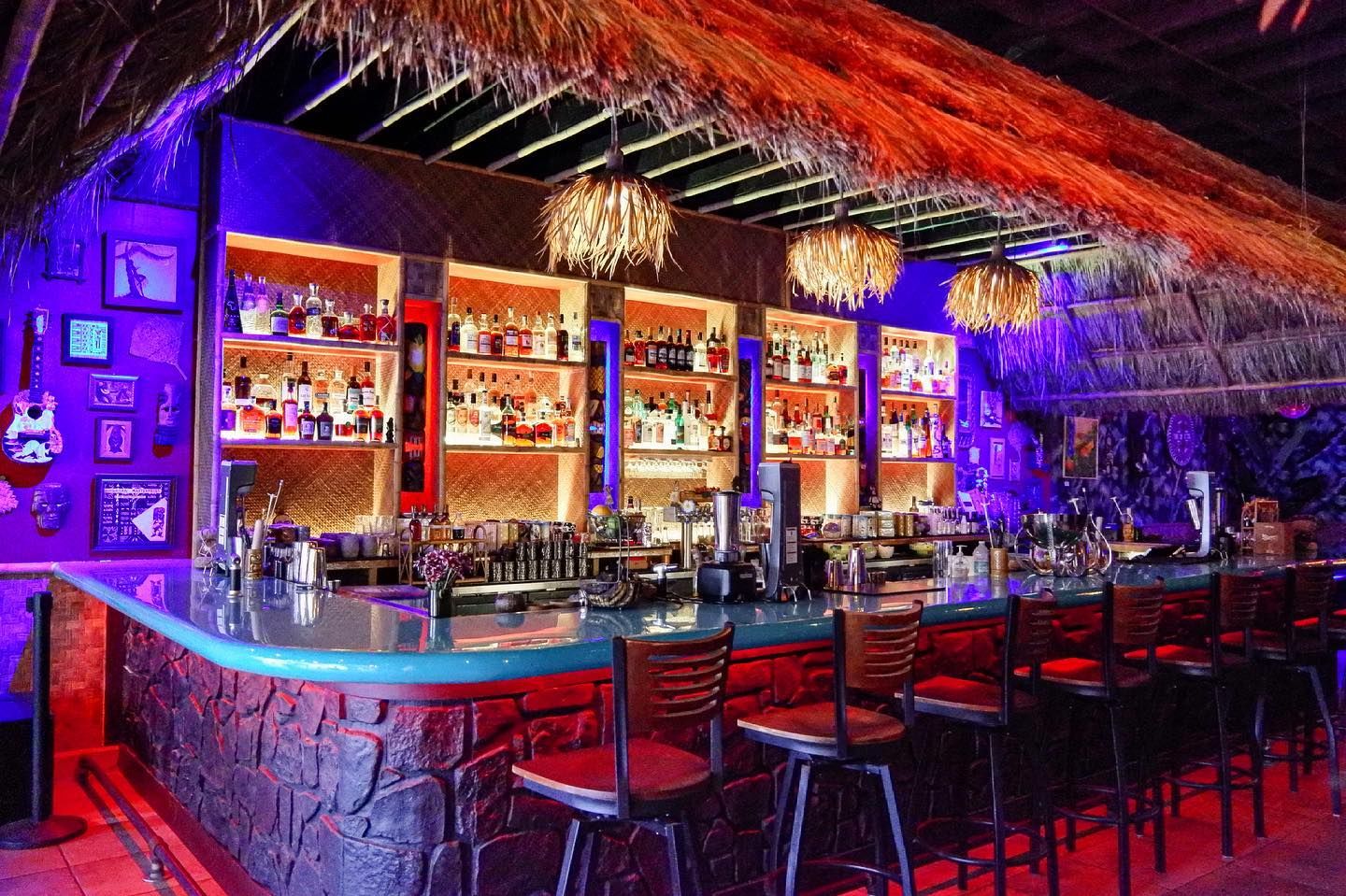
    Rick Sarille and his partners in the Homecookin’ Hospitality Group, the brain trust behind local lounges Foxhole, Drunken Dragon, and rácket, opened Casa Tiki on Calle Ocho shortly before coronavirus changed the world. The hideaway invites guests to escape from their everyday reality to this tropical oasis in the heart of Little Havana. Casa Tiki is open Wednesday to Saturday, 5 p.m. to 3 a.m., and hosts a happy hour on each of those nights from 5 to 8.

    We asked Sarille, who serves as the lounge’s director of nightlife, a series of questions about the joint recently – here are his replies:

    What made the Homecookin’ Hospitality Group want to open Casa Tiki?

    Rick Sarille: Given the landscape of Miami, we saw an opening for a smaller, more intimate venue. Little Havana is a very multicultural hub, a convergence of a lot of different people, and the arts are playing a big factor into it. It is an up and coming, growing area that had a void for a different kind of bar and a different kind of nightlife spot, and we just wanted to add to the diversity.

     What inspired the Polynesian theme?

    There is a huge Tiki culture that we felt we needed to tap into, and that Miami hadn’t really seen. So we got with a bunch of our mixologists from rácket, and we got with some other people in the industry, and zeroed in on the bar menu and the décor. We worked to bring light to more craft cocktails, the whole Tiki culture with rums and exotic mixes, and just bringing flavors and incorporating the Polynesian islands with a little Latin flair.

    How did you settle on that space (1728 SW 8th Street)?

    We felt like it was close enough to Brickell and close enough to the Gables, and equidistant to Coconut Grove. 17th avenue is a very popular and busy street leading all the way over to Marlins (now LoanDepot) Park, which used to be the Orange Bowl. So we felt it was really centrally located in an up and coming area, and an area that is still forecasted for extreme growth.

    What is your educational and professional background?

    I was born and raised here in Miami and am a college graduate from Wagner College in Staten Island, NY, where I played running back for the Division 1 football program. I was a two-time Associated Press All-American who was inducted into my college’s Hall of Fame in 2014, and my high school’s Hall of Fame in 2016. After college I went to play two seasons for a professional team in Milan, Italy, where we turned it around and won every game the first season, but lost in the playoffs, and the following year, we won the championship. It was a great experience, I learned a new language, toured a new country, and got to experience life in Europe. Afterwards, I returned home and began working in marketing. I had been doing parties with Smack and doing parties independently, as well as working for the Opium group. I also worked with the CONCACAF (The Confederation of North, Central America and Caribbean Association Football) putting events together for soccer tournaments, national teams, and professional clubs, and so my background has been very event driven.

    Tell our readers a bit about the Homecookin Hospitality Group?

    Our partners have studied at the school of hard knocks, growing up and living in Miami and New York. We’ve all come from a background working in nightclubs in Miami dating back to the 90s. We come from all different walks of life and from different areas. Angel (Febres) is from Puerto Rico but grew up in Hialeah. Conrad (Gomez) grew up in New York, moved to Miami in the early 90s, and was working at Liquid back in the day with Chris Paciello. Naven (Chatani) had been going to school in the Tampa area, and his background was also nightlife. He was working with the Opium group for a while then became one of the main guys at the W Hotel. Those are the senior partners, but there are also a group of junior partners. Besides myself, another partner is Tony Garcia, who has been in nightlife in Miami as a DJ (DJ Tony G) and also taking over different parties. He created NFA which stands for No Fucking Around, which had a big movement in the 90s as well, including different clothing brands. So, we try to give people different options, not just the nightclub option, but we want to bring that into a smaller more intimate bar setting.

    What are your hopes for the spot?

    We want to add to the culture that’s already established on the block, to provide a different outlet for people to listen to live music in. We have an excellent stage, and a great sound system that people can really sit down and focus on and enjoy everything from a live show by a local band, to a comedy set. To a tap into the culture of what Miami has to offer. There’s a lot of bars in Miami, nightclubs that are very driven by the music, but also so much electronic music and DJs. There are all sorts of homegrown artists who we need to pay more attention to, and really show them the love they deserve. Given our venue and space and having such a great stage and set up, the focus is live music and local talent. We want to create an energy within the space that’s lively, that’s upbeat and makes people want to dance. We all focus on Miamians and not so much the transient Miami Beach crowd, but focus on the people who live here, and grew up here. For those visiting here, Casa Tiki hopes to get them to feel the essence of what Miami really is, not what they see on South Beach.

    Have you ever been to Hawaii?

    I have not been to Hawaii, but Tony G has. He is an avid surfer and he’s been there to surf. He’s also travelled to Bali, Nicaragua, El Salvador, and Costa Rica, as well as California. So internationally speaking, surf culture and the surf community inspired us a lot.

     What is the tastiest drink on the menu?

    (Laughs) OK, wow. Our craft cocktails were all hand selected by our original manager Ivan, who is a mixologist, so every ingredient was thoroughly vetted and sought after, and put together to please your palate. We have different sensations, from texture to feel to flavors. But my favorite is the Vodou au Zonbi (Barbancourt White Rum, Barbancourt 3 Star 4 Year Old rum, Clairin “Vaval” rum, St. Elizabeth Allspice Dram, cinnamon syrup, vanilla syrup, Grenadine, lime juice, grapefruit juice, Angostura Bitters, absinthe). I like to go with a stronger drink, but we only recommend two per person. If we slip you a third, we might look the other way. (Laughs)

    What other drinks would you recommend to guests?

    We are typically more of a run-concentrated bar with our specialty craft cocktails, but I also enjoy a Mezcal. So I recommend the Surfer at a House Party, which has Gem & Bolt Joven Mezcal, Tanqueray gin, Jägermeister, sugar cane syrup, Pierre Ferr Dry Curacao, lime juice, pineapple juice, and rhubarb bitters. It has more of a smoky feel that’s balanced by the sugar cane, the bitters and pineapple juice.

     Which is your favorite local band?

    Oh man, that’s a tough one. (Laughs) We’re excited to hear Electric Piquete and see how they can rock the house, but I really enjoy what Suenalo does. They bring a lot of Afrobeats and are very diverse where they could hit you with some rap verses, as well as take you to Havana and hit you with some salsa. They really do a great job of mixing in a full band and make you get up off your chair and dance.

    An all-new comedy night just launched on Wednesdays at Casa Tiki. The space is also available for private parties and special events. For more information, visit CasaTiki.com or call 786.817.2926.

    Michael Mut is the co-founder / bass player / vocalist in Electric Piquete. When Casa Tiki hosts the award-winning Latin funk / fusionistas on Friday, September 10, 2021, beginning at 9 p.m., it will mark the band’s first performance in the area since the pandemic broke. No cover, 21 and over welcome. More details at ElectricPiquete.com. 
  • A Q&A with Miami Beach Reggae Fest’s Eddy Morillo

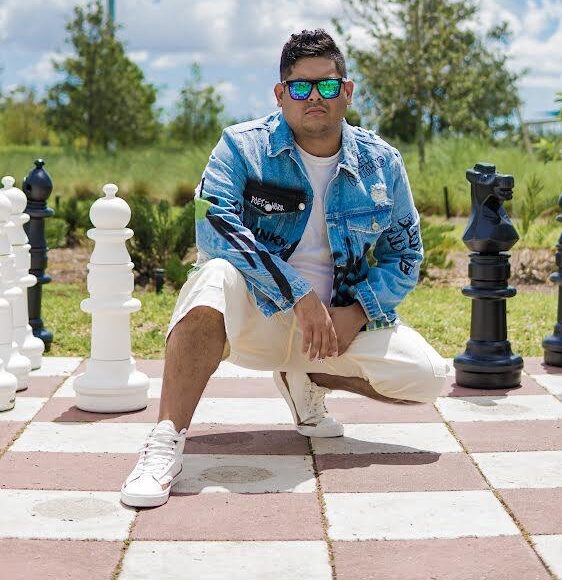
    A Q&A with Miami Beach Reggae Fest’s Eddy Morillo

    What first got you into music?

    Eddy Morillo: My dad was a musician and a poet, and his entire life was influenced by Venezuelan folk music. He was quick to introduce me to music since even before I was born and it naturally grew on me.

    Who were some of your earliest musical influences?

    Definitely my dad who would always amaze me with his cuatro soloing skills. Growing up as a kid I developed a listening ear for Venezuelan music and Luis Silva was one of those singers that stood out to me. He was a pop star within the Venezuelan folk music industry at that time and his music could be heard everywhere even TV soap operas AKA novelas.

    How crucial was the Tu Ciudad, Tu Música contest Bachaco won at Dolphin Mall to the band’s career?

    Tu Ciudad, Tu Música was a 3 or 4-year event that promoted independent Latin musicians around the USA and we happened to participate in the Miami version. I signed up after attending the first year and getting inspired to win by Los Primeros, a reggaeton group from Hialeah. I saw how their energetic performance earned them the winning price and put myself in a preparation gear for a whole year, first winning Felix Varela High School’s battle of the bands in Kendall which helped us get the confidence to win the Tu Ciudad, Tu Música contest. Then we went on to win other contests such as the Red Bull Versiones Battle, which earned us a paid trip to Red Bull Studios in California, as well as the Buscando Mi Ritmo contest which was aired on Telemundo for a season.

    What inspired you create the Miami Beach Reggae Fest?

    I was born on an Island called Margarita in Venezuela where people would go for summer vacation or spring break vacations and enjoy one of the largest beach reggae festivals dubbed the Descarga Belmont. That vibe stuck with me ’til today and I’m most passionate about somehow recreating that experience. After years of working in the Miami music scene I was able to form a bond with the North Beach Bandshell, which has all the necessary infrastructure to make this happen.

    Who’s been your favorite performing artist at the fest and why?

    So far the winning prize goes to Gondwana from Chile, who have a long renowned trajectory and has been proven most successful.

    Which act are you most looking forward to watching perform at this year’s fest and why?

    I’m a huge super fan of both Fidel Nadal and Doctor Krapula and have been heavily influenced by both. Fidel is more of a sweet reggae kind of guy while Krapula is more of a Reggae ska rock band with a very high level of energy, which keeps me always entertained. They both have had impressive careers so far and I’m mostly happy to being able to network with them and perform on the same stage with such talent.

    What’s it been like collaborating with the Rhythm Foundation?

    Collaborating with the Rhythm Foundation by presenting top international talent is one of my biggest contributions to this community, and to know I have the trust of a foundation that prides itself in presenting the best artists makes me also feel proud that my passion has led somewhere positive that can also help other people accomplish their dreams of presenting live music and arts.

    Why call it a “Peace & Love Concert”?

    The decision to call it a “Peace & Love Concert” was made because we need the community to feel the need to make peace and love a way of life, a medium through which we can transmit good Vibrations and positive energy. There is also the fact that the event falls on a date with a significant history of tragedy and pain, 9/11, and we’re looking to transform energies from negative to positive with this event.

    Who are you listening to today?

    Right now I’m super engaged listening to the Red Bull Batalla de Gallos, which is a freestyle battle in Spanish happening in the US, Latin America and Spain. I love the concept and the talent coming out of that, it’s very refreshing and very inspiring.

    What’s next for Bachaco – new single, album, tour?

    All of the above! My dream is to leave a legacy for my family to look back at and feel proud of my musical accomplishments, I want to be remembered through my music so I do have plans for a single, album and tours in the works and it will all be revealed through my social media!

    Follow @BachacoMusic on Instagram and subscribe to their YouTube Channel. For more about the band, visit www.BachacoMusic.com. Get tickets to the Miami Beach Reggae Fest – a “Peace & Love” concert” online by clicking here.

  • South Florida’s Seasons

    South Florida’s Seasons

    Those wondrous seasons — winter, spring, summer and fall, have inspired centuries of vibrant poems. None are about Florida. Why? Because the Sunshine State doesn’t have seasons, of course. Or do we? What follows are the four real seasons Floridians are familiar with.

    Hurricane Season — In August, a true Floridian can smell the change in the winds. Hurricane season has arrived. With it, the ludicrous mish mosh of spaghetti models that predict exactly where disaster will occur. No true-blooded Floridian pays any heed. Been there, done that. Instead, we have hurricane parties and do shots every time we hear words such as cone of destruction, feeder bands, and mandatory evacuation.  Revelers tend to remember these epic parties long after the hurricanes have been forgotten.

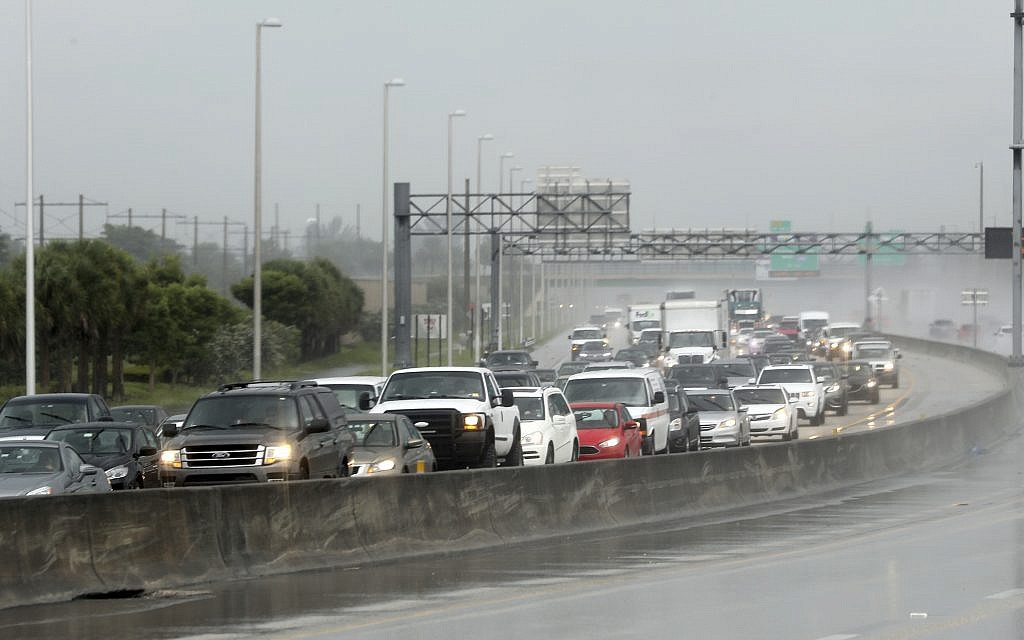
    Gridlock Season — As soon as the all-clear bell is rung, Northerners flock upon us.  Many don’t drive an automobile back home, but when they get to Florida, they get right behind that wheel anyway. Honk all you want, they will NOT turn on red.

    They’re Finally Leaving Season — Around April, the herd begins to thin. Finally. The weather is delightful, the beaches sparkle, and the air even smells cleaner. They’re gone…. they’re finally gone!

    Summer Season — The one season we really do have is marred only by the constant complaints of everybody in Florida not actually born here. In other words, everybody. It’s not the heat, it’s the hu***** …..I won’t even write it. Stop it. Seriously, snap it shut. Summer in Florida is awesome. We have a world-class beach all to ourselves. And if it rains, you just have to wait 10 minutes for it to stop, and dive right back into that gorgeous Atlantic ocean.

    Florida’s defining seasons are more likely to inspire a punk rock song, rather than a flowery poem. If that doesn’t suit you — well, we’ll just have to see you again next year anyway!

  • Spirit and the Cosmic Heart Make Beautiful Jangle Rock

    Spirit and the Cosmic Heart Make Beautiful Jangle Rock

    This article originally appeared in PureHoney Magazine. Check them out here.

    A black screen sits silent just past that point of discomfort, then the movie begins. Outside a home on a windswept valley, a young woman looks away from the camera. Her gaze is fixed on the dirt road glimpsed through dancing grasses. A nostalgic synth rises as a dust cloud forms in the distance.

    Maybe it’s a car. Cue the wistful strumming of a guitar and as the dust cloud nears, the drums kick in. As sweet vocals whisper “… time to know what you mean,” the woman turns to the camera. Her smile is confident, her future is bright. We don’t know where she’ll go – if that car’s even coming to get her – but we know she’s going somewhere.

    The movie, of course, does not exist (yet) but the music does. It’s called “Moments,” the title track of the newest EP by Lakeland’s Spirit and the Cosmic Heart, who are performing at Bumblefest in downtown West Palm Beach on September 17.

    The band has refined an impeccable cross of jangle rock with shoegaze and saccharine pop over three EPs. “Moments” builds on 2019’s “Memories” and 2018’s “Dreams,” a progression influenced by the isolating circumstances of the last year, guitarist and vocalist Joshua Miller said.

    “Covid and the distance it caused allowed us to reflect a little longer on our writing process,” Miller said. The band “scrapped some work and refocused on common threads,” he said, a step that “helped solidify our intentions.”

    “Moments” is another melodious nocturne in four parts. Beyond the title track, “In Between Dream” musters danceable pep even with its ghostly, gothic air. “Voices” throttles up, like a high-speed nighttime chase in that imaginary movie. “Shadow” brings the EP to an airy, ambient close.

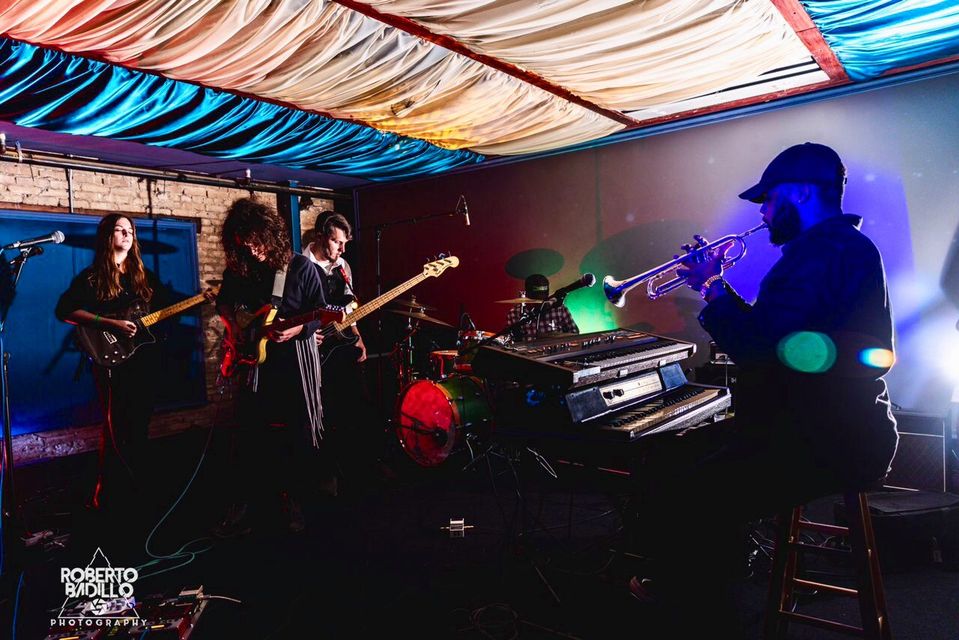
    Miller is joined by brother Daniel Miller on bass, percussionist Ian Lopez, Dallas Smith on keyboards and trumpet, and Melody Wells on vocals and guitar. He said they’re working towards a first full-length whose songs “will likely feel familiar and tackle the realities of existence and feeling.”

  • Lolita Can and Should Be Freed by the Miami Seaquarium

    Lolita Can and Should Be Freed by the Miami Seaquarium

    Last week when The Jitney posted an article about the new owners of the Miami Seaquarium, it included a quote from Seaquarium management.  As always they tried to discourage anyone from considering returning Lolita to her native habitat. Those tactics can and should be answered with science and facts, as follows.

    The Seaquarium “claimed that Lolita wouldn’t survive the journey back to her home in the Pacific Northwest. And if she did she would either die of disease or spread disease to other orcas.”

    First, the disease issue was also raised when Keiko, another captive orca, was headed back to Iceland. The solution was a team of six USDA-appointed veterinarians and pathologists to examine Keiko to be sure he carried no infectious diseases. He was declared healthy and was flown home to Iceland, where he became even healthier. Tokitae would get a similar examination prior to transport. Also, she wouldn’t “die of disease” because she has normal immunity even from novel pathogens, because she would be well fed and provided medical supervision and treatments to make sure she was doing well back in her old habitat. So that alarming claim is not credible.

    Even more absurd is the claim that she might not survive the trip back to her home waters. They don’t say what they’re talking about, but most people, including much of the scientific community, the courts, and the permitting agencies, tend to believe them.

    Let’s take a look at how and why she would not be shocked, but would remember her home and family, and who she is˗̶ a member of her mother’s family and community.

    A landmark paper came out 20 years ago called “Culture in Whales and Dolphins” that established that: “the vocal and behavioral cultures found in orcas appear to have no parallel outside humans and represent an independent evolution of cultural faculties.”

    Field studies around the world have confirmed that orcas everywhere belong to traditional cultures. Currently scientists have proposed 22 distinct orca populations, but others have not yet been documented.

    A recent paper describes at least three newly identified populations around New Zealand and western Australia, based on genetics. Genetics correlate perfectly with cultures because there is no interbreeding between the different populations. That tells us something.

    Among the traditions found in orcas is to limit mating to members of one’s own community, which is a big extended family. That raises some questions about interbreeding, but that tradition is practiced by every member of every known population and has been for thousands of generations.

    This is very strong cultural influence over behavior, in this case, mating.

    Orca cultural bonds may be like no other.

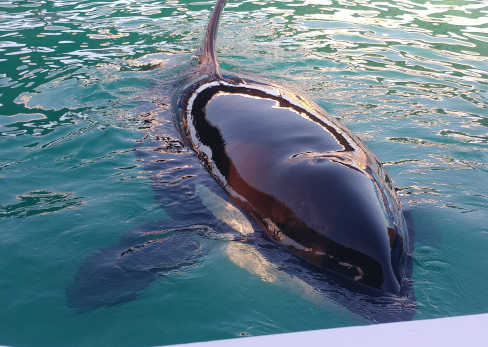
    A wide variety of separate and distinct cultures have now been described, each with its own vocal repertoire, specialized diet, ways of catching food, association patterns, etc. Orcas learn from birth how to live as members of their cultures. Orcas are well-developed at birth, and are catching their own food before their first birthday. Lolita/Tokitae was about 4 years old when she was captured. At the age of four she was fully competent to communicate with her family, catch her own food, and behave as a member in good standing of her family and community. Those memories don’t go away no matter how long she’s away from them.

    According to a recent study of orca brain anatomy: “The brain of the killer whale (Orcinus orca) may be the largest of all taxa supporting a panoply of cognitive, sensory, and sensorimotor abilities.”

    At birth orca brains are already three times the size of adult human brains, and will grow to over five times the size of ours. Sounds reach the developing fetus undiminished through the liquid medium of the womb during most of the 18 months gestation period. So orca calves are hearing their families’ voices and learning their communication systems even before they’re born.

    Cultural learning and identity as family members are deeply engrained in orcas. They have very big brains, which implies long memories, and nothing is more important to an orca than their family and traditions, and how to catch their special diet.

    Young orcas build deep, life-long, emotional bonds with their mothers and their entire families. They learn everything from them, including who they are as family members.

    Lolita/Tokitae is, and always has been, part of her extended family, since birth, despite now 51 years in a tank in Miami. With those memories she will recognize her native habitat and feel energized and excited to be home again.

    Yes, that’s a long time to be bored and lonely. It would be easy to believe she can’t possibly still maintain those memories of her native waters and her cultural identity.

    But we can’t assume we know the limits of what she knows.

  • Candyman Is a Sour Disappointment. The Lost Leonardo Paints a Portrait of the Art World.

    Candyman Is a Sour Disappointment. The Lost Leonardo Paints a Portrait of the Art World.

    The most interesting thing about the new Candyman movie is that they decided to set the reboot of the 1992 horror movie in the year 2019. By explicitly setting it pre-pandemic the filmmakers don’t have to explain why no one is wearing masks nor social distancing.

    If only they put as much thought into the crafting of the rest of this silly movie.

    Perhaps if I’d seen the original 29 year old Candyman, this current rendition would make more sense. But from what I could gather the gist is that if you look into the mirror and say the name “Candyman” five times, the titular hooked character will come out of the mirror and gore you to death. Sounds like it could be a fun, dumb splatterfest, but instead of leaning into the innate stupidity of this enterprise the filmmakers  try to sprinkle social commentary and race relations into this bore.

    Candyman‘s producer and co-writer Jordan Peele found financial and critical acclaim a few years ago by mingling social commentary with horror in Get Out. But that flick had two key ingredients Candyman is missing, a sense of humor and the lack of obligation towards an existing intellectual property. When you try to shoehorn serious issues like racism and police brutality into a movie that only deals with the topics superficially, it can seem more exploitive than the grossest of horror movies.

    The Lost Leonardo

    Earlier this year when the value of all kinds of worthless things from stocks of broke companies like Gamestop to digital pictures to cryptocurrency to baseball cards went through the roof, it seemed financial collapse was a breath away. But months have passed and everyone still has their shirts on their backs. The new documentary The Lost Leonardo is a reminder that insane speculation is nothing new.

    It takes a good half hour for the movie to find its footing but stick with it and you hear a fascinating story about a recently unearthed painting of Jesus, supposedly by the most famous artist of them all, Leonardo da Vinci. The only problem is that there is ample evidence that the painting wasn’t composed by Leonardo. But that doesn’t stop the value of the painting shooting upward until it becomes the most expensive painting ever auctioned.

    At times the movie almost seems like a satire, like one of those Christopher Guest mockumentaries like Best of Show, as you’re introduced to a wide range of art connoisseurs with too much money on their hands from Russian oligarchs to Saudi princes.  But The Lost Leonardo is dead serious in the message that how much something is worth is whatever the richest person is willing to pay for it.

  • Museum Park Is Breathtaking

    Museum Park Is Breathtaking

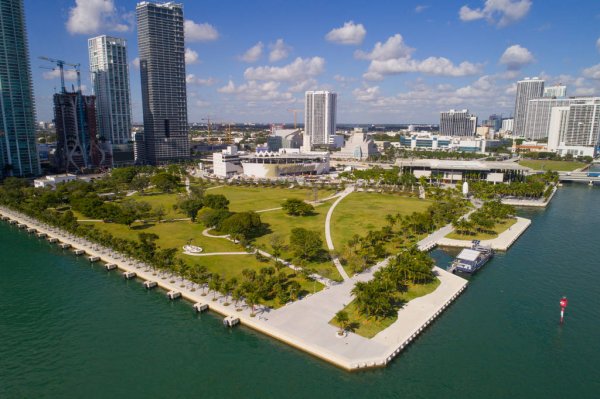
    Museum Park is both breathtaking and pristine. The use of this public space in our urban core is unique, enchanting and invaluable. This truly is an accomplishment. The breezy wind, the water, the scope of vision and architecture, the foliage, the greenery, the museums, the horizon — and most of all — the lighting. A slight silver hue seemed to radiate throughout the park, casting a mood of peace and harmony. This soft light, the pulse of the park, is undoubtedly created by all the surrounding water, so much water, immeasurable in scope and volume, this wonderful water, OUR water, reflecting the sun, blanketing the new park in this silver hue.

    It is beautiful and sitting at the end of the park, shoes off, under a palm tree, writing this essay on a phone, looking at the vastness of our panorama, then, right then, I clearly saw why the boat slip needed to remain unfilled, why the soccer stadium couldn’t be built there, why this space, including the boat slip, needed to remain public. It’s easy to see. It’s the water. From the street the water in the boat appears murky and backlogged. At the end of the park, a couple of football fields out from Biscayne Blvd, the water is clean and expansive. It’s easy to see when there.

    The potential for this Museum Park is immense.

    Festivals, gatherings, rally’s, whatever we want, it’s ours, and it’s here; it’s here for good, and you could see the potential in the mills of people scattered loosely throughout the park, families with children, couples and lovers, athletes and bikers, frisbee tosser, kite flyer, tourist with a camera. You could see the potential, I mean you could really feel the potential of this park becoming kinetic. Museum Park is another indicator of how it’s such a wonderful time to witness Miami.

    On the way out I saw a friendly face from yoga. He’s also the director of the Bayfront Park Trust who basically manage or you can even say own the land. He was siting under a Banyan Tree on a small chair gazing at the new park with a cracked smile.

    He looked sage, sort of like a monk.

    “I’ve been here since six am, in the same spot, not necessarily to work, but just to feel all of this,” he said. “You know what I mean? This needs to be felt.”

    “Congratulations. It’s beautiful.”

    “It certainly is.”

  • Miami Seaquarium New Ownership Will Keep Lolita Locked Up

    Miami Seaquarium New Ownership Will Keep Lolita Locked Up

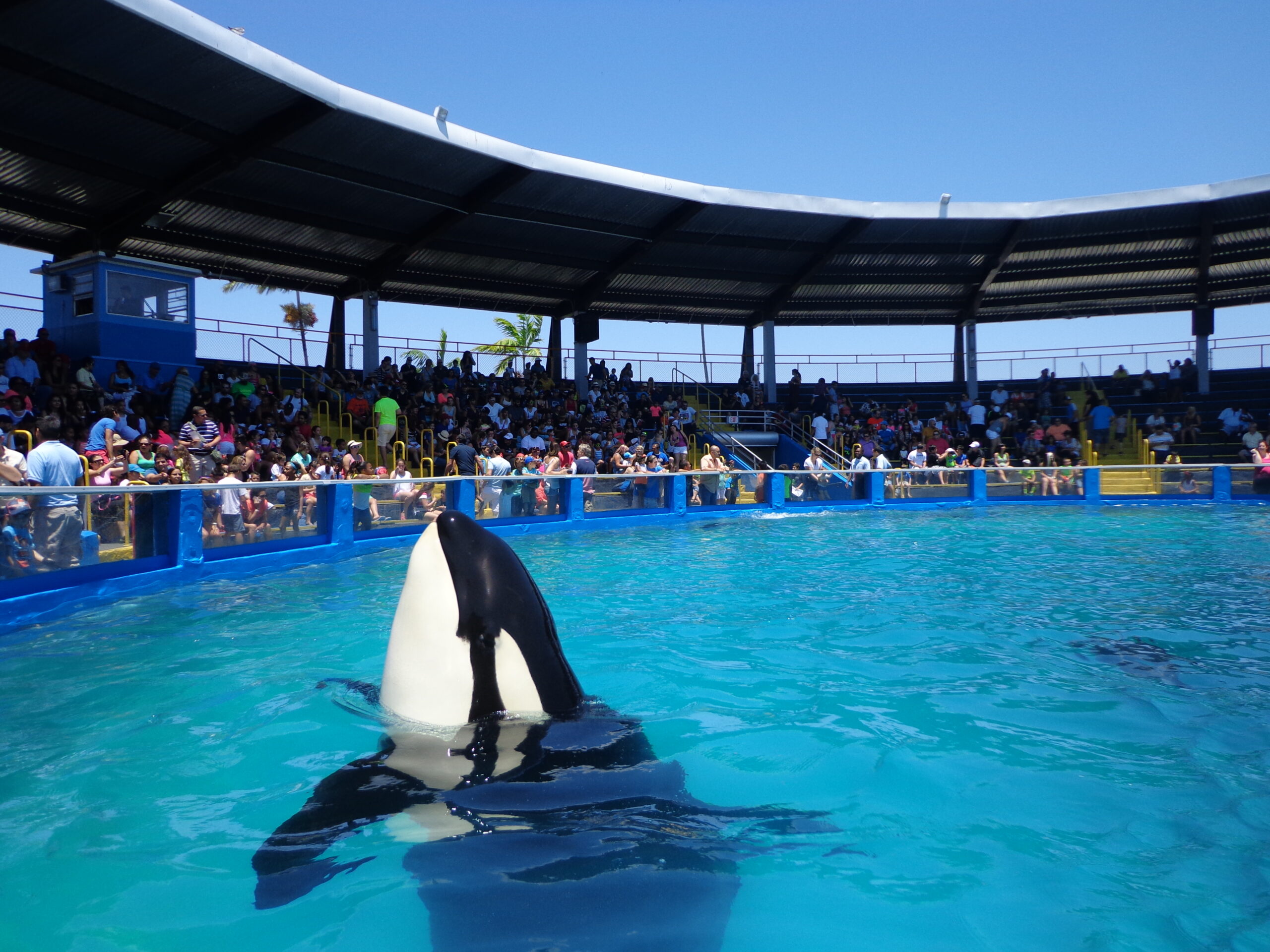
    Anyone who has driven down the Rickenbacker Causeway over the past decade has seen the protestors begging the Miami Seaquarium to free Lolita, the killer whale who has been trapped in a tiny tank for over fifty years. By the end of this year PETA members will have a new corporate entity to make their case to.

    The Dolphin Company, a Mexico based theme park company tweeted on Tuesday that they were taking over the Miami Seaquarium from Palace Entertainment.

    Miami Seaquarium originally opened its doors all the way back in 1955. It found a hint of international fame in the 1960’s when 88 episodes of the tv series Flipper were filmed there. The last few decades though when you hear about Seaquarium it has been all about Lolita.

    Lolita first came to the Seaquarium in 1970.

    Way back when it seemed cute to name an animal after Nabakov’s twelve year old sex victim. It also seemed cute back then to have a giant orca who would splash the sweltering hot audience soaking wet. But now everyone is fully aware of how this orca is treated. She’s confined to a space that is four times the length of her body and only twenty feet deep. It was in that same tank where the Seaquarium’s previous orca, Hugo died after injuring himself against the tightly confined walls.

    According to Local Ten news, Lolita will stay at the Seaquarium under the new ownership.

    The Seaqurium has long claimed that Lolita wouldn’t survive the journey back to her home in the Pacific Northwest. And if she did she would either die of disease or spread disease to other orcas. They claim she will be much safer and happier entertaining the masses in their killer whale and dolphin extravaganza.

  • The Night One Percent Became Leonard Skinner

    The Night One Percent Became Leonard Skinner

    In 1968, the psychedelic era arrived in Jacksonville, Florida, on a wave of Orange Sunshine. Rock music and “acid” were part and parcel of the movement.

    A year later, some teenage hippie friends and I decided to take a trip on the psychedelic bandwagon. We drove to downtown Jacksonville and scored some orange acid—five bucks a tab, which was a lot of money in 1969.

    A few days later we ate the acid. It was me, my then-girlfriend, her best friend and two other guys, Doug and Chuck Newton. We hopped into Chuck Newton’s roomy ’52 Oldsmobile—which he’d painted green with some house paint and a brush—and started cruising for live music, which was easy to find in Jacksonville, especially on a Friday night.

    My friends and I were music junkies—rock music was an integral element of the hippie lifestyle—plus we enjoyed communing with fellow hippies wherever we could find them. It was like a brotherhood. There weren’t many of us in Orange Park, but you could find lots of them—and lots of live music—in the Riverside district and even over on the Westside.

    The five of us wound up at the Sugar Bowl, a teen club in a working-class cinderblock subdivision called Cedar Hills, where several prominent musicians were raised, including future Skynyrd members Allen Collins, Leon Wilkeson and Billy Powell. Also in the neighborhood were Jeff Carlisi and Don Barnes, future members of 38 Special, and Kevin Elson, who became a successful sound mixer, recording engineer and producer.

    A local rock group called One Percent was performing at the Sugar Bowl that night. In the middle of the first set there was a scuffle; some local rednecks had invaded and were harassing some hippies. Someone got into a battle with an off-duty cop who served as a security guard. I heard a girl scream. A guy got stabbed, someone said. A squad of cops materialized just as the five of us were starting to get off on the acid. This was not a cool scene for an acid trip, so we hauled ass out of there and went back to staid, old Orange Park.

    Westside drummer Joe Kremp, who played with a group called Running Easy, was in the audience that night and confirms that there was indeed a melee and that his friend, a harmonica player nicknamed “Doc Blues,” was the one who got knifed.

    After Dickey Betts and Berry Oakley of the Second Coming—

    Jacksonville’s best and most prominent psychedelic band—joined Duane Allman’s new group and left for Macon, Second Coming keyboardist extraordinaire Reese Wynans joined up with bassist-vocalist Gary Goddard. Goddard’s previous band, Wapaho Aspirin Company, used to open for the Second Coming at local “be-ins” in Riverside.

    There were also be-ins on the Westside at a place called the Forrest Inn on Lake Shore Boulevard, where Allman had auditioned prospective members for his new project.

    Wynans and Goddard hooked up with drummer James “Fuzzy” Land, formed a guitar-less trio called Ugly Jellyroll and started playing the Forrest Inn. This was really a good group, mainly because Goddard was possibly the best singer in town.

    A few months later I was with another Orange Park pal, Greg Smith, hanging out at the Forrest Inn. It was a teen club from 8 p.m. to 11:30 and then became a bring-your-own-bottle club from midnight to 6.

    The Forrest Inn happened to be about a half-mile from singer Ronnie Van Zant’s childhood home and a block from where bassist Larry Junstrom still lived. Drummer Bob Burns lived around the corner on Park Street. Guitarist Gary Rossington lived over on the other side of Cassat Avenue, about a mile to the east.

    As musicians, One Percent’s members weren’t very accomplished, certainly not compared with the virtuosos in the Second Coming. Smith said the group sounded like it “just got out of the garage.” Richard Price of Bradenton band the Load, also with a later version of the Second Coming, said it was the worst band he’d ever heard.

    Underdogs on the local scene, One Percent had a small but fierce following, mostly Lee High School students. Lee was about four miles to the east in nearby Riverside, close to Willowbranch Park, where some of the be-ins had been held. Lee High was also the school all the One Percenters had attended—except Allen Collins, who lived in Cedar Hills, across the Cedar River in a different school district, where he attended Forrest High.

    Midway through the second set, Van Zant quizzed the crowd.

    “Hey, ya’ll. We’re thinkin’ about changing the name of the group. Whatch’all think if we change it to—uhhhhhhhhh—Leonard Skinner!”

    The crowd went wild.

    Apparently this was some sort of inside joke I didn’t get. I leaned over and asked this tall dude a few feet away, “Who’s Leonard Skinner?”

    “He’s the PE coach at Lee High who hassles them about their hair.”

    I had attended Orange Park High before transferring to Central Adult downtown, so I didn’t understand the reference.

    It turned out the only member of the group who actually got sent to the principal’s office by Coach Skinner was guitarist Gary Rossington, who used this experience as an excuse to quit school at 16. The others had quit more or less before Skinner arrived.

    The group had just signed a recording contract with a local label, Shade Tree Records. The label was in the process of recording and releasing the group’s first single, “Need All My Friends.” Owner Tom Markham and his business partner, Jim Sutton, didn’t like the name One Percent. They asked the group to change it.

    So change it they did. But the label execs disliked the new name even more, Markham said. He also said it was James Silverman, who managed the group for about 15 minutes, who suggested changing some letters to Y’s, and “Leonard Skinner” became “Lynyrd Skynyrd.” It was very hip and ironic in those days for a band to deliberately misspell its name.

    Three years later producer Al Kooper, who signed the group to his Atlanta-based Sounds of the South label—which launched the group into the stratosphere—also tried to get the boys to change it. But the name stuck.

    Who’d a-thunk it.

  • Bumblefest Celebrates Ten Years of PureHoney Magazine

    Bumblefest Celebrates Ten Years of PureHoney Magazine

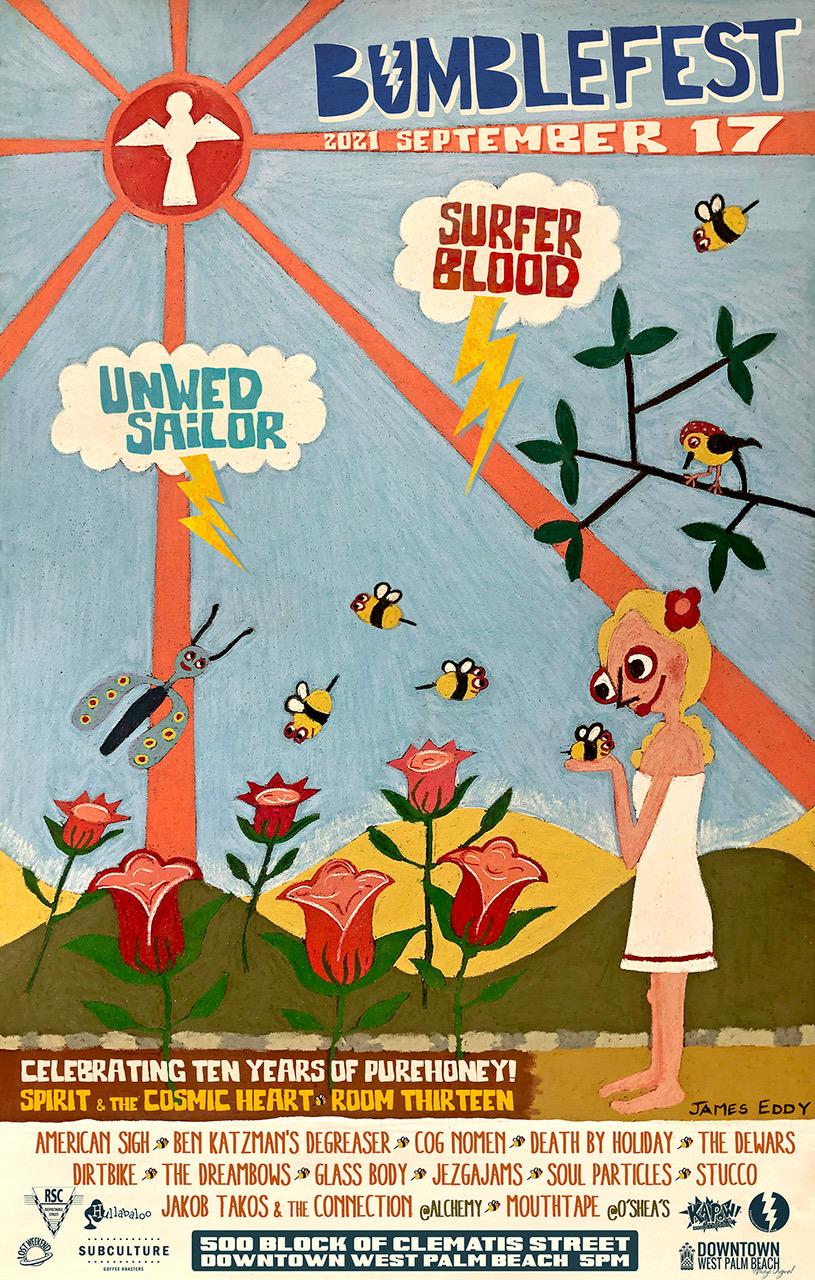
    Bumblefest 5 celebrating 10 Years of PureHoney will take place Friday, September 17 beginning at 6 p.m. on the 500 block of Clematis Street in Downtown West Palm Beach.

    This years headlining acts include hometown heroes Surfer Blood plus Unwed Sailor, Spirit & The Cosmic Heart and Room Thirteen. The rest of the lineup is rounded out by American Sigh, Ben Katzman’s Degreaser, Cog Nomen, Death by Holiday, The Dewars, Dirtbike, The Dreambows, Glass Body, Jakob Takos & the Connection, Jezgajams, Mouthtape, Soul Particles and Stucco. 2021 poster design by the incredible James H. Eddy. Tickets costing $20 are available here. Below is info about some of the acts playing.

    Surfer Blood

    Surfer Blood’s 5th album, Carefree Theatre, was released on 9/25/20 on Kanine Records, Also released in 2020 was 10th anniversary deluxe 2-LP vinyl reissue of their debut album Astro Coast, and the Hard-Boiled 10” ep with special guest vocalists. Founding Surfer Blood members John Paul Pitts and Tyler Schwarz are joined by guitarist Michael McCleary and bassist Lindsey Mills, all alumni of the same high school in West Palm Beach, Florida. Surfer Blood are the cleanest and nicest band in existence.

    Unwed Sailor

    The journey of Unwed Sailor began in Seattle, WA in 1998, shortly after Johnathon Ford departed critically praised bands Roadside Monument and Pedro the Lion. While working within those projects, Ford began writing instrumental music after listening to Tortoise, Pullman, and seeing bands like Physics perform live. After recruiting Dave Bazan (Pedro the Lion), Casey Wescott (Fleet Foxes), and Melissa Palladino (Danielson Famile) to play on the now classic Firecracker EP, Unwed Sailor was born. Two decades and seventeen releases later, Ford has continued to rely on the band as a device for personal exploration and emotive narration. Unwed Sailor now joins forces with Spartan Records for the release of their latest moody and cinematic journey, Truth or Consequences, a sonic examination of particular memories or moments in Johnathon Ford’s life, with each song serving as a unique snapshot of an overarching narrative. Truth or Consequences is shaped around familiar musical DNA. Heavily present, driving, and stacked bass lines; wandering and evolving song structures; soaring crescendos and moody diminuendos; and, of course, a gripping sense of sonic storytelling.

    Spirit & The Cosmic Heart

    “Spirit and the Cosmic Heart offer a warm shoegaze pop sound founded on good production, lush instrumentals and soft vocals, and show a tendency for memorable and tuneful writing. Subtly reminiscent of sixties pop, ‘MOMENTS’ EP (2021) is an accurate representation of the band’s songful character, bringing forth symmetric levels of dream pop melancholy and twee smoothness. Spirits music comes with a strong sense of openness and familiarity, hence it’s easy to appreciate instantly” – Destroy / Exist

    Room Thirteen

    Room Thirteen is a collaboration between audio/visual artists Courtney Asztalos, Abigail Clark & Danny Clifton. “Room Thirteen is Clifton’s melting Martin Denny exotica with ghostly, doo-wop harmonies.” –Alex Woodward (The Gambit) “The sound of Room Thirteen . . . is inspired by solid gold oldies, swimming holes, lounge music, and tropical martinis” – Elizabeth Schneider (IMPOSE Magazine)