Category: News

  • Flirtin’ with Disaster: The Rise and Demise of Molly Hatchet

    Flirtin’ with Disaster: The Rise and Demise of Molly Hatchet

    Jacksonville made a name for itself in the world of music as the motherlode of so-called southern rock. Several notable groups emerged from the city in the late 1960s and early 1970s including the Allman Brothers Band, Lynyrd Skynyrd and many others. However, by the late 1970s, the ABB had fallen into in disarray and had broken up, and Skynyrd suffered what was then seen as its demise due to a 1977 plane crash.

    A year after the crash, a new Jacksonville group calling itself Molly Hatchet—named after an apocryphal prostitute who murdered her clients with an axe—exploded onto the worldwide music scene. Leader-guitarist Dave Hlubek had lived in the same blue-collar, Westside Jacksonville neighborhood and had gone to the same schools as many of the Lynyrd Skynyrd boys.

    Hatchet had been recommended to talent manager Pat Armstrong, who had co-managed Skynyrd before that group got its big break in 1973. Armstrong too was from Jacksonville but by 1970 had relocated to Macon, Ga., widely considered the home of southern rock because it was the headquarters of Capricorn Records and its premier act, the Allman Brothers Band.

    Armstrong had also been offered management of 38 Special, a group led by Skynyrd singer Ronnie Van Zant’s younger brother Donnie. Armstrong passed on 38, but someone in that group thought he might be interested in Hatchet.

    Armstrong signed with Molly Hatchet as the group’s manager, executive producer and publisher. Wearing all three hats was a serious, yet common, conflict of interest; still the group signed his contract enthusiastically, in spite of the fact that the members had engaged one of the top entertainment law firms in New York to review it. Either the group’s attorneys did them a great disservice or—more likely—the group simply ignored their advice.

    Armstrong got in touch with Van Zant, who was by this point well-ensconced in the music business and looking for other acts to mentor and produce. At Armstrong’s behest, Van Zant and Skynyrd sound man, Kevin Elson, traveled to Daytona Beach to see Hatchet perform. The relationship got off to a rocky start because Hatchet played a song, Gator Country, that poked a bit of fun at Skynyrd.

    Still, Van Zant and Elson agreed that Molly Hatchet had something.

    Van Zant brought Hatchet into Skynyrd’s studio on Riverside Avenue to record some demos and helped them clean up some song arrangements. The plan was that he would use his connections in the music business to shop Hatchet’s demos to record companies. If a deal transpired, Van Zant would come aboard to co-produce Hatchet’s debut album.

    That opportunity was dashed by Skynyrd’s plane crash in October, killing Van Zant along with five other passengers. Hatchet’s big break went up in smoke.

    Still, the group managed to snatch victory from what seemed like defeat: The loss of Skynyrd left a huge hole in the southern-rock market. Armstrong guessed—correctly—that several major labels were in search of a Skynyrd substitute to satisfy the demand for redneck rock, and being from the same city as Skynyrd gave Hatchet a leg up on the competition. The group even incorporated a Skynyrd tribute into its live performances.

    Armstrong snagged Hatchet an audition with Tom Werman, an Epic Records producer, who happened to be working at an Atlanta studio called the Sound Pit. Hatchet set up in the studio for a live audition. Werman loved the group and, grasping its potential for seizing the southern-rock crown, quickly signed it to Epic.

    There were other Jacksonville-based contenders to be sure: 38 Special, whose lead singer was himself a Van Zant, and Blackfoot, with two members who had briefly been in Skynyrd. However, with its “three-guitar army” and dynamic front man Danny Joe Brown, Molly Hatchet looked and sounded more like Skynyrd.

    With Werman at the helm, the group scored a hit album that quickly went gold. Hatchet’s second album became even bigger hit than the first, scoring double-platinum (all in all, Molly Hatchet managed to create four platinum albums for Epic/Sony). The group shot to the top of the music world. Things could not have been going better.

    This would have been the point where most groups would work to consolidate their success, but it was exactly the point at which Hatchet started unraveling. With the sudden influx of fame and fortune, the members’ heads swelled uncontrollably as they began to destroy themselves—along with their careers. Not only did they piss away their hard-won success—and money—most of the members destroyed themselves in the process.

    Cocaine seemed to be the most pressing problem,

    with alcohol abuse running a close second. As the group began floundering, Armstrong admonished them, “You scratched and clawed your way to the top, and now you’ve snorted your way to the bottom.”

    Whether it was alcoholism, cocaine-induced megalomania, dain bramage or just bad judgment fueled by arrogance, most of the members—with the notable exception of drummer Bruce Crump, who was a health nut—seemed to be on self-destruct and proud of it. The topic of self-destruction even became song fodder: they wrote songs about it, such as Flirtin’ with Disaster, which was also the title of their biggest-selling album.

    Just as the group’s career was hitting full swing, lead singer Danny Joe Brown quit to start a solo career, convinced that he was the main attraction. His illusions would prove to be ill-founded as his success as a solo act fizzled in short order. In fact it was an unmitigated disaster. His drug use and egregious behavior completely alienated his new band members—to the point where they staged a mutiny and walked out mid-tour. Brown was forced to finish his 1981-82 tour opening for fellow Jacksonville rockers Blackfoot with a pickup band he found in a local bar.

    Ultimately, one of the group’s most fundamental blunders was that the members refused to create a corporation or establish any type of formal business structure or even an operating agreement; hence, if a member quit, there was no legal framework for a financial settlement. They would have to sue, but none did.

    Every member, with the exception of guitarist Duane Roland, eventually got fed up and walked away from the group—and its joint assets—without so much as asking for a settlement. Even the founder of the group, guitarist Dave Hlubek, walked out. Nearly all of them at some point returned as salaried sidemen, having relinquished their positions as principals.

    The last man standing, guitarist Duane Roland, inherited the name and the tour bus. But Roland no longer wanted to tour due to a hip replacement and dependence on pain pills on top of his alcoholism. He was convinced the crazy world of touring could kill him.

    However, there were still fans out there and money to be made,

    so in 1993 Roland agreed to license the name of the group to Brown and replacement guitarist Bobby Ingram (who had been in Brown’s solo band). This arrangement lasted two years, when Brown developed serious health problems and could no longer tour (he died of kidney failure in 2005). In 2000 Roland finally sold the name to Ingram for $250,000 and retired. He died of cirrhosis in 2006.

    Bassist Banner Thomas and drummer Bruce Crump also came back as sidemen, but neither lasted long under Ingram’s aegis. Both have since died. Even Dave Hlubek came back for a time as a sideman in the group he himself had founded. He died in 2017.

    Ingram continues to tour with replacement members who get paid by the gig. He is the only guitarist in a group that was once renowned for its three-guitar army.

    The group’s fans have largely split into two camps, those of the “original” Hatchet and those of the current lineup. The social-media war between the two camps has been written about and commented on profusely; there was even a cover story about the feud in Folio, Jacksonville’s alternative weekly.

    Ingram for his part has insisted he is proud to carry on the Molly Hatchet tradition and that he is doing so with the most honorable of intentions. This may well be true. However, many of the older fans continue to attack him on Facebook, disparagingly calling the group “Bobby Hatchet.”

    The oddest part of the story is that every member of the original lineup has died—along with several replacements—almost as if the group had been cursed. Hatchet has had approximately 20 members over four decades, 11 of whom are deceased.
  • Jitney Books to Publish Three New Novels by Miami Authors

    Jitney Books to Publish Three New Novels by Miami Authors

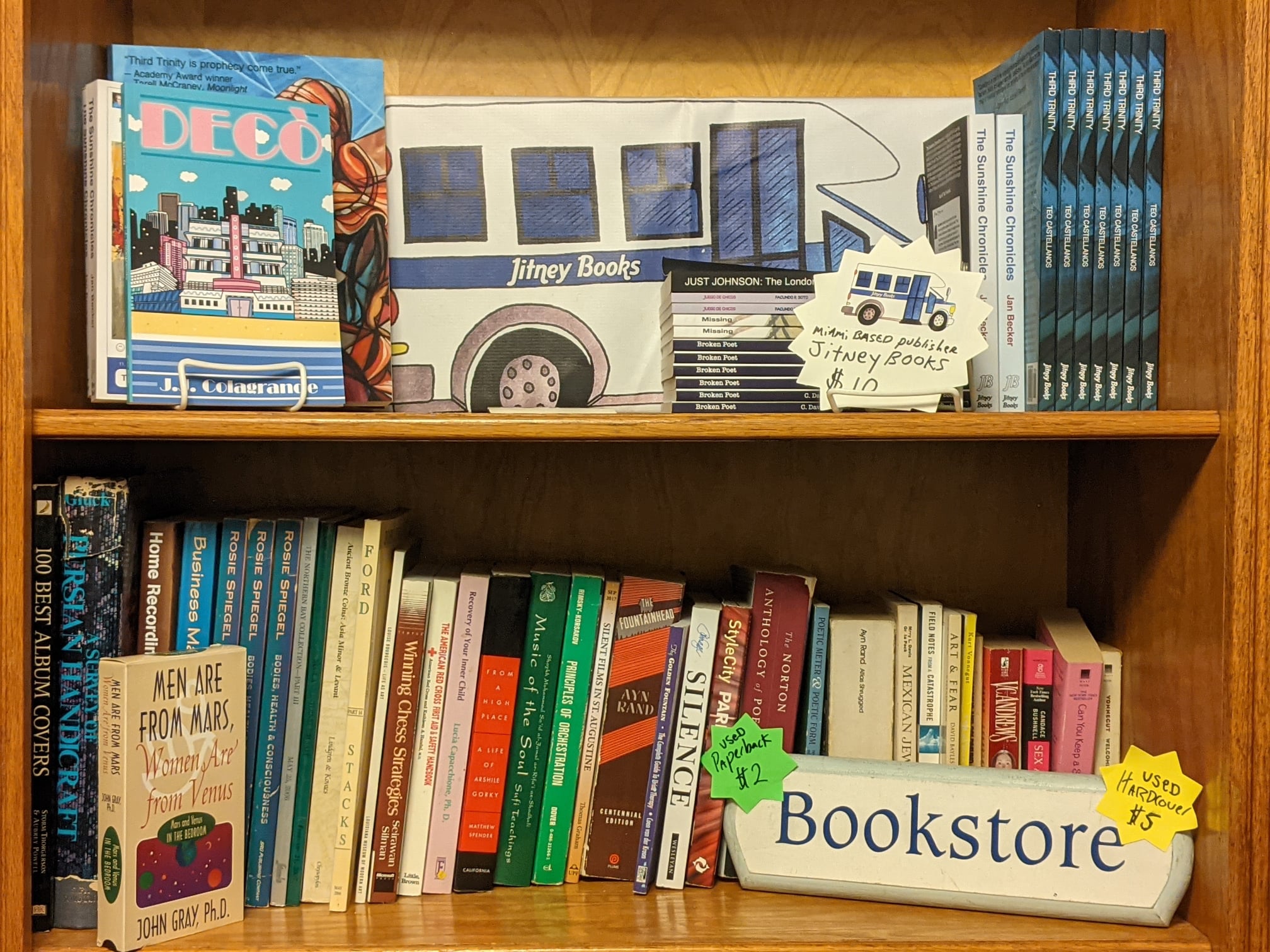
    Jitney Books is publishing three new novels by  Miami authors.

    The South Florida based publisher has now released thirteen books by nine different local authors. All books also feature handsome covers created by South Florida artists.

    We’re proud to introduce you to our 2021 new releases.

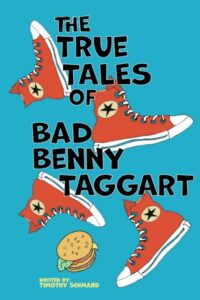
    The True Tales of Bad Benny Taggart by Timothy Schmand

    We meet Benny Taggart when his anger erupts as a student in a middle school just outside of Buffalo, New York. His explosive reactions to bullying and brutality propel him through the portal of a failing juvenile ‘justice’ system. Here Benny perfects his “bad” persona, masking insecurities which are only compounded by a devastating tragedy. Thrust toward adulthood with a few missing pieces, we follow ‘Bad’ Benny on an odyssey to find a father he never met, following clues he may have imagined, all of which point toward Miami.

    Benny Taggart becomes Huck Finn and Holden Caulfield seen through Alice’s looking glass. This late 20th century American coming-of-age journey is far from a straight path. Faced with larger-than-life danger and confronted by mysterious folk he never could have imagined, Benny wrestles his way toward whatever adulthood may bring. Filled with a cast of unique American characters, The True Tales of Bad Benny Taggart is a fast-paced journey from betrayal through violence and danger…toward an unknown future.

    Featuring cover art by Jayda Knight.

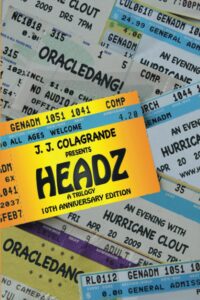
    Headz the Trilogy by J.J. Colagrande


    The definitive novel chronicling the culture of music festivals. First published in 2011, it features a diverse cast of rebellious American characters from New York, San Francisco, and Miami. The book follows their journey across the country to Chicago for Oracledang! It’s the biggest and baddest festival of the summer. Once there, paths converge for an event none of the characters will soon forget and a concert only a few will get to see.

    Headz the Trilogy is a countercultural gem appealing to anyone who has been to a festival. Whether Woodstock, Bonnaroo, Ultra, Burning Man, Rolling Loud, Grateful Dead or Phish, Coachella or Lollapoalloza — you will enjoy this wild, timeless ride.

    Set Break is a new novella featuring dozens of first-person anecdotes, vignettes, and bonus scenes. It profiles most of the characters from Headz. In some instances, it serves as a prequel to the events and timeline of the original novel. In other cases, it adds nuance and context to the real-time events of the novel. It is a delightful, animated respite and deeper dive into the universe. Encore is a new novella taking place directly after the events of Headz. It is a sequel to the original novel set at different music festivals across the country. It features fifty first person anecdotes and scenes from several characters, both continuing the saga while being a stand-alone novella. Like any good concert, a solid is the perfect ending to any memorable show.

    Featuring cover art by Martin Sinclair.

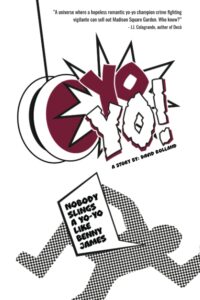
    Yo-Yo by David Rolland

    Nobody slings a yo-yo like Benny James. Behind the back, through the air, between his legs, suspended at a hundred and twenty-degree angle, he’s sold out arenas nationwide wowing and kapowing audiences with his yo-yo. But still there’s a hole in Benny’s heart.


    He just can’t get over the girl who got away.

    And no amount of fame, fortune or after-hours masked crime-fighting will ease that pain. But as Benny navigates his weird world he learns life really can be like a yo-yo. Sometimes it’s up, sometimes it’s down, and sometimes it smacks you right in the face.

    Featuring cover art by Marlene Lopez.

  • TEDxMiami Salon Series is a Delight

    TEDxMiami Salon Series is a Delight

    We all know and love TED Talks. Over the years, the immensely popular series has engaged hundreds of millions of people, worldwide. And now TED is spreading its wings with TEDxMiami, our local “chapter” of TEDx. They are producing TEDxMiamiSalon, a series of events designed to bring like minded people together to have a TED Talk experience. The formula is simple. Gather. Watch previously recorded TED Talks. Then break into groups and talk.

    You might be asking yourself, “well, why would I go to a salon to watch pre-recorded videos. I can do that at home.” Well, yeah, that’s the whole point. They want you to leave your home and have a real human interactive experience, with you know, like other people. Back in the day, like way back in the day, believe it or not, people actually gathered together.

    I think it was 2019. They called it socializing.

    It was a “thing.”

    TEDxMiami is trying to do just that with a series of locally organized salons. The second in the series recently took place in Little River at a charming restaurant garden called Naomi’s. The salon focused on love. It was cool, intellectually stimulating, reasonably well attended, and there were free drinks and delicious bites.

    Soon there will be more salon events culminating in a large conference in 2022 and then yearly, going forward, hopefully, if we like ever get back to normal.

    For more information, visit TEDxMiami.com and follow them on Facebook, Instagram, Twitter, and YouTube @TEDxMiami.

    Bonus trivia fact: do you know what TED stands for? It’s not named after some dude named Theodore — it’s an acronym, Technology, Entertainment, Design.

  • The Pandemic Is a Trauma for Us All

    The Pandemic Is a Trauma for Us All

    Oh the times they are a changing. Are they though?  Every human has had a curveball thrown at them in the last two years.  I wonder if there is anywhere on the planet that Covid has not seeped into.  New Zealand knows some kind of secret.  

    Underlying conditions is what takes people down, quickly.  Chronic sickness. I learned more about my friends and families ailments than I cared to know, it’s a lot.  People are a lot. Guess what, we are all the drama at some point.  I want chronic wellness to be a thing. Where we focus on all the great things about ourselves and our bodies.

    I think that people are scared, angry, insecure.  I was all three of those things before 10:00 a.m. today.  So many thoughts. We have been left alone with our thoughts more than ever in these past two years. Cue the negative self talk and overthinking. Our culture is becoming more fear based every day.

    The red flag is trending and so many people are quick to tell you what they consider a warning.  Ten ways to know he’s a narcissist.  The one thing I bet she is doing wrong.  Five things to look out for during your first day on the job.  We are being trained to look for red flags, I think that sometimes we are missing the green lights because we are searching and focusing so hard on the “flaws” or the negatives of a situation.  

    I don’t think anyone got through the pandemic without some sort of trauma.

    We all have moments of crisis that triggers out fight or flight.  It’s a survival tactic. A mechanism set in our DNA to protect us and keep us safe. I’m tired of playing it safe.  Your fears are not the enemy, avoiding them is.  You gotta lean in to them and find the lesson.

    Not all of us are ready to feel it and heal it.  In my experience If you push past it and ignore it, it comes back as something else.  The same message just keeps coming at you in different forms until you hear it and take inspired action to do better for yourself. To choose you. So honor that feeling. Take it apart and dissect it as much as you can.  

    I was stuck, emotionally, physically and financially.  I have traded one addiction for another my entire life. I had and still have certain behaviors that are almost inexplicable.  I have gotten the reckless ones under control for the most part.  I find myself saying, “what the hell Mary?  What are you obsessing about now?”  I am working really hard to just obsess about myself, to be addicted to my well being. To be more aware of what direction my thoughts are taking me. To give myself a chance. 

    Putting myself first has been a lifelong challenge. 

    I am so grateful for the last 17 months, I found a level of life and a version of myself that I actually like, and I am just getting started. This may not be a popular experience or opinion of many during the pandemic.  That’s OK, this is my experience.  I am in control of it, or at least my perception of it. I am living on my own terms for the first time and will inevitably make some mistakes along the way. All I can say is that you have to let it go.  Being mad at yourself or at someone else is just a waste of energy. Stop beating yourself up. If you approach life with more compassion, awareness and understanding (mostly for yourself) you will be a much happier person.  It has worked for me.  I’m on the chronic wellness vibe now and things are just better, lighter, with more green lights than red flags. 

    So don’t wait, and you don’t have to learn the hard way, I am giving you this information now and want you to process it. Let me save you some time.

    Live your life, forgive, learn and keep going. If that’s too big of a step, take a smaller step. Some people see the red flags in others and deep dive thinking they can fix them.  Nope.  Not your job. You only do that because something inside of you feels broken.  Look within. Get quiet.  Let your brain rest.  Don’t put your health second to anything.  Reset as often as you need to. That thing you want to do, find a way to do it.  Stop talking yourself out of it. It’s never too late. Keep going.  Don’t waste time in anger and misery.  What you aren’t changing, you are choosing. You are meant for more, don’t settle. Get busy. Get moving.

  • North Beach Music Festival’s Gideon Plotnicki Interview

    North Beach Music Festival’s Gideon Plotnicki Interview

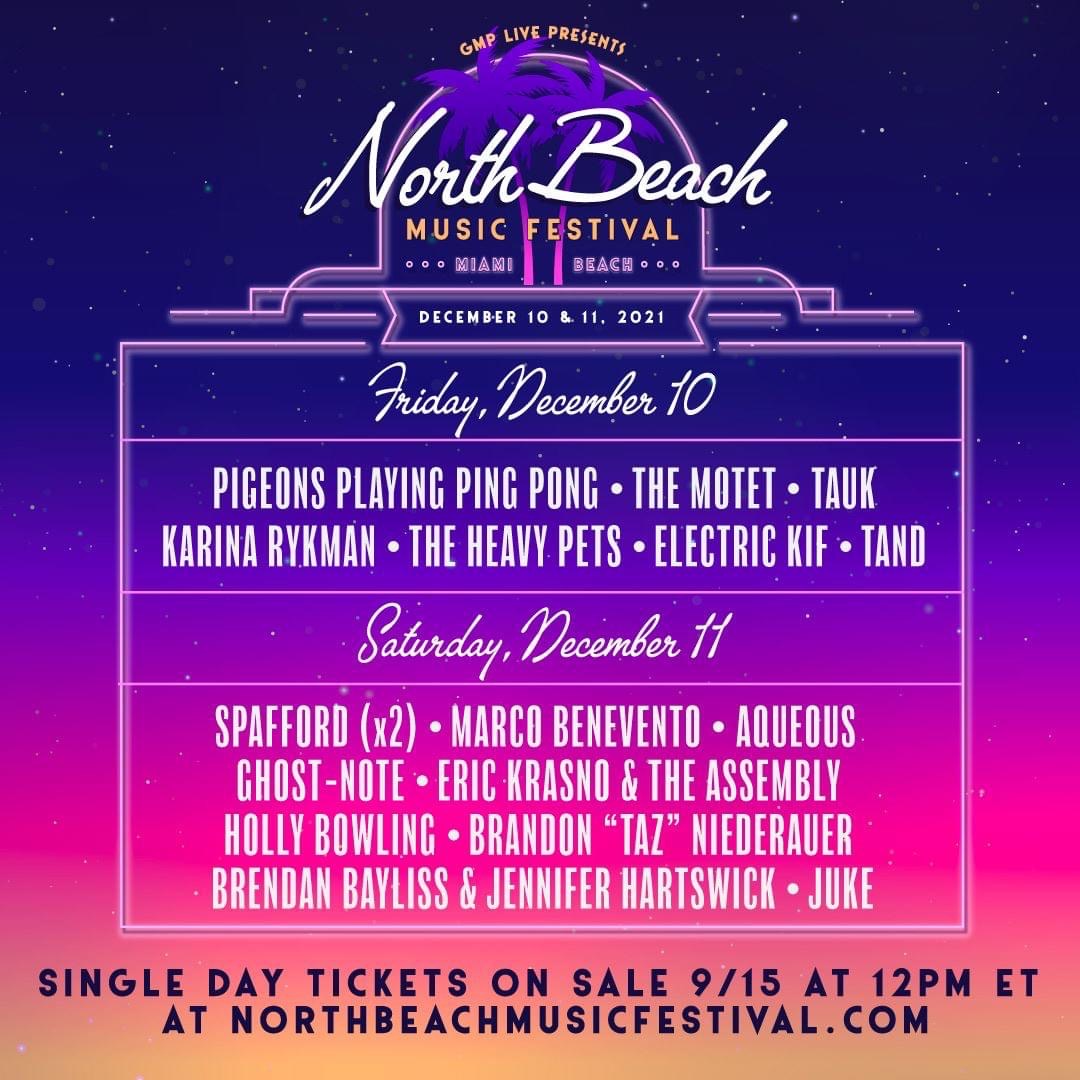
    Gideon Plotnicki seems to be a man of good timing. Moving down to Miami from New York as a live music promoter seems, at best, a risky decision. Fortunately, a partnership with The North Beach Bandshell and the experience with bands whose genre needed a new home here are starting to come into fruition. The aptly named North Beach Music Festival comes to the Bandshell December 10th and 11th. Some of the best bands that many of you have never heard of  will be coming to Miami, and mostly for the first time. I sat down (virtually) with Gideon to get the skinny on what all the fuss is about.

    How did you get into putting on live music events?

    Gideon Plotnicki: My brother and I used to manage a band called Haakon’s Fault. They were a baby band based in New York City made up of some of our close friends from high school. After a few years of playing the NYC circuit, we became disenchanted with the experience, as the promoters at that level put little to no thought into the makeup of shows, and just booked us for 45 minute time slots, hoping that each band would bring 50-75 people, instead of a show where all the fans show up at once and see all of the bands on the bill. It was mind boggling to us.

    The tipping point was when we showed up for a gig, and the opening act was a duo who had modified a Super Nintendo to hook up to their acoustic guitars and play each other in Mortal Kombat. Their final song was supposed to be a “fatality”, but they screwed it up and just said “sorry, that’s all we got” and walked off stage. Following that gig, we essentially demanded to have full control of the nights we were booking for the band, and to curate all of the acts on the bill ourselves so it could feel like a full night of similar music that went together, and not just a bunch of random bands thrown together.

    After doing that for a while, that became one of our main focuses as managers, essentially acting as the band’s in-house promotion team. When the band broke up, I started to focus on putting on my own events. After some time, I started working for Live For Live Music, where I was their in-house talent buyer for five years, doing everything from promoting shows in New York City to organizing our Jazz Fest late night series, and eventually becoming the producer and curator of Brooklyn Comes Alive.

    What inspired you to put on North Beach Music Festival?

    A variety of things inspired me. One, I moved to Miami and was looking to plant my flag, so to speak. After a series of successful shows at the North Beach Bandshell in 2019 and 2021 (did 2020 even happen???) a festival felt like the next step for my company, GMP Live. I have to give credit to my partners at the North Beach Bandshell, James & Laura Quinlan, who suggested I take many of the ideas I had for potential concerts at the Bandshell and turn it into a festival experience. Also, Miami & Miami Beach have seen an increase in population over the past two years, and there is a demand for more live entertainment across all genres.

    Additionally, Many of the bands on North Beach Music Festival have never played in Miami Beach, but they have fans here, and across South Florida and Florida in general. I wanted to create an event that showcased this specific scene for a fanbase that is hungry, but often forgotten when it comes to touring plans. Finally, with the pandemic still going on and so much uncertainty regarding live entertainment, especially indoor shows, I wanted to create a boutique, destination event that is intimate and 100% outdoors.

    What brought you to Miami?

    My wife is originally from Miami Beach. We met in New York City, but when a job opportunity came her way to move back to Miami, she took it, and of course I came with her!

    What differences do you see in the music scene between New York, and South Florida?

    Massive ones. New York is a tough market to crack. There are many independent promoters for each genre of music, not to mention a giant presence by Live Nation and AEG, and the competition can be fierce. There are also many venues for live music, and with 8,000,000 people living in NYC (not even including the tens of millions who live in the surrounding areas), there is so much demand for live music.

    South Florida is a different beast altogether. I don’t want to speak for all of South Florida, because I have been hyper focused on Miami and Miami Beach, and I know that other promoters are out there in places like Delray and Boca and West Palm Beach that have been cultivating this scene on the ground floor for years. Miami and Miami Beach currently have no other independent promoters in this genre, and there is a major lack of club-style venues. The cities are mostly built for DJs, and finding a venue with the right stage size and audio and lighting equipment is challenging.

    It is very difficult for a band who only sells around 400 tickets to get a gig in Miami or Miami Beach. This makes it tough to grow out-of-town bands in the market, as a band really needs to be worth 700-800 tickets at minimum to get a headlining play in this city, and it’s hard to get there without having a venue that is the right fit for bands when they are up-and-coming. As I mentioned earlier, that’s one of the main reasons we are doing North Beach Music Festival, to give these bands an opportunity to play this market, when perhaps many of them would never make it down here for a proper headlining concert.

    What are your favorite venues in Miami/South Florida?
    Of course, the North Beach Bandshell is home. I’m biased, but I can’t say enough about how cool of a venue it is. Amazing sight lines, surrounded by palm trees, adjacent to the beach, and a unique, historic vibe, it’s just a great place to experience entertainment.

    Besides the Bandshell, I’ve enjoyed some of the venues that popped up during the pandemic, such as Heartland and Oak Garden. The Oasis has a lot of potential, and I love the NYC food options they brought in, but so far they haven’t booked many shows I’m into. I’m interested to see how that venue grows over the next few years. Of course, The Fillmore Miami Beach gets some great shows as well.

    Favorite restaurants?

    That’s a tough one! Miami and Miami Beach have so many amazing restaurants these days. Macchialina, La Natural, Yardbird, Eleventh Street Pizza, Blue Collar, Stubborn Seed, Hometown Barbecue, Pubbelly Sushi, and Taquiza are all favorites that we keep going back to.

    How do you envision the live music scene evolving in Miami?

    Miami Beach is officially back on the map. Artists are now actively asking their teams to play the North Beach Bandshell, and that is gratifying. The scene will continue to evolve as long as there are passionate, independent promoters like myself who really love the music and the scene.

    Miami and Miami Beach are already major tourist destinations, and the live music scene should tap into that more. Multi-band bills, one-day festival-style events, multi-night runs from bands with traveling fanbases. I think all of those things are in the future for Miami and Miami Beach. That’s something I’ve been trying to focus on, multi-night runs, and we have a few on deck with Lettuce for New Years Eve (12/31 and 1/1), and Turkuaz (1/28 & 1/29), and there are more in the works.

  • The French Dispatch Proves Lesser Wes Anderson Movies Are Still Great

    The French Dispatch Proves Lesser Wes Anderson Movies Are Still Great

    I suppose Wes Anderson making a movie based on a magazine isn’t that strange.

    When Michael Jordan perfected the game of basketball, he went off to play baseball. When The Beatles perfected popular music, they split up. The film director Wes Anderson by my count has made three perfect movies and didn’t follow that up with a shift quite as dramatic.

    Instead of filming another beautiful movie with a traditional narrative structure he decided to base his latest live action movie on a magazine.

    Not a magazine article, but an actual magazine.

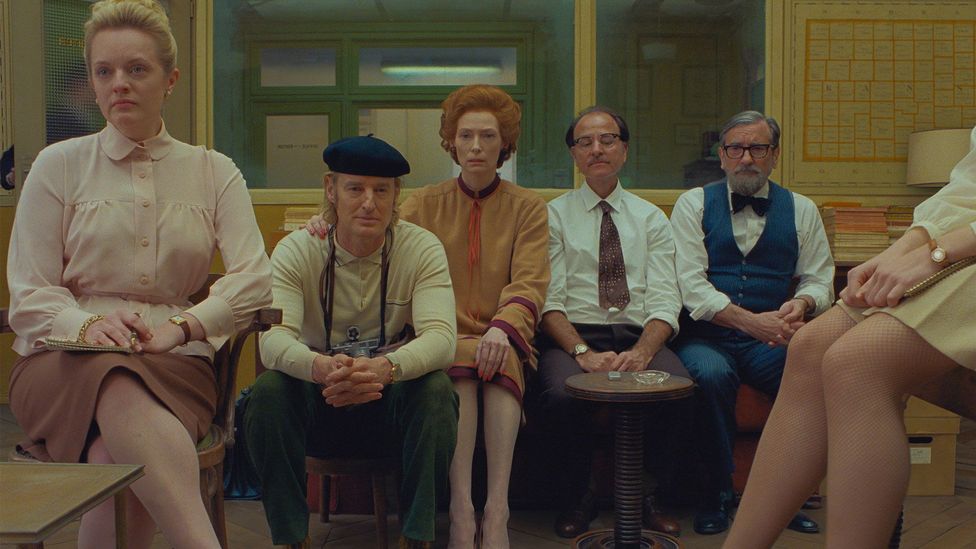
    The French Dispatch is a love letter to the New Yorker. And it follows the format of that periodical. Just as a magazine has several articles that might not have any interweaving themes, so is The French Dispatch  comprised of three random stories. None of these tales have any common ground except that the three vignettes are supposed to be dramatizations of articles from the acclaimed fictional French Dispatch magazine.

    The French Dispatch has many of the trademarks from previous Anderson masterpieces. It has the impeccably precious production design. It also has his charming cast of regulars like Bill Murray and Owen Wilson. But The French Dispatch doesn’t quite hit the heights of  his masterpieces The Royal Tenenbaums or The Grand Budapest Hotel.

    Partly to blame is the attempt of throwing several completely different films into one moviegoing experience. I had the same problem a couple years ago with The Coen Brothers movie of many short movies The Ballad of Buster Scruggs. It’s hard to stay engaged when an hour into a movie a whole new random story begins.

    Another problem is The French Dispatch tries to match the insane word count of a typical issue of The New Yorker which can be exhausting. I’m not sure if there is a website out there tabulating the statistic of most words of dialogue in a single movie, but I’m certain if there is this flick will be near the top of the list.

    But these are nitpicks. Lesser Wes Anderson movies are still pretty awesome. While the magazine schtick is a bit of a failed experiment, this movie still has it’s moments of beauty that make it well worth seeing.

    Perhaps it will play better at home when you can treat it like a magazine that you can put down and come back to when the mood arises.
    -pic

  • Indie Movie Roundup – Old Henry Is a Solid Oater. Escape from Mogadishu Is a Wonderful Korean Film

    Indie Movie Roundup – Old Henry Is a Solid Oater. Escape from Mogadishu Is a Wonderful Korean Film

    Old Henry is a solid oater. Small in scale but controlled and efficient. And honestly, that’s mostly all I’ve got to say about the movie.

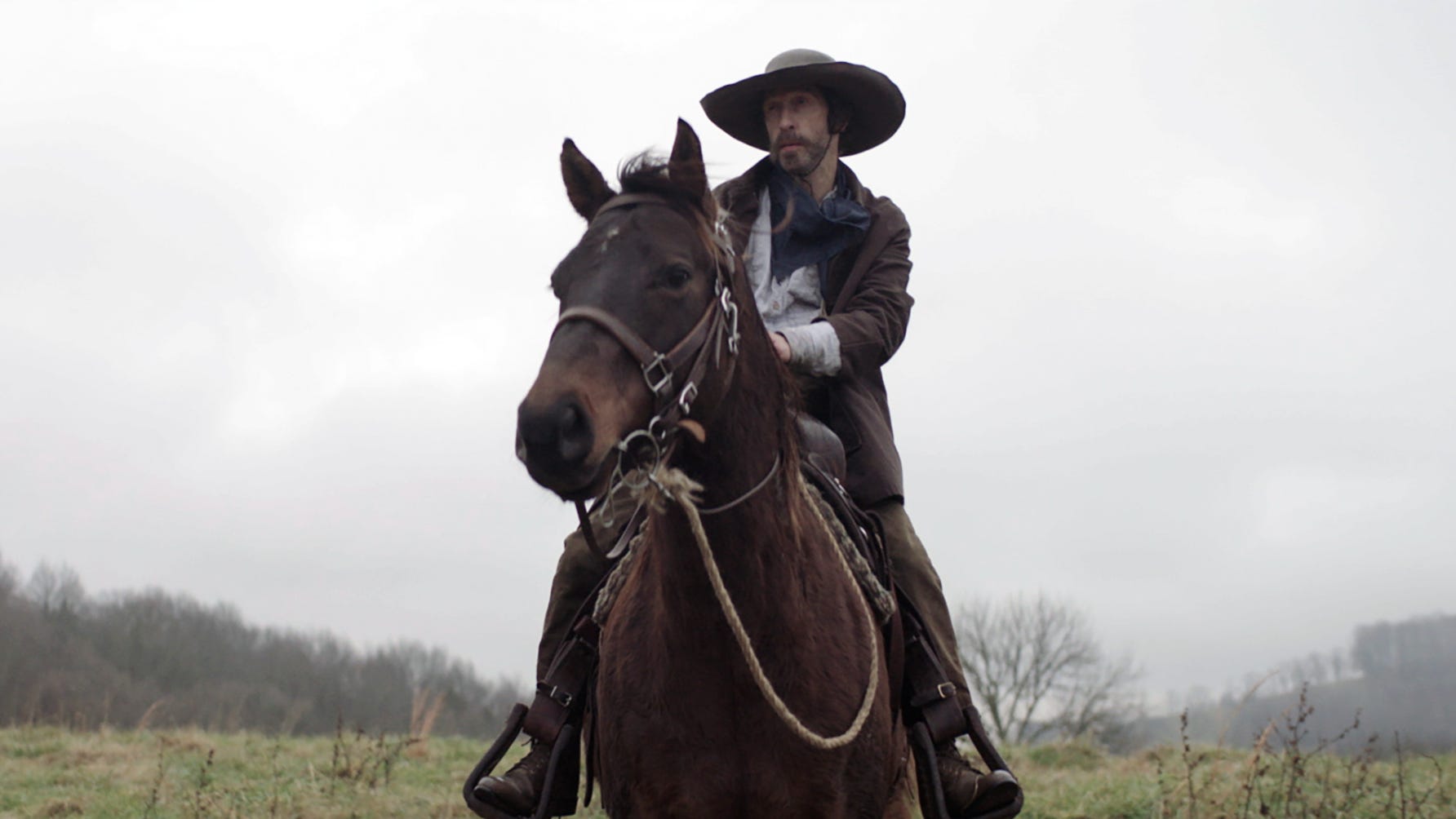
    Old Henry takes place in the early 1900s in the wilds of a constantly dewy Oklahoma Territory. Tim Blake Nelson stars as titular Henry McCarty, a taciturn widower and farmer whose teenaged son, Wyatt (Gavin Lewis), wants to do anything but tend to their land and animals. He senses his father feels the same, but the old man is a quiet mystery to him, devoted to the back breaking duties he clearly despises. Their daily drudgery is upended when a wounded man with a satchel of money passes out on their land. Soon enough a trio of men show up looking for the satchel carrier, led by a gravelly voiced, scarred, nearly unrecognizable Steven Dorff. As this is a Western, you know cooler heads won’t prevail in this tense situation, especially since old farmer Henry clearly has a past and a set of skills he’s trying to keep from his son.

    The set up isn’t original, but the movie squeezes some interest out of its breezy 90-minute runtime.

    Some actors just cannot do period pieces. They look too modern. Tim Blake Nelson isn’t one of those people. In fact, sometimes I wonder if he’s a time traveler. He sports a lazy eye and some funky teeth in this movie, and I spent a good amount of time wondering if those were prosthetics or just Nelson himself (…they’re fake if you’re wondering). But Nelson seems so at home in the period setting with a ludicrously wide brimmed hat and ill-fitting brown pants held up by cloth suspenders looking completely normal on him. He clearly relishes the role, gliding through the movie, unforthcoming but clearly always thinking.

    There are some fun bits like when Henry finds Curry (Scott Haze) blacked out from a gunshot wound. Henry carefully scopes out the location looking for clues as to what happened. He traces Curry’s tracks back to a tree a couple of meters away and finds the satchel filled with money. The camera rests on his inscrutable face for a bit as he studies the bag. What’s he thinking? Is he tempted? Then he just loudly says, “Nope!” and gets on his horse and rides away.

    But of course, he turns back.

    I guess there wouldn’t be much of a movie if he didn’t. And that sets off a chain of events that end in a full-blown shoot out in the film’s last act. I love a good shoot out, especially in a Western, and this one, like the movie itself, is…fine. Perfectly serviceable. The guns are loud and you can tell what’s going on, but it’s missing something, a bit of panache. I think back to Open Range, the Kevin Costner directed cowboy movie from the beginning of the aughts, and another movie that patiently waited until the last act to loosen its salvo. But in that movie, you almost felt every gun shot and every hit. Every shot (both from camera and gun) felt important. Old Henry’s gunfight feels more passable than important.

    Which is a shame since the movie drops a twist just before the real shooting happens, a twist that makes the resulting action a visualization of a character’s violent past and psyche, and as a result should be a bombastic finale. Instead, it’s closer to the shrugging emoji we all have on our phones.

    But that twist, man, it’s a good one. Though, on second thought, its rewriting of history is a bit gross. Good thing I probably won’t remember the movie long enough to give that second thought.

    Escape from Mogadishu

    I’ll be honest. My interest in Escape from Mogadishu stemmed more from its distribution label than the actual movie itself. I love genre movies and, in pursuit of watching as many as I can, I’ve come across the name Well Go USA more than a few times. Okay, it didn’t hurt either that Escape was South Korea’s submission for the 2022 Oscars Best International Film category. But none of that’s really important. For whatever reason that I was drawn to it, I’m glad I checked the movie out. It’s a good ‘un.

    Ostensibly a drama based on real events, Escape ably shifts gears through tones and genres without causing whiplash. The movie has a surprising bit of dry humor and, most notably, a couple of well-executed action beats. It’s not an action movie per se, but it’s got at least one truly exciting scene, a mad dash car chase through the war-torn streets of the titular Somalian capital.

    But long before that, the movie unfolds patiently, though not ponderously. Set in the early 90s as both South and North Korea vie for UN membership, most of the movie’s first act centers on the embassies from both countries stationed in Mogadishu trying to outsmart one another to win the Somalian president’s favor in order to secure his votes and thus admission into the UN.

    In an interesting move, director Seung-wan Ryoo keeps the focus so tightly on the maneuvering between the two embassies that we are just as surprised as the characters are when gunshots abruptly ring out and an apparently simmering civil war suddenly erupts all around them. As they are so wrapped up in their games of one-upmanship, we too are kept in the dark.

    Like many movies from South Korea,

    whether implicitly or explicitly, this one really is about the divided nation, North and South, a once unified people now separated by politics and ideologies, allies turned enemies. Here in the states, I don’t often think about how painful that must be for the people of both nations. And, ultimately, that’s what sold the movie to me: how palpable it makes the tension between the two countries and how, despite everything that’s going on around them, and despite diversions into different genres, the movie is ultimately a melancholy story about brothers and sisters split up by political forces they have little control over.

    It’s also clever that a movie set in the middle of one civil war is actually about another civil war, one whose physical battles have long since finished, but whose ramifications still reverberate years later. Of course, you wouldn’t be wrong to think that using the tragedy of Somalia’s civil war to look at another tragedy trivializes the violence in the African country a bit.

    The good news is that even though Somalians are only on the periphery, the filmmakers (the movie’s written by Ki-cheol Lee and director Seung-wan Ryoo) don’t appear judgmental. The Somalis are not shown to be backward, cartoonishly cruel, or war mongers. And that sensitivity extends to how the Northern and Southern Koreans are presented. How easy it could have been for a South Korean movie to make the South the virtuous heroes and the Northerners the villains. Instead, it shows both sides as capable of duplicitousness and compassion.

    Once the Northern embassy finds themselves on the violent streets of Mogadishu, tossed out of their consulate by Somalian rebels, they eventually must, to their disdain, throw themselves at the mercy of the Southern embassy, who take them in, but not until after a bit of gloating and haggling. What follows shouldn’t be too much of a surprise as the former countrymen have to set aside their differences to make it out of the war zone alive. It’s corny, but the warmth shown toward the characters and the suspense of their eventual escape attempt makes the whole thing work.

    That specificity of North and South Korea, one nation torn in two, will probably limit the film’s appeal abroad, but I don’t know, if you’ve got an ounce of empathy, Escape from Mogadishu really shouldn’t leave you cold.

  • Modest Mouse’s Isaac Brock Full Interview

    Modest Mouse’s Isaac Brock Full Interview

    I recently had the opportunity to interview Isaac Brock, the man behind one of my favorite bands, Modest Mouse. He gave me a lot of info which I couldn’t find a way to implant in the concert preview article for Miami New Times. I thought other Modest Mouse obsessives might appreciate the interview in full and so here it is as recorded on Thursday, October 7, 2021.

    When did you first fall in love with music?

    Issac Brock: I’m not sure there’s an origin to that. It’s always been there man. When did I become unhealthily obsessed with it? Probably middle school.

    Is that when you first picked up the guitar?

    Oh no. It’s just when I became emphatic about things like The Dead Milkmen and The Pixies. I didn’t pick up an instrument until I was 14 which I guess is right around then. It kind of took meeting someone with an instrument to realize I would also like an instrument. I indefinitely borrowed her stuff. Eventually her Mom made me buy it, which I guess is only fair.

    I didn’t realize how young you were when Modest Mouse started putting out music. Did the songwriting come super easy for you at first?

    I think, how do I say this, it came easy because the songs were easy, you know? They weren’t good, but they were easy and my ears were attuned to them. If I listen back to them, my first thirty cassettes with twenty songs each on them, it’s unlistenable. But I heard music at the time. I eventually got better at that I guess.

    Looking at your setlist from the tour, you are playing some older songs. Is it a challenge for you to get in that headspace of when you first wrote them?

    I don’t try to. I try to find meaning for myself in them in a now sort of way. And if I can’t I tend to drop them. There’s a thing where songs that we really like we tend to overplay them. Like “Tundra/Desert” from one of our first actual records. We used to play it every god damned night and then it was just like we’re bored of this and we put it down and then you kind of forget where you were with it. There is the danger of that. Trying to bring it back it’s not that hard to play, but it is a little bit difficult to find your way back to it.

    When I first saw you play it was on a tiny stage in Tallahassee and there were only three of you. Next time I saw you play you had an army on stage. Was that something you always wanted, to have a big band?

    No. Some of that happened because I ask someone to play a specific instrument on two songs, maybe it was a friend on tour or something. Or we had a drum kick playing on a couple songs and we needed a little help on parts that the amount of people on stage couldn’t play. And then it would show up on more and more things.  Eventually it got kind of out of hand which is why I slimmed it down again. It’s not fucking small, it’s six people, but it’s a lot more focused. I didn’t want a bunch of people on stage, but I wanted the songs to sound as good as possible. At some point the balance was tilted where having the additional people was no longer helpful. There were too many busy hands, so I had to clear it up a bit. If you got two people hitting a kick drum at the same time, you’re already in trouble. Unless their feet are taped together, then the clutter begins.

    It seems you’re doing more interviews these past couple months then you have the previous years or decades. What’s opened you up to the press?

    I feel like I did a lot when most records came out. It gets lost in whatever algorithms control the search. They’re out there. I just feel they don’t have the magic to position themselves like Amazon. There’s a dark art to showing up in searches. Russian trolls and fucking salesmen are much better at it than your average music journal.

    I read in the interviews you’re a parent of young kids—

    I was like you know what’s cool to do when you’re in middle age… start from scratch. I’ve got a 19 year old in college and I fucking love it. But I’m a lot better at it then I was the first time around.

    Do you sing the kids lullabies? Do you sing them any of your songs?

    One of them I sing to every night. I didn’t really sing them my songs, I was surprised when I started singing to them how few songs I knew that I could sing to kids.  I was singing “Row Your Boat” for an hour straight so at least I was hypnotized and sleepy. It became a really weird song to me. Just the whole message, it’s kind of a mind eraser. Row, row, row your boat Gently down the stream Merrily merrily, merrily, merrily Life is but a dream, two thousand times in and after it gets a little creepy. Lullabies were starting to make me uncomfortable because I’m like why is the baby in the tree falling out? What’s going on here? Sooner or later this little person is going to know how to talk and that’s what I gave them? A nonsense song about you in a tree falling out? I do more reading to the kids then I do singing. Everyone gets three books a night.

    No Bukowski I guess?

    No, I wouldn’t read him to me either.

    You mentioned easy songs make for easy writing, has your songwriting process changed over the years?

    My expectations have. When I first started writing there was a K Records pop scene in the Seattle area where the overarching vibe for popular alternative was a give a fuck attitude, you know? I drifted from that quick where I was like I wanted songs to have depth and interesting sounds. Then I just kept following my path. I don’t tend to sit down and write a whole song. I end up collaging together sounds and then building around this metal frame, some structure that is already built, but isn’t necessarily a song yet. Man, you almost got a answer.

    You gave it to me. Some of your songs are super wordy. Was it ever a challenge to remember the lyrics?

    Yeah, it can be a fucking challenge. More so on this record than on others. There’s still songs from records ways back, I still can’t get “Heart Cooks Brain” right.  I literally have a lyrics sheet. My guitar tech tapes a piece of paper on my thing so I can’t get too lost.

    You have some easy to remember songs with great lyrics  like the one with “Opinions were like kittens I was giving them away”(from Out of Gas).

    Thanks. That was fun. I am very proud of that line. But I also have a hard time remembering it. Live at times, you know if the words aren’t there I just rewrite them on the spot. Sometimes for better and sometimes for worse.

    Since I’m writing this for a Miami paper I have to ask about that little trend you had where you were writing songs about Florida. You had “Florida” and “Pistol (A. Cunanan, Miami, Fl. 1996)”. Do you have a Florida connection?

    Well, I lived in Gainesville for a while, so part of that feeds into that song “Florida”. And the Andrew Cunanan story is just a fascinating thing about a creep.

    When did you live in Gainesville? What brought you there?

    We just finished recording The Moon and Antarctica in Chicago. Me and my roommate had just been run out of our house because my brother, rest in peace, was a couch surfing hippie guy. He’d show up and then his friend would come and visit him and at some point there’s like three hippie dudes living in our house and no realistic way to get them out, so we just moved out. I moved into my van with my girlfriend before we went to Chicago. My roommate Sean ended up moving to a boat house on the docks. Then we went to Chicago did the record and Sean, me and my girlfriend were like let’s move to Athens, Georgia. We moved to Athens, looked around, it seemed real nice, but my girlfriend was from Gainesville and I was like maybe I should take her to a place where she knows people and that’ll be good for her. So I moved there without much intention of living there for long. I was there for a year or two.

    Tom Petty is from Gainesville and you have that song where you share a line with one of his songs (Mary Jane’s Last Dance), was that something you picked up by osmosis in Gainesville?

    That’s on “I Came as a Rat”. I didn’t realize I fucking borrowed a line from him until it was too late. Musically it was in there with all the other stuff in my brain’s garage and found its way out. Didn’t take more than a second for someone to point it out. Call it an homage. Thanks Tom Petty for not suing me.  I’m a huge Tom Petty fan, I really am. You know Harry Crews, the author, was from Gainesville as well?

    Let’s talk about your new record. What influenced The Golden Casket?

    Musically it was almost made in an influence vacuum. I had listened to so little grown up music over the last four years since I had kids, you had playlists like The Tolerable Toddler and Frozen. I just sort of do what I want to do and I had a lot of help giving it shape.

    How has touring the record been in this brave new world we live in?

    It’s been good. I’m definitely getting a give a fuck fatigue whether every place I’m at is lax about vaccinations and masks. If one of us brings it on the bus, we just tanked the whole thing with possibly a ripple effect. But the people, getting out to play for people that come out to the shows, it’s been really nice. Obviously people needed it. They needed to get out and see music and stuff. It reflects in the energy, but there’s also a little bit of a cautious vibe too. We’re all getting used to each other again, you germy bunch of motherfuckers.

    I don’t know if you remember but the last time you played at this venue (Fillmore Miami Beach) was the night before a hurricane came?

    Yeah, we got run up the coast. I do remember very well. We basically played the show in this huge venue but only 800 people were as dumb as us to stick around. I don’t want to call anyone dumb, but you know, optimistic. And then we got on our bus and show after show got cancelled. Just sat in traffic on the fucking freeway on the way to Georgia.

    I was one of the dumb people at that show and the next morning my family and I took off to escape Hurricane Irma and ended up in New Orleans. By coincidence you also played while I was in New Orleans and I went to that show too. Your music helped me get through a stressful time. So thank you.

  • Surfer Blood Are West Palm’s Favorite Rock Band

    Surfer Blood Are West Palm’s Favorite Rock Band

    This article originally appeared in PureHoney Magazine. Check them out here.

    Knocked off schedule and off the road like every other touring band in America, West Palm Beach indie rockers Surfer Blood made the most of their pandemic-induced lot. They took up jamming in the band members’ South Florida backyards, filming performances to share online with fans. They reunited with the Brooklyn indie label that first signed them, Kanine, and celebrated the tenth birthday of their 2010 debut album, “Astro Coast,” with a double-vinyl Record Store Day reissue. They finished a new album and named it “Carefree Theatre,” after the old movie house and concert hall in West Palm Beach that was demolished in 2016.

    Looking back on a year and a half of being grounded, Surfer Blood singer and guitarist John Paul Pitts said it wasn’t all bad.

    “It gave me a chance to try experiments because there was no pressure. That’s how you write your best stuff,” Pitts said. He contrasted the experience to making “Pythons,” the 2013 “Astro Coast” follow-up that Surfer Blood recorded for a major label, Sire. “It was very polished and produced,” Pitts said of the sophomore album. “When you put that sort of pressure on a situation, you come to it like a college essay rather than being honest.”

    “Carefree Theatre” radiates honesty. A decade after “Astro Coast,” the band’s sixth LP — including a 2019 covers collection — harkens back to Surfer Blood as four buddies just making music and rocking out. It demonstrates maturity without sacrificing fun. Building on 2017’s “Snowdonia,” it also showcases a lineup that cohered after the wrenching loss of guitarist Thomas Fekete to cancer at age 27 in 2016. There is a tone-setting power on “Carefree Theatre” in the handiwork of the two newest members: the gritty bass lines provided by Lindsey Mills and the vocal harmonies Mills shares with guitarist Mike McCleary.

    “They sing really well; it’s great to have harmonies in the band,” Pitts said.

    “Parkland (Into the Silence)” — released as a single on the second anniversary of the Stoneman Douglas High School shooting — is surprisingly and pleasantly upbeat considering its subject. Instead of re-enacting trauma, in the manner of Neil Young’s “Ohio,” Pitts emphasizes the young survivors’ resilience, singing, “I’m sick of hearing that there’s nothing we can do / This time could be the spark, the start of something new.”

    And it’s been hard lately to hear the name “Karen” without picturing a middle-aged white woman who needs to speak to the manager. A track bearing the same name here evokes a more youthful free spirit.

    Surfer Blood also spent 2020 mastering the home movie. A spin through their YouTube channel turns up favorites such as “Floating Vibes” and “Fast Jabroni” performed house-concert style. “I learned more about editing videos than I ever wanted to know,” Pitts said. There’s also a spry cover of The Shins’ “Know Your Onion!” and an official video for the new track “Summer Trope” proving that a clip doesn’t have to be busy, sleek or expensive to entertain. A fake beard, a wig and one’s hometown beaches will do.

    Pitts also flexed producer chops at Shade Tree, the Boynton Beach recording studio he owns with McCleary, making an EP with local outfit Soul Particles and an LP with American Sigh, both of whom will play Bumblefest. “Someone is coming to you with their vision to help you realize it,” Pitts said. “There’s no better feeling than that.

    Pitts said the band — with Mills, McCleary and co-founder Tyler Schwarz on drums — is in a good place today. “There’s never any drama,” he said. “Any hit of tension, we just talk about it and work it out.”

    “We’ve accomplished a lot in 10 years,” he added. “It still just feels like playing with your friends, I hope that never gets lost.”

  • New James Bond Movie Takes So Much Time You’ll Want to Die. Lamb Is a Peculiar Foreign Flick.

    New James Bond Movie Takes So Much Time You’ll Want to Die. Lamb Is a Peculiar Foreign Flick.

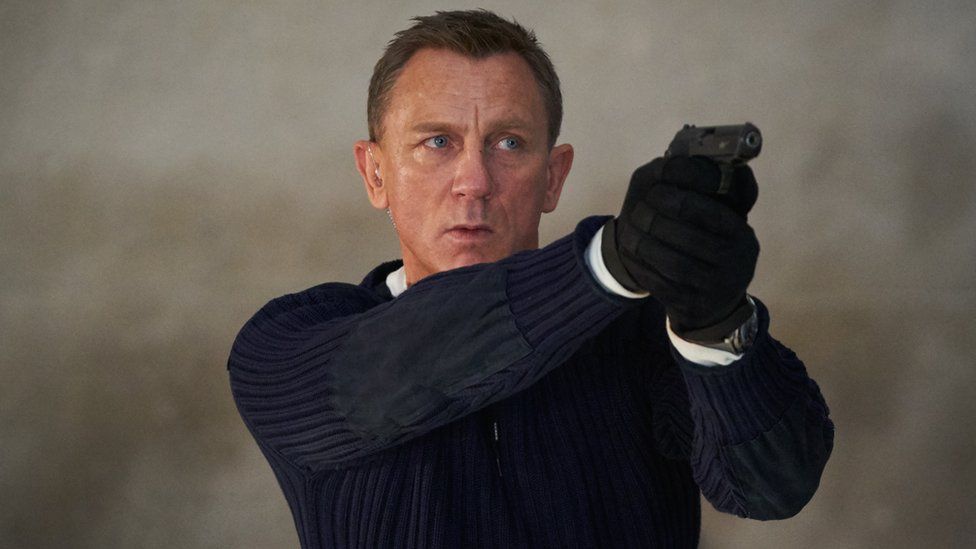
    The new James Bond movie No Time to Die makes me feel like a failure as a movie critic. I just spent nearly three hours of my life watching it. But even with a gun pointed at me I couldn’t explain what I just saw. 

    I understood the international language of violence, which this movie speaks loudly. And I suppose I could spoil the only noteworthy thing about the movie that happens at the end. But as far as recounting the plot, describing the characters’ motivations and even explaining the reason why the bad guy wanted to kill everyone, I’m at a complete loss of what I just saw.

    Hell, I can’t even figure out how the title fits this movie.

    Perhaps my befuddled experience is what it was like for someone to stumble into Avengers: Endgame without seeing the previous dozens of Marvel movies?

    I’d seen the old school James Bond movies of course. I’d even seen a couple of the previous blah installments of Daniel Craig pretending to be James Bond. But ever since Austin Powers came out it’s been hard to take James Bond movies seriously. In part because the Bond movies reacted to Austin Powers by taking themselves way too seriously.

    No Time to Die  escalates this trend.

    And it expects its viewers to have working knowledge of all previous Daniel Craig Bond movies.  Supporting characters walk on and off as though they need no introduction. Comprehending major scenes fully depends on knowing what  happened in previous Bond flicks, the last of which was released not last week, but back when Barack Obama was still president.

    And did I mention No Time to Die was two hours and forty-five minutes? I know these movies print money, but couldn’t the studio have pocketed several tens of millions of dollars by cutting out a car chase through a charming European village or two to make the movie a manageable length of time? Or maybe one of the three times where James Bond deals with the effects of a loud bomb blowing out his hearing could be snipped?

    But what am I talking about? The car chases and explosions are the only thing that make No Time to Die watchable at all.

    Lamb

    Meanwhile, it’s simple to summarize the new foreign language Icelandic flick, Lamb. It is as quiet, as No Time to Die is loud. I would never suggest that Lamb is a classic, I’m not even sure if it’s even any good, but it is in its own way unforgettable.

    How can you ever forget a movie that portrays a childless couple who take in a child with the head of a sheep and raise it as their own? It’s the type of film where ten minutes pass before a line of dialogue is spoken. And while the special effects for the sheep child are laughable in a way that will remind you of Stuart Little, I appreciate that it at the very least tried to do something different.

    Because of that Lamb will at the very least reserve a permanent spot in my head. Twenty-five years from now when someone asks if I ever saw that movie where a couple adopt a sheep with a kid’s body, I’ll say “sure”. Whereas twenty-five minutes after leaving the theater screening No Time to Die, I’m still not sure that I actually saw it.