Category: News

  • More than Two Sides: Social Change through Protest, Riots, and Agent Provocateurs

    More than Two Sides: Social Change through Protest, Riots, and Agent Provocateurs

    Visuals speak volumes in our era of memes, clickbait, and graphic images. These are modern propaganda tools to help push ideological narratives. We are put on the spot to take a stand towards a particular circumstance frozen in time. But there are always more than two sides to a story. Also, an impartial third view may be more nuanced.

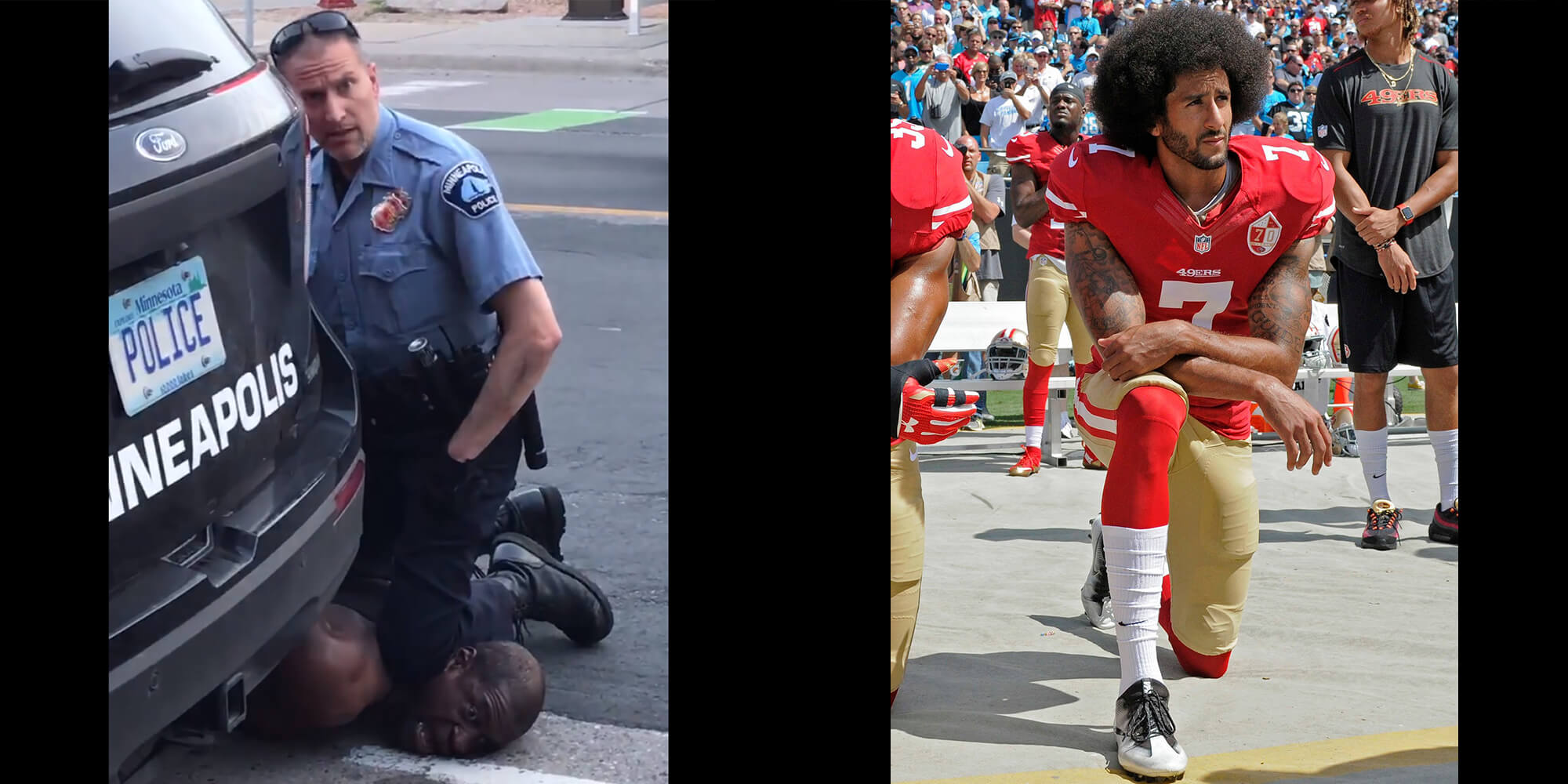
    After the initial images in the media of Officer Derek Chauvin taking a knee on George Floyd’s jugular, we now have images of looters ransacking stores and destroying public and private property. These images create a basis for justifying two sides of the conflict. Do you agree with this (choking Floyd) or do you agree with that (looting a small business)?

    Dramatic visuals of looting have taken over the current narrative.

    People point out there is a difference between the protesters and the looters. There is also a difference between different looters. Many of these riots and looting are happening in poor inner-city neighborhoods, and very few observers know about the realities in those neighborhoods but are quick to make judgement on what is happening there. No single generic explanation can take into account all the reasons and summarize what has happened and is presently occurring. These events are taking different developments and reacting to different sets of circumstances, but the tendency is almost always to sum it all up with one broad stroke.

    We shouldn’t glorify the looting but we also shouldn’t  dismiss that larger factors are also at hand. There are conditions that are contributing to the looting. There are circumstances that are pushing people to protest police brutality and authority. There are thugs and vandals out to take advantage of the chaos. Some of the thugs are in blue uniforms while others are in all black. There is opportunism and desperation in these actions. There are also well-meaning people trying to protest an injustice on either side. There are good people trying to protect government institutions and private property. There are good cops with a difficult job. There are people provoking violence within peaceful protesters, some of whom may be Antifa or random delinquents and some of whom may be linked to law enforcement to justify a tougher response. All of this is possible.

    Some police officers have been pictured covering their badge numbers, and we have also seen videos of police attacking innocent bystanders and continuing to use disproportionate force. We should be able to take into consideration the different scenarios and points of view that are occurring from many angles and not be afraid to do so because a particular group espouses only one narrative.

    The underlying conditions of a global pandemic

    and the more effective reality of a global economic recession because of it, is creating the perfect storm to harbor these current sentiments and upheavals. In addition, a new technological age with the onset of artificial Intelligence and complete surveillance is afoot. Since everything seems to fit so perfectly together, people are also inclined to explain many occurrences with conspiracy theories.

    One conspiracy theory will state that police are provoking and initiating rioters, another conspiracy will say that Soros is funding Antifa. Q will tell to trust the plan as Trump calls the national guard. The media will tell you this is a new normal. Some Democrats will swear that this has marks of Vladimir Putin’s political interference, while conservatives will now point to communist China as the nefarious state actor behind the WHO and NWO. There may be a bit of truth to all the theories, yet they are insufficient to make a complete assessment when it involves regular folk caught in uncertain circumstances. In the end, we are all human beings and we feed off each other and our actions reflect one another’s.

    The state may be a necessary authority for law and order.

    However, others may think that we need to take more voluntary and local decision-making away from the centralized state that has gotten out of control. Those opposing positions have to be balanced with meeting some of the demands of the opposing side to come to a consensus. In order for that to happen information has to flow freely and we must include more than just a two-sided and divisive approach.

    In this day and age, you can make an argument to defend either side  and yet the truth remains an illusion to the opinions and ideological narratives justifying people’s minds and motives. An honest view of the situation requires one not only to consider both sides of the argument but also to consider an impartial third view that may be more abstract in relative terms. That view should address the various elements at play and a path to truly rehabilitate a condition that becomes susceptible to abuse. As it stands we are too vested in the idea of winners and losers, guilty or innocent, when in reality we all have responsibility in correcting our ills.

  • Joel Franco: The least savvy social media producer in the world accused of rape, pedophilia

    Joel Franco: The least savvy social media producer in the world accused of rape, pedophilia

    Joel Franco is (or maybe was) the social media producer for Channel 7 WSVN news. Young, dumb and probably soon to be broke at 24, he was arguably the definitive voice for delivering real news to anyone under 25 years old, mainly via Twitter.

    Joel Franco made national news a few days ago when arrested for violating curfew covering the George Floyd protests. An older generation, myself included, took notice of the incident and applauded Mr. Franco for taking one for the First Amendment.

    Freedom of speech is 1000% under attack lately. But, turns out Joel Franco is a bit of a problem. Very credible accusations of predator behavior against Joel Franco swarmed Twitter from numerous women on Thursday night.

    Appears Mr. Franco sent some pretty over-the-line text messages and tweets aimed at adolescent teenage girls, like 13 or 14. In addition, he glorifies, in public tweets from 2013 to 2015, some really disgusting, lewd and graphic behavior not suitable for social media.

    On social media.

    Joel Franco WTF!

    He’s the social media producer for the area’s most popular news station. There are no words for the blatant idiocy and irony of a social media producer who is stupid enough to have no social media savvy.

    #MiamiSometimes!! is a hashtag we’ve been playing with because the amount of stupidity here sometimes knows no bounds.

    Franco put out a tweet apologizing, on March 18th — so, this is an old story. He characterized the tweets as a “joke” from “many years ago” and his behavior as “disgusting” and “not a representation.”

    Joel Franco will probably have no job by the weekend, but you never know. He is employed by a Fox News affiliate. However, he is trending hard on Twitter and a petition calling for his cancellation passed 10,000 signatures in a few hours.

    In the meantime, Only in Dade’s Instagram page is by far the dopest place for young heads to consume news media, albeit not always politically correct. But that’s sorta the point. And at least they ain’t rapey.

  • Time for Miami-Dade to Open OUR Beaches

    Time for Miami-Dade to Open OUR Beaches

    On an overcast June day, from the boardwalk along South Beach the sand and surf never looked so enticing. Most like a beach day to be under the sun. I’ve always preferred the isolated days with the gray waves crashing on a relatively deserted coast. But for the 77th straight day, this beach, like all others in Miami-Dade was off limits.

    The 825 miles of Florida coast are supposedly public land. Obviously the state has the right to protect us from our beaches during an emergency like a hurricane or pollution in the water. The original beach closure in mid-March was for just such a reason, to avoid the spread of COVID-19.

    But nearly three months later the continued  closure of the people’s land has taken on a more cynical turn. Sadly, there is a racial element to Miami-Dade’s extended closing of its beaches.

    In mid-March when not much was known about COVID-19, it made sense that our beaches were closed. The natural beauty attracts tourists from all over the world, bad news during a global pandemic. There was a shelter-in-place order and it wasn’t just our public land that was off limits, it was anywhere where people might gather. Hotels shuttered, parks were cordoned off, and restaurants could only deliver.

    But in the beginning of May all that began to change. Jacksonville opened their beaches, followed by Naples, and eventually Fort Lauderdale. Anyone familiar with Miami Beach knew we would have to wait until at least after Memorial Day.

    Memorial Day Weekend in Miami Beach has for over a decade carried the nickname of Urban Beach Weekend. It has become a party weekend for African-American tourists that has been a point of tension.  Many locals leave town during the weekend and city leaders scheduled a military air and sea show with weapons of mass destruction flying overhead in order to attract a “different” kind of crowd. This attitude is sadly reminiscent of our island’s sorry racial past where until the 1960’s, African-Americans were only allowed on the island if they were employed by a business.

    Sure enough in mid-May we were told our beaches would reopen June 1,  exactly one week after Urban Beach Weekend would have ended. Then on May 31, the day before they were to reopen, Miami-Dade Mayor Carlos Gimenez announced the beaches would be closed as long as there are “protests in our community“. He allowed the hotels to reopen and the restaurants and bars, so I assume COVID-19 is no longer a concern for him. But the beaches are to remain closed.

    There was looting and vandalism on Saturday night associated with the Miami protests against police violence. But to take away the people’s beaches as a punishment for civil disobedience is childish and counterproductive. It reminds me of the old Seinfeld episode where if customers didn’t stand orderly  in line the proprietor wouldn’t serve them soup. Instead of a Soup Nazi we have Mayor Gimenez  where if you protest there will be no beach for you.

    Undoubtedly much of the violence from the protests nationwide come from frustration of our racist  past and present. I can’t help but to think some of the anger comes from restlessness. Society has been closed for months. If you believe in cliches, idle hands are the devil’s workshop. People have had nowhere to go and nothing to do for a long time now.

    The beach is South Florida’s one and only location of equal opportunity. People of all races, religions and incomes sit on the sand in relative peace. Homeless can sit next to millionaires. An ex-con could be next to an off-duty cop.  You might get annoyed someone is playing their music too loud, but all tensions disappear when you step into the Atlantic with your eyes toward the horizon where all you can hear are the waves of people’s laughter. You can almost believe you are in paradise.

    But all that has been taken away from us. As summer gets hotter, people get angrier. Give us back the one antidote for stress even the poorest among us can afford.

    Open up OUR beaches.

  • PBS “film-maker” Series Breathes Life Into South Florida Films

    PBS “film-maker” Series Breathes Life Into South Florida Films

    For a long time, forever actually, Florida ranked next to Hollywood and New York when it came to film production. We were third. There’s something about our climate, natural light, nature, it’s just better than Los Angeles.

    Nowadays, Atlanta is very popular for film production and Florida is basically a ghost town. How and why? Tax breaks.

    As Governor, Rick Scott, and the Republican state legislature, eliminated huge tax incentives for producers, designed to save money but neuter Florida’s film industry.

    The whole initiative was funded by Americans for Prosperity, the Koch brothers’ ultra-conservative lobbying group, which is ideologically opposed to all forms of incentives that target specific industries.  So the Koch Brothers killed Florida’s film industry.

    We’re ranked like 25th or something now.

    But this is old news.

    Albeit not everyone knows their history.

    Enter local saviors PBS who are now launching the third season of a series called film-maker. Throughout the month of June, PBS film-maker will begin to air narrative and documentary films by locals.

    The films are up to 25 minutes long and will reach an estimated 6 million viewers. It’s a huge opportunity for local filmmakers to get their films seen. Perhaps the biggest opportunity in the state.

    The first season is now in national distribution, and season two will start airing nationally later this year. Three of their previous film-maker films have won Suncoast Regional Emmy Awards.

    Below you will see the full range of movies to be screened. This year’s program is indeed very much like Florida, eclectic, sublime, suffocating, weird, redundant yet beautiful all the same. The PBS film-maker series starts tonight June 2nd.

    PBS Film-maker schedule

    Episode 301 premiering June 2nd on WBPT and June 4th on WXEL: 

    • Escapé – Submitted by Director Mariana Serrano

    Richard Green, a man trapped in a monotonous marriage, looks to the personal ads to bring some new fire to his life; but when he goes to meet the woman of his dreams, he finds her to be everything his wife already is. 

    • Third Eye – Submitted by White Elephant Group/Director Ryan Blanco

    One man’s journey through rural Florida in search of a spot with low levels of light pollution to watch the stars. 

    Episode 302 premiering June 9th on WPBT and June 11th on WXEL:

    • El Balsero (Spanish with subtitles) – Submitted by Director Jose Navas (Spanish with subtitles)

    After years of living under Fidel Castro’s government, Cuba has fallen into a state of darkness and oppression. Freedom has been stripped from its people and daily life has been punctured by harassment and executions at the hands of Castro’s National Police. After his childhood friend is violently killed in an altercation with a Castro sympathizer, 21 year old Reinaldo realizes he must find a way out and regain his freedom at any cost. 


    • Spirit Walker – Submitted by Director Allison Kotzig


    Deep in the Everglades, a shapeshifter switches forms.   

    WEEK THREE & FOUR

    Episode 303 premiering June 16 on WPBT and June 18 on WXEL:

    • Uncanny: The Dolls of Mariana Monteagudo – Submitted by Director Elaine Minionis

    Uncanny follows a renowned Venezuelan plastic artist currently living in Florida, through her creative process of bringing her intriguing and eerie doll sculptures to life. 

    Episode 304 premiering on June 18th at 11:30 PM on WPBT and June 20th at 11:30pm on WXEL. (Airs late due to some adult content.)

    • Dent Head Gone– Submitted by Co-Directors Rafael Lorie & Valerie Brooks

    Wannabe python hunter Dent and his estranged mother’s visit to a drive-thru zoo is taken off-road, beyond the veil of civilization and into the den of a fabled Everglades monster: a three-headed serpent with the identities of Ponce de Leon, a dog and Death.  

    Episode 305 premiering June 23rd on WPBT and June 25th on WXEL. 


    • Treal Toonz Reppin’ Matters: Jackie Ormes– Submitted by Filmmaker/Animator Jason “JaFLEU” Fleurant


    Reppin’ Matters webisode features a history lesson about Cartoonist Jackie Ormes – the first Black female syndicated cartoonist – her successes in the 1950s, and her legacy

    • Caminos – Submitted by Director Fernanda Lamuño (Spanish with subtitles)

    Rafael faces the tough choice of gaining his freedom or leaving Santiago behind on Rafael’s 18th birthday. 

    • Smile – Submitted by Director Jeremiah Felipe

    A young man faced with depression and OCD must learn to love himself and confront his inner demons after encountering a mysterious figure that always has a smile on its face. 

    For more information, and to watch interviews with the Season 3 filmmakers, please visit http://southfloridapbs.org/film-maker. 

  • Nu Deco Ensemble Is Cranking Out Music Videos During Quarantine

    Nu Deco Ensemble Is Cranking Out Music Videos During Quarantine

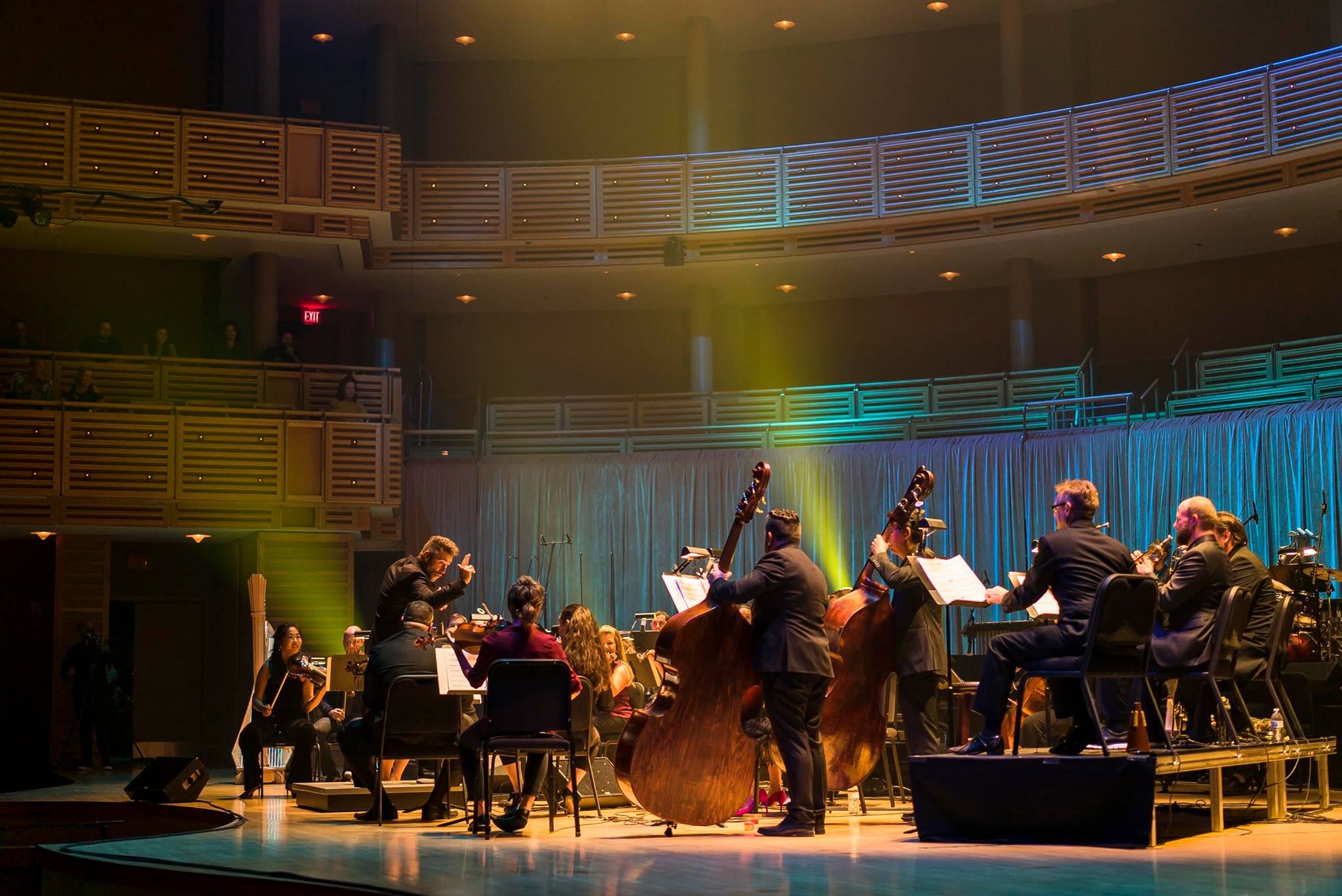
    Nu Deco Ensemble, the Miami based chamber orchestra has had a busy quarantine. Throughout the past couple months they have been releasing videos from many of their recent performances. Last week saw their most recent release a live video performance from April 2018 of  composer/DJ Mason Bates’ “Mothership” that can be seen on their Facebook Live page.

    A couple weeks before saw the release of a performance from March 2018 at the Adrienne Arsht Center. This one featured ’90’s piano star and University of Miami alum Ben Folds performing Fold’s 2015 single, “Capable of Anything”.

    Dance music fans will get a kick out of Nu Deco Ensemble bringing out some classical funk in  their original symphonic suite of Daft Punk they dubbed, “Humans vs. Robots”. This 23 minute performance was filmed in 2017 at The Light Box. It features snippets of many of your fave Daft Punk tracks from 2001’s album Discovery and from 2014’s chart topping success Random Access Memories. If you’re short on time you can skip to the 18 minute mark to hear Nu Deco Ensemble’s rendition of Daft Punk’s biggest hit, “Get Lucky”.

    Finally, April saw the release from one of Nu Deco Ensemble’s more recent performances. This one comes from December 2019 at Adrienne Arsht Center where PJ Morton featuring Miami Mass Choir are accompanied by Nu Deco Ensemble for a soulful version of the gumbo song, “Alright/Everything’s Gonna Be Alright”.

  • 2020 Miami Protests Turn Into Riots, Everything that Happened

    2020 Miami Protests Turn Into Riots, Everything that Happened

    May 30th, 2020. Miami’s peaceful BlackLivesMatter protests in honor of  the death of George Floyd in Minnesota turned into the worst riots in 40 years, almost to the day of the McDuffie race riots in Overtown. Here’s what happened from the start in the 2020 Miami protests.

    5pm

    About 1,000 protesters gathered at the Freedom Torch near Bayside Marketplace for peaceful protests, a moment of silence, an open mic of sorts for anyone who wanted to speak via megaphone. There was camaraderie and legitimate good vibes and then movement.

    6pm

    A walk began up Biscayne Boulevard with many people, mostly young, carrying signs of protest and unity and social justice.

    Good vibes, again well organized. The protest marched up and then west towards the Miami police department on NW 2nd Avenue, where there is also an entrance to I 95 at 8th street. About 1,000 people walked onto I 95 and shut down the Interstate for thirty minutes.

    Chants throughout the 2020 Miami protests included “No Justice, No Peace, No Racist Police,” “Black Lives Matter,” “George Floyd,” “Unity and Strength,” and “Hold Each Other Accountable.”


    7pm

    The protest left I 95 and walked back towards Bayside Marketplace and the Freedom Torch, passing the police headquarters. The police began to mobilize more, on bikes, in gear, on the roof. They pushed the crowd along, gently and without incident.

    The protest went back to Bayside Marketplace but not for long.

    8pm

    The 2020 Miami protests moved back towards the police headquarters. There were still about 1,000 people. Things began to change as the sun began to set. Protesters began to damage property on the way.

    Outside the police headquarters, the tension built.

    Protesters threw bottles and rocks at the police and their headquarters. Protesters set off fireworks and smoke bombs, causing false panic among the protesters.

    A police officer sat like a sniper and began to shoot at people with rubber bullets. And then almost at once the tear gas began to rain by the cops and a police car was set afire by the protesters.

    2020 Miami Protests at 9pm

    It was night.

    About 60% of the protesters went home, which left around 400 people near the police headquarters. It was a cat and mouse game of protesters throwing objects at the cops and their building, and the police launching tear gas into the crowd. More people dispersed, many went home, some headed back towards Bayside Marketplace.

    The cops began to gear up like crazy prepared for craziness and violence near the police headquarters. Three cop cars were on fire.


    10pm

    Protesters enter Bayside Marketplace mall. There are many people there, eating, shopping, as the mall just reopened. Then, the sound of glass breaking filled the air, many non-looter protesters ran out of Bayside, while others stayed looting, mainly at Foot Locker. As the looters left, the cops came in full force, but missed the looters.

    10:30pm

    The protesters head west back towards the police station. At this point there are maybe 200 people remaining protesting.

    The media linger around Bayside trying to figure out what happened at Bayside.

    At this point, the protest was definitely over. It was strictly a riot and there weren’t that many people. There was no need to stay.

    That is all we can report.

    We can say the total damage was bad but not that bad proportionately. No one was seriously hurt. No one killed. If arrests were made, we didn’t see one up to 10:30pm, a time at which the city of Miami issued a curfew.

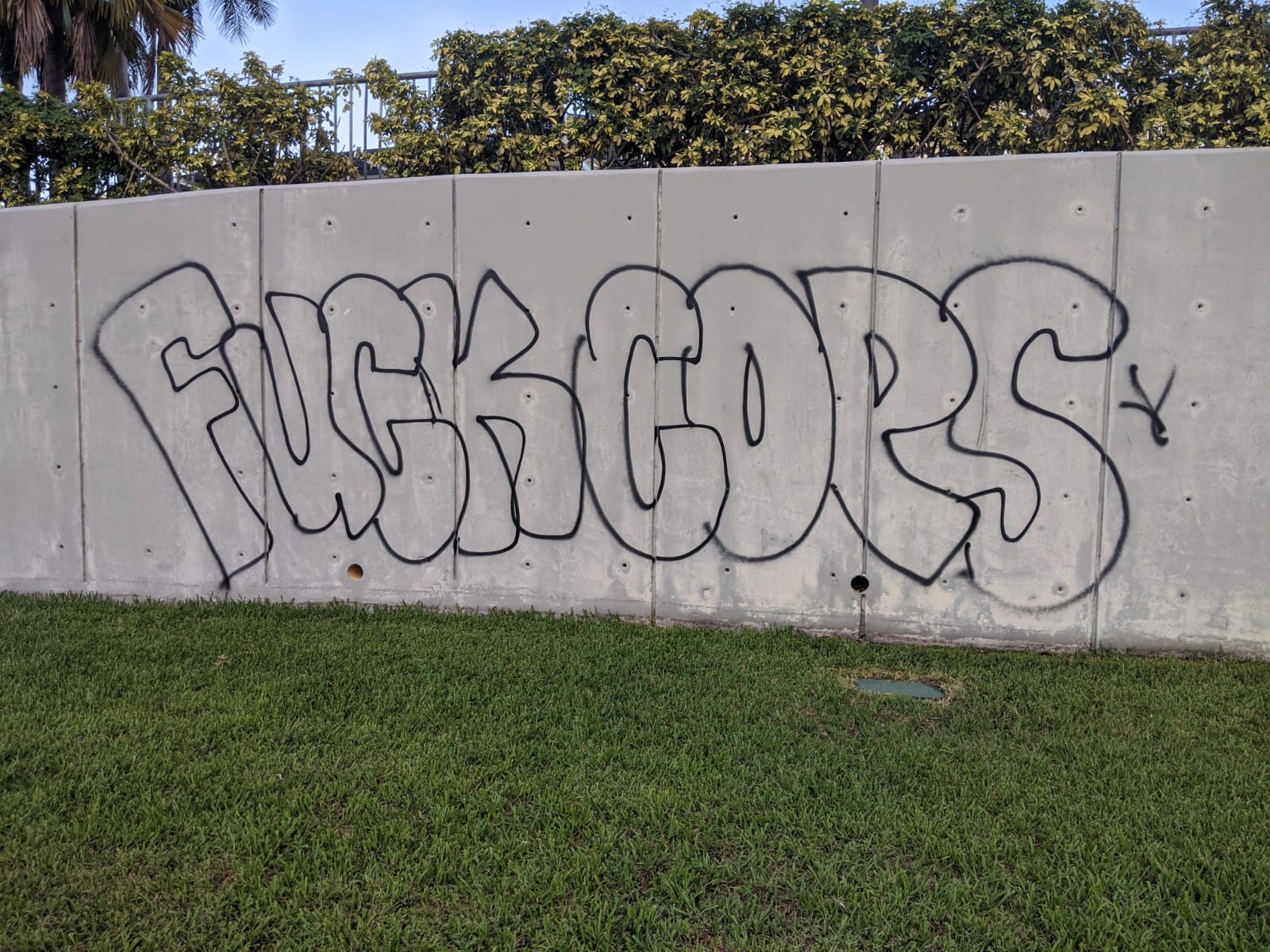
    The damage was limited to three police cars being burned, Foot Locker and one or two unconfirmed stores looted, tons of graffiti and knocked over garbage’s and smashed signs.

    Not all that much different than a Tropical Storm.

    #MiamiSometimes!?!

  • No Fear of Covid from Miami Beach Winers & Diners

    No Fear of Covid from Miami Beach Winers & Diners

    For locals pining for a return to normalcy, restaurants reopening in Miami Beach on Wednesday is welcome news. For those fearing that the worst of coronavirus is yet to come, the fact that social gathering spots are back in business is a source of anxiety.

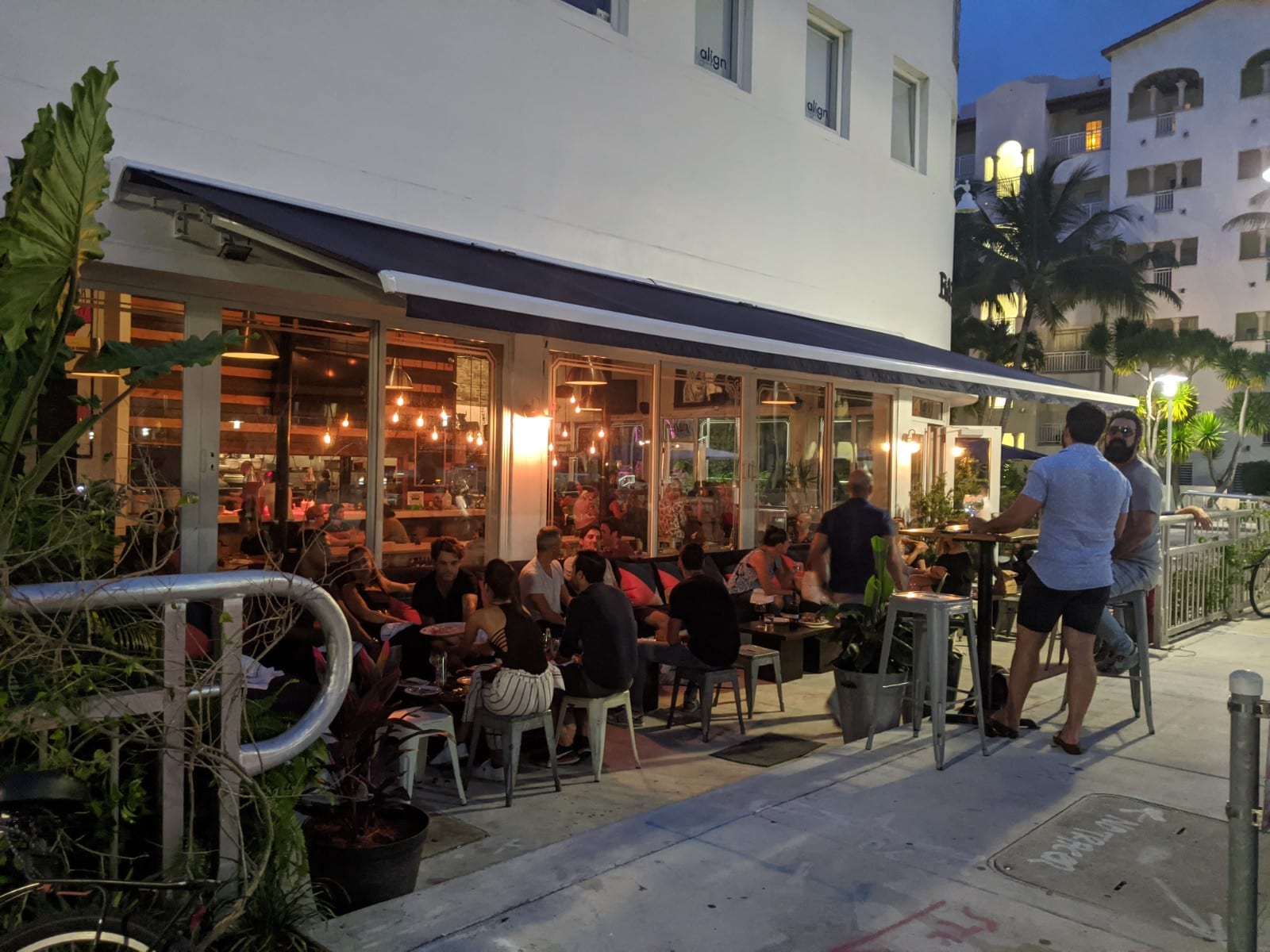
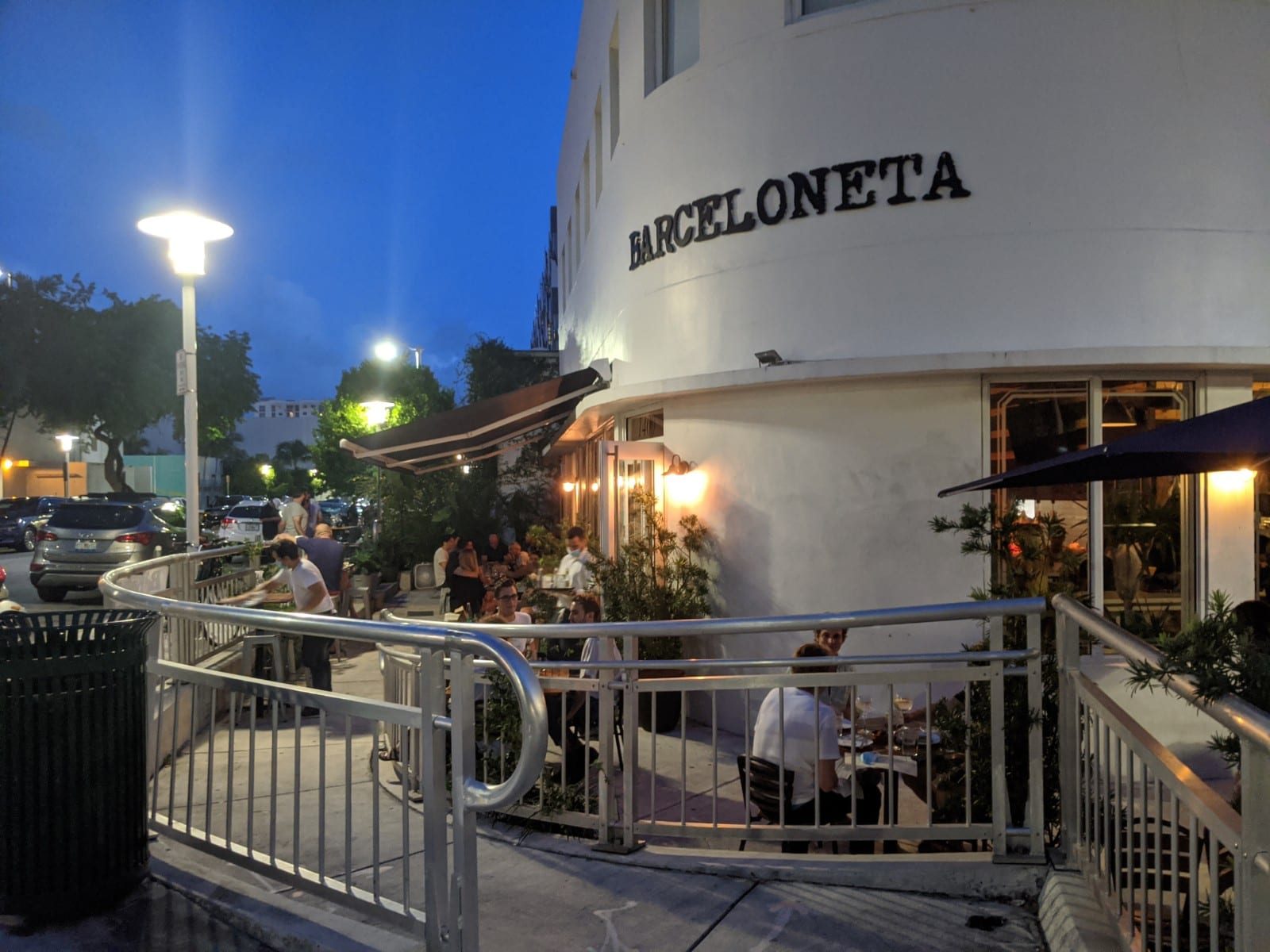
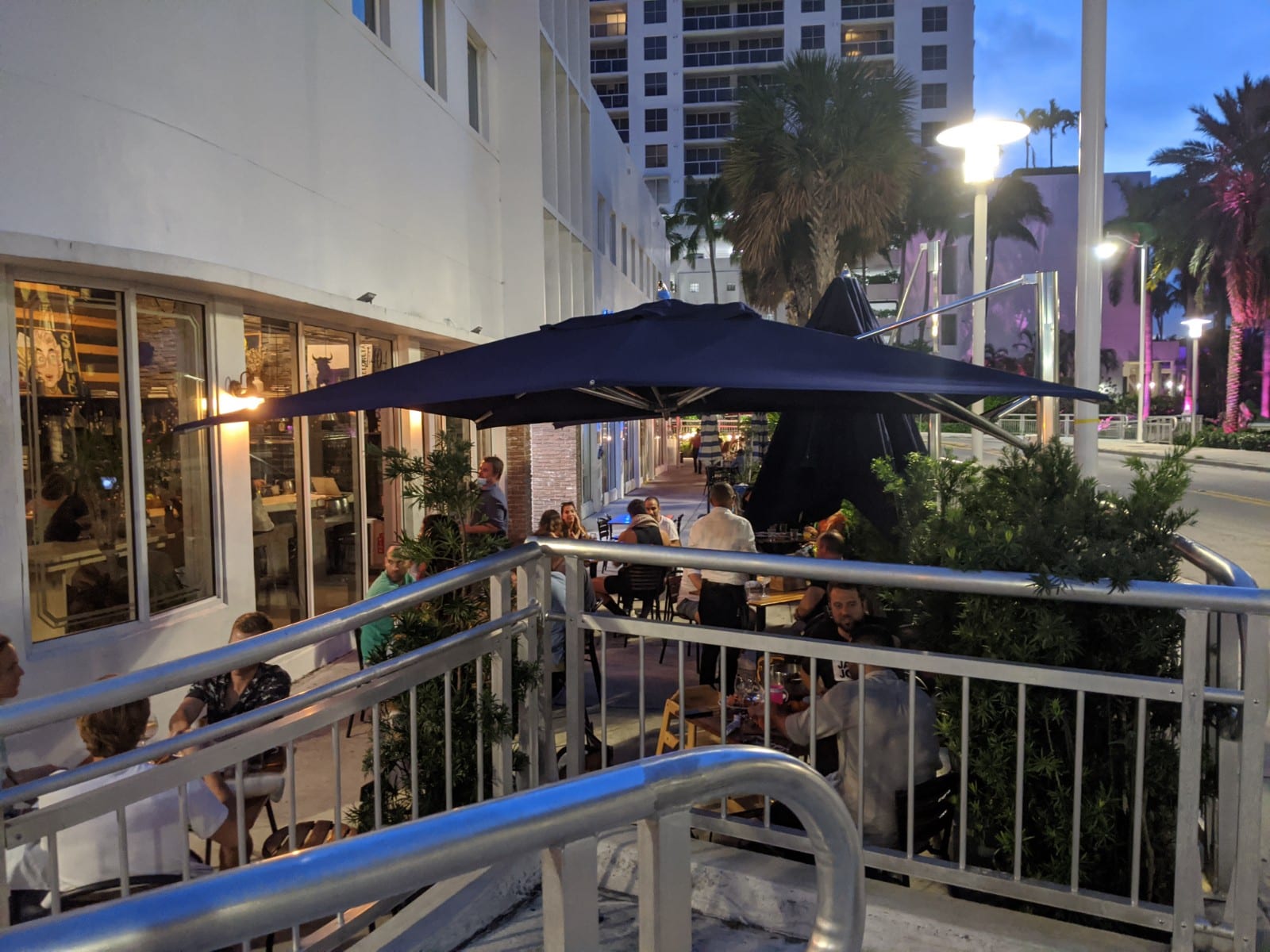
    If the little stretch of restaurants on Sunset Harbor including restaurants like Pubbelly, Barceloneta, and Sardinia are any indication of the number of people going out to eat, quarantiners should prepare to have a panic attack or two.

    On a beautiful Thursday night, only a day after dining establishments were allowed to serve customers in-house, it seemed there were no shortage of diners willing to risk whatever viruses might be in the air or on surfaces in order to get some grub in their tummy tum tums.

    None of the restaurants were overly packed. They all seemed to be following whatever arbitrary guidelines have been set up for this new normal. Tables seemed to have slightly more distance from what we were once accustomed. But after all this shut down, it was jarring to see a scene of  what we once took for granted in 2019. People actually going out as a group and taking the chance of breathing the same air as strangers.

    Tune in to your favorite news source in a couple weeks to see if these daredevil diners made a foolhardy choice or not.

  • Frank Sinatra Not So Secret Lover: Miami

    Frank Sinatra Not So Secret Lover: Miami

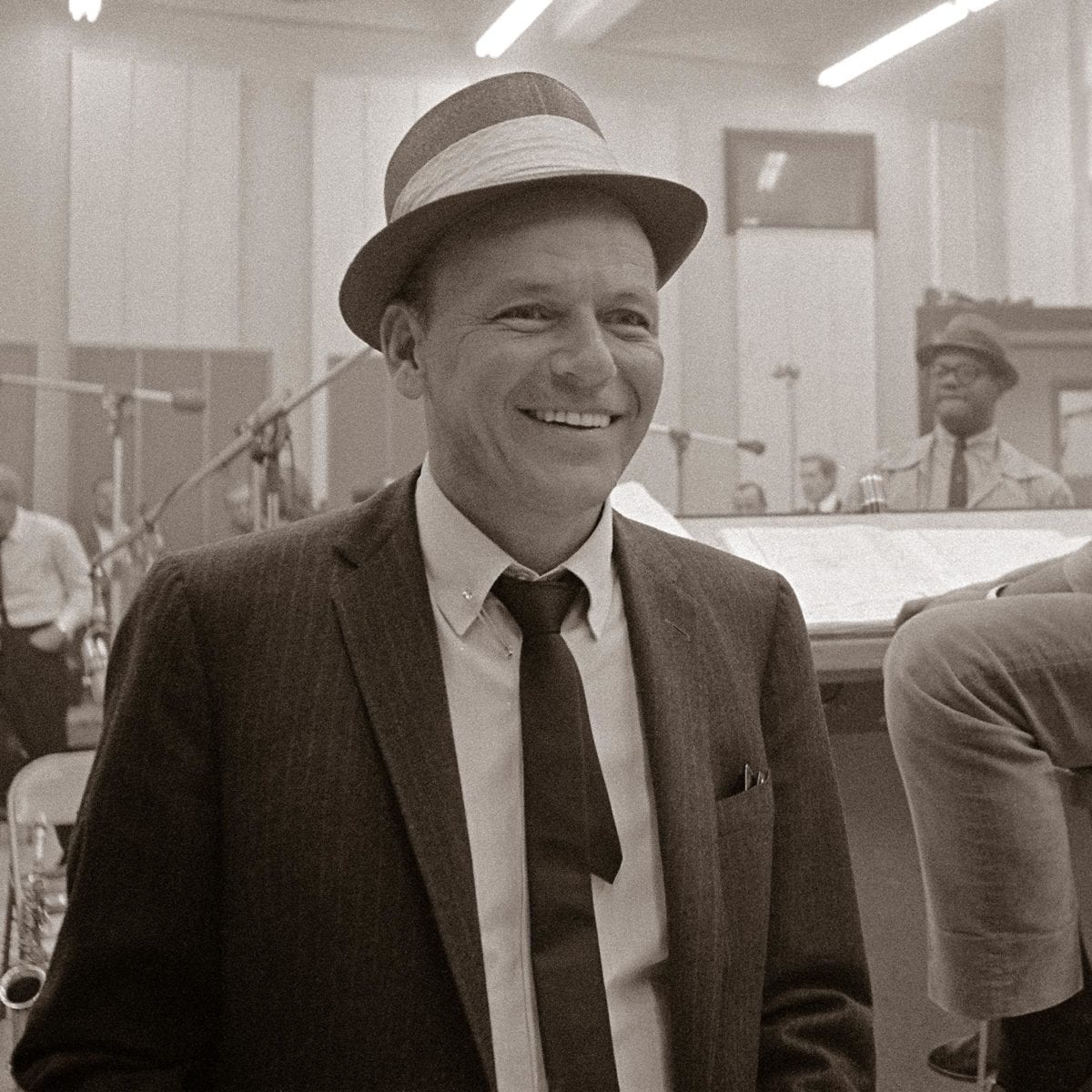
    “My name….is Francis Albert…” are the first lines Frank Sinatra sings on the ‘Future’ section of his autobiographical magnum opus Trilogy: Past, Present, Future.

    A rather candid album, Sinatra reflects on his life and everything that made it great and not so great. He talks about his childhood in Hoboken, New Jersey, what he thinks the future will be like and his wild escapades during his golden years.

    Like most people, my experience with Frank Sinatra came at a young age. In high school, my English teacher introduced me to the world of classic films through various musicals. Hitchcock thrillers, and the occasional Vittorio de Sico directed Italian neo-realist romance. Despite watching all those films, no movie star had an impact on me as big as Frank Sinatra. Sinatra and his charisma on-screen immediately captivate my heart and mind. His smooth demeanor and his happy go lucky acting quickly cemented him as one of my favorite classic Hollywood performers.  

    So, you can imagine my excitement when I found out that South Florida was one of Sinatra’s favorite spots to visit on his off days.

    Frank Sinatra & Miami

    There were many times when Sinatra & Co (otherwise known as ‘The Rat Pack’) performed at the Fontainebleau Hotel. They entertained both friends and government officials alike.

    In 1960, Sinatra had the privilege of performing alongside a young Elvis Presley during the “Frank Sinatra Timex: Welcome Home Elvis show” to celebrate the young crooner’s return home from the Army. Sinatra also shot two movies at the hotel, starting with neo-noir “Tony Rome” in 1967, and its sequel “A Lady in Cement” in 1968.

    Those films weren’t necessarily successful, but it was more of an excused for Sinatra to combine business and pleasure.

    Who wouldn’t do the same?

    Even when he wasn’t performing, Sinatra would vacation here, staying the Fontainebleau, starting fights that his bodyguard would finish for him while simultaneously wining and dining his ‘pretty woman du jour.’

    All in all, Miami is, perhaps, just as important in Sinatra’s career as New York or Los Angeles was. Not only did he come here to take his mind off the stress of the real world, but he also managed to cement his legacy as everyone’s favorite singer by being an average joe. By all accounts, Sinatra seemed pretty down to earth and rather jovial when he visited Miami.

    I suppose that’s what happens when you set foot in the Magic City.

  • A Spy in the Halls of Love

    A Spy in the Halls of Love

    Besotted, my obsession became a singularity, Palm Springs Junior High its event horizon. As the months wore on, I willingly surrendered to its infinite gravity. School was now a venue for seeking, searching, dreaming and vicariously living above my station—a new form of in-depth study. I was able to investigate, to learn in various ways. Oh, and I lost about fifteen pounds.

    Sometimes I played remora, casually shadowing my brother, picking him clean in this symbiotic dance, feeding from his clout and Round Table status. I’d also float through the dense, waxed halls, cloaked in bland inconsequence, lurking in the shadows, detecting her signal like a sturdy transistor. Other times I’d hang out with my peers, slowly herding the group toward the socially elite, creating our own hub of conversation near theirs. Then I’d completely ignore my friends and concentrate on her frequency, a sultry alto that spoke sensual things and awakened hidden geysers in my breast and pants.

    Sometimes I’d just pass her in the hall or courtyard. Mind you, many of these coincidental meetings were highly planned and deftly executed. I slowed my pace as she walked by so I could listen to whatever she was saying, ardently praying for a whiff of her scent trail. It was the best I could do, for opportunities were limited. I seized most with fierce alacrity, and I was acutely aware of her always.  I never took a moment for granted, and there was nothing selfish in my adoration, for she was never put upon.

    I began collecting traces of her, artifacts and worthless objects that meant the world to me. A hall pass discarded after use; a gum wrapper; a flower she picked from the entrance garden, held for a while, and got tired of; any and all assignments already graded, good for the waste basket; a broken nail; a lost brass buckle, lusterless and tarnished, from her black Chinese sandal; a tiny glob of wax, picked from her braces and balled inside a pink Kleenex tissue; and so on.

    My collection grew steadily. I’d sit in my room at night and spread its contents on the floor before me. I’d relive moments and create impossible scenarios through sensory manipulation. I began to know her because these things, collectively, composed so much of her habits and daily routine. I was the most pathetic of profilers. The lights would go off at bedtime, but my flashlight stayed on under the covers, lighting the scene of many a conversation, a dialogue that existed solely for my own exploration of what might have been had I been born a little earlier, looked a little better or felt a little stronger.

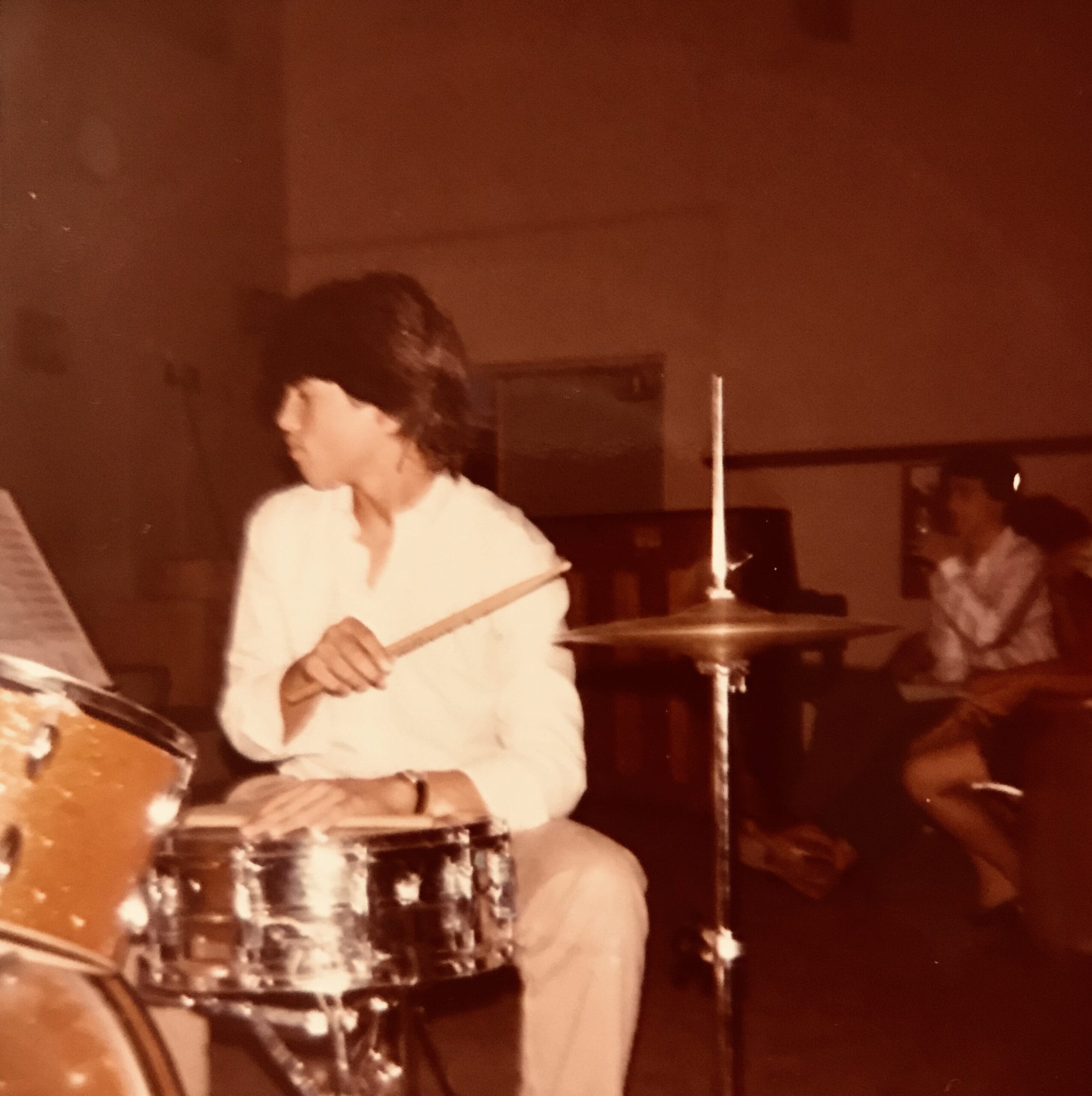
    I lost interest in academics, concentrating on the arts as strategy and catharsis. I’d been playing drums since the age of eight, and I began beating the skins with renewed vigor and LA/NY studio cat aspirations. I also joined the drama club. I figured I’d hone my acting craft and try out for some school shows. At least it would give me another reason to hang around the theater gang. She and my brother were at the center of this clique, a group that lounged about the sofas and chairs of the drama room, fingering stage props and discussing the next production or planning the next social outing.

     A new musical was in the works. It was called Teen and casting would begin immediately. The show presented all sorts of scenarios in which teenagers faced crises and coming-of-age dilemmas. Everyone knew she would get the lead. She could act, sing, dance, and rip your heart out with her saucy smile. She could also make you kick someone’s ass, do drugs, tell your parents to f**k off, be truant in order to be near her, and maybe even contemplate suicide; she was perfect for the part.

    I auditioned to play drums for the pit orchestra. The show, attempting to reach adolescents, had an upbeat score with electric instrumentation and a slew of disturbingly lame pop-rock tunes. But I grew to love every one of those songs, their lack of musical quality and substance notwithstanding.

    I was informed two days later that I’d be manning the kit. Elation! Hours of rehearsal, comfortably hidden behind a four-piece Ludwig, dropping the groove that would shape her moves. But I had to be rock solid, my time had to be atomic clock steady, and the arrangements committed to memory securely. There was no room for error, but I added my own flair to the dreary sheet music. I’d lay pocket deep as Jeff Porcaro’s, Steve Gadd’s, or John Bonham’s. These drummers were personal heroes, and listening to Gadd’s work on Paul Simon’s “50 Ways to Leave Your Lover”, Porcaro’s on Bozz Scagg’s “Lowdon” and, of course, Bonham’s on Zepplin’s “Fool in the Rain” was enough to make me throw my sticks across the room in utter frustration and admiration. In emulating their mastery, I was also shaping my own style and improving steadily. I’d been blessed with a keen musical ear. I had something to offer, something I knew was of substance and would never embarrass me.

    A drummer needs patience beyond belief. He is the foundation but is permanently upstaged. His ego, or the need for others to stroke it, must be minimal, for most of the attention is placed on the other performers and musicians. Good drummers, in fact, are ghosts, silent and watchful, ready on command while others are trying to get it together.

    There was much redundancy and down time, but I didn’t mind. I’d look forward to a missed line or cue. Repetition became a thing of discovery, for I’d pick up something new about her on each take. A subtle physical quirk, a vocal nuance, fresh and angelic, an exasperated sigh aimed at a guilty performer after a botched musical number. These were the things I eagerly awaited when Mrs. Gramling, our drama teacher and show’s director would yell, “Again!”

    My brother looked on with encouragement as I played my role with finesse and understatement.

    I’d ask him constantly, “Did she say anything about my drumming?”

    “No, but she thinks you’re hot and wants to know if you’ll go steady.”

    “Real funny. Seriously, anything?”

    “She thinks about her part and the rest of the cast. You’re just playing drums. I don’t want to make you feel like crap, but stop asking stupid questions.”

    Weeks of rehearsal passed, and I never got beyond a single-word greeting. There was no courage for a phrase, God forbid an entire sentence. When she did initiate a hello, there was an involuntary and slight lowering of my head. I think I was instinctively going for the full bow, but some sort of dignity stopped me at half-mast, and my response was invariably shy and inaudible. My brother confessed that she found my behavior endearing in a sad puppy kind of way, so I started ignoring her completely. I was disappointed, outraged with her perception of me. I was a needy child tugging at her pant leg, begging her to notice.

    I was livid, and for several days, I avoided her completely. A feat that brought about fits of rabid defiance towards my parents, disastrous and quickly decided fist fights with my brother, and several office visits to the assistant principal for not tolerating teachers’ injustices. I wouldn’t drink or smoke or take drugs (yet), so I vented the agony in ways more suitable for a twelve-year-old, angry at the world for making him want the impossible.

    One day, I was walking towards rehearsal and singing to myself, as I often did when alone and thankful for the day. Concentrating on my phrasing, for “Mandy” requires just the right melodic sensibility to ring true, I didn’t hear the footsteps slowly gaining on me. Then I felt a presence and my song died before it reached its bridge, a bridge that should have collapsed before me, swallowing me by a many-toothed abyss, like Boba Fett in Return of the Jedi. Without stopping, she walked past me in her poised quickstep, and threw the words, “Nice voice.”

    I said nothing because I couldn’t. I wasn’t sticking to my proud moratorium, I simply lost my tongue completely, and, as I searched for it everywhere, the distance between us grew quickly, like stars stretching endlessly when a ship accelerates to light speed. I tore and cursed at cotton and flesh, frantically searching for the damned, elusive muscle. I found it just as she was out of reach, happily exploring another world. I was vexed at my uncontrollable silence, but I soared from the tentative confidence and joy derived from this unexpected compliment.

    This occurrence made me feel closer to her because she acknowledged something good in me. She bore witness to a moment showcasing an attribute that was so fundamental to my person, my true voice. I was in anguish for several nights, however, thinking about the selection I warbled on that particular day. When smitten, I tend to lean towards the thickest molasses of pop balladry. Yes, Manilow was a source of comfort at times, but it was a well-kept secret.

    My cousin Mary introduced me to Barry.  Mary, who was fanatical about the man and exposed me to the underrated, overly criticized and constantly ridiculed artist and his music, was always so good to me, so willing to listen and share my pain. Would these songs have moved me without her influence? Maybe not. I think you need to endure a girl’s tears during “Weekend in New England,” for example, to understand their full potential and true purpose. They serve as tools of empathy, a familiar, soothing shoulder to cry on, an LP that can last as long as your grief. Over the years, I learned to embrace and openly admit to my appreciation for his contribution to sorrow—hell, it became a source of pride. Laugh, but Barry knew.

    This self-conjured feeling of closeness prompted me to write her. I longed for an extended correspondence but settled for far less. Also, correspondence implies written dialogue, but there was never a response from her. You see, she had no idea who was writing, and I could never tell her. To admit the deed would surely incite laughter and lead to minor legal action. At first, I was reluctant to leave a letter in her locker, for how many had done the same? Was I to join the ranks of the silly who secretly admired? But the first time I watched her read my note thrilled me, and I no longer cared about the cowardice of anonymity.

    I knew exactly when she would visit her locker and between what periods. I’d get a pass towards the end of a period, case the corridor, wait for a window, and drop my love through the private slit of her locker. Then I’d return to class, anxiously awaiting the bell. The ring would put me on her path, carefully avoiding exposure, but I was like Waldo, easily lost in the crowd, hopelessly average in the adolescent jean pool, a powerful asset for undercover work.

    I’d skulk by a fire extinguisher, a trophy case, or the plaster pacer (our school’s mascot), and watch her reading, her eyes shining, her lips slightly parted, probably thinking of her latest crush, but I didn’t care.  I had written it, and she was drinking it, and it was all the same to me.  To know I’d put a charge in her for a second was enough to keep me stoked for the rest of the day.  And the feeling, the indescribable loveliness of knowing she was reading my words. It was all so covert and fantastic. I was a spy in the halls of love, and her locker was the safe house of my devotion.
  • Did You Know Jeff Bezos Grew Up In Miami?

    Did You Know Jeff Bezos Grew Up In Miami?

    Jeff Bezos went to high school in Miami. It’s 100% true. He graduated valedictorian of Palmetto High School (in Pinecrest) in 1982, before moving on to Princeton for college.  We did some research and as far as we can tell he spent all his high school years at Palmetto, where he was described as a science nerd.

    According to Wired magazine in a piece published in 1999, “{Bezos] spent one summer as a fry cook at McDonald’s, studying the company’s automation improvements even while he responded to the Pavlovian cues of the many and often simultaneously sounding buzzers that told him when to scramble his eggs, flip his burgers, and pull his fries out of the boiling vat.”

    According to the same article, Bezos spent another high school summer teaching children’s camp with his girlfriend, offering a curriculum that they designed, described as “a mix of science and literature, the future and the past. Required reading included The Once and Future King, Stranger in a Strange Land, The Lord of the Rings, Dune, Watership Down, Black Beauty, Gulliver’s Travels, Treasure Island, and David Copperfield, along with the plays Our Town and The Matchmaker. The science curriculum ranged from fossil fuels and fission to space colonies and interstellar travel – with a dollop of television and advertising study thrown in for good measure.”

    Talk about prophetic.

    The course was for ten year old’s.

    6 kids signed up for the $600 camp.

    Jeff Bezos is Adopted & his Dad is Cuban

    Another fun fact.

    Bezos was born Jeffrey Jorgenson (anyone dare to call him J.J.)?

    According to CNBC, “His biological dad, Ted Jorgensen, met and started dating his mother, Jacklyn Gise, when they were both in high school. Jorgensen was 18 and Gise was 16 when she became pregnant. They flew to Mexico with their parents’ money to get married. Jorgensen belonged to a unicycle troupe and worked at a retail store making $1.25 an hour, so he didn’t have much money.”

    We couldn’t make this shit up.

    They divorced when Bezos was 17-months old and he never met his biological father once. Soon after, his mother met a Cuban immigrant named Miguel “Mike” Bezos  who according to the Miami Herald “came to the United States alone as a teenager in 1962 as part of the famed Operation Pedro Pan.”

    Mike Bezos manned up and fathered another man’s son. When Bezos and Gise married in 1968 Jeffrey Jorgenson changed his legal name to Jeffrey Bezos (again, anyone dare to call him J.J.)?

    Mike Bezos and Jacky Gise had two more children, both who also lived in Miami for a time, and the family is close to this day.

    Talk about hitting the genetic pool?

    Good vibes.

    Why Is This Important?

    I don’t know. The richest man ever on planet Earth ever went to Palmetto high school and his family lived in Pinecrest? That’s a big deal. And if you think about it, maybe, just maybe, Jeff Bezos wouldn’t mind helping out the city he went to high school in. The city with the most Cuban refugees in the world. A city that certainly wouldn’t mind the jobs that would come with a nice big Amazon plant. Miami makes a lot of sense –if you think about it — it’s as far away from Seattle you can get in the Continental U.S.

    Not sure why there is no recent media highlighting the Bezos connection to Miami. In fact, there are only a few articles at all. The Herald piece written in 2013 and the Wired clip in 1999.

    Well, now there’s a third. You’re welcome, Miami

    Jeff Bezos, circa 1982 at Palmetto HS

    .