Category: News

  • Stephen Ross Got His Dolphins Yes Man in Coach Mike McDaniel

    Stephen Ross Got His Dolphins Yes Man in Coach Mike McDaniel

    Last month the football world was shocked when the Miami Dolphins fired head coach Brian Flores. While the Dolphins failed to make the playoffs during Flores’ tenure, they overachieved all three seasons including having the franchise’s first back to back winning seasons in nearly twenty years.

    Dolphins owner Stephen Ross said his rationale for firing Flores was, “”Well, I’ve been looking at this over three years now and watching the organization grow. I think an organization can only function if it is collaborative and it works well together. I don’t think that we were really working well as an organization to really win consistently at the NFL level.”

    Immediately after the firing it was reported by the Miami Herald’s Barry Jackson that the real reason Ross fired Flores was he didn’t kiss up to him enough. “It’s easier for Ross to keep the long-term employee with the pleasant demeanor — the one who treats him royally — than the only that’s perceived as difficult to work with,” the article said.

    Soon after the firing, Flores famously sued Ross and the rest of the NFL for racial discrimination towards NFL coaches. The allegations included claims that Ross offered Flores $100,000 for every loss, which had many calling for Ross to sell the team.

    But sadly for Dolphins fans Stephen Ross is going nowhere. Instead he doubled down and decided to hire a new coach for his Miami Dolphins.

    Many thought Ross would hire an experienced coach in Jim Harbaugh, but once again the Miami Dolphins owner went cheap. For the fourth time in four coaching vacancies Ross opted for a man with no head coaching experience in Mike McDaniel. And McDaniel marks the second time Ross hired an offensive coordinator who didn’t call his team’s plays.

    From the first question of Mike McDaniel’s introductory press conference it was obvious the reason he was selected as the Dolphins head coach. This is a man who is going to be really, really nice to Stephen Ross. Going from the presser Mike McDaniel is a man who will treat Stephen Ross royally.

    The first question had Jim Barry asking McDaniel, “Did any of the issues raised by your predecessor in his legal action raise any red flags about this organization?”

    This was a reasonable question since McDaniel’s predecessor felt so mistreated by Ross he made the unprecedented move of suing him.

    In McDaniel’s answer he shamelessly flattered Ross in every way short of shining his shoes, “Red flags? I can honestly say there were no red flags. The reason why is  I was stepping into an organization with a boss that I don’t think people give his proper due. There’s a lot of people in professional sports that are out to make money. And I can’t lie. I feel like if I spent that much money I’d like to make a lot of money. When I walked in the door you look at every single detail within this building, you look at the people that are hired, you look at all the extents, there is no cost too high for winning for him,” McDaniel said not acknowledging the irony of this statement about a man who is accused of actually paying his coaches to lose.

    McDaniel continued, “The city of Miami really is lucky to have an owner that right wrong or indifferent all he cares about is winning. And as a coach that is literally all you are looking for. That is all. So red flags? No, there’s no red flags for me.”

    As a long suffering Dolphins fan I truly hope McDaniel can be a better coach than he is a public speaker. But one thing Stephen Ross guaranteed himself with this hire, he found a new best friend.

  • Mr. Babies Cuts and Pastes Psychedelic Collages

    Mr. Babies Cuts and Pastes Psychedelic Collages

    This article originally appeared in PureHoney Magazine. Check them out here. 

    At the height of the digital era, social media drive art and culture. Creators rise to stardom virally, amassing followers at synaptic speed. An artist or performer capturing a moment or a mood can trigger a meme, a trend or a whole new genre across platforms.

    Sometimes it’s intentional (hello, Twitch), other times pure accident (Nathan Apodaca skateboarding to Fleetwood Mac), but it’s always at the intersection of prompt action and divine timing.

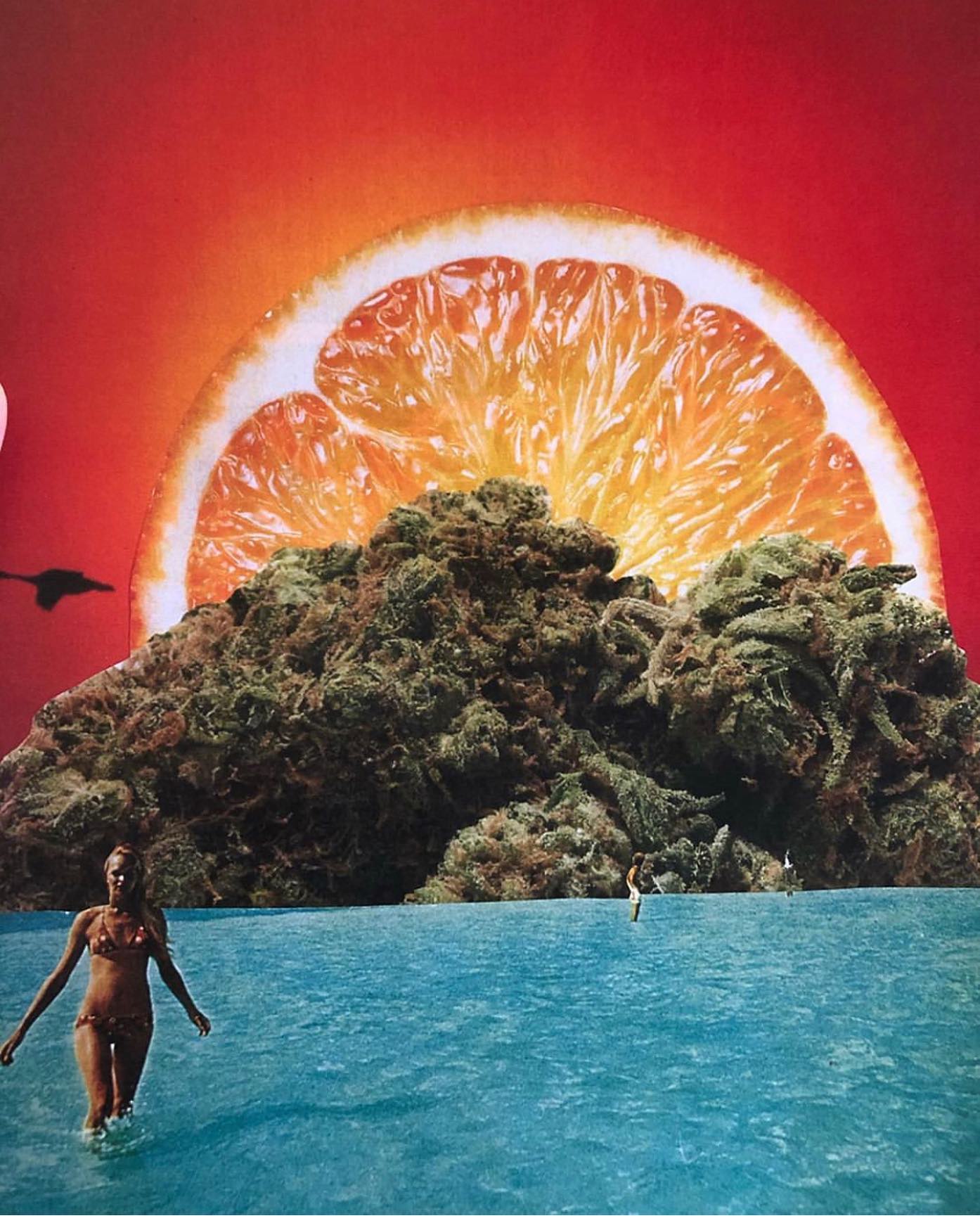
    Collage artist Mr. Babies knows a version of this phenomenon. He joined Instagram early on, found an audience and became an avatar of psychedelia, cutting and pasting his subconscious into otherworldly finished pieces. Before stringent algorithms ruled the creator space, a free flowing artscape flourished online where Mr. Babies gained a foothold and his analog creations multiplied through likes and shares.

    Vice magazine took notice with a feature story in 2016. At the time he had about 60,000 followers on Instagram. Still, the part-time artist, born Nick Baccari, kept his day job at a bank and divided his time even as his creative profile grew. Then the pandemic hit.

    “It has completely flipped my world upside down in the best possible way,” Mr. Babies told PureHoney in an email interview. With the bank shuttered, Mr. Babies dived all the way into art. “For two years since, I have been selling prints and posters of my work full time,” he said. Today he has almost 400,000 Instagram followers, and a Web site to retail his work.

    It was a confirmation of aspirations that the younger Baccari — who grew up in small-town west Texas and moved to tiny Sedona, Arizona — was expressing through whimsical pop art creations long before he turned to collage. “I always knew I wouldn’t fit in working at a typical 9-5 job,” he said. “I never really envisioned a specific path for my creativity, but I knew I had to keep expressing myself and believed in my artistic vision even when others doubted me.”

    His art as Mr. Babies has origins in a trip to a recycling center, where a discarded stack of National Geographic magazines caught his eye. From this raw material new visions arose and migrated to Instagram: frogs with bodies assembled from human eyeballs; a forest of mushrooms spilling out of sensual, pursed lips; faces with slugs, snails, and snakes pouring from the orifices.

    He posted using a cellphone and an electronic tablet, the mind’s-eye aesthetic springing from visual detritus and pure imagination. In 2015, he tried acid for the first time to influence his hallucinogenic renderings.

    That turning point is the focus of a new venture for him in the sphere of non-fungible token (NFT) art — where an image is reproducible but its cryptographic blockchain signature is not, and prices (often in blockchain currencies) are set accordingly. Mr. Babies is preparing an NFT collection, through a blockchain-centered app called Foundation, of ten works he created during his initial experimentations with LSD.

    “Since this is a new frontier for me, I really wanted to take a look back and highlight the work that shaped my early career,” he said. “These are my favorite pieces from 2015 and also tell a story of who I am as a person and artist.”

    At 39 he plans to keep making art and exploring digital technology as an outlet. He remains committed to his method and his low-tech tools: tiny scissors, X-Acto blades, glue sticks, tape. As he told the arts journal Toombes in 2021, “I have never created a digital piece in my life. I don’t think that I could actually. I like the randomness of opening a book and finding images to slice out.”

    He wants to keep learning, train other artists in his techniques and help build community-focused projects. There can be loneliness and dislocation alongside the whimsy and cosmic awe in Mr. Babies’ art. But through his fusion of analog and digital, he has also created a community bonded by wonder and love of his work.

  • Marry Me Is Jennifer Lopez at Her Best

    Marry Me Is Jennifer Lopez at Her Best

    I hate Jennifer Lopez. Hate, hate, hate, hate her.

    Of course, I don’t literally hate her. Not as a person, certainly. I don’t know her. I’ve never met her. Never will. And even if I did, I’d probably still turn into a pile of gushing goo. “Girl. Pretty,” I’d stammer while doing a pee pee dance.

    No. I hate the calculated persona she puts forward. The cold diva schtick.

    Just not my thing.

    I confess these feelings for transparency. Clearly, I walked into Marry Me, Lopez’s new romantic comedy, with a bit of baggage.

    But hey, it’s a romantic comedy. I like those. Life’s complicated and confusing enough that I enjoy the simplicity of a good romcom. So, despite the Lopez Effect™, I decided to give this one a chance.

    Marry Me (the title is more of a command than question as there is no question mark at the end) is a throwback to the romantic comedies of yore that Meg Ryan, Drew Barrymore et al. used to put out on a regular basis, though it’s closer to the Kate Hudson ones whose premises became more and more outlandish in a failed effort to stave off staleness (How to Lose a Guy in 10 Days, anyone?).

    How absurd is the set up for Marry Me?

    Check it: Lopez stars as Kat Valdez, a superstar pop singer engaged to Bastian (Maluma), an equally famous singing sensation. They plan to get married at the end of one of Kat’s extravagant concerts in front of millions of fans in New York. Just as Kat is raised to the stage, though, decked out in an appropriately ludicrous and elaborate wedding gown, video of Bastian’s infidelity with Kat’s assistant leaks. Distraught and shell-shocked by her fiancée’s betrayal, she spots a man holding in the audience holding a sign that reads “Marry Me?” (a question mark is included on that one at least). Impulsively, she calls the stranger to the stage and acquiesces to his placard’s request.

    The man holding the sign is Owen Wilson’s Charlie Gilbert, a charmingly dorky math teacher who’s only at the concert at his daughter’s behest (she’s a huge fan while he basically has no idea who Kat Valdez is) and only holding the sign because his friend (Sarah Silverman clearly enjoying a chance to improv just about every scene she’s in) handed it to him when she went to the bathroom.

    The two get married onstage, but will the fake couple actually fall in love?

    Was Gigli a misguided bomb?

    Obviously, the premise is ridiculous, but I give director Kat Coiro (who’s the showrunner for the upcoming She-Hulk TV show for Disney+, which I am very curious about) credit. She spends a good amount of time trying to explain why these two souls would make that decision. I mean, nothing will ever be able to make their choice believable, but I appreciate the attempt. What follows the preposterous setup is standard romcom fluff, but it’s just on the right side of charming.

    One of the reasons for that–and look, this is hard for me to say—is Lopez herself. She won me over here. She plays the role sweetly, mostly staying away from the preening diva stuff in the sense that she doesn’t act spoiled or petulant. It helps that Lopez is playing a character closer to her public persona. Lopez in a romantic comedy playing a pampered superstar I can get with. Lopez playing a blue-collar worker like in her late ‘90s romcom, Maid in Manhattan, less so. I just don’t buy it. I mean, it’s all calculated of course, the superstar with a heart of gold stuff is subliminally trying to convince us that’s who Lopez is in real life. But, eh, she makes it work here. Her emotions come off as genuine.

    Actually, it’s Charlie that gets a bit in the way of the movie.

    I get what they’re trying to do with his character. He’s supposed to be so chill and unassuming that he cuts through all the superstar artifice surrounding Kat. It’s a solid concept that I’d dig watching. Owen Wilson can do laid-back charm in his sleep, so he’s still fun here, but the writing lets him down. He often comes off more dickish than charming. When Kat takes off her hair extension and drops it on the floor, Charlie gets up and stomps on it, pretending he thought it was a rodent (do you think she’d enjoy his dirty-ass shoes all over something she puts on her scalp?) and then assures her that she is both beautiful with or without the extensions. It’s like that guy who swears a woman is beautiful if she’d just take all that fucking make-up off. It’s all about what the guy wants. What if Kat simply likes extensions?

    Charlie’s actions aren’t a deal breaker mostly because of Wilson’s easy-going appeal, but it feels like he’s written by a white dude in his 40s who thinks he gets women but really doesn’t (no, not me! The screenplay is credited to Harper Dill, John Rogers and Tami Sagher).

    At least the movie makes attempts to acknowledge Kat’s struggles as an aging superstar in a business that worships youth. It doesn’t do too much with that, but I’ll take it, especially since the heroine in the graphic novel Marry Me is based on is a 24-year-old, Brittney Spears-esque pop star with blonde hair and blue eyes. Casting Lopez instead, who’s in her early 50s and of Puerto Rican heritage, gives the movie a more interesting perspective.

    All that aside, and despite some of Charlie’s lameness, I rooted for the couple and generally enjoyed their scenes together. Lopez and Wilson don’t have burning chemistry, exactly, but there is a geniality between them that spreads through the whole movie. It’s feel-good nonsense, but it did make me feel good, so that’s something.

    And accomplishing that with Lopez as a lead? I guess I kinda like Jennifer Lopez now. Kinda like, kinda like, kinda like, kinda like her.

  • Tool Plowed Through Miami

    Tool Plowed Through Miami

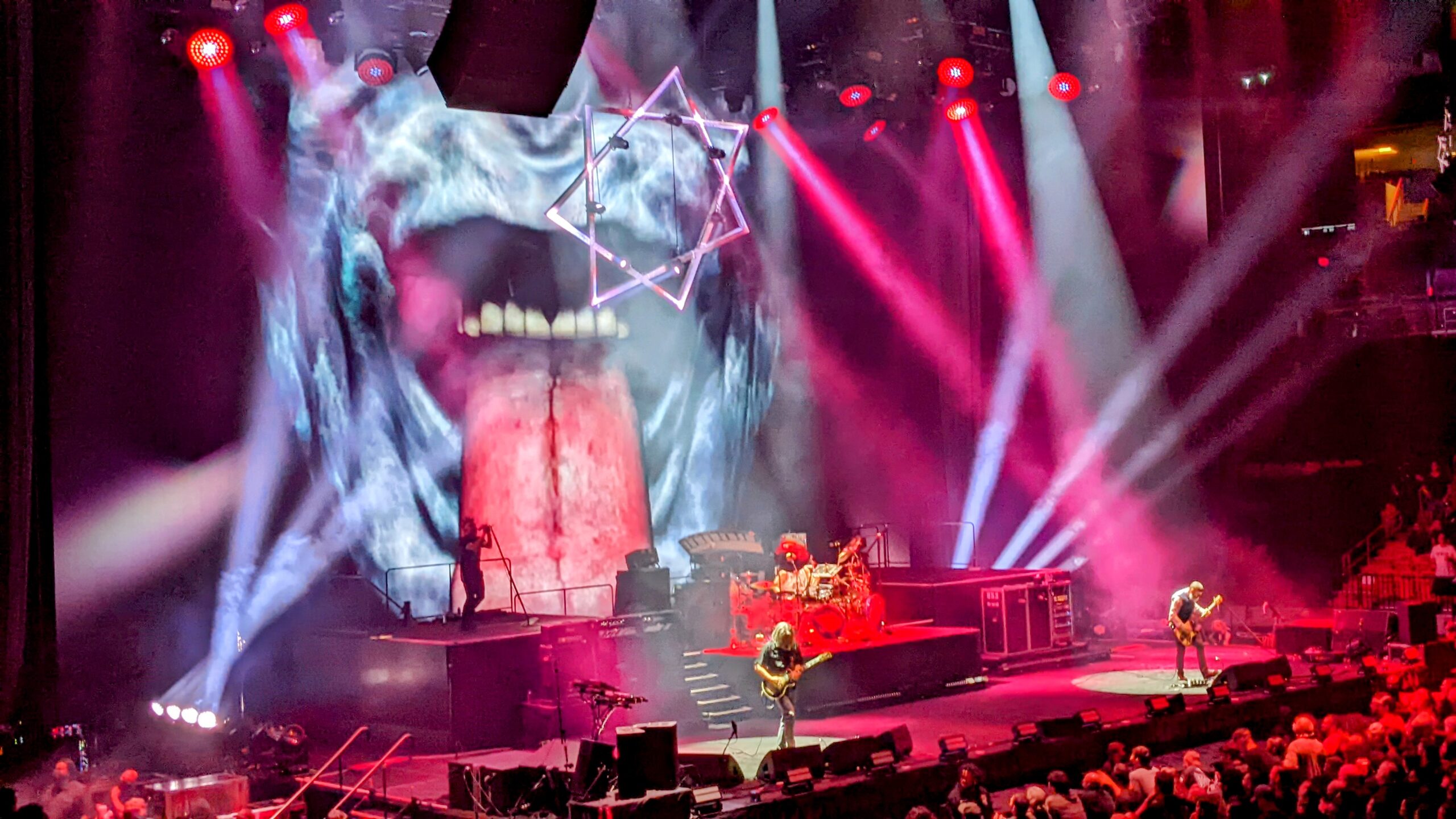
    Tool plowed through Miami with 13 tight, slow, deep songs, loaded in riffs and striking chords, with fist pumping drum solos and teeth grinding hooks.

    It was an awesome two hours.

    For many in the arena this was likely the largest indoor event they’ve attended since Covid. Hidden but in clear sight, Tool played half the show behind spaghetti transparent filament curtains that provided next level 31st century Superblue visuals, that may or may not have been designed by Alex Grey.


    Solid…

    About six songs in the curtains opened and the quartet felt that much closer, the visuals that much closer, the riffs that much tighter, like yo!

    We back let’s ride this motherfucker out yo.


    ***

    When getting dressed to go to the Tool concert it only made sense to wear black. 19,000 other concert goers felt the same. The vibe was somewhere between a Johnny Depp cologne ad and the insurrection, but no judgements, on both sides.

    As always, we like to gauge the vibe by listening to other people and talking to as many people as we could.. We heard weird shit walking around.

    What do yo think of the show?

    The sound is fucking bullshit bro, I can’t even hear the vocals…

    and the bass is buried like this is fucking bullshit…

    I mean it’s still a good night, good to get out after Covid…

    ***

    Why do you think Maynard (lead singer) stayed away from the center stage, elevated left and right on background lifts?

    Fuck you that’s why..

    True, true, hahaha, wait, what..

    He was saying fuck you, that’s why..

    True. This is a kickass show..

    ***

    What do you think of the crowd? **

    I didn’t know this many white people lived in Miami….

    They don’t, they came down from Broward & Palm Beach…

    **we made this one up — satirical privilege.

    It’s kind of what we do.

    Call us a tool…

  • Afro-Carib Festival Celebrates Black History and Reggae Month

    Afro-Carib Festival Celebrates Black History and Reggae Month

    Saturday, February 26 at the Miramar Amphitheater, The Afro-Carib Festival will celebrate Black History and Reggae Month. Event organizer and Miramar Commissioner Alexandra Davis hopped on to the Jitney to explain what audiences can expect.

    What is Afro-Carib Festival?

    Alexandra P. Davis: The 1st annual Afro Carib Fest launched in February of 2020 in Miramar, Florida and was my brainchild  This signature event is now part of a month-long celebration of Black History Month as well as Reggae Month which happens to be in the month of February. Headliners at the 2020 event included reggae sensation Capleton, Afrobeat artist Stonebwoy from Ghana and Dominican singer Amara La Negra. They were joined by Julien Believe and Jay Shep from the Bahamas, gospel-reggae singer, Soné and the Gutta Twins from Jamaica. The 2022 line-up is even more impressive.

    How did the festival line-up come together?

    We wanted to find a way for our diverse community to come together and celebrate the different genres of music from the African Diaspora. The 2022 line-up includes artistes who are at the forefront of their respective musical genres. They include Grammy-nominated Reggae star Protoje, Afrobeats artiste Afro B known for his hit song “Drogba (Joanna)” and Afro-Latino Urban artiste EIX from Puerto Rico. We will also have well-known local performers on stage to keep the crowd entertained.

    What can attendees expect from the festival?

    On Saturday, February 26th, guests can expect to have great time under the stars at the beautiful open-air amphitheater at the Miramar Regional Park. This will be a family-friendly atmosphere where everyone of all ages will find something to enjoy. Local food vendors will serve up their specialty Caribbean and African dishes and merchandise vendors will offer up their unique products representing a variety of cultures. Guests can come out early since the gates open at 5pm (the show starts at 7pm) and check out the different displays and vendors while enjoying stilt-walkers and African dancers throughout the venue. They can get their tickets at Ticketmaster where prices start at just $15. Tickets are also available at various Caribbean outlets including Aunt I’s Pembroke Pines, Reggae N Things in Coral Springs, Sam’s W.I. Grocery in Miramar, VP Records, Junior’s Barbers and Rainbow Variety.

    To learn more about the performers and to view highlights from the 2020 event, go to AfroCaribFestMiramar.com.

    This festival celebrates Black History month. Is there notable Black history in Miramar you can share that people might not be aware of?

    Miramar has a unique history, and our population has grown to embrace people of all different nationalities including African Americans, people of Caribbean descent and Hispanics. The city now has a Commission that is comprised of all individuals of black and Caribbean descent. The first African American Mayor was elected for the city in 2015 and just last year in 2021, the first black Jamaican City Manager was appointed. It is only fitting that the city host an annual signature event that highlights the fusion of cultures represented in the city of Miramar.

  • R.I.P. Carlos Suarez de Jesus, Miami Arts Journalist Passes Away At 61

    R.I.P. Carlos Suarez de Jesus, Miami Arts Journalist Passes Away At 61

    Carlos Suarez de Jesus, a Miami arts journalist and artist himself, passed away February 3rd, 2022, after years of health issues stemming from a stroke and a heart condition.

    He was only 61. 

    Per his daughter Bethany, as posted on Carlos’s Facebook page: 

    “My father was an incredibly brilliant and delightfully odd man who touched the lives of so many through his art, writing, and storytelling. He was a father, grandfather, son, brother, uncle, husband, mentor, and friend…and so much more throughout his action-packed and unforgettable life.”

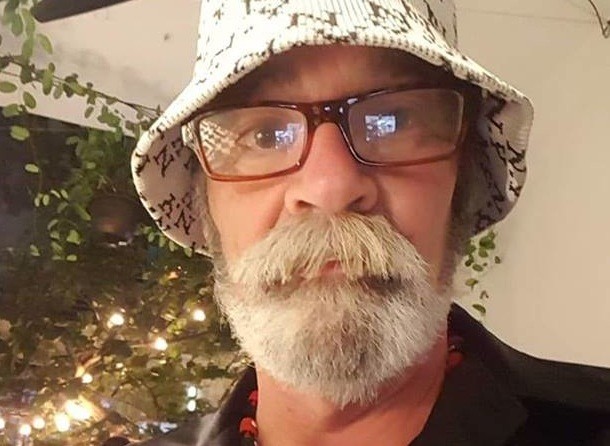
    The Jitney knew and respected Carlos as a writer and artist. He was cool, sweet, quirky, and wild, a true patron saint of Miami. We visited him a few times at his gallery in Little Havana and enjoyed his charm and cutting intellect. 

    Carlos Suarez de Jesus

    Carlos Suarez de Jesus holds a unique position in Miami’s history. 

    His editor, and former publisher of Miami New Times, Chuck Strouse, outlines Carlos’s legacy in a well-written and fitting obituary.

    “As New Times art critic for a decade, he helped create what has become the world’s liveliest and most enterprising art scene. Before that, he was a writer for two Miami mayors. And as a teenager, he worked in the epicenter of the city’s bustling 1980s cocaine market, the Mutiny Hotel…”

    His “Art Brute” column in the Miami New Times covered a very important period in Miami’s development, 2003 to 2016.

    During this period, Wynwood flourished, with its emerging artists and welcoming galleries, funded by real estate speculators. As did Art Basel and its satellite Fairs. This era truly turned Miami into a legitimate world class cultural affairs destination. And Carlos was on it, sharp with a pen. He wielded it like a knife, cutting into white space with swift, bold strokes, covering a sprawling art scene with vigor and passion — this man could write.

    And he knew a lot about a lot.

    He will be missed and remembered well by Miami history. 

    R.I.P. Carlos.

  • Purvis Young: “God Put Me Here to Be An Artist”

    Purvis Young: “God Put Me Here to Be An Artist”

    In honor of Black History Month, I’d like to share one of my stories about revered Miami artist Purvis Young (1943-2010). I wrote about Purvis Young and his art numerous times for the Miami Herald, but I think this profile from October 11, 2000, is perhaps my favorite. This profile is taken from my personal archive of my work as an art critic for the Miami Herald.

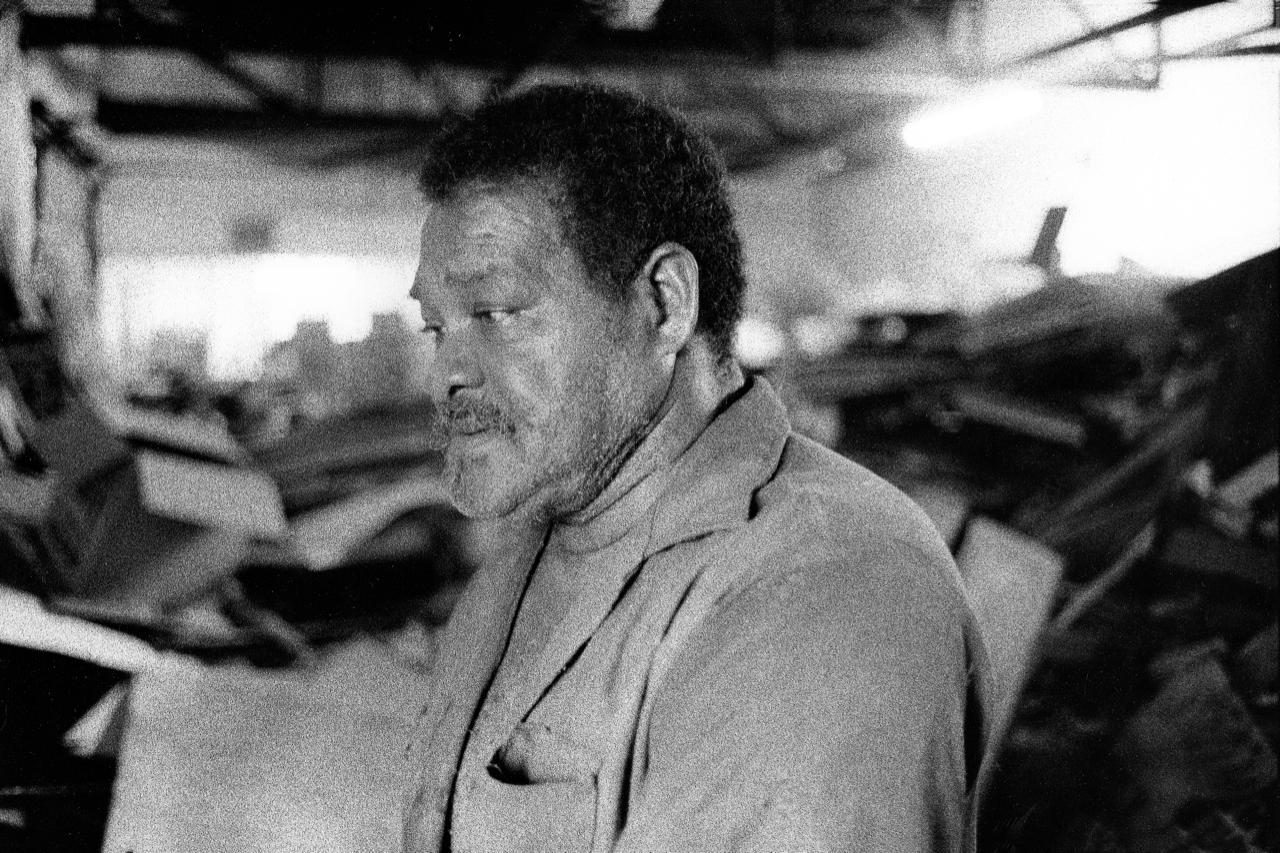
    Abundant thanks to photographer Gary Monroe, who has shared his photograph of Young, as well as a selection of images from his art collection showing the artist’s distinctive talent. These examples of Young’s art can be seen through May 22, 2022, at the Tampa Museum of Art in “An Irresistible Urge to Create: Florida Outsider Art from the Monroe Family Collection.” For more information, visit https://tampamuseum.org/. The exhibition was organized and shown at the Boca Raton Museum of Art; after Tampa it will be exhibited at The Mennello Museum of American Art in Orlando. 

    Forever Young

    Purvis Young picks up a wooden crate, turns it around and sits down. This quick gesture of recycling, turning a crate into a stool, is typical for an artist who turns crates into paintings museums covet. Behind him, on a bleak street corner in Overtown, is a warehouse stuffed with more crates, piles of wood, strips of carpet, a dozen-plus bicycles and cans of paint. An iridescent figurine of a rearing unicorn glistens on one of several dusty TV sets while a book about Vincent van Gogh is tucked in the basket of an old bicycle.

    When visitors show up, Young turns his back on this impressive clutter that is both his studio and home and hunkers down on his makeshift stool, facing the street corner. He lets his art speak for itself. Fantastic stories tumble out in his paintings on wood and other grimy materials. In luminous shades of house paint no one else has ever mixed, Young tells of the despair and dreams of job seekers, basketball players, pregnant women and Haitian boat people. There are also angels the color of flames and spectral herds of rearing horses – graceful as unicorns, but far more impassioned.

    Rendered in Young’s undulating brush strokes and rhythmic compositions, the scenes chronicle life in Miami’s inner city with eloquence. “You got my paintings, ” he once said, “you got my soul.”

    Now that soul is poised on the cusp of a substantial breakthrough. Young’s art hasn’t changed dramatically in his 30-year career, but the fickle world of contemporary art has. So-called outsider artists like Young – who have taught themselves, developing far from the world of academe – are increasingly being accepted into the ever-more-diverse mainstream.

    And Young’s not the only outsider breaking through. Paintings by Thornton Dial, who worked for years in an Alabama boxcar factory, were part of this year’s Biennial at the Whitney Museum of American Art. James Castle, a self-taught deaf artist who lived with his family in Idaho, had more than 100 minute drawings on matchbooks and cigarette packs shown at New York’s Drawing Center in March.

    “I do think that the tides are turning, and that we are going to see a lot of artists we support become more integrated into the larger art world, ” says Brooke Anderson, curator of the Contemporary Center at New York’s Museum of American Folk Art. “The reason is that the work is really strong. It’s all art of our time. That kind of integration can allow new scholarship, new ways of seeing.”

    Things began changing for Purvis Young last year, when internationally known contemporary art collectors Donald and Mera Rubell of Miami purchased the contents of his studio – around 4,000 paintings, drawings and books. A fraction of that is on view in their two-story warehouse on Northwest 29th Street.

    “For me, Purvis is a kind of prophet artist without being pedantic, ” says Mera Rubell who, like Young, won’t discuss terms of the sale. “He makes us focus on neighborhoods, on people that are not part of the glamorous vision of America. He glamorizes the uniqueness that exists in every person regardless of their economic or social position.”
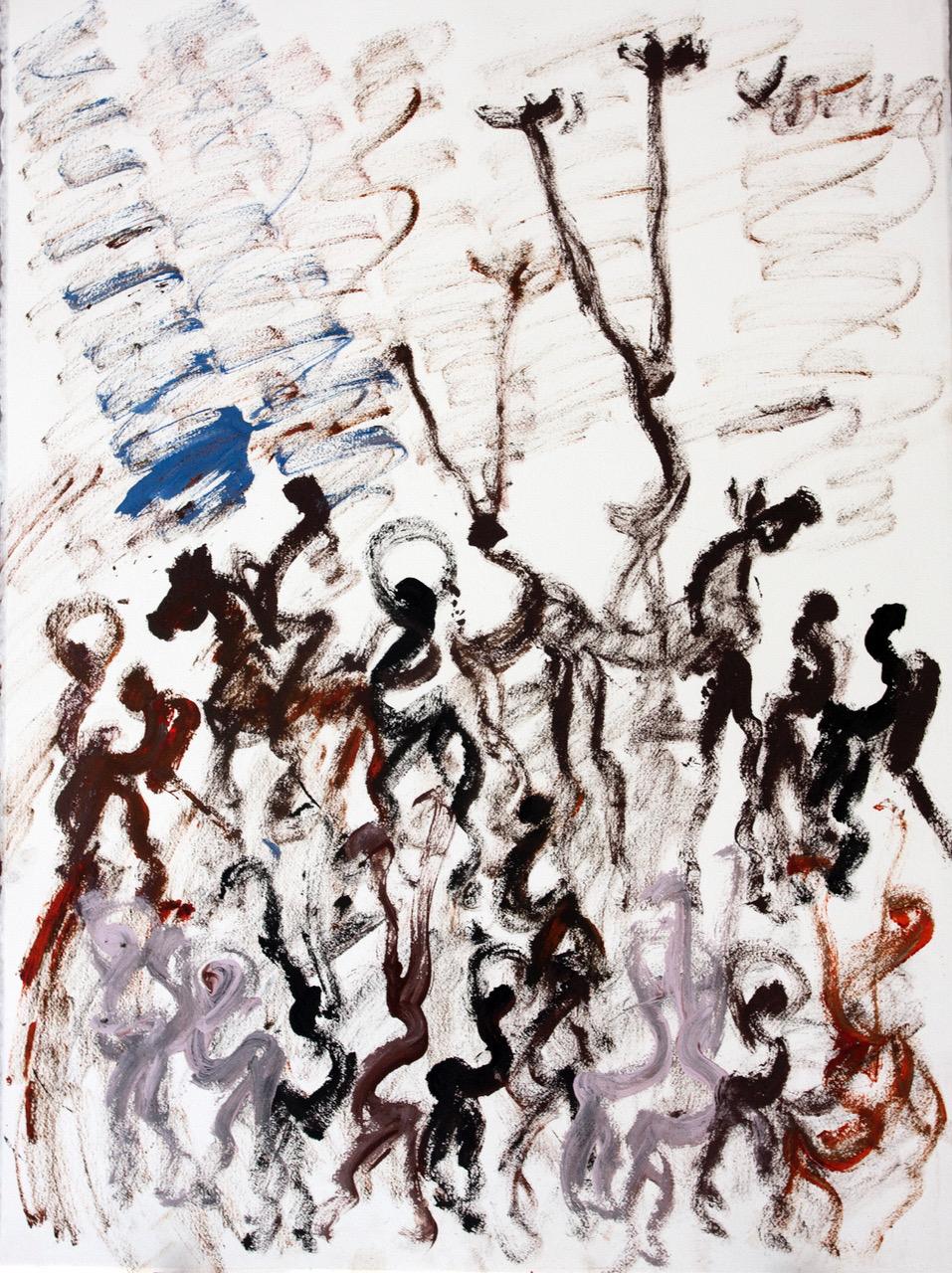
    Purvis Young may soon have his own museum show, culled from the Rubells’ holdings.

    “Our objective is to have a traveling museum exhibition and to donate work to all institutions that have a show of his work, ” Mera Rubell says. “I wouldn’t be surprised if we are talking about half a dozen institutions in the U.S. and Europe. . . . The world knows Purvis Young.”

    In preparation, the Rubells’ staff has embarked on a Herculean task, fumigating, photographing and documenting Young’s work. Binders will be created, says the collection’s director Bill Begert, with photographs of pieces in the collection, allowing curators to choose works to show or acquire.

    Young’s talent has been recognized by curators and collectors for years. In the early 1970s, he found champions in Miami-Dade public librarians Margarita Cano and Barbara Young (no relation), who shared art books with him. In the past decade Young’s work has been shown at museums in Alabama, Florida, Ohio, New York, New Jersey and Virginia, and at galleries in Miami, New York, Philadelphia, New Orleans, Chicago and Cologne, Germany.

    But most of this recent attention has come at a price: not only has Young been promoted as an outsider artist – a problematic term many find patronizing – but he has had troubling relations with dealers who, friends say, did not compensate him fairly.

    He also extricated himself from an exclusive contract with former South Florida dealer Joy Moos. (Young says now he never signs a contract without consulting his lawyer, and his current Miami dealer, Fredric Snitzer, says Young receives the same commission that the gallery’s other artists receive.)

    On a recent weekday, Young stared out at the street and talked about what was on his mind. A bearded, barrel-chested man in shorts, sandals and a shirt with cut-off sleeves, he launched into a purely Purvis conversation – one both rambling and right on target.

    “That’s all I do is fantasize, ” he announced. “As I get older I feel like I was a Zulu: I was no chief, I was just part of the Zulus. I look at Rembrandts, I look at all old Masters. I listen to opera because opera’s telling a story.”

    A fan of public television, he says that “one night I woke up and they were telling a story about Col. Rhodes, you know, of Rhodesia, and how he went to the British authority and got orders to conquer that part of Africa . . . Zulu was a tribe the British always had problems with. The Americans had problems with the Sioux and the Blackfoot. . . . You know, they was takin’ land. The same thing went on in Africa.”

    Moving on from colonial Africa and 19th Century America to the present day, Young continues to rail about oppressor and oppressed, a theme that runs through his art. He mentions “those two dudes on Death Row that didn’t do nothing. Innocent they find them.”

    Eventually an apocalyptic vision surfaces. “I look at mankind and the problems, ” he says. “I see a lot in America, but I don’t speak out, I just paint. As I get older, I see eyes of fire, fire burning up the world.”

    In talks like this, Young slips seamlessly between real-world knowledge and the visionary quality that makes his art so remarkable. That quality is “astrologic, like something he sees in the sky. He lays down and dreams and then he can paint, ” says close friend Silo Crespo, a Santería priest and retired merchant seaman who shared his Overtown home with Young for years.

    Other knowledge, says Barbara Young, comes from his favorite populist sources: public libraries, public television and national public radio. But as willing as he is to expound on what he has learned about Mozart, John Brown and John Coltrane, he’s guarded about his personal life.

    “Some folks don’t take me serious. They come to my place and want to talk about the bikes I got, ” he complains. “If you don’t talk about my paintings, I don’t want to talk. God put me here to be an artist.”

    God sent Purvis Young to Overtown in 1943, where he was one of three boys and two girls born into a family of Bahamian descent. As a boy, he frequently suffered the wrath of his grandmother, according to Crespo, who says Young “grew up in fear.”

    Young remembers doodling submarines and horses as a kid, but his schooling did nothing to nurture that talent. Even worse, he saw an uncle who carved wooden figures lose control, only to be carried off by the police. “I don’t know what caused his mind to get messed up. He always stayed by himself. It’s the same with me, ” Young admits. “Someone said, you know, your uncle might have seen the same things you see. The world ain’t changed too much.”

    A fearful childhood spiraled into an adolescence of crime, and Young dropped out of Booker T. Washington High School. By the time he turned 18, he was doing time in Florida’s Raiford Prison for armed robbery.

    Jail proved to be a vast improvement over high school. A jailer gave him pencil and paper, and Young discovered he could draw. A few years later that discovery became his destiny when he happened upon a book illustrating the Wall of Respect, a legendary Chicago mural filled with portraits of African-American leaders.
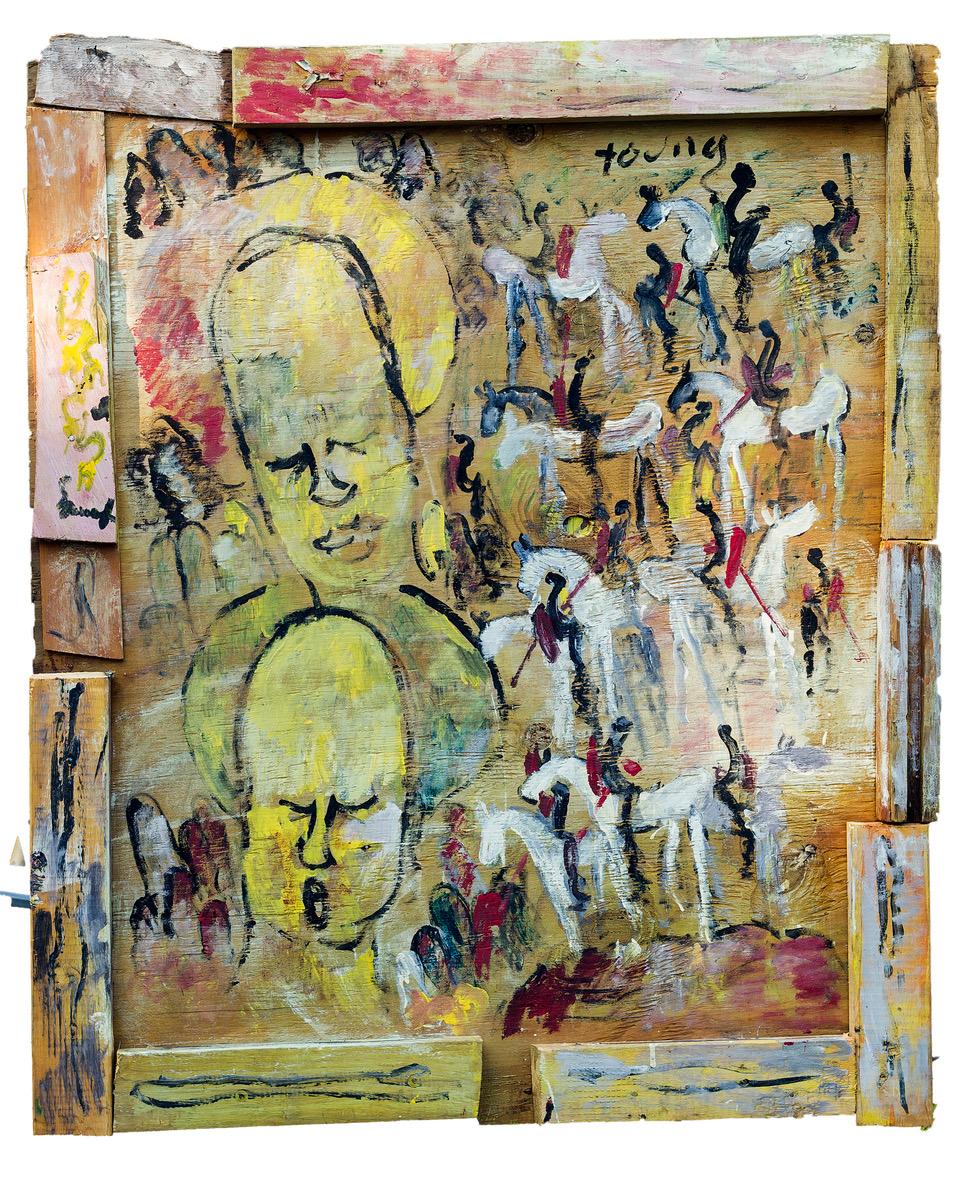
    Mythic Paintings

    Finding out more about the late 1960s movement to create murals in black, Latino and other ethnic neighborhoods, Young “saw that ordinary people could paint the stories of their own communities and give them mythic importance, ” wrote University of Miami art historian Paula Harper in a 1992 essay.

    So he began painting his own stories of urban struggles, of figures behind bars reaching upward. Some of the first stories appeared in Goodbread Alley, a makeshift mural Young began attaching to tumbledown buildings on Northwest 14th Street in the 1960s.

    “I think it was a kind of nervous energy he had to channel. At that time people in his community were very angry, ” artist Cesar Trasobares, who is writing a book on Young, says of the mural, which was torn down in the mid-1970s to make room for a park next to the Culmer/Overtown Branch Library. “Not only was it a way to channel that energy but it was a vehicle for ideas. Much later I learned about the African tradition of the griot, and in a way Purvis had become that, ” he adds, comparing Purvis to the African public speaker who recites a village’s oral history.

    Young did another mural, also since destroyed, inside the old downtown Miami-Dade public library in 1983, recounting Miami’s race riots. Two other murals from the mid-1980s are still in place: one on the outside of the Culmer library and one at the Northside Metrorail station. They tell of basketball players and construction workers – common people caught up in a griot’s vivid narrative. ‘LET ME WANDER….’

    Fast forward to the present and Young is still the griot, compulsively drawing what he sees on the streets and in his dreams, even during doctor visits to treat the diabetes he developed about six years ago. The man, who once gave a boy a quarter for a poem and has worried about children coming into the world without families to care for them, now frets that kids eat too much greasy food.

    Once so shy that a 15-minute conversation was a challenge, Young recently spoke for an hour and a half to New World School of the Arts students, who visited his current show at Fredric Snitzer Gallery.

    While a larger audience and more recognition are surely on the way, Young remains fiercely independent and rooted to his surroundings. When asked if he’d like an air-conditioned condo, he says he has a fan and lets it go at that. “If you’re happy, don’t try to tell me how to live my life, ” he says. “Let me wander and do what I want to do.”

  • Susan Caraballo Interview Part 2 on Prelude to 2100

    Susan Caraballo Interview Part 2 on Prelude to 2100

    We at the Deering Estate hosted a behind-the-scenes visit with Susan Caraballo, a dedicated producer and curator for over 20 years, as well as an artist interested in working collaboratively on projects inspired by and centered around the ecological crisis. Here she continues to discusses her work as the creator and artistic director of Prelude to 2100. Click here for part one of the interview.

    How have you been able to use and transform Deering Estate into a complex for displaced tenants?

    Susan Caraballo: I wish I could actually use and transform the Deering Estate for this purpose! In the speculative fiction of Prelude to 2100, a young curator who worked at the Estate in the late 2020s finds her family displaced from Liberty City due to climate gentrification. Also a climate activist, she persuades the staff to propose to the State of Florida and Miami-Dade County that the Deering Estate become a cohousing facility in the midst of the housing crisis that Miami was facing. After several years, it becomes a reality in 2030 and the property is partially transformed to continue as a museum (The Stone House) and as a cohousing facility (The Richmond Cottage).

    Was there any reasoning behind selecting the year 2050 as the timeline?

    While now we are starting to see climate change data for earlier in the century, the majority of the data that most people were seeing was using 2100 as a benchmark. And the reaction of many has been: “It won’t affect me, not in my lifetime.” I wanted to show that climate change is happening now, and it is already affecting us. For example, in 2050, I will be seventy-four years old. I wanted people to be able situate themselves and/or their children or family members in that future reality which is only 28 years from today.

    What message do you wants guests to leave the experience with? What do you hope to inspire in them?

    I want guests to be touched by the personal stories of the “residents” that they meet. I hope they are inspired by the art projects embedded in Prelude to 2100, many of which offer alternatives to consumerism, ideas that generate local economies, and opportunities to talk about adaptation. The project offers a positive quotidian future versus the apocalyptic narrative that is often attached to the climate crisis. It is my hope that Prelude to 2100 will urge our community to pay more attention to issues that affect them now – issues that will most certainly affect their children and grandchildren – around climate change, and, hopefully will spur them into action and activism.

    Do you think that the arts are more effective at spreading information surrounding advocacy?

    The arts have the power to reach people at a visceral level. When people hear stories or experience something that makes them feel, it is much more powerful that learning scientific facts. It makes things real and tangible. This is what prompts most people to act. When people are either directly impacted by something or feel empathetic towards something, they are propelled to take action.

    Prelude to 2100 takes place outside at the Deering Estate from 7-10p on Thursday, Feb. 3 and Friday, Feb. 4 and from 6-9p p on Sunday, Feb. 6. For more information please visit liveartsmiami.org. Tickets are $20 and can be purchased via this link: https://liveartsmiami.org/events/prelude-to-2100/.

  • Maya Billig on New Dance Theatrical Work “Gate Closes at 3:05”

    Maya Billig on New Dance Theatrical Work “Gate Closes at 3:05”

    This  February 4 and 5 Maya Billig premiers her latest dance theater work Gate Closes at 3:05  at The Light Box at Goldman Warehouse.  The show is described as, “Through contemporary movement and original live instrumental elements blended with electronic sounds, the audience is invited to lounge, strap-in, and take flight. The performance masterfully weaves narratives and electric encounters that are threaded together by notes of surrealism, outer space, the roaring 20s, and of course, the 3-0-5”

    Between rehearsals creator Maya Billig took the time to hop on The Jitney and answer a few questions.

    What inspired Gate Closes at 3:05?

    Originally inspired by lockdown and missing the healing that takes place on the dance floor and within intimate spaces, the work has evolved simultaneously alongside the ongoing pandemic. Over the course of the year, the world in which the work takes place was steadily discovered. The speakeasy is the container where four characters and three musicians intertwine their histories, vulnerabilities, and personal vendettas as they unravel aboard the ship. The piece draws inspiration from Cowboy Bebop, the roaring 20’s, Budapest ruin bars, Edgar Allan Poe’s Masque of the Red Death, house music, and Miami itself.  Through contemporary dance theater, thoughtful set design by Hans Lau, and original live instrumental elements blended with electronic sounds, the audience is invited to enter this surreal mix of inspirations and characters.

    What was the process of creating it from inspiration to completion?

    Gate Closes at 3:05 began as a seed that was planted when Knight New Work 2020 called for artists to reimagine the performing arts during Covid-19. With a longing for dance floors amidst lockdown, I began collaborating with DJ/producer Charles Levine from world-renowned duo Soul Clap, as well as Phill Celeste known as Life on Planets. Later, Greg Paulus from No Regular Play would join the musical experience of Gate Closes at 3:05. With theaters still closed, the work would be performed in a parking lot at Miami Light Project. The dancers and I worked with the task of figuring out how to bring groove, intimacy, and life into such a static, yet transient space. After the first development of the work, the piece went on to receive continuing support from the Knight Foundation to see it through to full production. Miami Light Project also commissioned the work and became my presenter. Going into the final development of Gate Closes at 3:05, the piece went through something of a make-over as the world and direction became clearer, including moving into the Light Box at Goldman Warehouse. I spent two months traveling solo throughout Iceland, Germany, Greece, and Albania rediscovering what it felt like to be around new spaces after two years of being unable to travel. Drawing from inspirations and dance training from my travels, I came back to the project with a renewed sense of adventure and motivation. The three musicians created an original hour-length score that perfectly encapsulates the surreal, gritty, yet beautiful feeling of Gate Closes at 3:05. At the end of the summer of 2021, I was selected as a Jacob’s Pillow Hicks Choreographic Fellow, where I was mentored and given valuable feedback on my choreographic process and world-building. The choreography continued to naturally fall into place and brought us to where we are now: the premiere of Gate Closes at 3:05.

    How has Miami influenced you as an artist?

    There is no “me” without mentioning Miami. This city that raised me and is my home is such a whirlwind of languages, cultures, and histories. A true melting pot that inspired my need to see the world. It also spearheaded my fondness for irony, humor, and the ridiculous. I have found a sincere home within the artistic community here and I can feel my Miami come out in everything that I make. My work is a statement that “yes, art lives here and it is here to stay.”

    What can audiences expect from Gate Closes at 3:05?

    Audiences can expect to be immersed the moment they walk through the lobby at The Light Box. The night is composed of weaving narratives and electric encounters threaded together by notes of space fantasy, dystopian future, of course, Miami. Soulful live music will be pumping through the speakers as the dancers set off on a course of rigorous contemporary dance that fuses accomplished technique with physical theater. There’s humor, there’s joy, there’s peculiarities, and there’s vulnerability. It is a space for everyone.


  • Prelude to 2100: Deering Estate Takes a Look Towards a Not-So Distant Future

    Prelude to 2100: Deering Estate Takes a Look Towards a Not-So Distant Future

    For the past couple of decades, scientists have relentlessly warned the public about the dangers of climate change. Rising sea levels, deforestation, and global warming have all sparked fear in the hearts of scientists and environmentalists. Nevertheless, the general public, influenced by the lack of government response, has seemed to dismiss these warnings, leaving the responsibility of our future – to think about how best to educate and inspire action, and bring forth change – in the hands of the community.

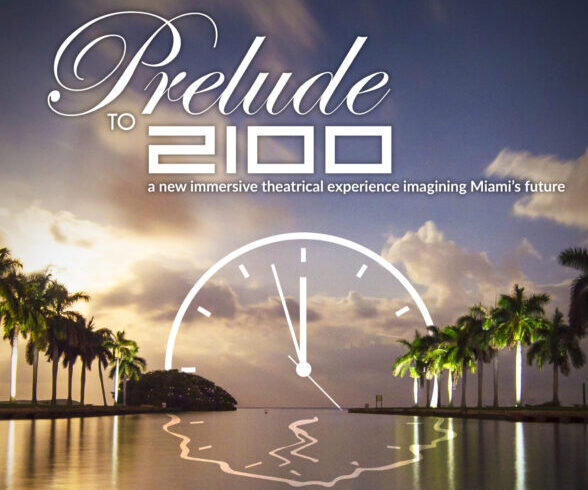
    Prelude to 2100, a riveting immersive arts experience, sets Miami in the year 2050. Artist, curator, and producer, Susan Caraballo, speculates a future where the Deering Estate has been converted into a residential complex, The Co-op at Chicken Key, made up of tenants who have been displaced by the effects of climate change. Once when several rooms in the complex became available, these new Deering Estate residents decide to host their very first Open House, while at the same time re-opening as an art space.

    Prelude to 2100 takes place outside on the Deering grounds, providing many opportunities for the guests to interact with the Co-op’s residents. Installations of visual, mixed media, theatre and sound will be located throughout, bringing forth new creative expressions as a way to educate and inspire the community about the pending threats of the overall theme of climate change. Included are featured works by Juan C. Sánchez & Jennifer de Castroverde, Laurencia Strauss, Kerry Phillips, the Department of Reflection, AMLgMATD, Cara Despain, Alicia Eggert, Gustavo Matamoros, Jits Microfarm, the Queer Theory Library, Carrie Sieh, Fereshteh Toosi, Kim Yantis, and Lucinda Linderman. Dance works will also be presented, featuring works by Michelle Grant-Murray/Olujimi Dance and Sandra Portal-Andreu. Prelude to 2100 is the final installment of six performance works dedicated to addressing climate change and sustainability, commissioned by Live Art Miami’s LALA Artists-in-Residence Program.

    The idea behind Prelude to 2100 is to connect visitors/guests with the Co-op’s “residents”, who will inform, educate and share with them ways on how they themselves have adapted to this new world, along with new alternative sustainable ways of living.  Some residents that guests will meet include Anita, from Liberty City, who lost her home due to climate gentrification, and, Magdalena, from Venezuela, who vowed to never bring a child into this world. Stories of community, loss and love, and climate change empowerment will be heard and experienced when guests meet the residents. 

    We at the Deering hosted a behind-the-scenes visit with Susan Caraballo, a dedicated producer and curator for over 20 years, as well as an artist interested in working collaboratively on projects inspired by and centered around the ecological crisis. Here she discusses her work as the creator and artistic director of Prelude to 2100:

    What drew you to create an exhibit? regarding climate change and the damage it causes?

    Susan Caraballo: Prelude to 2100 is much more than an exhibition. Prelude to 2100 is a truly hybrid and collaborative project between me – as a producer, curator and artist – and artists whose work I admire, and who themselves are compelled to use art as way to engage and wake up our community to the reality of the times we are in.  While the project is focused on climate change, it is not dystopic. It certainly does address the damage that it causes. However, Prelude to 2100 focuses on a positive tomorrow. The different featured and/or commissioned works of art – music, sound, theatre, dance – introduce concepts of degrowth, adaptation and acceptance, among others.

    There have been many things that have brought me to focus on climate change issues, it has been a journey of many years. One of the experiences that affected me greatly was traveling to my family’s home country, Cuba. It made me realize how much we, as Americans, rely on energy consumption and partake in consumerism. This, coupled with injustices that consistently headlined the news, prompted me to want to focus on social issues within my curatorial practice, and to think about and to create ways of bringing attention to and informing our community to the changes happening daily, around us. In 2015, I began working on an exhibition titled The Future Isn’t What It Used to Be that addressed the destructiveness caused by humans, ranging from gun violence to the environmental catastrophe. I was and continue to be passionate about social justice, I wanted to further focus my efforts the environment. The two are not separate as the first ones to be affected by climate change are minorities and the underprivileged. The degradation of our planet was becoming more and more prevalent and its impact on humankind more undeniable. This led me to further research on contemporary global issues and participate in numerous workshops and seminars addressing an array of topics that are intertwined with climate change. In 2019, I organized a symposium at PAMM titled ARTiculating Sustainability: Resilience in the Climate Crisis?  Ignited by this experience, I applied to Knight Foundation for a chance to win a Knight Arts Challenge grant to produce a series od projects that would bring the community together with arts, artists and the environment: #ARTiculatingClimate: Art Actions for Change. This grant, plus both of my residencies at Live Arts Miami and Deering Estate, enabled me to bring all of the projects together to create a new production, Prelude to 2100, that envisions a future Miami that we would want to live in based on a speculative future that leaves much of Miami underwater.

    Click here for part 2 of the interview.

    Prelude to 2100 takes place outside at the Deering Estate from 7-10p on Thursday, Feb. 3 and Friday, Feb. 4 and from 6-9p p on Sunday, Feb. 6. For more information please visit liveartsmiami.org. Tickets are $20 and can be purchased via this link: https://liveartsmiami.org/events/prelude-to-2100/.