Category: News

  • Ocean Drive Reopens for Cars Just in Time for Spring Break

    Ocean Drive Reopens for Cars Just in Time for Spring Break

    After a year and a half of  Ocean Drive being closed to cars, Miami Beach’s iconic beachfront street reopened  to traffic on Monday, January 24.  It’s now a one way street going southbound between 13th Street and 5th Street. The eastside of the street has a green painted two way lane intended for bicyclists. But there is no barricade between the bike lane and the car lane to prevent impatient drivers from zooming through the bike lane when traffic is stalled.

    Some hotel guests were inconvenienced by having to wheel their suitcases half a block to get to their rooms, but many more pedestrians, bicyclists, and skateboarders enjoyed having this road that goes nowhere as the one street in Miami you could stroll along without worrying about a car running into you. Even Lincoln Road has cross streets where walkers have to keep their eyes open. It was a treat to walk, jog, or bike the along the art deco architecture of Ocean Drive without threat of the infamous Miami driver taking a selfie while ramming into you.

    But Spring Break is coming and obviously the Miami Beach commissioners thought last year’s car-free Ocean Drive wasn’t turnt up enough.  Mayor Dan Gelber,  Michael Gongora, Steven Meiner, Micky Steinberg, and David Richardson voted last October to bring cars back to Ocean Drive and now Spring Breakers can really party. Rented Lamborghinis can see how fast they can go from zero to 60. Slingshots  can have their fun testing out the bike lane. Rappers can now film videos of vixens twerking from a classic car cruising by Wet Wille’s  And if another crazed shooter wants to take target practice on tourists, they now have the option of doing a drive-by.

    I get that Miami Beach’s leaders are out of ideas on what to do about Spring Break being out of control on South Beach. But adding moving vehicles into an area with too many people and too much alcohol is a recipe for unnecessary tragedy.

  • The Birdcage Is a Miami Movie that Aged Like Milk

    The Birdcage Is a Miami Movie that Aged Like Milk

    The Birdcage feels contradictory. On one hand, it gives us a rather progressive, diverse, and even heartwarming depiction of same-sex relationships, as well as an exciting view into the lives of drag queens. On the other hand, much of the film feels like it aged like milk, specifically the jokes done at the expense of people of color which can be tasteless at best and downright malicious at worst.

    In all honesty, it feels like a comedy of its time. It’s equal parts forward thinking as well as backwards to today’s society.  It’s no wonder why Rotten Tomatoes ranks it fairly low in the listing of Miami-based movies. This is in no small part due to most of the dialogue from one the prominent characters in the movie, Kevin Keeley (Gene Hackman), a conservative senator whose jokes and dialogue revolves around his seeming disdain for minority groups.  In fact, the main conflict of the film centers around him not being able to accept the gay couple who may become his in-laws. I can see the argument for Gene Hackman’s character being purposely exaggerated to be ridiculed and satirized. However, a lot of his rants felt uncomfortable to hear, especially when he spouts lines like “underaged black whore” and “beige savage,” which hits a little too close to home, considering it was said towards a Latino illegal immigrant. I also find it problematic how his ideology is never fully challenged, especially his vision for a “white, moral America” which would undoubtedly include erasing those he considers as “other.”

    I will say that there were moments within the film that made me feel warm, a lot of it due to the comedic yet tender dynamic between the film’s same-sex couple, Armand Goldman (Robin Lane) and Albert Goldman (Nathan Lane). In particular, the scene where Armand agrees to officially share everything with Albert. It reads as the culmination of their genuine love for each other, where Armand shows that he wants Albert to be a part of his life despite how his overdramatic displays of emotions can grate on his nerves.

    Out of all the locations in South Florida, I think it’s fitting that it’s set in South Beach. The film plays into the festivity, exoticness, and vibrancy that the area is known for. Everyone’s sexuality is loudly displayed and paraded, overtly shown with one of the film’s main settings being a drag club and the background characters wearing revealing clothing like bikinis and even G-strings. It feels like a sort of haven for the queer community. It even got a surprise laugh out of me when they showed one of Miami’s little annoyances: the drawbridge being opened and stopping traffic for a small sailboat to pass leisurely through.

    The Birdcage feels like for every step foward in the depiction of queer people in film, they took three steps back for other minorities. I believe this represents the zeitgeist that comedies like this existed in during the 90s.

  • Jitney Books Is Vending at Ft Lauderdale’s Indie Craft Bazaar January 29

    Jitney Books Is Vending at Ft Lauderdale’s Indie Craft Bazaar January 29

    If you’re reading this post, you already know The Jitney is a blog.

    But did you also know The Jitney is a book publisher?

    Jitney Books has published thirteen books by nine different South Florida authors with covers by South Florida artists.  Here’s the catalog if you’d like to take a gander at our books.

    The last few months we’ve been out and about in South Florida vending our books. This Saturday, January 29 from 12 pm to 5 pm we’re going to have a booth at the Indie Craft Bazaar in Fort Lauderdale. It’s located at the venue Revolution Live at 100 SW 3rd Ave., Fort Lauderdale, FL 33312.

    Admission is free, there’s free parking, and there will be about 100 other local vendors selling their goodies.  And if you’re an early bird, you’ll get a free swag bag of goodies  if you’re one of the first 100 people in line.

    So start saving up your money, stop by the Indie Craft Bazaar and a buy a few Jitney Books this Saturday.

  • Bookmobile Provides Miami Residents a Library Experience on Wheels

    Bookmobile Provides Miami Residents a Library Experience on Wheels

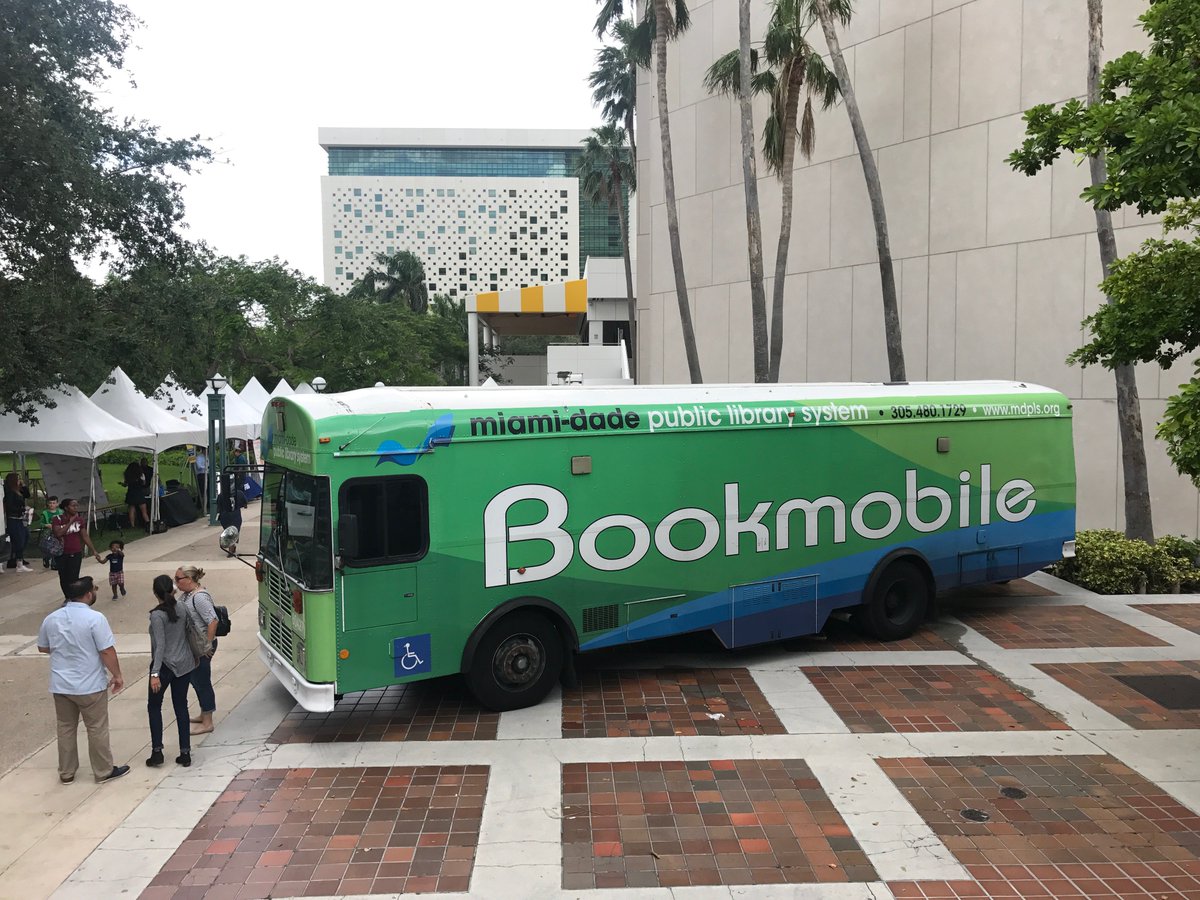
    Miami-Dade Public Library System provides our community with a ton of great resources, South Floridians might not know about. For years they’ve had free museum passes to the science museum, Vizcaya and Zoo Miami for patrons with library cards. Anyone with a library card can use their computers and print up to 25 pages a day free of charge. More recently they’ve been handing out free at home COVID tests. But they have another old school community focused feature that provides a great service to the community, the bookmobile.

    The bookmobile is a compact Miami-Dade library on wheels. It makes scheduled stops each week at public parks, childcare facilities, condominium complexes, retirement communities, senior centers and recreational facilities where people might not have access to a brick and mortar library. Here’s the link where you can see the stops from Hialeah to Cutler Bay. Stops at each of the scheduled locations are usually one hour where people can check out a diverse selection of books, music, audiobooks, and movies. If you or someone you know can’t make it to one of the already scheduled bookmobile stops, you can even make a request for a new stop for the bookmobile by clicking here.

    Growing up on Key Biscayne in the 1980’s before they had an actual library, I remember stepping on to a bookmobile to get whatever paperback volume of a Chose Your Own Adventure in stock. When I entered a more recent vintage of a bookmobile at this past November’s Miami Book Fair,  it brought back positive memories.  Through their Hoopla app the library system also provides e-books and e-movies. While it’s convenient to read on a tablet or phone, I don’t think its old fashioned to believe a physical book provides readers a different kind of feeling. And the bookmobile is a great tool for more people in South Florida to have access to books and other physical media.


  • Mary May I – How Can I Get Myself Focused?

    Mary May I – How Can I Get Myself Focused?

    Welcome to Mary May I where Mary C. Smith dispenses all types of wisdom. If you have a question for Mary that needs answering you can ask her  at  OMGhelpisHere@gmail.com. All correspondence is confidential and anonymous.

    I just can’t focus, not because of old age (LOL) but just can’t. I go to do something, like sign up for a seminar or something to enrich myself and I just can’t commit.  When the time comes for the seminar or webinar or whatever, I just don’t do it…can’t turn things off!  I want to do the 75Hard, and I can’t get started….want to eat better and I can’t get started…want to walk more, do more, learn more. HELP! – Deflated in Doral

    75 hard? May I recommend 30 mild? 15 soft? Set some realistic expectations for yourself for starters. One goal at a time girl. That first step doesn’t have to be a doozy, it’s just a decision. Take human bites! Meaning something manageable and achievable. Then when you hit your target, you will get some confidence.  When you get some confidence you will feel better, when you feel better, you will do better.  Start with drinking a gallon of water a day.  I know that is part of the 75 hard.  Do that for 5, 10, 15 days in a row.  The number doesn’t matter, this is all a mind game, one that you can win!  You need to beat your ego at it’s own game.  The ego loves comfort and safety.  When you are working to make changes, moving out of your comfort zone  and risk need to be embraced. You are caught in the double whammy wheel of self sabotage. You sign up for something that will make you feel better, you don’t go, you beat yourself up for not going.  I don’t know what your destructive behavior is for disappointment, but mine is not pretty. This perpetuates the vicious cycles we create. You obviously have some interest, you signed up, right?  Identify the disconnect. You might need someone beyond yourself to answer to. 

     I’m a good person. I deserve things. I want to be healthy. 

    So what’s the hold up? Well, I need to tell you that the people that want healthy bodies, but can’t seem to get it together to consistently do the things that will get them there, have some deep seated sadness and self worth issues.  Your body is THE ONLY thing that you need to care for.  Your body doesn’t care about the laundry or the dirty dishes or what’s new on TV.

    Let’s take a peek at some things people do commit to. 

    Netflix

    Soduko

    Wine

    Needlepoint

    Reading, etc.  You get the gist.

    These things aren’t bad or unhealthy, but your physical body isn’t impressed with them.  Maybe you are using these things to avoid practicing some self care.  This takes us back to the self worth issue. Let’s try one gallon of water a day combined with 30 minutes of exercise. (preferably on an empty stomach, if you really want results) I will even do it with you.  Maybe there are other readers that would like to join! You need only focus on yourself and your health.  All of the other stuff, and I mean all of it can kick rocks.  I have to mention the fact that we seek aggressive changes, and then we get discouraged when we can’t maintain.  My colleague Maureen Cidzik, @muddy.lotus.coaching says it best, “Our well being isn’t a battle, no more crushing, killing, or slaying anything.” and I can’t agree more. We all know that slow and steady wins the race.   Want further motivation beyond feeling, looking and thinking better? You need to know that it is ok to put yourself first.  You have permission.  Come up with some kind of reward at the end of your first 10 day challenge. For me, the key is having accountability. Somebody to check in with and answer to keeps my competitive spirit happy.  You hit your first 10 and I will give you a free coaching call that will prob help you succeed at hitting 20 days.  You would be surprised at the patterns and programs that I can bring to light in 30 minutes.  Give it a try, you have nothing to lose except that low vibration of fear, unworthiness and disconnection.

  • Omer Yurtseven Needs Minutes

    Omer Yurtseven Needs Minutes

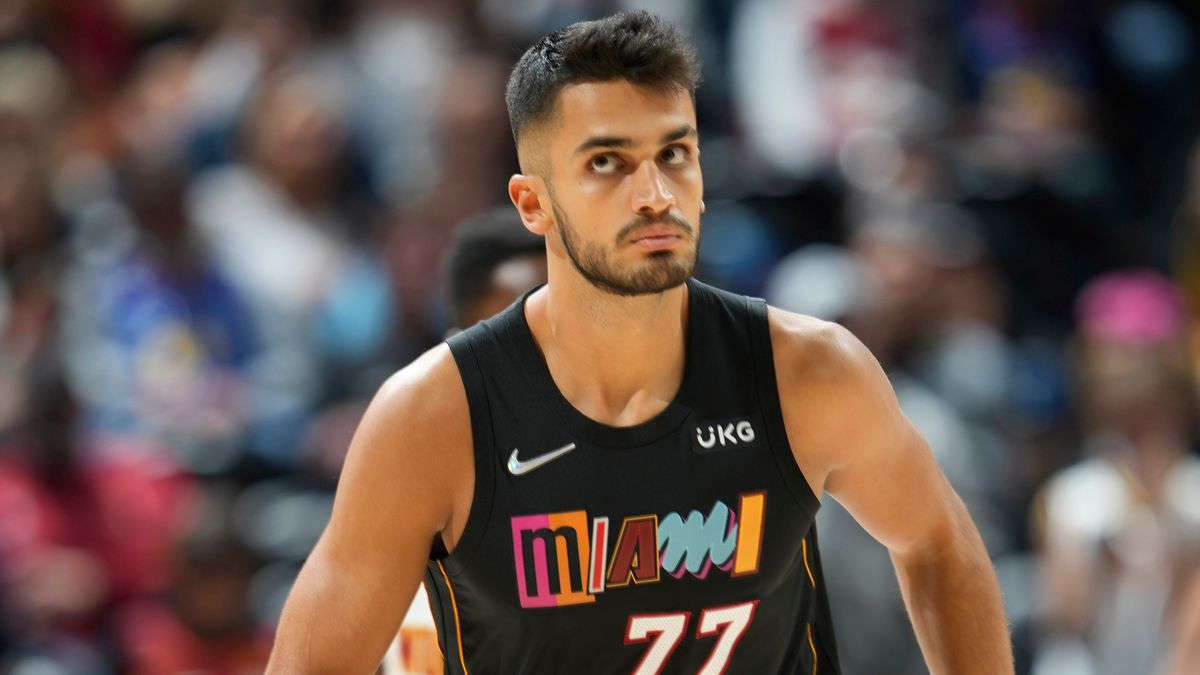
    Omer Yurtseven needs minutes.

    Omer Yurtseven deserves minutes.

    He is a double- double machine.

    Yet he played 0 minutes in tonight’s victory against the Raptors.

    Heat fans are ecstatic at this year’s depth. They are ecstatic to have Bam Adebayo back in the line-up. They are thrilled to see Bam and Jimmy Butler back on the floor together. We just came from the game, a thrilling 5-point at-home victory against the Raptors, in which Jimmy Butler quietly squeezed out a triple-double.

    Vibes in the arena were electric. Coming off a predictable home loss against the 76ers, this rebound game was paramount. And rebounding is the key word.

    With Bam back, it obviously meant that Omer Yurtseven would see less minutes — but to see 0 / zero/ zilch minutes?

    Not good. Not fair.

    We haven’t heard Spo’s post-game conference where we are sure someone asked him about this. Doesn’t matter — we represent the fans — we were at the game — where we can report fans absolutely were yelling “Seven” and wondering aloud “where’s Seven” and even yelling at random times “Yurtseven.”

    Omer Yurtseven

    Dewayne Dedmon led the 2nd unit at the center position  tonight. He’s awesome. It was great. But, and this is serious, the Miami Heat can not regulate Omer Yurtseven to zero minutes. If they do, they will lose him at the end of the season.

    Do we want that?

    Hopefully, and many Heat fans we spoke to said the same thing — there must be a way to play Bam Adabyao and Omer Yurtseven at the same time.

    That is what Heat fans want.

    Granted, a home victory against a wily opponent like the Raptors was awesome (in which there were thousands of Raptors fans in attendance representing the North like they were the Stark clan).

    There was one person notably missing. And it wasn’t slumping-ass Duncan Robinson who started the game OR our old friend Goran Dragic.

    It was Omer Yertseven.

    Let’s see what happens from here.

  • Erik Spoelstra Has Become Don Shula

    Erik Spoelstra Has Become Don Shula

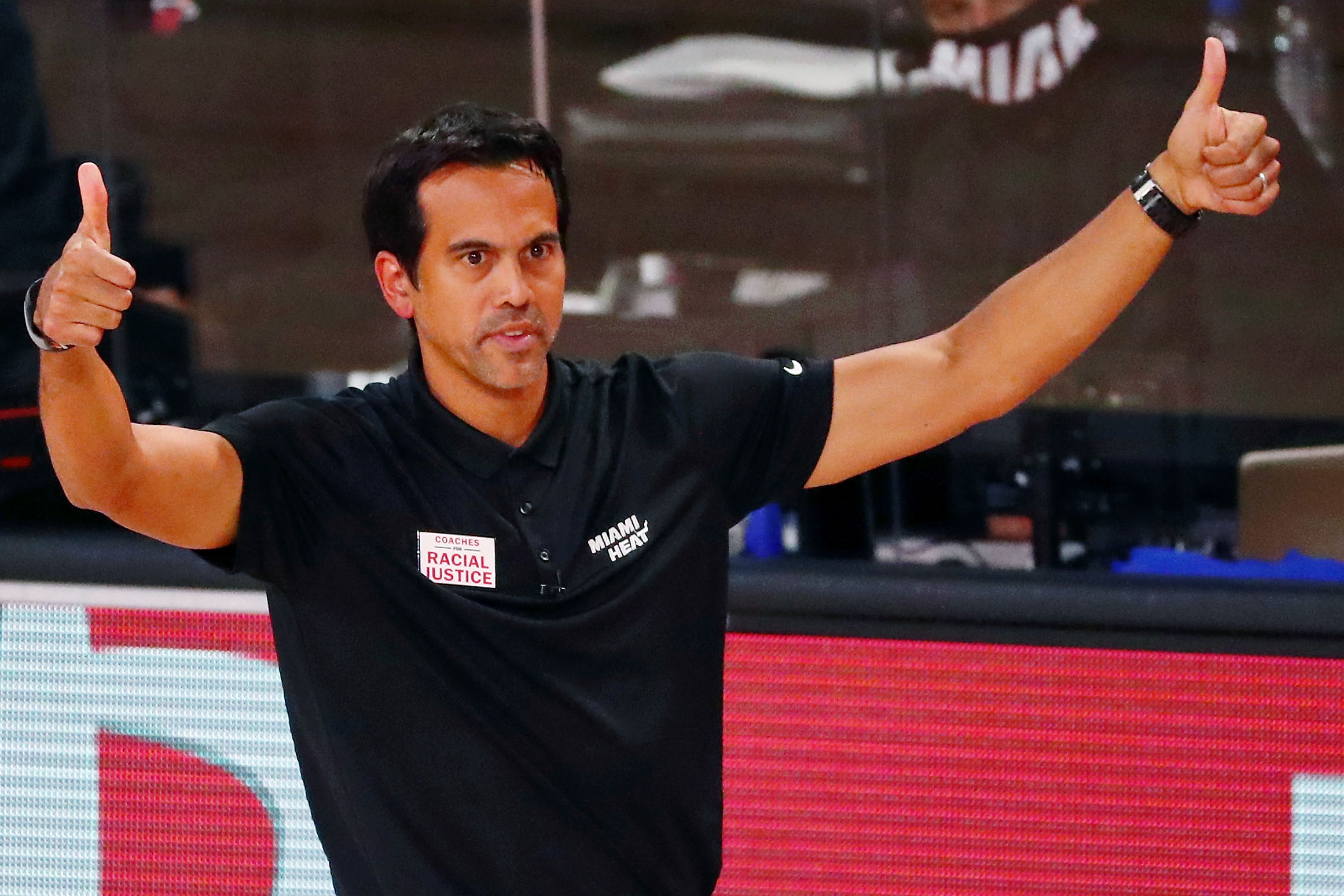
    While none of us were paying attention Miami Heat coach Erik Spoelstra has quietly become one of the greatest coaches in the history of professional sports. This might seem an overstatement. But a case could be made that in thirteen years Spoelstra’s career with the Heat has almost matched Don Shula’s career with the Dolphins.

    Yes, Shula is the winningest NFL coach of all time. Erik Spoelstra only has the 25th most coaching wins in NBA history. But take a second to compare the two Miami coaching titans and the parallels are uncanny.

    As coach of the Miami Dolphins Don Shula went to five Super Bowls and won two of them.

    As coach of the Miami Heat Erik Spoelstra went to five NBA Finals and won two of them.

    In 26 years with Don Shula at the helm the Miami Dolphins only had two losing seasons.

    In 13 (going on 14) years with Erik Spoelstra at the helm the Miami Heat have only had two losing seasons.

    From 1972-1973 Shula coached the Dolphins to one of the NFL’s longest ever winning streaks of 18 games.

    In 2013 Spoelstra coached the Heat to one the NBA’s longest ever winning streaks of 27 games.

    I was a long time critic of Erik Spoelstra. I thought those LeBron Heat teams underachieved and should have won four championships with their stacked roster. When Steve Kerr took over the Golden State Warriors and broke the regular season victory record, I was yelling to anyone who would listen, “See, that’s what the Bron-Bosh-Wade Heat should have been!”

    Part of it was Spo followed in the footsteps of Pat Riley. Riley oozed of the type of charisma that had great screenwriters writing roles for him. Spoelstra never made a great inspirational quote to the media, nor did he show relatable passion on the sideline.

    Instead all Erik Spoelstra did was win.

    And over the last three seasons Spo has forced me to reconsider his excellence. With only a single player picked in the top ten of the draft, he took the Heat all the way to the NBA Finals in 2020.  This season he has surpassed that insane level of overachieving. I’d never seen a team have as many injuries as this Heat team, and again all they do is win. Last weekend the Heat went into Phoenix, the team with the best record in the league and whacked them by 23 points.  With players  you’d think were selected by a random name generator like Omer Yurtseven, Max Strus, Caleb Martin, Kyle Guy and Haywood Highsmith, he’s defeating all-stars and future hall-of-famers like Chris Paul and Kevin Durant.

    It’s reminiscent of the compliment Don Shula once received from his coaching nemesis Bum Phillips that embodied Shula’s greatness, “He can take his’n and beat your’n and take your’n and beat his’n.” If you put that quote through Google translate I think it means Shula was such a smart tactician and understood football so thoroughly, he could get just about anyone to win a football game.  Spoelstra has remarkably been accomplishing that same feat this season.

    South Florida was so enamored with Shula’s  accomplishments that after 14 seasons they named a stretch of freeway the Don Shula Expressway. This summer will mark 14 years of Spoelstra coaching the Miami Heat. What will the city name after Spo?

  • homework Closing Party Features Q&A with Andrew McLees

    homework Closing Party Features Q&A with Andrew McLees

    The nomadic art gallery known as homework will close its debut exhibition in Miami with a panel discussion and party on Friday, January 14 at 6 pm at the second floor of The Knoxon at 7411 Biscayne Boulevard.

    homework founder Aurelio Aguiló will be joined by special guest Andrew McLees, Senior Marketing Manager at the Institute of Contemporary Art, Miami, for an evocative conversation titled “100k Followers Can’t Be Wrong: The Influence of Experience Affecting Arts Ecosystems.”

    I think it’s going to be a very insightful panel. We have both the institutional perspective from Andrew McLees as well as Aurelio’s experience as a nomadic gallery owner working in the art world, and both of them have to interact with and deal with these kinds of major events very frequently. I’m looking forward to hearing what they have to say regarding the new formats and art event offerings

    With the proliferation of massive fairs, blockbuster museum shows, and Instagrammable gallery exhibitions, events are what the art world of today revolves around. This conversation aims to analyze the economic consequences that galleries, artists, collectors, and institutions face in choosing whether or not to participate in these trends.

    homework is an innovative, nomadic art gallery that follows and disrupts the rhythm of the art world, while giving exposure and access to a new stock of artists and collectors. Imagined by Aurelio Aguiló and Mayra Mejia, homework is committed to breaking down the walls of the traditional art world, democratizing it for all.

    Activating experimental spaces across the globe, homework’s mission is to connect people through stories, making the art-consuming experience warm and accessible while always prioritizing quality and integrity. Their first exhibition, titled v00001, featured a group exhibition by emerging contemporary artists from around the world, split between fine artists and artisans working in multiple mediums.

    A cocktail hour will precede the talk. The night will end with a closing party celebrating homework’s successful first exhibition “v00001.” Complimentary drinks will be served.

    RSVP
    art conversation[s]: bit.ly/homeworkarttalk
    closing party: bit.ly/homeworkclosing

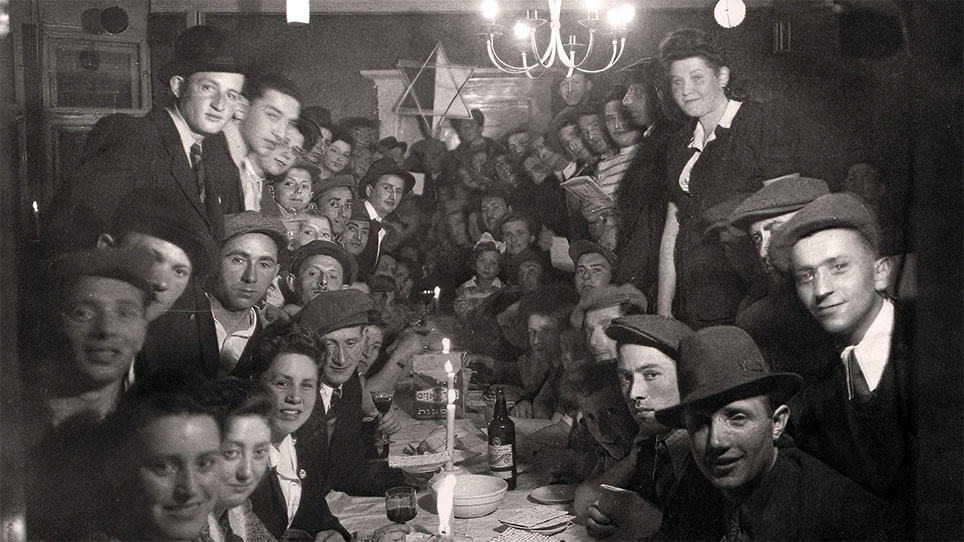
  • Against All Odds: Surviving the Holocaust Premieres at Miami Jewish Film Festival

    Against All Odds: Surviving the Holocaust Premieres at Miami Jewish Film Festival

    Against All Odds: Surviving the Holocaust  is my second film about the Holocaust. It was four years in the making. I dug deep into the psyche of four incredible South Florida heroes and present their stories with imagery and emotion.  What I heard were stories so unique, that I committed to not allow them to disappear. I was particularly moved by the stories I heard about what it was like for those living outside the concentration camps, how dangerous it was, and what these survivors had to do to survive. This film is considered “evergreen” since it will be just as relevant 100 years from now.

    The film kicks off with Gerald’s story.  Gerald lived in an integrated neighborhood in Berlin, Germany where he was eventually hidden by non-Jewish neighbors.  He worked in Nazi headquarters!  Next up is Ryszarda, one of only 800 survivors that spent the entire Holocaust in Lodz, Poland, a city of 265,000 Jews.  Then there’s Walter, one of the last Jews to escape Vienna, Austria then Budapest, Hungary, where he ended up on the very last train of Jewish children to Israel.  The fourth Survivor is Anita, one of only 200 survivors that had lived in Lvov, Poland, a city of 165,000 Jews.  Virtually the entire populations of Lodz and Lvov, Poland were deported to extermination camps.

    The film is a treasure that must be watched.  By hearing each story firsthand from the survivor and having their words illustrated with mostly historic pictures and videos, a fantastic musical score and encompassing sound design, the viewing experience comes alive.  Viewers will connect with each of the survivors.

    I am delighted to be featured in the Miami Jewish Film Festival, one of the most robust festivals in the country, and the largest Jewish Film Festival in the world. The fact that these survivors are residents of Sunny Isles, Boca Raton, and Delray, Florida makes this especially compelling.

    Against All Odds: Surviving the Holocaust makes it world-wide premier January 14, 2022 at the Miami Jewish Film Festival.  For free tickets, go to miamijewishfilmfestival.org or call (305) 503-5182.

  • Gordon Parks – His Weapon Against Racism Was a $7.50 Camera

    Gordon Parks – His Weapon Against Racism Was a $7.50 Camera

    As we mourn the loss of pioneering actor Sidney Poitier, who died in Los Angeles at age 94 on January 6, 2022, there have been many tributes to his accomplishments despite harsh encounters with racism and discrimination in his early years. These tributes bring to mind my memories of another trailblazing, multi-talented Black artist, legendary photographer Gordon Parks (1912-2006). Though perhaps most widely known for his photojournalism during the 1940s through the 1970s, Parks was a distinguished film director and writer as well as a composer.

    The soaring careers of both men played out during the civil rights movement and added to its momentum. Both made landmark contributions to their art, even as their historic legacy was forged in the crucible of systemic anti-Black racism. In 1999, Parks shared with me memories of his own battles against racism. I will never forget meeting him then at the Norton Museum of Art in West Palm Beach, where I was covering “Half Past Autumn,” a traveling retrospective of his photography, films, and music, for the Miami Herald. Here is my story about Gordon Parks, taken from my personal archive of my work as an art critic for the Miami Herald.

    His Weapon Against Poverty, Racism Was a $7.50 Camera

    His manner is more affable than angry now. Call it a generous charm, though one spiked with steely determination. And he’s a natty dresser to boot, telling stories while decked out in a navy blazer. An ivory handkerchief that nearly matches his white mustache is tucked with saucy style into his breastpocket. But outrage lingers in Gordon Parks’ low, raspy voice – a voice that wavers at times in deference to the tolls and triumphs of his 87 years.

    It was that outrage that inspired and informed a remarkable career as a photographer, writer, composer and filmmaker – a career so important and prolific, thousands of his photos and manuscripts now rest in the Library of Congress. A career so remarkable that it was launched with a second-hand camera purchased in a pawn shop 61 years ago but is now being honored in Half Past Autumn: The Art of Gordon Parks, a traveling retrospective of his photographs, films and music.

    But back then, back where it all started, Gordon Parks simply remembers being angry; so angry, he stomped out of a department store when clerks couldn’t – or wouldn’t – come up with a single coat his size. The time was 1942 and the place was Washington, D.C., recalls Parks. It was his first trip to the capital and he’d just arrived from Chicago, where he’d been photographing South Side slums and high-fashion women, the kinds of beautiful and desperate subjects that would capture his lyrical imagination and laser-sharp social conscience for decades to come.

    As a shopper on the mean streets of Washington, he was on “a very strange assignment, ” he tells his audience, a group of reporters on hand to preview the retrospective. Parks’ assignment came from his new boss, Roy Stryker, director of the Farm Security Administration (FSA), an agency President Roosevelt had set up to help poor farmers. To muster support for these efforts, Stryker hired photographers like Walker Evans and Dorothea Lange to call attention to the farmers’ plight – and the photographers responded with landmark images of Depression-era inequities.

    Parks first saw the photos in a magazine left on the North Coast Limited, where he was working as a railroad waiter. It was a job he’d gotten after a gig playing piano in a brothel.

    The stark, tragic images excited him so much he soon found himself in a Seattle pawn shop looking for a camera. Then he found Richard Wright’s 12 Million Black Voices, an attack on bigotry illustrated with FSA photos. Wright’s book became his Bible and the camera unleashed his powerful voice.

    It was, he allows, “not much of a camera, but for $7.50, I had purchased a weapon I hoped to use against a warped past and an uncertain future.”

    His weapon had gotten him work in Chicago, and a fellowship with the FSA he so admired. And now, before Stryker sent Parks out and about in the United States – to destinations that included Daytona Beach – he was sent out to experience Washington.

    “Put your camera on the shelf, ” Parks says Stryker told him that day. “Go to Julius Garfinkel’s department store and buy yourself a topcoat, and there across the street is a restaurant. Go in there and get some lunch, and catty-corner across the street is a theater . . . come back and give me a report on what you thought of that picture.”

    But the picture to see and report on, he would soon learn, wasn’t the movie playing at the theater. It was the one playing in the hearts of minds of men.

    At Julius Garfinkel’s, for example, nobody even tried to find a coat that would fit a black man, Parks remembers.

    “So, in disgust, I stretched my little black body out on this white chaise longue and said ‘Go get the manager.’ When the manager dithered about how busy the store was during war time, Parks snapped, “Well, there’s nobody on this floor but me. I wouldn’t take that coat if you gave it to me.”

    At the restaurant, he says a waiter approached him with this reproach, “Don’t you know Negroes can’t eat in this place? If you want something to eat, you have to go around back . . .”

    Still, that was better than Parks did at the movie house. “I didn’t even get into the theater, ” he remembers.

    It was the pivotal moment of his career – and a pivotal moment in the long, unsteady history of race relations in the United States – for it inspired the high-powered images of poverty that became Parks’ trademark.

    “He was always looking at things that needed to be looked at, ” says University of Miami communications professor Michael Carlebach. “Things that were right there in front of us, but that nobody had paid attention to.”

    American Gothic, among his most famous photographs, depicts Washington, D.C., charwoman Ella Watson standing with mop and broom in front of a huge American flag. She gives us an uncompromising gaze, the tools of her dead-end trade lining up with Old Glory’s stripes.

    “For its time, it was an image that talked about racism in this country in a way no other picture did, ” says Philip Brookman, curator of photography and media arts at the Corcoran Gallery of Art in Washington, D.C., which organized the Parks exhibit. “Here’s a woman working for the U.S. government, posed exactly like the American farmer in [Grant] Wood’s American Gothic. The farmer is considered to be an icon of everything good in American culture, and yet the black woman is an ambiguous image, with the feeling of people being exploited.”

    Coming from Chicago, where Wood’s famous 1930 painting of the pitchfork-wielding couple hangs in the city’s Art Institute, Parks acknowledges that Wood’s painting was “a mild influence” on his image.

    “But actually, ” he adds by phone from his Manhattan apartment, “it was an indictment of America. I tried to do something that would show my anger . . . I had no idea it would turn out to be so popular.”

    The popularity, however, would come later. At first the photo was considered too provocative to be shown.

    “Well, you got the idea all right, ” Parks remembers an approving Stryker saying when he saw the picture. “But you’re going to get us all fired.”

    So the photo was hidden away. “Years later, ” recalls Parks, “I was on a plane from New York to Hollywood and there it was, American Gothic, in The Washington Post. When I got back to New York I jumped straight on the shuttle to Washington and went down to the Library of Congress and got my picture.”

    In Hollywood, he blazed more new ground. The man whose silky shots of Parisian haute couture for Harper’s Bazaar and Vogue made him the first black photographer at Conde Nast, whose 1952 move to Life made him that magazine’s first black staff photographer, became the first black director to produce and direct a major feature film with his 1969 movie The Learning Tree – a film that takes its title from Parks’ 1963 novel based on his boyhood in Fort Scott, Kan.

    The main character “is like other boys, no matter what the color or place or time . . . Bruised by [the world], he learns from it nonetheless. The film remains a lyrical and eloquent statement on the black experience in America, ” writes film historian Donald Bogle.

    Two years later, Parks released the critically acclaimed detective movie Shaft, a film that helped launch a decade-long run of successful films by black directors.

    As he talks, he looks back on a life so dramatic it, too, could have been scripted in Hollywood. There was the time in 1961, for example, when he traveled to the mountainside slums of Rio de Janeiro. This was, he wrote later, “dead center in the worst poverty I have ever encountered.” There he photographed Flavio da Silva, an asthmatic 12-year-old caring for seven younger siblings who became the subject of one of his most famous Life stories. Readers were so moved they sent in more than $30,000 to bring Flavio to the United States for medical treatment and to buy the da Silva family a new home.

    As the civil rights movement gathered steam, Parks spent time with the black Muslims in New York and the Black Panthers in Berkeley. He photographed their leaders for Life, striving to balance journalistic integrity with his sympathy for what he called “the heart of black fury sweeping the country.”

    Parks himself was moved when an initially skeptical Malcolm X asked him to be his daughter’s godfather. In Parks’ storied life of peaks and valleys, he fell in love with the art and beauty of Paris, buried his parents in a still-segregated cemetery in Kansas, and met and photographed princes and paupers, including Alexander Calder, Ingrid Bergman, Richard Wright and Muhammad Ali.

    Now divorced – he was married three times – Parks has raised four children, losing his eldest, the filmmaker Gordon Parks Jr., in a plane crash in 1979. He is a grandfather and great-grandfather several times over.

    “My family is mixed up with all kinds of races, ” he says. “I’m part Cherokee, part black. Jewish people have married into my family. One of my wives was Chinese, two great-grandchildren are part Swedish. It’s a grand mixture.”

    Known to friends as an enthusiastic cook and tennis player, Parks continues his literary life. He’s at work on his 17th book, a novel based on the rags-to-riches life of English 19th Century landscape painter J.M.W. Turner – whose “absolutely smashingly beautiful” watercolors have influenced Parks’ latest dreamy abstractions.

    “I deserve a little time to myself to look at the beauty in the world, after those years of looking at poverty and discrimination, ” says this Renaissance man, whose days still include time for playing the piano. “The most important thing is that I find poetry in everything I do.”