Category: News

  • When Monica Met Hillary Review: Complicated but Entertaining

    When Monica Met Hillary Review: Complicated but Entertaining

    When Monica Met Hillary is the latest world premiere biographical production by the South Beach theater company Miami New Drama. The play arrives in time for Women’s History Month, no coincidence the cast and crew is (almost entirely) free of Y chromosomes.  Following up on A Wonderful World, a full-blown-epic musical about the life of jazz great Louis Armstrong, MND toned back its scale from a cast of forty plus down to a quartet of strong actresses performing dramatic vignettes.

    Premise

    From 1995 till 2019, the play quickly bounces through the story of Monica Lewinsky and Hillary Clinton. The play features four players: Monica Lewinsky, her mother Marcia Lewis, Hillary Clinton and her top aide Huma Abedin.

    We see Monica revealing the affair to her mother. Huma and Monica as bright eyed interns. Hillary Clinton reacting to the scandal from the start. Monica’s understandable depression. Hillary’s political ambitions and subsequent campaigns. Monica’s redemptive Ted Talk. Huma and her scandalous, criminal husband.  And on through the timeline leading up to the last scene, a fictional confrontation (set in the future) between Hillary and Monica.

    Pros: When Monica Met Hillary

    All four actresses delivered. Kyra Kennedy as Monica Lewinsky, whom we see grow the most, from a starry-eyed 22 year-old intern, aloof, free-spirited, insecure, into a woman trying to reclaim her voice and name. With the help of her mom, Mia Mathews’ Marica Lewis, albeit a tad enabling, always there for her daughter.

    Danielle Skraastad completely carried the gravitas of Hillary Clinton. And Rasha Zamamiri was great as Huma Abedin, whose autobiography was just released.

    The play, aptly directed (Margot Bordelon) was fast paced, far from boring, and over before most knew it.

    The costumes (Dina El-Aziz) were particularly note-worthy.

    Cons: When Monica Met Hilary

    The one act play doesn’t quite have legs, or in the least, it doesn’t deliver too much. It’s devoid of tone. It’s not funny or sad or suspenseful. It’s dramatic but not cathartic let alone revelatory. The fast pace is captivating but also choppy.

    The subject matter is also extremely complicated. Hillary Clinton and Monica Lewinsky are polarizing figures. They are unfortunately forever entangled in a knot. A knot not (double-negative pun intended) tied by their own doing. Or is it tied by their own doing? This ugly, ugly knot. Of which this play doesn’t untangle.

    There are also creative liberties added to the character’s — such as making Hillary Clinton a cigarette smoker — that threaten the integrity of the biography.

    And some unanswered questions such as how exactly did Monica and Hillary wind up meeting exactly?

    There’s an old saying from the 2002 film Adaptation, “You can have an uninvolving, tedious movie, but wow them at the end, and you’ve got a hit.”

    The film ends with a literal hit, a car crash.

    When Monica Met Hillary ends with a fictional panic attack.

    Conclusion

    When Monica Met Hilary is playing at the Miami New Drama until March 27th.

    For more info and tickets, click here.

    When Monica Met Hillary – A World Premiere Play from Miami New Drama on Vimeo.

    As always, when reviewing performance art or music, I speak to many people and mash their opinions into a composite review.

  • Miami International Film Festival Preview

    Miami International Film Festival Preview

    As winter releases its icy grip over South Florida and an airy spring arrives…oh, who am I kidding: As Miami goes from kinda less hot to really hot, we look to the Miami International Film Festival as it makes its annual descent onto the Magic City this time of year.

    Yup, the Miami International Film Festival, MIFF for short, is back for its 39th edition. It’s a hybrid event again this year featuring in-person and virtual screenings, and I, personally, plan on getting “MIFFed” by staying home and watching what I can on my computer, but that’s probably because, at this point, I’m more of an increasingly agoraphobic lout than someone making a sort of pandemic statement.

    The festival runs from March 4th through to March 13th where over 120 films from over 35 countries (though the focus is still on contributions from South America and the Caribbean) will be screened virtually and in person at MDC’s Tower Theater Miami, Downtown’s Silverspot Cinema, and the Adrienne Arsht Center for the Performing Arts (Knight Concert Hall).

    I gotta admit, watching a movie at the Arsht, our fancy with a capital Q concert hall, is an exciting prospect, especially if you can get box seats.

    What follows is a brief overview of some of the interesting titles (well, interesting to me at least) that will be featured this year.

    Seemingly, most of the movies being screened come in one of two flavors: dramas or black comedies. Seriously, check out the film summaries on the MIFF website and take a shot of your favorite alcoholic aperitif every time you come across the words “emotional drama” or “searing black comedy” and see if you can recite the alphabet by the time you reach the end of the page.

    Can’t do it, can ya?

    I’m exaggerating, of course, but I still insist that the festival should consider adding a midnight screening category that focuses on genre films. Miami has a ton of genre fans, so why not throw us a bone with some anime, action, horror, or even better, an amalgamation of the three, here and there?

    Still, whether MIFF wants to reach out to our inner geeks or not, they have a plethora of interesting titles, as always, and what’s especially cool this year is just how many of those titles are directed by women.

    Petite Maman

    I have one word for you: Portrait of a Lady on Fire.

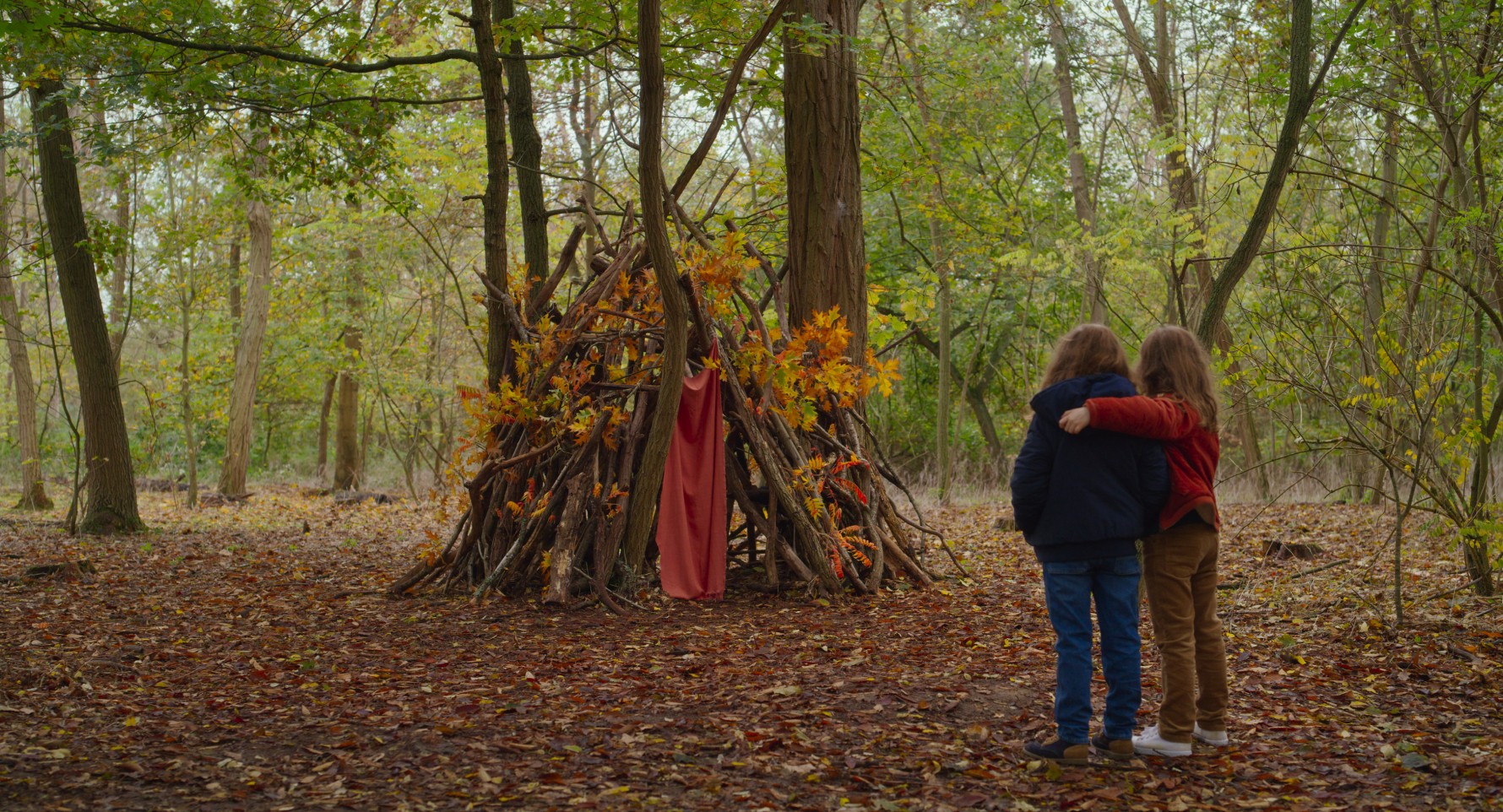
    Director Celine Sciamma’s searing romantic drama from 2019 is nigh unforgettable. After that movie, I’d watch anything she’s got coming out…which happens to be Petite Maman. In some ways this new film is very different from her last production: It’s set in modern times, infused with a magical realism slant, and reeeeaaaally short, a scant hour and twelve minutes long. On the other hand, it’s not that different. It’s still basically a two-hander that focuses on a relationship between two female characters. This one is about familial love instead of a romantic one, though, and it manages to pack quite the emotional wallop in its scant running time. One wishes Matt Reeves, director of the painfully overlong The Batman (also releasing this weekend), would take notes. Either way, I highly recommend it. You’ll be in and out of the theater in no time and still have time to talk about the movie at length (and trust me, there’s a lot to talk about) over a Cafecito before the sun even sets on our beautiful city.

    The Good Boss (El Buen Patron)

    This is one of those “biting black comedies” I mentioned earlier, and it stars Javier Bardem who, c’mon, is just a friggin’ great actor. He could eat Reese’s Peanut Butter Cups and still be riveting (can you tell I’m writing this at lunch time?). Remember when he was in Dune for, like, two minutes or something? Of course you do. He’s that memorable. And, well, here you can watch him actually star in a movie, a movie that was nominated for a record (according to the MIFF website) 20 Goya Awards, which is like the Spanish equivalent of the Academy Awards, so that means…probably nothing, but it sounds good in a blurb like this one. I’m planning to check it out.

    One Second

    This is Zhang Yimou’s latest endeavor. The Chinese director who brought us gorgeous martial arts spectacles like Hero and House of the Flying Daggers is also known for his straight up dramas like Raise the Red Lantern. No matter what genre he traffics in, though, you know the movie’s going to look good. One Second is no exception. This is one of his smaller scale dramas, but it still makes space for grand desert scenery. The movie is a kind of riff on The Bicycle Thief (though it definitely doesn’t share that classic’s neo-realist bent), with its main character spending much of the movie chasing after a stolen film reel. There are also, I think, allusions to F.W. Murnau’s silent classic, The Last Laugh. Like that movie this one also has a seemingly tacked on ending that contradicts what came only a few moments before. I suspect government interference here, though maybe Yimou is using his country’s restrictive censorship laws to have his cake and eat it too and slip in a clever reference? Clever tacked on ending or not, this is still a captivating ode to film and the captured image. But it’ll be more powerful if you leave the theater when the title card with “Two Years Later…” comes up.

    Estación Catorce

    A controversial pick for me since I kinda hated this movie. The thing is, I didn’t hate it because it’s bad. I hated it for being exactly what it wanted to be. And I suspect director Diana Cardozo accomplishes exactly what she set out to do. It just intersected with me when I was suffering a big case of the feels and that volatile cocktail of movie and emotions left me in a seriously shitty mood after it ended. This is a meandering slice of life film that focuses just as much time on the banal and everyday as it does on drama. It’s transporting in its nonchalant specificity, though you may not want to go where it takes you. Within its rambling narrative, the movie exhibits many indie stereotypes: Lots of handheld camera, sparse soundtrack, depressing story. But once it comes together it paints a compelling portrait of a child growing up in destitution. It’s just, it’s one of those movies that shows you a puppy early on, and well, yeah, it does exactly what you think it will with that puppy. So screw this movie. But still, go see it, it’s pretty good.

    And I’m going to stop there. This is just a small taste the Miami International Film Festival has to offer. I didn’t even get to the special retrospective presentation of A Raisin in the Sun in honor of Sidney Poitier or the numerous panels and roundtables that will be held during the festival. There’s something for everyone to enjoy.

  • Danielle Skraastad & Kyra Kennedy on Starring in New Play “When Monica Met Hillary”

    Danielle Skraastad & Kyra Kennedy on Starring in New Play “When Monica Met Hillary”

    When Monica Met Hillary will be having its world premiere March 3 at Miami Beach’s The Colony Theater and playing through March 27. The premise of the drama is that while Monica Lewinsky and Hillary Clinton have never met in real life, what if they did meet?

    Actresses Danielle Skraastad (who plays Hillary) and Kyra Kennedy (who plays Monica) were kind enough to answer a few questions about the play.

    What drew you to When Monica Met Hillary?

    Danielle Skraastad: Well, the title enticed me for sure. And of course, the playwright, I have always been a fan of Winter Miller. I had heard great things about Margot Bordelon, our director, through the actor grapevine….is actor grapevine an expression? Probably not, but I think you get my meaning. The word on the street about Margot was that she is an actor’s dream director and she has lived up to her reputation. Margot is an exciting and indefatigable artist with a deep understanding of what makes great theater…..oh, and she is hilarious!

    Kyra Kennedy: The context and idea for sure and also it’s hard to resist a play with just women by women. A four person play is always interesting and a four woman play is even more!

    What research did you do for the part?

    Danielle Skraastad: Since the play is imagined it was possibly unnecessary to do a lot of the research I did…however, I couldn’t help myself and binge-dove into a lot of….what I would call noseyness…hahahaha…is noseyness a word? I binge-dove into noseyness….hahahaha….the theater is gonna regret letting me give this interview I  just make up words….but hey….what’s good enough for Shakespeare…Oh geez, anyway, what I am getting at is yes I did research because I couldn’t help myself; the lives of these characters are so interesting.

    Kyra Kennedy: I watched Monica’s Ted Talk, Read Monica’s Story by Andrew Morton, perused her tweets, watched her Ann Coulter interview. I’m quite taken with her so researching her was easy. I really fell in love with the multifaceted woman she is and became more and more excited to do her justice.

    Did you watch the recent miniseries Impeachment? If so how did you try to differentiate your interpretations of Monica and Hillary from that show?

    Danielle Skraastad: Not yet but I cannot wait.

    Kyra Kennedy: I did! Since our play spans almost three decades throughout the characters lives, I focus on how Monica matures throughout this experience and her life. I also made it a point to show her many other interests outside of Bill Clinton – her degrees, her intelligence, her killer sense of humor, her philanthropy, etc. Monica, like all of us, are quite different and more than who we were at 22.

    What was the trickiest part of portraying your character?

    Danielle Skraastad: Hmmmm….the trickiest part of playing the Hillary Clinton imagined in this play is the trickiest part of playing any character: understanding someone who is not yourself and I am definitely not famous like the women in this play.  The luxuries awarded me by anonymity are many; my personal favorite?  I get to make mistakes without repercussions that play out in the public eye. Hillary is particularly interesting in her true courage at facing non-stop public scrutiny and opinion and not shrinking . I doubt I would have it in me to handle such a public life. Also, I am a social creature and I derive a lot of pleasure in my interactions with strangers on a daily basis…people who know nothing about me and meet me as I am, in the moment, at the time they run into me. In my opinion, it  is one of life’s greatest pleasures; to have an adventure from myself based on what/how a stranger interacts with the me; or the “me” they see in front of them on that day….not the “me” they have read about or heard about. I get to be myself and “myself” gets to change based on how I feel on that particular day. I get to mess up all of the time and no one cares to snap a picture or write an article about it. I get to be a stranger.

    Kyra Kennedy: Since Monica is someone I very much respect, balancing the pressure of “making her proud” and also keeping true to history. Also aging up to 50 is tricky as a newly turned 30 year old. Margot is brilliant and has such a great macro and micro scale precision to her directing which has been invaluable to this process. She has led our cast and this story with such power, grace, integrity and care. It has truly been thrilling.

    What can audiences expect from the play?

    Danielle Skraastad: Audiences can expect to be surprised. It is surprising to me and I am in it. I think they will be surprised about how much they forgot about this story. I think they will be delighted  by Winter’s mind and Margot’s point of view. They can expect to be thrilled by the unusual angle through which we view this story.

    Kyra Kennedy: Audiences can expect to leave with a different perspective of this time in history – whether in a major or minor way. Our play peels back the layers of these ultra famous people and exposes the person behind the politics in a very real and very touching way.

    Do you have any rituals before you take the stage?

    Danielle Skraastad: I am superstitiously not superstitious? Is that an expression?  Maybe ritualistically unritualistic? Hahahaha! No, no ritual. Just the usual. I sign in. Put on my costume and wig and make-up, and go over my lines. Is that a ritual?

    Kyra Kennedy: I have printouts of Monica throughout history that I like to look at as I’m aging through the play. She is so engaging and personable. Since we are still in rehearsals I haven’t solidified a particular pre-show ritual yet but I am definitely an early bird to the theatre.

    What would be your reaction if midway through your performance you saw Monica or Hillary in the audience?

    Danielle Skraastad: My reaction on the outside? I would continue to do the show. My reaction on the inside? My heart would explode.

    Kyra Kennedy: My heartrate would rise to alarming levels. Both are such powerful, intelligent touchstones in history and absolutely incredible women. If I saw Monica in the audience I would hope she liked my wig and then immediately ask if she’d like to get a drink.

  • Na, na, na, na, na, na, na, na, na, na, na, na, na, The Batman Is Too Long!

    Na, na, na, na, na, na, na, na, na, na, na, na, na, The Batman Is Too Long!

    I’m back in a movie theater for the first time in two years and not particularly excited. The theatrical experience has lost its luster. The lights dim and as the studio logos flash on the screen, somebody behind me yells, “Is this gonna be on HBO Max?” (there’s only about 15 people in the theater, all of us press/critics that know one another to a certain extent, so this isn’t as rude as it might seem). The critic behind me was referencing Warner Bros.’ decision last year to release their 2021 slate of movies in theaters and on their streaming service at the same time. Somebody closer to the front yells back, “No,” and adds dramatically, “…thank God!”

    We’re all here to watch The Batman, the latest filmic incarnation of the famed DC comics superhero, which happens to also be a Warner Bros. release. As the nearly three-hour movie plodded along, not in a rush to get to anything terribly interesting, I began squirming in my uncomfortable, dilapidated chair (eww, what exactly is that brown stain on the armrest?!), and I came to an ironic conclusion: Despite the dramatic protestations of my fellow critic, The Batman, in its slothlike indifference to pacing, would play infinitely better in the comforts of home on HBO Max.

    Yep, The Batman is a butt numbing two hours and forty-five minutes long without credits.

    Now, euphemistic as it may sound, long doesn’t mean bad. Nor does long even mean long necessarily. I’ve seen lengthy movies that flew by like nobody’s business. This movie is not one of those movies. Trying to ape a film noir aesthetic, The Batman lands on the wrong side of oppressive. Michael Giacchino’s incessant and dramatic score, laden with mournful strings, only adds to the sepulchral atmosphere. Very little, if any, humor is allowed to pierce the gloom. I admired the dedication to the bit, but it’s too much.

    Actually, the pace works for the first hour or so. As you’re getting used to this latest take on the material, the new actors playing familiar roles, and how Gotham looks in this iteration, you’re glad to have the time to take it all in. Also, and I’m not going to go in to too much plot detail, but as revealed in the trailer, the Riddler is involved, which means there is a central mystery that needs to be solved. And it does intrigue. At first. Batman gets to be an actual detective (for the first time on film?) and detect. Though there’s no real sense of how he’s coming to his conclusions. He just figures stuff out.  As he makes connections from the clues, he meets a nigh unrecognizable Colin Farrell chewing scenery as the Penguin and a lively, lithe Zoe Kravitz as Catwoman, who at least brings a faint spark to the proceedings.

    But as the mystery unfolded, my interest retreated. The reveals are boilerplate and the Riddler’s riddles don’t exactly riddle. Are they confusing? Yes. Are they diabolically clever? Not really. They’ve got a dash of Jigsaw from the Saw franchise here and there, downgraded to a PG-13 of course, but even that’s mostly forgotten half-way through, replaced with insufferably long videos of Riddler looking like the gimp from Pulp Fiction, screaming through his camera phone…which is in always vertical mode for some reason. If the Riddler is oh so clever, can’t he figure out landscape mode?

    The production design and cinematography could best be described as ersatz Seven or Dark City light. There’s so much rain in this movie, my fingers started getting pruney by the third act. But if you’re going to be influenced by a couple of movies, that’s two good ones to emulate. My screening was in a tiny theater with a diminutive screen, so I’m guessing here more than speaking with authority, but through the haze of the underprojected image, the movie, whatever it’s influences may be, seemed to have an enveloping gothic atmosphere of decay and disrepair, which ties nicely into the story. Although, does every Batman movie have to feature a Gotham that’s about to tear itself apart?

    Well, yeah, I guess it does. If Gotham were a utopia, it wouldn’t have a need for a Batman, right? But still, maybe we’re getting too many of these movies when all they can do is tread such familiar ground?

    For all the familiar territory that’s trodden, The Batman does have some fresh ideas.

    I don’t know if director Matt Reeves was emboldened by The Mandalorian and its titular hero who rarely takes off his helmet, but Bruce Wayne/Batman is in costume for about 95% of the movie. Rather than hide in the shadows and theatrically instill fear through intimidation like previous iterations of the character, this Batman often walks into bright areas, around a bunch of people, out in the open. It shouldn’t work, but somehow Reeves and Robert Pattinson, who stars as (the) Batman, avoid making him look as ludicrous as he should outside of the shadows.

    Speaking of Pattinson, a friend/colleague complained that Pattinson’s take on Bruce Wayne, the hero sans costume, was the worst portrayal he’s seen of the character yet. I don’t know about that. For one, there’s so little Bruce Wayne, that it’s hard to make that call definitively, but also, and what I thought was a nice touch, Pattinson’s Wayne, at this point early in his vigilante career, is so closed off and introverted that he’s clearly uncomfortable in his skin without a mask to cover it, speaking only in a whisper, hands in his pockets, perennially hunched over, steeling himself against the harsh world. I don’t think we’ve seen such a pained version of this hero before. He’s miles away from the billionaire playboy were used to seeing, and it works. And yes, with his perfectly coiffed hair that falls over his eyes just so, the slow delivery of his lines like every word is a needle piercing his skin, and, of course, the smudged coal eye shadow that doesn’t magically disappear when he takes off his mask, Pattinson’s Bruce Wayne does cut a very emo figure. But, c’mon, it’s not that weird. Batman and emo are not mutually exclusive.

    Still, the movie drags. Each scene takes longer to get to its point than it should. Rather than giving drama a chance to breathe, the length just becomes stifling. I thought the movie was finishing up, only to realize the third act fireworks were just setting up, and I still had to sit through another interminable video of the Riddler yelling (and still in vertical mode!) before the chess pieces finally moved into place. When things started to finally go BOOM it just needed to be over already…

    …much like this review.

  • Jack Le Sante on New Song “Spots”

    Jack Le Sante on New Song “Spots”

    I get lost more often than I care to admit. My mind becomes fixated on the thought that nothing will ever feel like it once felt. There was a magic in picking up a guitar for the first time and being God awful at it, a fear and anxiety attached to developing a personality that people would like in high school, the shaking excitement of a first kiss. There’s an innocence we part ways with as each personal choice and compromise leads us to becoming the people we are. All we can do to reclaim this innocence is look back and for a fleeting moment be that child once more. I did this from an early age, spacing out and getting lost in the times of yesterday; it’s ironic that they are times that I think of now. I was wasting time reminiscing only to realize years later that the best days of my life were the ones I was present for.

    Memories are constantly changing to the point where we remember our memories of things happening rather than the things that happened themselves. The innocence of childhood is like the artwork that lines pavement in the form of sidewalk chalk. It exists vibrantly the day it is created but fades each day through the rain and time. It becomes a faded fractured version of its former self until it is drawn over once more by new works. Our lives are frozen in snapshots that are similar to those spots of chalk, they are the fragmented memories that overlap with one another. My thoughts about being lost in a half remembered nostalgia is what made the song, ‘Spots’.

    The pandemic hit me pretty hard. I was in a period of uncertainty and unemployment much like many others the day I went out on an aimless outing to get away from my restlessness. My car radio has been busted/difficult for years so on occasion I sing little melodies and rhythms for my own entertainment. I was sitting in traffic when I came up with the gibberish that became ‘Spots’. When I came home later that day I picked up my guitar and figured out the chords that fit around the melodies I was singing and then went on to record it.

    At first I recorded everything, I made a percussive beat through sampling objects in my house and layering them. I recorded crumbling paper, table taps, broken glass being shuffled around, the sound of a pencil dropping, the sound of me sipping on some tea, and so much more that I don’t recall at the moment. I was listening to bands like Queen, Of Montreal, XTC, and David Bowie at the time and it definitely influenced the sort of grandiose harmonies in the chorus. At the end of producing this demo I made a realization that although I enjoyed it, it felt like it needed other people to give it dimension and bring it to life. I needed people to come in with their own perspectives and ideas on what the song would be. Brian Lange was the first person I added to the track.

    Originally I wanted to replace the sample beat I had created, Lange suggested he play with the sample beat instead and we could treat it like a percussion section. Within a few takes we had a solid drum part that elevated the song far beyond what it was. I began working with my close friend of over a decade, Mauricio Cano of MoSo Studio on solidifying the mix and figuring out what parts were important and which ones could take a back seat. My girlfriend, Joy Soto, was always giving me honest feedback throughout the process and lending her talents as a singer and synth-head to the arrangement. I asked Corey Perez to track a new bass line to replace what I had done. Against my advice, he refused to look at a chord chart of the song and yet he came up with something brilliant that captured the character I wanted the bass to play. My fellow bandmate from Pans, Adrian Garcia was the next to join the mix. He had been on a classical guitar binge around that time so I brought him in to bring back an organic quality to the track. I would be remiss to not mention the advice and guidance I was offered by my friend, Rick Moon, on many aspects of the song; I must’ve sent him at least 30 bounces of the song over the course of its creation. Through the help of my friends and many hours of “does this section need ______?” we made a track that I feel we are all proud of.  In the end it was no longer a song by an individual, it was a song made of a band.

    The artwork was a painting I made of shapes and patterns. Each time the paint dried I painted a new pattern over it. This was harkening back to the original thought behind the song, that our picture of something no matter how beautiful or hideous will eventually become obscured and blurred by the passage of time and the way in which our minds change.

  • Darrel Alejandro Holnes on Panama, his new book Stepmotherland (w Podcast)

    Darrel Alejandro Holnes on Panama, his new book Stepmotherland (w Podcast)

    We met poet Darrel Alejandro Holnes on a night in mid-January. He was in Miami to support his friend and fellow scribe Aurin Squire, whose play A Wonderful World had just closed at the Colony Theater on Miami Beach.

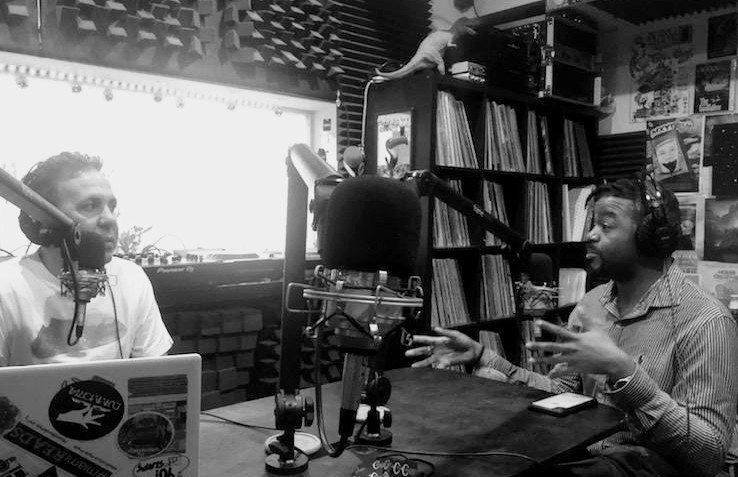
    We all went to a Miami Heat game together. But before that, we spoke on a little radio show, of which you can listen below.

    On the show, and throughout the night, we talked about Panama:  growing up in the zone and Zonians, the Panama Papers and how the investigative report cast a dubious and unfair shadow on his homeland.  We laughed about the infamous playlist the CIA used to torture Manual Noriega into surrendering.

    Darrel couldn’t have been more articulate, armed with a cutting wit and sharp charm, a poet’s poet.  A smooth operator like Sade (incidentally not on the Noriega playlist).

    He used terms like “hella complicated” when asked to describe how segregation looked in his homeland Panama.

    We also talked about the literary life, about Bread Loaf and mutual writer acquaintances.

    Darrel Alejandro Holnes

    Darrel is a Renaissance man (poet, playwright, musician, educator) and a hard worker. During the Heat game he had to leave the arena to complete a task — I believe he was Zooming with a graduate student on deadline to present a thesis. A full-time tenured track creative writing professor in New York City, Darrel was busy, but also excited for the coming publication of his first full length book, Stepmotherland, since published by the University of Notre Dame Press on Feb. 1st.

    We talked about the collection, its themes of identity, family and finding one’s sense of belonging.

    We spoke of the writing process. How to arrange poems in a collection. The structure, flow, and balance needed when arranging poems into a book. You know, the fun part of creative writing.

    It was a dope night.

    And in case you were wondering, the Miami Heat won the game — and of course we all left feeling like a winner.

    Darrel Alejandro Holnes’s Stepmotherland could be found here.

    And if you want to listen, Darryl hops aboard The Jitney around the 39th minute.


    editor’s note — The Jitney podcast is a freewheeling, unrehearsed, unedited conversation produced by Jolt Studios. 


  • The Guitars that Ate the World (and Florida)

    The Guitars that Ate the World (and Florida)

    Nineteen-Sixty was the year the electric-guitar conquered the world. There was no escaping it.

    The electric guitar began replacing toy machine guns as the hottest new fad item for boys, just as the Barbie doll did something similar for girls. The electric guitar—perhaps as an icon of western culture—might even have been one of the U.S. state department’s secret weapons in beating back communism.

    That same year Jacksonville high-school student Walter Eaton, like thousands of others, got bit by the guitar bug.

    The electric-guitar deluge had actually been gathering for decades, pioneered by jazz greats Charlie Christian, Les Paul, Barney Kessell and others. It also became an integral component of country music with major players such as Nashville’s Chet Atkins and Hank Garland along with Bakersfield’s Buck Owens and Don Rich. African American guitarists such as Chuck Berry, Bo Diddley and Buddy Guy embraced the electric guitar; it became de rigeur in Chicago-style blues bands.

    In 1958, Duane Eddy took the fetishization of the electric guitar even further with “Rebel Rouser.” He also had a hit the following year with “Peter Gunn,” a guitar-drenched rendition of Henry Mancini’s theme from the popular TV series.

    England and Europe jumped on the bandwagon. In 1960, British guitarist Bert Weedon recorded “Apache,” which was quickly covered by the Shadows featuring Hank Marvin, who would go on to become a UK legend. However, the biggest version of the tune was recorded that same year by Danish jazz guitarist Jorgen Ingmann and released a year later in the US by Atlantic Records. While Weedon’s original version of “Apache” sounded like something from a spaghetti western, Ingmann’s version evinced a faux-flamenco rhythm guitar behind two electrics—one low, another high—playing call-and-response melodies. It was a guitar smorgasbord, and it became a huge hit, rocketing to Number Two in Billboard’s pop chart.

    Also in 1960, a quartet from Tacoma, Washington, remade a 1954 tune by jazz guitarist Johnny Atkins called “Walk, Don’t Run.” It had also been recorded in 1957 by Chet Atkins. The Ventures’ version would become a classic—as well as a staple in every young guitarist’s repertoire, including Walter Eaton’s.

    Since by his own admission Eaton, then aged 15, was not a very good player, he felt his only option—since no local band would have him—was to form his own group, which he dubbed Leroy and the Monarchs (Leroy being his middle name). Eaton was savvy enough to recruit a more talented guitarist: 13-year-old Paxon Jr. High student Jimmy Amerson.

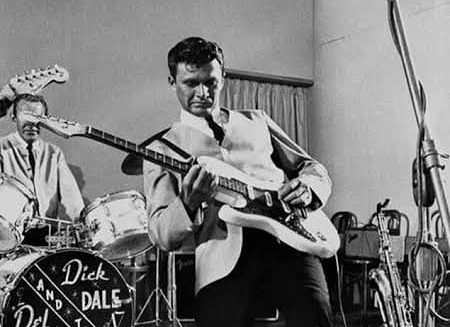
    Back in Los Angeles, Dick Dale, a son of middle-eastern immigrants who had moved west, had taken Duane Eddy’s guitar mystique a step or two further: he turned the electric guitar into a sort of voodoo talisman. An avid surfer, Dale combined his love of the sport with his love of the electric guitar, reinventing it as a symbol of beach culture while styling himself “king of the surf guitar.”

    His first record, released on his own Del-Tone label in 1961, was “Let’s Go Trippin’,” widely considered the first “surf-rock” hit. “Let’s Go Trippin’” was a simple, three-chord rock ‘n’ roll number that peaked at Number 60 in early 1962. It’s significance, however, cannot be gauged by its chart position.

    The surfin’ sound had taken the electric guitar to exciting new vistas and inspired dozens of young bands. For one example, a section of “Let’s Go Trippin’” became the foundation for the 1963 instrumental hit “Wipe Out” by the Surfaris, which in turn became a standard item in any budding guitarist’s repertoire and a staple of garage bands nationwide.

    Dale might have gotten the idea to do something similar to “Apache” when he recorded “Misirlou,” a ubiquitous middle-eastern folk melody that had been done as a pop record in 1946 by pianist Jan August. Dale’s 1962 version was heavy on sixteenth-note tremolo runs and got him a good deal of attention as a guitar wizard—the Eddie Van Halen of his era.

    Dale inspired countless guitarists, including one Carl Wilson, whose group, the Beach Boys, would figure out how to combine Dale’s surfin’ sound—which was entirely instrumental and guitar-based—with pop songcraft. The Beach Boys did remakes of both “Let’s Go Trippin’’ and “Misirlou.”

    Surfing became—and still is—a popular sport in Florida even though the waves are not half as big as those on the West Coast. The surfin’ sound became the soundtrack to the “salt life.” It also became an inspiration for hundreds of Florida guitarists who busied themselves learning “Walk, Don’t Run,” “Wipe Out,” and “Pipeline” (a 1962 hit for California group the Chantays, later covered by the Ventures). These tunes became standards not only in the surf-music canon but mandatory items for any students of the electric guitar.

    One such guitarist, Charles “Tiny” Tackle, from Jacksonville’s Northside (not far from Eaton’s neighborhood), would get so good at replicating Dick Dale’s sound and style that he formed his own group called, appropriately, Tiny and the Surfers. The Surfers included Gary Hadden (Tackle’s half-brother) on rhythm guitar, Norman Ford on bass, John Roberts on drums and Donn Finney on sax, an instrument not usually associate with surfin’ music. This group would in turn inspire many other groups.

    Eaton’s group, Leroy and the Monarchs, with the addition of singing drummer Dennis Yost, became known as the Classics IV. After abandoning the guitar fad and turning to a more easy-listening style, the group scored a nationwide number-two hit, “Spooky,” in early 1968, proving that proficiency and dedication could lead to fame and fortune—an escape from workaday drudgery—even in a predominantly blue-collar city like Jacksonville, where such fantasies were generally discouraged.

    Nonetheless, over the course of the next three decades, guitar fever would take hold of Jacksonville. The city would eventually assume its place alongside Los Angeles, London, Detroit, Chicago, Nashville, Atlanta, Memphis, Macon and Muscle Shoals as one of the great guitar towns. The list of famous guitarists who lived and worked in Jacksonville would grow to include Auburn Burrell, Robert Conti, Dickey Betts, Duane Allman, Allen Collins, Ed King, Randall Hall, Dave Hlubek, Duane Roland, Erik Lundgren, Ace Moreland, Wes Borland, Derek Trucks and many others.


  • Aurin Squire on Aurin Squire  (w Podcast)

    Aurin Squire on Aurin Squire (w Podcast)

    We met Aurin Squire on opening night of his wonderful play A Wonderful World — a full blown musical chronicling the life of Louis Armstrong. It’s a great play that belongs on Broadway. Miami doesn’t normally debut world premiere plays that belong on Broadway.

    That’s changed and it’s not surprising Aurin’s pen wrote it.

    Aurin Squire is from Miami. NW Dade to be precise. In an area near the football stadium he remembers as being filled with “sand dunes that stretched for miles.” A graduate of North Miami Beach High, he soon left Miami Dade for Northwestern.

    His decision to choose Northwestern? Craziest story.

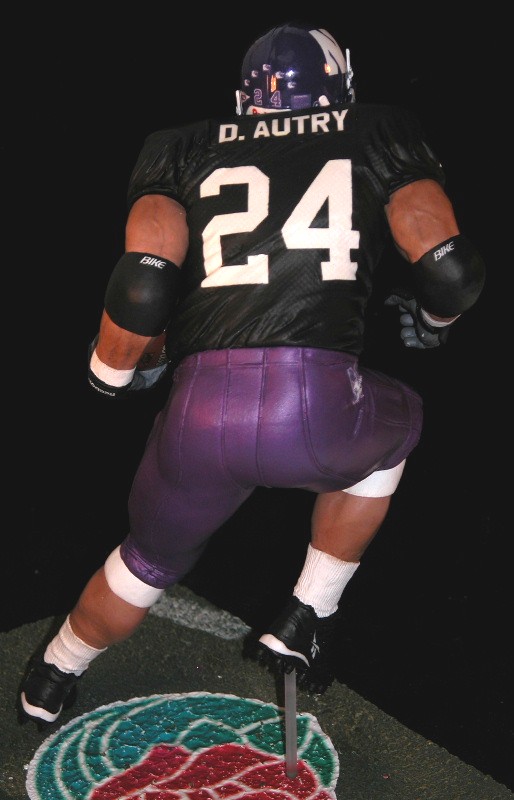
    Aurin applied for the Ivy Plus school because he watched a football game on ESPN. A team wearing purple came on the tube. The running back was named Darnell Autry.

    “Autry” is Aurin’s middle name.

    And off of a hunch, he applied for the school because they had a running back with his middle name.

    That is a great story, and an even better one to describe Aurin.

    Some people go-with the flow — others tune into it.

    Some people look for signs — others see the signs — others see the signs and listen to them.

    Identifying the signs in the universe takes work. As does acting upon them.

    Aurin Squire Does the Work

    A practicing Buddhist, a die-hard Miami Heat fan, a Juilliard grad, a devoted son, an-award winning playwright and television scribe, Aurin Squire is a prolific creator who can navigate multiple platforms and universes. His catalog runs the gamut.

    Confessions for a Cocaine Cowboy, a true crime play.

    This Is Us, a family drama.

    Evil, a super-natural, spiritual hybrid-procedural.

    The Good Fight, a hybrid legal procedural.

    A Wonderful World, a musical and biography.

    We asked Aurin if there was a genre that he was drawn to?

    “It has to involve a dark sense of humor…I love things that are more social and political with a sardonic undertone. I don’t like things that are too earnest. Things that end in hugs. It’s too icky, too sugary. If you are going into the world to deliver medicine, or a lesson, it should be a lesson that I am learning. It should have some levels, some humor.”

    Sounds like some medicine well worth delivering.

    .

    Aurin Squire & Darrel Alejandro Holnes in studio for The Jitney podcast

    editor’s note– our podcast is an unedited, unrehearsed, free-wheeling discussion, produced at Jolt Radio’s studios.  
    Darrel @39.24
  • The End of Uncle Scotchy’s Storytelling Extravaganza

    The End of Uncle Scotchy’s Storytelling Extravaganza

    Being a professional musician/event director, you can imagine the pandemic would be extra difficult. Fuck, I mean, I was basically paid and rewarded for making as many people congregate as possible….and the congregation business was bad.

    Now add the recent passing of my father & my girlfriend cheating on me and leaving. So, no brothers, sister, parents, or significant others. Then toss in a side of a drinking problem. Ta da!!! You have my pandemic scenario stew!

    The decision during the pandemic to write a one man show, or “Blues Opera,” about my life saved me. I have no doubt. But at the time the problem was that I had no idea how to tell a story. Despite all my years on stage the very thought of just speaking into a microphone with no instrument or song and talking about myself was horrifying.

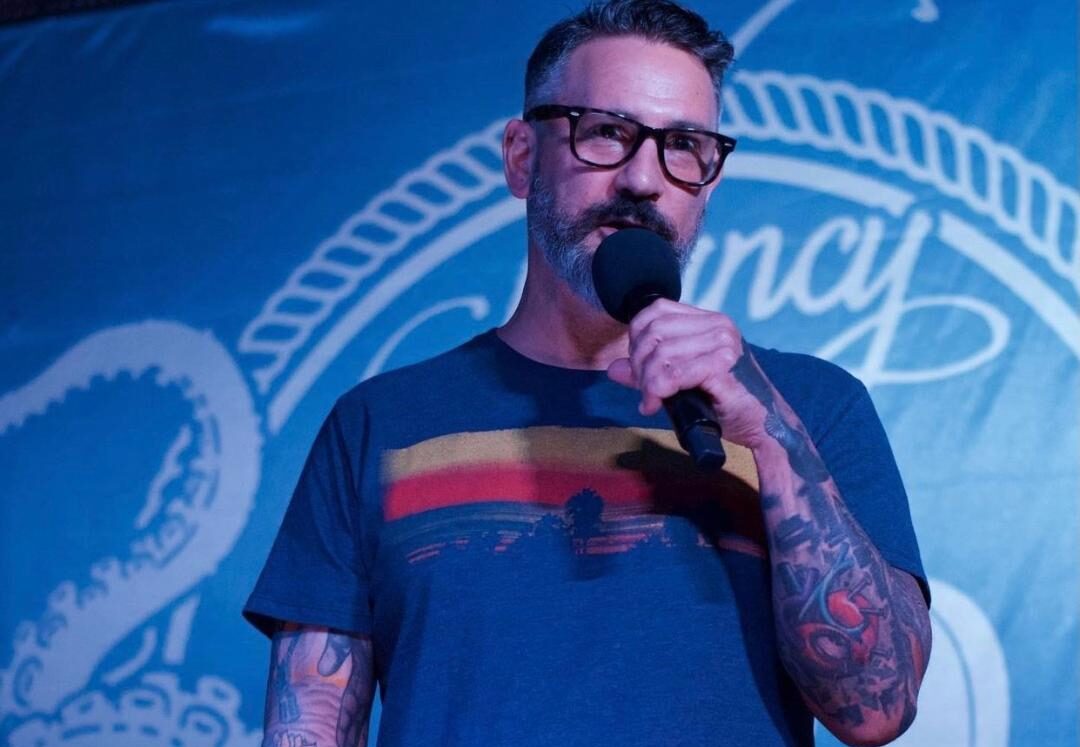
    Thus began the process of learning the art of storytelling at home. Later things opened up in Florida, (because Florida is gonna Florida), and I was able to start my weekly Wednesday storytelling night at Bar Nancy. This was pretty much a selfishly inspired plan to workshop my stories in front of others. No thought was given to the platform or voice I would be giving to others of all walks of life. Others that had been cooped up just like me.

    Little did I know that a year and a half ago I created a safe space. I never ask what the story will be about (unless it’s a theme night). All I ask is that is true & about you. I have heard stories about drug abuse, being molested as child, being hit by lightning and then discovering you are pregnant, about being in solitary confinement in prison, teaching kids with autism to surf, role playing with your husband….seriously, name it. I have over 3000 minutes of uncensored live story content on the podcast you can listen to by going to www.unclescotchy.com.

    I have met so many great people that I can now call “friend” through this night. I can’t tell you how many people who have thanked me for giving them not only a place to tell their story and heard, but for making them feel safe to tell it. No not feel judged. A place they can pretty much say anything and it’s ok.

    I moved the night a few months ago to the Center for Subtropical Affairs. Despite that being a mouthful, the place is gorgeous, and a great outdoor environment for storytelling.

    Due to some scheduling issues, we thought about moving the night to Tuesday. But that made me reflect and realize that it’s time for me to focus on the next evolution of the storytelling extravaganza.

    You see, the one man show; The “Blues Opera” is finally coming to fruition and will be a thing. I’m really looking forward to sharing details in the near future. It kind of feels like Uncle Scotchy’s Storytelling Extravaganza as a weekly event will always be remembered as a special and transformative period in my life.

    That’s not to say that it will never happen again. But this chapter is closing & I’m so thankful for all the new friends I have made along the way.

    So, if you have time this Wednesday night, come hear my last story for a while. Oh, and listen to some of my friends’ stories too.

  • Carmen Herrera Was a Great Cuban Painter who Is Unknown No More

    Carmen Herrera Was a Great Cuban Painter who Is Unknown No More

    The art world is mourning a woman of uncommon resilience, Cuban-born Carmen Herrera. She died on February 12, 2022, at age 106 in New York, where she had painted for decades in obscurity.
     
     Hers is a remarkable story, one that belies our culture’s feeding frenzy for the next hot trend.
     
    Recognition came late to Herrera. Really late. She began selling her paintings at age 89, reports the New York Times in her obituary.
     
    Today Carmen Herrera  (1915 – 2022) is represented by Lisson Gallery, with locations in London, New York, and Shanghai. According to the gallery’s website, her work is in public and private collections, as well as museums in the United States, United Kingdom, Germany, and United Arab Emirates. These include Museum of Modern Art, El Museo del Barrio, Pérez Art Museum Miami, and Smithsonian American Art Museum.
     
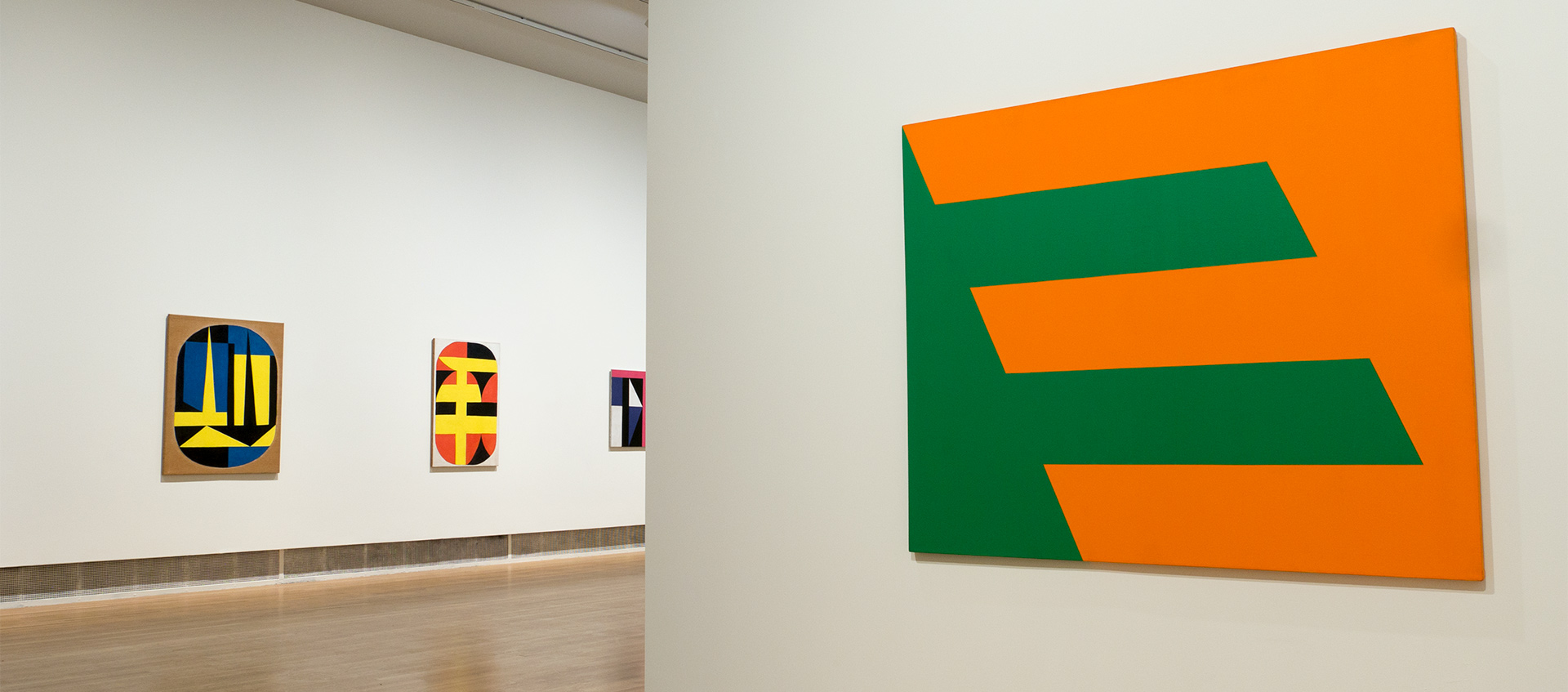
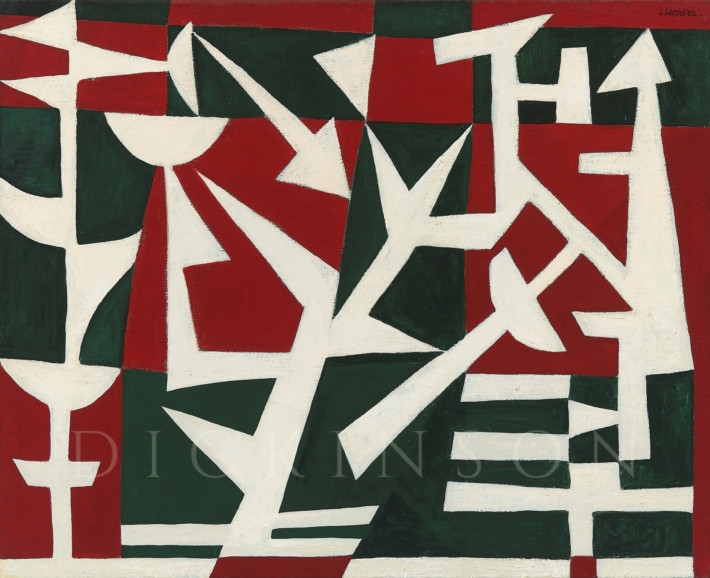
     Herrera’s abstract paintings are marked by clean, vivid geometric forms that seem to hover in space. Rectangles, triangles and circles may interlock as if marking steps in a dance; otherwise they pierce space with a dramatic solo gesture. Geometric abstraction thrived on her canvases, suffused with elegant simplicity.
     
    Learning the news that this once little-known and now widely recognized artist Carmen Herrera has died, I remember how Miami played a role in her late recognition.
     
    In 2005, following a 2004 group gallery show in New York that drew the attention of influential collectors, Herrera received what was billed as her first major retrospective at Miami Art Central (MAC), an innovative institution here since closed. This exhibit was “The Forms of Silence: Carmen Herrera Abstract Works, 1948-1987,” curated by MAC director Rina Carvajal.
     
    For Jitney Books I have edited and condensed my 2005 Miami Herald review of that Herrera retrospective. The review is taken from my personal archive of work as an art critic for the Miami Herald.
    Carmen Herrera: Unknown No More

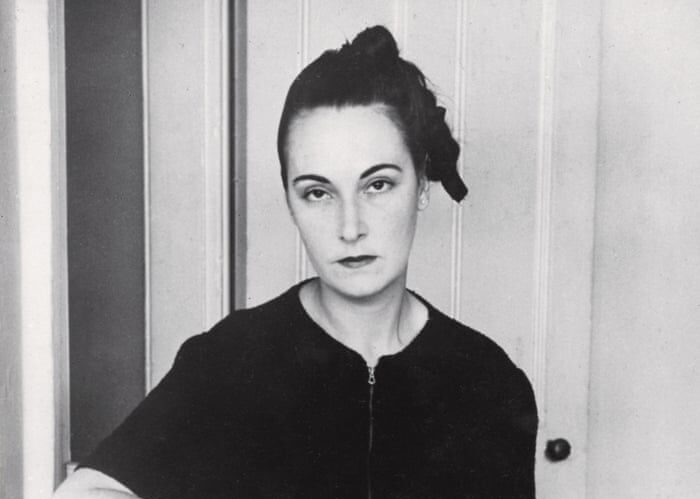
    Carmen Herrera had a career that stretches back to late 1940s Paris, but today she’s virtually unknown except to a rarefied group of art world cognoscenti that include the curatorial staff at El Museo del Barrio and New York Times critics.

    For all the attention that Latin American artists have enjoyed in the past 15 years or so, with the flowering of Fridamania and significant shows like the watershed exhibit “Latin American Artists of the 20th Century” in 1993 at New York’s Museum of Modern Art, mention Carmen Herrera’s name to many reasonably well-informed folks and you’ll be met with silence.

    Herrera did not make it into the MOMA show. “I went to New York and saw her work about 10 months ago and I couldn’t understand why someone of this caliber wasn’t better known,” says Miami Art Central director Rina Carvajal.

    Since the late 1990s, Herrera has exhibited sporadically at a handful of venues in New York, Toronto, Paris and Havana. In 1998, her black-and-white paintings at New York’s El Museo del Barrio were favorably reviewed.

    The artist’s vibrantly ordered abstract geometric paintings were also included in Outside Cuba, the 1987 exhibit that traveled to Miami after opening at the Jane Vorhees Zimmerli Art Museum at Rutgers University, and in the 1988 Latin American Spirit: Art and Artists in the United States, 1920-1970 that opened at the Bronx Museum of the Arts.

    But since then, there’s been almost a virtual silence, something Carvajal hopes will change with the MAC exhibit. The MAC director said she has recently fielded inquiries about Herrera from London’s Tate Gallery, England’s prime showcase for contemporary art.

    Carvajal, who joined MAC in July 2004 as its executive director and chief curator, sees this show as part of a larger effort. “Our mission,” she says of MAC, “is to do international art from everywhere, but being in Miami it’s also time to do Latin American artists that need acknowledgement.”

    Even with that 1993 Museum of Modern Art exhibit, she says that “there were stereotypes still, even though you could see the richness of these artists. There was an expectation of what Latin American artists could paint. They had to be colorful, they had to be figurative.”
    In an 11-minute documentary about Herrera’s life and career that MAC prepared in the artist’s downtown New York loft and neighborhood in August, a white-haired, arthritic, but gamely persistent and quietly eloquent Herrera talks about making art in the post-war years when stereotypical expectations about Latin American artists were especially dominant.

    The documentary begins as the artist, who has lived in New York since 1952, recalls being visited years ago by a prominent art dealer who gave the artist this blunt message: I can’t represent you because you are a woman and you are Latin American.

    This unnamed art dealer nevertheless admitted, Herrera recalls, ” ‘You are a wonderful painter. You can paint circles around the artists I have in this gallery.’ ”

    Surprisingly enough, in the documentary Herrera does not come across as bitter. She actually says that she welcomed the years of ensuing silence, because she always wanted “absolute silence, absolute quiet” while painting, and her art does project a cool, meditative state that’s far from the emotional, gestural blizzard of dripped paint in works by Jackson Pollock or in the Pop Art cleverness of Andy Warhol, two of the many mostly male artists who reaped noisy success in New York while she quietly painted away.

    Her 1998 exhibit of the geometrical, optically charged black-and-white paintings, like “Verticals” and “Untitled” (both from 1952) at El Museo del Barrio was an education to many. Art historian Juan Martinez, who teaches at Florida International University, admits that he first learned of her work from that show back in 1998.

    In the closing reception for this exhibit, he will discuss abstraction in Cuban art in the middle years of the 20th century. In researching his book “Cuban Art and National Identity: The Vanguardia Painters, 1927-1950” (University Press of Florida), Martinez says he found no mention of Herrera among the many catalogs and gallery announcements he reviewed.

    Born in Havana in 1915, Herrera was trained at the school of architecture at the University of Havana. The angular joints and open spaces of architecture are clearly part of her vision of abstraction, which quietly contrasts a sense of space that moves forward with one that recedes, but she also cites the painter and pioneering Modernist Amelia Peláez as an important influence.

    From 1949 to 1952, she lived and worked in Paris. Annually she showed in Paris in the Salon des Réalitiés Nouvelles, considered the most important venue for reintroducing abstract art to an audience badly shaken by the horrors of World War II.

    Paris was the busy place where, she says in the MAC documentary, “I found my way in painting.” There she encountered a book about luminous squares in the abstract painting of Josef Albers, the German-born artist who was one of the first of influential Bauhaus artists to move to the United States in the wake of the Nazis. After the luminous squares of Albers in Paris, there were the long, overlooked years in New York when Herrera continued to paint in “absolute silence, absolute quiet.”

    International recognition finally came.