Category: News

  • An Unimaginable Time in Miami Beach

    An Unimaginable Time in Miami Beach

    The following passage is excerpted and adapted from an essay titled, Growing up in South Beach.

    I was born in Miami Beach in Mt. Sinai Hospital in 1951. There is a badge of distinction, if not honor, to this. There is no place like this city, which one person, Mayor Leonard Haber, I think, in the late 1970s, called it the two most recognizable words in the English language. That might be a bit presumptuous, but so is Miami Beach, in a wondrous way. After all, Jesus Christ, Mick Jagger and compound interest are likewise two-word marvels.

    Having been born at Mt. Sinai made me a member of a club, a Jewish one that anchored Miami Beach. However, I grew up in the city’s South Beach area during a time when it was not at all the exciting and expensive destination that it is today. Brett Ratner wrote an insightful article titled “Miami Beach Jews and the Birth of Modern American Cool.” There was nothing cool about my South Beach, barbecue weenie roasts and poolside bingo games aside.

    Florida had come to life after World War II, having been fed by the popularity of automobile travel made less hectic by the new interstate highway system. Soldiers and support personnel who had trained throughout the state had experienced summer in winter. They came home with a lingering image of Paradise, and they eagerly brought their families to live in Florida. Post-war prosperity and land developers capitalized on the sunny and healthful climate. Promotional films, print ads and sales brochures spread the word, often including allusions to The Fountain of Youth. The tropical climate drew people to a relatively sparsely populated state. I-95 replaced travel by train down Florida’s east coast, delivering eager-eyed folks to Miami.

    Miami Beach became like New York City, but had sand instead of snow. It was affluent, sparkling like a gem, especially during winter when the place was packed with northern Jews who had come to escape the cold and bask in the effervescent sunshine. It was the place to be in the 1950s and 1960s. It was vital and vigorous, but it wasn’t my family’s Miami Beach. My Miami Beach was South Beach when its Yiddish culture was on its way to a place of decline, only to be declared blighted in the late 1970s.

    Biscayne Bay separates Miami and Miami Beach. Causeways have always linked them but as Ratner observed, the cities “were culturally many miles apart.” Similarly, Lincoln Road separates South Beach from Miami Beach proper; “proper” may indeed have been the appropriate adjective as long as it inferred to wealth and prosperity. South Beach did not become “cool” until the hyped late 1980 and ’90s. Now it is defined by expensive restaurants, outdoor cafes and clubs that are open all night. The Swinging Sixties had evaded my family. We were not associated with the trendsetters, power-brokers, or celebrities, then or later. These people made their marks above South Beach.

    I recall instead playing at Washington Park after South Beach Elementary School bell rang and getting day-old garlic rolls from behind Piccolo’s; the owner’s son Dennis would dish them to us in the alley. It was one of the few restaurants in South Beach that would hold on to better days, or watch them wane. Others were The Famous, where seltzer was served in pressurized blue glass bottles instead of water, Wolfie’s, which served a plate of danishes or a bowl of pickles depending on the time of day, Joe’s Stone Crab attracted people from Miami Beach and beyond but I doubt too many from the neighborhood, Gattie’s, the best kept fine dining secret in old Miami Beach, and an array of cafeterias and delicatessens.

    But the well-to-do locals ate at Ember’s Steak House, where deals were made and cigars smoked. Celebrities and the power players, and even the dangerous, dined at The Forge on 41st Street. Both are above Lincoln Road. I never ate at either. And for those who knew those times here, remember Ollie’s?

    The Promised Land

    Growing up in Miami Beach was to grow up Jewish, in varying degrees of faith, by practice and osmosis. My family and I were Conservative Jews, as opposed to Orthodox or Reformed. However, we were all, with some exceptions, Americanized Jews. I was part of a generation far enough removed from our forbearers to assimilate, not just acclimate.

    My generation was subject to mass media; television was still new and grew with us like computers, smart phones and social media do with today’s youth. We felt unified, but we were bought and sold by commercialism in much the same way as the Internet inducts children today. Nonetheless, other things bound us to one another: a combination of living on an island, being culturally different from the mainstream, and just by being Jewish. The two preceding generations knew and endured hardships that were not part of our experiences. Furthermore, we were not constantly aware of their plights even though their meanings were deeply ingrained in all of us. We felt exceptional because of our forbearers. We were coddled and protected from their World War II remembrances, as well as their passages to America through Ellis Island. Then they escaped New York, making their ways to Miami Beach, a tropical American Paradise. Many of the South Beach elderly had visible tattooed numbers on their forearms that had been there since their days in the concentration camps. It was seldom if ever discussed.

    Twice a week, while I was still in grade school, I went to Temple Emanu-El Hebrew School. That was the big temple then, when Rabbi Irving Lehrman was a legendary rabbi in Miami Beach. I remember once committing to memory my haftarah, a portion of the Torah for a reading of it in that temple for my bar mitzvah. I probably was nervous during that Saturday morning service; I had to read to hundreds of well-wishers, as well as strangers, who were all there to cheer me on and to pray. A recording of my performance was made on a 78 vinyl record, but like almost everything else from my childhood, it is long gone.

    I remember that Hebrew School was a reprieve for me but from what, I am not certain. I really had no responsibilities or worries, sans the anguish of growing up. Perhaps it offered roots, which I may have needed more than other children. Judaism’s history is a story based without tales of Hell. What really got my attention was “the string.” In Hebrew, it is called an eruv. I watched Hassidic Jewish men secure a string from pole to pole as they created a boundary around most of South Beach. It was rather invisible, something one would see only with intention. The eruv created a ritual enclosure that was considered a sanctified extension of their residences. This was significant because orthodoxy restricted mundane activities to be performed away from home on the Sabbath. It is still there.

    My family chose the Fontainebleau Hotel for my bar mitzvah reception; it truly was a sign of my father’s “arrival” in this special place; I was still in a youthful fog. His family somewhere along the way had changed its name from Musikoff to Monroe, abandoning Russian roots while entering into American bland. He was now the patriarch of a tiny but truly American clan in a truly American place.

    Neon Lights of Hotels

    “Miami Beach is where neon goes to die” is a quote attributed to Lenny Bruce, a stand-up comedian who was quite popular and controversial in the 1950s and 60s. During those glamorous decades, headliners entertained here in its glitzy hotels. Indeed, the city was a magnet for them. Ever-popular entertainer Arthur Godfrey predated Jackie Gleason in heralding the city’s charms but it was Gleason who proclaimed it to be “the fun and sun capital of the world.” Gleason would often end his TV shows, saying that “The Miami Beach audience is the greatest in the world.”

    A sign on the MacArthur Causeway boasted that Miami Beach was America’s Playground. Troves of tourists, a post-war booming middle class, came for a stay in Paradise. Newly rich Jews settled in the city that not too long before had barred them. “Restricted clientele” a generation earlier meant no Jews. Now snowbirds, vacationers and residents found togetherness and solace in their Jewish enclave. They enjoyed the solidarity and, depending on where they stayed, the high life. Big names, including Bob Hope, Dean Martin and Frank Sinatra performed in the better hotels, well above South Beach, along Collins Avenue during these banner years.

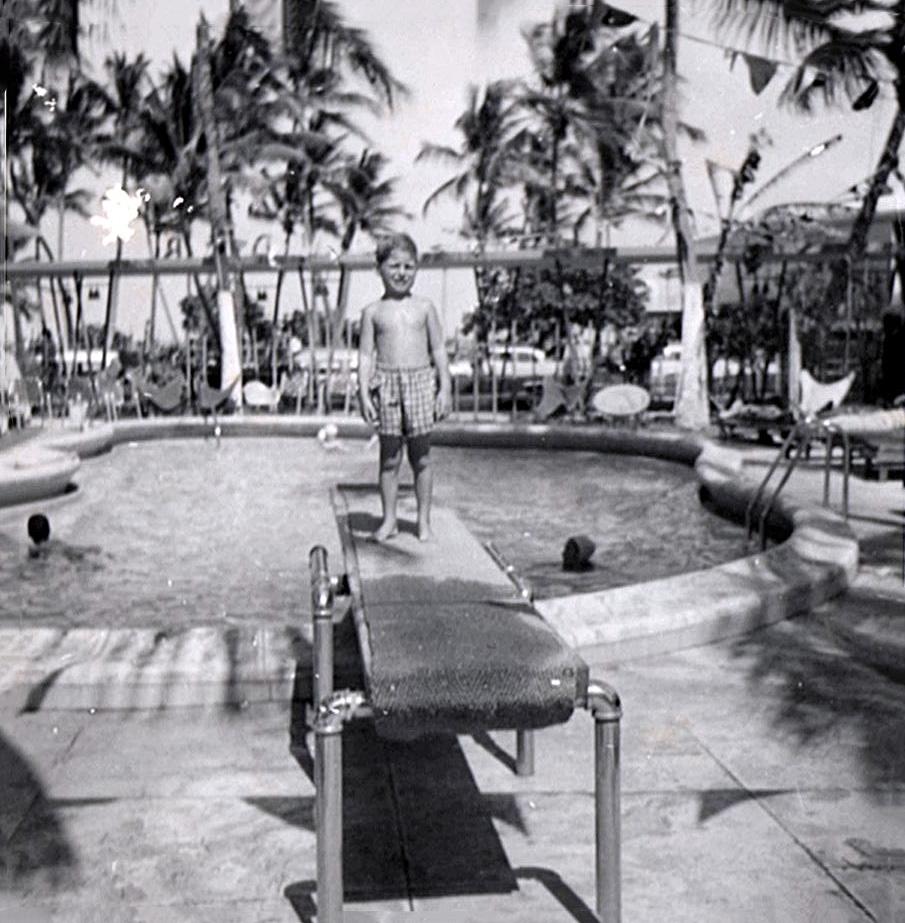
    My father made the most of summers here. He rented two rooms at the Clevelander Hotel at 10th Street and Ocean Drive for us. It was, at that time, one of the few hotels on Ocean Drive that had a swimming pool; the beach was across the street so there was little need for these hotels to have pools. That was a luxury that each hotel above 15th Street had. The Clevelander’s kidney-shaped pool is an indelible memory of mine. Its lobby was spacious, as were quite a few of those found in other Ocean Drive hotels, generally those situated on corners. The Clevelander went on to receive fame and glory as an Art Deco centerpiece or, more accurately, for its outdoor bar.

    Eventually, my father began spending summers at the Jefferson Hotel, which was at the end of Ocean Drive, where 15th Street turns left into Collins Avenue. The Jefferson was the second hotel directly on the ocean, at this end of the strip. The White House Hotel was next to the Jefferson; it was the furthest hotel that capped the northern end of the grassy stretch of Lummus Park. The Jefferson was a hybrid of sorts between those hotels below it and those above it, like the Bancroft, Sands, New Yorker and others that stretched to Lincoln Road. Eventually the Jefferson got whacked by the wrecking ball and replaced by a nondescript open-air mall-looking-thing that would have been more at home in a developing nation. The White House burned down decades ago. Now Il Villaggio stands there.

    Twenty-first Street was a sort of no-man’s land during my youth. It was  long known as the “gay beach.” It was a vague area between South Beach and the rest of Miami Beach. The aged but once flagship Roney Plaza Hotel defined this area during my youth. It was at the south end of the beachside promenade, a remnant of grander times even then. It was where the hotels got bigger and better. Ostentatiousness defined the four grandest hotels that were on the horizon post World War II – Fontainebleau, Eden Roc, Deauville and Carillon.

    Forty-third Street bears left at Collins Avenue and then right, where it continues on through past the town of Surfside and the old and gone Motel Row in Sunny Isles, which was another world all together. A long taken-for-granted ornate iron gate was there, at the side entrance of the Fontainebleau Hotel. It was a remnant of the Firestone estate, the site that housed this famous hotel. That gate is gone, lost to the millennial building boom, during which the Fontainebleau Tower was squeezed onto those grounds.

    More was better then. There was nothing shabby about the Raleigh, Shelburne, and Nautilus hotels and all the others between Lincoln Road and 23rd Street. A few below 23rd Street, like the New Yorker, Shorecrest and Royal Palm hotels had a tropically influenced art deco architecture. Those hotels north, from 30th to 43rd Streets were sleek-like-a-cat midcentury modern. The hotels below 15th Street, where Collins Avenue opens up to Ocean Drive, are humbler and crammed together, comprising the Art Deco district. Their glory lies in their facades and lobbies.

    For those of us with roots in Miami the last standing iconic landmark was The Miami Herald building, which was situated on Biscayne Bay between the MacArthur Causeway and the Venetian Causeway. When it fell, so did, I imagine, the hearts of many of us. It was so indelible, it shined in the tropical light. To me though it was Epicure market on Alton Road, a few steps north of Lincoln Road, which was iconic to those of us who lived on Miami Beach. I went to the Jewish Film Festival to see The Last Resort a few years ago. I glanced around and noticed the lights of Epicure were no more… I’m still in denial.

    A Real City

    Rem Koolhaas, a Dutch architect, architectural theorist, urbanist and Professor in Practice of Architecture and Urban Design at the Graduate School of Design at Harvard University, once said that “Miami Beach is an interesting hybrid because it is, on the one hand, a resort and, on the other hand a real city”. Of course he was right; Miami Beach had everything close at hand for its residents in the 1960s. Commerce flourished.

    On Lincoln Road, “Fifth Avenue of the South,” the people who lived here could shop for fine apparel and enjoy a movie in their choice of theaters there or nearby on Washington Avenue, at the Beach, Carib, Cinema, Flamingo, Lincoln and Colony. They could even see a double feature for twenty-five cents at The Cameo theater.  Some of these movie houses were glamorous; live parrots were perched in the long promenade of the Carib. The Cinema embodied an elegance lost to the coming age.

    Residents and tourists may have socialized and caught a show at one of the many hotels along Collins Avenue above Lincoln Road. Afterwards, they could have a stacked-high pastrami sandwich smeared with yellow mustard rye bread at Wolfie’s. There they could sit in a plush red booth or along the oval-shaped counter in the center of the restaurant-deli and study the tall bright red and yellow menu with a sense of growing entitlement, as they noshed on small cheese and prune-filled Danish pastry in the mornings and dill pickles and sauerkraut in the evenings.

    Epicure was an essential institution where those who lived above South Beach came to shop for better groceries but even it lost its luster. Their rugelach was still excellent as were their black-and-white cookies. Their ethnic specialty was lost because they can be bought at Publix. But it’s not the same. My mother didn’t cook: Epicure did it for her. We had quart jars of chicken soup and gefilte fish with Epicure’s labels affixed to them. They offered the best spare ribs, while the best rotisserie chicken was available on Española Way, a seedy street then. In the City’s new age (say post 2000) another demographic shopped at Epicure with aplomb; they even bought wine and flowers or lounged there while enjoying a sandwich.

    Everything one needed was along Washington Avenue: Cohen’s Bakery, Butterflake Bakery and Friedman’s Bakery, Lundy’s Market and Richard’s Fruit Stand, McCrory’s and Kress Five-and-Dime stores. There was a photography shop and two photography hole-on-the-wall studios, banks, beauty parlors, jewelers, stockbrokers and doctors’ offices. The Miami Beach Record Company along Lincoln Road off of West Avenue catered to the youth who could buy 45s to play at their homes on their record players. They could be listened to in a booth before buying, and when ten were purchased, the next one was free.

    The Wolfie’s at Twenty-first Street was the choice of visitors and residents alike. It was open twenty-four hours a day; that made it a prime place to go before returning to one’s hotel or home. Here customers could socialize and nosh while having a too-big piece of cheesecake or some cheese blintzes. After eating past being satiated, patrons could stroll, and maybe sit on a stool at Lee’s, an open-air fruit juice stand in front of the DiLido Hotel, while sipping on a Zombie and watching the world pass by. They could opt for a game of miniature golf on the south side of Lincoln Road along Collins Avenue.

    People lined up during the heydays of Miami Beach’s deli culture to get seated; once in the doors, they waited behind red ropes that were separated by shiny silver bars into four line for different sized parties, where a jacket-clad host called the shots. Mostly the beach and the delis were gathering places. The overstuffed sandwiches meant success, metaphors for the American dream. Take a two-handed bite and you knew that you had arrive. It might have even taken you back to Katz’s Delicatessen in the Lower East Side of Manhattan. This was Jewish exceptionalism at its best.

  • Dispatch from the Miami Book Fair

    Dispatch from the Miami Book Fair

    It is hard to fathom how many words have been printed and bound until you have attended the Miami Book Fair. For three days books line the streets, up and down  NE 2nd avenue, and NE 4th Street.

    I’d attended the book fair many times as a book lover and a member of the media. This however was my first time working as a vendor. Under the Jitney Books tent I was one of those desperate souls eager to push books on a receptive audience.

    Friday was a rough start. It rained so hard it had me thinking mother nature was not a fan of literacy. Even though we were under a tent I had to cover all the books as best we could under a tarp. There was a tiny leak dripping down from the roof, but even more discouraging was no one was at the fair. As the minutes of torrential rain turned into hours I got to know the author who was sharing the tent with us.

    The author and his lady friend had driven all the way from Tampa to exhibit their book. His book was about how men should be more like women. But strangely the cover of the book along with the poster he had displayed on the table featured a shirtless pic of the author and his chiseled abs. After an hour or two of no passer-bys, a homeless seeming woman seemed very interested. “Are there pictures in the book?” she asked eager for some more beefcake.

    Hours of rain passed. I was disappointed, but I felt even worse for the buff guy next to me. He had driven five hours and the one day he rented the booth for was completely rained out. Somehow he didn’t seem the slightest bit bothered. I told myself I should be more like him, not let bad fortune get me so down.

    But then a man walked by and asked my tentmate, “What are you doing in my booth?”

    Turned out the Tampa couple were book squatters. They found an empty spot and took it as their own hoping to sell their words.

    That was a pretty amusing distraction from the rain. But it kept coming down. I killed the hours talking with the legit proprietor of the booth. He was a poet and children’s book author, but of most interest to me he played football at Florida State during the glory years I was a student there.  The journalist and sports fan in me peppered him with questions about Bobby Bowden and whether my alma matter made under the table payments and before I knew it the day was a wash. I took the bus home after six hours without a single book sold.

    Saturday would be a better day I told myself. I brought my wife and daughter. My daughter has grown up going to the Book Fair every November (with the exception of our covid year 2020), looking forward to all the children’s activities with great delight. They strolled the premises, taking advantage of the art projects and free kids books that were handed out while I manned the tent. In three hours I sold three books.

    After lunch my eight year old was keen to try to improve sales. She stacked the piles of books as orderly as humanly possible. She and her Mom drew pictures on the brown bags which were meant to house purchased books. My daughter’s face lit up when a trio of women each bought a book. She could have stayed there all day. But when the rest of the Jitney Books crew showed up we took our leave. I was convinced I was a jinx and perhaps if I left they would have better luck finding these books homes.

    And they did.

    Sunday would be a better day I told myself. I got there bright and early. And the weather had turned. There were hints of sunshine and I greeted every fairgoer with a smile and a “how are you doing this morning?” More often than not they tried to avoid eye contact. And after a few hours without a sale I did what every successful salesperson warns novices not to do, I started taking it personally.

    Being a writer I am used to rejection. I’ve spent my entire adult life having my writing turned down by more agents, publishers, and producers than you could imagine existing. Any success has seemed almost like a miracle. But I’ve learned to delude myself that is a “them” problem not a “me” problem. To see the disinterest in person was harder. And when I realized of the seven books I sold the previous day, none were written by me got me. I was down enough that I might or might not have texted the Jitney Books publisher, “If you want sales try to get here soon. Miami hates me. People would rather eat a steaming pile of vomit than buy a book from me.”

    I kicked myself as I do from time to time. Writing a book is by definition a narcissistic act. We only have so much time on this earth. To expect someone to devote a fraction of that lifespan reading the thoughts you put into words,  is the height of hubris.

    No, not quite. Expecting someone to pay for your writing, that’s another level of ridiculousness.

    But then something funny happened, a woman bought a couple books including one I wrote. Then another customer bought another of my books. And in an instant my mood changed. I understand intellectually how shallow it is to depend on other people’s purchasing power to find validation. Perhaps if it was refrigerators or insurance I was selling, I could be more detached. But I’m selling little pieces of my soul.

    And the price is $15 for one copy or $25 for two.

  • Documentary “Julia” Demonstrates Why Julia Child Was Awesome

    Documentary “Julia” Demonstrates Why Julia Child Was Awesome

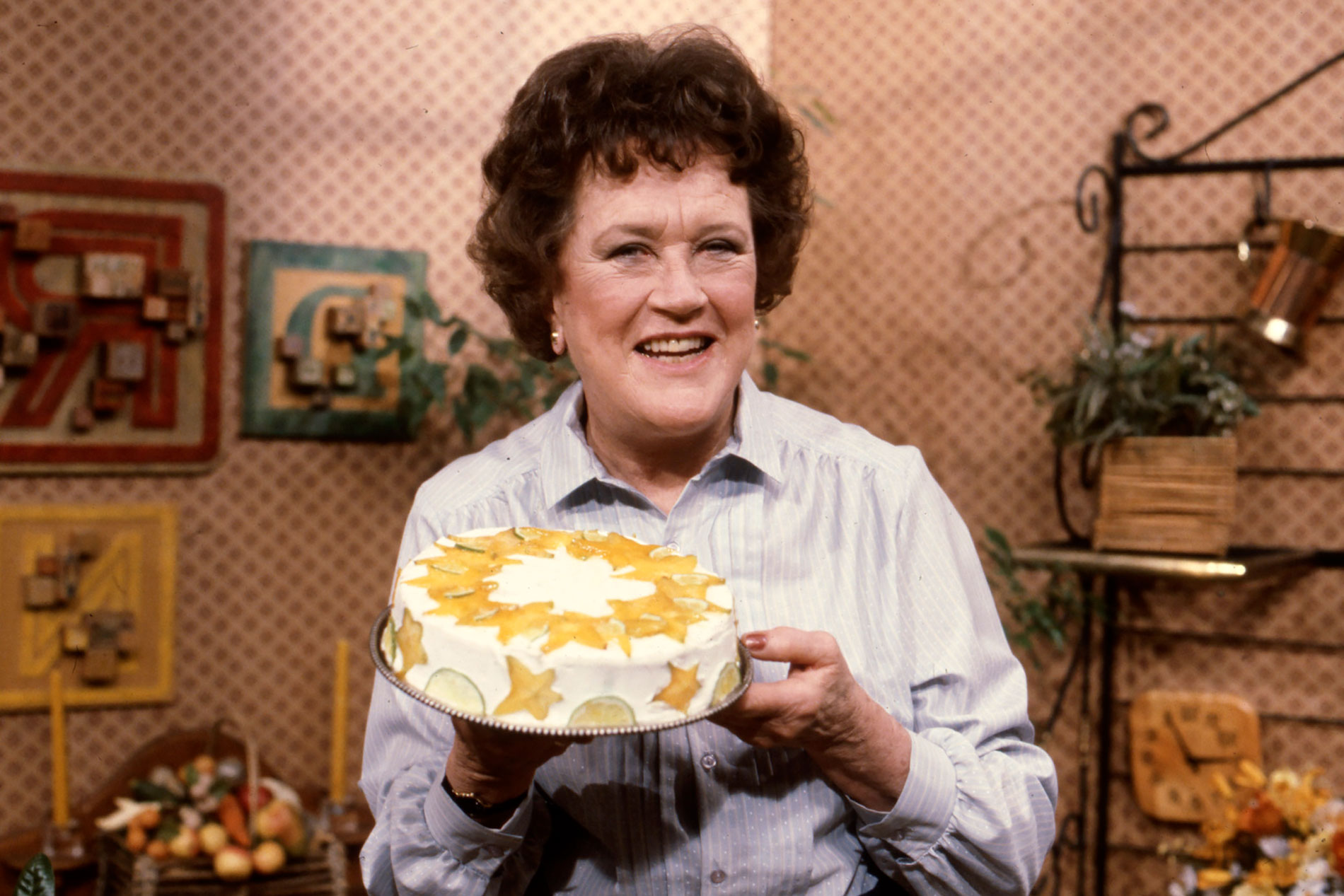
    Julia Child is awesome. I’ve known this since I was a dumb kid, a know-it-all teenager, and now an emotionally stunted adult. The culinary legend was funny, blunt, and extremely knowledgeable as she towered–later, hunched over her kitchen counter, cooked delicious meals, and narrated it all with that uniquely wheezing sing-song voice of hers. Clearly, I’m not the only person who feels this way. She’s still a pop culture figure now, close to 20 years after her death in 2004. Iconic, poly-Oscar-winner Meryl Streep even played her several years back in the literally halfway decent Julia & Julia (I kinda loathed Amy Adam’s mostly unrelated portion of that movie). And now we have a brand-new documentary about the famous chef.

    Julia is from the directing duo of Julie Cohen and Betsy West, whose last documentary about Ruth Bader Ginsberg, RBG, garnered strong notices, an Oscar nom, and pulled in 14 million dollars at the box office, no small feat for a documentary these days (…or any days, really). Like RBG, Julia is a celebration of its subject, more hagiography than a warts-and-all look at the person behind the public veneer. Think Won’t You Be My Neighbor, which worked to confirm the notion that Fred (Mr.) Rogers was, basically, the cool-ass dude we thought he was. In much the same way, Julia exists to confirm rather than challenge the public perception of Julia Childs. Frankly, I’m more than fine with that. Lemme keep my heroes.

    As far as the presentation goes, Julia is a typical documentary in that it’s mostly archival footage, interview snippets, and talking heads from the present-day pontificating about the film’s subject. But since that subject is a world renown chef credited with bringing French cuisine to the U.S. at a time when frozen food was considered haute cuisine, the movie gives itself over to fussed over shots of delectable looking food steaming, simmering, and blubbering in bowls and on plates. Food porn, basically. In a nice touch, the filmmakers try to make it seem like Mrs. Child herself is making the food in those modern segments. Either that or it just happened to be an older chef whose aged hands we see crafting the food.

    While the presentation isn’t revolutionary, the movie gets the most out of its tried-and-true formula. Cohen and West clearly know how to make a documentary that collapses a lifetime into an hour and a half without feeling like any loose ends are left untied. Not an easy feat, I assure you. True, the many facets of Julia Child’s life fly past at a breakneck pace, and you could easily make whole movies out of just one of those segments, like her growing allyship with the LGBTQ community, or just the initial hate to love courtship between she and husband, Paul. The movie, though, flows elegantly through this life story, like an experienced chef nimbly floating around the traffic of a hot, bustling kitchen.

    And  you wouldn’t know it, but the movie is ludicrously romantic. Part of that is simply because Julia and Paul genuinely loved each other and wanted to be around one another even after decades of marriage. For a sourpuss like me, seeing two people fit like a hand in a glove, like two Lego pieces perfectly snapped together, like… Bert and Ernie, was balm for a pessimistic soul. It helps that the movie presents their romance so glowingly. Snippets of letters they wrote each other, some of which are stunningly romantic couplets from Paul, float across the screen over autumnal images while Rachel Portman’s gossamer soundtrack buoys the beauty of it all. It’s hard not to be swept away.

    The movie left me with a warm, prickling feeling. I felt a renewed faith in humanity when it was over. It’s the exact feeling Julia Childs instilled in me all these years. Julia Childs is awesome, and Julia does a great job reminding you why.

  • HoundsTooth Cottage Presents “Half-Cocked” during Art Basel

    HoundsTooth Cottage Presents “Half-Cocked” during Art Basel

    This article originally appeared in PureHoney Magazine. Check them out here. 

    What is art? And more importantly, when is the best time to exhibit it? There’s an easy answer if you’re HoundsTooth Cottage, the art collective and record label operated by Maitejosune Urrechaga and Tony Kapel, the husband-and-wife duo from posh-punkers Pocket of Lollipops: The “what” is up to you, and the “when” is right around Art Basel 2021.

    Say what you will about the fair and its encroaching hipster presence, but Art Basel continues to draw crowds from all over to Miami, and it’s the uninvited locals who have hammered out the personality traits that make the event relevant. A counterprogramming case in point is HoundsTooth Cottage presents “Shooting Blanks: The Art of ‘Half-Cocked.’”

    HoundsTooth Cottage, in collaboration with the artist organizations Clandestina Miami and Together, will activate a space at the 7 Seas Motel beginning on November 22 with an eclectic mix of art, music, performance centered on a thematic, immersive look at the 1995 cult classic underground music film, “Half-Cocked.”

    A true-ish story with a documentary air and people untrained as actors playing themselves, the film follows a group of music and art scenesters from a Louisville, Kentucky party house who steal a van full of musical equipment and go on tour. Made by a husband-and-wife team who, like Urrechaga and Kapel, are themselves artist and musicians, “Half-Cocked” is an adventure in off-the-rails, multidisciplinary creativity.

    Kapel, also a photographer, feels the same need today to record his creative surroundings. “The music scene is always changing, the art community is always changing,” he tells PureHoney. “If it isn’t documented from the inside sharing out, then those looking in could be limited on where to look.”

    “Shooting Blanks” offers screenings of the 1995 film; photographs and ephemera from its writer-director husband and wife team, Suki Hawley and Michael Galinsky; and art from cast, crew members and artists connected to the Louisville, Kentucky scene documented in “Half-Cocked.”

    A love letter to Louisville (and thereabouts)

    Galinsky, a photographer and musician, happened upon the Louisville scene while on tour with his band Sleepyhead. Upon returning to New York City, he connected with Hawley, then studying film, and the two set out to make a movie. Entranced by the electric charm of Louisville’s scene and the connections he made on visits, in correspondence and through word of mouth — all pre-Internet — the seed for a documentary like film was planted.

    “While in college, I started a band and I started to document the community I first was a fan of, and then a member,” Galinsky tells PureHoney. “On our first tour, I met most of the people who would end up being in ‘Half-Cocked,’ and over the next couple of years, I made several trips that retraced the route of that first trip.”

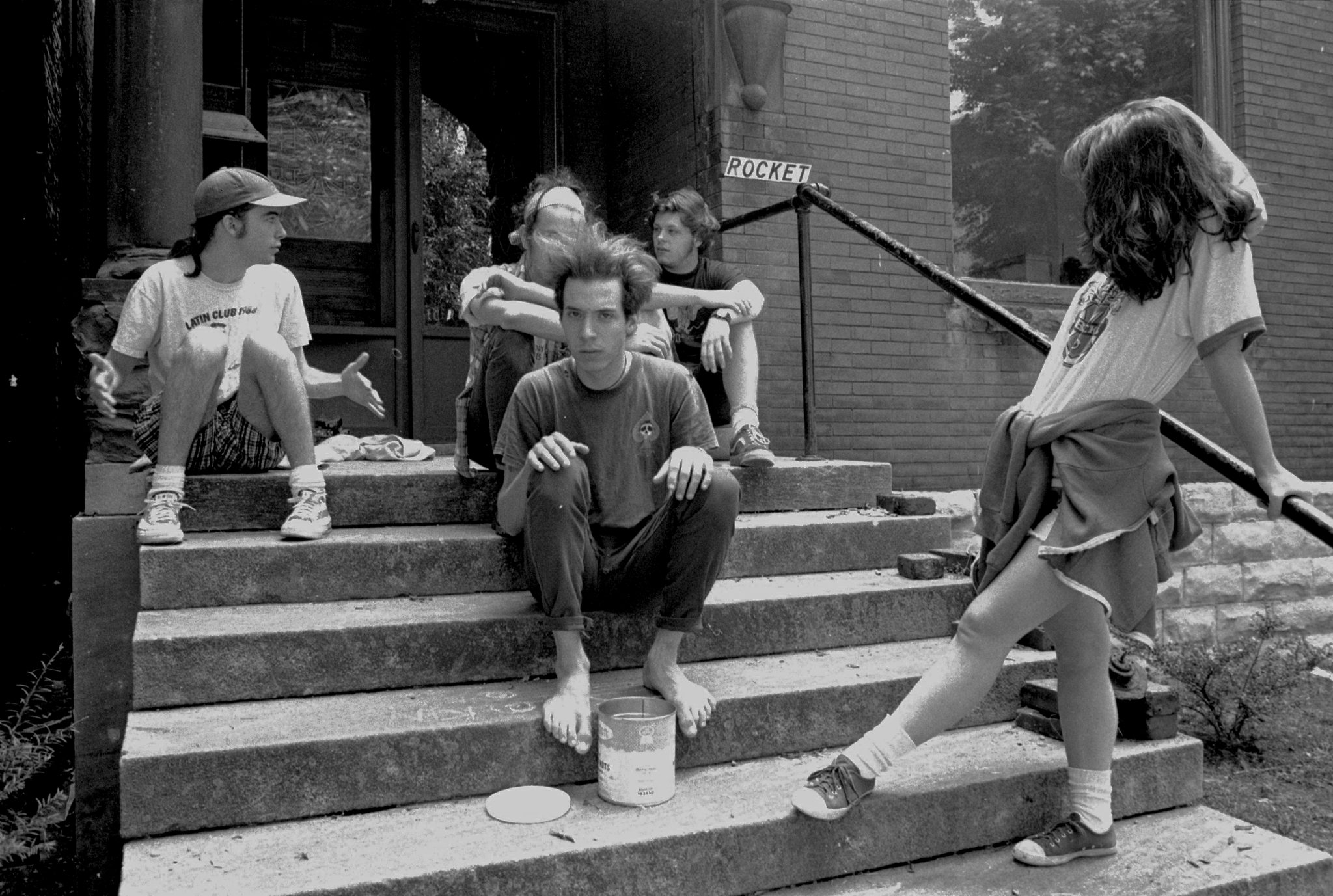
    Imagine the youthful ennui of Jim Jarmusch’s “Stranger Than Paradise” and the punk-fueled, devil-may-care attitude of Bruce McDonald’s “Hard Core Logo,” with everyone traveling the kind of trail blazed by Jack Kerouac in “On the Road,” and you’re in “Half-Cocked’s” ballpark. Ably acted by actual members of post-rock outfit Rodan, among others, the movie is more than a fictionalized doc; it’s a capture of a moment in a wildly creative, reactionary, independent and nurturing scene in Kentucky’s biggest city. “While the film starts in Louisville, and it focuses on the wildly creative people who were involved in the Rocket House, it’s really meant to capture the spirit and feeling of the much larger community of lesser-known bands and artists that flowed between a network of towns,” Galinsky said.

    According to Hawley, the loose script served as a guide for the musicians to play “versions” of themselves and the biggest difficulty was to get them to act as if though they’d never played an instrument before, let alone assemble a drum kit for a gig.

    Galinsky will also present his book, “The Decline of Mall Civilization,” a candid document for a bygone era of American consumerism. Kapel initially contacted Galinsky for an interview on the HoundsTooth Cottage show on internet radio station Shake 94. As it turned out, Galinsky was also responsible for the cover of one of Kapel’s favorite 90’s album, Unrest’s compilation “B.P.M. (1991-1994).”

    “The impetus for making the film was to highlight and celebrate the amazing creativity we saw in the music scene through a teen riot/coming of age tale,” says Hawley. “Interestingly, that’s also the impetus for the HoundsTooth show, meant to honor and celebrate the intense creative lives that the people who surrounded the making of ‘Half-Cocked’ have pursued.”

    Art Basel for the sake of art

    The 7 Seas Motel gallery will feature works by more than 20 artists, and additional film screenings from independent film studio Rumur.

    The spirit of this exhibit recalls that of the better satellite fairs that sprung in the wake of Basel over a decade ago. The ones that didn’t care about getting photographed while holding a bottle of champers (label out) or of pulling up to the front in a rented European sports car. No, this exhibit is for those who want to home in on artistry and enjoy art through the experience of those who made it.

    Galinsky says it best in describing how “Half-Cocked” came to be: “We met a bunch of people who shared our interest in music, art, and rebellion and then went to another town where the people we’d just met told us about other people we should meet. We were like the pony express of indie rock bringing information from town to town and discovering new bands, ideas, and ways of being.”

    From Wikipedia: “Half-cocked is a cult music road movie, made in 1994 in Louisville, Nashville and Chattanooga. The movie tells the story about a group of high school teens who steal a van full of music equipment and pretend to be a band, called “Truckstop” (played by the band Rodan) in order to stay on the road. When the band starts playing gigs, their sound is largely inconsistent and incoherent, however, over time, the band becomes increasingly competent in their musicianship. The film puts much emphasis on the indie/alternative rock subculture.

    Many indie rock bands such as Polvo, Grifters, Freakwater, Versus, Slant 6, Rodan, Unwound, Helium, Sleepyhead, Crain and Ruby Falls are featured in the movie. Members of Rodan and Grifters play in the movie as well as actors. The movie appeared in a small run on VHS and unavailable for years until its 2007 re-release on DVD. A soundtrack of the movie appeared on Matador Records.”

    HoundsTooth Cottage presents “Shooting Blanks: The Art of Half-Cocked,” Nov. 22-Dec. 5 at the 7 Seas Motel, 5940 Biscayne Blvd., Miami. houndstoothcottage.com

  • Another Wing by DJ Khalid Review

    Another Wing by DJ Khalid Review

    We usually stay away from reviewing food on The Jitney but we do deliver culture. And Another Wing by DJ Khalid, basically a new wing joint in Wynwood, is indeed Miami culture. It was one of Colin Jost’s first jokes last night on SNL.

    Back in Miami. It’s a Sunday afternoon. A lady friend and I are watching football. We wanted wings. I opened up Postmates to order from Hurricane Grill & Wings.

    To witness Another Wing by DJ Khalid being offered on the app seemed serendipitous.

    Whoever designed the menu? Winning.

    We appreciate good puns and this menu drips with them. All I Do Is Wing? Shut-up, that’s good.

    Major Key Meal? Bring it, bro.

    So we order a bus-load of food just in time for the 4:15pm games and chill. The food arrived surprisingly fast, like in 30 minutes. Winning.

    Whoever designed the bag?

    Winning.

    As seen in the featured photo, the pink and light blue bag with palm trees and pimped out Rolls- Royces, is also dripping with swag.

    We were so stoked.

    And this is when things turn very Miami, very fast.

    We take the food out of the bag and prepare to dig in just as the Packers and Seahawks kick off for a mid-November game.

    “Is there another bag?” says my friend.

    “Another one?”

    “Yeah. Another one?”

    “Another bag?”

    “Yeah. Another one?”

    “Nah. Why?”

    “They forgot one of the fries and all of the sauces.”

    “All of the sauces?”

    “All of the sauces.”

    “Even the ketchup?”

    “And the ketchup too.”

    Okay, no ketchup, no blue cheese, no honey mustard, no fries, not the end of the world, right? I mean, you know, that’s asking a lot, right? Yeah, sure, totally.

    Another Wing by DJ Khalid Food

    The issue with this wing joint, and the reason why we will never order it again, is the food. It’s not good. It’s not like ridiculously bad, but it’s not good.

    We had the buffalo chicken and the lemon pepper chicken.

    We ate like 25% of the buffalo chicken and threw away the rest.

    The lemon pepper chicken was better.

    To their credit, the portions were huge. It’s just that it’s fast food quality. Like McDonalds, maybe a bit better, but not as good as Chick-fil-A or Popeyes.

    That’s a low bar for a restaurant.

    But then again, it’s so Miami.

    On the outside, super beautiful.

    On the inside, a little nasty, dirty and cheap.

    You know, if you listen to Rick Ross (who once told us he never read his own autobiography but would wait for the movie) there is a wing shortage in America, due to current supply chain issues. And as a result, he’s going to thighs.


    Maybe Khalid should have done the same thing.

    Another wing.

    not that bad but proceed with caution

    2 drumsticks out of 5 drumsticks.

  • Fear and Loathing at Microdose Wonderland Miami

    Fear and Loathing at Microdose Wonderland Miami

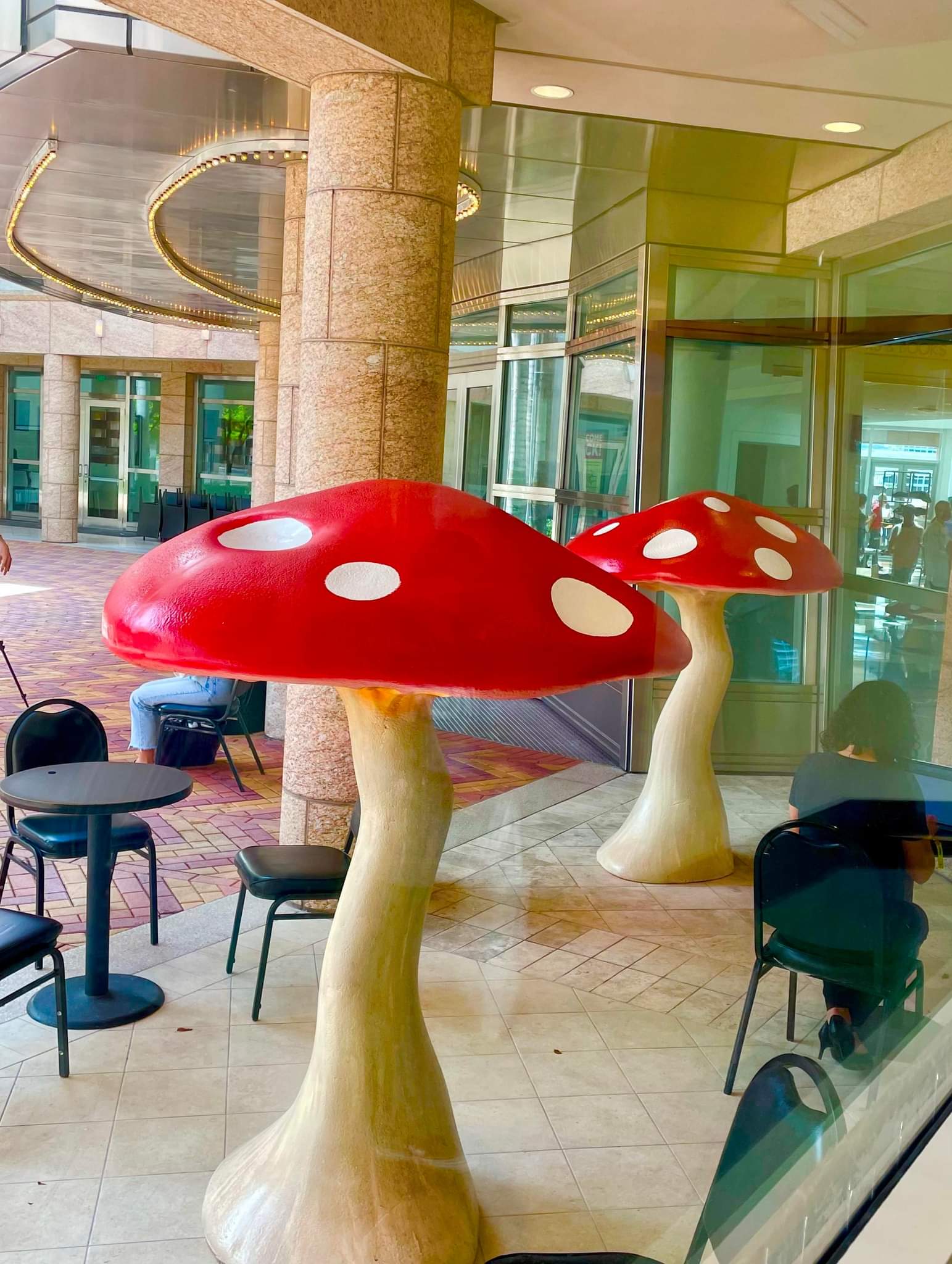
    Monday morning on the Metrorail, somewhere between Dadeland South and Dadeland North when the Magick Miami Mushrooms began to take hold.

    Suddenly there was a horrifying roar all around us and the sky was full of what looked like huge pterodactyls: swooping, screeching, and diving around the Government Center station.

    I am on my way to Microdose Wonderland Miami  at Adrienne Arsht Center, billed as: “The largest psychedelic medicine business event, ever.” And wait…there’s more! Mike Tyson and Lamar Odom are guest speakers?!

    I had ingested the entire psilocybin chocolate bar about 6 am and it felt like I was peaking already.

    I realized that I hadn’t changed the time on my watch and it was still an hour ahead… or was it?  Snaggle toothed junkies waited like sharks at the bottom of the escalator as I went down. Did I pee in my pants…or does this whole Metrorail station smell like piss? Rat Bastard and Kyle were already at the Arsht Center texting things like, “This better be good…”

    Rat is on speakerphone telling me to take the “People Mover” while I admire the historic Claes Oldenberg Orange Peel sculpture. Out of nowhere, an old-fashioned yellow cab pulls up and well…Fuck it, I got in. Cars blaring hideous music pass by.

     “Take me to the Adrienne Arsht Center!”

    By the time I jumped out of the cellophane taxi on 14th and Biscayne around 11am, Mike Tyson was preparing to speak in front of a full house about the mental benefits of tripping shrooms. Press registration was already underway outside the “Ah- Shits Center”, and we still could not figure out what the hell kind of event this was.

    “That’s the press table,” said a strapping young lad in a white Microdose Wonderland T- shirt and blue jeans. “That’s where you have to sign in for credentials.” There was a small line for “Instant Results Covid Testing”, and they were giving out mandatory masks.

    Rat, Kyle, and I got our wristbands and walked towards the glass entrance doors. A faint scent of patchouli, weed, and dollar bills filled my nostrils.  Walking inside, vendor tables flying banners saying things like: PSYCHEDELICS TODAY, APEX LABS, CLEARMIND, EVERYDAY DOSE, PSYCHEDELIC WATER, PSYCHEDELIC VENTURE CAPITALIST…they were giving away free stickers and pens that said things like, “Support Psychedelic Science.”

    A turban wearing Sikh from Dubai handed me his card. A bearded middle-aged man from Holland, wearing a Grateful Dead baseball cap handed me a pair of 3-D glasses to put on. “Vatch the blinking lights and glowing svirls,” he smiled. A thin Caucasian woman cloaked in a Peruvian blanket escorted us to these soft yoga mats surrounded by small crystals. She muffled my head with foam glasses connected to headphones. Rat, Kyle, and I lay next to each other listening to soothing New Age meditation music as Rat babbled, “This reminds me of that time I was a little kid stuck on the ferris wheel at the county fair… Grand Funk Railroad was playing live…”

    We walked past the main auditorium and caught a glimpse of Mike Tyson onstage, sitting below a gigantic monitor with his face on the movie screen…which motivated us to sneak upstairs towards the balcony like shadows into a “VIP Area”.  Rat pointed at something, “We are sitting in the $1499 ticket section,” he continued, “there has to be free drugs or at least free beer around here.”

    I put my hood over my head and leaned forward to listen to Mike Tyson. I love Mike Tyson. I had emailed several interview requests to his publicist over the weeks prior to event.

    I look down at my notepad and for some reason it says, “MIKE TYSON FOR PRESIDENT!” Pen in hand I turn the page and scrawl, “If Donald Trump can be President, I hereby assure you that Iron Mike Tyson aka Kid Dynamite would spread love around the world like a messiah. The New Aeon would begin! There would be NO MORE WARS IF MIKE TYSON WAS PRESIDENT OF THE UNITED STATES, AND I CAN PROVE IT.” I took a deep breath and was unable to write anything more onto the notepad. I was tripping balls.

    “His best VP Candidate would probably be Ozzy Osborne,” I thought to myself. Most Americans love Mike Tyson and Ozzy.

    We sat and looked over the balcony as Mike Tyson paced onstage.

    “I am a psychedelic junkie!” he exclaimed with clenched fists. The filled auditorium burst into applause as the former World Heavyweight Champion settled into his chair on the large stage.

    After that opening statement, honestly, it was hard to hear the GOAT. He was speaking softly, and the microphone was just not picking up his famous hit Broadway voice.

    “I should be doing the sound here…this is terrible… I’m a Sound Engineer,” whispered Rat. I leaned over the balcony to hear better…

    Mike Tyson was talking about how this psychedelic medicine has helped him overcome brain trauma from boxing injuries, depression, even suicidal thoughts. At one point he was holding back tears as we craned our necks to hear what he was saying.

    “It is exactly what I need…this special sauce…you are the creator of your own heaven and hell…I put it into my body and it worked for me…”

    He discussed how a company he reps, WESANA has created these new psychedelic treatment facilities where patients are monitored and the goal is FDA approval of psychedelics for athletes, veterans, and others with PTSD, suicidal depression, traumatic brain injury, etc.

    There was a Q and A with the audience, but we did not get down there in time.

    A man who claimed to be a Shaman asked Mike about the toad.

    “The audience microphone is so damn loud but we can’t hear Mike Tyson,” said Kyle.

    My phone was buzzing non-stop.

    Tyson’s publicist emailed back, “What outlet?”

    “Jitneybooks.com,” I replied.

    She replied, “I’m sorry he only has a limited time for certain press. Thx,”

    I read the email on my phone as I looked at the real Mike Tyson, a stone’s throw away.

    I was so blessed to be in the same room as Mike Tyson. He talked about the death of his ego using DMT, psylocibin, the toad, and other psychedelics… it was a win-win-scratch- that- one-off-my-bucket-list kind of day. Thank you Universe!

    Rat, Kyle and I decided to leave and get pizza. We walked down the street where my BFF met up with us.

    “This is where we first smoked crack 17 years ago. This upscale pizza place was a crack house and they had just started building the Arsht Center across the street.”

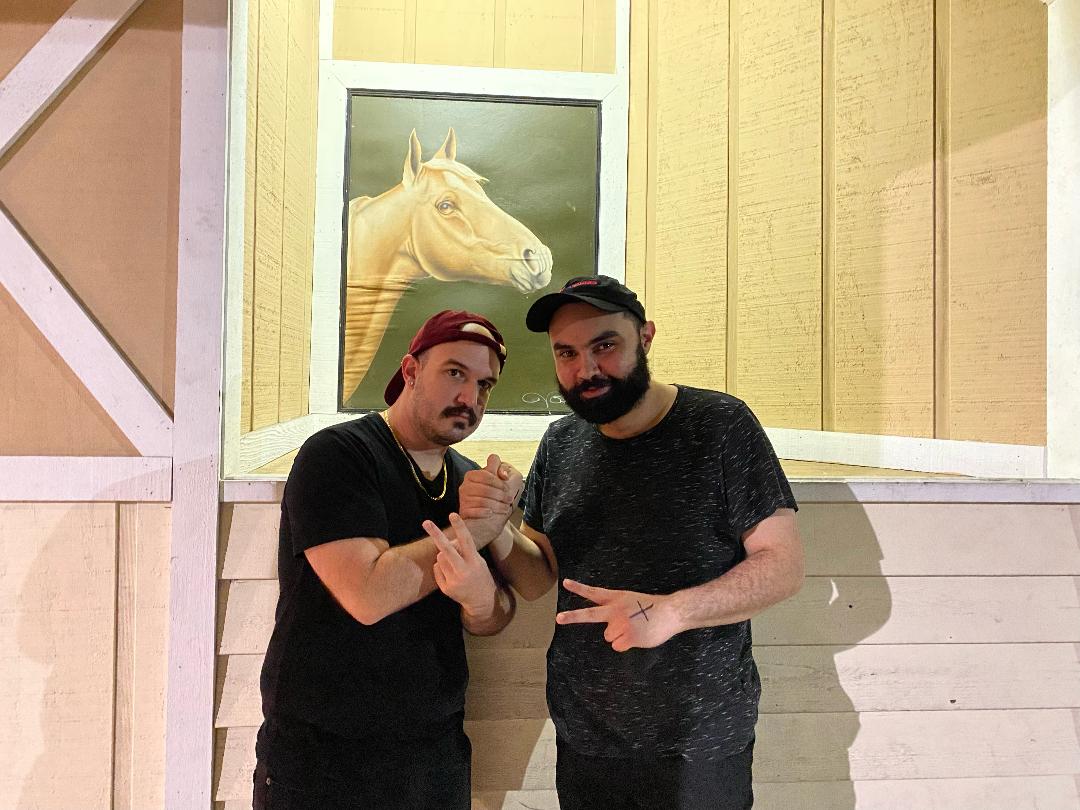
    “They called this area New Jack City back in the day. I bought crack around here for GWAR back in the early 90’s.”

    “Remember…the OMNI?”

  • Firstworld and Millionyoung Interview Each Other

    Firstworld and Millionyoung Interview Each Other

    Firstworld and Millionyoung are playing live at Gramps on November 11th in celebration of Firstworld’s debut album, Pop. Album release show tickets are available by clicking here.  Before the gig the two friends took turns interviewing each other about music, movies and basketball.

    Millionyoung: What is your most essential piece of music gear?

    Firstworld: My hands. You can take away my laptop, my synths, my guitar, and everything else, but as long as I have my hands (and my voice) I can still create and perform. If you want me to be technical, I’d say probably either Ableton or my hydrasynth. Both are essential to crafting my songs and sound.

    Millionyoung: If you could go back in time and score any movie which would it be and why?

    Firstworld: I honestly don’t think I’d be any good at scoring! But if I had the ability to curate a soundtrack or pick the person to score it, I’d have Vangelis do the Star Wars soundtrack because HELLO HOW WASN’T THIS DONE IN THE FIRST PLACE?!

    Millionyoung: What are your favorite venues in Miami past or present?

    Firstworld: Grand Central is my favorite of all time. It was the perfect mid-size venue, a ton of my favorite acts came through there, I got to open for Hundred Waters and Mitski there. Wonderful place. Shame it got taken down for some dumb ass parking lot.

    Millionyoung: What is your favorite Miami Heat roster and why?

    Firstworld: I got into the Heat during the Big 3 era. That was elite basketball, they were basically like the Patriots (any team with Lebron turns into that). HOWEVER, I’d have to say my favorite roster was the 2019-2020 Heat. I love scrappy teams that no one believes in. Those Bubble games had so much drama, especially after Dragic went down in game 1 of the Finals. I cried like a baby. I think that hurt all of Miami, big time. 

    That was honestly the best basketball I’ve ever seen in my life.

    Millionyoung: Where do you see Firstworld in 5 years?

    Firstworld: Touring the world as holograms. If not, underwater, due to climate change 🙂

    Firstworld: What is the most important part of a song? And I mean this in all aspects: songwriting, instrumentation, production, arrangement.

    Millionyoung: I think production is where the real magic is, especially if you can come up with a sound that’s both unique and accessible. It’s one thing to be able to write a hook, or arrange the perfect drop, but in my opinion what really sets the great artists apart is when you recognize them just from the first few seconds, even if you’ve never heard the song.

    Firstworld: Best show you ever played and why?

    Millionyoung: I played this festival in Gainesville called Endless Bummer back in 2010. My friends Brian and MJ from the band ANR played with me too. We played in a bike shop to a few hundred college kids and it was this sweaty mess of moshing and dancing. People were crowd surfing onto and back off the stage. It was house show energy, but in a much larger space so it felt really special.

    Firstworld: Has your perspective/goals on being an artist/performer changed a lot from when you first started Millionyoung?

    Millionyoung: I used to think I would want to tour all the time. I did it consistently for about five years and am so grateful for the experience, but it can really burn you out, and you miss a lot while you’re on the road. So these days I prefer doing one offs shows and short runs.

    Firstworld: If you could collaborate musically with anyone in 2022, who would that be and why?

    Millionyoung: Of anyone current, probably Kacey Musgraves. I just love her voice, and she makes a lot of painfully beautiful melodic choices in her songs. That’s something I’ve always gravitated toward, like music that sounds equally happy and sad at the same time.

    Firstworld: What is your favorite movie of all time?

    Millionyoung: I’ll give you a different answer day to day, but my tops are usually: 2001: A Space Odyssey, The Room, The Big Lebowski, Kill Bill, and Spirited Away.

  • Marvel’s Eternals Soundtrack Features Rickey Calloway

    Marvel’s Eternals Soundtrack Features Rickey Calloway

    True funk is eternal, and Marvel’s Eternals funk is true.

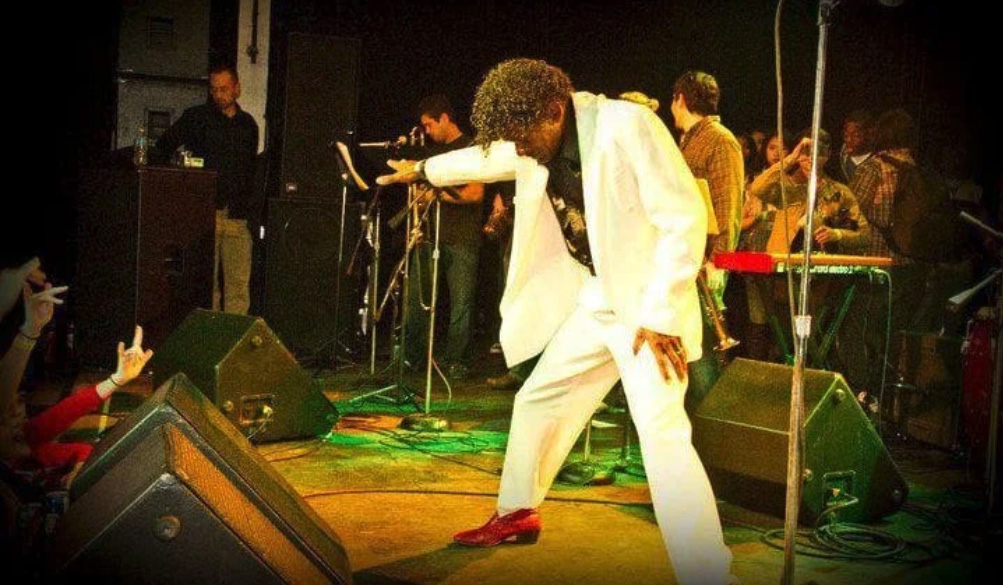
    Just ask Rickey Calloway and The Dap Kings, stars alongside Pink Floyd, BTS’s Jimin, Merle Haggard, and Lizzo on the soundtrack to the MCU’s Eternals (hitting theaters November 5th). Rickey Calloway and The Dap King’s classic record “Stay In The Groove PT. 1” scores a whole scene of the epic film.

    Calloway is of course Florida’s official King of Funk. He’s also signed to Miami’s own Henry Stone Music, where CEO Joe “Boogiedown” Stone has taken everything he learned from his legendary father and carved his own groove into the beat of history.

    Here’s what Rickey Calloway had to say about joining the Marvel Cinematic Universe and becoming a funk superhero worldwide.

    First of all congrats!

    Rickey Calloway: Thank you. It’s a beautiful day. I’m feeling the moment.

    How do you feel about joining the Disney and the Marvel Universe?

    It ain’t sunk in yet. I can’t wait til it’s out and my grandkids can see and hear it because they’re into that kind of stuff. I’m just trying to envision it in my mind. I think it’s gonna be cool. I’m excited.

    What have you heard about the movie?

    I read a couple of clips and I’m going to meditate on it. All I know is that it’s one of the songs that I did with the Dap Kings  and I’m just going to spend some time and research it and see how it all comes together. You gotta realize, Joe was working on this for a long time. It’s just so cool. This is something in my career that I’m very proud of, and humbled too. A lot of hard work went into this music. There have been good days and bad days throughout, but it’s been awesome. I was on my own for so long just doing everything myself and managing, but it’s gotten to a point that Henry Stone Music has took me to another level that I just never would have dreamed would happen. Joe has really been here for me when I need him. I can call him at any time of the day or night. I actually have to stop calling him at three in the morning, but he’s always there for me and working hard to get me where I need to go and I am so thankful that I met Henry Stone and Joe Stone. And he’s become a very hard working manager and publisher all in one.

    How did “Stay In The Groove (Parts I and II)” come about?

    It all started when I was in New York cutting records with The Dap Kings. Kenny Dope  was with us in the studio. It was a lot of fun and I can’t believe the track is still hanging around. “Stay In The Groove” was pure inspiration. I flew home and couldn’t even remember the words that came out of me. The whole band was there and it was just a cool time. We connected right away. I just closed my eyes and kept singing what I felt in my heart off the top of my head, just going with it, going with the feeling. I was into a zone when we recorded that. We didn’t even want to stop. We probably did 12 or more minutes that eventually got chopped down. I like to record like that. Everybody was feeling it. And after we got through, Kenny Dope bought us some pizza from down in Brooklyn, and that was a good pizza, and a good beer. And we were just sitting and having fun talking about the record. We had no idea what would happen, but it was like family. I didn’t wanna leave New York. I hope I get back there some time.

    R.I.P Sharon Jones, was she there?

    Unfortunately Sharon Jones was shooting a movie with Denzel Washington at the time and couldn’t be there.

    Where did you record?

    Dap Tone has a studio. A really nice studio where Amy Winehouse and a lot of big people recorded. They got this basement. Funky basement. And in fact, I played the B3 organ on that song. I kept bugging them to let me play, and that’s me. And it ain’t no whatchacallit, high tech. It’s just a mom and pop studio with a great sound and a lot of history and I felt comfortable there. No pressure. It was cool.

    How did this all start with the Dap Kings?

    What happened is that I was working at University of North Florida back around 1999. I was doing shows and benefits for UNF and donating the money to students for scholarships and I had a guy who saw one of the news articles about me call me up. Johnny Garrett was his name. He said, “Rickey, you know your records are big in Europe.” Which, at the time I didn’t really believe him, because this was my old records. He gave me the phone number for a DJ in the United Kingdom. I called this guy George and said, “Hey, are my records big over there? I hear you’ve been trying to get a hold of me.” He said, “Let me get you in touch with Kenny Dope.” Now fast forward to when I put a CD together called Rickey Calloway King Of Funk. I brought it to Henry Stone and he liked the album and the rest is history. Before Henry passed away, he put me with Joe Stone, so now I belong to Joe and I’m enjoying it. I’m having fun. I’m 68 years old and having the time of my life.

    Rickey Calloway is also proud to announce his new album Eternal Funk on Henry Stone Music, featuring remixes by Sadhugold who recently produced “The Fly Who Couldn’t Fly Straight” by Westside Gunn ft. Tyler The Creator.
  • Tea & Poets to Host Jitney Author Readings This Weekend

    Tea & Poets to Host Jitney Author Readings This Weekend

    Looking for something to do this weekend?

    Come out to Tea & Poets and support local Jitney authors as they read from their new novels.

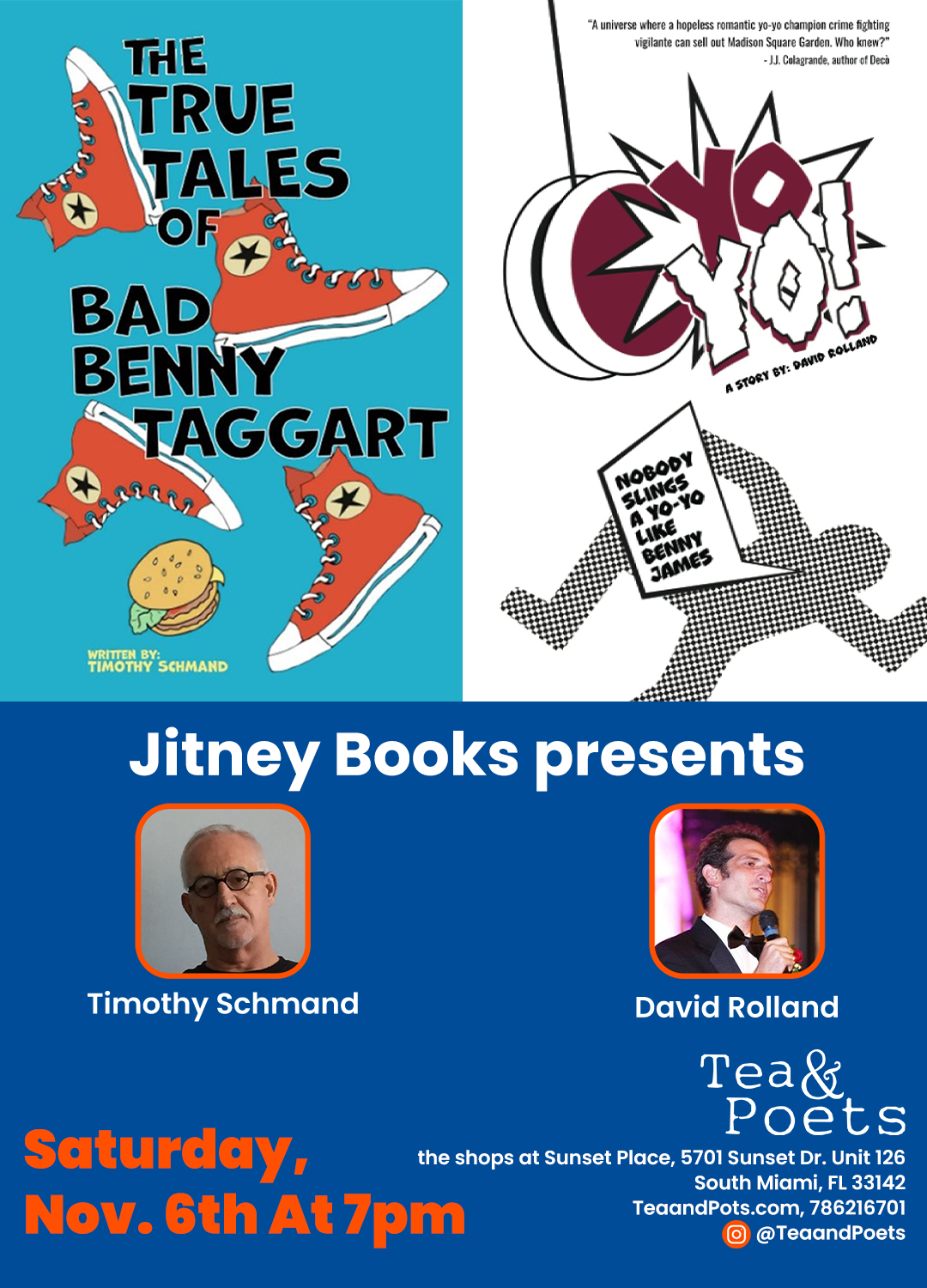
    On Saturday, November 6 at 7 pm a pair of writers who wrote books about characters named Benny will share the spotlight.

    Timothy Schmand will read from The True Tales of Bad Benny Taggart, a late 20th century American coming-of-age journey that is far from a straight path. Faced with larger-than-life danger and confronted by mysterious folk he never could have imagined, Benny wrestles his way toward whatever adulthood may bring.

    David Rolland will read from Yo-Yo, a fictional tale about Benny James, the world’s greatest yo-yoer. As Benny navigates his weird world he learns life really can be like a yo-yo. Sometimes it’s up, sometimes it’s down, and sometimes it smacks you right in the face.

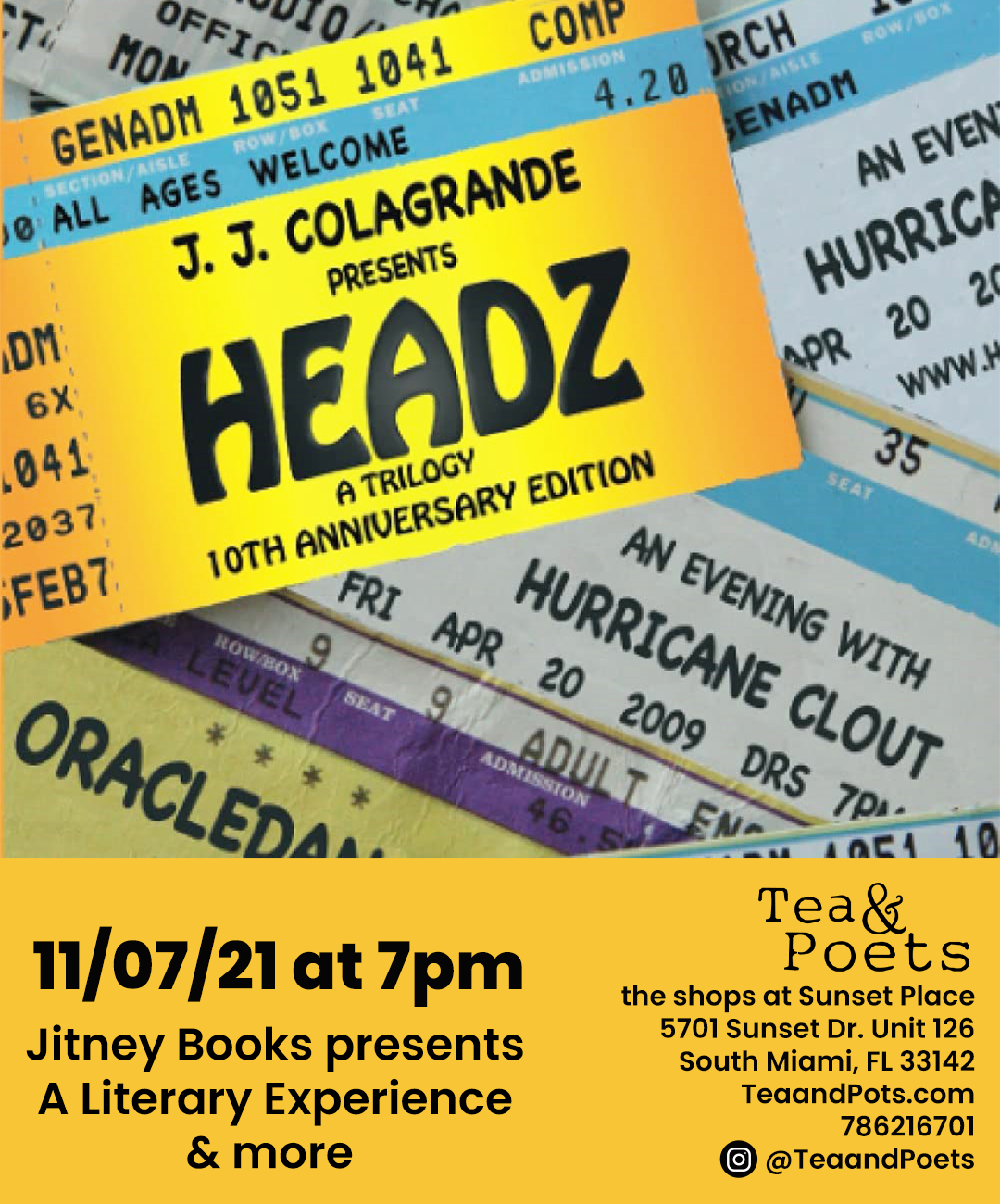
    Then on Sunday, November 7 at 7 pm, J.J. Colagrande will read from his new edition of Headz the Trilogy. First published in 2011, it features a diverse cast of rebellious American characters from New York, San Francisco, and Miami. The book follows their journey across the country to Chicago for Oracledang! — the biggest and baddest festival of the summer. Once there, paths converge for an event none of the characters will soon forget and a concert only a few will get to see.

    Tea & Poets is located on the first floor of Sunset Place at 5701 Sunset Dr. Unit 126, South Miami, FL 33143.

    We’re looking forward to seeing you there.

  • Dude, You Gotta See “My Hero Accademia: World Heroes’ Mission”

    Dude, You Gotta See “My Hero Accademia: World Heroes’ Mission”

    “Dude, you gotta watch My Hero Accademia!” I heard this phrase just about every day for the first two months of 2020. The person saying it? A co-worker, friend, and anime lover. I’m a lapsed fan of Japanese animation myself, having checked out around the early turn of the century after Cowboy Bebop finished its run. You can’t improve on perfection, so I just kind of rolled my eyes at my friend’s incessance, “Sure, sure, Nick.”

    Then the pandemic happened.

    I suddenly had plenty of time on my hands. I put on the first episode of the five season strong (and still going) tv series and…I wasn’t impressed. Episode two, though, was much better and before I knew it, I was hooked on the antics of Izuku Midoriya and his classmates as they trained in a specialized hero school to become superheroes in a world where 80% of the population has developed “quirks” or unique superpowers. (And when I say unique, I mean unique: One dude controls fabric. Another has tape that comes out of his elbows. Yet another is half frog. Etc.)

    It’s a popular show both in Japan and the U.S., so here we are with a third theatrical movie based on the anime, My Hero Accademia: World Heroes’ Mission. (Anime titles can be a mouthful). Even as a nascent fan of the series, I’ve seen the first two movies already and was excited to review this new one. So, how does it stack up? Par for the course. If you’re already a fan of the series, you shouldn’t be disappointed. If you don’t know a Deku from a Best Jeanist, this probably isn’t the place to start, or is it?

    If you have seen the earlier films, you probably should know what to expect from this one. A previously unmentioned villain shows up and is more powerful than any other foe our hero, the green haired, giant-hearted Izuku, who’s obsessed with becoming the world’s number one hero because he wants to help people, has ever gone up against. Unlike the series, whose villains rarely, if ever, are fully defeated, even at the end of several episode arcs, these uber-powerful villains are dispatched and forgotten by the film’s end. To be honest, I can’t even remember what the villains of the first two movies looked like and what their deal was. I think a dude turned into a giant, robot clock monster thing in the first one, all metal gears and wires attacking our heroes? I’m not sure anymore.

    The villain this time around may kick around a bit longer in the old noggin, if just because of his blue skin, wild outfit–a robe dotted with iridescent mirrors–and name: Flect Turn. (Speaking of mouthfuls…). Flect wants to rid the world of people with quirks, though, ironically, he himself is a quirk-er. Using some doomsday theory as an excuse, Flect releases a chemical agent that only harms those with superpowers. Underneath his far-fetched reasoning for doing this (something about people with quirks possibly bringing about the end of the world, or something) he actually has a much more personal rationale for his actions. And that’s what makes him stand out a little more also. Like the motives of the best ubervillains, Flect’s is kind of understandable on the one hand, while selfish, myopic and monstrous on the other. I’ll let you discover what that reason is for yourselves, but I liked the simplicity and straightforwardness of it.

    Izuku, meanwhile, now an intern for a top hero agency, scours the countryside, along with just about every superhero around the world, for Flect. Through some convenient mix-ups and energetic chase scenes, Izuku somehow ends up on the run from the police along with a new character: the young, seemingly ne’er-do-well, Rody Soul, a disenchanted teen, raising his younger siblings by himself in the slums. Like many a story in the Hero universe, this cynical character is eventually won over by the selfless, (insanely) driven Izuku, and comes to see life through the hero’s rose-tinted glasses.

    Come to think of it, maybe this isn’t the worst place for a My Hero Accademia noob to start. With these new characters supplanting the need for too much previous knowledge of the show and its characters, a newcomer could, theoretically, start with this third movie. It’s certainly exciting enough with several well-done action sequences sprinkled liberally throughout and a fun musical montage that shows the strengthening friendship between Izuku and Rody. And even if some things aren’t diligently explained because you’re expected to know by this point, it’s still going to be clear enough who the good guys and the bad guys are and why they’re doing what they’re doing. True, some things might not mean much to the uninitiated–such as the trio of fan favorite characters that team up in the finale– but there shouldn’t be outright confusion.

    And whether you’re familiar with the world or not, it’s still a nicely animated movie. Now, it’s not on the eye-popping level of an Akira or Spirited Away, but it sure has its moments. A late action sequence stands out because it attempts the animated version of a “oner,” as the “camera” swoops from one character to another doing their hero thing with seemingly no edits in between. What’s cool is that it looks like traditional rather than obvious computer animation. The background designs are simplified, almost becoming line drawings, so that they can rotate into different angles in front of the camera as it glides through the action.

    If you’re an action fan, an anime fan, or just want to see something different, I recommend (*deep breath*) My Hero Accademia: World Heroes’ Mission. For me, it was a welcome return to a bunch of characters I’ve become quite fond of. And frankly, Izuku Midoriya’s unwavering optimism was a welcome sunny balm to a depressingly rainy weekend. So, whether you are a My Hero novice or expert, an anime connoisseur or neophyte, give this one a shot.

    Oh, and thanks, Nick. You were right.