Category: Movies & TV & Theater

Movies & TV & Theater on The Jitney is Miami’s cultural corner booth, the one where the cortadito hits hard and the takes hit harder. This page is for people who live their lives between art openings, Heat games, and late-night arguments about whether the new A24 movie was genius or basura. Everything here moves with Miami speed. Reviews are not academic snoozers. They’re fast, emotional, sunburned dispatches from someone who has seen too much, feels too much, and still shows up for another round.

Miami movies and theater.

Film coverage jumps from Wynwood-indie-weirdo vibes to blockbuster spectacle at Dolphin Mall. TV gets the same locally-sourced treatment. Prestige dramas, trash TV, guilty pleasures you’d never admit at Panther Coffee but binge anyway at 2 a.m.

Miami movies and theater.

Theater, though — that’s where the page breathes. Broadway, Off-Broadway, tiny Miami rooms where the AC barely works. If a show risks something, if it tries, if it even thinks about having corazón, it finds a home here.

This isn’t some neutral critic voice. It’s Miami talking. Sweaty, loud, honest, a little chaotic, and deeply in love with storytelling — the kind that rearranges your soul, at least for the night.

  • Creed II Is a Middleweight of a Movie

    Creed II Is a Middleweight of a Movie

    For many people, Rocky is their Star Wars, a movie that captured their hearts growing up. For me, Star Wars is my Star Wars. I’m more of a casual acquaintance of Sylvester Stallone’s long running boxing franchise. Still, Creed, the spin-off and continuation of that series, impressed me, and I looked forward to its sequel. Creed II, it turns out, is a perfectly ok continuation. As a fan of the series, you should get your money’s worth. But it’s a great example of the law of diminishing returns.

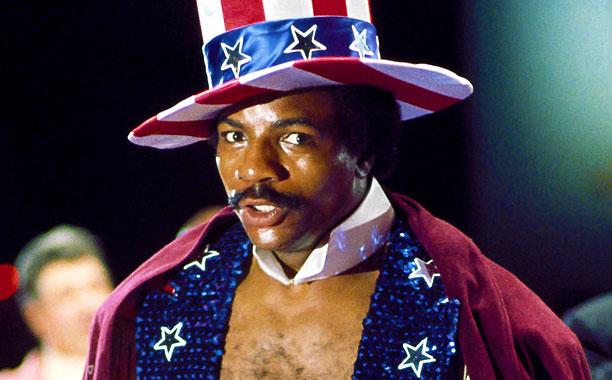
    Creed II continues the story of Adonis Creed, the son of Apollo Creed, deceased rival/best friend of Rocky Balboa from the seemingly hundreds of Rocky movies. Adonis’ life is going great; he’s still boxing, fighting for the world championship title in the film’s opening match; Rocky is still his coach, Bianca  still his girlfriend. But a specter from the past comes into their lives: Ivan Drago, the Russian boxer whose ruthlessness killed Apollo in the ring thirty years prior in the events of Rocky IV. Eventually vanquished in the ring by Rocky in a follow-up bout, a shamed Ivan has been living in obscurity, raising his son, Viktor, to be a vicious boxer himself. Drago wants payback, redemption for the humiliating defeat he suffered at Rocky’s hands all those years ago. He aims to get it through his son, who challenges Adonis to a boxing match for the ages, as the next generation grapples with shared tragedy.

    Creed II is not that different from its predecessor, but somehow it’s still not as good. Part of the problem is its case of the “little mores.” It’s a little more contrived, Adonis a little more sulky (at one point he says, “Daddy’s being a bitch.” Yup. I agreed), Rocky a little more of a cartoon. None of it’s awful, but those littles add up, and by the end, unbalance the film.

    With the connections to Rocky IV, callbacks abound again, continuing the fan service so prominent in Creed. Many are pleasing, some even surprising. It’s great to see Rocky and Drago, the ultimate rivals, meeting once more, 30 years later, both men ravaged by age. I liked the awkwardness of their interaction, the resentment simmering underneath Ivan, Rocky’s weary attempts to let the past stay there.

    Nice Chemistry Between Sylvester Stallone & Michael B. Jordan

    Sylvester Stallone has returned to scripting duties this time around, and his script is ok. The humorous interplay between Rocky and Adonis finds its way into the sequel, but the movie’s just not as much fun. There’s more moping this time around, with Adonis questioning himself endlessly, something admirably missing from Creed. And in general it’s more of a slog than its predecessor. Creed’s ending featured a powerful moment where Adonis revealed in one clean, concise line why he’s pushing himself so hard. That fleetness is missing here. The dialogue isn’t painful, per se, but there’s just too much of it. What could be made clear in a few words, or in a look, is often over-explained, which painfully draws the movie out. When the original Creed ended, I was pumped, energized, ready to take on the world. I walked out of Creed II tired and exhausted.

    Creed II suffers in comparison to the original, but it has its moments. If you’re a fan of the series, especially if you have a special place in your heart for Rocky IV, there’s some great stuff for you here. It’s great to see Dolph Lundgren again, and the way Ivan and Viktor’s story plays out in the periphery is moving; it’s also nimbler and less exhausting than Creed’s story. Also, it’s nice that they speak in Russian to each other when alone, rather than a heavily accented English. That being said, even though I don’t speak the language, even I could tell that Lundgren had a heavy accent. And the now expected training sequence hits the right cheesy notes fans have come to expect. And if you missed the iconic “Rocky” theme in Creed…well, you’ll see.

    I didn’t see Creed until the night before I saw the sequel. I’m glad I finally caught up with it because I really enjoyed the film. On the other hand, seeing the two movies so close together made the flaws of the sequel stand out more, and, to be honest, I was a little Creeded out by the time I reached the sequel’s mid-point. It has its moments, but, overcome with boxing-itis or not, I have the suspicion that Creed II is strictly for the fans.
  • The Front Runner Is Politics as Entertainment

    The Front Runner Is Politics as Entertainment

    The Front Runner isn’t made for the modern day news junkie. Maybe the NPR addict, but if you like the fast cuts, loud sound effects and  obnoxious punditry of CNN, MSNBC, or FOX News this new flick might not be your cup of tea.

    The Front Runner is a more subtle affair.

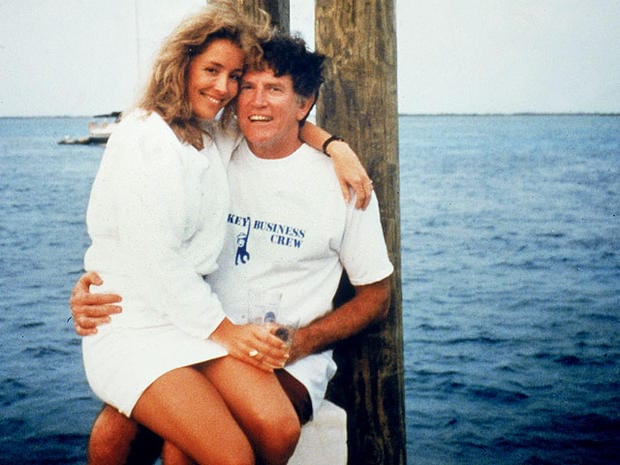
    It is based on the true story of when 1988 presidential candidate Gary Hart got busted by the media for having a tryst with ex-model Donna Rice.

    Even though the movie takes place in the ’80’s, it has more in common with ’70’s cinema. There’s no musical cues from the Miami Vice era. Director Jason Reitman wears his Robert Altman influences on the sleeve of every chatty, breezy scene . Hearkening the loosest of Altman’s movies like Nashville if you don’t know the in’s and out’s of Gary Hart’s real life history going into the theater, The Front Runner won’t hold you by your hand like much of modern cinema does. You’re going to have to be patient and watch the story unfold in front of you.

    If like me you only knew Hugh Jackman as Wolverine, you might find yourself surprised by his low-key performance. Although his Gary Hart finds himself in a beserker rage mode  whenever his integrity or right to privacy is challenged, in this movie Jackman portrays a real life politician as convincingly as he does a comic book super-hero.

    The one flaw in this otherwise finely crafted movie is it tries to hammer you over the head that the mainstream press crossing the tabloid line to report on Gary Hart’s affair was a direct thoroughfare to the Trump presidency. The Front Runner believes if the press is going to put more of a focus on a politician’s personal life than the candidate’s opinions on  issues, only narcissists will run for office, and we will lose out on serious minded people like Gary Hart.

    But the message I got from Gary Hart’s story is that if he just had the gumption to stare at the camera and lie about his sex life, he could have been Bill Clinton four years before Bill Clinton was Bill Clinton.

    This article was filed by David Rolland, author of The End of the Century.

  • The Sinister Agenda of Ralph Breaks the Internet

    The Sinister Agenda of Ralph Breaks the Internet

    My five year old daughter loved Ralph Breaks the Internet.

    I’ll admit I even chuckled quite a few times at the animated sequel to the 2012 movie Wreck-It Ralph. But afterwards I wanted to wash my hands. I had failed as a parent by letting my kid see this movie.

    Imagine if in Walt Disney’s 1951 version of Alice in Wonderland instead of meeting  The Cheshire Cat and The Mad Hatter, Alice met The Marlboro Man and Joe Camel and the moral of the story was to smoke them if you got them. You’d never let your impressionable kids watch that movie again, right? That’s as close to a parallel for the crass commercialism and shoddy messaging Ralph Breaks the Internet inflicts upon our children.

    The plot involves Wreck-It Ralph and Vanellope von Schweetz, two conscious video game characters who decide to transport themselves into the internet to find a replacement part from their arcade console.

    I was fine with the corporate synergy of the movie. I understand 21st century children movies are basically two hour commercials for merchandise.  It was even kind of cool to see all the characters the Disney conglomerate owns on one screen. All the Disney Princesses, Star Wars Storm Troopers, and even Stan Lee are in animated form interacting with Wreck-It Ralph.

    What wasn’t cool was that the movie also served as a giant advertisement for how wonderful all these massive Internet companies like Facebook, Google, and especially eBay (who definitely got their money’s worth in product placement as Ralph has to go through eBay to buy the arcade’s replacement part) are.

    Study after study has shown the internet and especially social media has an addictive and negative effect on the human psyche. To have a children’s movie where a major plot point is that the characters get as many Likes as they can isn’t a knowing wink to parents, its subliminal messaging to children.

    Young children already spend enough time on the web watching videos of people unwrapping presents. They don’t need a Disney movie to further indoctrinate them that the internet and all these great websites like Amazon and Uber are the fun place to be. If the next generation decides to voluntarily download the internet into their cerebral cortex, this movie will have done its job.

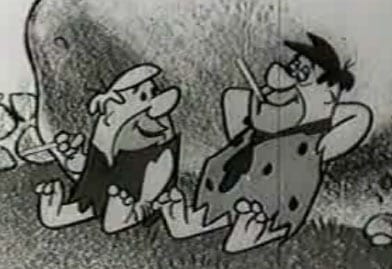
    But hopefully in 20 years we’ll look back at Ralph Breaks the Internet and shake our heads just as we do now that Fred Flintstone used to sell cigarettes.


  • Coen Brothers Provide Half a Masterwork in The Ballad of Buster Scruggs

    Coen Brothers Provide Half a Masterwork in The Ballad of Buster Scruggs

    The Ballad of Buster Scruggs, a new western anthology from Joel and Ethan Coen, is a funny, gorgeous, nuanced masterwork for the first hour or so – at which point things fall apart when we get the two final stories, the ones that feel like emaciated novels or, in this case, features.

    The first of those last couple stories follows a mannerly romance that blooms along a wagon train while the second one, channeling John Ford but feeling instead like the most tedious bits from The Hateful Eight, takes place entirely in a stagecoach. All dialogue. And both of them are interesting and both of them sport the Coen touch but they both also seem to be trying to lift more weight than they can manage.

    The Coen brother’s  movies age in strange ways and there’s no telling if, like The Big Lebowski or Raising Arizona, the quirk of that final chatty story will make it the most memorable of the bunch, the thing people go to again and again on their phones while waiting for a pizza. How any of the stories in Buster Scruggs will stand on their own remains to be seen. Taken as a whole, however, the first four stories are dazzling for their narrative simplicity and, most importantly, for their restraint. They’re quick and pretty and so emotionally resonant that the transition from one story to the next always leaveing the viewer at just the right spot, where you could stand to watch a little more, but you’ve got the picture already. When that momentum’s finally broken with the penultimate story, the movie feels disjointed.

    The first chapter is the title story, about a clean-cut little man in a starchy shirt who calls himself Buster Scruggs (Tim Blake Nelson), and it isn’t so much a narrative as a portrait of a guy who goes about in jollity and song, looking for whiskey and poker and friends. He also happens to be a merciless gunslinger, a superhuman marksman. He only kills in self-defense, and those kills are all amusingly gory and absurd and creative. The Coens show their first bit of western homage when Buster leaps onto a bar and rouses the whole saloon into a rendition of “Little Joe,” a version of the drinking song Marlene Dietrich performs in Destry Rides Again, the 1939 western that saved her career and into which she poured one of her most exhaustive and committed performances.

    After that we get a short take with James Franco as a bandit whose bank robbery goes awry when he finds himself in a gunfight with an old man, clad in a protective suit of frying pans (one of the most hilariously memorable images in a 2018 movie). The old man knocks him unconscious and sets him on a course for execution – an execution that also goes awry, thereby setting him on a course of redemption, which also goes awry. It’s the quickest story of the bunch, and the lightest. It sets us up for the most upsetting, which comes next. It’s tellingly titled “Meat Ticket” and presents a limbless traveling orator (Harry Melling) who, in the care of Liam Neeson, is perched on a stool before smaller and smaller crowds to recite, with misty-eyed passion old poetry and Bible verse and myth. It’s a story with almost no dialogue at all, except for the works that our hero recites. It communicates remarkable depth of character with just closeups and long shots of an actor’s face. It’s easy to foresee how this third chapter might become a favorite

    The best of the bunch is “All Gold Canyon,” starring Tom Waits.

    Tom Waits is most famously a genre-transcending musician who, in movies like Seven Psychopaths, Mystery Men and Coffee and Cigarettes, does tend to play bit characters in line with his stage persona: wardrobes assembled from thrift stores, uncombed hair, stubbled cheeks or mustaches, hats from different eras. It’s here, as an aged, jolly, savvy prospector, searching for gold alongside a river, that Waits finds the best role of his career – a role that’s not just great in itself but for which he appears to have been born. He takes what sounds like a simple line of the script and, bellowing it through tearful terrified giggles, turns it into a quote that’ll probably stand among the Coens’ most memorable.

    The Ballad of Buster Scruggs is being released directly to Netflix on November 16 along with a brief token theatrical run  which might be for the best. There’s an uncanny valley effect with the CGI in a few places that might look better on the small screen. But otherwise the production is particularly beautiful. Painterly. And as for story, the last couple stories are definitely a slog but they do nothing to tarnish the brilliance of the first four.

  • Melissa McCarthy Gets Seriously Serious in Can You Ever Forgive Me?

    Melissa McCarthy Gets Seriously Serious in Can You Ever Forgive Me?

    When successful actors known predominantly for comedy decide to do drama, a natural curiosity is peeked. “Can they pull it off?” we seem to ask, as if the two are oil and water. With Can You Ever Forgive Me? Melissa McCarthy does just that, jumping over from a string of comedic hit films to something character-based and sedate. The result is a good performance in a solid, if unspectacular, movie.

    A fact-based story, Can stars Melissa McCarthy as Lee Israel, a writer barely eking a living in New York. It’s 1991 and the author has had minor success with biographies of famous people. But Lee has fallen on hard times. She lost her wage slave job because of her hard drinking and acidic personality, the combination of which basically makes her unemployable. With rent due and unpaid vet bills stacking up for her only companion, an aging cat, Lee resorts to drastic measures.

    Selling her framed personal letter from Kathryn Hepburn for a good amount of cash gives her an idea, one that’s cultivated when she comes across a letter from the actor tucked into a book of the library’s archives. She steals the letter, but when she tries to sell it, isn’t offered much money for it. The letter is too banal, no personal details. Lee begins to forge her own letters, instead, with the clamored for salacious details, using her talent to imitate famous writers like Noël Coward and Dorothy Parker. Eventually bringing on her newfound friend, and only person willing to put up with her, the ribald, ne’er-do-well, Jack (Richard Grant, wonderfully chewing the scenery) to help sell the forgeries, Lee finds a way to exert her authorial voice and get paid for it. Well, until the FBI begins to take notice.

    There’s very little that’s fancy about Can You Ever Forgive Me?

    It’s straightforward, not overtly stylish. The no-nonsense approach creates a welcoming atmosphere. Filmed on location, the movie captures a wintry New York nicely. My theater wasn’t particularly cold, but I found myself quietly rolling down my sleeves about half-way through the movie.

    There’s also a lack of glamour that pushes a feeling of authenticity. McCarthy is often sans make up, dressed in unflattering clothes. You can see the imperfections on Lee and Jack’s faces. They feel like real people you’d run into on the streets of New York.

    There is definitely an authorial voice behind the scenes, though it just may be a whisper. Director Marielle Heller favors average, medium close-ups, but during a scene where Lee, in a bar, reveals her covert activities to Jack, she lowers her voice, and as she does so the camera comes uncomfortably, close to the characters, as if we’re eavesdropping on their private conversation.

    Another nice touch is how the music changes almost imperceptibly as the movie goes along. The first half is soundtracked by playful jazz standards. But as the situations becomes more serious, so does the music. The jazz drops almost entirely in favor of a more abrasive score that ably mirrors Lee’s growing anxieties.

    The script by Nicole Holofcener  and Jeff Whitty carefully sets up Lee’s misery nicely, painting a picture of a person who does something illegal out of desperation, not out of cold calculation, so that we’re actually on her side once she begins her white collar crimes. The duo also clearly defines Lee’s unlikable characteristics, but reveal a vulnerable human underneath, even creating a capacity for change, an arc that doesn’t betray who she is for the sake of a happy ending.

    Some of the dialogue does hold your hand a little too much, even if it doesn’t yank at it, with Lee explaining her arc in the end, for example. And the way her cat is used as a prop for change stuck in my craw (definite trigger warning if you love cats). I would also have preferred more details describing the amount of work Lee put into mimicking the voices of her subjects. Her precise research is glossed over, barely glimpsed in montage. Her hard work comes off as a little too easy, although maybe that’s the point.

    Throughout, Melissa McCarthy capably holds her own. She’s captivating even without pratfalls, ably matching wits with greats like Richard Grant. But that shouldn’t come as much of a surprise. For one, her character isn’t that different from the boorish ones she’s played in the past (like The Happytime Murders), but more importantly, McCarthy has always been an actress first, comedian second and she reiterates that here nicely.

    Can You Ever Forgive Me?, unwieldly title and all, may not be an amazing movie, but it is a solid work. One that should entertain those searching for something small and quiet.

    This article was filed by Pavel Klein, author of the film-centric blog Write Pavel Write.


  • Bah Humbug to The Nutcracker and the Four Realms

    Bah Humbug to The Nutcracker and the Four Realms

    From the moment The Nutcracker and the Four Realms faded in, I became restless. When it faded out, I felt no different. The movie is an uninvolving bore.

    Based on both the short story “The Nutcracker and the Mouse King” by E. T. A. Hoffmann and Tchaikovsky’s famous ballet, and Christmas staple, The Nutcracker, this reinterpretation focuses on Clara (a strong, attention grabbing Mackenzie Foy), the middle of three siblings growing up in London of the late 1800s. It’s Christmas Eve, but having recently lost her mother, Clara doesn’t feel the holiday spirit. Her father (a severely bored Matthew Macfadyen), reveals that their mother, before she passed, left presents for each of them. Clara’s gift is a Fabergé egg along with a note stating everything she needs is inside. But the egg’s locked; the key to open it not included.

    That night, Clara and her family visit her godfather, Drosselmeyer (Morgan Freeman in nothing more than a glorified cameo) who’s hosting his annual Christmas party. There Drosselmeyer presents Clara with a golden string that trails off into a darkened hallway. As she follows it, she’s whisked away to a magical realm where the very key she’s looking for resides. But as soon as she finds it, it’s stolen by a mouse and taken to the realm of Mother Ginger (Helen Mirren, her Mirrenness completely wasted) who has nefarious plans for it. With the help of a loyal Nutcracker come to life, Captain Philip Hoffman (Jayden Fowora-Knight), and fairy Sugar Plum (Keira Knightly, with her cotton candy hair, deliciously chomping her dialogue like a deranged Mae West), Clara has to penetrate Ginger’s realm, retrieve the key, and bring peace to the fantasy land.

    …or something.

    Look, I know none of that makes a lick of sense. Seeing the movie won’t clarify any of it either. True, neither the short story nor the ballet the movie’s based on are particularly logical, either, but the script, by Ashleigh Powell, never tries to make any sense out of the source material. Instead it’s just a tired hodgepodge of fantasy riffs and cliché rearranged like puzzle pieces that never fall into a satisfying whole.

    The whole production looks expensive, which is not the same as impressive. Opening with a long take following an owl as it flies us through late 1800s London, “The Nutcracker” intends to “wow.” But as it unfolded, the scene reminded me of “The Polar Express,” whose CGI visuals haven’t exactly aged gracefully.

    The rest of the movie looks professional enough. Mother Ginger’s forest is appropriately foggy and tree cragged, and a magical castle, where most of the movie takes place, looks appropriately castle-ish, (though I wonder which production designer thought it was a good idea to slather so much of it, and Drosselmeyer’s estate before it, in a garish Flash Gordon red that would look more appropriate in a horror movie than a family fantasy film?). But none of it pops off the screen, none of it tickles the imagination bone, and, in a weirdly reductive move, even though the movie clearly mention four realms in its title, we’re really only taken to two of them, back and forth, over and over. The filmmakers owe me two more realms.

    The Nutcracker and the Four Realms is uninspired.

    The movie’s tagline had me expecting worse: “In 2018, the legend you know has a dark side.” Dark and gritty reimaginings are de rigueur. It’s an exhausting trend that fell into self-parody long ago, and a “Nutcracker” promising just that is the stuff of satire. At least, “Four Realms,” isn’t as tasteless as that tag suggests. It’s not particularly dour; although the visuals are gloomy, the movie doesn’t try to scare the crap out of children (which, as a Disney movie, does have historical precedence).

    And as it shambled along inoffensively until it sighed into its conclusion, I did appreciate the film’s diversity in casting, the incorporation of ballet (Misty Copeland, the famed dancer, shows up in an extended sequence that cleverly doubles as a backstory information dump), and composer James Newton Howard’s adaptation of Tchaikovsky’s music. But Jayden Fowora-Knight, while enthusiastic, is wooden (I know he’s supposed to be a nutcracker, but literally?), and while the score is lush and inviting, it plays incessantly. It’s always there, lushing in the background. After a while, you just want it to stop.

    And frankly, it wasn’t long until I just wanted the movie to stop. True, it’s inoffensive and there’s the offhand chance it might introduce kids to ballet. But, for a Christmas movie, it’s oddly bereft of seasonal cheer. At the end of the day, “The Nutcracker and the Four Realms” is just a bland, life-less bore.

    This article was filed by Pavel Klein, author of the film-centric blog Write Pavel Write.

  • Beautiful Boy Is a Two Hour Anti-Drug PSA

    Beautiful Boy Is a Two Hour Anti-Drug PSA

    Drugs are bad.

    If you want to be hammered over the head by that idea for two hours have I got the movie for you. It’s called Beautiful Boy  and it’s the most mind numbing piece of anti-drug  propaganda to hit  theaters since 2000’s Requiem for a Dream. Based on a pair of memoirs by a father and son it strives to tell America something Nancy Reagan tried to teach America, drugs will tear a family apart. Nic Sheff is a sensitive golden boy off to college when he becomes an addict and messes everything up. His Dad, David Sheff is a helicopter parent who can somehow afford a mansion in Marin County off a freelance writer’s salary, and will do whatever it takes to get his kid high on life instead of drugs.

    Beautiful Boy has a couple positive things going for it. The first being the magnificent setting that will make you want to book a flight to Northern California immediately after the credits roll. The second is star, Timothee Chalamet. Chalamet is charismatic as the troubled lead, Nic, who will snort or inject any substance he can get his privileged hands on. But instead of wasting two hours on this mess, do yourself a favor and watch last year’s Call Me by Your Name  where Chalamet also plays an adolescent struggling with coming of age among wealth and beautiful scenery. That Oscar nominated flick had subtlety, wisdom, and a sense of humor.  This movie has the lesson that kids should stay away from crystal meth.

    Beyond a preachy message that was once reserved for afterschool specials one of the major problems with Beautiful Boy is that they cast Steve Carell as Chalamet’s Dad, David. Comedic actors trying to go the dramatic route can sometimes work, but Carell’s whole schtick in The Daily Show, The Office, and Bruce Almighty was doing and saying ridiculous things while keeping a straight face. So when his ultra-serious character loses his cool because his son is out on a bender and he screams at his wife, all you can think about is that hilarious scene in Anchorman where  he shouts, “Loud yelling! Loud yelling!”

    But on second thought maybe this movie would hold up better if you went into it thinking of it as a comedy. You could laugh uproariously at Nic stealing eight dollars from his six-year old half-brother. Crack up when he cheesily overdoses on a public bathroom floor. Chuckle when you realize that’s Bubbles from The Wire  that they typecast as Nic’s sponsor in rehab.  It sure beats expecting anything interesting or profound or unique that children of the ’80’s and ’90’s haven’t already seen a thousand times in all those anti-drug public service announcements that interrupted our cartoons.

    This article was filed by David Rolland, author of The End of the Century.

  • Is Venom the Worst Movie of 2018?

    Is Venom the Worst Movie of 2018?

    I went to dinner before seeing Venom. It was a crummy meal. Even the beer was flat. Venom is a lot like that beer.

    Based on the Marvel comic book character, Venom stars Tom Hardy as Eddie Brock, a reporter working out of San Francisco. Looking vaguely disinterested, the talented, British actor plays Eddie with a dodgy American accent, sounding like he’s trying to imitate… Mark Wahlberg? Brock’s covering a story about a string of homeless disappearances when he’s asked to interview Carlton Drake (a weaselly Riz Ahmed more annoying than remotely scary), genius CEO of  a shady bioengineering corporation searching the galaxy for habitable planets.

    The interview’s supposed to be a puff piece, but Brock can’t resist snooping into Carlton’s background and breaks into the computer of his fiancé, Anne (four-time Oscar nominee, Michelle Williams, slumming it), who’s law firm represents the CEO. Confronting Carlton with what he finds, a connection to the disappearances, costs Eddie and Anne their jobs and the couple their relationship.

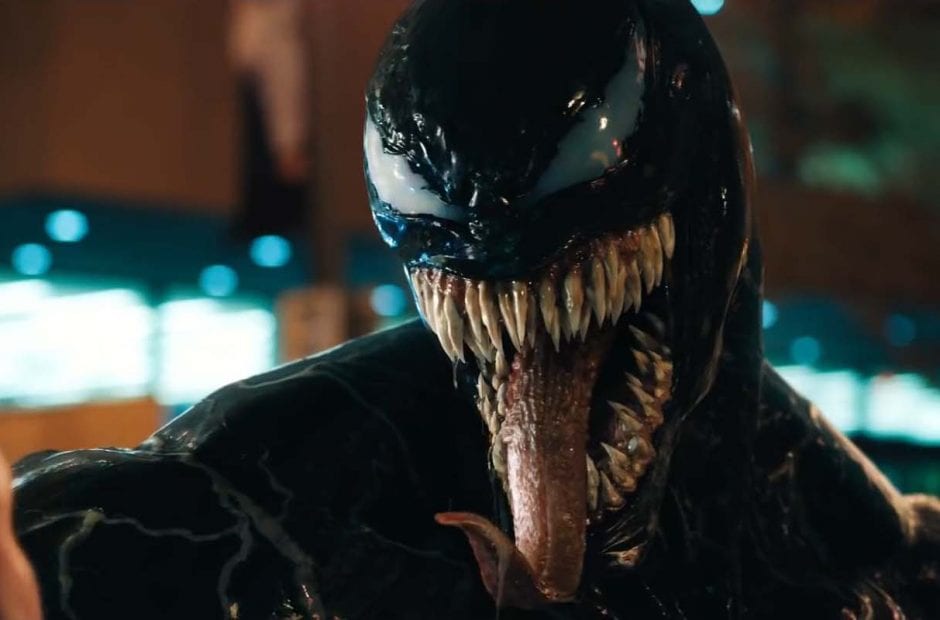
    But Carlton is doing something nefarious. One of the Life Foundation’s space excursions brought back strange alien life forms: symbiotes, slimy, sentient puddles that need a host to survive.  Eddie is accidentally possessed by one of the symbiotes. The pairing gives Eddie superpowers, but now his mind and body are shared with a vicious alien with a taste for human flesh that covers him at will with black, tentacled goo and sharp teeth. With Carlton’s experiments hinting at a bigger problem, the odd couple has to find a way to work in unison to stop the villain.

    Venom Is a Sloppy Mess

    The whole movie reeks of opportunism. “Eh, we’ve got this property,” Sony Pictures seems to be saying, “with a legit fanbase. Might as well throw something together to bilk those fans out of their money.” And slopped together it is. Directed by Ruben Fleischer, who did the amusing Zombieland, and the absolutely dreadful Gangster Squad, the film reinforces that his first feature was a fluke. Venom is indifferently thrown together, racing through its stupidity in hopes that the audience won’t catch on. True, it’s not the sloppiest movie I’ve seen in the past couple of months (looking at you The Predator and Mile 22), but that’s not saying much, with the half-hearted nature of project sighing through every frame.

    The movie’s presented with dull digital cinematography that has only one distinction: You know that motion smoothing technology that’s in most modern televisions? The tech that makes everything look like a soap opera, adding a wonky layer of fast motion over the images? Venom looks something like that.

    If the look of the movie is whatever, wait until you get to the writing. When Drake’s nefarious plan is revealed, ask yourself if it makes any sense whatsoever. Even hiding behind the veneer of comic book logic, it’s ridiculous and half-assed, disclosed in the most asinine way possible as Skirth (who I thought introduced herself as “Girth” in the movie, which would have been funny, at least) motormouths through it as if she knows it’s embarrassing.

    Amazingly, it took four credited writers to come up with this movie: Scott Rosenberg, Jeff Pinkner, Kelly Marcel, and Will Beall are on that list of shame. My favorite bit of their laziness is when Venom reveals to Eddie–in a goofy, tiny CGI head that morphs from Eddie’s body and looks at him—that he knows what Eddie’s thinking because he’s in his mind. A couple of scenes later when Anne calls him, Venom says “Who’s that?” And that’s before they give us (spoilers) two completely unearned changes of heart by both Eddie and Venom, who decide to work together.

    Venom Has Mores Holes in its Plot than Swiss Cheese

    When, exactly, do Eddie and Venom realize that they like each other? Was it during all of those unimpressive action sequences that litter the second half of the film? Is it during the car chase, which has some energy toward the end at least, but is mostly memorable for the numerous slow-motion shots of what’s supposed to be Eddie on a motorcycle, but is clearly a stuntman instead? Or is it during the showdown with a SWAT team where Venom violently bashes the policemen to and fro, throwing them through countless glass barriers (okay, fine, I’ll admit I like glass breaking in action sequences, don’t ask me why) but is stopped short of biting one of their heads off when Eddie, from inside Venom, yells, “We don’t kill police”? A little late, no?

    It all culminates in a tiring all CG showdown with another symbiote who looks little to no different from Venom (yay, imagination!) on a bridge that’s somehow even longer than the interminable runway that played host to the finale of Fast and Furious 6. At least that finale was over-the-top fun. This one’s just Zzzzzzzz.

    Nothing in this movie is plausible. It’s a cynical cash-grab with little to no entertainment value. Yes, some of the back and forths between Eddie and Venom are funny, and, you know, there’s all the glass breaking in that one action sequence. But that’s about it. Not really worth 10 bucks, is it?

    There are two post-credit sequences. If you can stomach it (and Eminem rapping about Venom), stick around for the first. It’s a fan service surprise that got the Venom nuts in my audience hooting and hollering. Skip the second, though, which rewards you with… a commercial.

    This article was filed by Pavel Klein, author of the film-centric blog Write Pavel Write.

  • First Man Will Take You to the Moon

    First Man Will Take You to the Moon

    First Man seems familiar at first glance. A biography of Neil Armstrong, astronaut and first person on the moon, the movie focuses on the near ten-year period of his life from the early to the late ’60’s and his missions for NASA, culminating with the Apollo 11 moon landing. If you’ve seen any movies based on these space missions and beyond (like the excellent The Right Stuff and Apollo 13), you will recognize many of the story’s details: a tragedy that haunts the protagonist, the worrying wife left at home, the kids neglected by their father’s obsessions. Yet, somehow, these familiarities are presented in a fresh way into what could come off as cliché. Equal parts ruminative and exciting, First Man is one of the best movies of the year.

    The real-life Neil Armstrong always seemed an emotionally distant, pragmatic man. If feeling uncharitable, you might call him a cold fish. But that’s what made him the perfect candidate for the lunar missions. He had the temperament, the fierce intelligence and the calm under pressure needed for such dangerous excursions. The challenge of the movie, then, is to make this “fish” palatable to an audience. First Man nails that tricky act of portraying Armstrong as he was, but balancing it out with unexpected flashes of wit, warmth, and emotion, presenting a complete picture without betraying the less flashy parts of his personality.

    Ryan Gosling and Claire Foy, a match made in heaven?

    You need a good actor to pull this off, one who can make silence interesting. Ryan Gosling, who stars as Armstrong, can do intense staring with the best of them, but he has the gift of suggesting deep emotion underneath. Gosling’s performance stays true to Armstrong’s quiet, pensiveness, but finds a way for him to be more than that. At just the right moments, he breaks out of his shell and into a giant, shit-eating grin, laughing with his colleagues or rough-housing with his children. Other times, he unexpectedly reveals his painful past to his friends. In an extraordinary scene, Armstrong walks with his colleague, Edward White (Jason Clarke) at night. The atmosphere is particularly dreamy, the image saturated with blue while bright white moon beams (the moon is almost another character in the movie) pierce the trees lining the street. It’s an intoxicating atmosphere that leads him to open up for the first time about his daughter, Karen, who’s tragically short life quietly haunts Armstrong throughout the movie.

    Claire Foy co-stars as Armstrong’s wife, Janet. I worried when I saw her name in the credits. The wife characters in these movies often don’t get much to do other than worry. Foy is too good an actress for such a limited role. And, true, the movie doesn’t exactly break the mold when it comes to this scenario. But Foy is mesmerizing in the restricted role. Her steely eyes and fierce demeanor suggest a living, breathing human being, a match to Gosling’s Armstrong even when the focus is primarily on him. She has at least two stand-out scenes, but it would have been nice to get more of her perspective throughout.

    Still, director Damien Chazelle and writer Josh Singer don’t treat the home scenes with Janet as afterthoughts. Both bleed into each other throughout. During the mission sequences, Chazelle consistently cuts to Armstrong family, checking in on them and what they’re doing. The message is clear, they’re as important to the narrative as Armstrong’s adventures.

    Damien Chazelle is a great director

    It’s a carefully crafted movie, handled with great care by Chazelle (La La Land). Stylish, but not in a way that necessarily calls attention itself; his choice of shots and camera placement are formal and strict like Armstrong himself. The action sequences, the extended scenes of Neil Armstrong on various missions are locked tightly into his perspective. Sometimes literally so, like when he ejects from a vehicle during a test flight and you see it directly from his point of view, in the air, looking down at the fiery explosion, his legs in the shot. But even when the POV isn’t so literal, the view is constricted to what only he could have seen. Exterior shots are fleeting, almost non-existent until the finale. The Gemini (pronounced “Jem-me-nee,” according to the movie. Who knew?) 8 mission locks your view into the cockpit with Armstrong. You experience the take-off completely from inside the capsule. The sound design is fantastic here, the disconcerting twisting, screeching, and popping of metal, the deafening roar of the rockets prominently featured on the soundtrack. The only view outside is caught through brief glimpses of the space capsule’s portholes.

    This limiting style can be maddening, and there were times I wanted something more traditional. But the strict viewpoint accomplishes something special. It makes you feel like you’re there. It gives you an idea what it might have been like in those cramped cockpits, blasting off into space strapped to a 100 tons of explosive jet fuel. These stylistic choices also add to the film’s beauty, embodying the Japanese ideal of wabi-sabi: beauty is enhanced by impermanence. The brief glimpses of the world high above are more alluring because they are so fleeting.

    Both familiar and utterly different, First Man is a confident work, finding ways to strike different tones, shifting gears between them smoothly without stalling. The scenes of Armstrong’s home life recall Terrence Malick and his poetic imagery without descending into the endless navel gazing the way his films sometimes do. The space scenes are exciting and exhilarating, rife with cinéma vérité detail before becoming more otherworldly, reminiscent of 2001: A Space Odyssey. Notice the ethereal, classical-indebted score, by Justin Hurwitz, that pumps up during a docking sequence and the extended moon landing, which is almost wordless, buoyed by that music, the console lights of the landing module eerily reflected in the astronauts’ helmets. It’s not all mindless aping; it’s a fusion of styles melding naturally into something wholly its own.

    First Man is a drama that never topples into melodrama. It is austere, yet absolutely rousing; intimate and grand. Damien Chazelle has made two excellent movies so far in his nascent career, and after this latest addition to his filmography, he’s three for three.

    This article was filed by Pavel Klein, author of the film-centric blog Write Pavel Write.

  • Miami Film Festival GEMS Brings Award Worthy Films to Tower Theater Miami

    Miami Film Festival GEMS Brings Award Worthy Films to Tower Theater Miami

    Want to go to the movies but tired of your only choices being comic book adaptations? Miami Film Festival GEMS has your back. This year’s edition will be held from October 11-14 at The Tower Theater as an autumn accompaniment  to March’s Miami Film Festival.

    “We started GEMS to present our favorite films that are coming out in the awards season, ” explained Jaie Laplante executive director of  Miami Film Festival  GEMS. “We want to get people in Miami to see movies we can’t show in March. Plus it’s another chance to engage with our community.”

    The nineteen movies they’re screening are divvied into two categories LaPlante said. “The Spotlight Stage are movies from well known directors that are often nominated for awards. these are the movies that are Oscar submissions from foreign countries.  Then we have The Discovery Stage, these are movies made by new filmmakers that we feel are worthy of extra recognition before they open in theaters.”

    Asking LaPlante which movies he recommends as must-sees tortured him. But after explaining it was a bit like a parent picking their favorite child relented on three choices. “Champions (Campeones) (playing October 14 at 9:00) is an underdog movie that ended up being Spain’s  Oscar submission with a warmth and heart as big as an ocean. I’ve seen it twice and would happily see it again.

    “Capernaum  (playing October 14 at 3:45) from Lebanon is a beautiful story of street kids living in the margins of Beirut. I don’t know the last time I’d seen such good performances from children. Then our opening night film Birds of Passage (Pajaros de Verano) (playing October 11 at 7:15) shows what happened to this tribe in Colombia in the 1970’s. They had been cut off from the modern world until then but were sucked into the international drug trade.”

    Visitors to the GEMS Film Festival will also have an opportunity to take part in The Virtual Reality Lounge. Set on the 2nd floor of the theater for the low price of $5, you can spend an hour experiencing four short films set in a virtual reality format.

    Click here to see the entire GEMS program.