Movies & TV & Theater on TheJitney is Miami’s cultural corner booth, the one where the cortadito hits hard and the takes hit harder. This page is for people who live their lives between art openings, Heat games, and late-night arguments about whether the new A24 movie was genius or basura. Everything here moves with Miami speed. Reviews are not academic snoozers. They’re fast, emotional, sunburned dispatches from someone who has seen too much, feels too much, and still shows up for another round.
Miami movies and theater.
Film coverage jumps from Wynwood-indie-weirdo vibes to blockbuster spectacle at Dolphin Mall. TV gets the same locally-sourced treatment. Prestige dramas, trash TV, guilty pleasures you’d never admit at Panther Coffee but binge anyway at 2 a.m.
Miami movies and theater.
Theater, though — that’s where the page breathes. Broadway, Off-Broadway, tiny Miami rooms where the AC barely works. If a show risks something, if it tries, if it even thinks about having corazón, it finds a home here.
This isn’t some neutral critic voice. It’s Miami talking. Sweaty, loud, honest, a little chaotic, and deeply in love with storytelling — the kind that rearranges your soul, at least for the night.
The Miami Jewish Film Festival announced their 2023 line-up. This year’s festival will be held January 12 – January 26. It will screen 88 feature films along with 17 different shorts. In person screenings will be held all over South Florida including at O Cinema South Beach, Coral Gables Art Cinema, Miami Theater Center, and Miami Beach Bandshell. There will also be virtual screenings with over 60 films available to stream at home.
Some of the highlights include the opening night film Karaoke. This will screen at 7 pm, Thursday January 12, at The Bandshell. It was nominated for 13 Israeli Academy Awards. Karaoke is described as “a bittersweet comedy about a married, middle-class, suburban couple. They are drawn to their new neighbor, a charismatic bachelor from Miami who holds karaoke evenings at his apartment.” Director Moshe Rosenthal and actor Sasson Gabay will be in attendance to introduce the film and participate in a Q&A afterward.
The closing night film will be held also at the Bandshell at 7:30 pm on Thursday, January 26. My Neighbor Adolf is billed as a comedy about “a Polish Holocaust survivor living in South America. He suspects that the belligerent German who has just moved in next door must be none other than the Führer himself.”
In an effort to bring live music and movies together on stage, the festival will host several live performances. According to the Festival “there will be an acoustic session by Ivan Kadey for the documentary This Is National Wake. About the wild rise of a South African punk band that defied apartheid. The festival will also feature a performance of music composed by Holocaust survivor and musician Leo Spellman at the US premiere of The Rhapsody. Adocumentary that captures his incredible journey when his long-lost musical masterpiece is found.”
If I were to catalogue all of the things I could live without seeing, Brendan Fraser in a 700-pound fat suit masturbating furiously to gay porn would have to be somewhere on the top of that list. Yet here we are. I’ve seen it. And it’s all because I saw The Whale, the new drama starring Fraser and directed by Darren Aronofsky (Requiem for a Dream, Black Swan), which doesn’t even wait two minutes before presenting us with this scene. Sadly, things don’t get more pleasant after that.
The whole film takes place in one location: a brown, dingy, dilapidated apartment made even more confining by the cinematography, which is presented in the boxy 4:3 academy ratio. Windows only seem to let gray gloom in, and the soundtrack is all ominous, drawn out, atonal strings. You’re meant to feel like a prisoner, just like the main character, Charlie (Fraser), a 700-pound man who can barely move around his broken-down apartment.
This movie is built to punish.
With its singular location and characters that seem to intrude onto a set rather than naturally enter a scene, The Whale is clearly based on a play with little or no effort given to disguising its origins. This begs the question, do these origins have to be disguised? In this case, I would say yes, absolutely. What works on the stage, in the theater, where artifice is inescapable, does not necessarily work on the big screen which has stronger ties to the illusion of reality.
It’s difficult to get swept up in the story and characters when everything looks real, but the characters and their actions are so theatrical. Charlie is supposed to be a shut in with only one friend, Liz (played with perfect caustic affection), yet characters keep somehow popping up in less and less plausible ways in his apartment to keep the narrative going. If Charlie can’t go out into the world, the world will have to come to him, apparently, even if it doesn’t make much sense.
The movie morphs from one long scene of dialogue between two characters at a time to the next. If more than two characters appear, the script finds ways to whittle it down to two again, sometimes at the expense of credibility. When Charlie’s daughter, Ellie (Sadie Sink who does angry teenager in her sleep), needs a scene alone with Thomas (Ty Simpkins, whose existence in the film never seems to be justified beyond the need for a character who can bring up religion), she drugs Charlie with Ambien so he’s sleeping in the background while they get to have a lengthy tête-à-tête in the apartment.
If there’s one thing that saves The Whale, and I can’t believe I’m saying this, it’s Brendan Fraser.
No, my disbelief is not grounded in a hatred for the actor, who is a reliably charming and welcome presence in cinema. Rather, it’s my loathing for performances that “uglify” a handsome actor in hopes of getting awards attention. It’s the ultimate in vanity when an actor seems to say, “look how horrible my normally beautiful self looks, won’t you give me an Oscar?” But darn it, even though that’s basically what’s happening here, Brendan Fraser pulls it off. Fraser’s eyes exude pathos and understanding. He oozes a need to portray extreme obesity realistically rather than to mock it.
I’m not sure if the movie itself is that understanding. True, an obesity sensitivity trainer is credited, but Darren Aronofsky does not shy away from showing the horrors of extreme obesity, whether it’s dramatic music cues underpinning Charlie’s difficulty doing things we take for granted like walking down a hallway, or the heavy thudding bass sounds that emphasize his weight. Maybe the director is simply using the tools at his disposal to express the seriousness of Charlie’s condition. But whenever I feel like being that generous, all I have to do is look at the movie’s title. Yes, the titular whale does refer to Moby Dick, which is the subject of a child’s essay that Charlie is obsessed with, but really, we know to whom it actually refers.
The ninth annual FilmGate Interactive Media Festival is currently taking place around South Florida through December 5. According to their press release the festival, “is designed to highlight and showcase how emerging tech empowers new ways of artistic and media expression.” They go on to say, “audiences will have access to over 30 interactive experiences, 15 labs and talks, interactive exhibits, 4 dome experiences, a financing market, b2b meetings, music, and live events, accessible to all ages.”
Among the locations where FilmGate Interactive Media Festival takes place include Phillip and Patricia Frost Museum of Science, Downtown Media Center, SE Financial Center, O Cinema South Beach, and Fountainbleu Hotel.
The Festival will feature extended reality (XR) programming using headset devices, but also interactive installations and experiences that do not require headsets. All which according to FilmGate’s co-founder/executive director, Diliana Alexander, “will make audiences feel as if they are in the entirely new digital world, or in a word augmented by almost magical layers. We are leaping into a world first imagined by science fiction writers. Everyone from Meta and Microsoft, to independent creators, are exploring what that means. And we are bringing it to Miami for everyone to experience, first hand.”
Many of the events are free. You can check out the full schedule and purchase tickets for ticketed events at filmgate.miami.
Some of the highlights include…
Stiltsville, a Virtual Reality game/doc where participants are a time-traveler photographer who is tasked to travel to the Stiltsville houses in different time periods in an effort to preserve them. The first episode kicks off at the Perez Art Museum, and he second episode takes place in the 70s, where participants are transported in the middle of a party and can play blackjack, change records, dance and take photos, until two visitors disrupt the time flow – the Governor and a hurricane.
As Water Falls, a virtual interactive waterfall that aims to explore different aspects of water and its metaphorical concepts, shedding a light on the relationship with water as a precious element. A large-scale installation taking the form of a cascade, the piece reacts to mobile phone flashlights. Added mirrors, real water and vibrating motors are also included to make for an even more immersive experience.
Poet’s Room from Korea is a VR experience discovering the work and life of poet Yun Dong-ju, through his poems.
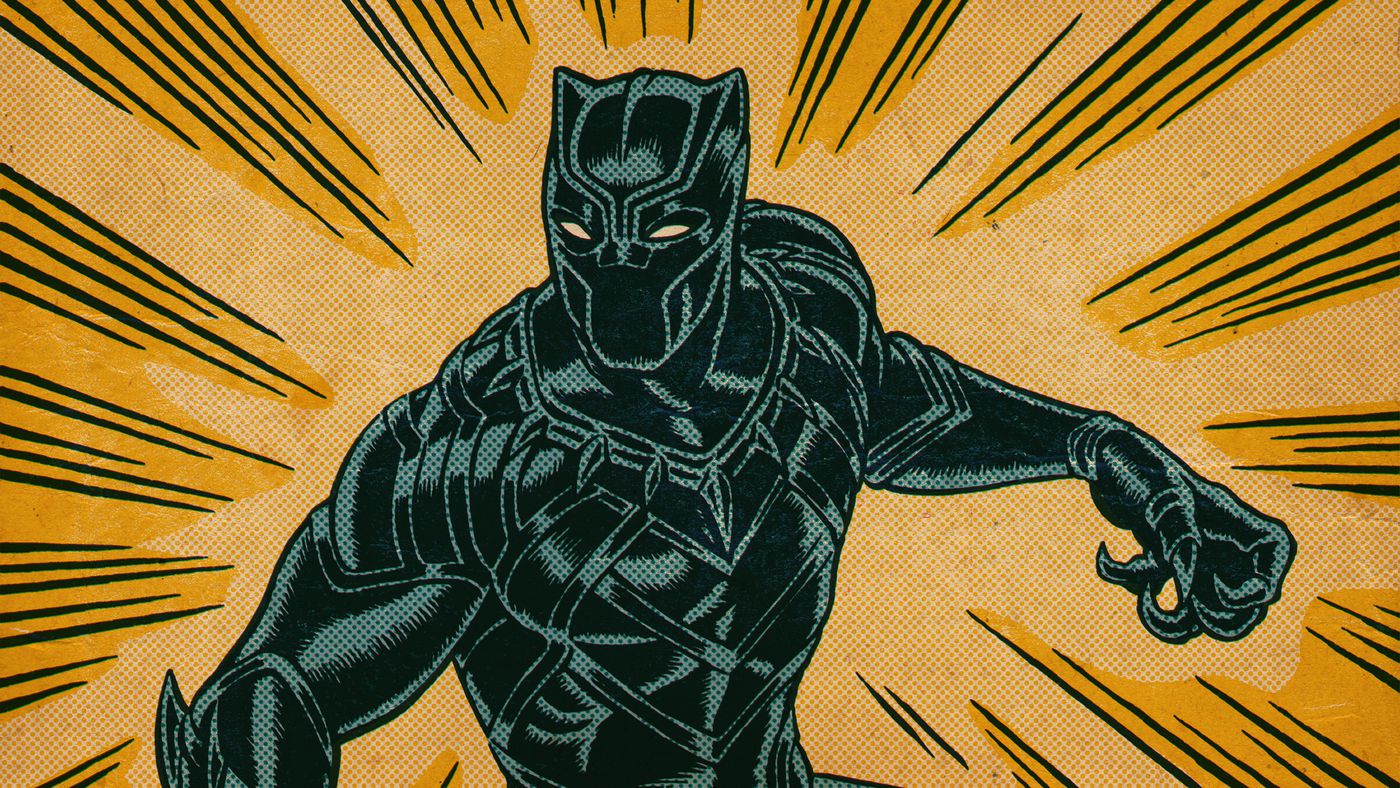
I hate it when people rush to declare something has “jumped the shark,” trying to be the first to call out a piece of entertainment as past its prime. So, I’m not going to say that about Black Panther: Wakanda Forever, even though it has an underwater theme that would fit that pithy remark perfectly. I won’t even lower myself to a cheesy variation like, “it’s hurtled over jaws,” though I have a predilection for lowering myself in just such a way.
No, Wakanda Forever, which is the 30th film in the Marvel Cinematic Universe, operates in a familiar, comfortable groove, a groove that has served the Marvel movies well. Good for them. Fans are still lapping it up, judging by the applause at the press screening I attended. I myself was just such a Marvel devotee, but Wakanda Forever, with a 2-hour 40-minute runtime that does its title proud, may have effectively cured me of this affliction.
Chadwick Boseman, the ludicrously charismatic actor who portrayed the titular Black Panther superhero in previous Marvel adventures, solo or otherwise, tragically passed away in August of 2020, at only 43 years of age. Ryan Coogler, the director of Wakanda Forever and its progenitor, was so distraught by his close friend’s death he almost walked away from movies entirely, much less did he consider making a Panther sequel. How does one continue a franchise without its center, the magnetic core that held everything together?
To paraphrase Jeff Goldblum’s Ian Malcolm, chaos mathematician extraordinaire, Disney, uh, finds a way.
Black Panther simply made way too much money for the Walt Disney Company, the megacorporation that owns Marvel’s cinematic branch, to just walk away from the franchise.
And here we are with Black Panther: Wakanda Forever, with Ryan Coogler returning in the director’s chair, giving us a sequel that really means well because it’s made by a cast and crew that clearly loved their lost friend, but is sunk by its very Marvel-ness, essentially by its corporate nature.
The core of the story is good. T’Challa, Boseman’s original Black Panther, dies (offscreen, which is weird, but preferable to some tasteless CG creation subbing in for the dearly departed), and his genius scientist/inventor sister, Shuri (Letitia Wright) cannot save him. The overall arc of the story follows Shuri as she mourns her brother, crushed under the weight of existential despair (though, in a universe with aliens, multiverses, and Thanoses all running around in the open, it’s a little harder to swallow that somebody would really believe that there isn’t more to life than life itself), trying to find a reason to keep going.
Now, of course, we don’t come to a Marvel movie, no matter how tragic its backstory, to watch a hero wrestle with mental despair, so a larger plot rears its head, and a villain(-ish) character interrupts the grieving to threaten Wakanda, the ultra-futuristic, African supercity and society that despite its gleaming skyscrapers still has mud streets.
So far so good. But that’s when the Marvelity takes over. You see, we can’t just focus on the core returning characters dealing with grief and the main villain, Namor (Tenuch Huerta), a self-professed mutant, who can breathe under and above water, and has little wings on his feet that allow him to fly. (I’m sorry, I’m probably the asshole here, but I laughed when he dramatically rose out of a lake in slow motion powered only by these idiotic, tiny flapping wings on his ankles.) Oh no, this is a cinematic universe, remember, so a whole bunch of superfluous characters and stories have to be set up so more movies and tv shows can follow. Thus, the movie pads its runtime with useless characters, one a literal MacGuffin that has no reason to exist other than to motivate the plot that revolves around her. Wait! I’m sorry. She has another major reason to exist: So she can have her own tv show down the line.
More than halfway through the story, luminescent Lupita Nyong’o shows up and is also wasted. She takes up precious screen and story time, but the movie never makes the case for her inclusion until, of course, the now infamous, post-credit sequence that Marvel is known for that’s supposed to wow the audience with a big reveal. And the reason given for her existence in this sequence is reductive and insulting to the main cast who fought so hard to be seen as the center of this new franchise. Never mind also that this exact type of post-credit sequence was recently and hilariously skewered by Marvel’s own She-Hulk tv show.
Story threads start and disappear. Okoye (Danai Gurira, again palpably fierce), Wakanda’s head warrior starts out important to the plot, is then unceremoniously disappeared, and returns with nary a motivation to join the listless finale that essentially takes place on a gray triangle in front of a bluescreen.
It’s pure Marvel assembly line special effects and action sequences again. I should turn a blind eye to the so-so effects because we now know just how overworked and undercompensated Marvel’s digital effects teams are, but Wakanda’s effects, especially the subaquatic seascapes just look murky, glum, and uninspiring. And of course they do. Being forced to work 70-hour, seven-day weeks for half a year will kill anybody’s inspiration.
Even some of the costume design is wonky. Marvel usually has impeccable taste when it comes to translating superhero costumes from page to screen, but here we have one that looks like a laughable power ranger and another costume that a character refuses to wear because she insists it looks stupid. She dons it at the end anyway and guess what? She’s right.
There are affecting moments where silence is allowed to speak volumes and the pain and grief the characters and the filmmakers feel for their fallen comrade come through. Mostly, though, it’s just Marvel business as usual. And increasingly, that’s becoming less of an asset and more of a liability. Me? I did the unthinkable for a Marvel movie. I walked out before the credits finished.
Months ago, when GableStage announced its 2022-23 season, Heisenberg (its first play of the season) jumped off the page. The name has pizzazz and a certain cachet. Certainly, any fan of the Breaking Bad universe would immediately think of Walter White’s alter-ego, the notorious Heisenberg — this play is not about Walter White or Breaking Bad, not close.
Heisenberg the play by Simon Stephens is a love story between two polar opposites. First produced in NYC in 2015, the story is set in modern London, with a scene in New Jersey.
Georgie Burns is a hyper, fast-talking, quizzical, nymph, played to perfection by Margery Lowe. She’s a sizzling firecracker with no boundaries, manic at times, in her body language and diatribes. She’s pure movement, in many ways, impossible to hold down.
Alex Priest (Colin McPhillamy) is the polar opposite, also played to perfection, he’s a stoic man, sullen, downcast, defensive yet steadfast. He’s a 75-year-old man, (33 years older than Margery), a retiring butcher, never married, with no kids. But Priest is a man who’s experienced a lot of loss, like a lot of loss, but it’s all long gone and buried in the past. And he’s stuck, in many ways.
That’s the premise. Alex is stuck. Georgie can’t sit still.
Werner Heisenberg was a German chemist and father of quantum physics. His “uncertainty principle” basically states that it’s impossible to measure both the position and speed of a particle. In other words, in human terms, if we know where you are, you aren’t really moving, so you’re stuck. If we only see your speed, or how fast you’re moving, then we don’t know your position, or where you are.
Make sense?
Heisenberg the play
It’s kind of fascinating if you think of that principle and relate it to the human condition and the relationships we have in our life. Usually, one person is stuck (in a loveless marriage or relationship, in a stagnant career or job) and the other one is moving, often without direction.
Heisenberg the play is a thinker. It’s bizarre and quirky, fast paced and eclectic. An intimate curious portrait of the inner dynamics of human relationships. Dense in dialogue, Heisenberg is as entertaining as it is unsettling. One of the weirdest love stories you’ll ever see on a stage.
It’s captivating, slightly frightening, but not spooky.
Heisenberg shows us how fragile the human condition is. This play, executed to perfection by GableStage, dissects that truth down to subatomic levels. Don’t miss this one. It’s a doozy.
Heisenberg is now playing until November 20th. For tickets and more info, click here.
Heisenberg Fun Fact
Actor Colin McPhillamy was an original cast member of one of the best plays produced in the last 10 years, The Ferryman. That play crushed London and Broadway in 2017-18 and starred Paddy Considine, among others, who just played King Viserys in HBO’s wildly popular House of the Dragon.
Marcello Hernandez, a local comedian of Cuban-Dominican descent, was recently announced as a new cast member on the 48th season of Saturday Night Live. This is a huge accomplishment and great for everyone in South Florida, especially our comedy scene, which does not get enough shine.
For Marcello Hernandez this is the beginning of a career that could make him one of the “voices” of the next generation. What a golden opportunity and an accolade well deserved!
Marcello Hernandez: Catch a Rising Star
The Miami comedian was recently named a “New Face of Comedy ” at the prestigious Montreal “Just for Laughs” festival. And locals may know Hernandez from his work with Only in Dade. He was the creative director of their lifestyle page.
If tuned into the local standup comedy scene, Hernandez has been around for years.
He first started performing stand-up comedy locally in March of 2016, at Taurus, a popular bar in Coconut Grove featuring an established Thursday comedy night, at the time hosted by Miami-veteran comedian Freddy Stebbins.
“I said this guy, there is something about him. He’s going to be famous,” explains Stebbins. “He was in town from college (at John Carroll University in Ohio) and called asking if he could perform. Marcello played at least fifteen to twenty times at Taurus. To me, it was very obvious. Talk to any comedian in South Florida that has seen him on stage, they would say he has a dynamic range and a special energy.”
“I used to yell at him because he was always yelling his jokes and losing his voice,” explains Mary Smith, another veteran Miami comedienne and hostess of several open mics. “Marcello would get-up all the time. He would do my open mics at Irish Times and Cafe Blue. He was at the Improv with Ellie Rodriguez. The Have Nots with Dom Perenzin. I was critical of him because I knew he was good.”
Look Out SNL
Marcello Hernandez stands to be only the 4th Latino in SNL’s history, joining Mellissa Villaseñor, Horatio Sanz and Fred Armisen, whose mother is Venezuelan. As far as we know, he will be the first emerging from Miami’s comedy scene.
This is awesome and feels a little bit like when Moonlight won Best Oscar.
In Miami, among locals who’ve lived here for awhile, we are a tight, proud bunch.
The Eighth Annual Popcorn Frights Film Festival is a hybrid experience presenting both in theater and virtual film offerings. Until August 21,. the anticipated horror film festival will enchant attendees with chilling entertainment, this includes world premieres and Q&A sessions with professionals in the industry.
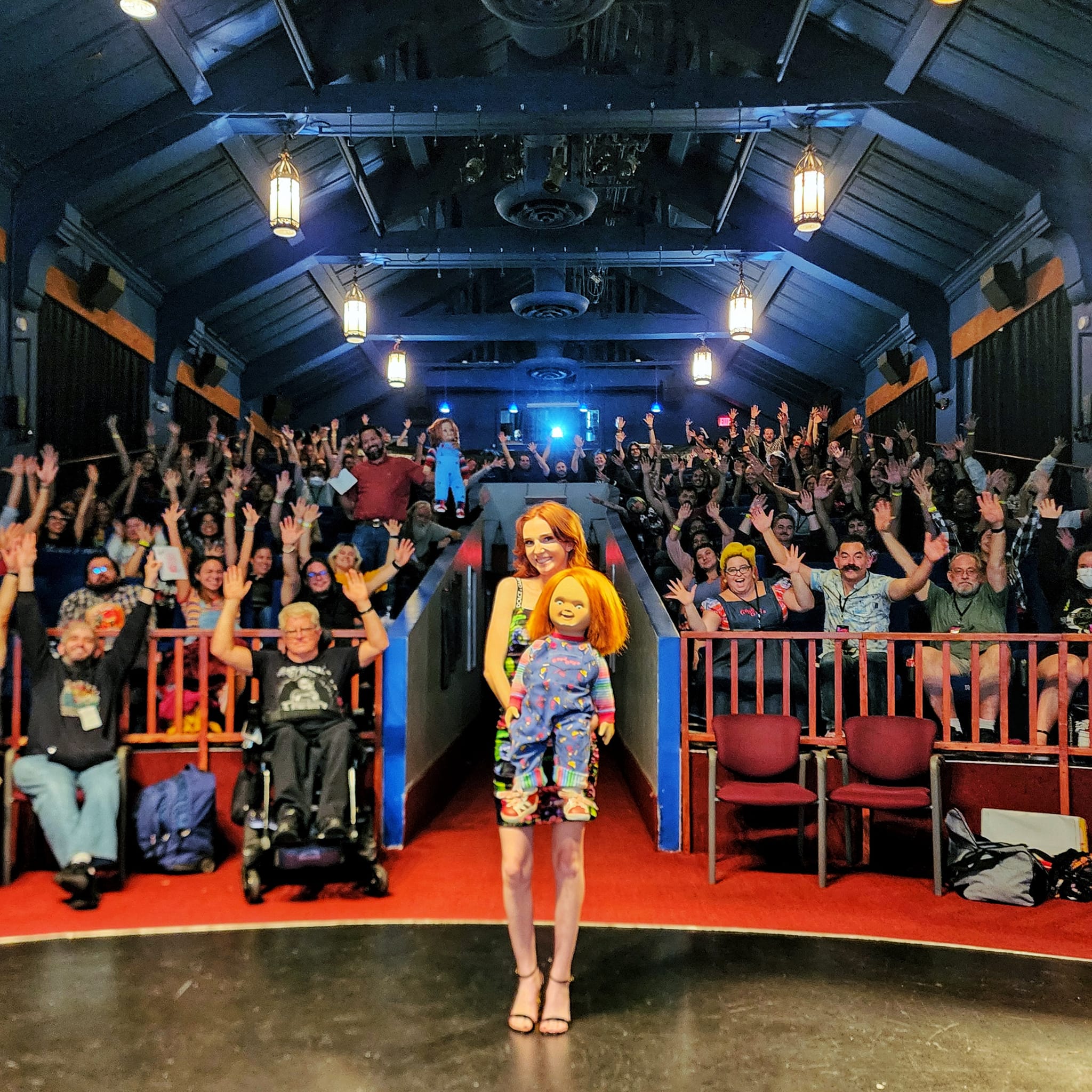
This year’s bash seems to have something for every type of horror fan. History buffs will enjoy Living With Chucky, a documentary that discusses the basis and rise of the Child’s Play franchise and will teach viewers interesting facts such as how the doll got his name and why he has red hair. Viewers looking for a softer horror film should turn to Swallow, which also gets point for positive LGBTQ+ representation. Lastly, horror movie Follow Her, is a story about a young woman who is a struggling actress and live streamer who is searching in the wrong places for her success and self-confidence, looking for validation by accumulating followers and positive comments. Because of this, she goes down a dark and mysterious road by trusting someone she signed up to do a job with. Clearly, this film touches on a very modern and important issue.
“I wanted to make something that would be fun ride,” says Sylvia Caminer who directed the movie. Follow Her is the first narrative film Caminer has directed, but she has a hefty background in directing documentaries. “But also, I want the movie to give you something to think about, and make you maybe contemplate a bit about how much confidence, face, and time you put into being online and social media.”
Other notable screening includes The Loneliest Boy in the World, She Came From the Woods, and Final Summer.
If you plan on attending any Festival film screenings/events, please RSVP for each film/event as soon as possible at the following link: https://popcornfrights.eventive.org/schedule.
I really wanted to hate Bullet Train. That’s a ridiculous sentiment to share. Why fight traffic to attend a movie screening you are rooting against?
I was betting on Brad Pitt. The one time heartthrob has a pretty good track record for picking solid movies. While not every one of his flicks is a Fight Club or Ad Astra, for the most part I leave his films with a good taste in my mouth. Maybe good ol’ Tyler Durden would come through and Bullet Train wouldn’t be as painful a viewing experience as its preview hinted.
But all my fears about Bullet Train I picked up from its trailer, kicked in right from the get-go. With all the quick cut flashbacks and “outrageous” nudgenudgewinkwink humor and ultraviolence it reminded me way too much of all the qualities I hate about Guy Ritchie films. It was this style more than the story about an unlucky criminal trying to snatch a suitcase on a Japanese train that got on my nerves.
Then something strange happened, I found myself laughing. And wincing when a character found themselves in peril. Even more peculiar, as I left the theater, I found myself satisfied that I actually had fun.
Don’t get me wrong, Bullet Train is not nearly as funny or clever as it thinks it is. I don’t know what possibly could be. But it speeds along at a fast enough pace moving from one fight scene to another that you don’t have time to let its smugness get to you. There are no dead spots to ponder whether a plot point makes sense or if a character’s accent is consistent. There are too many distractions from hyper athletic fights to containing more surprise celebrity cameos than even a Marvel end credits scene, to keep track. Before you know it Bullet Train has reached its destination.
DC League of Super-Pets
How do you know when there are too many superhero movies? I think it’s when a movie with the title DC League of Super-Pets is released in theaters. This is an animated movie about Superman’s dog and his animal friends saving the day. My nine year old daughter loved it and she hates superheroes. I love superheroes and I didn’t even try to fight sleeping through it.
It’s wonderful that they’re making superhero movies for kids. Although I wish they’d be of better quality than DC League of Super-Pets.
But what the hell is wrong with media conglomerates that so many of their superhero movies aren’t made for kids?
The new Thor: Love & Thunder movie was pretty mediocre, but probably the best scene involved Russell Crowe as a Greek accented Zeus being obsessed over orgies. It had me in stitches. But as I thought about it later I wondered how fun a conversation it would be explaining to your child what an orgy is. Probably that conversation would still be more fun than watching a cartoon about a turtle with super speed.
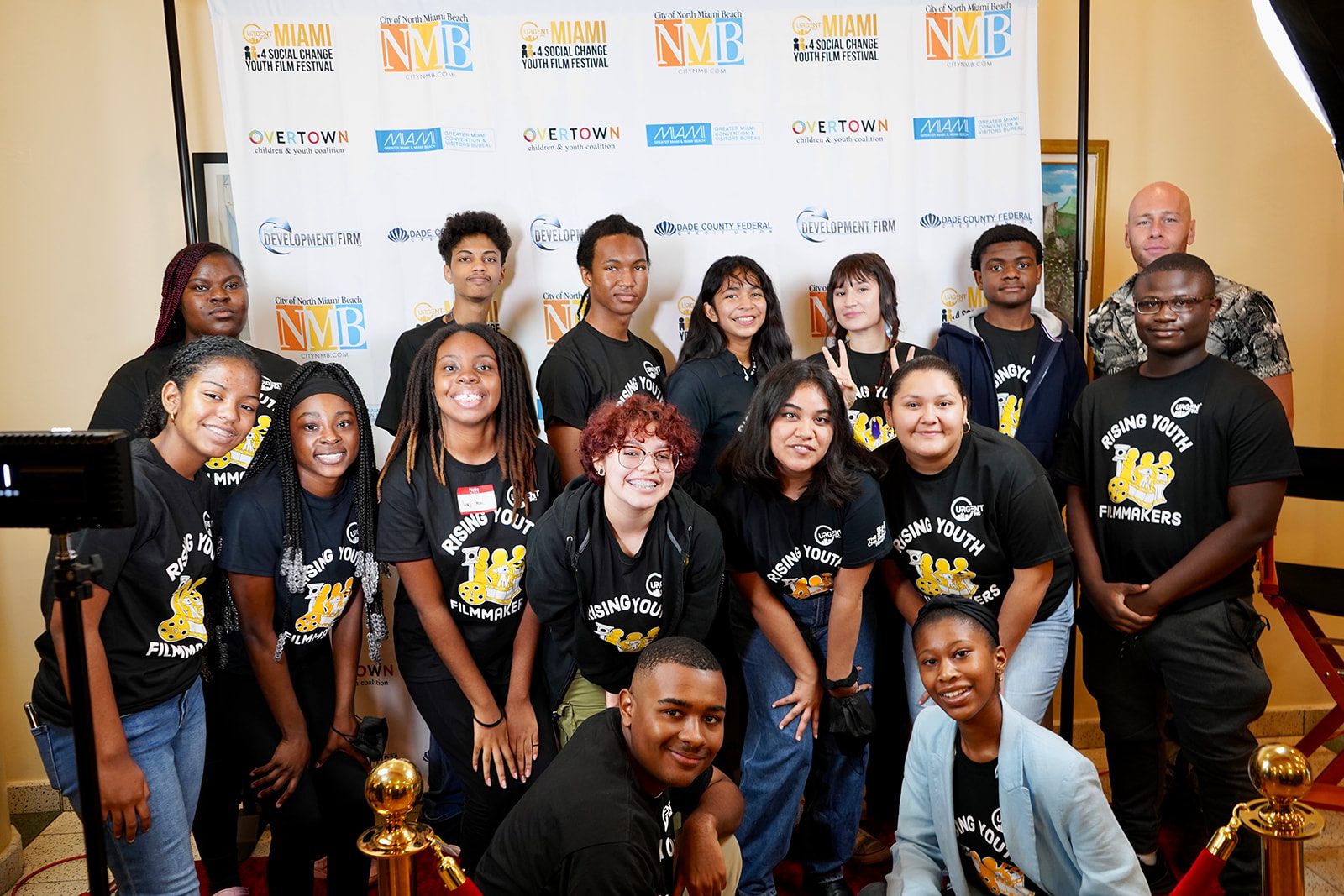
We live in an age where it is easy for media to take over. When it comes to young people in particular, it can be hard to tame the beast that is social media. The Miami 4 Social Change Youth Festival presented by URGENT, Inc. does so and does so well. This dynamic two day event was dedicates itself to showcasing the talent of youth under the age of twenty-four.
“We started the youth film festival seven years ago because we were operating a program called FACE (Film, Art, Culture, and Entrepreneurship), and that program is designed to introduce teens to creative careers. The kids were creating such great work that I thought more people needed to see what is coming out of our young people”, says Dr. Saliha Nelson, who serves as CEO of URGENT, Inc. a non-profit creative youth development organization dedicated to empowering young creative minds to transform their communities.
One of these talented creatives is Shayla Smikle, a recent high school graduate who describes herself as “outgoing and shy” and is the writer of the short film Super-Hero. “It’s about a guy who just feels unmotivated. He’s going through a lot of stuff in life. It’s almost like no one understands him and he’s just trying to build back up that motivation. He actually gets that spark of motivation inside the film.” Smikle started on her creative journey as a digital film intern and an apprentice of Urgent Inc. “When I applied for this internship, I did not know what I was getting into. I thought I was just going to be doing something like automatically taking pictures and videos. I didn’t know I was going to be getting so many tools and steppingstones to be able to build myself and grow to the person I am now. When I first came in, I barely knew how to turn on a camera to take pictures.”
Other compelling short films at this year’s 4 Social Change Youth Festival included Make A Wish, which showed the vulnerability of a child’s happiness and Home, a story about how sometimes the lines between reality and misapprehension can be blurred.
The festival’s main goal seems to be helping youth, even ones that do not have work that will be showcased at the event. The festival included masterclasses taught by industry professionals and speeches by celebrity guests. This year’s roster included workshops about public relations, improve, and broadcasting; and a speech by model and actor Sergio Delavicci who gave a riveting talk about following your dreams and the importance of being your own best advocate. “I feel like the youth is the future of this country,” says Delavicci. “And it is the responsibility of individuals like myself to set an example for this generation so this generation can set a good example for the next generation.”
With interesting entertainment and fun atmosphere, this year’s Miami 4 Social Change Youth Film Festival was a successful one.
I thought that six part Beatles special Get Back, ruined music documentaries for me. Through a combination of exhaustive footage, a relaxed running time, and what I assume to be deepfake technology, Peter Jackson took you inside the Beatles rehearsal space where you could see our beloved Fab Four actually create songs. Since then I’ve tried to watch acclaimed music documentaries about bands I love like Todd Haynes’ The Velvet Underground or am unfamiliar with like Edgar Wright’s The Sparks Brothers, and have found myself utterly bored with a parade of talking heads telling me why these bands were so great instead of showing me why they’re great.
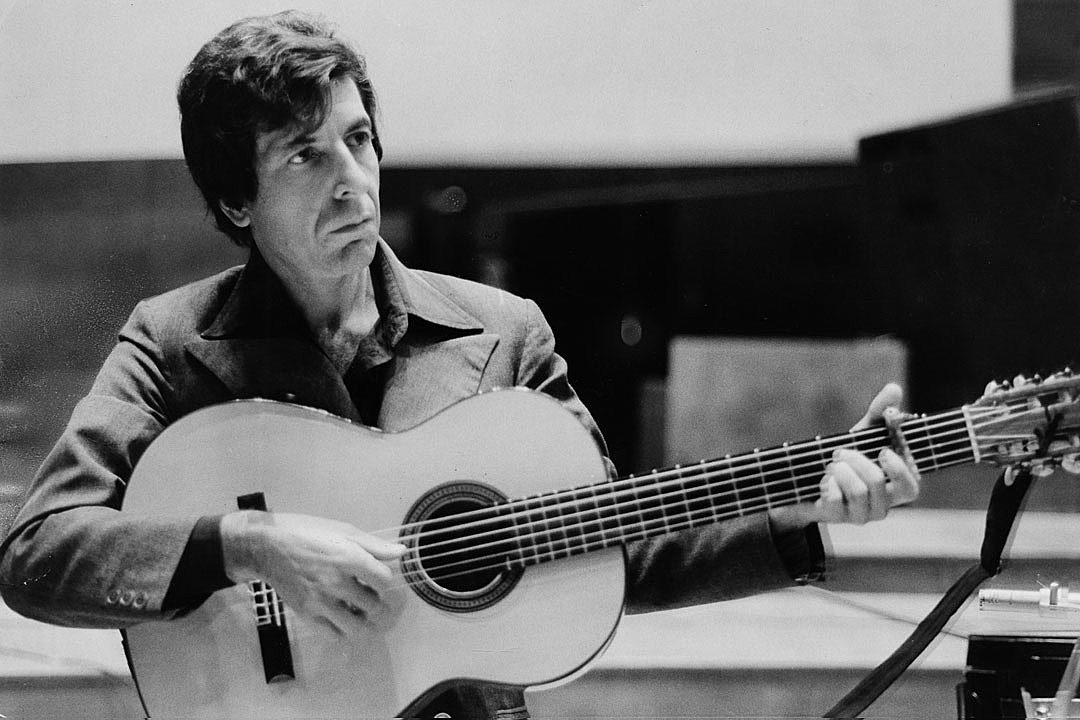
For the first half hour I was worried Hallelujah: Leonard Cohen, a Journey, a Song fell into that same trap. Cohen in my mind is one of the great earnest songwriters of the 20th century. I’ve never been able to appreciate poetry, but I’d study the liner notes of his lyrics as I played his greatest hits trying to figure out the tricks to write something so sad and simultaneously moving. I knew the outlines of his life story, how he became a musician relatively late in life writing his early songs on Greek isles, how he gave it all up in the ’90’s to become a monk and then was forced to tour again late in life due to financial difficulties.
Hallelujah: Leonard Cohen recounts all those familiar moments, but it also has a few tricks up its sleeve that make it stand out. First they have a ton of footage from Cohen’s various interviews over the years before his 2016 death. As a lyricist Cohen obviously had a way with words, but he was also an eloquent speaker. He was quick with both a joke and an interesting insight.
The second gimmick of the movie is an hour into it, the documentary reveals itself to be as much about one song as it is about a man. They take a deep dive into the song “Hallelujah,” not just how Cohen came up with the words, but how the song has become a standard in the Great (North) American Songbook. From John Cale to Jeff Buckley to aspiring American Idol contestants, you see how the song has grown a life of its own beyond Cohen’s gravelly voice.
While I would have appreciated some more uninterrupted performances by Cohen, rather than just a snippet here and there of him on stage, Hallelujah: Leonard Cohen does a solid job of presenting what made Cohen so special. I still wouldn’t put “Hallelujah” in the top ten of a Cohen playlist, but this doc makes a convincing argument of why it should be at the top.