Movies & TV & Theater on TheJitney is Miami’s cultural corner booth, the one where the cortadito hits hard and the takes hit harder. This page is for people who live their lives between art openings, Heat games, and late-night arguments about whether the new A24 movie was genius or basura. Everything here moves with Miami speed. Reviews are not academic snoozers. They’re fast, emotional, sunburned dispatches from someone who has seen too much, feels too much, and still shows up for another round.
Miami movies and theater.
Film coverage jumps from Wynwood-indie-weirdo vibes to blockbuster spectacle at Dolphin Mall. TV gets the same locally-sourced treatment. Prestige dramas, trash TV, guilty pleasures you’d never admit at Panther Coffee but binge anyway at 2 a.m.
Miami movies and theater.
Theater, though — that’s where the page breathes. Broadway, Off-Broadway, tiny Miami rooms where the AC barely works. If a show risks something, if it tries, if it even thinks about having corazón, it finds a home here.
This isn’t some neutral critic voice. It’s Miami talking. Sweaty, loud, honest, a little chaotic, and deeply in love with storytelling — the kind that rearranges your soul, at least for the night.
Copshop? More like Copflop. Copshop needs to Copstop. Copshop doesn’t come out on Coptop. Copshop is a Copout. Don’t hate me. With a title as terrible as Copshop, I’m almost required to throw bad puns at it.
Okay, the title sucks, but is the movie itself really that bad?
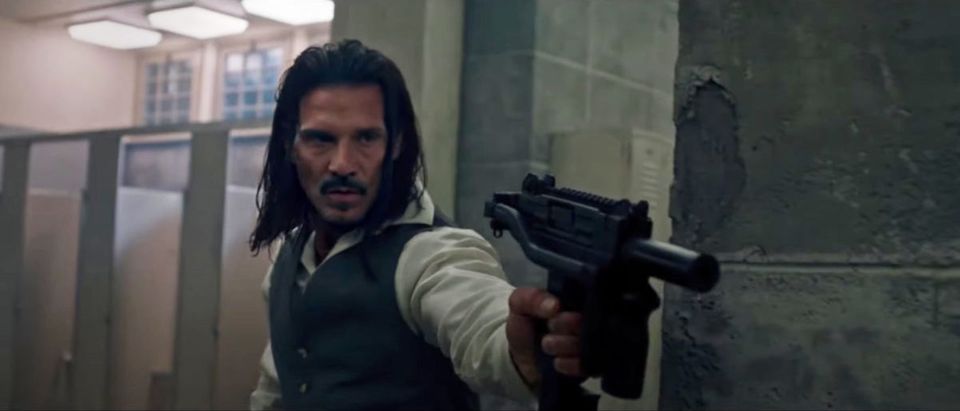
Well, no, though it’s not great either. But let’s back up a bit first. Y’know what kind of action sequence I love? The really overly dramatic shootout. Lots of slow-motion. Rain or some other source of water dropping like pellets on the squinting combatants. Glass shattering to smithereens. Heavily processed gunfire thumping the bass. You get the idea. Copshop, that awfully titled new movie from hard-boiled auteur Joe Carnahan, has a scene like that, and it’s pretty marvelous. Too bad you have to sit through a lot of macho, Tarantino-esque bullshit to get to it.
Frank Grillo stars as Teddy Murretto, a fixer who doesn’t like to be called that. Why isn’t made clear. Probably just one cliché covering up another cliché. Teddy’s double crossed the mob, or something. Flashbacks are provided, but don’t generate much information or interest. The mob is faceless and nameless. Just a nebulous excuse to have the protagonist on the run. But on the run he is when his shot-up car craps out, stranding him in the middle of nowhere, Nevada. With a ruthless assassin, Bob Viddick, played with typical guttural bravado by Gerard Butler, baring down on him, Teddy takes desperate action and punches a police officer to get himself thrown in jail. Little does he know that the hired killer is going to use the same trick, getting himself arrested as well and ending up in a cell across from him. A cat and mouse game ensues as the rest of the movie unfolds inside the police station.
Copshop is basically a one location movie.
The production design by Jon Billington is good, though, providing plenty of spaces lined with glass, chrome, and concrete to be properly destroyed once the fireworks begin. While contemporary, Copshop also opts for a bit of ‘70s retro style. It works best in the energetic opening credits set to Lalo Schifrin’s propulsive Magnum Force theme with the title splashed across the screen in a giant font that elicits memories of action pictures from the Me Decade.
Carnahan’s movies tends to have good production design. They also tend to have a lot of tough guy posturing and a thumbing of the nose at political correctness. He has his fans. I’m not really one of them. His movies have potential but fall short in one way or another. Copshop is no different.
The closest I came to enjoying a Carnahan joint was Boss Level from just a few months back (though whether or not the finished film was his vision is up for debate). While fun, Boss Level was still far from perfect. One of its biggest problems was how it wasted its female lead. Naomi Watts, a lauded, terrific actress, was there just to be fridged. Carnahan, to his credit, goes in the total opposite direction with Copshop (Ugh, that title). You see, even though the movie is dude-heavy, the actual stealth lead is a woman, the cop whom Teddy initially assaulted. A tough, self-reliant officer played with fierceness by Alexis Louder, Valerie Young is the underdog using her wits and strength to survive the manly chaos around her.
Estrogen standing toe to toe with toxic testosterone is a welcome touch. It’s too bad, though, that I never particularly enjoyed being around any of the characters these hormones belonged to. If you have an affection for B action pictures like I do, Frank Grillo’s starring role will elicit a smile. That smile fades, though, when you realize that Grillo doesn’t have much to do other than wearing a greasy man bun and a ‘70s suit complete with flared bell bottoms while sitting in a jail cell pleading over and over to be let out. When trying to convince skeptics of Grillo’s awesomeness, this is not the movie I’m going to point to for proof.
The movie is mostly about setting up its third act,
with the entertainment factor relying largely on the dialogue between the leads that’s supposed to be punchy (and yes, some of it did elicit a smile or two), but mostly comes off as trying too hard. A pleasingly over-the-top Toby Huss comes in as another, much more psychotic, hitman and livens up the picture with some mayhem. That mayhem, though, becomes depressing quick. This is less an action movie and more of a violence movie: Just watching a bunch of characters getting mowed down indiscriminately, often pleading for their lives before being brutally dispatched.
Once Teddy does find a way out of his cell…well, things do get a bit more interesting, but also a lot more muddled. Carnahan and cowriter, Kurt McLeod, try to play with expectations, making the main characters a bit different from what they initially seemed and having things happen that you may not be expecting. It works for a little bit, but as the movie keeps pulling the rug out from under the characters and our expectations, it eventually just pulls the rug out from under itself with an improbable reveal that undercuts its finale and any sort of release it’s been building up to. The screen fades to black, you shrug, but then it fades back in again and tries to undo itself yet again. By then, I just wanted the movie to fuck right off.
The most interesting thing about the new Candyman movie is that they decided to set the reboot of the 1992 horror movie in the year 2019. By explicitly setting it pre-pandemic the filmmakers don’t have to explain why no one is wearing masks nor social distancing.
If only they put as much thought into the crafting of the rest of this silly movie.
Perhaps if I’d seen the original 29 year old Candyman, this current rendition would make more sense. But from what I could gather the gist is that if you look into the mirror and say the name “Candyman” five times, the titular hooked character will come out of the mirror and gore you to death. Sounds like it could be a fun, dumb splatterfest, but instead of leaning into the innate stupidity of this enterprise the filmmakers try to sprinkle social commentary and race relations into this bore.
Candyman‘s producer and co-writer Jordan Peele found financial and critical acclaim a few years ago by mingling social commentary with horror in Get Out. But that flick had two key ingredientsCandyman is missing, a sense of humor and the lack of obligation towards an existing intellectual property. When you try to shoehorn serious issues like racism and police brutality into a movie that only deals with the topics superficially, it can seem more exploitive than the grossest of horror movies.
The Lost Leonardo
Earlier this year when the value of all kinds of worthless things from stocks of broke companies like Gamestop to digital pictures to cryptocurrency to baseball cards went through the roof, it seemed financial collapse was a breath away. But months have passed and everyone still has their shirts on their backs. The new documentary The Lost Leonardo is a reminder that insane speculation is nothing new.
It takes a good half hour for the movie to find its footing but stick with it and you hear a fascinating story about a recently unearthed painting of Jesus, supposedly by the most famous artist of them all, Leonardo da Vinci. The only problem is that there is ample evidence that the painting wasn’t composed by Leonardo. But that doesn’t stop the value of the painting shooting upward until it becomes the most expensive painting ever auctioned.
At times the movie almost seems like a satire, like one of those Christopher Guest mockumentaries like Best of Show, as you’re introduced to a wide range of art connoisseurs with too much money on their hands from Russian oligarchs to Saudi princes. But The Lost Leonardo is dead serious in the message that how much something is worth is whatever the richest person is willing to pay for it.
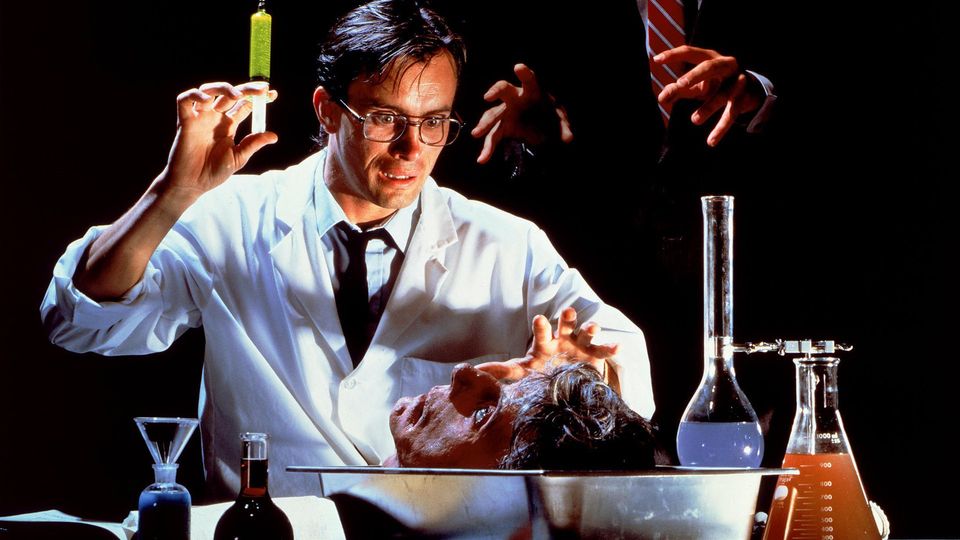
I was happy to see Popcorn Frights is screening Re-Animator at Silverspot Cinema in Coconut Creek, Saturday, July 17, at 9 pm. The 1985 horror flick is a fun B-movie classic that deserves to be seen in a group setting. But I was especially glad to learn about the screening because it gave me an excuse to pay tribute to the movie’s director, Stuart Gordon, who passed away last year when we were all consumed by the beginning of the COVID shutdown.
Back in 2003 Stuart Gordon was my directing teacher at the Los Angeles Film School. I’d taken acting classes, but never a directing class, especially not by someone who made movies I had actually seen like directing Fortress and writing Honey, I Shrunk the Kids. He didn’t have Steven Spielberg’s resume, but you can check out Stuart Gordon’s Wikipedia page, to see he worked with legendary talents like David Mamet and Dennis Hopper. So I was perhaps a little bit intimidated.
And Mr. Gordon didn’t do anything to put that intimidation at ease. He had kind of a gruff, no-nonsense presence. Perhaps it was his style of directing too? Don’t speak too much because when you talk your directions will have more meaning? I don’t know how effective it was on his film sets, but it worked in the classroom.
It was a film school so I went into the class expecting it to be all about composing and framing a shot, but in Stuart Gordon’s class directing a movie was all about working with the actors. Don’t stay glued to the monitor, pay attention to the scene. He was big on pre-production, rehearse the scene as much as you could before you film it. It would give the actors time to work out all the kinks in blocking and delivering a line without making a full crew wait along with them to get it right
Pre-production was also about research for him. I was making a movie about a private investigator, so he encouraged us to cold call a PI and interview her.
But it was the way he suggested you direct an actor toward a performance that really stuck with me. If you want the actor to play the line angrier, don’t just say “be angrier” or “be more intense”, give them an action verb like “destroy him” or “blame her”. It’s hard for an actor to play an adjective, but an action anyone can play. I guess he took it from the Stanislavski method acting school, but it was eye-opening to me as a more precise way for a director to communicate what exactly they wanted.
When I did film my scenes I followed his directions to a t. It made the filming experience a whole lot more fun and rewarding for me, and hopefully for the actors too.
And at the end of the year when we screened our movies I saw Stuart Gordon in a whole new light, one that was completely in sync with someone who could be the mind behind a madcap movie like Re-Animator.
We were in the middle of our editing process, so the teachers were giving notes on how we could improve our movies. Mr. Gordon was giving insightful suggestions, but I couldn’t help but notice how intensely focused he was on the piece of paper on which he was writing his notes. I’m nosy, maybe it was a lesson from the interview with the private investigator that he encouraged, that spurred me to take a look at what was on the paper he was so focused on. Was it thoughts he had about our movies? Nope. Was it ideas for a new screenplay? Not at all.
The lined paper was filled up and down with ornate drawings of skeletons.
R.I.P. Stuart Gordon. Thanks for the movies you left us.
As a filmmaker, I consider writing a film to be a journey — especially with a personal one like With His Eyes Closed whichhits so close to home. Through this work, I witnessed genuine power.
I have always been fascinated by using storytelling to examine different perspectives. Something is rewarding about the process of filmmaking as a medium to make a statement and question values we usually would not consider.
During the making of the film, I sought to question manhood and honor for sexuality in the early years of a boy. When does one become a man, and what does that even mean? I questioned this many times and recalled memories from my own childhood and experiences from my close circle, which shaped pretty much the journey of the two brothers. Ultimately, creating a narrative that provoked a shift in society and challenged a conversation that needed to exist.
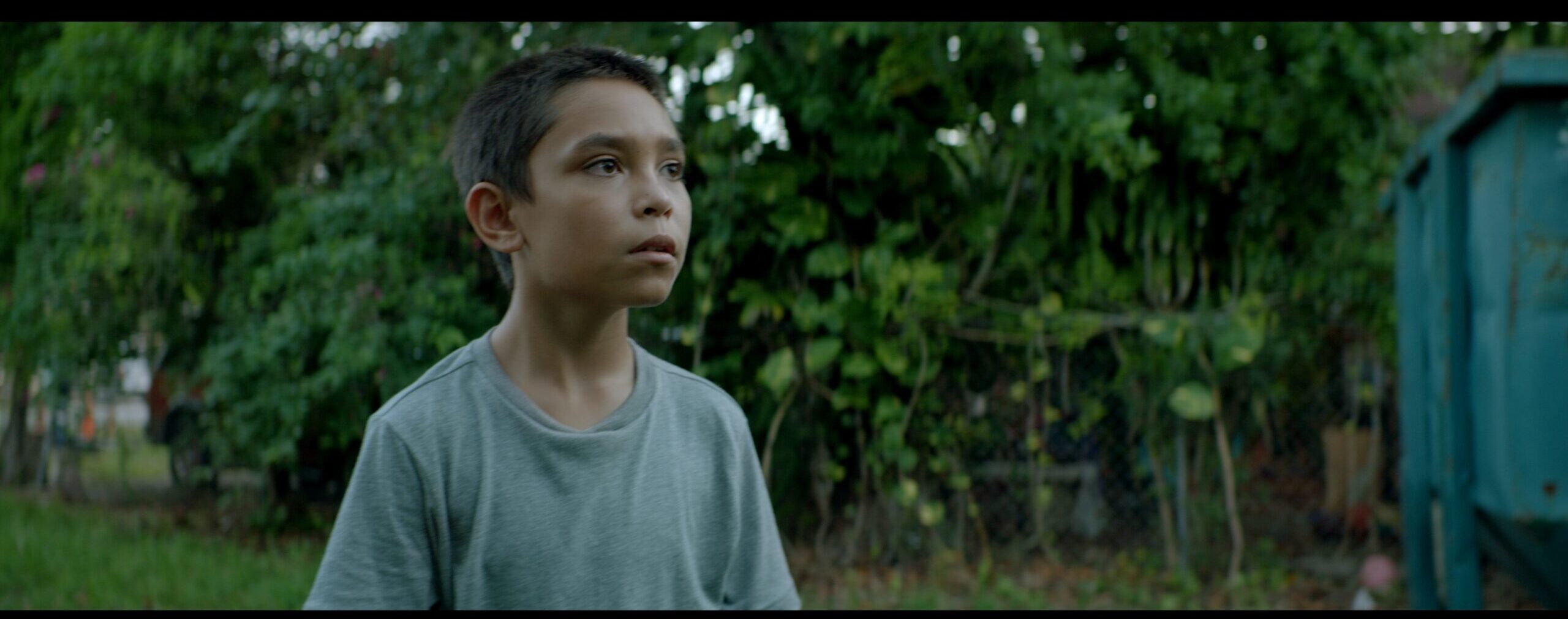
It was certainly not an easy task to shoot a project about such strong topics when having so young actors. Andres and his younger brother Miguel are living under their abusive father. Andres faces his first intimate experience, and nothing remains the same. Luckily after challenging castings, we found terrific, talented kids who ended up impressing our team with their maturity and professionalism at all times. It was a fulfilling experience to see the characters come to life.
With His Eyes Closed was truly unprecedented for me.
This is probably one of the most personal projects I have done in my whole career and which I am sure I will carry for the following years close to my heart. It was not like other projects where I fell in love with a script. This was somewhat a vulnerable experience instead.
The films I make seek to represent actual experiences on the big screen. That is why representation and inclusion have always mattered to me. I realized a necessity to broaden cultural perspectives and embrace people from all backgrounds. My characters are real. My stories are from the Miami where I grew up. There are already quite some films and shows about partying and beaches. It’s time for real representation and even more with the Latino community.
I am so grateful for my team, everyone who believed in the vision, and all the work they put in to make this project happen. It was certainly not easy. We shot this project in the middle of a global pandemic, but luckily it was selected by one of the most influential and most prominent Film Festivals, LALIFF. We had the honor to premiere at the Chinese Theater, which is the dream of every filmmaker. It felt surreal.
The film community has so well received the film, and now we have the honor of having our East Coast Premiere at the historic Tower Theater in Calle Ocho on July 24, followed by a one-week theatrical run of three of our films. The event brings together the cast and crew with a red carpet, a performance by beatboxing artist Kamikaze, and the screenings followed by a post-screening reception.
We hope to get as many people as possible and share with our home this wonderful film. Advance tickets are on sale here for the 7 p.m., Saturday premiere (July 24) and upcoming showings.
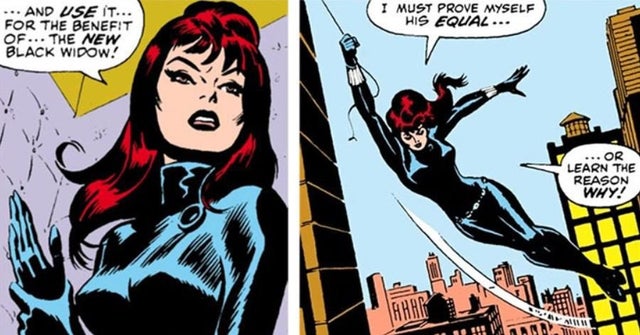
The Marvel Cinematic Universe needs female-led superhero movies, but I was never sold on the idea of giving a solo adventure to Black Widow. For one, the character was already killed off in the last Avenger’s movie, and two, I never found Natasha Romanoff, the ex-Russian-assassin, all that interesting in the first place. Standing next to her Avengers team compatriots, Iron Man, Hulk, Thor, and Captain America, Black Widow was second tier and of secondary interest. But here we are, a movie with Black Widow at its center, and you know what? It’s surprisingly fun. But you know what else? It confirms that Black Widow really is a supporting character.
With Black Widow’s fate in the MCU, I knew this was going to have to be a prequel of some sort, and with the character’s background as a brainwashed assassin raised by an evil Russian organization, I figured Black Widow would be an origin story in the vain of the recent Jennifer Lawrence starring Red Sparrow, dour and unpleasant, where we follow Natasha as she rises through the ranks of a sadistic education while watched over by an uptight matronly figure, hair pulled back into a bun, carrying a ruler and curling her lips around an over-the-top Russian accent. “Da!” I imagined a prim Helen Mirren sneering.
But Black Widow isn’t that at all.
Thank goodness.
Rather, the movie is a spry and surprisingly funny globe-trotting thriller that surrounds Black Widow with a great cast playing supremely enjoyable new characters. Director Cate Shortland keeps the movie afloat with themes of family and interfamilial squabbles, and she puts a refreshing emphasis on Black Widow trying to help people rather than murdering her adversaries. But then the movie runs into the brick wall that is the MCU third act. But I’ll get into that later.
The movie begins strongly with a lengthy flashback sequence that friend and fellow movie critic Rubén Rosario succinctly described as Running on Empty with a dash of The Americans: sun dappled imagery and idyllic Americana enveloping a suddenly tense drama. The opening works so well it somehow isn’t undone by the ensuing credit sequence set to a somber, orchestral backed cover of…”Smells Like Teen Spirit”?! Yup, I’m not kidding. It’s super cringey on the one hand, but somehow it still works. I guess some songs are so good you can’t ruin them (although f*cking The Muppets from 2011 gave it their best shot).
I once described Scarlett Johansson as “fascinating and sympathetic even when playing a bit of a blank slate.” I wish I still felt the same way here. Johansson returns to play the titular Black Widow, but despite her talents, disappears in her own movie. The supporting characters are more entertaining and easily outshine her, especially her newly introduced sister, Yelena, played by radiant up-and-comer Florence Pugh, and her father, an alcoholic, Russian ex- (or really, never-) superhero called Red Guardian, played with rumpled charm by the ever-dependable David Harbour. In a weird way, the movie seems to realize that these characters are more interesting and almost serves as a tentative backdoor pilot to more adventures with these characters.
Things move along nicely: Introductions, some mystery, a bunch of action. The action is fine if nothing terribly special, but a car chase through the streets of Budapest benefits from the nice scenery of location shooting. In general, the copious chases and fisticuffs acquit themselves just fine, but too much chintzy CGI does them in a bit. Often, things that should have real weight, an SUV flung through the air, a motorcycle jumping over a car, zip across the screen, lighter than air and as fast as a character in a Benny Hill sketch.
After a bunch of action beats, the movie downshifts to let the characters interact with each other.
These scenes are not only a necessary breather but provide the movie with its heart. The problem though is that just as these scenes start wrapping up and the movie gears up for third act finale fireworks, it just keeps gearing up and gearing up, trying to frantically set up a finale with a villain that has been too far in the background for the film’s run time.
And now, for that “typical MCU third act” I sniffed about earlier. I want to clarify that, in general, I like the MCU’s finales, which usually feature a hidden base, lots of explosions, and a host of cannon fodder bad guys for the heroes to spectacularly dispatch. Black Widow is no different, except it feels more perfunctory than ever and keeps the spectacular dispatching to a low simmer, as if Cate Shortland really didn’t give a shit about any of it. The setting is laughably stereotypical and revealed with a hushed awe as if we haven’t seen something like it a million times in the MCU before. Still, it could have been promising, these kinds of fanciful locations always grab my interest (I’m being vague on purpose, by the way. Spoilers, you know?) but not much is done with it visually. We barely glimpse it from the outside, and inside it’s just mostly generic, indistinct hallways and rooms without windows rife for blowing the f*ck up.
Eventually, we end up in a room with the main hero and the main villain. But instead of a tense stand-off, it plays more like a dull and endless conversation as Ray Winstone reveals his plans (with a dodgy Russian accent that can’t quite exorcise his inherent British-ness), only to be rebutted by Black Widow explaining her plan instead, back and forth they seem to plan and replan while the runtime keeps adding up. Finally, something happens, and while there are some neat moments, it all feels too little too late with a liberal pinch of (to stick with these overused platitudes) been there, done that.
But after the characters stand in the wreckage of yet another blow-‘em-up finale, the movie doubles down on its familial bonding and on Black Widow herself trying to be a better person instead of just the last person standing. What can I say? I’m a sucker for that stuff. So, while I don’t think that Black Widow ultimately proves the need for its existence, I’m glad it exists all the same.
The Forever Purge
By now most people will know whether or not they’re up for a Purge movie. Surprisingly, I’m usually up for one. TheForever Purge, the fifth movie in the series along with two seasons of a tv show, does what just about every Purge movie does: sets up a survive-the-night (day in this case also) situation for a group of racially diverse strangers, adds in a heaping handful of heavy-handed political commentary, adds a liberal dash of gnarly violence, and tops it off with some hope. Viewed through that lens, this new movie works well enough.
I’ve always liked the concept of this series, an annual, government sanctioned 12 hours of anything goes anarchy meant to purge us of our worst urges. Many have been quick to point out that this doesn’t make a lick of sense. And yeah, it doesn’t. But, with no offense to the armchair know-it-alls (like myself, to be honest) who think their cleverness depends on pointing out the obvious, that’s kind of the whole point. It doesn’t make sense, and most everybody in the movieverse know this, especially those whom it affects the most adversely: people of color, the downtrodden, and the poor. Yet, it still continues, set up by rich old white men to thin out the populace of “undesirables” who don’t want them in power and weaponized by self-righteous zealots who mindlessly scream about how it’s their “freedom!” to commit bloody violence. Does any of this not sound familiar? It’s a potent parable.
And I’ve been impressed with how each subsequent movie in the long running series has expanded this idea while still sticking to its roots as a B genre movie. TheForever Purge continues that tradition. Here, somewhat annoyingly, the purge is reinstated after all the trouble gone through in the third movie to get rid of it, dispensed of in quick voice-overs during the opening credits. But then, even though it’s a reset, things move forward again with the concept. Like the sequels that Hollywood prefers, it’s more of the same, but different. The purge night, this time, goes off without incident for our heroes, two recent illegal Mexican immigrants and an affluent white family of ranchers they work for. The next day, however, after the blaring sirens announce the end of the bloody event, the violence and anarchy continue as the aforementioned zealots can’t abide with just 12 hours of anarchy and band together around the country to keep it going. Our heroes must then group up and make a run for the Mexican border, which has opened access for a limited time, while dodging homicidal maniacs all around them.
Far-fetched? Maybe, but after a year that saw basic practices to keep us safe politicized to a standstill, the stupidities that we as a human race are capable of don’t seem so far-fetched anymore. Besides, I like the progression of the movie’s concept, how the “purging of violence” actually just begets more violence until the hunger for it is insatiable and our country collapses into chaos. The purge eats up it purgers. I’m not quite sure, though, I believe that Canada and Mexico would open their borders to us, even for a limited time. Now that’s far-fetched.
The movie has a slick look, but that slickness doesn’t translate to the action sequences.
A police van hit by an RPG is seen mostly from the inside as the car flips over. It’s presented with Matrix-like slow-motion, but it goes on so long I thought my screener got stuck buffering or something. When it finally landed, I was like, “Oh, that was intentional?” Later, the dreaded oner is attempted: we follow the action in one long take with seemingly no edits. The fact that this trick is so overused (1917 made a whole movie out of it just recently) and the “hidden” edits so easy to spot, it doesn’t much impress in the best of examples anymore. It doesn’t help that here the camera just listlessly follows a group of people from one building to the next with the fact that it’s supposed to be one take barely even registering.
But that’s also par for the course when it comes to the Purge movies. The genre elements are never really mind blowing and perfunctory at best with set pieces often boiling down to generic shots of shooting and getting shot, momentary CG blood entering the frame. I’d love to see one of these movies done by a real genre aficionado. As this is partly a Blumhouse production, the mavens of horror and B-movie shlock, why not bring Leigh Whannell aboard? He showed real promise with his Blumhouse movies Upgrade and The Invisible Man. The mind boggles at what someone like that could do with a Purge movie.
In the end, though, I still liked the simple pleasures TheForever Purge provided. There is something rousing seeing a diverse cast, fronted predominantly by people of color, coming together to kick racist ass. When one of the white ranchers asks an Indigenous American why he’s helping him and his compatriots battle a group of encroaching Purgers when it’s not their fight, he answers, “This has been our fight for 500 years,” while cocking a gun. No, it’s not nuanced. No, it’s not subtle. But, dang it, it is awesome. And while the movie around it is never that awesome, it’s still worth your time if you’re a fan of the series.
After Spring Breakers, The Florida Project and now Zola, there are slowly becoming enough flicks showing the depravity and trashiness of the Sunshine State, that there could be a new film genre called The Florida Girl movie. The girls in these movies and their companions have had all morality melted by the humidity and stupidity surrounding them. There are no lessons learned in these Florida Girl movies, rather they are character studies giving the other 49 states a superiority complex and reason for them to root for the Florida peninsula to sink underwater.
The newest Florida Girl movie Zola has gained some notoriety for being the first feature film to be based on a series of Tweets. It’s kind of like Battleship a few years ago bragging about being a movie based on a board game. You’re going to get the kind of depth you’d expect from these unlikely source materials.
Zola much too faithfully adapts the Twitter thread of a stripper who recounted her misadventures of heading down to Tampa with another stripper and a couple of strange dudes. What follows is sex, violence, and mayhem. What’s lacking is a point for us watching it all. There was one funny joke and one creepy moment that made me wonder what would come next, but I kept waiting for a reason why this story needed to be told, other than to demonstrate how far an R rating can go.
As the credits rolled I continued to wait.
I’m still waiting.
Zola wasn’t a complete waste of time. The cast stays committed to their crazy characters, and director Janicza Bravo crafted some interesting shots, though they aren’t for the prude at heart, as her most inspired framing involves women urinating and bare penises. But someone should have realized a story that works for a seven minute scroll on Twitter might not have enough poignancy for a ninety minute film.
The Boss Baby: Family Business
The new cartoon sequel of the 2016 cartoon The Boss Baby makes up for Zola‘s lack of plot with enough story for two or three movies. The original The Boss Baby was an animated reincarnation of Look Who’s Talking exploiting the comedy inherent in babies talking like adults. Some said it captured the zeitgeist of 2016 in that the boss baby was voiced by Alec Baldwin who also imitated Donald Trump on Saturday Night Live.
But now it’s 2021 and everyone is sick of the Donald and his imitators. So where does the Boss Baby fit in Biden’s America?
It fits in my 8 year old daughter’s heart, that’s for sure. She demanded to watch it all three times the reviewer screener was available to us before it self-destructed.
“What’s happening?” I asked her several times like when it was unclear to me why a character was singing a Cat Stevens song.
“I don’t know. There’s a lot of action,” she said as she went back to playing on her tablet while sucking in The Boss Baby: Family Business by osmosis.
Near as I can tell the heroes from the original movie are now grown up. One of the grown up kids now has a boss baby of his own. And the adults are transformed back into kids to stop an evil baby from turning all adults into mindless zombies.
I’m not sure why they went away with what made the first movie decent in exploring the comedy of babies acting like over serious adults, but I guess it works for kids.
For this over serious adult Boss Baby 2 didn’t work. It even almost had me longing for the simplicity of Twitter.
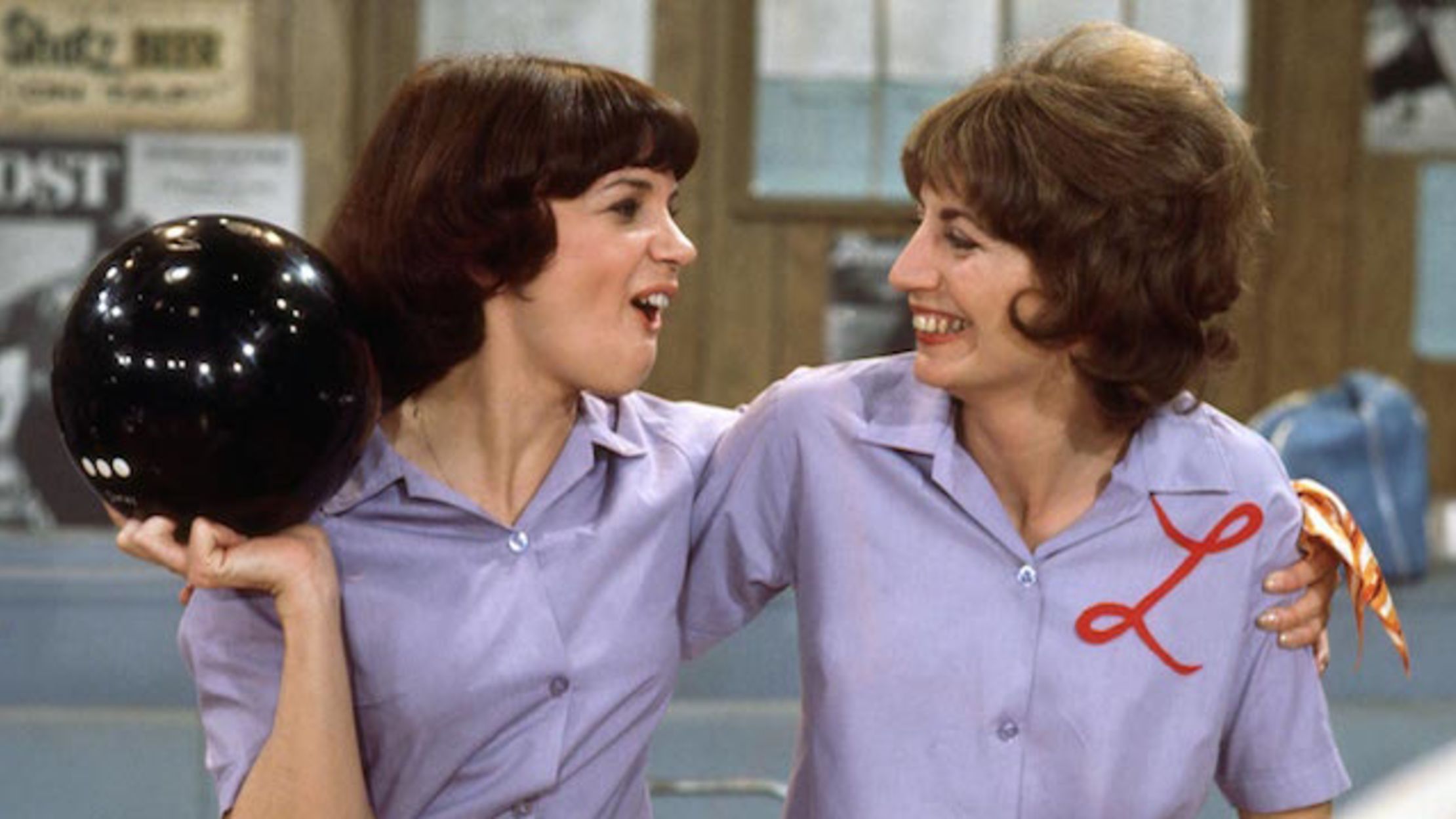
“Do you want to hear the Schlemiel Schlimazel story?” Cindy Williams asks.
When Shirley from Laverne & Shirley offers to explain the origins of the catchiest, most non-sensical theme song in television history, there is no other answer but yes. “It was a ditty Penny (Marshall, the actress who played Laverne) would do on the way to school with friends. They would count the steps. One, two, three, four, five, six, seven, eight, Schlemiel! Schlimazel! Hasenpfeffer Incorporated. That’s how they got the song. A schlemiel is Yiddish for a person who jumps out of the window for no reason and a schlimazel was the person they landed on.”
If this is the kind of pop culture history you love to hear, then you are in luck. From June 23-27 Cindy Williams will continue performing her one woman show, Me, Myself and Shirley at Boca Raton’s The Wick Theatre. The show has Williams recounting memories of some of her most famous roles from classic movies like The Conversation and American Graffiti, but a lion’s share of her memories is from the 1976-1983 sitcom that to this day has strangers calling her “Shirley”.
“I was supposed to be doing a musical at The Wick, but because of COVID it got shuttered. They suggested because of social distancing I do a one woman show. I was like great. What one woman show?” So over the next year she adapted her autobiography Shirley, I Jest!: A Storied Life into something she could perform on stage. “I had to ask how can I make being alone on stage entertaining to the audience. I put on old clips from my acting, talk about Hollywood stories and at the end I do a q&a with the audience.”
Amazingly this is the first time Cindy Williams has seen many Laverne & Shirley episodes.
“I never got to watch the show when it was on. It aired on Tuesday nights and we would film on Tuesdays so we were never home to watch them.” It sounds inconceivable, but this was an era before YouTube, Tivo, and even VCR’s. Rewatching the episodes to prepare for Me, Myself and Shirley, has brought back all kinds of visceral memories for Williams. “Watching them I feel physically what I felt when I was performing like those double slaps Penny and I did to each other.
In that era of only three channels it’s hard to relate today how popular Laverne & Shirley was as America’s most watched program. But it was so beloved they even made a bizarre Saturday morning cartoon out of it, Laverne & Shirley in the Army. “It was us in the army with a talking pig as our sergeant. Hanna Barbara did it and it was a lot of fun.”
On the telephone Cindy Williams sounded even more animated than her cartoon avatar about her excitement for her one woman show. “We’re still working on making it better and trying to hone it in. But hopefully in the future we can tour it around the country.”
And the way she says it you believe she’s gonna make all her dreams come true.
Luca is the new movie from Pixar, the animation studio that gave us the Toy Story series and many (many) computer animated movies you or your children grew up on. Their latest release, though, may be their smallest movie in scope in maybe…ever? But ultimately, that’s what makes it great. Low stakes, a gossamer setting, and a breezy attitude suffuse Luca with a laidback beauty, resulting in an utterly charming movie that’s Pixar’s best since, well, Soulfrom late last year. These dudes are on a roll again.
Luca is the closest that Pixar has come to emulating the Studio Ghibli formula.
Pixar loves name checking the Japanese animation studio –heck, Luca’s set in an idyllic Italian coastal fishing village called Porto Rosso—and they’ve long cited Ghibli as an influence. Funny thing, as much as Pixar throws credit to Ghibli, I never quite saw that influence in their output. Up came close. It was a charming and gentle adventure at first that gave way to a silly action finale featuring senior citizens sword fighting with canes, literal dog fights as canines in biplanes tried to shoot each other down, and more than one moment where a child was endangered. Cute and charming were thrown out the window for action and violence.
Luca, though, like many of the best Ghibli works, starts chill and basically stays that way to the end. Most of the movie revolves around a silly race that’s for the town’s children. The villain, meanwhile, is more of a joke and a pain in the ass than a threat. And while the threat of violence exists in the background –the story has two sea creatures that can take human form living in a village that has a history of hunting sea monsters– not much comes of it; a few thrown spears and not much more.
Without hitting you over the head, the movie’s about more than just a race through the town, of course. The nature of friendship, family, and the pains of growing up and moving on are sturdily built into the film’s subtext. What’s nice here is that while the headier stuff is there, kids probably won’t be bored by it. While Soul was great and pushed at the boundaries of what American animated movies could tackle thematically, I’ve wondered just how entertained kids were by it? In every way that Soul was big, Luca is small. That’s what I like about it.
A story about…Sea Monsters?!
Like Miyazaki’s My Neighbor Totoro, Luca marries the supernatural with the every-day while emphasizing the beauty of nature. And like Totoro, there’s little to no explanation for the out-of-this-world. Sea creatures exist in Luca’s universe: sentient fish people who mind their own business and lead underwater lives similar to our above ones. Luca (an appropriately wide-eyed Jacob Tremblay), for example, is basically a sheep herder, except he herds fish. He’s also a prototypical Disney hero (Pixar is a subsidiary of the Disney corporation), a restless kid who wants to explore the world while his mom (Maya Rudolph) tries to keep him home and safe, away from the humans who think they’re monsters.
Lucky for Luca, he and his fellow sea creatures take human form when out of the water, and when Luca meets Alberto (Jack Dylan Grazer, perfectly boisterous), a fellow sea “monster” and likeable know-it-all living on his own on land, the two kids become fast friends. Their ultimate goal? To make enough money to buy a Vespa and go on adventures. Hey, it’s Italy in the ‘50s. Makes sense.
Of course it’s pretty
Yeah, unlike many Ghibli films, there’s a bit of slapstick here. But it’s not intrusive and often funny. It helps that the character designs and animations really sell the big, comical, physical movements while also capturing the subtle changes of facial expression. Notice Alberto’s quick side eye when he first realizes that Luca’s spending more time with their new friend, Giulia (Emma Berman), than him. This could have been a silent film and we’d still know exactly what’s going on.
Let’s face it. This is a Pixar movie, so yeah, of course the animation is beautiful. But I’m not much of a computer animation ass kisser, so I hope it actually means something when I say that. The backgrounds look vaguely like Wes Anderson-ian miniature tableaus or backgrounds on a Disney ride. It’s so idealized and pretty, it’s not exactly real anymore while still boasting a plethora of detail (my favorite: a cartooned poster of La Strada outside the town movie theater).
With movie ticket prices so high, especially when taking the whole family, and the fact that many of us still aren’t that comfortable stepping into a theater, vaccinated or not, I wouldn’t exactly recommend running to one to catch Luca. The movie’s so seemingly slight that you might feel ripped off. In that way, it’s found a perfect home on Disney Plus. It’s such a low-risk investment to watch it on the streaming service (this one doesn’t have the $30 additional access fee) that the film’s myriad charms have a much better chance of taking hold. And believe me, they will take hold.
With movie theaters still among the least desirable places to go, the 2021 Miami Jewish Film Festival is doing something cool for this year’s program. From April 15-29, the festival will make over a hundred movies available to stream for free to anyone around the world. As a member of the critic’s jury and as a moderator on a couple of their virtual panels, I had an advance look at much of the selection of the 2021 Miami Jewish Film Festival. Here are my unsolicited thoughts on some of those movies.
I’d never heard of John Cohen before watching this 90 minute documentary, but man, did he live a fascinating life. Not only was he a musician who palled around with Bob Dylan, not only did he take famous photographs of all the famous beat poets and New York folkies, but he also was a bit of an adventurer, travelling through the Appalachian Mountains and Peru to document forgotten cultures. Different Johns is a bit dry at times, if you can’t get through a typical PBS documentary without reaching for your tablet you probably won’t have the attention span for this, but for patient viewers this movie shines a light on a life well lived.
This Hebrew language documentary also features a musician you’ve never heard of. This time it’s Charlie Megira, the man who wanted to be the Israeli Elvis. He never found that level of adulation, but over the decades he collected a cult following for his rock and roll. If like me you enjoy documentaries about outsider musicians like The Devil and Daniel Johnston and for Rodriguez in Searching for Sugar Man, this is the movie for you.
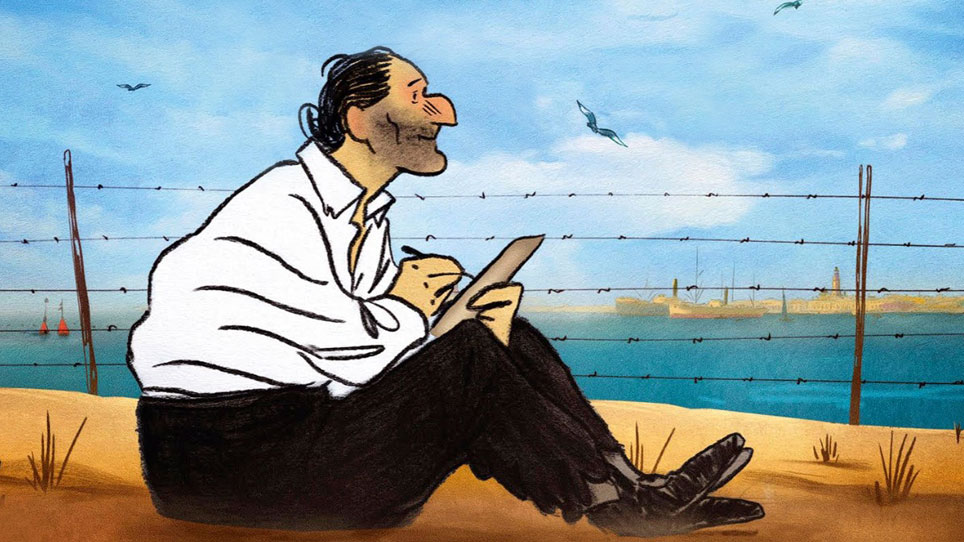
You’ve probably never heard of Josep Bartoli either. The artist was imprisoned in a French concentration camp after fighting on the losing side of the Spanish Civil War. If you think once you’ve seen one concentration camp movie, you’ve seen them all, Josep serves as a breath of enlightening air. It’s a cartoon and in the tradition of the great comic book Maus, Josep shows unlikely artforms can make the horrors of war appear even more vivid. It’s a beautiful and powerful movie for those who don’t mind watching their cartoons with subtitles.
Who knew there were so many obscure subjects worthy of documentaries? This distinctly titled movie introduces us to the Frenkel Brothers, three guys who pioneered animation in Egypt in the 1930’s. Their most famous creation, Mish-Mish Effendi, is described as the Egyptian Mickey Mouse, but their cartoons are much more reminiscent of The Fleischer Brother’s Popeye and Betty Boop cartoons. When the documentary focuses on the animation and the lives of the long since departed brothers the movie shines. As a pop culture junkie I couldn’t get enough of the footage of their cartoons. But unfortunately much of the film’s running time is spent talking with the Frenkel Brothers’ much less interesting surviving descendants rather than discussing their art.
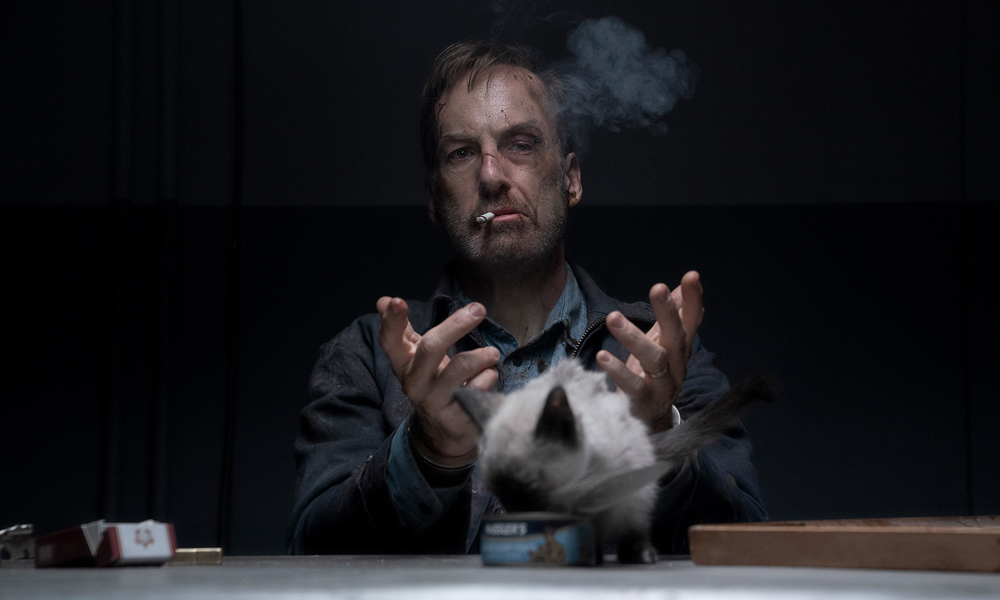
Nobody is like a middle-aged Taken. Wait, Taken is the middle-aged Taken. Okay, Nobody is more like Taken meets John Wick but with less drama (as in, nobody we like is really ever in danger) and more overt humor than the sly Keanu Reeves starrer. It’s streamlined entertainment that’s so sleek it wisps by, in one eye and out the other.
Ostensibly an action movie, Nobody more often than not plays like a parody of one. No surprise since it’s directed by Ilya Naishuller, who was responsible for the kooky, entirely first-person action epic, Hardcore Henry. The presentation here is more formal this time around, there’s only one quick POV shot, but while the film’s tongue is still firmly planted in its cheek, what’s missing here is the grand guignol insanity that marked Naishuller’s debut. There’s kookiness here, for sure, but it’s much less inspired, with the movie seemingly unsure whether it wants to commit to a more serious story or the craziness.
What we get is a middling in-between.
Bob Odenkirk, the actor, writer, comedian best known recently for his roles in Breaking Bad and Better Call Saul (he’s also one half of HBO’s cult-hit, Mr. Show, with Bob and David), who would more likely be described as milquetoast before ever being described as an action hero, stars as the movie’s central ass-kicker, Hutch Mansell.
In a zippy montage we’re efficiently introduced to the noxious drudgery of Hutch’s existence, a teenage son whose phone is more important than his dad, a distant wife (they sleep with a partition of pillows in their bed), and a dull job running a factory. (I’m not listing the actors’ names here because their characters exist mainly to be shunted away from danger.) The setup is the typical mid-life crisis stuff you’d see in something like American Beauty. Here, though, it’s the setup for an over-the-top action film. Hutch isn’t simply experiencing ennui, missing the glory days of youth. He misses his former job, a job that defined who he was.
And who was he?
An extremely deadly former high-level government operative…now retired.
The inciting incident that sets him on his path back to badassdom is a home robbery. But that’s more of a red herring. What actually brings him back to his former life depends on some extreme coincidences that somehow comes to involve the Russian mafia gunning for him. What follows are some well-staged action sequences that still feel a little tired, suffering from a sense of overfamiliarity.
It’s an inspired idea, the beyond average dude who’s hiding a Liam Neeson set of deadly skills. And Odenkirk rises to the challenge, believably playing both schlub and badass. The dude’s in good shape and moves well in the action sequences. Too bad not much is done with this dichotomy story-wise. I thought the movie was building to some sort of Fight Club-esque commentary about men having to commit violence in order to feel something, but it goes much much simpler than that. And really, everything in this movie goes much much simpler. There’s just enough detail and character stuff (arc would be too generous a word) to say there’s a story, but even then, just barely.
There are some humorous observations, especially in what sets Hutch off in the first place: the empty boasts from male colleagues about how they would have protected their family from home invaders. No matter how old you are, you’ll always find that guy.
But mostly, the movie’s just winding Hutch up and letting him loose on a bunch of goons. That’s fine, especially in an action-flick, but I dunno, the action here, while brutal at times, is mostly jokey and ironic. So much so, it’s hard to get swept up in any kind of excitement. And, while I believe I’ve said this before, it’s way past time to retire violent action set to incongruous music. Crooner classics scoring slow motion montages of destruction just aren’t as subversive as the filmmakers seem to think they are. And while we’re on the subject of retiring, the whole John Wick type of action where antagonists are dispatched with several headshots up-close, a style this movie definitely adheres to, has seriously jumped the shark at this point. It’s time to find a new angle on modern action.
Nobody is zippy and mostly harmless, and it’s fun to see Odenkirk thriving in a role you wouldn’t normally connect him with. But while it has its moments—Christopher Lloyd, Doc Brown himself as Hutch’s dad, blasting henchmen with a shotgun–there’s something a little tired and forgettable about this whole exercise.
A sardonic, “R”-rated action flick isn’t for everybody, but I love the genre, so I was especially surprised that this body didn’t much care for Nobody.