Category: Movies & TV & Theater

Movies & TV & Theater on The Jitney is Miami’s cultural corner booth, the one where the cortadito hits hard and the takes hit harder. This page is for people who live their lives between art openings, Heat games, and late-night arguments about whether the new A24 movie was genius or basura. Everything here moves with Miami speed. Reviews are not academic snoozers. They’re fast, emotional, sunburned dispatches from someone who has seen too much, feels too much, and still shows up for another round.

Miami movies and theater.

Film coverage jumps from Wynwood-indie-weirdo vibes to blockbuster spectacle at Dolphin Mall. TV gets the same locally-sourced treatment. Prestige dramas, trash TV, guilty pleasures you’d never admit at Panther Coffee but binge anyway at 2 a.m.

Miami movies and theater.

Theater, though — that’s where the page breathes. Broadway, Off-Broadway, tiny Miami rooms where the AC barely works. If a show risks something, if it tries, if it even thinks about having corazón, it finds a home here.

This isn’t some neutral critic voice. It’s Miami talking. Sweaty, loud, honest, a little chaotic, and deeply in love with storytelling — the kind that rearranges your soul, at least for the night.

  • Spider-Man: No Way Home Is a Spectacular Disappointment

    Spider-Man: No Way Home Is a Spectacular Disappointment

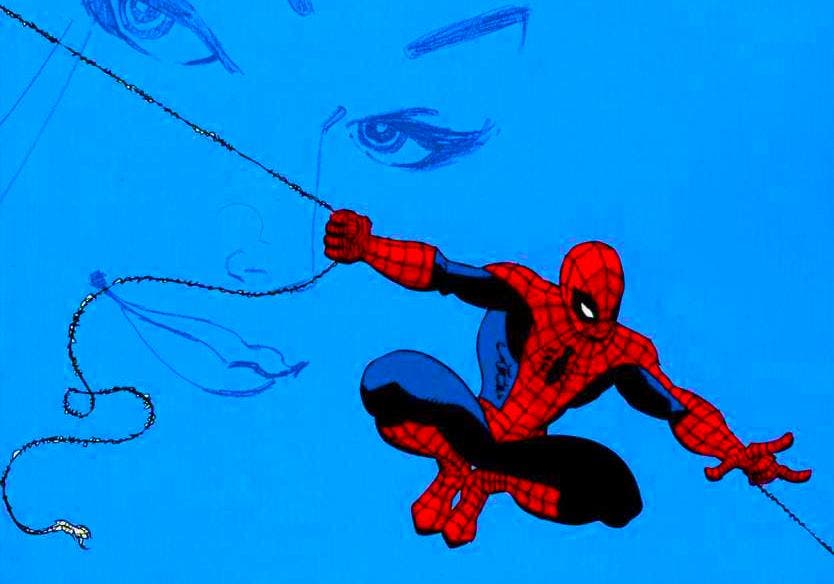
    It seems like it was just yesterday, but it was May 2002 when I sat down in my local multiplex to watch the original Spider-Man movie. I remember having a giddy feeling during the opening credits. After decades of reading the comics and watching the 1960’s cartoon, I was going to see a live action rendition of the greatest superhero ever created.  Thankfully the movie faithfully lived up to the comics I’d dog eared.  I had to constantly pinch myself during the screening. That was Aunt May’s kitchen! That was J. Jonah Jameson ranting and raving! That was your friendly neighborhood Spider-Man swinging around New York City!

    Now there’s been eight live action big screen Spider-Movies. And like a veteran heroin addict I go into each one of these Spidey flicks chasing that first high. Sometimes they deliver and unfortunately sometimes you get a turkey like Spider-Man: No Way Home.

    There does seem to be a formula on what makes a good Spider-Movie. If Spider-Man has to fight one villain, chances are the movie will be good. The filmmakers will take the time to craft an interesting story around Spider-Man, his alter-ego Peter Parker, the supporting cast, and the antagonist. If they give him two, or three, or even five villains to fight, the movies will be convoluted stinkers.

    I’d hoped Spider-Man: No Way Home would avoid that trap. The trailers showed Spidey fighting all his old villains. Alfred Molina was coming back as Doctor Octopus, Willem DaFoe was returning as the Green Goblin, and Benedict Cumberbatch was guest starring as Doctor Strange. It looked like this movie was bringing everything including the kitchen sink. And while there are plenty of villains and shocking cameos that had me gasping and cheering, it’s too bad the kitchen sink didn’t have a decent script in it.

    Throughout the movie characters make ridiculous, non-sensical choices while the actors ham it up with dumb wisecracks. They couldn’t even bother to put a cliffhanger end credits scene (which comic book movie fans always look forward to) instead simply displaying a trailer for an upcoming Marvel movie. The movie is overloaded enough with excesses, it almost reminds me of a tipping point the comic book publishing industry found itself in 25 years ago.

    From 1990-1991 comics were selling a record amount of copies until the publishers confused what was drawing in readers. Instead of focusing on providing great stories, they started relying on gimmicks. Glow in the dark covers, guest stars galore, and massive crossovers where you have to buy twenty other issues to understand what has happening in the comic you had in your hands. The industry of actual comic “books” never recovered.

    Right now comic book movies are king. The four highest grossing movies of the year are based on comic characters with Spider-Man sure to join them. You could spend years of your life poring  through all the comic book adaptations on HBO Max and Disney+. It seems like there will never be an end to these comic book movies.

    But it only took five years between Marvel releasing the highest selling comic book of all time with X-men #1 to the company declaring bankruptcy in 1996. If Marvel releases a few more bombs like Spider-Man: No Way Home the age of the superhero movie might finally come to an end.

  • Documentary “Julia” Demonstrates Why Julia Child Was Awesome

    Documentary “Julia” Demonstrates Why Julia Child Was Awesome

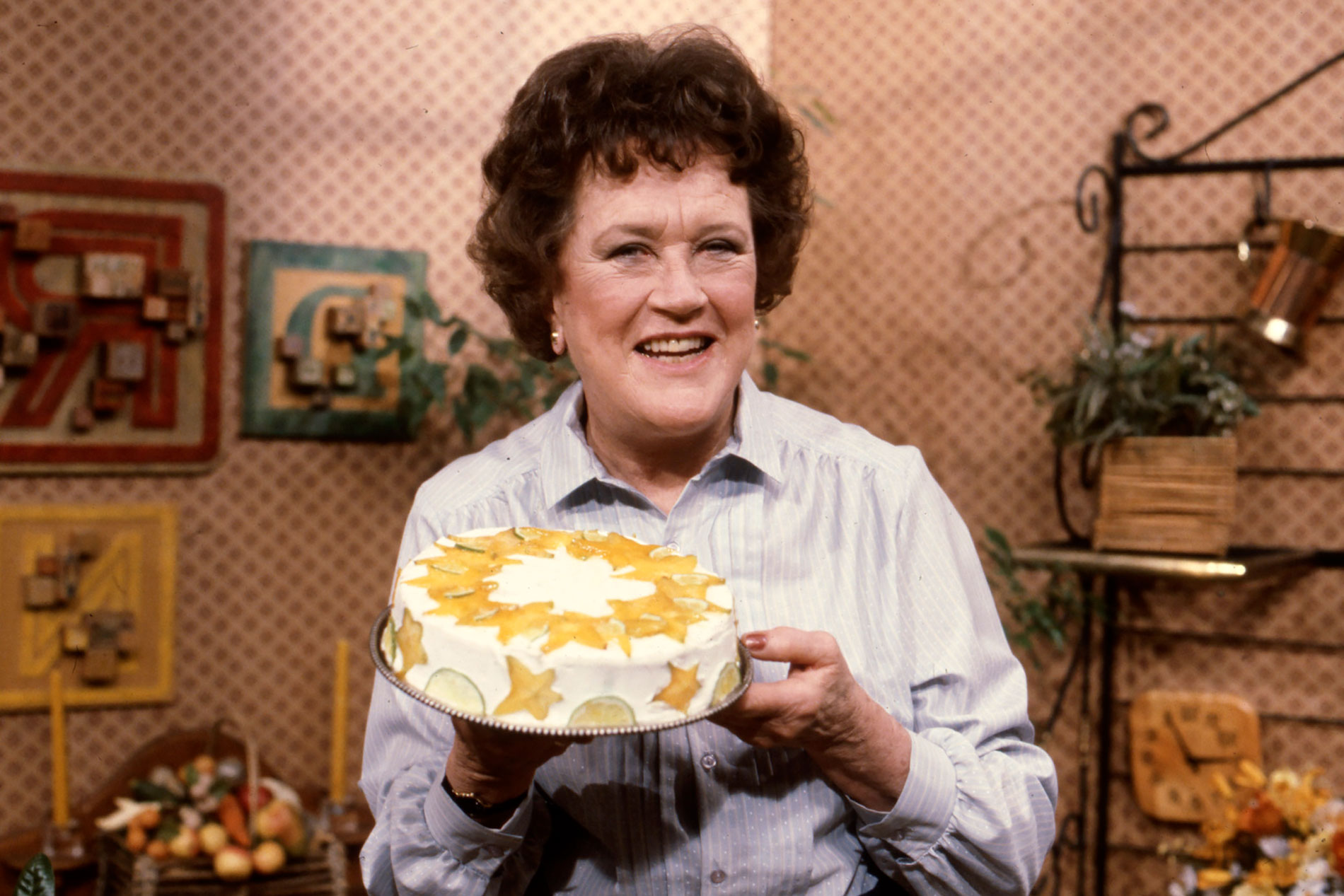
    Julia Child is awesome. I’ve known this since I was a dumb kid, a know-it-all teenager, and now an emotionally stunted adult. The culinary legend was funny, blunt, and extremely knowledgeable as she towered–later, hunched over her kitchen counter, cooked delicious meals, and narrated it all with that uniquely wheezing sing-song voice of hers. Clearly, I’m not the only person who feels this way. She’s still a pop culture figure now, close to 20 years after her death in 2004. Iconic, poly-Oscar-winner Meryl Streep even played her several years back in the literally halfway decent Julia & Julia (I kinda loathed Amy Adam’s mostly unrelated portion of that movie). And now we have a brand-new documentary about the famous chef.

    Julia is from the directing duo of Julie Cohen and Betsy West, whose last documentary about Ruth Bader Ginsberg, RBG, garnered strong notices, an Oscar nom, and pulled in 14 million dollars at the box office, no small feat for a documentary these days (…or any days, really). Like RBG, Julia is a celebration of its subject, more hagiography than a warts-and-all look at the person behind the public veneer. Think Won’t You Be My Neighbor, which worked to confirm the notion that Fred (Mr.) Rogers was, basically, the cool-ass dude we thought he was. In much the same way, Julia exists to confirm rather than challenge the public perception of Julia Childs. Frankly, I’m more than fine with that. Lemme keep my heroes.

    As far as the presentation goes, Julia is a typical documentary in that it’s mostly archival footage, interview snippets, and talking heads from the present-day pontificating about the film’s subject. But since that subject is a world renown chef credited with bringing French cuisine to the U.S. at a time when frozen food was considered haute cuisine, the movie gives itself over to fussed over shots of delectable looking food steaming, simmering, and blubbering in bowls and on plates. Food porn, basically. In a nice touch, the filmmakers try to make it seem like Mrs. Child herself is making the food in those modern segments. Either that or it just happened to be an older chef whose aged hands we see crafting the food.

    While the presentation isn’t revolutionary, the movie gets the most out of its tried-and-true formula. Cohen and West clearly know how to make a documentary that collapses a lifetime into an hour and a half without feeling like any loose ends are left untied. Not an easy feat, I assure you. True, the many facets of Julia Child’s life fly past at a breakneck pace, and you could easily make whole movies out of just one of those segments, like her growing allyship with the LGBTQ community, or just the initial hate to love courtship between she and husband, Paul. The movie, though, flows elegantly through this life story, like an experienced chef nimbly floating around the traffic of a hot, bustling kitchen.

    And  you wouldn’t know it, but the movie is ludicrously romantic. Part of that is simply because Julia and Paul genuinely loved each other and wanted to be around one another even after decades of marriage. For a sourpuss like me, seeing two people fit like a hand in a glove, like two Lego pieces perfectly snapped together, like… Bert and Ernie, was balm for a pessimistic soul. It helps that the movie presents their romance so glowingly. Snippets of letters they wrote each other, some of which are stunningly romantic couplets from Paul, float across the screen over autumnal images while Rachel Portman’s gossamer soundtrack buoys the beauty of it all. It’s hard not to be swept away.

    The movie left me with a warm, prickling feeling. I felt a renewed faith in humanity when it was over. It’s the exact feeling Julia Childs instilled in me all these years. Julia Childs is awesome, and Julia does a great job reminding you why.

  • HoundsTooth Cottage Presents “Half-Cocked” during Art Basel

    HoundsTooth Cottage Presents “Half-Cocked” during Art Basel

    This article originally appeared in PureHoney Magazine. Check them out here. 

    What is art? And more importantly, when is the best time to exhibit it? There’s an easy answer if you’re HoundsTooth Cottage, the art collective and record label operated by Maitejosune Urrechaga and Tony Kapel, the husband-and-wife duo from posh-punkers Pocket of Lollipops: The “what” is up to you, and the “when” is right around Art Basel 2021.

    Say what you will about the fair and its encroaching hipster presence, but Art Basel continues to draw crowds from all over to Miami, and it’s the uninvited locals who have hammered out the personality traits that make the event relevant. A counterprogramming case in point is HoundsTooth Cottage presents “Shooting Blanks: The Art of ‘Half-Cocked.’”

    HoundsTooth Cottage, in collaboration with the artist organizations Clandestina Miami and Together, will activate a space at the 7 Seas Motel beginning on November 22 with an eclectic mix of art, music, performance centered on a thematic, immersive look at the 1995 cult classic underground music film, “Half-Cocked.”

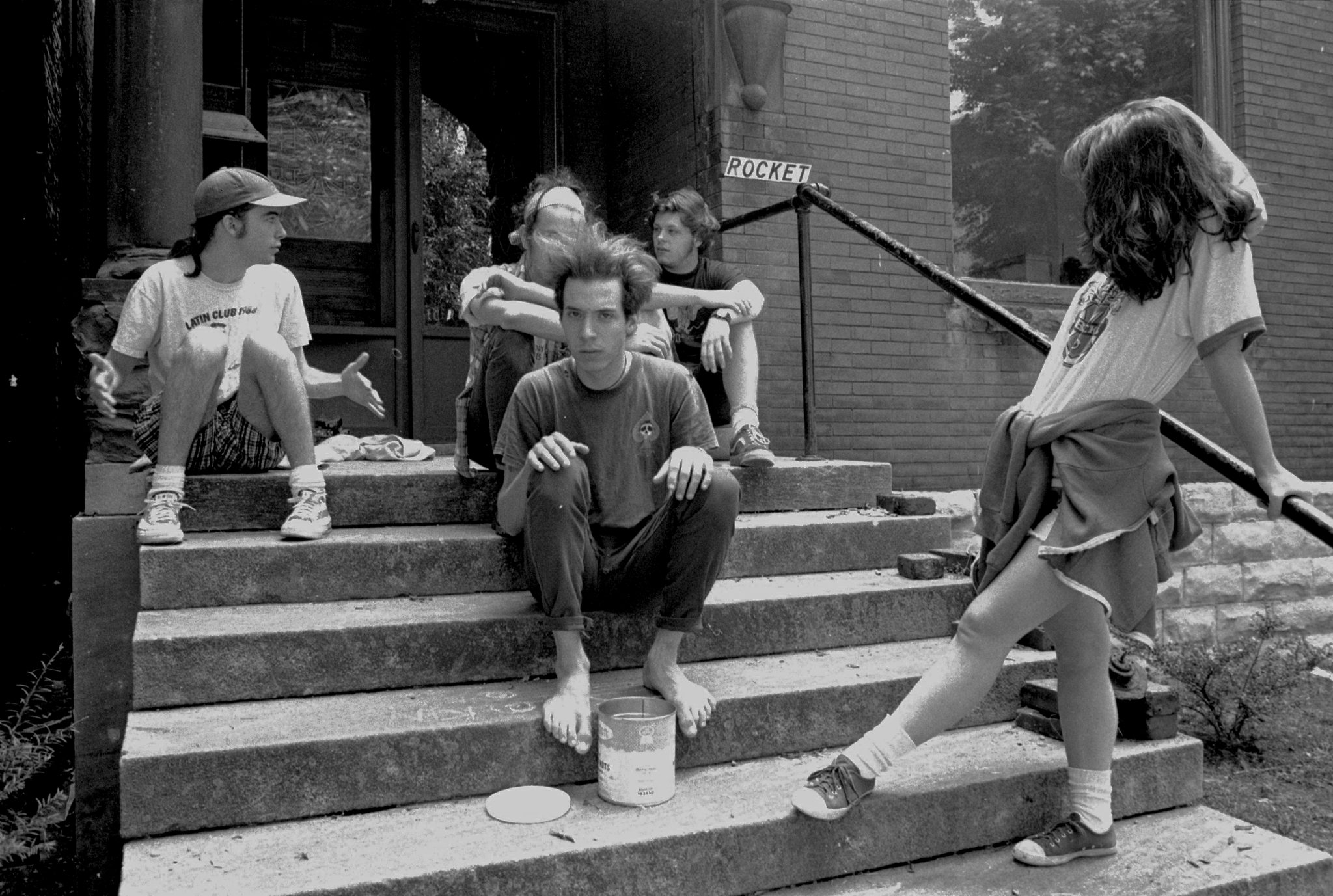
    A true-ish story with a documentary air and people untrained as actors playing themselves, the film follows a group of music and art scenesters from a Louisville, Kentucky party house who steal a van full of musical equipment and go on tour. Made by a husband-and-wife team who, like Urrechaga and Kapel, are themselves artist and musicians, “Half-Cocked” is an adventure in off-the-rails, multidisciplinary creativity.

    Kapel, also a photographer, feels the same need today to record his creative surroundings. “The music scene is always changing, the art community is always changing,” he tells PureHoney. “If it isn’t documented from the inside sharing out, then those looking in could be limited on where to look.”

    “Shooting Blanks” offers screenings of the 1995 film; photographs and ephemera from its writer-director husband and wife team, Suki Hawley and Michael Galinsky; and art from cast, crew members and artists connected to the Louisville, Kentucky scene documented in “Half-Cocked.”

    A love letter to Louisville (and thereabouts)

    Galinsky, a photographer and musician, happened upon the Louisville scene while on tour with his band Sleepyhead. Upon returning to New York City, he connected with Hawley, then studying film, and the two set out to make a movie. Entranced by the electric charm of Louisville’s scene and the connections he made on visits, in correspondence and through word of mouth — all pre-Internet — the seed for a documentary like film was planted.

    “While in college, I started a band and I started to document the community I first was a fan of, and then a member,” Galinsky tells PureHoney. “On our first tour, I met most of the people who would end up being in ‘Half-Cocked,’ and over the next couple of years, I made several trips that retraced the route of that first trip.”

    Imagine the youthful ennui of Jim Jarmusch’s “Stranger Than Paradise” and the punk-fueled, devil-may-care attitude of Bruce McDonald’s “Hard Core Logo,” with everyone traveling the kind of trail blazed by Jack Kerouac in “On the Road,” and you’re in “Half-Cocked’s” ballpark. Ably acted by actual members of post-rock outfit Rodan, among others, the movie is more than a fictionalized doc; it’s a capture of a moment in a wildly creative, reactionary, independent and nurturing scene in Kentucky’s biggest city. “While the film starts in Louisville, and it focuses on the wildly creative people who were involved in the Rocket House, it’s really meant to capture the spirit and feeling of the much larger community of lesser-known bands and artists that flowed between a network of towns,” Galinsky said.

    According to Hawley, the loose script served as a guide for the musicians to play “versions” of themselves and the biggest difficulty was to get them to act as if though they’d never played an instrument before, let alone assemble a drum kit for a gig.

    Galinsky will also present his book, “The Decline of Mall Civilization,” a candid document for a bygone era of American consumerism. Kapel initially contacted Galinsky for an interview on the HoundsTooth Cottage show on internet radio station Shake 94. As it turned out, Galinsky was also responsible for the cover of one of Kapel’s favorite 90’s album, Unrest’s compilation “B.P.M. (1991-1994).”

    “The impetus for making the film was to highlight and celebrate the amazing creativity we saw in the music scene through a teen riot/coming of age tale,” says Hawley. “Interestingly, that’s also the impetus for the HoundsTooth show, meant to honor and celebrate the intense creative lives that the people who surrounded the making of ‘Half-Cocked’ have pursued.”

    Art Basel for the sake of art

    The 7 Seas Motel gallery will feature works by more than 20 artists, and additional film screenings from independent film studio Rumur.

    The spirit of this exhibit recalls that of the better satellite fairs that sprung in the wake of Basel over a decade ago. The ones that didn’t care about getting photographed while holding a bottle of champers (label out) or of pulling up to the front in a rented European sports car. No, this exhibit is for those who want to home in on artistry and enjoy art through the experience of those who made it.

    Galinsky says it best in describing how “Half-Cocked” came to be: “We met a bunch of people who shared our interest in music, art, and rebellion and then went to another town where the people we’d just met told us about other people we should meet. We were like the pony express of indie rock bringing information from town to town and discovering new bands, ideas, and ways of being.”

    From Wikipedia: “Half-cocked is a cult music road movie, made in 1994 in Louisville, Nashville and Chattanooga. The movie tells the story about a group of high school teens who steal a van full of music equipment and pretend to be a band, called “Truckstop” (played by the band Rodan) in order to stay on the road. When the band starts playing gigs, their sound is largely inconsistent and incoherent, however, over time, the band becomes increasingly competent in their musicianship. The film puts much emphasis on the indie/alternative rock subculture.

    Many indie rock bands such as Polvo, Grifters, Freakwater, Versus, Slant 6, Rodan, Unwound, Helium, Sleepyhead, Crain and Ruby Falls are featured in the movie. Members of Rodan and Grifters play in the movie as well as actors. The movie appeared in a small run on VHS and unavailable for years until its 2007 re-release on DVD. A soundtrack of the movie appeared on Matador Records.”

    HoundsTooth Cottage presents “Shooting Blanks: The Art of Half-Cocked,” Nov. 22-Dec. 5 at the 7 Seas Motel, 5940 Biscayne Blvd., Miami. houndstoothcottage.com
  • Marvel’s Eternals Soundtrack Features Rickey Calloway

    Marvel’s Eternals Soundtrack Features Rickey Calloway

    True funk is eternal, and Marvel’s Eternals funk is true.

    Just ask Rickey Calloway and The Dap Kings, stars alongside Pink Floyd, BTS’s Jimin, Merle Haggard, and Lizzo on the soundtrack to the MCU’s Eternals (hitting theaters November 5th). Rickey Calloway and The Dap King’s classic record “Stay In The Groove PT. 1” scores a whole scene of the epic film.

    Calloway is of course Florida’s official King of Funk. He’s also signed to Miami’s own Henry Stone Music, where CEO Joe “Boogiedown” Stone has taken everything he learned from his legendary father and carved his own groove into the beat of history.

    Here’s what Rickey Calloway had to say about joining the Marvel Cinematic Universe and becoming a funk superhero worldwide.

    First of all congrats!

    Rickey Calloway: Thank you. It’s a beautiful day. I’m feeling the moment.

    How do you feel about joining the Disney and the Marvel Universe?

    It ain’t sunk in yet. I can’t wait til it’s out and my grandkids can see and hear it because they’re into that kind of stuff. I’m just trying to envision it in my mind. I think it’s gonna be cool. I’m excited.

    What have you heard about the movie?

    I read a couple of clips and I’m going to meditate on it. All I know is that it’s one of the songs that I did with the Dap Kings  and I’m just going to spend some time and research it and see how it all comes together. You gotta realize, Joe was working on this for a long time. It’s just so cool. This is something in my career that I’m very proud of, and humbled too. A lot of hard work went into this music. There have been good days and bad days throughout, but it’s been awesome. I was on my own for so long just doing everything myself and managing, but it’s gotten to a point that Henry Stone Music has took me to another level that I just never would have dreamed would happen. Joe has really been here for me when I need him. I can call him at any time of the day or night. I actually have to stop calling him at three in the morning, but he’s always there for me and working hard to get me where I need to go and I am so thankful that I met Henry Stone and Joe Stone. And he’s become a very hard working manager and publisher all in one.

    How did “Stay In The Groove (Parts I and II)” come about?

    It all started when I was in New York cutting records with The Dap Kings. Kenny Dope  was with us in the studio. It was a lot of fun and I can’t believe the track is still hanging around. “Stay In The Groove” was pure inspiration. I flew home and couldn’t even remember the words that came out of me. The whole band was there and it was just a cool time. We connected right away. I just closed my eyes and kept singing what I felt in my heart off the top of my head, just going with it, going with the feeling. I was into a zone when we recorded that. We didn’t even want to stop. We probably did 12 or more minutes that eventually got chopped down. I like to record like that. Everybody was feeling it. And after we got through, Kenny Dope bought us some pizza from down in Brooklyn, and that was a good pizza, and a good beer. And we were just sitting and having fun talking about the record. We had no idea what would happen, but it was like family. I didn’t wanna leave New York. I hope I get back there some time.

    R.I.P Sharon Jones, was she there?

    Unfortunately Sharon Jones was shooting a movie with Denzel Washington at the time and couldn’t be there.

    Where did you record?

    Dap Tone has a studio. A really nice studio where Amy Winehouse and a lot of big people recorded. They got this basement. Funky basement. And in fact, I played the B3 organ on that song. I kept bugging them to let me play, and that’s me. And it ain’t no whatchacallit, high tech. It’s just a mom and pop studio with a great sound and a lot of history and I felt comfortable there. No pressure. It was cool.

    How did this all start with the Dap Kings?

    What happened is that I was working at University of North Florida back around 1999. I was doing shows and benefits for UNF and donating the money to students for scholarships and I had a guy who saw one of the news articles about me call me up. Johnny Garrett was his name. He said, “Rickey, you know your records are big in Europe.” Which, at the time I didn’t really believe him, because this was my old records. He gave me the phone number for a DJ in the United Kingdom. I called this guy George and said, “Hey, are my records big over there? I hear you’ve been trying to get a hold of me.” He said, “Let me get you in touch with Kenny Dope.” Now fast forward to when I put a CD together called Rickey Calloway King Of Funk. I brought it to Henry Stone and he liked the album and the rest is history. Before Henry passed away, he put me with Joe Stone, so now I belong to Joe and I’m enjoying it. I’m having fun. I’m 68 years old and having the time of my life.

    Rickey Calloway is also proud to announce his new album Eternal Funk on Henry Stone Music, featuring remixes by Sadhugold who recently produced “The Fly Who Couldn’t Fly Straight” by Westside Gunn ft. Tyler The Creator.

  • Dude, You Gotta See “My Hero Accademia: World Heroes’ Mission”

    Dude, You Gotta See “My Hero Accademia: World Heroes’ Mission”

    “Dude, you gotta watch My Hero Accademia!” I heard this phrase just about every day for the first two months of 2020. The person saying it? A co-worker, friend, and anime lover. I’m a lapsed fan of Japanese animation myself, having checked out around the early turn of the century after Cowboy Bebop finished its run. You can’t improve on perfection, so I just kind of rolled my eyes at my friend’s incessance, “Sure, sure, Nick.”

    Then the pandemic happened.

    I suddenly had plenty of time on my hands. I put on the first episode of the five season strong (and still going) tv series and…I wasn’t impressed. Episode two, though, was much better and before I knew it, I was hooked on the antics of Izuku Midoriya and his classmates as they trained in a specialized hero school to become superheroes in a world where 80% of the population has developed “quirks” or unique superpowers. (And when I say unique, I mean unique: One dude controls fabric. Another has tape that comes out of his elbows. Yet another is half frog. Etc.)

    It’s a popular show both in Japan and the U.S., so here we are with a third theatrical movie based on the anime, My Hero Accademia: World Heroes’ Mission. (Anime titles can be a mouthful). Even as a nascent fan of the series, I’ve seen the first two movies already and was excited to review this new one. So, how does it stack up? Par for the course. If you’re already a fan of the series, you shouldn’t be disappointed. If you don’t know a Deku from a Best Jeanist, this probably isn’t the place to start, or is it?

    If you have seen the earlier films, you probably should know what to expect from this one. A previously unmentioned villain shows up and is more powerful than any other foe our hero, the green haired, giant-hearted Izuku, who’s obsessed with becoming the world’s number one hero because he wants to help people, has ever gone up against. Unlike the series, whose villains rarely, if ever, are fully defeated, even at the end of several episode arcs, these uber-powerful villains are dispatched and forgotten by the film’s end. To be honest, I can’t even remember what the villains of the first two movies looked like and what their deal was. I think a dude turned into a giant, robot clock monster thing in the first one, all metal gears and wires attacking our heroes? I’m not sure anymore.

    The villain this time around may kick around a bit longer in the old noggin, if just because of his blue skin, wild outfit–a robe dotted with iridescent mirrors–and name: Flect Turn. (Speaking of mouthfuls…). Flect wants to rid the world of people with quirks, though, ironically, he himself is a quirk-er. Using some doomsday theory as an excuse, Flect releases a chemical agent that only harms those with superpowers. Underneath his far-fetched reasoning for doing this (something about people with quirks possibly bringing about the end of the world, or something) he actually has a much more personal rationale for his actions. And that’s what makes him stand out a little more also. Like the motives of the best ubervillains, Flect’s is kind of understandable on the one hand, while selfish, myopic and monstrous on the other. I’ll let you discover what that reason is for yourselves, but I liked the simplicity and straightforwardness of it.

    Izuku, meanwhile, now an intern for a top hero agency, scours the countryside, along with just about every superhero around the world, for Flect. Through some convenient mix-ups and energetic chase scenes, Izuku somehow ends up on the run from the police along with a new character: the young, seemingly ne’er-do-well, Rody Soul, a disenchanted teen, raising his younger siblings by himself in the slums. Like many a story in the Hero universe, this cynical character is eventually won over by the selfless, (insanely) driven Izuku, and comes to see life through the hero’s rose-tinted glasses.

    Come to think of it, maybe this isn’t the worst place for a My Hero Accademia noob to start. With these new characters supplanting the need for too much previous knowledge of the show and its characters, a newcomer could, theoretically, start with this third movie. It’s certainly exciting enough with several well-done action sequences sprinkled liberally throughout and a fun musical montage that shows the strengthening friendship between Izuku and Rody. And even if some things aren’t diligently explained because you’re expected to know by this point, it’s still going to be clear enough who the good guys and the bad guys are and why they’re doing what they’re doing. True, some things might not mean much to the uninitiated–such as the trio of fan favorite characters that team up in the finale– but there shouldn’t be outright confusion.

    And whether you’re familiar with the world or not, it’s still a nicely animated movie. Now, it’s not on the eye-popping level of an Akira or Spirited Away, but it sure has its moments. A late action sequence stands out because it attempts the animated version of a “oner,” as the “camera” swoops from one character to another doing their hero thing with seemingly no edits in between. What’s cool is that it looks like traditional rather than obvious computer animation. The background designs are simplified, almost becoming line drawings, so that they can rotate into different angles in front of the camera as it glides through the action.

    If you’re an action fan, an anime fan, or just want to see something different, I recommend (*deep breath*) My Hero Accademia: World Heroes’ Mission. For me, it was a welcome return to a bunch of characters I’ve become quite fond of. And frankly, Izuku Midoriya’s unwavering optimism was a welcome sunny balm to a depressingly rainy weekend. So, whether you are a My Hero novice or expert, an anime connoisseur or neophyte, give this one a shot.

    Oh, and thanks, Nick. You were right.

  • The French Dispatch Proves Lesser Wes Anderson Movies Are Still Great

    The French Dispatch Proves Lesser Wes Anderson Movies Are Still Great

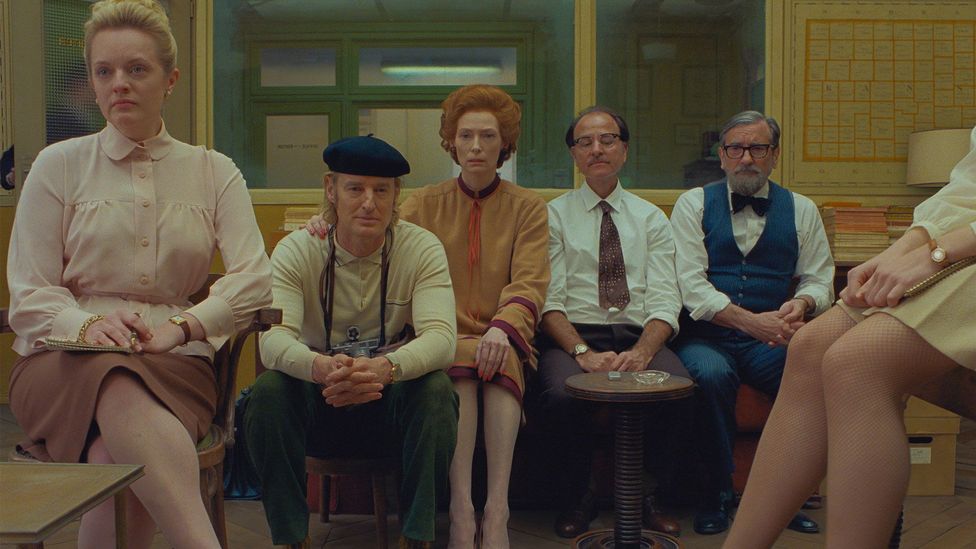
    I suppose Wes Anderson making a movie based on a magazine isn’t that strange.

    When Michael Jordan perfected the game of basketball, he went off to play baseball. When The Beatles perfected popular music, they split up. The film director Wes Anderson by my count has made three perfect movies and didn’t follow that up with a shift quite as dramatic.

    Instead of filming another beautiful movie with a traditional narrative structure he decided to base his latest live action movie on a magazine.

    Not a magazine article, but an actual magazine.

    The French Dispatch is a love letter to the New Yorker. And it follows the format of that periodical. Just as a magazine has several articles that might not have any interweaving themes, so is The French Dispatch  comprised of three random stories. None of these tales have any common ground except that the three vignettes are supposed to be dramatizations of articles from the acclaimed fictional French Dispatch magazine.

    The French Dispatch has many of the trademarks from previous Anderson masterpieces. It has the impeccably precious production design. It also has his charming cast of regulars like Bill Murray and Owen Wilson. But The French Dispatch doesn’t quite hit the heights of  his masterpieces The Royal Tenenbaums or The Grand Budapest Hotel.

    Partly to blame is the attempt of throwing several completely different films into one moviegoing experience. I had the same problem a couple years ago with The Coen Brothers movie of many short movies The Ballad of Buster Scruggs. It’s hard to stay engaged when an hour into a movie a whole new random story begins.

    Another problem is The French Dispatch tries to match the insane word count of a typical issue of The New Yorker which can be exhausting. I’m not sure if there is a website out there tabulating the statistic of most words of dialogue in a single movie, but I’m certain if there is this flick will be near the top of the list.

    But these are nitpicks. Lesser Wes Anderson movies are still pretty awesome. While the magazine schtick is a bit of a failed experiment, this movie still has it’s moments of beauty that make it well worth seeing.

    Perhaps it will play better at home when you can treat it like a magazine that you can put down and come back to when the mood arises.
    -pic

  • Indie Movie Roundup – Old Henry Is a Solid Oater. Escape from Mogadishu Is a Wonderful Korean Film

    Indie Movie Roundup – Old Henry Is a Solid Oater. Escape from Mogadishu Is a Wonderful Korean Film

    Old Henry is a solid oater. Small in scale but controlled and efficient. And honestly, that’s mostly all I’ve got to say about the movie.

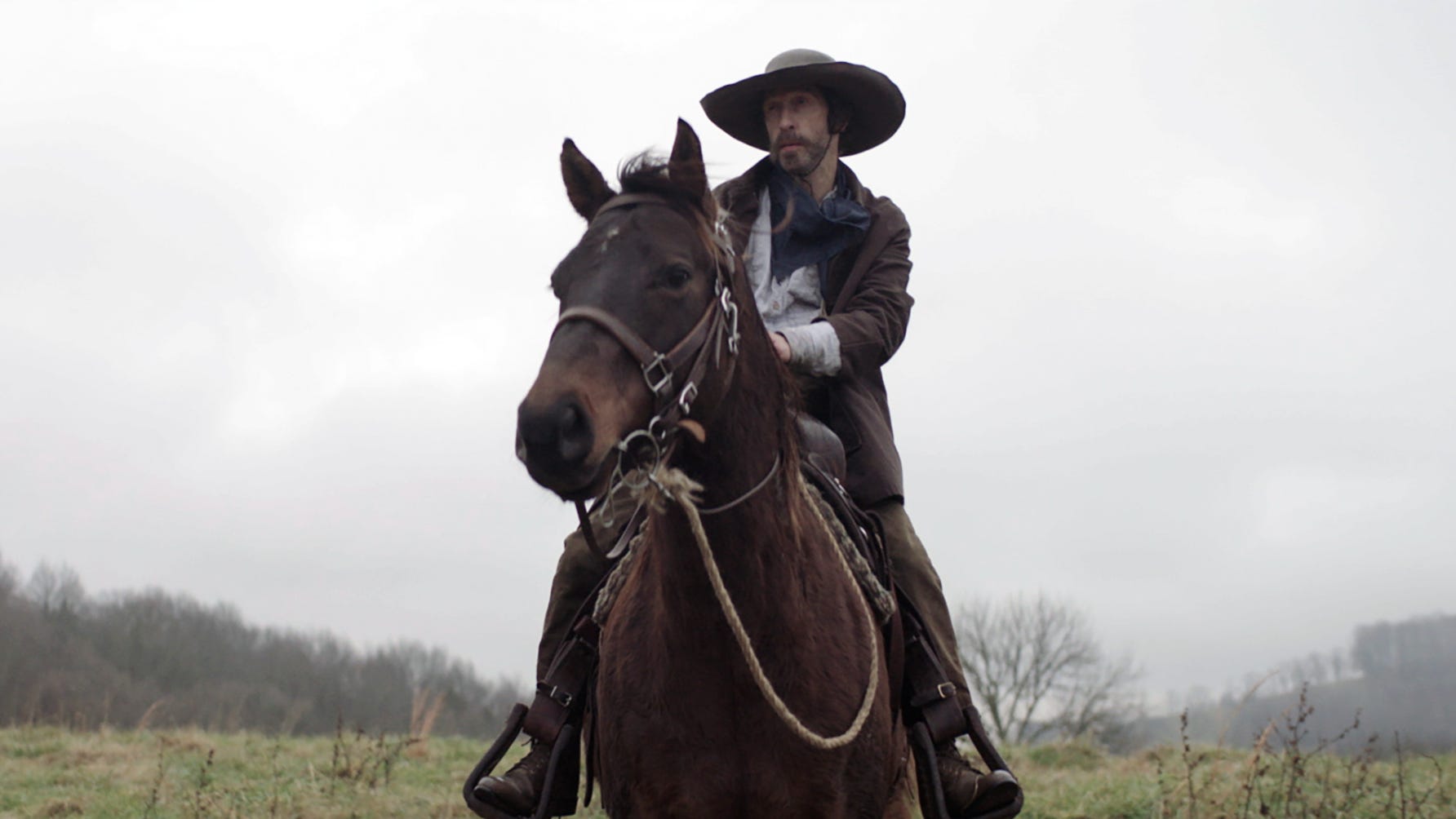
    Old Henry takes place in the early 1900s in the wilds of a constantly dewy Oklahoma Territory. Tim Blake Nelson stars as titular Henry McCarty, a taciturn widower and farmer whose teenaged son, Wyatt (Gavin Lewis), wants to do anything but tend to their land and animals. He senses his father feels the same, but the old man is a quiet mystery to him, devoted to the back breaking duties he clearly despises. Their daily drudgery is upended when a wounded man with a satchel of money passes out on their land. Soon enough a trio of men show up looking for the satchel carrier, led by a gravelly voiced, scarred, nearly unrecognizable Steven Dorff. As this is a Western, you know cooler heads won’t prevail in this tense situation, especially since old farmer Henry clearly has a past and a set of skills he’s trying to keep from his son.

    The set up isn’t original, but the movie squeezes some interest out of its breezy 90-minute runtime.

    Some actors just cannot do period pieces. They look too modern. Tim Blake Nelson isn’t one of those people. In fact, sometimes I wonder if he’s a time traveler. He sports a lazy eye and some funky teeth in this movie, and I spent a good amount of time wondering if those were prosthetics or just Nelson himself (…they’re fake if you’re wondering). But Nelson seems so at home in the period setting with a ludicrously wide brimmed hat and ill-fitting brown pants held up by cloth suspenders looking completely normal on him. He clearly relishes the role, gliding through the movie, unforthcoming but clearly always thinking.

    There are some fun bits like when Henry finds Curry (Scott Haze) blacked out from a gunshot wound. Henry carefully scopes out the location looking for clues as to what happened. He traces Curry’s tracks back to a tree a couple of meters away and finds the satchel filled with money. The camera rests on his inscrutable face for a bit as he studies the bag. What’s he thinking? Is he tempted? Then he just loudly says, “Nope!” and gets on his horse and rides away.

    But of course, he turns back.

    I guess there wouldn’t be much of a movie if he didn’t. And that sets off a chain of events that end in a full-blown shoot out in the film’s last act. I love a good shoot out, especially in a Western, and this one, like the movie itself, is…fine. Perfectly serviceable. The guns are loud and you can tell what’s going on, but it’s missing something, a bit of panache. I think back to Open Range, the Kevin Costner directed cowboy movie from the beginning of the aughts, and another movie that patiently waited until the last act to loosen its salvo. But in that movie, you almost felt every gun shot and every hit. Every shot (both from camera and gun) felt important. Old Henry’s gunfight feels more passable than important.

    Which is a shame since the movie drops a twist just before the real shooting happens, a twist that makes the resulting action a visualization of a character’s violent past and psyche, and as a result should be a bombastic finale. Instead, it’s closer to the shrugging emoji we all have on our phones.

    But that twist, man, it’s a good one. Though, on second thought, its rewriting of history is a bit gross. Good thing I probably won’t remember the movie long enough to give that second thought.

    Escape from Mogadishu

    I’ll be honest. My interest in Escape from Mogadishu stemmed more from its distribution label than the actual movie itself. I love genre movies and, in pursuit of watching as many as I can, I’ve come across the name Well Go USA more than a few times. Okay, it didn’t hurt either that Escape was South Korea’s submission for the 2022 Oscars Best International Film category. But none of that’s really important. For whatever reason that I was drawn to it, I’m glad I checked the movie out. It’s a good ‘un.

    Ostensibly a drama based on real events, Escape ably shifts gears through tones and genres without causing whiplash. The movie has a surprising bit of dry humor and, most notably, a couple of well-executed action beats. It’s not an action movie per se, but it’s got at least one truly exciting scene, a mad dash car chase through the war-torn streets of the titular Somalian capital.

    But long before that, the movie unfolds patiently, though not ponderously. Set in the early 90s as both South and North Korea vie for UN membership, most of the movie’s first act centers on the embassies from both countries stationed in Mogadishu trying to outsmart one another to win the Somalian president’s favor in order to secure his votes and thus admission into the UN.

    In an interesting move, director Seung-wan Ryoo keeps the focus so tightly on the maneuvering between the two embassies that we are just as surprised as the characters are when gunshots abruptly ring out and an apparently simmering civil war suddenly erupts all around them. As they are so wrapped up in their games of one-upmanship, we too are kept in the dark.

    Like many movies from South Korea,

    whether implicitly or explicitly, this one really is about the divided nation, North and South, a once unified people now separated by politics and ideologies, allies turned enemies. Here in the states, I don’t often think about how painful that must be for the people of both nations. And, ultimately, that’s what sold the movie to me: how palpable it makes the tension between the two countries and how, despite everything that’s going on around them, and despite diversions into different genres, the movie is ultimately a melancholy story about brothers and sisters split up by political forces they have little control over.

    It’s also clever that a movie set in the middle of one civil war is actually about another civil war, one whose physical battles have long since finished, but whose ramifications still reverberate years later. Of course, you wouldn’t be wrong to think that using the tragedy of Somalia’s civil war to look at another tragedy trivializes the violence in the African country a bit.

    The good news is that even though Somalians are only on the periphery, the filmmakers (the movie’s written by Ki-cheol Lee and director Seung-wan Ryoo) don’t appear judgmental. The Somalis are not shown to be backward, cartoonishly cruel, or war mongers. And that sensitivity extends to how the Northern and Southern Koreans are presented. How easy it could have been for a South Korean movie to make the South the virtuous heroes and the Northerners the villains. Instead, it shows both sides as capable of duplicitousness and compassion.

    Once the Northern embassy finds themselves on the violent streets of Mogadishu, tossed out of their consulate by Somalian rebels, they eventually must, to their disdain, throw themselves at the mercy of the Southern embassy, who take them in, but not until after a bit of gloating and haggling. What follows shouldn’t be too much of a surprise as the former countrymen have to set aside their differences to make it out of the war zone alive. It’s corny, but the warmth shown toward the characters and the suspense of their eventual escape attempt makes the whole thing work.

    That specificity of North and South Korea, one nation torn in two, will probably limit the film’s appeal abroad, but I don’t know, if you’ve got an ounce of empathy, Escape from Mogadishu really shouldn’t leave you cold.

  • New James Bond Movie Takes So Much Time You’ll Want to Die. Lamb Is a Peculiar Foreign Flick.

    New James Bond Movie Takes So Much Time You’ll Want to Die. Lamb Is a Peculiar Foreign Flick.

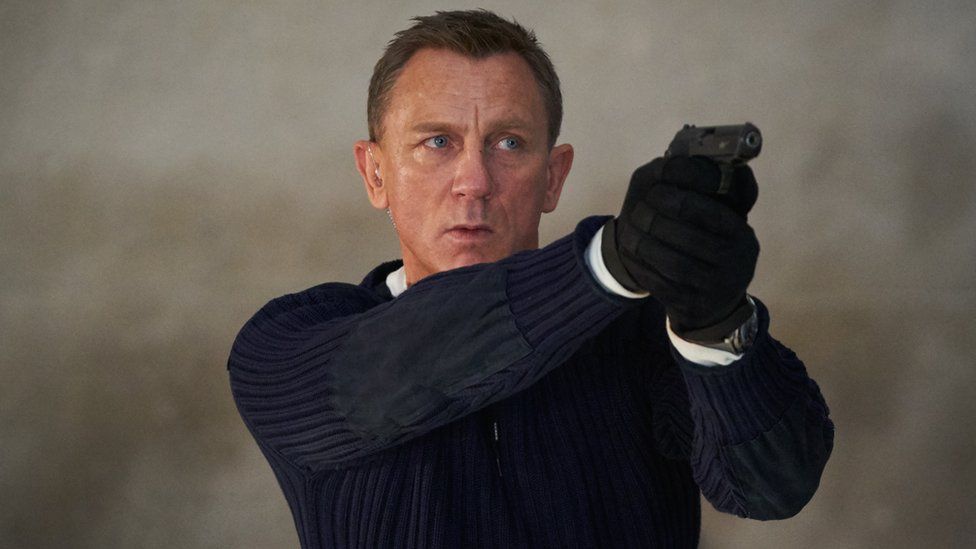
    The new James Bond movie No Time to Die makes me feel like a failure as a movie critic. I just spent nearly three hours of my life watching it. But even with a gun pointed at me I couldn’t explain what I just saw. 

    I understood the international language of violence, which this movie speaks loudly. And I suppose I could spoil the only noteworthy thing about the movie that happens at the end. But as far as recounting the plot, describing the characters’ motivations and even explaining the reason why the bad guy wanted to kill everyone, I’m at a complete loss of what I just saw.

    Hell, I can’t even figure out how the title fits this movie.

    Perhaps my befuddled experience is what it was like for someone to stumble into Avengers: Endgame without seeing the previous dozens of Marvel movies?

    I’d seen the old school James Bond movies of course. I’d even seen a couple of the previous blah installments of Daniel Craig pretending to be James Bond. But ever since Austin Powers came out it’s been hard to take James Bond movies seriously. In part because the Bond movies reacted to Austin Powers by taking themselves way too seriously.

    No Time to Die  escalates this trend.

    And it expects its viewers to have working knowledge of all previous Daniel Craig Bond movies.  Supporting characters walk on and off as though they need no introduction. Comprehending major scenes fully depends on knowing what  happened in previous Bond flicks, the last of which was released not last week, but back when Barack Obama was still president.

    And did I mention No Time to Die was two hours and forty-five minutes? I know these movies print money, but couldn’t the studio have pocketed several tens of millions of dollars by cutting out a car chase through a charming European village or two to make the movie a manageable length of time? Or maybe one of the three times where James Bond deals with the effects of a loud bomb blowing out his hearing could be snipped?

    But what am I talking about? The car chases and explosions are the only thing that make No Time to Die watchable at all.

    Lamb

    Meanwhile, it’s simple to summarize the new foreign language Icelandic flick, Lamb. It is as quiet, as No Time to Die is loud. I would never suggest that Lamb is a classic, I’m not even sure if it’s even any good, but it is in its own way unforgettable.

    How can you ever forget a movie that portrays a childless couple who take in a child with the head of a sheep and raise it as their own? It’s the type of film where ten minutes pass before a line of dialogue is spoken. And while the special effects for the sheep child are laughable in a way that will remind you of Stuart Little, I appreciate that it at the very least tried to do something different.

    Because of that Lamb will at the very least reserve a permanent spot in my head. Twenty-five years from now when someone asks if I ever saw that movie where a couple adopt a sheep with a kid’s body, I’ll say “sure”. Whereas twenty-five minutes after leaving the theater screening No Time to Die, I’m still not sure that I actually saw it.  

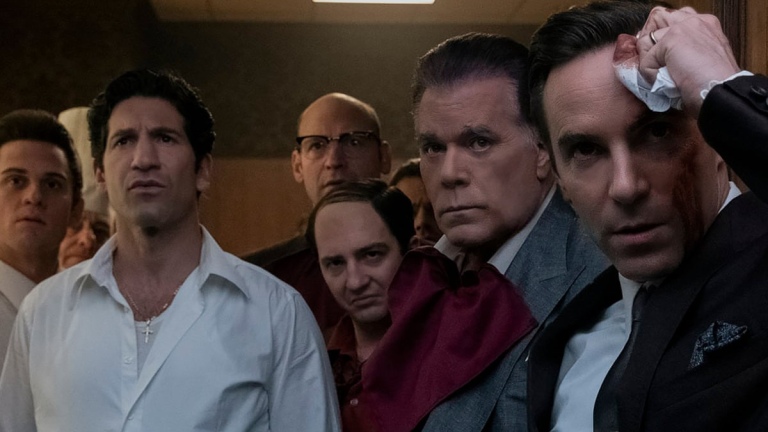
  • The Many Saints of Newark Does The Sopranos Proud

    The Many Saints of Newark Does The Sopranos Proud

    I went into the new movie, The Many Saints of Newark, excited but with tempered expectations. Many consider the show this film is a prequel of, The Sopranos, to be the greatest television drama ever. I consider the first season of The Sopranos to be exceptional, but as the seasons went on it grew to be repetitive.

    What scared me even more about The Many Saints of Newark was its auteur, David Chase, had only presented one project since The Sopranos ended, a stinker called Not Fade Away. So man, am I glad to report that not only was The Many Saints of Newark not a bore, it was the best movie I can remember seeing in recent memory.

    It’s like David Chase watched Mad Men and said, “You know what could make The Sopranos better? Let’s set it in the 1960’s.”

    Or perhaps he watched a few Marvel movies and decided to make a Sopranos Cinematic Universe filled with Easter eggs and little callbacks that only those with long memories or Sopranos obsessives would catch on to.

    The movie starts off in 1967 where a ten year old Tony Soprano, is not yet a gangster. Rather he’s a cherubic kid with an Alfred E Neuman for President poster on his wall. Throughout the two hour movie  we see hints of Tony Soprano’s origin. But The Many Saints of Newark focuses more on Tony Soprano’s parents’ generation. We see his mother before bitterness completely consumed her. We meet his father and see where Tony’s temper came from. And Uncle Junior is as much of a schmuck as ever. Pretty much any character from the show who would have been alive from 1967 to 1974 makes a cameo.

    But the protagonist of The Many Saints of Newark never appeared on The Sopranos.

    He’s Dickie Moltisanti. Those who watched the show will learn in the opening scene that he’s Christopher’s father, but he’s portrayed as Tony’s spiritual forefather.

    He’s a man who somewhere underneath all his sins has a desire to be good.

    The Sopranos is considered the birth of anti-hero television, a show that has you rooting for a villain. These types of entertainments feature characters that you forgive for murdering, for adultery, for torture and all other kinds of wrongs that if they occurred to us, we’d be screaming for the death penalty. It’s not hard to figure out why you cheer for a villainous character  like Dickie. when he’s in a feature like The Many Saints of Newark that is filled with witty dialogue, exciting action scenes, and the occasional quote from Buddha.

    It’s hard to make a prequel to a popular series or movie. The audience already knows the ending.  George Lucas ruined Star Wars with its prequels and I’ll never understand why they didn’t make The Hobbit before Lord of the Rings. But a well made prequel reminds us entertainment should be about the journey, not necessarily the destination. I’ve long considered Better Call Saul, the prequel to Breaking Bad, as the gold standard of prequels. With the release of The Many Saints of Newark, it now has company at the top.

  • Dear Evan Hansen Isn’t That Bad a Movie

    Dear Evan Hansen Isn’t That Bad a Movie

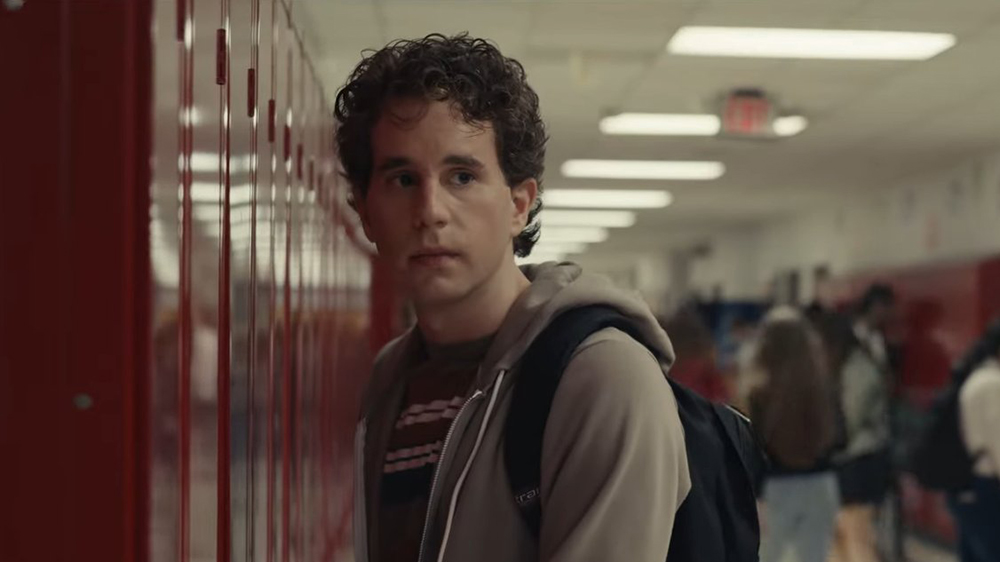
    It’s been difficult to avoid the tidal wave of negative notices for Dear Evan Hansen, the new movie adaptation of the Tony Award winning Broadway show and, if you believe the studio hype, cultural phenomenon. My expectations were low, so maybe that was a factor, but I didn’t exactly hate the movie. Put that on your poster, Universal.

    The movie stars Ben Platt as the titular Evan Hansen, a high schooler suffering from massive social anxiety and depression. As an exercise, his (unseen) psychiatrist has him write daily affirmation letters addressed to himself. One of those letters ends up in the hands of Connor (Colton Ryan) – please don’t ask how. It will never make sense – a misunderstood, bullied recluse who also happens to be the brother of Zoe (Kaitlyn Dever), Evan’s secret crush. A few days later, Conor commits suicide. Evan’s letter is found in Conor’s room and mistaken for a message between friends by Conor’s parents Cynthia (Amy Adams) and Larry (Danny Pino). Why the parents think their son would address his best friend as “Evan Hansen” is never explained. Nevertheless, Evan finds himself embroiled in a ruse, pretending to be Conor’s only friend. He does this at first to comfort the grieving parents, but later because, hey, it also gets him closer to his crush. Either way, the events will have you rushing to the dictionary to look up contrived.

    Obviously, Dear Evan Hansen has major problems.

    The story is, how should I say? …fucked up. It could work in a nuanced drama or a pitch-black comedy that wants to tackle the myriad issues that would crop up from such a setup. But this is a life affirming, mostly boisterous musical (Oh yeah, people break out into song and do so often), which basically glosses over the problematic nature of its setup. By the end, it tries valiantly to find some kind of happy ending to the story, but to little avail. There really is no way to unfuck this situation.

    The other glaring issue is that Ben Platt, reprising his Tony winning role, is simply too old looking to play the high school aged character. Look, people in their late twenties playing teens is not a new thing. Actors have pulled it off successfully because they simply look younger than they are. Platt is not one of those people. As dramatic and emotional as the movie is (despite the painful setup), a good portion of it is undercut because of how obvious his years are. The thought keeps intruding, what’s this old dude doing hanging around high school kids?

    But, to his credit, Platt acts the shit out of the role. Yeah, he does twitch and shiver too much. It’s probably how he played the character on stage, far from most of the audience, but that doesn’t quite work in a merciless close-up (how huge is his Adam’s apple?!) of a camera. Still, the emotions that he infuses into each line, especially when sung is affecting and moving.

    And that’s where the movie worked for me. The musical numbers. Like the movie adaptation of Les Miserables from a couple of years ago, Hansen appears to use the vocals that were performed live on set. Les Mis got some flak for that, but I liked it there and here also. The live singing gives the songs a more immediate, in the moment feel. It really pushes the emotions to the forefront, more so, I suspect than if they’d been perfectly recorded in a studio.

    The songs themselves are not exactly hooky, “Let It Go” type of stuff, but almost all of them are anthemic and driving. It’s hard to get bored by them. And the lyrics are poignant. The dramatic “The Anonymous Ones,” a song about the many who suffer quietly from mental issues, features this bridge: “The parts we can’t tell, we carry them well, but that doesn’t mean they’re not heavy.” Look, without getting into details, I relate intimately to that verse. The lyrics insightfully address pains many of us feel.

    And I will say, for all the myriad issues shunted to the background and glossed over, the movie does try to make Evan’s actions somewhat understandable. He’s mostly trying to get out of a hole that’s being dug in by the people around him. Cynthia looks at him so pleadingly, she’s basically begging him to tell her what she wants to hear. You can’t blame him for doing it. Or, at least, I’d probably do the same thing.

    What I can blame him for, though, is what he does to Connor’s sister, Zoe.

    Evan basically uses the death of her brother to get closer, culminating in a gross scene where he’s talking about (singing about, actually) the wonderful things Conor supposedly said about his sister in secret, which then segues into a barely disguised confession of his love for her. First of all, ew. Second, of all, seriously, ew. Can we stop this gross trope of the guy who can’t talk to the girl, but says that he loves her? It’s not love. It’s infatuation. You can’t love a person you’ve only been mooning over and don’t actually know. His behavior is gross in these scenes, but it’s played as if we’re supposed to feel sorry for him. Yuck.

    On a technical level, the cinematography is flat and washed out, but at least the camera moves are dynamic with lots of nicely timed wooshing and swooshing around. The production design feels less lived in and more meticulously curated by a designer who’s never been to the suburbs. I’m sorry, but a high school kid’s bedroom in 2021 is not going to have a Ben Folds Five poster on the wall. But the editing is sharp. Many of the songs shift effortlessly between time and space and between singing and people commenting in between the lyrics. It’s intricate and very well done.

    I adore director Stephen Chbosky’s first film, The Perks of Being a Wall Flower. He appears to understand what high school was really like for many of us. His capacity for empathy goes far to make Evan Hansen more palatable than it might have been, but there’s only so much he can do with this material. There’s a kernel of something good here, but it never quite grows. Still, Universal, if you’re listening, I didn’t hate it.